
Published by BuzzSkito Mosquito & Tick Control
Published October 29, 2026 · Fact-checked against the sources listed below
What are the bugs in my basement?
Mostly moisture lovers. UC IPM's centipede guide says centipedes indoors can turn up in damp areas of basements, closets and bathrooms; Clemson says camel crickets indoors are often in damp basements, crawl spaces or garages; NC State says silverfish prefer cool, damp areas such as basements; and the University of Kentucky says the need for moisture can drive sow bugs and pill bugs into crawl spaces, basements and ground-level floors. Some live there all year, and others wander in from the damp soil outside.
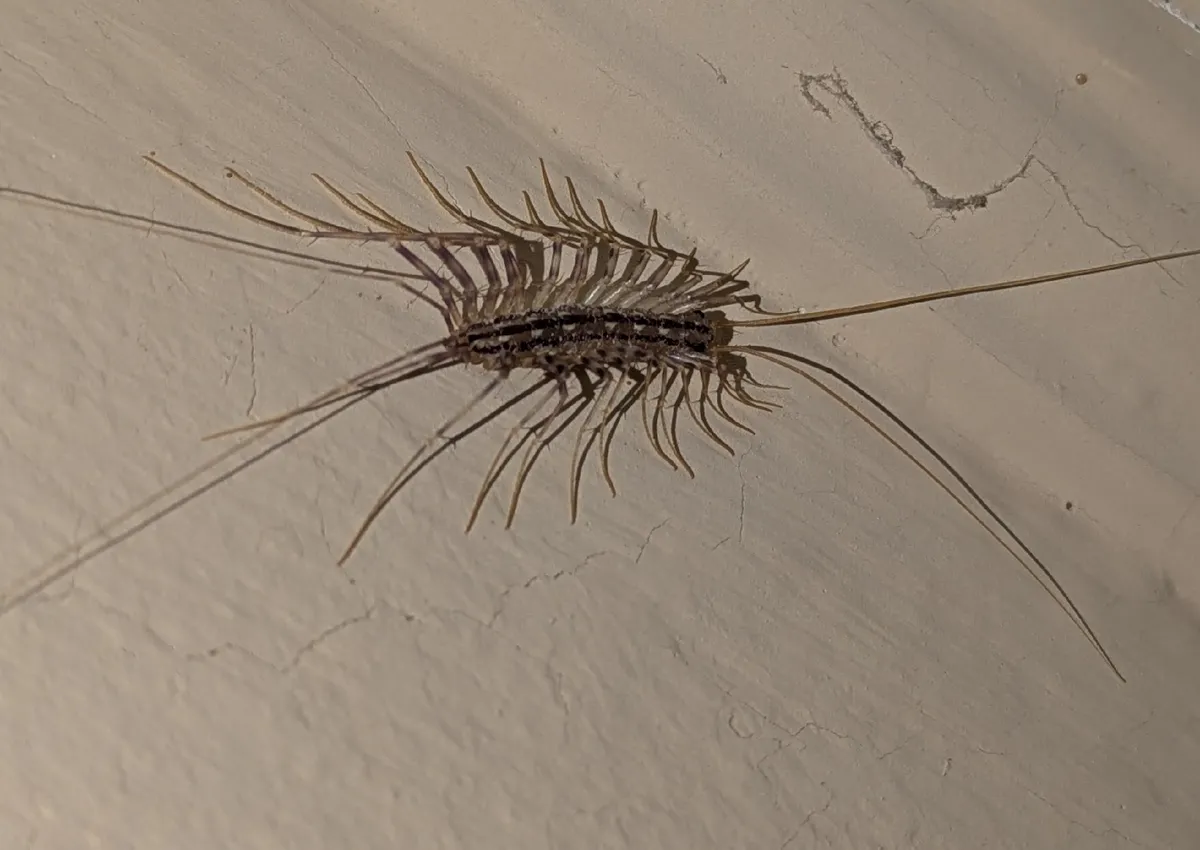
The sections below follow where and how you met the bug. To sort by color instead, see tiny black bugs, tiny brown bugs and tiny white bugs; for other rooms, bugs in the bathroom and bugs in the kitchen; for a quick sort, the bug identifier quiz.
How do you tell which basement bug you have?
Trap it under a clear jar or on clear tape and run these checks. A magnifying glass helps with anything under 1/8 inch.
Checks to run with the bug in a jar
- Count the legs. Fifteen pairs of long, banded legs: a house centipede. Two pairs on most body segments, and it curls up: a millipede. Seven pairs under an oval body: a pill bug or sow bug; only the pill bug rolls into a ball.
- Does it jump? Humped and wingless with very long antennae: a camel cricket. A speck under 1/12 inch: a springtail.
- Three long tails? A silverfish, or a firebrat if it is mottled brown and lives by the furnace or water heater.
- Pincers at the tail end? An earwig.
- Black and hard-shelled? Probably a ground beetle. Almost black, about 1 1/4 inches, short-winged and slow near a drain: an Oriental cockroach.
- Eight legs? A spider: see corners and joists below, or the spider identifier.
- Tiny, soft and tan, and it does not jump? Probably a booklouse.
- How big is it? Lay it beside a ruler marked in inches and find its row in the table above.
What is running across the basement floor or up the wall at night?
Usually a house centipede or a camel cricket. A black beetle that wandered in, or a dark, slow cockroach near a floor drain, are the other common suspects.
House centipedes
Penn State Extension describes a dirty-yellow body 1 to 1 1/2 inches long with three dark stripes, on 15 pairs of legs banded light and dark. By day house centipedes hide in dark, damp places such as crawl spaces and floor drains without a water trap; at night they hunt silverfish, cockroaches, spiders and other small arthropods. Penn State calls them harmless and says they reproduce readily in heated buildings. The house centipede guide covers bites and control.
Camel crickets
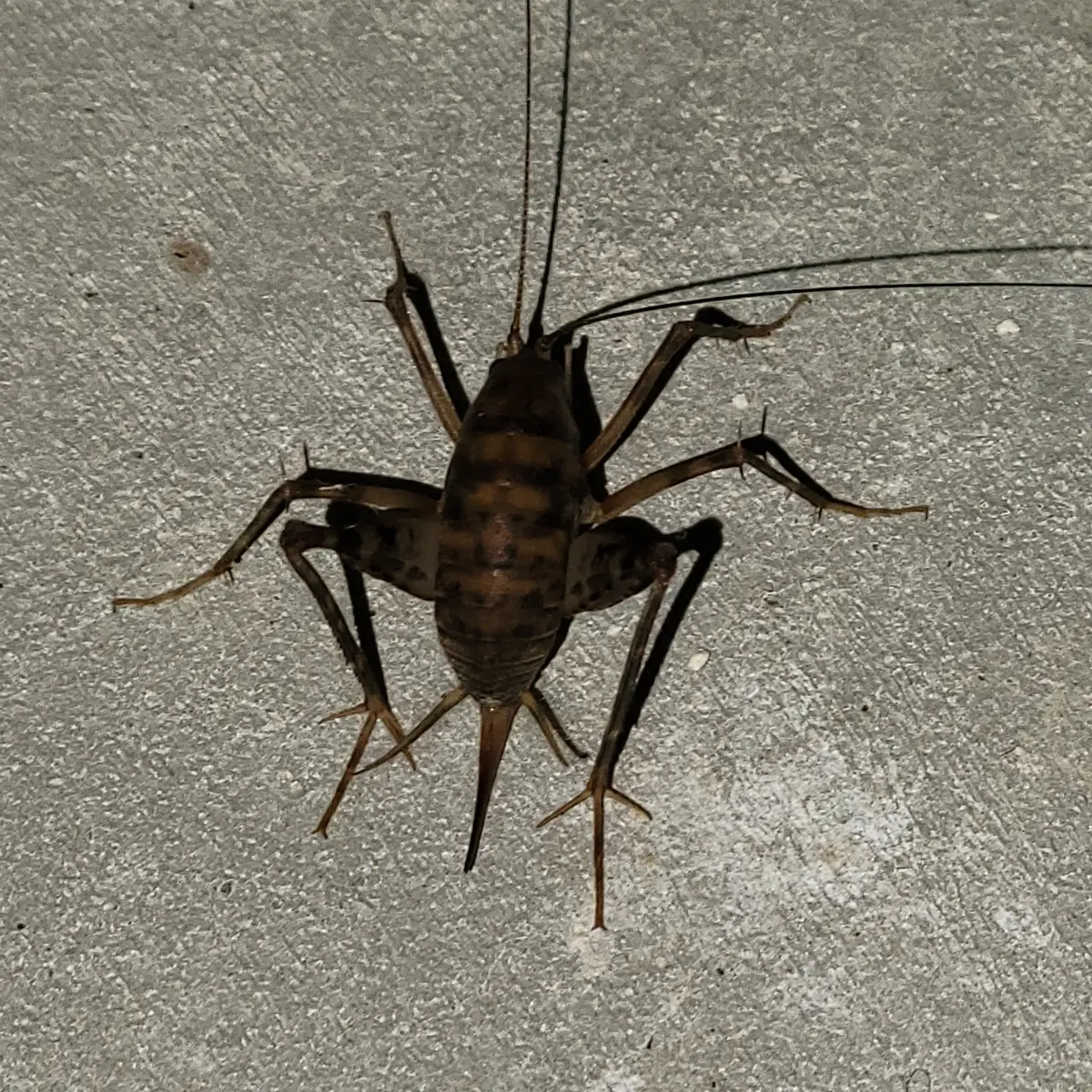
Clemson's camel cricket fact sheet gives adults as 1/2 to 1 1/2 inches long, wingless and humpbacked, light tan to dark brown, with antennae much longer than the body and big hind legs that make them strong jumpers. They do not chirp, are active at night, and indoors are often in damp basements, crawl spaces or garages. NC State Extension adds that a heavy infestation leaves dark fecal smears on surfaces, and both say they can damage fabrics. See the camel cricket guide, or crickets in the house for one that chirps.
Ground beetles
Iowa State University Extension says large black beetles found indoors in late summer are often ground beetles that wandered in by accident, through small cracks or open doors and windows. Most are hard-shelled and dull black, mostly active at night and may be drawn to lights, and they are harmless: they do not attack people, pets, the house or its contents. Vacuum or sweep them up and caulk gaps in the foundation and siding. Beetles in the house sorts the rest.
Oriental cockroaches
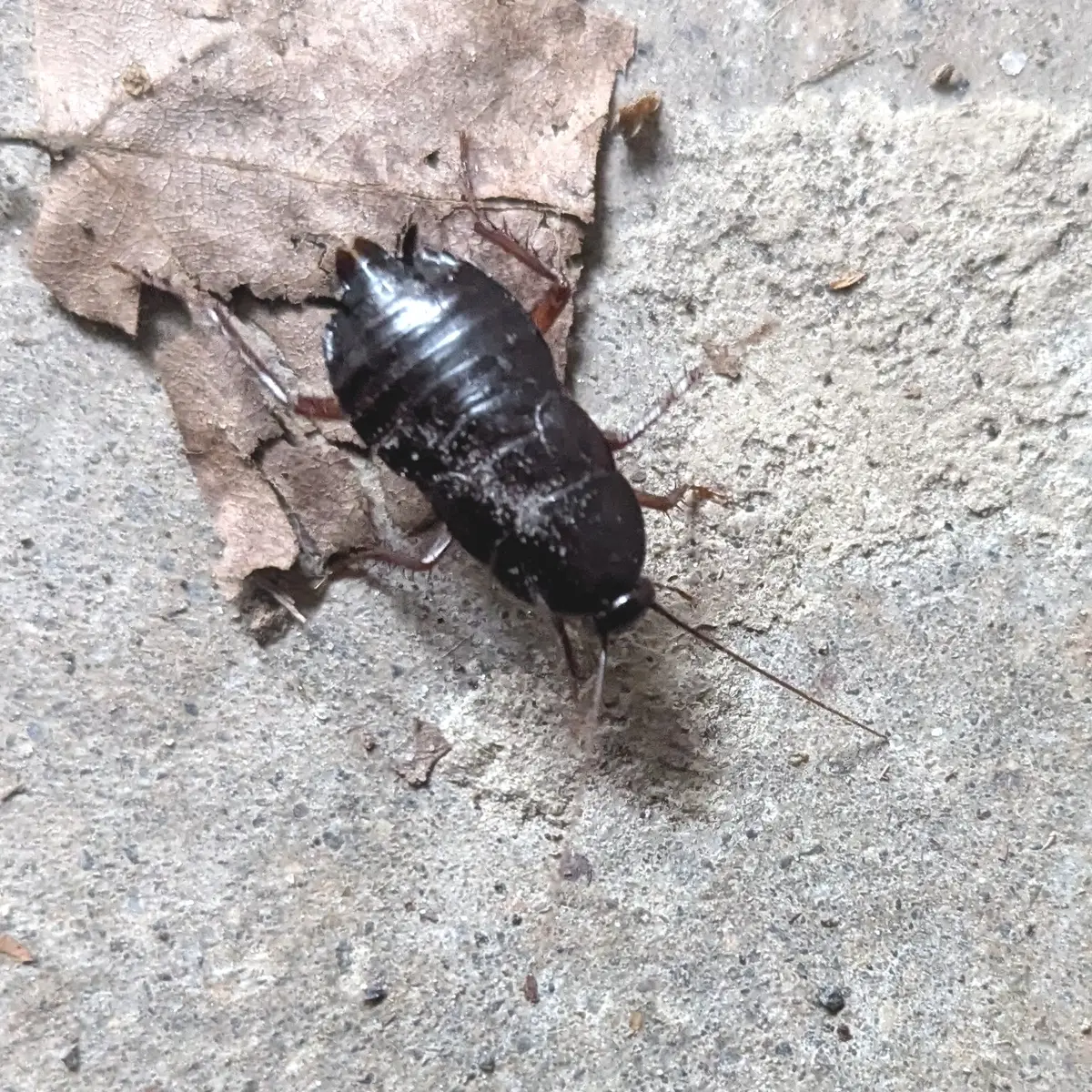
UC IPM's cockroach guide gives the Oriental cockroach as about 1 1/4 inches long and almost black, with wings shorter than the body in males and not fully formed in females. It lives in cool, dark, damp places such as basements, water meter boxes and drains, usually stays on the ground floor, moves more slowly than other cockroaches and cannot climb smooth vertical surfaces. UC IPM calls sticky traps the best way to detect and monitor cockroaches. See the Oriental cockroach guide and water bugs vs. cockroaches.
What are the bugs crawling along the basement walls after rain or cold weather?
Millipedes, pill bugs and sow bugs, and earwigs. They live in damp soil, mulch and leaf litter outside and wander in when the weather turns, and millipedes and sow bugs soon die in a dry basement.
Millipedes
Penn State's millipede page says most that people meet are dark brown and about an inch long, with two pairs of legs on most body segments. At times they migrate, often with cooler weather or after heavy rain, and turn up in window wells, basements and garages. They do not live more than a few days indoors, so Penn State says to sweep or vacuum them up rather than treat inside. UC IPM says they do not bite, but some ooze a liquid that can irritate skin or burn the eyes. See the millipede guide.
Pill bugs and sow bugs
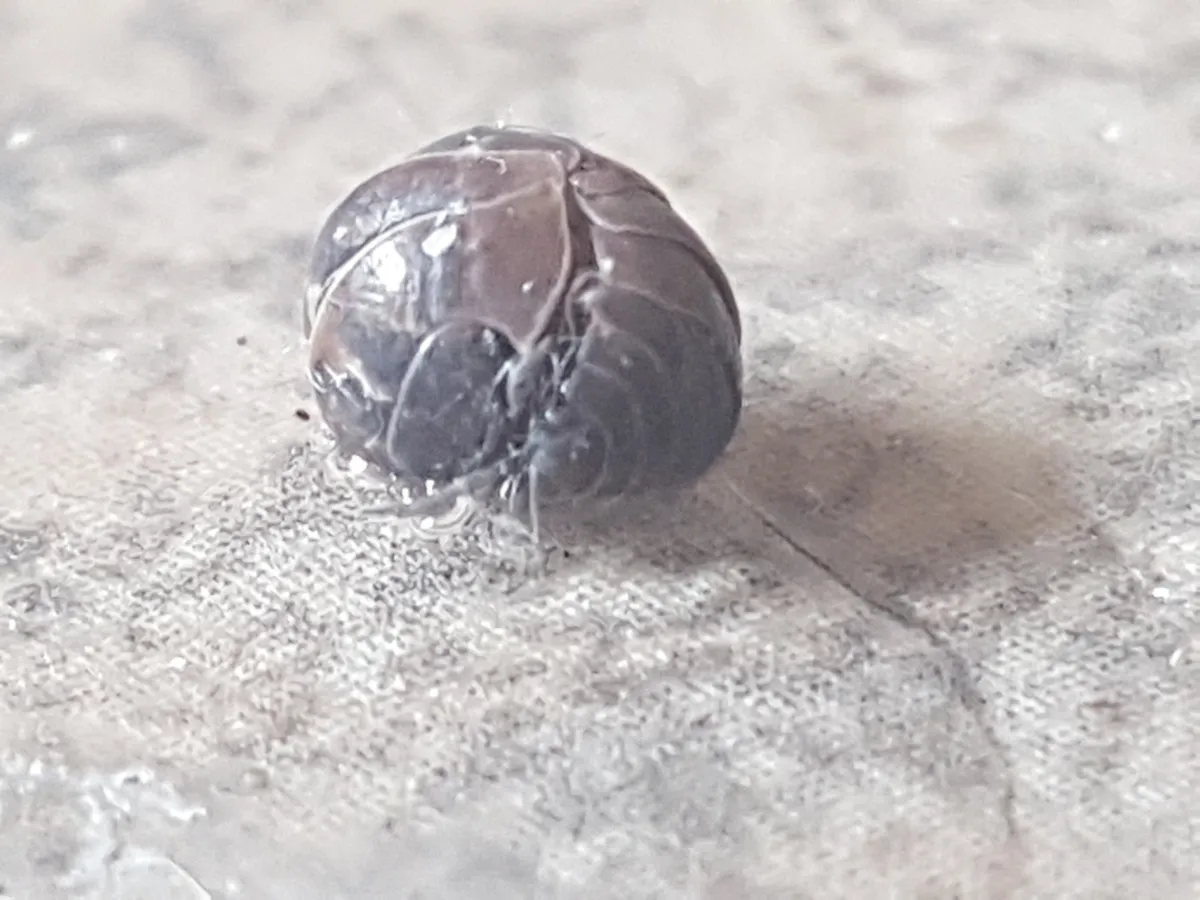
The University of Kentucky describes both as oval, rarely more than 3/4 inch long, with seven pairs of legs; sow bugs have two tail-like appendages and cannot roll into a ball. Their need for moisture can drive them into crawl spaces, basements and ground-level floors, and without high moisture they find it almost impossible to survive indoors. They are harmless and will not bite or sting, and finding them often can signal a moisture problem or a gap at a seal, window or door. See the pill bug guide.
Earwigs
UC IPM's earwig guide describes an insect about 3/4 inch long and reddish brown, with forceps-like pincers at the tail end, curved in males and straighter in females. Earwigs hide in dark, cool, moist places by day, feed at night, and may come indoors when it is too dry, hot or cold outside. They are not harmful to people, though they can bite if trapped in clothing or sat on. Sweep or vacuum them up; UC IPM does not recommend insecticide indoors. See how to get rid of earwigs.
What are the tiny jumping or flying bugs by the floor drain or sump?
Jumping specks are springtails. Small, fuzzy flies around a drain or sump pump are often drain flies, and small, dark flies at a window may be fungus gnats from potting soil.
Springtails
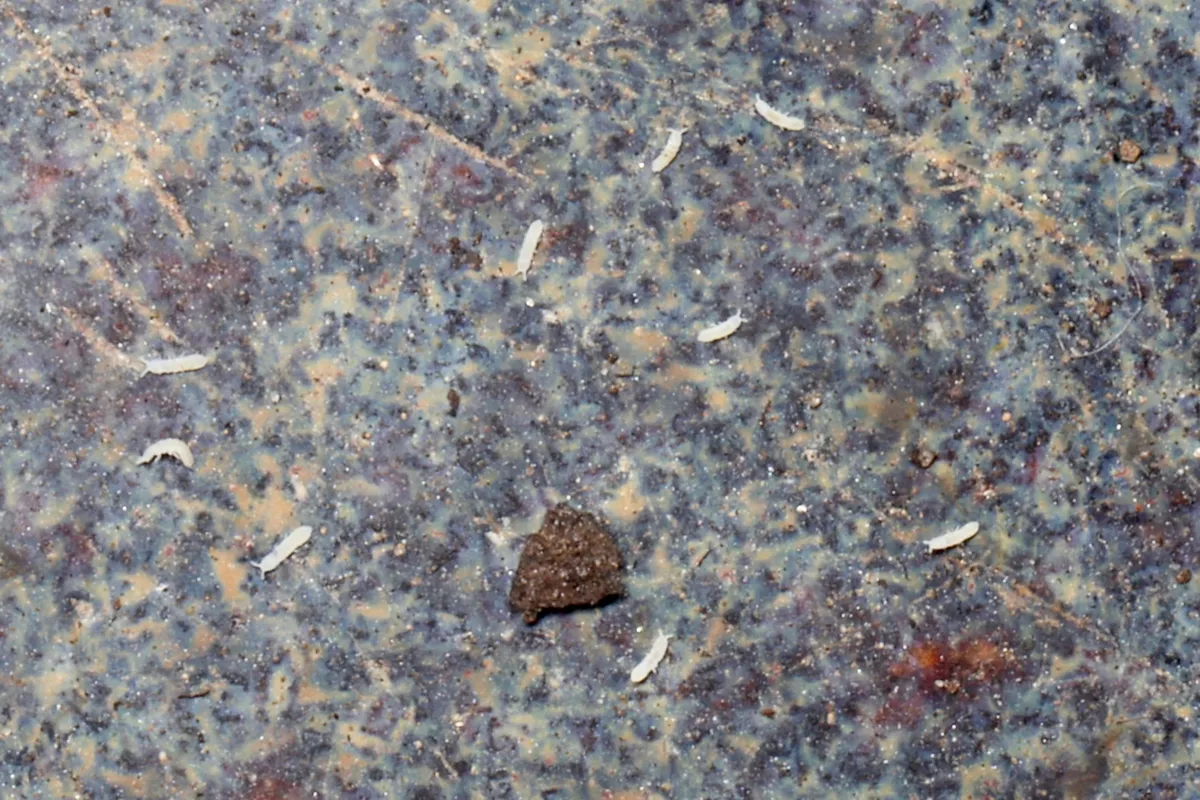
Penn State's springtail page says most kinds that get into homes are about 1/25 to 1/12 inch (1 to 2 mm) long and white to black, launched by a forked structure under the body. Where humidity is high and mold grows they can sometimes keep an indoor population, more often in bathrooms and basements; others come in under doors and windows, usually during long droughts or soaking rains. Penn State's fix is lower humidity, with air conditioning or a dehumidifier, plus removing mold and cutting back mulch. See the springtail guide.
Drain flies
UC IPM's drain fly guide describes flies about 1/8 inch long and often dark, with hairy, moth-like wings. The larvae live in the slimy film coating drains and have been found around sump pumps and under leaking drain and sewage pipes. To find the source, turn a cup coated inside with petroleum jelly or vegetable oil over each drain for 24 hours, then scrub the film out with a stiff brush and an industrial drain cleaner; boiling water or bleach leaves it in place. See the drain fly guide or small flies compared.
Fungus gnats
UC IPM's fungus gnat guide describes dark, delicate flies, commonly 1/16 to 1/8 inch long, that look like small mosquitoes and do not bite. The larvae live in potting soil and other decaying organic matter, and the adults are drawn to light, so they may first be noticed at windows. UC IPM advises storing potting soil off the ground in closed containers. See fungus gnats in houseplants.
Winged insects swarming at basement doors or windows in late winter or early spring could be termites, which Penn State Extension says may swarm inside infested buildings at that time of year. What termites look like shows the swarmers, flying ants vs. termites how to tell them apart, and termite damage the mud tubes to look for.
What bugs live in basement boxes, books and papers?
Silverfish and booklice, both drawn to damp air. Spider beetles can turn up in damp basements too, scavenging old stored food and debris.
Silverfish and firebrats
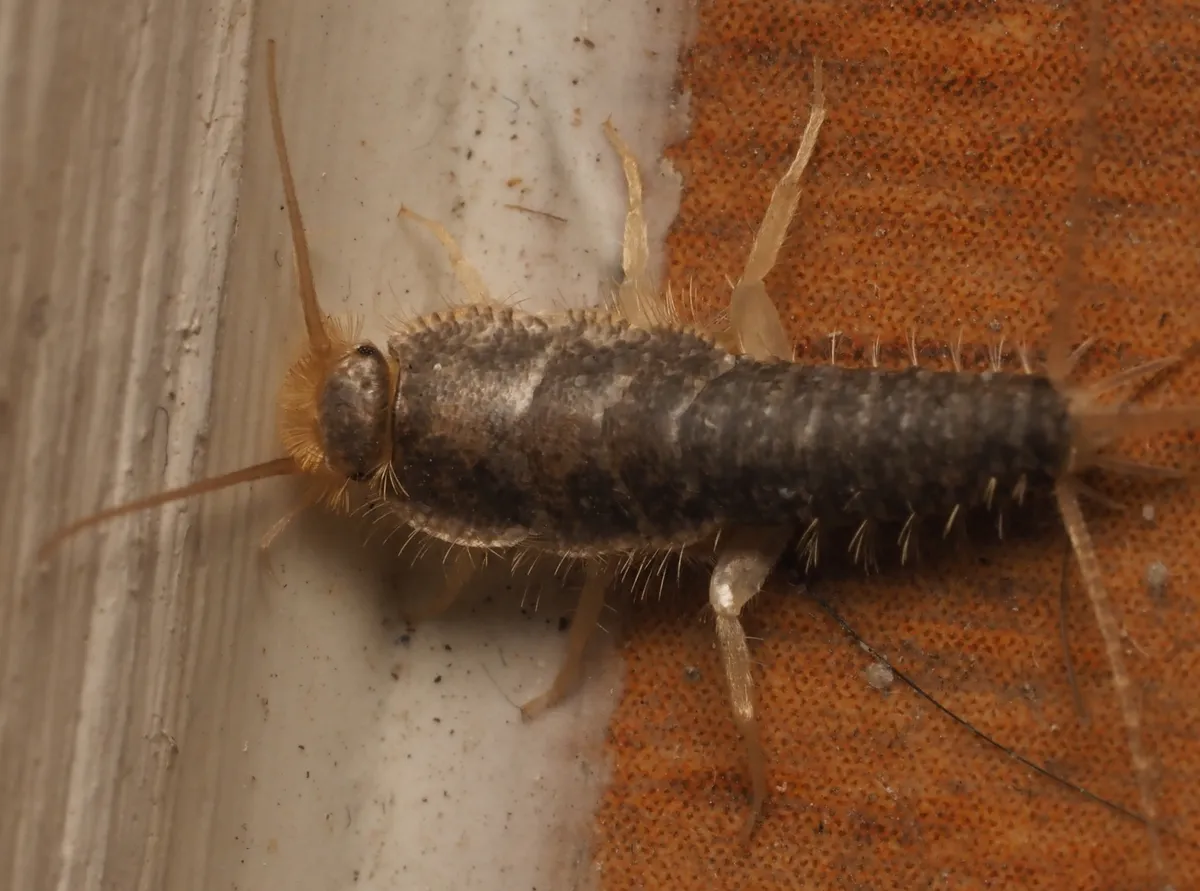
NC State Extension's silverfish fact sheet describes flat, carrot-shaped, wingless insects with two long antennae and three tail-like appendages. Adult silverfish are about 1/2 to 3/4 inch long and gray or silvery, and prefer cool, damp areas such as basements, bookshelves and places where rarely used things are stored. The firebrat, about 1/2 inch and mottled brown, favors 90°F and above, around furnaces and hot-water heaters. Both come out at night and feed on paper and fabric, especially book bindings. See how to get rid of silverfish and baby silverfish.
Booklice
Penn State's booklouse page describes soft, wingless insects about 1/25 to 1/12 inch (1 to 2 mm) long, mostly light to dark tan, that feed on mold and fungi in humid, damp, generally dark places, sometimes on paper, books and wallpaper. They do not bite or carry disease. Penn State says relative humidity below 50% prevents mold growth and booklouse development, and that pesticides are not normally needed. See the booklice guide.
Spider beetles
Colorado State University Extension describes spider beetles as about 1/16 to 1/8 inch long, with thin legs; most are brown to reddish brown, with a round abdomen and a head bent down out of sight. In Colorado they are typically found in damp basements and crawl spaces; they scavenge seeds, grain debris, dried fruit and dead insects, and may develop in the refuse of rodent nests. See spider beetles, or pantry pests if they are in stored food.
What are the spiders in basement corners and ceiling joists?
Mostly cellar spiders and common house spiders, harmless or nearly so. The one with big fangs and a reddish-orange front half is a woodlouse spider.
Cellar spiders
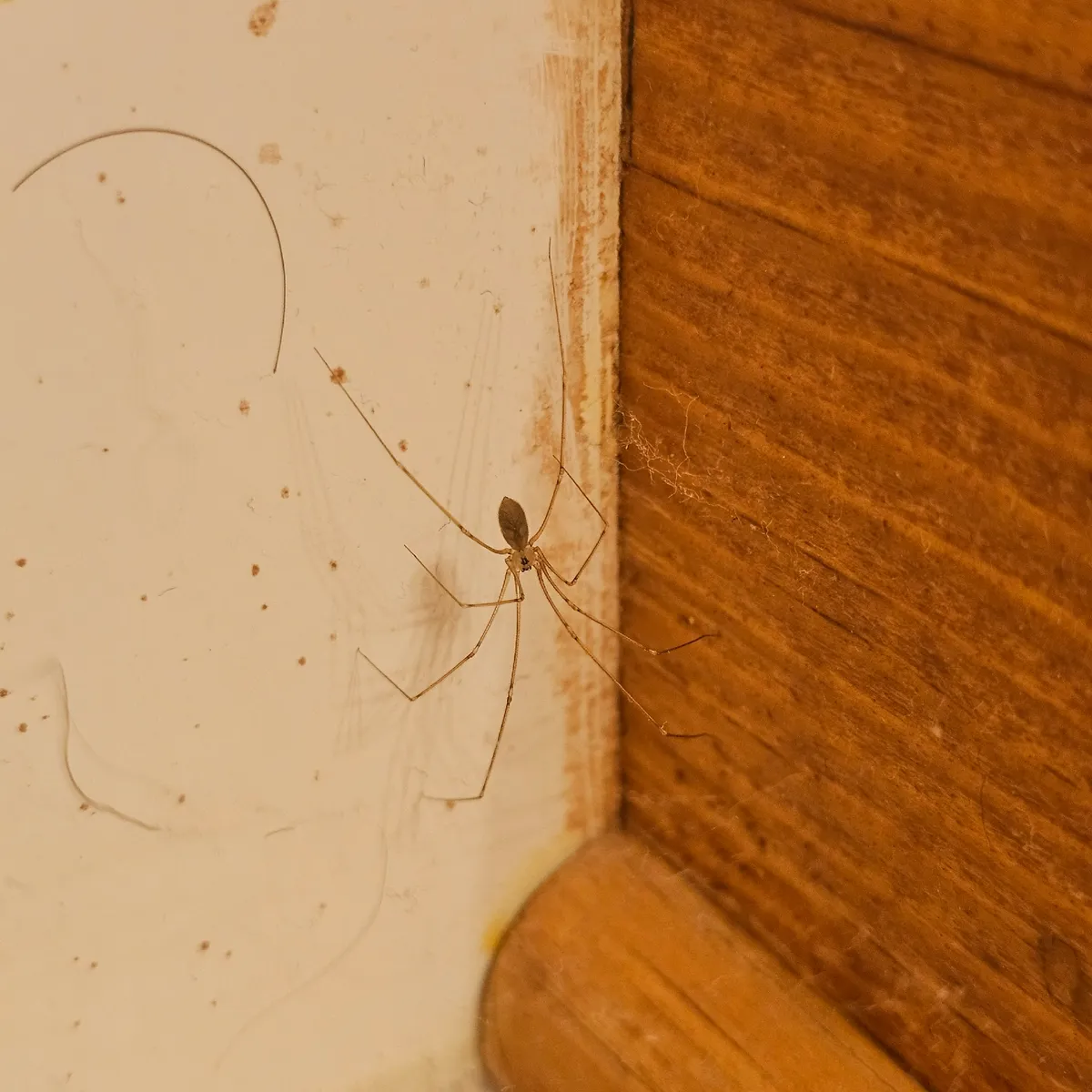
The Missouri Department of Conservation calls the cellar spider a harmless spider commonly found in basements. Its body is usually no more than about 1/4 inch long, on extremely long, thin legs; females build messy, non-sticky cobwebs in corners and crevices, sometimes along the ceiling, and a cellar spider can bounce in its web until it blurs. See the cellar spider guide.
Common house spiders
Penn State's common house spider page says it builds webs in the corners of walls, floor joists and windows and, in homes, is most often met in damp basements and crawl spaces. The female is about 3/16 to 1/4 inch (5 to 6 mm) long, yellowish brown in front with a dirty-white to brown abdomen marked with gray chevrons. It is not regarded as medically important and does not often bite. See the house spider guide or the spider identifier.
Woodlouse spiders
Colorado State University's woodlouse hunter fact sheet describes a spider about 3/8 to 5/8 inch (9 to 15 mm) long, orange to reddish orange in front and on the legs, with a grayish-white abdomen and very large fangs. It hunts sow bugs and pill bugs at night, uses no silk to catch prey, and in homes is almost always found in basements and other humid places. If handled, it may bite, but its venom poses no danger to people. See woodlouse spiders, or compare wolf spiders.
Which bugs are in the basement in winter?
Mostly the year-round residents. Penn State says house centipedes reproduce readily in heated buildings, and NC State says camel crickets pass the winter as nymphs or adults (the one pictured above was on a basement floor in December) and that adult silverfish may live two to eight years. Stink bugs, lady beetles, boxelder bugs and cluster flies have their own sections in bugs in the house in winter.
Other basement bugs to compare
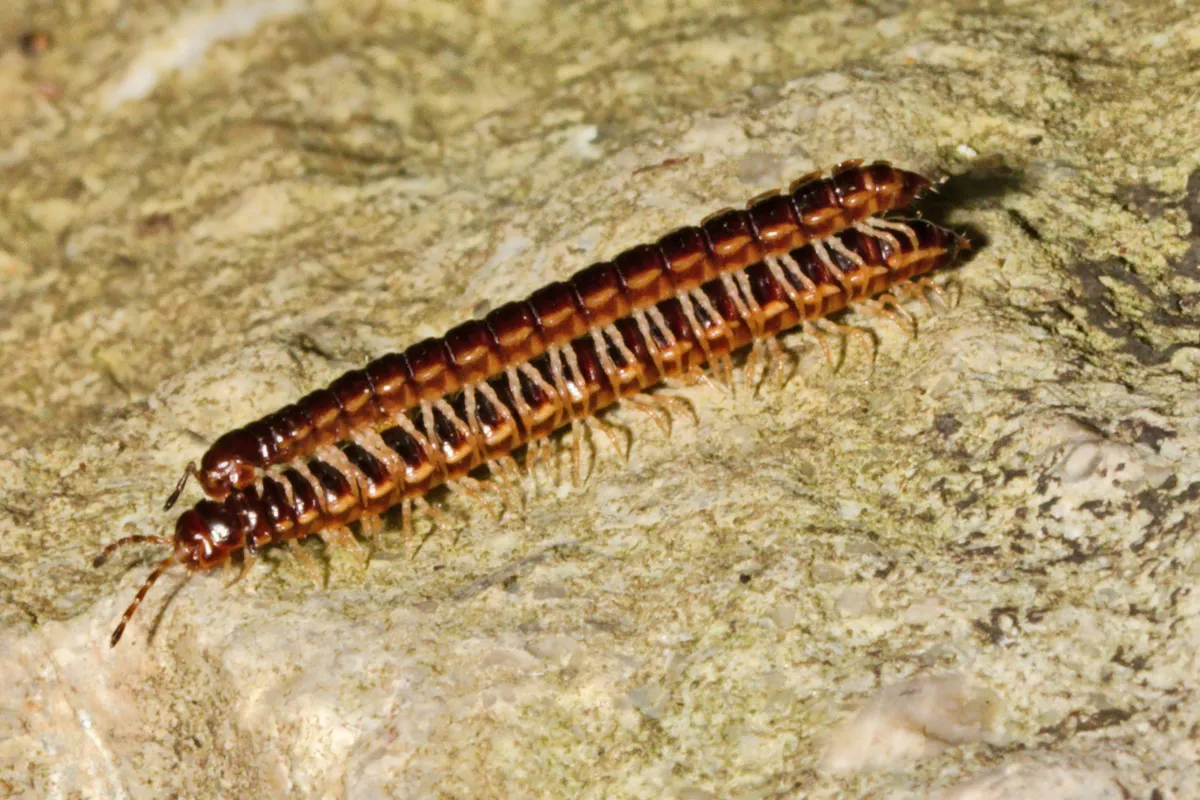 MillipedeAbout 1 inch, dark brown, two pairs of legs per segment; dies within days indoors
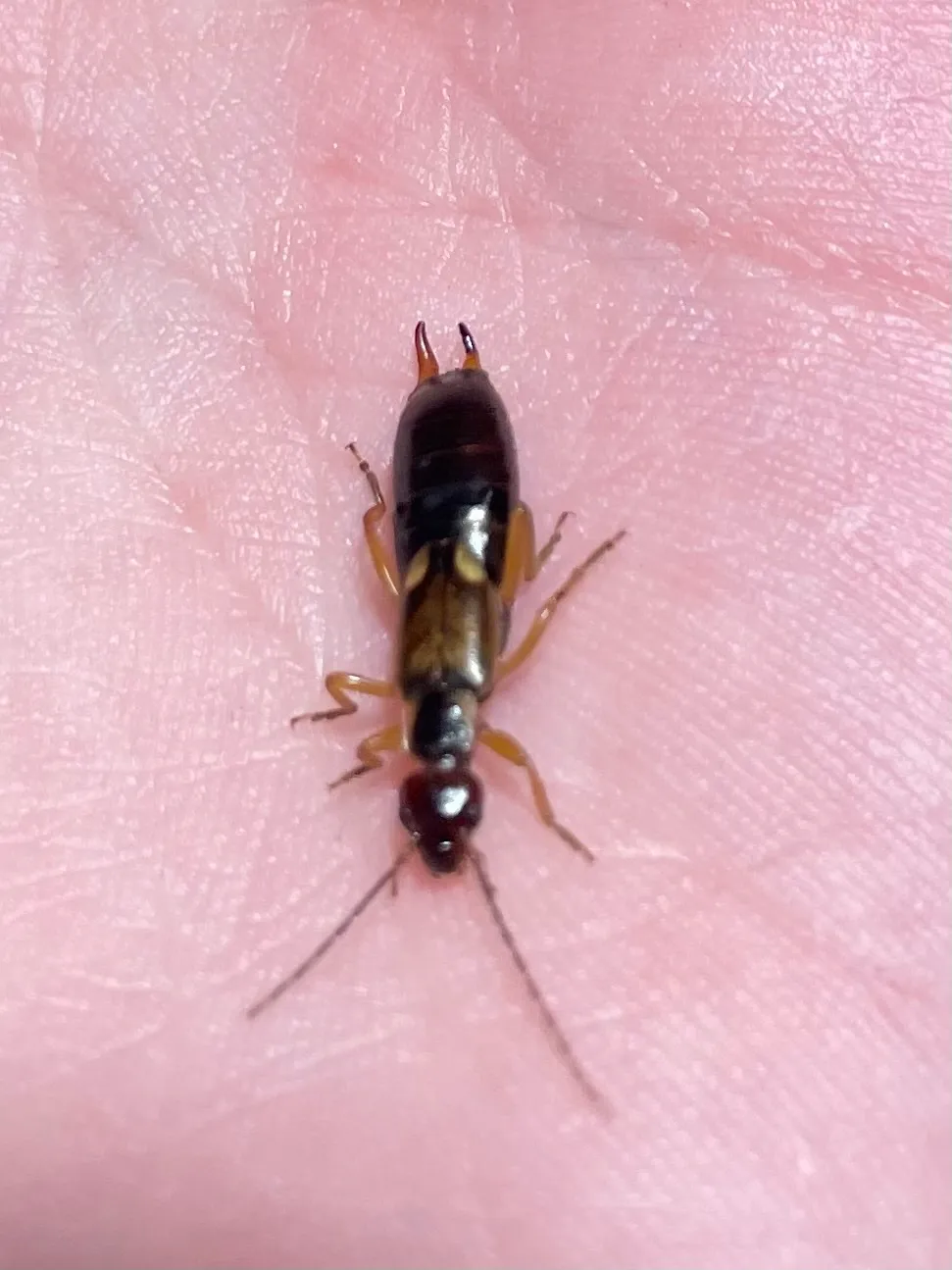 EarwigAbout 3/4 inch and reddish brown, with forceps-like pincers at the tail end
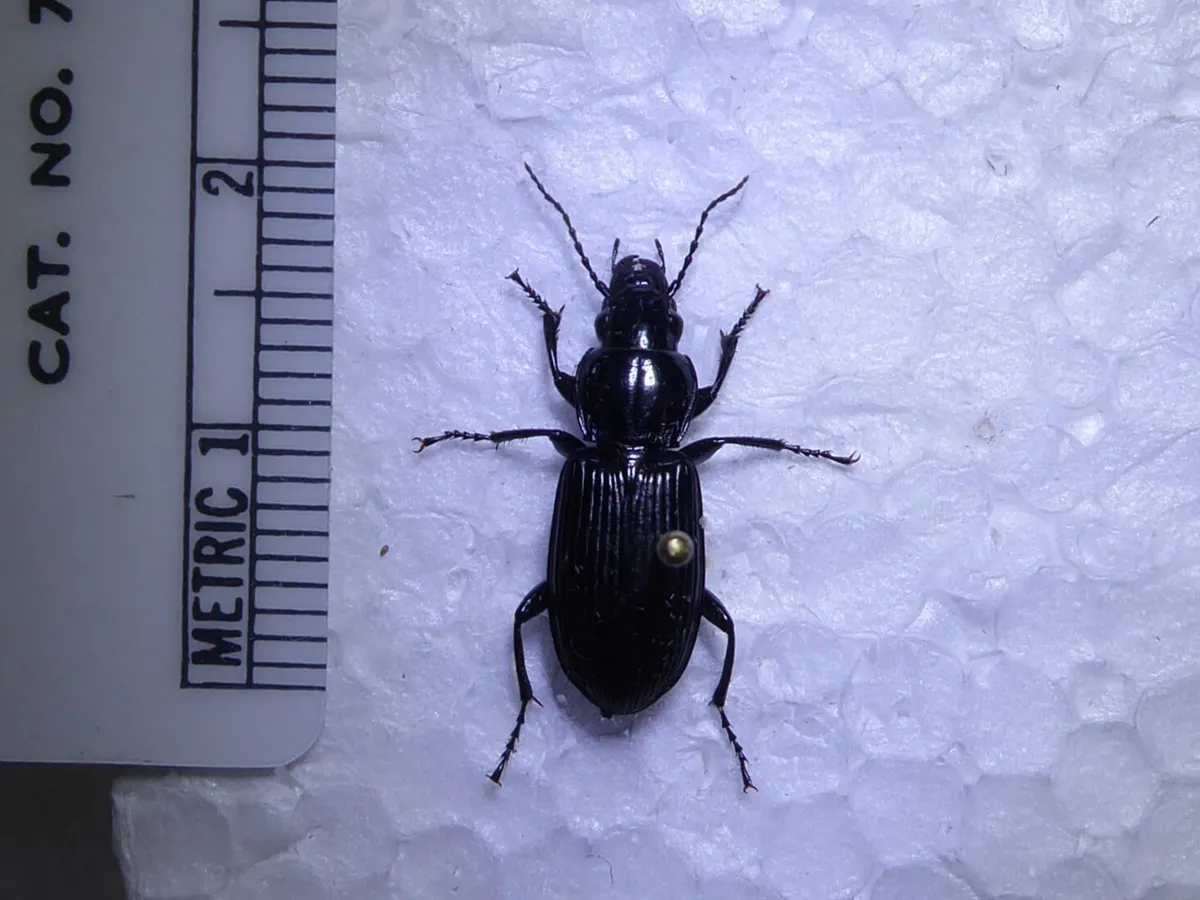 Ground beetleHard-shelled and usually black; wanders in by accident and is active at night
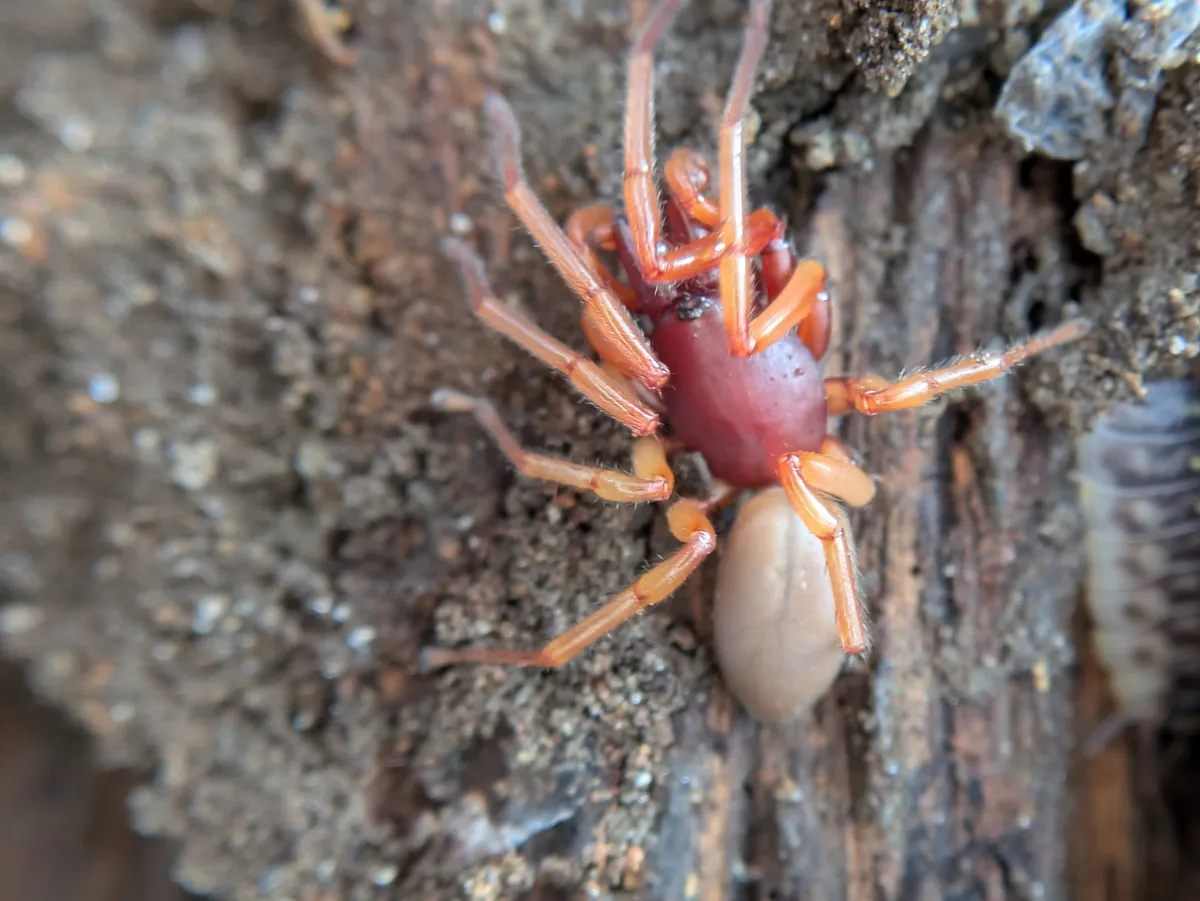 Woodlouse spiderReddish-orange front and legs, pale abdomen and big fangs; hunts sow bugs
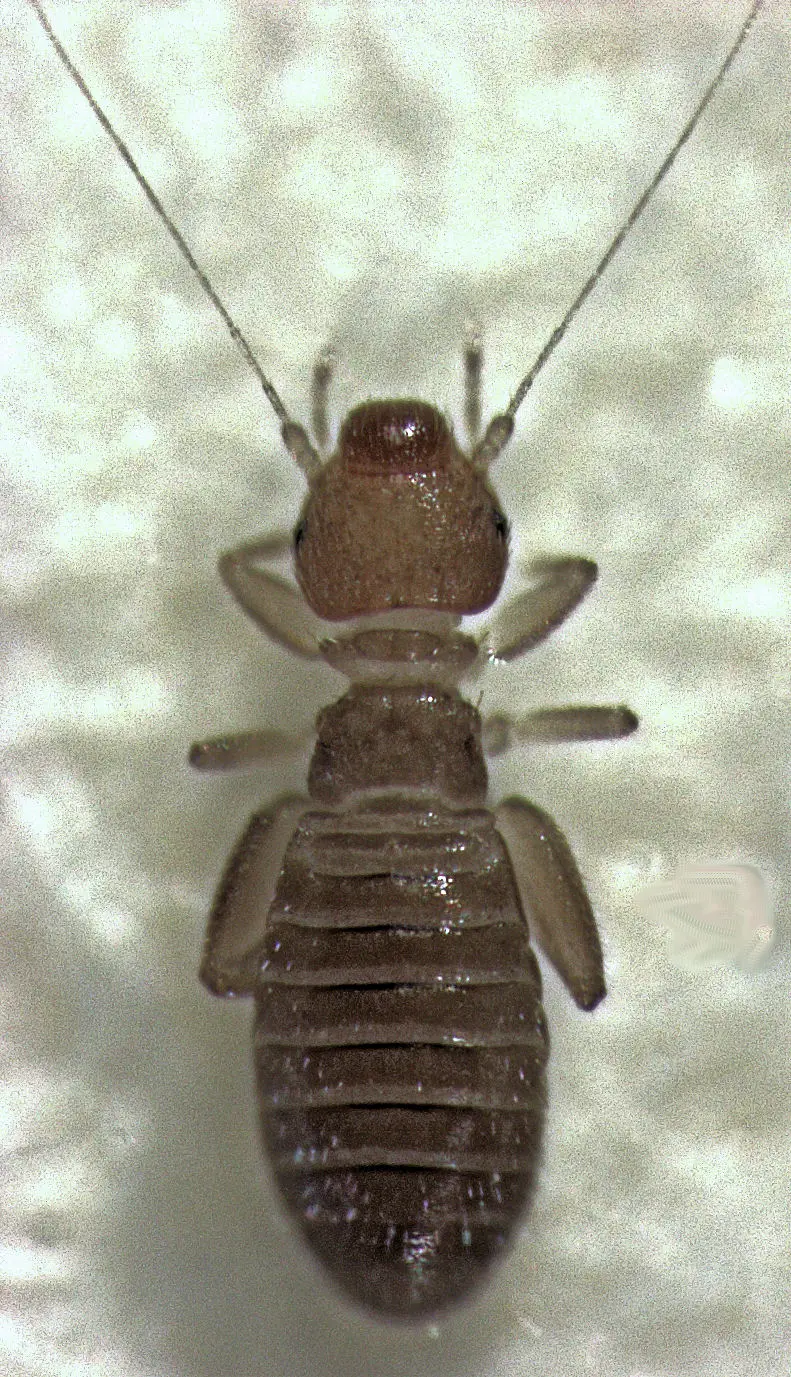 BooklouseAbout 1/25 to 1/12 inch, soft and wingless; feeds on mold in damp, dark spots
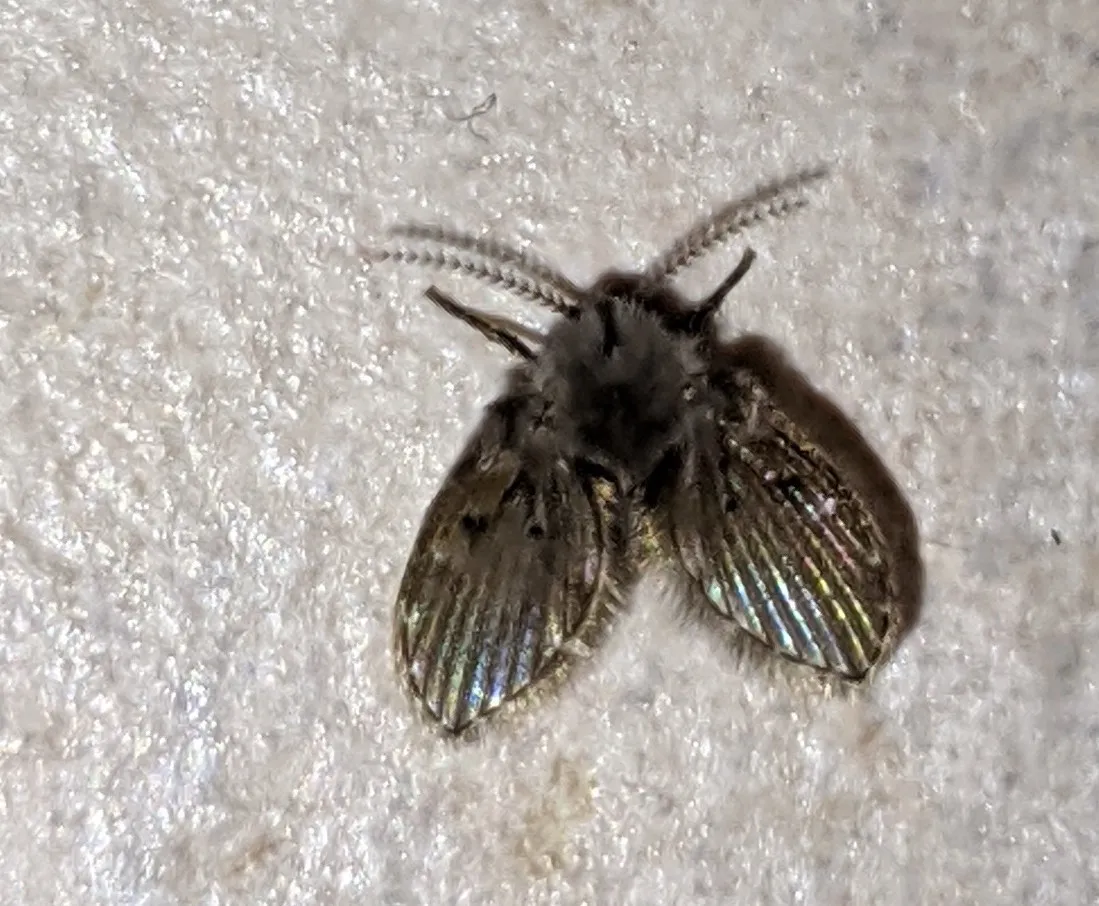 Drain flyFuzzy and moth-like, about 1/8 inch; breeds in the slimy film inside drains
Photos: Millipede: no rights reserved, via iNaturalist, CC0 1.0. Earwig: no rights reserved, via iNaturalist, CC0 1.0. Ground beetle: no rights reserved, via iNaturalist, CC0 1.0. Woodlouse spider: no rights reserved, via iNaturalist, CC0 1.0. Booklouse: S.E. Thorpe, Public domain, via Wikimedia Commons, public domain. Drain fly: no rights reserved, via iNaturalist, CC0 1.0.
Why are there so many bugs in my basement?
Moisture, a way in and something to eat. A basement sits against damp soil, so bugs that need humidity either live there or crawl in through gaps from the soil, mulch and leaf litter by the foundation. Weather pushes others in: millipedes with cooler weather or heavy rain, springtails in droughts or soaking rains, earwigs when it is too dry, hot or cold. Hunters follow their prey: house centipedes eat silverfish and cockroaches, and woodlouse spiders eat sow bugs and pill bugs.
How do you keep bugs out of the basement?
Dry it first, then close the gaps and clear the foundation. Each step comes from EPA or the extension guides on this page.
- Bring the humidity down. EPA advises indoor humidity below 60 percent, ideally 30 to 50, measured with a humidity meter and lowered with air conditioners or dehumidifiers when needed. Penn State recommends dehumidifiers against house centipedes and springtails; Clemson says to ventilate basements and crawl spaces.
- Fix the water. EPA says to fix leaks quickly, dry wet materials within 24 to 48 hours, insulate cold water pipes, keep gutters clean and repaired, and make sure the ground slopes away from the foundation.
- Seal the way in. Seal cracks in slabs and block walls (Penn State), caulk gaps in the foundation and siding and repair doors, windows and screens (Iowa State), and caulk or screen crawl space and dryer vents (Clemson).
- Clear the foundation. Keep mulch away from the foundation wall (Clemson), and remove leaves, rotting wood, stones and flowerpots near entrances and the foundation (Kentucky).
- Store things off the floor, sealed. Stack boxes on pallets away from the wall (Clemson), and keep long-term storage in airtight plastic bags or sealable containers (NC State).
- Watch with sticky traps. They show silverfish hot spots (NC State), catch camel crickets near doorways (Clemson) and monitor cockroaches (UC IPM).
What should you do once you know what it is?
Fix the moisture and the way in first, then follow the bug's own guide:
- House centipedes and springtails: dehumidify (house centipedes, springtails).
- Camel crickets: dry, seal, vacuum and set glue traps (camel crickets).
- Silverfish and booklice: lower the humidity and fix leaks; store papers sealed (silverfish control, step by step).
- Millipedes, sow bugs and earwigs: sweep them up and seal gaps; Penn State says indoor treatment is not necessary for millipedes, and UC IPM does not recommend it for earwigs.
- Drain flies: find the drain with the cup test and scrub out the film.
- Oriental cockroaches: sticky traps, then baits rather than sprays if needed (UC IPM; the cockroach control plan).
- Spiders: mostly harmless; see keeping spiders out.
Frequently Asked Questions
Is it normal to have bugs in the basement?+
A few, yes. Basements stay damp, and several common bugs prefer exactly that: the Missouri Department of Conservation calls the cellar spider a harmless spider commonly found in basements, NC State says silverfish prefer cool, damp areas such as basements, and Clemson says camel crickets indoors are often in damp basements, crawl spaces or garages. Large numbers are a different matter: the University of Kentucky says pill bugs and sow bugs found often can signal a moisture problem or a gap at a door or window, and NC State says dark fecal smears on surfaces are a telltale sign of a heavy camel cricket infestation.
How do I get rid of all the bugs in my basement?+
Start with the moisture, because most basement bugs depend on it. EPA advises keeping indoor humidity below 60 percent, ideally 30 to 50, fixing leaks quickly and making sure the ground slopes away from the foundation. Then seal cracks in the slab and block walls and around doors, windows and vents, and clear mulch and leaf litter away from the foundation, as Penn State, Iowa State, Clemson and the University of Kentucky advise. Sweep or vacuum up the bugs already inside; Penn State says millipedes indoors need no treatment because they die within a few days.
What are the small black bugs in my basement?+
Several basement bugs can look black. Penn State says springtails are about 1/25 to 1/12 inch long and range from white to black, and they jump. UC IPM describes drain flies as about 1/8 inch, often dark and fuzzy, around drains and sump pumps, and fungus gnats as dark, delicate flies about 1/16 to 1/8 inch that you may first notice near windows. Larger black ones may be ground beetles, which Iowa State says wander in by accident, or Oriental cockroaches, which UC IPM describes as almost black and about 1 1/4 inches long.
Why are bugs dying in my basement?+
Usually because the basement is too dry for the bugs that wandered in from outside. Penn State says millipedes do not live more than a few days indoors, and UC IPM says they usually die quickly because of the dry conditions and lack of food. The University of Kentucky says pill bugs and sow bugs find it almost impossible to survive indoors without high moisture. Finding many dead ones still tells you they are getting in, so seal the gaps at doors, windows and the foundation and clear mulch and leaves away from the house.
Do dehumidifiers get rid of bugs?+
They help most against the bugs that need damp air. Penn State calls lowering the humidity with air conditioning or dehumidifiers the best way to manage springtails in the home, recommends dehumidifiers against house centipedes, and says bringing relative humidity below 50% prevents booklouse development. NC State suggests a fan or dehumidifier for silverfish, and Clemson says to ventilate basements and crawl spaces against camel crickets. Drying the air will not clear drain flies, which UC IPM says breed in the slimy film inside drains, or stop bugs walking in through gaps.
Why do I suddenly have a bunch of flies in my basement?+
Look for a wet source. UC IPM says drain fly larvae develop in the slimy film coating drains and have been found around sump pumps and under leaking drain and sewage pipes, and that very large numbers probably point to a breeding site bigger than a few indoor drains; pipes in crawl spaces and under slabs may need checking for breaks or leaks. Small, dark flies drawn to the windows may be fungus gnats from potting soil, UC IPM says. Winged insects swarming in late winter or spring could be termites, which Penn State says swarm in infested buildings.
Should I spray insecticide in my basement?+
Usually not as the first step. Penn State says treating inside for millipedes is not necessary because they do not live more than a few days indoors, UC IPM does not recommend indoor insecticide for earwigs, and Penn State says pesticides are not normally needed for booklice because fixing the water problem works better. Clemson says to consider indoor chemical control for camel crickets only when the population is large or valuable items are threatened. For cockroaches, UC IPM says baits give better control than sprays. If you use any pesticide, follow its label exactly.
What bugs live in crawl spaces?+
Much the same damp-loving crowd as basements. Clemson says camel crickets indoors are often in damp basements, crawl spaces or garages. Penn State lists crawl spaces among the house centipede's damp hiding places and says common house spiders are most often met in damp basements and crawl spaces. The University of Kentucky says the need for moisture can drive pill bugs and sow bugs into crawl spaces, and Colorado State says spider beetles in Colorado are typically found in damp basements and crawl spaces. Clemson's fix is to ventilate crawl spaces properly to reduce moisture.
Can bugs come up through a basement floor drain?+
Some use drains. Penn State lists floor drains without water traps, especially drains connected to dry sumps, among the house centipede's hiding places. UC IPM says Oriental cockroaches live in drains and may climb up through damaged drain pipes, that American cockroaches sometimes forage from sewers into the ground floor where water traps in drains are faulty, and that drain fly larvae grow in the slimy film coating drains. Repairing damaged pipes and faulty drain traps, and scrubbing the film out of the drain, deals with the sources these guides describe.
Are basement bugs dangerous?+
Most are not. Penn State calls house centipedes harmless, Iowa State says ground beetles do not attack people, pets or the house, the University of Kentucky says pill bugs and sow bugs will not bite or sting, the Missouri Department of Conservation calls cellar spiders harmless, and Penn State says booklice do not bite or carry disease. UC IPM says earwigs can bite if trapped in clothing. Cockroaches matter more: UC IPM says indoor infestations are important sources of allergens and risk factors for asthma in children. Contact a healthcare provider about any bite or breathing problem that worries you.
Sources
- A Brief Guide to Mold, Moisture and Your Home — U.S. Environmental Protection Agency
- House Centipedes (S. Jacobs; reviewed by M. Skvarla, 2023) — Penn State Extension
- Pest Notes: Centipedes and Millipedes (UC ANR Publication 7472) — University of California Statewide IPM Program
- Camel Crickets (HGIC 2405) — Clemson Cooperative Extension Home & Garden Information Center
- Camel Crickets — NC State Extension (Waldvogel, Alder and Hayes; revised 2023)
- Ground Beetle Invaders (D. Lewis, August 13, 2008) — Iowa State University Extension and Outreach, Horticulture and Home Pest News
- Pest Notes: Cockroaches (UC ANR Publication 7467) — University of California Statewide IPM Program
- Millipedes (S. Jacobs) — Penn State Extension
- Sowbugs and Pillbugs (ENTFACT-439) — University of Kentucky Department of Entomology
- Pest Notes: Earwigs (UC ANR Publication 74102) — University of California Statewide IPM Program
- Springtails (S. Jacobs, updated June 24, 2026) — Penn State Extension
- Pest Notes: Moth or Drain Flies (UC ANR Publication 74167) — University of California Statewide IPM Program
- Pest Notes: Fungus Gnats (UC ANR Publication 7448) — University of California Statewide IPM Program
- Eastern Subterranean Termites — Penn State Extension
- Silverfish and Firebrats — NC State Extension (Waldvogel, Alder and Hayes)
- Booklice (S. Jacobs; revised by M. Skvarla, updated July 23, 2024) — Penn State Extension
- Colorado Insects of Interest: Spider Beetles — Colorado State University Extension
- Cellar Spiders (Field Guide) — Missouri Department of Conservation
- Common House Spider (S. Jacobs, updated January 19, 2026) — Penn State Extension
- Dysdera crocata, the Woodlouse Hunter (Colorado Arachnid of Interest) — Colorado State University, Department of Agricultural Biology
How this guide was made: it was researched and drafted with AI assistance from the sources listed above. A second, independent AI pass then checked each factual claim against those sources. Found an error? Email support@buzzskito.ca.