
Published by BuzzSkito Mosquito & Tick Control
Published October 22, 2026 · Drafted with AI assistance and fact-checked against the sources listed below
What is a camel cricket?
A camel cricket is a wingless, humpbacked cricket of damp, dark places. Clemson Extension's camel cricket fact sheet describes a hunched insect whose head bends down between its front legs, with antennae much longer than its body and large hind legs that make it a very strong jumper. Adults are 1/2 to 1 1/2 inches long and mostly light tan to dark brown.
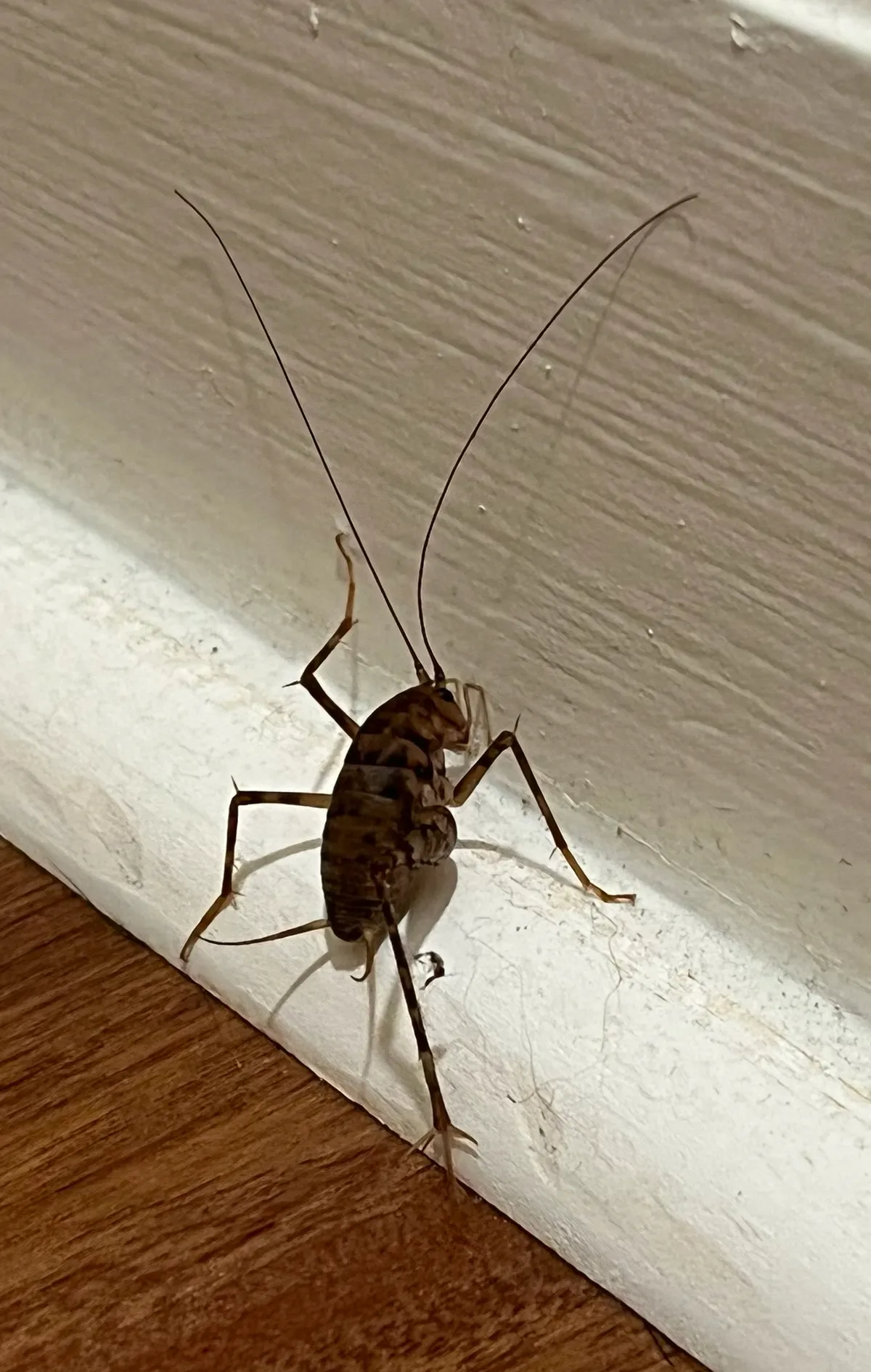
Camel cricket, cave cricket and spider cricket are names for the same group. The Missouri Department of Conservation (MDC) says they are common in caves, basements and cellars, that their long legs and antennae earn them the nickname spider crickets, and that about 150 species live in North America north of Mexico. MDC puts the body at up to about 1 inch, not counting legs and antennae, and says they can jump a surprisingly long distance.
They never chirp: Clemson says camel crickets have no sound-producing organs, and MDC says they cannot fly or chirp. NC State Extension's camel cricket fact sheet adds that the young, called nymphs, look almost identical to the adults, only smaller.
Which camel crickets live in houses?
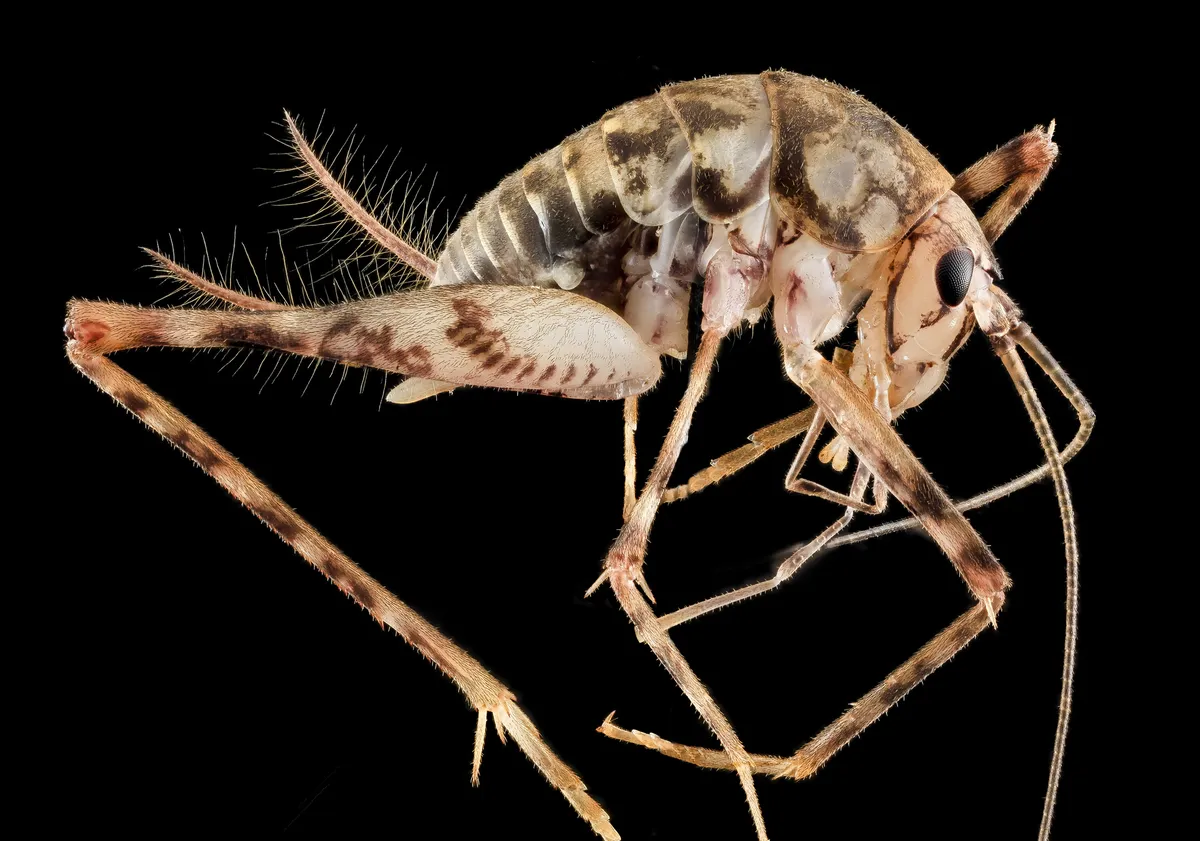
In the eastern United States, usually an Asian species, the greenhouse camel cricket (Diestrammena asynamora, also listed as Tachycines asynamorus). In a 2014 citizen-science study by NC State researchers, Epps and colleagues, writing in PeerJ, identified the camel crickets in photos or specimens from 163 households: 88% of those homes had the Asian genus Diestrammena and 12% the native genus Ceuthophilus. Of the Asian crickets named to species, 94% were the greenhouse camel cricket.
The paper says the species is native to Japan or the Sichuan region of China and was first recorded in North America in 1898, in a Minnesota greenhouse; NC State Extension calls it the greenhouse stone cricket, the camel cricket that frequently becomes a nuisance indoors. Pitfall traps in 10 Raleigh, North Carolina, yards caught up to 52 greenhouse camel crickets in one yard in two days, most of them in the trap nearest the house.
They are common. In the part of the study that polled households regardless of any interest in camel crickets, 24.4% had seen them in or around the home; positive reports ran 28% east of Colorado against 7% in the West, and nearly half of the households surveyed in Virginia, North Carolina, Missouri, Mississippi, Maryland and Tennessee reported them.
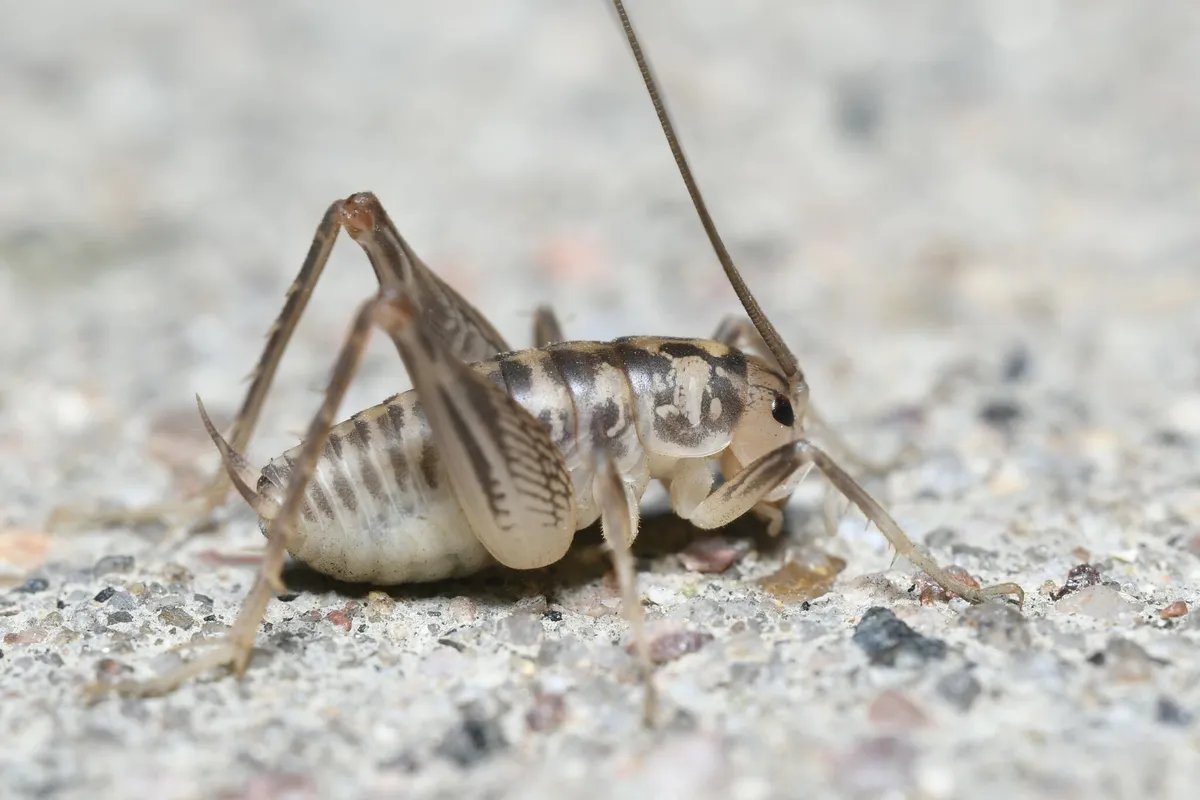
Native camel crickets of the genus Ceuthophilus still turn up, particularly in cellars and basements, and the paper says the native species found in houses are on average slightly larger than the greenhouse camel cricket. Telling them apart takes a close look at the leg spines and color pattern; the extension advice on this page covers every camel cricket.
Is a spider cricket a spider or a cricket?
A cricket. NC State says the camel cricket's long legs give it a spider-like look, and MDC ties the nickname to its long legs and antennae. Count legs and look for antennae: NC State Extension's guide to spiders in and around homes says insects have three main body sections and six legs while spiders have two and eight, and UC IPM's spider guide adds that spiders lack wings and antennae. A camel cricket's antennae are longer than its body.
The PeerJ researchers allowed for the mix-up, noting that a large spider might pass for a camel cricket to someone wary of bugs; the insects most often sent in by mistake were field crickets and their relatives. Three long-legged animals that also turn up indoors:
- Cellar spider. Penn State Extension's cellar spider page gives a body of 6 to 8 millimeters (about 1/4 to 5/16 inch) and, on an adult female, front legs about 2 inches long. It is pale tan or yellow, builds an irregular mesh web in cellars and garages and is not known to bite people; see the guide to common house spiders.
- Wolf spider. MDC's wolf spider page gives a body of 1/4 inch to 1 inch, legs not included, usually gray, brown, black or tan with dark markings, especially stripes. It spins no web to catch prey but runs it down on the ground, and NC State lists wolf spiders among the spiders that most often get into homes. See the wolf spider guide.
- House centipede. MDC's house centipede page describes up to 15 pairs of extremely long legs on a yellowish-brown body up to about 1 inch long (Penn State Extension gives 1 to 1 1/2 inches) with three dark stripes, in damp basements, crawl spaces, cellars and bathrooms. It runs remarkably fast and counts crickets among its prey; see the house centipede guide.
One more name to set aside: the camel spider is a different animal altogether, covered in the camel spider guide.
How is a camel cricket different from a house or field cricket?
Look for the hump and the wings, and listen. University of Maryland Extension's cricket page says that of the three crickets that commonly get into homes, only house and field crickets sing, the males rubbing an edge at the base of one front wing along a file-like ridge under the other. NC State says indoor chirping most likely comes from field crickets; a camel cricket has no wings and no sound-producing organs.
- House cricket: 3/4 to 7/8 inch, light yellowish brown with three dark bands on the head; especially fond of warmth but found in any part of the home, Maryland says.
- Field cricket: robust and black, 1/2 to 1 1/4 inches, usually on lower floors and in the basement.
- Camel cricket: 1/2 to 1 1/4 inches by Maryland's measure, light tan to dark brown and humped, with extremely long antennae and hind legs; it almost always stays in damp basements and crawl spaces.
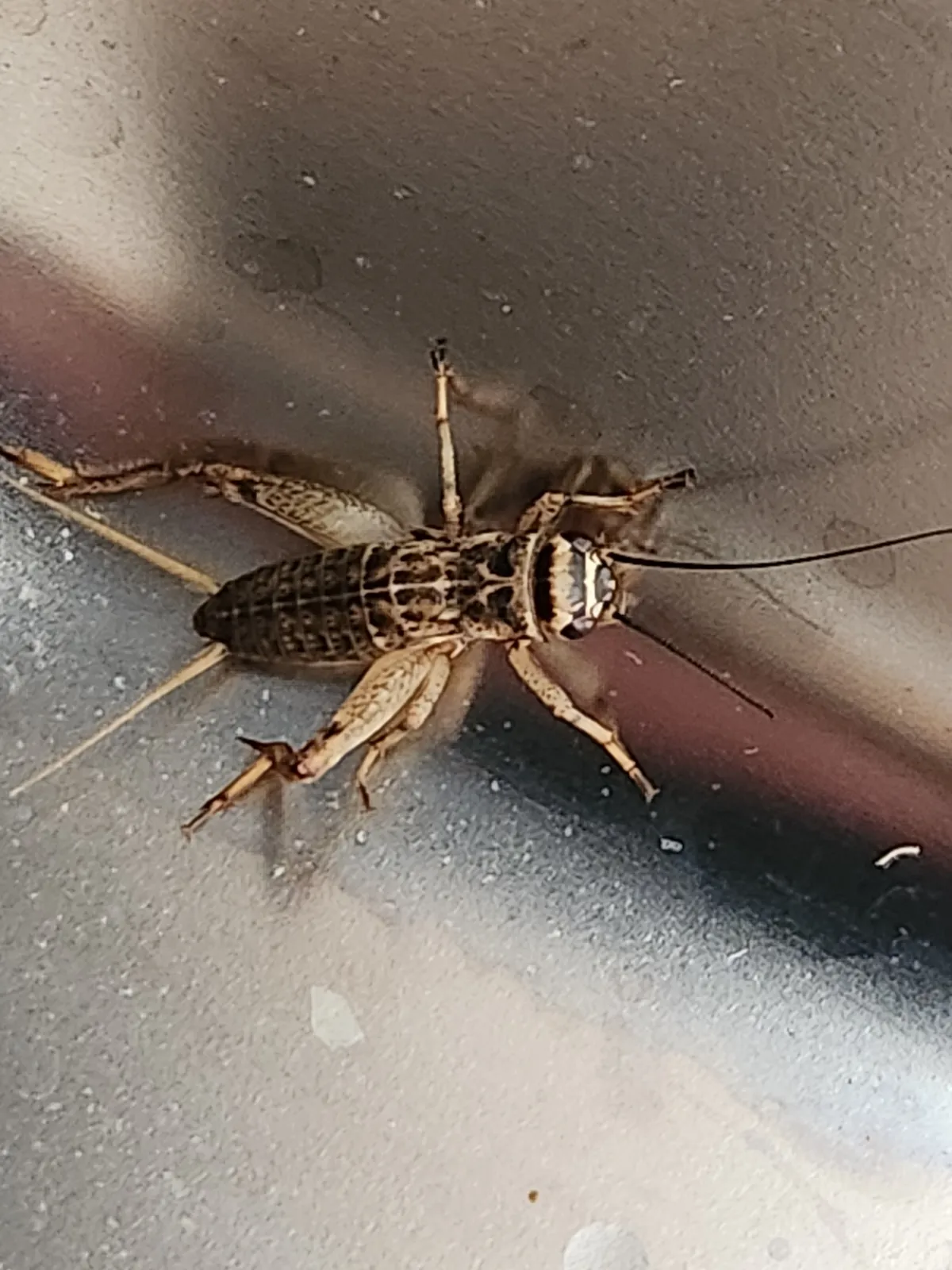
Chirping crickets are covered in the guide to crickets in the house. Two more crickets are easy to rule out: the University of Kentucky's cricket page says mole crickets burrow underground and feed on plant roots (the mole cricket guide covers them), and UC IPM's Jerusalem cricket page puts the Jerusalem cricket, a round-headed insect up to about 2 inches long, in a separate family.
Commonly confused with
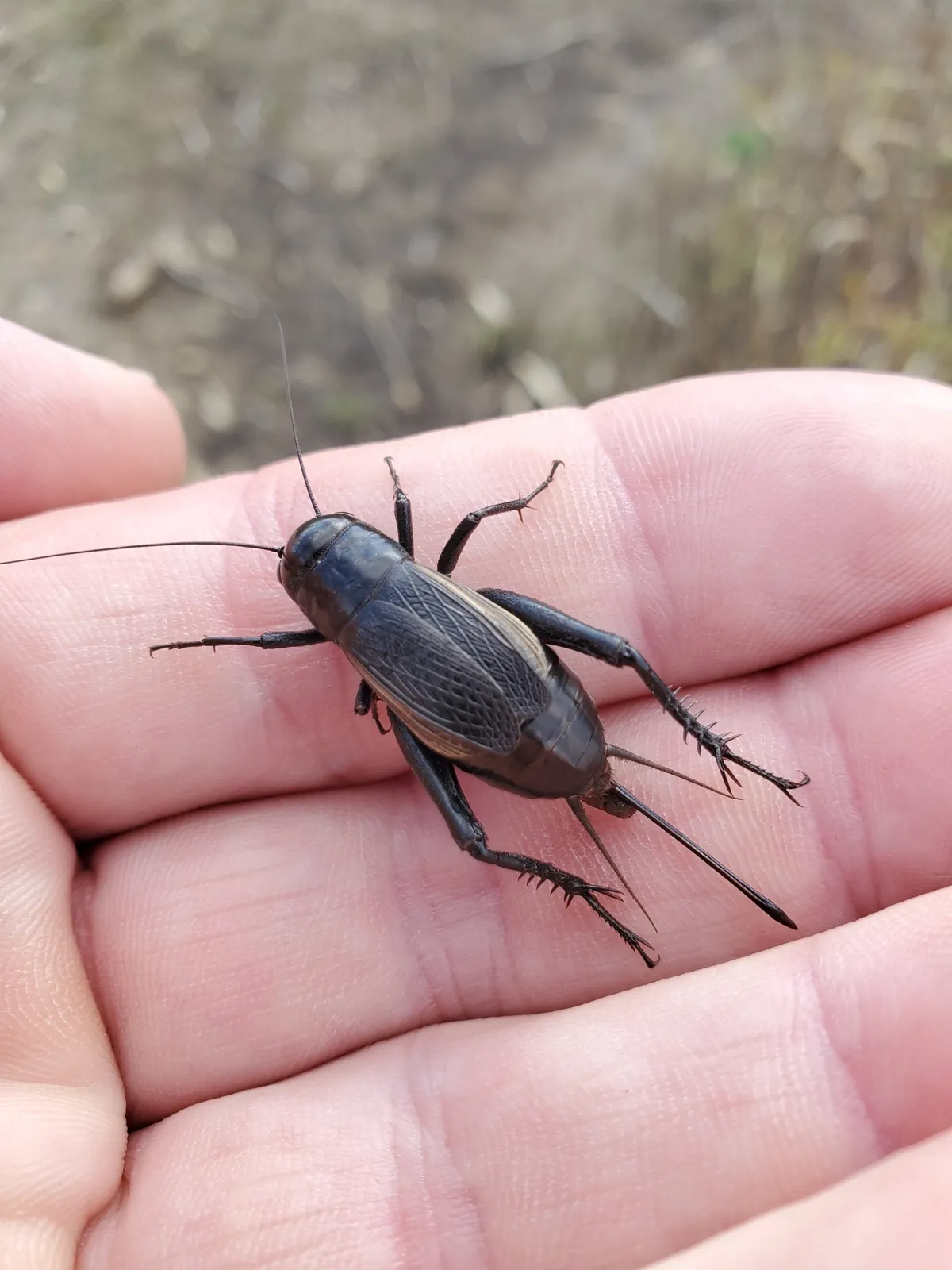 Field cricketBlack and winged, 1/2 to 1 1/4 inches; males chirp, which a camel cricket never does
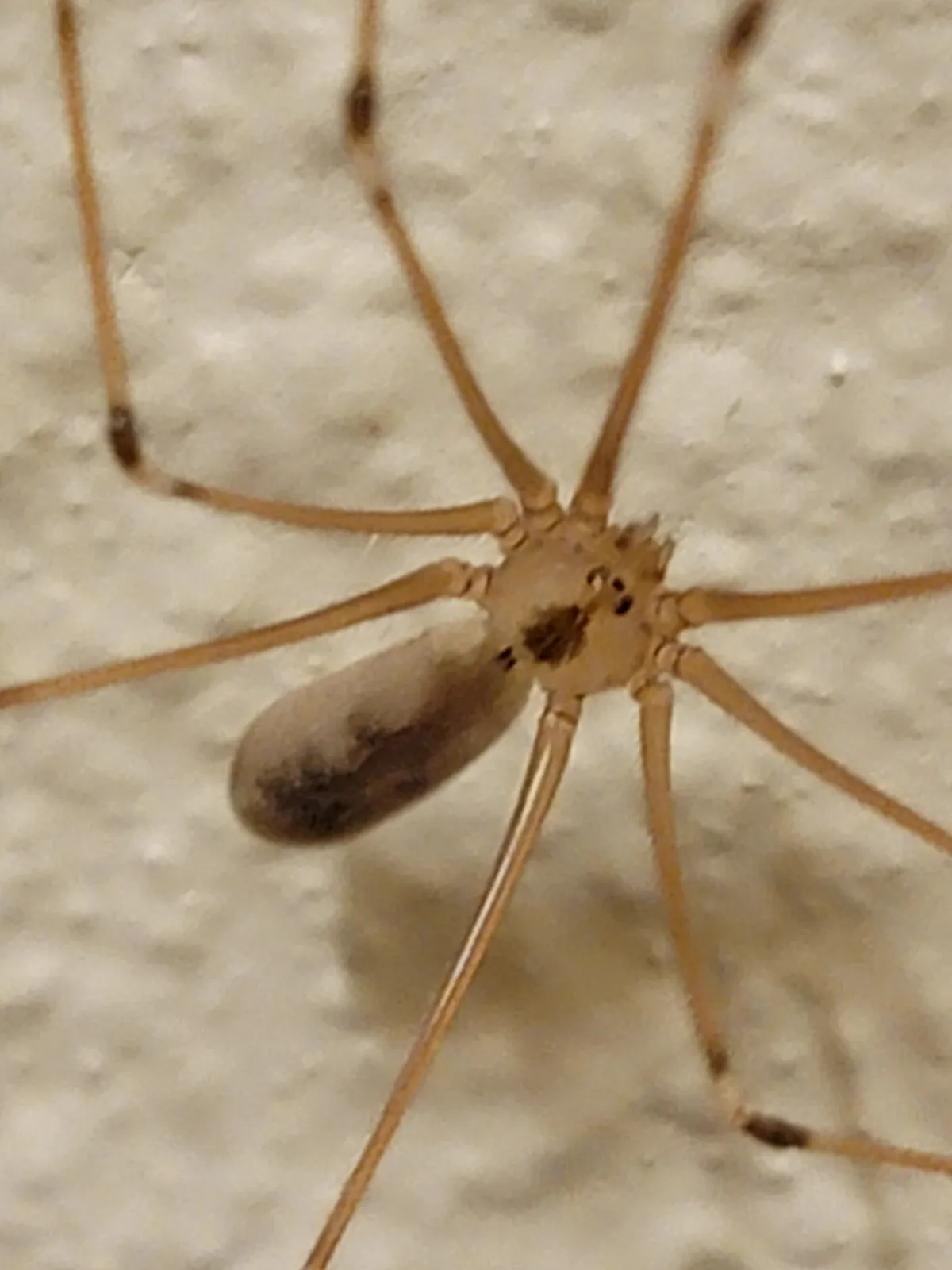 Cellar spiderEight very long, thin legs on a small, pale body, and no antennae
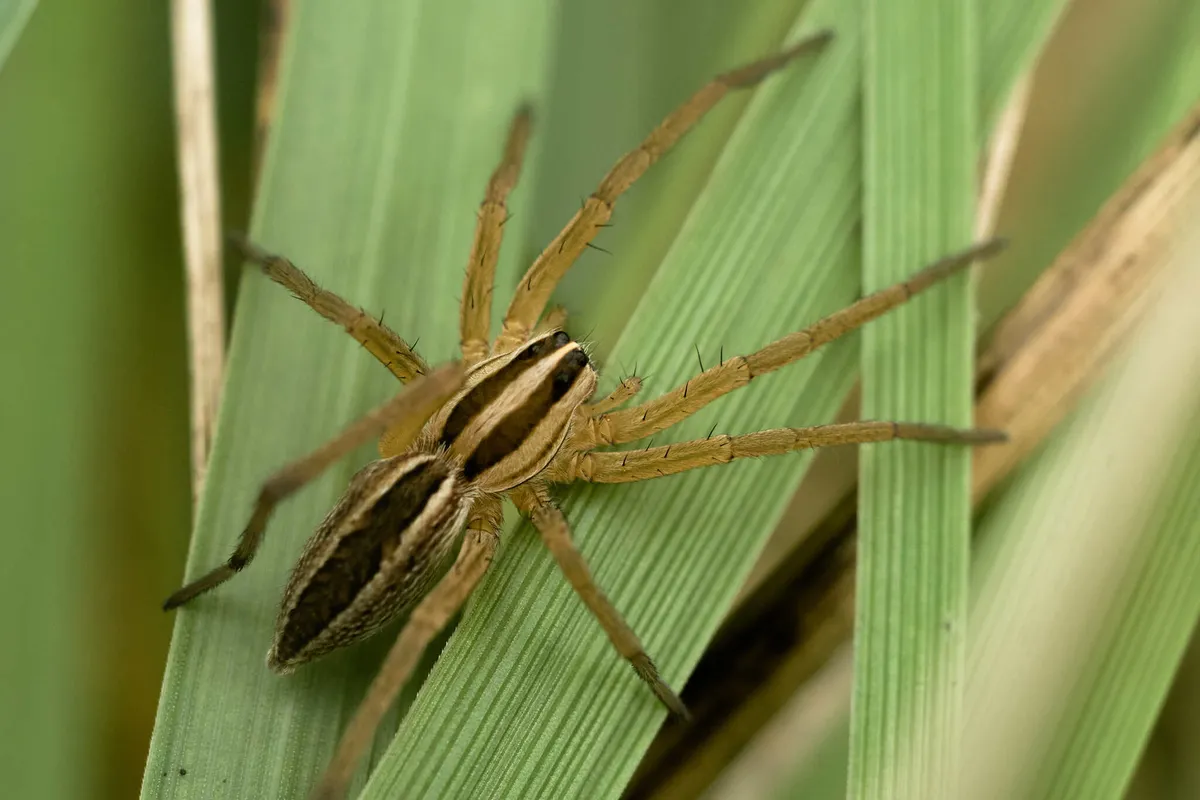 Wolf spiderEight legs and no antennae, often striped; hunts on the ground without a web
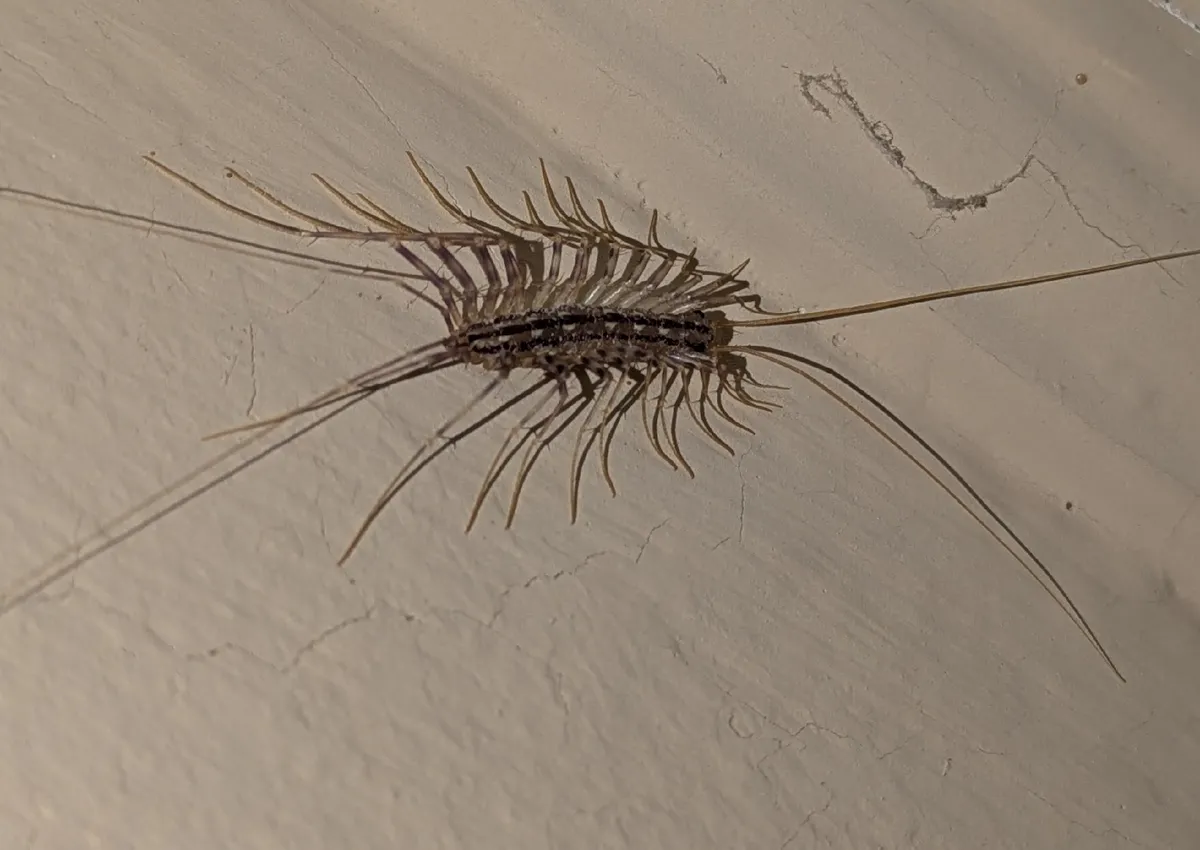 House centipedeUp to 15 pairs of very long legs and three dark stripes; runs very fast
Photos: Field cricket: no rights reserved, via iNaturalist, CC0 1.0. Cellar spider: no rights reserved, via iNaturalist, CC0 1.0. Wolf spider: no rights reserved, via iNaturalist, CC0 1.0. House centipede: no rights reserved, via iNaturalist, CC0 1.0.
Why are there camel crickets in my basement?
Because it is damp and dark. Clemson says camel crickets are active at night and drawn to high humidity and moisture, usually staying in damp basements, crawl spaces or garages but moving into living areas in dry conditions; NC State adds storage buildings, bathrooms and laundry rooms. MDC says that if they are numerous in your basement, you may have a moisture problem that should be fixed.
Most come in from outside. Iowa State University Extension calls them accidental invaders that wander in from nearby. NC State finds them outdoors under stones and logs, in firewood stacks and in dense ivy and ground covers, and says they often become a problem in extreme weather, such as heavy rain or long hot, dry spells. The Raleigh study found greenhouse camel crickets common in yards as well as houses.
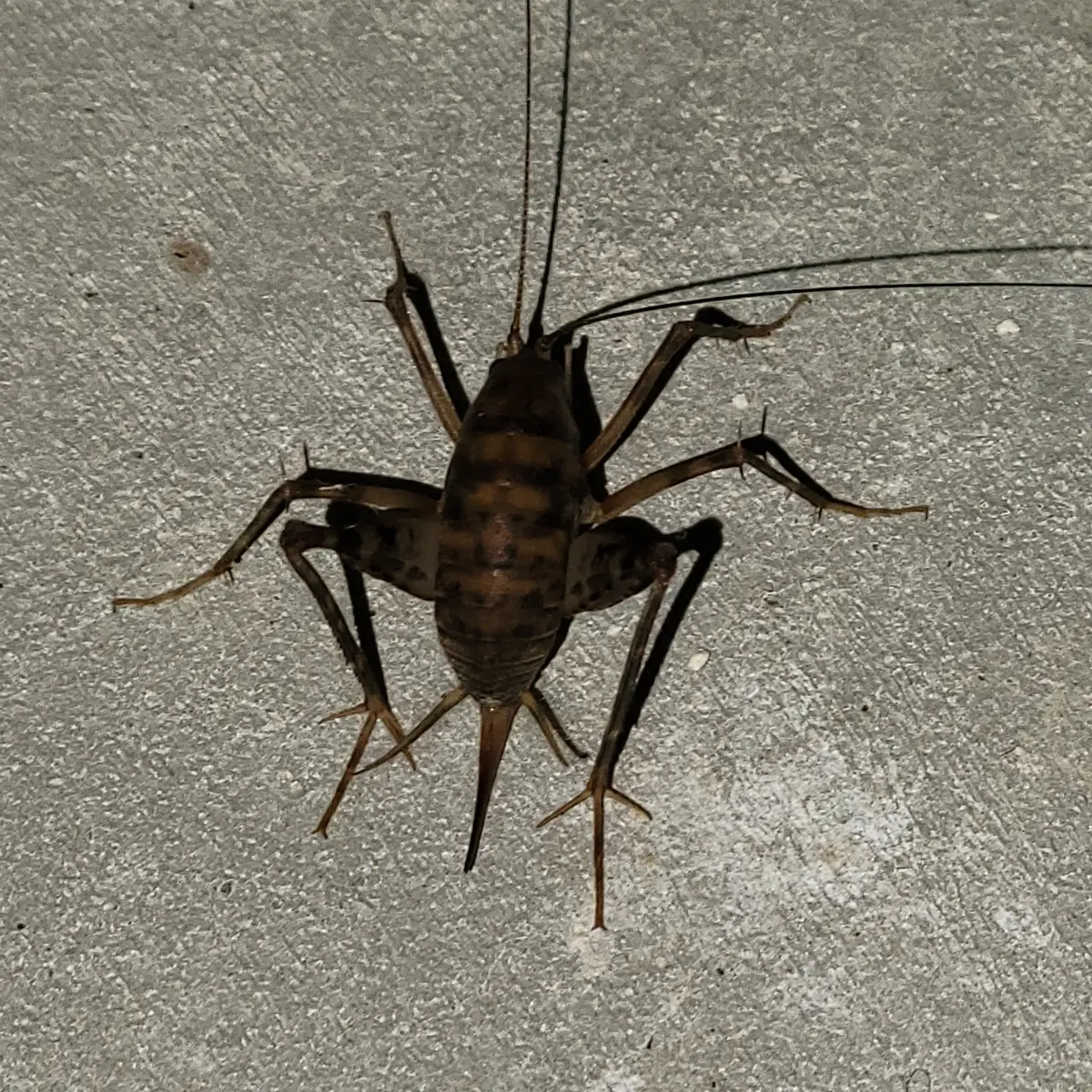
They are not only a summer problem: NC State and Clemson say camel crickets pass the winter as nymphs or adults, and the one above was photographed in a basement in December. The guide to bugs in the house in winter covers the other cold-season regulars.
Do camel crickets breed indoors?
They can, and the sources differ on how often. MDC says they are unlikely to breed inside buildings unless conditions such as darkness and moisture are just right, and Iowa State says they generally do not reproduce indoors except where it stays dark and moist all the time. Maryland Extension says camel crickets may reproduce indoors, though most pest crickets wander in from outside, and Clemson says they may breed year-round in greenhouses and other warm places.
Females lay eggs in the soil in early spring and the nymphs hatch a few weeks later, NC State says, and the PeerJ paper reports that the greenhouse camel cricket breeds year-round in heated greenhouses and is thought to breed only in the dark. Clemson notes that very little is known about the biology of this group, and none of the sources here gives a lifespan.
Do camel crickets bite?
None of the sources used here reports a camel cricket bite. MDC calls camel crickets completely harmless, and the University of Kentucky's entomologists say that despite their fearsome appearance they are harmless and prefer to stay out of people's way. Mary Jane Epps, lead author of the NC State study, said in the university's news release on the study that camel crickets do not bite or pose any threat to people.
They do jump: Clemson calls them very strong jumpers and MDC says they can jump a surprisingly long distance, but none of these sources says they jump at people or describes the jump as an attack. MDC says they eat organic debris, insects and other small arthropods, and the study's co-author Holly Menninger said in the same release that they may even do a useful job eating the dead matter that builds up in basements and garages.
Can camel crickets damage anything?
Stored fabrics and houseplants, when there are many. Clemson says camel crickets can damage fine fabrics and houseplants indoors, and NC State says that, left unchecked and short of food, they can damage garments and linens boxed in a garage or basement. Maryland, writing about crickets in general, says soiled fabrics are the most likely to be chewed and that unless dozens of crickets are in the home, the damage usually goes unnoticed.
NC State's sign of a heavy infestation: dark fecal smears on surfaces such as floor joists.
How do you get rid of camel crickets?
Dry the space, seal the way in and remove the ones you see, all before any insecticide. Maryland Extension says solving high moisture problems in a basement will greatly reduce or eliminate camel crickets: fix leaks, dehumidify and use sticky traps.
- Dry it out. Fix leaks and dehumidify (Maryland), and reduce moisture in basements and crawl spaces and ventilate them (NC State, Clemson). The EPA's guide to mold and moisture suggests indoor relative humidity below 60 percent, ideally 30 to 50 percent; how to size a dehumidifier for a damp basement covers choosing one.
- Vacuum or trap the ones you see. Maryland calls the vacuum cleaner one of the most effective and least toxic ways to remove crickets indoors, and Clemson says to throw the bag away afterward. NC State puts sticky boards, the kind used for cockroaches and mice, in corners and behind appliances; Clemson puts glue traps near doorways.
- Seal the way in. NC State lists gaps around window frames, doors, foundations, dryer vents, crawl space access doors, soffits and utility lines, and weather stripping that seals house and garage doors against the threshold; Maryland adds screened crawl space vents.
- Clear the ground next to the house. NC State keeps mulch and ground cover at least 12 inches from the foundation, with gravel or another inorganic cover nearest it, and firewood, lumber and clutter away from the house and decks. Iowa State removes piles of bricks, stones, boards and leaves, and Clemson mows weeds and tall grass beside the building.
- Get stored things off the floor. NC State and Clemson both say to stack boxes off the floor and away from the walls in garages, basements and storage buildings; Clemson suggests pallets.
None of the extension sources cited here recommends a scent, a repellent or a plug-in device; the evidence on ultrasonic pest repellers is covered separately.
Should you use an insecticide for camel crickets?
Only after drying and sealing, and outdoors first. Clemson says to consider chemical control only if the problem continues after the habitat and entry changes, and indoors only when the population is large or valuable items are threatened. Maryland calls outdoor baits or perimeter sprays justified in extreme situations while repairs are under way, and says chemical control should always go with permanent repairs.
NC State starts with outdoor barrier treatments on foundation walls and around vents, crawl space access points and basement doors and windows, plus insecticidal baits along the perimeter, which work less well in heavy rain. In crawl spaces it puts baits in corners or along the sill plate, notes that the better granular baits are not readily available to the public and urges caution with sprays in confined spaces. It says the need for household insecticides on baseboards and behind appliances should drop once gaps are sealed, and Iowa State calls indoor floor treatment a last resort of limited benefit.
Use only a product labeled for the place you treat, as Clemson says; Maryland notes that a variety of homeowner products are labeled for cricket control. The EPA explains that pesticide labels are legally enforceable and that using a product in a way its label does not allow violates federal law. Maryland adds that licensed pest control operators can be hired by anyone who would rather not handle pesticides.
Use any pesticide exactly as its label directs. The label is the law, and what is registered and sold varies by state.
Frequently Asked Questions
Do camel crickets bite or sting?+
None of the sources used here reports a camel cricket biting or stinging anyone. The Missouri Department of Conservation calls them completely harmless, the University of Kentucky says they are harmless despite their fearsome appearance and prefer to stay out of people's way, and the NC State researchers who studied camel crickets in American homes say they do not bite or pose any threat to people. Iowa State says an occasional one can simply be picked or swept up.
Why do camel crickets jump at you?+
None of the extension sources used here says they do. Clemson Extension describes camel crickets as very strong jumpers with large hind legs, and the Missouri Department of Conservation says they can jump a surprisingly long distance, but neither describes them jumping toward people or attacking, and no source here reports a bite. To remove one, University of Maryland Extension recommends a vacuum, and Iowa State says an occasional cricket can be picked or swept up and discarded.
Are camel crickets good or bad to have in the house?+
Mostly neither. The Missouri Department of Conservation calls them completely harmless and of no economic importance, and NC State researchers say that as scavengers they may even help by eating the dead matter that collects in basements and garages. The drawbacks are the nuisance, damage to stored fabrics and houseplants when there are many, according to Clemson and NC State, and what they point to: the Missouri Department of Conservation says a basement full of them may have a moisture problem worth fixing.
Why am I seeing so many camel crickets?+
Usually because of moisture and weather. The Missouri Department of Conservation says large numbers in a basement may mean a moisture problem, Clemson says camel crickets are drawn to high humidity and moisture, and NC State says they often become a problem during extreme weather, such as heavy rain or long hot, dry spells. A 2014 study also found that the greenhouse camel cricket can be abundant around homes, with up to 52 caught in one Raleigh, North Carolina, yard in two days.
What kills camel crickets instantly?+
None of the extension sources here offers an instant fix; they pair removal with drying and sealing. For the ones you see, University of Maryland Extension calls a vacuum one of the most effective and least toxic options, and NC State suggests sticky boards in corners and behind appliances. When insecticides are needed, NC State and Clemson start outdoors around the foundation, and the product must be labeled for the place you treat. The EPA says using a pesticide in a way its label does not allow violates federal law.
What smell do camel crickets hate?+
None of the extension sources used here names a smell, oil or repellent that keeps camel crickets away. What they recommend instead is taking away the damp, dark shelter the crickets want: fixing leaks, dehumidifying and ventilating basements and crawl spaces, sealing gaps and weather-stripping doors, moving mulch, firewood and debris away from the foundation, and catching the ones inside with a vacuum or sticky traps.
Where are camel crickets found in the US?+
Across much of the country. About 150 species live in North America north of Mexico, according to the Missouri Department of Conservation. In a 2014 citizen-science study, people in 39 states and the District of Columbia reported camel crickets in or around their homes, with far more reports east of Colorado than west of it. The Asian greenhouse camel cricket was the species found in most of the homes that sent in photos or specimens.
What do camel crickets eat?+
They are scavengers. The Missouri Department of Conservation says adults and nymphs feed on organic debris, insects and other small arthropods, and the 2014 PeerJ study says the greenhouse camel cricket appears to be an omnivorous scavenger and has been reported eating living and dead plant matter and dead insects. Clemson Extension says camel crickets can eat animal products, plants, fabrics and other insects, which is why large numbers can damage fine fabrics and houseplants.
What time of year do camel crickets come out?+
There is no single season in the sources. NC State and Clemson say camel crickets pass the winter as nymphs or adults, and that females lay eggs in the soil in spring, with the nymphs hatching a few weeks later. NC State says they often become a problem during extreme weather, such as heavy rain or long hot, dry spells, and Clemson and the Missouri Department of Conservation say they are active at night.
Do camel crickets lay eggs in your house?+
Sometimes, but sources differ on how often. The Missouri Department of Conservation says they are unlikely to breed inside buildings unless conditions such as darkness and moisture are just right, and Iowa State says they generally do not reproduce indoors except where it stays dark and moist. University of Maryland Extension says camel crickets may reproduce indoors, and Clemson says they may breed year-round in greenhouses and other warm places. Females lay their eggs in soil, NC State says.
Sources
- Camel Crickets — NC State Extension (Waldvogel, Alder and Hayes; revised 2023)
- Camel Crickets (HGIC 2405) — Clemson Cooperative Extension Home & Garden Information Center
- Crickets — University of Maryland Extension, Home and Garden Information Center
- Camel Crickets (Cave Crickets) — Missouri Department of Conservation
- Camel Cricket (Yard and Garden) — Iowa State University Extension and Outreach
- Crickets (Kentucky Critter Files) — University of Kentucky Department of Entomology
- Too big to be noticed: cryptic invasion of Asian camel crickets in North American houses — PeerJ (Epps, Menninger, LaSala and Dunn, 2014), via PubMed Central
- Asian Camel Crickets Now Common in U.S. Homes — NC State University News
- Spiders in and Around Homes — NC State Extension (Waldvogel and Apperson; revised 2022)
- Pest Notes: Spiders (UC ANR Publication 7442) — University of California Statewide IPM Program
- Longbodied Cellar Spider — Penn State Extension
- Wolf Spiders — Missouri Department of Conservation
- House Centipede — Missouri Department of Conservation
- House Centipedes — Penn State Extension
- Jerusalem Cricket — University of California Statewide IPM Program
- Introduction to Pesticide Labels — US Environmental Protection Agency
- A Brief Guide to Mold, Moisture and Your Home — US Environmental Protection Agency
How this guide was made: it was researched and drafted with AI assistance from the sources listed above. A second, independent AI pass then checked each factual claim against those sources. Found an error? Email support@buzzskito.ca.