
Published by BuzzSkito Mosquito & Tick Control
Published October 29, 2026 · Fact-checked against the sources listed below
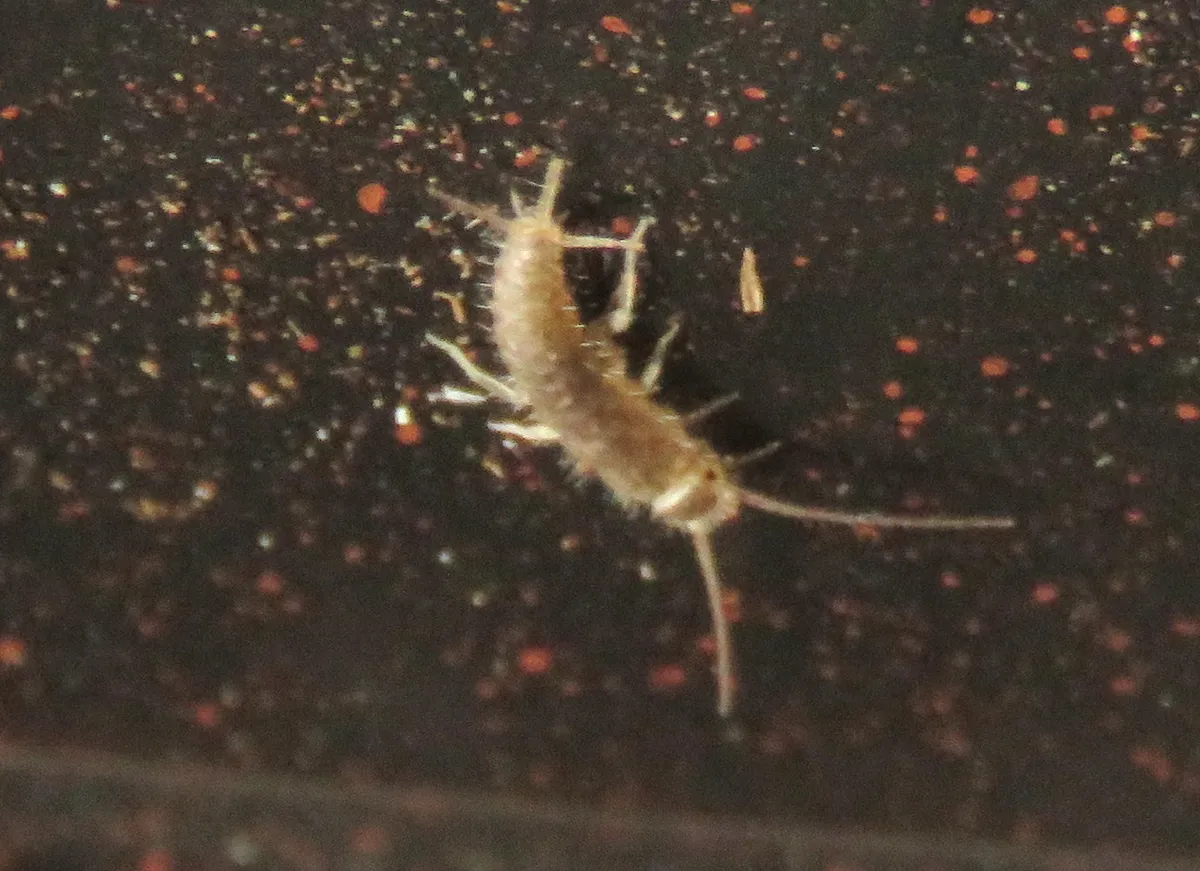
What do baby silverfish look like?
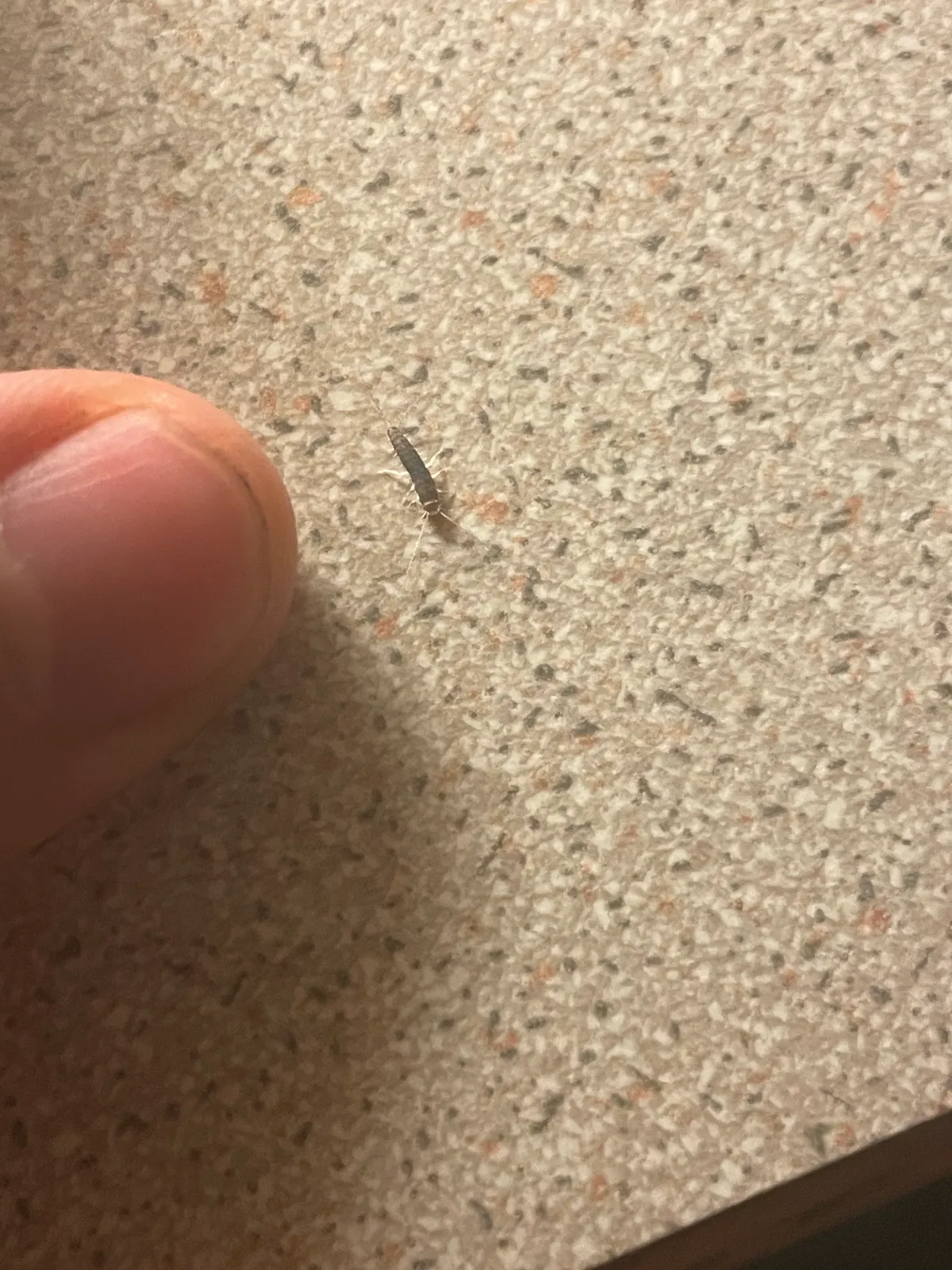
Baby silverfish look like small, pale versions of the adults from the day they hatch. UC IPM's Pest Notes on silverfish and firebrats describes newly hatched ones as about 1/16 inch long, plump, white and without scales, and Penn State Extension's bristletail page says the young resemble the adults but have no scales until after several molts. The outline is the adult's: a slender, wingless body tapering to three long tail bristles, with two long antennae.
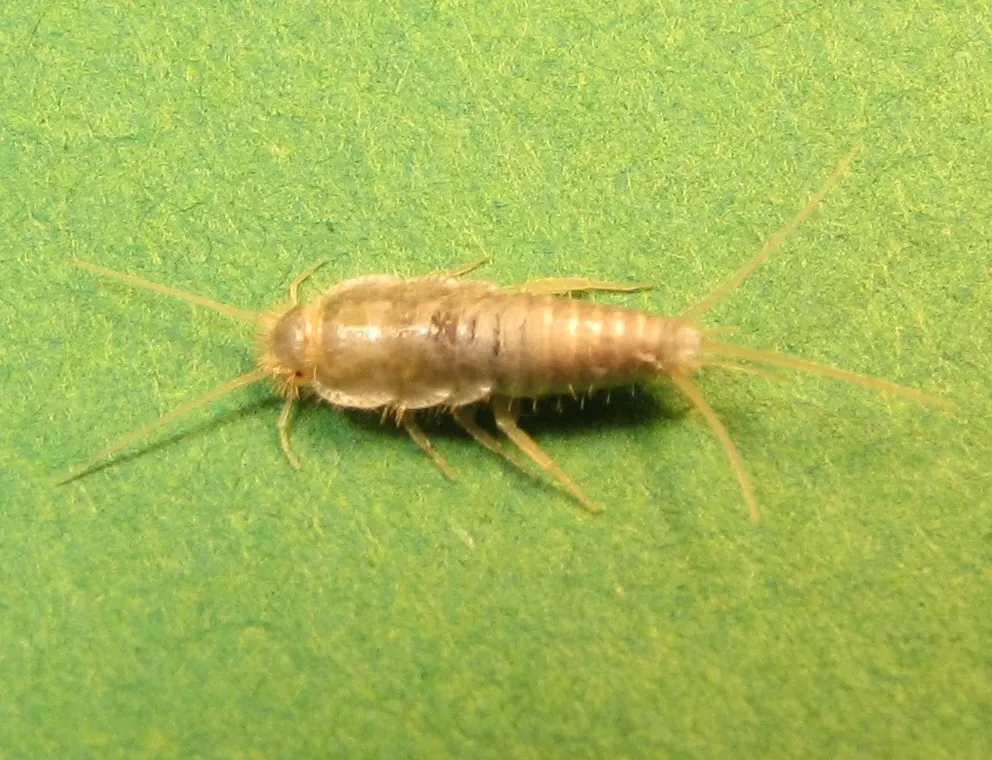
Color and scales change as they grow. NC State Extension's silverfish fact sheet says the young are whiter than the adults and darken to adult color in four to six weeks. UC IPM says nymphs shorter than 1/8 inch have no scales, while larger nymphs and adults do, and that the scales arrive about 12 days after the fourth molt. The whiter and smaller the silverfish, the younger it is.
How big are baby silverfish?
About 1/16 inch when they hatch, by UC IPM's figure, growing a little with each molt to adult size: about 1/2 inch for the common silverfish (up to 3/4 inch, UC IPM says) and about 3/4 inch for the gray silverfish, by University of Missouri Extension's silverfish guide.
| Stage | Size | What it looks like |
|---|---|---|
| Egg | About 1/25 inch (UC IPM) or 1/32 inch (UF/IFAS) | Whitish and oval |
| Newly hatched nymph | About 1/16 inch | Plump and white, with no scales |
| Small nymph | Under 1/8 inch | Still without scales |
| Larger nymph | From about 1/8 inch to adult size | Scaled; a smaller copy of the adult, darkening to its color |
| Adult common silverfish | About 1/2 inch, up to 3/4 inch | Shiny silver or pearl gray |
| Adult gray silverfish | About 3/4 inch | Uniformly gray, with no markings |
Sources: UC IPM, UF/IFAS, NC State and Missouri.
What do silverfish eggs look like, and where are they laid?
Silverfish eggs are whitish ovals about 1/32 to 1/25 inch long. UC IPM gives about 1/25 inch, and UF/IFAS Extension's guide to booklice and silverfish describes them as whitish, oval and about 1/32 inch; firebrat eggs, it says, are soft, white and opaque when laid and later turn yellowish.
Females tuck them away: into crevices, onto cloth, or into food or dust, UC IPM says, often in the shared hiding place where the group rests by day, where crowding helps keep the temperature and humidity steady around the eggs and young nymphs. UF/IFAS names spots behind books or on closet shelves, and Missouri cracks and crevices near food. Look for them with a flashlight and a magnifying glass in the cracks nearest to where you have seen young ones.
Clutch sizes vary by species and source. UC IPM gives an average clutch of 50 eggs (1 to 200) for silverfish and firebrats together; Penn State says silverfish lay one to three eggs at a time; NC State says a female may lay over 100 in her lifetime; and Virginia Tech's silverfish fact sheet says usually fewer than 100 over a lifespan of 2 to 8 years.
What is the silverfish life cycle?
Egg, nymph and adult, with no larva or pupa in between. Virginia Tech lists those three stages, and Missouri says the eggs hatch into nymphs that look like small adults. Growth never quite stops: UC IPM says silverfish molt throughout their lives, through 45 to 60 stages, and Missouri says they have been seen to shed their skins more than 30 times a year.
Warmth sets the pace. UC IPM says silverfish can become adults in as few as 60 days above 75°F or take as long as 500 days below 50°F, and that eggs can stay dormant for up to 6 weeks in the cold. The other extension services give different figures:
| Source | Eggs hatch in | Egg to adult | Lifespan |
|---|---|---|---|
| UC IPM | About 19 to 32 days | 60 days above 75°F to 500 days below 50°F | About 3 years |
| NC State | 3 to 6 weeks | Not given (adult color in 4 to 6 weeks) | Adults 2 to 8 years |
| Penn State | 19 to 43 days | A few months to 3 years | At least 2 to 3 years |
| Missouri | Not given | 3 months to 3 years | Up to about 6 years |
| UF/IFAS | 2 to 8 weeks | 3 to 24 months | Adult females 2 to 5 years |
| Virginia Tech | 2 weeks at best; can take much longer | Several years to sexual maturity | 2 to 8 years |
Each source's own silverfish figures, not averaged (UF/IFAS covers silverfish and firebrats together).
The gray silverfish has figures of its own. A 2020 study of gray silverfish in Norwegian buildings notes that the species passes through 13 immature stages taking one and a half to two years at about 72°F (22°C); its authors, at the Norwegian Institute of Public Health, sorted the small nymphs they caught into those without scales (stages 1 to 3) and those with scales (stages 4 to 8).
Which silverfish is it: common, gray or firebrat?
The hatchlings look alike, so where you found one is a useful clue; UC IPM's description of white, scaleless hatchlings covers silverfish and firebrats alike. Missouri Extension names four important house-dwelling species in North America:
- Common silverfish. Silvery, about 1/2 inch; prefers 70 to 80°F and high humidity, so it stays near moisture in basements, lower floors and crawl spaces.
- Gray silverfish. Also called the long-tailed silverfish; uniformly gray, about 3/4 inch; prefers 80 to 85°F and tolerates a wide range of humidity, so it turns up from basement to attic, in closets, storage areas and kitchens.
- Four-lined silverfish. Tannish gray with four lines down the back, about 1/2 inch; found in the same places as the gray silverfish.
- Firebrat. Mottled gray with dark patches, about 1/2 inch; prefers about 100°F, around boiler rooms, water heaters, ovens and attics.
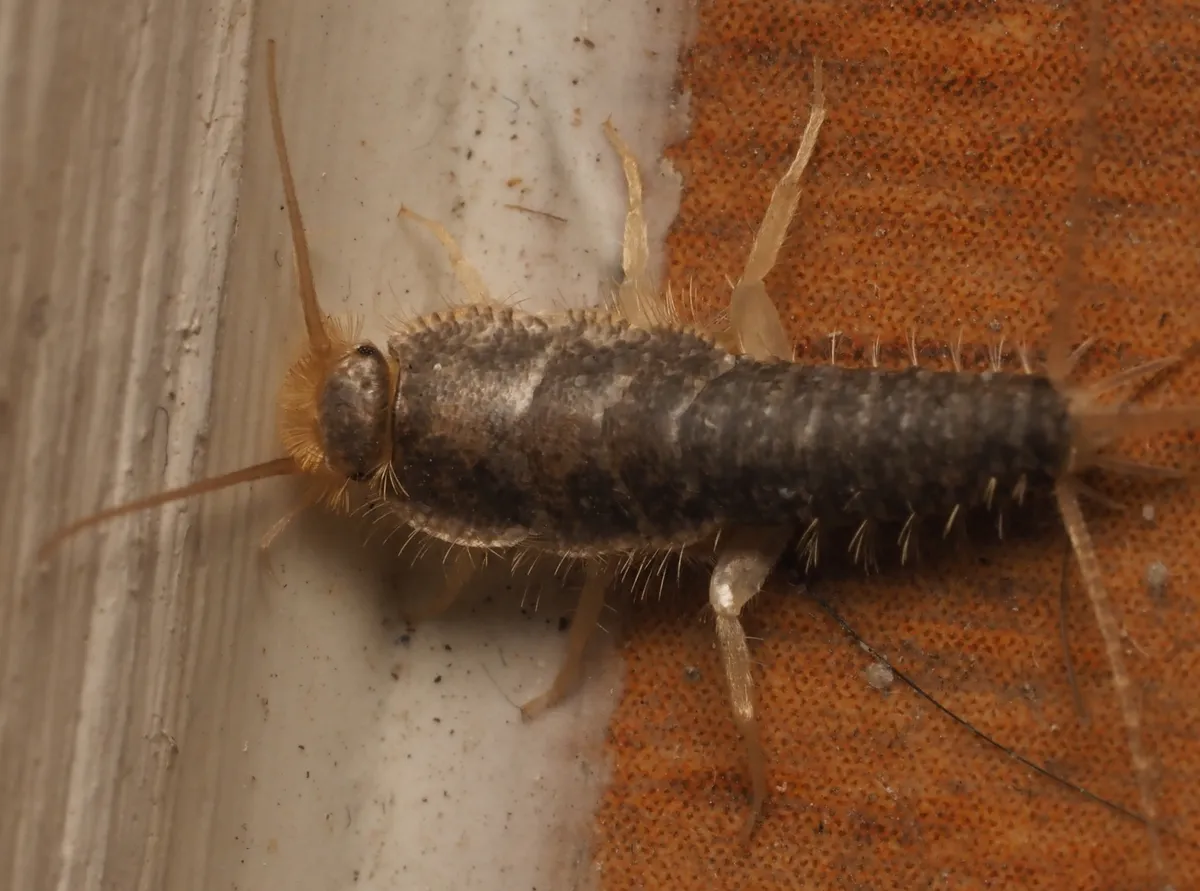
Firebrat young grow up faster: UC IPM says firebrat eggs hatch in about 14 days and the young can become adults in as few as 40 days above 75°F. Virginia Tech says firebrats lay eggs only above 90°F, that their nymphs cannot survive below freezing or above 112°F, and that they can mature in 11 to 12 weeks in ideal conditions.
Where do baby silverfish turn up?
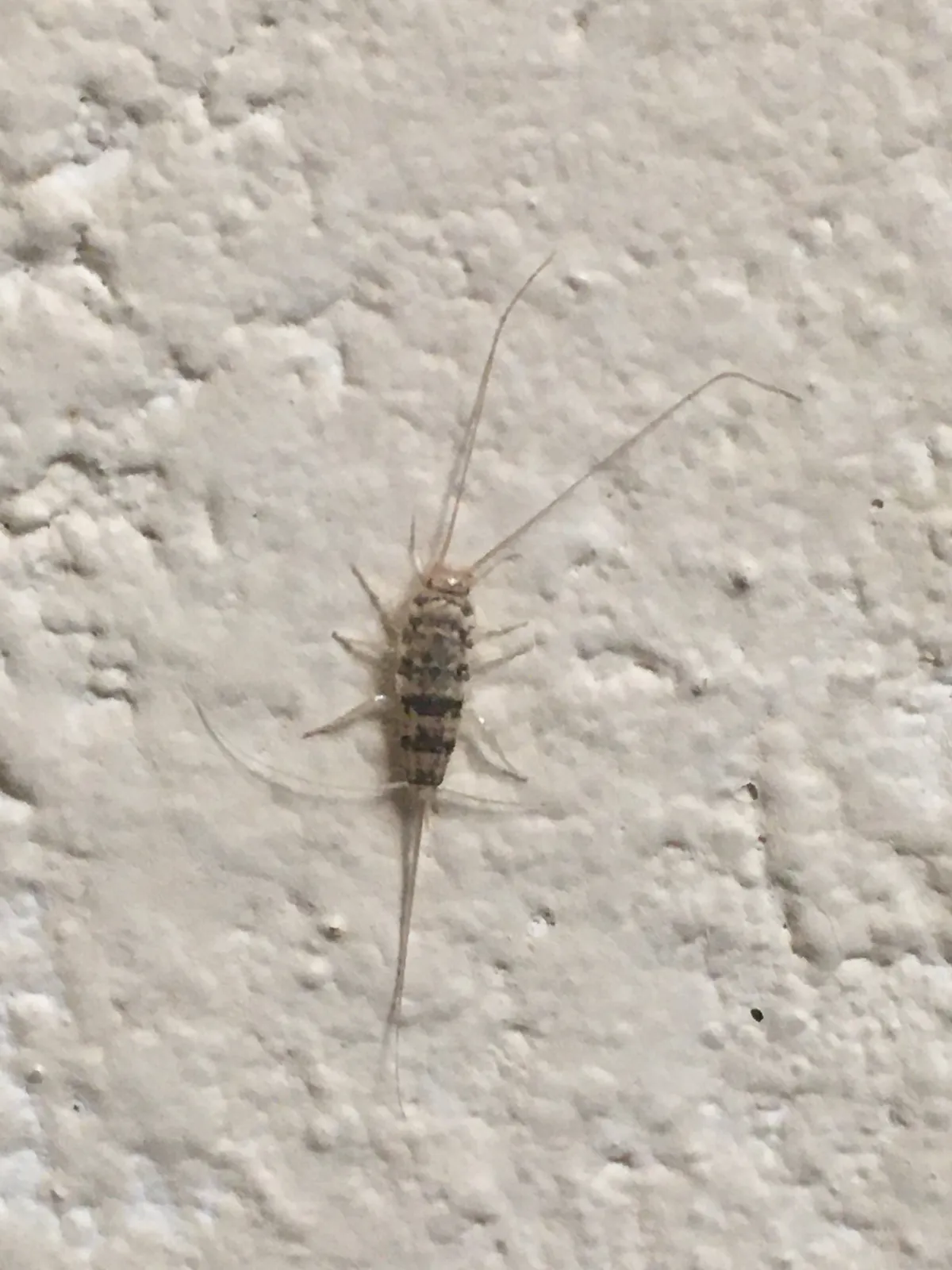
Wherever the adults hide, since that is where the eggs are often laid. NC State lists bathrooms, basements and bookshelves, and places where rarely used items are stored; Missouri adds attics, wall voids, hollow decorative beams, dark closets and storage rooms. Both say silverfish are active at night.
Where to look for young silverfish
- Tubs and sinks. Silverfish do not come up the drain, UC IPM says; they fall in and cannot climb the slippery sides. Virginia Tech says a trapped one can be the first sign a homeowner notices.
- Books, papers and closet shelves. UF/IFAS says females lay eggs in spots such as behind books and on closet shelves.
- Boxes and furniture from storage. Missouri says eggs, nymphs or adults can arrive on infested boxes, cartons and furniture.
- Laundry rooms, bathrooms and basements. Silverfish need damp air: UC IPM names laundry rooms at 71 to 90°F, and NC State bathrooms and basements.
- Beside the water heater or furnace. Hot spots like these suit firebrats (UC IPM, Missouri).
What else looks like a baby silverfish?
Several small household insects, and the tail end sorts most of them: a silverfish of any size tapers to three long bristles. Then compare:
- Booklice. Usually under 1/16 inch, soft and translucent white to light brown, with a bulging face; UF/IFAS says most indoor kinds are wingless and often live among books and papers. See booklice.
- Springtails. About 1/16 inch; UC IPM's springtail Pest Notes says they jump with a spring tucked under the body and often get trapped in sinks and bathtubs. See springtails.
- Carpet beetle larvae. Hairy: UC IPM's carpet beetle Pest Notes says the black carpet beetle's larva, up to 5/16 inch, is covered in short, stiff hairs and tapers to a tuft of long hairs. See carpet beetle larvae.
- Young earwigs. Smaller, wingless copies of the adults, pincers included, by UC IPM's earwig Pest Notes. See how to get rid of earwigs.
- Cockroach nymphs. Wingless; German cockroach nymphs run 1/8 to 9/16 inch, says Rutgers' German cockroach fact sheet, and UC IPM's cockroach Pest Notes says a cockroach is white right after it molts and darkens, usually within hours. See what baby cockroaches look like.
- Bed bug nymphs. About 1/16 inch at hatching and translucent or whitish-yellow, by the EPA's bed bug life cycle page, and hiding in mattress seams and bed frame cracks, by the EPA's guide to finding bed bugs. See what baby bed bugs look like and what finding one means.
Commonly confused with
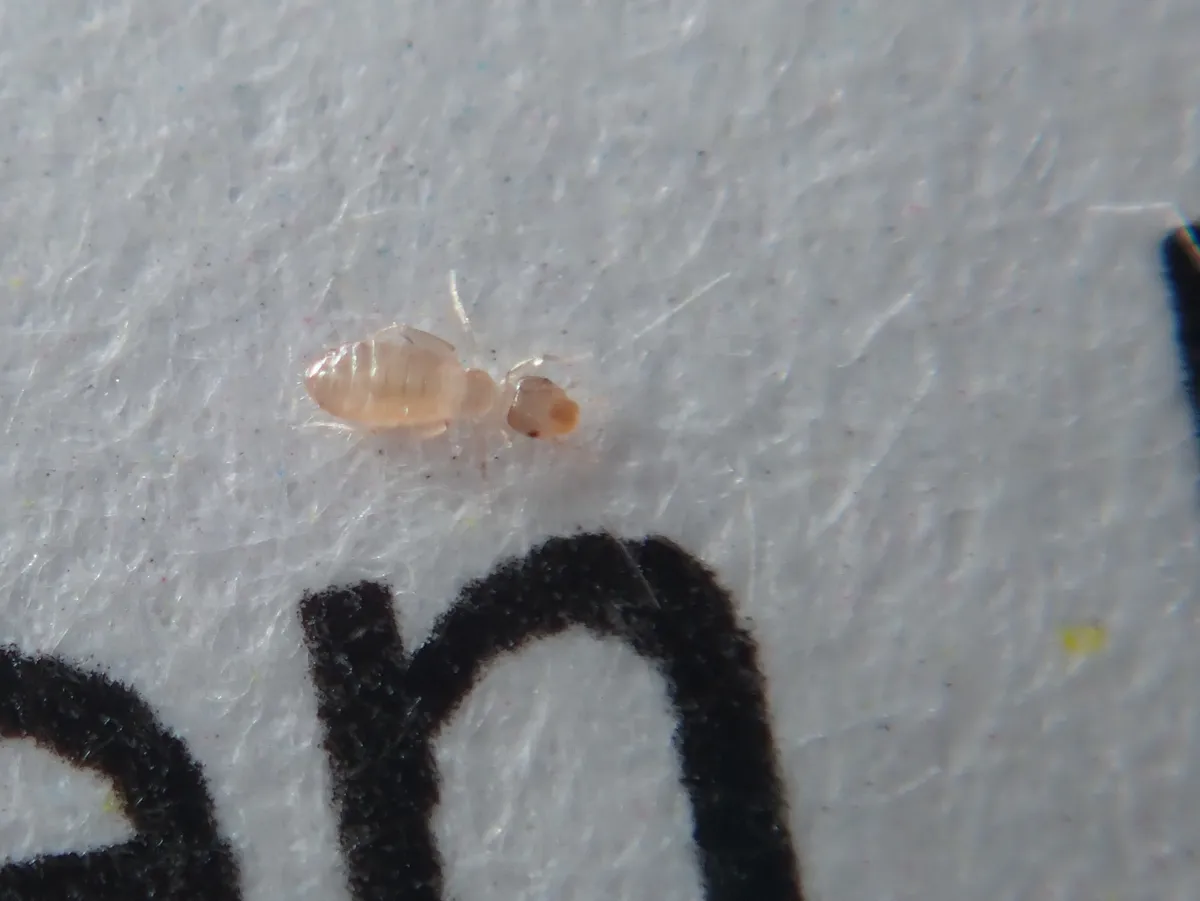 BooklouseUsually under 1/16 inch, soft and pale, with a bulging face; lives among books and papers
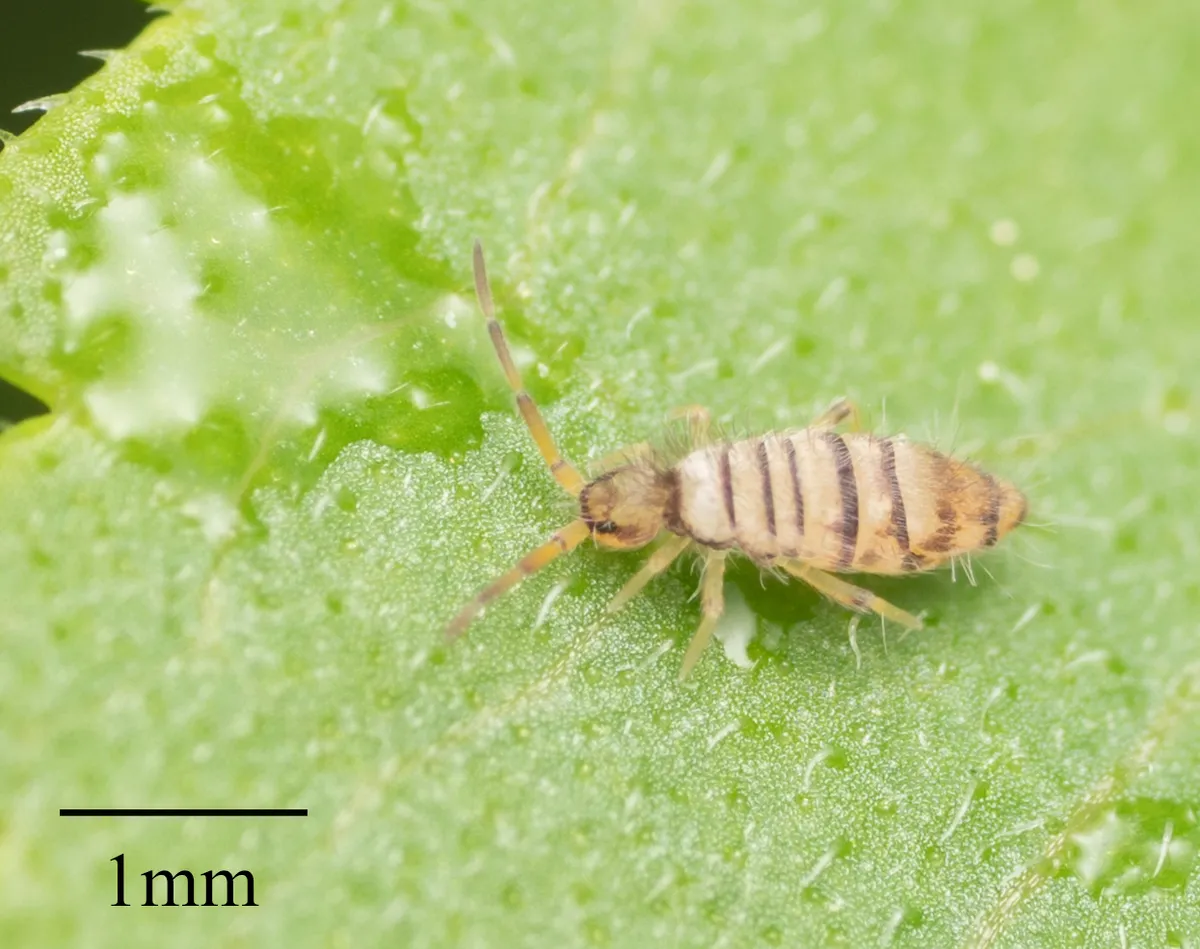 SpringtailAbout 1/16 inch; jumps with a spring tucked under the body; gets trapped in sinks and tubs
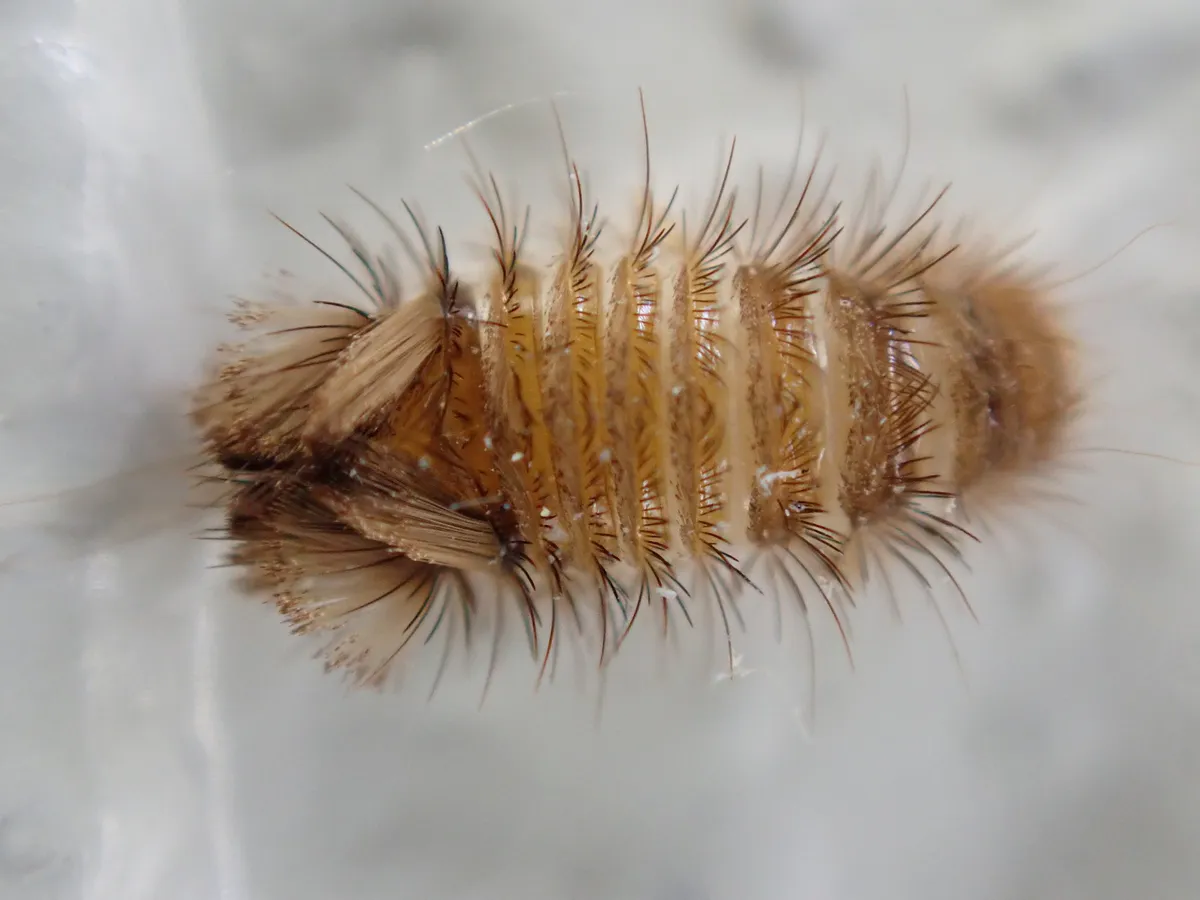 Carpet beetle larvaHairy, with tufts of hair at the tail; feeds on wool, fur, feathers and pet hair
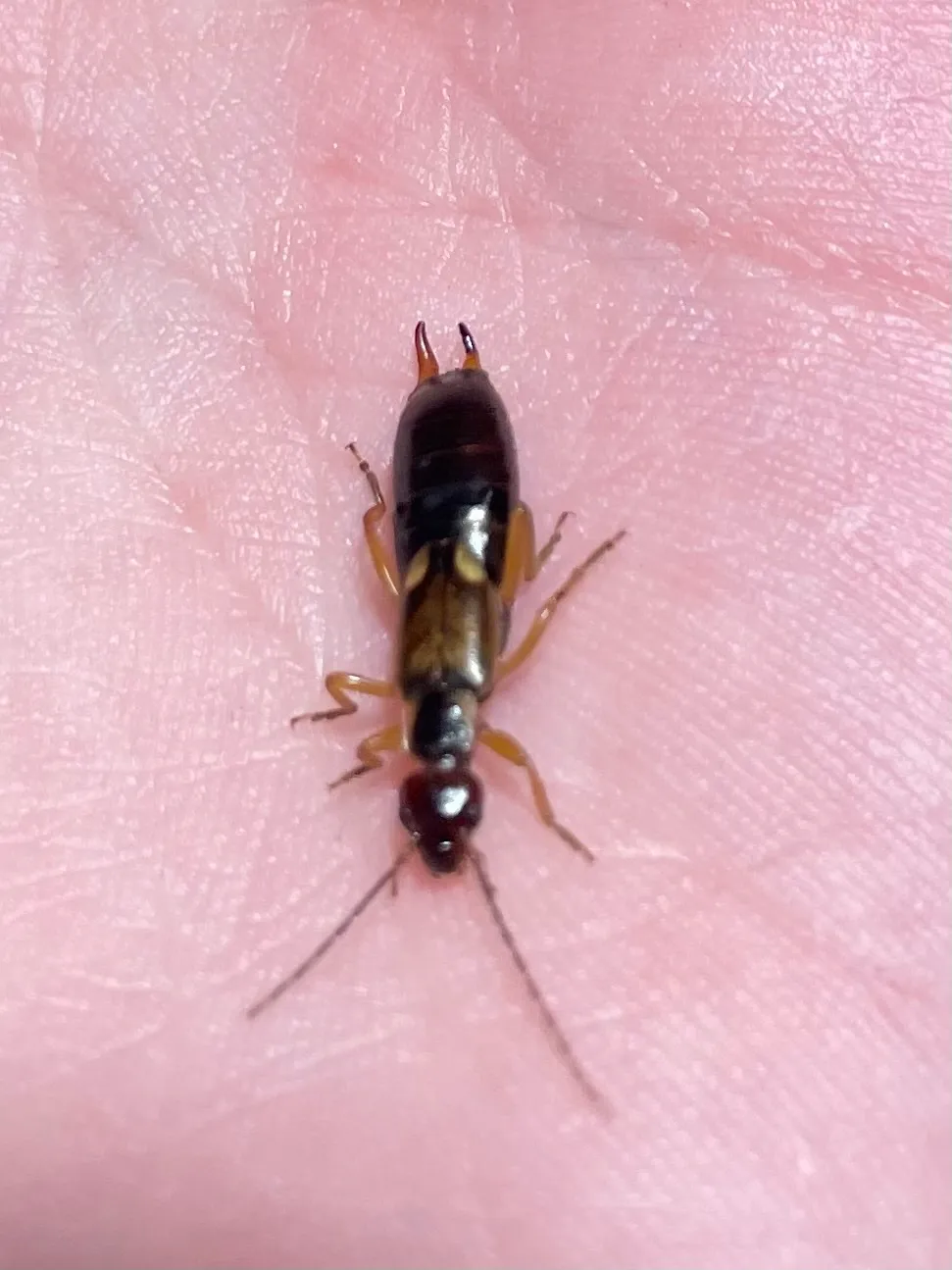 EarwigPincers at the tail end; the young look like small, wingless adults
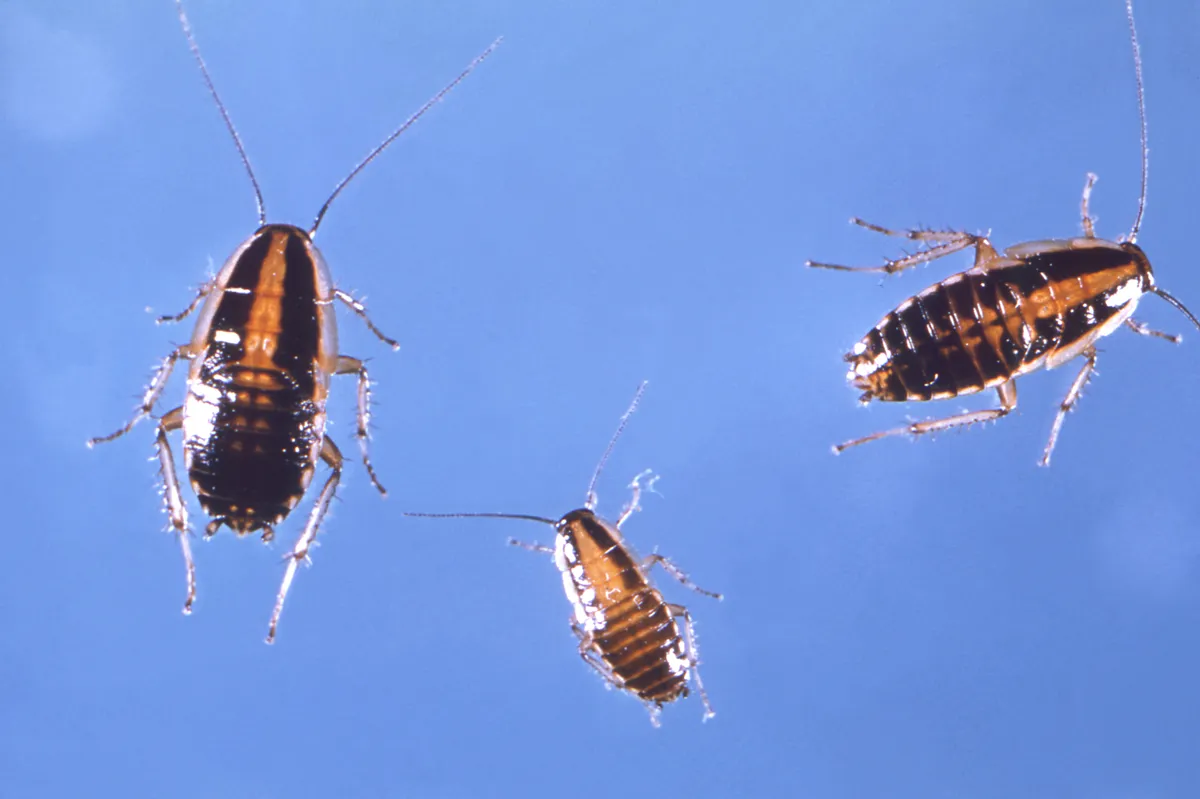 Cockroach nymphWingless and roach-shaped; white after a molt until it darkens, usually within hours
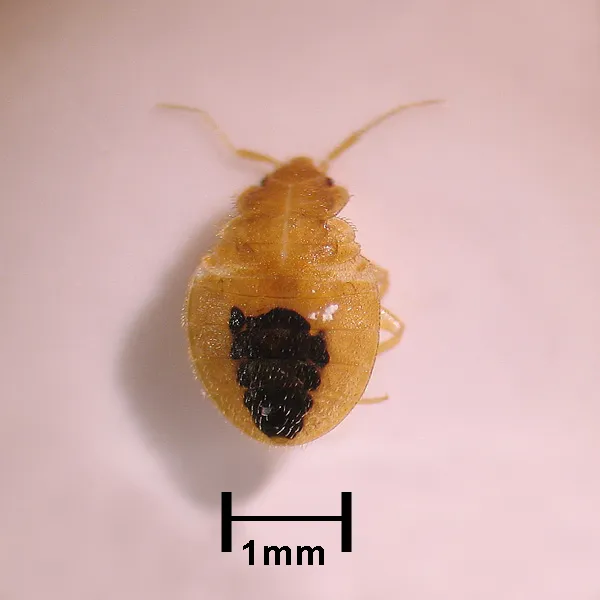 Bed bug nymphAbout 1/16 inch at hatching, translucent or whitish-yellow; feeds on blood
Photos: Booklouse: (c) Alexis Tinker-Tsavalas, some rights reserved (CC BY), via iNaturalist, CC BY 4.0. Springtail: no rights reserved, via iNaturalist, CC0 1.0. Carpet beetle larva: no rights reserved, via iNaturalist, CC0 1.0. Earwig: no rights reserved, via iNaturalist, CC0 1.0. Cockroach nymph: CDC (CDC Public Health Image Library, phil.cdc.gov), public domain. Bed bug nymph: CDC/ CDC-DPDx; Blaine Mathison (CDC Public Health Image Library, phil.cdc.gov), public domain.
Still unsure? Sort it by where you found it with tiny white bugs in the house, bugs in the bathroom, bugs in the basement or bugs in carpet, or try the five-question pest identifier.
What does finding baby silverfish mean?
That silverfish are breeding close by, or that their eggs or young came in on something you brought home. UC IPM says females often lay in the group's daytime hiding place, so young ones point to a hiding place nearby, and Missouri says eggs, nymphs and adults can arrive on infested cardboard boxes, cartons and furniture.
Numbers build slowly, though. Virginia Tech says each female lays few eggs and the young develop slowly, so a large infestation usually means a building has been infested for a while, and UF/IFAS says silverfish in normal house conditions have few young. For the gray silverfish, the Norwegian study says three to four years can pass before numbers are high enough to detect.
The young are no danger to people: Virginia Tech says silverfish do not bite, sting or transmit diseases, though they can contaminate food and damage paper and textiles. Missouri says all stages eat similar food, such as glue in book bindings and behind wallpaper, paper, cereal products and dried meat.
What should you do about baby silverfish?
Fix what lets them breed, as for adults; how to get rid of silverfish has the full plan. UC IPM says light infestations need no insecticide and can be managed by reducing water sources and with physical controls, that dehumidifiers in closed spaces can help discourage silverfish, and that fans can lower the humidity to a level they cannot tolerate. The EPA's guide to mold, moisture and your home recommends keeping indoor relative humidity below 60 percent if possible, ideally 30 to 50 percent, and says a humidity meter can measure it.
To find their hot spots, set cockroach sticky traps, or glass jars wrapped on the outside with masking tape, in corners and along edges, as UC IPM and NC State suggest, and store old books, papers, starched linens and cardboard in sealed plastic containers (Missouri). Drier air may not stop gray silverfish, which Missouri says tolerate a wide range of humidity and the Norwegian study says can reproduce at humidity levels common indoors. For firebrats, Missouri says lowering the temperature around hot water pipes, water heaters and boilers reduces their numbers.
Frequently Asked Questions
Why am I seeing baby silverfish?+
Because silverfish are breeding nearby, or their eggs or young came in on something you brought home. UC IPM says females often lay their eggs in the hidden spot where the group rests by day, so young ones point to a hiding place close by, and the extension services agree that silverfish favor damp, humid places. Missouri Extension says infestations can also start with eggs, nymphs or adults carried in on cardboard boxes, cartons and furniture.
Are baby silverfish dangerous?+
Not to people. Virginia Tech says silverfish and firebrats are harmless to humans and do not bite, sting or transmit diseases, and UC IPM says their jaws are so weak that they scrape paper rather than bite it. The young eat the same things as the adults, according to Missouri Extension, so the risk is to books, papers, wallpaper and dry food, which silverfish can damage or contaminate.
How big are baby silverfish?+
About 1/16 inch long when they hatch, by UC IPM's figure: plump, white and without scales. They grow with each molt, and UC IPM says nymphs under 1/8 inch have no scales, while larger nymphs and adults do. They keep growing until they reach adult size, which University of Missouri Extension gives as about 1/2 inch for the common silverfish and about 3/4 inch for the gray silverfish.
Can you see silverfish eggs?+
Only as tiny specks, and usually only if you search the right spots. UC IPM puts the eggs at about 1/25 inch long, and UF/IFAS describes them as whitish, oval and about 1/32 inch long. They are laid in crevices, on cloth, in food or dust, or behind books and on closet shelves, so search with a flashlight and a magnifying glass near where you have seen young silverfish.
How long do silverfish eggs take to hatch?+
A few weeks, though the sources differ. UC IPM says silverfish eggs hatch in about 19 to 32 days, Penn State says 19 to 43 days depending on temperature, NC State three to six weeks and UF/IFAS two to eight weeks. UC IPM adds that in cold conditions eggs can stay dormant for up to 6 weeks and hatch as soon as it warms up. Firebrat eggs are faster, at about 14 days.
How long does it take a baby silverfish to become an adult?+
From about two months to three years, depending on warmth and other conditions. UC IPM says silverfish can become adults in as few as 60 days above 75°F but take as long as 500 days below 50°F. Missouri Extension gives three months to three years, and Penn State a few months to three years, depending on conditions and food. A 2020 study of the gray silverfish describes 13 immature stages taking one and a half to two years at about 72°F.
Do silverfish have larvae?+
No. Silverfish go from egg to nymph to adult, the three stages Virginia Tech lists, and the nymphs look like small adults from the start, as Missouri Extension and UF/IFAS describe. There is no grub, maggot or caterpillar stage and no pupa. A small, hairy larva on wool or in stored grain could be a carpet beetle larva, which UC IPM describes as covered in hairs, with a tuft of long hairs at the tail on the black carpet beetle.
Do baby silverfish bite or jump?+
They do not bite: Virginia Tech says silverfish do not bite, sting or transmit diseases, and UC IPM says their jaws are so weak that they scrape paper rather than bite it. They run rather than jump. Penn State says they move rapidly, even sideways, Missouri describes quick dashes with short pauses, and none of the extension sources used here describes them jumping. A tiny pale bug that hops into the air is more likely a springtail, which UC IPM says jumps with a spring tucked under its body.
Can baby silverfish live in your bed?+
None of the extension sources used here names beds as a place where silverfish live or lay eggs; they point to cracks and crevices, cloth, food and dust, books, closets, basements and bathrooms. A tiny pale bug in the seams of a mattress or box spring is worth comparing with a bed bug nymph, which the EPA describes as about 1/16 inch when it hatches, translucent or whitish-yellow, and hiding near mattress seams and in cracks of the bed frame.
How many babies does a silverfish have?+
Somewhere around 100 over a long life, by the extension figures. NC State says a female may lay over 100 eggs in her lifetime, Virginia Tech says usually fewer than 100 over 2 to 8 years, and Penn State says more than 50 offspring, laid one to three eggs at a time. UC IPM gives an average clutch of 50 eggs, ranging from 1 to 200, for silverfish and firebrats together. Virginia Tech says this slow rate is why large infestations take time to build.
Sources
- Pest Notes: Silverfish and Firebrats (UC ANR Publication 7475) — University of California Statewide IPM Program
- Silverfish and Firebrats (Waldvogel, Alder and Hayes, 2017) — NC State Extension
- Bristletails (Silverfish and Firebrats) — Penn State Extension
- Silverfish and Firebrats (G7376) — University of Missouri Extension
- Booklice and Silverfish (ENY-225/IG094) — UF/IFAS Extension
- Silverfish and Firebrats (ENTO-24NP, 2023) — Virginia Cooperative Extension, Virginia Tech
- Development of a Poisoned Bait Strategy against the Silverfish Ctenolepisma longicaudata — Insects (Aak et al., 2020), via PubMed Central
- Pest Notes: Springtails (UC ANR Publication 74136) — University of California Statewide IPM Program
- Pest Notes: Carpet Beetles (UC ANR Publication 7436) — University of California Statewide IPM Program
- Pest Notes: Earwigs (UC ANR Publication 74102) — University of California Statewide IPM Program
- Pest Notes: Cockroaches (UC ANR Publication 7467) — University of California Statewide IPM Program
- German Cockroach (FS1322) — Rutgers Cooperative Extension
- Bed Bugs Appearance and Life Cycle — US Environmental Protection Agency
- How to Find Bed Bugs — US Environmental Protection Agency
- A Brief Guide to Mold, Moisture and Your Home — US Environmental Protection Agency
How this guide was made: it was researched and drafted with AI assistance from the sources listed above. A second, independent AI pass then checked each factual claim against those sources. Found an error? Email support@buzzskito.ca.