
Published by BuzzSkito Mosquito & Tick Control
Published October 28, 2026 · Fact-checked against the sources listed below
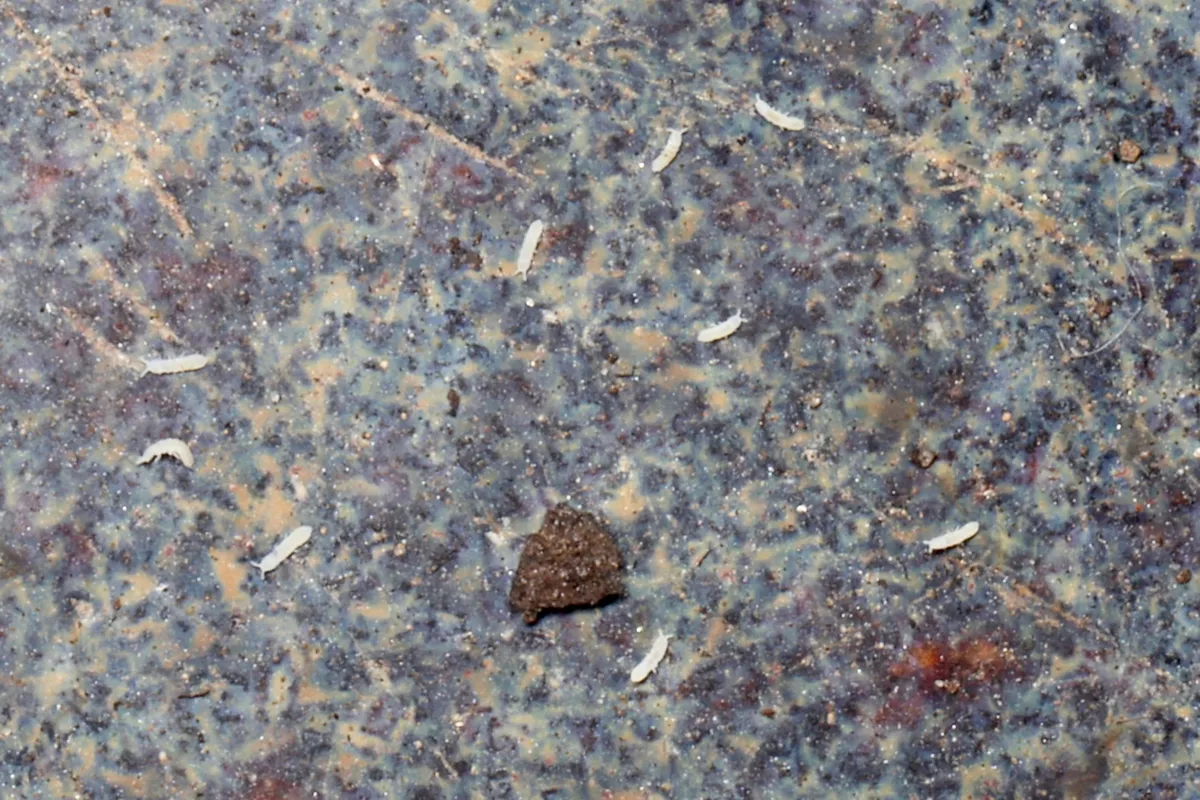
What are the tiny white bugs in my house?
Tiny white bugs in a house are usually booklice, springtails or mites, and all three follow moisture: booklice and mites eat mold, and springtails gather where water collects. On houseplants the usual white bugs are mealybugs and whiteflies. In a bed, check for bed bug eggs and newly hatched bed bugs; white specks glued to a hair are lice eggs, not bugs.
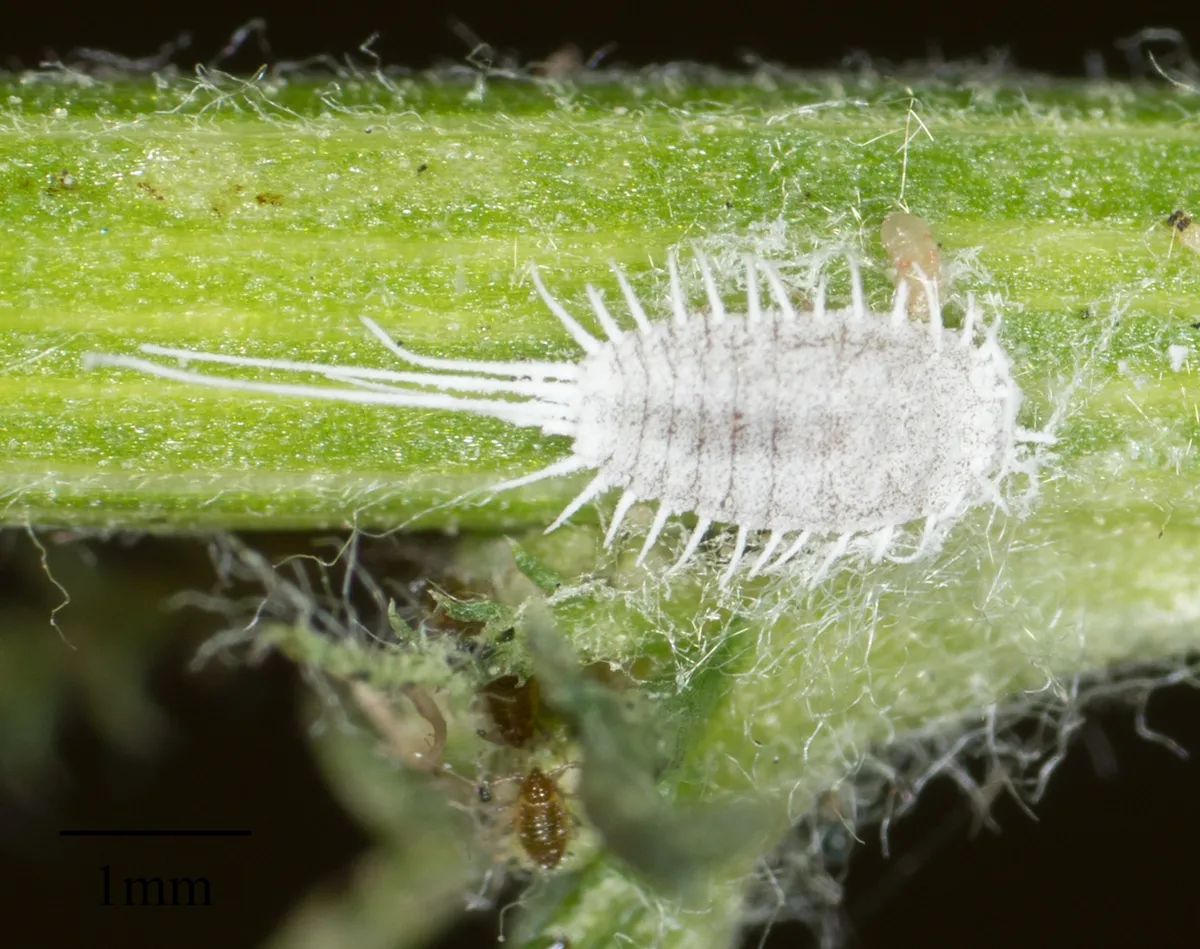
Where you found the bug narrows the list fastest:
| Where you found it | Check first | Also check |
|---|---|---|
| Kitchen or pantry | Grain or mold mites; booklice in damp dry food | Pantry moth larvae, whitish caterpillars that leave silk |
| Bathroom, sink or drain | Springtails | Booklice on damp walls |
| Damp wall, books, papers or windowsill | Booklice | Springtails, which come in through screens and gaps |
| Bed, mattress or carpet | Bed bug eggs and newly hatched nymphs | Booklice in damp bedding; dust mites, which you usually cannot see |
| Closet, wool clothes or rug | Clothes moth larvae | Silk webbing or cases where they feed |
| Houseplant or its soil | Mealybugs, whiteflies, springtails | Fungus gnat larvae; ground mealybugs on roots |
| Wood, walls or a mud tube | Termite workers | A cockroach that has just molted |
| Hair | Nits (lice eggs) | Dandruff or hair spray droplets |
Compiled from the extension, EPA and CDC sources linked in the sections below.
Up close, some white bugs turn out tan: the University of Florida describes booklice as translucent white to light brown. If yours looks brown or dark under a magnifier, the guide to tiny brown bugs and the tiny black bug guide sort those by place the same way. Tiny red bugs are a separate set again.
How do you tell which tiny white bug you have?
Catch one in a clear jar or press it onto clear tape, and look at it through a magnifying glass, since many of these are 1/16 inch long or less. Then run through these checks.
Checks to run with the bug in a jar
- Does it jump? A white speck that springs away when touched is most likely a springtail, which UC IPM says jumps with a spring tucked under its body.
- Does it fly up from a plant? Powdery white insects that flutter around and settle again are whiteflies, Clemson says.
- Coated in white wax and barely moving? On a houseplant, that is a mealybug or its cottony egg sac.
- Soft, flat, wingless and under 1/16 inch, on damp paper, a wall or a windowsill? Most likely a booklouse.
- So many and so small they look like moving dust on food? Think grain or mold mites; Purdue says adult grain mites have eight legs.
- Pearl-white specks that never move, in a mattress seam? Compare them with bed bug eggs first.
- Stuck to a single hair near the scalp? Probably a nit, a louse egg.
- Pale and inside damaged wood or a mud tube? Suspect termite workers.
- How big is it? Lay it beside a ruler marked in inches and compare it with the quick-ID table above.
Still unsure? The five-question pest identifier asks where you found it, how big it is and how it moves.
What are the tiny white bugs in my kitchen or pantry?
Pale specks on flour, grain or pet food are most often grain mites, mold mites or booklice, and all of them point to food kept somewhere damp. Purdue Extension's grain mite fact sheet calls the grain mite microscopic, about 1/50 inch and pale grayish white, with eight legs as an adult; it eats grain, flour, cheese and pet food, and fungi too, so spoiled food is often infested. A heavy infestation looks like a moving layer of dust and smells sweet or minty, which Purdue says usually means the food must be destroyed.
Mold mites turn up in the same foods. The Bohart Museum of Entomology at UC Davis lists dried pet food, bird seed, grains, beans and dried fruit, says the mites thrive in warm, humid conditions and feed on mold, and calls them generally a sign of too much moisture. Large infestations leave a pale brownish mite dust of live and dead mites, cast skins and droppings.
Booklice get into dry food the same way. Penn State Extension's booklice page says they feed on the mold growing on flour and stored grain and that their droppings contaminate it, so the food should be thrown out. The booklice guide shows them up close, and the pantry pest guide covers the beetles and moths that share those shelves.
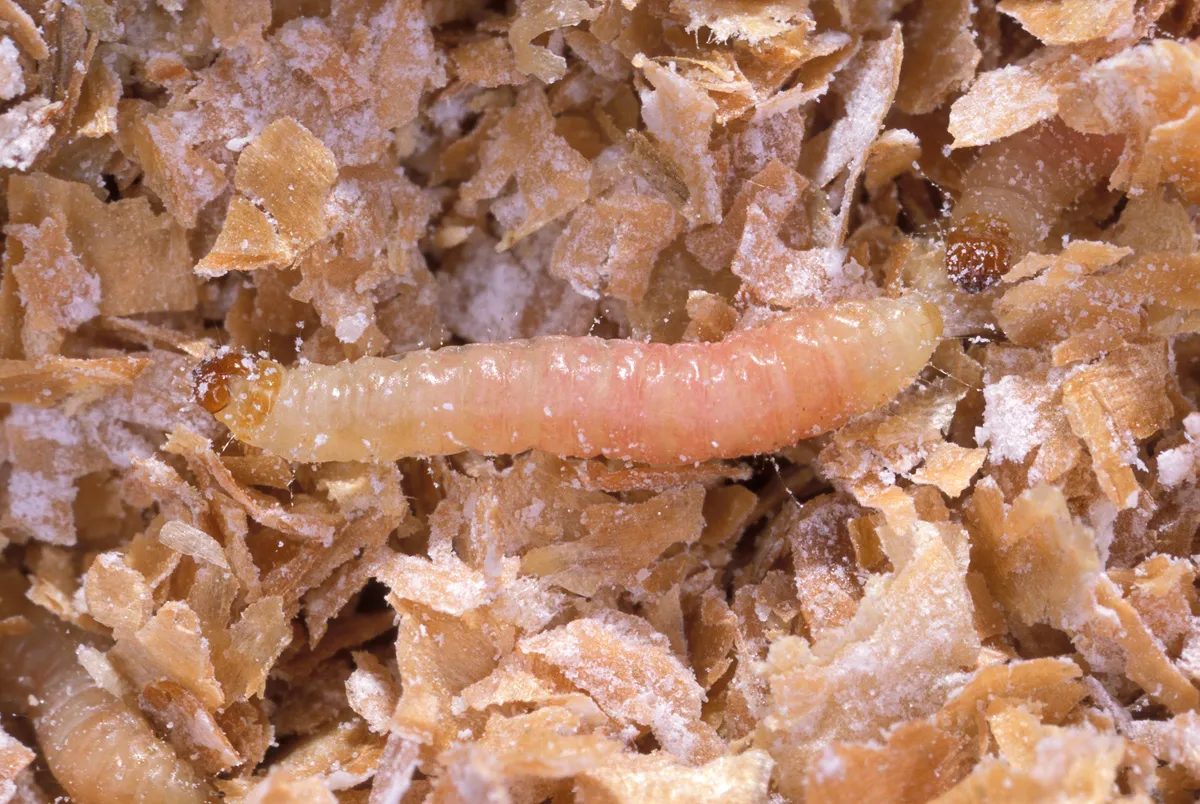
A whitish caterpillar in the food is a moth larva. UC IPM's pantry pest guide says Indianmeal moth larvae leave silken threads wherever they crawl and that pantry pests usually arrive in an infested package of food. Ants, fruit flies and the other kitchen regulars are sorted in the guide to bugs in the kitchen.
What are the tiny white bugs in the bathroom, on damp walls or on windowsills?
Tiny pale bugs on a damp wall, a windowsill, books or papers are usually booklice. The University of Florida's booklice and silverfish guide describes soft-bodied insects, translucent white to gray to light brown, usually under 1/16 inch and mostly wingless indoors; despite the name, none are parasites. Penn State says they live in humid, damp, dark places, feed on mold, signal high humidity, and do not bite, carry disease or otherwise affect human or animal health.
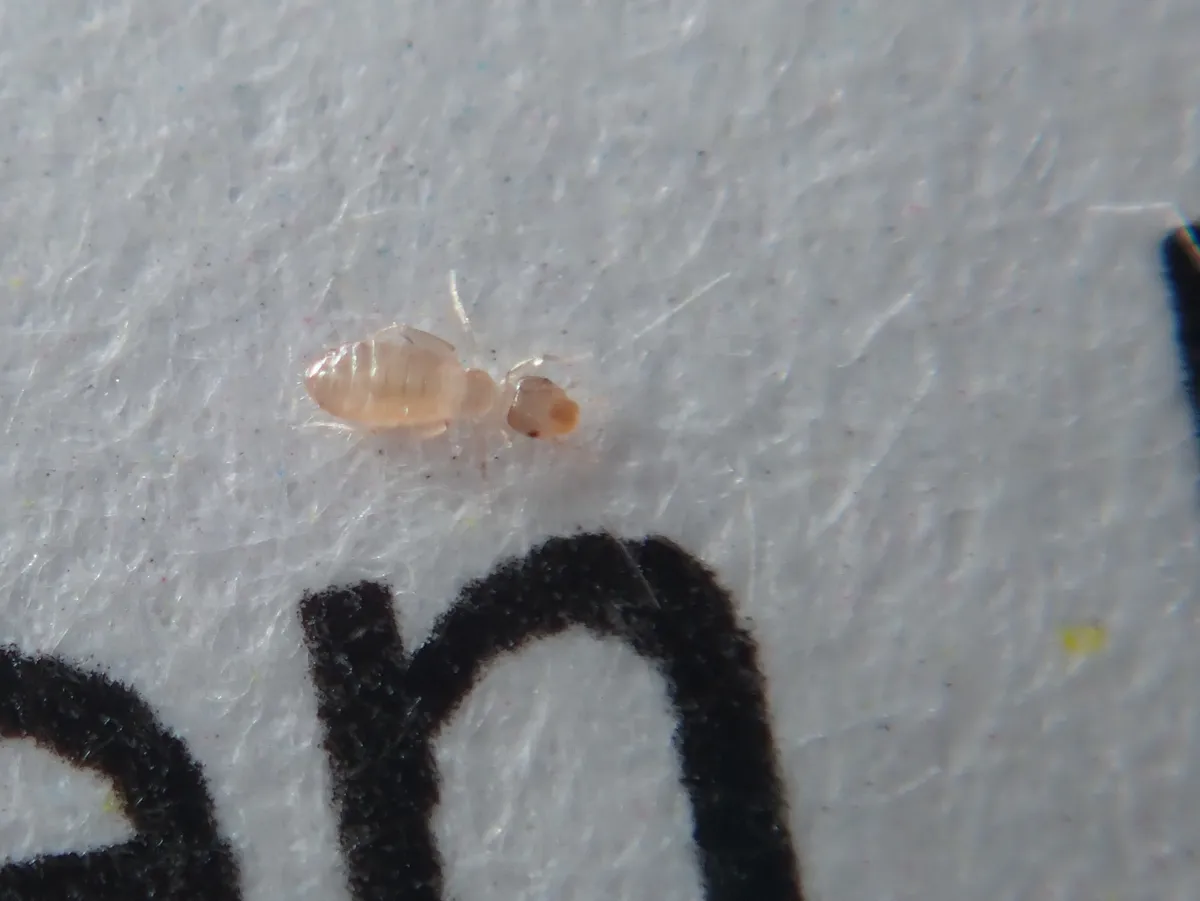
The Defense Centers for Public Health adds windowsills and door frames, where cracks shelter booklice and dead insects feed them, and notes that they do not fly.
Tiny white bugs that jump around a tub, sink or floor drain are springtails. UC IPM's springtail guide describes wingless creatures about 1/16 inch long that leap with a spring tucked under the abdomen; the young are usually whitish, adults whitish, bluish or dark gray to black. Indoors they gather in moist spots such as sinks, tubs, floor drains, damp basements and wall voids, and they do not bite people or pets or damage furnishings.
Penn State Extension's springtail page puts most household kinds at 1 to 2 mm (about 1/25 to 1/12 inch), white to black, and says long droughts and prolonged soaking rains can both send them indoors. The springtail guide covers them in full, and the guide to bugs in the bathroom sorts the other bathroom regulars.
What are the tiny white bugs in my bed or carpet?
In a bed, look first for bed bug eggs and young bed bugs, because bed bugs feed on blood. The EPA's page on bed bug appearance describes the eggs as pearl-white and the size of a pinhead, about 1 mm (1/25 inch), with an eye spot once they are more than five days old. Newly hatched nymphs are about 1.5 mm (1/16 inch), translucent or whitish-yellow, and if they have not fed recently they can be nearly invisible to the naked eye.
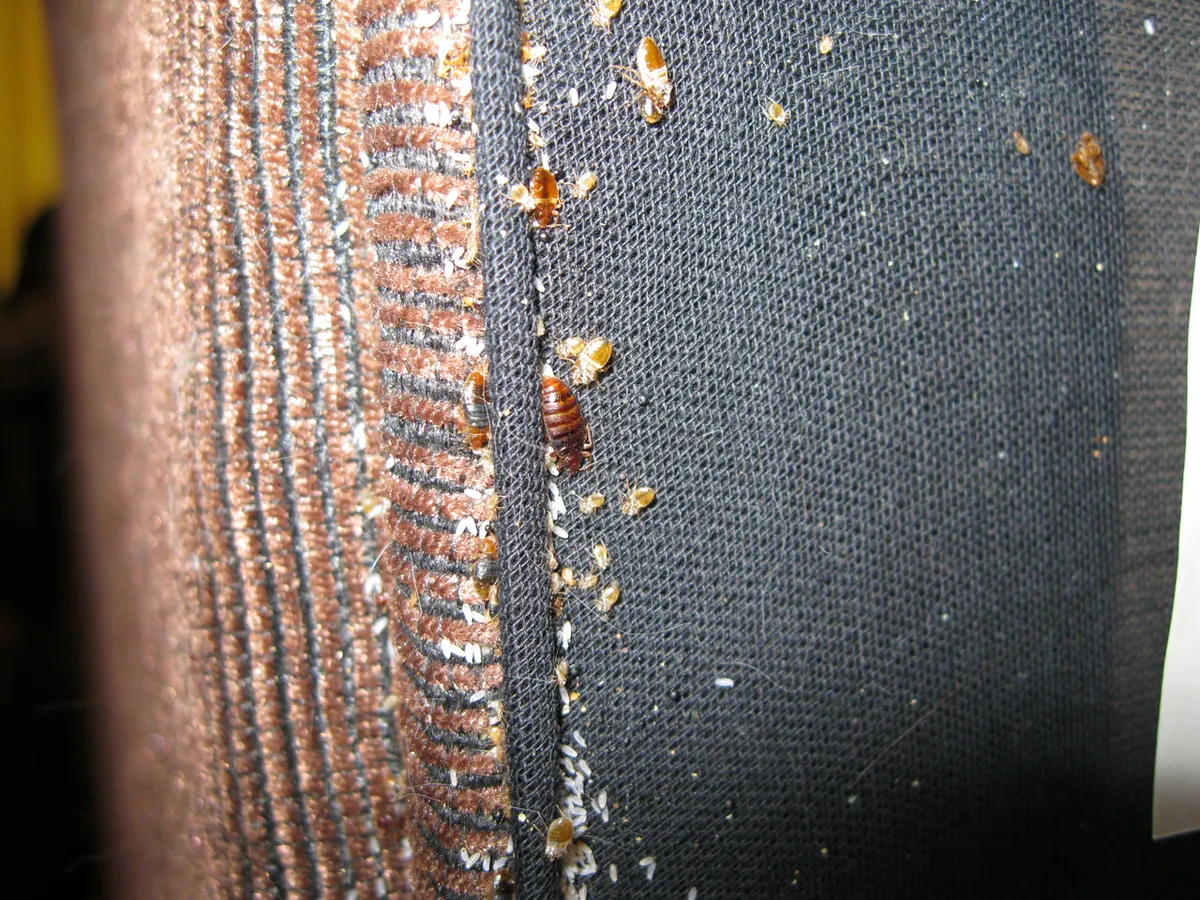
CDC's bed bug page says they hide by day on or around the bed, in places such as mattress seams, box springs, bed frames and headboards, and bite at night. A flat, pale bug in damp bedding may be a booklouse instead: Penn State says a bed bug is usually larger and rounder, with a head narrower than its body, while a booklouse's head is nearly as wide as its body. What baby bed bugs look like, the guide to bed bug eggs and what bed bugs look like show each stage.
Dust mites live in beds too, but they are probably not what you are seeing. The University of Kentucky's dust mite fact sheet says adults are about 0.5 mm (1/50 inch), clear to creamy white and generally visible only with a microscope; they cannot bite or sting, and they are most numerous in beds, overstuffed furniture and the carpet beside them. The trouble they cause is allergy, explained in the dust mite guide.
In a closet or a wool rug, small shiny white caterpillars with dark heads are clothes moth larvae. UC IPM's clothes moth guide says they feed on wool clothing, rugs, furs and upholstery, and either spin silk webbing or carry a silk case colored like the fabric. The guide to small moths in the house covers them, and the guide to bugs in carpet sorts the rest.
What if you found them on a houseplant?
On a houseplant, the white bugs are usually mealybugs, whiteflies or springtails, and the houseplant bug guide covers each in full. Clemson's houseplant pest fact sheet gives the short version:
- Mealybugs. Pale insects about 1/8 to 1/4 inch long, covered in white wax that makes them look cottony, moving very sluggishly on the undersides of leaves and where leaves meet the stem.
- Whiteflies. Powdery white and 1/16 to 1/10 inch long, like tiny moths; brush the plant and they flutter around before settling again. The whitefly guide explains how to clear them.
- Springtails. Usually white or black, wingless but able to jump, living in the potting soil, where Clemson says they usually mean the plant is overwatered.
- Fungus gnat larvae. Whitish with shiny black heads, up to about 1/4 inch, feeding on decaying matter and fungi in the soil. The fungus gnat walkthrough for houseplants covers drying the soil.
Mealybugs can hide below the soil line too. UC IPM's mealybug guide describes ground mealybugs that live in the soil and do the most damage on potted plants such as African violets. It lists the long-tailed mealybug in the top photo among the pests of indoor plants, and advises inspecting plants before you bring them indoors and discarding infested ones.
Are white bugs in wood or walls termites?
Pale, soft insects inside damaged wood or a mud tube are most likely termite workers. Texas A&M's urban entomology program describes native subterranean termite workers as wingless, white to creamy white and 1/4 to 3/8 inch long, and the EPA's termite page says termites rarely come out of the soil, mud tubes or the food they tunnel through. What termites look like shows workers, soldiers and swarmers, and the termite damage guide the tubes.
A white bug shaped like a cockroach is a cockroach. UC IPM's cockroach guide says cockroaches are white immediately after molting and darken as the new outer covering hardens, usually within hours; the white cockroach guide explains what one says about the roaches nearby.
Are tiny white bugs in hair lice or nits?
Usually they are eggs. CDC's parasite reference on head lice describes nits as oval, usually yellow to white and about 0.8 mm (1/32 inch) long, cemented to the hair shaft close to the scalp, hard to see and often mistaken for dandruff or hair spray droplets. Adult lice, about the size of a sesame seed, are tan to grayish-white, so a pale speck crawling through the hair may be a louse itself.
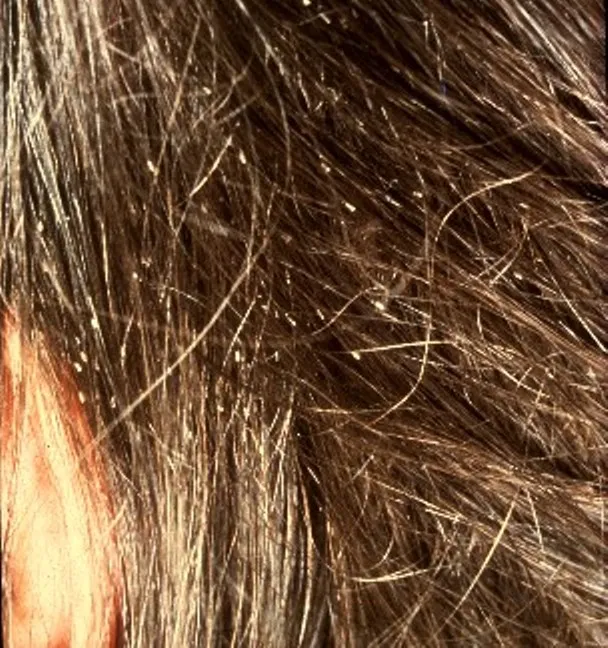
The lice egg guide shows how to tell live nits from hatched ones and from dandruff, and what lice look like covers the adults.
What are the tiny white bugs that look like dust or lint?
Moving dust is usually mites: Purdue describes grain mites so numerous that grain looks covered with moving dust, and UC Davis the pale brownish mite dust that mold mites leave around food. Booklice and springtails are bigger, around 1/16 inch, so each shows as a separate pale speck. Dust mites are the one white bug here you usually cannot see.
Outdoors, white fluff that seems to drift through the air may be woolly aphids. Iowa State University Extension describes small, cottony white fuzz-balls that are winged woolly alder aphids, each a dark body with clear wings pulling a tuft of white wax, which fly readily when disturbed; it says control is not warranted. The aphid guide covers aphids on garden plants.
Which tiny white bugs jump, fly or bite?
Springtails jump and whiteflies fly; outdoors, Iowa State says winged woolly alder aphids fly readily when disturbed. Booklice, springtails, dust mites and mold mites do not bite people: Penn State says booklice do not, UC IPM says springtails do not bite people or pets, Kentucky says dust mites cannot, and UC Davis says mold mites are not parasites.
Head lice and young bed bugs are the pale bugs here that feed on people: CDC says bed bugs bite people at night, feeding on their blood, and that adult head lice need to feed on blood several times a day. Mold mites do not bite, but UC Davis says they can cause contact dermatitis and even respiratory problems in people who handle infested materials, and Purdue calls the grain mite strongly allergenic.
If you have bites but cannot find a bug, the bug bite photo guide sorts bites by pattern and where they are on the body, and the bite identifier suggests likely biters from six questions. Contact a healthcare provider about any bite or rash that worries you.
Commonly confused with
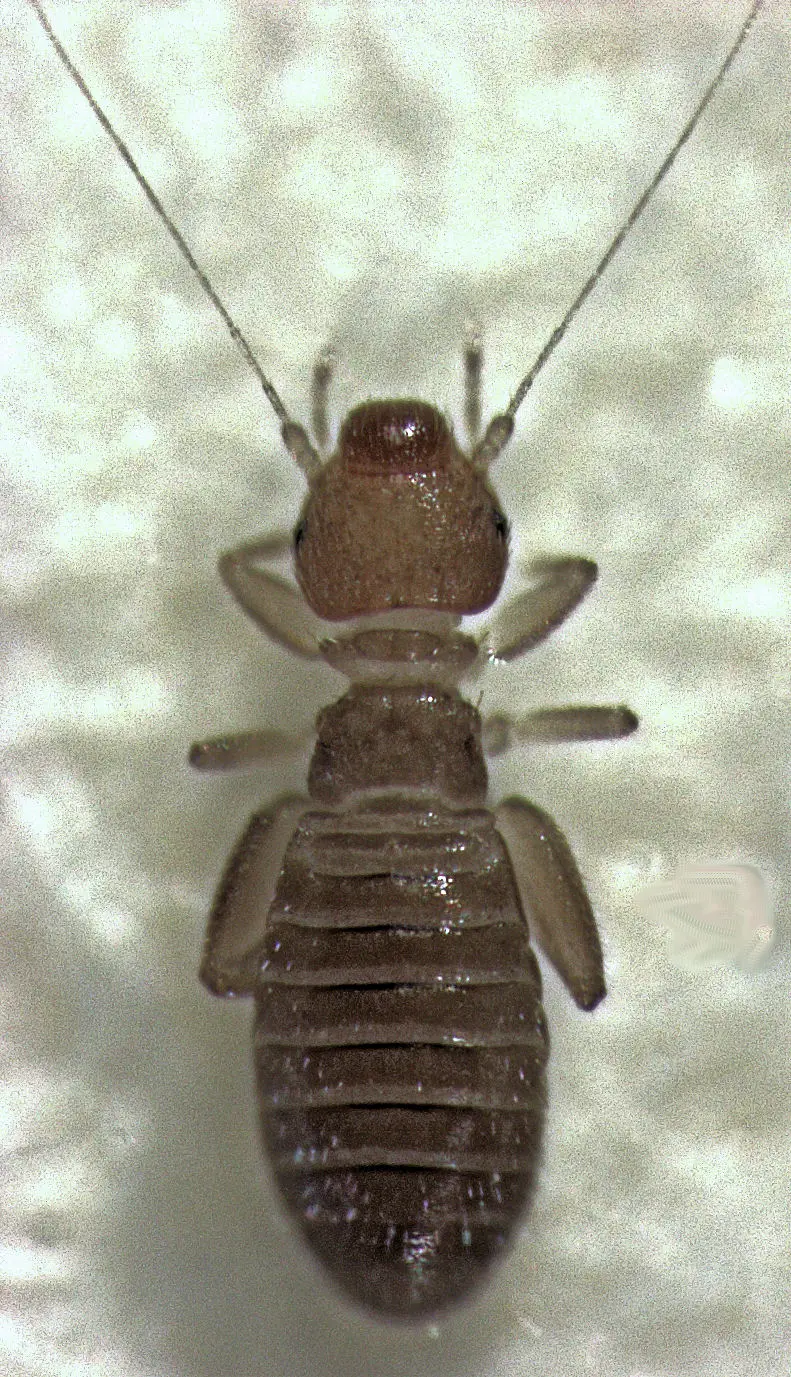 BooklouseSoft, flat and wingless, usually under 1/16 inch; feeds on mold in damp rooms
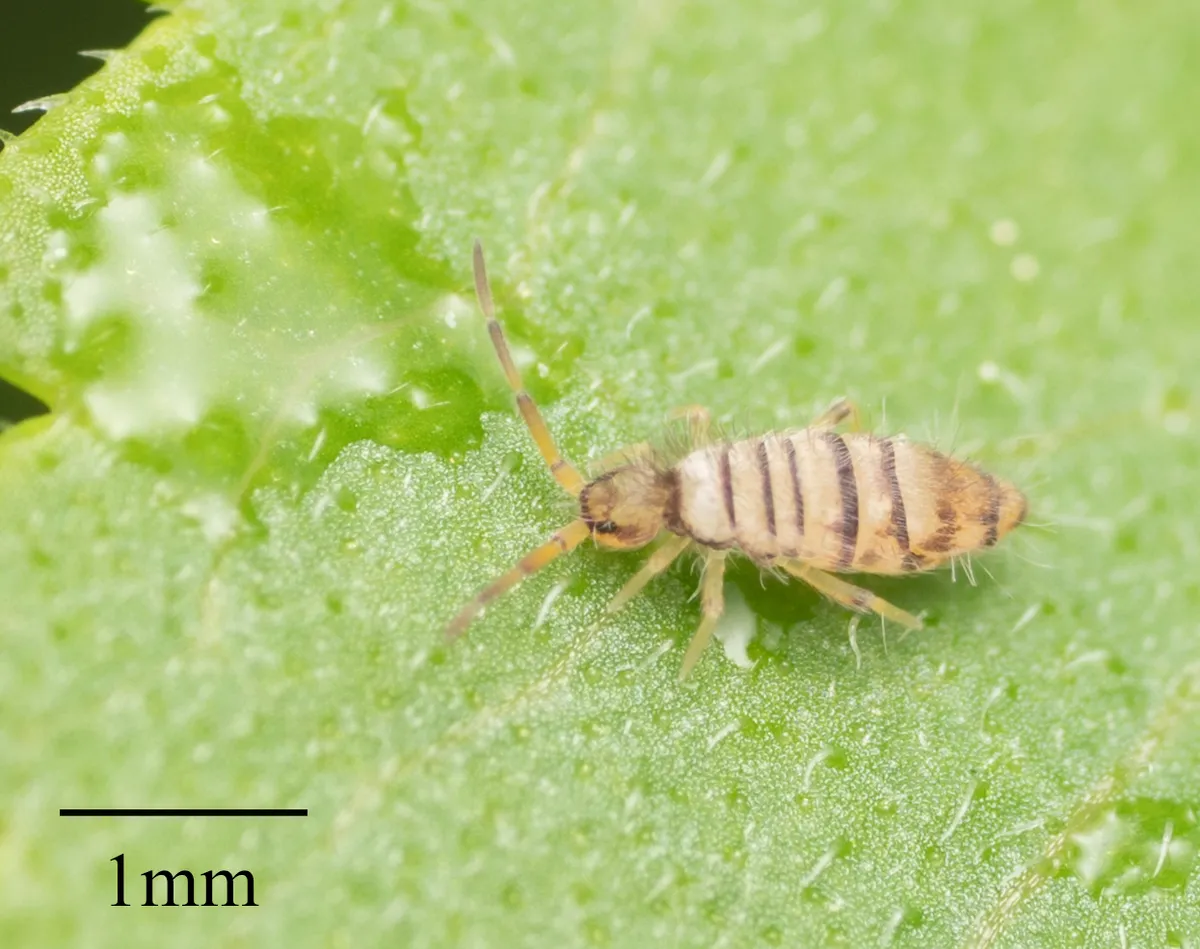 SpringtailAbout 1/16 inch; jumps with a spring folded under its body
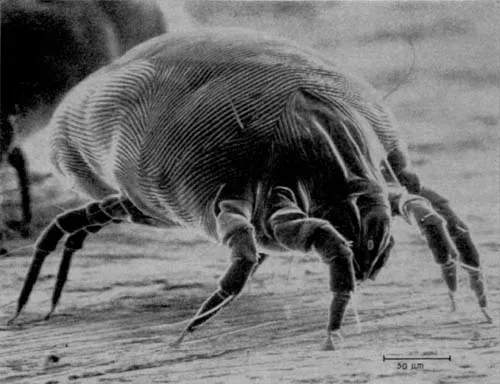 Dust miteClear to creamy white but generally visible only with a microscope; cannot bite
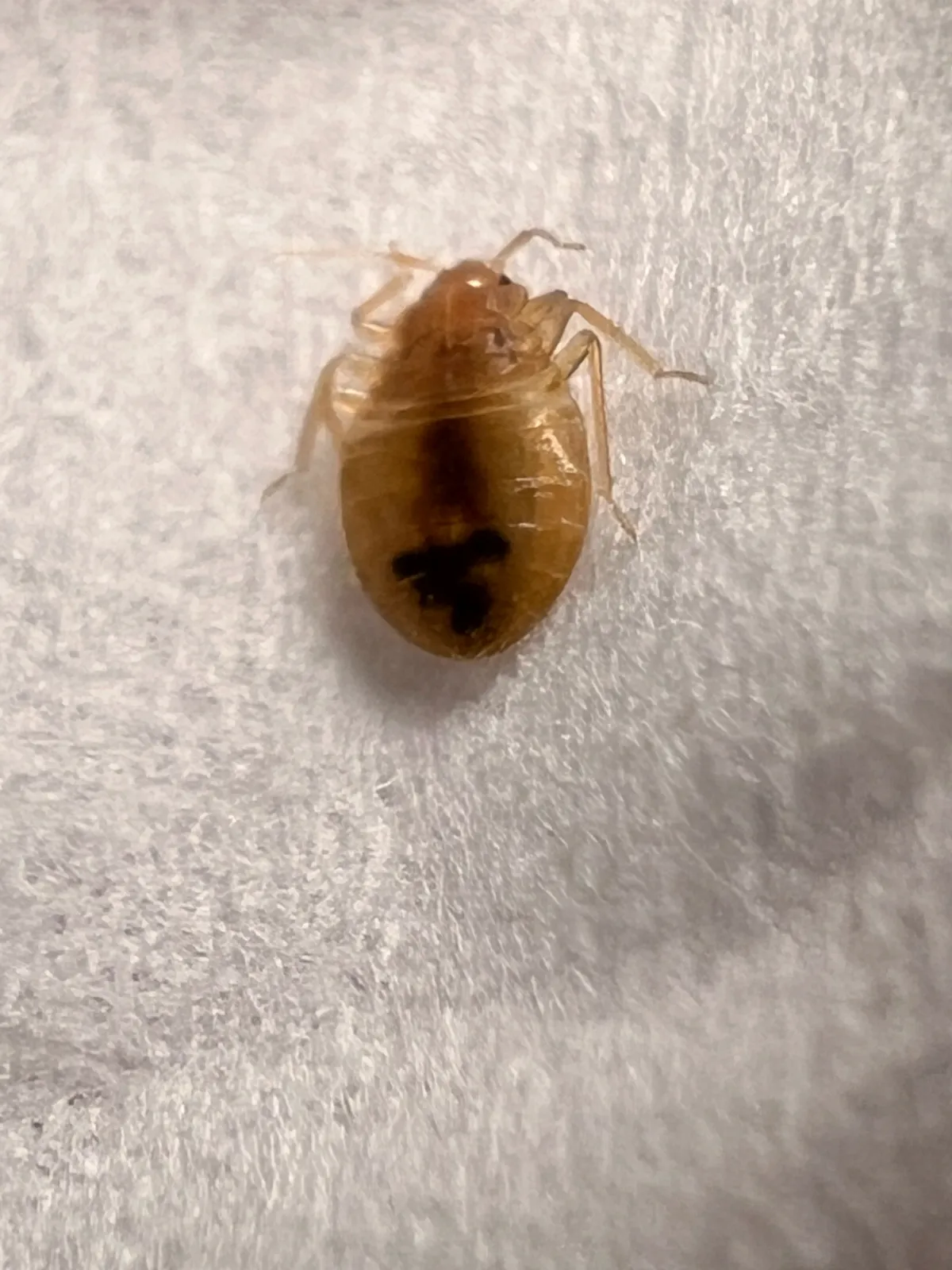 Bed bug nymphTranslucent or whitish-yellow; hides in mattress seams and bites at night
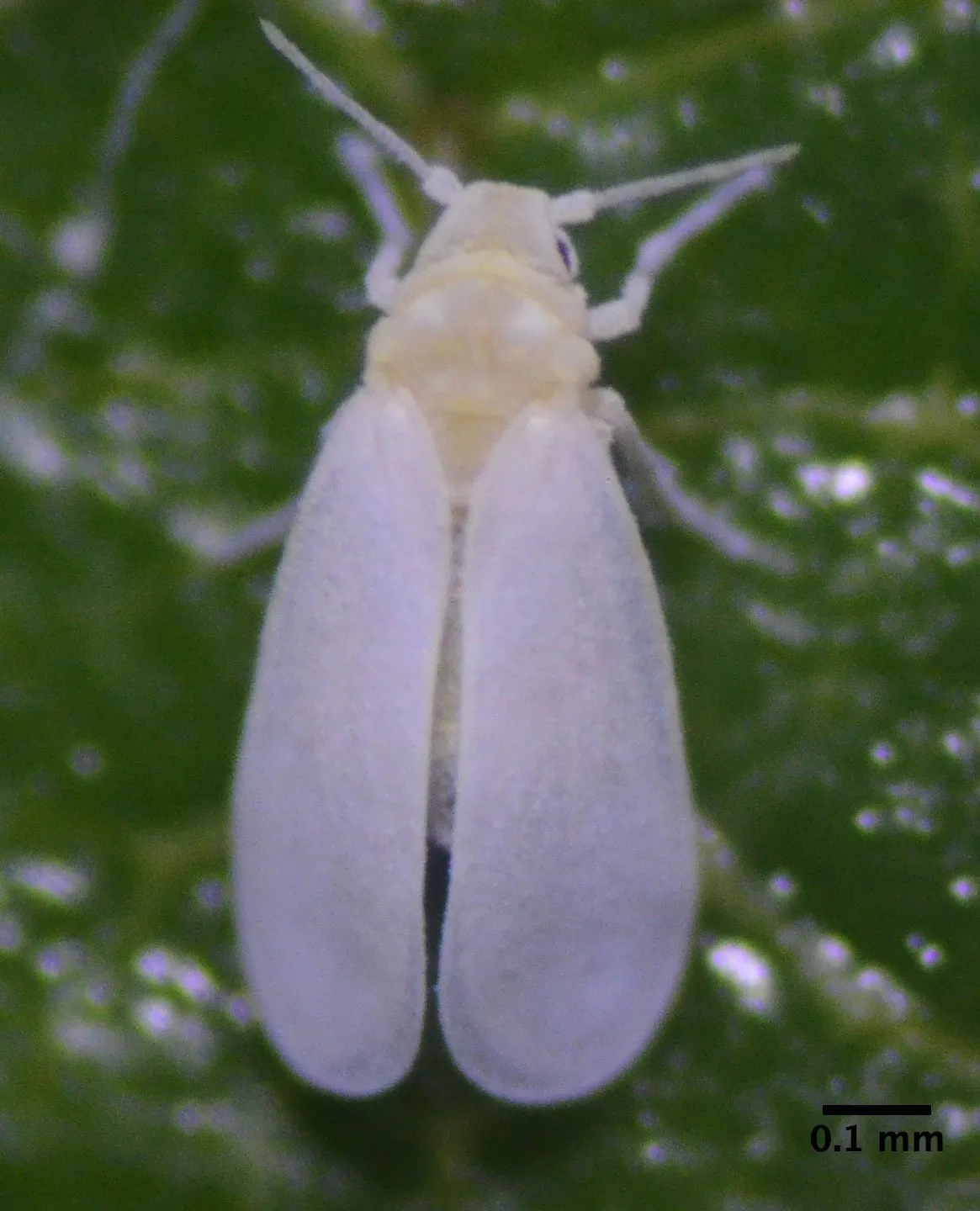 WhiteflyPowdery white, 1/16 to 1/10 inch; flutters up when the plant is disturbed
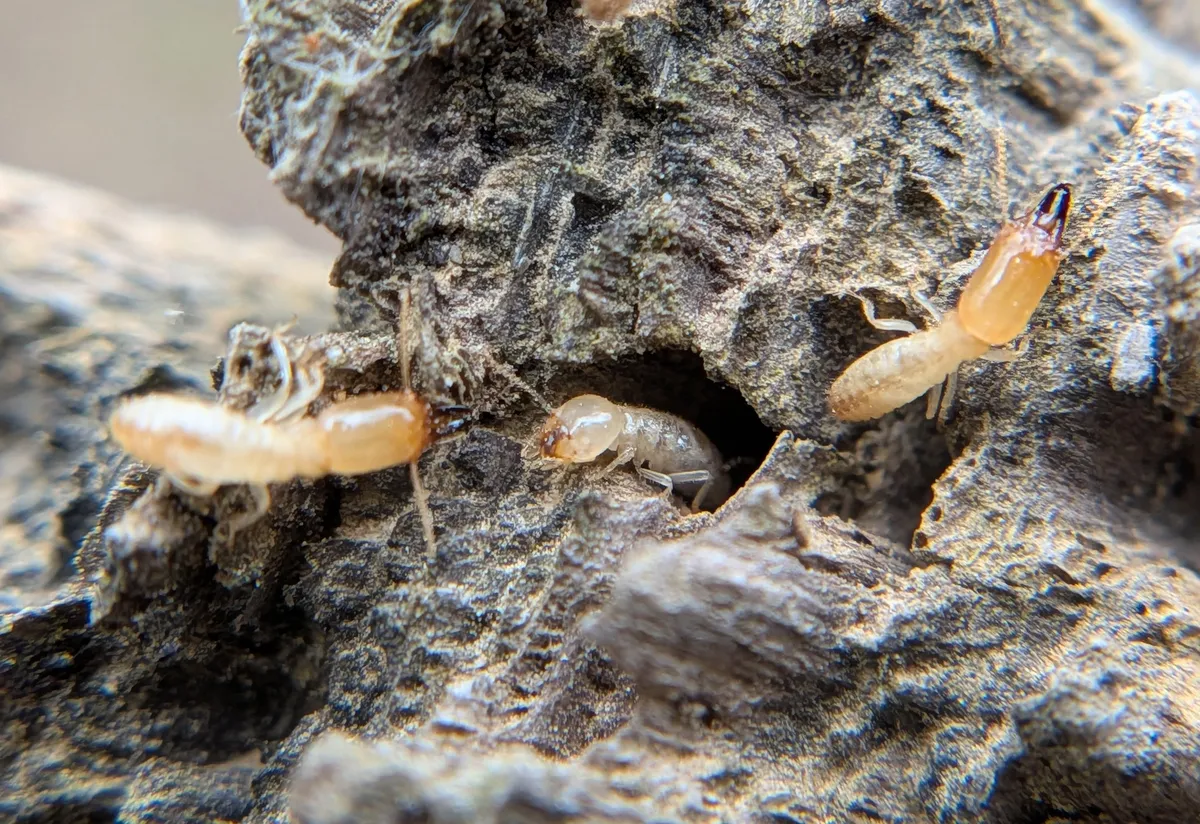 Termite workerWhite to creamy white, 1/4 to 3/8 inch; rarely leaves wood, soil or mud tubes
Photos: Booklouse: S.E. Thorpe, Public domain, via Wikimedia Commons, public domain. Springtail: no rights reserved, via iNaturalist, CC0 1.0. Dust mite: Employee of US Government, Public domain, via Wikimedia Commons, public domain. Bed bug nymph: no rights reserved, via iNaturalist, CC0 1.0. Whitefly: (c) Don Loarie, some rights reserved (CC BY), via iNaturalist, CC BY 4.0. Termite worker: no rights reserved, via iNaturalist, CC0 1.0.
What should you do once you know what it is?
Take away the damp or the food first: for most tiny white bugs, the extension sources put drying out and cleaning ahead of spraying.
- Booklice and mold mites. Dry the room. Penn State says relative humidity below 50% prevents mold growth and booklouse development, with a dehumidifier if needed, and that leaky pipes and roofs should be fixed; UC Davis says to keep humidity as low as possible where food is stored.
- Mites or booklice in food. Throw it out, as Penn State and Purdue advise, then clean and vacuum the shelves. UC Davis says nearby food that looks clean can be frozen for a week or heated to 120°F for 20 minutes. Store dry goods in containers with tight-fitting lids, not plastic bags (UC IPM).
- Springtails. UC IPM's advice: dry out damp spots, vacuum or sweep them up and seal cracks and gaps. It does not generally recommend insecticide sprays, which it says are often no more effective than vacuuming, and warns never to pour insecticide down a drain.
- Houseplant bugs. Clemson suggests isolating new plants for six weeks and checking them weekly, and UC IPM says to discard infested plants rather than bring them indoors; the houseplant bug guide covers treatment.
- Bed bug eggs or nymphs. Check the seams, box spring and bed frame for more, then follow the step-by-step bed bug plan.
- Clothes moth larvae. UC IPM suggests washing infested items for 20 to 30 minutes in water of at least 120°F or dry cleaning them, and vacuuming closets.
- Termites. The EPA advises periodic inspections and says termiticide treatment in most cases needs a trained pest management professional, licensed by your state.
- Nits. The lice egg guide explains what finding them means and what to do.
Frequently Asked Questions
Are tiny white mites harmful?+
Most are a nuisance rather than a danger, and the mites in house dust and moldy food are not parasites of people. The University of Kentucky says house dust mites cannot bite or sting; their harm is allergy. UC Davis says mold mites are not parasites but can cause contact dermatitis and even respiratory problems in people who handle infested materials, and Purdue calls the grain mite strongly allergenic. Food with mites in it is spoiled: Purdue says the sweet or minty smell of a heavy infestation usually means the food must be destroyed.
How do you get rid of little white mites?+
Take away the damp food they live on. Purdue Extension says a heavy infestation means storage is too damp, and to discard infested food, clean the area thoroughly and vacuum heavy infestations. UC Davis suggests wiping shelves with hot, soapy water and letting them dry, sealing the vacuumed debris in a plastic bag and freezing nearby food for a week. Keeping humidity as low as possible where food is stored is the step UC Davis calls most important.
What are the tiny white bugs that look like grains of rice?+
It depends on where they are. In potting soil, whitish larvae with shiny black heads, up to about 1/4 inch, are fungus gnat larvae, Clemson says, and UC IPM describes ground mealybugs living in the soil of potted plants. In dry food, a whitish caterpillar up to about 1/2 inch that leaves silk threads is likely an Indianmeal moth larva, according to UC IPM. In wool clothes or rugs, shiny white caterpillars with dark heads are clothes moth larvae. Bed bug eggs are much smaller, about the size of a pinhead.
How do I tell if I have bed bugs or mites?+
Look for something you can see. Bed bugs can be seen, though EPA says unfed young ones can be nearly invisible; it describes the eggs as pearl-white and pinhead-size and adults as about the size of an apple seed, and CDC says they hide in mattress seams, box springs, bed frames and headboards and bite at night. House dust mites usually are not visible: the University of Kentucky says they can generally be seen only with a microscope and cannot bite or sting.
Why do I suddenly have tiny white bugs in my house?+
Usually because something got damp or something new came in. Penn State Extension says springtails usually become a nuisance in homes during extended droughts, when they leave mulch in search of humidity, or during prolonged soaking rains. Booklice and mold mites build up where humidity lets mold grow, and Penn State notes that moisture can be trapped in the walls of new construction. UC IPM says pantry pests usually arrive in an infested package of food, and Clemson advises checking new houseplants before bringing them home.
Are tiny white bugs a sign of mold?+
Often, yes. Penn State Extension calls booklice indicators of high humidity or moisture and says they feed on the mold growing on paper, books, wallpaper and stored grain. UC Davis says mold mites are generally a sign of too much moisture leading to mold, and Penn State says springtails feed on molds, mildew and fungi. Keeping relative humidity below 50%, as Penn State advises for booklice, works against the mold and the bugs together.
Can tiny white bugs live on your skin or in your hair?+
Head lice do. CDC describes adult head lice as tan to grayish-white and about the size of a sesame seed, and their eggs, or nits, as yellow to white specks cemented to hairs close to the scalp. Bed bugs feed on people but hide on or around the bed, CDC says, and the other common tiny white bugs are not parasites of people: the University of Florida says none of the psocids are, the University of Kentucky says dust mites are not, and UC Davis says mold mites are not. See a healthcare provider about an itch or rash that does not go away.
How small are tiny white bugs?+
Most are 1/16 inch long or less. The University of Kentucky puts adult dust mites at about 1/50 inch, generally too small to see without a microscope, and Purdue gives grain mites as about 1/50 inch. Booklice are usually under 1/16 inch, according to the University of Florida, and UC IPM gives springtails as about 1/16 inch. EPA says bed bug eggs are about the size of a pinhead. Mealybugs are bigger, 1/8 to 1/4 inch by Clemson's measure, and termite workers 1/4 to 3/8 inch, Texas A&M says.
How do you keep tiny white bugs out of the house?+
Keep things dry and check what you bring in. Penn State advises keeping relative humidity below 50% and fixing leaks, and UC IPM suggests sealing cracks and gaps around doors, screens and vents against springtails. Store dry goods in containers with tight-fitting lids, not plastic bags, as UC IPM advises. Check new houseplants and their pots before buying them, then keep them apart from your other plants for six weeks and look under the leaves about once a week, as Clemson recommends.
Should I spray insecticide for tiny white bugs?+
Usually not as a first step. Penn State Extension says pesticides are not normally necessary for booklice, because fixing the water problem works better, and the University of Florida says chemical control is not usually needed once moisture is reduced. UC IPM does not generally recommend insecticide sprays for springtails and does not recommend insecticides for pantry pests. Termites are the exception: the EPA says treatment is in most cases a job for a trained, state-licensed professional. Any pesticide must be used as its label directs.
Sources
- Booklice (Michael J. Skvarla, updated July 23, 2024) — Penn State Extension
- Booklice and Silverfish (ENY-225/IG094; F. Oi, P. Koehler, D. Branscome and B. Bayer) — University of Florida, UF/IFAS Extension
- Booklice (Psocids) (updated December 17, 2025) — Defense Centers for Public Health - Aberdeen, US Department of Defense
- Pest Notes: Springtails (UC ANR Publication 74136, updated August 2025) — University of California Statewide IPM Program
- Springtails (Steve Jacobs, updated June 24, 2026) — Penn State Extension
- Stored Product Pests: Grain Mite, Acarus siro (E-222; Linda J. Mason, November 2018) — Purdue Extension Entomology
- Mold Mites (Information No. 042) — Bohart Museum of Entomology, University of California, Davis
- Pest Notes: Pantry Pests (UC ANR Publication 7452) — University of California Statewide IPM Program
- Pest Notes: Clothes Moths (UC ANR Publication 7435) — University of California Statewide IPM Program
- Bed Bugs Appearance and Life Cycle (updated January 6, 2026) — US Environmental Protection Agency
- About Bed Bugs (April 26, 2024) — Centers for Disease Control and Prevention
- House Dust Mites (ENTFACT-646; S. Principato, M. Potter and Z. DeVries, revised March 2026) — University of Kentucky Department of Entomology
- Common Houseplant Insects & Related Pests (HGIC 2252, updated September 10, 2021) — Clemson Cooperative Extension, Home & Garden Information Center
- Pest Notes: Mealybugs (UC ANR Publication 74174) — University of California Statewide IPM Program
- Native Subterranean Termites — Urban and Structural Entomology Program, Texas A&M University
- Termites: How to Identify and Control Them (updated October 8, 2026) — US Environmental Protection Agency
- Pest Notes: Cockroaches (UC ANR Publication 7467) — University of California Statewide IPM Program
- DPDx: Pediculosis — Centers for Disease Control and Prevention
- Flying Fuzz-Balls: Woolly Alder Aphid (Donald Lewis, July 11, 2003) — Iowa State University Extension and Outreach, Yard and Garden
How this guide was made: it was researched and drafted with AI assistance from the sources listed above. A second, independent AI pass then checked each factual claim against those sources. Found an error? Email support@buzzskito.ca.