
Published by BuzzSkito Mosquito & Tick Control
Published October 29, 2026 · Fact-checked against the sources listed below
What is a spider beetle?
A spider beetle is a tiny scavenging beetle whose round body, long legs and long antennae make it look like a small spider, a mite or a tick. Colorado State University Extension's spider beetle fact sheet says most species have a globular abdomen, thin legs and antennae, and a head turned downward so that it is hidden from above, and that the group takes its name from the roundest, least hairy species, which look a little like spiders. University of Maine Cooperative Extension notes that people sometimes mistake spider beetles for spiders, bed bugs or ticks.
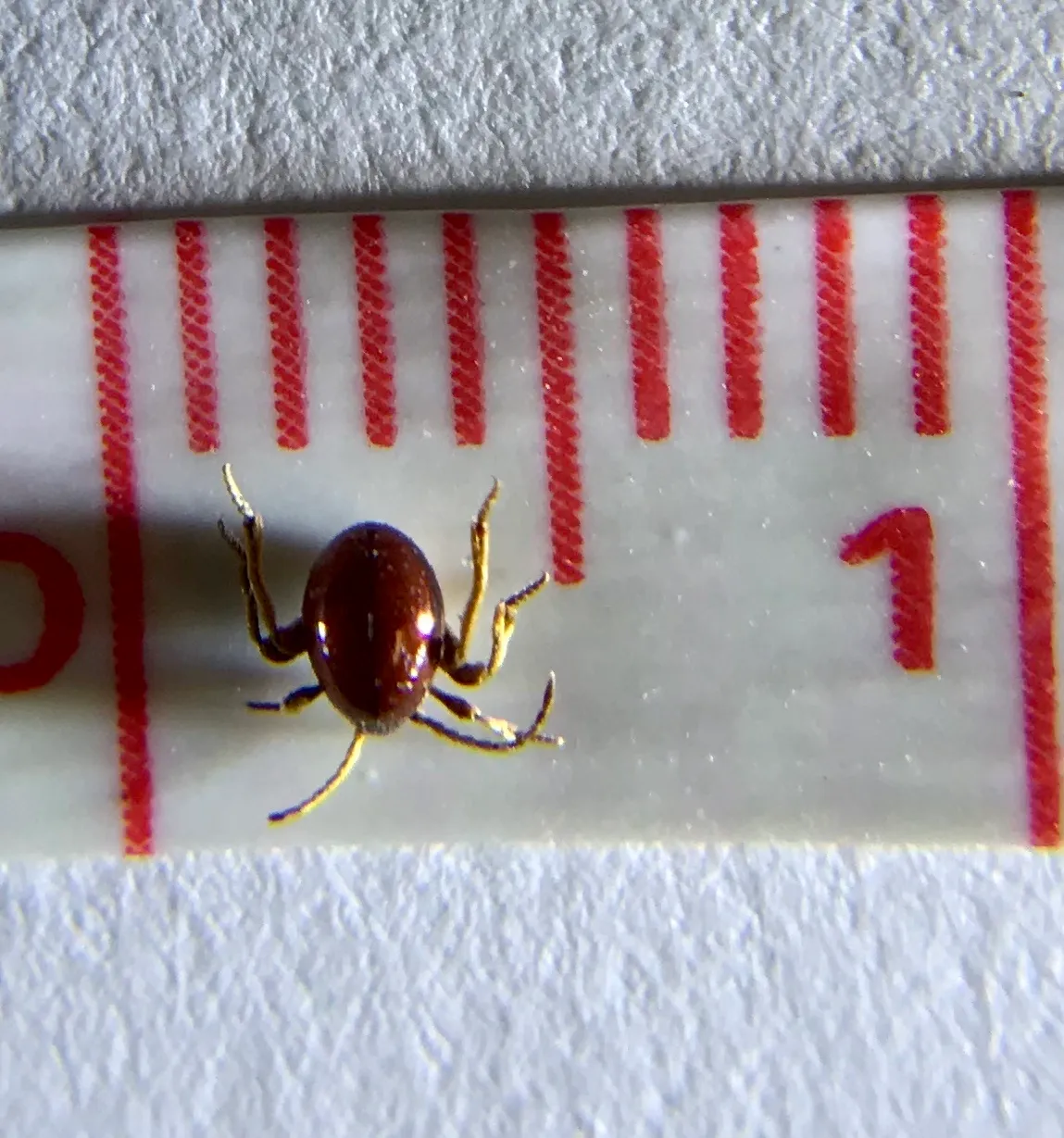
Adults are 1/16 to 3/16 inch long, according to the spider beetle profile from the Defense Centers for Public Health–Aberdeen (DCPH-A). It describes round to oval beetles, usually reddish brown to black, with a large, globe-like abdomen, long, thin antennae of 11 segments and often a coat of fine yellow to cream hairs. Colorado State gives about 2 to 4 mm.
Their habits give them away too. DCPH-A says spider beetles prefer to feed at night and are seldom seen in daylight, and that an adult that is disturbed often pulls its legs in tight against its body, so it looks dead.
How do you tell a spider beetle from a tick?
Count the legs and look for antennae: a spider beetle has six legs and two long antennae, and a nymph or adult tick has eight legs and no antennae. The University of Rhode Island's TickEncounter says about 1 in 20 crowdsourced submissions to its TickSpotters program is a look-alike rather than a tick, and it calls spider beetles one of the most common, adding that six legs and two long antennae make one an insect. Ticks are arachnids, related to spiders and mites, and Utah State University Extension says tick nymphs and adults have eight legs.
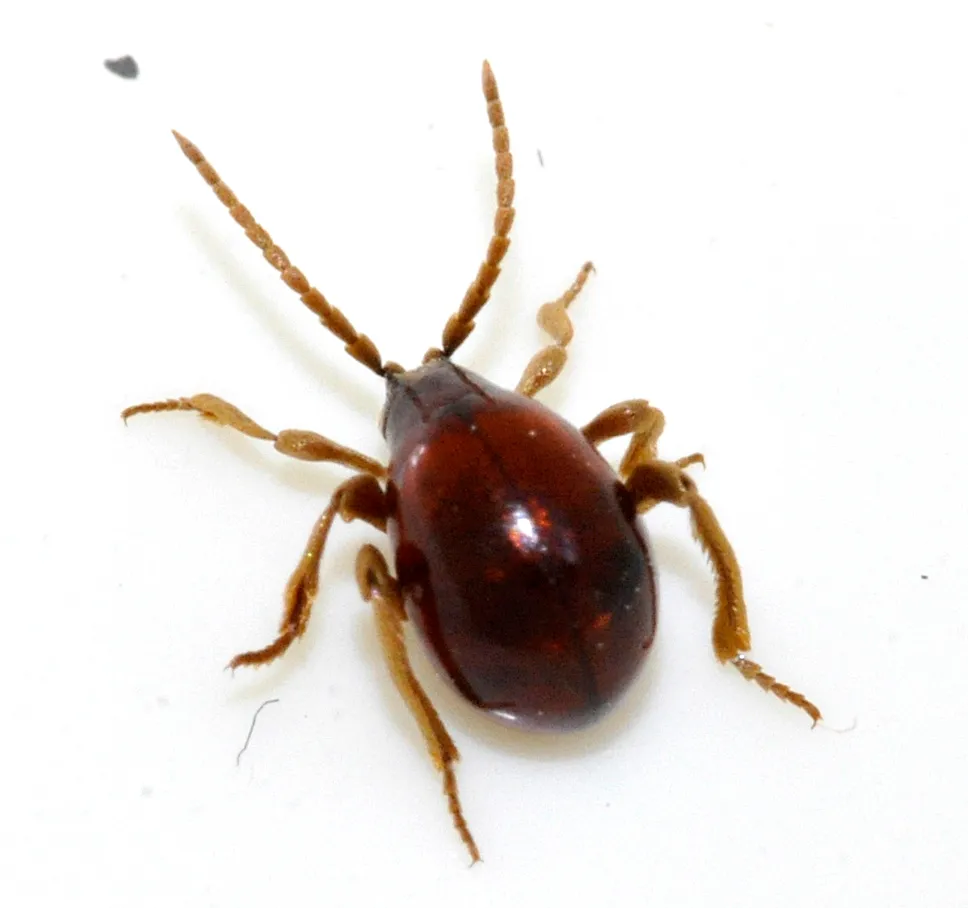
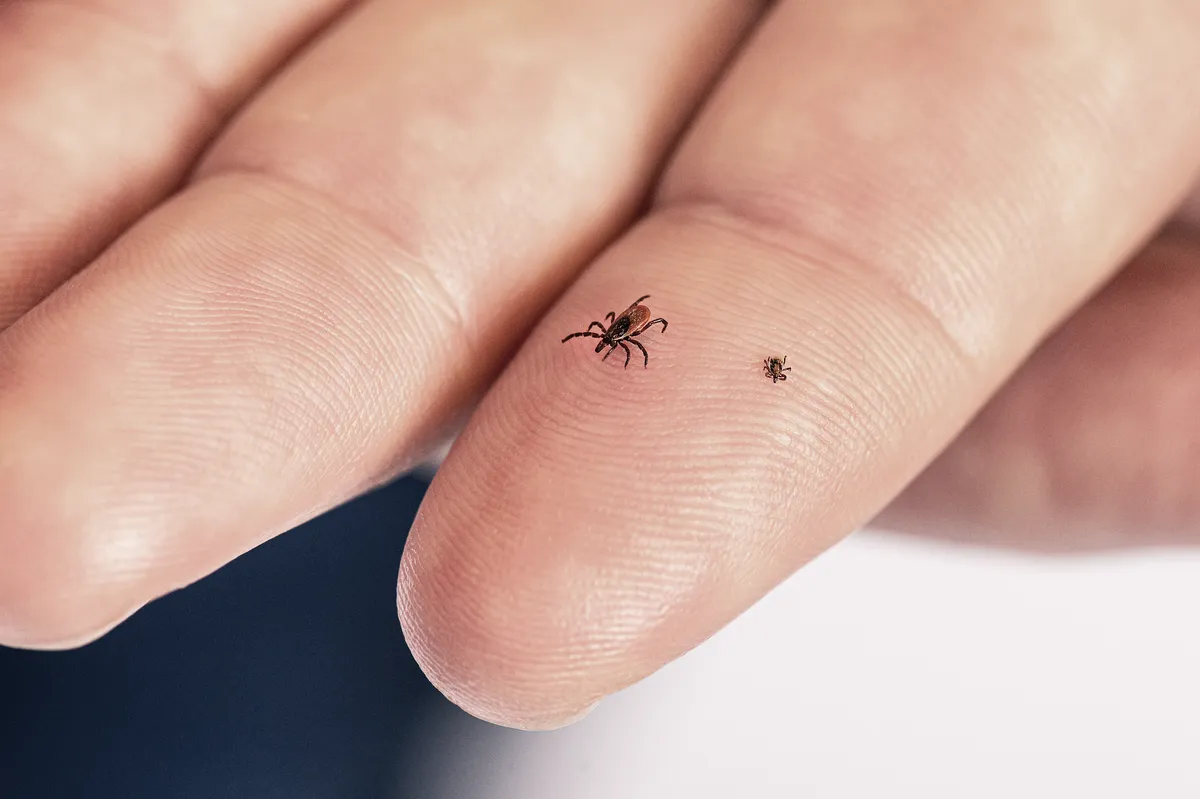
Two cautions. Newly hatched tick larvae have only six legs, but Utah State says they are very tiny, and TickEncounter lists antennae among the features ticks do not have, so antennae rule out a tick at any stage. Size will not settle it either: CDC compares a blacklegged tick nymph to a poppy seed and an adult to a sesame seed, and says nymphs pose a particularly high risk of Lyme disease because they are abundant and small.
Where you found it is the next clue. CDC's advice on preventing tick bites says ticks live in grassy, brushy or wooded areas or on animals, and can ride into the house on clothing and pets, then attach to a person later. The Connecticut Agricultural Experiment Station describes the adult American dog tick as about 1/4 inch long and reddish brown with white markings on its back, and says a fully fed female can reach 1/2 inch and look like a dark pinto bean. A spider beetle is a household scavenger that breeds in stored food, debris and nests.
If it is a tick, what ticks look like at every life stage helps name the species, the tick identifier asks six quick questions, and how to remove a tick safely covers one that is attached. Why ticks are arachnids, not insects explains the leg count, and the tick life cycle shows the six-legged larva.
What kinds of spider beetles get into homes?
Several. The University of Florida's stored-product pest gallery says about 50 species of spider beetles are found in the US and Canada, about 13 of them pests, ranging in color from pale brownish yellow through reddish brown to almost black. The extension sources cited here name these:
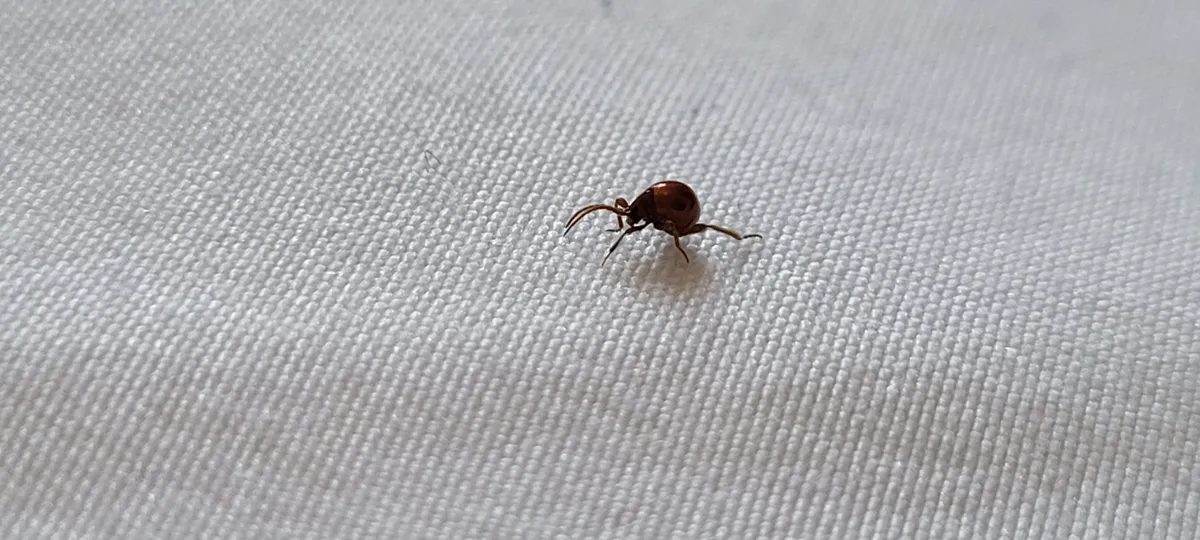
- Smooth spider beetle (Gibbium aequinoctiale): the shiny, reddish-brown globe in this page's photos. UMaine Extension lists it by that name and UF pictures it; Colorado State's list of spider beetles known or suspected in Colorado names Gibbium psylloides, the hump beetle.
- Whitemarked spider beetle (Ptinus fur): perhaps the most common species in Colorado, Colorado State says. Its males can fly; its females cannot.
- American spider beetle (Mezium americanum), hairy spider beetle (Ptinus villiger) and brown spider beetle (Ptinus clavipes): also on Colorado State's list. Most spider beetles found there occur worldwide, it says, and travel easily in stored products.
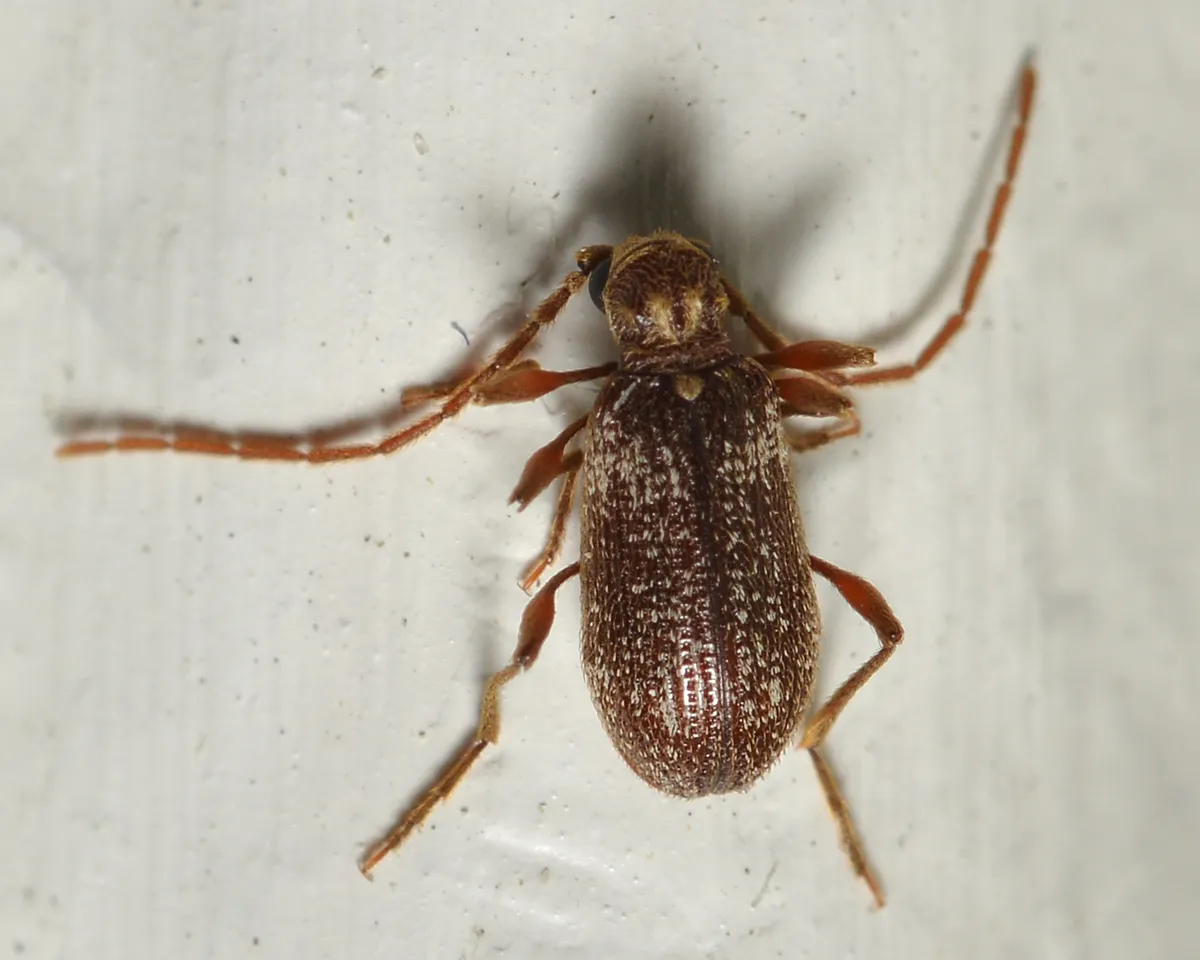
Colorado State places spider beetles in the same family as two other pantry beetles, the drugstore and cigarette beetles, which are covered further down.
Where do spider beetles come from?
From something old nearby: forgotten dry food, spilled debris, or a bird or rodent nest. DCPH-A lists cereals, seeds, dried meat and vegetables, spices, sugar and fish food among their foods, along with rodent droppings, old wood, feathers and dead insects. Washington State University's Pestsense fact sheet calls spider beetles among the most common beetles in moldy, old food, and Iowa State adds dried fruit, animal feed, wool, books and museum specimens to the list.
Damp, sheltered spots suit them. DCPH-A says they are often found where humidity is high, feeding on food spoiled by moisture, and that they shelter between walls, in false ceilings and between wooden boards and live in bird and rodent nests. Colorado State says most species need fairly high humidity, so in Colorado they are typically found in damp basements and crawl spaces, and that they can develop in the refuse of rodent nests. WSU adds that they withstand cold and need water within easy reach.
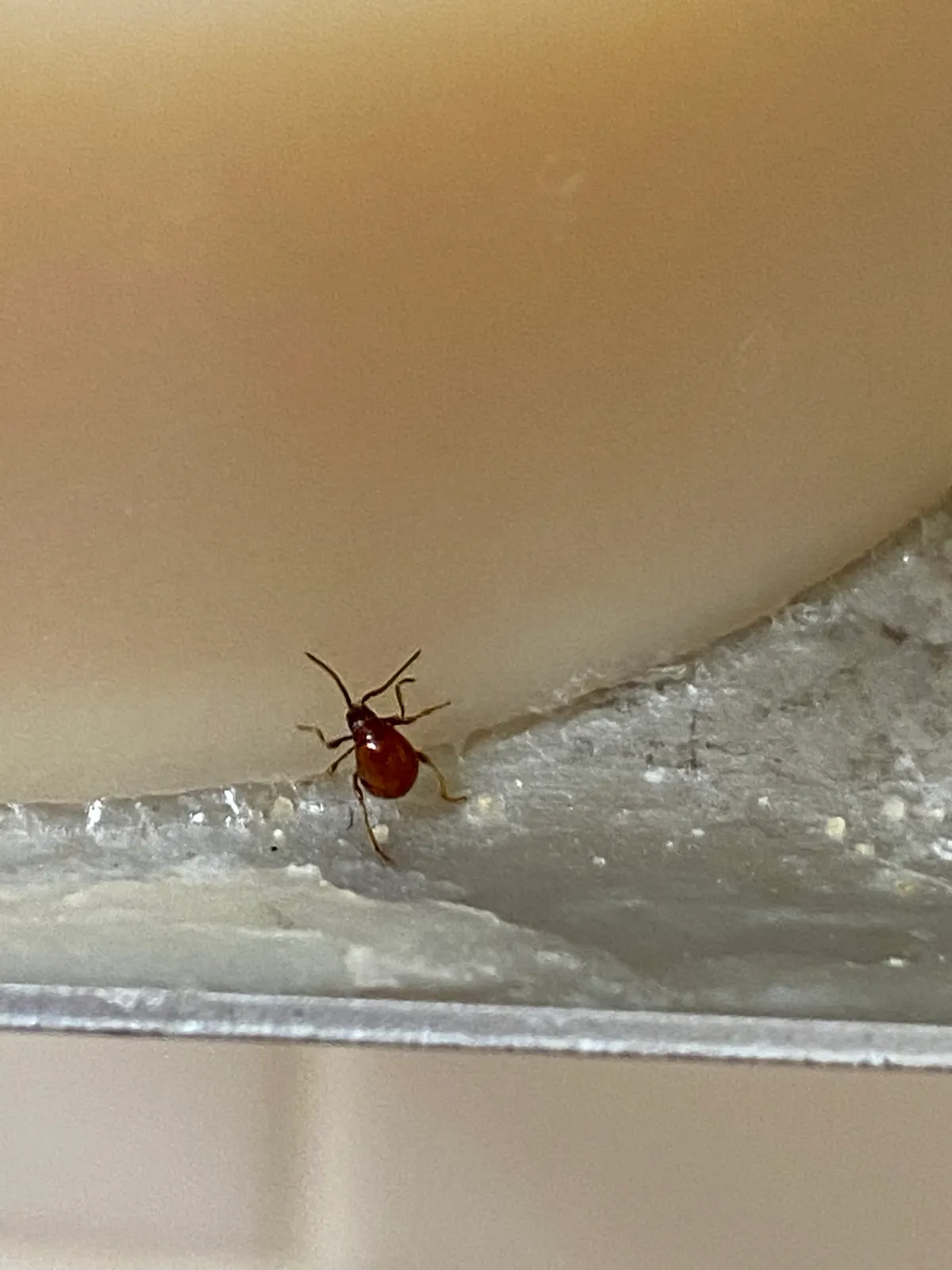
They also wander. DCPH-A says the adults may walk long distances inside homes, moving at night away from the infested food, and that infestations can carry on in dead insects, bird and rodent nests and animal droppings, then reinvade stored food after the main source has been dealt with.
Damp basements and crawl spaces hold a mix of other insects too, sorted in the guide to bugs in the basement.
Is it a spider beetle or a bed bug?
Shape tells these two apart: a bed bug is flat and oval, while a spider beetle is round, with a globe-like abdomen on long, thin legs. Both are insects with antennae, so the tick test does not separate them. The EPA's bed bug identification page describes an adult bed bug as about the size of an apple seed, 3/16 to 1/4 inch long, brown, with a flat, oval body when it has not fed recently and antennae of four parts.
They turn up in different places, too. The EPA's guide to finding bed bugs says they hide near the piping, seams and tags of mattresses and box springs and in cracks in the bed frame and headboard, and that each one needs a blood meal to grow to its next life stage. A spider beetle on a sheet or pillow may have wandered in from somewhere else: DCPH-A says spider beetles move about at night, away from the food they breed in.
Bugs that look like bed bugs compares spider beetles with bat bugs, carpet beetle larvae and the other suspects, and what bed bugs look like shows every life stage.
Do spider beetles bite?
No source cited here describes a spider beetle biting a person. DCPH-A says the beetles pose no medical threat, though most people object to finding them in their food, and University of Minnesota Extension's pantry pest guide says pantry pests do not bite or sting people or pets. TickEncounter adds that tick look-alikes carry no risk of a tickborne disease.
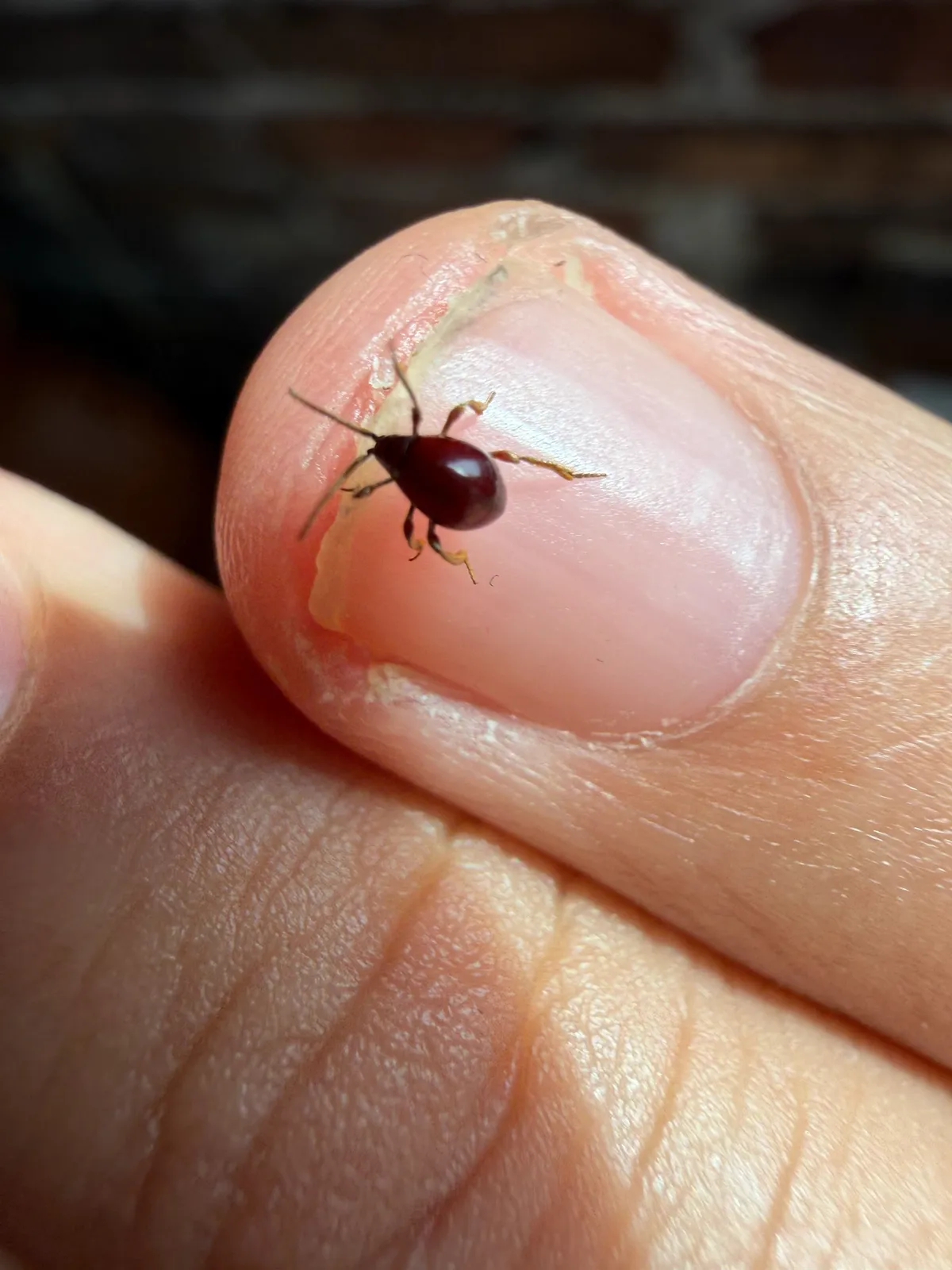
The damage is to food. DCPH-A says spider beetles contaminate stored products with their droppings, pupal cases and body parts, and that infested food should not be used even after the beetles are dead. If you have unexplained bites, look for another cause: the bug bite identifier walks through the insects that do bite, and Texas A&M AgriLife Extension suggests asking a doctor about allergies or other conditions that could explain the symptoms.
What else looks like a spider beetle?
Mostly other small beetles of pantries and windowsills. Check the antennae and the shape first; beetles found in the house and tiny brown bugs sort the rest by size and room.
Drugstore and cigarette beetles
These are the spider beetle's relatives in stored food. Colorado State says they share a downward-pointing head and a somewhat humped body, but are light to reddish brown with more elaborate antennae, fly well and can be strongly attracted to lights. The University of Minnesota gives both as about 1/8 inch long and oval and says they can be found around windows; the pantry pest guide sorts them from the other food beetles.
Carpet beetles
UC IPM's carpet beetle Pest Notes describe adults about 1/10 to 1/8 inch long with round bodies and short antennae, black or a mix of white, brown and yellow, and usually seen near windows indoors; the larvae look like fuzzy or hairy maggots. Texas A&M says carpet beetles do not bite, though the larvae's hairs irritate some people. How to get rid of carpet beetles covers them.
Weevils
A weevil has a snout. The University of Minnesota describes rice, granary and maize weevils as slender, dark brown beetles under 3/16 inch long with a snout projecting forward from the head, feeding only on whole grains and seeds, and TickEncounter says many people mistake a weevil for a tick as well. The weevil guide shows the common ones.
Commonly confused with
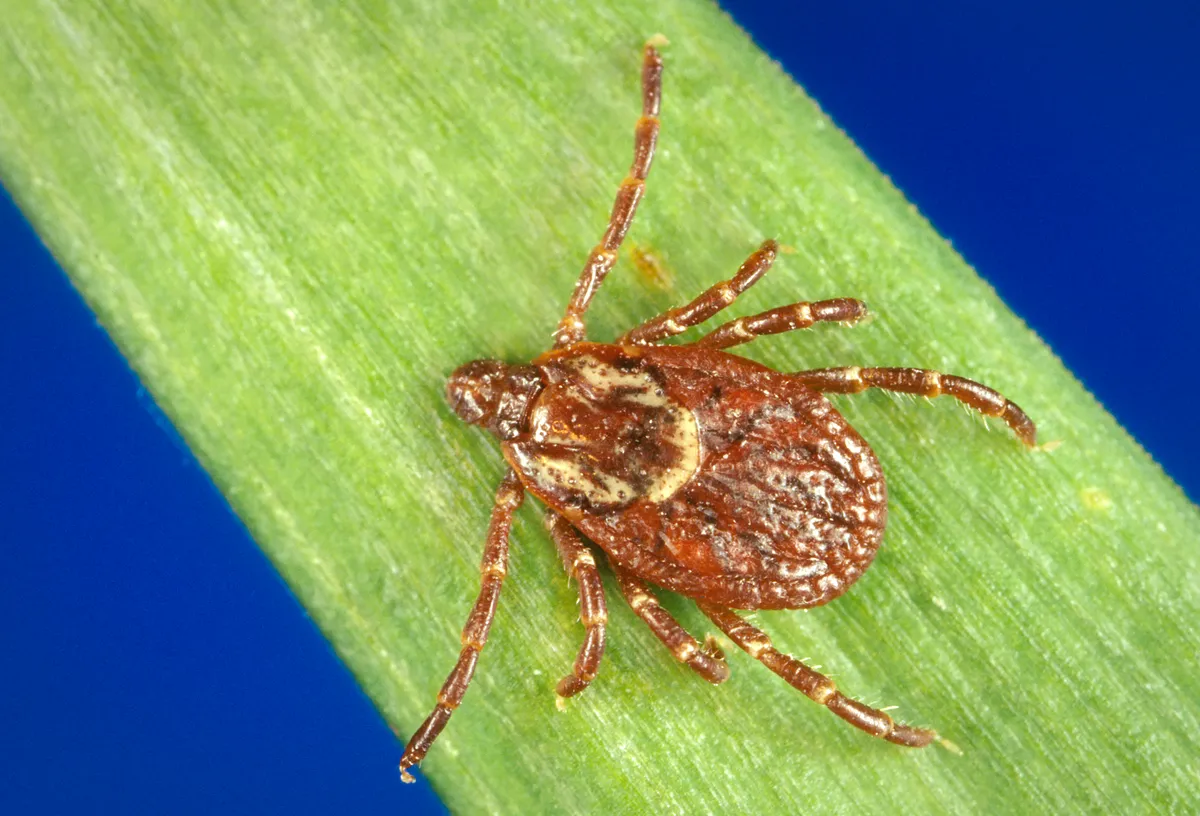 American dog tickEight legs and no antennae; reddish brown with white markings, about 1/4 inch
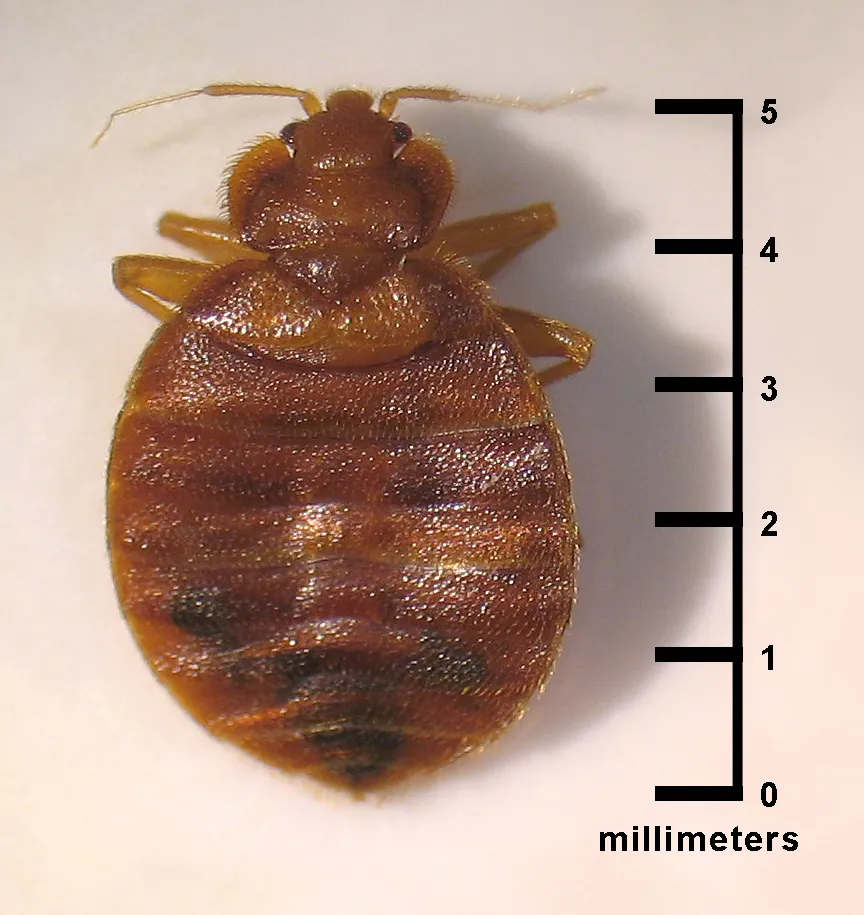 Bed bugFlat, oval and apple-seed sized; hides in mattress seams and feeds on blood
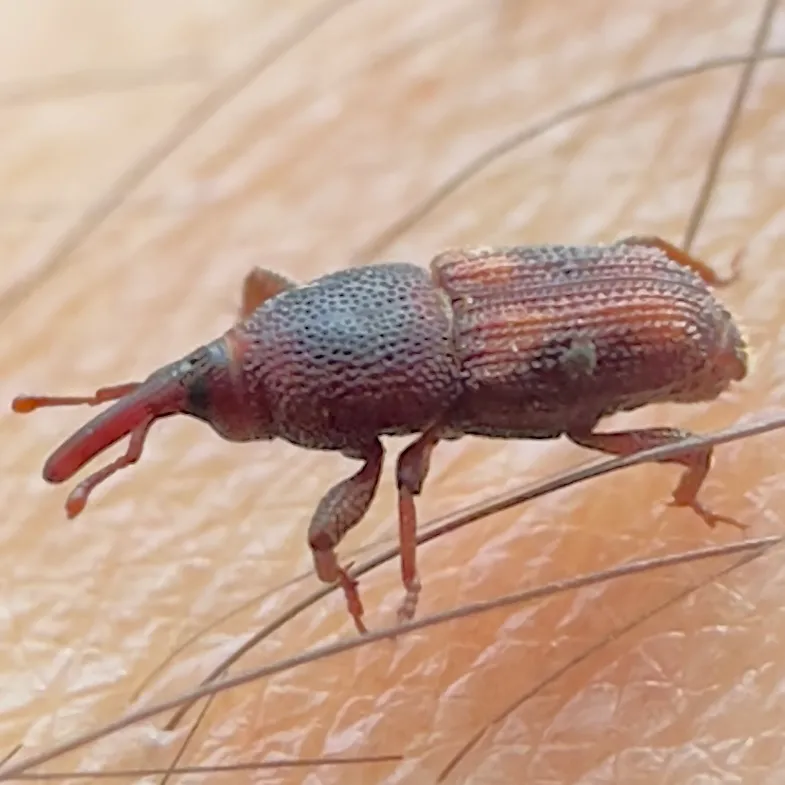 Rice weevilA snout on a slender body; feeds only on whole grains and seeds
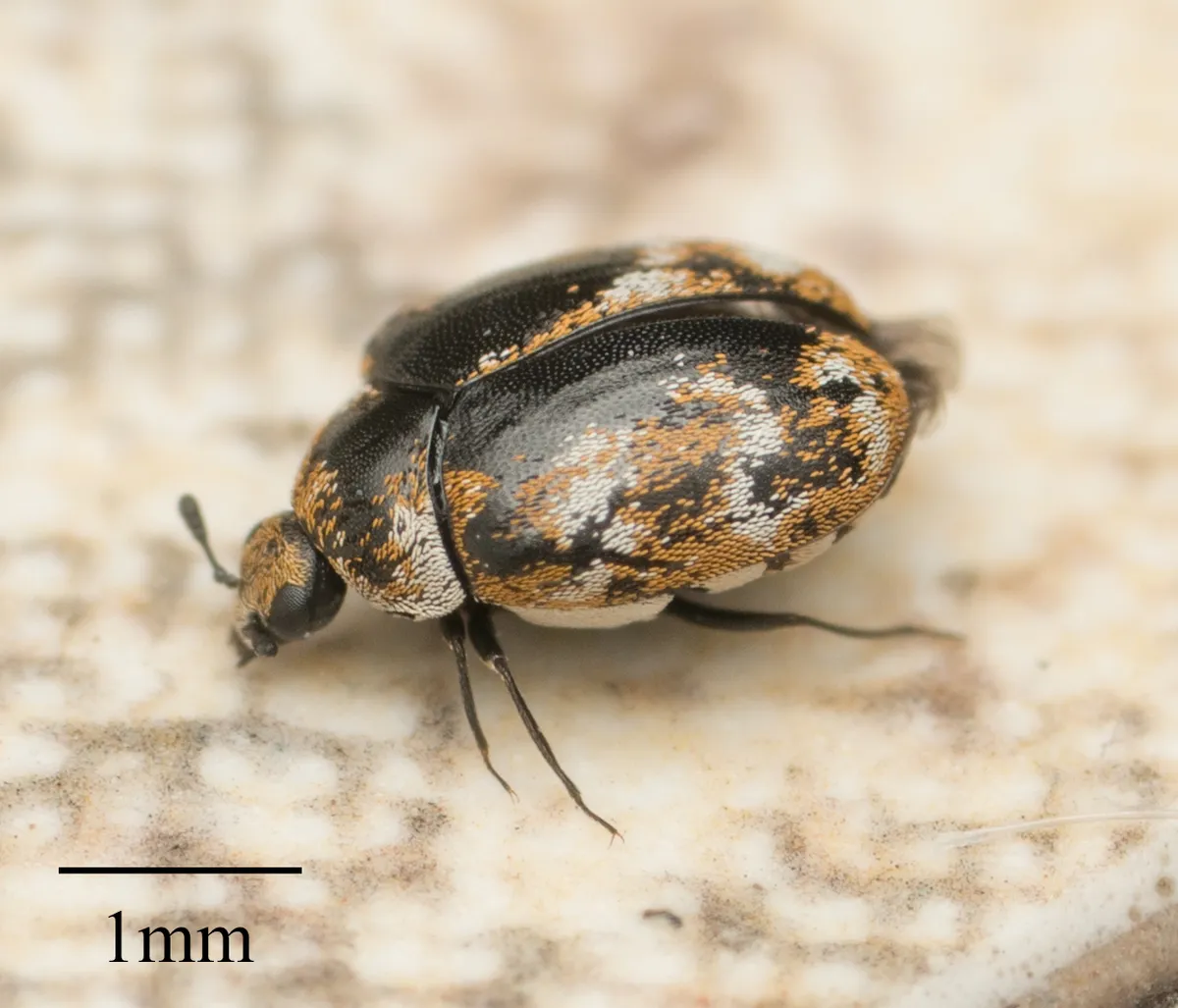 Carpet beetleRound, with short antennae and mottled scales; usually seen near windows
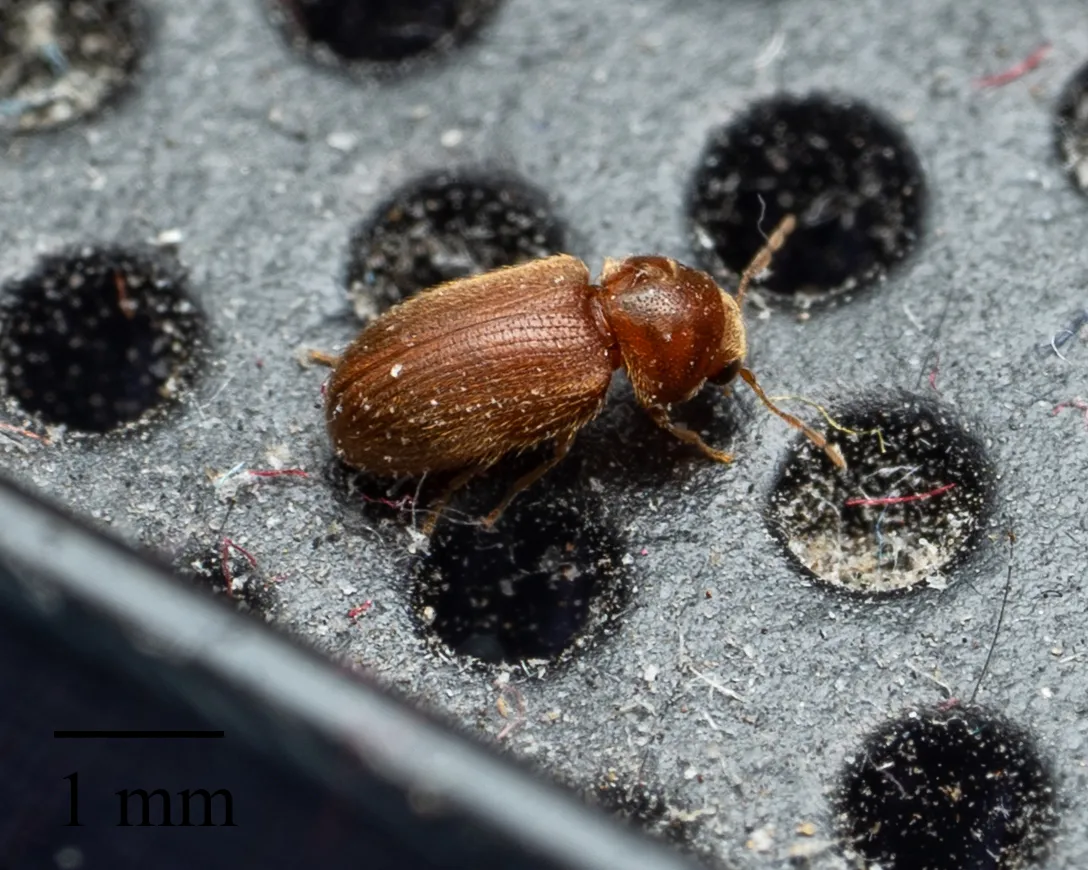 Drugstore beetleOval and humped, head bent down; flies well and comes to windows and lights
Photos: American dog tick: CDC/DVBID/ Gary O. Maupin; photo: James Gathany (CDC Public Health Image Library, phil.cdc.gov), public domain. Bed bug: CDC/ CDC-DPDx; Blaine Mathison (CDC Public Health Image Library, phil.cdc.gov), public domain. Rice weevil: no rights reserved, via iNaturalist, CC0 1.0. Carpet beetle: no rights reserved, via iNaturalist, CC0 1.0. Drugstore beetle: no rights reserved, via iNaturalist, CC0 1.0.
How do you get rid of spider beetles?
Find what they are breeding in and throw it out; spraying alone will not fix it. Iowa State says spraying without finding and removing the infested items gives short-term relief at best, and the University of Minnesota does not recommend insecticides in food cupboards. Work through these steps:
- Check every dry food, oldest first: flour, grains, cereal, spices, dried fruit, pet food and birdseed. Iowa State warns there may be many possibly infested items. Seal infested food in a plastic bag before it goes in the trash, which DCPH-A says reduces the spread of the adult beetles.
- Empty and vacuum the shelves, including cracks and corners, then empty the vacuum. WSU also suggests scrubbing with hot water and detergent, though the University of Minnesota notes that washing will not keep pantry pests from coming back. Do not sweep or vacuum mouse or rat droppings: CDC's rodent cleanup steps say to put on gloves, spray them with disinfectant until very wet, let them soak for 5 minutes and wipe them up with paper towels.
- Store food sealed, in tightly closed glass, metal or heavy plastic containers or in the refrigerator or freezer, as the University of Minnesota advises. DCPH-A suggests containers with tight-fitting lids for anything not used within a week of opening.
- Freeze or heat doubtful food, and throw out infested food. For older food you are unsure about, the University of Minnesota says at least four days in a freezer at 0°F, or at least 30 minutes on shallow pans in a 130°F oven, kills any eggs or insects. DCPH-A says not to use food that was infested, even after the beetles are dead.
- Look beyond the pantry if they keep coming back. DCPH-A points to dead insects, bird and rodent nests and animal droppings, so check walls, false ceilings, crawl spaces and damp basements. For a rodent nest, CDC says to wear gloves, spray the nest with disinfectant, let it soak for 5 minutes, then seal it in a plastic bag inside a second bag.
- Track them with sticky traps. DCPH-A suggests sticky traps along walls and next to outside doors, where the beetles walk at night, adding traps near the ones that catch the most until the infested item turns up.
For the cleanup food by food, see pantry pests and how to clear them.
Frequently Asked Questions
Are spider beetles harmful?+
Not to your health, by the sources cited here. The Defense Centers for Public Health–Aberdeen says spider beetles pose no medical threat, and the University of Minnesota says pantry pests do not bite or sting people or pets. The harm is to food and stored goods: DCPH-A says they contaminate stored products with droppings, pupal cases and body parts and that infested food should not be used even after the beetles are dead, and Iowa State lists wool, feathers, books and museum specimens among the things they infest.
Why is there a spider beetle in my bed?+
It may have wandered there from its food. The Defense Centers for Public Health–Aberdeen says spider beetles feed at night, may walk long distances inside homes and move away from the infested food after dark, so one can turn up on a bed far from where it breeds. DCPH-A describes them as general scavengers that pose no medical threat. Look for six legs, two long antennae and a round body; a flat, oval, apple-seed-sized bug hiding in mattress seams points to bed bugs instead, according to the EPA.
What attracts spider beetles?+
Old food and debris, especially in damp places. Washington State University calls them among the most common beetles in moldy, old food and says they need water within easy reach. The Defense Centers for Public Health–Aberdeen lists grains, seeds, dried meat, spices, sugar and fish food, plus rodent droppings, old wood, feathers and dead insects, and says they are often found where humidity is high and live in bird and rodent nests. Colorado State says most species need fairly high humidity.
Are spider beetles hard to get rid of?+
They can be, because the source can be hard to find. The University of Florida says their varied diet can make the source of an infestation difficult to locate, and Iowa State warns that many items may be infested. The Defense Centers for Public Health–Aberdeen says infestations can persist in dead insects, bird and rodent nests and animal droppings and return to stored food after a cleanup. Iowa State says spraying without removing the infested items gives short-term relief at best.
Can a spider beetle give you Lyme disease?+
No. CDC says the bacteria that cause Lyme disease spread to people through the bites of infected ticks: the blacklegged tick in the northeastern, mid-Atlantic and north-central United States and the western blacklegged tick along the Pacific Coast. Spider beetles are beetles, not ticks. URI's TickEncounter says tick look-alikes carry no risk of a tickborne disease, and the Defense Centers for Public Health–Aberdeen says spider beetles pose no medical threat. Count the legs to be sure: six on a spider beetle, eight on a nymph or adult tick.
Can spider beetles fly?+
Some can. Colorado State University Extension says males of the whitemarked spider beetle can fly but the females cannot, and that in some other species both sexes fly; the University of Florida also says some species can fly. The Defense Centers for Public Health–Aberdeen says the adults do not fly but may walk long distances indoors, which is why it advises placing sticky traps where they walk. A small beetle flying to a kitchen window or lamp may be a drugstore or cigarette beetle instead; Colorado State calls both good fliers that can be strongly attracted to lights.
What do spider beetle larvae look like?+
Small, C-shaped grubs that stay hidden in what they eat. The Defense Centers for Public Health–Aberdeen describes the larvae as about 1/8 inch long and cream colored, with short legs and a brown head, and Colorado State calls them dirty white, C-shaped grubs with well-developed legs. The University of Minnesota says they remain in the infested material and are not normally seen. DCPH-A adds that the larvae often bore into cardboard and wood to pupate, leaving small holes.
How big is a spider beetle?+
Tiny. The Defense Centers for Public Health–Aberdeen gives adults as 1/16 to 3/16 inch long, Colorado State gives about 2 to 4 mm and Iowa State generally 2 to 5 mm. Ticks are small too: CDC compares a blacklegged tick nymph to a poppy seed and an adult to a sesame seed. So check the legs and antennae rather than the size: six legs and two long antennae mean an insect, not a tick.
How long do spider beetles live?+
Adults can live about a year, according to the Defense Centers for Public Health–Aberdeen, which says a female lays about 120 eggs over 3 to 4 weeks in early summer, development from egg to adult takes 3 to 7 months and there are two generations a year. For the whitemarked spider beetle, Colorado State says adults live several months, females usually much longer than males, and that full-grown larvae may rest in a cocoon for 7 to 8 months before they pupate.
Do spider beetles come out at night?+
Yes. The Defense Centers for Public Health–Aberdeen says spider beetles prefer to feed at night and are seldom seen in daylight, and that they move about at night away from the food they breed in. An adult that is disturbed often draws its legs in tight and lies still, so it can look dead. DCPH-A suggests sticky traps along walls and near outside doors, where the beetles walk at night, to find out where they are coming from.
Sources
- Spider Beetle (Stored Product Pests) — Defense Centers for Public Health–Aberdeen
- Colorado Insects of Interest: Spider Beetles — Colorado State University Extension
- Spider beetle (Pestsense fact sheet, reviewed May 6, 2025) — Washington State University Extension
- Spider Beetle (Yard and Garden, September 13, 2016) — Iowa State University Extension and Outreach
- A spider beetle, Gibbium aequinoctiale (Stored Product Pests Photographs CD-ROM, 2005) — University of Florida, Department of Entomology and Nematology
- Spider Beetles (Home and Garden IPM) — University of Maine Cooperative Extension
- Pantry pests: Insects found in stored food (reviewed 2024) — University of Minnesota Extension
- Bugs that look like ticks (TickEncounter field guide) — University of Rhode Island TickEncounter Resource Center
- Ticks and Tickborne Diseases of Utah (Richardson, Davis and Ramirez, July 2023) — Utah State University Extension
- How Lyme Disease Spreads — Centers for Disease Control and Prevention
- Preventing Tick Bites — Centers for Disease Control and Prevention
- American Dog Tick, Dermacentor variabilis (Kirby C. Stafford III, 2014) — The Connecticut Agricultural Experiment Station
- Bed Bugs Appearance and Life Cycle — US Environmental Protection Agency
- How to Find Bed Bugs — US Environmental Protection Agency
- Pest Notes: Carpet Beetles (UC ANR Publication 7436) — University of California Statewide IPM Program
- Diagnosing Mysterious Bug Bites (Michael Merchant) — Texas A&M AgriLife Extension Service
- How to Clean Up After Rodents — Centers for Disease Control and Prevention
How this guide was made: it was researched and drafted with AI assistance from the sources listed above. A second, independent AI pass then checked each factual claim against those sources. Found an error? Email support@buzzskito.ca.