
Published by BuzzSkito Mosquito & Tick Control
Published October 21, 2026 · Drafted with AI assistance and fact-checked against the sources listed below
What does an Oriental cockroach look like?
An Oriental cockroach (Blatta orientalis) is a large, shiny roach, dark brown to nearly black, about 1 to 1 1/4 inches long, with wings too short to fly. Penn State Extension's fact sheet describes a very dark brown, nearly black body, usually with a somewhat greasy sheen, and the University of California's Pest Notes on cockroaches (UC IPM) says it is sometimes called a water bug or black beetle.
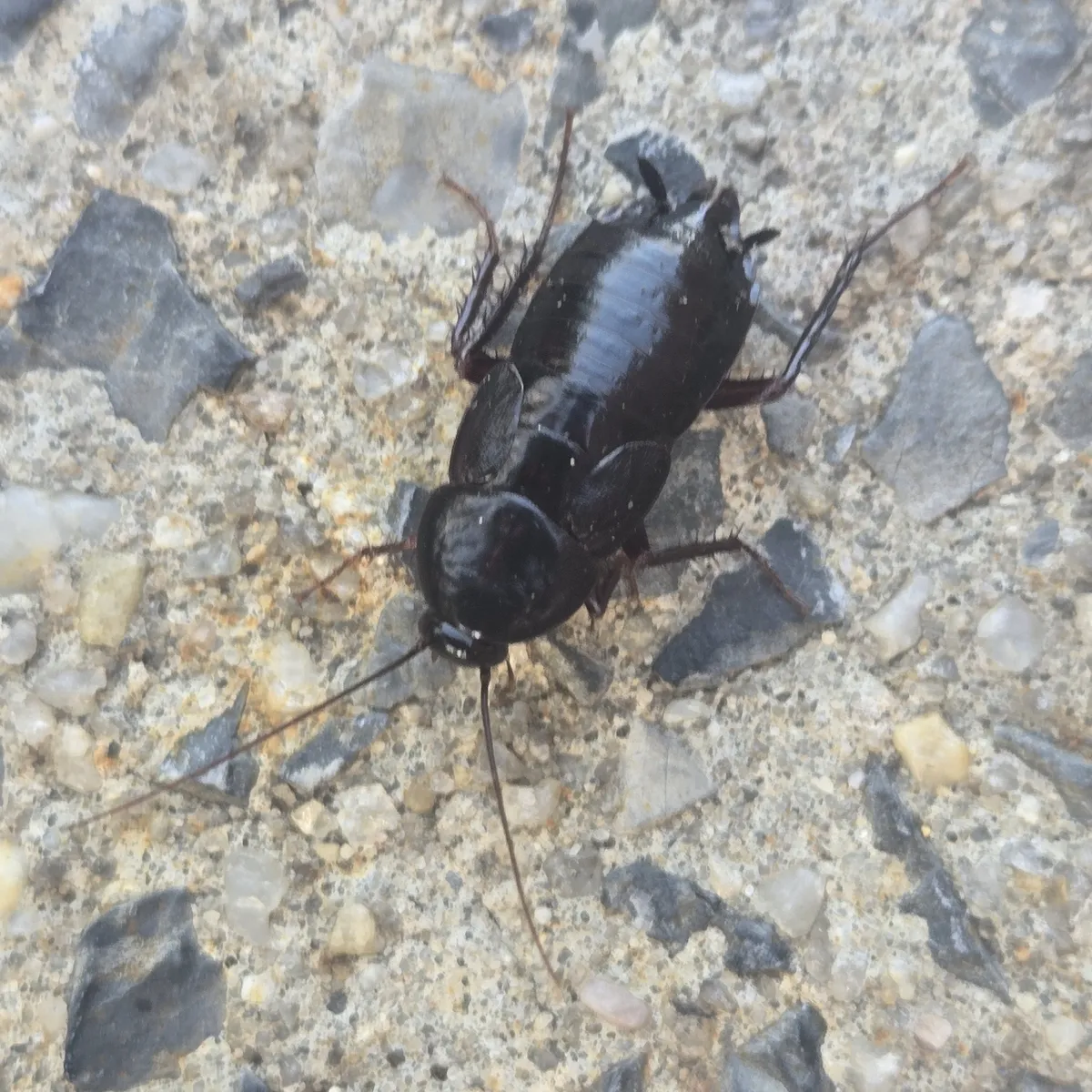
Males and females look different. Penn State says the male's wings cover only about three-quarters of his abdomen, while the female has small, functionless wing pads and a broader, heavier body. The Urban and Structural Entomology Program at Texas A&M puts females at nearly 1 1/4 inches and males at 1 inch. The University of Kentucky's cockroach fact sheet gives the male's wings as about half the abdomen; in every account they stop short of the tip.
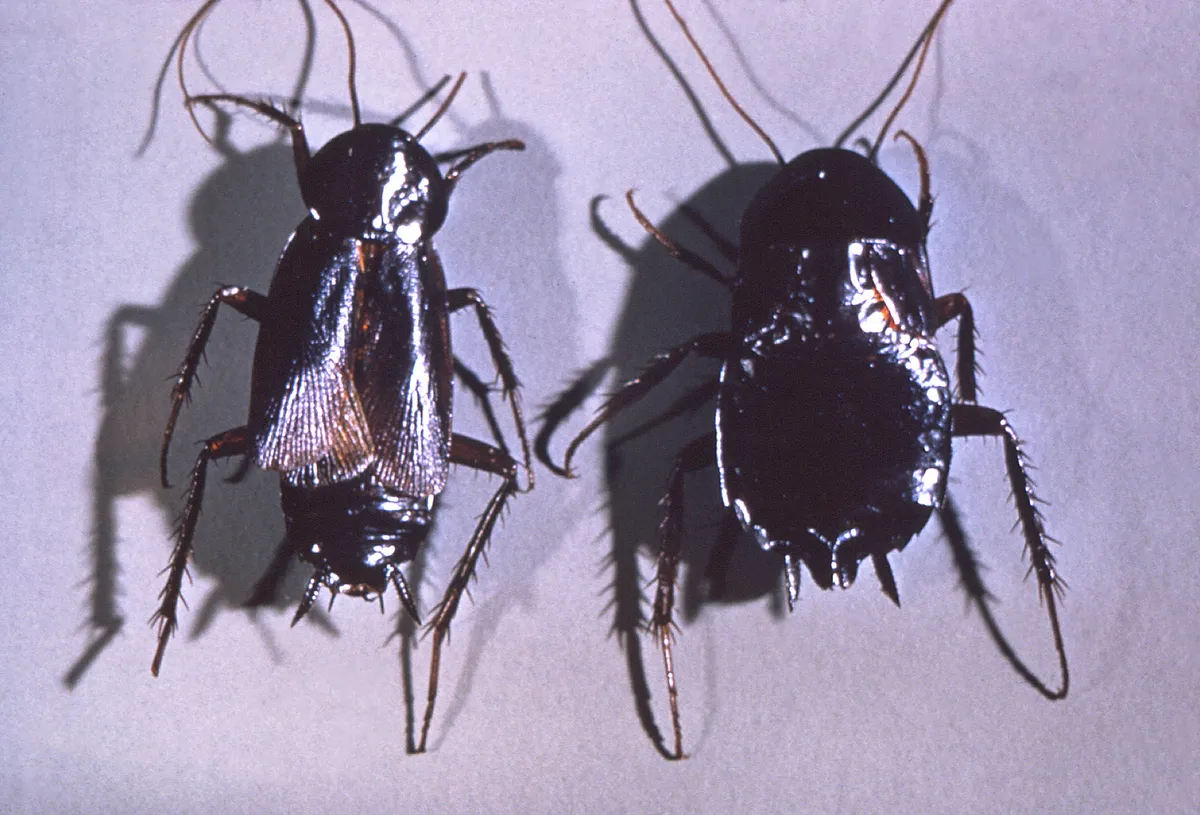
Neither sex can fly: Penn State says males are apparently unable to, and the University of Florida's profile of the species calls both sexes flightless. They are also slow, poor climbers. Texas A&M says they do not move very fast even when disturbed, and UC IPM says they cannot climb smooth vertical surfaces, so they may end up trapped in sinks and tubs. The guide to flying cockroaches covers the species that do fly, and the complete guide to cockroaches profiles the rest.
What do Oriental cockroach egg cases and nymphs look like?
The egg case is a dark red-brown capsule about 3/8 inch long, according to UC IPM. Penn State says the female carries it about 30 hours, then drops it, unglued, on a protected surface near food; UF gives 12 hours to five days. Each case holds about 16 eggs, a female makes an average of eight, and they hatch in about 60 days at room temperature (Penn State) or 42 to 81 days (UF).
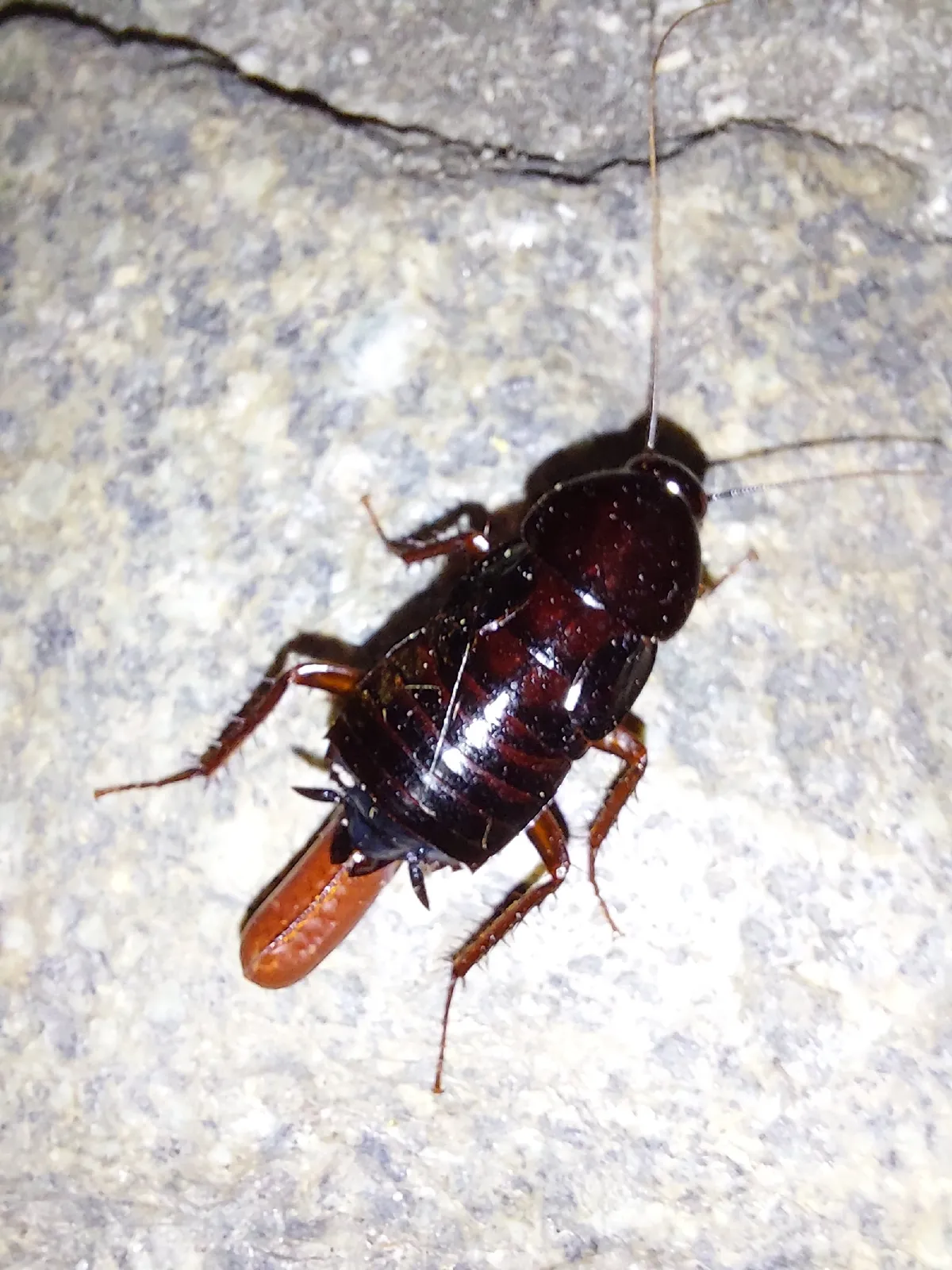
Newly hatched nymphs are about 1/4 inch long and turn from red-brown to black as they grow, says Clemson University's cockroach fact sheet. Because the female never grows full wings, she can pass for a large nymph. What cockroach eggs look like and what baby cockroaches look like compare the species, and the guide to white cockroaches covers pale or white roaches.
How do you tell an Oriental cockroach from an American cockroach?
Check the color and the wings. Texas A&M AgriLife Extension's guide to cockroach biology and management describes the American cockroach as reddish brown with tan to light-yellow bands outlining the plate behind its head, 1 1/2 to 2 inches long, and able to fly in both sexes. The Oriental cockroach is darker, smaller and short-winged.
| Feature | Oriental cockroach | American cockroach |
|---|---|---|
| Adult size | About 1 to 1 1/4 inches | 1 1/2 to 2 inches |
| Color | Shiny dark brown to black | Reddish brown, pale band around the plate behind the head |
| Flight | Short wings; neither sex flies | Both sexes can fly, but seldom do |
| Temperature | Prefers cooler temperatures than other pest roaches | Prefers warm places, usually above 82°F (28°C) |
| Egg to adult | 575 to 600 days on average | About 600 days on average |
From Texas A&M and Kentucky, with temperatures from UC IPM.
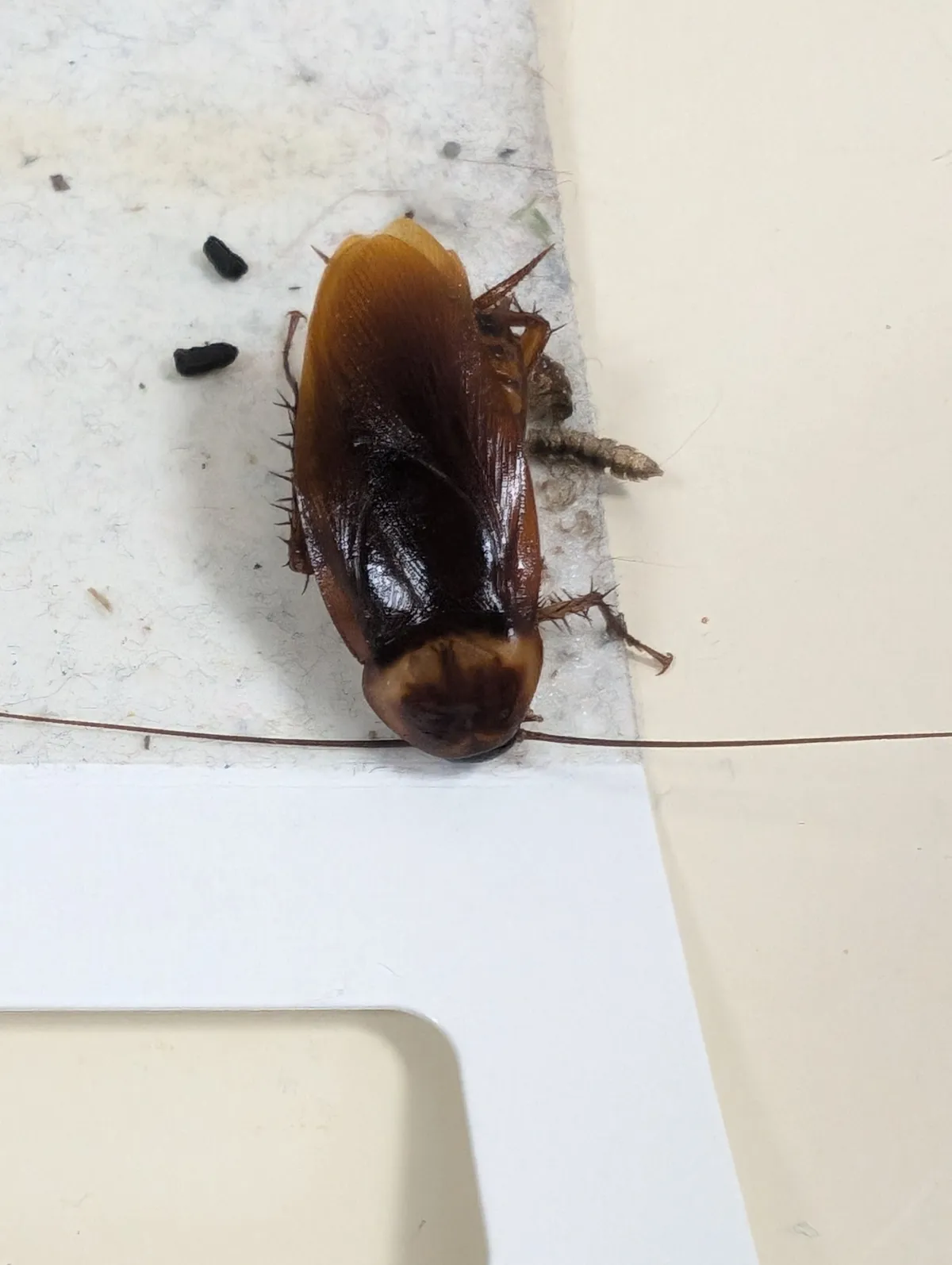
The two share sewers and drains, and Texas A&M lists waterbug as a nickname for the American cockroach too. Its own guide is filed under another of its names, the palmetto bug.
What else could a big black cockroach be?
Three other large, dark cockroaches, each found mainly in one region, and a black beetle can pass for an Oriental cockroach. Check the wings first: on an adult Oriental cockroach they always stop short of the tip of the abdomen.
Smokybrown cockroach
The smokybrown cockroach is 1 1/4 to 1 1/2 inches long and dark brown to black, but Texas A&M says its wings extend beyond the abdomen in both sexes, and UC IPM says adults fly, especially on warm, humid evenings. It lives outdoors in the more humid southern states, in mulch, palm fronds, tree holes and attic eaves, Texas A&M says, so a big dark roach in an attic fits it better than an Oriental cockroach.
Turkestan cockroach
The female Turkestan cockroach (Blatta lateralis) is the closest match. Texas A&M describes her as shiny and dark reddish brown with short wings, like an Oriental cockroach, except that the outer bases of her wings are pale, and UC IPM puts her at about 1 inch, with cream-colored markings behind the head and around the wings. The male is brownish yellow and 1/2 to 7/8 inch long.
Native to Asia, it lives mostly outdoors in water meter boxes, compost and leaf litter. Texas A&M says it is spreading from California into Texas and is one of the most common outdoor roaches in El Paso, and UC IPM says it is displacing the Oriental cockroach in warm, dry parts of California.
Florida woods cockroach
In Florida and coastal Georgia, Alabama and Mississippi, a big, slow, dark roach may be a Florida woods cockroach. The University of Florida's profile gives it as 1.2 to 1.6 inches long and reddish brown to nearly black, with short, leathery wing pads, no working flight wings and an oily, smelly secretion that can harm skin and eyes. It usually gets indoors on firewood or other items, and it is one of the roaches called palmetto bugs.
Ground beetles
A shiny black bug that runs fast may be a ground beetle. The Missouri Department of Conservation's ground beetle page describes shell-like wing covers that meet in a straight line down the back, often grooved; most species are black or brown, 1/4 to 3/4 inch long and fast runners. An Oriental cockroach's short wings leave its abdomen partly bare, and it is slow. More look-alikes are in bugs that look like cockroaches and beetles in the house.
Why are Oriental cockroaches called water bugs?
Because of where they live: Penn State says the name comes from their preference for dark, damp, cool places such as under sinks and washing machines and in damp basements. The true giant water bug is a brownish, flattened pond insect about 2 inches long with clawlike front legs, and the Missouri Department of Conservation warns that it can bite painfully. Water bugs vs cockroaches tells the two apart.
Commonly confused with
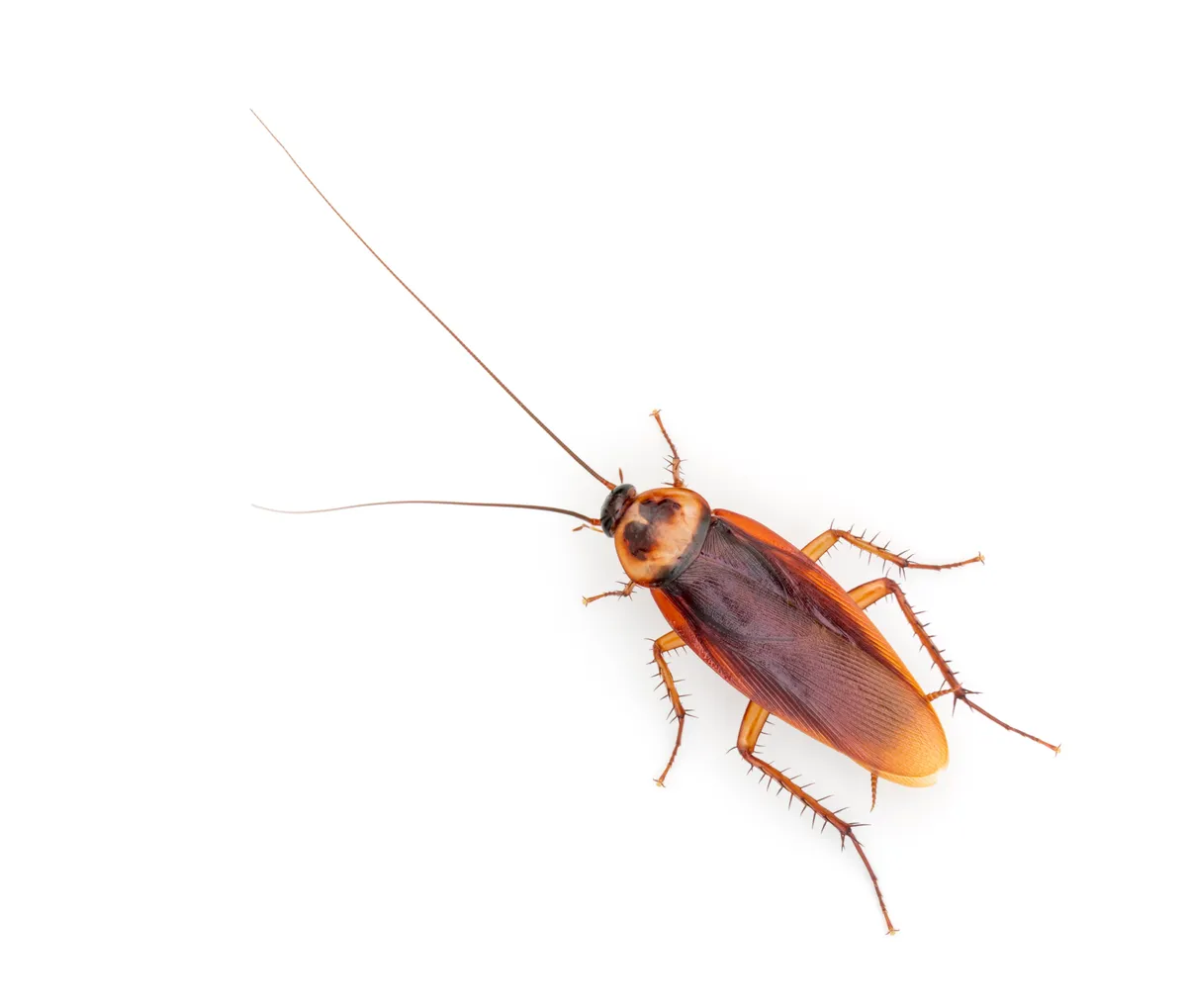 American cockroachReddish brown and 1 1/2 to 2 inches, with a pale band behind the head; it can fly
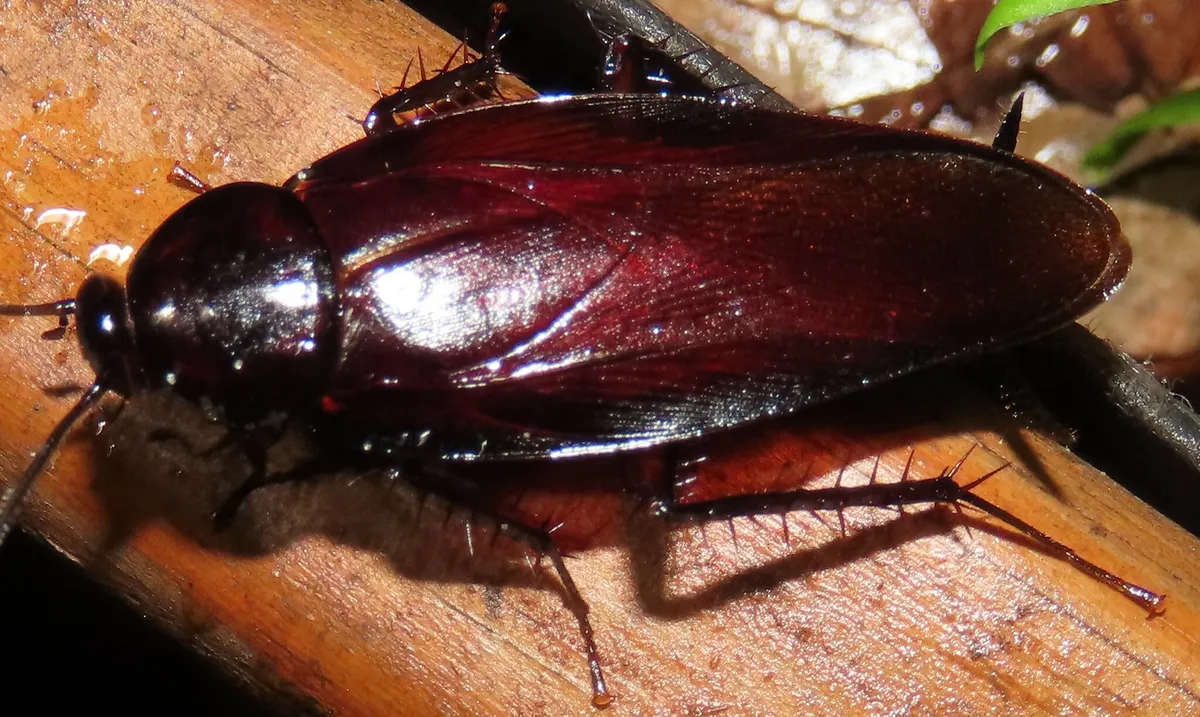 Smokybrown cockroachDark brown to black, but its wings reach past the abdomen and it flies
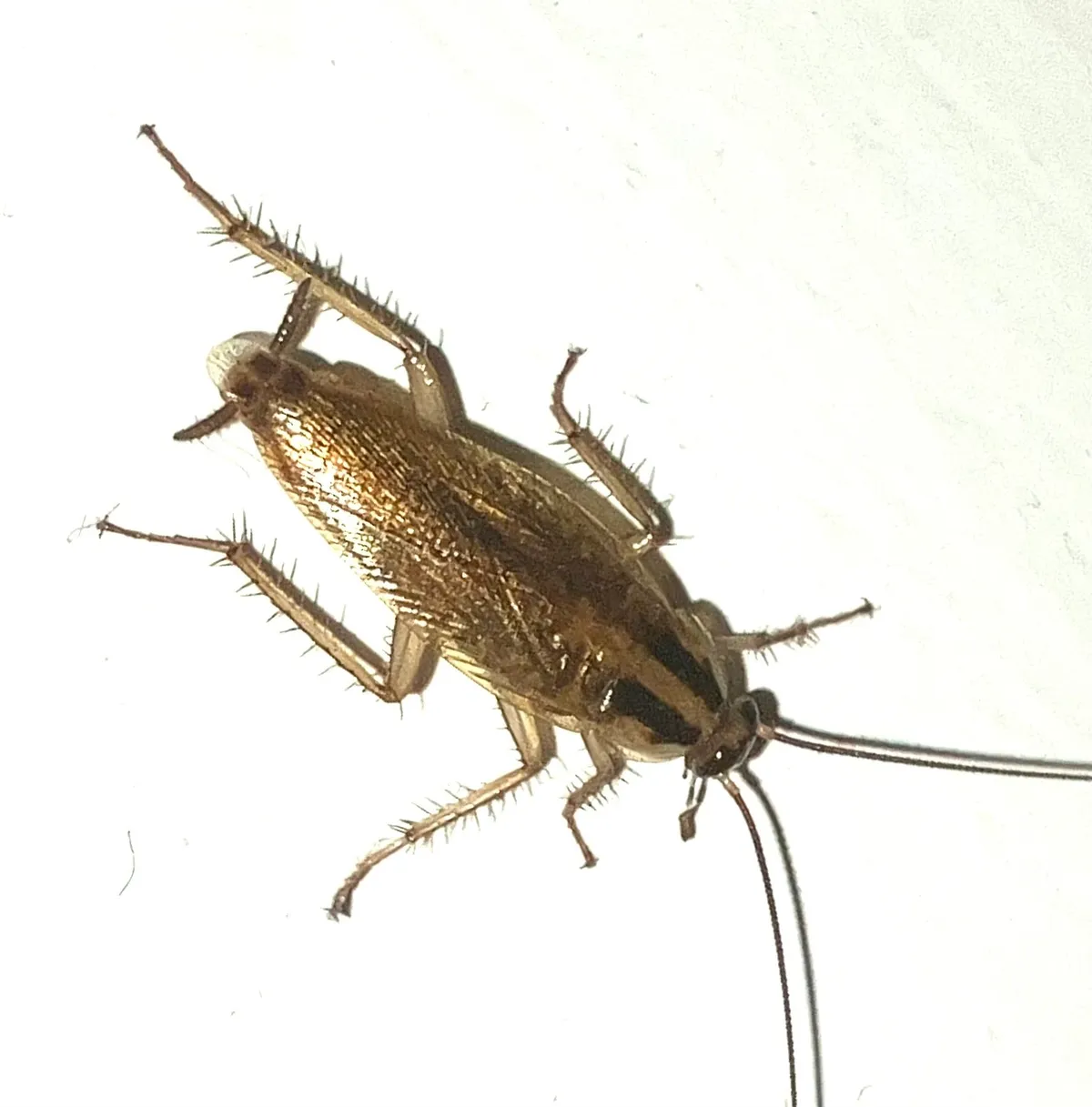 German cockroachOnly 1/2 to 5/8 inch, light brown, with two dark stripes behind the head
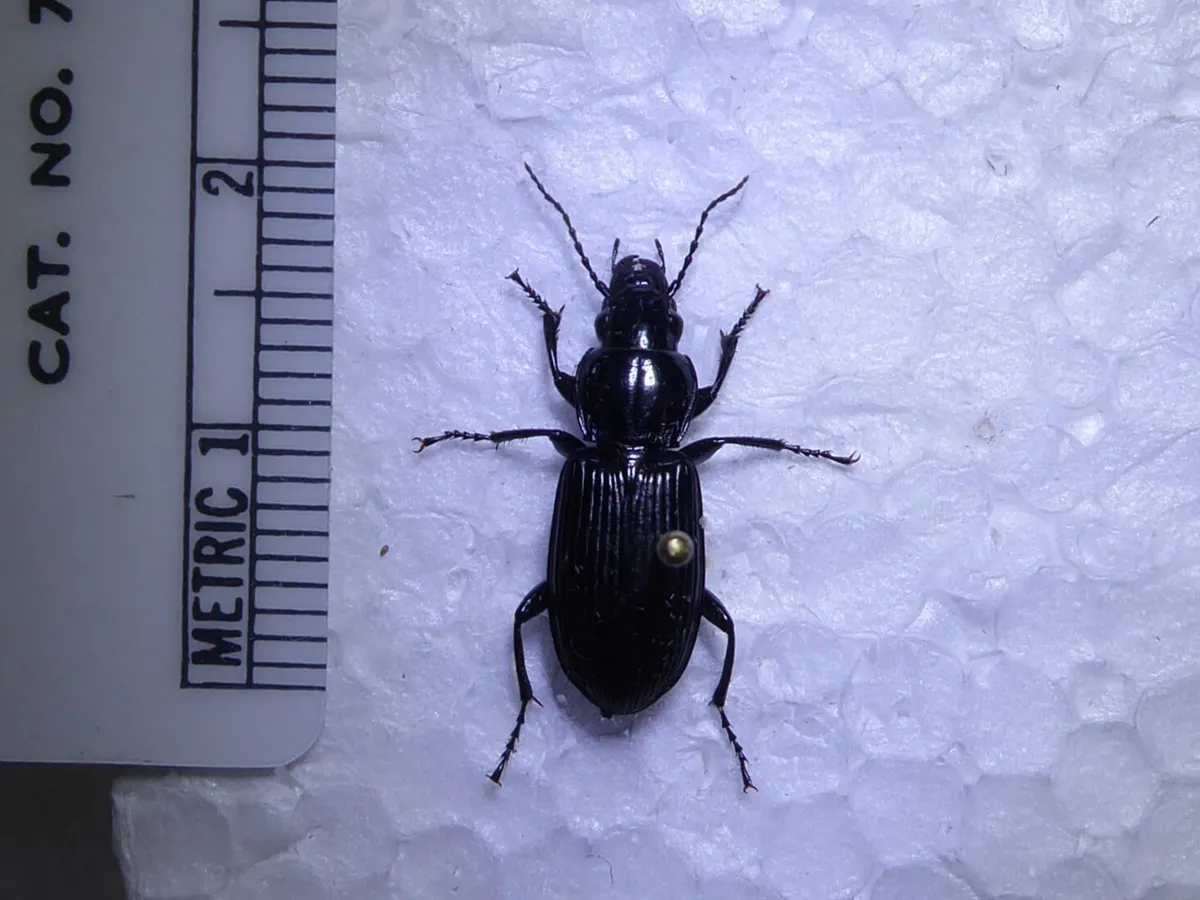 Ground beetleHard wing covers meet in a straight line down its back, and most run fast
Photos: American cockroach: Insects Unlocked, CC0, via Wikimedia Commons, CC0 1.0. Smokybrown cockroach: no rights reserved, via iNaturalist, CC0 1.0. German cockroach: no rights reserved, via iNaturalist, CC0 1.0. Ground beetle: no rights reserved, via iNaturalist, CC0 1.0.
Where do Oriental cockroaches live?
In cool, damp, dark places at or below ground level. The University of Florida names basements, crawl spaces, the gap between soil and foundation, under sidewalks, sewer pipes, floor drains and under sinks; UC IPM adds garages and water meter boxes; and Kentucky mentions floor drains and sump pumps. Penn State says they are seldom found on walls, in high cupboards or on upper floors.
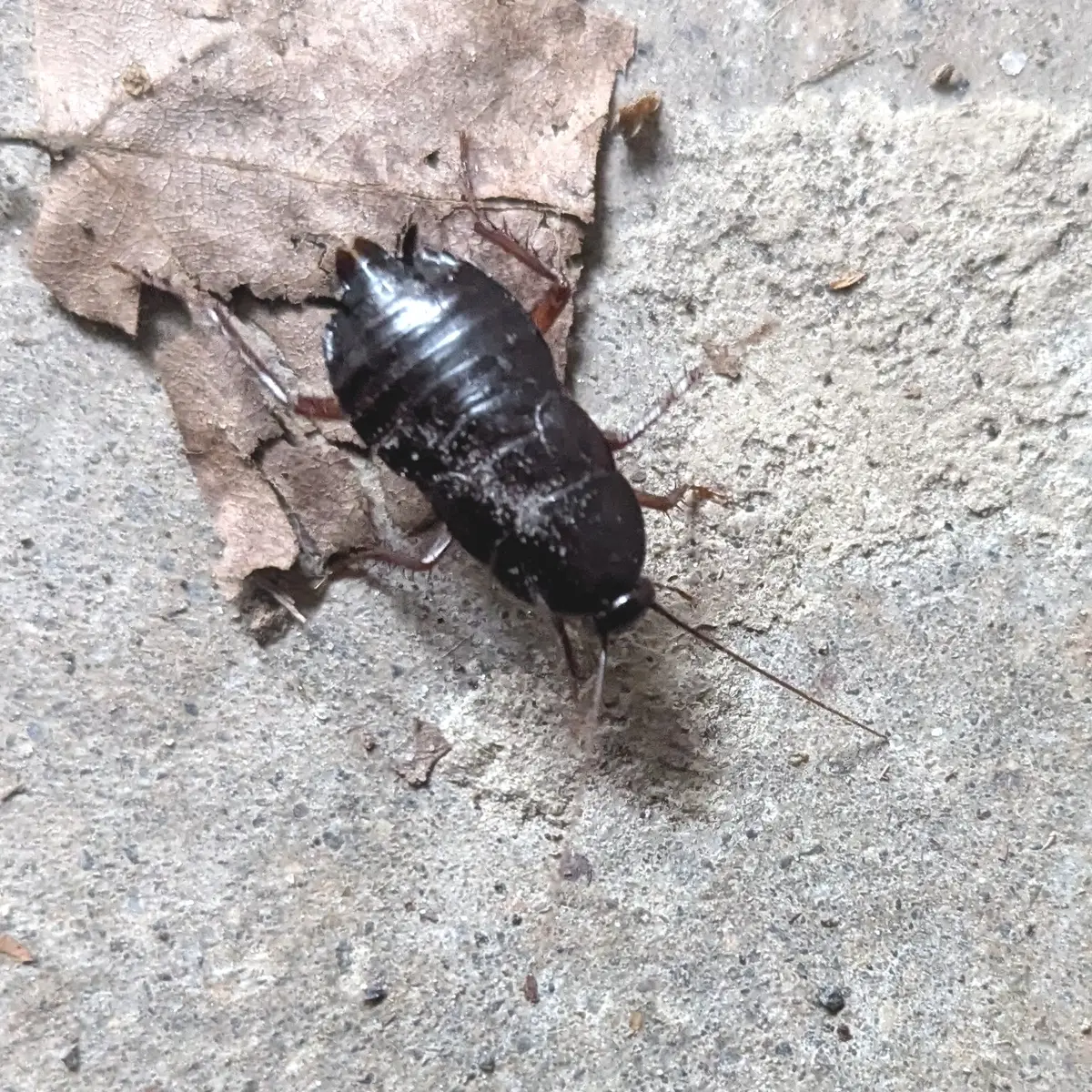
Outdoors, Penn State finds them in yards, under leaves, in bark mulch around shrubs and foundations, in abandoned cisterns and water valve pits, and around garbage. Texas A&M adds compost and the space under porches, and UC IPM says they are common where people feed pets, livestock or wildlife outside.
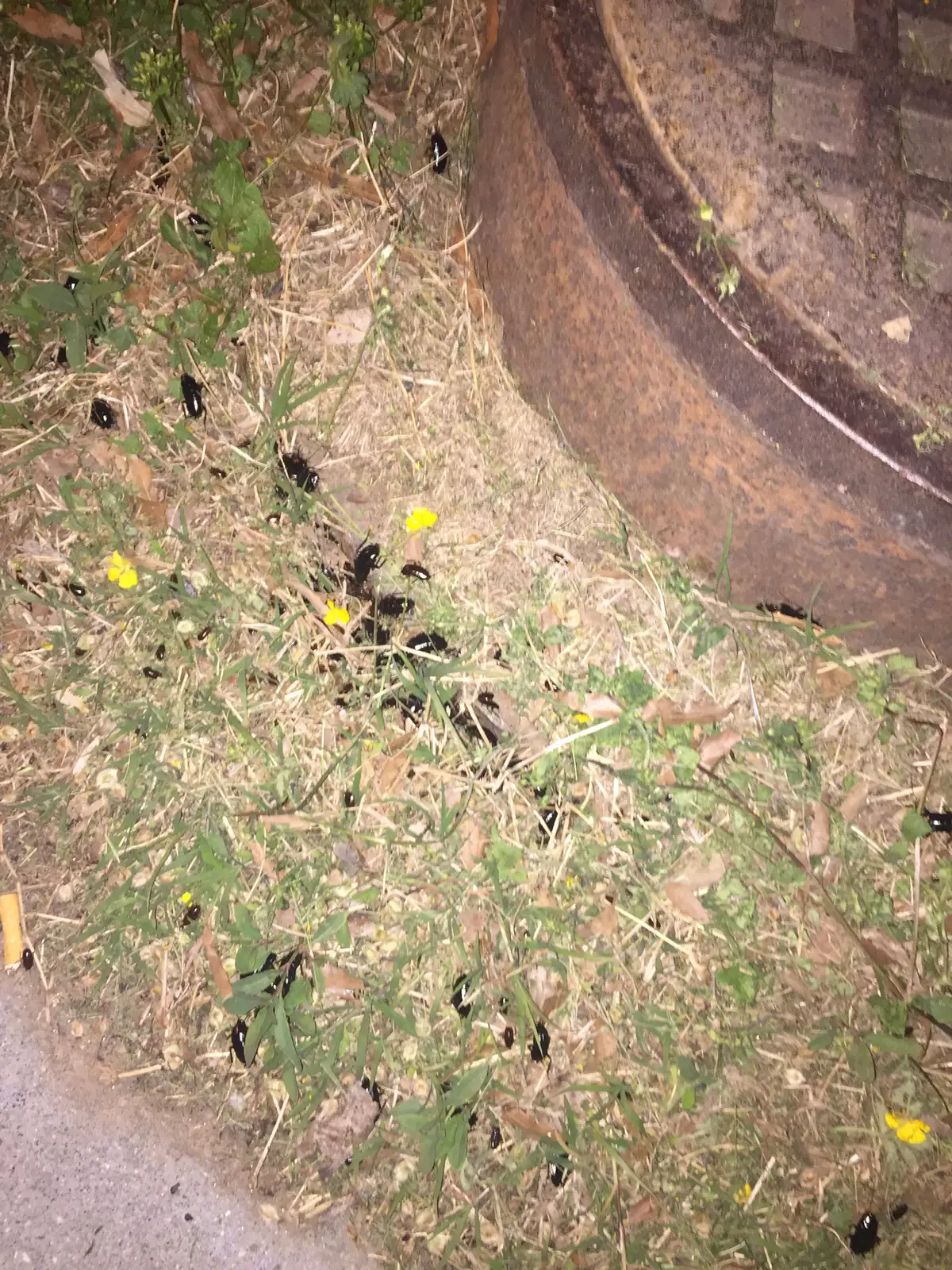
Water ties these places together: Penn State says that with water but no food they can live a month, without water they die within two weeks, and large numbers sometimes gather in one mass around basement or crawl space leaks.
Why are Oriental cockroaches coming into my house?
For water, food or shelter. Texas A&M says Oriental cockroaches live mostly outdoors but may move indoors in search of food or water. Penn State reports considerable movement into buildings during droughts, apparently in search of higher humidity, and the University of Florida says they often take refuge indoors when the temperature drops.
- Under doors and through the foundation. Texas A&M says homes are usually invaded through foundation cracks, along sewer pipes or under doors; Kentucky adds door thresholds and vents.
- Up from drains and pipes. Texas A&M names floor drains as a common way in, UC IPM says they may climb up through damaged drain pipes, and Penn State says they often move in along plumbing.
- Carried in. Penn State says they may arrive in food packages and laundry.
Where cockroaches come from maps every route in and how to close it.
When are Oriental cockroaches most active?
At night, with adults most numerous in late spring and early summer. Penn State says this species, unlike the other house-infesting roaches, generally has a seasonal cycle: adults usually peak in late spring or early summer and are quite low by late summer and early fall. UF likewise says adults appear in spring and summer, and Texas A&M notes that most cockroaches hide by day and come out at night.
They handle cool weather well: UC IPM says they prefer cooler temperatures than the other species it covers, and UF calls them quite tolerant of cooler weather, though they often move indoors when the temperature drops. Bugs in the house in winter covers others that do the same.
Their life cycle is slow: egg to adult averages 575 to 600 days in Texas A&M's account, against about 100 days for a German cockroach generation, and UF, Penn State and UC IPM give the nymph stage as about a year, 24 to 130 weeks, and 1 to 2 years or more. One female and her offspring can produce nearly 200 cockroaches a year, UC IPM says.
How can you tell if you have Oriental cockroaches?
Look low and damp, and let sticky traps do the counting. The University of Florida advises checking crawl spaces, basements and kitchen and bathroom plumbing, or any cool, humid area, for dead roaches, egg cases and fecal smears. Penn State recommends sticky traps against a wall or in a floor corner, and Texas A&M puts sticky cards next to doors and behind laundry appliances, noting they also give some control of small numbers of large roaches.
Roaches out in daylight usually mean there are a lot of them, Texas A&M says. The guide to cockroach droppings shows each species' droppings, signs of cockroaches covers the other clues, and a separate guide explains how sticky traps and bait stations do different jobs.
Are Oriental cockroaches dangerous?
They can carry germs to food, and their droppings and shed skins can trigger allergies and asthma. Penn State says forms of gastroenteritis, such as food poisoning, dysentery and diarrhea, appear to be the principal diseases they transmit, carried on their legs and bodies to food and utensils, and that their droppings and cast skins contain allergens that cause rashes, watery eyes, nasal congestion, sneezing and asthma in many people.
The EPA's guide to asthma triggers says proteins in cockroach feces and saliva can cause allergic reactions or trigger asthma symptoms in some people, and UC IPM reports that indoor cockroach infestations have been identified as risk factors for asthma developing in children, especially in multi-unit housing.
What should you do about Oriental cockroaches?
Start with water and the ways in, not sprays. Penn State calls removing food, moisture and hiding places the first step, and says indoor residual sprays and aerosol foggers are of little value against Oriental cockroaches and may scatter them. German cockroaches, which live indoors, are a different job, fought mainly with bait, as the German cockroach guide explains.
- Dry it out. Fix plumbing leaks and ventilate damp spaces (University of Florida), adding ventilation where condensation is a problem (UC IPM).
- Close the drains. Keep drain traps full of water or capped (University of Florida); Texas A&M explains that a filled P-trap is a barrier between the sewer and the house. Damaged drain pipes need repair.
- Seal the way in. Caulk cracks at ground level (University of Florida), fit door sweeps and weather stripping (UC IPM), and seal gaps around pipes and wires with caulk, foam or copper mesh (Kentucky).
- Clean up outside. Remove as much mulch and debris from around the building as possible (Clemson), and keep garbage cans out of damp spots (University of Florida).
- Bait where they live. Texas A&M and UC IPM place bait outdoors in mulched beds, water meter boxes and drains and along walls near doors, and Penn State says baits placed where the roaches hide should give a high level of control. Follow the label.
Penn State adds that perimeter insecticide sprays may help cut the number coming in, and UC IPM says treating their hiding places may be needed when populations are high, always as the label directs. The step-by-step plan for getting rid of cockroaches puts it all in order, with a Canadian edition for readers in Canada.
This guide is general educational information, not medical advice. If you have symptoms or concerns after a bite or exposure, contact a healthcare provider.
Frequently Asked Questions
What kind of roach is big and black?+
Often an Oriental cockroach, which UC IPM notes is sometimes called a black beetle and the University of Florida calls a major household pest in parts of the northwest, midwest and southern United States. It is shiny, dark brown to black, about 1 to 1 1/4 inches long, with short wings and no ability to fly, and lives in damp basements, crawl spaces and drains. The smokybrown cockroach is dark brown to black too, but its wings reach past its abdomen and it flies. In California and western Texas, a short-winged dark roach with pale wing edges may be a female Turkestan cockroach, and in Florida a slow, dark roach with wing pads may be a Florida woods cockroach.
Can Oriental cockroaches fly?+
No. Penn State Extension says males have wings that cover only about three-quarters of the abdomen and are apparently unable to fly, and that females have only small, functionless wing pads. The University of Florida calls both sexes flightless, and Clemson University agrees that neither sex is capable of flight. A large dark roach that flies in from outside is more likely a smokybrown or an American cockroach, both of which can fly according to UC IPM and Texas A&M.
Can Oriental cockroaches climb walls?+
Not well. UC IPM says Oriental cockroaches cannot climb smooth vertical surfaces, which is why they may be found trapped in porcelain sinks or tubs, and Texas A&M says they are not capable of climbing slick surfaces. Penn State notes that indoors they are usually at or below ground level and seldom found on walls, in high cupboards or on the upper floors of buildings. A big roach high on a wall or in an upstairs room is worth comparing with the American and smokybrown cockroaches.
Should I worry if I see one Oriental cockroach?+
It is worth checking, but one may simply have wandered in. Texas A&M says Oriental cockroaches live mostly outdoors and may move indoors in search of food or water, and Penn State Extension reports considerable movement into buildings during droughts, apparently in search of humidity. Set sticky traps against walls and in floor corners near drains, doors and damp spots to see whether more turn up, and look for leaks. Texas A&M notes that cockroaches seen in the daytime usually mean there are a lot of them around.
Do Oriental cockroaches come up through drains?+
They can. Texas A&M says American and Oriental cockroaches use floor drains as common points of entry into buildings and advises keeping P-traps filled with water as a barrier between the sewer and the home. UC IPM says Oriental cockroaches may climb up through damaged drain pipes, and the University of Florida says drain traps should be kept full or capped. A floor drain that is seldom used is worth topping up with water, and a damaged pipe needs repair.
Where do Oriental cockroaches lay their eggs?+
The female carries her egg case for a short time and then leaves it in a sheltered spot. Penn State Extension says she carries it for about 30 hours and then drops it onto a protected surface near a food supply without gluing it down, and the University of Florida says it may be carried from 12 hours to five days before being left in a warm, sheltered place where food is readily available. Each dark red-brown case is about 3/8 inch long and holds about 16 eggs.
How long do Oriental cockroaches live?+
Most of their life is spent as nymphs. Texas A&M puts development from egg to adult at 575 to 600 days on average, and the University of Florida puts the nymph stage alone at about a year. Adults then live 1 to 6 months by Texas A&M's account and 34 to 180 days by UF's, and Penn State Extension gives the adult female's life span as 5 to 26 weeks, during which she produces about 200 offspring. Without water, Penn State says, they die within two weeks.
What do Oriental cockroaches eat?+
Almost anything, with a taste for decaying matter and starch. Penn State Extension says they feed on all kinds of filth, rubbish and other decaying organic matter and seem especially fond of garbage, and the University of Florida says they feed on garbage, sewage or decaying organic matter, will eat almost anything and prefer a diet high in starch. Water matters more than food: Penn State says they can live a month without food if water is available but die within two weeks without it.
How fast do Oriental cockroaches multiply?+
Slowly, for a cockroach. UC IPM says each female and her offspring can produce nearly 200 cockroaches in a year, and Penn State Extension says a female produces an average of eight egg cases of 16 eggs each, which hatch in about 60 days at room temperature. Development from egg to adult averages 575 to 600 days, according to Texas A&M, which says the German cockroach can produce a generation in about 100 days.
Are Oriental cockroaches harder to get rid of than German cockroaches?+
The extension sources treat them as a different problem. German cockroaches spend their lives indoors and breed fast, and Texas A&M says baits work far better than sprays against them. Oriental cockroaches breed slowly but live mostly outdoors and in damp spaces, so the sources put moisture, drains and sealing first, with bait where the roaches live. Penn State says indoor residual sprays and foggers are of little value against Oriental cockroaches and may scatter them, making control difficult and lengthy.
Sources
- Oriental Cockroaches — Penn State Extension
- Pest Notes: Cockroaches (UC ANR Publication 7467) — University of California Statewide IPM Program
- Oriental Cockroach, Blatta orientalis Linnaeus (EENY159/IN316) — University of Florida IFAS Extension
- Oriental Cockroach — Urban and Structural Entomology Program, Texas A&M University
- ENTO-037: Cockroach Biology and Management — Texas A&M AgriLife Extension Service
- ENTFACT-614: Cockroach Elimination in Homes and Apartments — University of Kentucky Department of Entomology
- Cockroach (Roach) Control — Clemson Cooperative Extension Home & Garden Information Center
- EENY-514/IN915: Florida Woods Cockroach (AKA Palmetto Bug) Eurycotis floridana (Walker) — University of Florida IFAS Extension
- Asthma Triggers: Gain Control — US Environmental Protection Agency
- Ground Beetles (Carabids) — Missouri Department of Conservation
- Giant Water Bugs — Missouri Department of Conservation
How this guide was made: it was researched and drafted with AI assistance from the sources listed above. A second, independent AI pass then checked each factual claim against those sources. Found an error? Email support@buzzskito.ca.