
Published by BuzzSkito Mosquito & Tick Control
Published October 20, 2026 · Drafted with AI assistance and fact-checked against the sources listed below
Reading from Canada? Product rules and what is sold there differ. See the Canadian edition.
Which cockroach do you have?
Two clues usually tell you: length, and the marks on the shield-like plate behind the head. They separate the small roaches that breed indoors from the big ones that wander in from outdoors and drains, and each group needs its own plan. A roach 1/2 to 5/8 inch long with two dark stripes on that plate is a German cockroach, as Rutgers University's German cockroach fact sheet describes it.
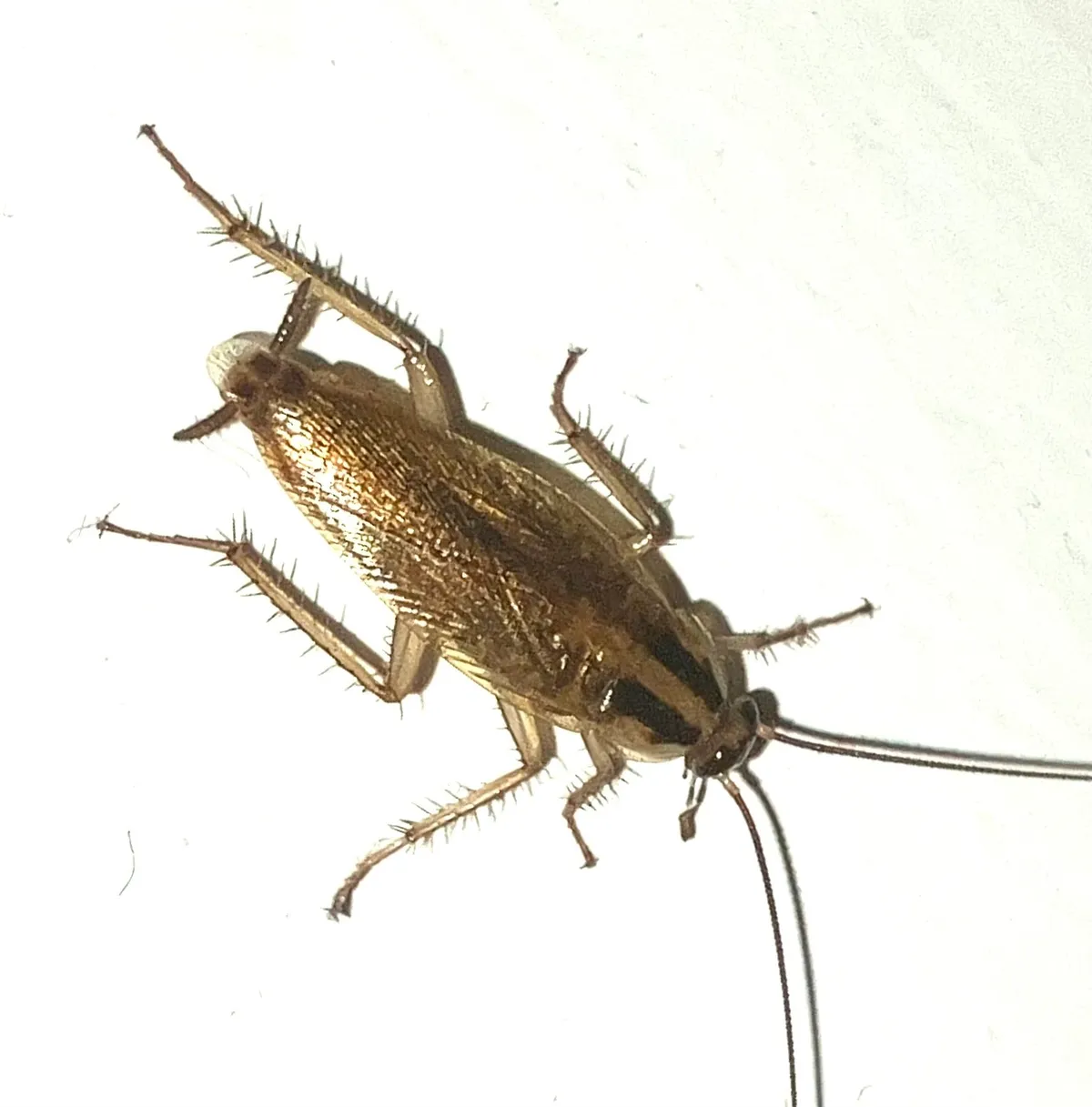
It is the roach that becomes an infestation: Texas A&M AgriLife Extension's cockroach guide says it lives indoors and spends about 75 percent of its life in cracks 1/32 to 3/16 inch wide, and the University of Kentucky says one mated female can produce thousands of roaches in less than a year. The bait program below is built for it; the German cockroach guide covers its habits.
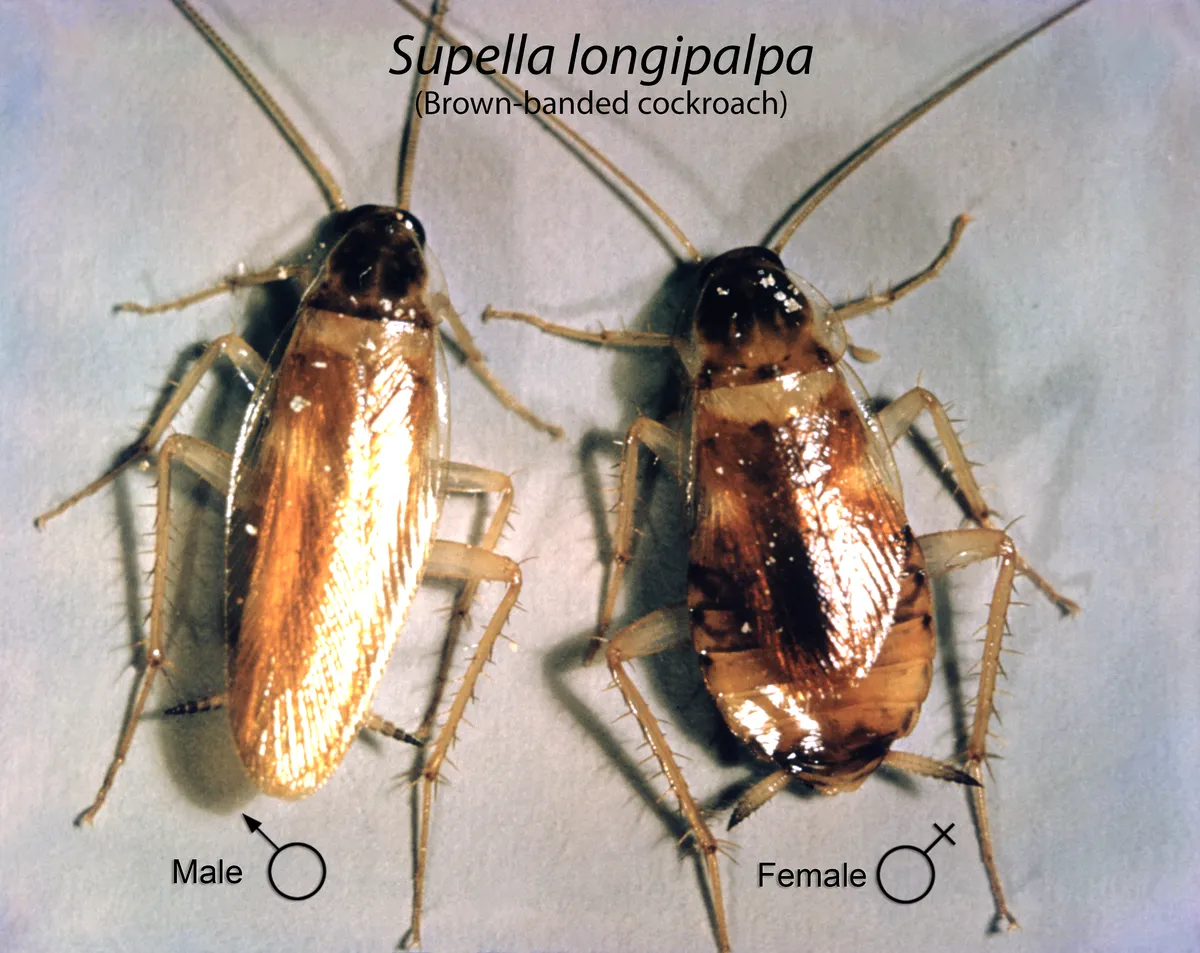
Brown-banded cockroach
About the same size, it has pale bands across its wings instead of stripes, and the University of Kentucky's cockroach elimination guide says it can turn up anywhere in the home. UC IPM's Pest Notes on cockroaches say it prefers about 80°F, hides near appliances, behind wall decorations and in hollow furniture legs, and is especially hard to control with baits.
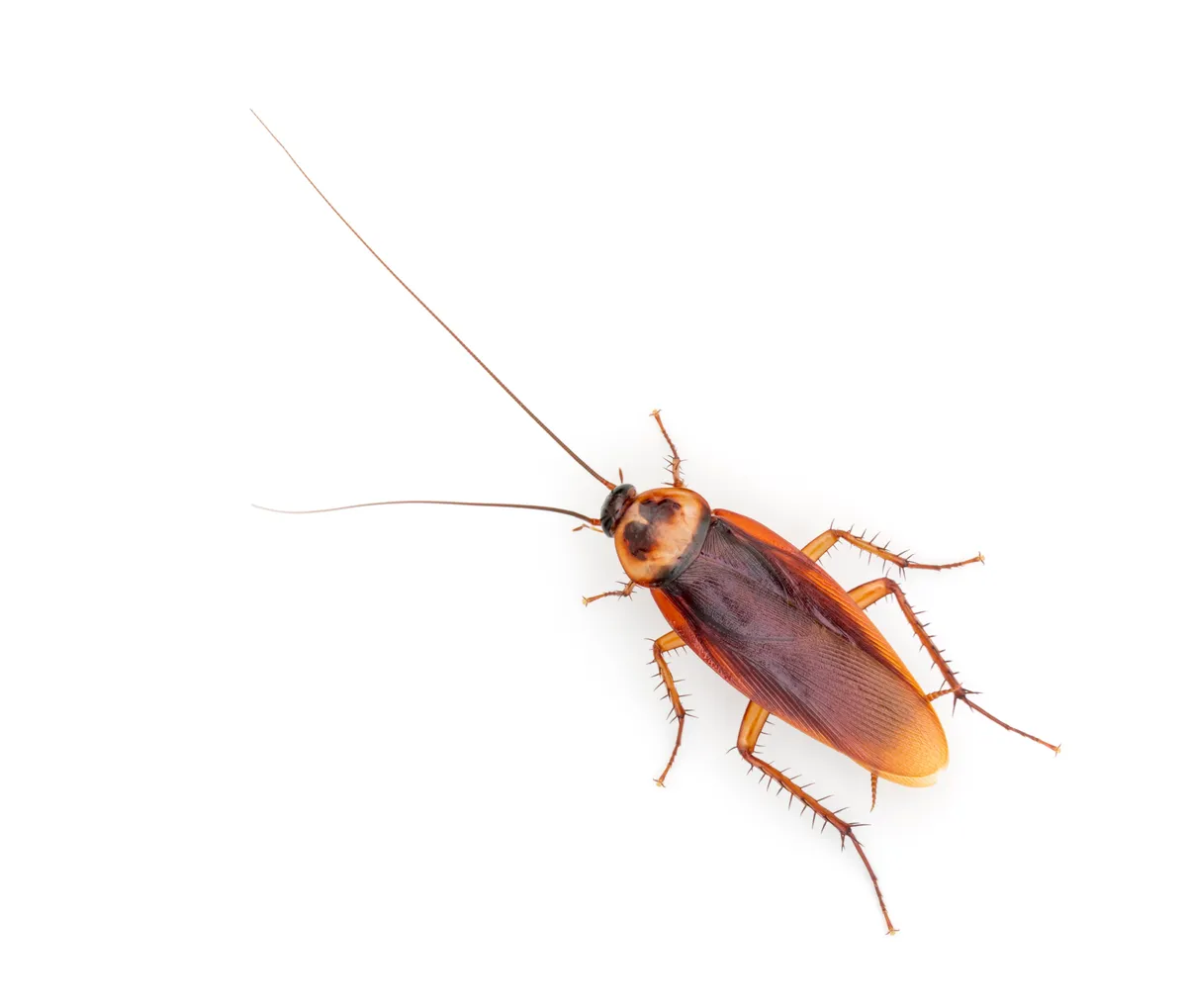
American cockroach, often called a palmetto bug
Texas A&M says this big reddish-brown roach also goes by waterbug or palmetto bug, that both sexes can fly, and that it is one of the most common cockroaches in sewers. UC IPM says it gets into ground floors where pipes are damaged or drain traps fail. The palmetto bug guide compares it with similar large roaches.
Oriental cockroach, the one called a water bug
UC IPM notes that this shiny, nearly black roach is sometimes called a water bug, and Texas A&M says it does not fly and keeps to cool, damp places at ground level, such as basements and crawl spaces. Water bugs versus cockroaches untangles the name.
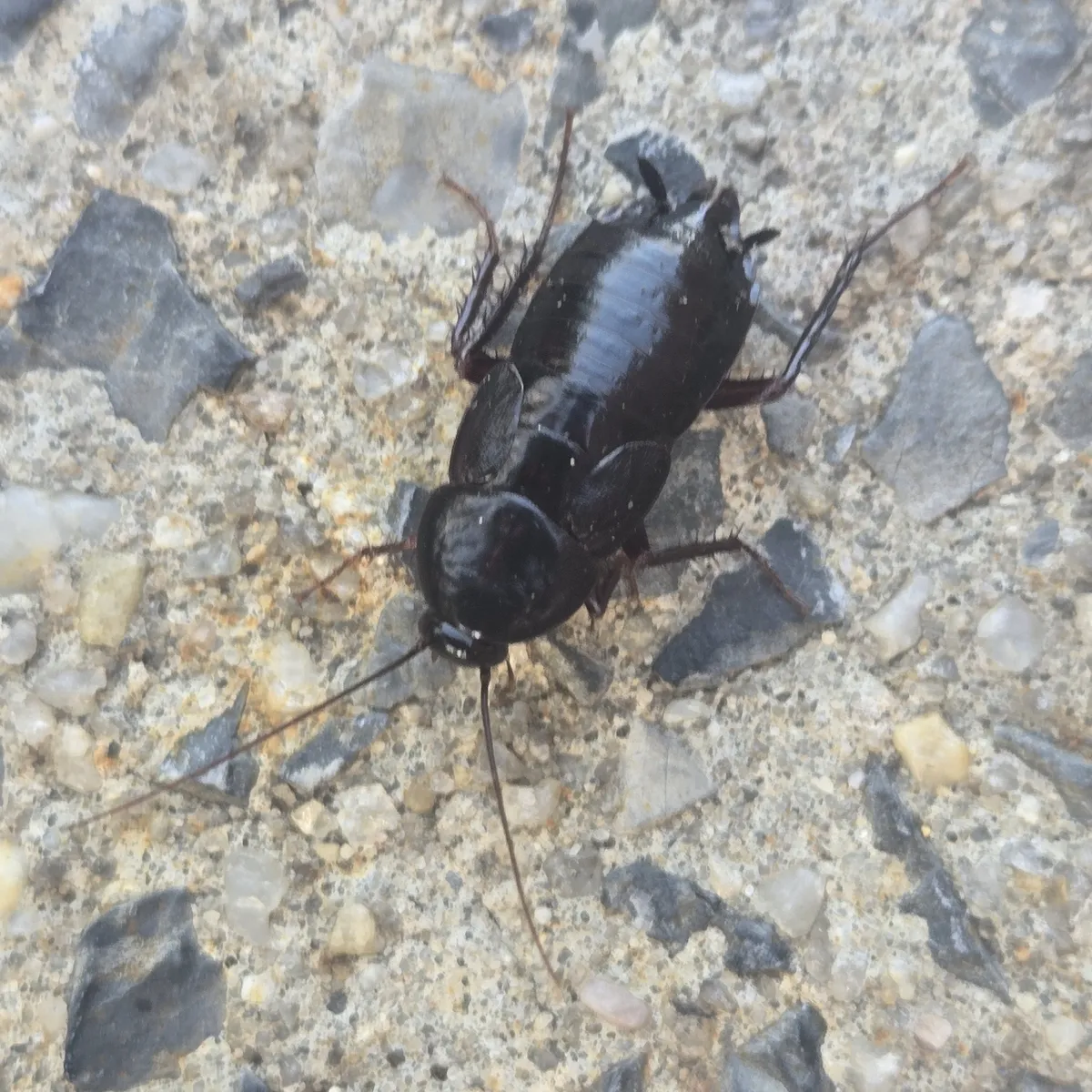
The guide to identifying and dealing with Oriental cockroaches has photos of males and females and covers where they live, why they come indoors and what to do about them.
Smokybrown cockroach
UC IPM describes a dark brown to mahogany roach that usually lives outside in plantings, sometimes moves into attics and flies, especially on warm, humid evenings. A separate guide compares which cockroaches can fly.
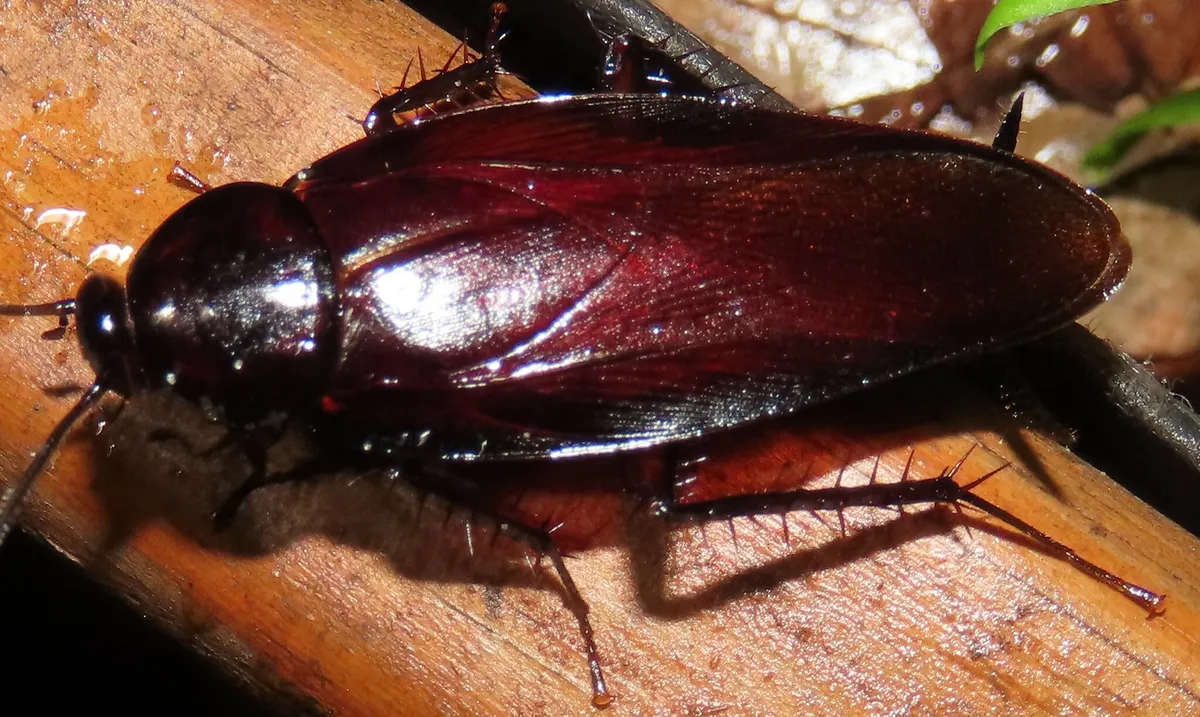
Wood cockroach
This is the one to leave alone. Penn State Extension's wood cockroach page says wood cockroaches live outdoors in leaf litter and woodpiles, get in on firewood, through gaps or drawn to porch lights, and die indoors within a few days without breeding; pesticides are not necessary or recommended. Other species, such as the Turkestan cockroach, are covered in the complete guide to cockroaches.
What are the signs of roaches, and how bad is the infestation?
Pepper-like droppings, fecal spotting, egg cases, shed skins and live roaches show where they live, and sticky traps show how many. Kentucky notes that roaches do not live in nests or colonies like ants but gather in distinct spots, drawn by odors in their droppings, so heavy spotting marks a place to bait, and that roaches seldom gather on beds, which separates their spotting from a bed bug's. See the guide to roach droppings; if yours look more like small pellets than specks, compare what mouse droppings look like.
Egg cases mean breeding nearby. UC IPM puts German and brown-banded cases at about 1/4 inch and those of the big American and Oriental roaches at about 3/8 inch, and Rutgers counts about 40 eggs in a German case; what cockroach eggs look like shows each species' case.
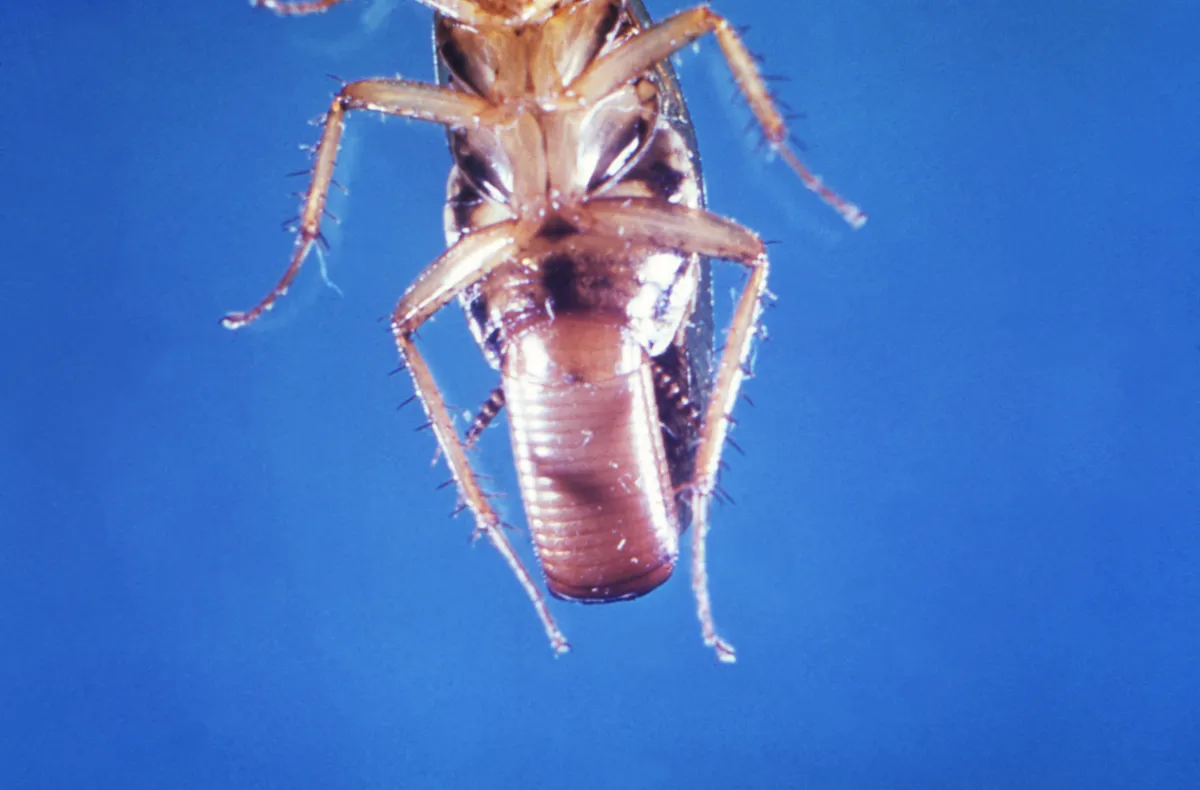
Expect to find young roaches: Rutgers says a growing German cockroach population is about 80 percent nymphs. What baby cockroaches look like shows each species.
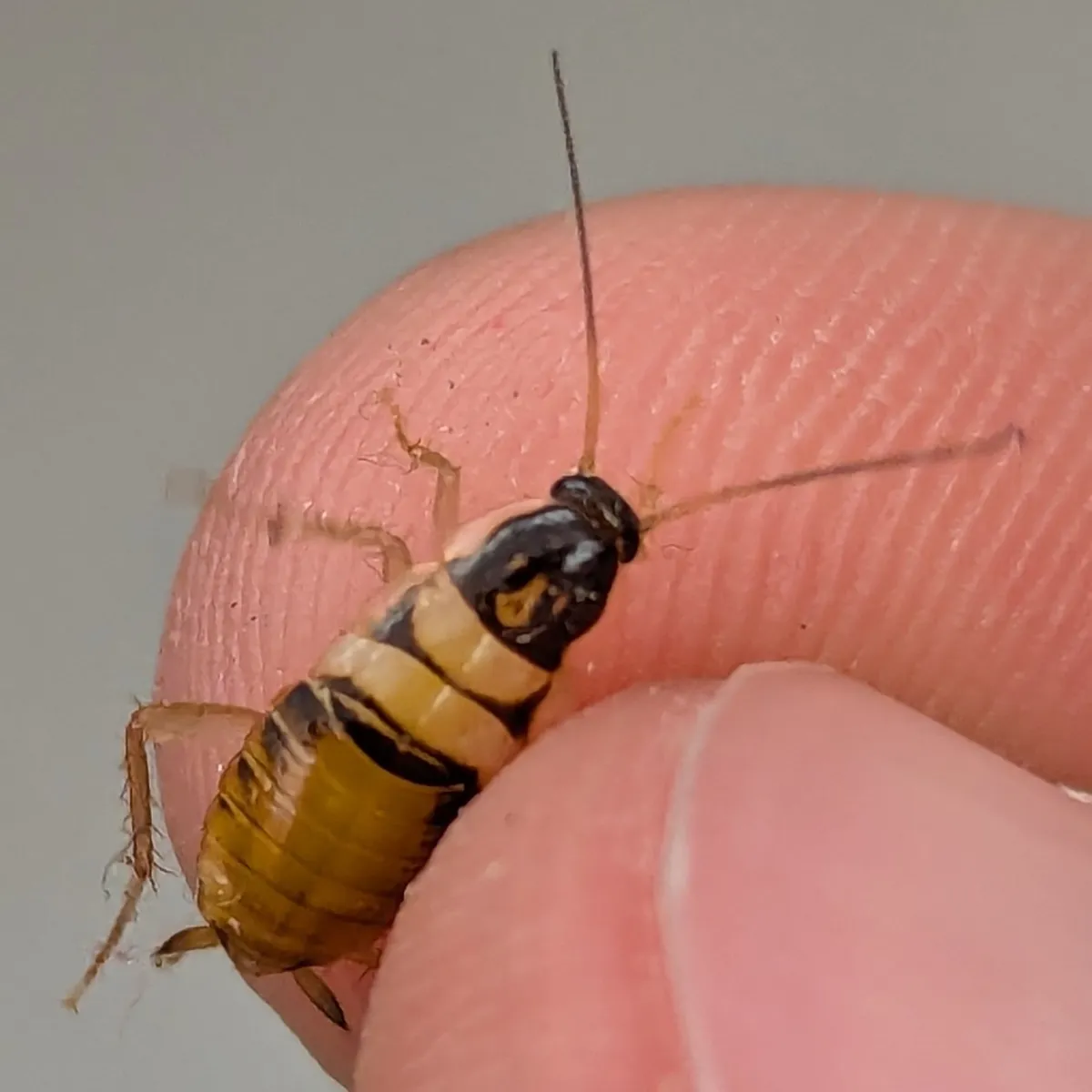
To size the problem, the University of Florida's assessment-based guide for German cockroaches reads trap catches this way: every life stage means an established infestation, one or a few adults probably mean new arrivals, and a few tiny nymphs are a reason to search within 5 to 10 feet of the trap. Texas A&M adds that roaches seen in daytime usually mean there are a lot of them.
Photos of each of these signs, and where in a home to look for them, are in the guide to signs of a roach infestation.
Is it a roach, and which one?
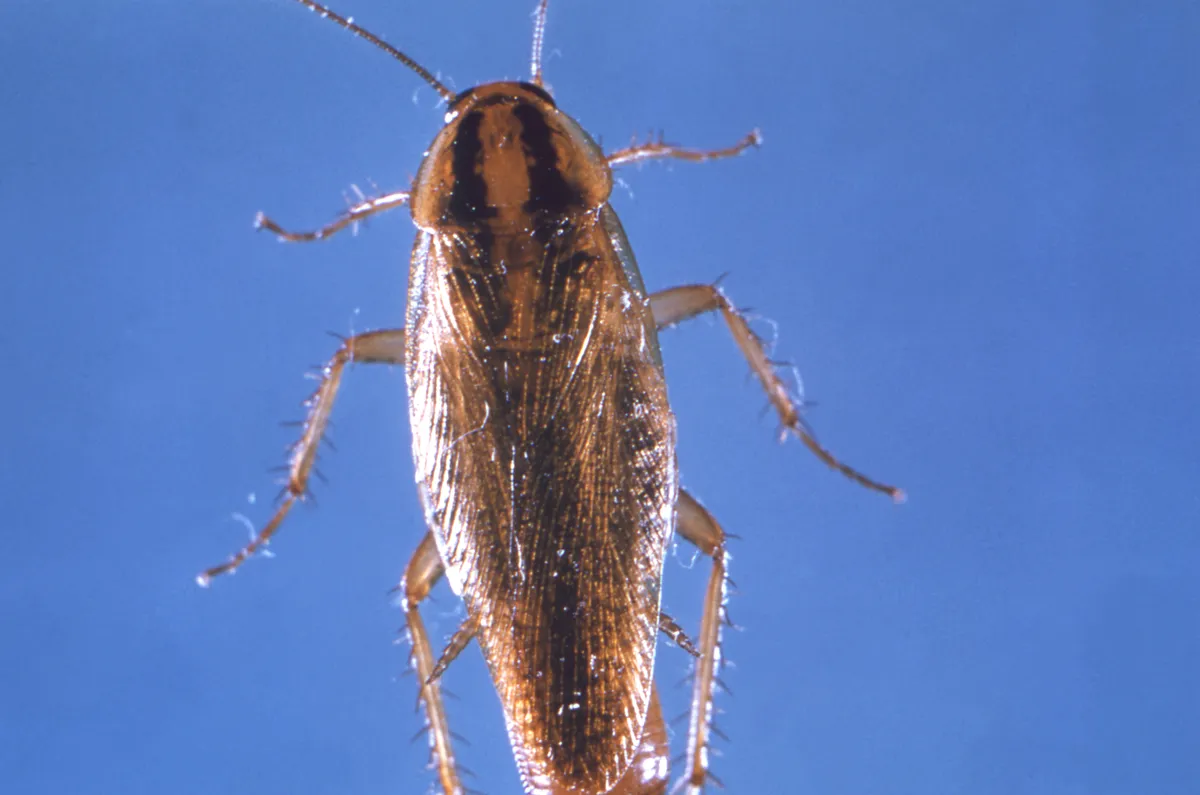 German cockroachLight brown, 1/2 to 5/8 inch, two dark stripes behind the head; breeds indoors
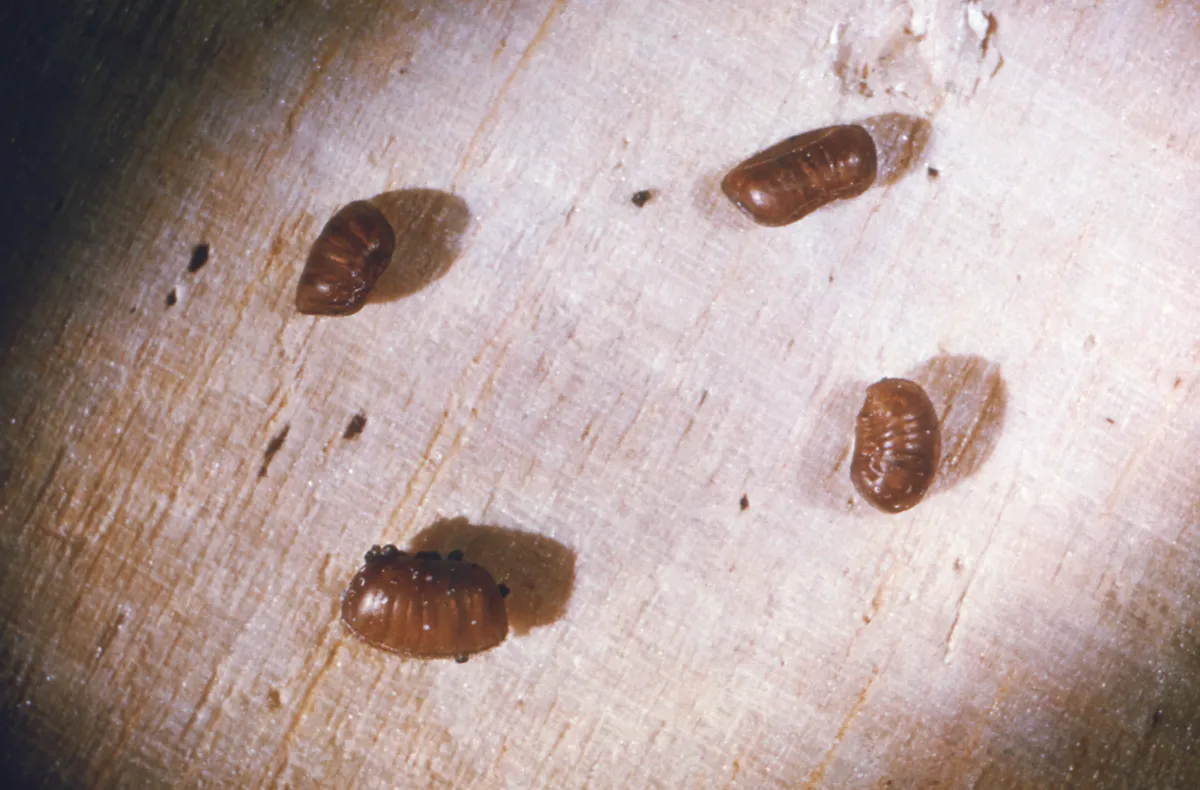 Brown-banded egg casesCapsules about 1/4 inch long; finding egg cases means roaches are breeding nearby
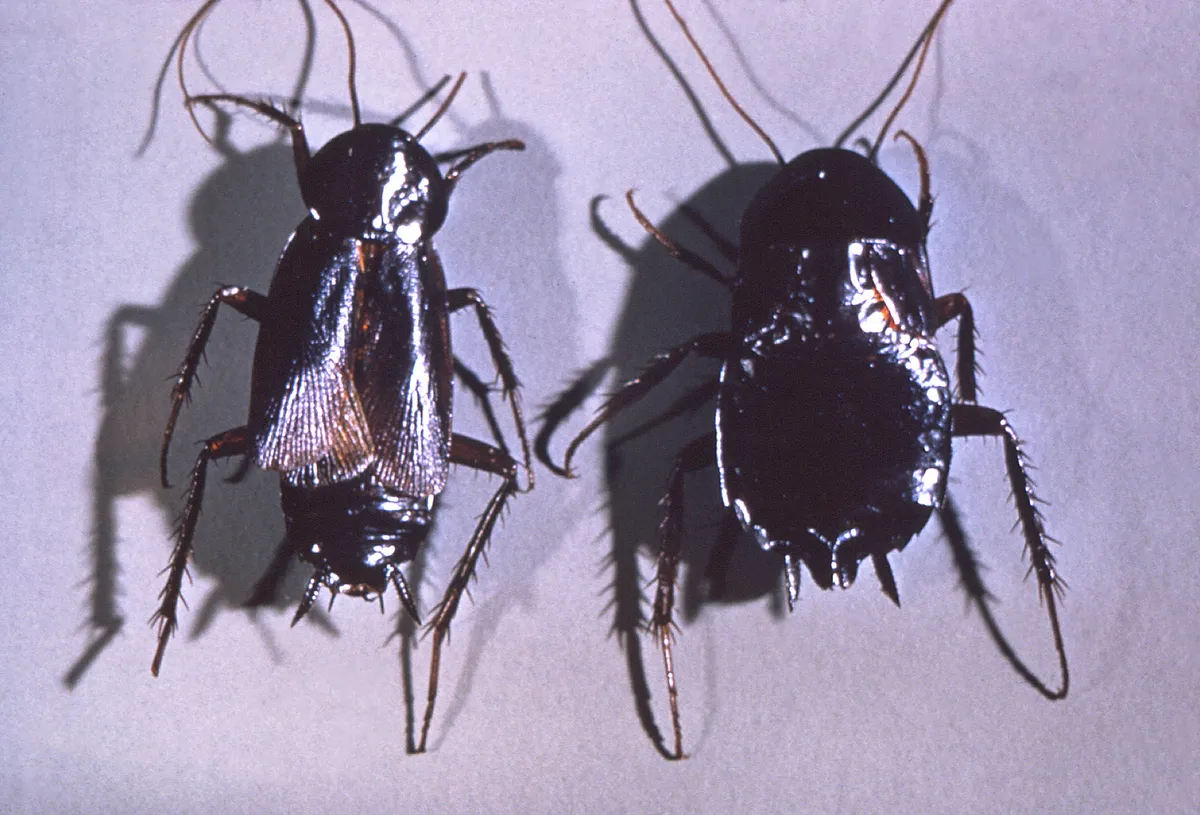 Oriental cockroachThe roach sometimes called a water bug: shiny, nearly black, about 1 1/4 inches
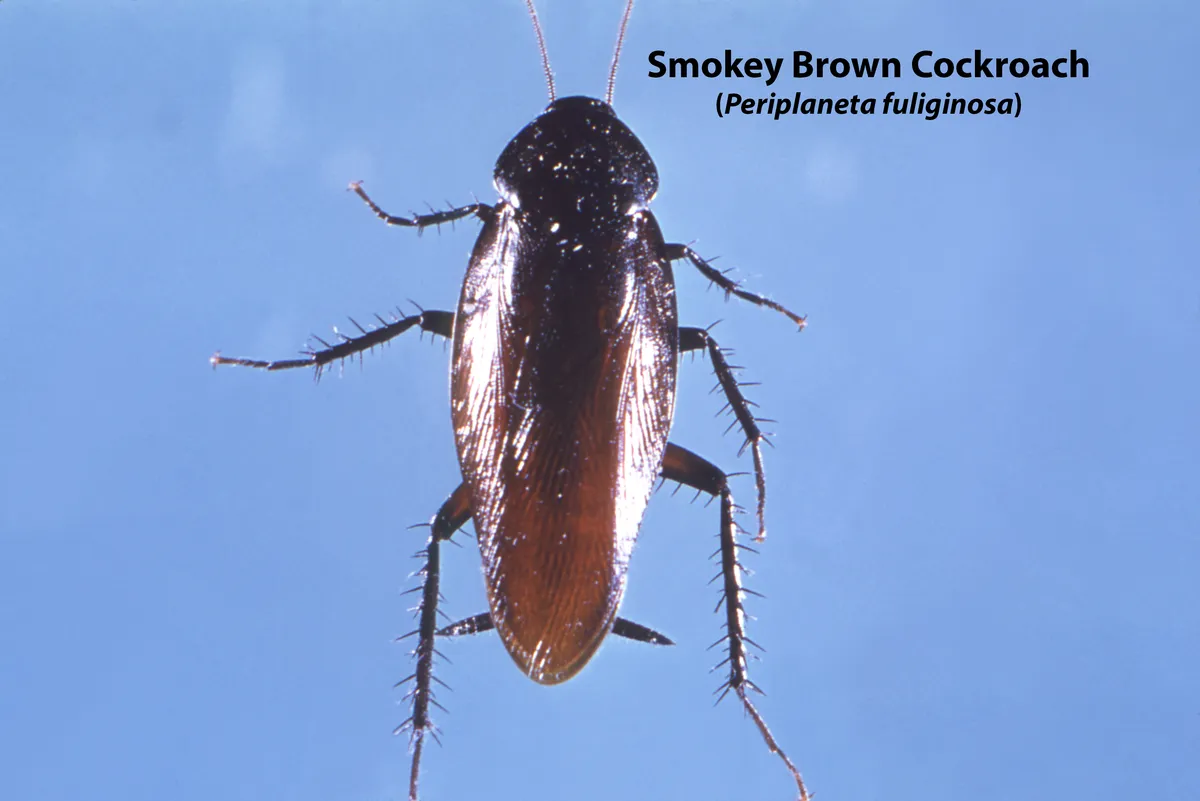 Smokybrown cockroachEvenly dark, 1 1/4 to 1 1/2 inches, with no pale band behind the head
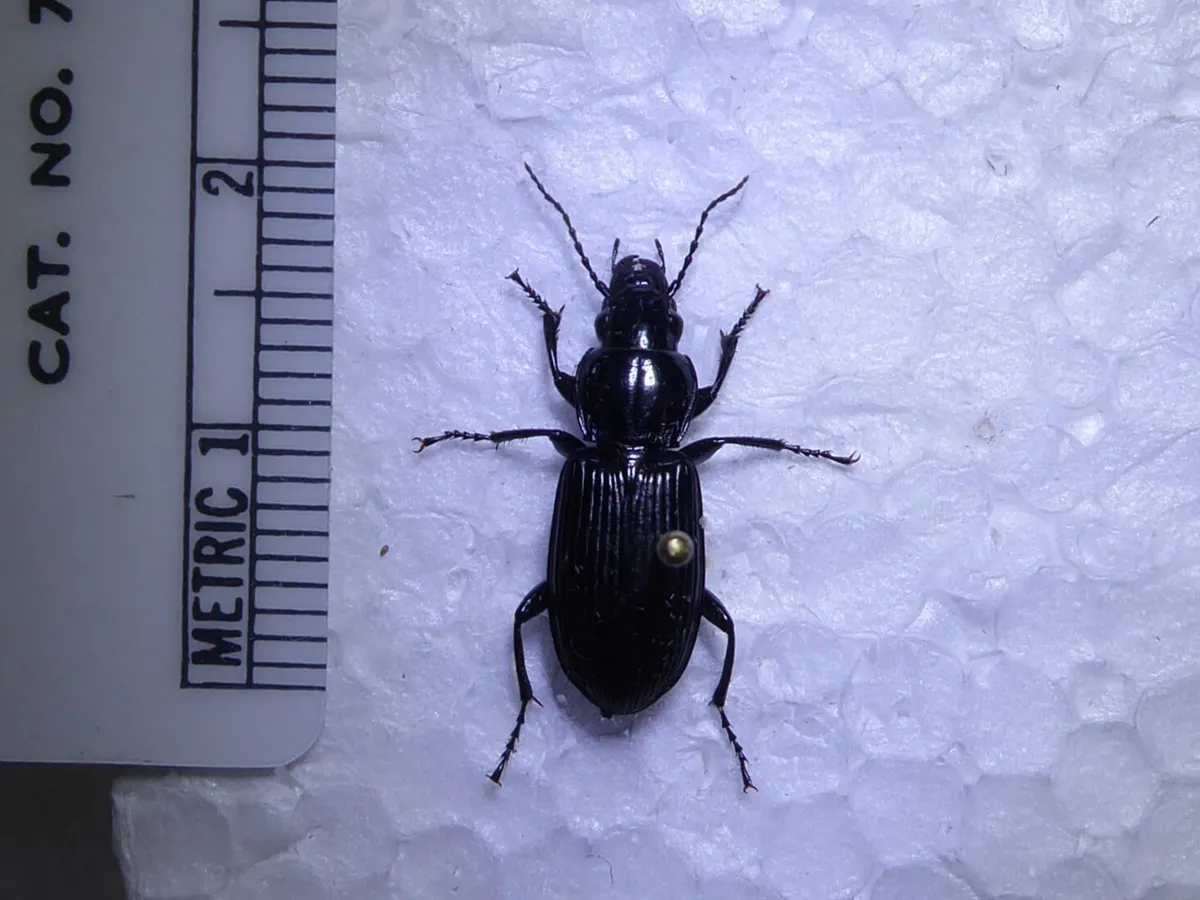 Ground beetleA beetle: thick, hard front wings, which adult roaches lack
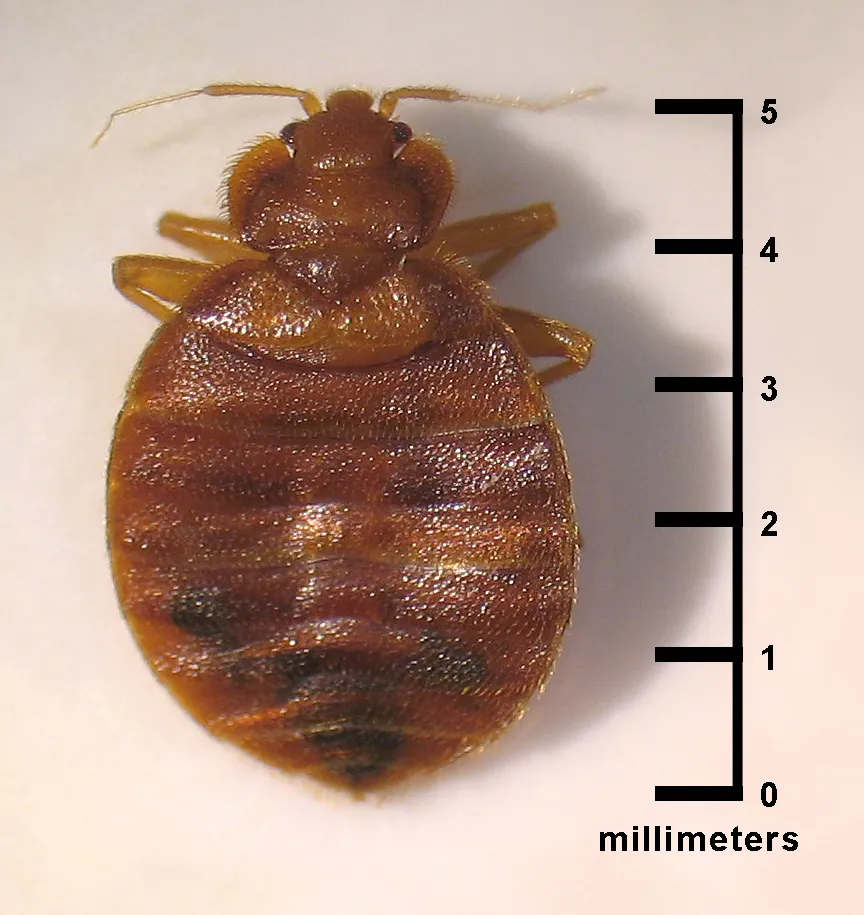 Bed bugIts spotting looks like a roach's, but it gathers on beds, where roaches seldom do
Photos: German cockroach: CDC (CDC Public Health Image Library, phil.cdc.gov), public domain. Brown-banded egg cases: CDC (CDC Public Health Image Library, phil.cdc.gov), public domain. Oriental cockroach: CDC, Public domain, via Wikimedia Commons, public domain. Smokybrown cockroach: CDC (CDC Public Health Image Library, phil.cdc.gov), public domain. Ground beetle: no rights reserved, via iNaturalist, CC0 1.0. Bed bug: CDC/ CDC-DPDx; Blaine Mathison (CDC Public Health Image Library, phil.cdc.gov), public domain.
What is the right order for getting rid of roaches?
Find them, starve them, close the gaps, bait them, then check every 2 to 4 weeks until traps stay empty for a month. That is the Rutgers sequence, which rates bait as the most effective formulation and names two common mistakes: relying on sprays and stopping while a few roaches remain.
Step 1: Set sticky traps to find the hot spots
Traps show where to bait and, later, whether it worked. UC IPM advises setting them in room corners, behind large appliances and inside cabinets, checking them daily for several days; roaches are often caught within 24 hours. Purdue's guide to cockroach control in multi-family housing calls for at least six traps, and NC State Extension's German cockroach guide says to keep them where children, pets and shoes will not touch them. Texas A&M notes that traps alone do not control an established infestation.
Step 2: Take away food, water and hiding places
Bait works best when it is the only food around: NC State says less competing food means more bait eaten, and Texas A&M says sanitation stresses the population.
- Food and trash. Store food sealed and do not leave dishes or pet food out overnight (Kentucky), and take out trash and recycling daily, as Rutgers advises.
- Water and clutter. Fix leaks and ventilate damp spots (UC IPM), and get rid of stacked bags, cartons and newspapers (Kentucky).
- Cleaning. Wash with soapy water and rinse; Florida's guide warns that no-rinse cleaners only spread allergens.
- Vacuum. Rutgers recommends a HEPA-filtered vacuum for live and dead roaches, droppings and shed skins; UC IPM notes that infestations are a risk factor for asthma in children.
- Seal. Kentucky recommends caulk for cracks and caulk, foam or copper mesh for the openings where pipes and wires pass through walls, especially in apartments; for drain roaches, Texas A&M says to keep P-traps filled with water and to screen roof soffits.
Step 3: Put bait where they hide
Gel bait beside the hiding places does most of the killing. UC IPM says baits do not attract cockroaches over long distances, so each hiding place needs a placement nearby. Rutgers says gel usually beats stations because it goes closer to the roaches and is more palatable; UC IPM notes that stations keep the insecticide in a tamper-resistant container and last for months.
- Kitchen: under the sink, behind the refrigerator, dishwasher and stove, by the trash can, and inside cabinets at hinges, corners and edges.
- Bathroom: under the sink and around the toilet.
- Warm appliances: a station behind or beneath a toaster oven, as Kentucky suggests.
- Brown-banded roaches: near appliances, behind wall hangings and in furniture.
Use many small dots, not blobs. Kentucky describes pea-sized dabs, more than a dozen under one kitchen sink. Rutgers estimates that a one-bedroom apartment may need 10 to 30 grams of gel (a tube holds 30 grams, about 1 ounce), and in a 188-unit New Jersey apartment building, Rutgers researchers used an average of 18 grams per apartment at the first visit, in dots of about 0.1 gram. The label sets the amount; follow it where it differs.
Then leave the bait alone: Kentucky warns that spraying cleaners or insecticides near it can discourage roaches from feeding. A poisoned roach goes back into hiding, and NC State notes that the poison can then reach others that eat its droppings or body, especially young nymphs.
Step 4: Add a growth regulator or dust for heavy infestations
An insect growth regulator (IGR) stops breeding but does not kill adults. The National Pesticide Information Center's IGR page says IGRs mimic hormones in young insects, act slowly and are generally low in toxicity to humans; Rutgers advises them only for heavy, chronic infestations, combined with bait, and Florida's guide suggests putting bait close to, not on top of, an IGR.
Boric acid dust is slower than bait but keeps working while dry. The NPIC boric acid fact sheet says boric acid products have been registered in the US since 1948 and kill insects that eat them; roaches swallow the dust while grooming, Rutgers explains, and UC IPM says it may take 7 days or more.
- Puff a film barely visible to the eye; Kentucky notes that roaches avoid heavy deposits.
- Dust only hidden voids: cabinet corners, behind appliances, where pipes enter walls and under cabinets through the kick panel.
- Never put it on countertops or food surfaces, and keep it indoors: UC IPM says it is toxic to plants.
- Skip pool-grade silica gel, as NC State warns; Rutgers rates diatomaceous earth below boric acid.
Step 5: Follow up, switch classes if the bait stalls, and know when you are done
Re-bait every 2 to 4 weeks until no roaches are found over 4 weeks, the Rutgers finish line. If a bait has not cut the numbers within 2 to 3 weeks, Texas A&M advises one with a different active ingredient; read the label, because Rutgers notes that different brand names can share an ingredient. Change one bait at a time: Florida's guide warns that several at once raise the chance of doses too small to kill.
Trust the trap counts over the box. In a 2025 University of Kentucky study of store-bought and professional baits, every bait killed more than 80 percent of German cockroaches in the lab within 14 days, but in Kentucky apartments the store-bought ones were inconsistent: one cut trap catches within a month, one took longer and one never did.
Which baits and insecticides work on roaches, by class and active ingredient?
Baits from several chemical classes work, so rotate by class, not by brand. The table gives each bait ingredient's class and resistance-management (IRAC) group as Florida's guide lists them.
| Class (IRAC group) | Active ingredients | Where you see it |
|---|---|---|
| Phenylpyrazole (2) | Fipronil | Gel baits and bait stations |
| Oxadiazine (22) | Indoxacarb | Gel baits |
| Neonicotinoid (4) | Dinotefuran, imidacloprid, clothianidin | Gel baits and liquid bait stations |
| Avermectin (6) | Abamectin | Gel baits and dry flowable bait |
| Borate (8) | Boric acid | Gel baits and dusts |
| Juvenile hormone mimic, an IGR (7) | Pyriproxyfen | Mixed into some gel baits |
| Pyrethroid | Permethrin, cypermethrin, deltamethrin, lambda-cyhalothrin | Sprays and foggers; repellent to roaches |
Bait classes from the University of Florida guide; spray ingredients from Rutgers. Hydramethylnon, on the Rutgers and UC IPM bait lists, is not given a class there.
Keep every bait, dust and trap out of reach of children and pets. Purdue considers stations, with the bait in a secure plastic housing, safer than gel, and Kentucky calls baits of minimal hazard to children or pets. NPIC says boric acid is low in toxicity if eaten or touched, but signs of poisoning in animals can start within 2 hours of eating it; the guide to pet-safe pest control shows how to pet-proof a room before treatment.
Why don't sprays and bug bombs get rid of roaches?
They coat open surfaces while roaches stay in cracks, and many roach populations resist the insecticides in common sprays. UC IPM says sprays give only a quick, temporary knockdown and can scatter roaches, and that foggers miss the crevices where they hide; Rutgers adds that pyrethroid sprays repel roaches and can push them into neighboring units.
In a North Carolina State University study, four commercial foggers set off in 20 infested homes produced no drop in German cockroach numbers after two weeks or a month, while the university reports that gel baits were effective in eliminating the roaches in 10 comparison homes. Four to six hours after fogging, insecticide residues on horizontal surfaces averaged about 600 times the starting level.
Foggers also hurt people. A CDC report on total-release foggers counted 3,222 acute illnesses and injuries linked to them in 10 states from 2007 to 2015, four of them fatal; the causes reported most often were staying inside during the release and going back in too soon. EPA's fogger safety page adds that the propellants are usually flammable. If you use one anyway, EPA says to use no more than one per room, keep it at least 6 feet from pilot lights and other ignition sources, and leave, with children and pets, for the time on the label, usually two to four hours.
Sprays keep a narrow place: Texas A&M includes spraying the hiding places and entry points of the large outdoor roaches, and Kentucky says an indoor spray belongs in the cracks where roaches hide, not across walls, floors, baseboards or countertops, and never around bait.
How long does it take to get rid of roaches?
Expect dead roaches within days and a finish only when traps stay empty for a month. Kentucky says a roach that eats bait typically dies within 1 to 3 days and that a substantial reduction should show within a few weeks.
| When | What you should see | What to do |
|---|---|---|
| First 1 to 3 days | Roaches that ate bait start dying | Leave the bait alone; no sprays or cleaners near it |
| About 1 week | UC IPM says results may take 7 days or longer | Check traps; heavy infestations may need more bait (NC State) |
| 2 to 3 weeks | A clear drop in trap counts | No drop? Switch to a bait with a different active ingredient (Texas A&M) |
| Every 2 to 4 weeks | Fewer roaches at each check | Re-inspect and re-bait where roaches remain (Rutgers) |
| 4 weeks with no catches | No roaches, nymphs or egg cases on the traps | Stop treating, but keep a few traps out (UC IPM) |
From the Kentucky, UC IPM, NC State, Texas A&M, Rutgers and Florida guides linked on this page.
Done correctly, Kentucky says, eliminating cockroaches should not take a full year, especially in a single-family home.
How do you get rid of the big roaches that come in from outside?
Work outside and at the way in, because American, Oriental and smokybrown cockroaches live mostly outdoors, in sewers or in damp spaces around the house; Kentucky notes that lasting relief from American cockroaches means finding and treating the places they gather. Where cockroaches come from maps every route in.
- Bait outside. Texas A&M recommends granular bait sprinkled lightly in ground cover and mulched beds, as the label directs, with no visible mounds that could attract dogs or cats, and stations against walls near doors.
- Bait where they live. UC IPM adds the building's perimeter, water meter boxes, woodpiles and planters.
- Close the way in. Keep drain traps full, check the seals under doors and screen soffits (Texas A&M); trim shrubs, remove ivy and consider a gravel strip 6 to 12 inches wide (UC IPM).
Wood cockroaches need only exclusion: Penn State advises bringing in no more firewood than you will burn within a few hours, moving woodpiles away from the house, sealing gaps around doors and windows and turning off outdoor lights at night.
How do you get rid of roaches in an apartment?
Treat it as a building problem: report the roaches, bait and seal your own unit, and skip sprays that drive them next door. Purdue's guide says good control is not possible without cooperation among residents, management and the pest control company, and Kentucky says German cockroaches travel between apartments through walls, ceilings, pipes and wiring.
The New Jersey building shows what a full program takes. At the start, 49 percent of its 188 units had German cockroaches, and the contractor was applying under 0.5 gram of bait per unit on monthly visits of less than a minute. The researchers baited thoroughly, revisited every two weeks for three months and then every four weeks, switched to baits from other chemical classes for roaches left after 15 weeks, and stopped after four weeks without a roach. At 12 months, 48 of the 49 re-sampled apartments were clear, and insecticide residues on their floors had dropped by 74 percent.
- Keep a dated record of trap catches to show management.
- Ask whether neighboring units will be inspected too.
- Seal gaps around pipes under sinks and behind the toilet.
- Check your lease and local housing code to see who pays for treatment.
Do home remedies and natural sprays get rid of roaches?
Not reliably; the evidence on plant-based products is summarized in what natural pest control can and cannot do. The National Pesticide Information Center's page on pesticide home remedies notes that homemade mixes may never have been tested against the pest, often lack directions and first-aid instructions, and can still harm people and pets, while pesticides sold in stores carry labels reviewed and approved by the EPA.
- Essential-oil sprays typically work only when sprayed directly on the insect and leave little or no residual effect, Rutgers says.
- Plug-in repellers: Rutgers says no scientific evidence supports electronic repellers; see the evidence on ultrasonic repellers.
- Diatomaceous earth belongs only in dry, out-of-reach voids (NC State), and Rutgers and Kentucky rate it below boric acid.
- Boric acid powder is a registered pesticide, not a kitchen remedy, and it does not lure roaches out of hiding: UC IPM says even baits do not attract them over long distances.
When should you call a professional?
Call one when the infestation is heavy, when traps show no drop after a few weeks of careful baiting, or when roaches keep coming from other units. UC IPM says serious infestations often require professional service, and Rutgers notes that professionals have training, experience and access to more products.
Kentucky describes good service: an inspection at every visit, insecticide placed in cracks rather than along baseboards, and seldom any need for monthly reapplication once the roaches are gone. See what pest control costs and which pest jobs suit do-it-yourself treatment.
Use any pesticide exactly as its label directs. The label is the law, and what is registered and sold varies by state.
Frequently Asked Questions
What gets rid of roaches immediately?+
Nothing clears an infestation at once. A vacuum removes the roaches you can reach right away, and Rutgers recommends one with a HEPA filter so droppings and shed skins go too. A spray knocks down the roaches it hits, but UC IPM says the effect is temporary and can scatter the rest. Bait is slower but works: the University of Kentucky says a roach that eats it typically dies within 1 to 3 days, with a substantial drop within a few weeks.
Is it better to kill a roach or leave it?+
Kill it or vacuum it up, then treat it as a clue. Texas A&M says German cockroaches spend about 75 percent of their lives hidden in cracks, so the one you see is rarely the whole story. Set sticky traps in the kitchen and bathroom for a few days. The University of Florida reads one or a few adults on the traps as probably new arrivals, and roaches of every life stage as an established infestation that needs a bait program.
Should I be worried if I see one cockroach?+
Not necessarily, but check. A single large roach near a door or floor drain may be an American or Oriental cockroach that came in from outside or the sewer, and Penn State says a wood cockroach dies indoors within a few days. A small, light brown roach with two dark stripes is different: the German cockroach breeds indoors, and Texas A&M says seeing roaches in the daytime usually means there are a lot of them. Sticky traps will show which situation you have.
What smell keeps roaches away?+
None of the extension guides cited here recommends a smell for keeping roaches away. Rutgers says essential-oil sprays, often sold as all natural, typically work only when sprayed directly on the insect and leave little or no residual effect, and that no scientific evidence supports electronic repellers. What roaches do avoid works against you: they shun heavy piles of dust, and pyrethroid sprays repel them and scatter them. Taking away food, water and hiding places is what the extension guides recommend instead.
What is the best homemade cockroach killer?+
None of the extension guides cited here offers a homemade poison recipe. The National Pesticide Information Center warns that home remedies may never have been tested against the pest, often come without directions or first-aid instructions, and can still harm people and pets. The tested option is a registered bait used as its label directs. Boric acid is a registered pesticide in the United States, so use a labeled boric acid bait or dust instead of mixing your own, and apply dust only as a thin film in hidden voids.
What is a cockroach's biggest weakness?+
Its own habits. Roaches gather in distinct spots, drawn by odors in their droppings, the University of Kentucky says, so their droppings show where to put bait. NC State Extension adds that a roach killed by bait passes the poison on to others that eat its droppings or body, especially young nymphs. And because roaches groom themselves, Rutgers explains, they swallow boric acid dust they pick up while walking through it.
Why do I suddenly have cockroaches?+
They were usually carried in or moved in from nearby. The University of Kentucky says German cockroaches often arrive in grocery bags, beverage cartons or furniture and travel between adjoining apartments through walls, pipes and wiring, so even clean homes get them. UC IPM says American cockroaches sometimes forage from sewers into ground floors, especially where pipes are damaged or drain traps fail, and that smokybrown cockroaches sometimes move into attics. Penn State says male wood cockroaches sometimes fly to lights in the warm months.
What keeps roaches away permanently?+
No product does it alone; keeping them out is ongoing work. Store food sealed, fix leaks, clear clutter and caulk cracks and pipe gaps. Keep floor-drain traps filled with water, as Texas A&M advises, and inspect boxes, furniture and appliances before they come inside, as UC IPM advises. UC IPM also recommends continuing to monitor with sticky traps after the roaches are gone, so a new arrival is caught early. In apartments, Purdue says, lasting control depends on residents and management working together.
What should you do if you see a cockroach in your apartment?+
Identify it, then tell your property manager. A small, light brown roach with two dark stripes is a German cockroach, which travels between units through walls, pipes and wiring, according to the University of Kentucky. Set sticky traps to see how many there are, keep food sealed and seal the pipe gaps under sinks. Avoid sprays, which Rutgers warns can push roaches into neighboring units. Purdue says control needs residents, management and the pest control company working together.
Does boric acid kill roaches?+
Yes, slowly. The National Pesticide Information Center says boric acid kills insects that eat it, and Rutgers explains that roaches swallow the dust while grooming. UC IPM says it may take 7 days or more to affect a population and that thin films work better than thick layers, and the University of Kentucky adds that it stays effective as long as it stays dry. Use a labeled product only in hidden voids, never on countertops, and keep it out of reach of children and pets.
Sources
- Pest Notes: Cockroaches — University of California Statewide IPM Program
- ENTFACT-614: Cockroach Elimination in Homes and Apartments — University of Kentucky Department of Entomology
- Cockroach Biology and Management — Texas A&M AgriLife Extension
- FS1322: German Cockroach — Rutgers New Jersey Agricultural Experiment Station
- ENY989/IN1190: Assessment-Based Pest Management of German Cockroaches — University of Florida IFAS Extension
- German Cockroach Surveillance and Management — NC State Extension
- Wood Cockroaches — Penn State Extension
- E-241: A Practical Guide to Cockroach Control in Multi-Family Housing Units — Purdue Extension Entomology
- Changes in Indoor Insecticide Residue Levels after Adopting an Integrated Pest Management Program to Control German Cockroach Infestations in an Apartment Building — Insects (MDPI), via PubMed Central
- Laboratory and in-home evaluations of consumer- and professional-grade cockroach baits — Journal of Economic Entomology (University of Kentucky authors' copy)
- 'Bug Bombs' Are Ineffective Killing Roaches Indoors — North Carolina State University
- Acute Illnesses and Injuries Related to Total Release Foggers, 10 States, 2007-2015 — Centers for Disease Control and Prevention (MMWR)
- Safety Precautions for Total Release Foggers — US Environmental Protection Agency
- Introduction to Pesticide Labels — US Environmental Protection Agency
- Insect Growth Regulators — National Pesticide Information Center
- Boric Acid General Fact Sheet — National Pesticide Information Center
- Pesticide Home Remedies — National Pesticide Information Center
How this guide was made: it was researched and drafted with AI assistance from the sources listed above. A second, independent AI pass then checked each factual claim against those sources. Found an error? Email support@buzzskito.ca.