
Published by BuzzSkito Mosquito & Tick Control
Published October 28, 2026 · Fact-checked against the sources listed below
What are the bugs in my bathroom?
Most bathroom bugs need moisture: drain flies breed in the drains, springtails gather where water collects, silverfish and booklice need damp air, house centipedes hunt small insects, and German cockroaches favor kitchens and bathrooms. UC IPM names bathroom drains as the most common place drain flies breed in homes, Penn State Extension says indoor springtail problems are more common in bathrooms and basements, and Virginia Tech lists bathrooms among the places silverfish are commonly seen.
The sections below go by where you saw the bug: the drain and tub, the floor and walls, the ceiling and window, under the sink, and at night. To sort by color instead, see the guides to tiny black bugs in the house, tiny brown bugs and tiny white bugs; for other rooms, see bugs in the kitchen and bugs in carpet.
How do you tell which bathroom bug you have?
Trap it under a clear jar or on clear tape and run these checks. A magnifying glass helps, since many of these insects are 1/8 inch long or smaller.
Checks to run with the bug in a jar
- Does it fly? Fuzzy and moth-like: a drain fly. Dark and delicate, like a small mosquito: a fungus gnat. Humpbacked, running and stopping before it takes off: a phorid fly.
- Does it jump? A pinhead-sized speck that springs away near the tub or sink is a springtail.
- Three long tails? A slender, wingless insect tapering to three tail-like appendages is a silverfish, or its mottled relative, the firebrat.
- Lots of legs? Fifteen pairs of long, banded legs: a house centipede. Many short legs on a brownish body that curls up: a millipede. Seven pairs, and it rolls into a ball: a pill bug.
- Brown to black, 1/2 inch or longer? Check the cockroach rows in the table above.
- Tiny, soft and pale, and it does not jump? Probably a booklouse.
- Very long, thin legs, in a loose web up high? A cellar spider.
- How big is it? Lay it beside a ruler marked in inches and find its row in the table.
What are the bugs in the bathroom sink, tub or shower drain?
Small flies around a drain, and larvae inside it, are often drain flies, sometimes phorid flies, and tiny jumpers around the tub are springtails. A silverfish or house centipede in a dry tub fell in, while a cockroach may have come up through damaged plumbing.
Drain flies
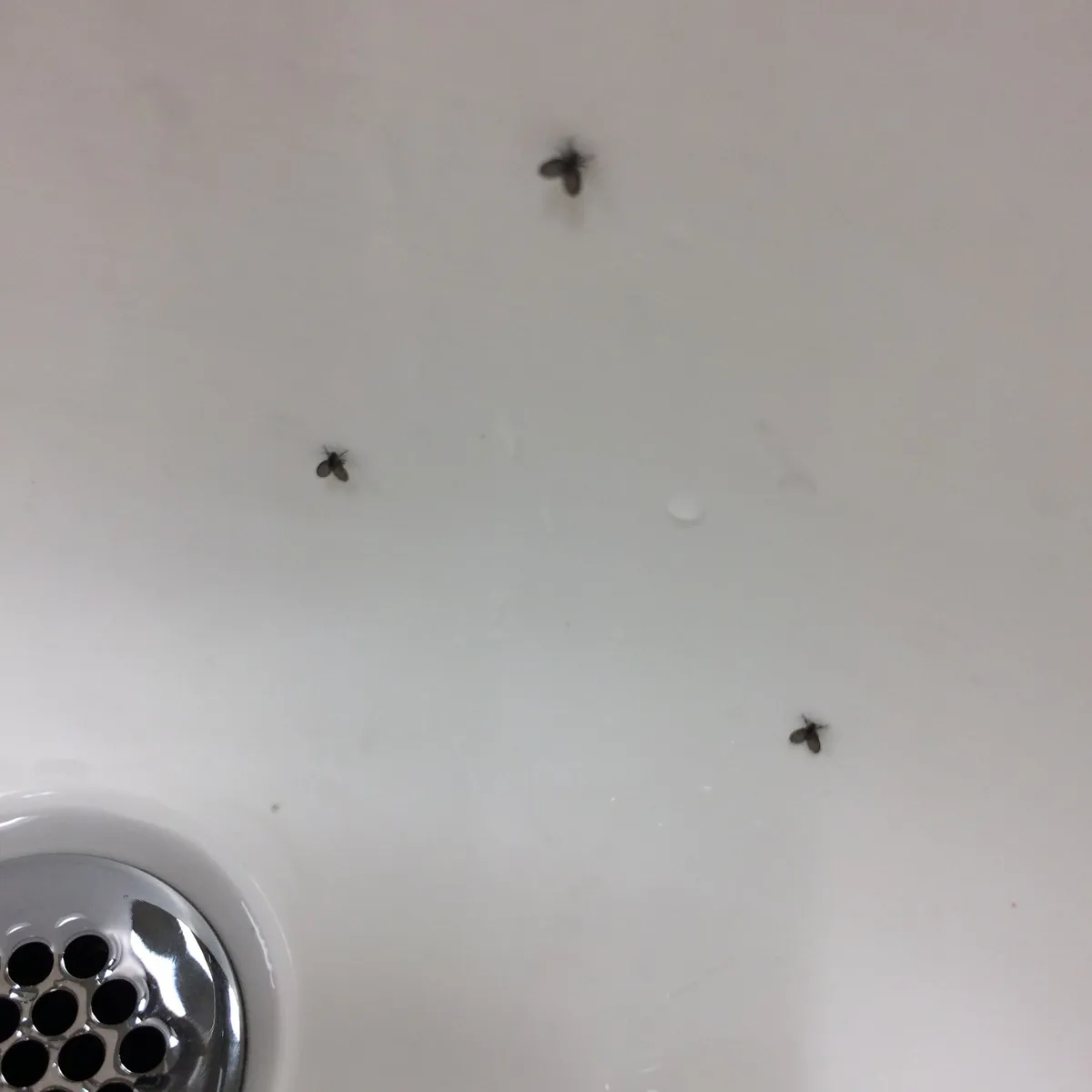
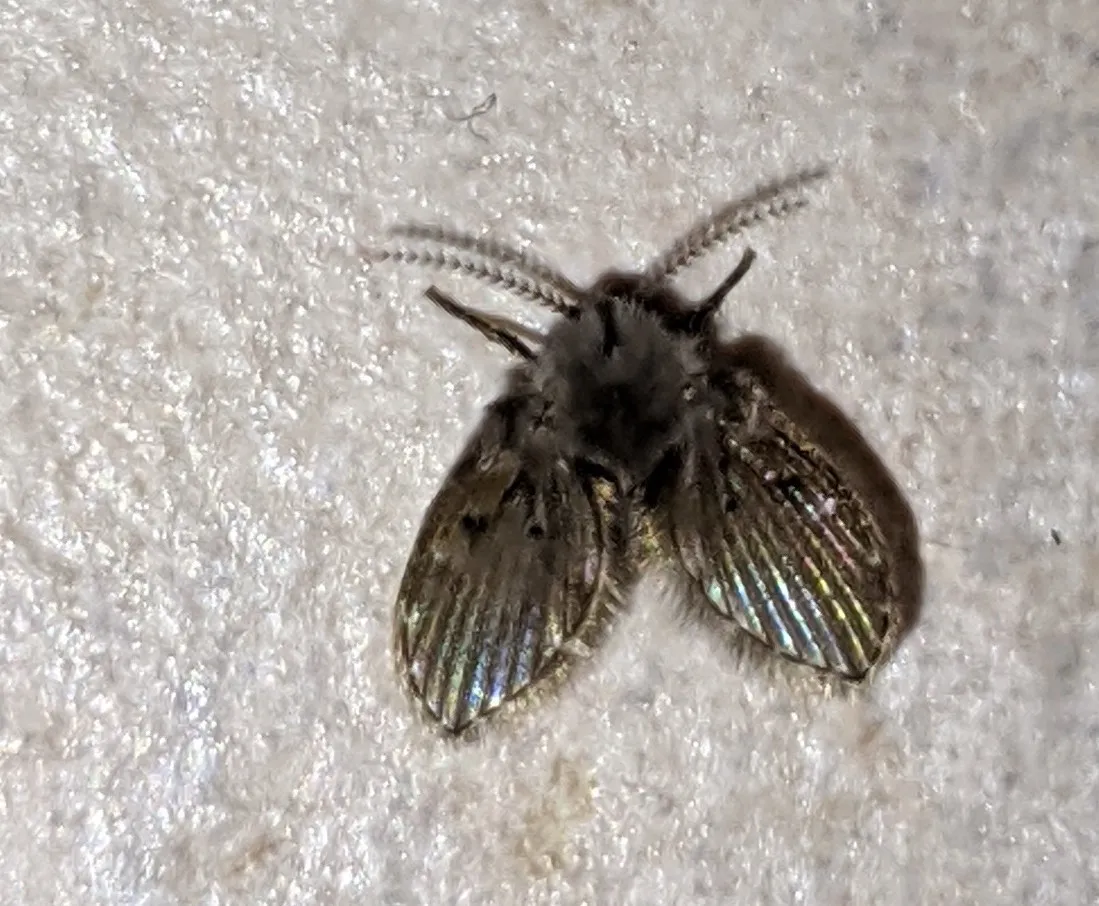
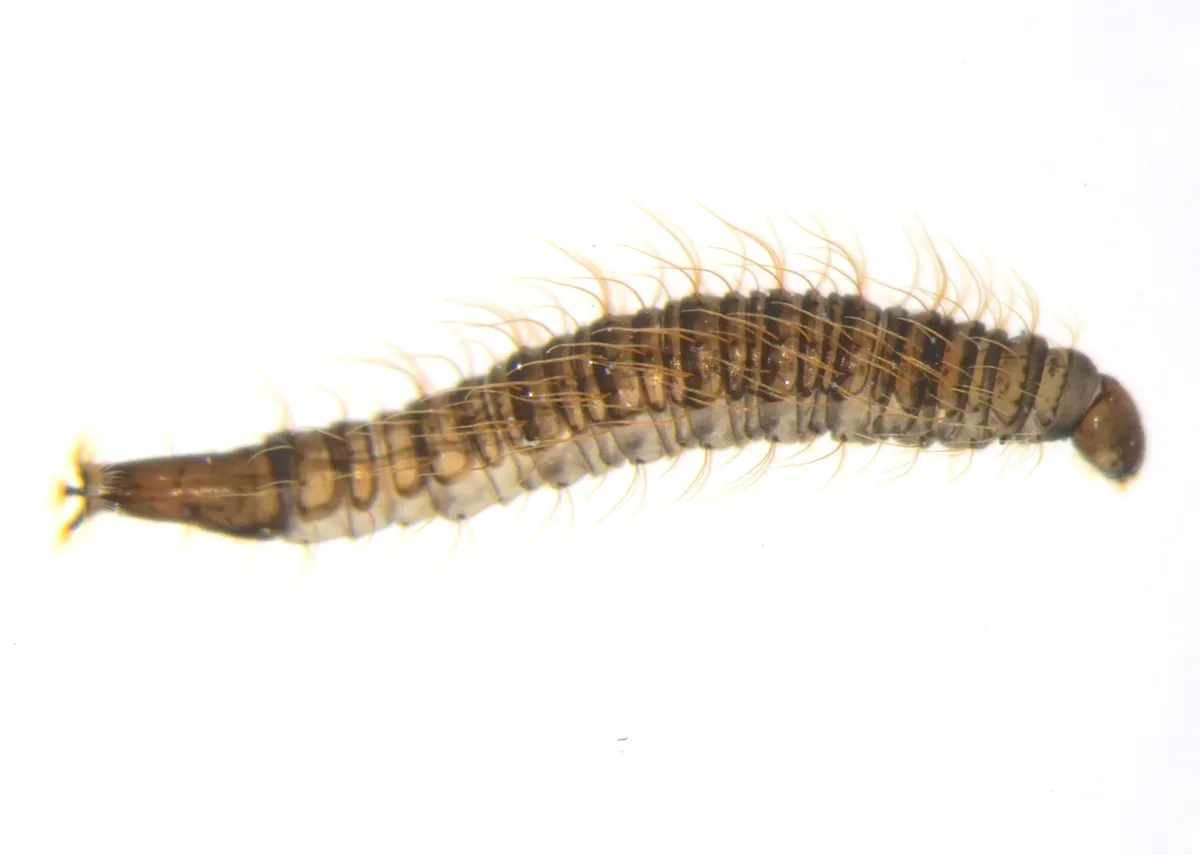
A drain fly looks like a tiny fuzzy moth. Texas A&M AgriLife Extension gives adults as 1/16 to 1/5 inch long, grayish and densely hairy, usually flying only a few feet at a time, and UC IPM's drain fly guide says they rest with their wings held roof-like over the back and do not bite people. They breed in the slimy film inside sink and shower drains. Texas A&M describes the larvae as brown, sometimes banded and up to 3/8 inch long, and UC IPM notes a breathing tube at one end.
To find the breeding drain, UC IPM suggests turning a cup coated inside with petroleum jelly or vegetable oil upside down over each drain for 24 hours. Then scrub the film out of the pipe and trap with a stiff brush, as Texas A&M advises; UC IPM calls pouring boiling water or bleach down the drain a common misconception that gives at best short-term control. Step-by-step drain fly control has the details.
Phorid flies
A phorid fly is about 1/8 inch long and humpbacked, and Texas A&M notes that it often runs and stops repeatedly before taking off. Its larvae live in moist, decaying matter such as drain pipes, garbage and broken disposals, and Texas A&M says sewer leaks under a building can cause severe indoor infestations. How to get rid of gnats compares the small flies side by side.
Springtails
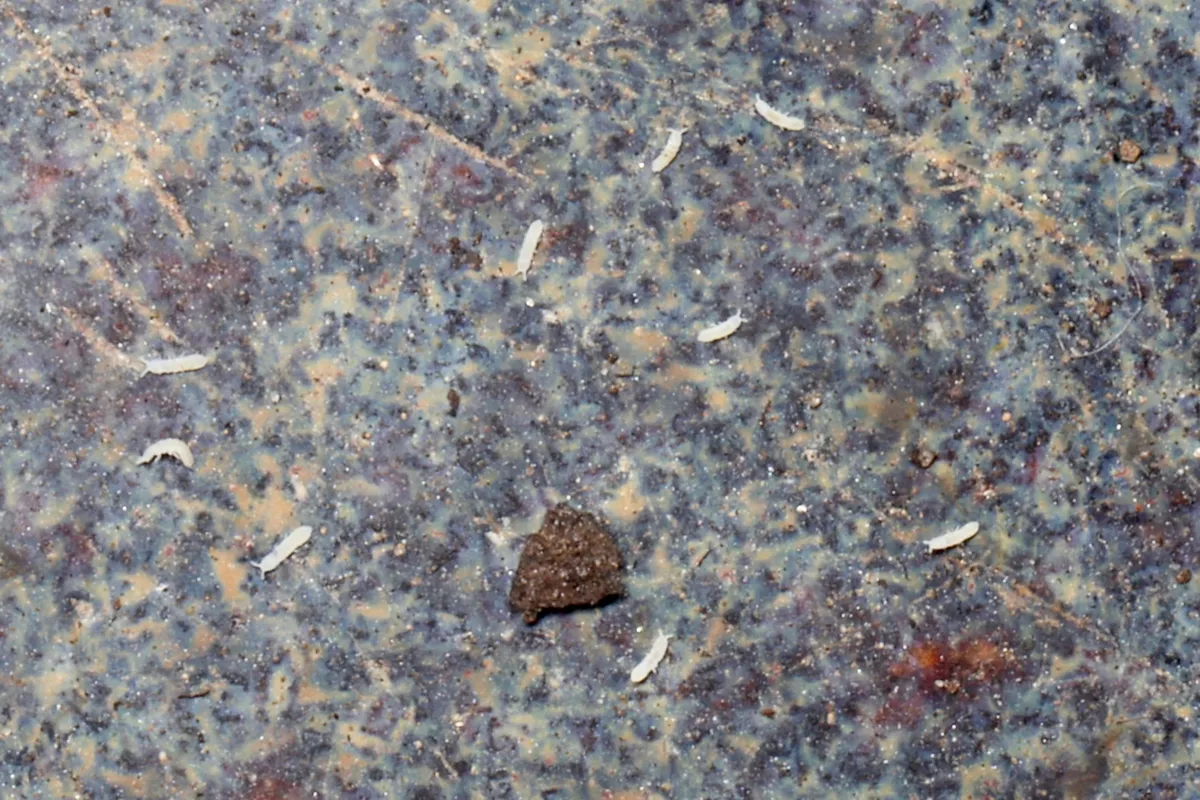
Springtails are the jumpers. Colorado State University Extension describes them as pinhead-sized and mostly gray or purplish, springing away with a forked structure folded under the body, and says that indoors they gather where water collects, such as bathrooms, drains, tubs and sinks. Penn State says most kinds that get into homes are about 1/25 to 1/12 inch (1 to 2 mm) long and white to black. They cannot bite, and their migrations usually last less than a week, Colorado State says. The springtail guide covers them room by room.
Silverfish, centipedes and cockroaches in the tub
A larger bug in a dry tub usually fell in. UC IPM's silverfish guide says silverfish cannot crawl up through a drain but cannot climb the slippery sides once they fall in, and Virginia Tech says homeowners may not know they have silverfish until one turns up trapped in the bathtub or sink. Iowa State says house centipedes do not come up through drain pipes either, though Penn State lists floor drains without a water trap among their hiding places.
Cockroaches are the exception. UC IPM's cockroach guide says Oriental cockroaches may be found trapped in sinks or tubs after falling in or after climbing up through damaged drain pipes, and that American cockroaches sometimes wander up from sewers where pipes are damaged or drain traps are faulty. See whether cockroaches really come up through drains, the Oriental cockroach guide and how a true water bug differs from a cockroach.
What are the bugs on the bathroom floor, walls and baseboards?
Silverfish and house centipedes are the common crawlers here. Booklice turn up on damp, moldy surfaces, ants come in for water, and pill bugs, millipedes and earwigs wander into ground-floor bathrooms from outside.
Silverfish
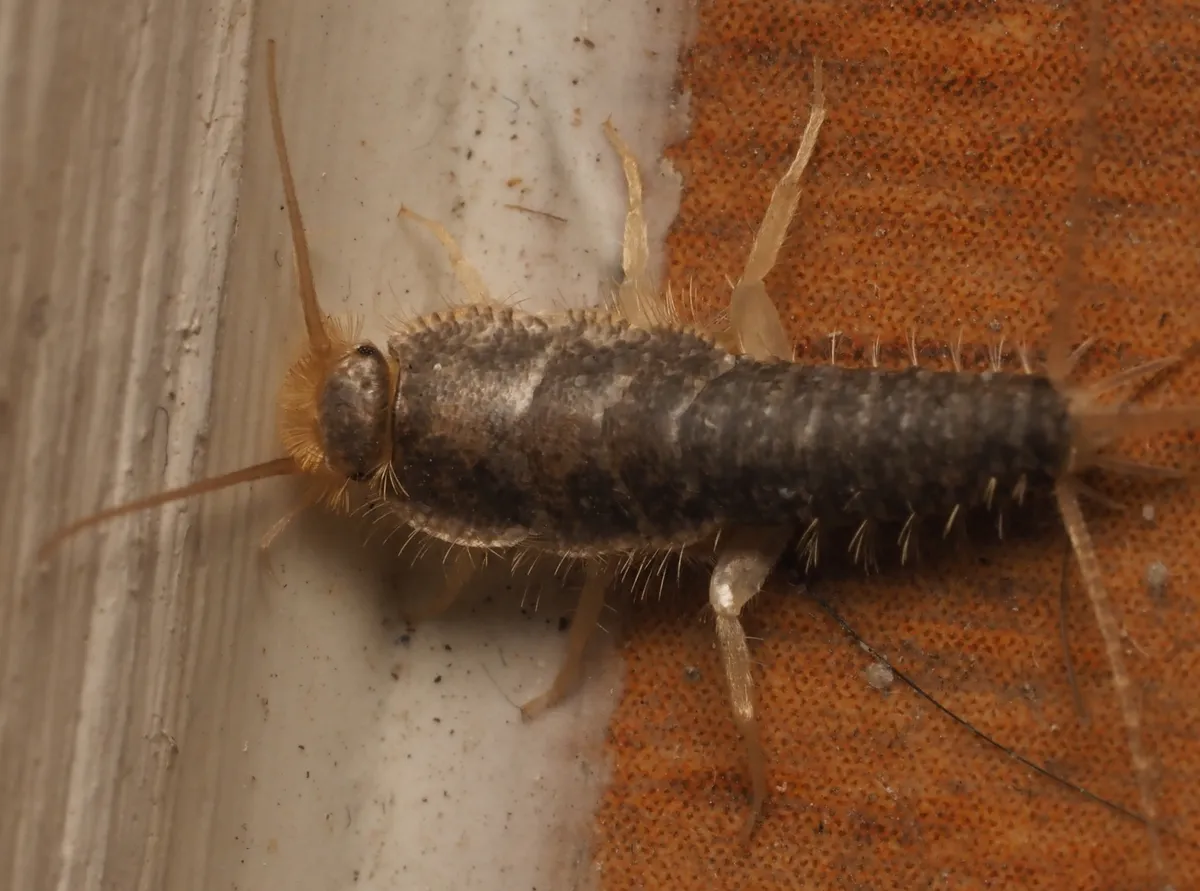
UC IPM describes the silverfish as slender, wingless and shiny silver or pearl gray, about 1/2 inch long and sometimes 3/4 inch, with two long antennae and three tail-like appendages. It hides by day and, at higher temperatures, needs relative humidity above 75%. The University of Florida notes that in bathrooms, cornstarch-based cosmetics can feed it, and Virginia Tech says silverfish do not bite, sting or transmit diseases. How to get rid of silverfish starts with the humidity.
House centipedes
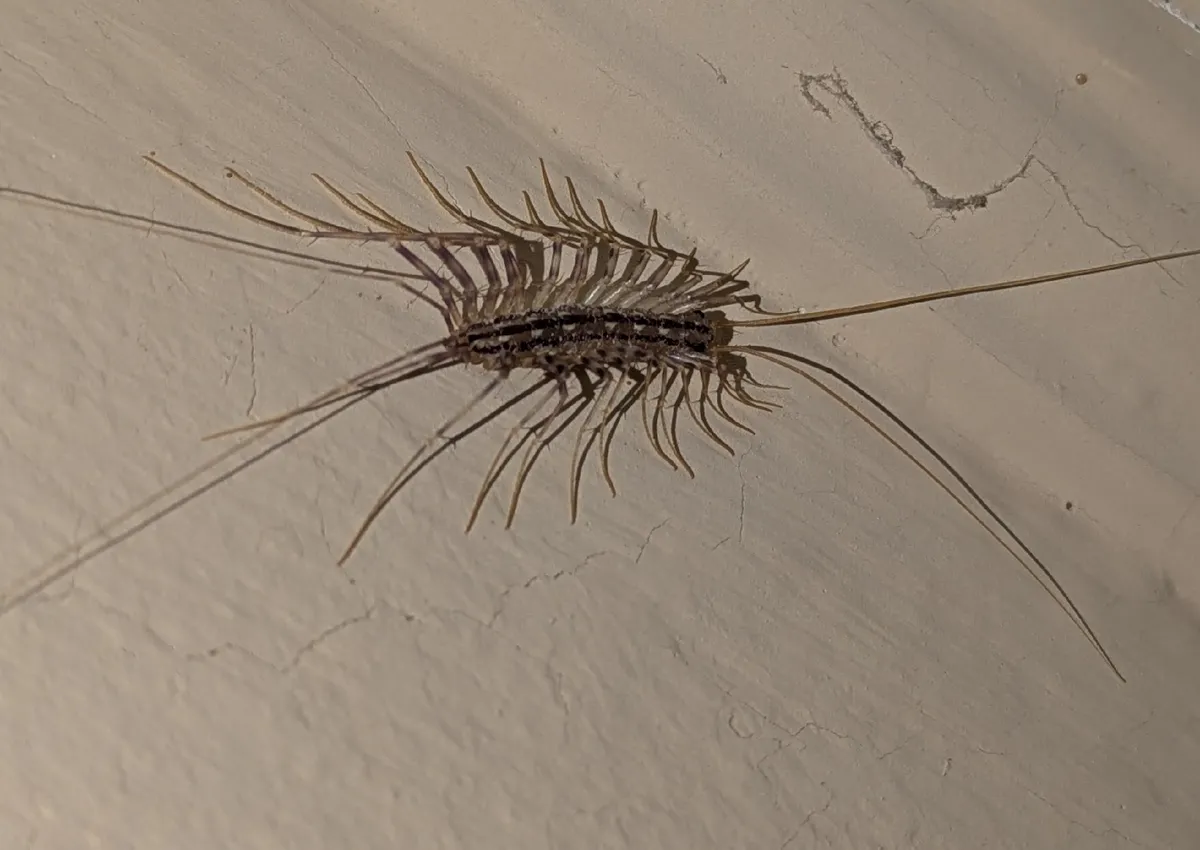
Iowa State describes the house centipede as up to 1 1/2 inches long with 15 pairs of long, banded legs, says centipedes favor damp parts of basements, closets and bathrooms, and calls the house centipede harmless to people, though technically it could bite. UC IPM's centipede and millipede guide says it runs rapidly, comes out at night to hunt, and is beneficial because it catches flies, cockroaches and other small household pests. More in the house centipede guide.
Booklice
Booklice are tiny, soft and pale: usually under 1/16 inch and translucent white to light brown, the University of Florida says, with most indoor kinds wingless. Penn State Extension's booklouse page says they feed on mold and fungi in humid, damp places, so they signal high moisture, and that they do not bite. The booklice guide shows them up close.
Ants
UC IPM's ant guide says ants come indoors for food and water, describes odorous house ants as 1/8 inch and dark brown to shiny black, nesting in wall voids or around water pipes, and advises fixing leaky faucets. Large, dark ants deserve a closer look: Penn State Extension's carpenter ant page gives workers as 1/4 to 1/2 inch and tells homeowners to check wood kept wet by leaking bathtubs or showers, though a worker indoors does not necessarily mean a nest is inside. The guide to tiny house ants sorts the small species.
Pill bugs, millipedes and earwigs
These wander in from outdoors. The University of Kentucky says pill bugs, rarely over 3/4 inch, move into ground-level floors looking for water, rarely survive indoors without high moisture, and do not bite or sting. UC IPM says stray millipedes usually die quickly indoors and do not bite, though some ooze an irritating liquid. UC IPM's earwig guide describes earwigs as about 3/4 inch and reddish brown, with pincers at the tail, coming in when it is too dry, hot or cold outside; they can bite if trapped in clothing but are not harmful.
See the guides to pill bugs, millipedes and getting rid of earwigs, or an earlier earwig guide written for Canadian homes.
What are the bugs on the bathroom ceiling, light or window?
Up high, expect drain flies resting on the walls, cellar spiders in loose webs in the corners, and fungus gnats at the window. For a fuzzy fly on the wall, UC IPM advises inspecting every drain in any room where you find the adults.
Cellar spiders
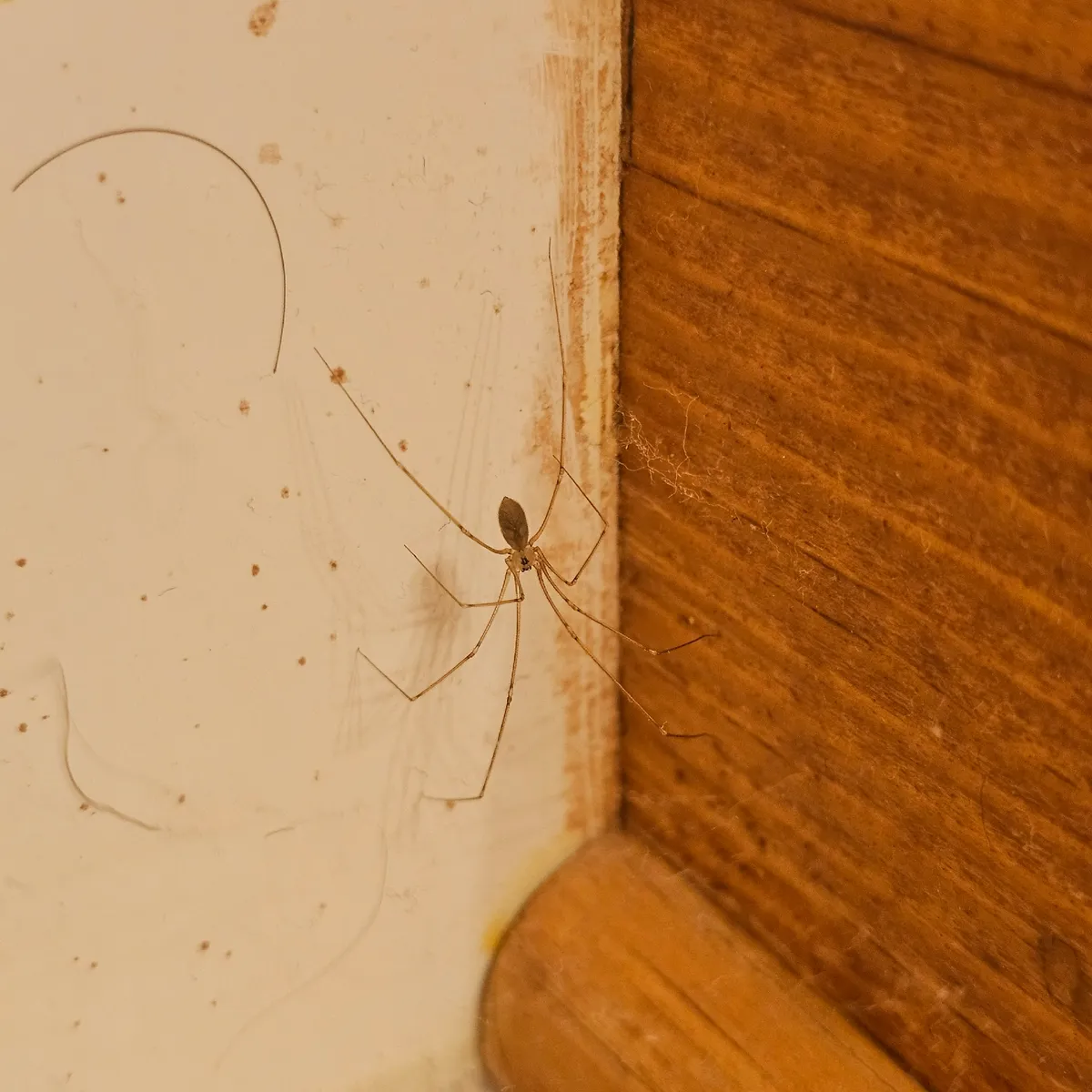
The Missouri Department of Conservation describes cellar spiders as having bodies usually no more than about 1/4 inch long on extremely long, thin legs, hanging upside down in messy webs in corners along the ceiling, and calls them harmless. The cellar spider guide explains why they are called daddy long legs.
Fungus gnats
UC IPM's fungus gnat guide describes dark, delicate flies 1/16 to 1/8 inch long that look like small mosquitoes, are drawn to light and may first be noticed at windows, and do not bite people. Texas A&M says they most often come from houseplant potting soil, especially in winter. See the houseplant bug guide or a guide to fungus gnats in houseplants.
What bugs hide under the bathroom sink?
Check for German cockroaches first. UC IPM says they prefer kitchens and bathrooms, in warm, humid spots near food, water and dark hiding places, and describes them as about 1/2 inch long and light brown, with two dark stripes on the shield behind the head. Ants nesting near water pipes and silverfish also take to a damp cabinet.
UC IPM calls sticky traps the best way to detect and monitor cockroaches. The German cockroach guide covers control, and signs of cockroaches shows what else to look for. If a leak has soaked the cabinet, EPA's mold and moisture guide says to dry water-damaged materials within 24 to 48 hours.
Which bathroom bugs come out at night?
Mainly cockroaches, silverfish, house centipedes and earwigs. UC IPM says almost all cockroaches are nocturnal, that silverfish are nocturnal and hide during the day, that house centipedes hunt at night and that earwigs feed most actively at night, and Penn State Extension's house centipede page agrees on the centipedes.
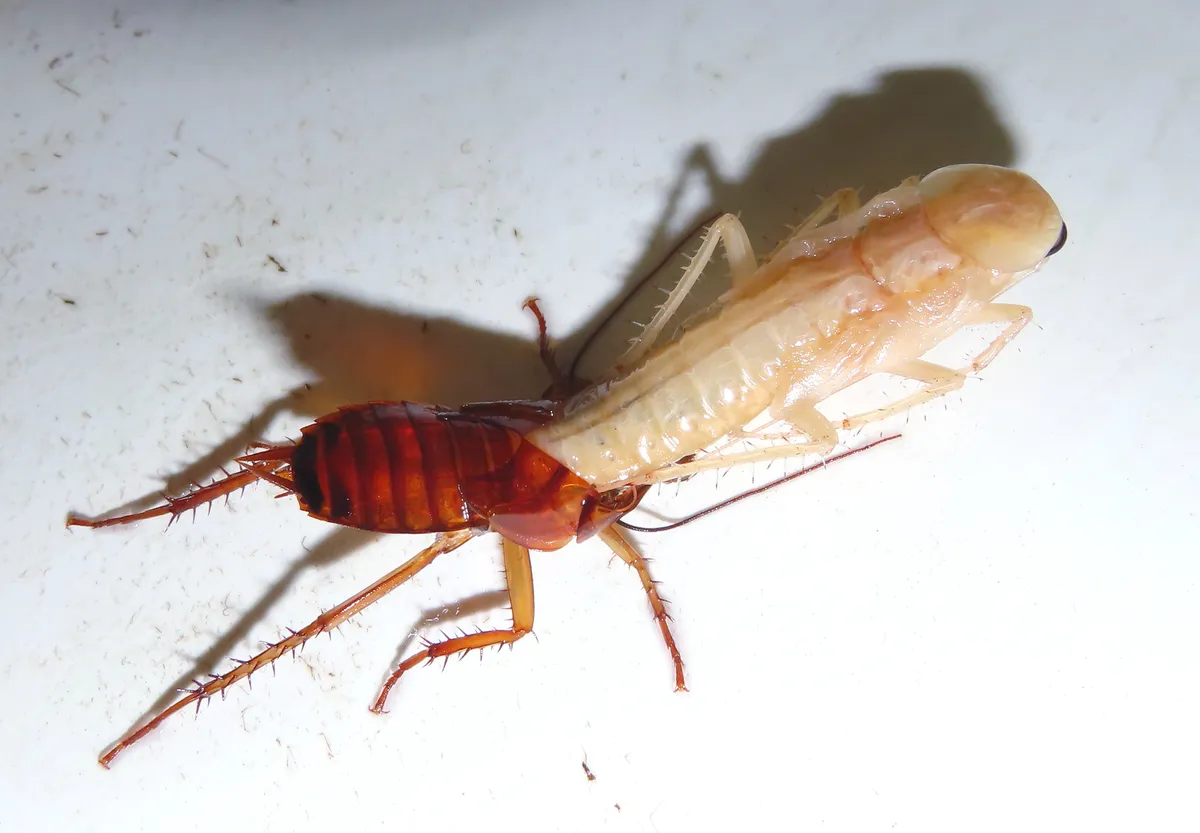
A white cockroach has just molted: UC IPM says cockroaches are white right after molting and darken within hours, and the white cockroach guide explains what one means. One roach at night is not necessarily an infestation, since UC IPM treats an established population differently from a stray or two. The step-by-step plan for getting rid of cockroaches and the complete guide to cockroaches go further.
The usual bathroom suspects
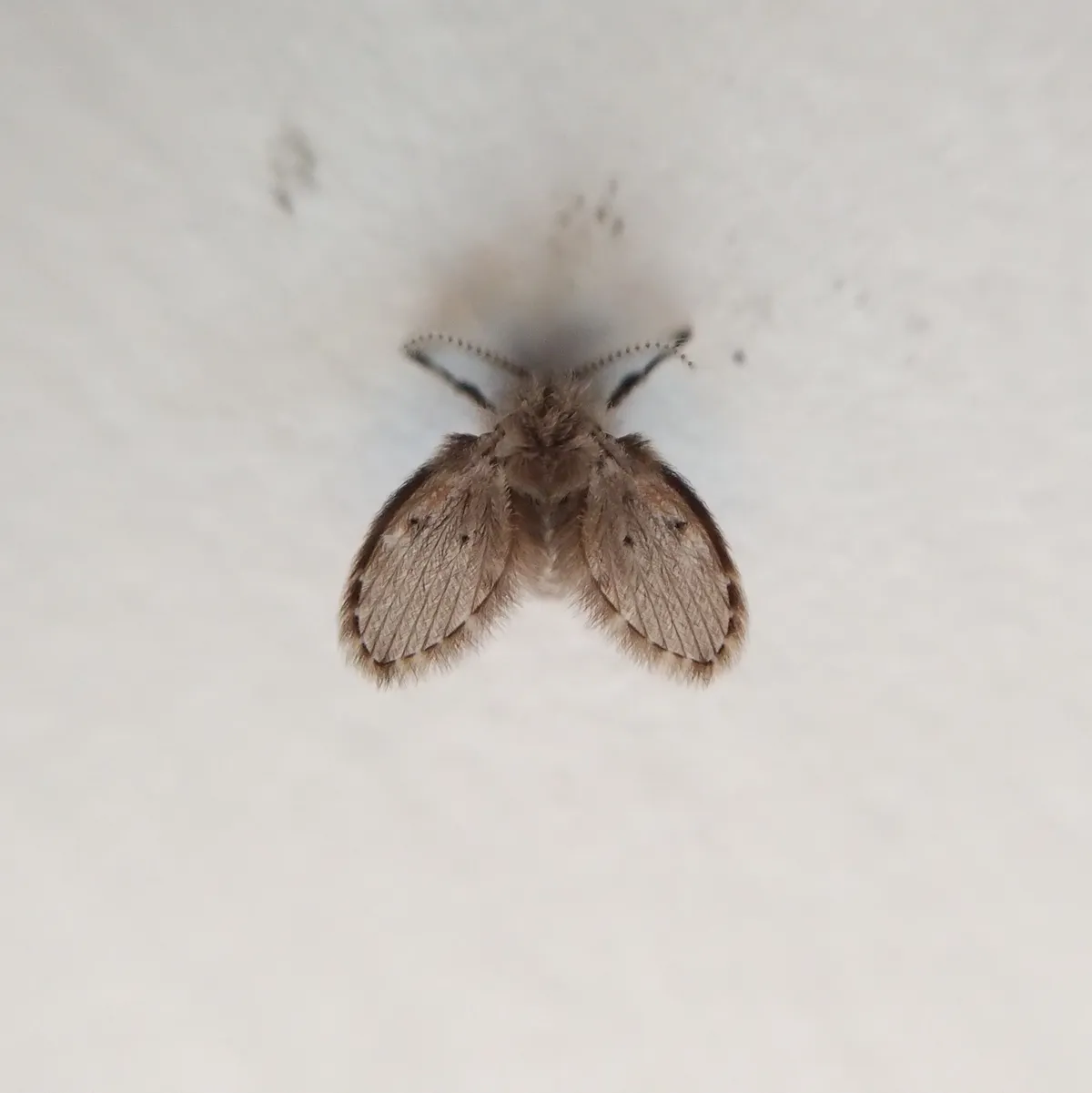 Drain flyFuzzy and moth-like, about 1/8 inch; breeds in the slimy film inside drains
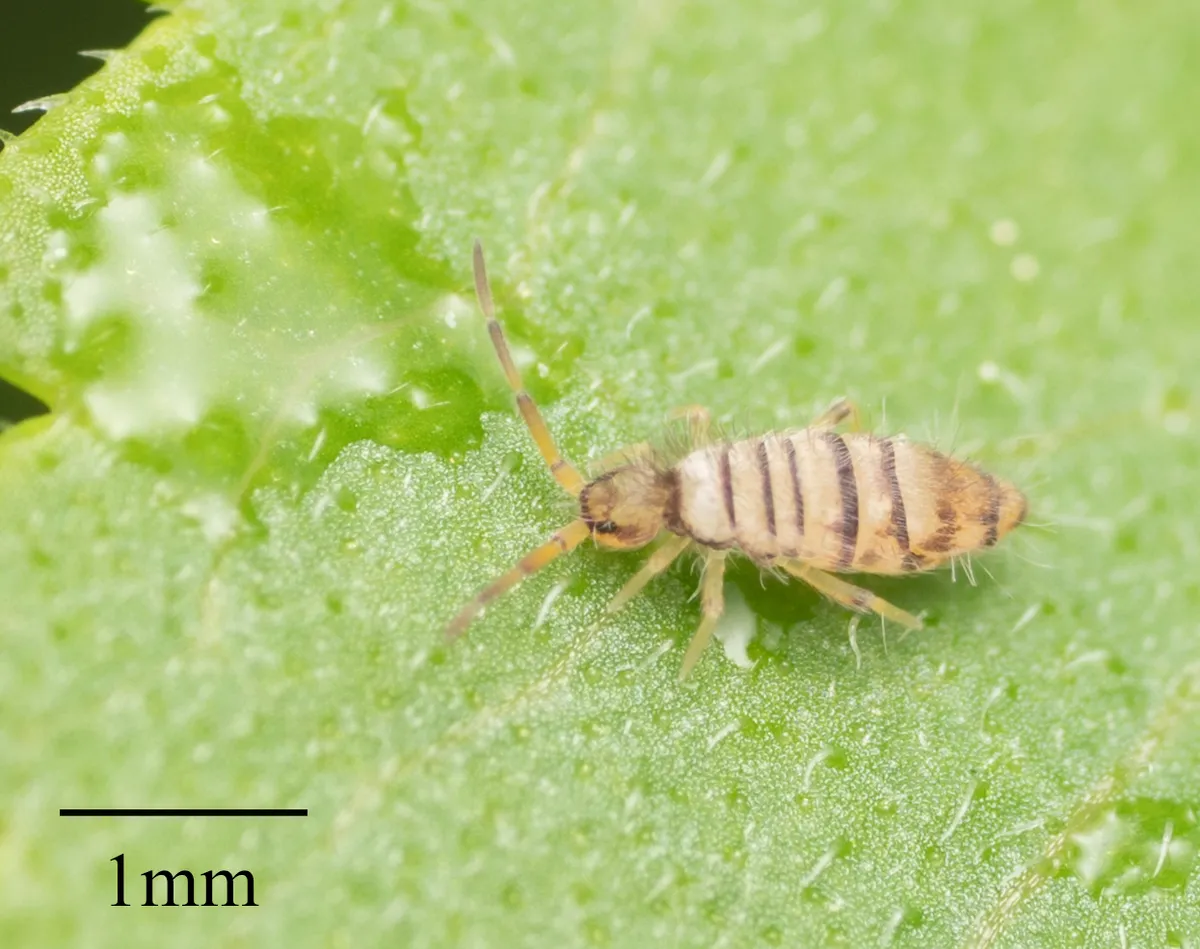 SpringtailPinhead-sized jumper that gathers around tubs, sinks and drains
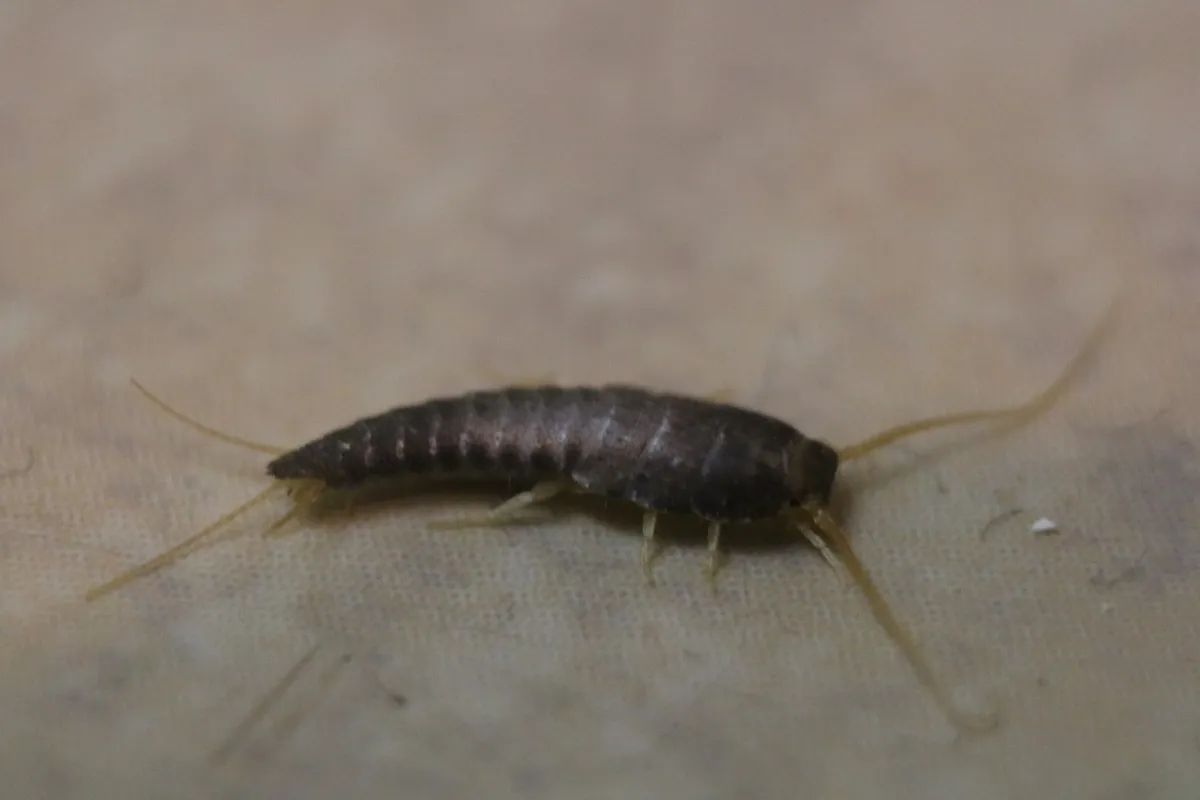 SilverfishCarrot-shaped and wingless, about 1/2 inch, with three long tail-like appendages
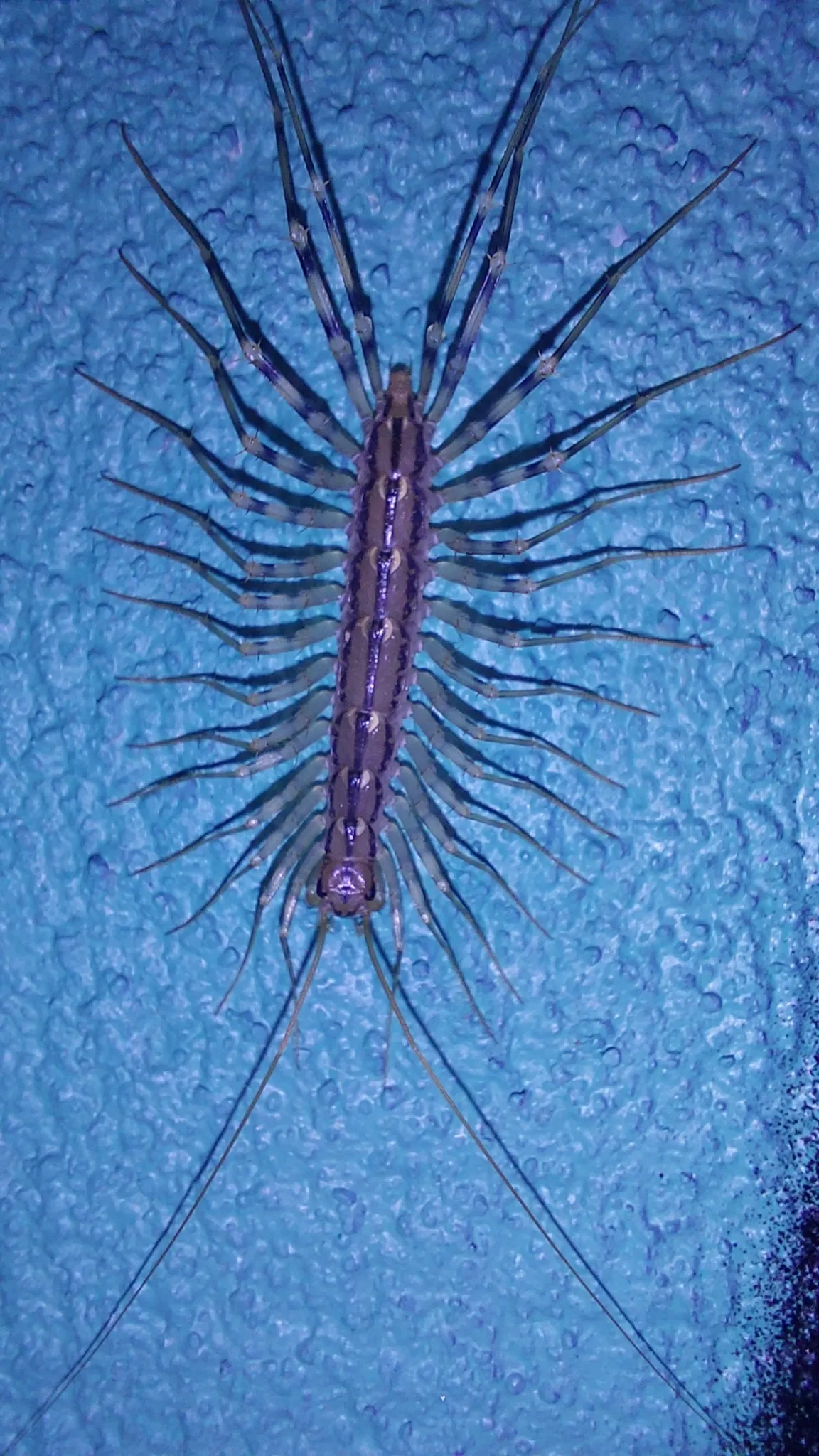 House centipedeUp to 1 1/2 inches with 15 pairs of long, banded legs; runs fast
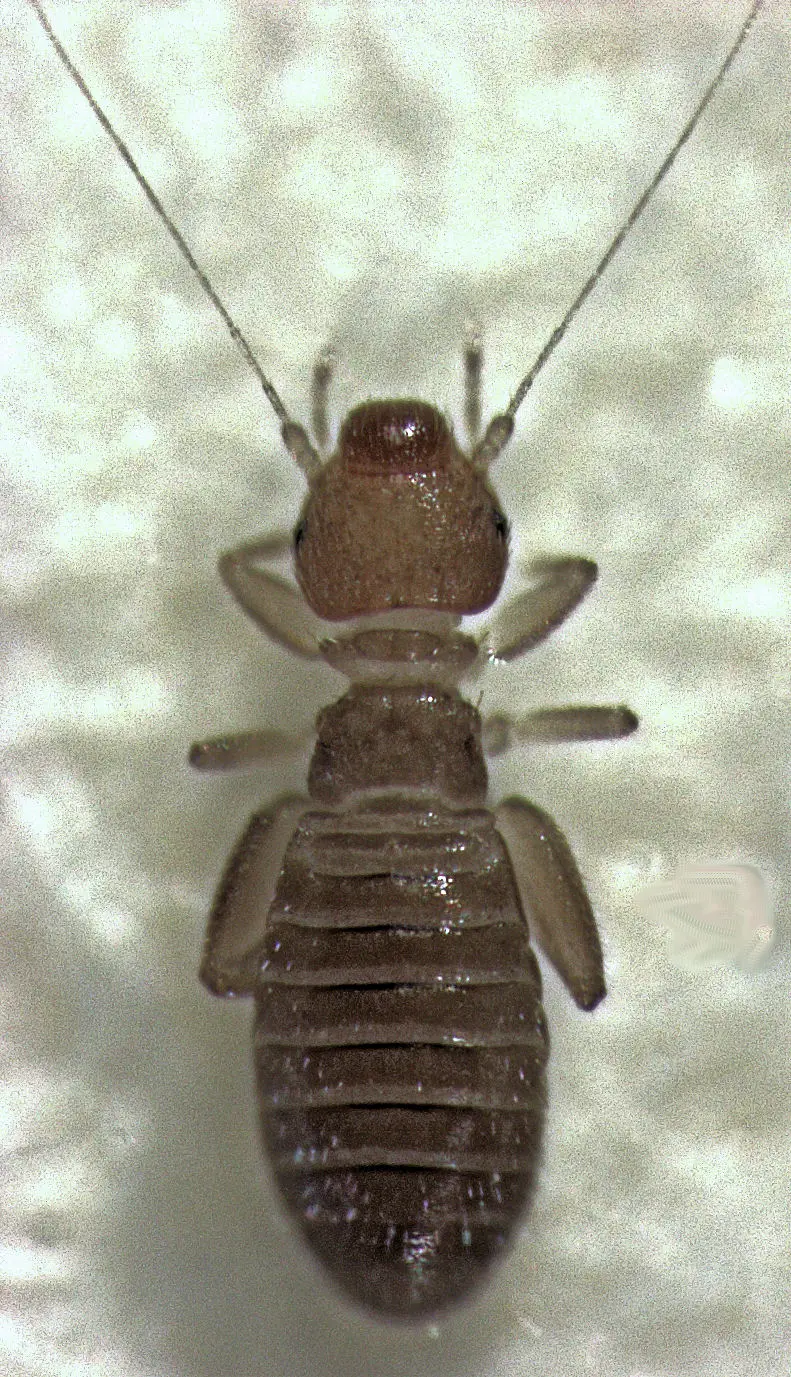 BooklouseUsually under 1/16 inch, soft, pale to light brown; feeds on mold in humid rooms
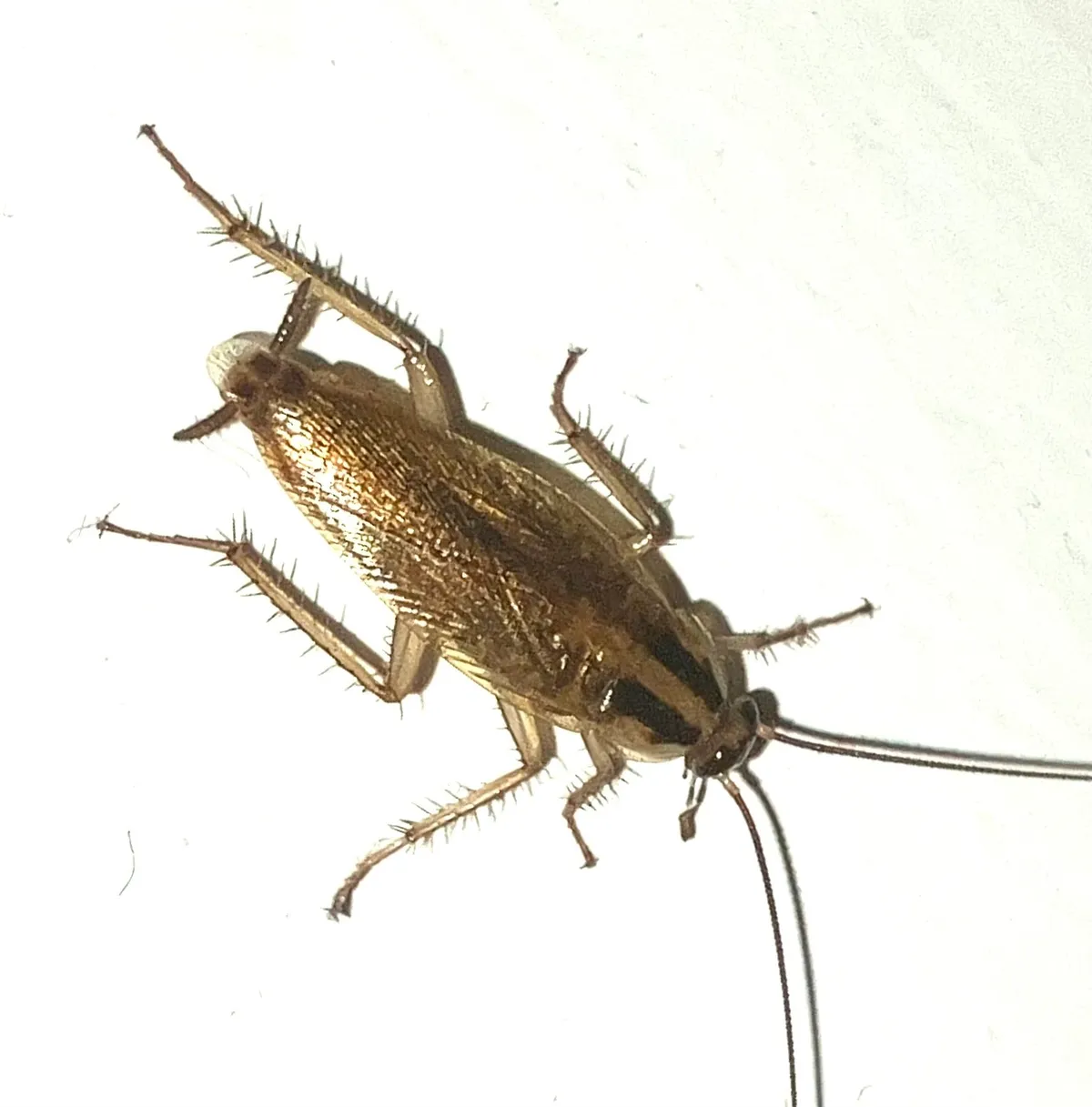 German cockroachAbout 1/2 inch and light brown, with two dark stripes behind the head
Photos: Drain fly: no rights reserved, via iNaturalist, CC0 1.0. Springtail: no rights reserved, via iNaturalist, CC0 1.0. Silverfish: no rights reserved, via iNaturalist, CC0 1.0. House centipede: no rights reserved, via iNaturalist, CC0 1.0. Booklouse: S.E. Thorpe, Public domain, via Wikimedia Commons, public domain. German cockroach: no rights reserved, via iNaturalist, CC0 1.0.
Why are there bugs in my bathroom?
Mostly water. Bathrooms offer damp air, drips and leaks, the slimy film inside drains, and gaps around pipes; UC IPM and the University of Florida say silverfish and firebrats travel along pipelines from one room or floor to another. Weather drives others in: springtails during long droughts or soaking rains (Penn State), earwigs when it is too dry, hot or cold, and ants away from heat or flooding (UC IPM). House centipedes go where insects are, and fungus gnats are drawn to light.
The fix is the one EPA gives for mold: run the fan or open the window when you shower, fix plumbing leaks quickly, and keep indoor humidity below 60 percent, ideally 30 to 50; EPA notes that a small humidity meter can measure it. UC IPM and the University of Florida add sealing the gaps around pipes.
Do bathroom bugs bite or make you sick?
Most do not bite; the last column of the table at the top gives each one. Cockroaches are the health concern: UC IPM says indoor cockroach infestations are important sources of allergens and have been identified as risk factors for asthma in children, and that American cockroaches can carry bacteria that cause food poisoning. It adds that drain flies have the potential to carry pathogens from where they breed, a concern mainly where sterility matters. See whether cockroaches bite people.
When do bugs in the bathroom mean a bigger problem?
Repeat sightings and large numbers do. Watch for these:
- Drain flies that return after cleaning, or swarm. UC IPM says very large numbers probably mean a breeding site bigger than a few indoor drains, and that if none are breeding in the drains, pipes in crawl spaces, wall voids and under slabs may need checking for breaks or leaks.
- Swarms of phorid flies. Texas A&M links severe indoor infestations to sewer leaks under a building.
- Cockroaches again and again. UC IPM separates an established population from a stray or two; sticky traps show which you have.
- Large, dark ants. Penn State ties carpenter ants to wood kept wet by leaking tubs and showers.
- Pill bugs over and over. The University of Kentucky says frequent indoor sightings can signal a moisture problem or a gap at a seal, window or door.
- Many house centipedes. Penn State says frequent sightings may mean the insects they eat are plentiful.
What should you do once you know what it is?
Take away the water and whatever the bug lives on; the extension sources put that ahead of any spray.
- Drain and phorid flies: scrub the drain and trap with a stiff brush; Texas A&M says insecticides alone rarely solve indoor fly problems. See the drain fly guide.
- Springtails: fix leaks, keep the bathroom well ventilated and run a dehumidifier; Colorado State calls insecticides of questionable value. See how to deal with springtails.
- Silverfish: repair drips, patch gaps around pipes, dehumidify and set sticky traps (UC IPM); see silverfish control, step by step.
- Booklice: bring humidity below 50% and fix the water problem; Penn State says pesticides are not normally needed.
- House centipedes: dry and clean their damp hiding spots (Iowa State) and run a dehumidifier (Penn State).
- Cockroaches: seal cracks, monitor with sticky traps and, if needed, use baits rather than sprays (UC IPM); the cockroach control plan puts the steps in order.
- Ants: find where they come in and seal it with caulk; UC IPM says spraying indoors will not stop more ants. Getting rid of ants in the house covers baits.
- Pill bugs, millipedes and earwigs: sweep or vacuum them up, seal gaps at doors and windows, and clear leaves and mulch away from the foundation (University of Kentucky, UC IPM).
- Fungus gnats: let the potting mix dry between waterings and use yellow sticky traps (UC IPM).
- Cellar spiders: harmless; the cellar spider guide covers clearing their webs.
Frequently Asked Questions
Why do I keep getting bugs in my bathroom?+
Usually because the bathroom keeps giving them water. Drain flies breed in the slimy film inside sink and shower drains, UC IPM says, and boiling water or bleach gives at best short-term control, so the film has to be scrubbed out. Silverfish need high humidity, springtails and booklice thrive where it is damp and moldy, and the University of Kentucky says pill bugs that keep turning up can signal a moisture problem or a gap at a door or window. Fixing leaks, running the fan when you shower and keeping indoor humidity below 60 percent, as EPA advises, cuts the moisture that draws them.
What kind of bugs can live in shower drains?+
Drain flies are the best-known ones. UC IPM says their larvae develop in the slimy organic matter coating sink and shower drains and that bathroom drains are the most common breeding sites in homes. Texas A&M AgriLife Extension describes the larvae as brown, sometimes banded and up to 3/8 inch long, and says phorid fly larvae can live in drain pipes too. Springtails gather around drains and tubs where water collects, Colorado State says, while a silverfish or house centipede in the shower fell in rather than coming from the drain.
Can bugs crawl up through the bathroom drain?+
Silverfish and house centipedes do not, but cockroaches sometimes can. UC IPM says silverfish cannot crawl up through a drain, and Iowa State University Extension says house centipedes do not come up through drain pipes; both end up stuck in tubs and sinks after falling in. UC IPM says Oriental cockroaches may climb up through damaged drain pipes and that American cockroaches sometimes move from sewers onto the ground floor of buildings, especially where pipes are damaged or drain traps are faulty, so damaged pipes and faulty drain traps are worth fixing.
What are the tiny bugs in my bathroom that don't have wings?+
Often springtails or booklice. Colorado State University Extension says springtails are pinhead-sized, gather where water collects around tubs, drains and sinks, and jump using a forked structure folded under the body; the jumping and their small size have earned them the nickname jumping dirt. The University of Florida describes booklice as usually under 1/16 inch, soft and pale, with most indoor kinds wingless, and Penn State Extension says they feed on mold in humid places. Young silverfish are wingless too and look like small adults. None of the three bites people, and lowering the humidity is the main fix for all of them.
Should I be worried if I have silverfish in my bathroom?+
Not for your health. Virginia Tech says silverfish are harmless to people and do not bite, sting or transmit diseases, though they can contaminate food and damage paper and fabric. They are a sign of moisture: UC IPM says they need relative humidity above 75% at higher temperatures and recommends repairing leaks and drips, patching gaps around pipes and running a dehumidifier in closed spaces. A silverfish in the tub fell in; UC IPM says they cannot crawl up through a drain or climb back out over the slippery sides.
Why are there bugs in my bathroom at night?+
Many bathroom bugs are nocturnal. UC IPM says almost all cockroaches are nocturnal, that silverfish are nocturnal and hide during the day, that house centipedes hunt at night, and that earwigs feed most actively at night. Virginia Tech adds that silverfish avoid light and run swiftly. One cockroach seen at night does not prove an infestation, but UC IPM calls sticky traps the best way to detect and monitor cockroaches, so set a few to find out how many there are and where they are coming from.
What kills bathroom bugs?+
For most bathroom bugs, the extension sources favor drying and cleaning over spraying. UC IPM calls pouring boiling water or bleach down a drain a common misconception for drain flies, and Texas A&M says insecticides alone rarely solve an indoor fly problem, so scrubbing the drain film out with a stiff brush is the fix. Colorado State calls insecticides of questionable value against springtails, and Penn State says booklice do not normally need pesticides. For cockroaches and ants, UC IPM prefers baits to sprays. If you use any pesticide, follow its label exactly.
How do I stop bugs from coming into my bathroom?+
Cut off the water, then close the gaps. EPA advises running the bathroom fan or opening a window when you shower, fixing plumbing leaks as soon as possible and keeping indoor humidity below 60 percent, ideally 30 to 50 percent. UC IPM suggests patching holes around pipes and conduits, and the University of Florida suggests sealing cracks around plumbing, wall molding and windowsills. Keep drains scrubbed so drain flies have nowhere to breed. Outside, the University of Kentucky advises clearing leaves, mulch and rotting wood away from the foundation.
Will a dehumidifier get rid of bathroom bugs?+
It helps most with the bugs that need damp air. Penn State Extension calls lowering the humidity with air conditioning or dehumidifiers the best way to manage springtails at home, says bringing humidity below 50% prevents booklice from developing, and recommends dehumidifiers against house centipedes. UC IPM says dehumidifiers in closed spaces can help discourage silverfish. Drain flies breed in the wet film inside drains, which drying the air does not remove, so the drain still needs scrubbing, and cockroaches need traps, sealing and, if needed, baits.
Are bathroom bugs dangerous?+
Most are not. UC IPM, Colorado State, Penn State and Virginia Tech say drain flies, fungus gnats, springtails, booklice and silverfish do not bite people, and Iowa State considers house centipedes harmless even though they technically could bite. Cockroaches are the exception: UC IPM says indoor infestations are important sources of allergens and have been identified as risk factors for asthma in children, and that some species can carry disease-causing organisms. Contact a healthcare provider about any rash, bite or breathing problem that worries you.
Sources
- Pest Notes: Silverfish and Firebrats (UC ANR Publication 7475) — University of California Statewide IPM Program
- Pest Notes: Moth or Drain Flies — University of California Statewide IPM Program
- Pest Notes: Cockroaches (UC ANR Publication 7467) — University of California Statewide IPM Program
- Pest Notes: Centipedes and Millipedes — University of California Statewide IPM Program
- Pest Notes: Earwigs — University of California Statewide IPM Program
- Pest Notes: Fungus Gnats — University of California Statewide IPM Program
- Pest Notes: Ants — University of California Statewide IPM Program
- Indoor Flies and Their Control (ENTO-050) — Texas A&M AgriLife Extension Service
- Springtails — Penn State Extension (S. Jacobs)
- Springtails (Fact Sheet 5.602) — Colorado State University Extension
- House Centipede — Iowa State University Extension and Outreach, Yard and Garden
- House Centipedes — Penn State Extension
- Booklice — Penn State Extension (M. J. Skvarla, revised July 2024)
- Booklice and Silverfish (ENY-225/IG094) — University of Florida IFAS Extension (F. Oi, P. Koehler, D. Branscome and B. Bayer)
- Silverfish and Firebrats (ENTO-24) — Virginia Cooperative Extension, Virginia Tech
- Cellar Spiders (Field Guide) — Missouri Department of Conservation
- Carpenter Ants — Penn State Extension (S. Jacobs)
- Sowbugs and Pillbugs (ENTFACT-439) — University of Kentucky Department of Entomology
- A Brief Guide to Mold, Moisture and Your Home — U.S. Environmental Protection Agency
How this guide was made: it was researched and drafted with AI assistance from the sources listed above. A second, independent AI pass then checked each factual claim against those sources. Found an error? Email support@buzzskito.ca.