
Published by BuzzSkito Mosquito & Tick Control
Published October 23, 2026 · Fact-checked against the sources listed below
What do termites look like?
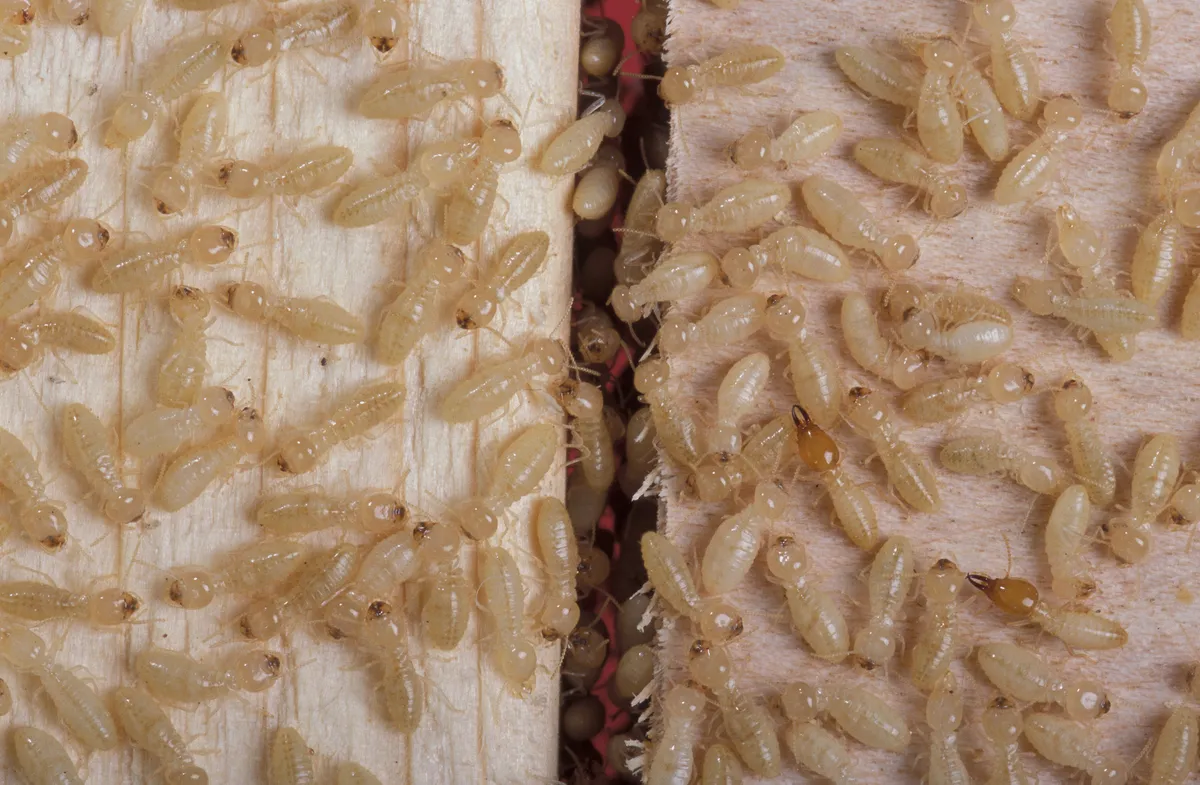
Termites are small, soft insects with a straight, thick-waisted body and straight antennae, and what one looks like depends on its job in the colony. NC State Extension's guide to termite swarmers describes their uniform, tube-like bodies and straight, beaded antennae, and the USDA Forest Service's Wood Handbook says winged termites can resemble ants in size and general appearance but lack the ant's constricted waist and elbowed antennae.
A colony holds three kinds of termites, and they do not all turn up in the same place. Mississippi State University Extension's termite biology page says workers make up 90 to 98 percent of a colony and are sightless and completely white, and that the primary reproductives are the only members of the colony with pigment and eyes. That is why the termites in a broken piece of wood look so unlike the ones at a window.
- Workers: pale, soft and wingless, hidden in wood, soil and mud tubes.
- Soldiers: built like workers, with a much larger amber or brown head and large jaws.
- Swarmers: the winged kings and queens, darker than the rest, seen mostly when they fly.
What do termite workers look like?
Termite workers are the pale, soft, wingless insects inside damaged wood, soil or a broken mud tube, and they are the ones that eat the wood. Texas A&M's native subterranean termite page describes them as white to creamy white and 1/4 to 3/8 inch long, and UC IPM's pest note on subterranean termites as soft-bodied and light caramel. Penn State Extension's eastern subterranean termite page says workers are seldom seen and are the caste that feeds on wood and causes the damage.
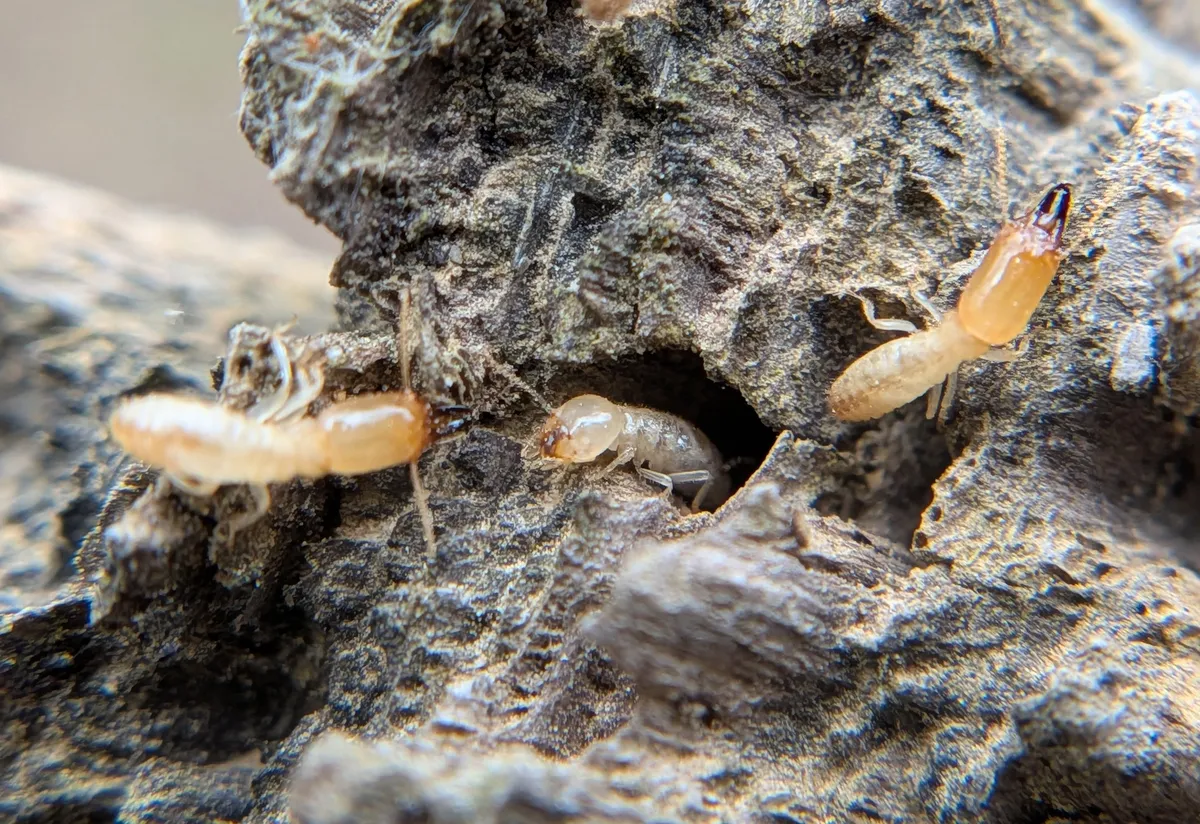
Seldom seen is the rule. EPA's guide to identifying termites says termites rarely come out of the soil, mud tubes or wood they tunnel through, and that most people do not know they have termites until they see a swarm or come across damage during construction. Workers of the invasive Formosan termite look very similar to eastern subterranean workers, Mississippi State says; UF/IFAS's Formosan termite profile puts them at roughly 1/8 inch (3 to 4 mm), white to cream.
The pale workers are why termites are sometimes called white ants, a name that misleads. The University of Hawaii's termite identification handout says termites are more closely related to cockroaches than to ants, and Mississippi State notes that termites are now classified in the same order as cockroaches.
Most young termites grow up to be workers. University of Georgia entomologists describe subterranean termite workers as immature termites that are completely white and sightless, and Mississippi State says termites develop from egg to nymph to adult with no pupal stage, with a new queen's first eggs hatching into nymphal workers. There is no grub or cocoon to look for.
What do termite soldiers look like?
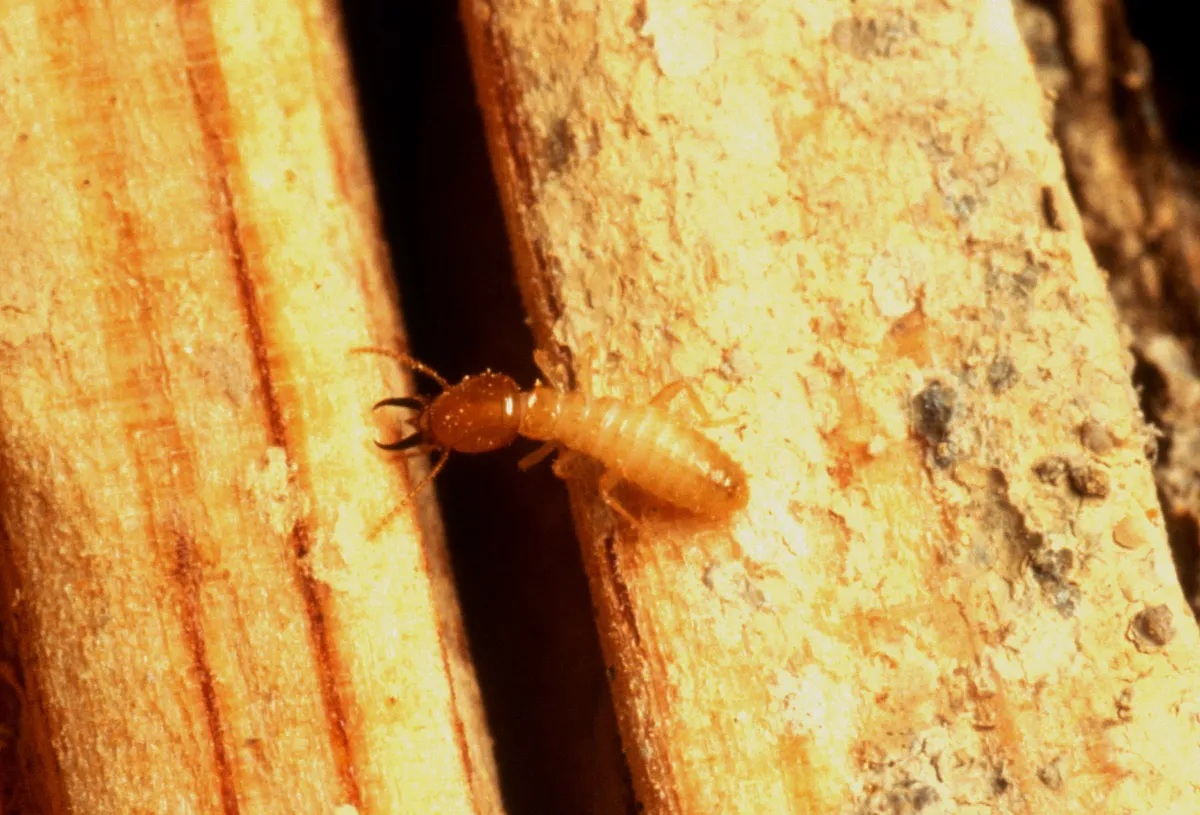
Termite soldiers look like workers with a much larger, darker head and large jaws, and they guard the colony. UC IPM says soldiers generally have larger, amber or brownish heads and larger mandibles than workers, and Penn State describes the eastern subterranean soldier's head as elongated and yellowish, with large jaws, on a body about 1/4 inch long, the size of an adult worker.
Soldiers are worth collecting, because their heads tell the species apart. UF/IFAS's native subterranean termite profile says native soldiers have rectangular heads and make up only 1 to 2 percent of a colony, while Formosan soldiers have oval heads. UF/IFAS's Formosan profile describes a brownish-orange, teardrop-shaped head that oozes a white, glue-like fluid when the soldier is threatened, with soldiers making up 10 to 15 percent of the colony. Southeastern drywood soldiers have large, rectangular heads and extremely stout, dark jaws with small teeth along the inner edge, says Mississippi State's guide to termite species.
What do flying termites look like?
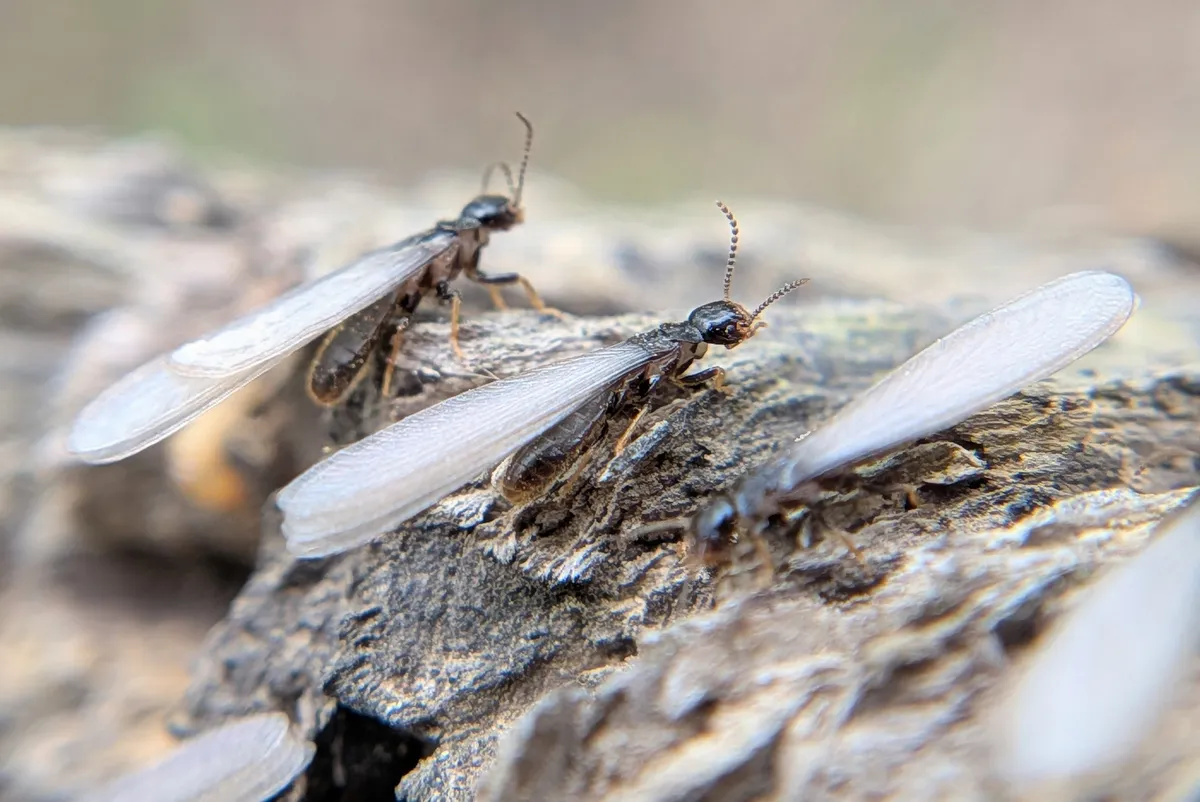
Flying termites, or swarmers, are a colony's winged kings and queens: darker than the workers, with a thick waist, straight antennae and four long wings of equal length. Penn State says eastern subterranean kings and queens are dark brown or black and about 3/8 to 1/2 inch long, with translucent wings nearly twice the length of the body that break off shortly after swarming.
Size and color vary by species. Mississippi State's species guide puts eastern subterranean swarmers at about 3/8 inch including the wings, with a dark brown to black body; Formosan swarmers at about 1/2 inch, tan to light brown; and southeastern drywood swarmers at about 7/16 inch, yellow to light brown. UF/IFAS describes eastern subterranean swarmers as almost black to the naked eye and Formosan swarmers as orange or light amber-brown.
A swarmer that has lost its wings is still a termite. Mississippi State says swarmers shed their wings once they pair up and land, so a dark, straight-bodied insect beside a scatter of loose wings is most likely a swarmer that dropped them. Penn State notes that the winged forms do no damage themselves; the workers of the colony they came from do.
Termite swarmer or flying ant? Check three things
- Antennae. Straight and beaded on a termite; bent like an elbow on an ant.
- Waist. Thick on a termite, so the body looks like one tube; pinched in on an ant.
- Wings. Four of equal length on a termite, reaching well past the body; on an ant the front pair is longer than the hind pair.
The flying ants vs termites comparison takes each of these traits in turn and covers the ant side in more detail.
When do termites swarm, and what does a swarm in the house mean?
Most US termites swarm in spring, but the month and the hour depend on the species and the region. The Wood Handbook says subterranean termites usually swarm in early spring or fall, and University of Georgia entomologists say swarmers are most often seen in spring but can turn up at any time of year. NC State adds that swarms usually come in the daytime, often after rain.
| Termite | Swarm season | Time of day |
|---|---|---|
| Eastern subterranean | January to April in Florida; February to May in Mississippi; February to June in Pennsylvania | Daytime: usually mornings in Mississippi, warm early afternoons after rain in Florida |
| Western subterranean (California) | Spring or fall, after a soaking rain | Afternoon, on clear days |
| Desert subterranean (Sonoran Desert) | July to September | Late afternoon or early evening; drawn to lights |
| Formosan subterranean | April to June in Florida, peaking in May; late April to mid-May in southern Mississippi | At or shortly after dusk; drawn to lights |
| Southeastern drywood (Mississippi coast) | May and June | Usually at dusk |
| Drywood (California) | Summer and fall | Daytime |
From UF/IFAS, Mississippi State, Penn State and UC IPM. In buildings with heated basements, UC IPM notes, termites occasionally fly indoors in winter.
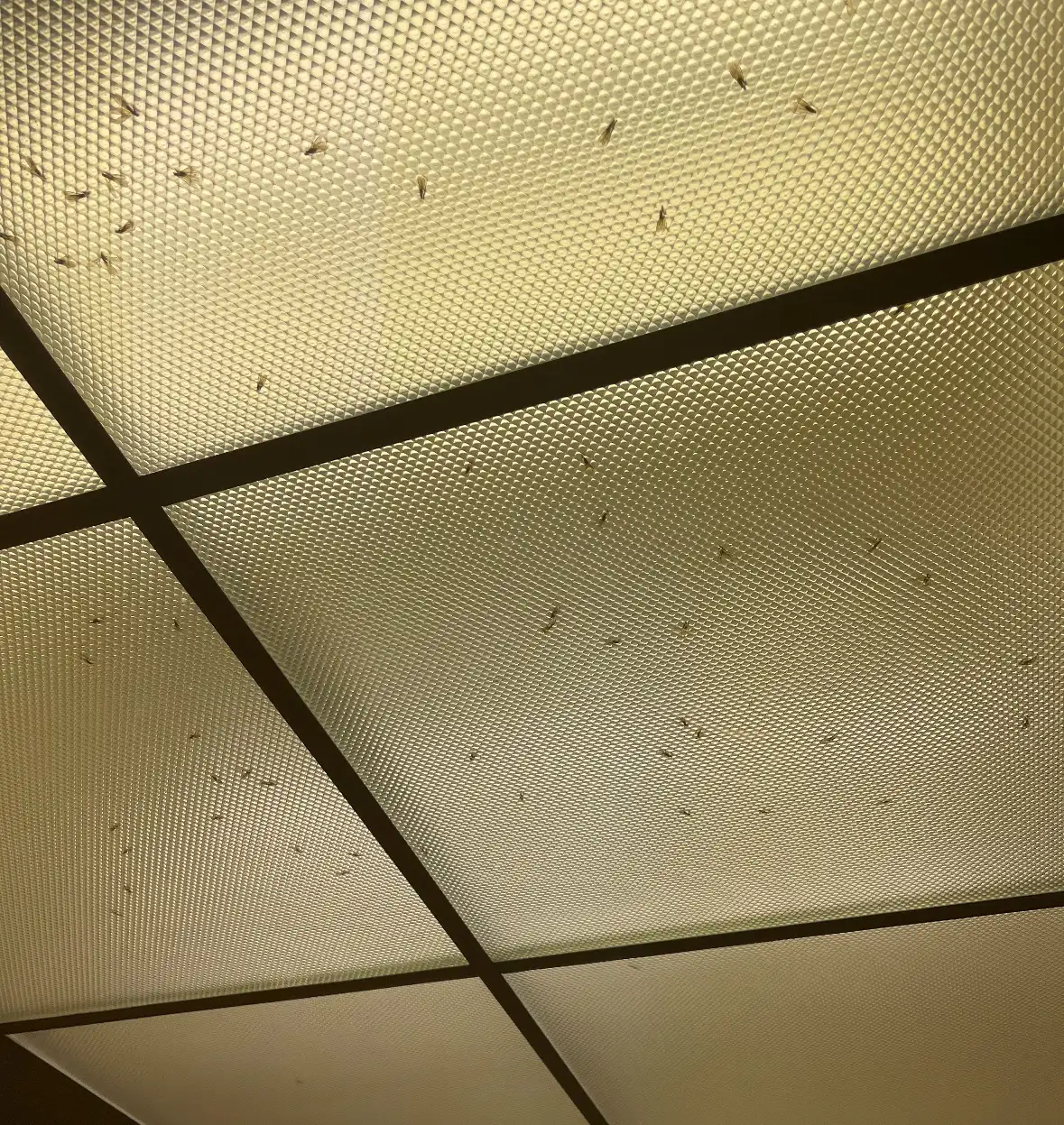
A swarm inside the house is the clearest sign termites are in the building. Mississippi State's guide to protecting a house from termites says swarmers actively emerging indoors, of any species, are a sure sign the structure is infested, and Texas A&M says an indoor swarm usually means an active infestation. The exception is the Formosan termite: Mississippi State says dozens of its swarmers can come in through doors and gaps, drawn by lights visible from outside, even in a properly treated home, while hundreds or more call for an in-depth professional inspection.
A swarm outdoors means less. University of Georgia entomologists call an outdoor swarm a sign of an active colony in the area, not necessarily of an infested building, and Mississippi State says a swarm from a stump about 25 feet or more from the house is rarely cause for concern, while one very near the foundation deserves a closer look.
Swarmers that come out indoors do not last. NC State says they die from lack of moisture if they cannot get outside, often on windowsills, and Texas A&M says their wings turn up on windowsills or stuck to cobwebs. Penn State says shed wings are very often the only evidence that termites are in a building.
Which termites live in the US, and how do you tell them apart?
About 56 kinds of termites are known in the United States, the Wood Handbook says, but three matter most in homes. EPA calls the native subterranean termite the most common termite in most of the country and lists the drywood termite and the invasive Formosan termite as less common, and the Wood Handbook says subterranean termites do most of the termite damage to buildings.
Native subterranean termites
Native subterranean termites, genus Reticulitermes, live in every state in the continental United States except Alaska and are most common in the Southeast, UF/IFAS says; University of Georgia entomologists name the eastern subterranean termite as the most common house-infesting termite in the country. They nest in the soil, and the Wood Handbook says they build mud tubes to stay moist while they travel to wood, a good sign of their activity. What termite damage looks like shows the tubes and the mud-lined galleries they leave.
In the West, UC IPM describes subterranean swarmers as dark brown to brownish-black with brownish-gray wings, and says the desert subterranean termite, the most destructive subterranean species in the Sonoran Desert of southeastern California, has light-brown swarmers.
Formosan subterranean termites
The Formosan subterranean termite is an invasive species found in Hawaii and the southeastern states, north along the Atlantic coast to Virginia, inland to Tennessee and in southern California, according to UF/IFAS. UF/IFAS says its colonies can hold several million termites and that it fills voids in buildings with carton, a mix of soil, wood pulp, saliva and feces.
Drywood termites
Drywood termites live inside dry wood with no contact with the soil, so they build no mud tubes; instead they leave piles of dry droppings, Mississippi State says, pellets that UC IPM describes as having six flattened sides. The Wood Handbook places them in a narrow strip from central California around the southern edge of the country to Virginia, plus Hawaii, with most damage in southern California, parts of southern Florida and Hawaii, and notes that infested furniture carries them farther. The termite droppings guide shows the pellets.
In California, UC IPM's drywood termite pest note finds them along the Pacific coast and into the Central Valley and the deserts of southern California, says their colonies are small, usually fewer than 1,000 termites, and says the swarmers fly in daytime in summer and fall. Dampwood termites, which are larger and whose swarmers fly toward lights after dark, live in damp, decaying wood, most often in cool, humid areas along the California coast, UC IPM adds.
What bugs look like termites?
Ants are the usual mix-up: EPA notes that ant swarms are sometimes mistaken for termites. Pale insects can fool people too, and so can holes left in wood by other insects. The quick-ID table at the top of this page sets the tells side by side.
- Flying ants. Ants have bent antennae, a pinched waist and front wings longer than the hind pair. The winged ones are queens and kings that fly out to start new colonies, and Iowa State University Extension says hundreds of them indoors mean the colony is almost certainly in the house, while fewer than 10 are likely strays from outside. The flying ants guide covers ant swarms, and a guide to getting rid of ants covers the colony.
- Carpenter ants. Penn State Extension's carpenter ant page describes shiny, dark brown to black ants, 1/4 to 1/2 inch long as workers and up to 3/4 inch as winged queens and males, and notes that termite workers are creamy white while carpenter ant workers are dark. They dig nests in damp or decaying wood but do not eat it, so they dump the shavings outside. The carpenter ant guide covers them in more detail.
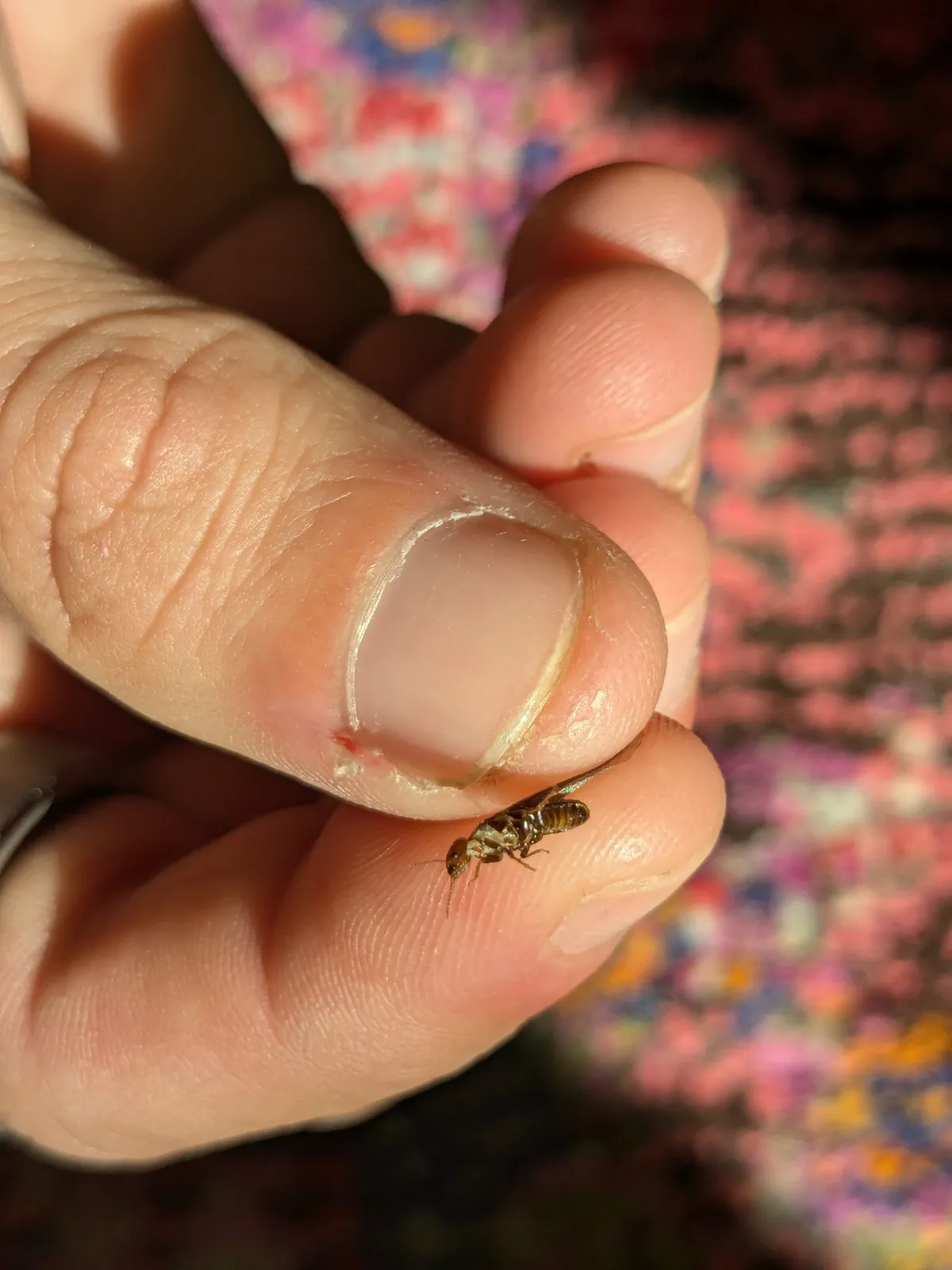
- White cockroaches. Every cockroach is white right after it molts: UC IPM's cockroach pest note says its outer covering darkens as it hardens, usually within hours. Cockroaches are broad and flat with long antennae and a shield-shaped plate behind the head, UC IPM says. The white cockroach guide explains why they are so rarely seen.
- Carpenter bees. They do not look like termites, but they also tunnel into wood: the Wood Handbook says carpenter bees resemble large bumblebees with a hairless abdomen and that females bore tunnels about 1/2 inch across into unfinished soft wood. A guide to carpenter bees covers them.
Look-alikes and termite signs
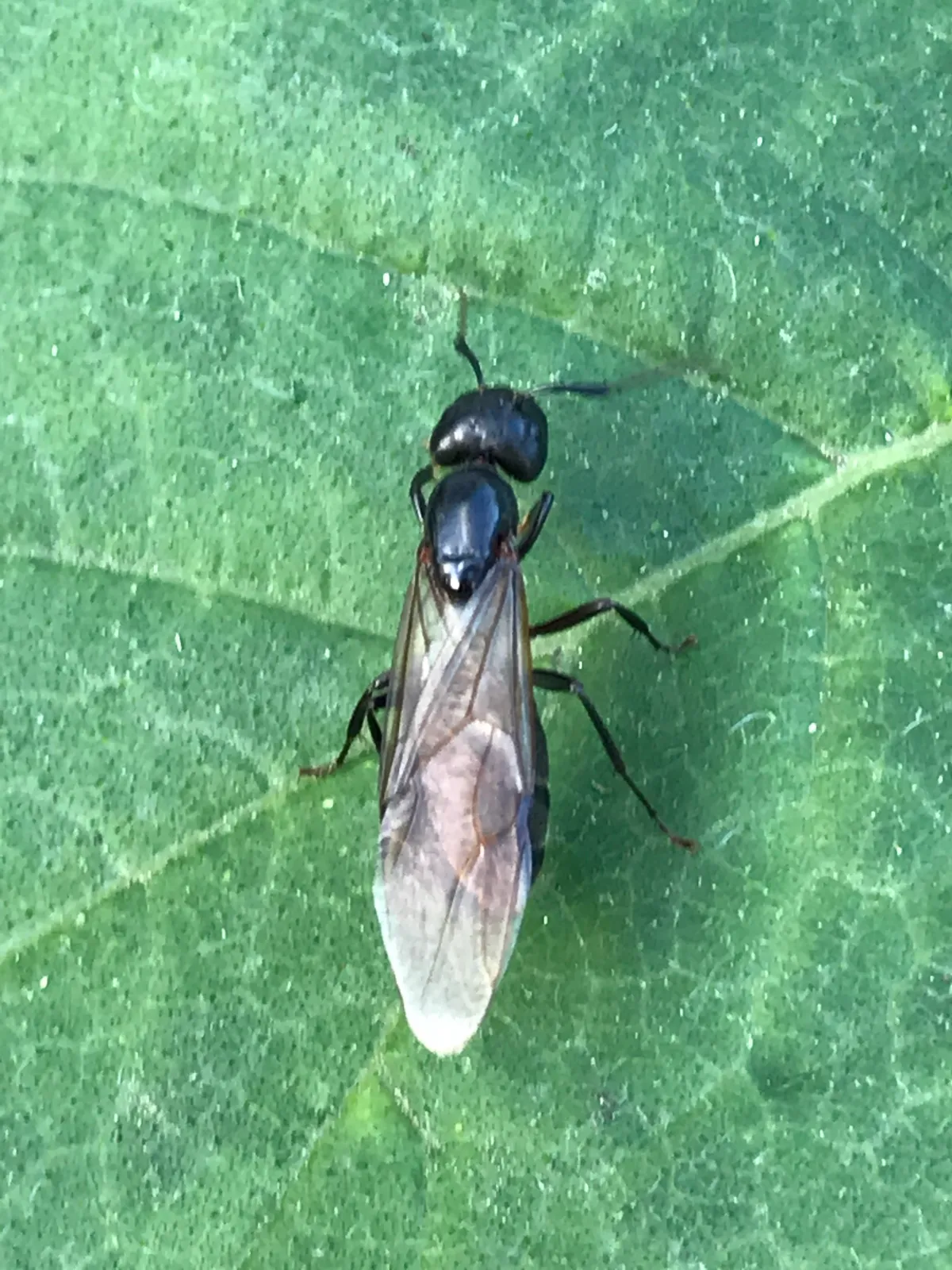 Flying antBent antennae, a pinched waist and front wings longer than the hind pair
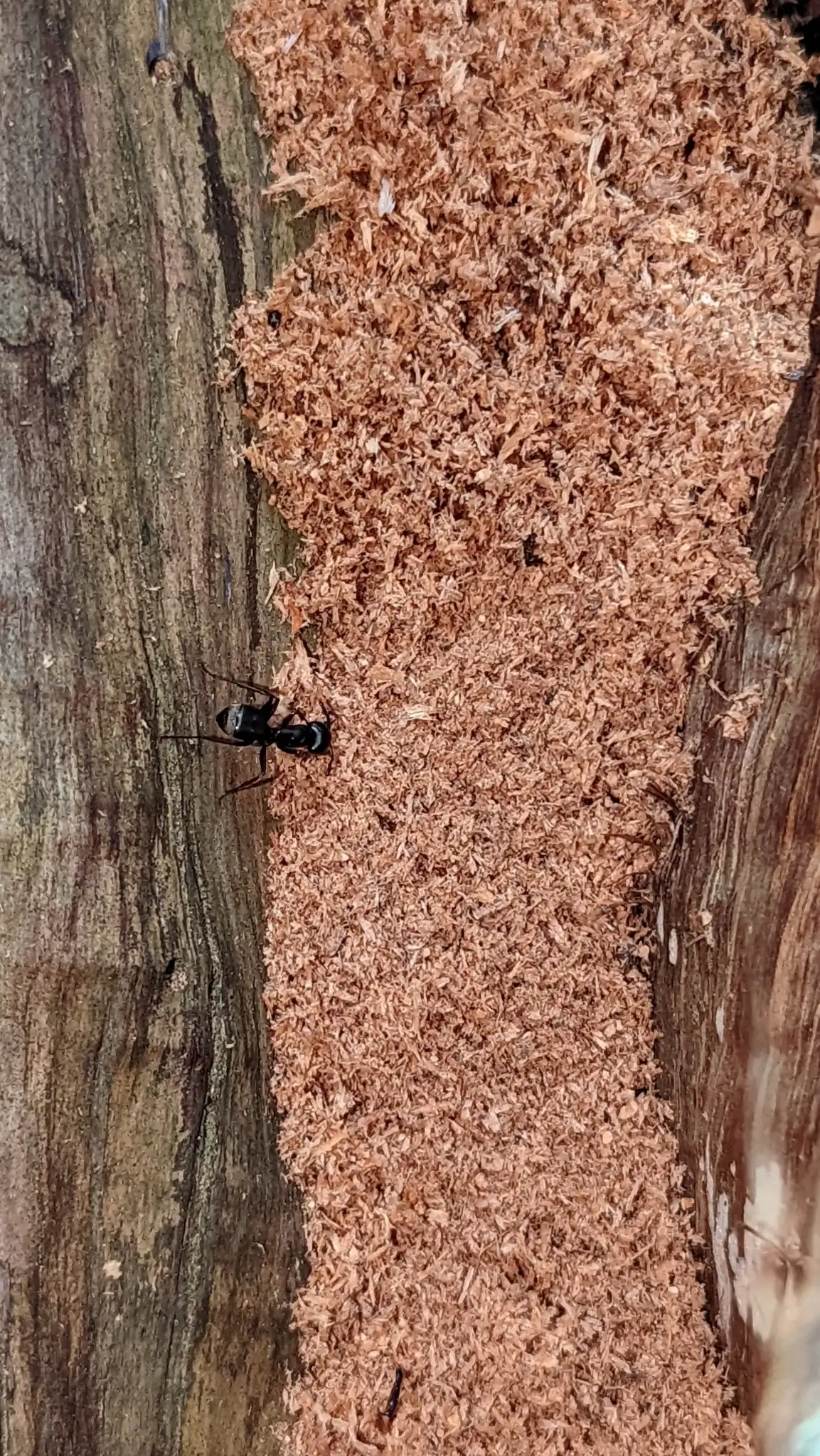 Carpenter antShiny dark brown to black, 1/4 to 1/2 inch; nests in wood but does not eat it
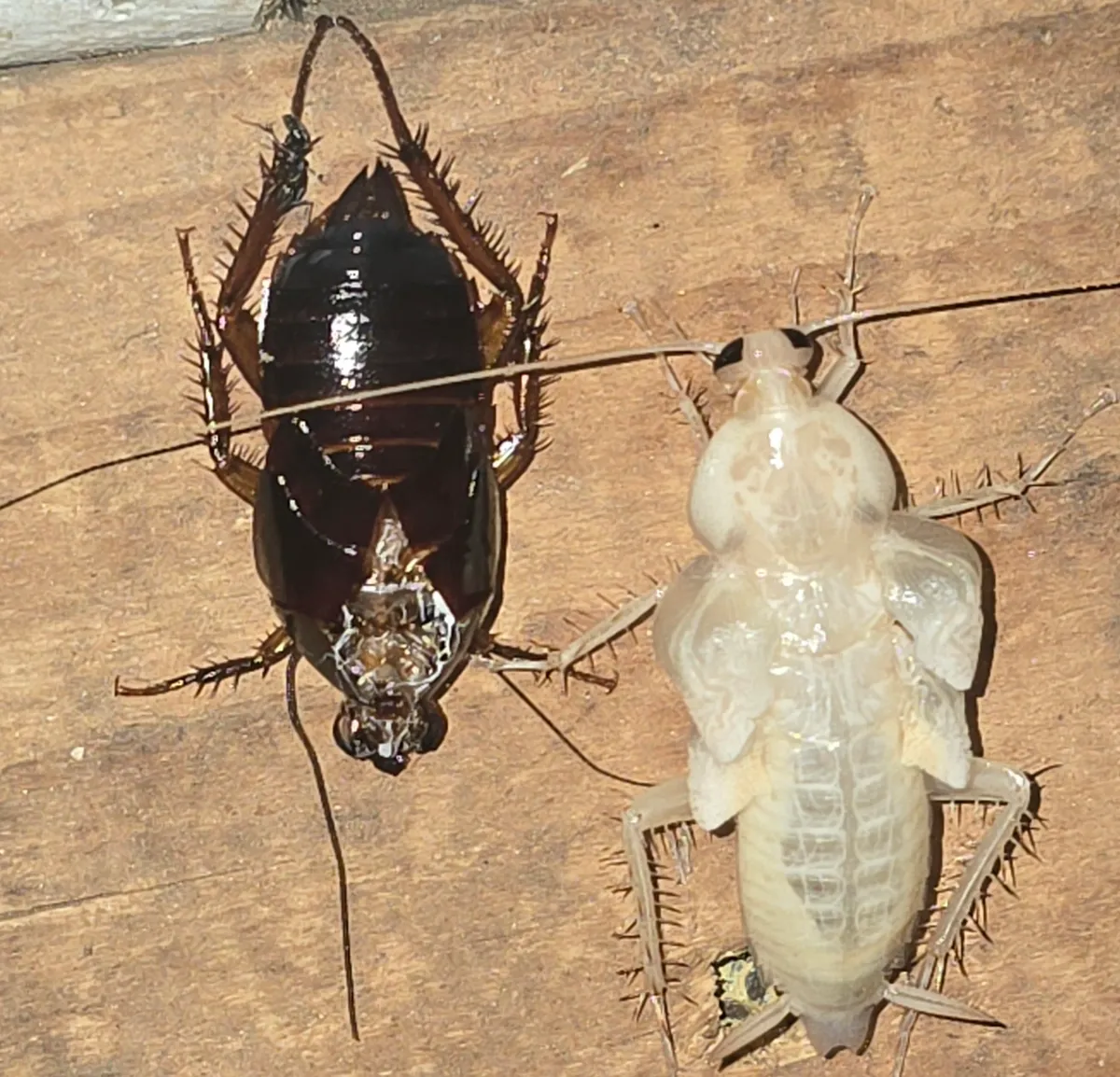 White cockroachA cockroach fresh from a molt: broad and flat with long antennae; it darkens within hours
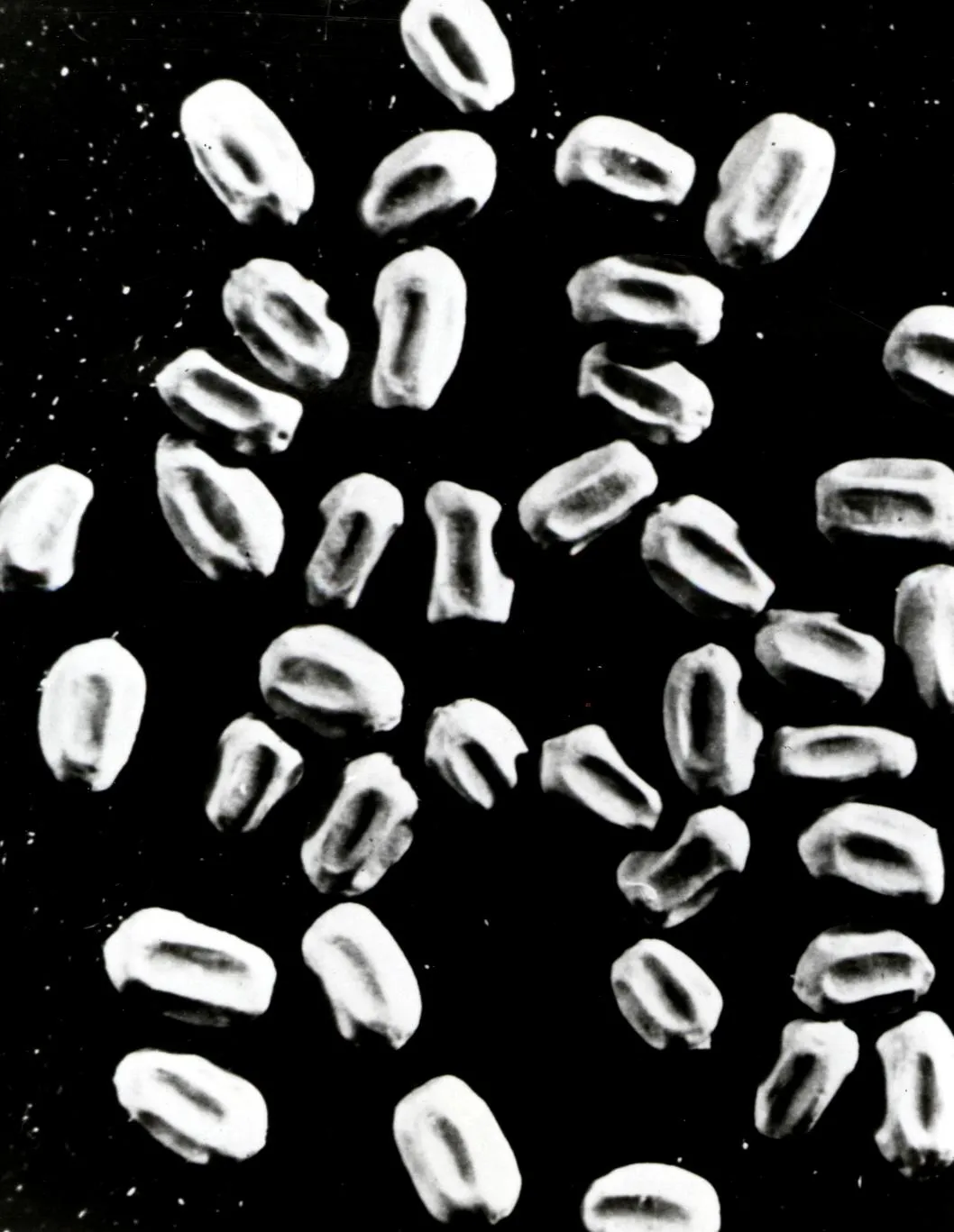 Termite droppingsDry pellets with six flattened sides, piled below wood that drywood termites infest
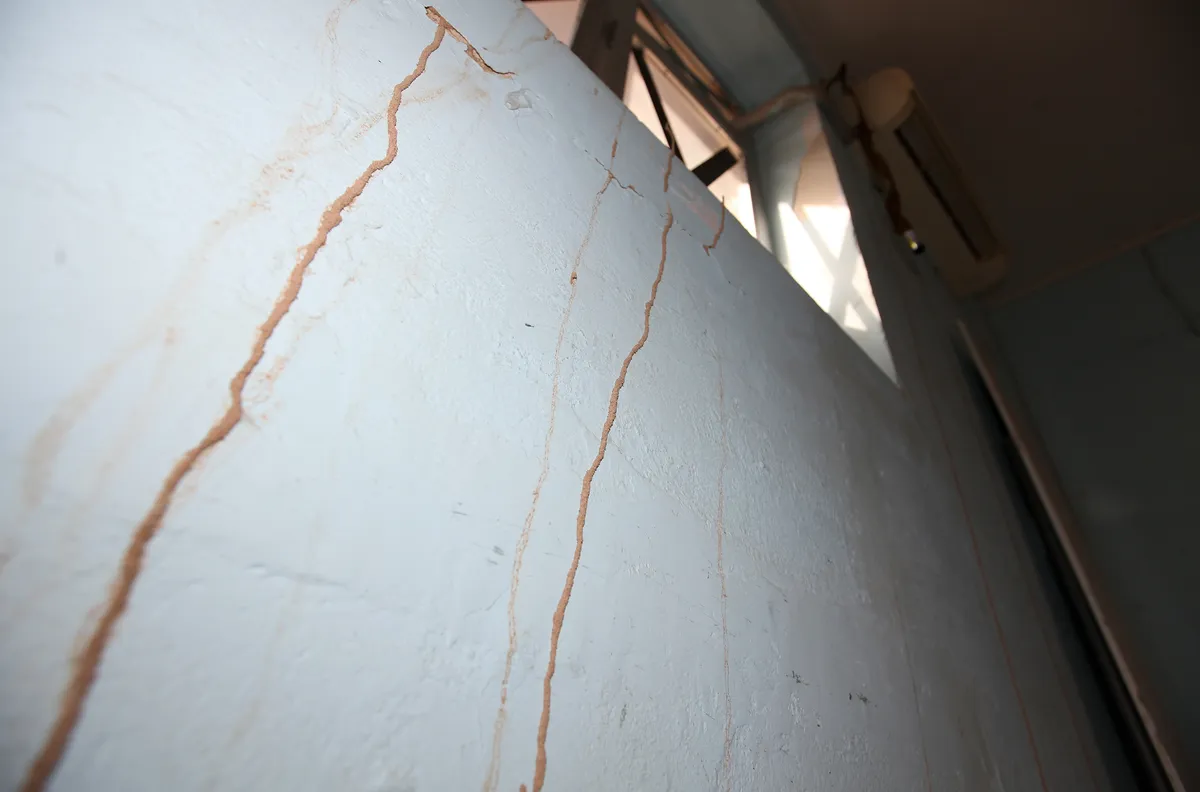 Termite mud tubesTunnels of soil that subterranean termites build to reach wood above the ground
Photos: Flying ant: no rights reserved, via iNaturalist, CC0 1.0. Carpenter ant: (c) John A Haskins, some rights reserved (CC BY), via iNaturalist, CC BY 4.0. White cockroach: no rights reserved, via iNaturalist, CC0 1.0. Termite droppings: R6, State & Private Forestry, Forest Health Protection, Public domain, via Wikimedia Commons, public domain. Termite mud tubes: Sgt. Justin J. Shemanski, Public domain, via Wikimedia Commons, public domain.
What should you do if you find termites?
Save a few of the insects, get them identified and have the house inspected by a licensed company before anyone sprays. Termite control is not a do-it-yourself project, University of Georgia entomologists say, and UC IPM calls do-it-yourself termite pesticides generally not effective.
- Collect a few. Mississippi State suggests preserving swarmers in alcohol for identification, and UF/IFAS says the species are told apart by their soldiers and swarmers. NC State suggests taking insects or wings to a pest control company, an extension specialist or your county extension office.
- Check for the signs. Mud tubes and mud in the wood point to subterranean termites, piles of six-sided pellets to drywood termites. The guide to termite damage and mud tubes and the termite droppings guide show both.
- Skip the spray can. EPA says products that only claim to kill termites have not shown they can protect a structure and kill only the termites they touch.
- Hire a licensed company. EPA says termite firms must be licensed by your state and suggests asking to see the license; Mississippi State suggests getting bids from several companies.
- Take time to choose. Mississippi State calls treating an infested building critical but not urgent: colonies take years to grow, so a month or two spent on inspections and bids will not add much damage.
Frequently Asked Questions
How do you tell if it's a termite?+
Look at the antennae, the waist and, if it has them, the wings. Mississippi State University Extension says termites have straight, bead-like antennae and a broad waist, and that a winged termite's front and hind wings are the same length; ants have elbowed antennae, a narrow waist and hind wings shorter than the front pair. A pale, soft, wingless insect inside damaged wood or a mud tube is probably a termite worker. For a sure answer, save a few in alcohol, soldiers or swarmers if you can, for an extension office or a licensed inspector.
What do termites look like to the human eye?+
Termites are big enough to see without a magnifier, but you rarely get the chance. Texas A&M says native subterranean workers are white to creamy white and 1/4 to 3/8 inch long, and Penn State puts the dark swarmers at about 3/8 to 1/2 inch. EPA says termites rarely come out of the soil, mud tubes or wood they are eating, so most people first notice a swarm or damage. Up close, look for straight, beaded antennae and a body with no pinched waist.
What do termites look like without wings?+
Most termites never have wings. Workers are pale, soft and wingless, and soldiers look like workers with a larger amber or brownish head and bigger jaws, UC IPM says. A swarmer that has dropped its wings looks different: it is darker, because University of Georgia entomologists say the reproductives are the only caste with pigment, but it keeps the straight antennae and thick waist. Mississippi State says swarmers shed their wings once they pair up and land, so loose wings nearby are a clue.
What do baby termites look like?+
Most young termites grow up to be pale workers. University of Georgia entomologists describe workers as immature termites that are completely white and sightless. Mississippi State says termites develop from egg to nymph to adult with no pupal stage, and that a new queen's first eggs hatch into nymphal workers, so there is no grub or cocoon to look for. A tiny white insect found away from wood, soil or mud tubes may be something else, such as a cockroach that has just molted.
Why are termites called white ants?+
Because the workers are pale and live in colonies, as ants do, but termites are not ants. The University of Hawaii's termite identification handout says termites have sometimes been called white ants yet are more closely related to cockroaches than to ants, and Mississippi State says termites are now classified in the same order as cockroaches. The USDA Forest Service's Wood Handbook says winged termites can resemble ants in size, general appearance and colony life but lack the ant's constricted waist and elbowed antennae.
Are flying termites the same as regular termites?+
Yes, they come from the same colony: they are its winged kings and queens. Penn State Extension describes eastern subterranean kings and queens as dark brown or black, about 3/8 to 1/2 inch long, with four translucent wings that break off shortly after swarming, and says the winged forms do no damage themselves. The damage comes from the pale workers that stay hidden in the wood. Mississippi State says a colony needs at least 3 to 5 years to grow large enough to produce swarmers.
Should I be worried if I see flying termites?+
Inside the house, take it seriously; outside, usually less so. Mississippi State University Extension says swarmers emerging indoors are a sure sign the building is infested, though dozens of Formosan swarmers can fly in toward lights even in a treated home, and hundreds call for a thorough professional inspection. A swarm from a stump about 25 feet or more from the house is rarely cause for concern, it says. It also calls treating an infested building critical but not urgent, so there is time to compare inspections and bids.
What month are termites most active?+
Termite colonies stay active all year, NC State says; what changes by month is swarming. Native subterranean termites swarm mostly in spring: January to April in Florida, February to May in Mississippi and February to June in Pennsylvania, by UF/IFAS, Mississippi State and Penn State figures. Formosan termites swarm from April into June, around dusk, according to UF/IFAS and Mississippi State, and drywood termites in California swarm in summer and fall, UC IPM says. Local weather moves these dates.
Will termites go away on their own?+
The swarmers die off quickly; the colony that sent them is another matter. NC State says swarmers that come out indoors die from lack of moisture if they cannot get outside, but calls them a likely symptom of a thriving infestation. Mississippi State says a colony takes at least 3 to 5 years to grow large enough to swarm, and UF/IFAS says native colonies in Florida feed on wood all year. Sweeping up dead swarmers does not deal with the colony, so have the house inspected.
What color are termites?+
It depends on the caste and the species. Workers are white to creamy white, Texas A&M says, or light caramel in UC IPM's description, and soldiers have amber or brownish heads. Swarmers are darker: UF/IFAS describes eastern subterranean swarmers as dark brown, almost black to the naked eye, and Formosan swarmers as orange or light amber-brown, while Mississippi State calls southeastern drywood swarmers yellow to light brown. So a black termite is usually a swarmer, and a white one a worker.
Sources
- Species of Termites in Mississippi (Blake Layton, Extension Entomology Specialist) — Mississippi State University Extension Service
- Protect Your House from Termites (Publication 2568; J. Santos Portugal III, Blake Layton and Joe MacGown) — Mississippi State University Extension Service
- Termite Biology: Eastern Subterranean Termites and Formosan Termites (Blake Layton) — Mississippi State University Extension Service
- Subterranean Termites (Dan Suiter and Brian Forschler, 2021) — University of Georgia, Department of Entomology
- Native Subterranean Termites: Reticulitermes flavipes, R. virginicus, R. hageni (EENY-212/IN369; T. Chouvenc, N.-Y. Su and R. H. Scheffrahn) — University of Florida, UF/IFAS Extension
- Formosan Subterranean Termite, Coptotermes formosanus Shiraki (EENY121/IN278; N.-Y. Su, R. H. Scheffrahn, J. Gordon and T. Chouvenc) — University of Florida, UF/IFAS Extension
- Pest Notes: Subterranean and Other Termites (Publication 7415; V. R. Lewis, M. I. Haverty and A. M. Sutherland, updated May 2014) — University of California Statewide IPM Program
- Pest Notes: Drywood Termites (Publication 7440; V. R. Lewis, A. M. Sutherland and M. I. Haverty, updated August 2014) — University of California Statewide IPM Program
- Pest Notes: Cockroaches (Publication 7467, updated December 2019) — University of California Statewide IPM Program
- Native Subterranean Termites, Reticulitermes sp. — Texas A&M University, Urban and Structural Entomology Program
- Eastern Subterranean Termites (Steve Jacobs) — Penn State Extension
- Carpenter Ants (Steve Jacobs, updated June 24, 2026) — Penn State Extension
- Termite Swarmers: What Do They Mean for You? (Sydney Crawley and Christopher C. Hayes, revised February 24, 2023) — NC State Extension
- Termites: How to Identify and Control Them (updated October 8, 2026) — U.S. Environmental Protection Agency
- Chapter 14: Biodeterioration of Wood (Wood Handbook, FPL-GTR-282; R. Arango, S. T. Lebow and J. A. Glaeser) — USDA Forest Service, Forest Products Laboratory
- Termite Identification: Ants vs. Termites (handout) — University of Hawaii at Manoa, College of Tropical Agriculture and Human Resources
- Ant Swarming (Yard and Garden, June 9, 2021) — Iowa State University Extension and Outreach
How this guide was made: it was researched and drafted with AI assistance from the sources listed above. A second, independent AI pass then checked each factual claim against those sources. Found an error? Email support@buzzskito.ca.