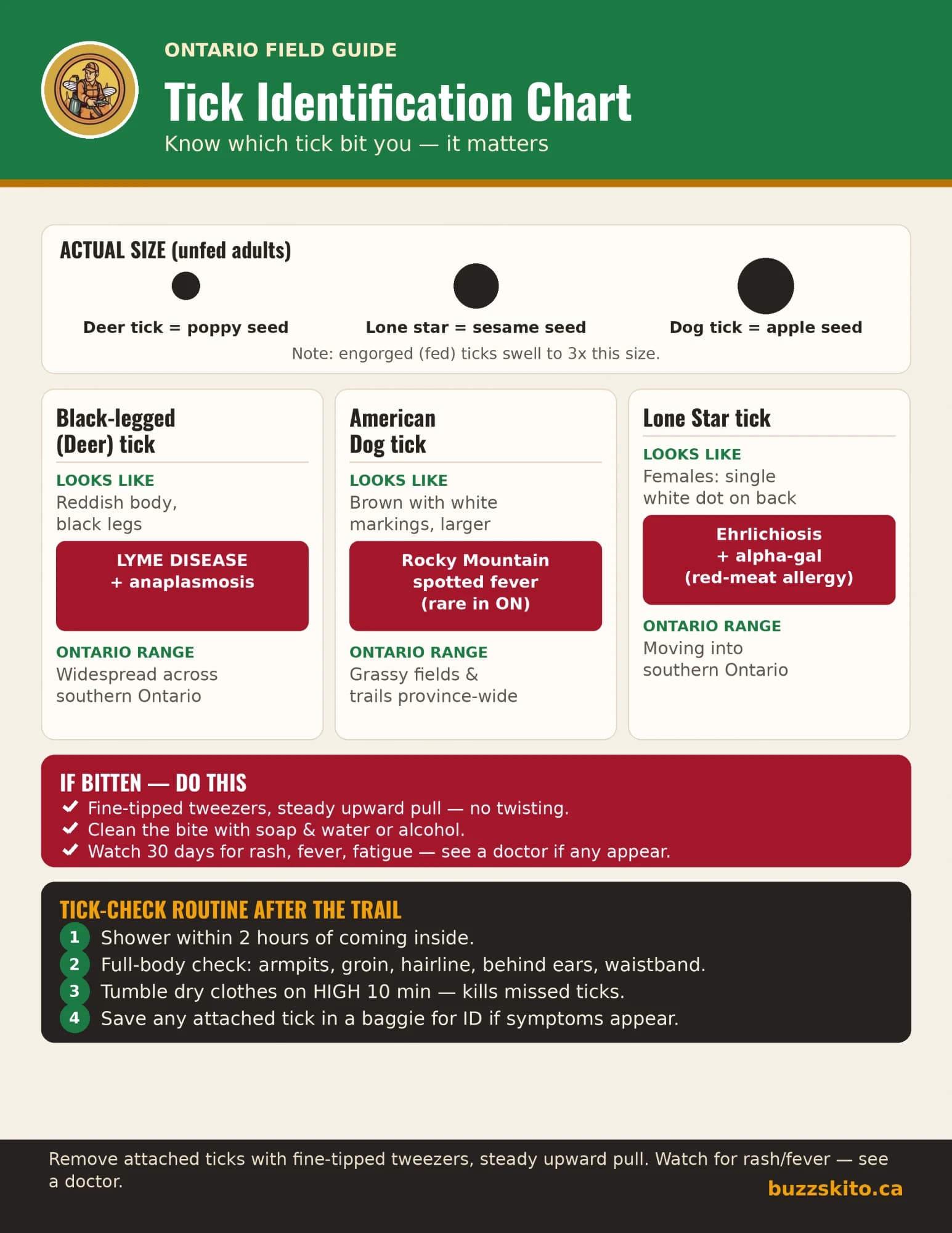
Ticks are a different challenge from mosquitoes. They do not fly or breed in your backyard by the thousands — instead, blacklegged (deer) ticks are carried in by wildlife and quietly wait at the edges of your property, questing for a host. Because a single bite from an infected nymph can transmit Lyme disease, the goal is not just fewer ticks but zero contact. The ten steps below combine habitat reduction, personal protection, and professional treatment to protect your family all season. To understand why yard edges matter so much, start with the tick life cycle.
The 10-Step Tick Combat Plan
- 1
Keep your lawn mowed short
Ticks quest by climbing to the tips of tall grass and waiting for a host. A short, well-maintained lawn dries out faster and gives ticks far fewer places to wait, immediately shrinking the questing zone near your home.
- 2
Clear leaf litter and brush
Ticks survive on humidity, sheltering in damp leaf litter, brush piles, and groundcover. Raking and removing leaves — especially along fences and wood edges — strips away the moist microclimate they depend on.
- 3
Create a woodchip or gravel barrier
Lay a 1-metre-wide strip of dry woodchips or gravel between your lawn and any woods, tall grass, or garden beds. Ticks avoid crossing this hot, dry barrier, which keeps them from questing into the areas your family uses.
- 4
Move play areas away from the yard edge
Position swing sets, sandboxes, and patios toward the centre of the yard and away from the lawn-to-woods transition, where tick density is highest. Distance from the edge dramatically lowers exposure for kids and pets.
- 5
Discourage tick-carrying wildlife
Mice and deer ferry ticks into your yard. Secure garbage, remove bird feeders that draw rodents, and use fencing or deer-resistant planting to reduce the animals that restock ticks each season.
- 6
Dress defensively in tick habitat
When hiking, gardening, or working near brush, wear long sleeves and light-coloured clothing, tuck pants into socks, and consider permethrin-treated clothing so ticks are repelled before they reach skin.
- 7
Use tick repellent on skin and gear
Apply a personal insect repellent with DEET or icaridin (picaridin) to exposed skin, following its label (look for the PCP number on the package). For pets, ask your vet about a tick-preventive product, since dogs frequently carry ticks indoors.
- 8
Do a full-body tick check every time
After any time outdoors, check the whole body — especially the scalp, behind the ears, underarms, waistband, and behind the knees. Because nymphs are the size of a poppy seed, careful checking is your most important daily habit.
- 9
Remove any tick promptly and correctly
Use fine-tipped tweezers to grasp the tick close to the skin and pull straight out with steady pressure — do not twist or crush it. Prompt removal within 24 hours sharply lowers the chance of Lyme transmission.
- 10
Apply a professional tick barrier spray
Have a licensed technician treat the specific 1-3 metre yard-edge zones where ticks concentrate. The treatment targets the leaf litter, edge vegetation, and ground cover where questing nymphs and adults wait, and it is repeated through the season (5 sprays) because ticks are active at different life stages.
Why This Order Matters
Steps 1 through 5 are habitat reduction — they make your yard a place ticks cannot thrive. Ticks live and die by humidity, so a short lawn, cleared leaf litter, and a dry barrier at the woods edge do more than any single product. Steps 6 through 9 are personal protection: the clothing, repellent, checks, and prompt removal that stop a tick from ever attaching, or catch it before it can transmit disease. Step 10, a professional tick barrier spray, treats the edge zones where questing nymphs and adults concentrate, whatever stage is active that month. Read the deeper playbook in how to keep ticks out of your yard and the ultimate tick control guide for Ontario.
Protecting Kids and Pets
Children and dogs are the most common way ticks come indoors, so they deserve extra attention. Move play structures toward the sunny centre of the yard, do a thorough check of kids after outdoor play, and ask your veterinarian about a tick preventive for pets. For yard treatment with kids in mind, see tick prevention in a family yard, and for the details of catching ticks early, our step-by-step tick check guide and how to remove a tick safely.
Common Mistakes to Avoid
- Only treating the open lawn. Ticks live at the edges — the woods line, garden beds, and fence rows — not the middle of a sunny lawn. Treat where they actually are.
- Skipping the tick check. No yard measure is perfect. The post-outing body check is the backstop that catches what gets through.
- Removing ticks incorrectly. Twisting, burning, or squeezing a tick raises infection risk. Steady straight-out traction with fine tweezers is the only recommended method.
- Assuming ticks are only a summer problem. Blacklegged ticks are active any time it is above about 4°C — read when ticks are active in Ontario.
Keep Learning
- How to Keep Ticks Out of Your Yard
- Ultimate Tick Control Guide for Ontario
- Tick Prevention in a Family Yard
- How to Remove a Tick Safely
- How to Do a Tick Check
- The Tick Life Cycle Explained
- ← Back to the Ontario Learning Centre
Frequently Asked Questions
What is the best way to get rid of ticks in a yard?+
The best way to get rid of ticks in a yard is to combine habitat reduction — mowing short, clearing leaf litter, and adding a dry woodchip barrier at the yard edge — with a professional tick barrier spray applied to the shaded transition zones where ticks quest. Habitat changes shrink where ticks can live, and the barrier spray treats the edge zones where the remaining ticks wait. Keep doing tick checks either way, as public health agencies advise.
Does mowing the lawn reduce ticks?+
Yes. Ticks quest by climbing tall grass and depend on humid, shaded conditions, so keeping the lawn short and letting it dry in the sun removes both the perches and the moisture ticks need. Mowing alone will not eliminate ticks, but it is a foundational step that makes every other control measure — barrier spray, barriers, and habitat clearing — more effective.
How do I protect my kids and pets from ticks?+
Protect kids and pets by moving play areas away from the yard edge, keeping the lawn short, using repellent and (for dogs) a vet-recommended tick preventive, and doing a full-body tick check after every outing — focusing on the scalp, behind the ears, and skin folds. A professional tick barrier spray treats the yard-edge zones where ticks wait; it adds to these habits rather than replacing them.