
Published by BuzzSkito Mosquito & Tick Control
Published October 29, 2026 · Fact-checked against the sources listed below
What is a woodlouse spider?
A woodlouse spider is Dysdera crocata, a spider that specializes in hunting woodlice, the pill bugs and sow bugs many people call roly-polies. Penn State Extension's woodlouse hunter page says it takes its name from the British name for those small crustaceans, that it came originally from the Mediterranean region, and that in North America it lives from New England to Georgia and west to California.
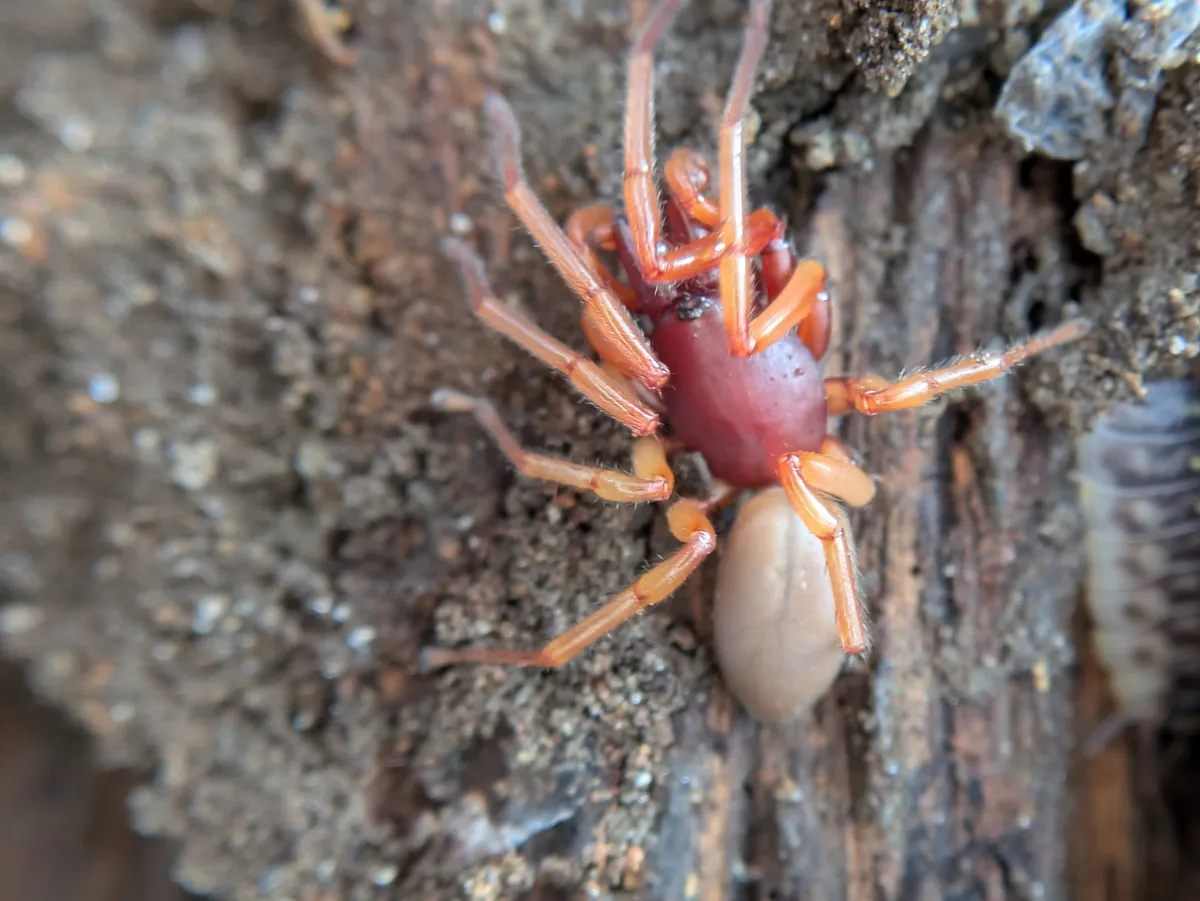
Penn State also calls it the woodlouse hunter, University of Minnesota Extension (UMN) the sowbug spider and Colorado State University's fact sheet the roly-poly killer. UMN says it was introduced and is now common in the United States, and the Missouri Department of Conservation's guide to common spiders says it is found mostly in areas affected by people.
Its big jaws make it look dangerous; the bite evidence is below, and the guide to common house spiders sorts the other spiders that turn up indoors.
What does a woodlouse spider look like?
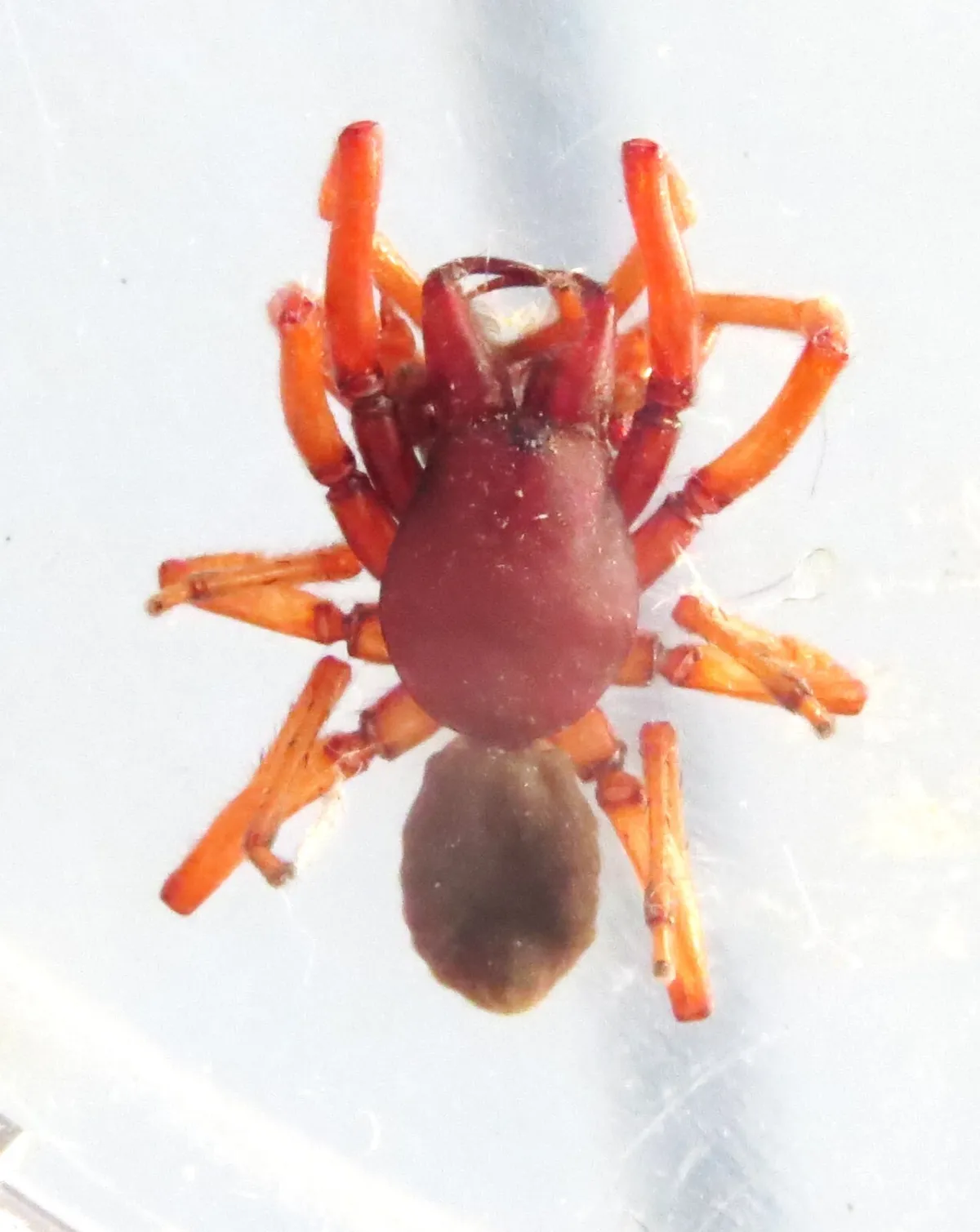
Look for three things together: a red-orange front half and legs, a pale abdomen and big jaws aimed forward. Colorado State describes the front body section, the cephalothorax, and the legs as orange or reddish orange and the abdomen as grayish white. Other sources shade it differently, from purplish brown (UMN) to brick red (the Missouri guide) in front, and from dirty white (Penn State) to shiny brownish tan (Missouri) behind. UC IPM's Pest Note on recluse spiders adds that it has no body markings.
The jaws give it away. Penn State describes the chelicerae, the mouthparts that carry the fangs, as large, thick and slanted far forward, and Utah State University Extension (USU) says they stick out directly in front of the head, giving the spider a menacing look. Colorado State says the large fangs help it pierce the heavily armored pill bugs and sow bugs it eats, and the University of Kentucky's urban spider chart adds a low, flat shape.
How big is a woodlouse spider?
About 3/8 to 5/8 inch (9 to 15 mm) long, by Colorado State's measure. Penn State gives females as 7/16 to 5/8 inch (11 to 15 mm) and males as about 3/8 inch (9 to 10 mm), so the biggest ones are females. The Kentucky chart compares one with its legs outstretched to a US nickel; a brown recluse with its legs outstretched, it compares to a quarter.
How many eyes does a woodlouse spider have?
Six, where most spiders have eight, as UMN and the Missouri guide note. Penn State says the six are arranged in an oval, and UC IPM describes them as two groups of three. A brown recluse also has six eyes, but in a recluse they sit in three pairs, according to UC IPM's Pest Note by Rick Vetter of UC Riverside.
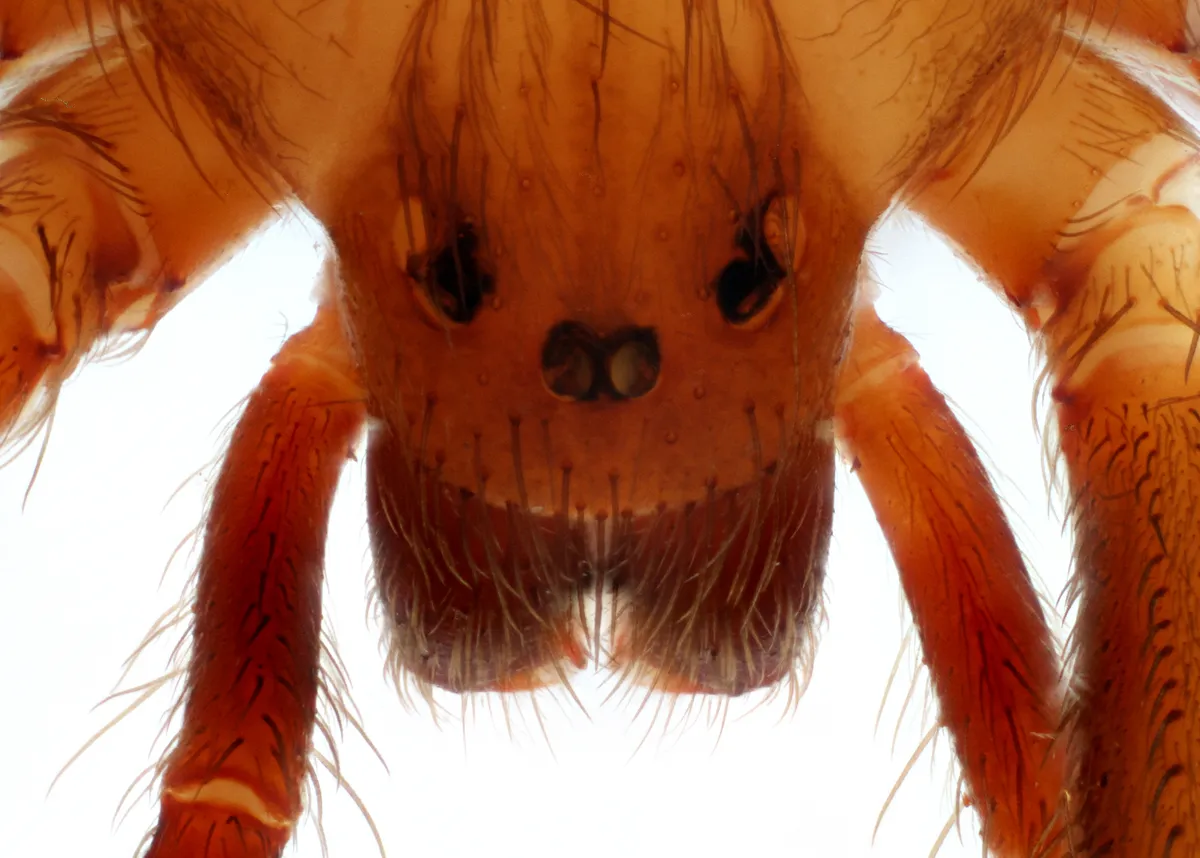
Eyes this small are easier to count with a magnifying glass, with the spider shut in a clear jar. Spiders that look like brown recluses walks through every recluse check, with photos of the look-alikes, this one included.
How do you tell a woodlouse spider from other spiders?
The one that worries people is the brown recluse: Richard Vetter and Geoffrey Isbister, in a review of verified woodlouse spider bites in the journal Toxicon, write that this spider is commonly mistaken for it in the United States. Penn State Extension's brown recluse page describes a chocolate-brown spider about 3/8 inch (9 mm) long with a violin-shaped mark on the front body section, established in 16 states from Nebraska and Ohio south to Texas and Georgia. A woodlouse spider has no violin or other markings, and its front half and legs are red to orange.
Two other night hunters that build no web and come indoors are about its size:
- Yellow sac spider. Pale all over, not just at the rear: Penn State's sac spider page describes light yellow to cream spiders with dark brown jaws and foot tips, females 3/16 to 3/8 inch (5 to 10 mm) long, hiding by day in silk sacs in wall and ceiling corners; the Kentucky chart gives it the same low, flat build. The yellow sac spider guide has photos.
- Parson spider. Dark, not red: the Missouri guide describes a black spider with a white mark on top of the abdomen, and Penn State's parson spider page gives females as 5/16 to 1/2 inch (8 to 13 mm) long, very fast runners that come indoors in fall to spend the winter. The guide to black spiders covers it.
Still not sure? The spider identifier asks seven questions, including where you found the spider, its colors and markings, its eyes and where you live, and shows the likely matches with a photo of each.
Spiders to tell it apart from
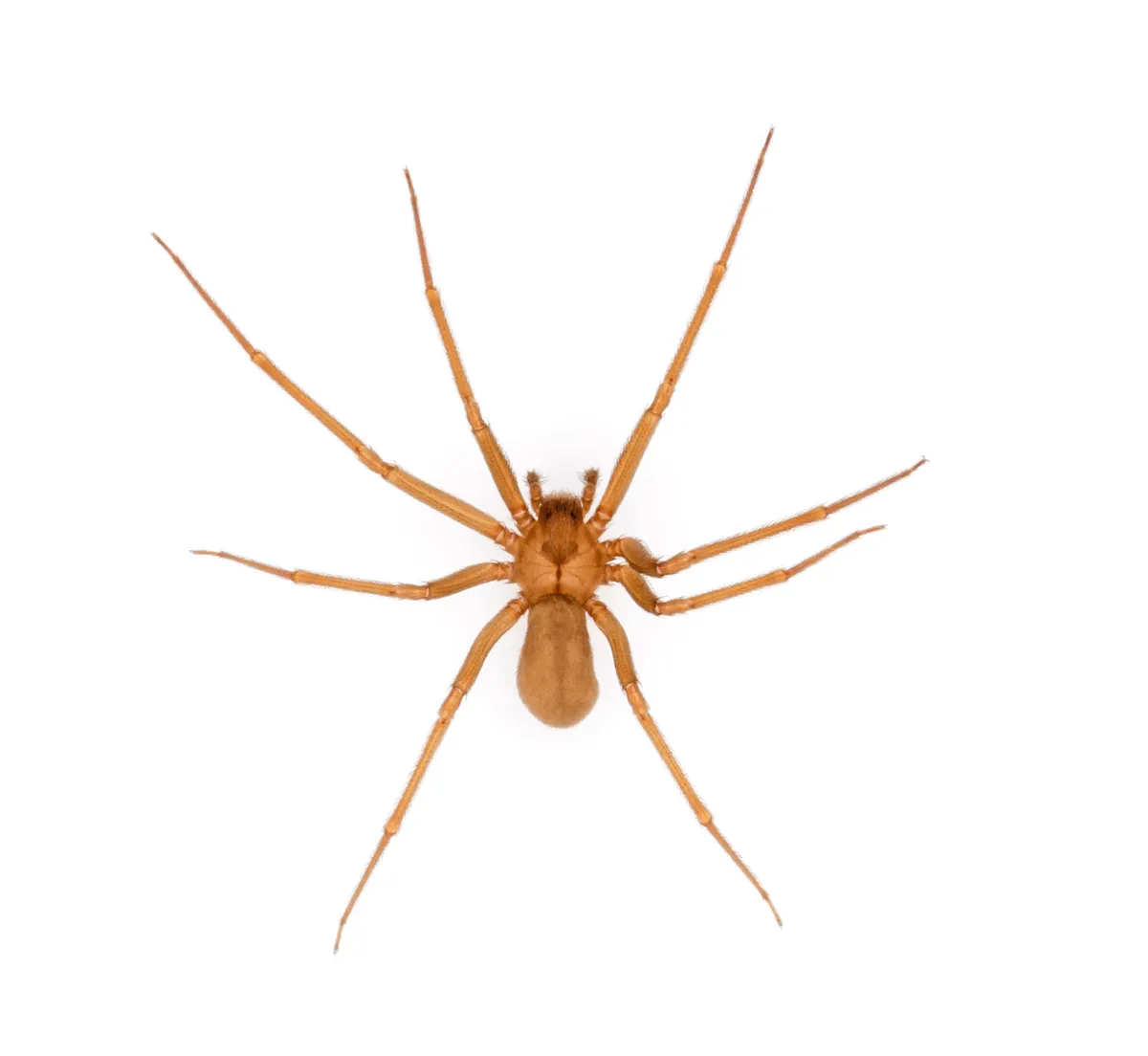 Brown recluseBrown with a violin mark and six eyes in three pairs; no red-orange front half
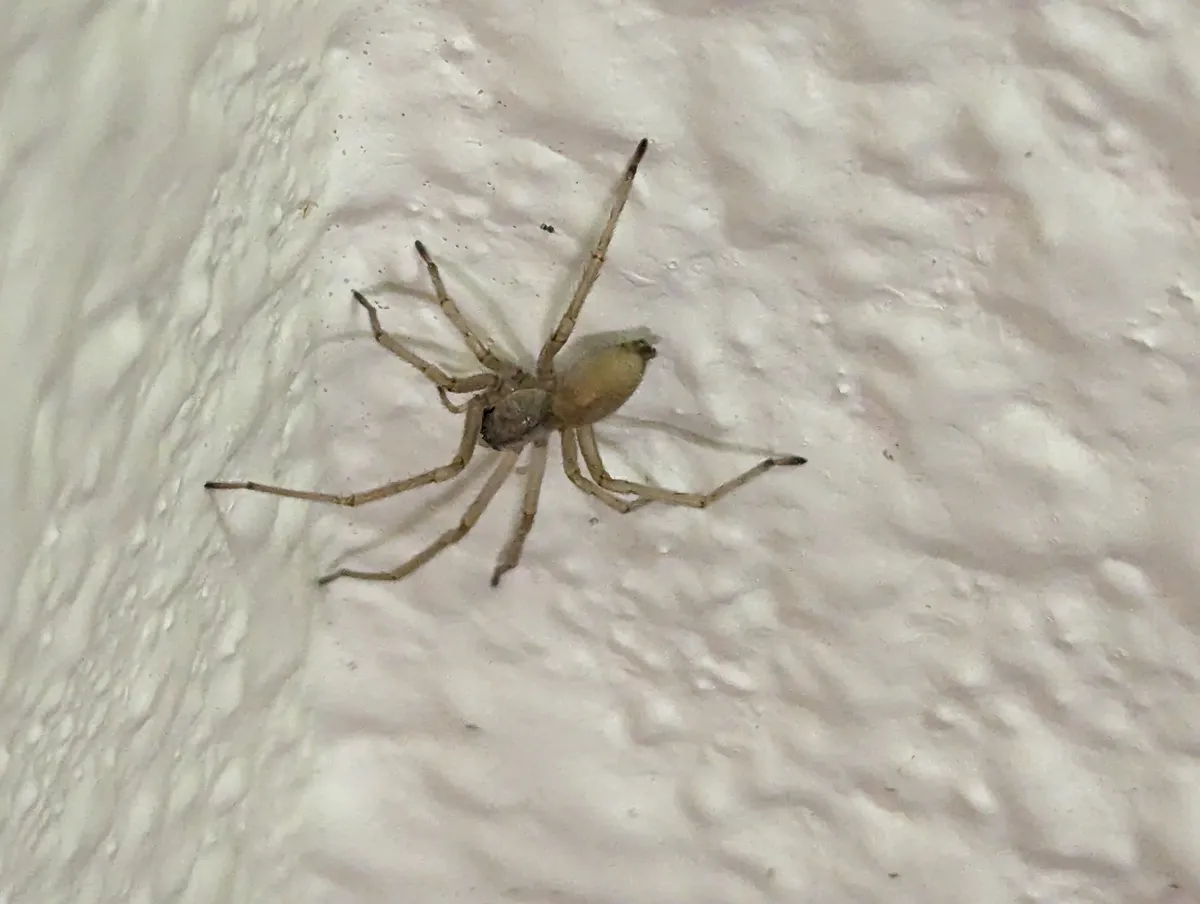 Yellow sac spiderPale yellow to cream all over, with dark jaws and foot tips; hides in silk sacs
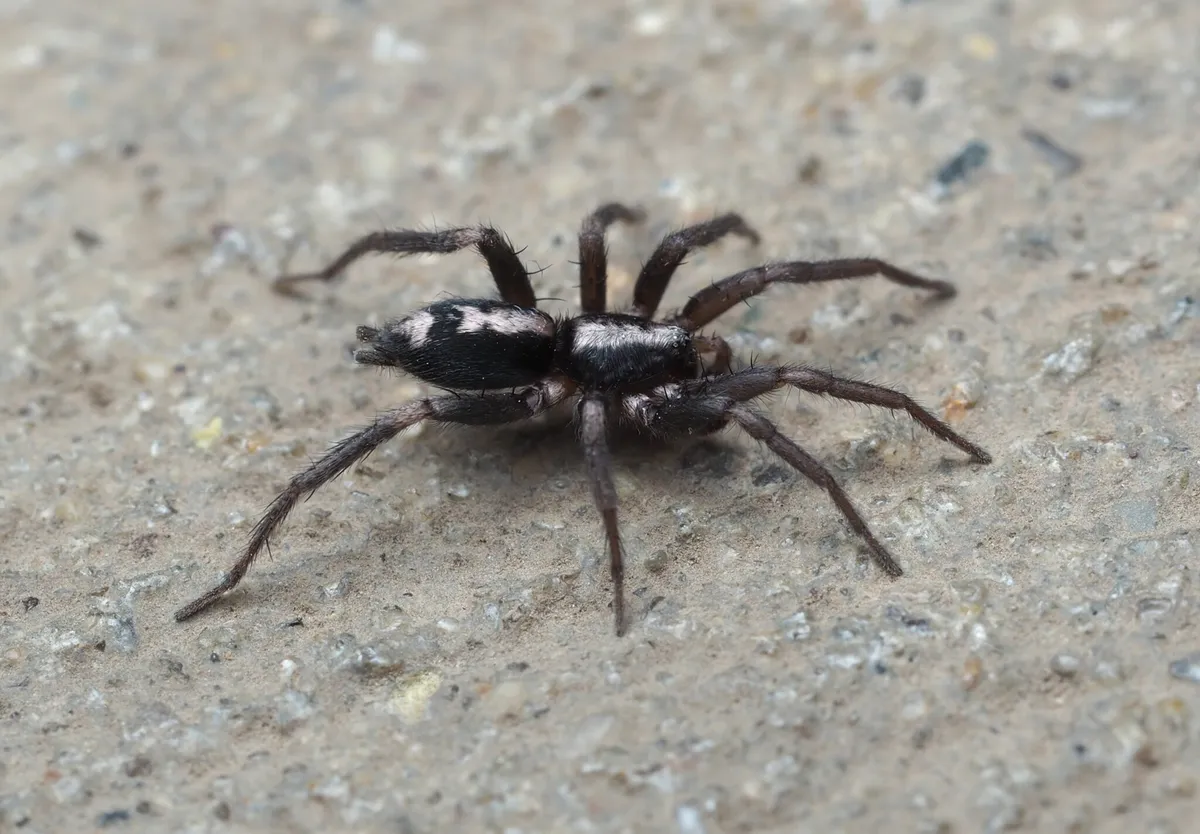 Parson spiderBlack or dark brown with a white band on the abdomen; very fast at night
Photos: Brown recluse: Insects Unlocked, CC0, via Wikimedia Commons, CC0 1.0. Yellow sac spider: no rights reserved, via iNaturalist, CC0 1.0. Parson spider: no rights reserved, via iNaturalist, CC0 1.0.
Where do woodlouse spiders hide?
Under things, in damp places. Colorado State says it hunts at night and usually spends the day under rocks, wood or other debris where pill bugs and sow bugs also live, and that in homes it is almost always found in basements and other places where humidity is high. Utah State lists rocks, bark, trash cans, mulch, plants and woodpiles and says it prefers moist areas where its prey lives; the Missouri guide adds fallen logs, leaf litter and compost heaps.
The Kentucky chart says it is often found outdoors under rocks and logs near buildings and sometimes wanders into homes, and UMN describes a ground dweller that roams at night in search of food. A damp basement draws other pests too, and the guide to bugs in the basement sorts them.
What do woodlouse spiders eat?
Mainly pill bugs and sow bugs, the small land crustaceans also called roly-polies or woodlice. Colorado State calls it primarily a predator of these heavily armored isopods, Penn State and UMN name them as its prey, and both Colorado State and Penn State say it takes other arthropods too. The guide to roly polies shows its prey and how to tell a pill bug from a sow bug.
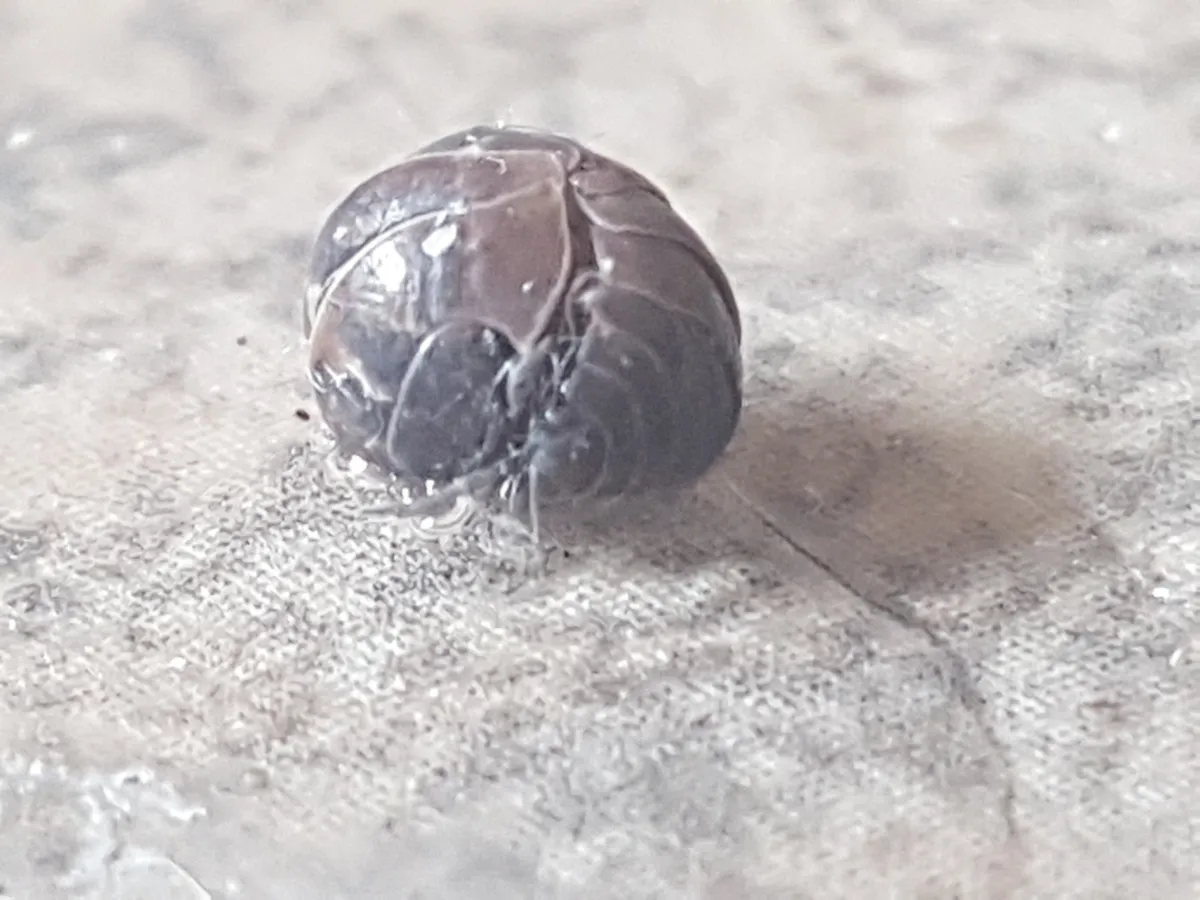
That diet explains a woodlouse spider in the house. Pill bugs and sow bugs need moisture, and the University of Kentucky's sowbug and pillbug fact sheet says that need can drive them into crawl spaces, basements and ground-level floors, and that frequent sightings indoors may signal a moisture problem or a gap at a door, window or seal. A woodlouse spider indoors points the same way: damp, and prey close by.
Do woodlouse spiders make webs?
Not to catch prey. Colorado State says it uses silk not for catching food but for retreats, where it molts and lays its eggs. Penn State says mating has been reported in April and the eggs are laid soon after, up to 70 at a time, hung by a few strands of silk inside the female's retreat.
The spiderlings stay with their mother and use her retreat for the first few weeks after hatching, Colorado State says. They take about 18 months to mature and, at least in captivity, may live a couple of years more; because generations overlap, adults and young turn up year-round. The guide to spider egg sacs compares the egg sacs of other common spiders.
Are woodlouse spiders poisonous?
Not to people. Like almost all spiders it has venom, which UMN says spiders inject through their fangs to disable prey. For this species, Colorado State says the venom poses no danger to humans, the Missouri guide says the effects of a bite have been compared to a mild bee sting, Kentucky calls its bites harmless except to allergic people, and Utah State says it is not known to be a health hazard.
CDC's page on venomous spiders at work names two venomous spiders found in the United States, the black widow and the brown recluse; the guide to venomous spiders in the US covers both.
Bites are uncommon. The Missouri guide says the fangs are strong enough to pierce human skin but bites are rare, and Colorado State calls the spider secretive and not aggressive, though its fangs may be able to bite if it is handled. Vetter and Isbister describe a spider with a strong tendency to bite that bares its large fangs when threatened, so move one with a jar, never with bare hands.
What does a woodlouse spider bite look like?
A small, intensely itchy red spot, by the evidence so far: Penn State says bites have been linked to a localized itchy red area about 3/16 inch (4 to 5 mm) across, and that they apparently cause no body-wide toxic effects on nerves or cells. In the Toxicon review of 16 bites, eight verified cases reported to the authors and eight from the medical literature, the main symptom was minor pain that typically lasted less than an hour, probably caused mostly by the fangs puncturing the skin; the authors call the bites virtually harmless.
MedlinePlus, the National Library of Medicine's health site, says most spider bites are harmless and may cause a reaction like a bee sting, with redness, pain and swelling. Its first aid:
- Wash the area well with soap and water.
- Apply an ice pack or a wet compress.
- Take an over-the-counter pain reliever if needed, and consider an antihistamine for severe swelling.
Do not blame every sore spot on a spider. UMN says people, even doctors, often call redness, swelling, pain or wounds spider bites when the cause is usually something else, such as a bacterial skin infection, and Vetter and Isbister wrote their review partly so that a bite from this spider, taken for a recluse's, would not lead to excessive and possibly harmful treatment. If you did not see what bit you, the bug bite identifier asks six questions, and the bug bite chart compares common bites.
What should you do about a woodlouse spider in the house?
Move it out, then deal with the damp and the prey that drew it in. Utah State's recommendations, with details from the other sources:
- Catch it or vacuum it. Set a jar over it and slide a sheet of paper underneath, as UC IPM describes, then release it outdoors; Utah State suggests a glass jar or a vacuum.
- Dry the basement. Utah State advises reducing moisture problems around buildings, and the EPA's guide to mold and moisture suggests keeping indoor humidity below 60 percent, ideally 30 to 50 percent, using an air conditioner or dehumidifier when needed, and fixing leaks quickly.
- Cut its food supply. Utah State says to control pill bugs and sow bugs, the spider's main food. Kentucky suggests clearing leaves, mulch, rotting wood, stones and flowerpots from near entrances and keeping drainage around the foundation good.
- Clear hiding places outside. Utah State says to keep nesting habitat around the property to a minimum, and UMN suggests removing piles of bricks, firewood and other debris.
- Seal the gaps. Utah State recommends sealing exterior cracks and crevices and fitting tight door sweeps at the base of exterior doors; UMN adds caulking gaps around the foundation, doors and ground-level windows.
- Monitor with sticky traps. UMN suggests small sticky traps along walls and under furniture to check for spiders, and Utah State suggests monitors especially from August to October.
You do not need a spider-free house: UMN calls that impractical and advises tolerating spiders when possible, and Utah State counts this one as beneficial. Keeping spiders out of the house goes further on sealing, the guide to getting rid of spiders covers a larger problem, and more pest identification guides cover other pests.
This guide is general educational information, not medical advice. If you have symptoms or concerns after a bite or exposure, contact a healthcare provider.
Frequently Asked Questions
How poisonous is a woodlouse spider?+
Not dangerously. Like almost all spiders it has venom, which it uses on prey, but Colorado State University says its venom poses no danger to people, and the Missouri Department of Conservation says the effects of a bite have been compared to a mild bee sting. The University of Kentucky calls its bites harmless except to allergic people. A review of 16 bites in the journal Toxicon found that the main symptom was minor pain, typically lasting less than an hour.
Does a woodlouse spider bite hurt?+
It can, briefly. The Missouri Department of Conservation says its fangs are strong enough to pierce human skin, though bites are rare. In the 16 bites reviewed by Vetter and Isbister, the main symptom was minor pain lasting typically less than an hour, probably mostly from the puncture itself. Penn State Extension says bites have been linked to an intensely itchy red spot about 3/16 inch across. MedlinePlus advises washing a spider bite with soap and water and applying an ice pack or a wet compress.
Why am I finding woodlouse spiders in my house?+
Most likely because part of the house is damp and its prey lives nearby. Colorado State University says that in homes it is almost always found in basements and other humid places, and Utah State University Extension says it prefers moist areas where pill bugs and sow bugs live. Those crustaceans need moisture, and the University of Kentucky says that need can drive them into basements and ground-level floors. The spiders also sometimes wander in from under rocks and logs near buildings, Kentucky notes.
Should I be concerned if I see a woodlouse spider?+
Not about the spider itself. Colorado State University calls it secretive, not aggressive and not harmful, and says its venom poses no danger to people. What one can tell you is that a basement or other room is damp enough for pill bugs and sow bugs, its prey. Utah State University Extension suggests reducing moisture, controlling those prey and sealing gaps; move the spider itself outdoors in a jar rather than picking it up.
Are woodlouse spiders beneficial?+
Utah State University Extension counts them as beneficial: they prey on pill bugs and sow bugs and are not known to be a health hazard. There is one caution. The woodlouse spider is not native to North America, and the Missouri Department of Conservation says it was introduced to the United States from the Mediterranean region and that the impact it and other nonnative spiders may have on native ecosystems is not well understood.
Are woodlouse spiders rare?+
No. University of Minnesota Extension calls the woodlouse spider an introduced species that is now common in the United States, and Penn State Extension records it from New England to Georgia and west to California. Colorado State University says it can likely be found in residential areas across Colorado. Because generations overlap, adults and young can be found year-round, Colorado State adds, and the spider hides by day and hunts at night.
What do woodlouse spiders hate?+
None of the extension sources cited on this page names a scent or repellent that keeps woodlouse spiders away. What they recommend is taking away what draws them: Utah State University Extension says to reduce moisture around buildings, keep hiding places to a minimum, control the pill bugs and sow bugs the spider eats, seal exterior cracks and fit tight door sweeps. University of Minnesota Extension says Osage oranges, also called hedge apples, are not effective against spiders and does not recommend them.
How long do woodlouse spiders live?+
Up to a few years, at least in captivity. Colorado State University says woodlouse spiders take about 18 months to mature and, at least in captivity, may live a couple of years more. Penn State Extension says they probably spend the winter as adults, with mating reported in April and eggs laid soon after, up to 70 at a time inside the female's silk retreat. Generations overlap, so adults and young can be found in every season, Colorado State says.
Is a woodlouse spider the same as a woodlouse hunter?+
Yes. Woodlouse spider and woodlouse hunter are two common names for the same species, Dysdera crocata. Penn State Extension says the name comes from woodlouse, the British name for the pill bugs and sow bugs it hunts. University of Minnesota Extension also calls it the sowbug spider or dysderid spider, and Colorado State University's fact sheet calls it the roly-poly killer. It is a spider; a woodlouse is a small crustacean, its prey.
Where do woodlouse spiders live in the US?+
Across much of the country. Penn State Extension records it in North America from New England to Georgia and west to California, and University of Minnesota Extension calls it common in the United States. Within that range it usually keeps to damp spots: under rocks, logs, leaf litter, compost and woodpiles outdoors, according to the Missouri Department of Conservation and Utah State University Extension, and in basements and other humid rooms indoors, according to Colorado State University.
Sources
- Dysdera crocata, the Roly-poly Killer or Woodlouse Hunter (Colorado Arachnid of Interest) — Colorado State University, Department of Agricultural Biology
- Woodlouse Hunter Spider (Steve Jacobs, updated September 8, 2025) — Penn State Extension
- Woodlouse Spider (Urban Pest Guide) — Utah State University Extension
- A Guide to Missouri's Common Spiders (David J. Bruns, 2026) — Missouri Department of Conservation
- Spiders (J. Hahn, L. Jesse, D. Lewis and P. J. Liesch, reviewed 2019) — University of Minnesota Extension
- Urban Spider Chart (Blake Newton and Lee Townsend, issued January 2010) — University of Kentucky Department of Entomology
- Pest Notes: Brown Recluse and Other Recluse Spiders (UC ANR Publication 7468; R. S. Vetter, updated November 2018) — University of California Statewide IPM Program
- Brown Recluse Spiders (Steve Jacobs, updated September 8, 2025) — Penn State Extension
- Agrarian Sac Spider and Longlegged Sac Spider (Steve Jacobs, updated January 19, 2026) — Penn State Extension
- Parson Spider (Steve Jacobs, updated September 8, 2025) — Penn State Extension
- Verified bites by the woodlouse spider, Dysdera crocata (Vetter and Isbister, Toxicon 47:826-829, 2006) — US National Library of Medicine, PubMed
- Venomous Spiders at Work (reviewed September 28, 2026) — CDC, National Institute for Occupational Safety and Health
- Spider Bites (last updated March 9, 2023) — MedlinePlus, US National Library of Medicine
- Insect bites and stings (Medical Encyclopedia, reviewed October 14, 2025) — MedlinePlus, US National Library of Medicine
- ENTFACT-439: Sowbugs and Pillbugs (aka Rolly-Pollies) (Olivia Katz, Zachary DeVries and Jonathan Larson, issued October 2023) — University of Kentucky Department of Entomology
- A Brief Guide to Mold, Moisture and Your Home (updated February 18, 2026) — US Environmental Protection Agency
How this guide was made: it was researched and drafted with AI assistance from the sources listed above. A second, independent AI pass then checked each factual claim against those sources. Found an error? Email support@buzzskito.ca.