
Published by BuzzSkito Mosquito & Tick Control
Published October 16, 2026 · Drafted with AI assistance and fact-checked against the sources listed below
Reading from Canada? Product rules and what is sold there differ. See the Canadian edition.
What does a house centipede look like?
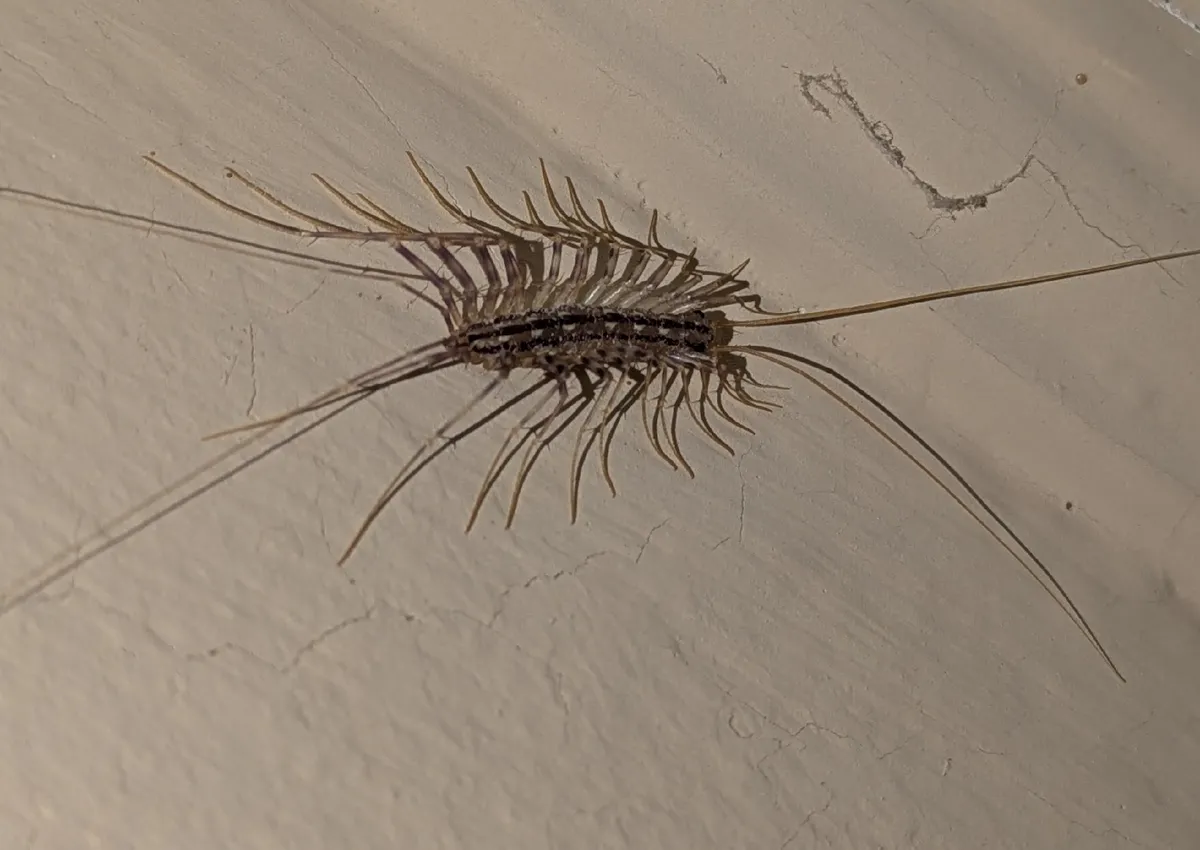
A house centipede is a grayish-yellow centipede with 15 pairs of very long legs banded light and dark, and three dark stripes running down its back. Penn State Extension's house centipede fact sheet gives the body as 1 to 1 1/2 inches long, but the legs and antennae make the whole animal look 3 to 4 inches long, and on adult females the last pair of legs is nearly twice the length of the body. The Missouri Department of Conservation gives a smaller figure: a body to about 1 inch long, not counting legs and other appendages.
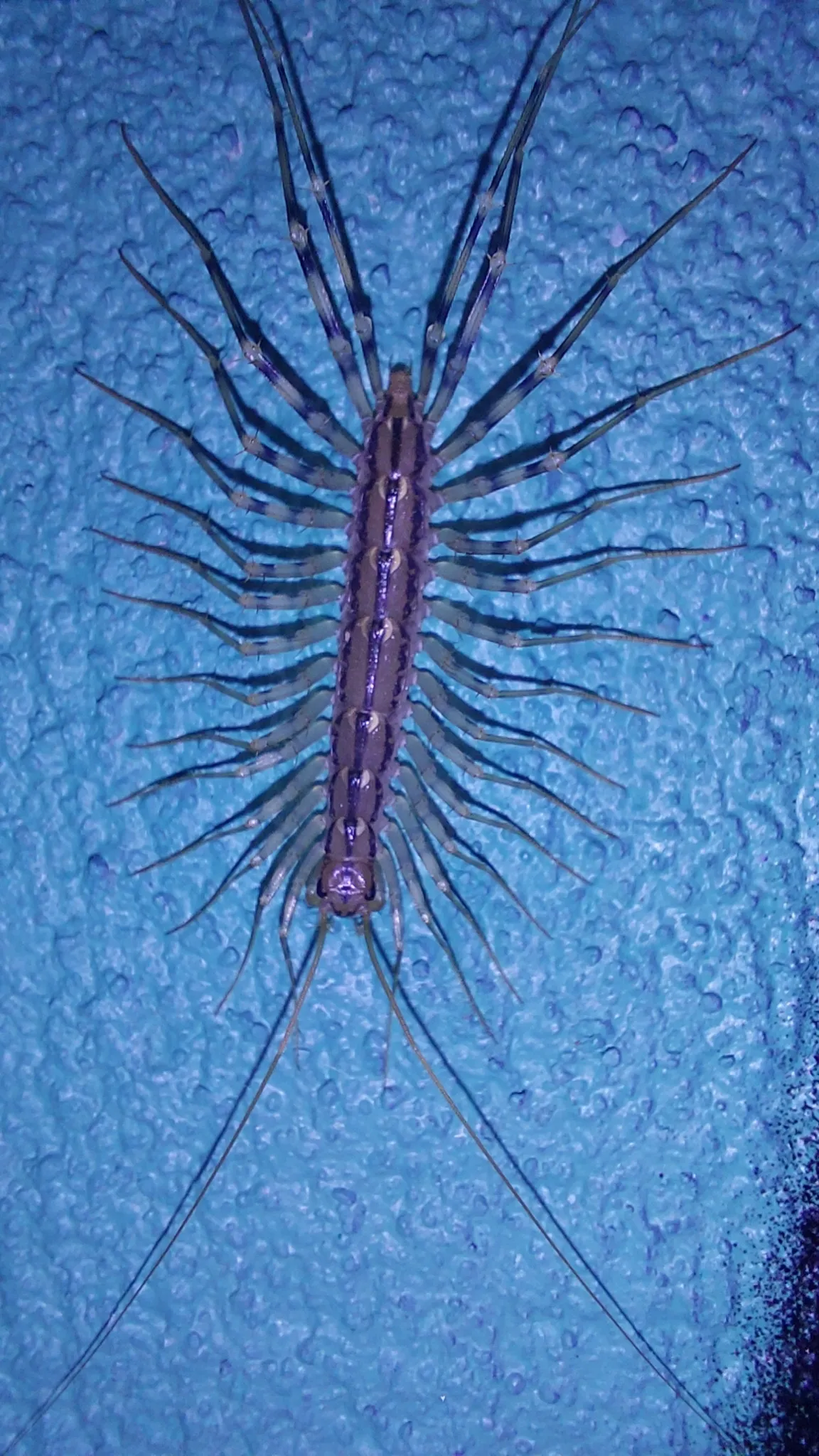
Both ends trail long appendages. Washington State University's PestSense fact sheet says the antennae and the last pair of legs are both longer than the body, and the Missouri Department of Conservation's guide to centipedes notes that a centipede's last legs point backward, so they look something like a pair of antennae. Each leg-bearing segment carries one pair of legs, which the Missouri Department of Conservation's house centipede page says are barbed to help hold prey. House centipedes are usually active at night, and the University of Kentucky's fact sheet on centipedes describes their run: fast across the floor, a sudden stop, then off again toward something to crawl under.
What does a baby house centipede look like?
A smaller version with fewer legs. Penn State says newly hatched larvae, which are rarely seen, have four pairs of legs, then 5, 7, 9, 11 and 13 pairs over the next five molts, and all 15 pairs through four more molts before adulthood. So a small centipede with 9 pairs of long legs can still be a young house centipede.
Do house centipedes bite, and are they dangerous?
They can bite, but not easily, and the sources treat a bite as minor. The University of Kentucky says house centipedes are not dangerous because their small mouthparts cannot penetrate the skin very well, the Missouri Department of Conservation says a bite is generally no worse than a bee sting, and Washington State University says they may give a painful bite if handled. Iowa State University Extension's house centipede page says that technically one could bite, but it is considered harmless to people.
Centipedes do not bite with jaws: Poison Control's article on centipede bites explains that they deliver venom through a pair of hollow, modified front legs called forcipules. It describes house centipedes (genus Scutigera) as less than 3 inches long and relatively harmless, and traces the centipede's frightening reputation to a different genus, Scolopendra, which is much more likely to give a painful bite. In one of its case reports, a man bitten on the neck by a small house centipede had a red, painful bite and recovered rapidly.
They leave the house alone too. UC IPM's pest note on centipedes and millipedes says house centipedes do not damage plants or household items and calls them beneficial because they capture flies, cockroaches and other small household pests.
How can you tell a house centipede from other many-legged bugs?
Count the legs on one body segment, then overall: one pair per segment means a centipede, two pairs a millipede, six legs an insect such as a silverfish, and seven pairs a pill bug or sowbug. Size and speed settle the rest.
| Animal | Adult size | Legs | Giveaway | Harm to people |
|---|---|---|---|---|
| House centipede | Body about 1 to 1 1/2 inches | 15 long, banded pairs | Very fast; antennae and last legs longer than the body | Can bite if handled; considered harmless |
| Millipede | 1/2 to 6 1/2 inches | Two (or four) tiny pairs per segment | Slow; most curl up when prodded | Does not bite; some give off a liquid that irritates skin |
| Silverfish | About 1/2 inch | Six | Silvery scales; three long tail bristles | Does not transmit disease; damages paper and food |
| Giant redheaded centipede | Up to 8 inches | 21 pairs | In Missouri, black body, yellow legs, rusty-red head | Painful bite, usually no worse than a wasp or scorpion sting |
| Pill bug or sowbug | Rarely over 3/4 inch | Seven pairs | Oval; a pill bug rolls into a ball | Harmless; does not bite or sting |
Sources: Penn State Extension, Washington State University, UC IPM, the Missouri Department of Conservation and the University of Kentucky, each linked where it is used on this page.
Checks to run with the bug in a jar
- Legs per segment. One pair on each segment: a centipede. Two pairs on most segments: a millipede.
- Leg count. Six: an insect such as a silverfish. Seven pairs: a pill bug or sowbug. Up to 15 long, banded pairs: a house centipede; a young one may have as few as four pairs.
- Tail end. Three long bristles: a silverfish. Long legs pointing backward like a second set of antennae: a centipede.
- Size against a ruler. A house centipede's body is about 1 to 1 1/2 inches. A centipede several inches long with 21 pairs of legs is a giant centipede.
- Behavior. Curls up when prodded: a millipede. Rolls into a ball: a pill bug. Runs, stops suddenly, then runs again: a house centipede.
- Where you found it. At night in a damp basement, bathroom or closet: a house centipede is likely. Millipedes, pill bugs and sowbugs wander in from damp ground outside and usually die indoors once it is dry.
Is it a house centipede or a millipede?
Look at the legs on each body segment: one pair on a centipede, two on a millipede. The Missouri Department of Conservation adds that millipedes have elbowed antennae, and UC IPM notes that centipedes move rapidly and millipedes do not, and that most millipedes curl up when prodded or at rest, which centipedes never do when disturbed.
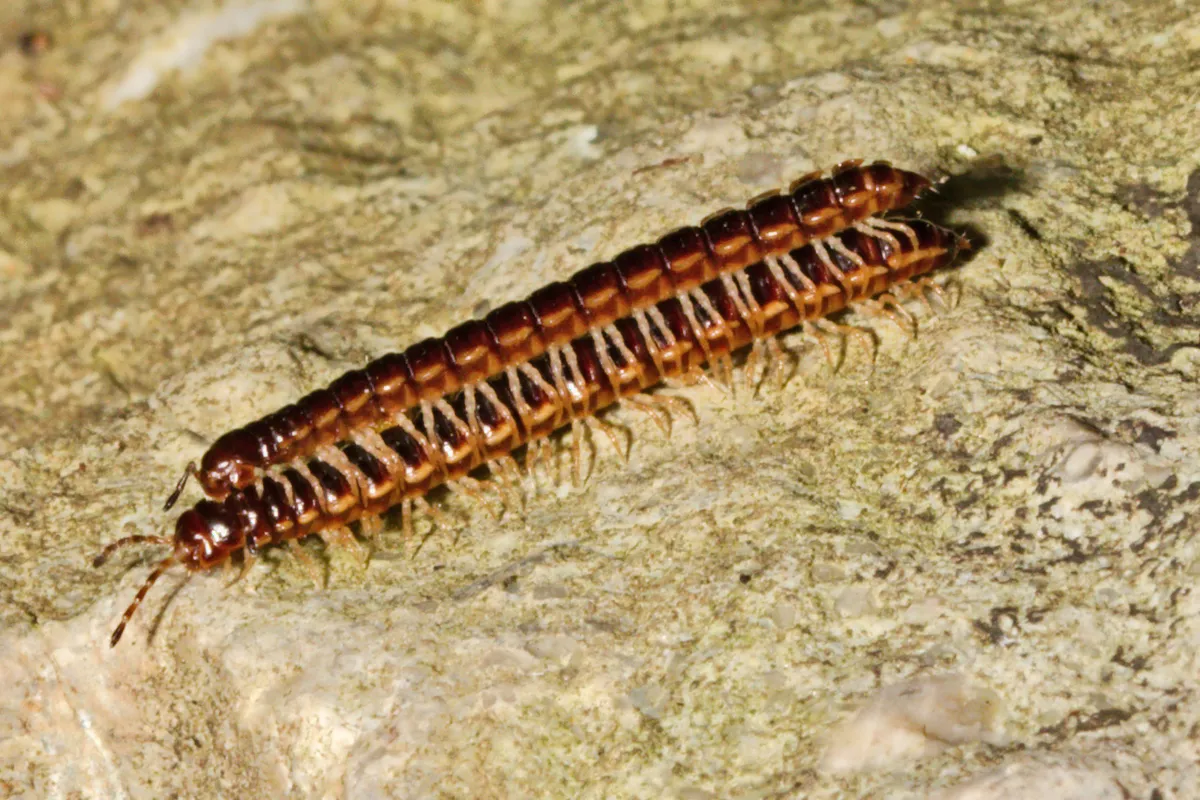
Millipedes are a smaller nuisance. UC IPM says they do not bite, though some species give off a defensive liquid that can irritate skin or burn the eyes. They feed on moist, decaying plant matter such as rotting leaves and wood, adults run from 1/2 to 6 1/2 inches long, and those that wander indoors usually die quickly in the dry conditions. A guide to millipedes in the house covers why they come in and how to keep them out.
Is it a house centipede or a silverfish?
Count the legs and look at the tail: a silverfish has six legs and three long bristles at its tail end, while a house centipede has up to 15 pairs of long legs. The Missouri Department of Conservation's silverfish page describes the common silverfish as wingless, silvery, usually covered with scales and tapered toward the tail, with long antennae and a body about 1/2 inch long, not counting the appendages.
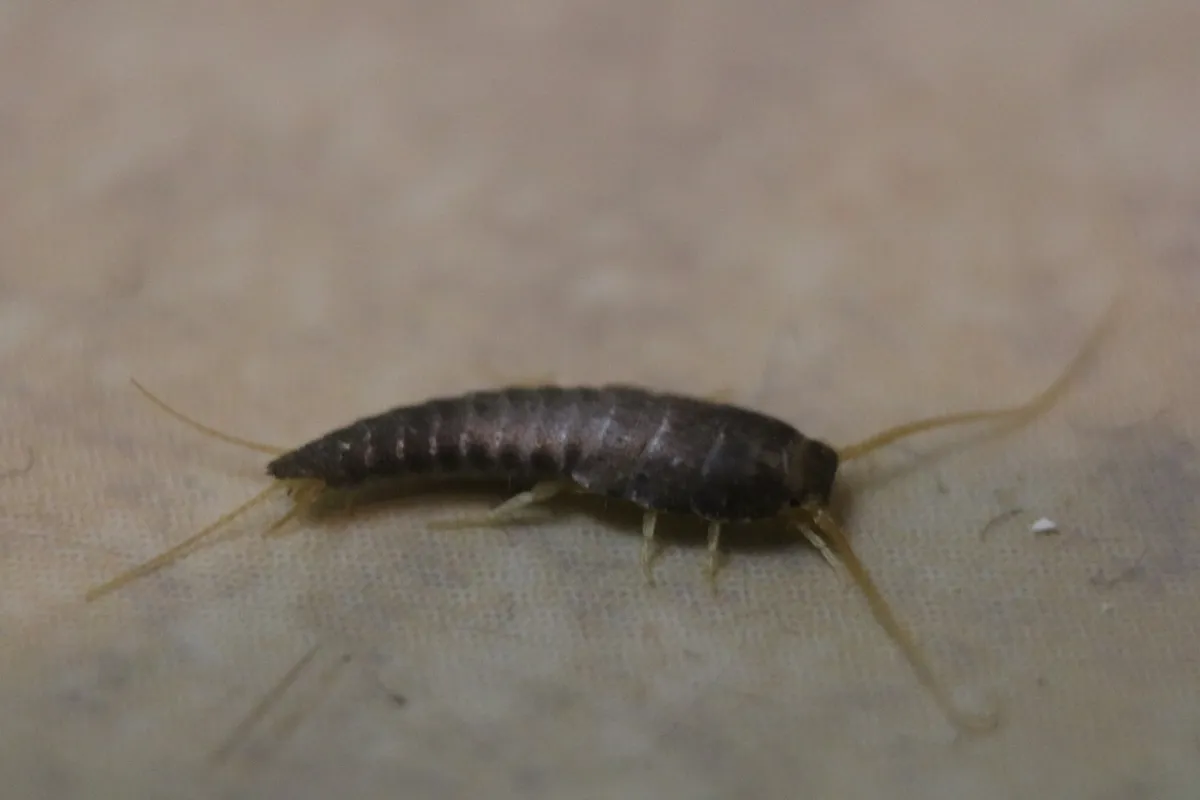
The two get confused because they keep the same hours in the same rooms: both run fast and avoid light, and the Missouri Department of Conservation says silverfish need moist or humid conditions and turn up in basements, closets, kitchens and garages. Silverfish are also on Penn State's list of house centipede prey, so finding both is no coincidence. Unlike house centipedes, silverfish damage paper, books, wallpaper, fabrics and food; a guide to getting rid of silverfish covers drying them out and protecting what they eat.
Could it be a bigger centipede or a pill bug?
It could: other centipedes, and pill bugs and sowbugs, also turn up in damp basements and crawl spaces, and size and leg count tell them apart.
How big do other centipedes get?
Most are small: the Missouri Department of Conservation (MDC) says most of the state's centipedes are about 1/2 to 1 inch long and, except for the very large species, harmless to people. The one to know is the giant redheaded centipede (Scolopendra heros), which MDC's giant redheaded centipede page calls the largest centipede in North America: usually up to 6 1/2 inches long and sometimes 8, with 21 pairs of legs and, in Missouri, a black body, bright yellow legs and a rusty-red head. It lives mostly south and west of Missouri.
Its bite is the one to avoid. MDC says healthy adults bitten by one get intense pain and swelling, usually no worse than a wasp or scorpion sting, that infants, older people and people in poor health may need treatment, and that anyone who has difficulty breathing after a bite should seek medical treatment immediately. The University of Kentucky notes that Scolopendra has shorter legs than the house centipede and very stout, sharp fangs. Soil centipedes, another group MDC describes, are narrow, tan or pale and eyeless, with 27 to 191 pairs of legs.
How do you recognize a pill bug or sowbug?
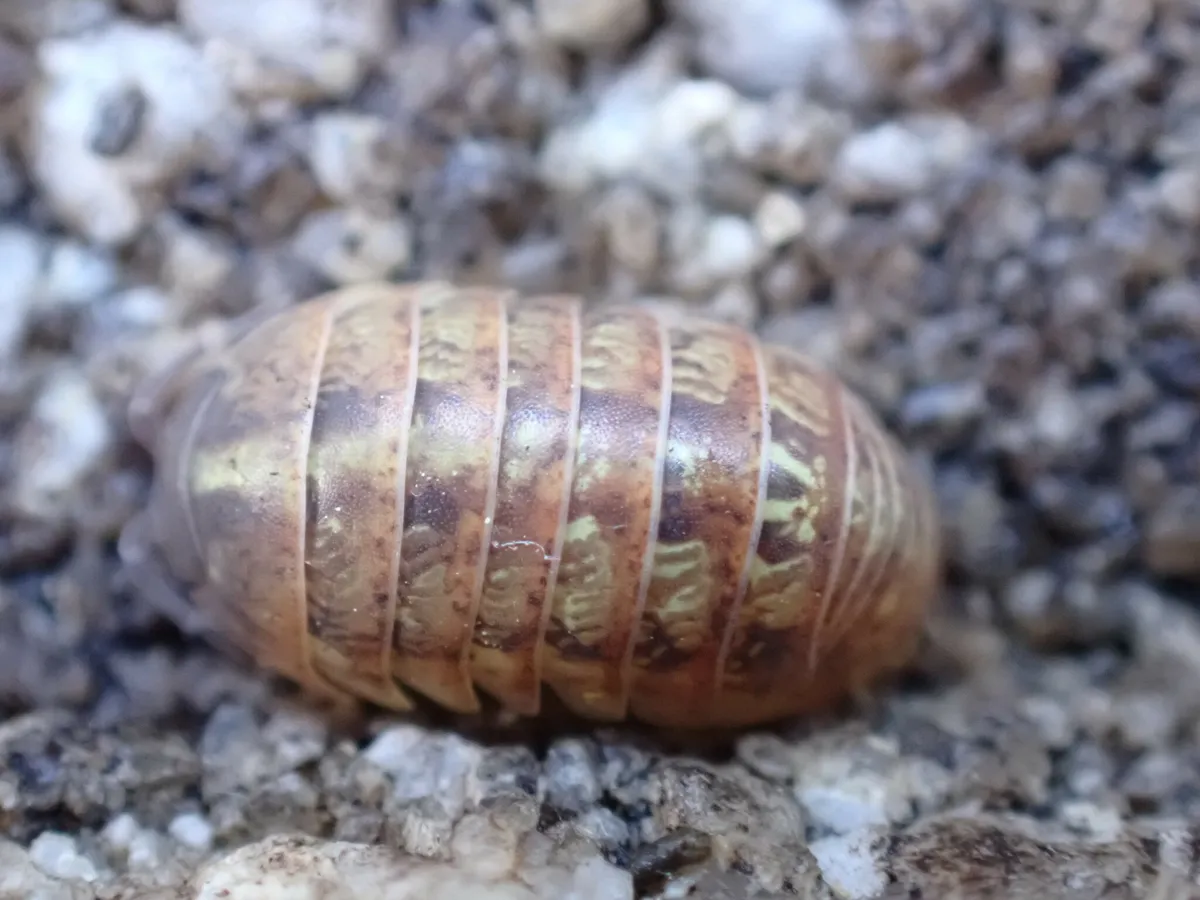
By its oval, rounded back and seven pairs of legs. Pill bugs and sowbugs are land-dwelling crustaceans that the University of Kentucky's sowbug and pillbug fact sheet describes as oval, rounded above and rarely more than 3/4 inch long. A pill bug can roll into a ball; a sowbug cannot and has two tail-like appendages. Both move into basements and crawl spaces looking for water, but without high moisture they find it almost impossible to survive indoors. They are harmless and do not bite or sting; a guide to pill bugs covers keeping them out.
Why are house centipedes in my house?
Because a house gives them damp, dark hiding places and small insects and spiders to hunt. Penn State says they spend the day in dark, damp spots and forage at night, and it lists their hiding places: beneath concrete slabs, from which they reach the house through expansion cracks and around sump pump openings, inside cement block walls, in floor drains without water traps, in cardboard boxes stored on slabs and in damp, cool crawl spaces. Iowa State adds damp parts of basements, closets and bathrooms and the bark of firewood stored indoors.
Food explains the rest. Penn State says house centipedes feed on silverfish, firebrats, carpet beetle larvae, cockroaches, spiders and other small arthropods, and the Missouri Department of Conservation adds crickets, bed bugs, flies, moths and earwigs. Penn State reads frequent sightings as a sign that some prey animal is plentiful, which may be a bigger problem than the centipedes. So check for the cockroach species that live in homes, carpet beetle larvae in rugs and closets and the spiders most often found indoors, as well as silverfish.
Climate shapes where you meet them. Washington State University says they live throughout the United States, indoors and outdoors in warmer areas but mainly indoors in colder regions. Penn State says they cannot survive Pennsylvania winters outdoors but readily reproduce in heated buildings, and the Missouri Department of Conservation says they turn up in homes especially in winter, when they move indoors. Because they breed indoors, a guide to bugs in the house in winter groups them with the year-round residents, not the bugs that only shelter inside for the cold months.
Should you kill house centipedes or leave them alone?
Leaving them is a reasonable choice. UC IPM says centipedes seldom need to be controlled unless they become a nuisance in the home, Iowa State considers house centipedes beneficial and says centipedes found outdoors should not be controlled, and Penn State calls them harmless. What matters more is what they signal: plenty of house centipedes means plenty of the small pests they eat, in a place damp enough to suit both.
How do you get rid of house centipedes?
Dry out the places they hide, take away their food and seal the gaps they use; the extension sources cited here put those steps ahead of any insecticide.
- Lower the humidity. Penn State recommends dehumidifiers and grading the soil so water drains away from the foundation; Kentucky adds working gutters, downspouts and splash blocks and fixing leaking faucets, pipes and air conditioners. None of these centipede sources gives a humidity target, but EPA's guide to mold and moisture says to keep indoor relative humidity below 60 percent if possible, ideally 30 to 50 percent. For the equipment, see how to size a dehumidifier for a damp basement.
- Dry the crawl space. Kentucky recommends ventilation, sump pumps and polyethylene soil covers for damp crawl spaces and basements, and Washington State University also calls for crawl space ventilation. A separate guide weighs a vapor barrier against a dehumidifier for a damp crawl space.
- Remove hiding places. Kentucky says to clear leaves, grass clippings, heavy mulch, boards, stones and boxes from beside the foundation and to raise off the ground anything that cannot be moved. Indoors, get cardboard boxes off bare concrete slabs, one of Penn State's listed hiding places, and clear debris from houseplant pots and trays, as Washington State University suggests.
- Seal the gaps. Penn State says to seal cracks and crevices in concrete slabs and block walls, seal sump pump covers with screen and caulk, and put window screen in basement floor drains so centipedes cannot come up from dry sumps. Kentucky adds tight-fitting door sweeps or thresholds on exterior doors and sealing expansion joints and gaps along the bottom of basement walls. The same work keeps out the insects they hunt; a guide to keeping spiders out of the house covers sealing in more detail.
- Find out what they are eating. Penn State suggests sticky insect traps, also called monitors, set around the house to show which other pests are feeding them; a pest control company can supply monitors and identify the catch. Then deal with that pest directly.
- Remove the ones you see. Washington State University and the University of Kentucky both suggest a vacuum.
Give it time. Kentucky notes that centipede problems often coincide with excessively wet weather and that patience and drier conditions often correct them.
Do you need an insecticide for house centipedes?
Usually not. UC IPM says that although some pesticides are labeled for controlling centipedes, using them is rarely justified, and Washington State University recommends no chemical treatment for house centipedes. An insecticide also leaves the damp and the prey that drew them in where they were.
If you use one, put it where they hide, not across open floors. Penn State says the insecticides that work on centipedes and are labeled for use in the home are emulsifiable concentrates or wettable powders mixed with water and sprayed, or dusts. Its dusts are boric acid and diatomaceous earth, and its sprays are synthetic pyrethroids such as cyfluthrin, deltamethrin, lambda-cyhalothrin, cypermethrin and permethrin, applied to cracks and crevices where centipedes are suspected. Iowa State lists crawl spaces, dark basement corners, openings in concrete slabs, the space under shelves and the area around stored boxes as places for a residual insecticide.
The University of Kentucky says dusts such as silica gel or diatomaceous earth work well in cracks, weep holes and similar openings in the foundation. It favors treating outside, along the bottoms of exterior doors, around crawl space entrances, foundation vents and utility openings and in plant beds beside the foundation, plus the inside foundation walls of damp crawl spaces and unfinished basements. Spraying along baseboards and other living areas, Kentucky says, is of little use against centipedes.
Whatever you choose, the label decides how you may use it. EPA's introduction to pesticide labels explains that pesticide labels are legally enforceable, so the label is the law: it sets who may use a product and where, how, how much and how often. Before buying, check that centipedes are among the pests on the label and that the place you plan to treat is among its sites, and never use it anywhere else. Penn State adds to keep products in their original labeled containers, out of the reach of children, pets and livestock.
A buying-order guide to centipede products reaches the same order as this page, dehumidifier first and spray last, but it was written for shoppers in Canada, so the products and registrations it names are not US ones.
When should you get help with house centipedes?
When sightings continue after the damp spots are dry and the gaps sealed. The Missouri Department of Conservation suggests sealing small cracks and entryways or consulting a licensed pest controller, and Penn State notes that pest control companies can identify the specimens your monitors catch.
This guide is general educational information, not medical advice. If you have symptoms or concerns after a bite or exposure, contact a healthcare provider.
Use any pesticide exactly as its label directs. The label is the law, and what is registered and sold varies by state.
Frequently Asked Questions
How many legs does a house centipede have?+
An adult has 15 pairs, or 30 legs, according to Penn State Extension and Washington State University, with one pair on each leg-bearing body segment. Young ones have fewer: Penn State says newly hatched larvae have four pairs and add pairs as they molt. On adult females the last pair of legs is nearly twice as long as the body. Most centipede species fall well short of 100 legs too; UC IPM says the number in most is closer to 30.
Can house centipedes breed in your house?+
Yes. Penn State Extension says house centipedes readily reproduce in heated buildings and that females can survive for several years and produce up to 150 young. The Missouri Department of Conservation says a female lays between 35 and 100 eggs and does not guard them. Newly hatched young are rarely seen. Penn State reads frequent sightings as a sign that some prey animal is plentiful, so a steady stream of centipedes is also a reason to look for the insects they are eating.
Do house centipedes come up through the drain?+
Not according to Iowa State University Extension, which says they do not come up through the drain pipes; one found in a bathtub, sink or lavatory has been accidentally trapped there. Basement floor drains are a different case. Penn State Extension lists floor drains without water traps, especially those connected to dry sumps, among their hiding places, and it suggests putting window screen in basement floor drains so centipedes cannot come up from the sump.
Will house centipedes get rid of cockroaches or bed bugs?+
They eat both, but none of the sources here suggests relying on them. The Missouri Department of Conservation lists cockroach nymphs and bed bugs among house centipede prey, and UC IPM calls house centipedes beneficial because they capture flies, cockroaches and other small household pests. Penn State Extension says frequent house centipede sightings indicate that some prey animal is plentiful, which may be a bigger problem than the centipedes. A cockroach or bed bug problem needs to be identified and treated directly.
Where in the US do house centipedes live?+
Across the country. Washington State University says they occur throughout the United States, indoors and outdoors in warmer areas but mainly indoors in colder regions. Penn State Extension says the species is native to the Mediterranean region, was accidentally introduced into the southern United States, was first recorded in Pennsylvania in 1849 and is now widespread throughout the country. In Pennsylvania they cannot survive winters outdoors but breed readily in heated buildings. The Missouri Department of Conservation lists them statewide.
Sources
- House Centipedes — Penn State Extension
- House centipede (PestSense) — Washington State University
- House Centipede (Field Guide) — Missouri Department of Conservation
- Centipedes (Field Guide) — Missouri Department of Conservation
- Giant Redheaded Centipede (Field Guide) — Missouri Department of Conservation
- Silverfish/Firebrat (Field Guide) — Missouri Department of Conservation
- Centipedes and Pseudoscorpions (ENTFACT-647) — University of Kentucky Department of Entomology
- Sowbugs and Pillbugs (ENTFACT-439) — University of Kentucky Department of Entomology
- House Centipede (Yard and Garden) — Iowa State University Extension and Outreach
- Pest Notes: Centipedes and Millipedes (UC ANR Publication 7472) — University of California Statewide IPM Program
- Centipede bites: How harmful are they? — Poison Control (National Capital Poison Center)
- Introduction to Pesticide Labels — U.S. Environmental Protection Agency
- A Brief Guide to Mold, Moisture and Your Home — U.S. Environmental Protection Agency
How this guide was made: it was researched and drafted with AI assistance from the sources listed above. A second, independent AI pass then checked each factual claim against those sources. Found an error? Email support@buzzskito.ca.