
Published by BuzzSkito Mosquito & Tick Control
Published October 20, 2026 · Drafted with AI assistance and fact-checked against the sources listed below
Reading from Canada? Product rules and what is sold there differ. See the Canadian edition.
What does an earwig look like?
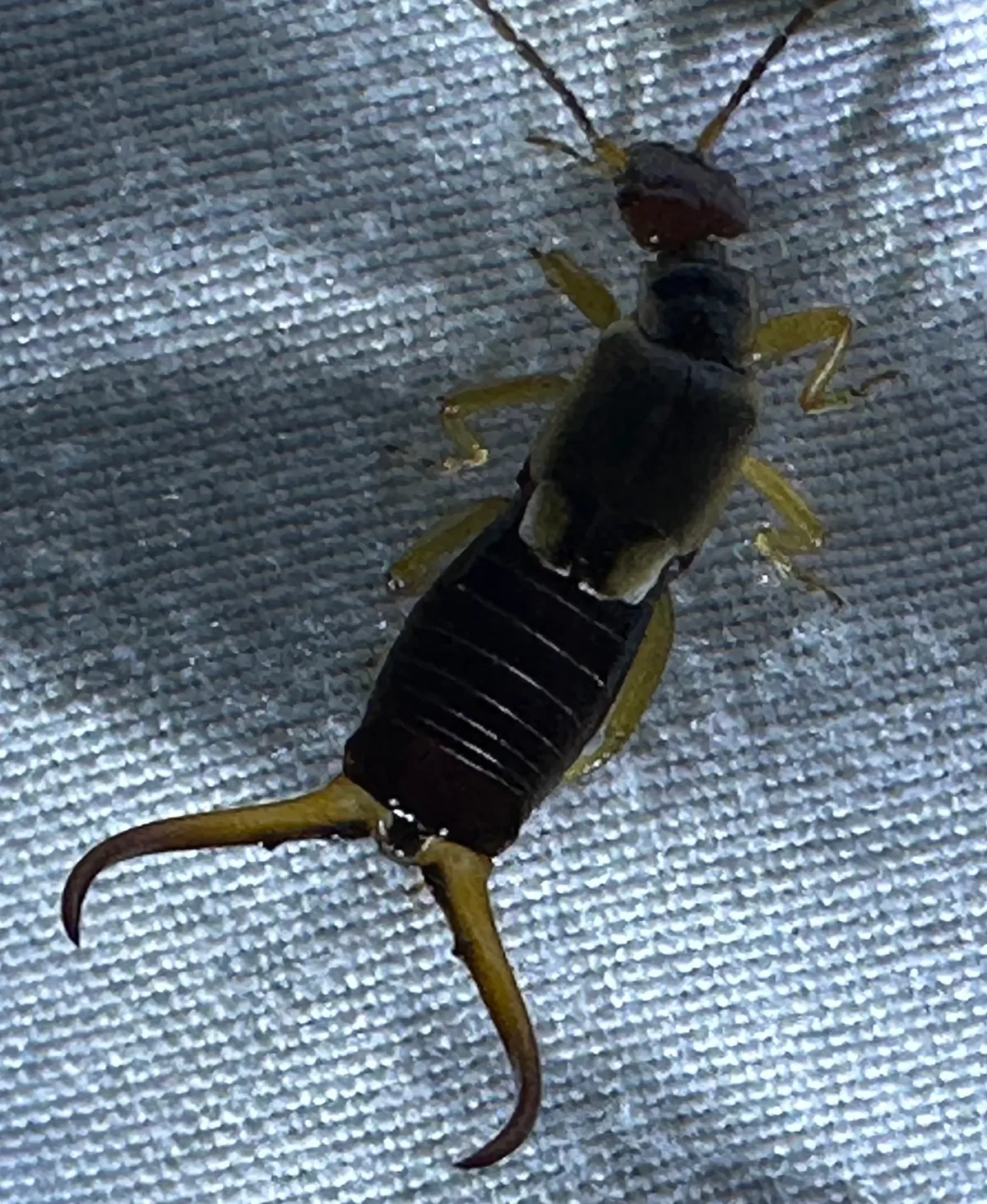
An earwig is a slender, flattened insect with forceps-like pincers at its tail end. The one most people meet is the European earwig (Forficula auricularia), which Penn State Extension's European earwig page describes as 5/8 inch long and dark reddish brown, with forceps that are straight-sided on most females and more pincer-like on males. UC IPM's earwig Pest Note gives the adult as about 3/4 inch long and says most species have wings under short, hard wing covers but seldom fly.
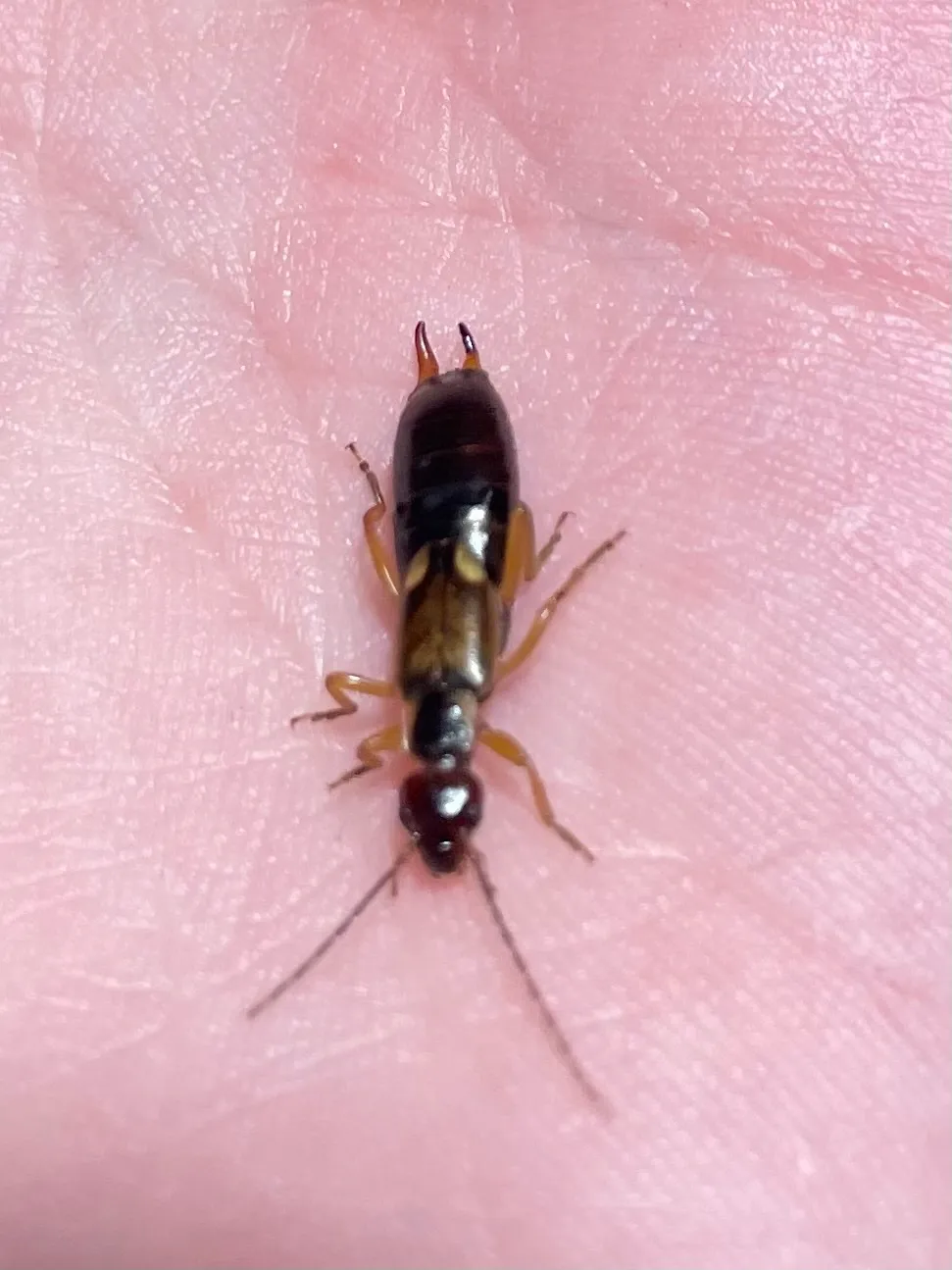
Penn State says the European earwig was introduced to North America in the early 1900s and is now found throughout much of the United States, and that 4 or 5 of the 22 earwig species in the country are common household pests. People move it around: Penn State says earwigs travel in bundles of newspaper, luggage, cut flowers and cars.
In the South, the earwig you find may be a different species. UF/IFAS's ringlegged earwig page calls the ringlegged earwig (Euborellia annulipes) the most common earwig in Florida: a dark brown, wingless species 1/2 to 2/3 inch long, named for the bands on its legs, and widespread in the southern states and Hawaii.
What do young earwigs look like?
Like small, pale adults. UC IPM says immature earwigs look like adults except that they are smaller and lack wings, and the University of Wisconsin's earwig article adds that they are lighter in color with tiny pincers. They start life underground: UC IPM says females dig cells in the soil in fall and winter and lay masses of 30 or more eggs, generally one generation a year, and Wisconsin puts a clutch at 50 to 90 shiny white eggs. Penn State says the female stands guard over her eggs and gives high maternal care to the eggs and early nymphs.
Do earwigs pinch or bite, and do they crawl into ears?
They can pinch if handled or trapped, but they are harmless to people, and the ear story is a myth. UC IPM says earwigs generally don't attack humans but can bite if trapped in clothing or sat upon, and Colorado State University Extension's earwig fact sheet says tales of earwigs crawling into ears or giving painful pinches have little basis in fact, although they can give a mildly painful bite when sat on or handled. Wisconsin describes the worst you can expect as an occasional weak pinch if one is mishandled.
The name comes from an old superstition that earwigs crawl into the ears of sleeping people, which Penn State says does not happen, and Wisconsin calls it a myth that they purposely crawl into ears. Wisconsin adds that a threatened earwig can give off a foul-smelling, yellowish-brown liquid, and UC IPM says large numbers indoors are annoying but present no health hazard.
What do earwigs eat?
Insects, plants and, indoors, your pantry. Colorado State says the main food of earwigs is insects, including plant pests such as aphids, and UC IPM says European earwigs feed on dead and living organisms, including insects, mites and growing plant shoots, and have been shown to be important predators of aphids. Penn State says they will eat almost any plant material, as well as lichens, pollen and other arthropods, and, inside a house, most pantry items such as flour, bread and cookies.
In gardens the damage lands on tender plants. UC IPM lists seedlings, soft fruit such as apricots, strawberries, raspberries and blackberries, sweet corn silks and flowers such as zinnias, marigolds and dahlias, but says they don't harm hard fruit such as apples. Wisconsin adds hostas, lettuce, roses, potatoes and seedling beans and beets, and says the damage looks much like slug damage.
Is it an earwig, a silverfish or a cockroach?
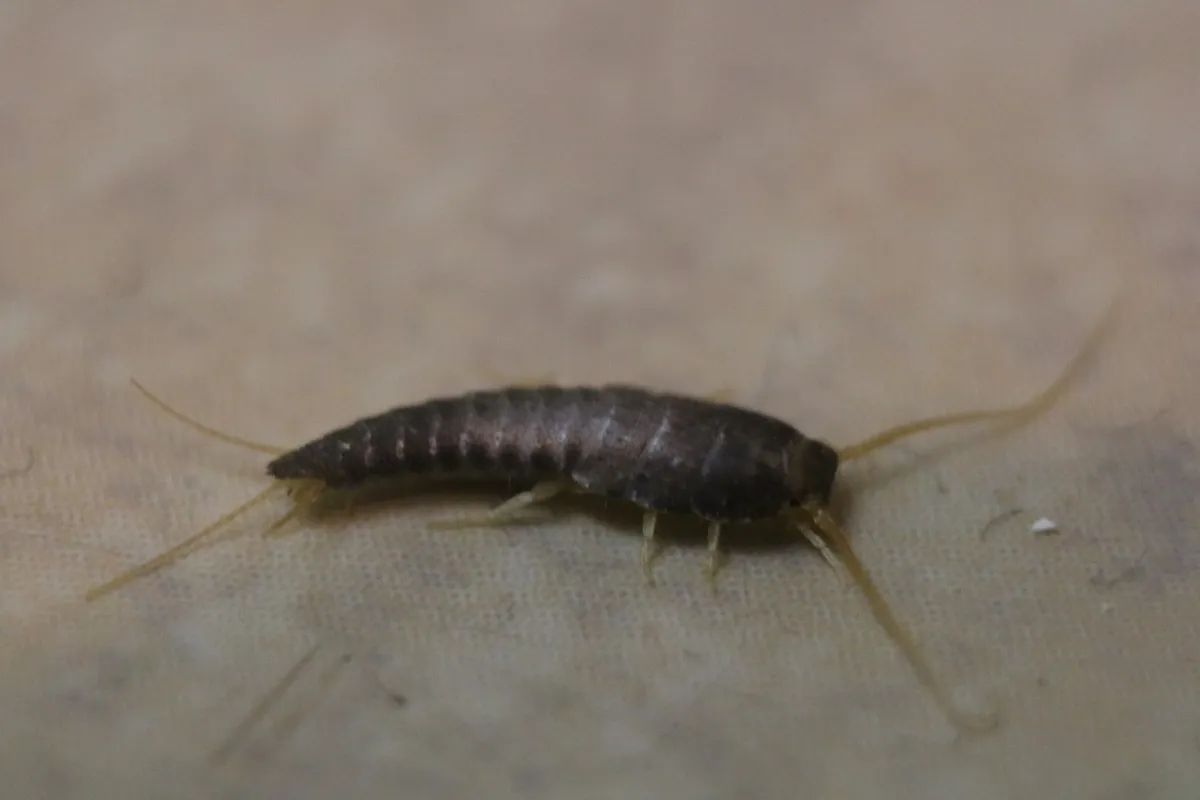
Look at the tail end: only the earwig carries pincers. A silverfish has three long, thin tail-like appendages and silvery scales, and UC IPM's silverfish guide gives the common silverfish as about 1/2 inch long, sometimes 3/4 inch. A German cockroach is 1/2 to 5/8 inch long and brown to dark brown, with two dark parallel stripes on its thorax, according to Rutgers University's German cockroach fact sheet. A house centipede has 15 pairs of long legs banded light and dark, as Penn State's house centipede page describes it.
Each needs its own fix. UC IPM says silverfish feed on paper with glue or paste, book bindings and starch in clothing, so the silverfish guide starts with drying the air. Bugs that look like cockroaches sorts roaches from their look-alikes, earwigs included, and millipedes, which also pour in from damp mulch, are covered in millipedes in the house.
Commonly confused with
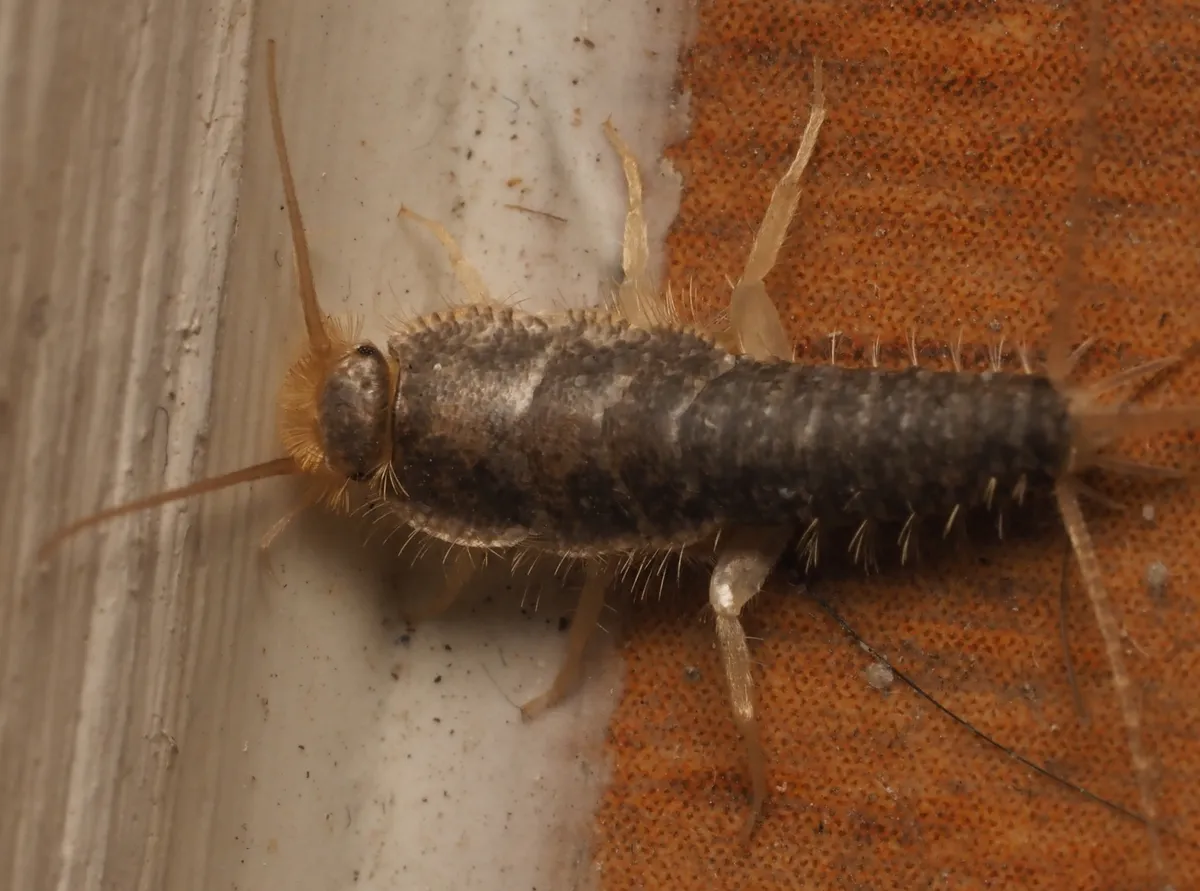 SilverfishThree long tail bristles and silvery or gray scales, no pincers; feeds on paper and starch
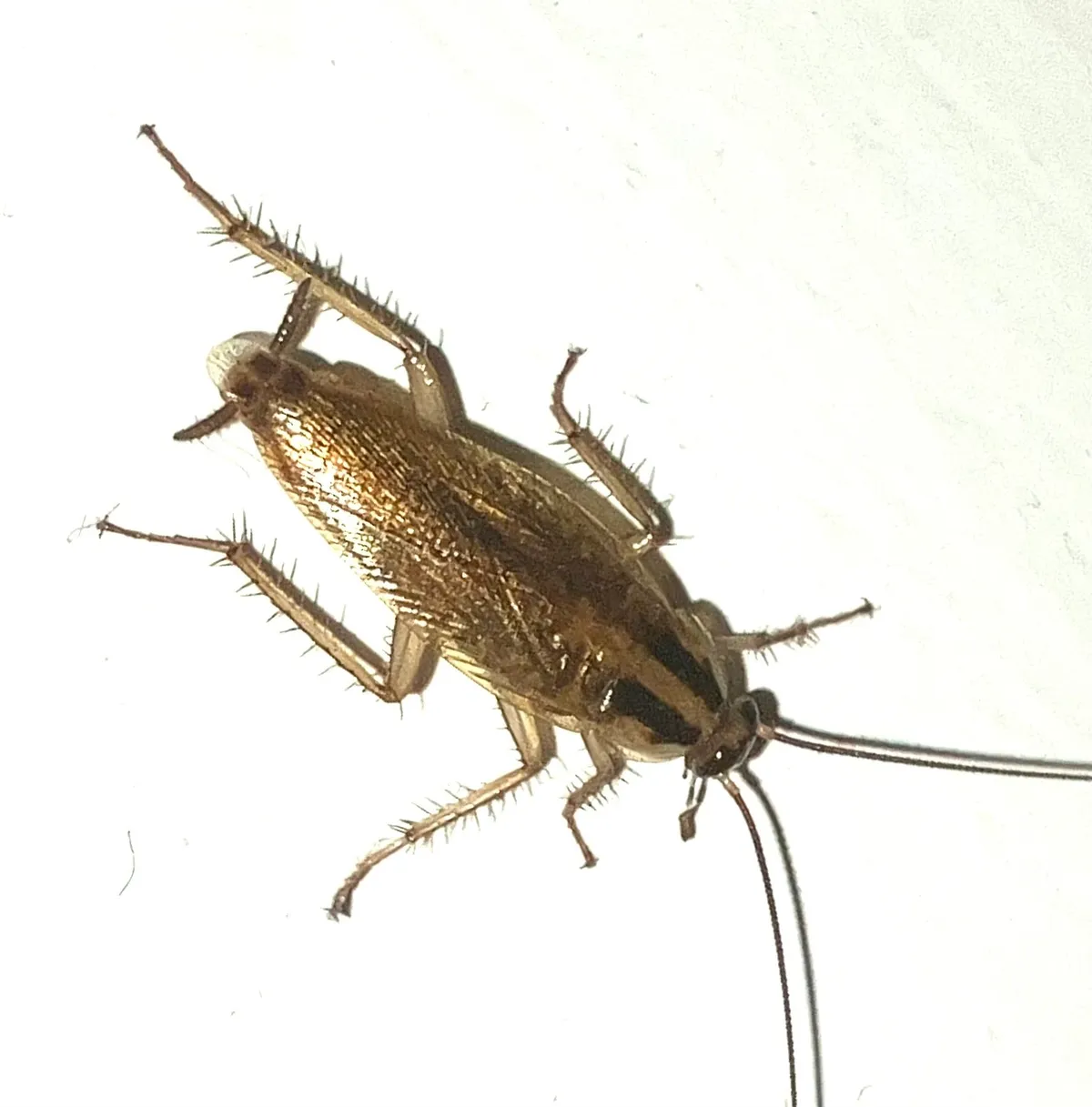 German cockroachTwo dark stripes on the thorax and no pincers; hides in cracks indoors
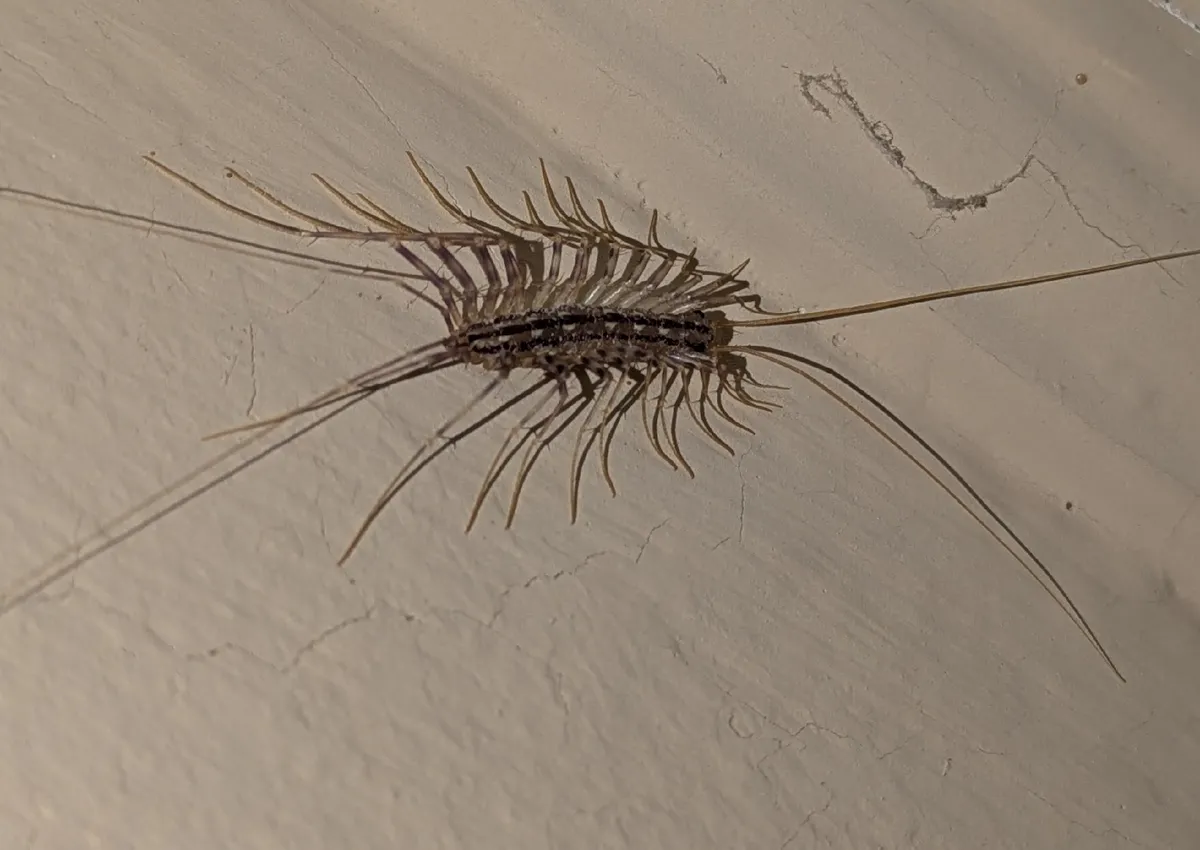 House centipede15 pairs of long, banded legs and no pincers; very fast
Photos: Silverfish: no rights reserved, via iNaturalist, CC0 1.0. German cockroach: no rights reserved, via iNaturalist, CC0 1.0. House centipede: no rights reserved, via iNaturalist, CC0 1.0.
Why are earwigs in my house?
Usually because the weather outside turned too dry, too hot or too cold, which UC IPM says sends earwigs indoors looking for refuge, or because they rode in on something. Wisconsin says their habit of hiding among petals, leaves and fruit means they are often carried inside, and that they probably get in through small cracks around plumbing pipes and other openings. Penn State says isolated areas can have high populations during periods of warm, humid weather, and that earwigs that do invade homes can get into laundry, furniture, bread, clothing and bedding.
Inside, they look for the dark, damp places they use outdoors. Wisconsin says they seek shelter in damp crevices, especially in basements, garages and bathrooms, and Colorado State lists hiding places under rugs and potted plants and in stacks of newspapers. They do not settle in: UC IPM says earwigs eventually die indoors because there is little for them to eat, and Wisconsin says they probably will not multiply indoors. In Colorado, CSU says earwig problems tend to occur from mid-July through mid-September.
How do you get rid of earwigs in the house?
Remove the ones inside, then close the way in and dry out the ground around the foundation. UC IPM says insecticide treatments indoors aren't recommended because they do little to prevent invasions, and Wisconsin says the same: indoor pesticide treatments are not recommended.
- Vacuum or swat the ones inside. Wisconsin says fly swatters and vacuum cleaners work well.
- Seal the gaps. Colorado State says earwigs usually get in through small gaps along doors, windows and vents, which can be sealed with caulk, and Wisconsin adds putty and weather stripping around doors and windows.
- Clear a dry strip by the house. Colorado State suggests clearing sheltering debris, mulch included, from beside the home, especially near doorways and window wells, and keeping that area dry; Wisconsin says gravel or ornamental stones can make an attractive barrier against earwigs.
- Fix the moisture. Wisconsin says to eliminate damp conditions around faucets, air conditioning units and the foundation, and UC IPM says to remove debris from gutters and keep water away from the house.
- Change the outdoor lights. If earwigs gather at your lights, UC IPM suggests yellow or sodium vapor bulbs, which attract fewer of them.
- Trap the ones outside, as the next section describes.
Two shopping guides written for Canadian readers compare indoor earwig traps and earwig traps and killers; the products they name may not match US store shelves.
How do you trap earwigs?
Give them a dark, snug place to spend the day, then empty it in the morning. UC IPM says a rolled-up newspaper, corrugated cardboard, bamboo tubes or a short piece of hose set near plants before dark all work, with the earwigs shaken into a pail of soapy water each morning, and that trapping should continue daily until no more are caught.
- Oil can trap. UC IPM calls a low-sided can, such as a tuna or cat food can, with 1/2 inch of oil in the bottom an excellent trap, most effective when sunk so its top is at soil level. Fish oil such as tuna oil is very attractive to earwigs, or use vegetable oil with a drop of bacon grease. Colorado State keeps the oil at least an inch below the surface, so earwigs must crawl deep into the cup.
- Rolled cardboard or newspaper. Colorado State says rolled corrugated cardboard and rolled or crumpled newspapers work well, that wheat bran or wheat germ as bait improved catches in its trials, and that traps should be collected every 2 to 3 days, bagged and thrown out.
- Grooved boards. Penn State suggests grooved-board traps set in shrubs, hedges and around trees, with the earwigs shaken into a can holding a little oil.
Keep children and pets away from oil traps and the pail of soapy water.
How do you get rid of earwigs in the garden?
First make sure earwigs are the culprit. UC IPM says to go out at night with a flashlight and watch, and on strawberries to check for slime trails, which point to snails or slugs instead. Then make the garden less damp and less sheltered, protect the plants they like and trap.
- Remove hiding places. UC IPM suggests clearing ivy, weeds, rubbish and leaf piles, avoiding heavy ground cover next to vegetable gardens, and watching mulches, which often harbor earwigs.
- Water with care. UC IPM suggests drip irrigation where possible to reduce moisture.
- Guard fruit trees. UC IPM suggests a band of sticky material around the trunk to keep earwigs out of stone fruit trees.
- Let some stay. UC IPM calls earwigs important predators of aphids, and says toads, birds and other predators may help in some gardens and that chickens and ducks eat many earwigs.
Which insecticides work on earwigs, by class and active ingredient?
A few do, outdoors, but the extension sources treat them as a last step after trapping and cleanup, and none recommends treating indoors. UC IPM says products containing spinosad are the most effective and environmentally sound choice where insecticides are wanted, and that more toxic ones such as carbaryl aren't usually needed if the cultural practices are followed. It also warns that baits often aren't very effective where other attractive food is available.
| Class | Active ingredients | How it is used | Notes |
|---|---|---|---|
| Spinosyns | Spinosad | Baits and sprays outdoors | UC IPM's most effective, environmentally sound option; very highly toxic to bees until sprays dry (NPIC) |
| Carbamates | Carbaryl | Baits broadcast around plants; outdoor sprays | Not registered for use inside homes or on pets (NPIC); restricted to licensed applicators in California since 2020 (UC IPM) |
| Pyrethroids | Bifenthrin, cyfluthrin, cypermethrin, deltamethrin, lambda-cyhalothrin, permethrin | Outdoor sprays on foundations, garden edges and daytime hiding places | Named by Colorado State and Penn State; permethrin is highly toxic to bees and fish (NPIC) |
Active ingredients as named by UC IPM, Colorado State and Penn State; classes from NPIC and the EPA. Every use here is outdoors.
Where the classes come from: the NPIC spinosad fact sheet describes spinosad as a natural substance made by a soil bacterium, a mixture of spinosyn A and spinosyn D; the EPA's guide to pesticide poisonings lists carbaryl among the N-methyl carbamate insecticides; and every pyrethroid in the table is on the EPA's list of pyrethroids under registration review.
Timing and placement matter. UC IPM says to apply at night and before the infestation is severe, for best effect and to protect bees, following all label directions. Colorado State says sprays can go around flower gardens, building foundations and the places earwigs hide by day, and that applications later in the day may work best because earwigs are active at night. Penn State names building foundations, fence lines and walks, and the areas around trees, utility poles, woodpiles and rocks.
Keep pets in mind. The NPIC carbaryl fact sheet says no carbaryl products are currently registered for use inside homes or on pets, and the NPIC permethrin fact sheet says cats are more sensitive to permethrin than dogs or people because their bodies take a long time to break it down. Keep children and pets off treated areas for as long as the label says.
When should you get professional help with earwigs?
When trapping, cleanup and sealing have not stopped a heavy, repeated invasion. The University of Wisconsin says chemical insecticide applications may be necessary in extreme circumstances, and the outdoor perimeter treatments Penn State describes, along foundations, fence lines and around woodpiles, are the kind of job a licensed pest control company can take on. A few earwigs indoors do not call for one: UC IPM says they present no health hazard and eventually die inside.
Use any pesticide exactly as its label directs. The label is the law, and what is registered and sold varies by state.
Frequently Asked Questions
What do earwigs eat?+
Almost anything. Colorado State says their main food is insects, including aphids, and UC IPM says European earwigs eat insects, mites and growing plant shoots and are important aphid predators. They also chew seedlings, soft fruit such as strawberries and apricots, corn silks and flowers such as dahlias and zinnias. Indoors, Penn State says they will eat most pantry items, such as flour, bread and cookies.
Do earwigs bite or pinch?+
They can, but rarely and not seriously. UC IPM says earwigs generally don't attack people but can bite if trapped in clothing or sat upon, and Colorado State says they may give a mildly painful bite when sat on or handled. The University of Wisconsin describes the risk as an occasional weak pinch from a mishandled earwig. UC IPM says earwigs present no health hazard.
Do earwigs really crawl into your ears?+
No. The name comes from an old superstition that earwigs crawl into the ears of sleeping people, and Penn State says this does not happen. The University of Wisconsin calls it a myth that earwigs purposely crawl into ears, and Colorado State says stories about earwigs and ears have little basis in fact. Penn State says earwigs use their pincers mainly as protective weapons, and also to capture prey.
Are earwigs dangerous?+
No. UC IPM says large numbers of earwigs are annoying but present no health hazard, and that they generally do not attack people. The worst most people experience is a weak pinch or a mildly painful bite from an earwig that is sat on or handled. A threatened earwig can also release a foul-smelling, yellowish-brown liquid, according to the University of Wisconsin.
Why do I have earwigs in my bathroom?+
Because it is dark and damp, which is what they look for indoors. The University of Wisconsin says earwigs that get inside seek shelter in damp crevices, especially in basements, garages and bathrooms, and that they probably get in through small cracks around plumbing pipes. UC IPM says they come in when it is too dry, hot or cold outside. Seal gaps around pipes and fix damp spots.
Can earwigs fly?+
Most can, but they seldom do. UC IPM says most earwig species have wings folded under short, hard wing covers but seldom fly, and Penn State says the European earwig rarely flies and is carried around by people in newspapers, luggage, cut flowers and cars. The ringlegged earwig, common in Florida, has no wings at all, according to UF/IFAS.
Do earwigs lay eggs in houses?+
Not usually. Earwigs lay their eggs outdoors in the soil: UC IPM says females dig cells in the ground in fall and winter and lay masses of 30 or more eggs, and the University of Wisconsin says they probably will not multiply indoors. UC IPM adds that earwigs that come inside eventually die because there is little for them to eat.
What attracts earwigs to your house?+
Damp shelter next to the walls, and sometimes lights. Colorado State says earwigs hide in dark, confined, often moist places and suggests clearing debris and mulch from beside the home and keeping it dry. The University of Wisconsin points to damp spots around faucets, air conditioners and foundations, and UC IPM says yellow or sodium vapor bulbs attract fewer earwigs than ordinary outdoor lights.
What kills earwigs naturally?+
Traps and predators. UC IPM's oil trap, a low-sided can with 1/2 inch of fish oil or vegetable oil sunk to soil level, drowns them, and earwigs collected in rolled newspaper or cardboard can be shaken into soapy water each morning. UC IPM also says toads, birds and other predators help in some gardens and that chickens and ducks eat many earwigs.
Are earwigs good for the garden?+
Partly. UC IPM says European earwigs have been shown to be important predators of aphids, and Colorado State says insects are their main food. But UC IPM also says they can seriously damage seedlings, soft fruit, sweet corn and flowers such as zinnias, marigolds and dahlias. Protect tender plants and trap where damage shows, rather than trying to remove every earwig.
Sources
- Pest Notes: Earwigs (UC ANR Publication 74102) — University of California Statewide IPM Program
- European Earwigs — Penn State Extension
- European Earwigs (Fact Sheet 5.533) — Colorado State University Extension
- Earwigs — University of Wisconsin-Madison Division of Extension
- EENY088: Ringlegged Earwig, Euborellia annulipes — UF/IFAS Extension
- Pest Notes: Silverfish and Firebrats (UC ANR Publication 7475) — University of California Statewide IPM Program
- FS1322: German Cockroach — Rutgers New Jersey Agricultural Experiment Station
- House Centipedes — Penn State Extension
- Spinosad General Fact Sheet — National Pesticide Information Center
- Carbaryl General Fact Sheet — National Pesticide Information Center
- Recognition and Management of Pesticide Poisonings, 6th ed., Chapter 6: N-Methyl Carbamate Insecticides — US Environmental Protection Agency
- Permethrin General Fact Sheet — National Pesticide Information Center
- Registration Review of Pyrethrins and Pyrethroids — US Environmental Protection Agency
- Introduction to Pesticide Labels — US Environmental Protection Agency
How this guide was made: it was researched and drafted with AI assistance from the sources listed above. A second, independent AI pass then checked each factual claim against those sources. Found an error? Email support@buzzskito.ca.