
Published by BuzzSkito Mosquito & Tick Control
Published October 23, 2026 · Fact-checked against the sources listed below
What is a roly poly?
A roly poly is the common pill bug, Armadillidium vulgare, a crustacean that spends its whole life on land. UF/IFAS Extension's Featured Creatures profile says the name comes from its habit of rolling into a ball when disturbed, which also makes it look like a pill, and that the species was introduced from Europe and is now found around the world.
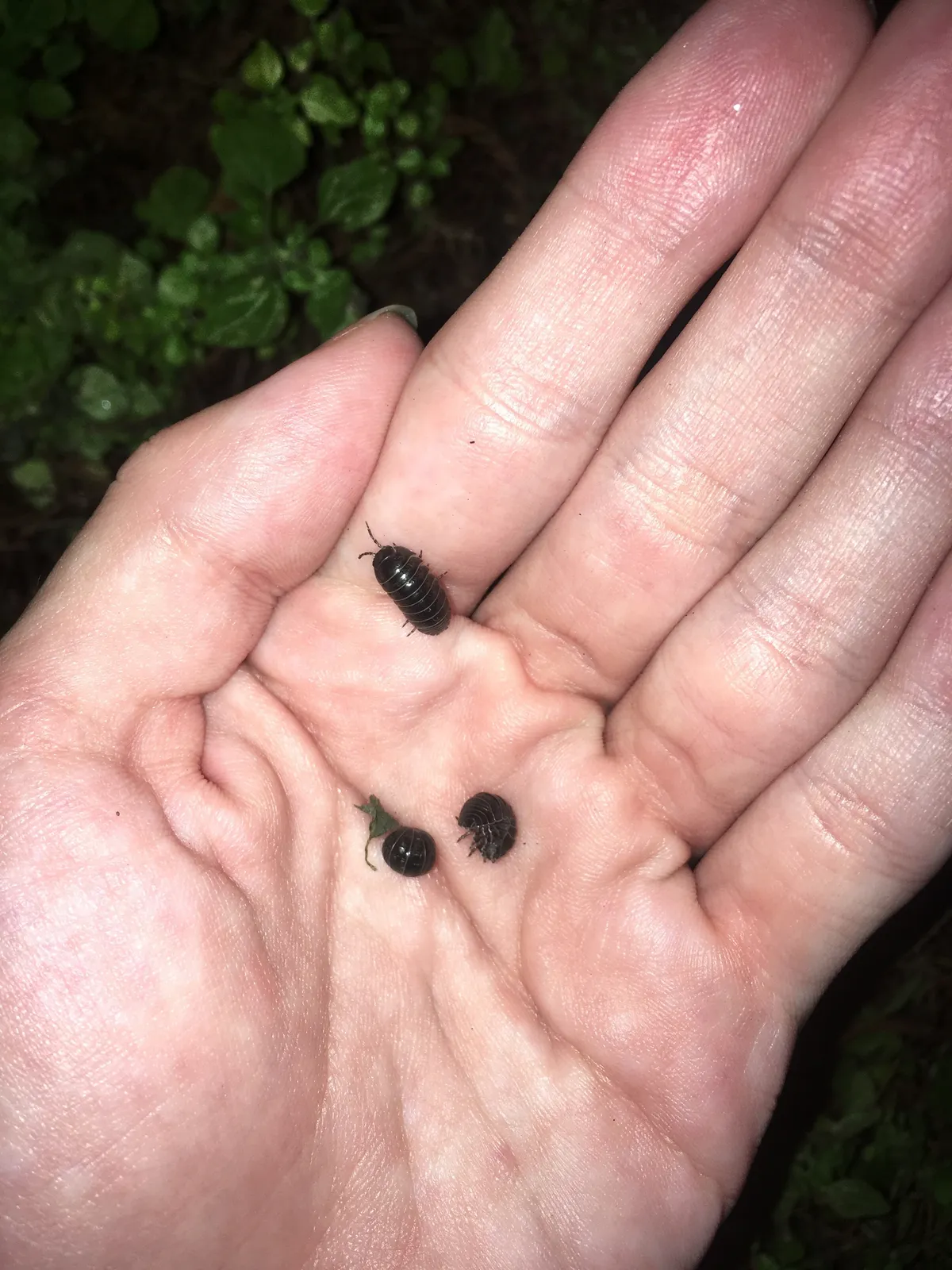
Pill bugs are not insects. University of Idaho Extension's homeowner guide places pill bugs and sow bugs among the crustaceans, a mostly aquatic group that includes crayfish, lobsters, crabs and shrimp. Both are isopods, a name meaning equal feet, because each leg is nearly identical to the others. They breathe with gills that must be kept wet, the guide says, which ties them to moist places. The Missouri Department of Conservation's field guide adds that they drown if they are underwater too long, and that about 5,000 of the world's more than 10,000 kinds of isopods live on land.
Roly poly is one of many names. Idaho lists roly-polies, potato bugs and wood lice, and Clemson's Home & Garden Information Center adds woodlice, land isopods and rolly pollies; woodlice are not parasites, Clemson notes, and are named for their close association with logs and dead wood. UC IPM's Jerusalem cricket page calls potato bug a confusing name, given to pill bugs, sow bugs, the Colorado potato beetle and the big, wingless Jerusalem cricket.
What does a roly poly look like?
Up close, a roly poly is an oval, arched shell of overlapping plates. UC IPM's pillbug and sowbug page describes a small head, seven large body segments that each carry a pair of legs, and six small abdominal segments, with antennae about a quarter of the body's length. It puts adults at about 1/3 to 3/4 inch long; Missouri's field guide gives about 1/4 to 1/2 inch, and Clemson 1/4 to 5/8 inch.
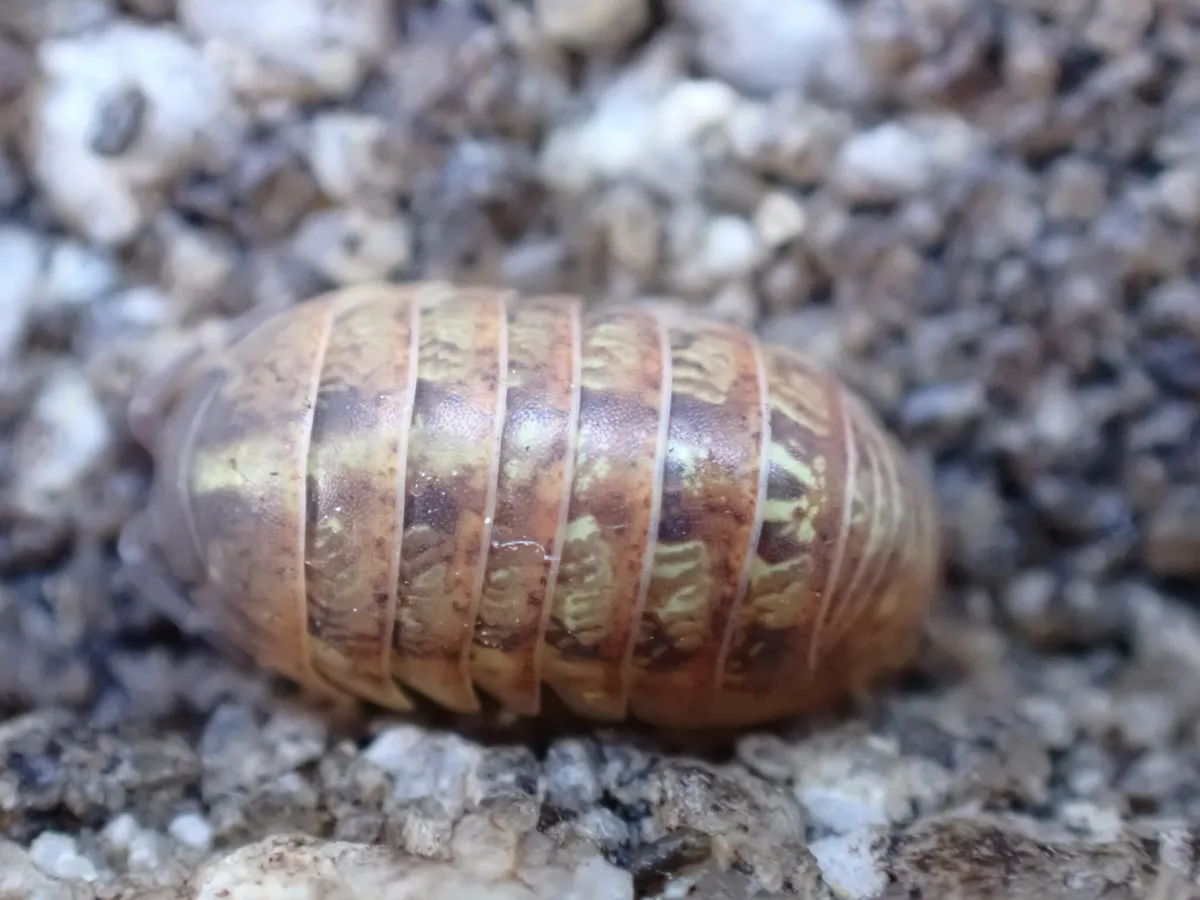
- Legs. Seven pairs, UC IPM says, which sets pill bugs and sow bugs apart from insects, with three pairs, and from centipedes and millipedes, with many more.
- Color. UF describes adults as gray to brown, and Idaho says the plates are often blue gray on pill bugs and brown gray on sow bugs. UC IPM adds that one may look blue or purplish just after a molt.
- Antennae. Two pairs, though the University of Kentucky's ENTFACT-439 says the second pair is reduced and may not be visible.
- Shape. Rounded from above and hollow underneath, as Idaho puts it.
- Males and females. UC IPM says males have copulatory organs on the front of the underside, while a pregnant female shows a pouch with eggs or young inside.
Pill bug or sow bug: how can you tell?
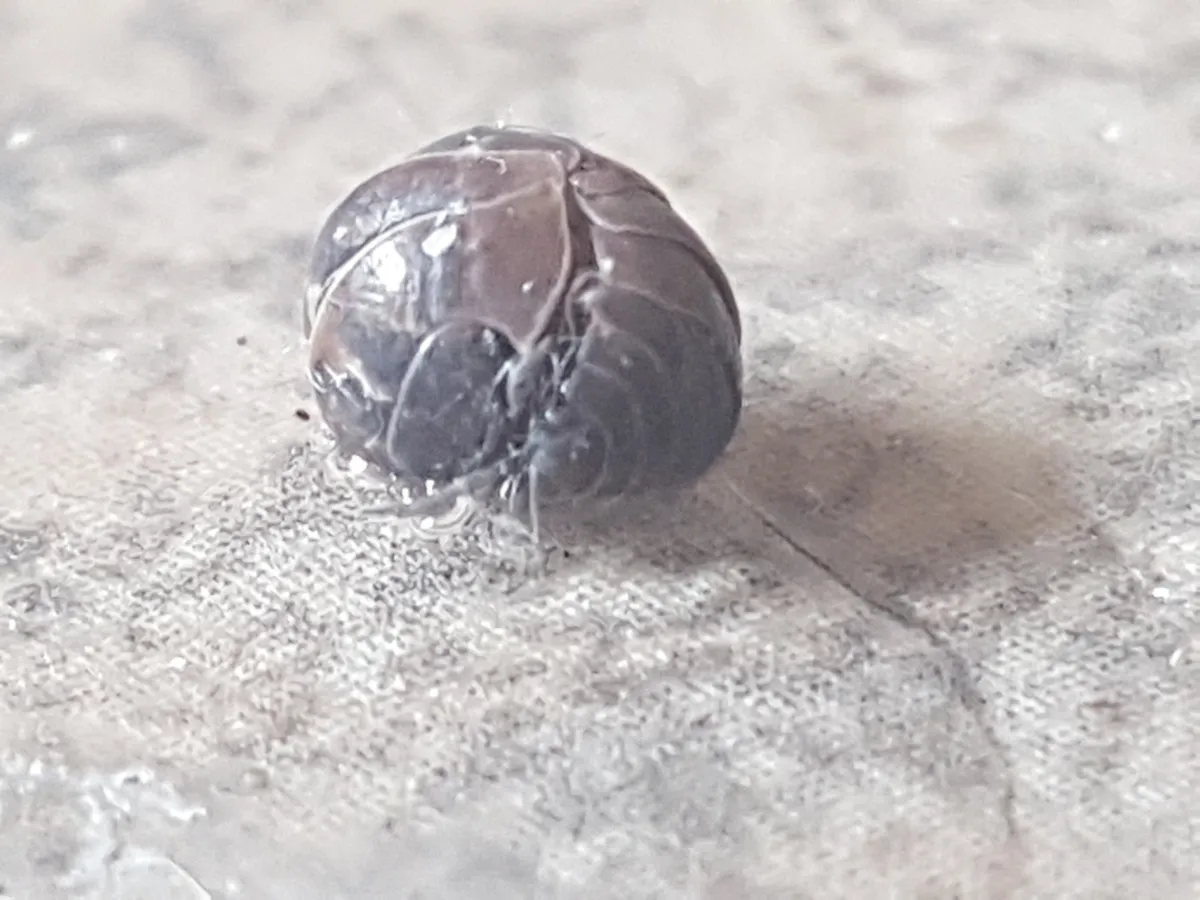
Touch it gently: a pill bug curls into a ball, and a sow bug cannot. UC IPM says sow bugs usually scurry away instead, and that the rear end gives them away too: a pill bug's is smooth and rounded, while a sow bug has distinct appendages sticking out behind. Clemson calls these tail-like structures uropods, and Idaho says a pill bug's are usually too short to see from above. UF adds that sow bugs are flatter and that those appendages keep them from rolling.
The two names often get swapped. Idaho notes that pill bug and sow bug are used informally for the same animal, but pill bug properly means the kinds that roll into a tight ball. The Missouri Department of Conservation names Oniscus and Porcellio as the sow bugs, also from the Old World. Clemson says the two have similar habits and biology, so the advice on this page fits both.
What do baby roly polies look like?
Baby roly polies are tiny, pale copies of the adults, and they start life in a pouch under their mother. UF says a female carries her eggs in a brood pouch, the marsupium, where they hatch after three to four weeks; the young stay in the pouch another one to two weeks, living on its fluid, and grow to about 1/12 inch (2 mm) before leaving. UC IPM describes them as pale yellow to whitish and about 1/12 inch long when they emerge. UF counts one to three broods a year, each of 100 to 200 eggs.
A newly emerged baby has only six pairs of legs. UF explains that its first molt, within a day of leaving the pouch, adds the seventh body segment, and the second, two weeks later, adds the seventh pair of legs; after that it molts every one to two weeks for about 18 weeks. Each molt comes in two halves: Missouri's field guide and UF say the back half is shed first and the front half later, about three days later in UF's account, and UC IPM shows a freshly molted pill bug whose bluish rear segments had not yet hardened. UC IPM and UF say adults can live two to five years.
What do roly polies eat?
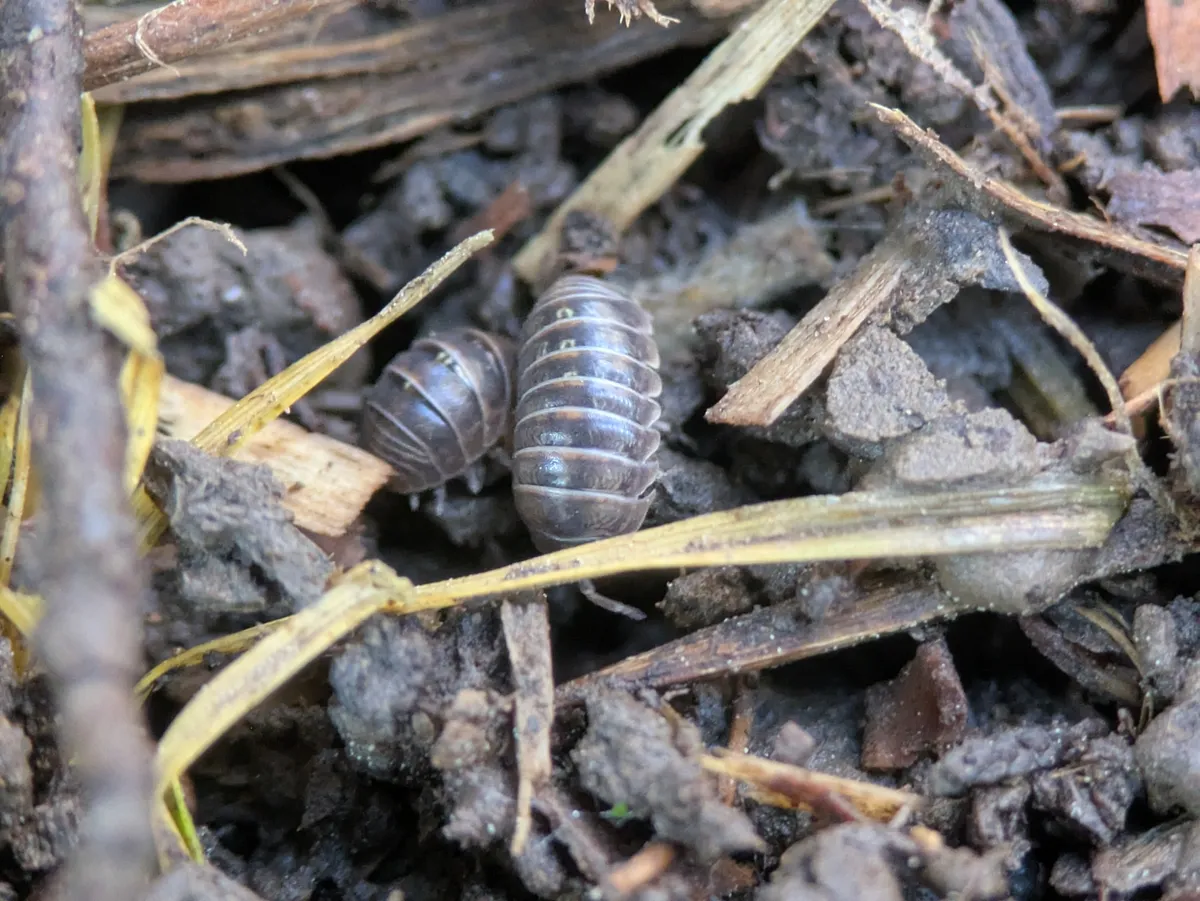
Mostly dead plants. UF says pill bugs feed mainly on decaying leaves and other decomposing material, and the Missouri Department of Conservation adds rotting wood and fungi. That makes them recyclers: Clemson says they return nutrients from dead plant material to the soil.
They do chew living plants now and then. Missouri's guide says they sometimes eat living plants that are tender enough, and UC IPM lists seedlings, new roots, lower leaves, and fruit or vegetables touching damp soil. Clemson names strawberries, tomatoes, cucumbers, lettuce and beans among the crops pill bugs have damaged. Idaho calls the damage usually inconsequential and says it looks like slug damage, ragged holes between the leaf veins, so Clemson's advice is to go out at night and see what is feeding before reaching for any chemical.
To protect a garden, UC IPM suggests watering less often and early in the day so surfaces are drier by evening, keeping compost and mulch back from plants, and using raised beds, plastic mulch and drip irrigation; black plastic mulch may discourage them more than white or clear. Idaho adds raising strawberries and cucumbers off the ground and avoiding heavy organic mulch early in the season, when small plants are most easily damaged.
Why are roly polies coming into my house?
Usually because the house, or the ground beside it, is damp. Kentucky says their need for moisture can drive pill bugs and sow bugs into crawl spaces, basements and ground-level floors, and that finding them often may signal a moisture problem or a gap at a window, door or seal. Clemson says invasions usually follow a long, wet spring, and that many indoors usually means a large population outside.
Idaho's guide describes how they get in: in warm weather they crawl under loose-fitting doors and basement windows, especially when the beds along the foundation are disturbed or overwatered. Damp crawl spaces and unfinished basements can hold them, and they also turn up under bathroom sink cabinets and in sunrooms full of potted plants; Clemson says they may settle into houseplants (see bugs in houseplant soil). A lone roly poly in midwinter, Idaho says, came in on firewood.
Indoors they do not last. Idaho says none survive inside more than a few days unless they find damp areas, and without plant debris to eat they cannot set up a breeding population in the dry living areas of a house. They do no harm while they are there: Idaho says they are not harmful to people, pets, stored food, houseplants, furniture or the house's structural wood.
What else looks like a roly poly?
Several other small, many-legged animals share the same damp spots. The quick-ID table above compares them; these are the tells.
- Millipedes. Long and slow, with two pairs of tiny legs on most body segments; most curl into a coil when prodded, UC IPM's Pest Notes on centipedes and millipedes says, and some ooze a defensive liquid that can irritate skin. Penn State's millipede page puts common ones at about an inch long and mostly dark brown. See millipedes in the house.
- House centipedes. Fast runners with 15 pairs of long legs and three dark stripes on a body 1 to 1 1/2 inches long, says Penn State's house centipede page. The Missouri Department of Conservation's house centipede guide says they cannot easily bite people, and that a bite is generally no worse than a bee sting. Idaho notes that pill bugs and sow bugs are food for centipedes and spiders. More in the house centipede guide.
- Springtails. Far smaller: most kinds that get indoors are 1/25 to 1/12 inch long, Penn State says, with three pairs of legs and a forked spring folded under the body that flings them into the air. UC IPM's springtail Pest Notes says they do not bite people or pets. See springtails.
- Woodlouse spiders. A roly poly's hunter. Penn State's woodlouse hunter page describes a spider with a reddish-orange front body and legs, a dirty-white abdomen and large, forward-angled jaws that preys on pill bugs and sow bugs; its bite has been linked to an itchy red spot about 3/16 inch (4 to 5 mm) across.
Commonly confused with
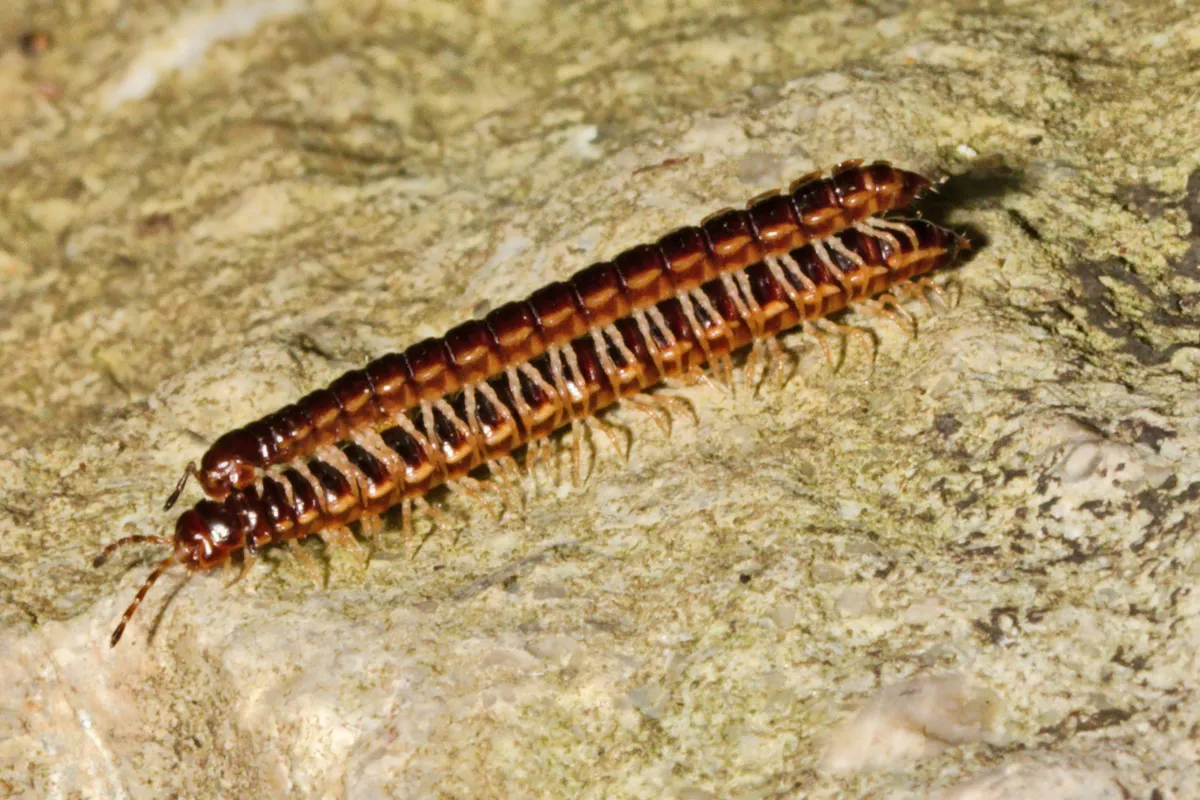 MillipedeLong and slow, with two pairs of tiny legs on most segments; most curl into a coil, not a ball
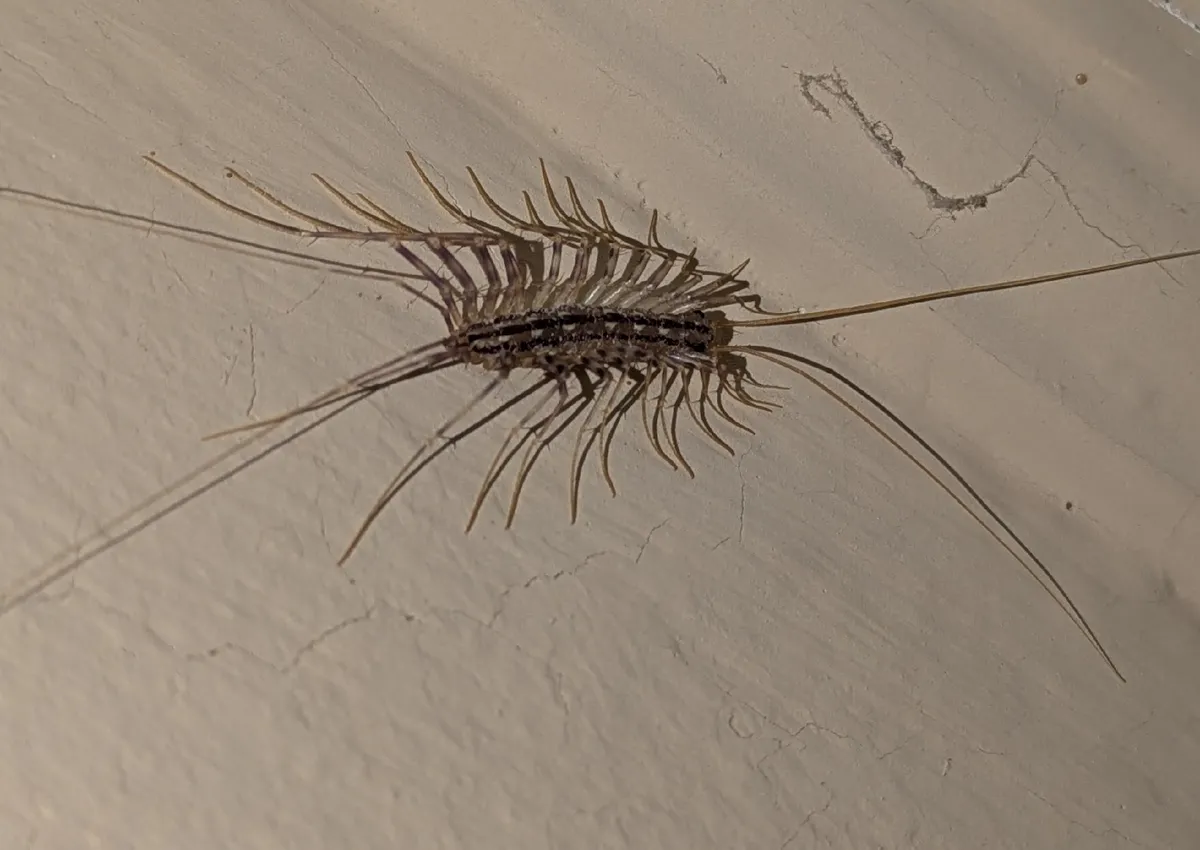 House centipedeFast, with 15 pairs of very long legs and three dark stripes; it can bite, though seldom
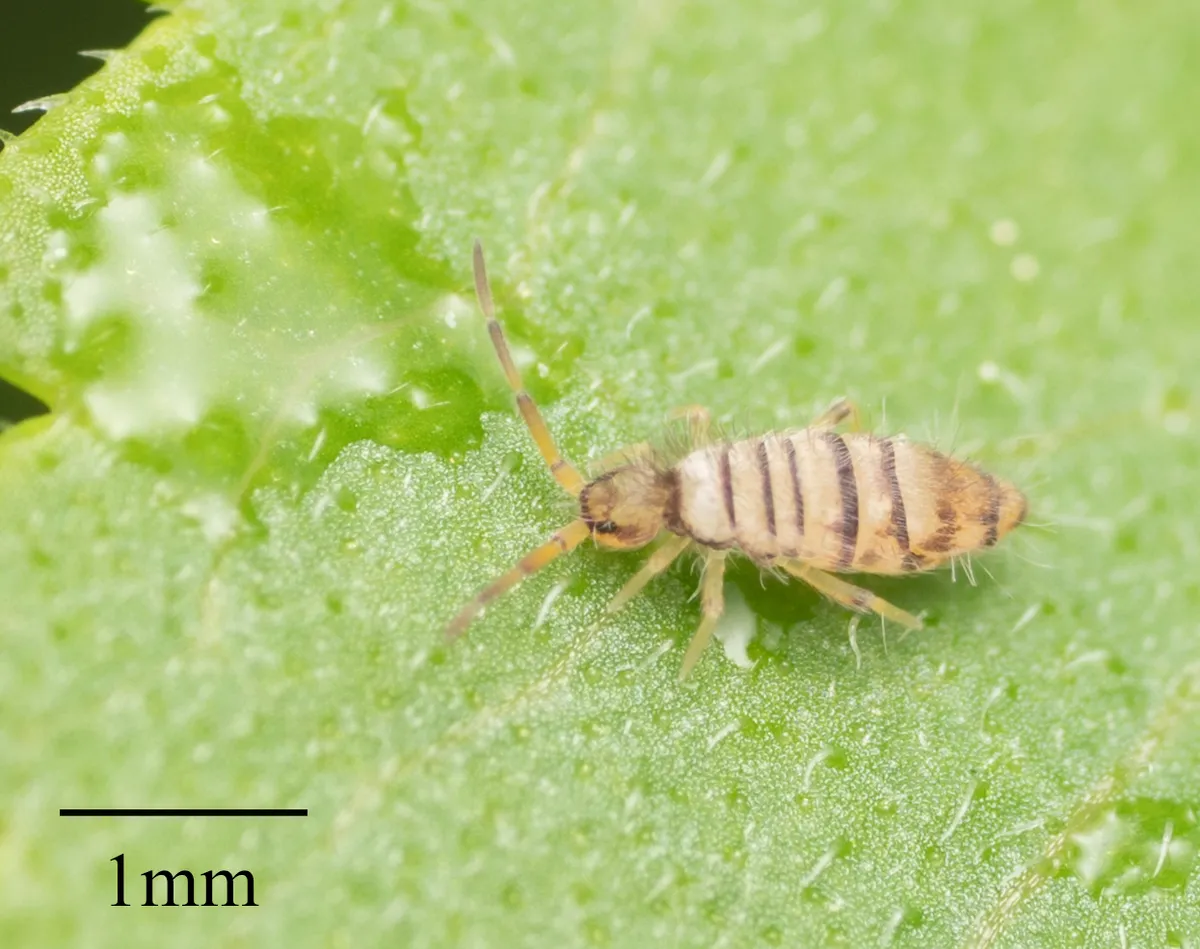 SpringtailFar smaller, 1/25 to 1/12 inch, with three pairs of legs; it jumps instead of rolling up
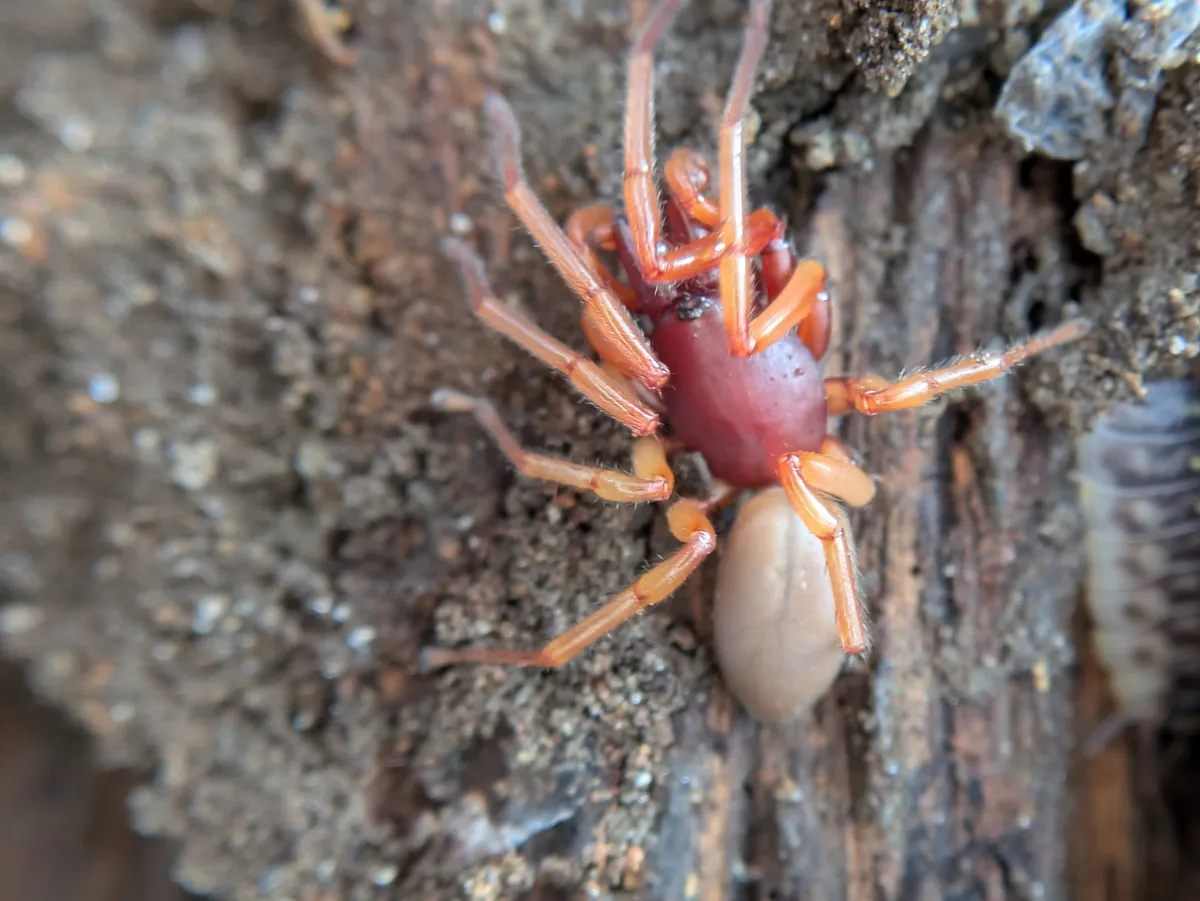 Woodlouse spiderEight legs, a reddish-orange front body and big jaws; it hunts pill bugs and sow bugs
Photos: Millipede: no rights reserved, via iNaturalist, CC0 1.0. House centipede: no rights reserved, via iNaturalist, CC0 1.0. Springtail: no rights reserved, via iNaturalist, CC0 1.0. Woodlouse spider: no rights reserved, via iNaturalist, CC0 1.0.
How do you get rid of roly polies in the house?
Make the house, and the strip of ground around it, too dry and bare for them. Kentucky calls finding the damp places in and around the home the key, and Clemson says control comes from removing the moisture, hiding places and food they need. Work through these steps in order.
- Dry out basements and crawl spaces. Clemson and Idaho both say to ventilate them, and Idaho to clean out stored organic debris. If a basement stays damp, see how to size a dehumidifier for a damp basement and which kind of dehumidifier suits a cold crawl space or cellar.
- Clear the foundation strip. Kentucky says removing leaves, mulch, rotting wood, stones and flowerpots near entrances and the foundation may greatly reduce visitors. UC IPM says to keep plants, mulch and debris at least several inches from the foundation and even farther from doorways.
- Fix drainage and watering. Kentucky stresses good drainage around the foundation, and UC IPM says to keep irrigation water away from foundations, especially near entrances.
- Check the hiding spots by the door. Clemson says to raise planters and flowerpots so air reaches their bottoms, and to make sure thick, braided door mats are not sheltering them.
- Seal the way in. UC IPM recommends weather stripping and door sweeps, and Idaho names loose sliding patio doors, basement windows next to window wells and foundation vents as easy ways in.
- Store firewood off the ground. Idaho says to stack it on raised concrete pads and to shake off any roly polies before carrying wood inside in winter.
- Remove the ones inside. Sweep or vacuum them up, or carry them back outdoors, as Kentucky, UF and Idaho all suggest.
Do you need insecticide for roly polies?
Not indoors. Kentucky says indoor insecticide applications are typically of little use because pill bugs and sow bugs usually die from lack of moisture inside, and Clemson says insecticides are not recommended for indoor control because they dry out and die quickly in a house. Idaho recommends against indoor pesticide use for all but exceptional cases of massive invasions.
- Outdoor perimeter treatments. Kentucky says pyrethroid applications on the foundation in spring or fall can limit entry, but are unlikely to solve recurring problems unless the moisture is fixed. Idaho treats a perimeter spray as a stopgap when intolerable numbers are coming in, never a substitute for removing breeding sites and sealing doors and windows.
- Where Clemson allows it. If treatment is necessary, Clemson says an appropriately labeled pesticide can go on foundation walls, crawl spaces, unfinished basements and the plant beds that border the house.
- In the garden. Idaho advises pesticides only when feeding damage to seedlings or ripening fruit is severe, and then baits labeled for those plants, scattered next to them but never touching them, rather than sprays. It also warns never to spray firewood.
- Read the label first. Every pesticide label states that using the product in a manner inconsistent with its labeling violates federal law; as the EPA puts it, the label is the law.
Use any pesticide exactly as its label directs. The label is the law, and what is registered and sold varies by state.
Frequently Asked Questions
Are roly polies harmful?+
Not to people, pets or the house. The University of Kentucky says pill bugs and sow bugs are harmless to people and pets and will not bite or sting, and University of Idaho Extension says they are not harmful to stored food, houseplants, furniture or a home's structural wood either. The only real harm is in the garden, where Clemson says they now and then damage young shoots and produce such as strawberries, tomatoes, cucumbers, lettuce and beans; UC IPM names fruit and vegetables that touch damp soil.
What is the difference between a pill bug and a roly poly?+
There is none: roly poly is a nickname for the pill bug. The University of Kentucky says the pill bug's habit of rolling into a ball earned it the name, and UF/IFAS says the common pill bug, Armadillidium vulgare, is sometimes called a roly-poly for the same reason. People also apply it to sow bugs, which look similar; University of Idaho Extension notes the two names are used informally for the same animal, though only the kinds that roll into a tight ball are true pill bugs.
Is it roly poly or rolly polly?+
Both spellings are in use, along with several others. UF/IFAS Extension writes roly-poly and the University of Idaho roly-polies, while the University of Kentucky's fact sheet says rolly-pollies and Clemson's Home and Garden Information Center lists rolly pollies. Whatever the spelling, the name points to the same animal, the pill bug that rolls into a ball when disturbed. Idaho adds potato bugs and wood lice to the list of other names, and Clemson adds woodlice and land isopods.
Why am I seeing roly polies in my house?+
Most often because of moisture. The University of Kentucky says their need for water can drive them into crawl spaces, basements and ground-level floors, and that frequent sightings may signal a moisture problem or a gap at a window, door or seal. Clemson says invasions usually follow a long, wet spring and that many indoors usually means a large population outside. University of Idaho Extension adds that they crawl in under loose-fitting doors and basement windows, especially when the beds along the foundation are overwatered.
What kills roly polies in the house?+
Dry air does most of the work. University of Idaho Extension says none survive indoors for more than a few days unless they find damp areas, and the University of Kentucky says indoor insecticide applications are typically of little use because they usually die from lack of moisture. Clemson does not recommend insecticides indoors for the same reason. Sweep or vacuum the ones you see, or carry them outside, and then dry out the damp spot that drew them in.
What will keep roly polies away?+
A dry, bare strip around the house and tight doors. The University of Kentucky says removing leaves, mulch, rotting wood, stones and flowerpots near entrances and the foundation may greatly reduce them, and that good drainage keeps those areas dry. UC IPM recommends weather stripping, door sweeps and keeping irrigation water away from the foundation. Clemson adds ventilating basements and crawl spaces, raising planters off the ground, and checking under thick door mats, where they can hide.
What do roly polies eat?+
Mainly dead and decaying plant material. UF/IFAS says pill bugs feed mainly on decaying leaves and other decomposing matter, and the Missouri Department of Conservation adds rotting wood and fungi. They sometimes chew living plants that are tender enough: UC IPM lists seedlings, new roots, lower leaves, and fruit or vegetables touching damp soil, and Clemson names strawberries, tomatoes, cucumbers, lettuce and beans. University of Idaho Extension says the damage is usually inconsequential and resembles slug damage.
How long do roly polies live?+
Several years, for an animal so small. UC IPM and UF/IFAS both say adults can live two to five years, and the University of Kentucky puts the typical life span of pill bugs and sow bugs at about three years. University of Idaho Extension gives a different picture: the young go through ten or more molts before reaching adulthood after two years, and adults then live up to two years. Indoors, without moisture, they die within days.
Why do roly polies roll into a ball?+
To protect themselves and to save water. UF/IFAS describes rolling up as a defense when the pill bug is disturbed, and the University of Kentucky says it also helps them retain water. That matters because they breathe with gills that must stay moist: the Missouri Department of Conservation says the underside of the body is especially prone to drying out. Sow bugs cannot roll up, UF says, because the appendages at their rear get in the way.
Why is half of my roly poly a different color?+
It is probably in the middle of a molt. Roly polies shed their hard covering in two halves: the Missouri Department of Conservation says the back half comes off first and the front half later, and UF/IFAS says the front follows about three days after the back. UC IPM says a pill bug may look blue or purplish if it has recently molted, and shows one whose bluish rear segments had not yet hardened. Older ones, it says, are brown to dark gray.
Sources
- Pillbugs and Sowbugs (Home and Landscape) — University of California Statewide IPM Program
- ENTFACT-439: Sowbugs and Pillbugs (aka Rolly-Pollies) (Olivia Katz, Zachary DeVries and Jonathan Larson, issued October 2023) — University of Kentucky Department of Entomology
- Pillbug, Roly-Poly, Woodlouse, Armadillidium vulgare (EENY630; J. A. Franklin, M. A. Byron and J. L. Gillett-Kaufman, revised April 2025) — University of Florida, UF/IFAS Extension (Featured Creatures)
- Homeowner Guide to Pill Bugs and Sow Bugs (CIS 1169; E. J. Bechinski, F. W. Merickel and B. Stokes, revised November 2021) — University of Idaho Extension
- Sowbugs & Pillbugs (HGIC 2444, revised May 17, 2026) — Clemson Cooperative Extension, Home & Garden Information Center
- Pillbugs and Sowbugs (Land Isopods) (Field Guide) — Missouri Department of Conservation
- Jerusalem Cricket (Home and Landscape) — University of California Statewide IPM Program
- Pest Notes: Centipedes and Millipedes (UC ANR Publication 7472; K. Windbiel-Rojas, updated June 2023) — University of California Statewide IPM Program
- Millipedes (Steven B. Jacobs, updated June 24, 2026) — Penn State Extension
- House Centipedes (Steve Jacobs; reviewed by Michael Skvarla, updated January 19, 2026) — Penn State Extension
- House Centipede (Field Guide) — Missouri Department of Conservation
- Springtails (Steve Jacobs, updated June 24, 2026) — Penn State Extension
- Pest Notes: Springtails (UC ANR Publication 74136, updated August 2025) — University of California Statewide IPM Program
- Woodlouse Hunter Spider (Steve Jacobs, updated September 8, 2025) — Penn State Extension
- Introduction to Pesticide Labels — US Environmental Protection Agency
How this guide was made: it was researched and drafted with AI assistance from the sources listed above. A second, independent AI pass then checked each factual claim against those sources. Found an error? Email support@buzzskito.ca.