
Published by BuzzSkito Mosquito & Tick Control
Published October 28, 2026 · Fact-checked against the sources listed below
What are the bugs in my carpet?
Bugs in a carpet are usually carpet beetle larvae and, in a home with pets, fleas; at the carpet's edge behind a bed or sofa they can be bed bugs. Clothes moth larvae feed in wool rugs, and booklice and springtails turn up where a room is damp. Dust mites live in carpet as well, but Kentucky's dust mite fact sheet says they are generally visible only with a microscope, so a bug you can see is something else.
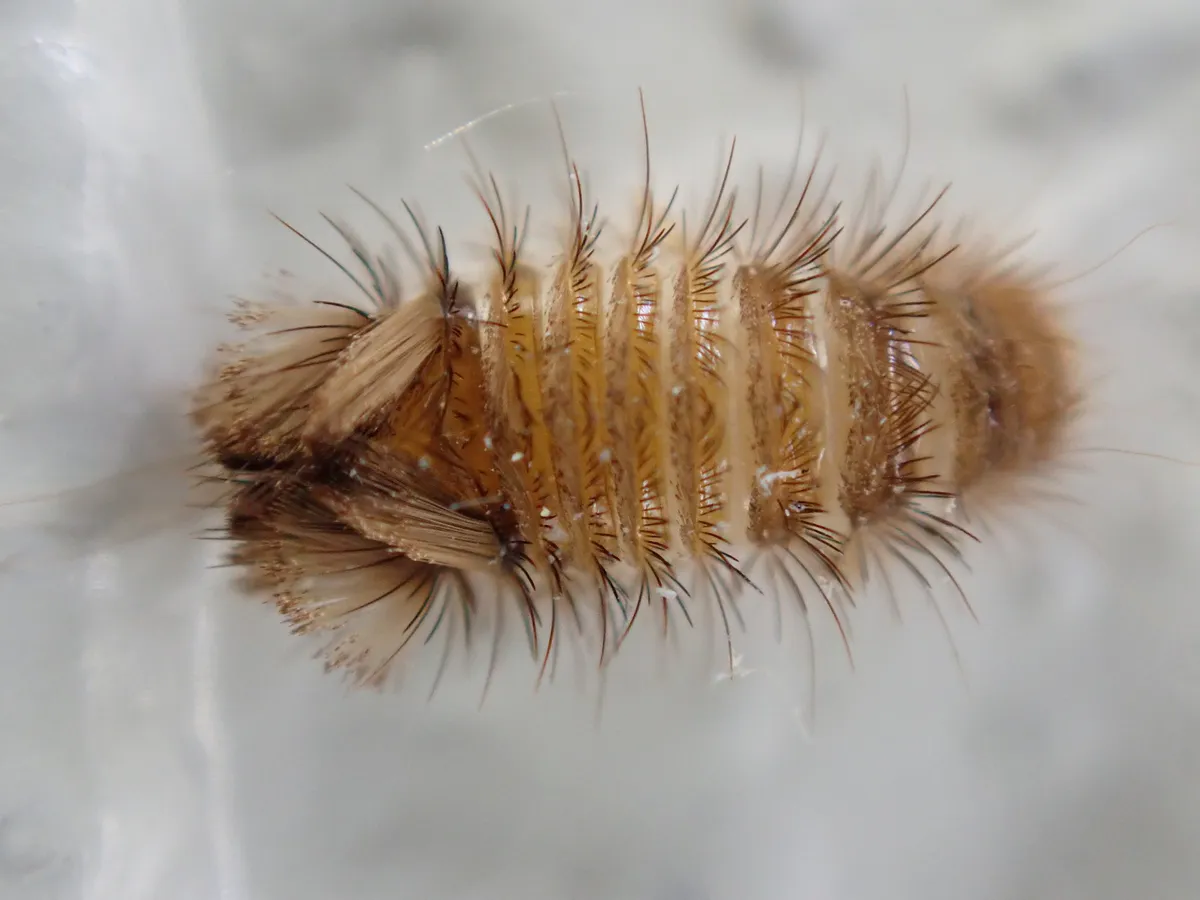
When people say carpet bugs, they usually mean carpet beetle larvae, and the carpet beetle larvae guide shows each kind and where they hide.
How can you tell which bug is in your carpet?
Catch it first, on clear tape or in a small jar, and look at it under a magnifying glass. Then run these checks.
Checks to run with the bug in a jar
- Does it jump? Fleas and springtails do. Kentucky's springtail fact sheet says a flea is hard, dark reddish brown and flattened side to side, while a springtail is softer and looks gray at first glance.
- Is it fuzzy and slow? A densely bristly crawler is most likely a carpet beetle larva. A shiny, creamy-white caterpillar with a dark head is a clothes moth larva; a pale, legless worm where a pet rests is probably a flea larva.
- Is it flat, oval and about the size of an apple seed? Think bed bug, especially at the carpet edge near a bed or sofa; bed bugs crawl but do not jump or fly.
- Is it a little beetle? Round to oval and mottled or shiny black suggests an adult carpet beetle; a round body on thin legs, with the head hidden from above, a spider beetle.
- How big is it? Lay it beside a ruler marked in inches, or a coin. Most bugs here are 1/16 to 1/4 inch long; clothes moth larvae reach 1/2 inch, and dust mites are too small to see.
- Do pets sleep nearby? UC IPM says flea numbers are highest where dogs or cats regularly sleep.
- What is around it? Shed skins, silk, specks or spots; the table below matches them.
| What you find | Most likely | Check next |
|---|---|---|
| Brown, bristly shed skins and pellets the size of salt grains | Carpet beetle larvae | Rug edges, closets, under furniture, baseboards |
| Grazed spots or holes in a wool rug, with silk webbing, tubes or cases | Clothes moth larvae | Under heavy furniture and along carpet edges |
| Small black specks that turn red when wetted | Flea droppings (flea dirt) | Comb the pet over a sink or tub and wet what falls off |
| Dark spots that may bleed like marker, pale yellow skins or tiny white eggs near a bed | Bed bugs | Mattress seams, bed frame and the carpet edge behind the bed |
| Tiny pale or gray specks in a damp basement or bathroom | Booklice or springtails | Leaks, mold and humidity |
From UC IPM, the University of Kentucky, Ohio State, the EPA and Penn State, all linked on this page.
Texas A&M AgriLife Extension says carpet beetles do not bite, though the hairs on their larvae irritate some people; the bug bite identification chart and the carpet beetle rash guide cover bites and rashes.
What are the slow, fuzzy bugs at the edges of my carpet?
Slow, bristly larvae along rug edges, under furniture or at the baseboards are carpet beetle larvae. The University of Kentucky's carpet beetle fact sheet describes them as 1/8 to 1/4 inch long, tan to brownish, slow moving and densely covered with hairs or bristles. It says the edges and undersides of rugs and carpets are more likely to be infested than open areas, and that the larvae also thrive on lint, hair and debris that build up under baseboards.
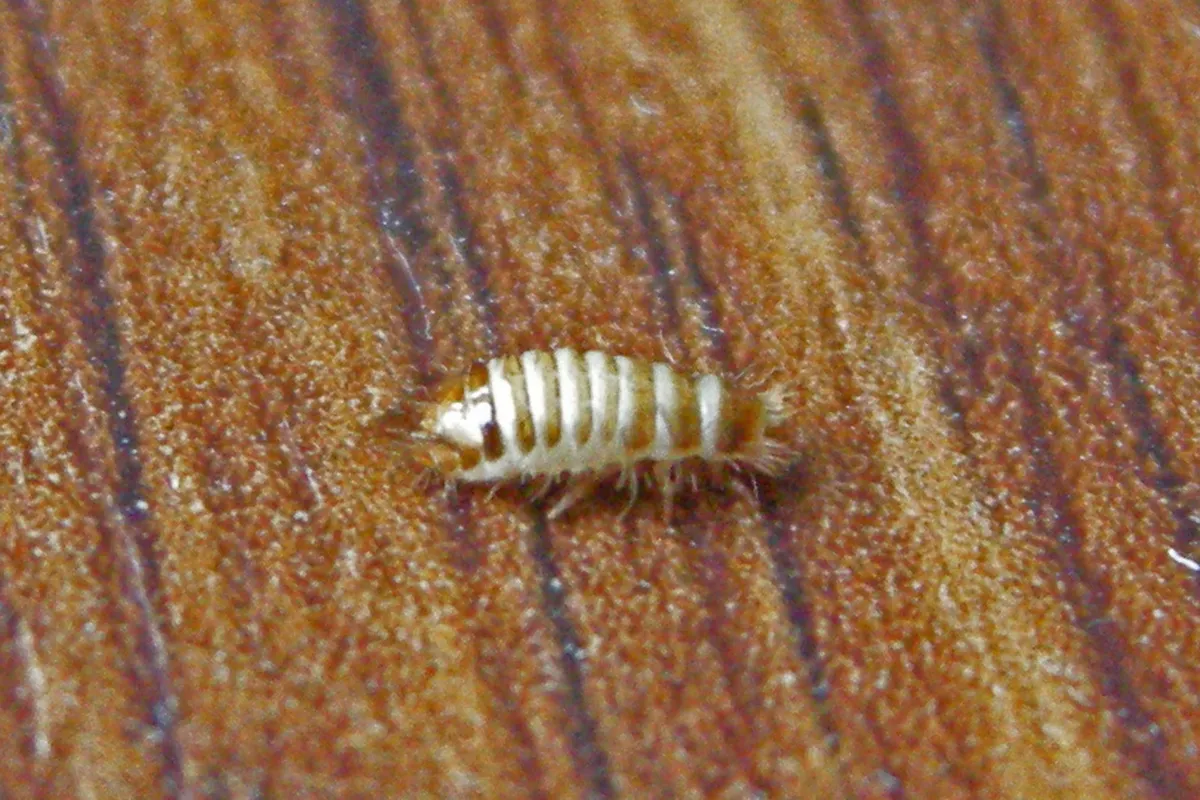
UC IPM's carpet beetle guide says the larvae eat wool, silk, leather, fur, feathers and pet hair but not synthetic fibers, and leave brown, shell-like, bristly cast skins and fecal pellets about the size of a grain of salt where they feed. Varied carpet beetle larvae have light and dark brown stripes; black carpet beetle larvae can reach 5/16 inch. Kentucky says cotton and synthetic fabrics are rarely attacked unless blended with wool, so in a synthetic carpet, look where lint and pet hair collect.
A few are normal. NC State's Plant Disease and Insect Clinic reports a study that found carpet beetle larvae in every home surveyed, some with more than others. Signs of carpet beetles shows the skins and the damage, and how to get rid of carpet beetles goes step by step.
What are the tiny jumping bugs in my carpet?
Where a dog or cat sleeps, a tiny dark bug that jumps is most likely a flea; springtails jump too, but they gather where it is damp. The CDC's flea prevention page says fleas can live in carpets, bedding and other surfaces in the home that pets frequent, and UC IPM's flea guide describes adults as reddish brown, wingless and no longer than 1/8 inch, so flattened from side to side that they look as if they walk on edge.
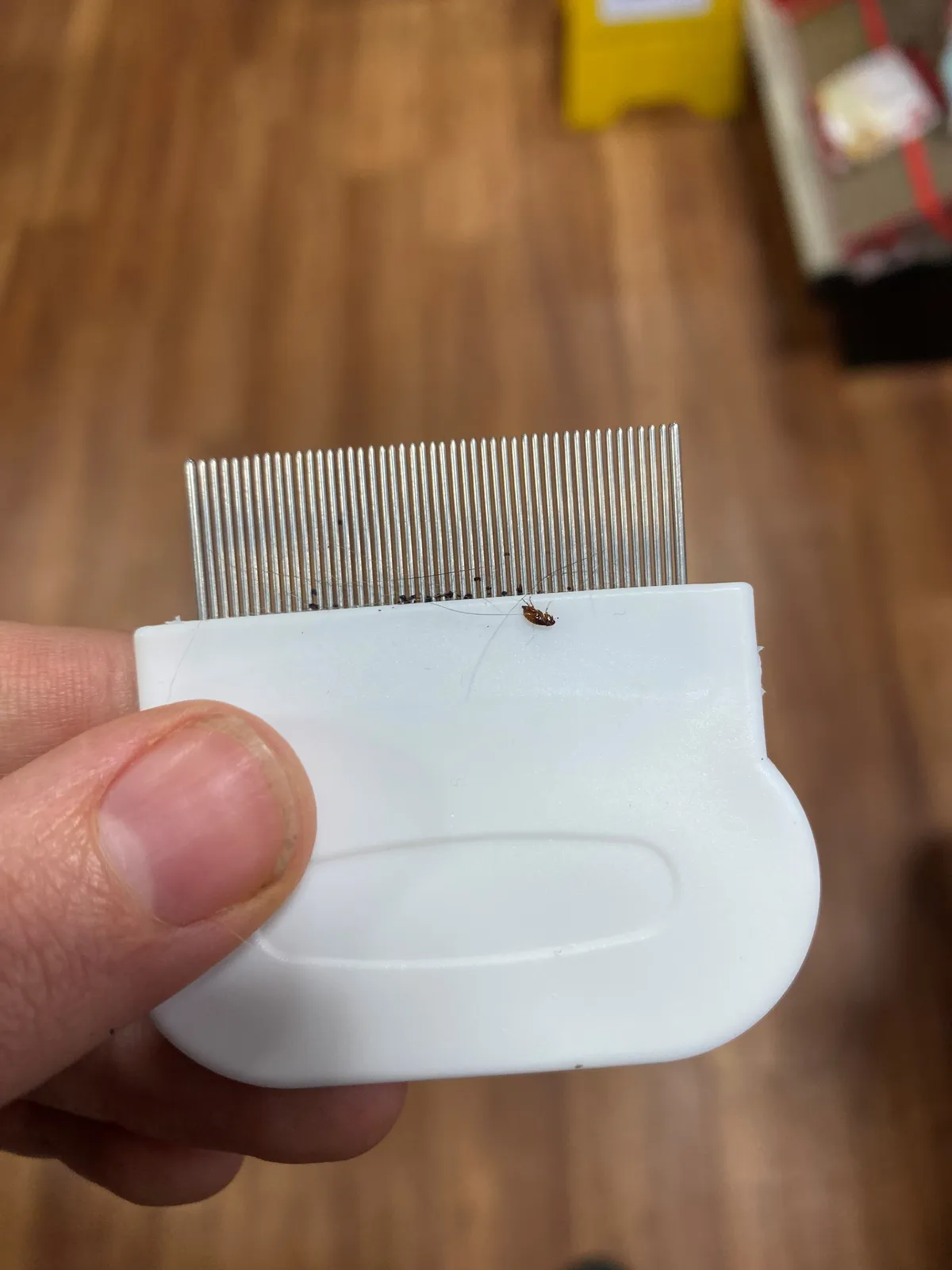
Two checks help. UC IPM suggests walking through a pet's resting areas in white socks pulled up to the knee, since fleas there jump onto the socks. Ohio State University Extension's flea fact sheet suggests combing the pet over a sink or tub and wetting any small black specks that fall off: specks that turn red are the blood droppings of adult fleas. Kentucky's springtail fact sheet adds that fleas leave small red bite marks along the legs and ankles.
The young live in the carpet itself. UC IPM says flea eggs readily fall from the pet onto bedding and carpeting, and the larvae, no larger than 3/16 inch, wormlike and legless with a brownish head, develop at the base of carpet fibers on the dried blood and droppings the adults leave. At cool temperatures, fully formed fleas can wait in their cocoons for up to 12 months, it adds, until warmth or footsteps on the carpet bring them out. What flea eggs and larvae look like and what flea dirt looks like have close-ups.
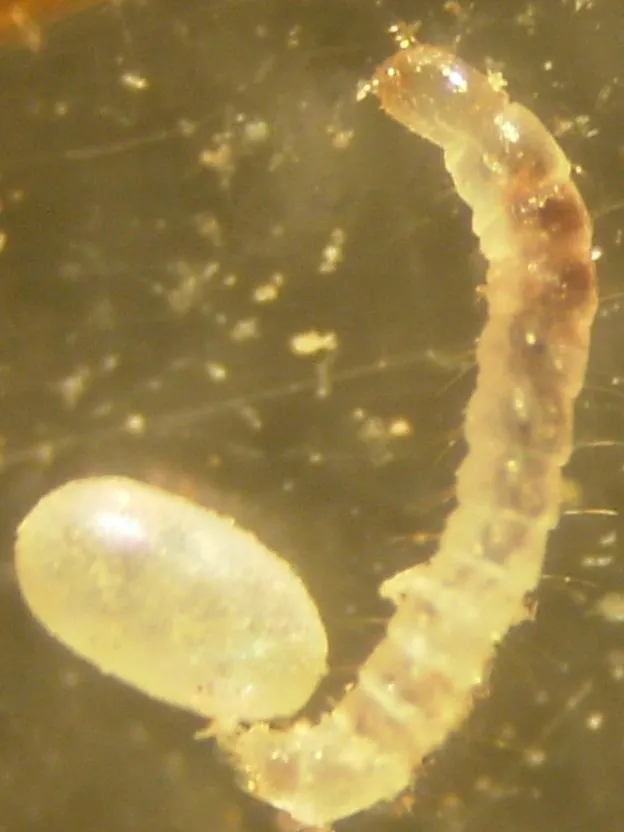
What fleas look like up close shows them on pets, people and bedding, and bugs that look like fleas sorts out the other small jumpers.
Can bed bugs live in carpet?
Yes, along its edges, though the bed comes first. The University of Kentucky's bed bug fact sheet lists the space along and under the edge of wall-to-wall carpeting, especially behind beds and sofas, among their hiding places, and says bed bugs often reside along baseboards. It also calls beds and other places where people rest or sleep the most common place to find them, especially early in an infestation, and the EPA's guide to finding bed bugs starts its list at the mattress, box spring, bed frame and headboard.
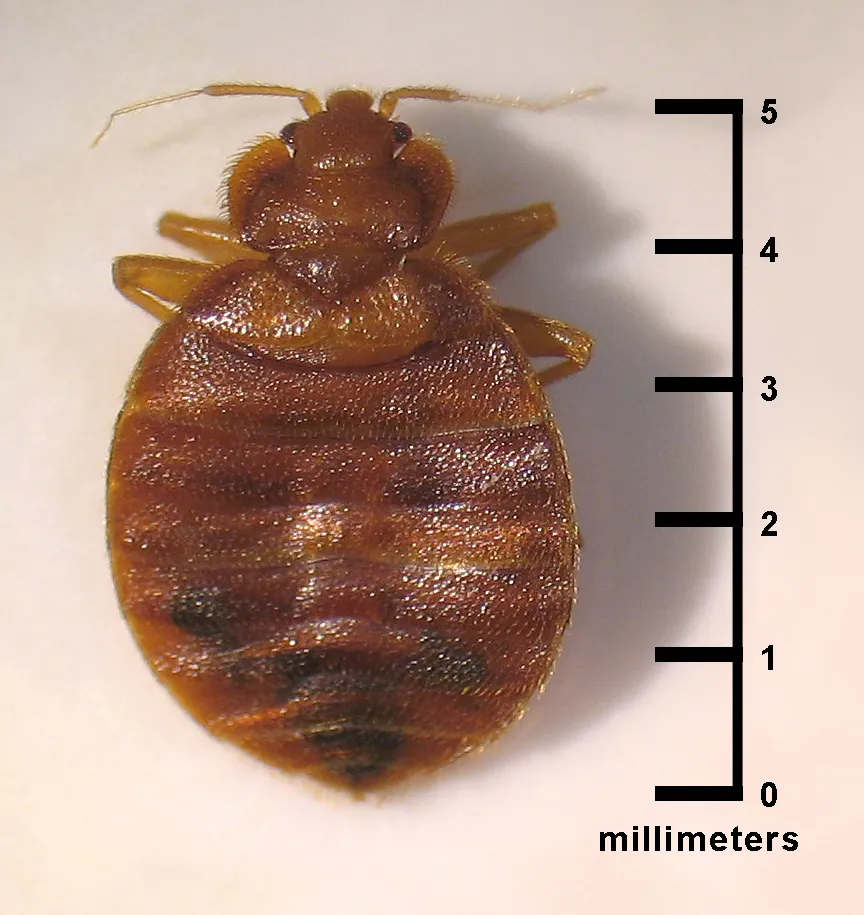
An adult bed bug is about the size of an apple seed, 3/16 to 1/4 inch long, with a flat, oval, brown body that turns reddish brown, swollen and longer after feeding, according to the EPA's bed bug life cycle page; young ones are smaller and translucent or whitish yellow. Kentucky says bed bugs do not fly or jump like fleas but crawl rapidly, and are active mainly at night.
To check a carpet, look along its edge behind the bed and sofa and along the baseboards for the signs the EPA lists for beds: dark spots of excrement that may bleed like a marker, rusty or reddish stains from crushed bugs, eggs and eggshells about 1/25 inch (1 mm) long, pale yellow skins shed by nymphs, and live bugs. The EPA adds that bed bugs readily travel 5 to 20 feet from their hiding places to feed, and that carpet beetles can easily be mistaken for them; bugs that look like bed bugs sets the look-alikes side by side.
Confirming them means finding the bugs or their signs, which Kentucky says often requires a professional. What bed bugs look like shows each stage, what baby bed bugs look like the nymphs and what bed bug eggs look like the eggs; how to inspect a bed for bed bugs walks through a search, and where bed bugs hide covers the rest of the room.
What is eating bare patches in my wool rug?
Bare or grazed patches in a wool rug are the work of clothes moth or carpet beetle larvae, and silk webbing, silk tubes or small cases point to clothes moths. The University of Kentucky's clothes moth fact sheet describes the larvae as creamy-white caterpillars up to 1/2 inch long. Webbing clothes moth larvae spin silken tubes or patches of webbing as they move, it says, and casemaking clothes moth larvae drag an open-ended tubular case wherever they go; the edges and undersides of rugs, and the parts beneath furniture, are more likely to be attacked.
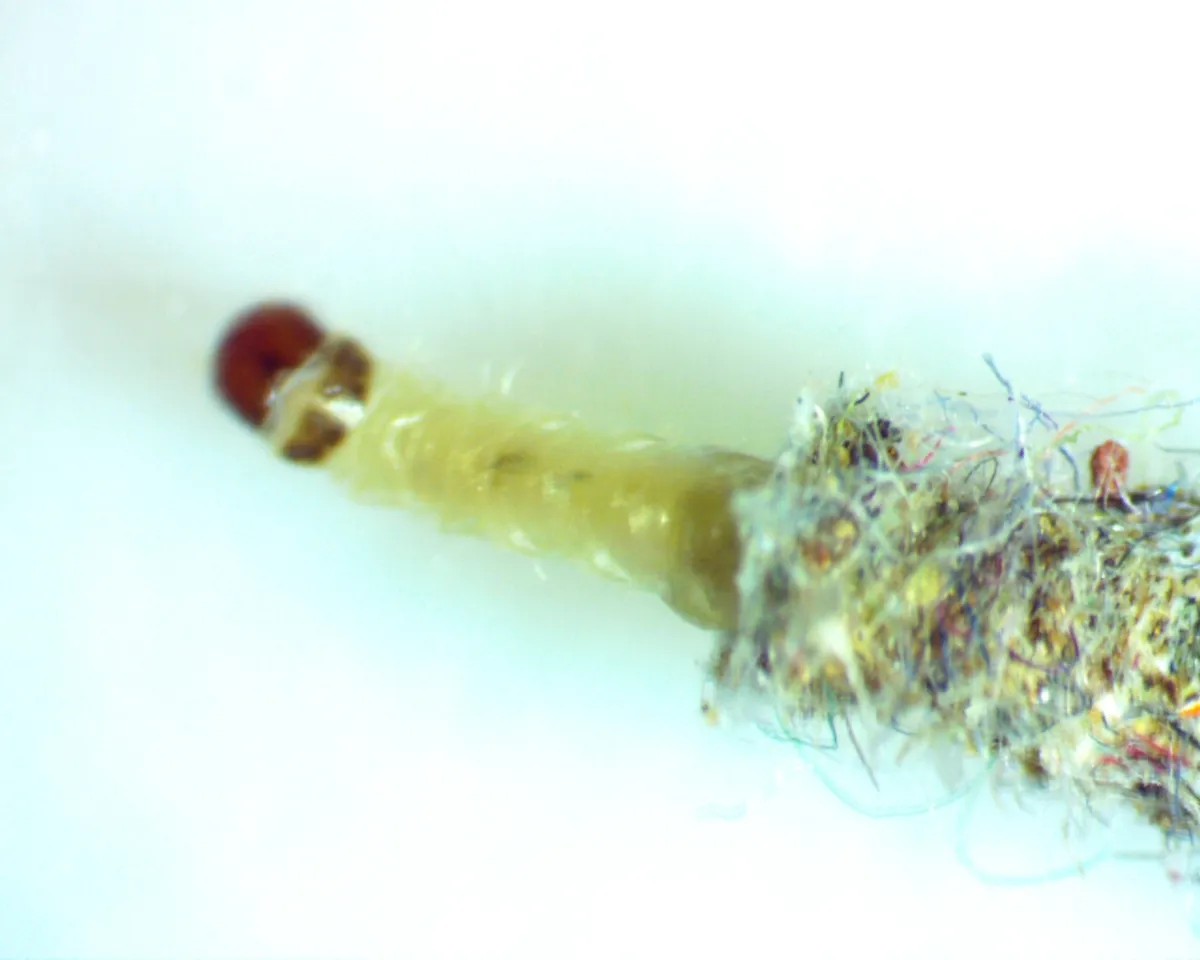
UC IPM's clothes moth guide says the larvae feed on wool carpets and rugs, upholstered furniture and furs, but rugs and furnishings made entirely of synthetic fibers are not affected, and it suggests inspecting beneath heavy furniture and along carpet edges. The adults, only about 1/4 inch long at rest, tend to hide when disturbed and are not attracted to lights.
Carpet beetle larvae eat the same materials, and UC IPM's carpet beetle guide says damage alone cannot always tell the two apart. What lies nearby can: clothes moths make webbing, while bristly shed skins with no webbing point to carpet beetles, which more often damage one large area where moths leave scattered holes. Small moths in the house shows the adults and how to tell them from pantry moths.
What are the tiny pale bugs in a damp basement or bathroom?
Tiny, soft, pale or grayish specks in a damp basement or bathroom may be booklice or springtails; both point to moisture. Penn State Extension's booklice page describes booklice as soft-bodied, wingless insects 1/25 to 1/12 inch (1 to 2 mm) long, mostly light to dark tan, living indoors in humid, damp, generally dark places and feeding on mold. They do not bite or affect human or animal health, it says.
Springtails jump. Kentucky's springtail fact sheet says they are often found indoors in damp areas such as basements, spring into the air with a forked part that clasps under the abdomen, and do not bite people or animals. Penn State's springtail page puts most kinds that get into homes at 1/25 to 1/12 inch (1 to 2 mm), more often in bathrooms and basements.
For both, the fix is drier air: Penn State says lowering relative humidity below 50% prevents mold growth and booklouse development, and Kentucky's springtail advice includes repairing water leaks and removing wet or moldy items. The booklice guide and the springtail guide cover them, the tiny white bugs guide sorts pale specks found elsewhere, and bugs in the bathroom covers that room.
What are the small beetles walking across my carpet?
A small, hard, round beetle on a carpet may be an adult carpet beetle. Kentucky gives adults as 1/16 to 1/8 inch, oval and mottled or speckled, and UC IPM says the black carpet beetle, 1/8 to 3/16 inch, is shiny black and dark brown with brownish legs. The adults feed on pollen and nectar rather than fabric, are drawn to sunlight, and often fly in from flowers or are carried in on cut flowers, UC IPM says.
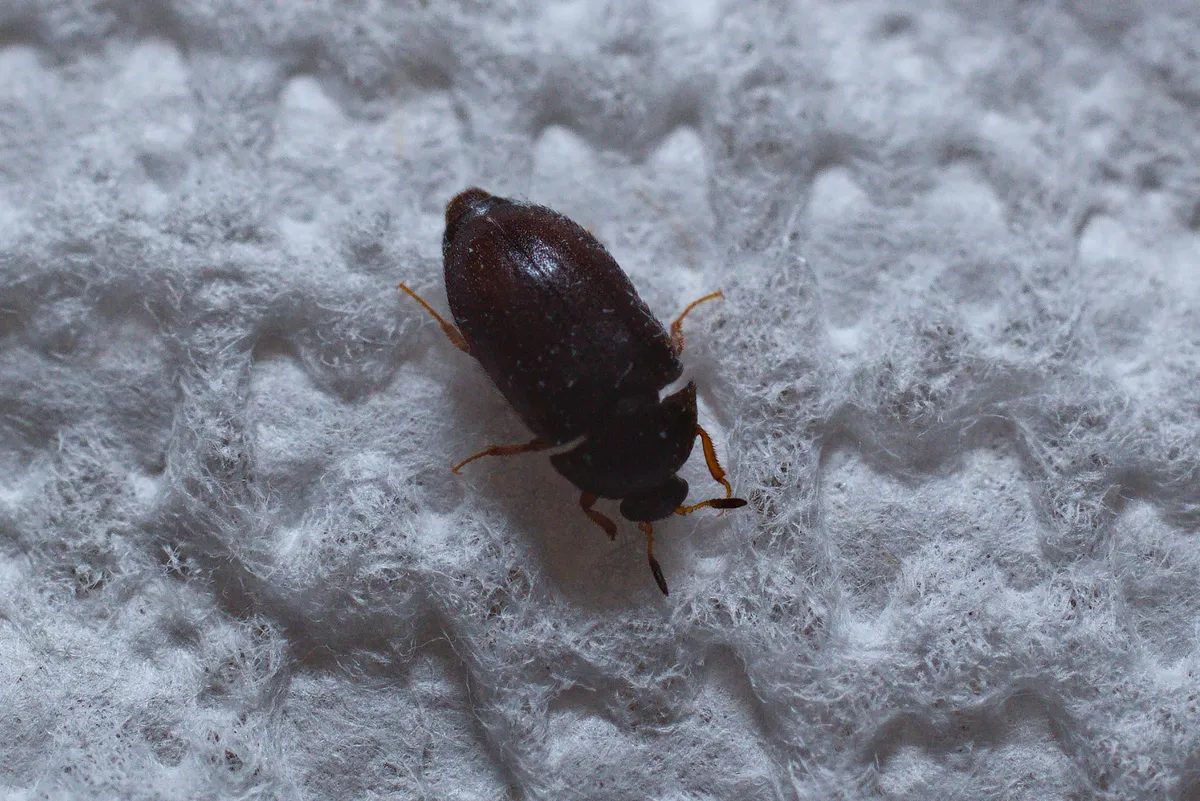
A few adults indoors are not cause for alarm, UC IPM says; larvae developing in fabrics or elsewhere in the home are what need action. A round, often hairy beetle on thin legs, with its head hidden from above, is more likely a spider beetle. Colorado State University Extension gives these as about 1/12 to 1/6 inch (2 to 4 mm), mostly brown to reddish brown, scavenging seeds, grain debris, dried fruit, feathers and dead insects; because most need fairly high humidity, in Colorado they typically turn up in damp basements and crawl spaces. The most globular kinds look like tiny spiders, hence the name spider beetles.
If the bug is black or brown and turns up in other rooms too, the tiny black bugs guide and the tiny brown bugs guide sort small dark bugs by color and place, bugs in the kitchen sorts that room, and the guide to beetles in the house covers the other common indoor beetles.
Do dust mites live in carpet?
Yes, though you will not see them. NIEHS says dust mites are microscopic and can live in mattresses, bedding, upholstered furniture, carpets and curtains, feeding on flakes of dead skin shed by people and pets, and that no matter how clean a home is, they cannot be completely eliminated. Kentucky says they are most numerous in beds, overstuffed sofas and chairs and the carpet beside them, measure about 1/50 inch (0.5 mm) as adults, and cannot bite or sting.
The concern is allergy: NIEHS calls dust mites a big source of allergens that can worsen allergies and asthma. Kentucky calls carpet a perfect breeding ground for them and says routine vacuuming removes only a small percentage of the mites; NIEHS's steps to reduce them include replacing wall-to-wall carpet in bedrooms with bare floors where possible. The dust mite guide covers the rest.
Bugs people mix up in carpet
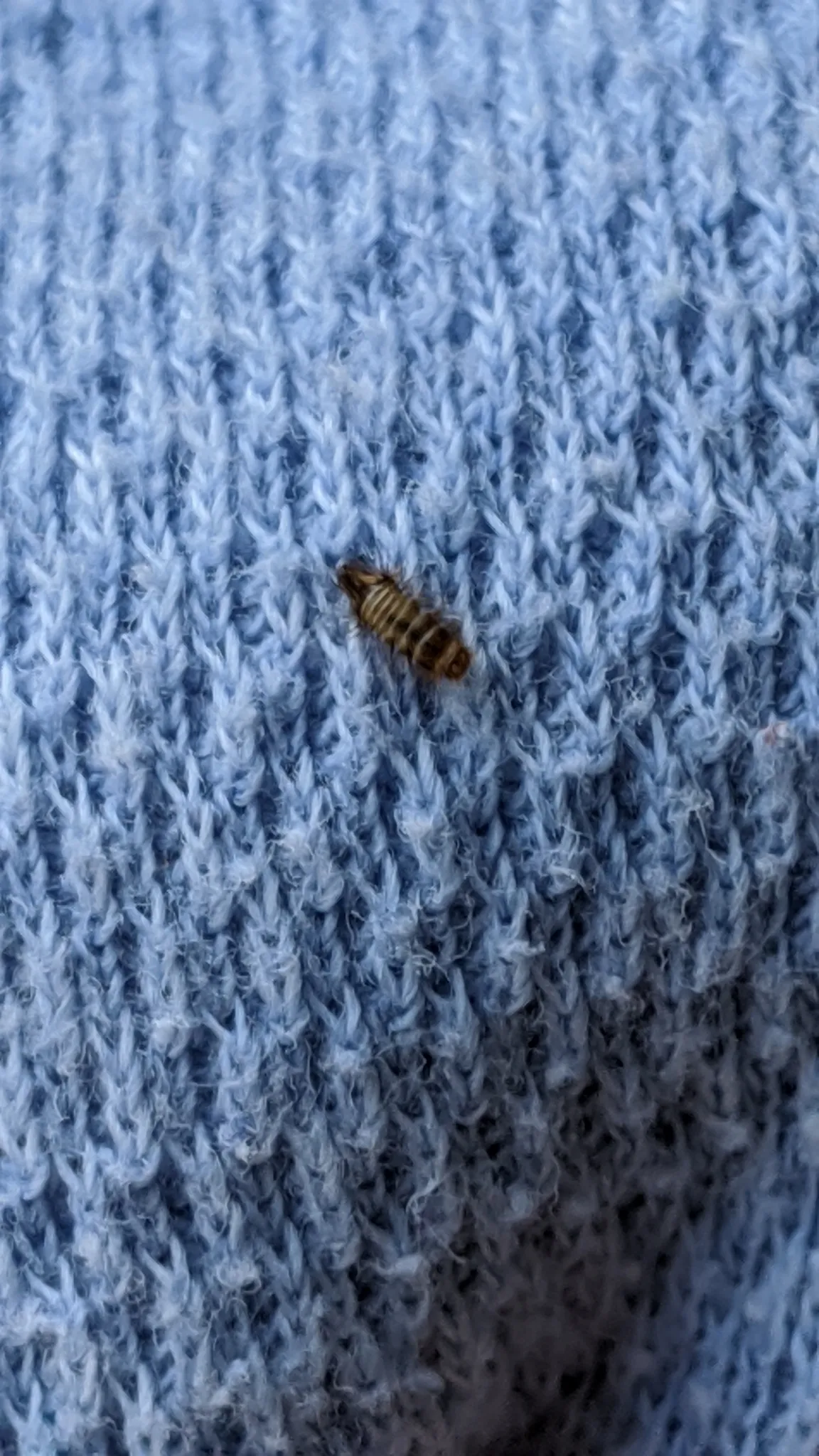 Carpet beetle larvaSlow and densely bristly, 1/8 to 1/4 inch; leaves brown shed skins
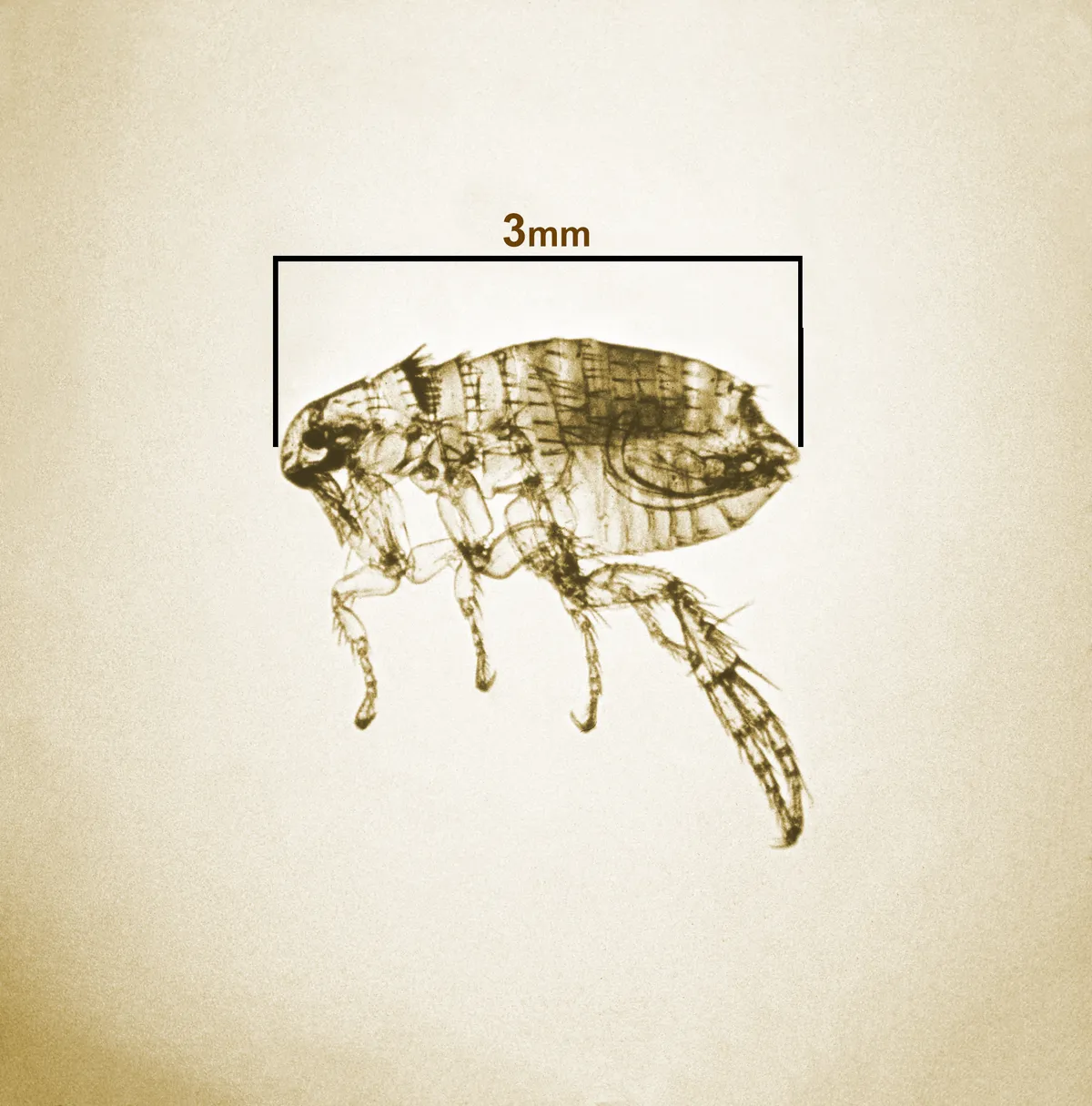 FleaUp to 1/8 inch, hard and flattened side to side; jumps where pets sleep
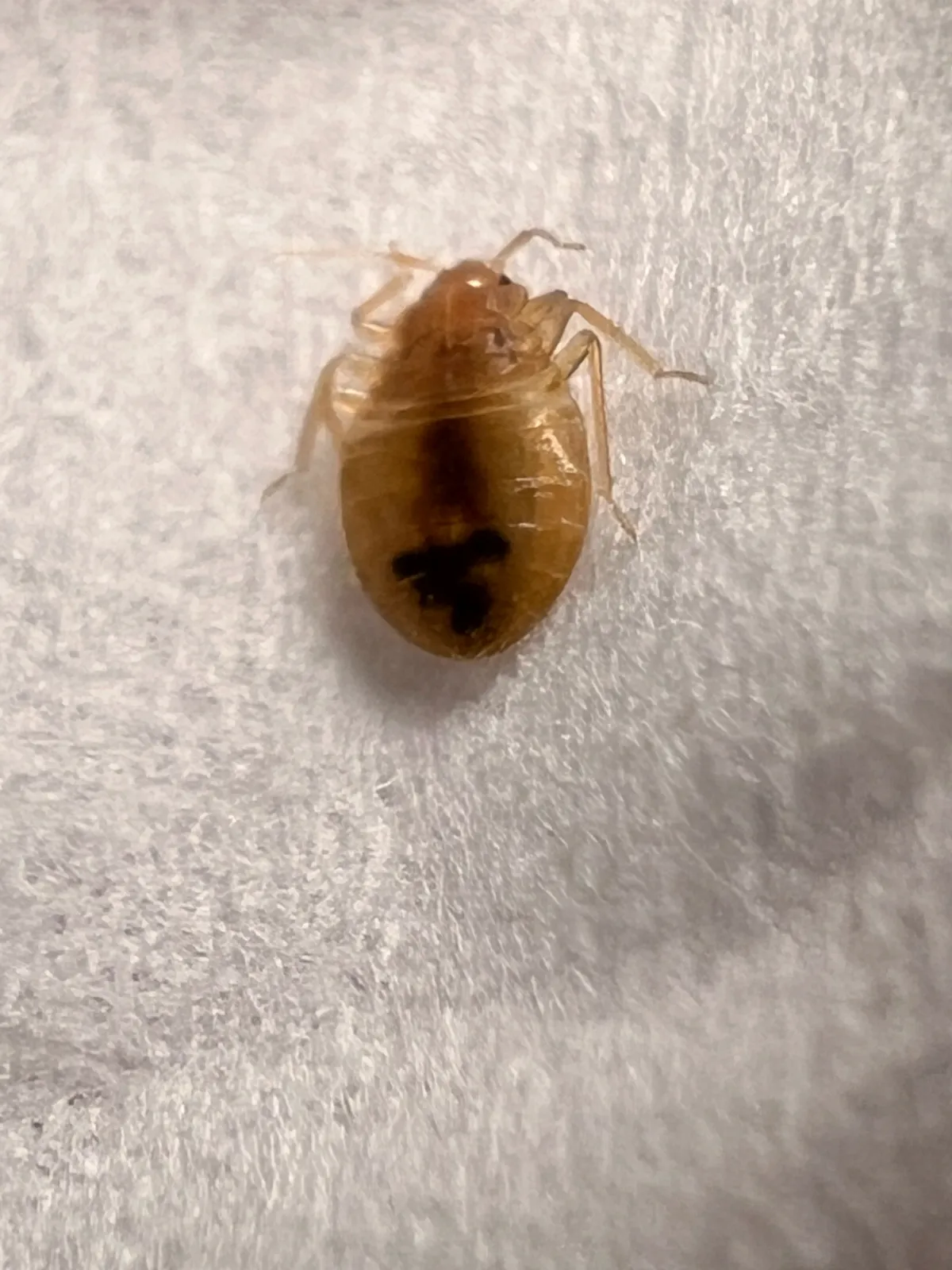 Bed bug nymphSmall, flat and oval, translucent to whitish yellow; crawls but does not jump
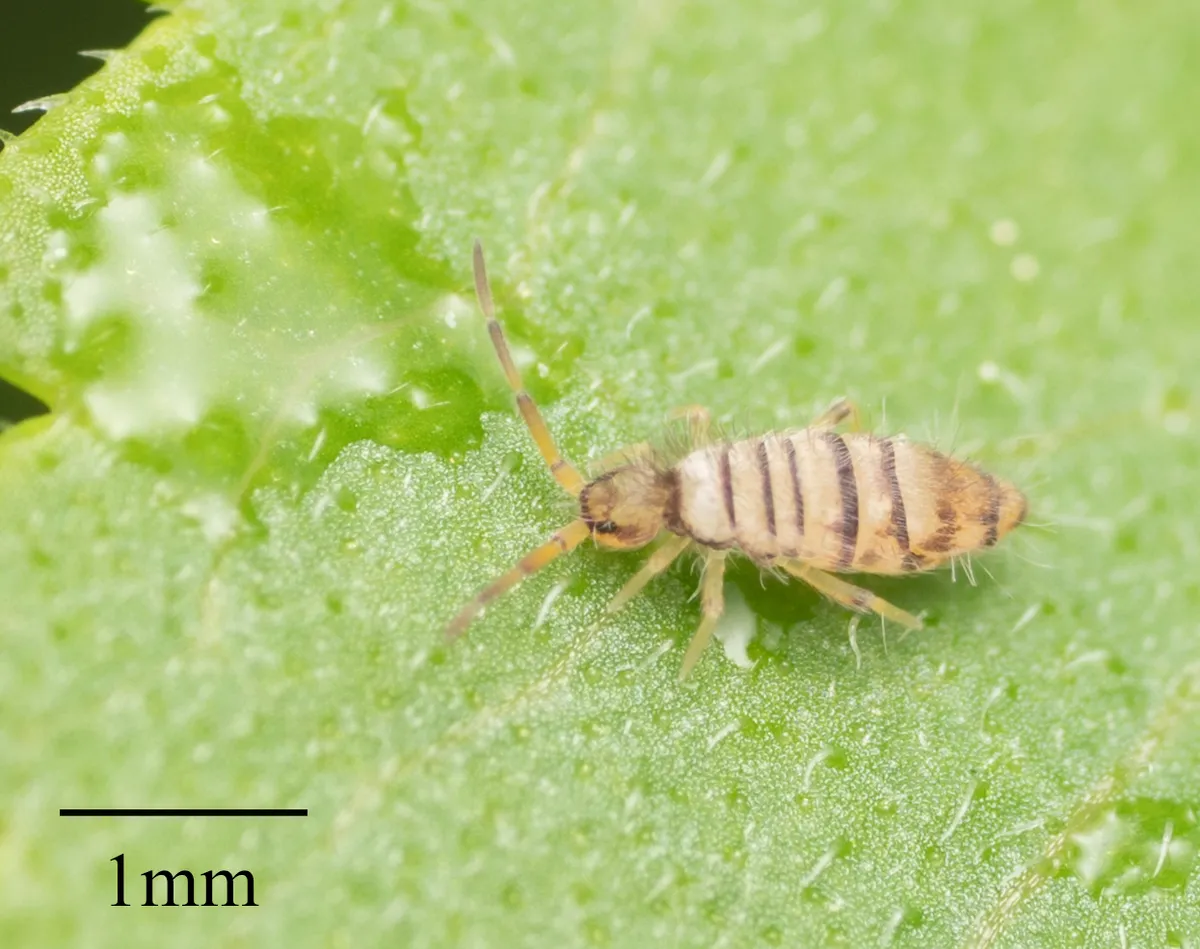 SpringtailJumps like a flea but is soft-bodied; gathers where it is damp
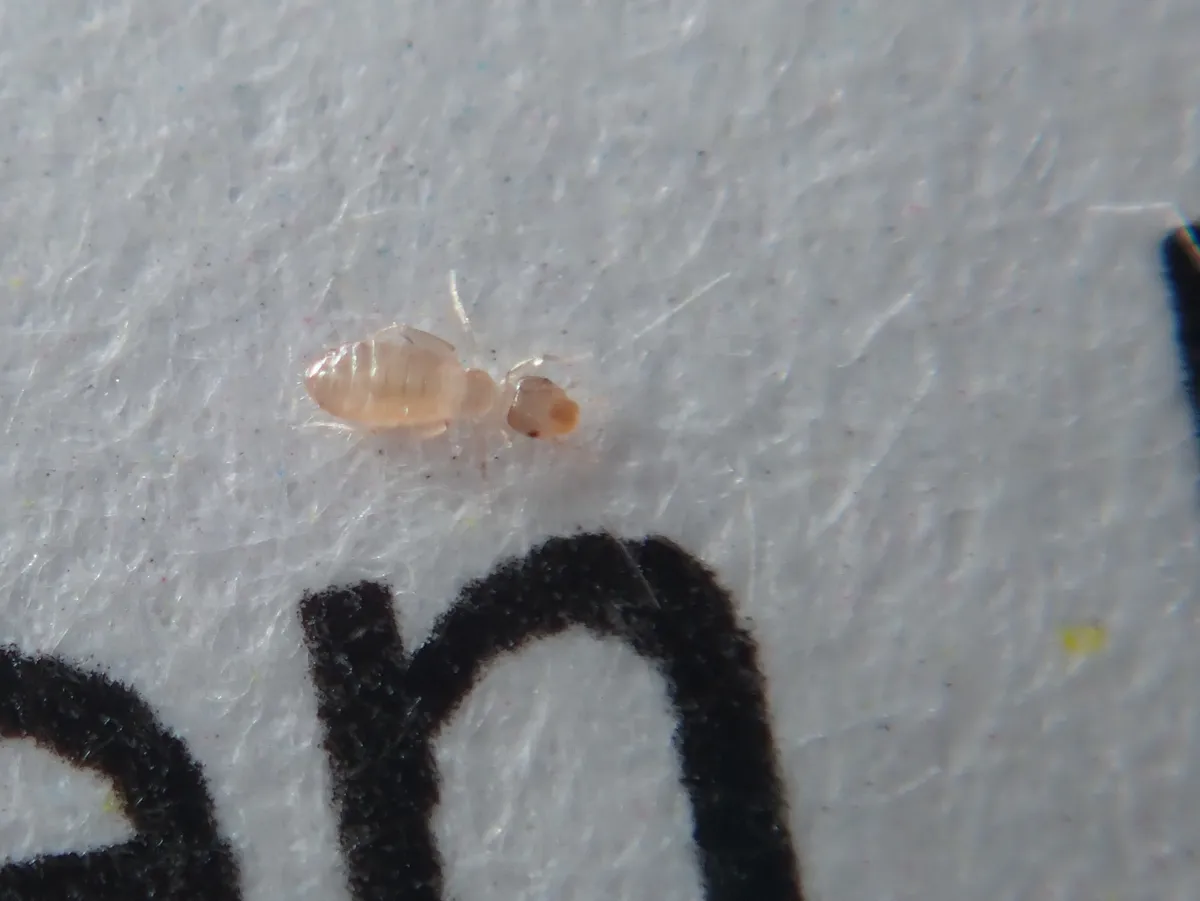 BooklouseSoft, wingless and pale to tan, 1/25 to 1/12 inch; eats mold in damp rooms
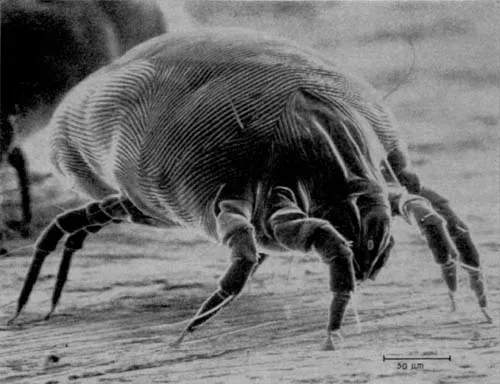 Dust miteAbout 1/50 inch; generally seen only under a microscope
Photos: Carpet beetle larva: (c) Erin Lalime, some rights reserved (CC BY), via iNaturalist, CC BY 4.0. Flea: CDC (CDC Public Health Image Library, phil.cdc.gov), public domain. Bed bug nymph: no rights reserved, via iNaturalist, CC0 1.0. Springtail: no rights reserved, via iNaturalist, CC0 1.0. Booklouse: (c) Alexis Tinker-Tsavalas, some rights reserved (CC BY), via iNaturalist, CC BY 4.0. Dust mite: Employee of US Government, Public domain, via Wikimedia Commons, public domain.
What should you do once you know what it is?
Vacuuming helps against most of these bugs; then take the next step for the one you have.
- Carpet beetle larvae. Vacuum often along rug edges, under furniture and at baseboards, and empty the bag promptly: UC IPM says thorough vacuuming removes their food and their eggs, larvae and adults, and that insecticides may not be needed once food sources are removed and the area is kept clean. See how to get rid of carpet beetles.
- Fleas. Ask a veterinarian about flea control for each pet, as the CDC advises, and vacuum carpets, rugs and cushions often, emptying the bag outside; UC IPM says vacuuming kills larvae in the carpet and picks up adults. See how to get rid of fleas.
- Bed bugs. Confirm them first. Kentucky suggests running the vacuum wand slowly along the edges of beds, furniture and flooring and sealing the contents in a trash bag, since bed bugs can survive being vacuumed; how to get rid of bed bugs covers the rest.
- Clothes moth larvae. Vacuum beneath heavy furniture and along carpet edges, and dry-clean an infested area rug or hang it in the sun and then vacuum it, as UC IPM suggests.
- Booklice and springtails. Dry the room: lower the humidity and fix leaks, as Penn State and Kentucky advise.
- Dust mites. Vacuum with a HEPA filter or a double-layered microfilter bag and keep humidity at or below 50%, two of the NIEHS steps in the dust mite guide.
Still not sure? The five-question pest identifier asks where you found a bug, how big it is and how it moves.
This guide is general educational information, not medical advice. If you have symptoms or concerns after a bite or exposure, contact a healthcare provider.
Frequently Asked Questions
Am I dirty if I have bugs in my carpet?+
Not necessarily. An NC State Extension entomologist reports a study that found carpet beetle larvae in every home surveyed, and the University of Kentucky says there is often no relationship between bed bugs and cleanliness, unlike cockroaches and flies that feed on filth. NIEHS says dust mites cannot be completely eliminated no matter how clean a home is. Booklice and springtails follow dampness and mold, according to Penn State and Kentucky. Cleaning still matters, because removing lint, pet hair and moisture takes away what several of these bugs live on.
Will vacuuming get rid of bugs in carpet?+
It helps, more against some bugs than others. UC IPM calls frequent, thorough vacuuming an effective way to remove carpet beetle eggs, larvae and adults along with their food, and says vacuuming kills flea larvae in the carpet and picks up adult fleas. The University of Kentucky warns that bed bugs can survive being vacuumed and their eggs are hard to dislodge, so the contents go in a sealed trash bag, and says vacuuming removes only a small percentage of dust mites. For fleas, the CDC also advises asking a veterinarian about flea control for each pet.
How do you know if you have bed bugs in your carpet?+
Check the bed first, since the University of Kentucky says beds and other places where people rest or sleep are where bed bugs are most often found, then look along and under the edge of the carpet behind the bed and sofa and along the baseboards. The EPA's signs are dark spots of excrement that can bleed like marker ink, rusty or reddish stains from crushed bugs, tiny eggs and eggshells, pale yellow shed skins and live bugs, which are flat, oval and 3/16 to 1/4 inch long. Kentucky says confirmation often requires a professional.
How long can bed bugs live in carpet?+
The carpet is only a hiding place; what limits bed bugs is how long they can go without a blood meal. The University of Kentucky says nymphs and adults can persist for months without feeding, and that in temperature-controlled buildings about 1 to 4 months without a meal is more typical. The EPA says bed bugs readily travel 5 to 20 feet from their hiding places to feed, so bugs at a carpet edge behind a bed or sofa can still reach a sleeping person. That is why carpet edges near a bed are checked and vacuumed along with the bed.
What are carpet mites?+
None of the extension or health sources cited here describes a pest called a carpet mite. The mites that do live in carpet are house dust mites, which NIEHS says are microscopic and feed on flakes of dead skin, and which the University of Kentucky says cannot bite or sting and are generally visible only with a microscope. Their harm is allergy: NIEHS calls them a big source of allergens that can worsen allergies and asthma. A speck you can see moving on a carpet is something else, such as a booklouse, springtail, flea or carpet beetle larva.
What are the tiny worms in my carpet?+
They are probably insect larvae. Bristly ones that UC IPM likens to fuzzy or hairy maggots are carpet beetle larvae, 1/8 to 1/4 inch long by the University of Kentucky's figures. Legless, wormlike larvae no larger than 3/16 inch, with a brownish head, deep in the carpet where pets rest, are flea larvae, according to UC IPM. A shiny, creamy-white caterpillar with a dark head, up to 1/2 inch long, that spins silk or drags a case is a clothes moth larva, as UC IPM and Kentucky describe them.
Can carpet beetles live in synthetic carpet?+
They rarely eat it, but they can live on what collects in it. UC IPM says carpet beetle larvae do not feed on synthetic fibers, and the University of Kentucky says cotton and synthetic fabrics such as polyester and rayon are rarely attacked unless blended with wool. Kentucky adds that carpet beetles can thrive on lint, hair and debris that build up under baseboards, and UC IPM lists pet hair among their foods. So check the edges of a synthetic carpet, the spots under furniture and wherever pet hair gathers, and vacuum them often.
What causes bugs in carpet?+
Each one follows its own food or need. Carpet beetle and clothes moth larvae feed on wool, fur and feathers, and carpet beetle larvae also on pet hair and lint; UC IPM says adult carpet beetles often fly in from flowers or ride in on cut flowers. The CDC says fleas can live in carpets and other surfaces pets frequent. Bed bugs hide near the people they feed on and, the University of Kentucky says, travel by hitching rides on people and their belongings. Booklice and springtails follow dampness and mold, Penn State says, and dust mites feed on skin flakes in house dust, according to NIEHS.
How long do fleas live in carpet?+
The young can last a long time there. UC IPM says flea larvae develop at the base of carpet fibers, where they feed on the dried blood and droppings adult fleas leave and need at least 75% relative humidity, and that at cool temperatures fully formed fleas can wait in their cocoons for up to 12 months. Warmth and the pressure of footsteps or a vacuum on the carpet trigger them to emerge, and debris such as pet hair and carpet fibers usually hides the cocoons. Ohio State says vacuuming must be done regularly, every other day, to be effective.
Sources
- Pest Notes: Carpet Beetles (UC ANR Publication 7436; D. H. Choe, updated April 2020) — University of California Statewide IPM Program
- Carpet Beetles (ENTFACT-601; Michael F. Potter, revised March 2026) — University of Kentucky Department of Entomology
- NC Spring Signals Indoor Carpet Beetle Activity (Matt Bertone, February 10, 2023) — NC State Extension, Plant Disease and Insect Clinic
- Diagnosing Mysterious Bug Bites (Michael Merchant) — Texas A&M AgriLife Extension
- Pest Notes: Fleas (UC ANR Publication 7419; M. K. Rust, updated September 2010) — University of California Statewide IPM Program
- Fleas (HYG-2081; David J. Shetlar and Jennifer E. Andon, 2012) — Ohio State University Extension
- Preventing Fleas (June 4, 2024) — Centers for Disease Control and Prevention
- ENTFACT-636: Bed Bugs (Michael F. Potter, revised March 2026) — University of Kentucky Department of Entomology
- Bed Bugs Appearance and Life Cycle (updated January 6, 2026) — US Environmental Protection Agency
- How to Find Bed Bugs (updated September 8, 2026) — US Environmental Protection Agency
- Clothes Moths (ENTFACT-609; Michael F. Potter, revised March 2026) — University of Kentucky Department of Entomology
- Pest Notes: Clothes Moths (UC ANR Publication 7435; D. H. Choe, updated March 2013) — University of California Statewide IPM Program
- Booklice (S. Jacobs; revised by M. Skvarla, updated July 23, 2024) — Penn State Extension
- ENTFACT-420: Springtails (Hannah Blevins, Jonathan Larson and Zachary DeVries, revised March 2026) — University of Kentucky Department of Entomology
- Springtails (Steve Jacobs, updated June 24, 2026) — Penn State Extension
- Dust Mites and Cockroaches (last reviewed March 6, 2026) — National Institute of Environmental Health Sciences, National Institutes of Health
- House Dust Mites (ENTFACT-646; S. Principato, M. Potter and Z. DeVries, revised March 2026) — University of Kentucky Department of Entomology
- Colorado Insects of Interest: Spider Beetles — Colorado State University Extension
How this guide was made: it was researched and drafted with AI assistance from the sources listed above. A second, independent AI pass then checked each factual claim against those sources. Found an error? Email support@buzzskito.ca.