
BuzzSkito Mosquito & Tick Control Specialists · Published July 21, 2026
What Is the Best Bed Bug Heat Chamber in Canada?
A purpose-built portable heat chamber — the ZappBug Original for most households, the ZappBug Room when you need to fit furniture — is the best bed-bug heat chamber you can buy in Canada. The reason is narrow and important: of all the anti-bed-bug tools a consumer can own, a heat chamber is one of the very few that reliably kills the eggs, and it does so for every item you can carry to it, with no residue and nothing left to hatch. A steamer does the same on surfaces you can reach; a vacuum removes what you can see; a chamber quietly decontaminates the belongings — the luggage, clothing, shoes, books, and toys — that would otherwise sit bagged in a corner making you nervous for weeks.
The distinction that separates a chamber that works from one that wastes an afternoon is not the wattage or the brand on the box — it is whether the coldest point in the load actually crosses the lethal temperature and stays there. That single idea drives everything below, from why the built-in thermometer matters more than anything else, to why you should unfold a bulky coat before you close the lid.
Check current Canadian availability of the picks:
The Science: Why 48°C Is the Number That Matters
Bed bugs are killed by heat, but only heat that is both high enough and held long enough. The lethal threshold is around 48°C (118°F): adults and nymphs die within minutes once their body temperature reaches it, while the eggs — sturdier, shielded by their coating — need sustained exposure, which is why the working target is holding the entire item at 48–50°C for 60 to 90 minutes or more. Go too low and you merely stress the bugs; hit the temperature only at the surface and you kill nothing that has retreated to the cooler core.
That word — sustained — is the whole game. A duffel bag whose outer fabric hits 50°C while the centre of a folded blanket inside is still sitting at 35°C has not been treated; the bugs simply migrate to the cool middle and survive. A real heat chamber circulates warm air and holds temperature so that even the most insulated, slowest-heating point in the load crosses the lethal line and stays across it. This is also precisely why heat succeeds where sprays fail on eggs: contact insecticides struggle to penetrate the egg\'s protective coating, but heat denatures the proteins inside regardless of the shell, killing the developing insect along with the adults and nymphs in one pass.
Why the Thermometer Is the Most Important Feature
If you take one thing away from this guide, take this: on a bed-bug heat chamber, the probe thermometer is not an accessory, it is the point. Every purpose-built unit — ZappBug included — ships with a temperature probe you place inside, usually at the coldest, most buried spot in the load, so you can read the actual temperature the bugs are experiencing rather than guessing from how warm the outside feels. That reading is your proof of kill. Without it you are running an expensive space heater and hoping.
This is also the single biggest reason to be cautious with a DIY build or a bargain grey-market unit. A heater that “feels hot” and a chamber that verifiably holds 49°C at the core of a packed suitcase are worlds apart, and only one of them tells you the eggs are dead. When you shop, treat a built-in, load-placed thermometer as a non-negotiable feature and be skeptical of any listing that talks up wattage but says nothing about how you confirm the temperature inside.
How to Choose and Size a Heat Chamber
These units are a real investment, so it is worth matching the size to the job rather than over- or under-buying. Work through it in this order:
- Start from what you need to fit inside. Mostly clothing, luggage, shoes, and books? The ZappBug Original handles the majority of household jobs and costs less to buy and run. Need to heat a small armchair, stacked chairs, or clear a whole family\'s laundry in one go? Step up to the ZappBug Room.
- Be honest that it will not fit the bed. Neither common size treats a mattress or box spring in place. If the mattress is the problem, you need in-place heat or steam, not a chamber — do not buy a bigger unit expecting it to swallow the bed.
- Buy the thermometer-verified design (pay for this). The built-in probe is what turns a hot box into a treatment. It is the one feature you cannot fake with a cheaper heater.
- Match it to Canadian power (non-negotiable). Choose a unit rated for 120V household current and, ideally, one carrying a recognised safety certification. A voltage mismatch on a grey-market US listing is where fire and failure both live.
- Weigh cycles-per-job against footprint. A larger chamber clears big loads in fewer multi-hour runs but takes more storage space. If your jobs are small and occasional, the Original\'s smaller footprint is the better trade.
Read that as a spending map: put your money into a correctly rated, thermometer-verified unit sized to the loads you actually have, and do not pay for capacity you will never fill.
ZappBug is not the only line worth shortlisting. PackTite builds a different shape of chamber — a tall hanging design that suits coats, linens and bulky clothing rather than mixed loads — and we reviewed both sizes: the large-capacity Closet and the folding Portable for shoes, books and bags. If you are torn between the two brands’ flagship units, the Closet against the ZappBug Room, spec by spec is the direct comparison, and the twin-heater Oven 2 write-up covers the middle size along with its two-circuit power requirement.
For a traveller who would rather not own a chamber at all, there is a fourth shape: a suitcase with the heating elements built into its walls, which treats its own contents at the front door.
The DIY Heat Chamber: When It Makes Sense (and When It Bites)
For a single, small, one-off job on a tight budget, a DIY chamber can genuinely save money — but it comes with real risk that a purpose-built unit engineers away. The usual builds are an insulated storage tote or a zippered garment bag fed warm air by a small ceramic space heater, or a foil-lined box, run until the interior holds 48–50°C. Done carefully it works. Done blind it either fails to kill the eggs or, worse, overheats into melted belongings or a fire.
If you go this route, the rules are not optional: use a proper probe thermometer placed at the coldest, most insulated point in the load and read it, not the heater\'s dial; never leave a space heater running unattended; keep the heating element well clear of the fabric it is warming; and pull out anything with batteries, aerosols, or a low melting point first. The honest summary is that a DIY chamber trades money for risk and attention — a ZappBug costs more up front and buys back the even heat, the controlled temperature, and the verified kill. For anyone facing a recurring problem or heating anything they cannot afford to lose, that trade favours the purpose-built unit.
What a Heat Chamber Can and Cannot Treat
The chamber\'s superpower and its limit are the same fact: it heats what you put inside it, and only that. Inside its capacity it is superb — luggage, clothing, shoes, books, toys, linens, and small soft furnishings come out completely decontaminated, eggs and all. That covers a huge share of the anxiety in a bed-bug situation, because it clears the mountain of belongings you would otherwise have to bag, seal, and distrust for months.
What it cannot do is reach the infestation where it actually lives. A portable chamber does not heat a mattress or box spring in place, a bed frame or headboard, large furniture beyond its capacity, or — the crucial one — the cracks, baseboards, outlet boxes, wall voids, and carpet edges where bed bugs harbour between meals. It also cannot stop a neighbouring unit from re-seeding your room. For the surfaces it cannot hold, a bed-bug steamer applies lethal heat in place; for the room and the structure you need whole-room heat, steam, and interceptor monitoring together. Think of the chamber as the belongings-decontamination station in a larger plan, never the plan itself.
Chamber vs Professional Whole-Room Heat
There is a rung between a portable chamber and a professional crew, and it is worth knowing it exists before you assume the only options are a box or a four-figure invoice: room-scale collapsible enclosures and forced-air portable heaters, run with remote probes. The whole-room heat equipment guide covers what Canadians can actually buy at that scale and why grey-market 240V US units are the wrong purchase. The method itself — dwell times, the core-temperature rule, and what heat can damage — is in our DIY heat-treatment walkthrough, and if you are still weighing heat against a chemical program, the head-to-head comparison settles which belongs in the primary role.
People sometimes ask whether a chamber can replace the professional whole-room heat treatment they have read about, and the answer is that they operate at different scales of the same idea. A professional treatment brings an entire bedroom — mattress, frame, walls, and voids — up to lethal temperature with commercial heaters and fans, killing the infestation in place, including the bugs living inside the structure, often in a single day. A portable chamber only heats what you carry to it. The two are complements, not substitutes: the chamber is exactly the tool for decontaminating belongings before, during, and after a whole-room job, and for keeping treated items clean afterward. If the room itself is infested, the chamber protects your things while the room gets treated by something that can reach the harbourage.
Safety and Canadian Compliance
Two safety threads matter here. The first is item safety: the 48–50°C kill window sits below what harms most clothing, shoes, books, and hard toys, so the bulk of a household\'s belongings tolerate a cycle fine — but pull out anything with batteries or pressurised contents (laptops, phones, aerosols, lighters), anything that melts (candles, crayons, cosmetics, some plastics and vinyl), and any heirloom or finish you are unsure of. A purpose-built chamber\'s controlled, steady temperature is a real advantage over a DIY box where a runaway heater can spike well past 50°C.
The second is electrical and regulatory. Heat chambers are devices, not pesticides, so they carry no PMRA / Health Canada pest-control registration requirement and are freely, legally sold to Canadian consumers — a big part of why heat is such a frictionless first line here compared with restricted chemical products. What you do need to check is voltage and certification: buy a unit rated for Canadian 120V power, prefer one carrying a recognised safety mark, run it on a dedicated outlet, and be wary of grey-market or unbranded US listings that may not match Canadian electrical standards or that overstate their temperature performance. A certified, correctly rated chamber is the safe path; a mystery heater bought purely on price is where voltage mismatches and fire risk show up. Whatever your electricity questions, the low-humidity heat a chamber produces is also gentle on items in a way a damp basement full of stored belongings never is.
Building the Full Kit
A heat chamber is one of three tools that, together, cover the portable-item, in-place-surface, and physical-removal parts of a bed-bug job. Use the chamber for everything you can carry to it; use a steamer for mattress seams, frames, headboards, baseboards, and upholstery you can treat in place; and use a sealed-HEPA vacuum first to physically lift live adults, nymphs, and debris out of seams before you steam. If you are comparing steam options specifically, our guide to the best steam cleaner for pest control and our Dupray steamer review cover what temperature and dry-vapour output actually kill bugs on contact. For the full device line-up — heaters, steamers, vacuums, sprayers, and traps — our Canadian pest-control equipment hub maps how each tool fits together.
Frequently Asked Questions
What is the best bed bug heat chamber in Canada?+
For most Canadian households the best bed-bug heat chamber is a purpose-built portable unit like the ZappBug Original or ZappBug Room — a collapsible insulated box with built-in heaters and a probe thermometer that holds the whole load above the lethal 48°C (118°F) threshold long enough to kill every life stage, eggs included. Choose the Original for luggage, shoes, books, and small bins of clothing; step up to the ZappBug Room for chairs, small dressers, and larger loads. A heated travel bag such as the Thermal Strike Ranger is the best pick if you mainly need to decontaminate a suitcase on the road, and a carefully built DIY chamber can work for a one-off job if — and only if — you monitor the internal temperature with a real thermometer. A heat chamber treats items you can put inside it; it does not treat the room, the mattress, or the bed frame, so it is one tool in a plan, never the whole plan.
What temperature kills bed bugs and their eggs?+
Bed bugs die when their body temperature is held at roughly 48°C (118°F) for long enough — adults and nymphs succumb within minutes at that level, but the eggs are tougher and need sustained heat, which is why the accepted target is holding the whole item at 48–50°C for 60 to 90 minutes or more. The critical word is sustained. Briefly reaching 48°C at the surface of a duffel bag while the centre of a folded coat is still at 35°C kills nothing that matters — the bugs simply move to the cooler core. A proper heat chamber circulates air and holds temperature so the coldest point in the load, not the hottest, crosses the lethal line and stays there. That is exactly why the built-in thermometer probe is the most important feature on the box.
Does a bed bug heat chamber actually work?+
Yes, for the items that fit inside it — and this is one of the few consumer anti-bed-bug tools that reliably kills eggs, which most sprays and vacuums cannot. Heat is lethal to every life stage at once and leaves no residue, so a chamber that genuinely holds 48–50°C throughout the load will decontaminate luggage, clothing, shoes, books, toys, and small soft furnishings completely. The honest limits are size and reach: a chamber only treats what you can physically place inside it, so it does the belongings, not the bedroom. It cannot heat a mattress in place, a bed frame, or the wall voids and baseboards where an infestation actually lives. Used as the "treat everything portable" step alongside other measures, it works extremely well; used alone as a whole-room cure, it does not.
ZappBug Original vs ZappBug Room — which size do I need?+
Pick by what you need to fit inside. The ZappBug Original is the smaller cube — ideal for suitcases, backpacks, shoes, books, stacks of folded clothing, and bins of toys or linens, which covers the majority of household bed-bug jobs. The ZappBug Room is the larger unit and swallows the things the Original cannot: a small armchair, a couple of stacked dining chairs, larger totes, or a full family's worth of clothing in one cycle. If you are treating mostly clothing and travel gear, the Original is enough and cheaper to run. If you routinely need to heat furniture or want to clear big loads in fewer cycles, the Room pays for itself in time. Neither treats the mattress or the bed itself — for those you need in-place heat or steam, not a chamber.
Can I build a DIY bed bug heat chamber?+
You can, and for a single small job it can save money — but it lives or dies by one thing: a thermometer you actually trust. The common builds are a large insulated tote or a zippered garment bag with a small ceramic space heater feeding warm air in, or a foil-lined box, run until the interior holds 48–50°C. The danger is doing it blind: a heater that "feels hot" tells you nothing about the temperature at the centre of a folded blanket, and you either fail to kill the eggs or you overheat and risk melting, warping, or a fire. If you go DIY, use a proper probe thermometer placed at the coldest, most insulated point in the load, never leave a space heater running unattended, keep it clear of the fabric it is heating, and accept that a purpose-built chamber removes almost all of that risk for a reason.
Is a heat chamber safe for electronics, shoes, and delicate items?+
Mostly yes, with a few exceptions to pull out first. The 48–50°C range that kills bed bugs is well below what damages most clothing, shoes, books, and hard toys, so the bulk of a household's belongings tolerate a cycle fine. Remove things that do not: anything with batteries or pressurised contents (laptops, phones, aerosols, lighters), candles and crayons and lipsticks that will melt, vinyl records and some plastics that warp, and any heirloom or finish you are unsure about. A purpose-built chamber holds a steady, controlled temperature that stays in the safe window, which is a real advantage over a DIY box where a runaway space heater can spike far past 50°C. When in doubt, leave the item out and treat it another way, or run a short test cycle with a similar sacrificial item.
Why does a heat chamber kill eggs when sprays do not?+
Because bed-bug eggs are built to resist exactly what most sprays deliver. The egg is cemented to the surface with a protective coating and shields the developing insect, so many contact insecticides simply do not penetrate it — that is why an infestation "treated" with spray keeps roaring back a week later as a fresh wave hatches. Heat bypasses the shell entirely: at 48°C and above the proteins inside the egg denature regardless of the coating, so a properly heated load kills the eggs and the adults and the nymphs in a single cycle with nothing left to hatch. That whole-life-stage kill, with no residue and no resistance, is the core reason heat is so valued in bed-bug work and why a chamber earns its place next to a steamer and a vacuum.
How long does a heat chamber cycle take?+
Plan for several hours per load, not minutes. The heaters first have to bring the entire mass of the load — including the dense, insulated core of folded clothing or a packed suitcase — up past 48°C, which can take an hour or two on its own depending on how full and how cold the items started. Then you hold that lethal temperature for at least 60 to 90 minutes so the coldest point stays in the kill zone long enough for the eggs. Loosely packing the chamber, opening suitcases, and unfolding bulky items dramatically shortens the ramp-up because warm air can circulate to the core. Overstuffing does the opposite: it creates cold pockets the heat never reaches, so you spend hours and still miss the bugs hiding in the middle.
Can a heat chamber replace a professional whole-room heat treatment?+
No — they solve different scales of the same problem. A professional whole-room heat treatment brings an entire bedroom, mattress, frame, walls, and voids up to lethal temperature with commercial heaters and fans, killing the infestation in place in a single day including the bugs living in the structure. A portable chamber only heats what you carry to it. The chamber is the right tool for decontaminating belongings — everything you would otherwise have to bag, seal, and worry about — and for keeping treated items clean after a professional job or a move. It is a superb complement to whole-room heat and an essential tool for renters and travellers, but it does not reach the harbourage inside the room, so it cannot substitute for treating the room itself.
What can a bed bug heat chamber NOT treat?+
Anything too big to fit inside it, anything attached to the building, and the room itself. That means the mattress and box spring (unless you own a chamber large enough, which most people do not), the bed frame and headboard, sofas and large furniture beyond the chamber's capacity, and — most importantly — the cracks, baseboards, wall voids, outlet boxes, and carpet edges where bed bugs actually harbour between feedings. It also cannot pre-empt re-infestation from a neighbouring unit. For the items it cannot hold you need other heat or steam applied in place; for the room you need whole-room heat, steam, interceptor monitoring, and often a professional. Treat the chamber as your "belongings decontamination station," and cover the room and the structure with the rest of the kit.
Are these heaters sold and safe to use in Canada?+
Portable bed-bug heat chambers are devices, not pesticides, so they carry no PMRA / Health Canada pest-control registration requirement and are freely and legally sold to Canadian consumers — that is one reason heat is such a frictionless first line here. What matters for Canada is electrical safety and voltage: buy a unit rated for Canadian 120V household power and, ideally, one carrying a recognised safety certification, and be cautious with grey-market or unbranded US listings that may not match Canadian electrical standards or that overstate their temperature performance. A certified, correctly rated chamber run on a dedicated outlet is the safe path; a mystery heater bought purely on price is where people run into voltage mismatches and fire risk.
Should I combine a heat chamber with a steamer or vacuum?+
Yes — the chamber, the steamer, and the vacuum divide the job cleanly between them. Use the heat chamber for everything portable: luggage, clothing, shoes, books, toys, and small soft goods all go in and come out egg-free. Use a steamer for the things you cannot fit in a chamber but can treat in place — mattress seams, the bed frame, headboard cracks, baseboards, and upholstered furniture — where sustained steam heat kills bugs and eggs on contact. Use a sealed-HEPA vacuum first to physically remove live adults, nymphs, and debris from seams and edges before you steam. Together they cover portable items, in-place surfaces, and physical removal — three distinct parts of a bed-bug plan that no single device handles alone.
Related Reading
- Best Pest-Control Equipment Canada — The Full Device Hub
- ZappBug Heater Review Canada — Hands-On Breakdown
- Bed-Bug Heater Canada — How Heat Treatment Works
- Best Bed-Bug Steamer Canada — Heat That Kills the Eggs
- Best Sealed-HEPA Vacuum for Bed Bugs & Fleas Canada
- Best Steam Cleaner for Pest Control Canada
Keep reading
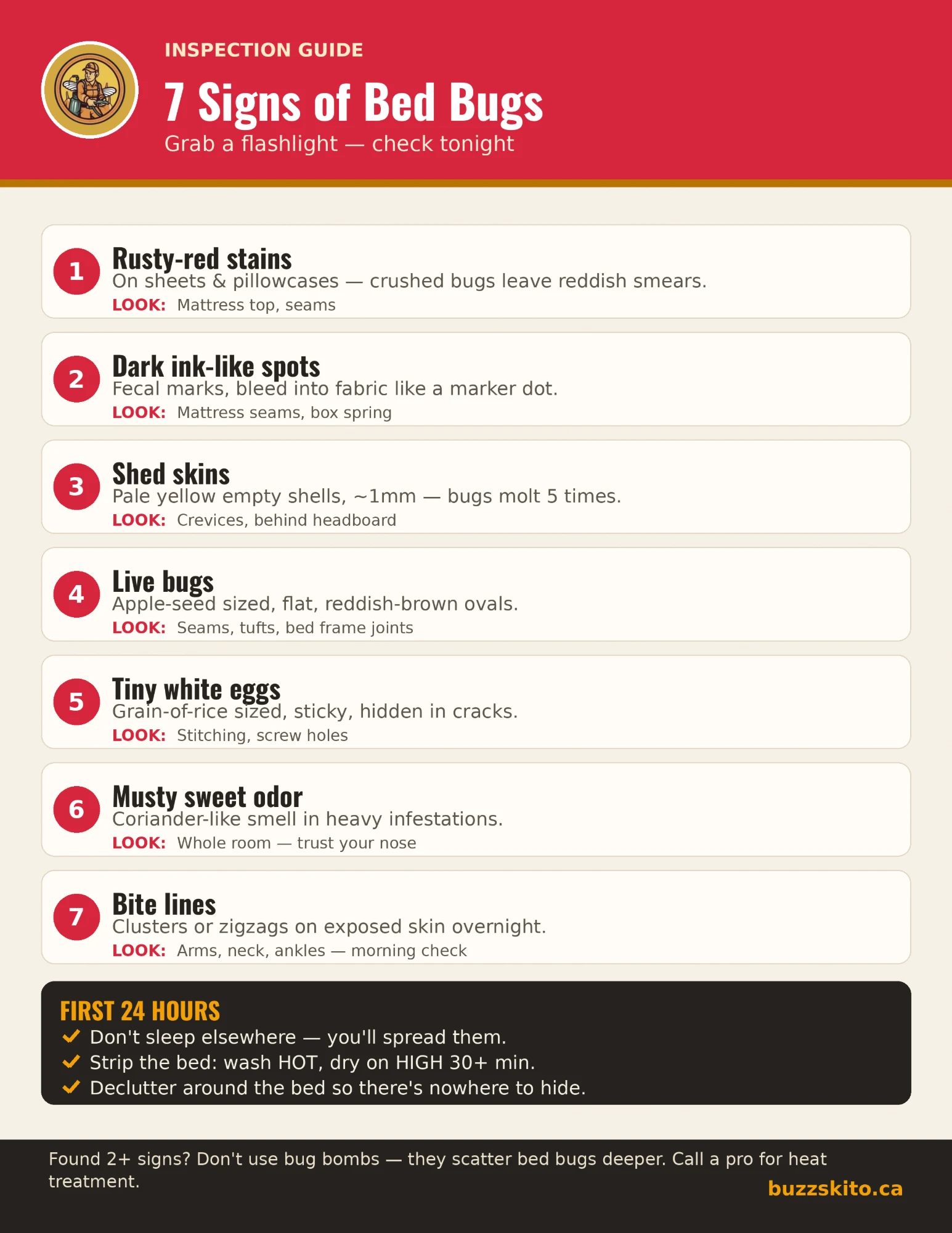 Signs of Bed Bugs: A 7-Point Checklist to Run TonightThe seven signs of bed bugs, from live bugs and ink-like spots to bites, with where to look tonight, what each is…
- How to Get Rid of Bed Bugs Yourself in Canada 2026 — The Full DIY ProtocolThe complete DIY bed-bug protocol for Canadian homes: the five-tool basket (steamer, sealed-HEPA vacuum, desiccant…
- Bed Bug Bites vs Mosquito Bites — Five Tells That Separate Them, and What to Do About EachBed bug bites vs mosquito bites: five tells that separate them — pattern, timing, where on the body, season and the…