
BuzzSkito Mosquito & Tick Control Specialists · Published July 21, 2026
What the PackTite Portable Actually Is
The PackTite Portable is a soft-sided, folding heat chamber — think of a reinforced fabric bag with a heating element and a fan — designed to do one thing well: bring the items you place inside it up to a temperature that kills bed bugs and their eggs, then hold it there. It is the small, packable member of a family of heat-treatment tools that runs all the way up to closet- and room-scale units. Where the big chambers process wardrobes and furniture, the Portable is aimed squarely at the belongings a washing machine and dryer cannot help you with: shoes, books, backpacks, purses, stuffed animals, folded soft goods, and travel gear.
That narrow focus is the whole point. A dryer already kills bed bugs on anything you can safely tumble-dry, so the reason a heat chamber exists at all is for the objects a dryer would destroy. The PackTite Portable earns its place by treating those objects chemically-free, in one unattended cycle, at a temperature that reaches every life stage including the eggs that sprays so often miss. And because it folds flat, it stores in a closet and travels in a car trunk — which is precisely why apartment dwellers and frequent travellers reach for it over a rigid box.
Check current Canadian availability of the PackTite Portable and its closest stand-ins:
The Temperature Story: Why Heat Kills What Sprays Cannot
Bed bugs are remarkably resilient to chemicals — resistance to common pyrethroid insecticides is now widespread — but they have no defence against heat. Sustained temperatures above roughly 118°F (48°C) kill bed bugs, and critically, the same heat range kills the eggs, which are the hardest stage to reach with any spray because of their protective shell and the way females cement them into cracks. The PackTite Portable is built to bring its interior to about 120–140°F (49–60°C), comfortably inside the lethal window with margin to spare.
The word to hold onto is sustained. It is not the peak reading on the thermometer that does the killing — it is holding a lethal temperature long enough for the heat to soak all the way to the core of whatever you loaded. A single shoe reaches temperature quickly; a tightly packed stack of books can hold a cool pocket at its centre for a long time, and a cool pocket is exactly where a bug survives to re-infest you. That is why the chamber ships with a thermometer and why the correct technique is to verify the centre of the load has reached target, not just the air in the bag.
What You Can (and Cannot) Put Inside
The line between a good candidate and a ruined belonging is simple: heat-tolerant items go in, heat-sensitive items stay out. Load with confidence:
- Shoes and boots — a classic non-launderable harbourage that a dryer cannot handle.
- Books, papers, and documents — heat-safe and impossible to wash.
- Backpacks, purses, and fabric bags — empty the pockets first.
- Stuffed animals, blankets, and soft goods — especially delicate items you would not tumble-dry.
- Folded clothing, hats, and travel gear — loosely packed so heat can circulate.
Keep these out, without exception, because the same heat that kills bed bugs will warp, melt, or destroy them:
- Electronics of any kind — laptops, phones, tablets, chargers, anything with an LCD.
- Batteries and anything containing them — a genuine safety hazard at treatment temperature.
- Aerosols, pressurized cans, and flammable liquids — never load these.
- Candles, crayons, cosmetics, and wax or glue items — they soften and melt near 140°F.
- Vinyl records, medications, and anything explicitly temperature-sensitive.
When in doubt, keep it out. And remember the cheaper rule underneath all of this: anything you can safely put through a hot dryer should go in the dryer, not the chamber. The heater is for the things a dryer would ruin.
How to Run a Cycle Properly
Getting a reliable kill is less about the machine and more about the discipline of the cycle. Set the chamber on a hard, heat-tolerant surface — not carpet, not a bed — away from anything flammable, with the vents unobstructed. Load loosely: overpacking is the single most common mistake, because a densely stuffed chamber insulates its own core and leaves a survival pocket in the middle. Place the thermometer probe at the centre of the densest item, since that is the last place to reach temperature.
Then run a full multi-hour cycle and be patient. From a cold start, expect several hours to bring a load to temperature, and materially longer for dense, insulating items like packed shoes or stacked books. The right stopping rule is not the clock but the thermometer: continue until the core of the load has confirmed target temperature, and then keep holding it so the heat fully penetrates. Rushing — pulling items the moment the air in the bag feels hot — is how people leave eggs alive at the centre of a load and wonder why the problem came back.
PackTite Portable vs ZappBug vs ThermalStrike
The Portable does not exist in a vacuum, and honesty demands acknowledging its closest competitors, because in Canada they are often easier to actually buy. ZappBug makes boxy heat bags in a couple of sizes that do the same job and tend to be more consistently stocked on amazon.ca. The ThermalStrike Ranger is a luggage-scale bag built to swallow a suitcase-sized load, which the small PackTite Portable cannot. All three rely on the identical physics — sustained heat above the lethal threshold — so the choice comes down to capacity, storability, and what happens to be in stock at a fair Canadian price the week you shop.
If your problem is contained items and you value a bag that folds truly flat, the PackTite Portable is a strong pick. If you specifically need to treat luggage, step up to the ThermalStrike or a larger unit. If the PackTite is simply unavailable or steeply marked up on import, a comparably sized ZappBug is a fair, in-kind substitute rather than a compromise. For the bigger sibling in the PackTite line, our PackTite Closet review covers the tall, high-capacity chamber that handles whole wardrobes, and our whole-room bed-bug heater guide covers going bigger still.
How to Choose: Sizing and What You Are Paying For
Heat chambers span a wide price range, and the money mostly buys capacity and consistency, so it is worth being deliberate about which you actually need. Match the chamber to the job, and put your dollars where they matter for your situation:
- Capacity is the first decision (get this right). Be honest about your real load. Shoes, books, and the odd bag? A small folding chamber like the Portable is plenty. Whole wardrobes or bulky luggage every week? You will burn through endless small cycles — buy the bigger unit and save the aggravation.
- A reliable, sustained kill temperature (pay for this). The whole value proposition is reaching and holding 120–140°F. A cheap knock-off that cannot hold temperature under load is not a bargain; it is a chamber that leaves survivors. Buy the reliable heat.
- An included thermometer to verify the core (essential). Without core-temperature verification you are guessing, and guessing is how eggs survive. Confirm the unit includes a probe you can bury in the load, not just an air reading.
- Storability and portability (pay for this only if you value it). Folding flat is a genuine benefit for apartments and travel, and it is much of why people choose the Portable specifically. If you have garage space and never travel, a rigid box is fine and often cheaper per litre of capacity.
- Availability at a fair Canadian price (check before you commit). Because PackTite stock is intermittent here, the smart move is to compare the live listing against ZappBug and ThermalStrike the day you buy, rather than paying a steep import markup out of brand loyalty.
Read that as a spending map: buy the right size and a genuinely reliable kill temperature first, treat the thermometer as non-negotiable, and pay for folding portability only if your life actually needs it. The way to overspend is to buy far more chamber than your real load requires; the way to underspend is to buy a bargain bag that cannot hold heat and leaves you re-treating.
Where a Heat Bag Fits in the Whole Plan
The most important thing to understand about any heat chamber, the PackTite Portable included, is what it does not do. It treats items, not rooms. It will flawlessly sanitize the belongings you place inside it, but it does nothing about the bed bugs living in your mattress seams, box spring, headboard, bed frame, baseboards, and furniture. Used alone, without addressing the environment, it cannot end an infestation — it can only stop your treated items from re-seeding a room you cleared some other way.
So slot it into a workflow. Heat-treat your contained items in the chamber, then handle the bedroom itself with the tools built for surfaces: a steamer to kill bugs and eggs in seams and folds with penetrating heat, a sealed-HEPA vacuum to physically remove what you can reach, interceptor traps under the bed legs to monitor whether the numbers are actually dropping, and, where appropriate, a PMRA-registered residual product. If you are travelling, the single highest-value use of the Portable is preventive: run your suitcase contents through a cycle in the entryway before they ever reach the bedroom, because catching a hitchhiker in your bag is vastly easier than clearing an established infestation later. For the full sequence, our DIY bed-bug heat-treatment guide and our complete Canadian bed-bug removal guide lay it out step by step.
The Bottom Line
The PackTite Portable is a good tool for a specific job. It reaches and holds a temperature that kills bed bugs and their heat-resistant eggs, it treats the non-launderable items a dryer cannot, and it folds away when you are done — a genuinely useful combination for apartment living and for travellers who want to sanitize a suitcase’s contents on the way in the door. Its honest limits are capacity and Canadian availability: it will never treat a mattress or a full suitcase, and you may find it out of stock or import-marked-up when you go to buy. In that case a ZappBug or, for larger loads, a ThermalStrike does the identical job. Buy the PackTite Portable when it is available at a fair price and your problem is contained items — and remember that whatever chamber you choose, it is one station in a plan, not the whole plan.
Frequently Asked Questions
Is the PackTite Portable worth it in Canada?+
For the specific job it is built for — heat-treating small, non-launderable items like shoes, books, backpacks, electronics-free bags, stuffed toys, and travel gear — the PackTite Portable is worth it if you can find one in stock. It reaches the roughly 120–140°F (49–60°C) internal temperature that kills bed bugs and their eggs across every life stage, and it folds flat for storage, which is exactly what people who travel or live in apartments want. The catch is twofold: the chamber is small, so it will never treat a mattress, a duvet, or a suitcase-sized load in one go, and Canadian stock is intermittent — the unit sells through official channels in the US and appears on amazon.ca irregularly. If it is available and your problem is contained items rather than furniture, it is a sound buy. If you need to treat whole rooms of belongings, a larger closet-style or room heater is the better spend.
What temperature does the PackTite Portable reach and is that hot enough to kill bed bugs?+
The PackTite Portable is designed to bring the interior of the bag up to roughly 120–140°F (about 49–60°C) and hold it there. That matters because bed bugs die when their core temperature is sustained above roughly 118°F (48°C) for long enough, and the eggs — which are the hardest stage to kill with sprays — succumb in the same heat range. The key word is sustained: it is not the peak temperature that kills, it is holding a lethal temperature long enough for the heat to penetrate to the centre of whatever you loaded. That is why you run a full multi-hour cycle and why you should not overpack the chamber, since a tightly stuffed load insulates its own core and can leave a cool pocket where bugs survive.
How long does a PackTite Portable cycle take?+
Plan on a multi-hour cycle — commonly in the range of several hours from cold start to a completed, fully-penetrated treatment, and longer for dense items like stacked books or packed shoes. The published guidance is to run until the internal thermometer confirms the load has reached the target temperature and then continue holding it, rather than watching the clock alone. Dense, insulating loads take substantially longer than loose fabric because heat has to work its way to the core of the item. Using the included thermometer to verify the centre of the load — not just the air in the bag — is the single most important step, and it is why rushing a cycle is the most common way people fail to kill everything.
What can and cannot go in a PackTite Portable?+
Good candidates are heat-tolerant, non-launderable items: shoes and boots, books and paper, backpacks and purses, stuffed animals, blankets, folded clothing, hats, and travel gear. What should NOT go in: anything heat-sensitive — electronics, batteries, laptops, phones, LCD items, candles, cosmetics, vinyl records, crayons, pressurized cans, medications, or anything with glue or wax that can soften or melt near 140°F. When in doubt, keep it out, because the same heat that kills bed bugs will warp, melt, or ruin temperature-sensitive belongings. Launderable clothing is better and cheaper handled in a hot dryer; the heater earns its keep on the things you cannot wash or tumble-dry.
How is the PackTite Portable different from the PackTite Closet?+
They are the same heat-treatment concept at two different scales. The Portable is the smaller, folding unit built for contained items and travel — it packs down and stores easily but has limited internal volume. The Closet version is a taller, larger-capacity chamber that hangs clothing and treats bigger or bulkier loads in a single run, which suits someone processing a lot of belongings or a whole wardrobe at once. If you mostly need to sanitize shoes, bags, and the odd load of soft goods, the Portable is enough. If you are clearing an infested bedroom worth of clothing and linens, the Closet or a room-scale heater will save you many more cycles. Our PackTite Closet review covers that larger unit in detail.
Is the PackTite Portable available in Canada?+
Availability is the real friction point. PackTite is a US brand, and the Portable model shows up on amazon.ca and through Canadian resellers only intermittently — it goes in and out of stock, and pricing swings with import and exchange. Because of that, it is worth checking current Canadian listings before you set your heart on this exact model, and it is worth knowing the close alternatives (ZappBug and ThermalStrike heat bags) that fill the same role and are more consistently stocked in Canada. If you find a PackTite Portable in stock at a fair Canadian price, it is a proven design; if it is unavailable or marked up steeply on import, a comparable heat bag does the same job.
Does a heat bag get rid of bed bugs on its own?+
No — a heat bag treats items, not rooms. It is excellent at sanitizing the belongings you place inside it, which is a real and important part of a bed-bug plan, but it does nothing about the bugs living in your mattress seams, box spring, headboard, baseboards, or furniture. Think of it as one station in a workflow: you heat-treat your contained items so they cannot re-infest a cleared room, while you separately deal with the room itself using a steamer, a vacuum, interceptor traps, and where appropriate a residual product. Relying on a heat bag alone, without treating the environment, is the classic way an infestation lingers.
Can I just use a clothes dryer instead of a PackTite Portable?+
For anything you can safely tumble-dry, yes — a hot dryer cycle (high heat, at least 30 minutes at temperature) kills bed bugs and eggs and is the cheapest tool you already own. The whole reason a heat chamber exists is for the items you cannot put in a dryer: shoes, books, electronics-adjacent bags, delicate soft goods, framed items, and travel gear. So the honest rule is: dryer for launderable clothing and linens, heat chamber for the non-launderable objects. Buying a chamber to treat things a dryer already handles is spending money you do not need to; buying one to treat things a dryer would destroy is exactly the right call.
Is the PackTite Portable safe to leave running?+
It is designed to run a full unattended-ish cycle, but treat it like any heating appliance: place it on a hard, heat-tolerant surface away from anything flammable, do not drape it over carpet or bedding, keep the vents unobstructed, and do not overload it. Never load prohibited items — batteries, pressurized cans, and flammable liquids are genuine hazards at treatment temperature. Following the manufacturer instructions for placement and load is what keeps it safe. If you would not leave a space heater running in that spot, do not leave the chamber there either.
How does a heat bag compare to a bed-bug spray?+
They cover different targets and work best together. A heat bag handles portable items in one clean, chemical-free pass and kills every life stage including eggs. A registered spray treats the surfaces and harbourages the bag cannot — cracks, seams, frame joints, baseboards — and can leave a residual that keeps working after you apply it. Heat leaves no residue and cannot fail on a resistant strain, but it only treats what fits inside; sprays cover the room but need correct product choice and repeat applications. In Canada, make sure any spray you buy is PMRA-registered for indoor bed-bug use rather than a grey-market US product; the heat bag sidesteps that question entirely because it is a device, not a pesticide.
What should I heat-treat first when I get home from travelling?+
Your luggage and everything in it, before it crosses the bedroom threshold. Travel is one of the most common ways bed bugs enter a home, so the highest-value use of a portable heater is a preventive one: run your suitcase contents and the bag itself (if it fits) through a treatment cycle in an entryway, garage, or bathroom before unpacking. Anything that will not fit — a hard-shell suitcase, for instance — can be inspected, wiped down, and stored away from sleeping areas, while the soft contents go through the chamber. Catching a hitchhiker in your bag is far easier than clearing an established bedroom infestation later.
Is the PackTite Portable big enough to treat a suitcase?+
Usually not a full hard-shell suitcase, no — the Portable is sized for the contents of a suitcase and smaller items rather than a large piece of luggage itself. If treating luggage is your main goal, look specifically at larger luggage-scale heat bags built for that purpose, or plan to empty a suitcase and run the soft contents in batches. Overstuffing a small chamber to force a large item in is counterproductive: it insulates the core, prevents even heat penetration, and can leave survivors. Match the item to the chamber size, or step up to a larger unit if bulky luggage is the recurring problem you need to solve.
Related Reading
- PackTite Closet Review Canada — The Larger Wardrobe-Scale Chamber
- ZappBug Oven 2 Review Canada — The More-Available Alternative
- ThermalStrike Ranger Review Canada — Luggage-Scale Heat Bag
- Best Whole-Room Bed-Bug Heater Canada — Going Bigger
- Best Bed-Bug Heat Chamber Canada — Full Chamber Roundup
- Best Bed-Bug Luggage Heater Canada
- DIY Bed-Bug Heat Treatment Canada — The Full Method
- Best Bed-Bug Steamer Canada — Heat for the Room Itself
- How to Get Rid of Bed Bugs in Canada — Complete Guide
- Best Pest Control Equipment Canada — The Device Hub
Keep reading
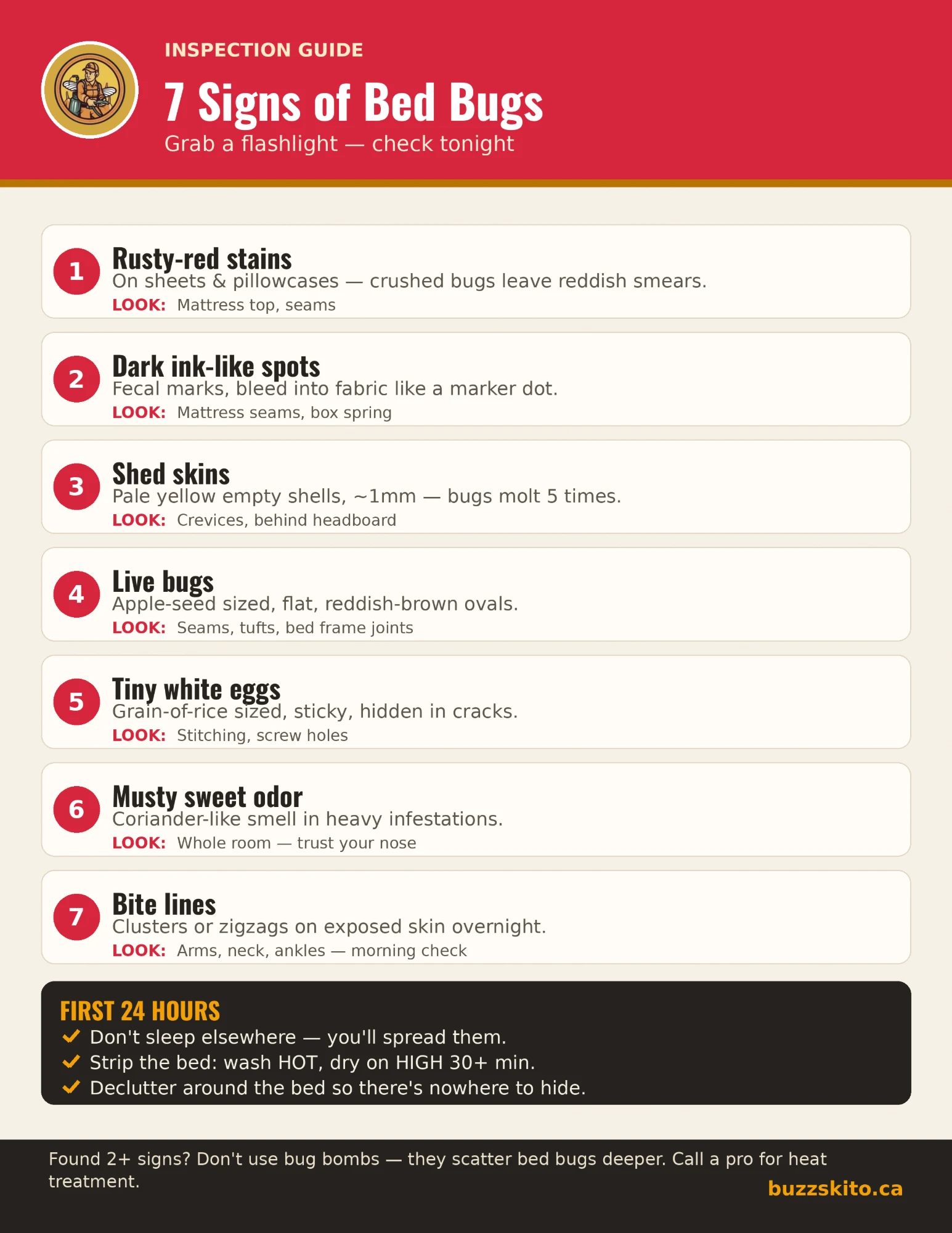 Signs of Bed Bugs: A 7-Point Checklist to Run TonightThe seven signs of bed bugs, from live bugs and ink-like spots to bites, with where to look tonight, what each is…
- Best Bed Bug Box Spring Encasement Canada 2026 — SureGuard vs SafeRest vs UtopiaThe best bed-bug box-spring encasements in Canada: why the box spring is worse harbourage than the mattress, how…
- Dupray Steamer Review Canada 2026 — Is the Dupray Neat Worth It for Bed Bugs & Deep…An independent Canadian review of the Dupray Neat steam cleaner: does the Canadian-made dry-vapour steamer earn its…