
Published by BuzzSkito Mosquito & Tick Control
Published October 21, 2026 · Drafted with AI assistance and fact-checked against the sources listed below
What are the signs of carpet beetles?
The signs of carpet beetles are the bristly larvae, the brown skins they shed, their tiny droppings, thin or holed patches in wool, fur or feathers, and small round beetles at the windows. UC IPM's Pest Notes on carpet beetles says the larvae spin no webs, unlike clothes moths, but their shed skins and fecal pellets, about the size of a grain of salt, make it obvious where they have been feeding. The University of Kentucky's carpet beetle fact sheet warns that infestations can develop undetected, and the Connecticut Agricultural Experiment Station says many are discovered during spring and fall cleaning, when stored textiles come out.
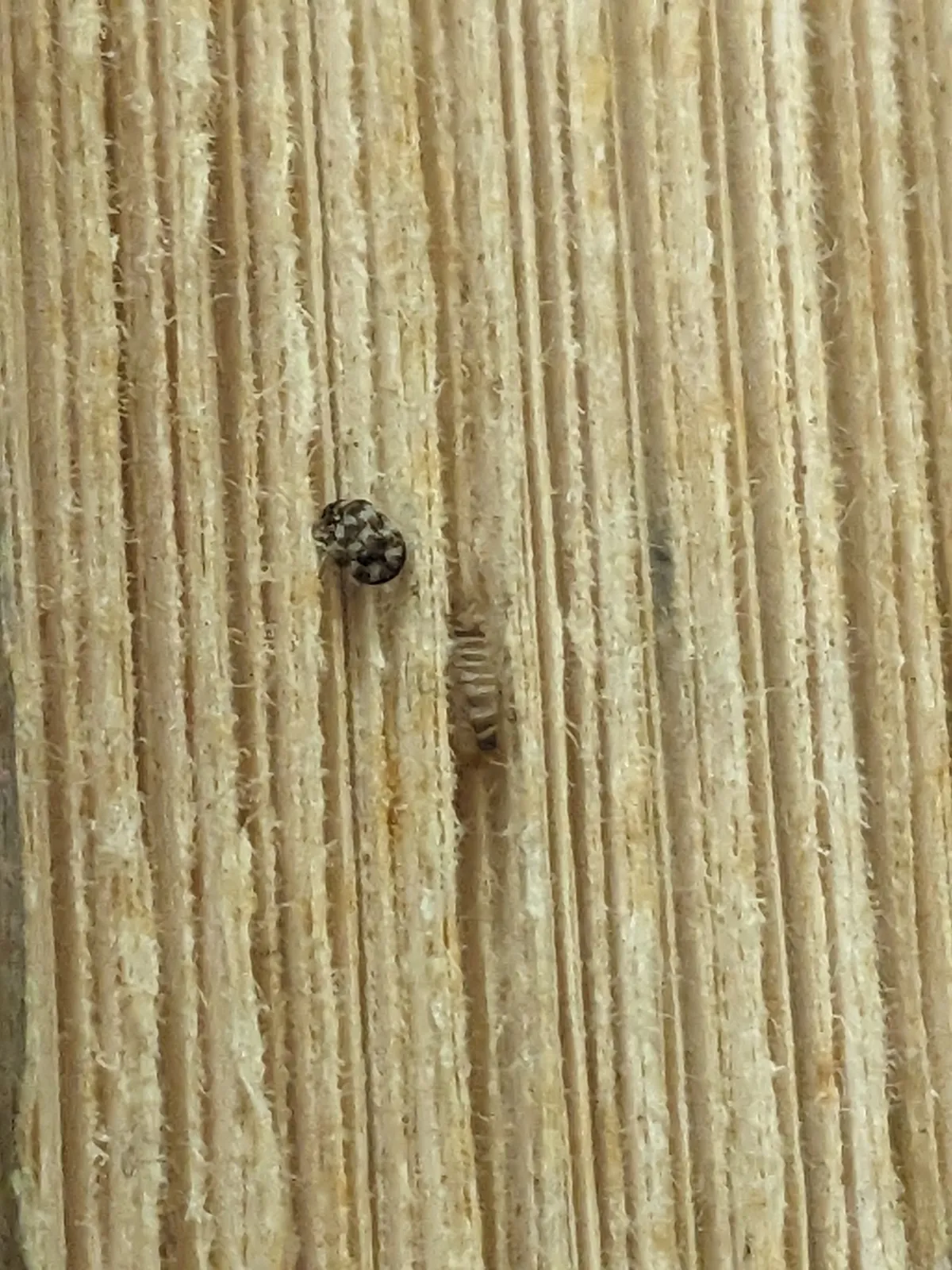
The larvae do all of the damage; Kentucky says the adults feed on flower pollen and do not damage woolens or other fabrics. So the signs gather where larvae feed, and the removal steps are in the carpet beetle removal guide.
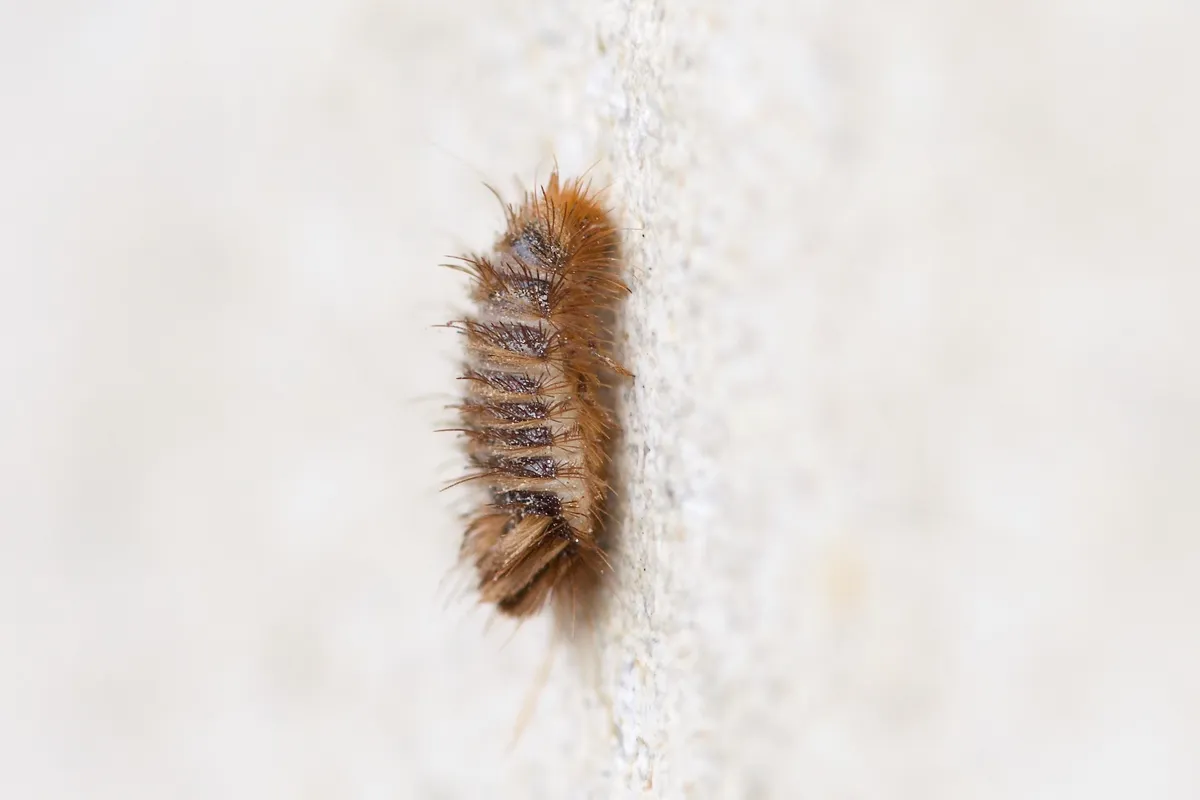
Larvae: slow, bristly and 1/8 to 1/4 inch long
Kentucky describes carpet beetle larvae as 1/8 to 1/4 inch long, tan to brownish, slow moving and densely covered with hairs or bristles, and UC IPM likens them to fuzzy or hairy maggots slightly longer than the adults. Varied carpet beetle larvae have alternating light and dark brown stripes and raise their tufts of hair into a round plume when disturbed, UC IPM says. The black carpet beetle's larva looks different: the Connecticut station describes it as thin, carrot-shaped and about 1/2 inch long, with a tuft of stiff bristles at the rear.
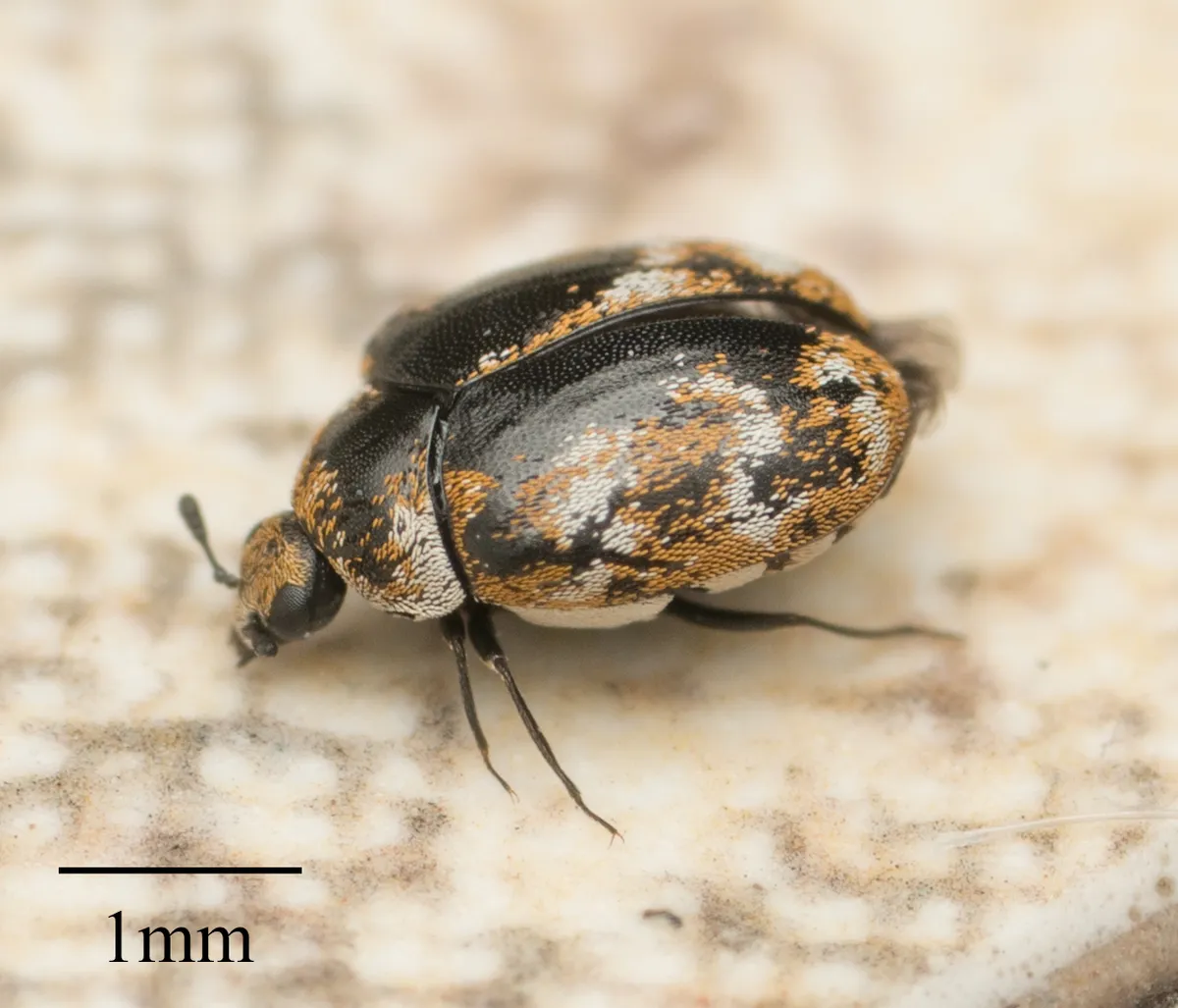
Adult beetles at the windows
Adults are small, round to oval beetles: Kentucky describes them as 1/16 to 1/8 inch long and black or mottled with white, brown, yellow and orange, and UC IPM gives the black carpet beetle as 1/8 to 3/16 inch, shiny black to dark brown. Drawn to sunlight, adults found indoors are typically near windows, on sills, drapes or panes, usually in spring or early summer, UC IPM says. The mottled adult in this page's photos is the varied carpet beetle, Anthrenus verbasci.
What do carpet beetle shed skins and droppings look like?
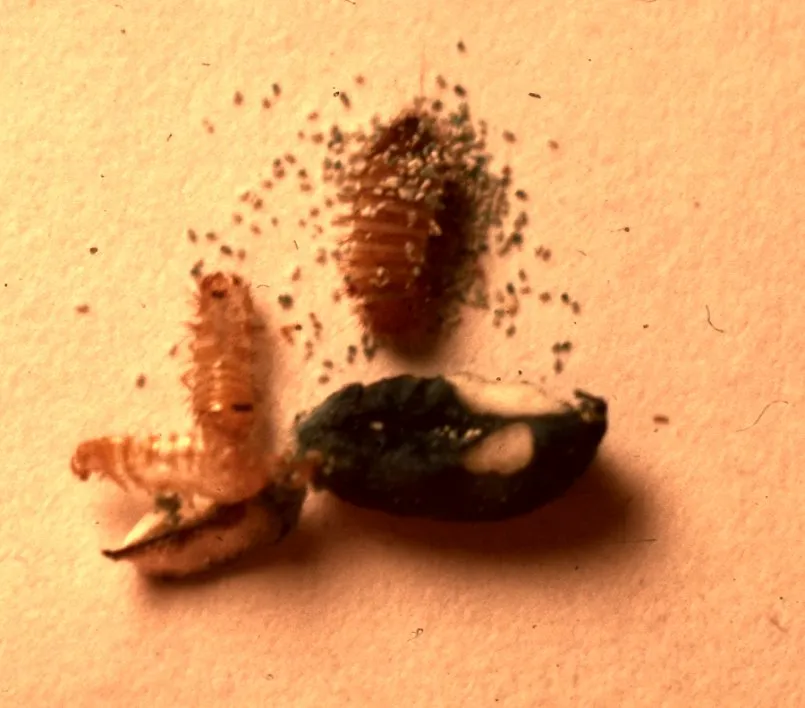
Carpet beetle shed skins are brown, shell-like and bristly, and their droppings are pellets about the size of a grain of salt, lying together where the larvae have fed, in UC IPM's description. Colorado State University Extension says the larvae of dermestid beetles, the family carpet beetles belong to, shed their skins as they grow, often a dozen times or more, and that the discarded skins keep the general shape of a larva, can pile up around infested materials and are often one of the more noticeable signs. Ohio State adds that the cast skins are often more abundant than the larvae themselves.
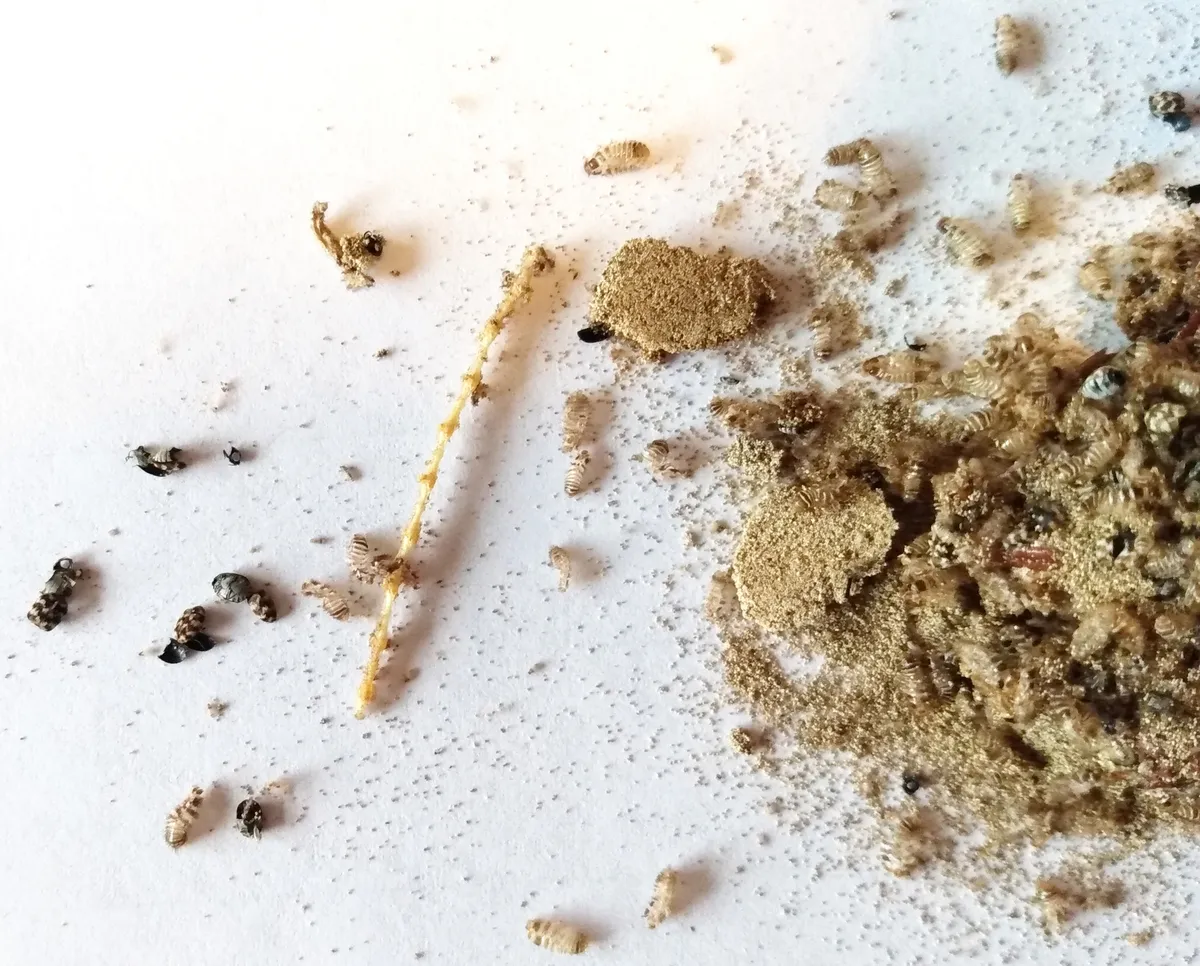
Check under and around anything made of wool, fur or feathers, and where larvae scavenge: Kentucky's fact sheet shows shed skins beside a dead cockroach and around mice nesting in an attic. The droppings are tiny, and the Connecticut station's bed bug identification poster suggests a hand lens, since seeds and lint can look remarkably like insects to the naked eye.
What does carpet beetle damage look like?
Carpet beetle damage looks like threadbare, grazed spots and irregular holes in things made of wool, fur, felt, silk, feathers or leather. Kentucky says the larvae leave those spots and holes as they graze along the surface, and it lists sweaters, scarves, coats, blankets, rugs, down pillows and comforters, upholstery, toys, decorative items and taxidermy mounts as items commonly attacked. The larvae often feed inside fabric folds, such as hems, collars and cuffs, on things stored for long periods; clothing and blankets in regular use are seldom attacked, and neither are rugs that are routinely vacuumed.
Check what the item is made of. Kentucky says cotton and synthetic fabrics such as polyester and rayon are rarely attacked unless blended with wool or heavily soiled with food stains or body oils, and UC IPM says the larvae do not feed on synthetic fibers but do eat natural-bristle hair brushes, pet hair and feathers.
Carpet beetle or clothes moth damage?
Look for silk. UC IPM says carpet beetles are more likely to damage a large area on one part of a garment or carpet, while moth damage more often appears as scattered holes, and that bristly cast skins and a lack of webbing are usually good clues that carpet beetles are the culprits. It cautions that damage alone cannot always tell the two apart, and Kentucky says carpet beetle damage is often mistaken for that of clothes moths.
UC IPM's Pest Notes on clothes moths describe shiny white larvae with dark heads: webbing clothes moth larvae may leave patches of silk webbing, and casemaking clothes moth larvae carry a silken case. The adults are weak fliers that are not attracted to lights and usually stay close to the infested items, unlike carpet beetles at the window. The guide to small moths in the house covers clothes moths and their damage.
What are the signs of carpet beetles in a bed or mattress?
In a bed, carpet beetle signs are bristly larvae and their brown shed skins on the mattress, in feather or down bedding and on the floor underneath, not the stains and dark spots bed bugs leave. A 2021 report by doctors in France, in CDC's Emerging Infectious Diseases journal, says carpet beetle larvae are commonly found in wardrobes, on stuffed animals, on mattresses or under carpets. UC IPM notes that some mattresses and pillows are stuffed with hair or feathers, Kentucky lists blankets, down pillows and comforters among the items commonly attacked, and Colorado State points to the lint and hair that collect under seldom-moved furniture.
Carpet beetle or bed bug signs?
What they leave behind usually tells them apart. The EPA's guide to finding bed bugs lists rusty or reddish stains on sheets or mattresses from crushed bugs, dark spots of excrement that may bleed into the fabric like a marker, eggs and eggshells about 1 mm (1/25 inch) long, pale yellow skins shed by nymphs, and live bugs, near the piping, seams and tags of the mattress and box spring and in cracks of the bed frame. Carpet beetles leave salt-grain pellets and brown, bristly skins instead. The same EPA page warns that carpet beetles are easily mistaken for bed bugs.
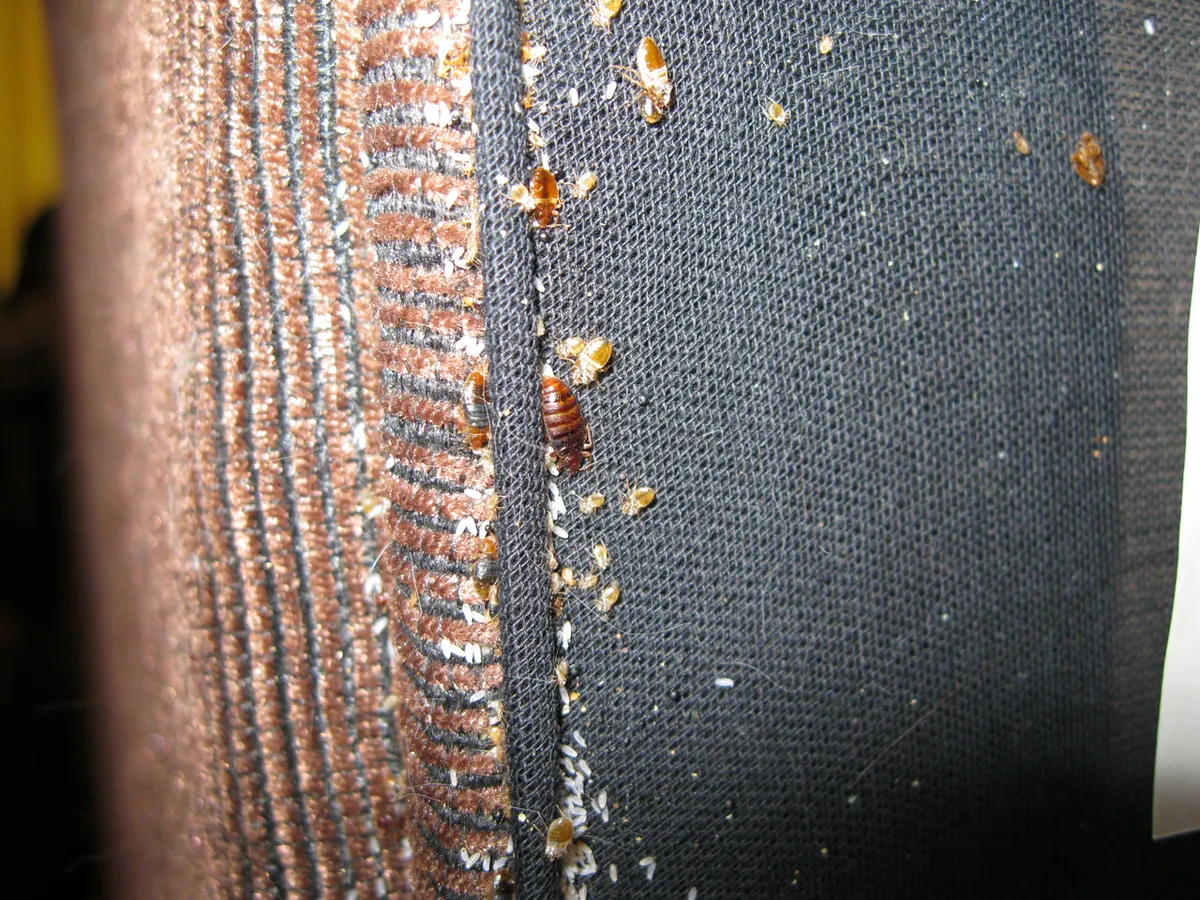
The insects differ too. The EPA's page on bed bug appearance describes adult bed bugs as about the size of an apple seed, 3/16 to 1/4 inch long, with a flat, oval body, and nymphs as smaller and translucent or whitish-yellow. The Connecticut station's poster says a carpet beetle larva's hairy, segmented body may resemble a bed bug's abdomen, but the larva lacks a distinctive head; carpet beetle larvae become winged adult beetles, while bed bugs do not jump, fly or hop.
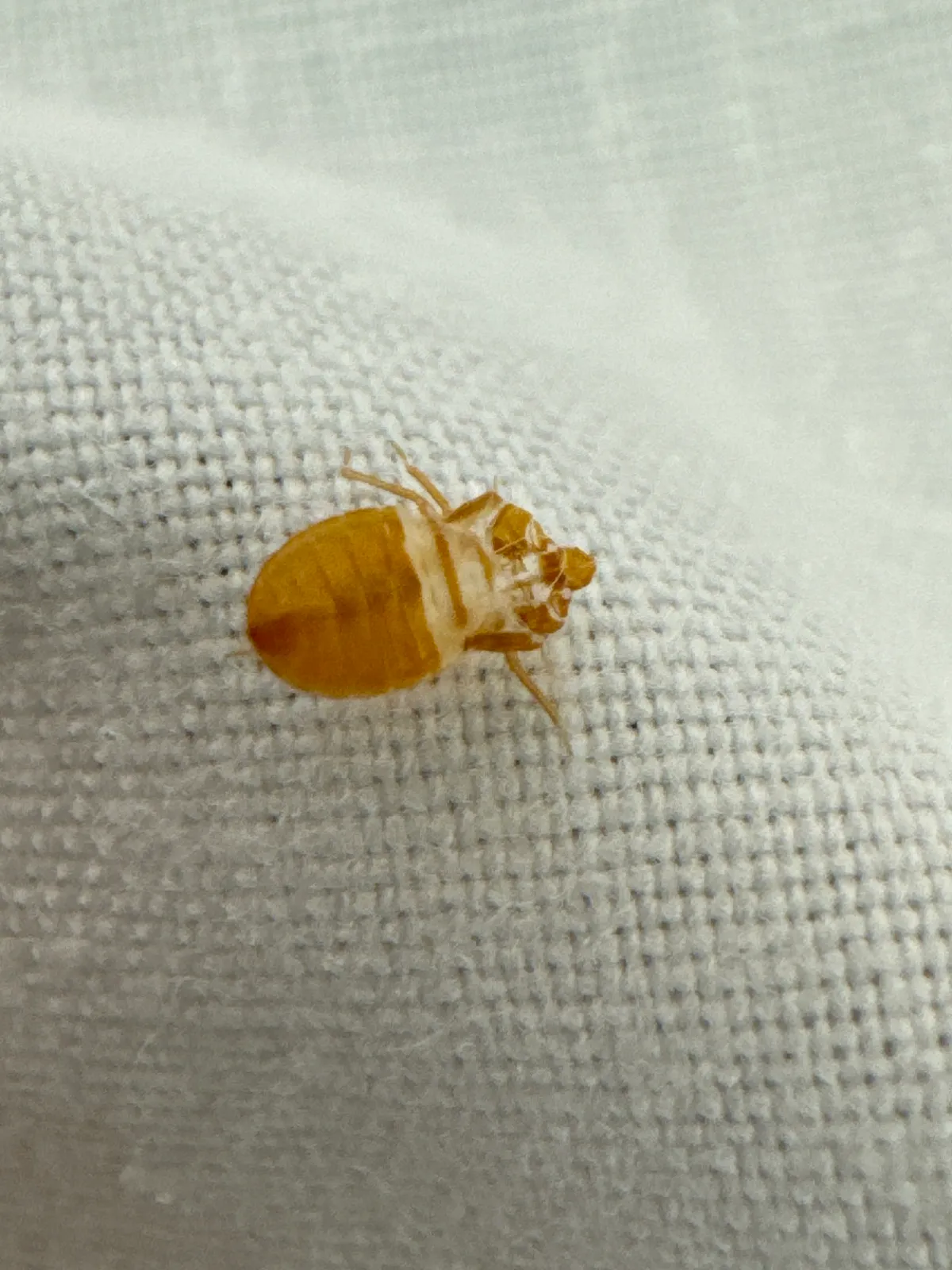
To rule bed bugs in or out, run the bed bug signs checklist or a five-minute bed bug check, compare what you found with photos of bed bug shells and shed skins, and see the bugs most often mistaken for bed bugs for the insects themselves.
Itchy bumps, but no bites
Carpet beetles do not bite, but the hairs on their larvae irritate some people, and bite-like lesions can form where skin is pressed against larvae, according to Texas A&M AgriLife Extension's guide to mysterious bug bites. In the CDC journal report, 11 people in seven families near Nice, in southern France, had itchy red bumps, mostly under clothing, caused by the hairs of Anthrenus larvae lodged in the skin; the authors note that these beetles turn up in late winter or spring, and no bed bugs or fleas were found.
Texas A&M suggests talking with a doctor about possible allergies or other conditions that might explain the symptoms. What a carpet beetle rash looks like has its own guide, and the bug bite identifier asks six questions about bumps that may be bites.
Where should you look for carpet beetle signs?
Look in dark, undisturbed places where animal fibers, lint or hair collect, which is where UC IPM says most larval feeding happens and where Colorado State says to concentrate. Take a flashlight, as Ohio State suggests for checking under baseboards and furniture.
Where to check
- Closets and stored woolens. Kentucky says larvae often feed in hems, collars, cuffs and other folds of items stored for long periods.
- Rug and carpet edges. Kentucky says edges and undersides are more likely to be infested than open areas, and Ohio State adds the carpet under heavy furniture or pianos.
- Vents, ducts and baseboards. Kentucky points to pet hair and lint collecting along baseboards and in air vents and ducts.
- Upholstered furniture. Colorado State lists its folds, and the Connecticut station says to check in and under it.
- Attic, chimney and walls. Kentucky says the pests also multiply on bird nests, animal carcasses and dead insects such as cluster flies, lady beetles and stink bugs, the bugs that move indoors for winter. Ohio State adds rodent nests; what a mouse nest looks like helps you spot one.
- Kitchen and basement shelves. Kentucky says some carpet beetles infest cereal, pet food and bird seed; the pantry pests guide sorts the other insects in stored food.
- Windowsills. Ohio State says adults flying around windows may help locate the infestation.
The source can be a room away: Ohio State says the larvae crawl from room to room, and Colorado State says most dermestid larvae are quite mobile and may wander a considerable distance in search of food. In its tips for museums, rug dealers and other at-risk groups, Kentucky adds that glue traps, with or without a lure, can reveal an infestation early, when the pests are hard to find by inspection alone.
What do the signs mean: a stray beetle or an infestation?
A single adult at a window may have come in from outdoors, but larvae, shed skins, droppings or damage indoors point to carpet beetles breeding in the house. UC IPM says adults feed on pollen and nectar outdoors and fly in through open windows and doors or arrive on cut flowers. Kentucky, though, says adults on windowsills in spring suggest an infestation may be present inside, and NC State Extension's Plant Disease and Insect Clinic explains why: the adults at windows developed from larvae in the home and are trying to get outdoors to flowers.
| What you found | What it suggests |
|---|---|
| One or two adults at a window | Possibly strays from outdoors (UC IPM); check for larvae |
| Many adults at windows in spring | Possibly a large population of larvae indoors (NC State) |
| Live larvae | A breeding site nearby (Colorado State) |
| Shed skins, no larvae | Larvae fed there; skins often outnumber larvae (Ohio State), so search nearby |
| Thin spots or holes in stored wool | Larvae feeding unseen: Ohio State says the larval stage can last 60 days to a year or more, and Kentucky says infestations can develop undetected |
From UC IPM, NC State, Colorado State, Ohio State and the University of Kentucky, each linked on this page.
Finding a few is common. NC State entomologist Matt Bertone writes that a study his team did found carpet beetle larvae in 100% of the homes surveyed, some with more than others; the study, which collected living and dead specimens alike, found carpet beetles in all 50 houses it sampled in and around Raleigh, North Carolina. Colorado State calls dermestid beetles, the family carpet beetles belong to, probably the most common insects in Colorado homes. Kentucky says clothing and blankets in regular use are seldom attacked, so the risk is to wool, fur and feathers left undisturbed.
What else has hairy larvae?
Larder beetles do. University of Minnesota Extension describes larder beetle larvae as about 1/2 inch long, hairy and reddish to dark brown, with a pair of backward-curving spines at the tail end, and adults as 1/4 to 1/3 inch and dark brown, with a cream to yellow band across the wing covers. They eat high-protein foods such as dry pet food and dead insects or animals, and a few adults inside in spring do not by themselves mean an infestation, Minnesota says. The guide to beetles in the house covers both.
Commonly confused with
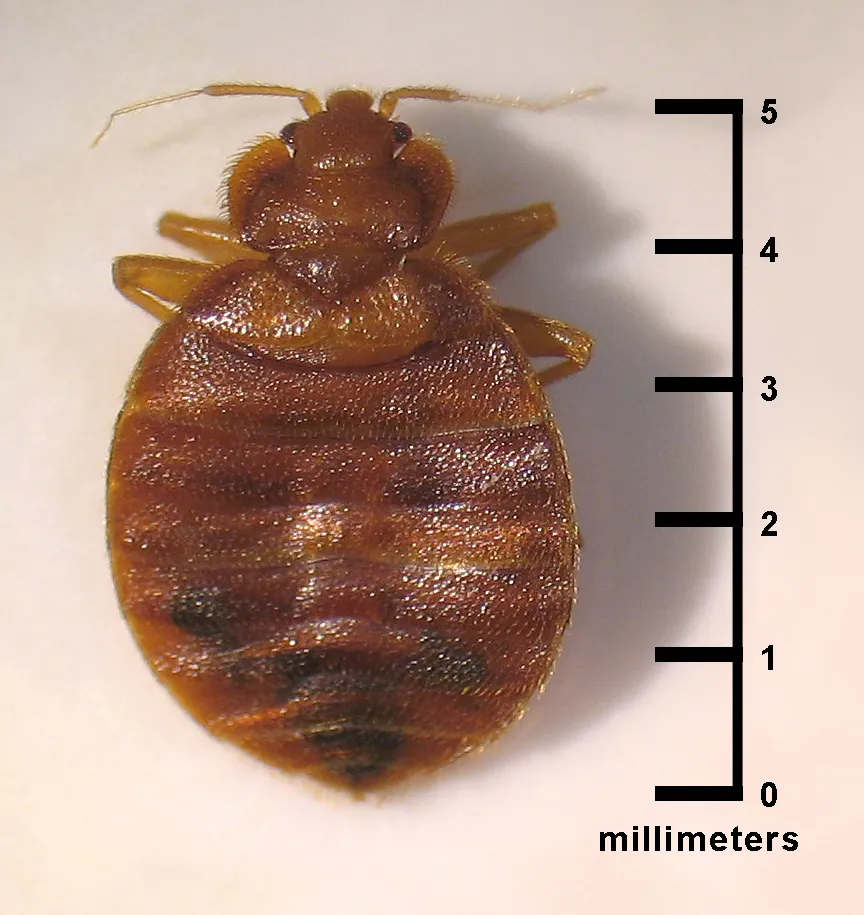 Bed bugFlat, oval and 3/16 to 1/4 inch, about the size of an apple seed; it does not fly
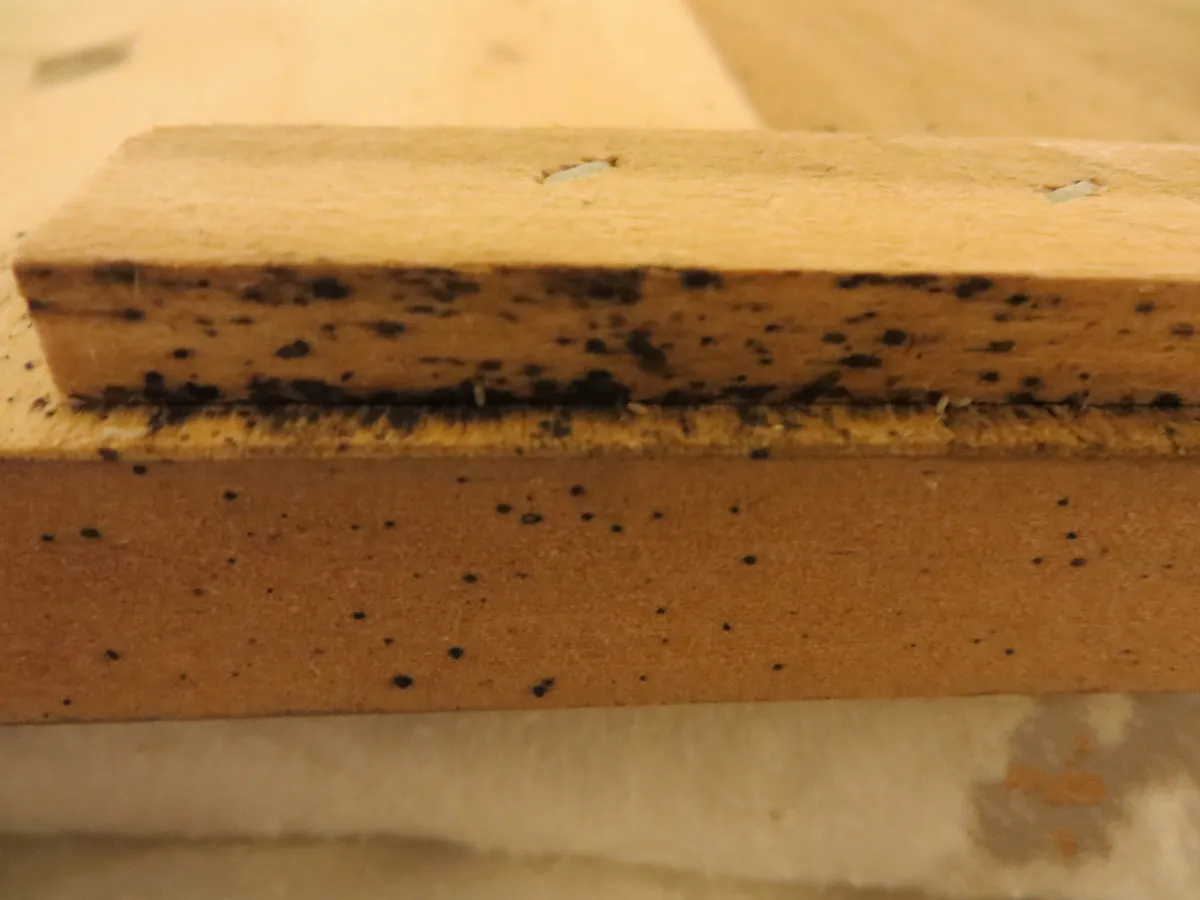 Bed bug spotsDark spots that can bleed into fabric like a marker, in mattress seams and on bed frames
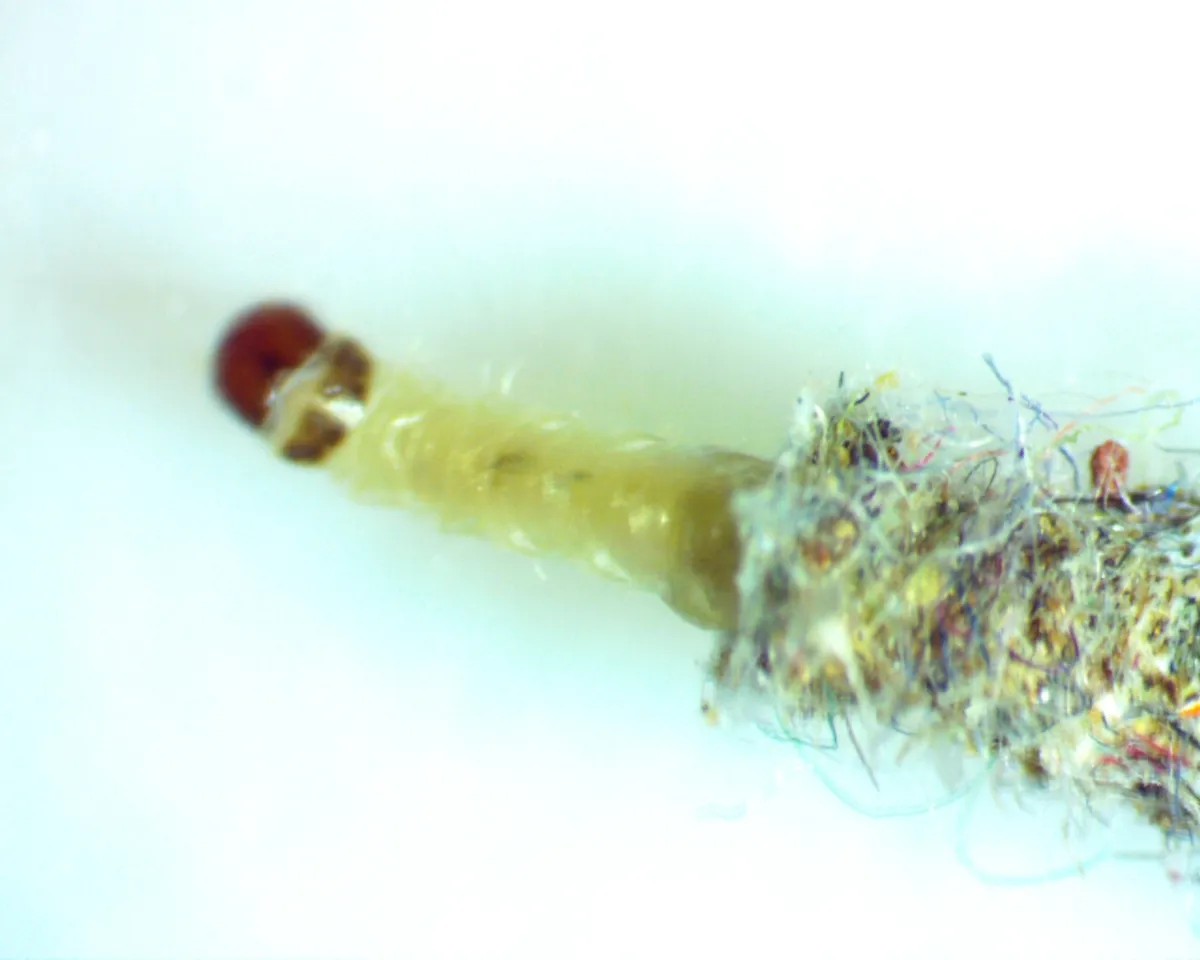 Clothes moth larvaShiny white with a dark head; leaves silk webbing or carries a silken case
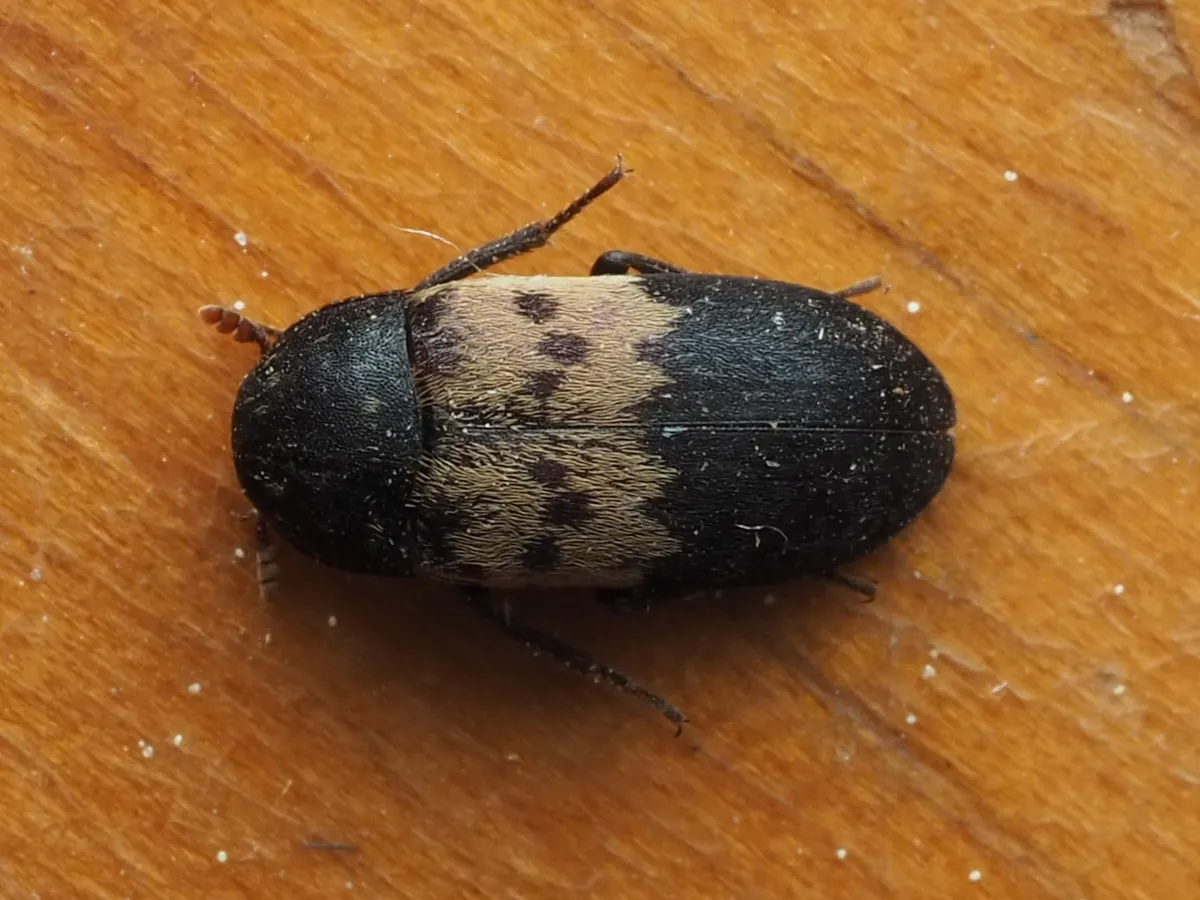 Larder beetleLarger, 1/4 to 1/3 inch, with a cream band across its wing covers; its hairy larva has tail spines
Photos: Bed bug: CDC/ CDC-DPDx; Blaine Mathison (CDC Public Health Image Library, phil.cdc.gov), public domain. Bed bug spots: NY State IPM Program at Cornell University, CC BY 2.0, via Wikimedia Commons, CC BY 2.0. Clothes moth larva: no rights reserved, via iNaturalist, CC0 1.0. Larder beetle: no rights reserved, via iNaturalist, CC0 1.0.
What should you do once you find carpet beetle signs?
Find the source, then deal with it. Kentucky says eliminating carpet beetles means locating all infested items; the main source may be a seldom-used wool or fur hat on a closet shelf, an antique rug in the basement or an old bird or squirrel nest in the attic. The guide to getting rid of carpet beetles takes it from there: what to throw out, how to clean, freeze or heat what you keep, where to vacuum and how to store woolens.
This guide is general educational information, not medical advice. If you have symptoms or concerns after a bite or exposure, contact a healthcare provider.
Frequently Asked Questions
What are the early signs of carpet beetles?+
Small round beetles often turn up on sunny windowsills in spring, and the University of Kentucky says they suggest an infestation may be present inside. Then look where larvae feed, at rug edges, in closets and in vents full of pet hair and lint, for brown, bristly shed skins and droppings about the size of a grain of salt, which UC IPM says show where larvae have been eating. In its tips for museums and other at-risk groups, Kentucky adds that glue traps can reveal an infestation early, when the pests are hard to find by inspection alone.
How do I know if I have bed bugs or carpet beetles?+
Compare what each leaves behind. The EPA lists bed bug signs as rusty stains from crushed bugs, dark spots that may bleed into fabric like a marker, eggs about 1/25 inch (1 mm) long and pale yellow shed skins, near mattress seams, piping and tags. Carpet beetles leave brown, bristly skins and droppings about the size of a grain of salt near wool, feathers, lint or pet hair. The Connecticut Agricultural Experiment Station notes that carpet beetle larvae are hairy and lack a distinctive head, and adult carpet beetles fly, which bed bugs do not.
Can carpet beetles live in a mattress?+
Their larvae can. A 2021 report by doctors in France, in CDC's Emerging Infectious Diseases journal, says carpet beetle larvae are commonly found in wardrobes, on stuffed animals, on mattresses or under carpets, and UC IPM notes that some mattresses and pillows are stuffed with hair or feathers, which the larvae eat. They feed on animal fibers, lint and hair, not on people. The University of Kentucky says cotton and synthetic fabrics are rarely attacked unless blended with wool or heavily soiled, so check the mattress, feather bedding and the dust underneath the bed.
Can I sleep in a bed with carpet beetles?+
Carpet beetles do not bite, according to Texas A&M AgriLife Extension, so they are not feeding on you at night. Their larvae's hairs irritate some people, though, and bite-like lesions can form where skin is pressed against larvae. In a CDC journal report on such cases in France, the itchy bumps were mostly under clothing, and the steps recommended excluded insecticides: clothing was washed, and mattresses and other infested areas were vacuumed. Texas A&M suggests talking with a doctor about allergies or other conditions that might explain symptoms.
How can I tell if I have carpet beetle poop?+
Carpet beetle droppings are tiny pellets about the size of a grain of salt, according to UC IPM, and they lie with the larvae's brown, bristly shed skins beside whatever the larvae have been eating, such as a rug edge or a stored wool sweater. Colorado State says the shed skins are often one of the more noticeable signs. Bed bug droppings look different: the EPA describes dark spots that may bleed into fabric like a marker, in mattress seams and on bed frames. A hand lens helps with anything this small.
What does a carpet beetle shed skin look like?+
It looks like an empty larva. UC IPM describes carpet beetle cast skins as brown, shell-like and bristly, and Colorado State University Extension says the larvae of dermestid beetles, the family carpet beetles belong to, shed their skins as they grow, often a dozen times or more, and that the discarded skins keep the general shape of a larva and can pile up around infested materials. Ohio State says the skins are often more abundant than the larvae. Bed bug skins are different: the EPA describes the skins bed bug nymphs shed as pale yellow.
Why did I suddenly get carpet beetles?+
Often because larvae that fed out of sight have just become adults. The Connecticut Agricultural Experiment Station says mature larvae pupate in spring and the new adults head for windowsills and other bright spots, and NC State Extension says the adults at windows developed from larvae in the home and are trying to get outdoors to flowers. Ohio State says larvae may feed for 60 days to a year or more first. Adults can also fly in through open windows and doors or arrive on cut flowers, UC IPM says.
Does having carpet beetles mean your house is dirty?+
Not necessarily. Carpet beetles are common: NC State Extension reports a study that found their larvae in 100% of the homes surveyed, and Colorado State University Extension calls dermestid beetles, the family carpet beetles belong to, probably the most common insects in Colorado homes. What they need is undisturbed food. The University of Kentucky says clothing and blankets in regular use and rugs that are routinely vacuumed are seldom attacked, while wool stored for long periods, pet hair and lint in vents, and dead insects in attics can feed them.
Do 90% of homes have carpet beetles?+
Nobody has a national count, but one survey found carpet beetles in every home it checked. NC State Extension entomologist Matt Bertone writes that a study his team did found carpet beetle larvae in 100% of the homes surveyed, some with more than others; the study sampled 50 houses in and around Raleigh, North Carolina. Other extension services agree they are common: the University of Kentucky calls carpet beetles common in dwellings, and Colorado State says dermestid beetles are probably the most common insects in Colorado homes. UC IPM says a few adults indoors are no cause for alarm; larvae developing in fabrics are what call for action.
Will carpet beetles go away on their own?+
Not while their food sits undisturbed. Adults live only weeks, by UC IPM's life-cycle table, but the larvae feed far longer: Ohio State says 60 days to a year or more depending on food and temperature, and UC IPM gives up to 630 days for the varied carpet beetle. The Connecticut Agricultural Experiment Station explains that carpet beetles need long undisturbed periods to develop, which is why textiles and carpets that are regularly cleaned, laundered or vacuumed cannot support them. Finding and dealing with the source is what ends an infestation.
Sources
- Pest Notes: Carpet Beetles (UC ANR Publication 7436) — University of California Statewide IPM Program
- Carpet Beetles (ENTFACT-601) — University of Kentucky Department of Entomology
- Carpet Beetles (HYG-2103) — Ohio State University Extension
- Dermestid Beetles (Carpet Beetles) — Colorado State University Extension
- Carpet Beetles (Family Dermestidae) — The Connecticut Agricultural Experiment Station
- Bed Bug Identification for the Recycling and Refurbishing Industries (poster) — The Connecticut Agricultural Experiment Station
- NC Spring Signals Indoor Carpet Beetle Activity (Matt Bertone, 2023) — NC State Extension, Plant Disease and Insect Clinic
- Arthropods of the great indoors: characterizing diversity inside urban and suburban homes (Bertone et al.) — PeerJ (2016), via PubMed Central
- How to Find Bed Bugs — U.S. Environmental Protection Agency
- Bed Bugs Appearance and Life Cycle — U.S. Environmental Protection Agency
- Pest Notes: Clothes Moths (UC ANR Publication 7435) — University of California Statewide IPM Program
- Diagnosing Mysterious Bug Bites — Texas A&M AgriLife Extension
- Anthrenus sp. and an Uncommon Cluster of Dermatitis (2021) — Emerging Infectious Diseases (Centers for Disease Control and Prevention)
- Larder Beetles — University of Minnesota Extension
How this guide was made: it was researched and drafted with AI assistance from the sources listed above. A second, independent AI pass then checked each factual claim against those sources. Found an error? Email support@buzzskito.ca.