
Published by BuzzSkito Mosquito & Tick Control
Published October 16, 2026 · Drafted with AI assistance and fact-checked against the sources listed below
Reading from Canada? Product rules and what is sold there differ. See the Canadian edition.
What do carpet beetles look like?
Adult carpet beetles are small, round to oval beetles about 1/16 to 3/16 inch long, and their larvae are bristly crawlers that look nothing like them. The University of Kentucky's carpet beetle fact sheet gives adults as 1/16 to 1/8 inch, black or mottled with white, brown, yellow and orange, and larvae as 1/8 to 1/4 inch, tan to brownish and densely covered with hairs or bristles. UC IPM's Pest Notes on carpet beetles puts the larger black carpet beetle at 1/8 to 3/16 inch.
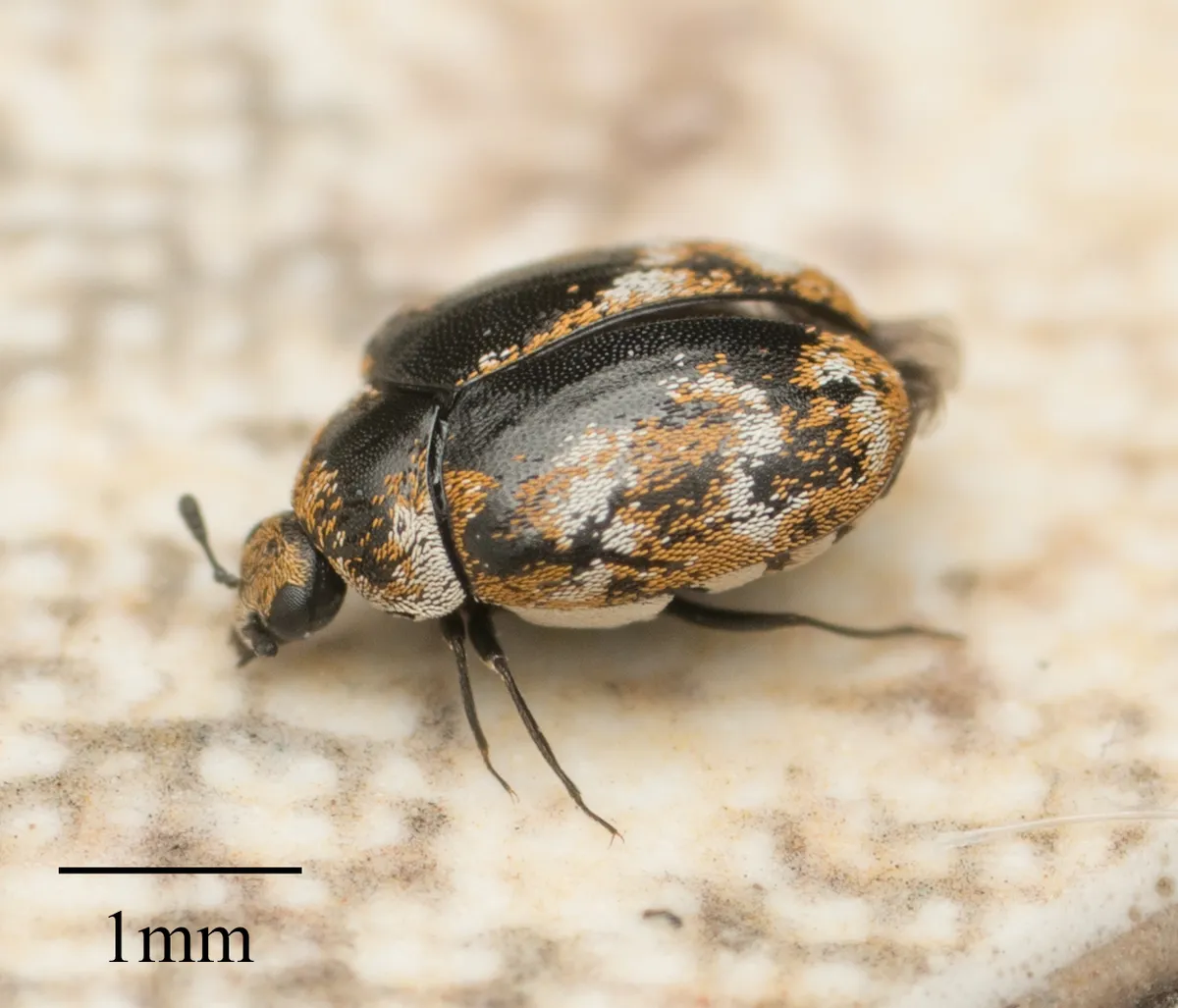
The larva is the stage to learn, because it does the damage and stays out of sight. UC IPM says most larval feeding happens in dark, undisturbed places and describes larvae as fuzzy or hairy, maggot-like and slightly longer than the adults. Varied carpet beetle larvae have light and dark brown stripes, a body broader at the rear, and dense tufts of hair that they raise into a round plume when disturbed.
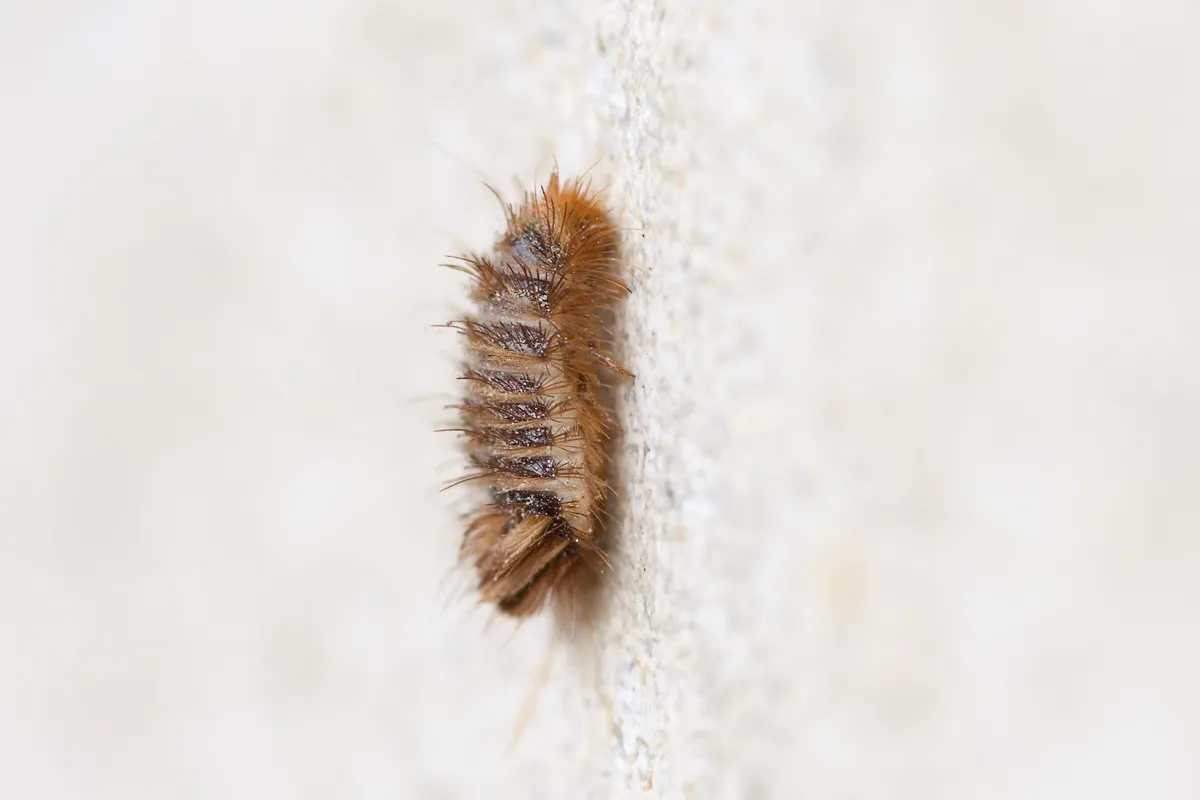
Black carpet beetle larvae look different: shiny, smooth and hard, covered in short, stiff hairs and tapering to a tuft of long hairs at the rear, in UC IPM's description. The Connecticut Agricultural Experiment Station calls them thin, carrot-shaped and about 1/2 inch long, while UC IPM gives a smaller top size of 5/16 inch.
Ohio State University Extension's carpet beetle fact sheet describes the four species in the table below. Color is a weaker clue than shape: UC IPM notes that varied and furniture carpet beetles lose their colored scales with age, so an older adult can look plain brown or black.
| Carpet beetle | Adult | Larva |
|---|---|---|
| Varied (Anthrenus verbasci) | 1/10 to 1/8 inch, nearly round; irregular pattern of white, brown and yellow scales | About 1/4 inch; light and dark brown stripes, broader at the rear |
| Furniture (Anthrenus flavipes) | 1/16 to 1/8 inch, nearly round; whitish, checkered with black spots; white underside | About 1/4 inch; white, darkening to dark red or chestnut brown; broader at the front |
| Common (Anthrenus scrophulariae) | 1/10 to 1/8 inch, nearly round; gray to black, with orange-red scales down the middle of the back | About 1/4 inch; reddish-brown, with many brownish-black hairs |
| Black (Attagenus unicolor) | 1/8 to 3/16 inch, oval, shiny black to dark brown | Up to about 1/2 inch; golden to dark brown, carrot-shaped, with a tail tuft of long hairs |
Sources: Ohio State University Extension and UC IPM. For the black carpet beetle larva, UC IPM gives a top size of 5/16 inch, while Ohio State and the Connecticut Agricultural Experiment Station give about 1/2 inch.
Is it a carpet beetle, a bed bug or a clothes moth?
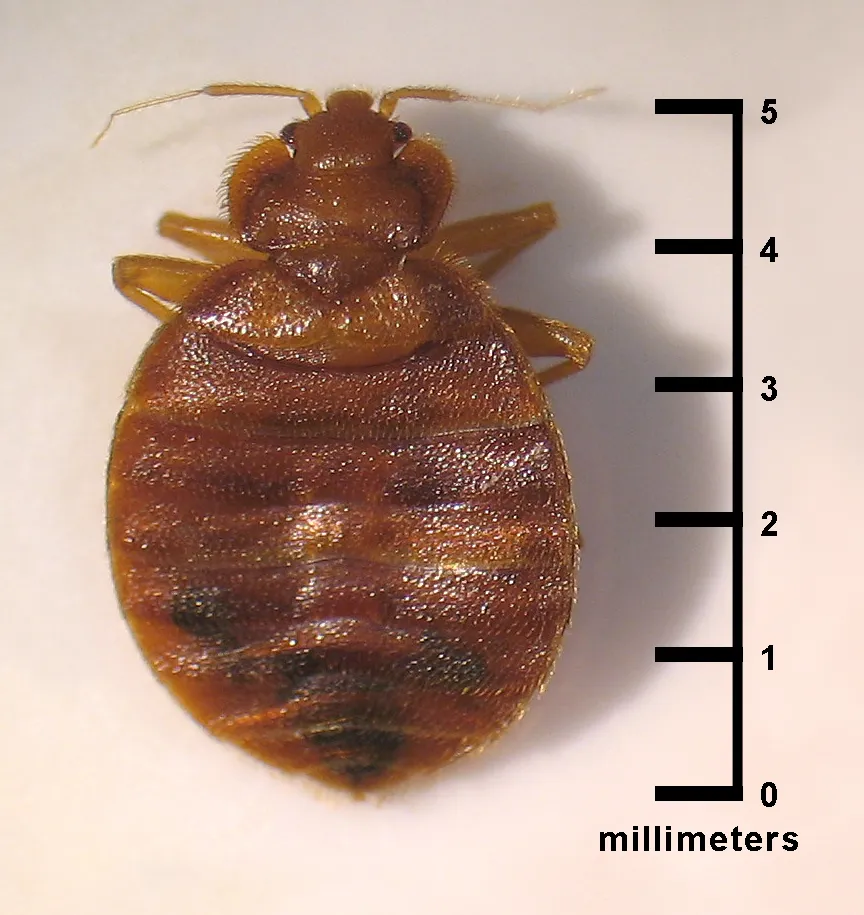
Check the body surface first: bristles point to a carpet beetle larva, a flat, oval body to a bed bug, and a shiny white body with a dark head to a clothes moth larva. The EPA's page on bed bug appearance describes adult bed bugs as about the size of an apple seed, 3/16 to 1/4 inch long, flat and oval, brown and turning reddish-brown after feeding, with wings not used for flying, so a beetle flying to the window is not a bed bug.
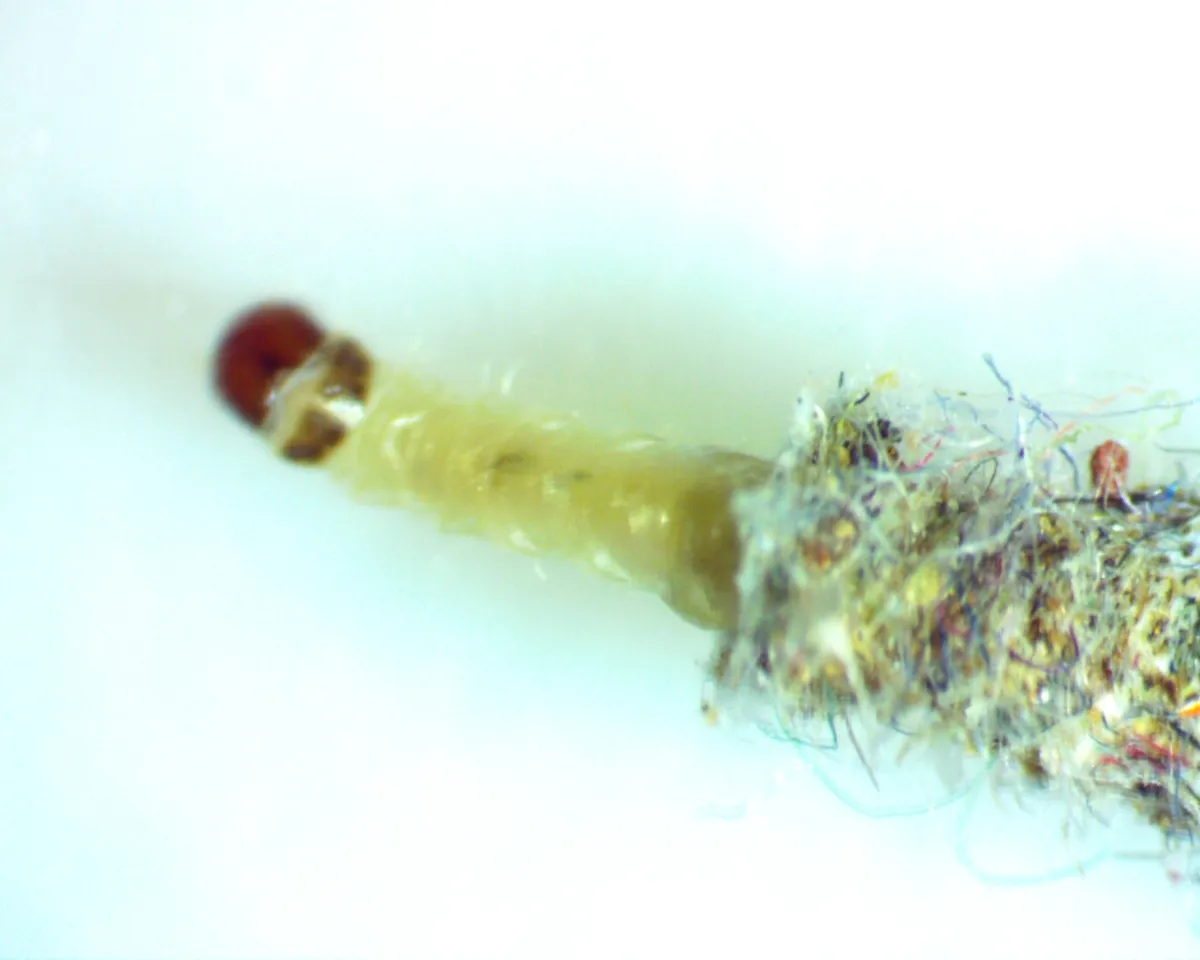
Clothes moths damage the same animal-fiber items but leave different evidence. UC IPM's Pest Notes on clothes moths describe shiny white larvae with dark heads: webbing clothes moth larvae spin silken feeding tubes and leave webbing behind, and casemaking clothes moth larvae carry a silken case. The adults are weak fliers that are not attracted to light and usually stay near infested items, unlike adult carpet beetles at the window.
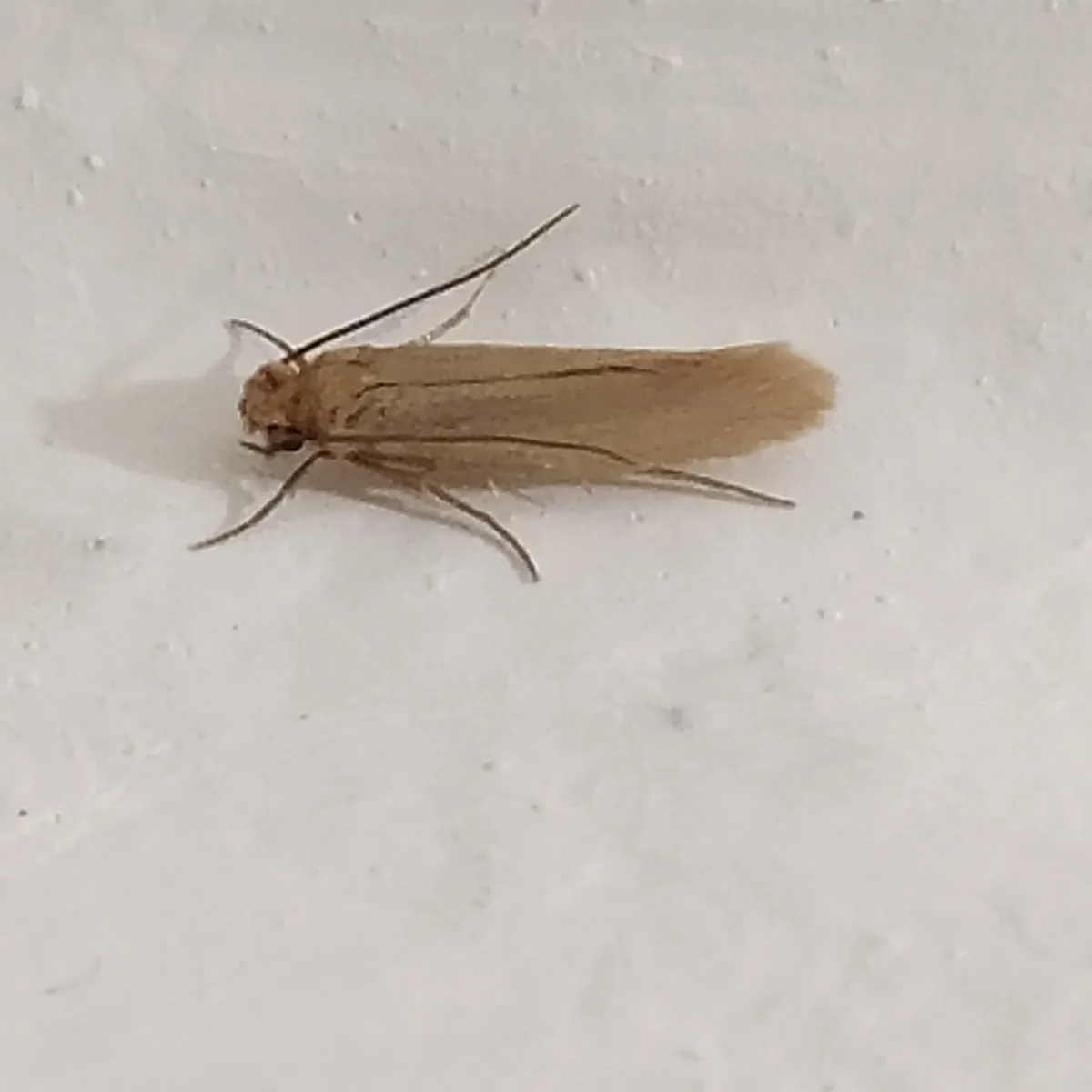
Damage is a second clue. UC IPM says carpet beetles tend to damage a large area on one part of a garment or carpet and make no webbing, while moth damage more often appears as scattered holes; Kentucky notes that the two kinds of damage are often confused.
| What you found | Size | Body | Telltale sign |
|---|---|---|---|
| Carpet beetle larva | 1/8 to 1/4 inch; black carpet beetle about 1/2 inch | Covered in hairs or bristles; tan to dark brown | Bristly cast skins, salt-grain pellets, no webbing |
| Adult carpet beetle | About 1/16 to 3/16 inch | Round to oval, black or mottled, short antennae | Flies; collects on windowsills, drapes and window panes |
| Bed bug | 3/16 to 1/4 inch (adult) | Flat and oval; brown to reddish-brown | Wings not used for flying |
| Clothes moth | Adult about 1/4 inch long at rest | Larva shiny white with a dark head | Silk webbing, feeding tubes or a silken case |
From the University of Kentucky, UC IPM (carpet beetles and clothes moths), the Connecticut Agricultural Experiment Station, Ohio State University Extension and the EPA, each linked in the text.
A small, flat insect found at the bed calls for a look at what bed bugs look like at each life stage and the eight look-alikes commonly mistaken for bed bugs, carpet beetles among them. Brown skins under a bed are another mix-up: a guide to bed bug shed skins shows how they differ from bristly carpet beetle skins. Small moths fluttering in a dark closet point to clothes moths instead.
How do you know if you have carpet beetles?
Adult beetles at a window are often the first sign; larvae, cast skins or damage in a dark, undisturbed spot confirm it. Kentucky says infestations can develop undetected and that adults on windowsills in spring suggest one may be present indoors. UC IPM describes brown, shell-like, bristly cast skins and fecal pellets about the size of a grain of salt, Ohio State says the cast skins often outnumber the larvae, and Kentucky describes the feeding damage as threadbare spots and irregular holes.
With the bug in a sealed jar, beside a ruler marked in inches
- Size. Adults run about 1/16 to 3/16 inch; larvae 1/8 to 1/4 inch, or about 1/2 inch for the black carpet beetle.
- Surface. Bristles all over point to a carpet beetle larva; a flat, oval body suggests a bed bug, and a shiny white body with a dark head a clothes moth larva.
- Antennae and wings. A round beetle with short antennae that flies to the window fits an adult carpet beetle; bed bugs do not fly.
- Where it was. Adults collect at windows; larvae at carpet edges, under heavy furniture, in closets and in vents full of hair and lint.
- What was beside it. Bristly cast skins and salt-grain pellets point to carpet beetles; silk webbing or a case, to clothes moths.
A tiny dark beetle that is not round may be something else; a guide to tiny black bugs in the house sorts the candidates by where you found them. Small carpet beetles also get mistaken for ticks, which a guide to bugs that look like ticks settles with a leg count.
Do carpet beetles bite?
No. Texas A&M AgriLife Extension's guide to mysterious bug bites says carpet beetles do not bite, but the hairs on their larvae irritate some people, and bite-like lesions can form where skin is pressed against larvae. Penn State Extension describes what appears to be an acquired allergic reaction to the larvae's hairs and body fluid that seems to affect only people exposed for years, and says irritation of the airways and eyes can also develop in some people.
A 2021 report in CDC's Emerging Infectious Diseases journal traced itchy, red, raised bumps, mostly under clothing, in seven families in southern France to the hairs of Anthrenus larvae lodged in the skin. The authors wrote that such lesions should be distinguished from bed bug and flea bites, and the steps they recommended excluded insecticides: clothing was washed and stored in airtight bags, and mattresses and other infested areas were vacuumed.
Texas A&M notes that the cause of a bite is often hard to pin down without a specimen, and suggests talking with a doctor about allergies or other conditions that might explain the symptoms. What a carpet beetle rash looks like has its own guide, and a guide to flea bites on people compares other causes of itchy bumps.
Why are carpet beetles in your house?
Adults fly in from flowers outdoors and lay eggs on animal-based materials, so larvae end up wherever wool, fur, feathers, hair, lint or dead insects collect. UC IPM says adults feed on pollen and nectar, often on crape myrtle, spiraea and buckwheat, and come in through open windows and doors or on cut flowers, then lay their eggs on furs, woolen fabric and carpets.
Kentucky says the larvae digest keratin, the animal protein in wool, fur, felt, silk, feathers and leather, and rarely attack cotton or synthetics such as polyester and rayon unless they are blended with wool or heavily soiled. It also lists lint and hair under baseboards and in vents and ducts; bird nests and animal carcasses; dead cluster flies, lady beetles, stink bugs and wasps in attics, chimneys, basements and light fixtures; and stored cereal, pet food and bird seed.
Connecticut adds taxidermy, antique chairs with natural-fiber padding, rodent nests, dead rodents in wall voids and insulation from before the 1930s that contains horsehair. A guide to bugs in the house in winter covers the cluster flies, lady beetles and stink bugs that move indoors and die in those hidden spaces.
Where to look for larvae
- Carpet edges and under heavy furniture. Kentucky says edges and undersides of rugs and carpets are more likely to be infested than open areas, and UC IPM points to carpet beneath heavy furniture; lift wall-to-wall carpet off the tack strip with needle-nose pliers to look.
- Closets and stored clothing. Kentucky says larvae often feed within fabric folds such as hems, collars and cuffs.
- Upholstered furniture and pianos. Kentucky lists upholstered furniture, and UC IPM notes larvae can damage piano felts and hammers.
- Ducts, baseboards and molding. Ohio State lists heating system air ducts and the space behind baseboards and molding.
- Attic and eaves. UC IPM says old bird, rodent, bee and wasp nests and spider webs can harbor infestations.
- Kitchen and basement shelves. Check stored cereal, pet food and bird seed; other insects in stored food are sorted in a guide to pantry pests.
How do you get rid of carpet beetles?
Find every infested item, deal with each one, vacuum where larvae feed and store clean fabrics sealed; insecticide comes last, if at all. Kentucky says eliminating carpet beetles means locating all infested items and treats insecticide as a supplement to good housekeeping, and Connecticut says a regular cleaning routine removes most infestations, because carpet beetles need long undisturbed periods to develop.
- Sort what you find. Throw out badly infested items (UC IPM), bagging them first to help keep the beetles from spreading (Kentucky).
- Wash or dry-clean what you keep. Kentucky says dry cleaning, hot laundering or the heat of a clothes dryer kills eggs and larvae.
- Freeze or heat what cannot be washed, using the temperatures in the next section.
- Vacuum the feeding spots. Kentucky recommends floors, carpets and the inside of heating vents, which removes larvae with the hair and lint they eat; Connecticut suggests a crevice tool along baseboards and under furniture.
- Empty the vacuum promptly. UC IPM says the bag can hold eggs, larvae or adults.
- Store clean items sealed in tight-fitting plastic bags or containers (Kentucky) or a trunk, chest, box or garment bag; UC IPM notes that closets are generally not airtight.
- Check that it worked. For a serious infestation, UC IPM suggests sticky traps around the house, checked once or twice a week; pheromone traps attract only their own species, so match the lure to your beetle.
Does freezing or heat kill carpet beetle larvae?
Yes, if the item gets cold or hot enough for long enough, which makes them the tools for things you cannot wash. UC IPM says to enclose the item in a plastic bag and freeze it for 2 weeks below 18°F, or heat it in an oven at 120°F or higher for at least 30 minutes, first considering whether cold or heat will damage it. Kentucky gives 0°F or colder for at least a week, or 72 hours in a freezer that reaches -20°F.
Kentucky also says to seal items in plastic bags or polyethylene before freezing and to let them return to room temperature, about 24 hours, before unwrapping them. Items you can launder or dry-clean need no freezer: the University of Maine Cooperative Extension says dry cleaning kills every stage, but it cautions that clothes-dryer heat can damage woolens, so check the care label first.
Which insecticides are labeled for carpet beetles?
Several are, but use one only as a spot treatment after cleaning, and only a product whose label lists carpet beetles and the place you plan to treat. The EPA's introduction to pesticide labels explains that pesticide labels, unlike most product labels, are legally enforceable: the label is the law, and using a product in a way inconsistent with its labeling violates federal law.
- Registered active ingredients. The University of Maine Cooperative Extension lists cyfluthrin, bifenthrin, deltamethrin, permethrin and tetramethrin as insecticides registered for carpet beetle control.
- Pyrethrins and diatomaceous earth. Connecticut names both among the products available to homeowners that are labeled for carpet beetle control.
- Insecticidal dusts for voids. UC IPM suggests dusts such as silica aerogel for attics, wall voids and other places you cannot reach, and warns that some dusts can affect people with respiratory problems.
- Paradichlorobenzene. The vapor-producing ingredient of moth balls, flakes and crystals labeled for carpet beetles, for sealed storage only, as the next section explains.
- Fumigants. UC IPM says only licensed pest control operators can buy and use them, treating infested items with gas in a vault.
Aim at the places larvae live. Kentucky lists carpet edges, floor and wall junctions, beneath furniture and the bottoms of closets, and UC IPM adds closet walls and shelves where susceptible fabrics are stored. Kentucky says infested clothing or bedding should not be treated with insecticides; clean those instead.
Skip bug bombs. Connecticut does not recommend aerosol-based insecticides or bug bombs for carpet beetles, and Ohio State says total-release aerosols generally do not reach the tiny cracks and crevices where the larvae live.
Do mothballs or cedar keep carpet beetles away?
Mothballs work only inside a sealed container, and cedar is unreliable. The National Pesticide Information Center explains that mothballs are EPA-regulated pesticides whose labels typically direct you to keep them in a tightly closed container where the vapors build up, and that using them in a way the label does not specify is illegal and can harm people, pets or the environment.
UC IPM says paradichlorobenzene (PDB) balls, flakes or crystals labeled for carpet beetles on fabrics can be used in storage, kept off plastic buttons, hangers and garment bags, which the ingredient can soften and melt into the fabric. Kentucky says naphthalene and PDB products can be hazardous if used incorrectly and should never be scattered in open closets or within reach of children or pets, and Connecticut says they do not work in closets and attics, which are not airtight.
As for cedar, UC IPM says the oil in some cedar kills only small larvae and the wood loses it with age, so a tightly built chest matters more than the wood; Kentucky calls cedar closets and chests seldom effective.
How long does it take to get rid of carpet beetles?
Plan on months of follow-up, because larvae develop slowly: UC IPM's life-cycle table gives a larval stage of 70 to 94 days for the furniture carpet beetle, 166 to 330 days for the black and 220 to 630 days for the varied, with eggs hatching in about 2 weeks at 77 to 78°F. Connecticut says mature larvae pupate in spring and the new adults head for windowsills, so beetles at the glass next spring can come from larvae that were already hidden. Keep vacuuming edges and checking traps meanwhile.
How do you keep carpet beetles from coming back?
- Close the entry points. Keep window screens, doors and vents secure and check cut flowers for beetles (UC IPM).
- Clear the debris. Remove lint, hair, dead insects, old spider webs and bird, rodent, bee and wasp nests (UC IPM).
- Clean before storing. Kentucky says cleaning kills eggs and larvae and removes perspiration odors that attract the pests; UC IPM says food and perspiration stains draw them too.
- Inspect stored woolens yearly. UC IPM suggests checking woolens, linens and furs once a year and airing them in the sun with a thorough brushing.
- Keep vacuuming. Connecticut says regularly cleaned, laundered or vacuumed textiles and carpets cannot support carpet beetle populations.
When should you call a professional for carpet beetles?
Call one when infested items are numerous or large, or the infestation is heavy or hard to reach. Connecticut gives furniture, entire carpets and pre-1930s insulation as examples, and notes that licensed pest management professionals have restricted-use products labeled for carpet beetles. For expensive broadloom or Oriental rugs, UC IPM suggests an experienced pest control operator or carpet-cleaning company, or a dry cleaner that handles rugs, and Kentucky notes that some furriers and department stores offer cold vaults for furs.
This guide is general educational information, not medical advice. If you have symptoms or concerns after a bite or exposure, contact a healthcare provider.
Use any pesticide exactly as its label directs. The label is the law, and what is registered and sold varies by state.
Frequently Asked Questions
How do you get rid of carpet beetles in a bed?+
Treat the bed like any other infested fabric. The University of Kentucky says hot laundering or dry cleaning kills carpet beetle eggs and larvae and that clothes-dryer heat works too, and it lists feathers among the larvae's foods, so check feather pillows, down comforters and wool blankets. Vacuum the mattress, the bed frame and the floor under the bed, where lint and hair collect. Do not spray the bed: Kentucky says infested bedding should not be treated with insecticides. A flat, oval insect found in the bed is worth checking against bed bug photos instead.
Does one carpet beetle mean an infestation?+
Not necessarily, but it is worth a look. UC IPM says adults feed on pollen outdoors and can fly in through open windows and doors or ride in on cut flowers. The University of Kentucky notes, though, that adult carpet beetles on windowsills in spring suggest an infestation may be present inside. Check where larvae feed: carpet edges, under heavy furniture, closets and stored woolens, and floor vents. Larvae, bristly cast skins or damaged fabric there point to beetles developing indoors.
Why do carpet beetles show up every spring?+
Spring is when new adults emerge and look for a way out. The Connecticut Agricultural Experiment Station says mature larvae pupate in spring, and the adults that emerge are drawn to light and head for windowsills and other bright spots as they try to disperse. Adults also feed on flower pollen outdoors, and UC IPM says they fly into homes from flowers in the landscape and arrive on cut flowers. A spring crop of beetles at the windows can mean larvae fed indoors over the winter.
How long do carpet beetles live?+
Adults live only weeks, but larvae can feed for well over a year. UC IPM's life-cycle table gives adult lifespans of 2 to 6 weeks for varied carpet beetle females, 2 to 4 weeks for males, and 4 to 8 weeks for furniture and black carpet beetles. The larval stage runs 70 to 94 days for the furniture carpet beetle, 166 to 330 days for the black carpet beetle and 220 to 630 days for the varied carpet beetle.
Do carpet beetles eat cotton or polyester?+
Rarely. The University of Kentucky says cotton and synthetic fabrics such as polyester and rayon are rarely attacked unless they are blended with wool or heavily soiled with food stains or body oils, and UC IPM says the larvae do not feed on synthetic fibers. Their real food is keratin, the animal protein in wool, fur, felt, silk, feathers and leather. Damage on a synthetic item is worth checking for a wool blend, a stain, or pet hair and lint worked into it.
Can carpet beetles get into food?+
Some can. The University of Kentucky says some carpet beetles also infest seeds, cereals, pet food and other plant-based materials, and that cereal, pet food and bird seed stored in kitchens and basements or cached by rodents are possible sources. UC IPM says larvae occasionally feed on certain spices and grains, and that in California and other arid areas the black carpet beetle is a more serious pest of grains, flours and cereals. UC IPM's general advice applies here too: throw out badly infested items.
Sources
- Pest Notes: Carpet Beetles (UC ANR Publication 7436) — University of California Statewide IPM Program
- Carpet Beetles (ENTFACT-601) — University of Kentucky Entomology
- Carpet Beetles (Family Dermestidae) — The Connecticut Agricultural Experiment Station
- Carpet Beetles (HYG-2103) — Ohio State University Extension
- Bed Bugs Appearance and Life Cycle — U.S. Environmental Protection Agency
- Pest Notes: Clothes Moths (UC ANR Publication 7435) — University of California Statewide IPM Program
- Diagnosing Mysterious Bug Bites — Texas A&M AgriLife Extension
- Carpet Beetle Dermatitis — Penn State Extension
- Anthrenus sp. and an Uncommon Cluster of Dermatitis — Emerging Infectious Diseases (Centers for Disease Control and Prevention)
- Carpet Beetles (Pest Management Fact Sheet #5008) — University of Maine Cooperative Extension
- Introduction to Pesticide Labels — U.S. Environmental Protection Agency
- Regulation, Proper Uses, and Alternatives of Mothballs — National Pesticide Information Center
How this guide was made: it was researched and drafted with AI assistance from the sources listed above. A second, independent AI pass then checked each factual claim against those sources. Found an error? Email support@buzzskito.ca.