Published by BuzzSkito Mosquito & Tick Control
Published October 28, 2026 · Fact-checked against the sources listed below
What do bed bug eggs look like?
Bed bug eggs look like tiny pearl-white grains, longer than they are wide, stuck to fabric or wood where the bugs hide. The EPA's page on bed bug appearance and life cycle calls them the size of a pinhead and pearl-white and lists the egg at 1 mm (about 1/25 inch). The University of Tennessee's bed bug identification page describes each one as elongate, white and 1 mm long.
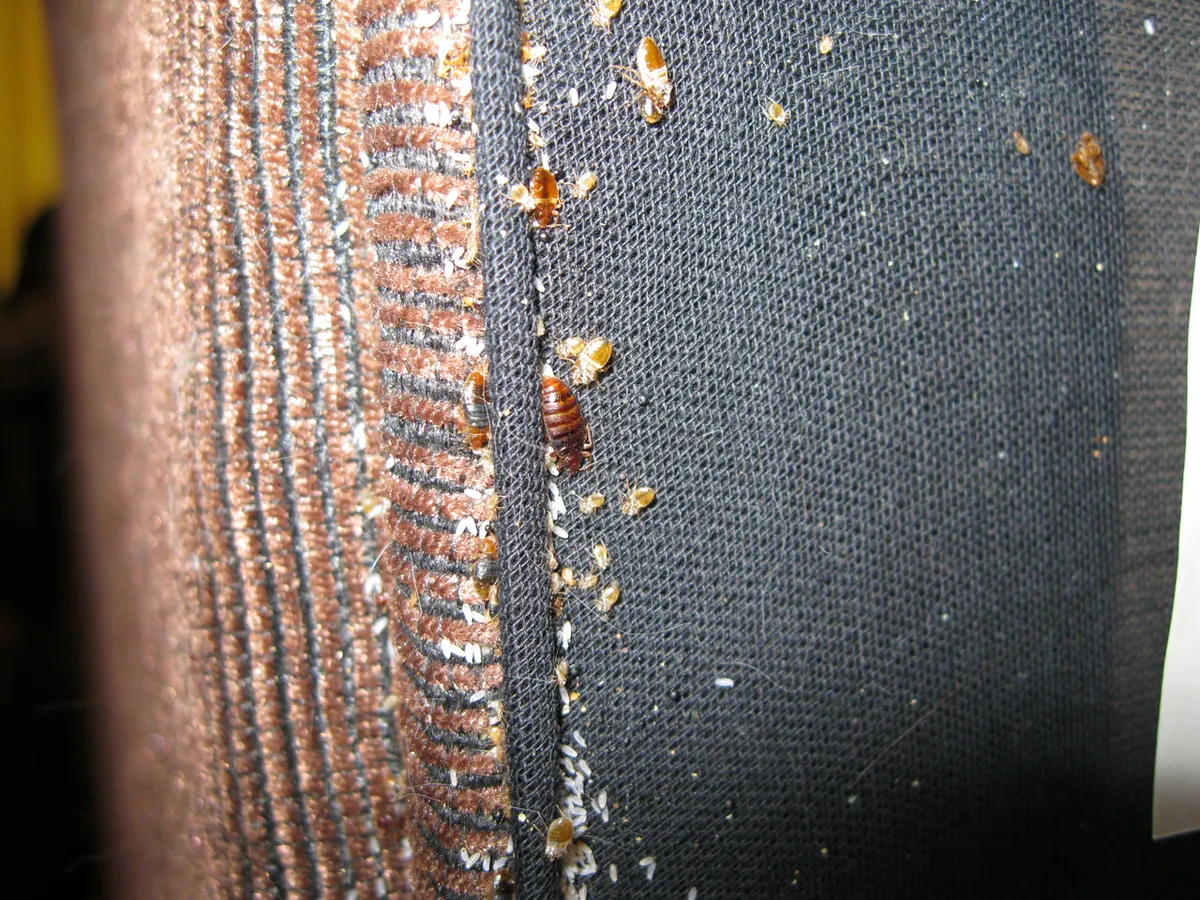
Up close, an egg's age can show. The EPA says an egg more than five days old is marked by an eye spot, and Virginia Tech's guide to identifying an infestation, by entomologist Dini Miller, calls the eyespots obvious in eggs older than five days. Tennessee's magnified photo shows the developing eyes inside the shells.
The eggs do not roll around loose. The University of Kentucky's bed bug fact sheet says they are sticky when first laid, so they adhere to surfaces; Tennessee says the female cements each egg onto a surface; and UC IPM's Pest Notes on bed bugs says a gluelike material covers them. Kentucky adds that eggs in particular can be difficult to dislodge, even with a vacuum.
How big are bed bug eggs, and can you see them?
A bed bug egg is about 1/25 inch (1 mm) long: big enough to see as a speck, small enough to miss. UC IPM gives a slightly larger 1/20 inch. For comparison, the EPA and Virginia Tech use the head of a pin, Kentucky a speck of dust, and Nebraska Extension's bed bug guide a grain of sugar or a poppy seed.
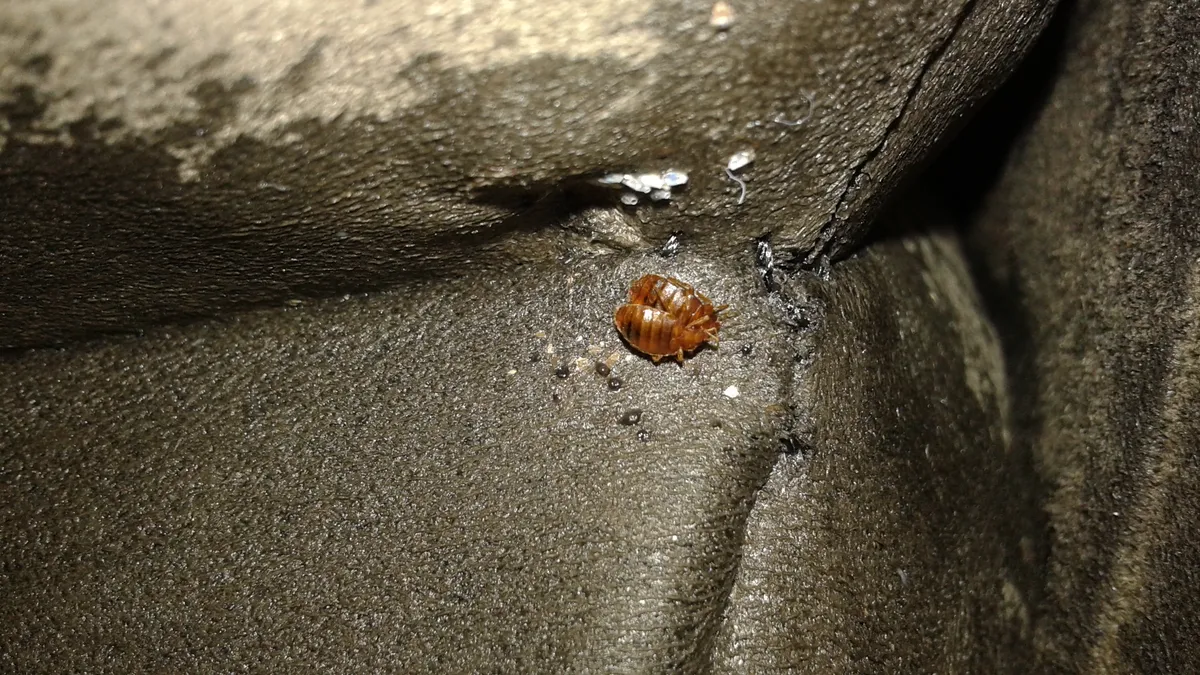
Finding them takes light and a lens. Kentucky says the whitish eggs are hard to see without magnification, especially on light-colored materials, and calls a flashlight useful in dim areas, so work along pale mattress fabric slowly with a flashlight and a magnifying glass. On dark fabric they stand out, as in the photo below.
Where do bed bugs lay their eggs?
Bed bugs lay their eggs in the hidden spots where they rest, which mostly means in and around the bed. Kentucky says females lay in secluded places, and UC IPM says on rough surfaces such as wood or paper near where their hosts sleep; it cites research finding 85% of bed bugs in or near the bed. The EPA's guide to finding bed bugs lists eggs and eggshells among the signs and starts the search at the piping, seams and tags of the mattress and box spring and the cracks of the bed frame and headboard.
Where to look for bed bug eggs
- Mattress and box spring. The seams, piping, tufts and tags (EPA, Virginia Tech).
- Box spring frame. Wood creases and the spots where the fabric is stapled to the wood frame (Virginia Tech); EPA shows the canvas strap of an old box spring cover holding adults, shed skins, feces and eggs.
- Bed frame and headboard. Cracks and joints (EPA, UC IPM) and the holes for set-in screws (Virginia Tech); Tennessee shows eggs stuck to the rough surface of a screw hole.
- Close by. The CDC says bed bugs tend to live within 8 feet of where people sleep; in heavier infestations, EPA adds drawer joints, chair and couch seams, curtain folds and the line where the wall meets the ceiling.
- Narrow cracks. EPA says a crack that would hold a credit card could hide a bed bug.
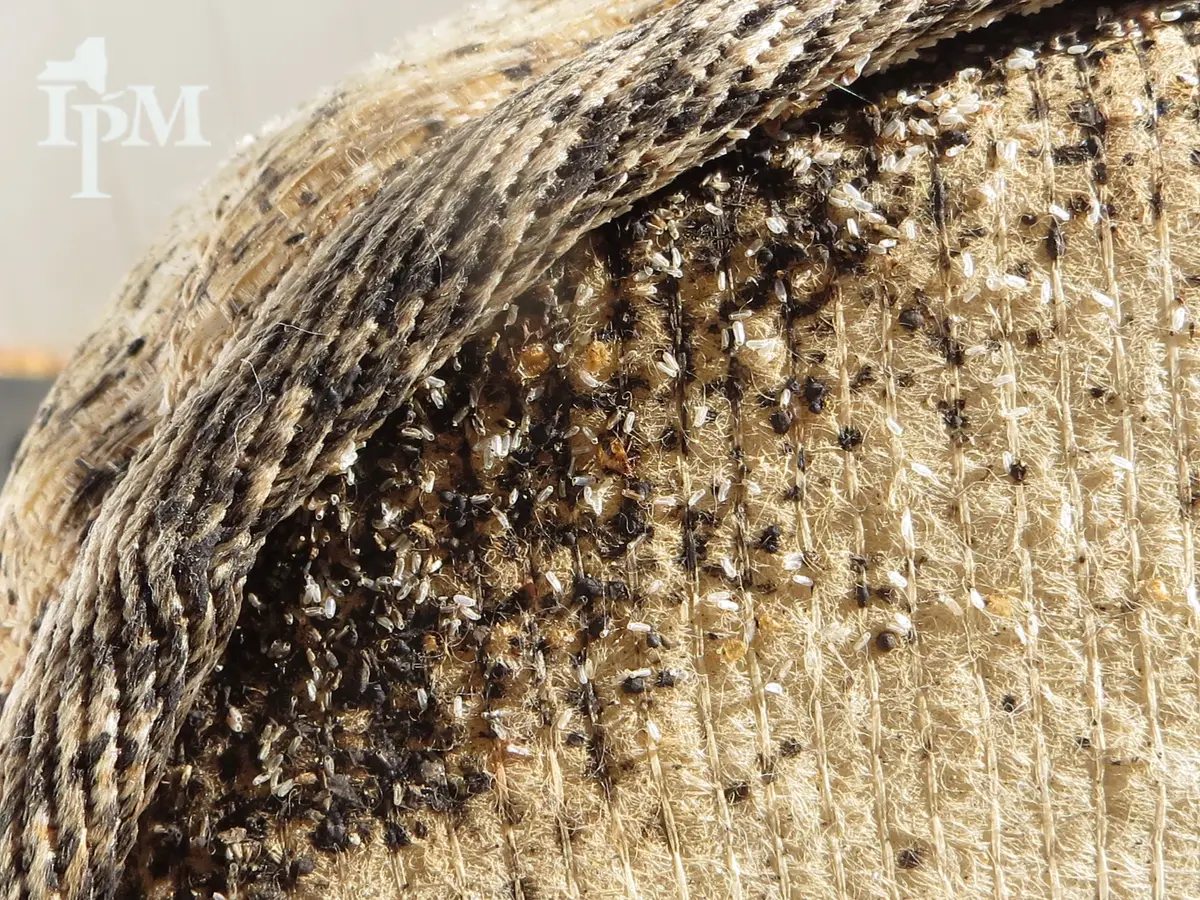
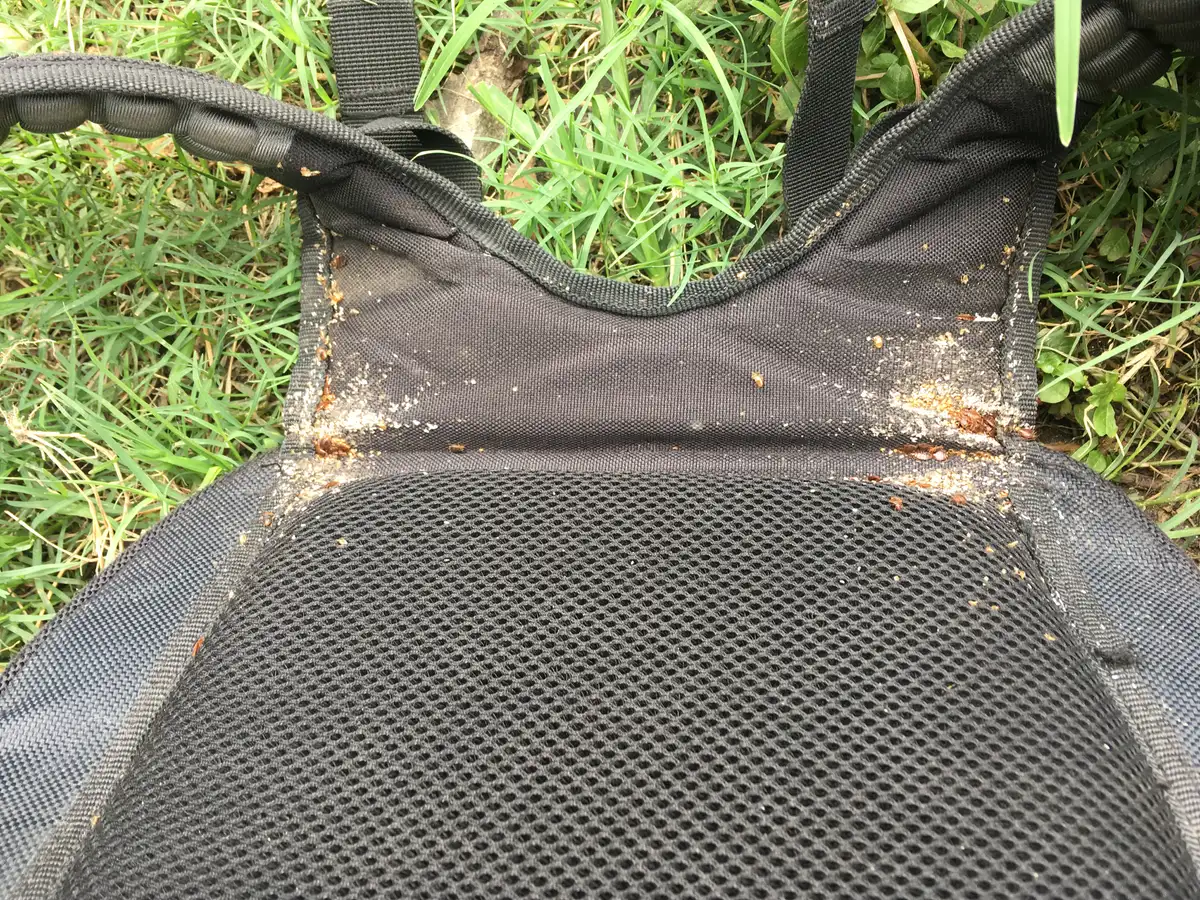
Bags and furniture can hold eggs too. The photographer of the picture below found bed bugs and their eggs under the straps of an unused bag, and Kentucky says bed bugs are brought in on backpacks, luggage and other belongings and on secondhand beds and furniture. Where bed bugs hide beyond the mattress covers the other spots, and checking a hotel room for bed bugs covers luggage on a trip.
How long do bed bug eggs take to hatch?
Somewhere between about 6 and 15 days, and the sources do not agree on one number. Kentucky says eggs hatch in about a week at room temperature, Tennessee says about 6 to 10 days, and UC IPM says about 10 to 15 days at room temperature. Warmth speeds things up: UC IPM says development is fastest between 70 and 82°F, and Kentucky says cooler temperatures or limited access to a host slow it down.
| Source | Eggs a day | Eggs in a lifetime | Time to hatch |
|---|---|---|---|
| University of Kentucky | One, two or more | Potentially hundreds | About a week at room temperature |
| University of Tennessee | A few | As many as 100 or more | About 6 to 10 days |
| UC IPM | Usually two to five | 200 to 500 | About 10 to 15 days at room temperature |
Each source's own figures, side by side and not averaged; Tennessee gives no temperature.
What hatches is a nymph about 1/16 inch (1.5 mm) long by the EPA's figure, clear to lightly colored with red eyes by Tennessee's description, or straw-colored and no bigger than a pinhead in Kentucky's words. It needs a blood meal before each of its five molts. UC IPM puts the trip from egg to adult at five weeks to four months, depending on temperature and food; Kentucky says as little as a month at 70 to 80°F with a ready supply of blood. What baby bed bugs look like at each stage follows them from there.
How do you tell live bed bug eggs from hatched shells?
An unhatched egg more than five days old shows an eye spot, the EPA says; a hatched egg is the empty shell the young bug crawled out of. UC IPM says eggshells frequently stay stuck in place after hatching, and Kentucky says hatched and unhatched eggs turn up together where the bugs hide, along with tan skins shed by growing nymphs, so one cluster can hold both.
Do not mistake shed skins for eggshells. Virginia Tech describes a molted skin as the same shape as the bed bug itself, generally translucent and like an empty bed bug shell, in a different size for each stage, and the EPA calls the skins pale yellow. An eggshell is a tiny oval; a shed skin keeps the outline of the bug, legs and all.
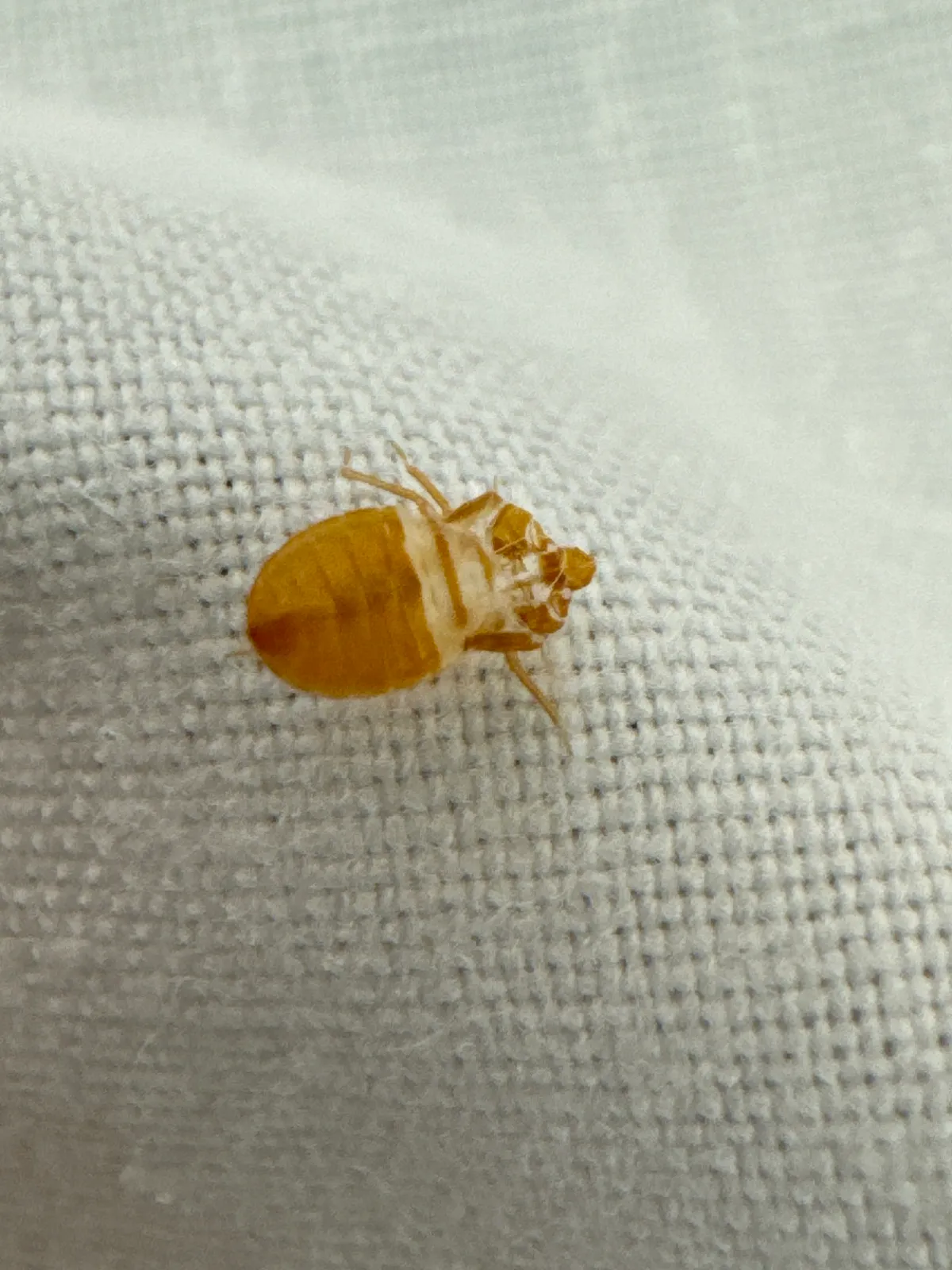
Because shells stay stuck in place, a patch of empty shells alone does not show when they hatched. Look for unhatched eggs and live bugs nearby, and for the black fecal spots that what bed bug poop looks like helps you recognize.
What else looks like bed bug eggs?
Other tiny white eggs can pass for bed bug eggs, and so can loose grains: Nebraska Extension compares a bed bug egg to a grain of sugar. Where you find the speck, and whether it is glued down, usually settles it.
Head lice eggs (nits)
Nits are glued to hair, not to bedding. CDC's parasite reference, DPDx, describes them as oval, usually yellow to white and 0.8 by 0.3 mm (about 1/32 inch long), cemented at the base of a hair nearest the scalp, with live eggs usually within about 1/4 inch of it. Bed bugs do not normally live on people the way lice do: Kentucky says they crawl to a secluded place right after feeding. What lice eggs look like shows nits up close.
Flea eggs
Flea eggs fall loose instead of sticking. The University of Florida's cat flea profile describes them as oval, smooth and white, about 0.5 mm (1/50 inch), half a bed bug egg's length, with a dry surface that lets them drop out of a pet's hair onto carpet, bedding and lawn, where they are nearly impossible to see. What flea eggs look like shows them beside flea dirt.
Clothes moth and carpet beetle eggs
Clothes moths lay on the fabrics their larvae eat. The University of Kentucky's clothes moth fact sheet calls the eggs pinhead-sized and says the larvae prefer dark, undisturbed places such as closets, chests and boxes, and UC IPM's Pest Notes on clothes moths says a sticky secretion attaches the eggs to fabric threads, on items such as wool clothing, rugs and furs. Virginia Tech's carpet beetle fact sheet says carpet beetles lay their eggs in lint, behind and under baseboards, in floor cracks and in other dark, protected places.
Small moths in the house shows clothes moth eggs and larvae, and how to tell carpet beetles from bed bugs and clothes moths covers the beetles.
Commonly confused with
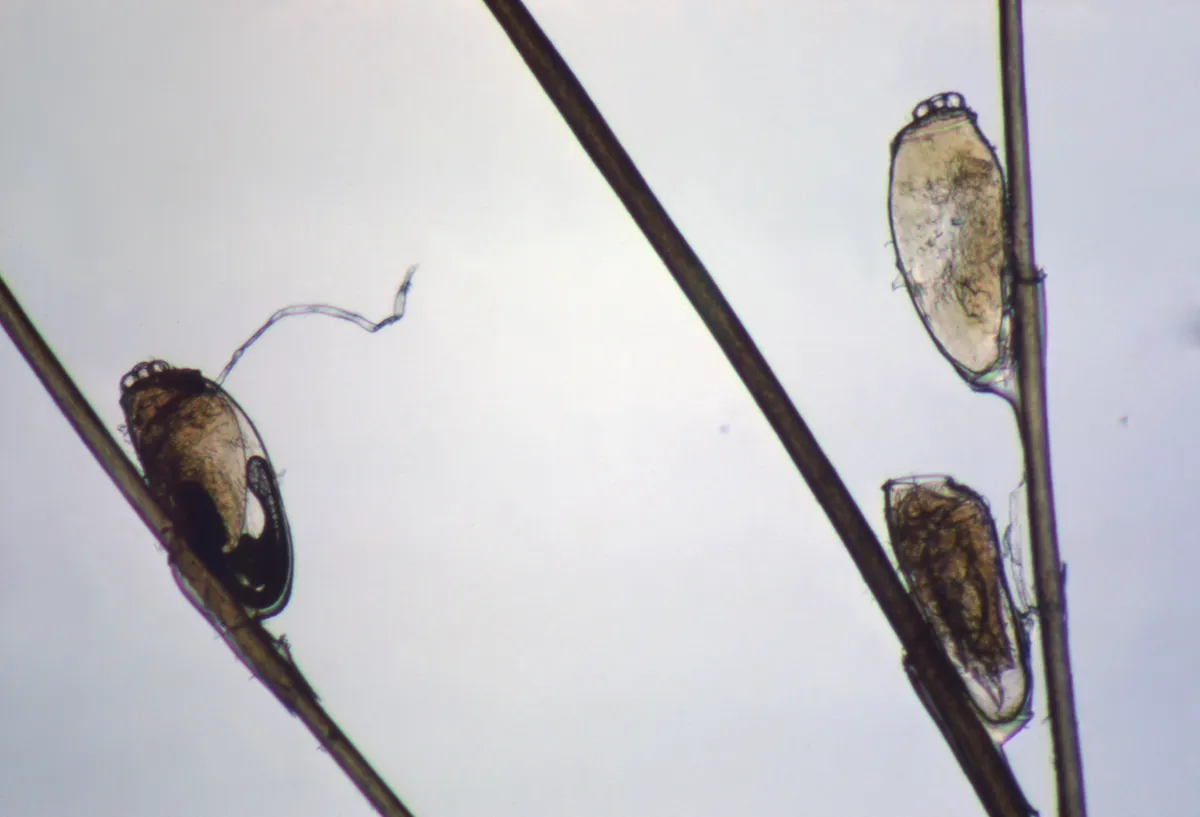 Head louse egg (nit)Cemented to a single hair; live ones usually sit within 1/4 inch of the scalp
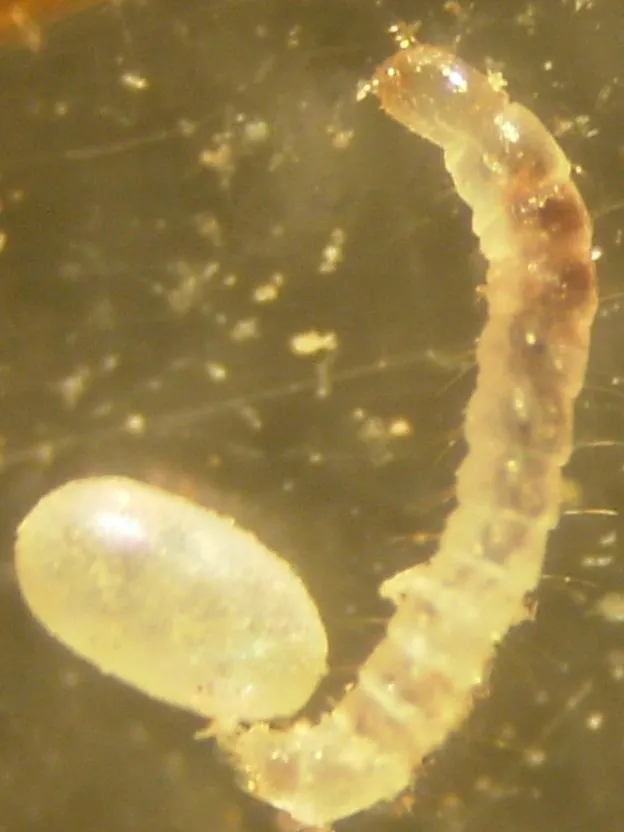 Flea eggSmooth, dry and about 1/50 inch; drops off pets onto carpet and bedding
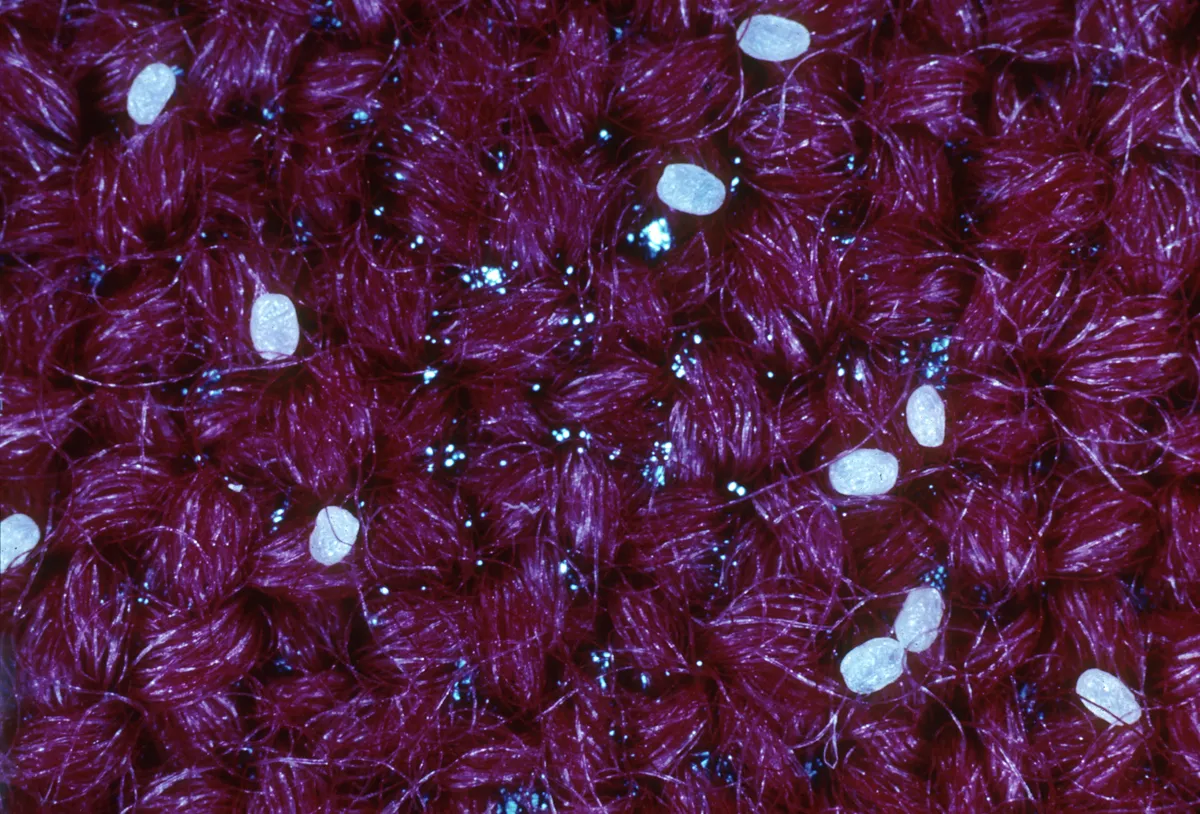 Clothes moth eggsPinhead-sized and attached to fabric threads, on wool and other items the larvae eat
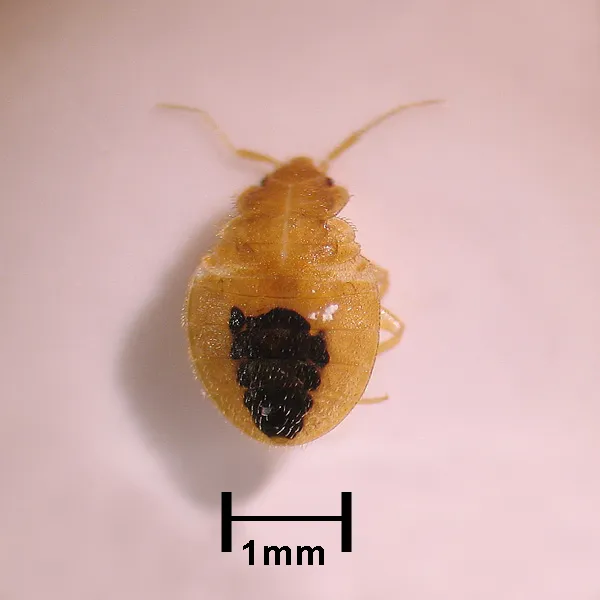 Bed bug nymphFrom about 1/16 inch; it walks, and turns bright red after a blood meal
Photos: Head louse egg (nit): CDC/ Dr. Dennis Juranek (CDC Public Health Image Library, phil.cdc.gov), public domain. Flea egg: Auguste Le Roux, Public domain, via Wikimedia Commons, public domain. Clothes moth eggs: Textile and Fibre Technology, CSIRO, CC BY 3.0, via Wikimedia Commons, CC BY 3.0. Bed bug nymph: CDC/ CDC-DPDx; Blaine Mathison (CDC Public Health Image Library, phil.cdc.gov), public domain.
Anything that walks is not an egg. For a tiny insect you cannot place, bugs that look like bed bugs compares the usual suspects and also sorts out lint and seeds, the five-question pest identifier can help narrow it down, and the library of pest guides covers other household pests.
What does finding bed bug eggs mean?
It means female bed bugs have been laying in that spot, and more young bugs will follow unless the eggs are removed or killed. Kentucky says females lay their eggs in the secluded places where the bugs hide, and by the sources above an unhatched egg there hatches within roughly 6 to 15 days.
The EPA's do-it-yourself bed bug control steps plan for that: keep inspecting at least every 7 days in case any eggs remain, because bugs found after the first cleanup mean either some were missed or eggs have hatched. What to do about bed bugs on a mattress covers cleaning and encasing a mattress with eggs on it, and the signs of bed bugs checklist goes through the other evidence in order.
For the insect itself at every stage, see what bed bugs look like; the complete guide to bed bugs runs from biology to treatment.
What kills bed bug eggs?
Heat kills them, if it reaches them. Virginia Tech's fact sheet on bed bug heat treatments puts the thermal death point of bed bug eggs at 122°F, against 118°F for adults and nymphs, and says the cracks and crevices where bugs hide must reach 122°F. Here is what the sources say about each method:
- Dryer. The EPA's steps for preparing for treatment say a household dryer on high heat for 30 minutes kills bed bugs and eggs in clothing, bedding and other items that can take the heat, and that washing alone might not do the job.
- Steam. EPA says steam must be at least 130°F, without a forceful airflow that can scatter the bugs. Kentucky says steamers used correctly kill bugs and eggs on contact but leave no lasting protection, and UC IPM says the steam has to penetrate to where the eggs are.
- Cold. EPA says a freezer works only if it is set to 0°F, with items sealed in a bag for three days, and that many home freezers are not cold enough, so check with a thermometer. Kentucky says spot-freezing equipment used correctly kills bugs and eggs on contact.
- Vacuuming. UC IPM says a strong vacuum removes bugs and eggs but one pass rarely gets them all, so repeat it; Kentucky warns that eggs especially can be hard to dislodge. EPA says to seal the bag and put it straight into an outdoor trash container.
- Whole-room heat. UC IPM says commercial heat treatment of whole rooms calls for at least 140°F for two hours or 130°F for three hours, which kills most bed bugs and eggs, and Virginia Tech says the hidden cracks must be measured to confirm they reach 122°F.
Sprays are the weak link against eggs. Nebraska Extension's guide, comparing chemical and heat treatment, notes for chemical treatment that eggs are not susceptible and that it takes multiple treatments, and UC IPM says insecticide applications alone won't control an infestation. The EPA's page on pesticides to control bed bugs does say that registered cold-pressed neem oil products controlled adults, nymphs and eggs in trials at label rates. Whatever you use, EPA says to pick an EPA-registered pesticide with bed bugs listed on the label and to follow the label directions.
Expect more than one round. EPA says you may have to repeat its steps to kill all the bugs and their eggs, and that treatment can take weeks to months. Do not try to heat the home with the thermostat, a propane space heater or a fireplace, which EPA says does not work and is dangerous. The step-by-step plan for getting rid of bed bugs puts the whole job in order, and rubbing alcohol has a guide of its own: whether rubbing alcohol kills bed bugs.
Use any pesticide exactly as its label directs. The label is the law, and what is registered and sold varies by state.
Frequently Asked Questions
Can you see bed bug eggs with the naked eye?+
Sometimes, but only as tiny specks. A bed bug egg is about 1/25 inch (1 mm) long, and the EPA and Virginia Tech compare it to the head of a pin. The University of Kentucky says the whitish eggs are hard to see without magnification, especially on light-colored materials, and UC IPM says seeing them requires a hand magnifying lens, so go over mattress seams, tags and box spring joints slowly with a flashlight and a magnifying glass. Eggs often turn up beside live bugs, shed skins and black fecal spots.
How long does it take for bed bug eggs to hatch?+
The sources give different numbers. The University of Kentucky says bed bug eggs hatch in about a week at room temperature, the University of Tennessee says about 6 to 10 days, and UC IPM says about 10 to 15 days at room temperature. Warmth speeds development, which UC IPM says is fastest between 70 and 82°F, while cooler temperatures slow it, Kentucky says. Because some eggs can be missed, the EPA advises inspecting at least every 7 days after treatment in case any eggs remain.
How many eggs does a bed bug lay?+
A few a day and hundreds in a lifetime. The University of Kentucky says a female lays one, two or more eggs a day in secluded places, potentially hundreds during her life. UC IPM gives usually two to five a day and 200 to 500 in all, and the University of Tennessee a few a day and as many as 100 or more. Because she lays them where the bugs hide, the eggs collect in the same seams and cracks as the bugs.
What temperature kills bed bug eggs?+
Virginia Tech puts the thermal death point of bed bug eggs at 122°F, slightly above the 118°F that kills adults and nymphs, and says the hidden cracks must reach 122°F in a heat treatment. For belongings, the EPA says a household dryer on high heat for 30 minutes kills bed bugs and eggs, and that steam should be at least 130°F. UC IPM says commercial whole-room heat calls for at least 140°F for two hours or 130°F for three hours.
Does freezing kill bed bug eggs?+
It can, if it is cold enough for long enough. The University of Kentucky says spot-freezing equipment used correctly kills bugs and eggs on contact. For belongings, the EPA says a freezer works only if it is set to 0°F, with items sealed in a bag for three days, and warns that many home refrigerator freezers are not cold enough, so check with a thermometer. Kentucky adds that below 32°F the cold has to be kept up for a long period, such as one to two weeks.
Does bed bug spray kill eggs?+
Not reliably on its own. Nebraska Extension notes for chemical treatment that eggs are not susceptible and that multiple treatments are needed, and UC IPM says insecticide applications alone will not control an infestation. The EPA does say registered cold-pressed neem oil products controlled adults, nymphs and eggs in trials at label rates. If you use any pesticide, the EPA says to choose one registered by the EPA with bed bugs listed on the label, follow the label directions and keep inspecting.
Can bed bugs lay eggs in your hair or on your skin?+
None of the sources on this page describes that. The University of Kentucky says bed bugs normally do not live on or attach to people the way lice or ticks do: they feed for a few minutes and crawl to a secluded place, and females lay their eggs in secluded places. Tiny white specks glued to hairs close to the scalp are more likely head lice eggs, which CDC describes as cemented to the base of the hair nearest the scalp.
What do bed bug egg shells look like?+
A hatched shell is the empty egg the young bug left, the same tiny size and shape as an unhatched egg. UC IPM says eggshells frequently stay stuck in place after hatching, and the University of Kentucky says hatched and unhatched eggs turn up together where bed bugs hide, along with tan skins shed by growing nymphs. Do not confuse eggshells with shed skins: Virginia Tech describes a molted skin as shaped like the bed bug itself, translucent and like an empty bed bug shell.
Can bed bug eggs be on clothes?+
Clothing and bedding from an infested room can carry them, which is why the EPA's steps for preparing for treatment include running clothing, bedding and other items that can take the heat through a household dryer on high heat for 30 minutes, which it says kills bed bugs and eggs; washing alone might not do the job. The University of Kentucky says bed bugs can be carried in on clothing, shoes and belongings, and suggests bagging items in plastic on the way to the dryer so bugs do not fall off.
Are bed bug eggs dangerous?+
Not in themselves. An egg does not bite, and the CDC says bed bugs are not known to spread diseases to people. The concern is what hatches: UC IPM says each of the five nymph stages needs at least one blood meal before it can molt to the next, so eggs left in place mean more biting bugs within a couple of weeks. Treat eggs as a sign that bed bugs are breeding where you found them, and remove or kill them there.
Sources
- Bed Bugs Appearance and Life Cycle — US Environmental Protection Agency
- How to Find Bed Bugs — US Environmental Protection Agency
- Do-it-yourself Bed Bug Control — US Environmental Protection Agency
- Preparing for Treatment Against Bed Bugs — US Environmental Protection Agency
- Pesticides to Control Bed Bugs — US Environmental Protection Agency
- About Bed Bugs — Centers for Disease Control and Prevention
- ENTFACT-636: Bed Bugs (Michael F. Potter, revised March 2026) — University of Kentucky Department of Entomology
- Pest Notes: Bed Bugs (UC ANR Publication 7454) — University of California Statewide IPM Program
- Biology and Identification (Bed Bugs in Tennessee) — University of Tennessee Institute of Agriculture
- How to Identify a Bed Bug Infestation (Dini M. Miller) — Virginia Tech Department of Entomology (hosted by the Virginia Department of Agriculture and Consumer Services)
- Bed Bug Heat Treatments: What You Need to Know (ENTO-583NP, 2024) — Virginia Cooperative Extension, Virginia Tech
- Bed bug guide for households (Extension Educators Jody Green and Jonathan Larson, 2017) — Nebraska Extension, University of Nebraska-Lincoln
- DPDx: Pediculosis — Centers for Disease Control and Prevention, Division of Parasitic Diseases and Malaria
- Cat Flea, Ctenocephalides felis (Bouché) (EENY-011/IN137) — University of Florida IFAS Extension
- ENTFACT-609: Clothes Moths (Michael F. Potter) — University of Kentucky Department of Entomology
- Pest Notes: Clothes Moths (UC ANR Publication 7435) — University of California Statewide IPM Program
- Carpet Beetles (ENTO-486NP, 2022) — Virginia Cooperative Extension, Virginia Tech
How this guide was made: it was researched and drafted with AI assistance from the sources listed above. A second, independent AI pass then checked each factual claim against those sources. Found an error? Email support@buzzskito.ca.