
Published by BuzzSkito Mosquito & Tick Control
Published October 16, 2026 · Drafted with AI assistance and fact-checked against the sources listed below
Which bugs look like fleas?
Springtails, young bed bugs, bat bugs, carpet beetle larvae, booklice, bird mites and flea beetles are bugs often taken for fleas, and each one fails part of the flea test on shape, size, color, wings or where it lives. Springtails are the closest match: as the University of Kentucky's springtail fact sheet explains, both they and fleas turn up indoors and both look like small jumping insects.
For other tiny bugs found indoors, the tiny black bug sorter works by the room where you found the bug.
What does a real flea look like?
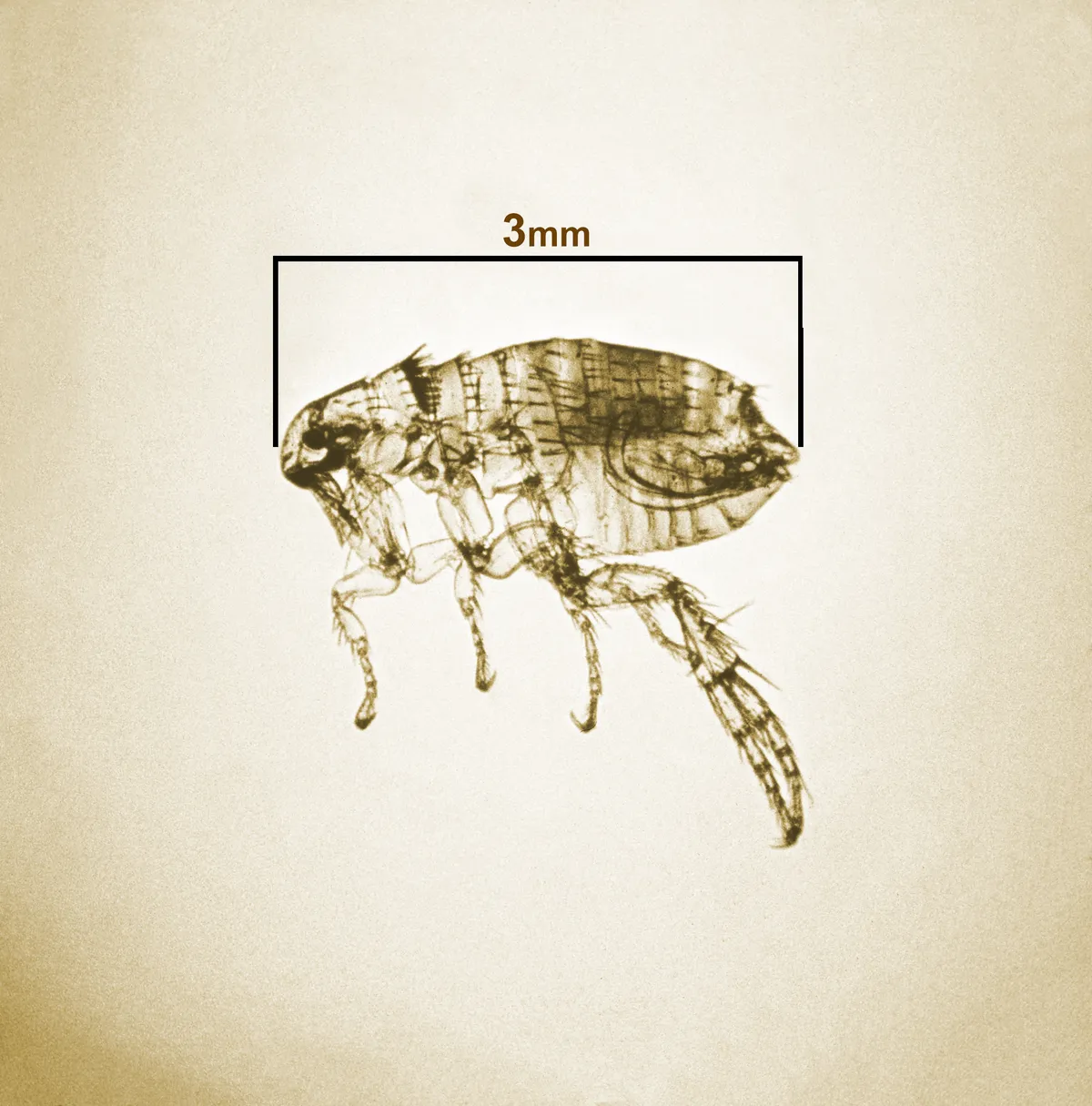
A real flea is wingless and reddish brown to black, about 1/25 to 1/8 inch (1 to 3 mm) long, with a body flattened from side to side and powerful hind legs for running and jumping through fur, according to the University of Florida's cat flea profile. UC IPM's flea guide says the flattening makes fleas look as if they walk on edge, and names the cat flea, Ctenocephalides felis, as the most common external parasite of pet cats and dogs.
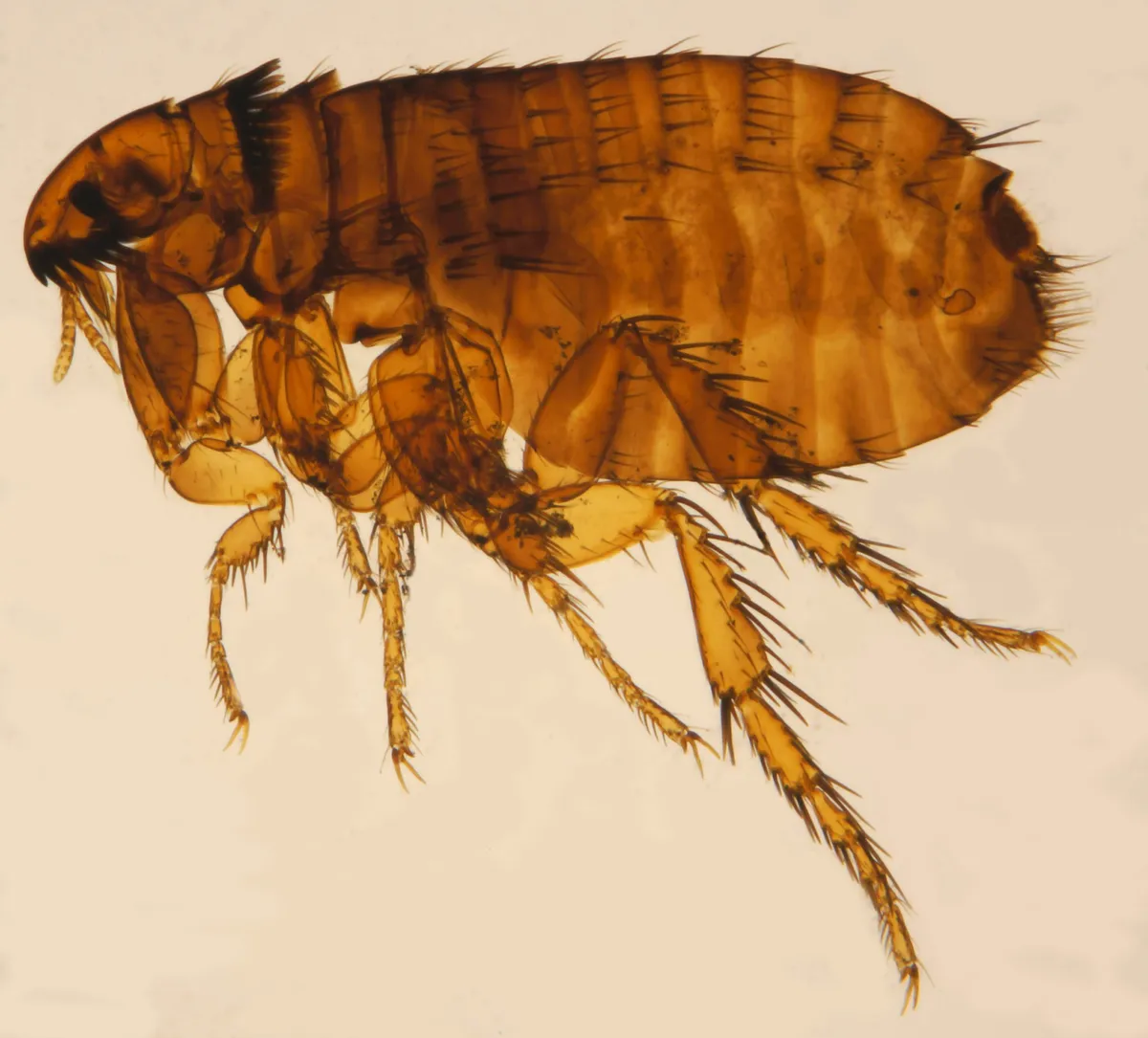
UC IPM adds that cat fleas carry genal and pronotal combs, rows of dark spines on and just behind the head that show under magnification.
Fleas reach their hosts by jumping: the University of Kentucky's flea control fact sheet says adults can jump vertically up to about 6 inches, enough to land on a passing pet or a person's pant legs. An adult cat flea then stays on its host, the Florida profile says, so look on the pet first and then where it sleeps, which is where UC IPM says flea numbers are highest.
Two checks help confirm fleas. Kentucky says flea droppings, which are digested blood, show up as dark, pepper-like specks in a pet's fur, and UC IPM suggests walking through the pets' resting areas in white socks pulled up to the knee, since any fleas there will jump onto them. Flea dirt, flea eggs and larvae have their own photo guide, and the guide to identifying adult fleas covers fleas on pets, people and furniture.
How do the flea look-alikes compare?
Set the bug against a real flea on size, jumping or flying, biting and where it turns up. The rows follow the order of the sections below.
| Bug | Typical size | Jumps or flies? | Bites people? | Where it turns up |
|---|---|---|---|---|
| Cat flea (adult) | About 1/25 to 1/8 inch | Jumps; no wings | Yes | On pets and where they sleep |
| Springtail | Mustard seed or smaller; most indoor ones about 1/25 to 1/12 inch | Jumps with a forked tail | No | Bathrooms, drains, sinks, basements, damp potting soil |
| Bed bug nymph | About 1/16 to 3/16 inch; adults 3/16 to 1/4 inch | Neither; crawls | Yes | Mattress seams, box springs, bed frames, headboards |
| Carpet beetle larva | Up to about 5/16 inch (black carpet beetle) | Crawls | No bite described; its hairs can cause a rash | Closets, rugs, wool, fur, feathers, pet hair |
| Booklouse | Usually under 1/16 inch | Most indoor kinds are wingless | No; not a parasite | Damp, moldy spots, books, papers, stored food |
| Bird mite | About 1/25 inch | No wings; eight legs | Yes, mostly at night | Near bird nests in eaves, attics or chimneys |
| Bat bug | About 1/5 inch | Crawls, like a bed bug | Yes, especially once the bats are gone | Buildings where bats roost |
| Flea beetle | 1/15 to 1/6 inch | Jumps and flies | No bites described; eats plants | Vegetable gardens and crops |
Sources: University of Florida, University of Kentucky, Penn State, Colorado State, Iowa State, Washington State, Utah State and University of Minnesota extension, UC IPM and the EPA, each linked in the sections below.
How can you identify the bug in a jar?
Catch one first in a clear jar, a sealed plastic bag or on clear tape, and use a magnifying glass: a flea is no longer than about 1/8 inch, and several look-alikes are as small or smaller.
Checks to run with the bug in a jar
- Does it jump? The sources here describe fleas, springtails and flea beetles as jumpers. A soft, grayish jumper near a drain points to a springtail; a shiny beetle that also flies, to a flea beetle.
- Which way is it flat? A flea is flattened side to side and looks narrow from above. Bed bugs and bat bugs are oval and flat from top to bottom.
- How long is it? Against a ruler, a flea is no longer than about 1/8 inch; a bird mite is about 1/25 inch, an indoor booklouse usually under 1/16 inch and a bat bug about 1/5 inch.
- How many legs? Fleas and the other insects here have six; adult bird mites have eight.
- Wings, bristles or long feelers? A flea has no wings. Hard wing covers point to a beetle, dense bristles to a carpet beetle larva, and long, thread-like antennae on a soft, pale body to a booklouse.
- Where was it? A pet or its bedding points to fleas, mattress seams to bed bugs, and a drain, bird nest, bat roost or vegetable garden to the look-alike that lives there.
Are springtails fleas?
No. Springtails are tiny, soft-bodied jumpers that feed on decaying organic material and do not bite people, while fleas feed on blood, according to the University of Kentucky's springtail fact sheet.
Up close they differ. Kentucky says fleas are always dark reddish brown with hard bodies flattened from side to side, while springtails come in a variety of colors, look gray at first glance and have softer bodies. Penn State Extension's springtail page puts most springtails that invade homes at 1 to 2 mm, about 1/25 to 1/12 inch, against about 1/8 inch for a flea.
They jump differently, too. Colorado State University Extension's springtail fact sheet describes a fork-like structure at the hind end that folds under the body and, when released, pushes the springtail into a short jump; Penn State says it can launch one up to 100 times its body length. A flea jumps with its hind legs.
Colorado State says springtails gather indoors where water collects, in bathrooms, drains, tubs and kitchen sinks, and sometimes in houseplant soil after watering; Kentucky adds basements and leaking pipes. Hot, dry summer spells can drive them indoors in numbers, but Colorado State says these migrations usually last less than a week and trapped springtails soon die. The springtails called snow fleas, which jump on thawing snow, are not fleas either.
Is it a flea or a bed bug?
A bed bug is oval and flat from top to bottom, while a flea is narrow from side to side, and bed bugs do not jump. The University of Kentucky's bed bug fact sheet says bed bugs do not fly or jump like fleas but crawl rapidly over floors, walls and ceilings.
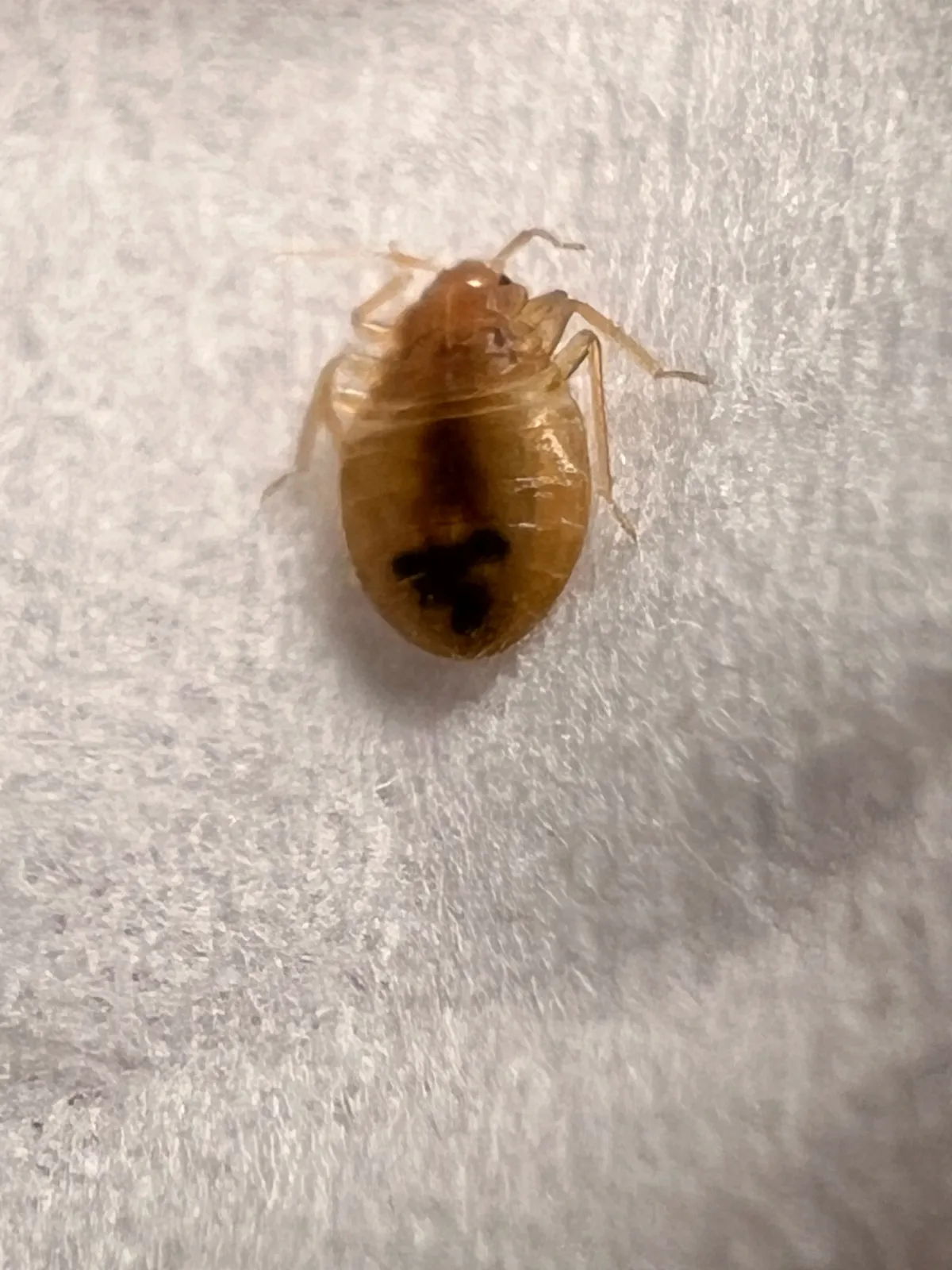
Size is one reason the two get confused. The EPA's bed bug identification page gives newly hatched nymphs as about 1.5 mm (1/16 inch) long and fifth-stage nymphs as about 4.5 mm (3/16 inch), so a young bed bug can be flea-sized. Nymphs are translucent or whitish yellow and can be nearly invisible until they feed; unfed adults are brown, oval and about the size of an apple seed, 3/16 to 1/4 inch long.
Location settles most cases. Kentucky says bed bugs hide in the seams, folds and crevices of mattresses, box springs, bed frames and headboards, and that flea bites occur mainly around the ankles while bed bugs bite any skin exposed during sleep. The guide to flea bites on humans compares the bites; for the bed bug itself, see baby bed bugs stage by stage and the bugs most often mistaken for bed bugs.
Could it be a carpet beetle larva?
Yes, if the bug is hairy and banded. UC IPM's carpet beetle guide describes varied carpet beetle larvae with dense tufts of hair and alternating light and dark brown stripes, and black carpet beetle larvae up to about 5/16 inch, shiny and covered in short, stiff hairs, with a tuft of long hairs at the tail.
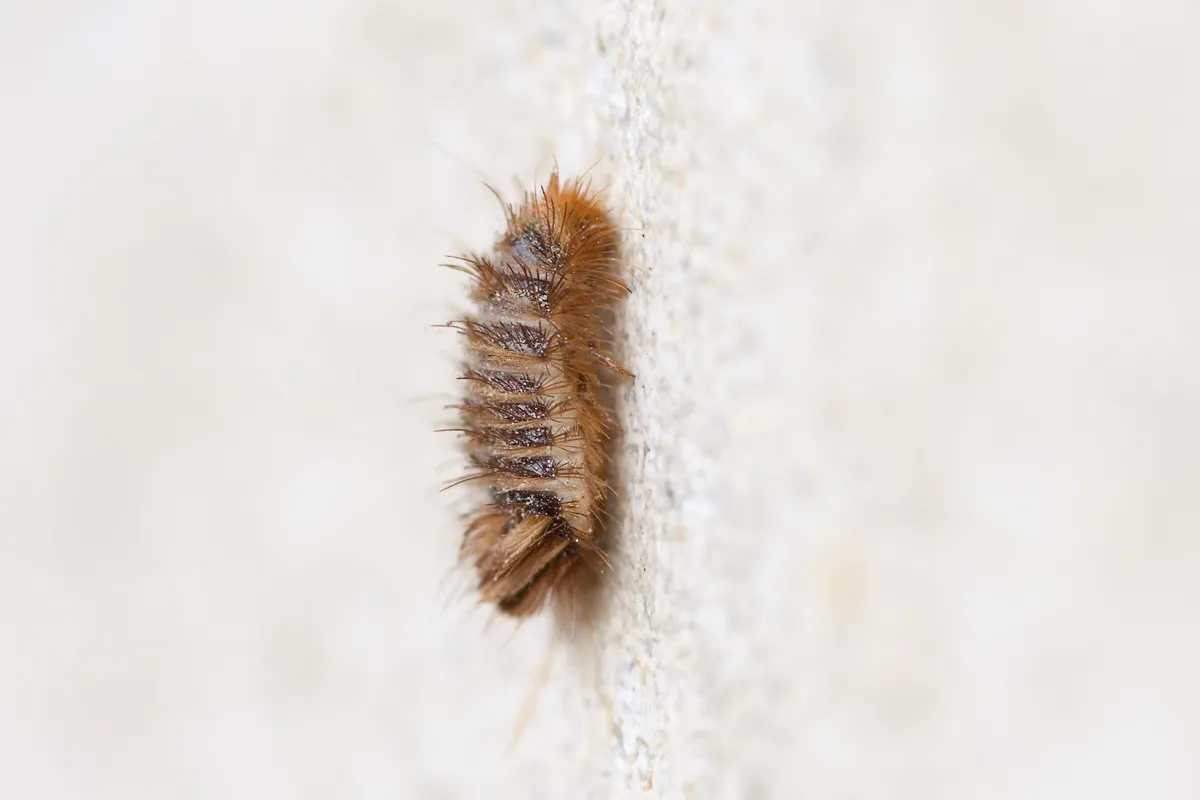
The larvae feed in dark, undisturbed places on wool, silk, leather, fur, feathers and pet hair, and can live inside mattresses and pillows stuffed with hair or feathers, UC IPM says. The adults are tiny, round beetles about 1/10 to 1/8 inch long, usually seen near windows because they are attracted to light.
The larvae get blamed for bites, but the trouble is their hairs: Penn State Extension's page on carpet beetle dermatitis describes people who felt bitten when their itchy rash was an allergic reaction to larval hairs, a sensitivity it says apparently develops only after years of exposure. The carpet beetle rash guide explains more, and how to get rid of carpet beetles starts with finding what the larvae eat.
What are the tiny pale bugs that look like fleas?
Tiny, pale, soft-bodied insects on damp books, papers, shelves or stored food are often booklice, also called psocids. The University of Florida's booklice fact sheet puts indoor species usually under 1/16 inch (1.5 mm) long, translucent white, gray or light brown, with long, thread-like antennae, and says most species found in buildings are wingless.
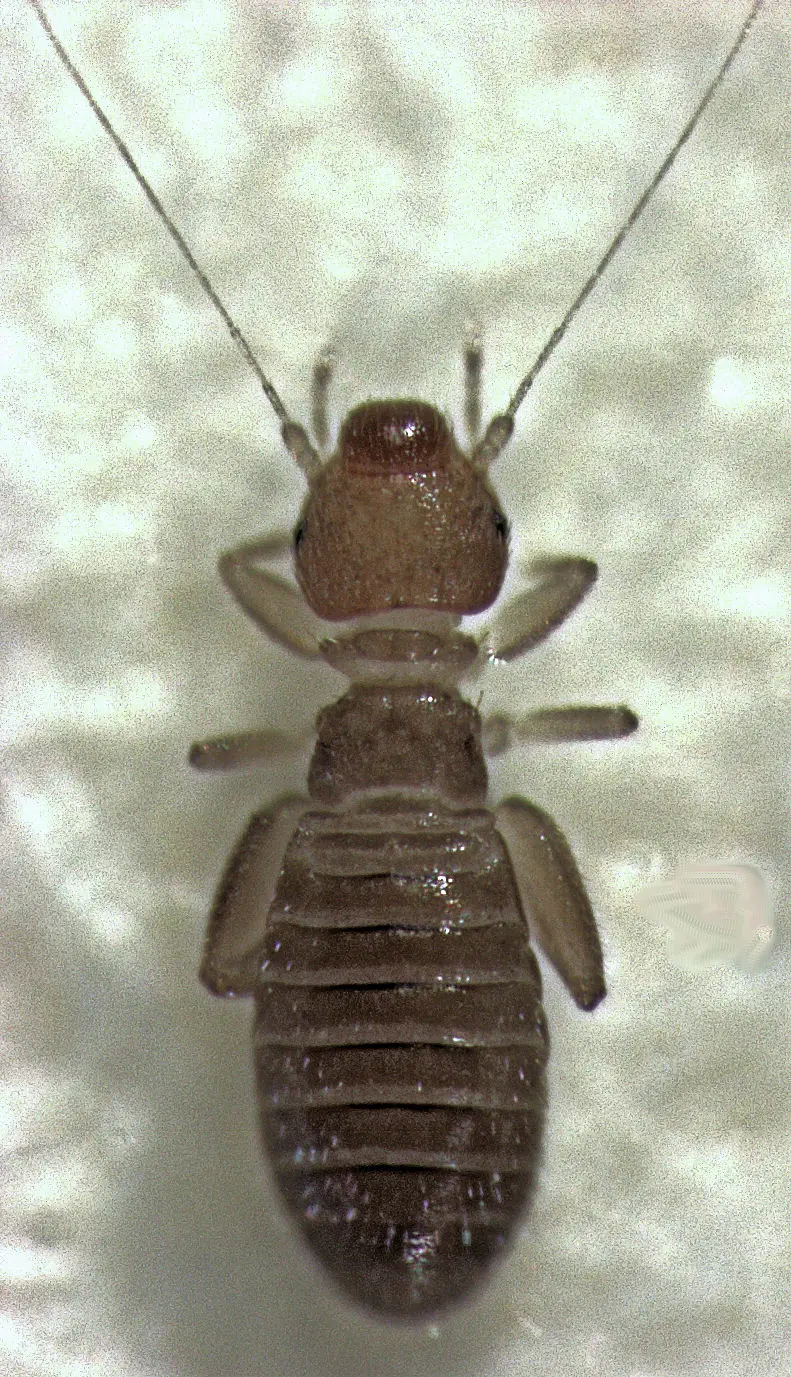
UF says booklice are not parasites. They eat fungi, cereals, pollen and the starch sizing in book bindings and favor warm, humid places, so a crowd of them points to damp air or mold; UF advises bringing indoor humidity below 50%, after which chemical control is usually unnecessary. Booklice also appear in the guide to bugs that look like ticks, and the booklice guide covers them in full.
What looks like a flea and bites after birds leave a nest?
Bird mites. Washington State University's bird mite fact sheet says northern fowl mites and chicken mites, parasites of poultry and wild birds, can become pests in homes when starlings, pigeons, sparrows or other birds nest in the eaves, attic or chimney. When the birds leave or die, the mites migrate to any available food source, people included.
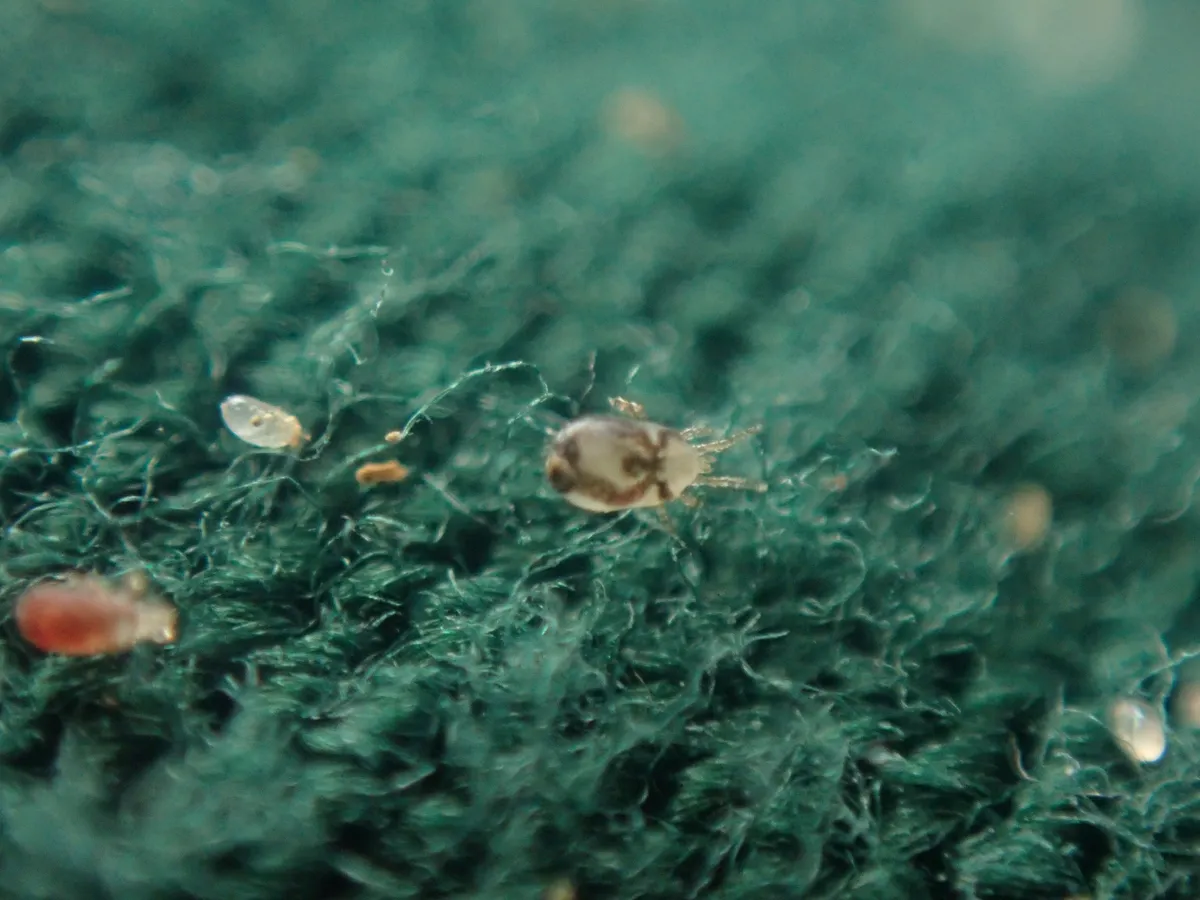
Bird mites are not insects: WSU gives adults as about 1 mm (1/25 inch) long with eight legs, whitish before feeding and red after a recent blood meal. Bites usually come at night and can leave small, itchy or painful pimple-like bumps. The mites cannot survive and reproduce on human blood, but WSU says northern fowl mites can live up to about three weeks without a bird and chicken mites up to eight months.
Start outside. WSU advises removing abandoned nests promptly while wearing gloves, then vacuuming the wandering mites and sealing the bag. Songbird nests may be removed only after the young have left, because songbirds are protected by federal law. The bird mite guide covers the cleanup.
Could the biting bug be a bat bug?
It could if bats roost in the building. Iowa State University Extension's bat bug page calls the bat bug a very close relative of the bed bug that lives in buildings infested with bats, feeds on bat blood and bites people when it wanders from the roost. Kentucky's bed bug fact sheet adds that bat bugs may bite people especially when the bats are gone.
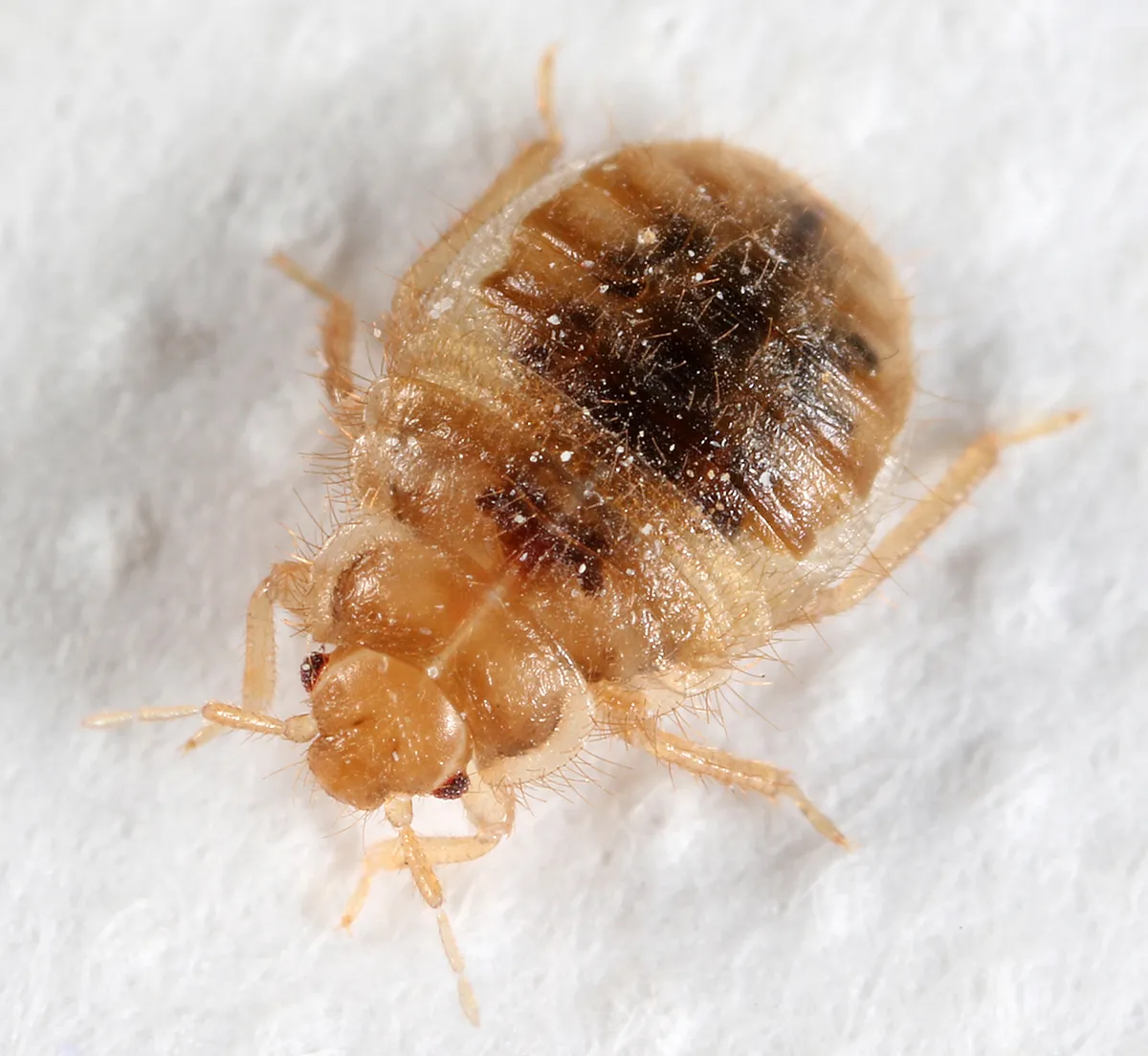
A bat bug looks like a bed bug, not a flea: the University of Minnesota Extension's bat bug page gives adults as about 1/5 inch long and says they feed at night. Telling one from a bed bug takes magnification; Iowa State says the fringe hairs just behind a bat bug's head are at least as long as its eye is wide, while a bed bug's are shorter. Iowa State calls their feeding an annoyance rather than a danger and says bat bugs have not been found to transmit any disease.
The bats come first. Iowa State says spraying without removing the bats will probably bring only short-term benefit: seal the bats out, ideally from late summer to fall, then, if needed, apply a residual insecticide labeled for indoor use against bat bugs to cracks, crevices and hiding places. The bat bug guide covers exclusion.
What are the tiny beetles that jump like fleas in a garden?
Flea beetles. Utah State University Extension's flea beetle fact sheet describes them as small, shiny insects with enlarged hind legs that let them jump great distances when disturbed, and, unlike fleas, they are strong fliers.
Utah State gives adults as 1/15 to 1/6 inch (1.7 to 4.2 mm) long and brown, green, metallic blue or black, sometimes with stripes or spots; as beetles, they have hard wing covers, which no flea has. They chew small, round shot holes, 1/16 to 1/8 inch across, in the leaves of cabbage-family plants and of potatoes, tomatoes, eggplant and peppers, and seedlings suffer most.
Flea beetles feed on plants, and the extension sources used here describe no bites on people or pets. Utah State says most species spend the winter as adults under leaf litter, dirt clods or weeds and become active in mid to late spring.
Which flea look-alikes bite?
Fleas, bed bugs, bat bugs and bird mites bite people. Springtails do not, booklice are not parasites, flea beetles are described only as plant feeders, and carpet beetle larvae can cause a rash with their hairs rather than a bite.
The CDC's flea page says fleas prefer animal hosts but will bite people when animals are unavailable, and that the bites can cause discomfort, itchiness and irritation. Fleas can also spread disease in the US; the CDC lists flea-borne (murine) typhus among them, with most US cases reported from California, Texas and Hawaii.
Bites alone are a poor way to name the bug: UF notes that reactions to flea bites vary with each person's sensitivity, and the carpet beetle cases show how a rash can pass for bites. The bug bite identification chart compares bites by pattern, place and timing.
What should you do once you know what it is?
Deal with the source: for most look-alikes, the extension sources point to moisture, a nest, a roost or a food supply, not a flea treatment.
- Fleas. How to get rid of fleas covers the steps for the pets, the home and the yard, and a veterinarian can advise on products for the pets.
- Springtails. Dry things out: Kentucky puts controlling dampness first, through ventilation, drier potting soil and thinner mulch, and says insecticides applied indoors give only temporary relief.
- Bed bugs. Have a specimen confirmed, then follow the bed bug treatment guide.
- Bat bugs and bird mites. Seal out the bats or remove the empty nest first, as above.
- Carpet beetles. Remove what the larvae eat; UC IPM says insecticides may not be necessary once the food sources are gone.
- Booklice. Lower the humidity and clear up mold.
- Flea beetles. Protect young plants with the row covers, trap crops, mulches and sanitation that Utah State lists.
This guide is general educational information, not medical advice. If you have symptoms or concerns after a bite or exposure, contact a healthcare provider.
Frequently Asked Questions
Can you have fleas in a house with no pets?+
Yes. The University of Kentucky's flea fact sheet says that when no pets are present, wildlife is often the source: raccoons or opossums in an attic or chimney, or a skunk or feral cat under the house, can keep fleas close to people. UC IPM adds that fully formed fleas can wait in their cocoons for up to 12 months at cool temperatures and emerge when warmth or footsteps on the carpet stir them, which can explain fleas in a home that stood empty.
What looks like a flea but has wings?+
Not a flea: UC IPM and the University of Florida both describe adult fleas as wingless. A tiny insect that jumps and also flies is most likely a flea beetle, which Utah State University Extension describes as a small, shiny beetle with enlarged hind legs for jumping and a strong flier. Flea beetles feed on garden plants such as broccoli, cabbage, potatoes and tomatoes, chewing small round holes in the leaves, and the extension sources describe no bites on people.
Do springtails bite people or pets?+
No. The University of Kentucky says springtails do not bite or sting humans or animals and that there is no evidence they become parasites or transmit disease, and Colorado State University Extension says they cannot bite. Springtails feed on decaying organic material, so a large number indoors points to dampness, such as a leak, a wet basement or overwatered houseplants, rather than to a danger to people or pets.
Can bird mites live on people?+
No. Washington State University says bird mites do not survive and reproduce on human blood, so they eventually disperse or die once their birds are gone. They can outlast the nest for a while, though: WSU says northern fowl mites can survive up to about three weeks without a bird and chicken mites up to eight months, so bites may continue after the nest is removed. Vacuuming the wandering mites and sealing the bag helps in the meantime.
Are snow fleas real fleas?+
No. Snow fleas are springtails. Colorado State University Extension says some springtails mass on the surface of thawing snow and jump much as a tiny flea would, which is where the name comes from, and Penn State Extension names a snow flea species that appears on warm winter days. Colorado State says springtails cannot bite and are harmless to people and larger animals, so specks hopping on snow are no threat to people or pets.
How high can a flea jump?+
Up to about 6 inches vertically, according to the University of Kentucky's flea fact sheet, which is enough to reach a passing pet or a person's shoes and pant legs. A springtail jumps another way, by snapping a forked appendage folded under its body, and Penn State Extension says that can launch it up to 100 times its own body length. Flea beetles jump with enlarged hind legs and, unlike fleas, can also fly away.
Sources
- Fleas (Pest Notes, Publication 7419) — University of California Statewide IPM Program
- Cat Flea, Ctenocephalides felis (Bouché) (EENY-011) — University of Florida IFAS Extension
- Flea Control and Prevention (ENTFACT-602) — University of Kentucky Department of Entomology
- About Fleas — Centers for Disease Control and Prevention
- Springtails (ENTFACT-420) — University of Kentucky Department of Entomology
- Springtails (Fact Sheet 5.602) — Colorado State University Extension
- Springtails — Penn State Extension
- Bed Bugs Appearance and Life Cycle — U.S. Environmental Protection Agency
- Bed Bugs (ENTFACT-636) — University of Kentucky Department of Entomology
- Carpet Beetles (Pest Notes, Publication 7436) — University of California Statewide IPM Program
- Carpet Beetle Dermatitis — Penn State Extension
- Booklice and Silverfish (ENY-225) — University of Florida IFAS Extension
- Bird mites — Washington State University Extension (Pestsense)
- Bat Bug — Iowa State University Extension and Outreach
- Bat bug — University of Minnesota Extension
- Flea Beetles on Vegetables (ENT-174-15) — Utah State University Extension
- Bug bites and stings: When to see a dermatologist — American Academy of Dermatology
How this guide was made: it was researched and drafted with AI assistance from the sources listed above. A second, independent AI pass then checked each factual claim against those sources. Found an error? Email support@buzzskito.ca.