
Published by BuzzSkito Mosquito & Tick Control
Published October 22, 2026 · Drafted with AI assistance and fact-checked against the sources listed below
What is flea dirt?
Flea dirt is flea poop: the dried, blood-filled droppings adult fleas leave in a pet's coat and bedding. Texas A&M AgriLife Extension's guide to managing fleas says adult fleas partially digest the blood they feed on and excrete feces containing blood, a fine, reddish-black dust often called flea dirt; CDC's overview of fleas uses the same name.
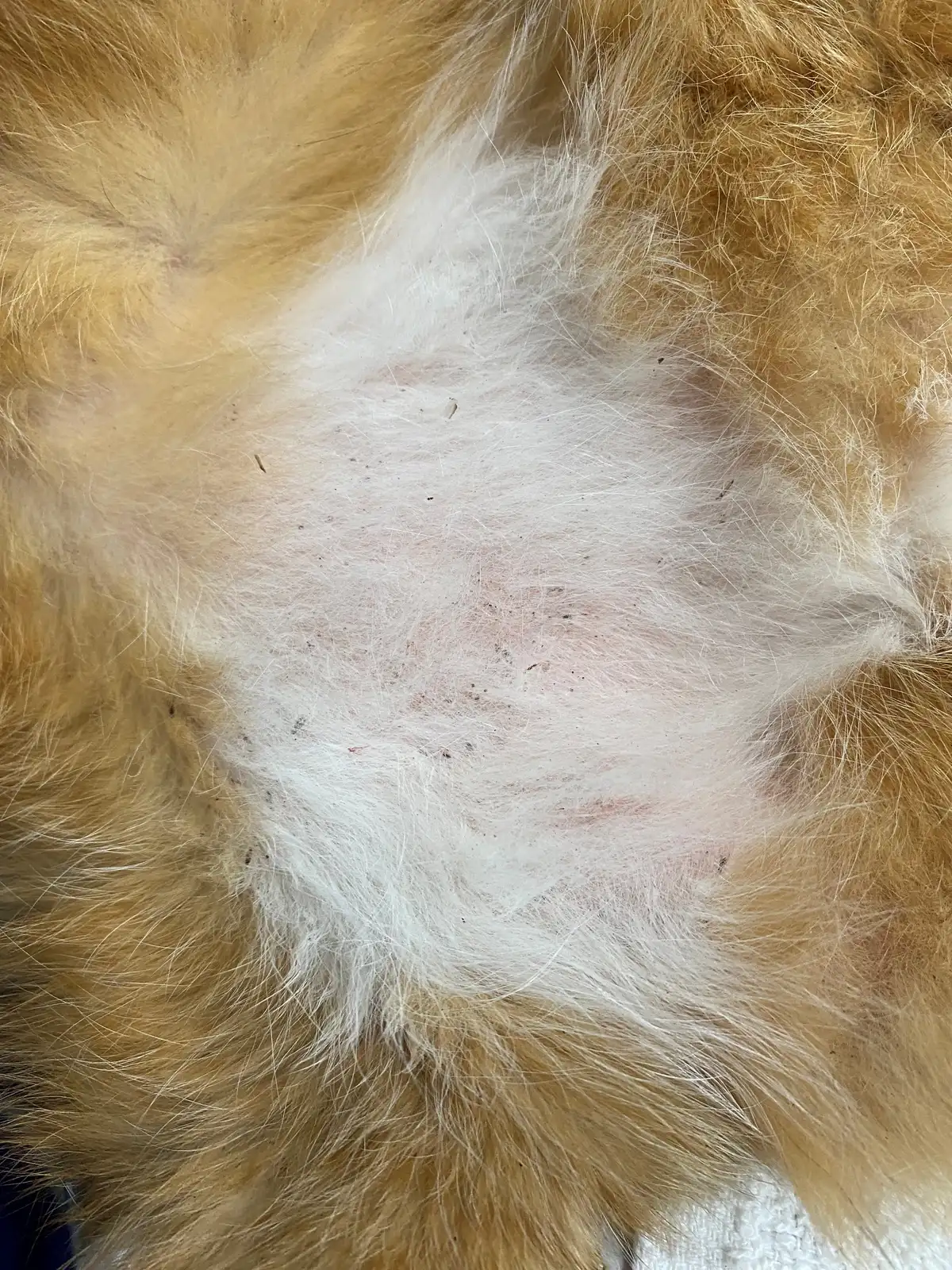
Most of it is blood the flea did not need. Ohio State University Extension's flea fact sheet says adult fleas take in more than they need to digest and excrete the excess, which dries and falls off as small black pellets, and the University of Florida's cat flea profile calls flea dirt relatively undigested blood. A flea usually defecates as it feeds, Penn State Extension notes.
What does flea dirt look like?
At life size, flea dirt looks like ground black pepper: tiny black or dark brown grains, uneven in shape, on the skin and in the fur. The University of Minnesota's veterinary diagnostics textbook describes it that way and calls it often the first visible sign of a flea infestation, and the American Veterinary Medical Association lists it among the first things owners may notice.
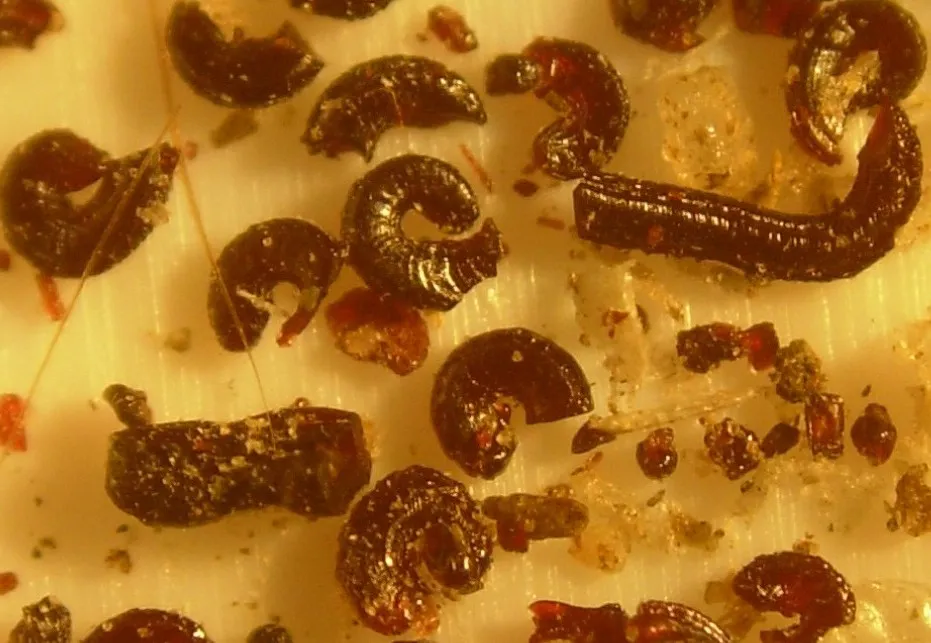
Up close, the specks have a shape: the Merck Veterinary Manual's page on fleas of dogs describes flea excrement as reddish black, cylindrical and pellet- or comma-shaped, as does its page on fleas of cats. None of the sources cited here gives a size for one speck; on a dark coat, comb them onto something white to see them.
How do you test for flea dirt?
Put the specks on a wet white paper towel: flea dirt dissolves into a reddish-brown color because it contains blood, and ordinary dirt does not. The Minnesota textbook gives this test, Merck describes the same color change in water or on a damp paper towel, and Ohio State wets specks combed from a pet standing in a white sink or tub.
The wet paper towel test, step by step
- Comb over something white. Stand the pet in a white sink or tub (Ohio State) or on white paper or a pillowcase (Cornell) and run a fine-toothed flea comb through the coat.
- Check the comb. After each stroke, look for dark specks in the teeth and shake the comb over the white surface, as the Minnesota textbook advises.
- Wet a white paper towel. Dampen a paper towel or tissue and put a few specks on it.
- Watch the color. Specks that dissolve into a reddish-brown color are likely flea dirt; Ohio State says flea pellets turn water bright red.
- Read the result. Grains that leave no red-brown color are more likely ordinary dirt. If the pet keeps scratching, comb again or ask your veterinarian.
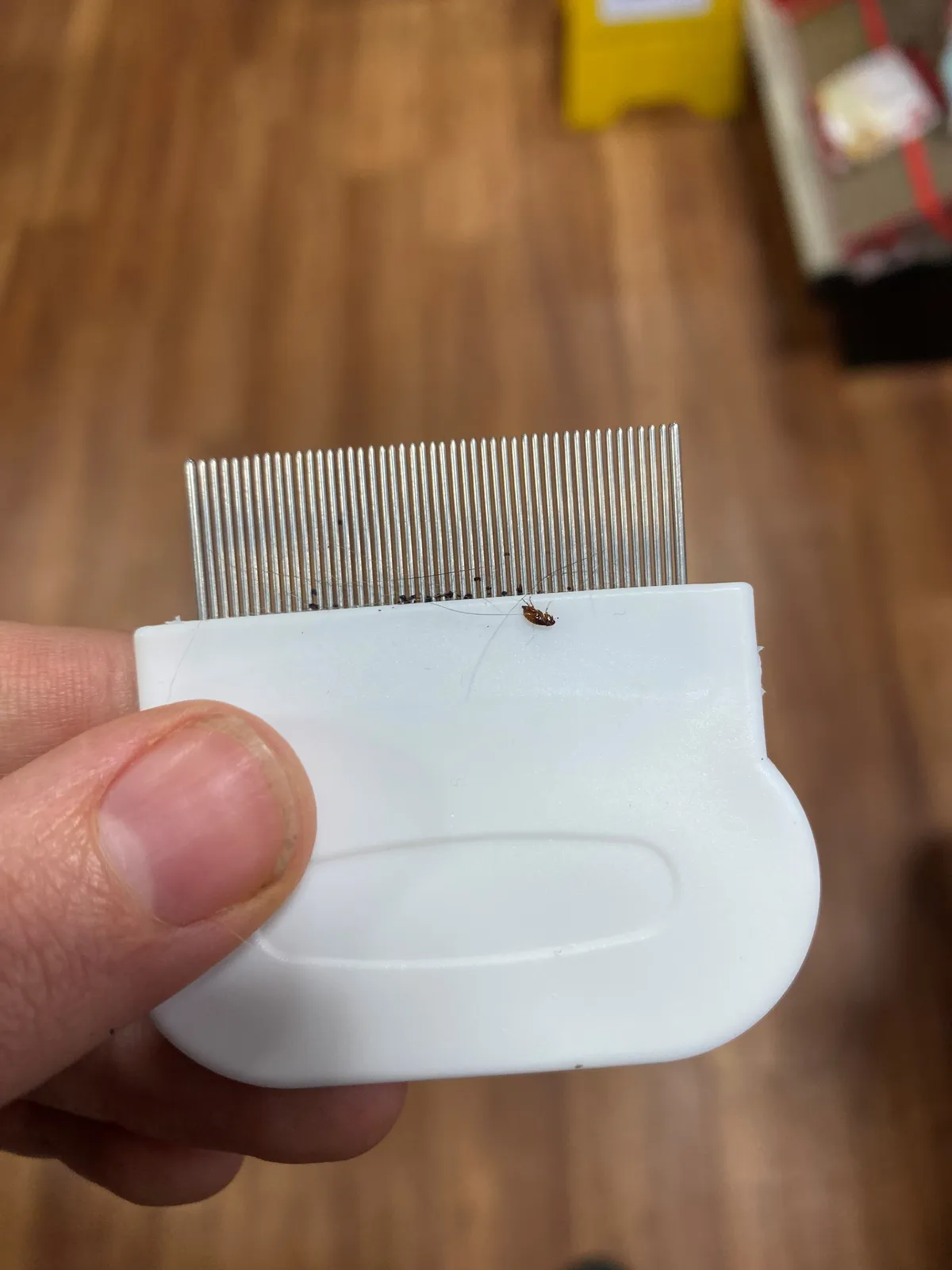
The test has one blind spot: bed bug droppings run red too. The University of Tennessee's bed bug identification page says bed bug feces run red when moistened and German cockroach feces do not, so a red smear rules out cockroach specks but not bed bugs. Where you found the specks usually settles it.
Where do you find flea dirt on a dog or cat?
Look where fleas feed: the Minnesota textbook lists the base of the tail, the neck and shoulders, the belly and groin, and the armpits and between the legs, and advises parting the fur with your fingers or a fine-toothed comb to see the skin.
On a dog
Ohio State says fleas on pets concentrate their bites on the neck, the shoulder blades and the base of the tail, and in heavy infestations run across the thinly haired belly, so part the fur at the shoulder blades and the tail base first. Merck says slowly parting a dog's hair often reveals flea excrement or rapidly moving fleas.
The AVMA suggests looking for fleas, ticks and coat problems whenever you groom a dog or cat; what a tick looks like on a dog shows the other parasite a comb-through can turn up.
On a cat
Cats groom themselves, which can hide the evidence. Cornell's Feline Health Center says cats are bitten mostly on the back of the neck and the top of the tail base (the tail head), which a cat cannot reach, and that fleas are usually seen on the belly, the back or near the tail. Merck says fleas may not be visible on very allergic cats; combing and checking the bedding for eggs, larvae and flea dirt help then.
In the house and in your bed
Flea dirt falls wherever the pet rests. Texas A&M says it shows up in pet fur and bedding, and Ohio State says a pet's favorite resting spots hold the most flea eggs, larvae and pupae, even after vacuuming: for dogs, doorways and the places they eat, sleep and spend time with the family; for cats, the carpets and furniture they use. Ohio State adds that cats' blood pellets may turn up on top of refrigerators, tabletops and bookcases.
In a bed, flea dirt suggests a pet sleeps there: the University of Florida says it falls from the pet, Texas A&M says cat fleas do not normally live on people but can bite people who sleep with infested animals, and Ohio State says the bites are usually on the ankles and legs, as what flea bites look like on people shows. Dark spots soaked into mattress seams, with no pet in the bed, can point to bed bugs instead.
Is it flea dirt, dirt, flea eggs or dandruff?
Color, shape and the wet test sort them: flea dirt is dark and turns reddish-brown when wet, flea eggs are white ovals, dandruff is flat flakes of skin, and ordinary dirt leaves no red-brown color.
- Ordinary dirt. Soil or sand has no blood in it, so on a wet paper towel it stays as grains instead of dissolving reddish-brown, the difference the Minnesota textbook's test relies on.
- Flea eggs. The University of Florida describes cat flea eggs as smooth white ovals about 1/50 inch (0.5 mm) long that fall easily out of the hair, and pictures them lying among flea feces. The photo guide to flea eggs and larvae compares the two.
- Dandruff. The Merck Veterinary Manual's entry on seborrhea describes dandruff as scaling of the skin: flat flakes, not dark grains. For a scaly pet that itches a lot, Merck lists fleas among the causes to consider and flea combing among the tests.
- An adult flea. A speck that moves is the flea itself: UC IPM's Pest Notes on fleas describe a reddish-brown, wingless insect no larger than 1/8 inch. See what adult fleas look like, or bugs that look like fleas for jumpers that are not.
- Bed bug droppings. The EPA's guide to finding bed bugs describes dark spots that may bleed into fabric like a marker, along mattress seams, piping and tags and in cracks in the bed frame and headboard; flea dirt is loose grains that fall from a pet. See what bed bug poop looks like and how bed bug stains look on sheets and mattresses.
- Cockroach droppings. The University of Kentucky's cockroach fact sheet describes pepper-like specks where cockroaches gather, most often kitchens and bathrooms, inside cabinets and pantries, and says cockroaches seldom gather on beds; Tennessee says their feces do not run red. What cockroach droppings look like has photos.
Commonly confused with
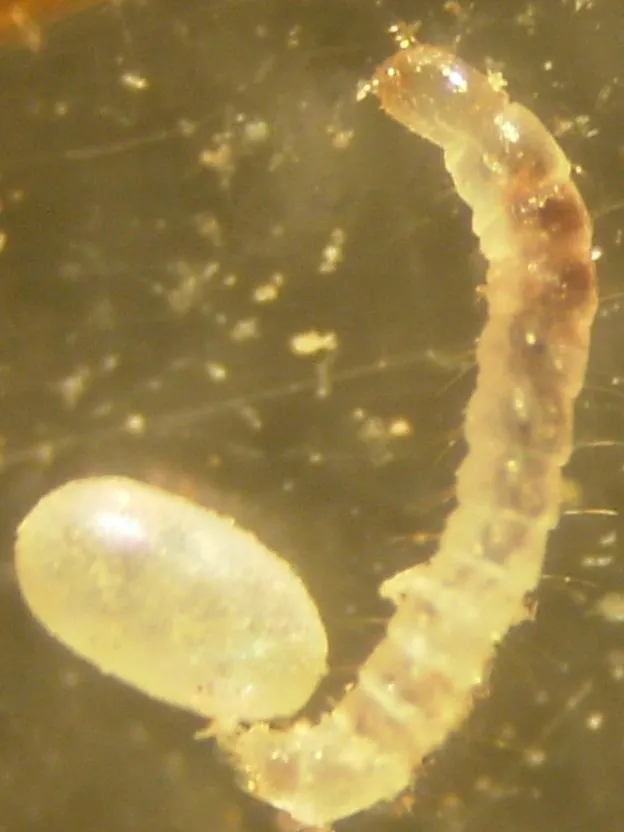 Flea eggsSmooth white ovals about 1/50 inch long that fall off the pet; flea dirt is dark
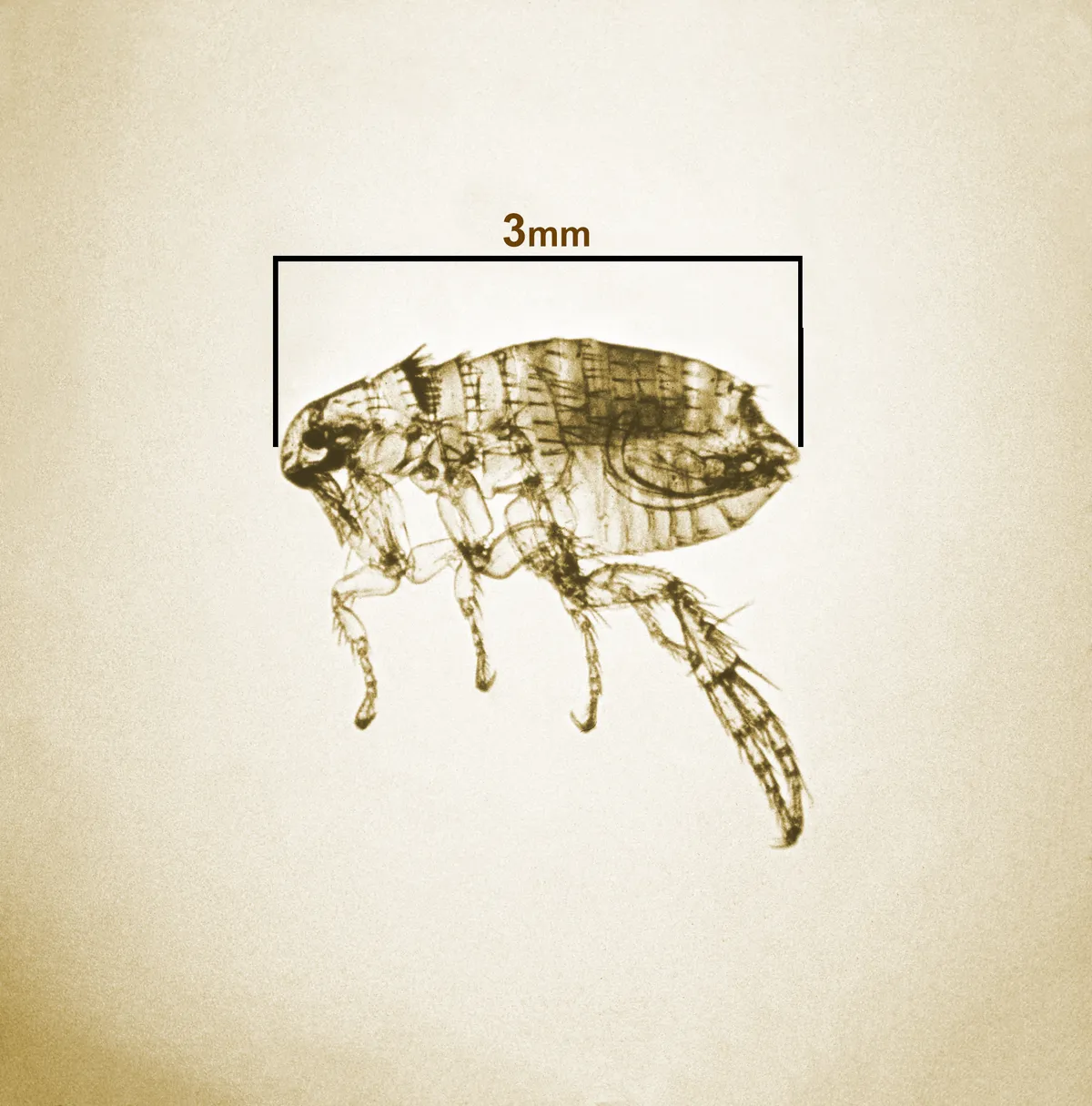 Adult cat fleaA reddish-brown insect up to 1/8 inch long that moves and jumps; flea dirt is what it leaves
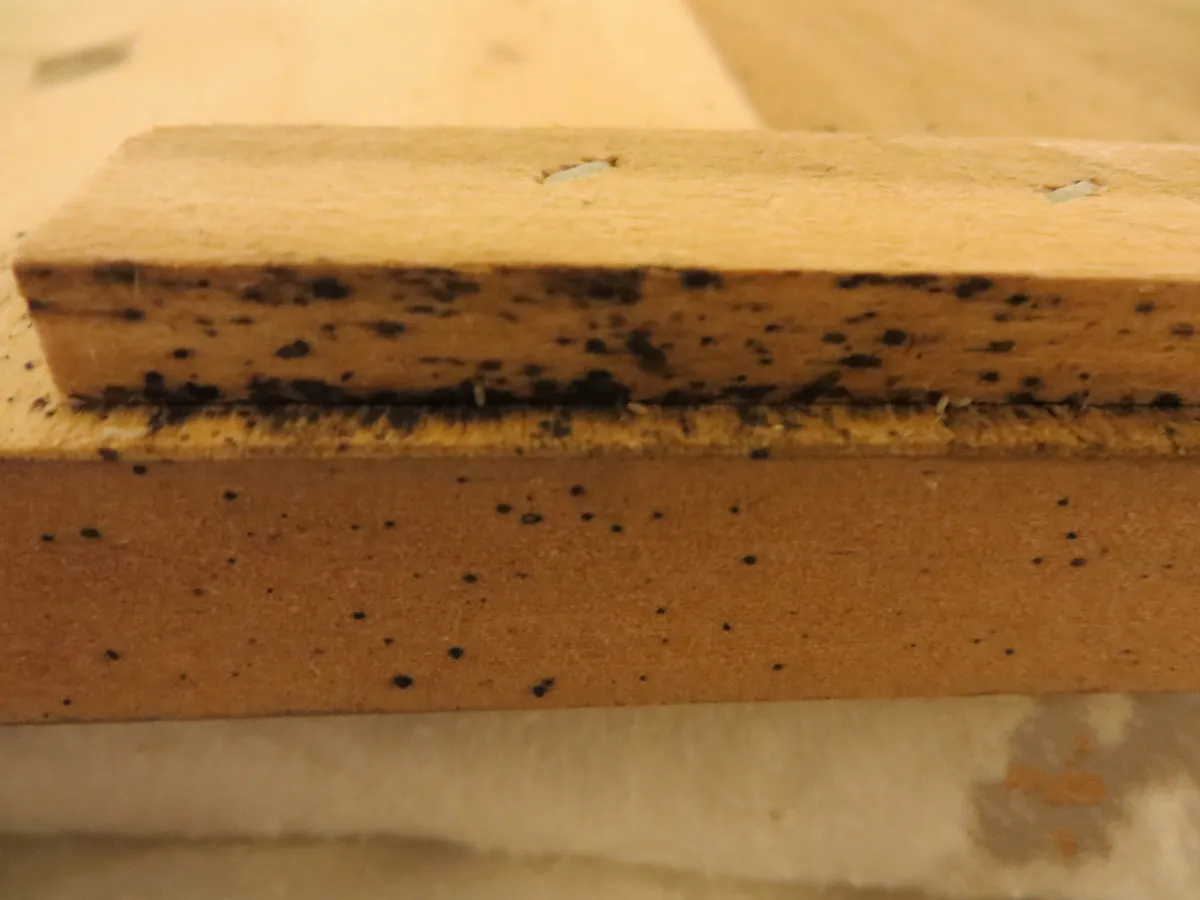 Bed bug droppingsAlso run red when wet, but stain mattress seams and bed frames instead of falling loose from a pet
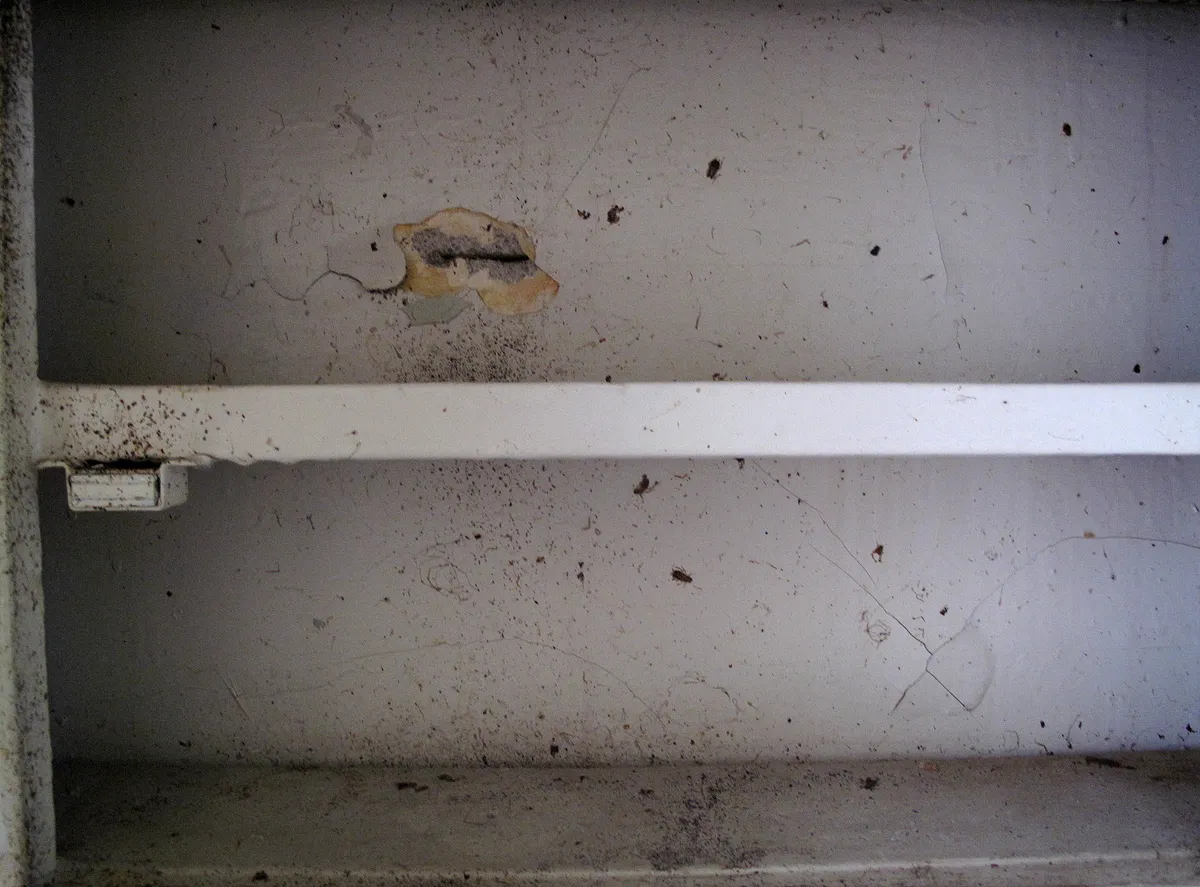 Cockroach droppingsPepper-like specks where roaches gather, such as kitchen cabinets; they do not run red when wet
Photos: Flea eggs: Auguste Le Roux, Public domain, via Wikimedia Commons, public domain. Adult cat flea: CDC (CDC Public Health Image Library, phil.cdc.gov), public domain. Bed bug droppings: NY State IPM Program at Cornell University, CC BY 2.0, via Wikimedia Commons, CC BY 2.0. Cockroach droppings: Downtowngal, CC BY-SA 4.0, via Wikimedia Commons, CC BY-SA 4.0.
What does finding flea dirt mean?
It means adult fleas have been feeding on the animal, even if you never see one. Ohio State calls specks that turn red the blood fecal pellets of adult fleas, and the AVMA says fleas can be on the pet and in the home even when you do not see them.
It also marks where the next fleas grow. The University of Florida says flea dirt falls from the pet to feed newly hatched larvae and is their main food; UC IPM says larvae are likely to be found where adults have left dried blood and feces, and Penn State says they live on organic matter that includes it.
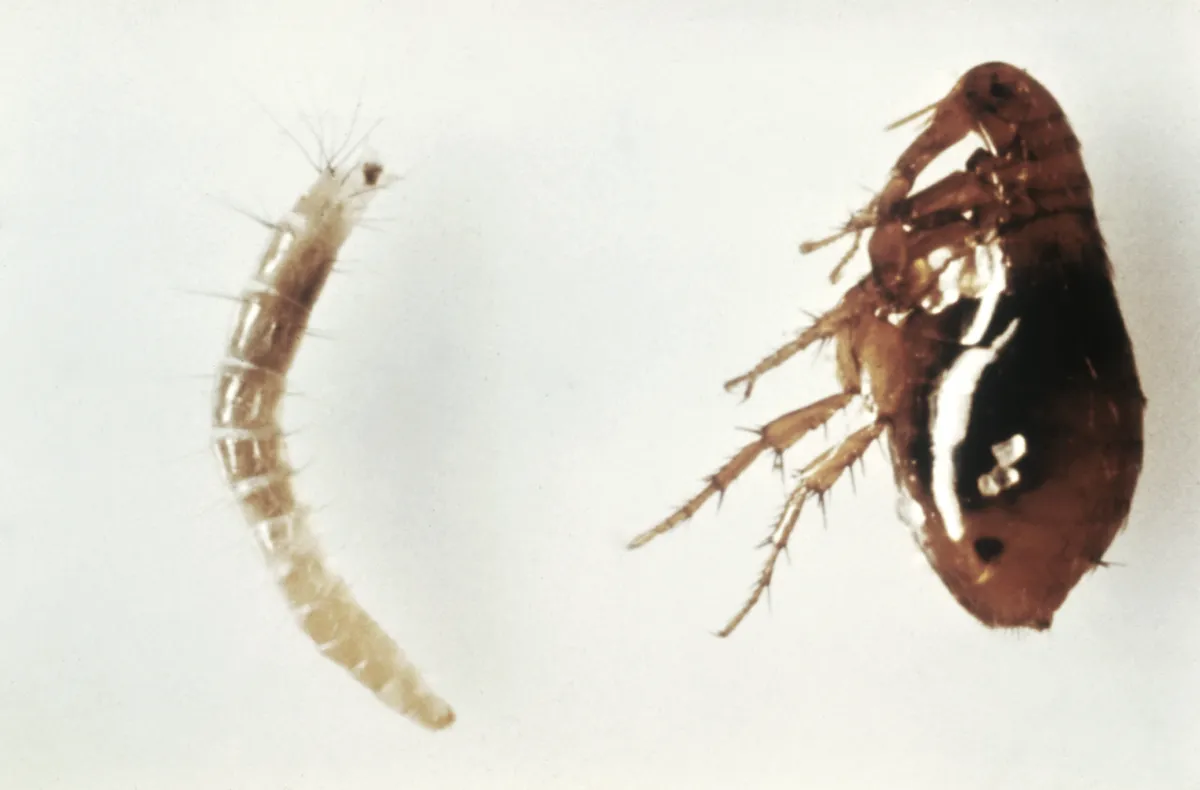
Eggs land in the same places: Merck says they readily fall from the fur onto bedding, carpet or soil. That is why specks on the pet mean fleas in the house too, and why the AVMA says treating only the pet gives temporary relief.
Flea dirt but no fleas
The pet may be grooming them away: Merck says extremely flea-allergic dogs are likely to be virtually free of fleas because of excessive self-grooming, and that fleas may not be visible on very allergic cats. Fleas are hard to catch, too: the University of Florida says flea combs remove only 10 to 60 percent of them. The Minnesota textbook advises confirming live fleas for effective treatment, so keep combing or ask a veterinarian to check.
Is flea dirt harmful to people or pets?
It can be: flea dirt from infected fleas can carry germs that make people sick, and the fleas that leave it harm pets. CDC's overview of fleas says fleas spread germs by feeding and through fecal contamination, when infected flea feces, also called flea dirt, are scratched into an open wound.
- Flea-borne typhus. CDC's page on flea-borne typhus says infected flea dirt can be rubbed into a bite or other wound, breathed in or rubbed into the eyes. Fleas pick up the bacteria from animals such as rats, cats and opossums; most US cases are reported from southern California, Hawaii and southern Texas, though cases likely occur in other states. The murine typhus guide covers the disease.
- Cat scratch disease. CDC's page on cat scratch disease says cats are most commonly infected through flea bites, and the bacteria can pass to a person when a cat's scratch is contaminated with flea feces; it advises washing your hands promptly after handling cats.
- Tapeworms. Pets get the dog tapeworm by eating infested fleas, Texas A&M says, and CDC says people, especially small children, can get tapeworms by accidentally swallowing an infected flea. Dried segments look like grains of rice around a pet's rear end, in its feces or in its bedding.
- Anemia in young pets. Cornell says kittens carrying many fleas can become anemic, and Merck says anemia may develop in heavy infestations or in young puppies.
- Itching. Many dogs and cats are allergic to flea saliva, Merck says, and the AVMA says an allergic pet can become severely itchy from one or two bites.
Keep the risk in proportion: the AVMA says fleas spread bacterial diseases such as cat scratch disease to pets and people only rarely, and CDC estimates flea-borne typhus deaths at less than 1 percent of cases.
How do you get rid of flea dirt?
Wash and comb it out, then stop the fleas that make it by treating every pet and the home together. CDC's guide to getting rid of fleas says to treat every pet in the home: bathe it with soap and water, comb it with a flea comb, ask a veterinarian about the right flea control product, and begin home treatment at the same time.
- Wash it out. Flea dirt dissolves in water, Merck says, and the University of Florida says shampooing a pet removes the dried blood and skin flakes that feed flea larvae.
- Use only a product made for that animal. The AVMA says some dog flea products, including those with permethrin, are toxic to cats; CDC says never to use permethrin products on cats, UC IPM says the same of permethrin and amitraz, and Cornell warns that a cat licking a dog's still-wet treatment can be killed.
- Clean where the pet rests. UC IPM advises vacuuming floors, rugs, carpets, upholstered furniture and baseboard crevices daily or every other day and washing pet bedding in hot, soapy water at least weekly; Ohio State says vacuuming removes eggs and the dried-blood feces larvae feed on.
- Give it weeks. Merck says control typically takes 6 weeks to 3 months for dogs and 2 to 3 months for cats, and fleas may feed on a treated pet for 6 to 24 hours before dying, so a few fleas can turn up for a while.
The full order of steps, from treating pets to the follow-up vacuuming that draws fleas out of their cocoons, is in the step-by-step guide to getting rid of fleas.
This guide is general educational information, not medical advice. If you have symptoms or concerns after a bite or exposure, contact a healthcare provider.
Frequently Asked Questions
Why am I finding flea dirt but no fleas?+
Often because the pet grooms the fleas off or they are simply hard to find. The Merck Veterinary Manual says extremely flea-allergic dogs are likely to be virtually free of fleas because of excessive self-grooming, and that fleas may not be visible on very allergic cats for the same reason. The University of Florida says a flea comb removes only 10 to 60 percent of the fleas on a pet. Flea dirt still means adult fleas have fed, so keep combing the tail base, neck and belly, check the pet's bedding, or ask a veterinarian to look.
Does flea dirt mean my dog or cat still has fleas?+
Fresh flea dirt does. Ohio State describes the specks that turn red as the blood fecal pellets of adult fleas, and Penn State notes that a flea usually defecates while it feeds, so new specks mean fleas fed recently. Old specks can stay in the coat until they are washed or combed out, so wash and comb the pet, then check again over white paper a few days later. On a pet already being treated, the Merck manual says fleas from the home may live and feed for 6 to 24 hours before they die, so a few can turn up for weeks.
Does flea dirt go away on its own?+
None of the sources cited here says how long it lasts. Flea dirt is dried blood that can stay in the coat and bedding until it is groomed, washed, combed or vacuumed away. The Merck Veterinary Manual says it dissolves in water, the University of Florida says shampooing removes the dried blood that feeds flea larvae, and Ohio State says vacuuming where the pet rests removes eggs and dried-blood feces. Specks that keep coming back after a wash mean adult fleas are still feeding on the pet.
Is flea dirt harmful to humans?+
It can be, although the AVMA says fleas spread bacterial diseases to people only rarely. CDC says infected flea dirt can spread flea-borne typhus when it is rubbed into a flea bite or other wound, breathed in or rubbed into the eyes, and that the bacteria behind cat scratch disease can pass to a person when a cat's scratch is contaminated with flea feces. CDC also says people, especially small children, can get tapeworms by swallowing an infected flea. CDC advises washing your hands promptly after handling cats.
Is flea dirt harmful to dogs and cats?+
The sources cited here describe the harm to pets as coming mostly from the fleas that leave it. The AVMA says young or small pets with heavy infestations may become anemic from blood loss and that some pets are allergic to flea saliva, itching badly after one or two bites. Cornell's Feline Health Center says anemia is frequently seen in kittens carrying many fleas. Pets also get tapeworms by swallowing infested fleas while grooming, according to Texas A&M and UC IPM. Flea dirt left in bedding feeds flea larvae, the University of Florida says.
Can flea dirt get on your bed?+
Yes, if a pet with fleas sleeps there. Ohio State says flea eggs drop out where an animal sleeps and spends time, Texas A&M says flea dirt shows up in pet fur and bedding, and Ohio State says cats can even leave blood pellets on tabletops and the tops of refrigerators. Texas A&M adds that cat fleas can bite people who sleep with infested animals. Wash the bedding, as CDC's flea steps advise, and test a few specks on a wet paper towel. Dark spots soaked into mattress seams, with no pet in the bed, are worth checking for bed bugs, whose droppings also run red.
Does flea dirt have eggs in it?+
No. Flea dirt is droppings, the dried blood adult fleas pass, while flea eggs are separate smooth white ovals about 1/50 inch long. The two often turn up together, though: the University of Florida's cat flea profile pictures white eggs among flea feces, and both fall from the pet where it rests, as Ohio State and the Merck manual describe. A flea comb picks up flea dirt, fleas and eggs, according to the University of Minnesota's veterinary textbook, so look for white grains among the dark ones.
Can flea dirt be washed off?+
Yes. The Merck Veterinary Manual says flea droppings dissolve in water, and CDC's steps for getting rid of fleas include bathing pets with soap and water and then combing them with a flea comb, paying attention to the face, neck and the area in front of the tail. The University of Florida says shampooing also removes the dried blood and skin flakes that feed flea larvae. Washing clears only the specks already there; while fleas are still feeding, new ones appear, which is why CDC calls for treating every pet with a product a veterinarian recommends.
Is flea dirt the same as flea poop?+
Yes. Flea dirt is the everyday name for flea feces, and CDC uses it that way, describing flea poop as also called flea dirt. The University of Minnesota's veterinary textbook says it is also called flea feces, flea droppings or frass. It is not soil at all but the dried blood that adult fleas excrete after feeding, which Texas A&M describes as a fine, reddish-black dust in pet fur and bedding, and which turns reddish-brown on a wet paper towel.
Sources
- Module 10.7: Fleas, in Clinical Veterinary Diagnostic Laboratory (Erin Burton and Anna Lalande) — University of Minnesota
- Fleas of Dogs (Pet Owner Version; Michael W. Dryden, last updated September 2024) — Merck Veterinary Manual
- Fleas of Cats (Pet Owner Version; Michael W. Dryden, last updated March 2026) — Merck Veterinary Manual
- Seborrhea in Animals (Nicole A. Heinrich, last updated May 2025) — Merck Veterinary Manual
- Fleas (HYG-2081; David J. Shetlar and Jennifer E. Andon, 2012) — Ohio State University Extension
- Managing Fleas (ENTO-PU-046; Wizzie Brown and Molly Keck, January 2025) — Texas A&M AgriLife Extension
- Cat Flea, Ctenocephalides felis (Bouché) (EENY-011; D. C. Zentko and D. L. Richman, revised December 2024) — University of Florida, UF/IFAS Featured Creatures
- Pest Notes: Fleas (UC ANR Publication 7419; M. K. Rust) — University of California Statewide IPM Program
- Cat Fleas (Steve Jacobs, updated June 24, 2026) — Penn State Extension
- Fleas: A Source of Torment for your Cat — Cornell Feline Health Center, Cornell University College of Veterinary Medicine
- External parasites — American Veterinary Medical Association
- About Fleas — Centers for Disease Control and Prevention
- Getting Rid of Fleas — Centers for Disease Control and Prevention
- About Flea-borne Typhus — Centers for Disease Control and Prevention
- About Cat Scratch Disease — Centers for Disease Control and Prevention
- Biology and Identification (Bed Bugs in Tennessee) — University of Tennessee Institute of Agriculture
- How to Find Bed Bugs — U.S. Environmental Protection Agency
- ENTFACT-614: Cockroach Elimination in Homes and Apartments (Michael F. Potter) — University of Kentucky Department of Entomology
How this guide was made: it was researched and drafted with AI assistance from the sources listed above. A second, independent AI pass then checked each factual claim against those sources. Found an error? Email support@buzzskito.ca.