
Published by BuzzSkito Mosquito & Tick Control
Published October 16, 2026 · Drafted with AI assistance and fact-checked against the sources listed below
How can you tell what bit you?
Read the clues around the bite rather than the bump itself: the pattern, where on your body the bites are, when they appeared, how they feel and where you had been. Many bites look alike, and Mayo Clinic's bedbug page says bed bug bites are similar to other insect bites and rashes and can be difficult to tell apart from them. The American Academy of Dermatology lists the bugs that commonly bite or sting people in the United States: mosquitoes, fleas, bed bugs, biting flies, mites, bees, wasps and hornets, spiders, ticks and fire ants. Each is covered below.
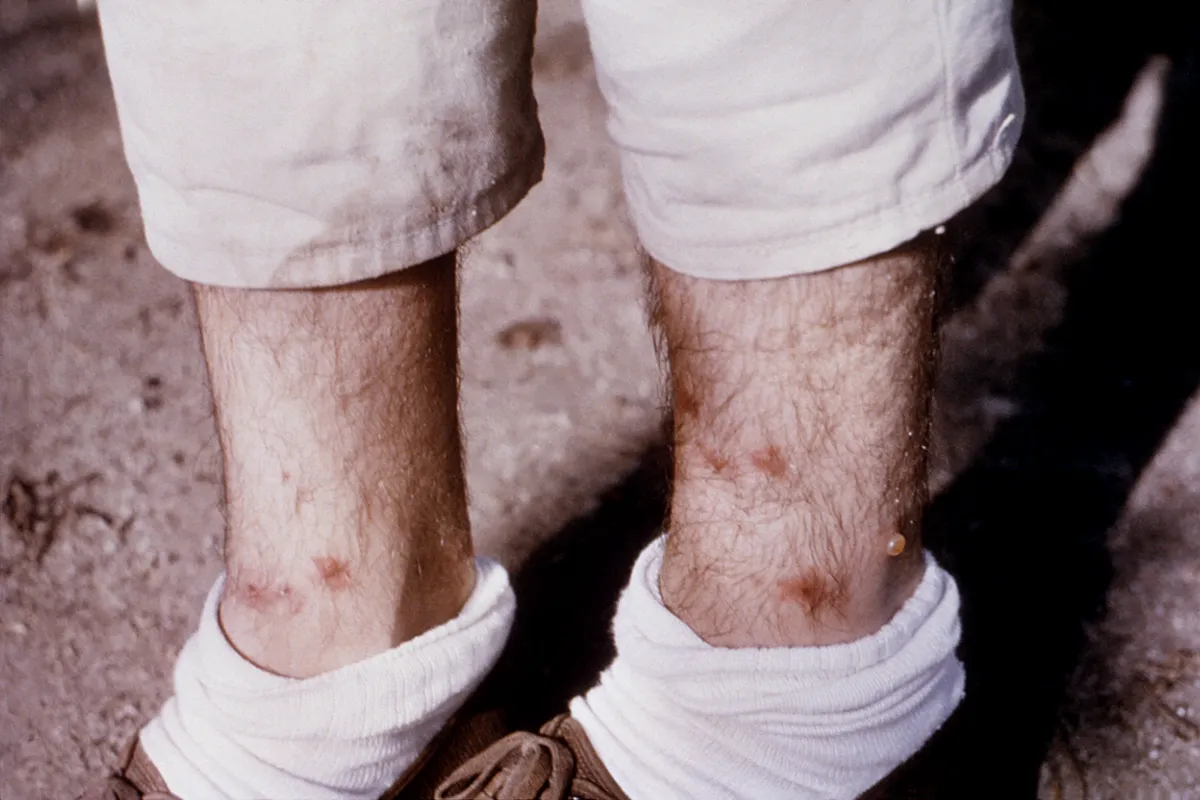
The same insect can also leave different marks on different people. The American Academy of Dermatology's bedbug signs page says people tend to become more sensitive to bed bug bites with repeated bites, and Mayo Clinic says some people have no reaction to bed bug bites at all while others develop severe itching, blisters or hives. Some itchy rashes are not bites; scabies and other look-alikes are covered near the end of this page.
Five things to note before you guess
- Where the bites are. Ankles and lower legs, a sock line or waistband, skin left uncovered in bed, or the head and shoulders.
- The pattern. One bump, a line or zigzag, a tight cluster, or a ring that keeps growing.
- When they appeared. Within minutes, the next morning, or days after time outdoors or a trip.
- Where you had been. In bed, in tall grass or woods, near water at dawn or dusk, around a pet with fleas, or near an ant mound or a nest.
- How it feels and what is left. Itching or instant pain, a stinger in the skin, or a tick still attached.
Which bug bite matches what you see?
Compare what you see with the chart below, row by row: what each bite usually looks like, where it tends to land, its timing and how it feels. Each row is summarized from the medical or extension sources linked in that bite's own section further down, where you will also find a photo where one exists and a link to the site's full guide to that bite.
| Bite or sting | What it usually looks like | Where on the body | Timing | How it feels |
|---|---|---|---|---|
| Mosquito | An inflamed bump; sometimes small blisters | Skin that clothing does not cover | Bump within minutes; a hive-like spot within 24 hours; gone in a few days | Itchy; the later spot can be painful |
| Bed bug | Several welts in a zigzag line, a rough row or a cluster, often with a darker spot in the middle | Face, neck, arms and hands | Usually noticed the next morning; first bites can take up to 14 days to itch | Intense itch, or no reaction at all |
| Flea | Small bumps, sometimes with a ring or halo, in a line or a cluster | Feet, calves and ankles; rarely above the knee | Last a few days | Itchy |
| Chigger | A speckled line of red spots or pimples | Where clothing fits tightly: sock lines, waistbands, behind the knees, the groin | Up to 3 hours to start; worst in the first 24 to 48 hours; gone in about 2 weeks | Severe itch |
| No-see-um | Small red welts about 1/8 inch across, or water-filled blisters | Skin left uncovered outdoors | Often after dawn or dusk near water | Intense itch; can be painful |
| Tick | Often a small red bump like a mosquito bite, or the tick still attached | Anywhere, including sheltered spots where a tick can go unnoticed | The bump fades in 1 to 2 days; a Lyme disease rash can begin 3 to 30 days later | May not be felt |
| Fire ant | Several stings that turn into white pustules | Wherever the ants climb onto you | Burning at once; pustules take several weeks to disappear | Burning and itching |
| Bee, wasp or hornet | A welt and swelling; a stinger left in the skin suggests a honey bee | One spot per sting; wasps and some bees can sting repeatedly | Pain at once; in a moderate reaction, swelling grows over a day or two | Instant, sharp, burning pain |
| Horse or deer fly | A painful bite that can bleed | Deer flies: shoulders and head; horse flies: legs and body | Daytime, outdoors | Painful at once |
| Spider | Nothing, or itching, redness and swelling usually no worse than a bee sting; a black widow bite has two puncture marks | Where a spider was squeezed or trapped against the skin | Usually minutes to hours | From nothing to pain; black widow pain can spread to the chest or abdomen |
Summarized from Mayo Clinic, the American Academy of Dermatology, Cleveland Clinic, CDC, and extension pages from the University of Arizona, UC Statewide IPM, the University of Missouri and Purdue University, each linked in the sections below. The same insect's bites can look different on different people.
Which bites come in a line, a cluster or a ring?
A line or zigzag of bites usually points to bed bugs, fleas or chiggers, a ring that keeps spreading after a tick bite can be the rash of Lyme disease, and burning stings that turn into pustules point to fire ants.
- A line or zigzag. Bed bugs (skin left uncovered in bed, usually noticed the next morning), fleas (feet, calves and ankles) or chiggers (along a sock line, waistband or other spot where clothing fits tightly).
- A cluster. Bed bugs or fleas, or fire ants, which can sting en masse.
- A ring. A halo around a flea bite, or a red rash that keeps expanding for days at the site of a tick bite, which can be erythema migrans, the rash of Lyme disease.
- One spot that hurts at once. A bee, wasp or hornet sting, or a horse fly or deer fly bite.
Each pattern is a lead, not proof: the sources behind these clues are linked in each bite's section below.
What do mosquito bites look like?
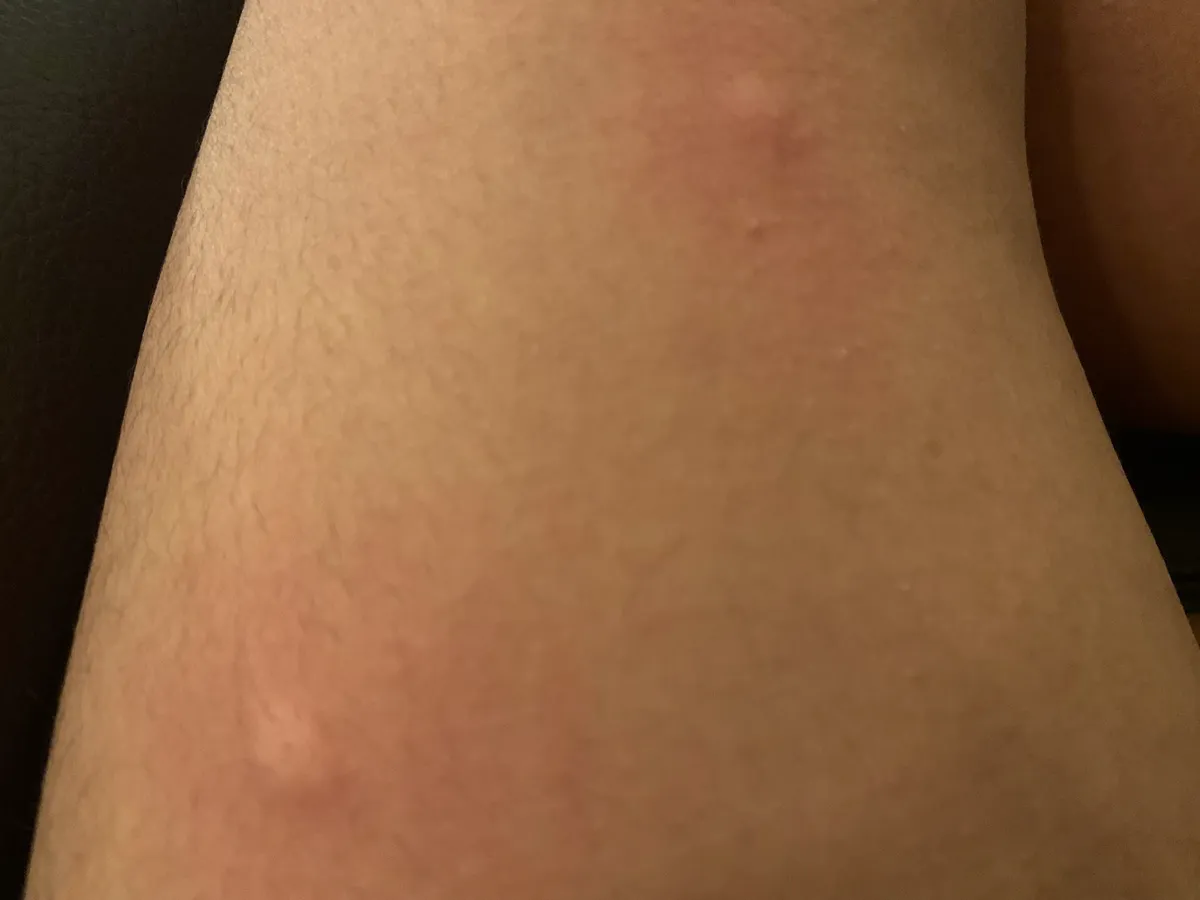
Mosquito bites are itchy, inflamed bumps that form a few minutes after the bite, often on parts of the body that clothing does not cover, according to Mayo Clinic's mosquito bite page. Within 24 hours a painful spot that looks like a hive can form, small blisters are possible, and the bumps usually go away without treatment in a few days.
Some bites get very swollen, sore and inflamed, a reaction sometimes called skeeter syndrome that Mayo Clinic says is most common in children; it lists a large, swollen, inflamed area, a hive-like rash and swelling around the eyes as signs of a severe reaction, and big, swollen reactions to mosquito bites have their own guide. Mosquitoes bite during both day and night and can live indoors, Mayo adds, so a bite found in the morning is not proof of bed bugs. Contact a health care provider if bites come with warning signs of a serious condition, such as a high fever, severe headache, body aches or signs of infection.
The site also covers the signs that a mosquito bite needs a doctor and why mosquito bites itch and how long they last.
What do bed bug bites look like?
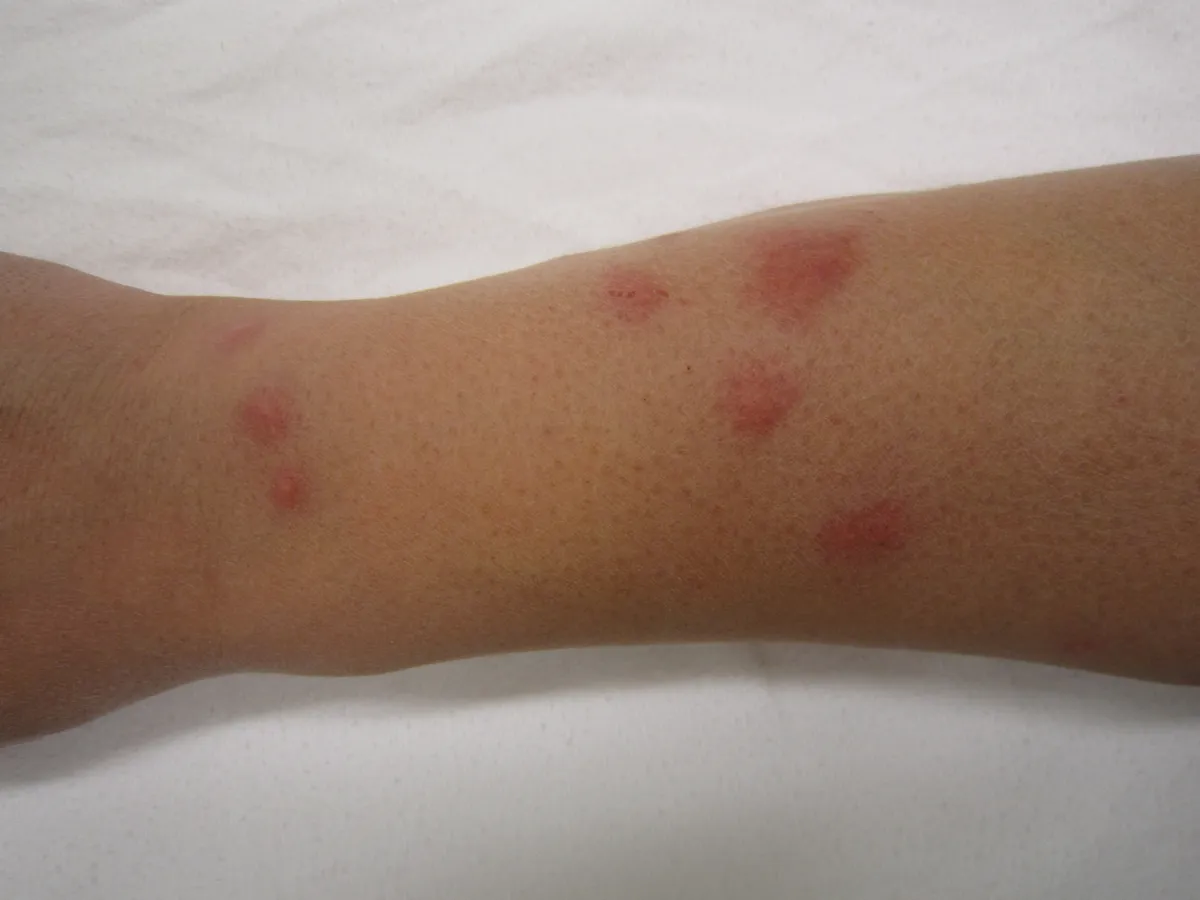
Bed bug bites are usually itchy, inflamed spots, often with a darker spot in the middle, arranged in a rough line or a cluster on the face, neck, arms and hands, according to Mayo Clinic. The American Academy of Dermatology says most people are bitten while they sleep and only find out the next day, when they notice several welts, often in a line that zigzags, that itch intensely, and sometimes specks of blood on the bedding.
The timing can mislead. The AAD says the first bites may not itch right away: some people get itchy welts within a few days, but it can take as long as 14 days. Bed bugs do not live on people; they come out of hiding to feed for about 4 to 12 minutes and then return, the AAD says, so the proof is in the bed. Compare anything you find with what bed bugs look like and run through the signs of bed bugs to check for; a closer look at bed bug bites and how they differ from mosquito bites go further.
Mayo Clinic advises seeing a health care provider for allergic or severe skin reactions to bed bug bites. The AAD lists difficult breathing, an irregular or forceful heartbeat, a swollen tongue, large blisters, fever and feeling very sick among the serious reactions that require immediate medical care.
What do flea bites look like?
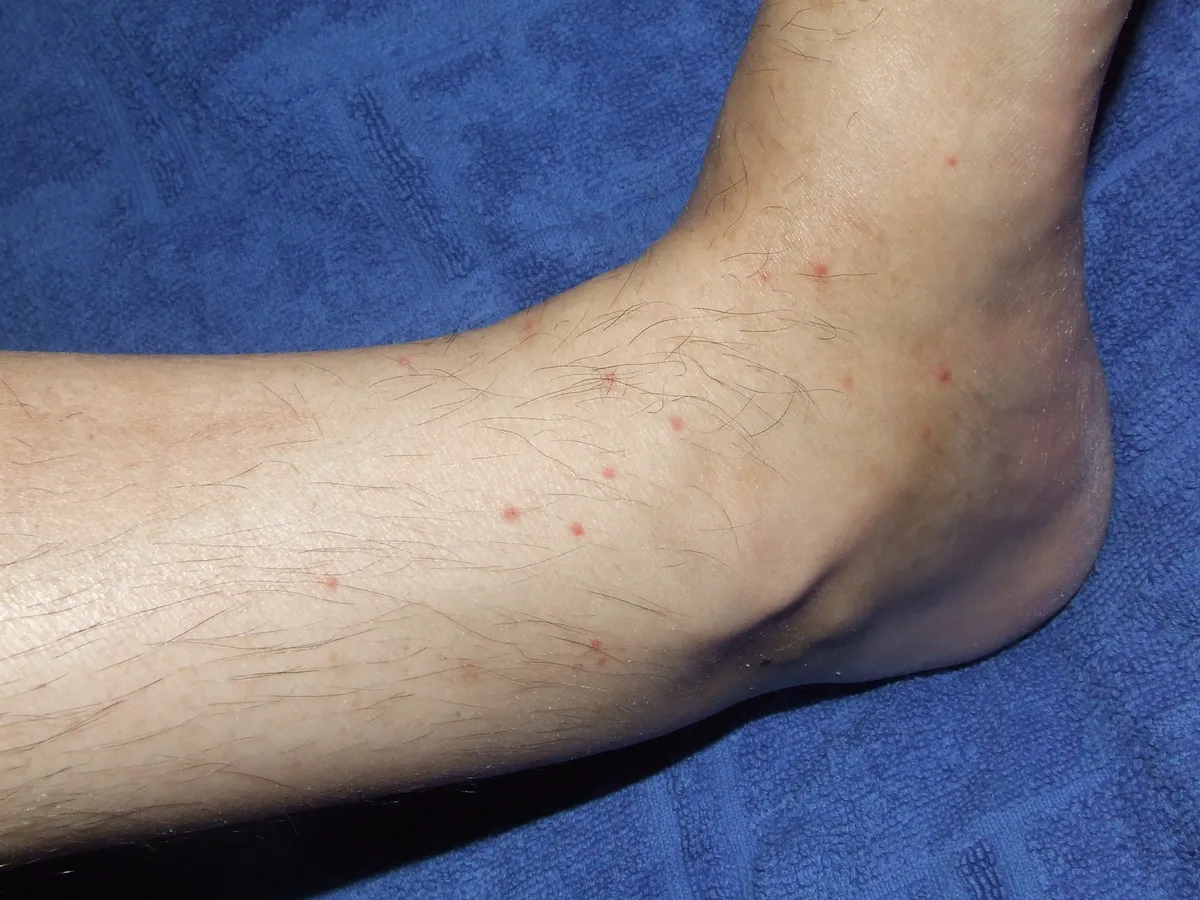
Flea bites are small, discolored bumps, sometimes with a ring or halo around them, in a straight line or a cluster of many bites, mostly on the feet, calves and ankles, according to Cleveland Clinic's flea bite page. They rarely appear above the knee unless you spend a lot of time sitting or lying down, do not swell to the size of mosquito bites, and only last a few days.
Look at the pets too. Cleveland Clinic says fleas prefer to bite animals but will bite anyone when no animal is around, and that bites on your legs while your pet has fleas are likely flea bites. It advises contacting a healthcare provider if symptoms last longer than a few days or you develop an allergic reaction, such as hives, rash, shortness of breath and swelling. See flea bites on people, with more photos, and check the pet against what fleas look like.
What do chigger bites look like?
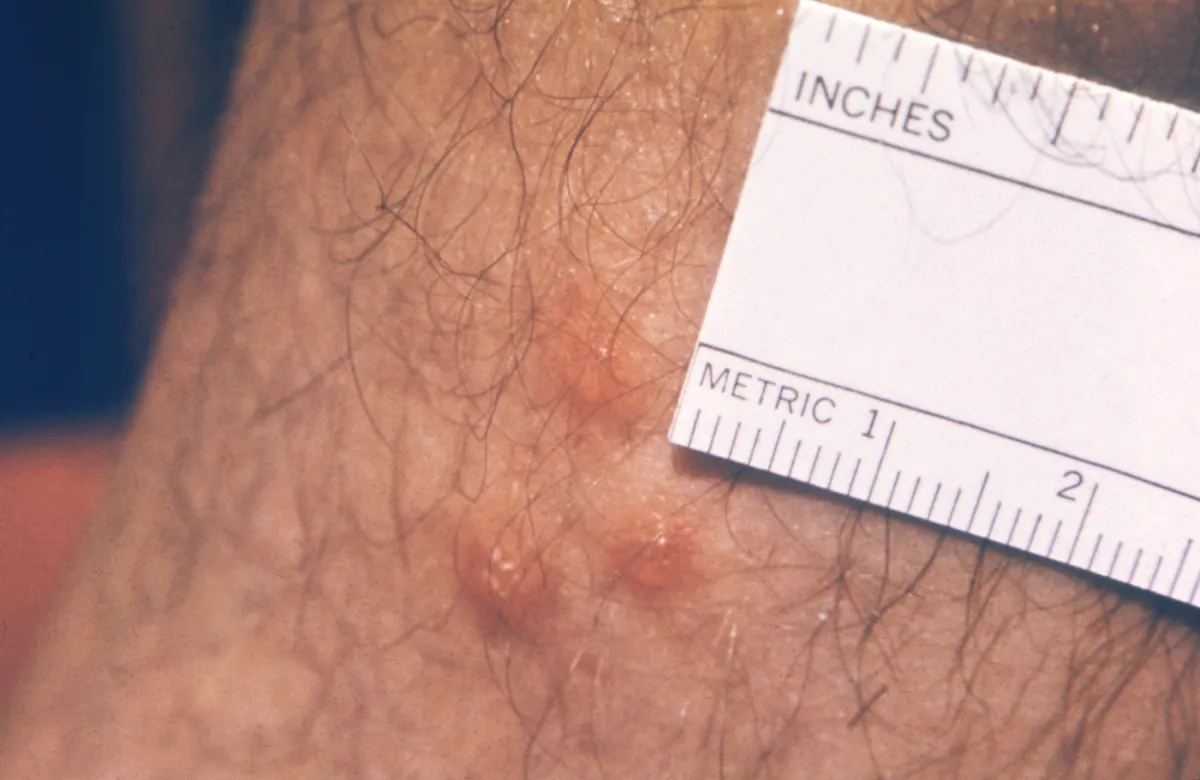
Chigger bites are very itchy red spots or pimples, often in a speckled line, where clothing fits tightly against the skin, especially at waistbands, bra lines and sock lines, according to Cleveland Clinic's chigger bite page. The ankles, lower legs, the backs of the knees, the waist and the groin are common places. Chiggers are mites so small they are almost invisible, and you probably will not notice the bites at first: symptoms can take up to three hours to start.
The itch is most intense for the first 24 to 48 hours and slowly fades over about two weeks. Chiggers do not burrow into the skin, and the rash usually starts after they have already dropped off, Cleveland Clinic says; people pick them up in overgrown grass, woods, gardens and moist ground near water. See a healthcare provider if the itching causes extreme discomfort, the bites become open wounds, the itch lasts beyond two weeks, or the skin around a bite swells or leaks pus. The site's guide to chigger bites, their size and how long they last goes further, and getting rid of chiggers is covered separately.
What do no-see-um bites look like?
No-see-um bites usually appear as small red welts about 1/8 inch across, or water-filled blisters, that itch intensely, according to the University of Arizona Cooperative Extension. The biters are tiny biting midges, also called punkies or sand flies, and they often go unnoticed, so sometimes all you see are the bites. The photo at the top of this page shows biting midge bites on a man's ankles.
Place and time give them away. The Arizona handout says no-see-ums are usually active at dawn or dusk, near water such as springs, ponds, lakes, river banks, beaches and swamps, and in largest numbers in summer, and that they can pass through standard window screens. Its advice for time outdoors is to cover up with long sleeves, pants, shoes and socks, and a hat with fine mesh netting over the face and neck. Their bites can be painful as well as itchy, the welts or blisters can break open and bleed when scratched, and sensitive people may develop long-lasting painful and itchy lesions. See no-see-um bites in more detail and the midges themselves; what people mean by sand fleas has its own guide.
What does a tick bite look like?

You may not feel a tick bite, so the clearest sign is often the tick itself, still attached. CDC's overview of ticks says ticks can secrete saliva with anesthetic properties so a person cannot feel that the tick has attached, that a tick in a sheltered spot can go unnoticed, and that ticks feed for anywhere from minutes to days, depending on the species.
At the bite itself, a small bump or redness that appears right away and looks like a mosquito bite is common, generally goes away in 1 to 2 days and is not a sign of Lyme disease, according to CDC's Lyme disease symptoms page. The rash to watch for is erythema migrans: it begins at the bite 3 to 30 days later (about 7 days on average), expands over several days to as much as 12 inches across or more, may feel warm but is rarely itchy or painful, and does not always look like a bull's-eye. CDC says it occurs in about 70 to 80 percent of infected people.
CDC's advice after a tick bite is to remove an attached tick right away rather than waiting to have a healthcare provider do it, and to see your doctor if you develop a rash or fever within several weeks of removing it. The site has guides to removing a tick step by step, what a tick bite looks like day by day, how a tick bite differs from a mosquito bite and what to do after a tick bite, and the tick identification chart helps name the tick itself.
What do fire ant stings look like?
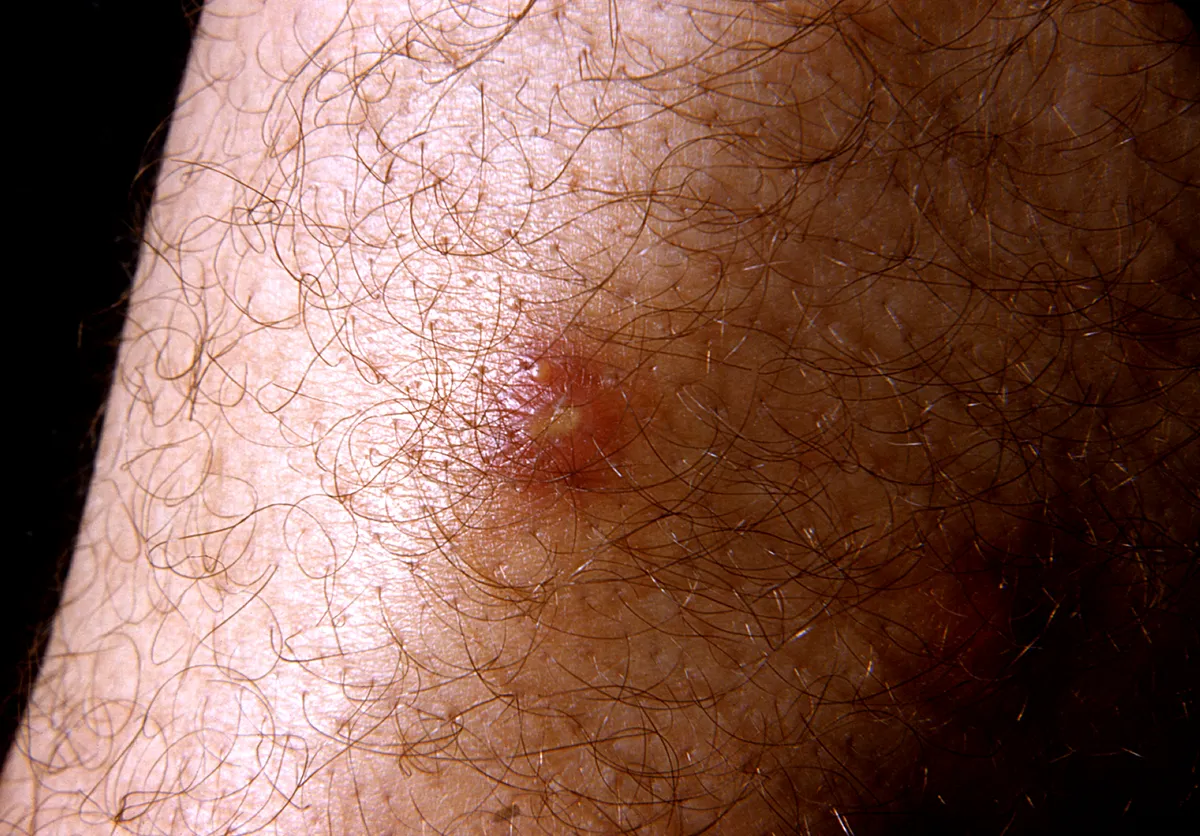
Fire ant stings burn first and then turn into white pustules: UC Statewide IPM's fire ant page says symptoms start as a burning and itching sensation, followed by a white pustule that takes several weeks to disappear. Red imported fire ants quickly climb onto a person who disturbs their mound and begin stinging; a single ant can bite and sting repeatedly, and the ants can sting en masse.
Keep the pustules clean: UC IPM says they can become infected if not kept clean and may leave permanent scarring. A small percentage of people are allergic to the stings, UC IPM says, and Mayo Clinic's first-aid guide names fire ants among the stinging insects that can cause anaphylaxis, the severe allergic reaction covered under when to see a doctor below. See which ants bite or sting people and fire ant stings in more detail.
How can you tell a bee sting from a wasp sting?
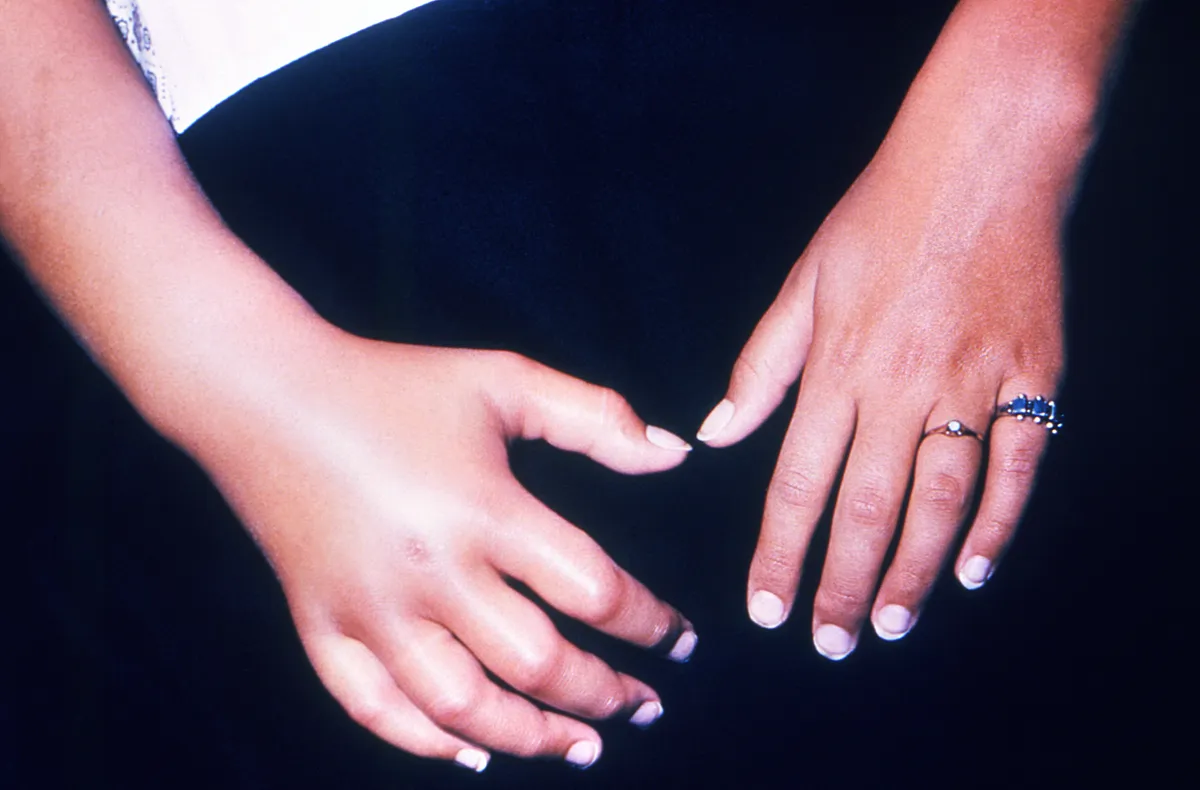
Look for a stinger: one left in the skin suggests a honey bee. The University of Missouri Extension says a honey bee stings only once because its barbed stinger stays embedded in the skin, while wasps and some bees can sting repeatedly because their stingers are smooth. Either way, it says, a bee or wasp sting causes local pain, swelling, redness and itching for most people, and Mayo Clinic's bee sting page describes the usual mild reaction as instant, sharp burning pain, a welt and swelling that, in most people, go away within a few hours.
Mayo Clinic describes a moderate reaction as burning pain, a welt, itching, flushing and swelling that gets worse over the next day or two and can last up to seven days. A severe reaction, anaphylaxis, usually starts 15 minutes to an hour after the sting, with symptoms such as rash, itching, trouble breathing, a swollen tongue, trouble swallowing and tightness in the chest. Mayo says to call 911 or seek immediate care for signs of anaphylaxis, even just one or two, and for multiple stings in children, older adults and people with heart or breathing problems, and to make an appointment if symptoms do not go away within three days.
Telling a bee sting from a wasp sting gets a fuller treatment in its own guide.
Could it be a spider bite?
Often not: UC Statewide IPM's spider guide warns that people and their physicians often blame spiders for skin lesions with no proof of spider involvement. It says spiders do not seek people out and generally bite only when squeezed, lain on or otherwise provoked, and that the jaws of most spiders are so small the fangs cannot penetrate an adult's skin. It names ticks, fleas, bees, wasps, bed bugs, mosquitoes, kissing bugs, deer flies, horse flies and water bugs among the biters mistaken for spiders, and notes that scratching can let in a bacterial infection that may also be mistaken for a spider bite.
When a spider does bite, UC IPM says the reaction ranges from nothing to itching, redness, swelling and pain, usually no worse than a bee sting and lasting a few minutes to a few hours. The black widow and the brown recluse, the venomous spiders named on CDC's NIOSH page on venomous spiders, are the exceptions. NIOSH says black widow bites have two puncture marks and that the venom causes pain at the bite that then spreads to the chest, abdomen or the whole body.
A brown recluse bite may cause a stinging sensation with localized pain, and a small white blister usually develops at the bite, NIOSH says; the venom can destroy skin tissue, a lesion that needs professional medical attention. NIOSH's first aid for a worker bitten by any spider ends with seeking professional medical attention. For photos of spider bites and the conditions mistaken for them, see what spider bites look like; brown recluse bites and black widow bites each have a page, and so does telling a mosquito bite from a spider bite.
Which other bugs bite people?
Biting flies and mites, both on the American Academy of Dermatology's list of common biters, round out the chart. Horse fly and deer fly bites hurt at once: Purdue University's horse and deer fly guide says the females' mouthparts carry two pairs of cutting blades that cut the skin and make it bleed, that they feed in the daytime and do not feed on people indoors, and that deer flies usually bite the shoulders and head while horse flies usually bite the legs and body. See why horse fly and deer fly bites hurt and how to tell the two flies apart; gnat bites have their own guide.
Mites are harder to pin down. UC Statewide IPM's guide to unexplained itching says bed bugs, fleas, mites and mosquitoes can all cause bite marks, swelling and itching, but that confirming an insect or mite as the cause takes identification of a specimen by a trained entomologist. Separate guides cover bird mites, rat mites and oak and straw itch mites, and kissing bug bites have a page of their own.
What else can look like a bug bite?
Scabies, skin infections, irritants such as fiberglass and insects that sting or blister the skin without biting can all be mistaken for bug bites. Scabies is an itchy rash caused by mites that live in the skin: CDC's scabies symptoms page lists intense itching, especially at night, and a pimple-like itchy rash, commonly between the fingers, in the skin folds of the wrist, elbow, knee or armpit, and on the waist, buttocks and shoulder blades; tiny raised, crooked lines can show where female mites have burrowed. Symptoms can take three to six weeks to appear in someone who has never had scabies, and one to four days in someone who has.
CDC says to contact a healthcare provider if you suspect scabies, and how scabies differs from bed bug bites is covered separately. Other causes of itching get blamed on bugs too: UC IPM's itching guide lists mechanical irritants such as fiberglass filaments and paper dust, dry skin, many medical conditions and the side effects of some prescription drugs, and says that if no organism can be found, chances are the cause is something else. It says the first person to contact is your family physician or primary health care provider. A rash blamed on carpet beetles is covered in the carpet beetle rash guide.
Some insects injure the skin without biting at all. UF/IFAS Extension's guide to stinging and venomous insects says stinging caterpillars have spines that can break off in the skin and release a toxin that causes a burning sensation, and that adult blister beetles can release a fluid that causes blisters on human skin; people often meet them while moving through vegetation where the beetles feed. Stinging caterpillars and blister beetles each have a guide.
When should you see a doctor about a bug bite?
Get emergency help for signs of a severe allergic reaction, and see a doctor for a bite that keeps getting worse, looks infected or comes with an illness such as fever or a rash; most bites and stings can be treated at home. Mayo Clinic's first-aid guide says most insect bites and stings are mild and cause itching, swelling and stinging that go away in a day or two.
The American Academy of Dermatology's list of reasons to go to the emergency room immediately after a bite or sting overlaps with Mayo's and adds chest pain, a feeling that your throat is closing, a racing heartbeat that lasts more than a few minutes and a headache. It also names two tick warnings: a red, donut-shaped rash after a tick bite, which could be a sign of Lyme disease, and a fever with a red or black, spotty rash that spreads, which could be a sign of Rocky Mountain spotted fever.
For less urgent problems, Mayo Clinic says to see a healthcare professional if the swelling gets worse, the bite shows signs of infection or you do not feel well. The AAD advises seeing a board-certified dermatologist right away if you feel tired all the time, have a headache, fever or body aches, or develop a rash after a bug bite, and CDC says to see your doctor for a rash or fever within several weeks of removing a tick. Bug bites on babies and bug bites on dogs have their own guides.
What should you do once you know what bit you?
Deal with the insect rather than the bite, using the guide for that pest. For bed bugs and fleas in the home, see getting rid of bed bugs and getting rid of fleas. For mosquitoes, chiggers and ticks, see getting rid of mosquitoes, the chigger control guide and what kills ticks.
What if you still cannot tell what bit you?
Take the evidence to someone who can tell: photos of the bite for a doctor and, if you can catch it, the insect itself for an expert. Bites change from day to day, so a daily photo shows a doctor how the mark has developed. UC IPM's spider guide advises saving any biter you catch for identification and taking it to a cooperative extension office, and its itching guide says identification of a specimen by a trained entomologist is what confirms an insect or mite as the cause.
This guide is general educational information, not medical advice. If you have symptoms or concerns after a bite or exposure, contact a healthcare provider.
Frequently Asked Questions
What bit me in my sleep?+
Bed bugs are the usual suspect when new bites appear overnight. The American Academy of Dermatology says most people are bitten while they sleep and notice several itchy welts, often in a zigzag line, the next day, although first bites can take up to 14 days to itch. Mosquitoes are another possibility, since Mayo Clinic says they bite day and night and can live indoors. A spider trapped in bedding may bite, but UC IPM says the effect is usually no worse than itching or a bee sting.
How long do bug bites last?+
Most are short-lived. Mayo Clinic says the itching, swelling and stinging of most mild bites and stings go away in a day or two, and mosquito bumps usually clear in a few days. Cleveland Clinic says flea bites only last a few days, while chigger itching peaks in the first 24 to 48 hours and stops after about two weeks. Mayo says bed bug bites usually clear up in a week or two, and UC Statewide IPM says a fire ant pustule takes several weeks to disappear.
What bit me at the beach?+
Biting midges, also called no-see-ums, punkies or sand flies, are a common answer. The University of Arizona Cooperative Extension says they are usually active at dawn or dusk near water, including beaches, and that their bites usually appear as small red welts about 1/8 inch across or water-filled blisters that itch intensely. They are so small that they often go unnoticed, so the bites may be the only sign that they were there.
Can you tell what bit you from the bite alone?+
Often not with certainty. Mayo Clinic says bed bug bites are similar to other insect bites and rashes, and UC IPM says people and their physicians often blame spiders for skin lesions with no proof of spider involvement. Reactions also vary from person to person: some people have no reaction to bed bug bites, while others develop severe itching, blisters or hives. The pattern, the place on the body, the timing and, most reliably, the insect itself identified by an expert are what narrow it down.
How long does it take for a bug bite to show up?+
It depends on the biter. Mayo Clinic says a mosquito bite forms an itchy bump a few minutes after the bite. Cleveland Clinic says chigger bites can take up to three hours to cause symptoms. The American Academy of Dermatology says first bed bug bites may not itch right away and can take as long as 14 days. After a tick bite, CDC says the rash of Lyme disease begins 3 to 30 days later, about 7 days on average.
Which bug bites leave a blister or pustule?+
Fire ant stings are known for it: UC Statewide IPM says the burning and itching are followed by a white pustule that takes several weeks to disappear. Mayo Clinic lists small blisters among mosquito bite symptoms, the University of Arizona says no-see-um bites can be water-filled blisters, and CDC says a small white blister usually develops at a brown recluse bite. Large blisters after bed bug bites are among the serious reactions the American Academy of Dermatology says need immediate medical care.
Sources
- Bug Bites and Stings: When to See a Dermatologist — American Academy of Dermatology
- Bedbugs: Signs and Symptoms — American Academy of Dermatology
- Insect Bites and Stings: First Aid — Mayo Clinic
- Mosquito Bites: Symptoms and Causes — Mayo Clinic
- Bedbugs: Symptoms and Causes — Mayo Clinic
- Bee Sting: Symptoms and Causes — Mayo Clinic
- Flea Bites — Cleveland Clinic
- Chigger Bites — Cleveland Clinic
- Something's Biting Me, but I Can't See It — University of Arizona Cooperative Extension
- About Ticks and Tickborne Disease — Centers for Disease Control and Prevention
- Signs and Symptoms of Untreated Lyme Disease — Centers for Disease Control and Prevention
- What to Do After a Tick Bite — Centers for Disease Control and Prevention
- Red Imported Fire Ant (Pest Notes) — University of California Statewide IPM Program
- Bees and Wasps (G7391) — University of Missouri Extension
- Spiders (Pest Notes) — University of California Statewide IPM Program
- Venomous Spiders at Work — CDC National Institute for Occupational Safety and Health
- Horse and Deer Flies: Biology and Public Health Risk (E-246) — Purdue University Extension
- Symptoms of Scabies — Centers for Disease Control and Prevention
- Itching and Infestation: What's Attacking Me? (Pest Notes) — University of California Statewide IPM Program
- Stinging or Venomous Insects and Related Pests (ENY-215) — University of Florida IFAS Extension
How this guide was made: it was researched and drafted with AI assistance from the sources listed above. A second, independent AI pass then checked each factual claim against those sources. Found an error? Email support@buzzskito.ca.