
Published by BuzzSkito Mosquito & Tick Control
Published October 28, 2026 · Fact-checked against the sources listed below
What do lice look like?
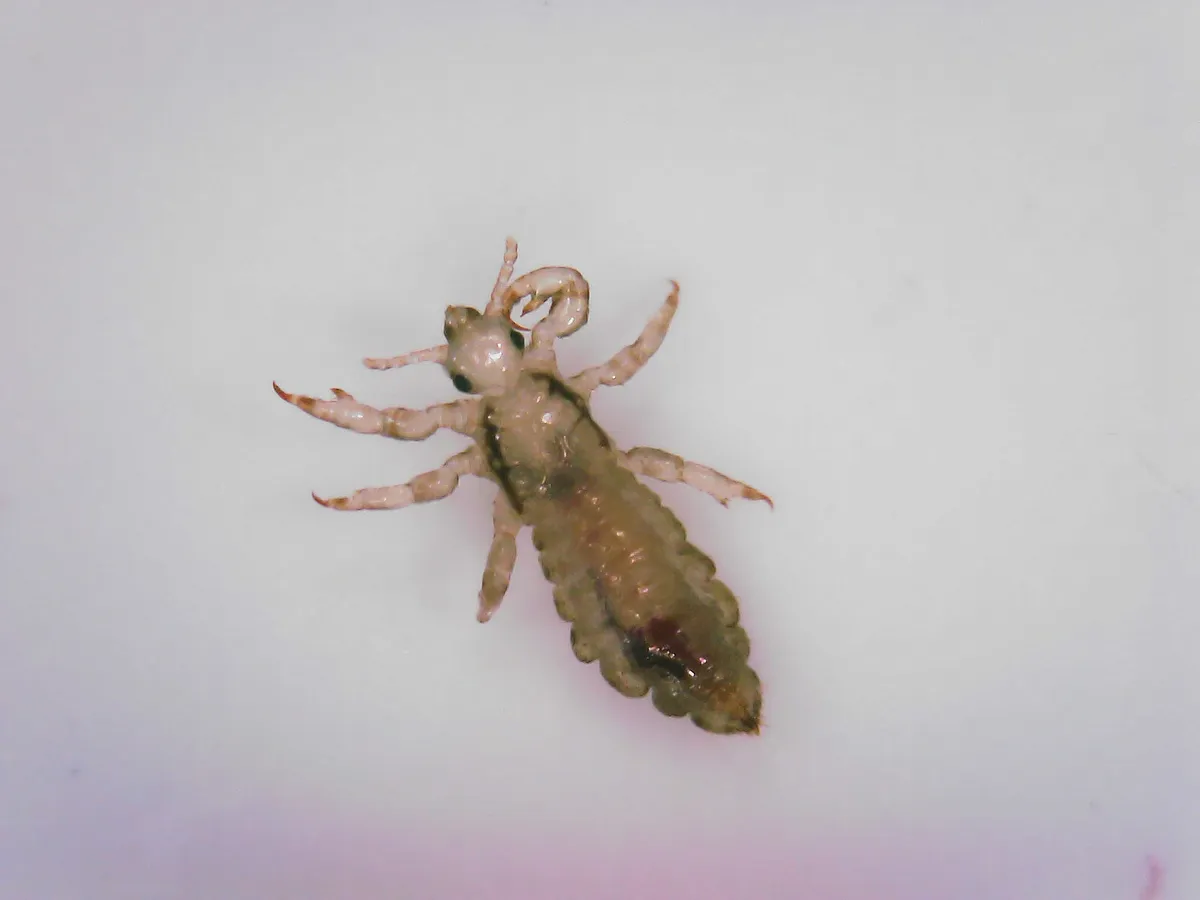
Head lice are tiny, wingless insects with six legs, each ending in a claw that grips the hair shaft, according to UC IPM's head lice guide from the University of California. CDC's DPDx, its laboratory reference for identifying parasites, describes adults as tan to grayish-white, and notes that their bodies are longer for their width than those of the crab-shaped pubic louse.
What color are lice?
The sources word it a little differently: tan to grayish-white (DPDx), beige to gray (UC IPM), light brown according to the American Academy of Dermatology (AAD), and usually pale and gray, though the color can vary, according to the American Academy of Pediatrics (AAP). DPDx adds that lice look darker on people with dark hair, and gives the color of their eggs, called nits, as usually yellow to white.
How big are lice?
An adult head louse is about the size of a sesame seed. CDC puts adults at roughly 2 to 3 mm long, and UC IPM at about 1/12 to 1/8 inch. DPDx gives adult females as about 1/8 to 1/6 inch (3 to 4 mm) and says males are slightly smaller.
Nymphs, the young lice, are about the size of a pinhead, CDC says, and the AAP puts that at about 1.5 mm (about 1/16 inch). Nits are smaller still: DPDx gives their size as 0.8 by 0.3 mm, about 1/32 inch long.
What do lice look like to the naked eye?
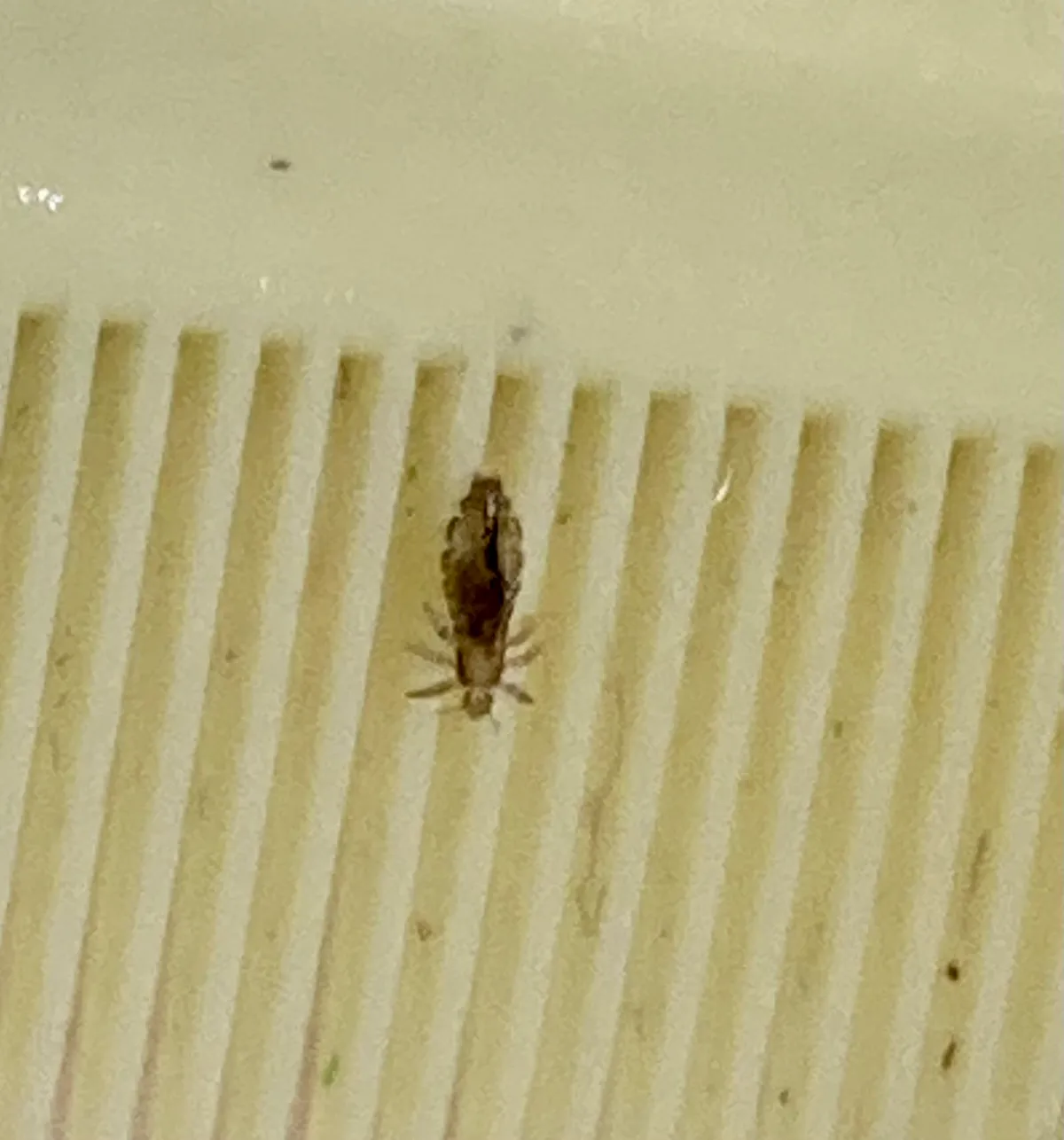
As specks that move. AAD describes live adults as light-brown objects shaped like sesame seeds that often move quickly, and a nymph is a speck the size of a pinhead. CDC's head lice overview says adults and nymphs are very small, move quickly and avoid light, so they may be difficult to find; a fine-toothed louse comb and a magnifying lens can help, and MedlinePlus, the National Library of Medicine's health site, says to look closely under a bright light.
What do baby lice look like?
Like small adults. Young lice, called nymphs, hatch from the eggs and look similar to adult lice but are very small, about the size of a pinhead, CDC says. DPDx explains that a nymph molts three times and becomes an adult about 7 days after hatching, and that nymphs need blood meals just as adults do.
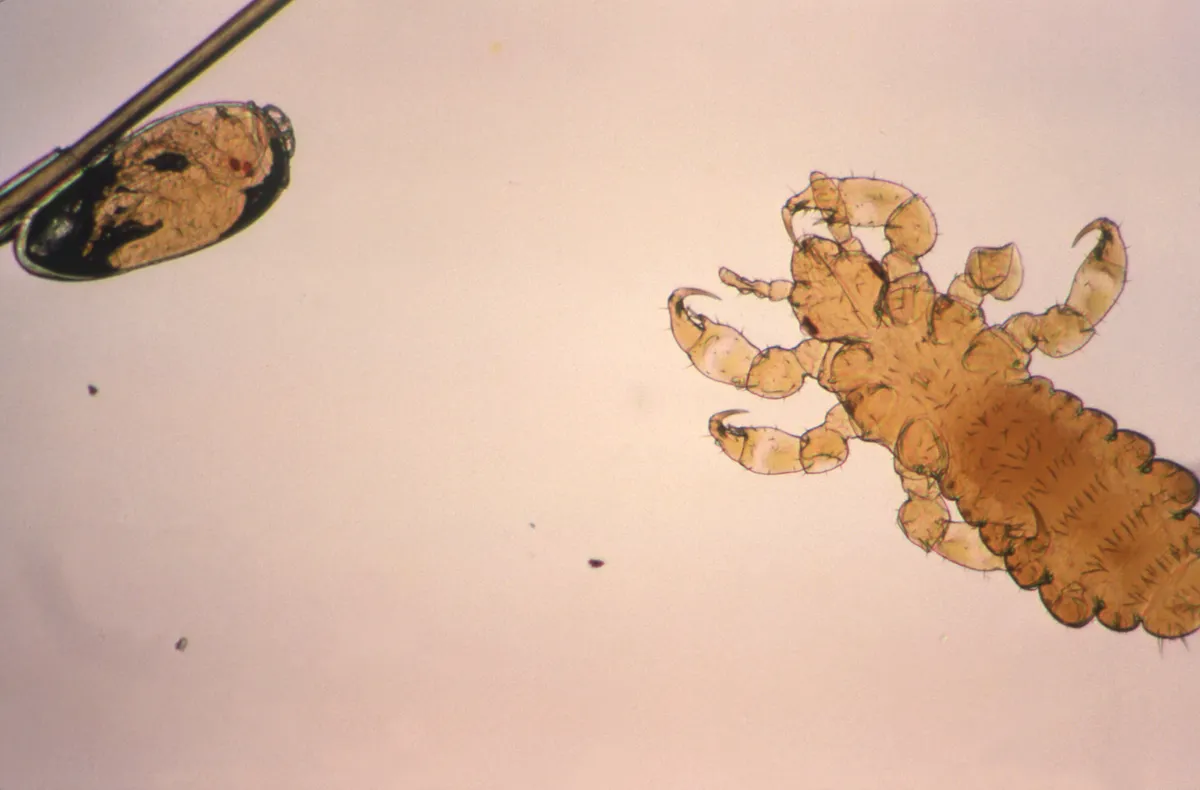
Eggs hatch in about a week (6 to 9 days), CDC says, and an adult can live about 30 days on a person's head.
Where on the head do lice live?
Mostly on the scalp and the hair close to it. CDC says head lice are found mainly on the head but also on the eyebrows and eyelashes, and that nits are often seen on hair behind the ears and near the back of the neck. The AAP and UC IPM name the same two spots to check closely, and MedlinePlus calls the top of the neck and the ears the most common places for eggs.
Head lice live only on people, and not for long off them. CDC says an adult that falls off a person and cannot feed dies within two days, UC IPM says head lice cannot live off the body for more than 1 to 2 days, and CDC adds that animals do not get or spread head lice.
How do lice move from one head to another?
By crawling. CDC says head lice cannot hop or fly, and UC IPM adds that although they can crawl relatively quickly, they cannot jump either. DPDx describes their legs as adapted for clinging to the host's hair, and the claws are plain to see under magnification.
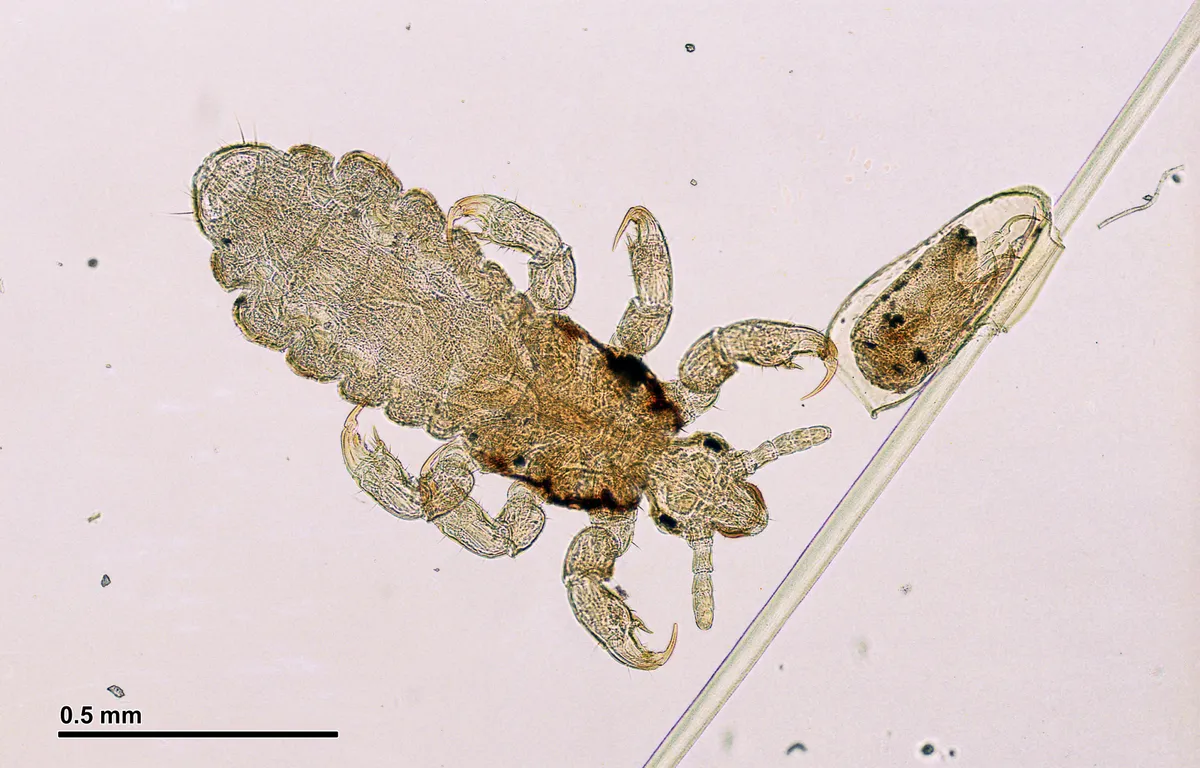
CDC says lice spread mainly through direct contact with the hair of someone who has them, especially head-to-head contact. Less often they spread through shared hats, scarves, coats or hair ribbons, shared combs, brushes or towels, or by lying on a bed, couch, pillow or carpet recently used by someone with lice. Getting lice is not related to cleanliness, CDC adds.
How do you check a head for live lice?
Comb through wet hair under a bright light. UC IPM calls wet combing the best way to inspect a head for lice, and AAD says wet hair also keeps lice from scurrying away. A live louse is what you are looking for: CDC calls finding a live nymph or adult on the scalp or in the hair the best way to diagnose head lice.
How to check for live lice
- Get good light. Seat the person in a brightly lit room (AAP) and part the hair into small sections down to the scalp (MedlinePlus).
- Wet the hair and comb. Work section by section from the scalp outward with a fine-toothed or lice comb, as AAD describes.
- Start behind the ears. Check there and at the back of the neck closely (CDC, AAP, UC IPM), then the whole head (MedlinePlus).
- Use a magnifier. Lice move quickly and avoid light, and a magnifying lens can help, CDC says.
- Only nits, no lice? Many nits within 1/4 inch of the scalp suggest an active case (DPDx); if all you find are nits farther out and no live lice, CDC says the case is probably old and likely needs no treatment.
How are nits different from lice?
Nits are lice eggs, not lice: tiny ovals glued to single hairs that do not move. DPDx gives their size as 0.8 by 0.3 mm (about 1/32 inch long) and their color as usually yellow to white. CDC says to look for nits attached firmly within 1/4 inch of the base of the hair shaft, and that nits farther out are almost always hatched or dead. MedlinePlus notes that they can look like dandruff but stay in place instead of flaking off.
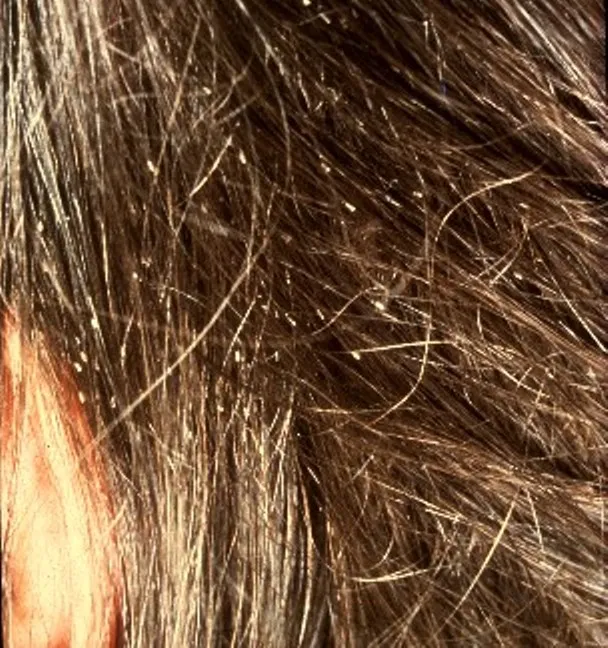
Live nits versus hatched ones, how to tell nits from dandruff and hair casts, and how to remove them are covered in what lice eggs look like.
What are the three kinds of lice on people?
Head lice, body lice and pubic lice, which CDC covers on separate pages. Head and body lice look almost alike (DPDx calls them morphologically similar), so where you find them is the tell; pubic lice look very different.
| Louse | Size | Where it lives | Spreads disease? |
|---|---|---|---|
| Head louse | About 0.08 to 0.12 inch (2 to 3 mm), the size of a sesame seed | Scalp and hair; sometimes eyebrows and eyelashes | No |
| Body louse | About 0.09 to 0.14 inch (2.3 to 3.6 mm), the size of a sesame seed | Lives and lays eggs in clothing and bedding, especially seams; moves to the skin to feed | Yes: epidemic typhus, trench fever and epidemic relapsing fever |
| Pubic (crab) louse | About 0.04 to 0.07 inch (1.1 to 1.8 mm), the size of a pencil tip; short and crab-like | Pubic hair; sometimes eyelashes, eyebrows, a beard or mustache, or the armpits | No |
From CDC's pages on head lice, body lice and pubic lice, and its DPDx reference.
CDC says body lice are diagnosed by finding eggs and crawling lice in the seams of clothing, and that in the US they mainly affect people without regular access to bathing and clean clothes, such as people experiencing homelessness.
Pubic lice, also called crab lice, are short, broad and crab-like and look very different from head and body lice, CDC says. They usually spread through sexual contact and attach to pubic hair, but can also be found in the eyebrows, eyelashes, beard, mustache or armpits. CDC notes that pubic lice on a child's head or eyelashes may be a sign of sexual exposure or abuse.
For lice on the eyelashes, CDC's treatment page for pubic lice warns not to use lice medicines near the eyes. It says a few lice and nits can be removed with fingernails or a nit comb, describes a prescription eye ointment for more, and advises seeing a healthcare provider if you are unsure what you have or treatment does not work.
What else gets mistaken for lice?
Specks in the hair and other small bugs. Three questions sort most of them: does it crawl, does it have six legs that end in claws, and was it on the head rather than in a bed, on a pet or on a damp bookshelf? A head louse answers yes to all three.
- Dandruff, sand and lint. AAD says sand, dirt, lint and dandruff all comb out easily, while nits are cemented to the hair. None of them crawls.
- Scabs. MedlinePlus lists small red bumps on the scalp, neck and shoulders, which may crust over and ooze, among the symptoms of head lice, and CDC says scratching can cause sores. Unlike a louse, a crust does not crawl away.
- Booklice. Despite the name, these are not the lice that live on people. Penn State Extension describes soft, wingless insects about 1/25 to 1/13 inch long (1 to 2 mm), light to dark tan, that live in damp, dark places and feed on mold, and says they do not bite or affect human health. See the booklice guide.
- Fleas. A bug that jumps is not a louse. UC IPM's flea guide describes reddish-brown, wingless insects no longer than 1/8 inch and flattened from side to side; cat fleas stay on dogs and cats but will also bite people, and fleas jump onto socks and pets. Fleas on humans explains why they do not live in human hair the way lice do.
- Young bed bugs. The EPA says bed bug nymphs measure 1.5 to 4.5 mm (about 1/16 to 3/16 inch) and are translucent or whitish-yellow; before they feed, they can be nearly invisible. They do not stay on people: University of Kentucky entomologists say bed bugs crawl to a hidden spot right after feeding, hide in the seams of mattresses, box springs and bed frames, and do not fly or jump. See baby bed bugs and what bed bugs look like.
- Ticks. A tick has eight legs as a nymph or adult, says Cornell University, and its abdomen expands after feeding; a louse has six legs. Ticks attach to the skin: CDC lists in and around the hair and ears among the places to check after time outdoors, and CDC's advice after a tick bite is to remove an attached tick as soon as possible. See how to do a tick check.
Often confused with lice
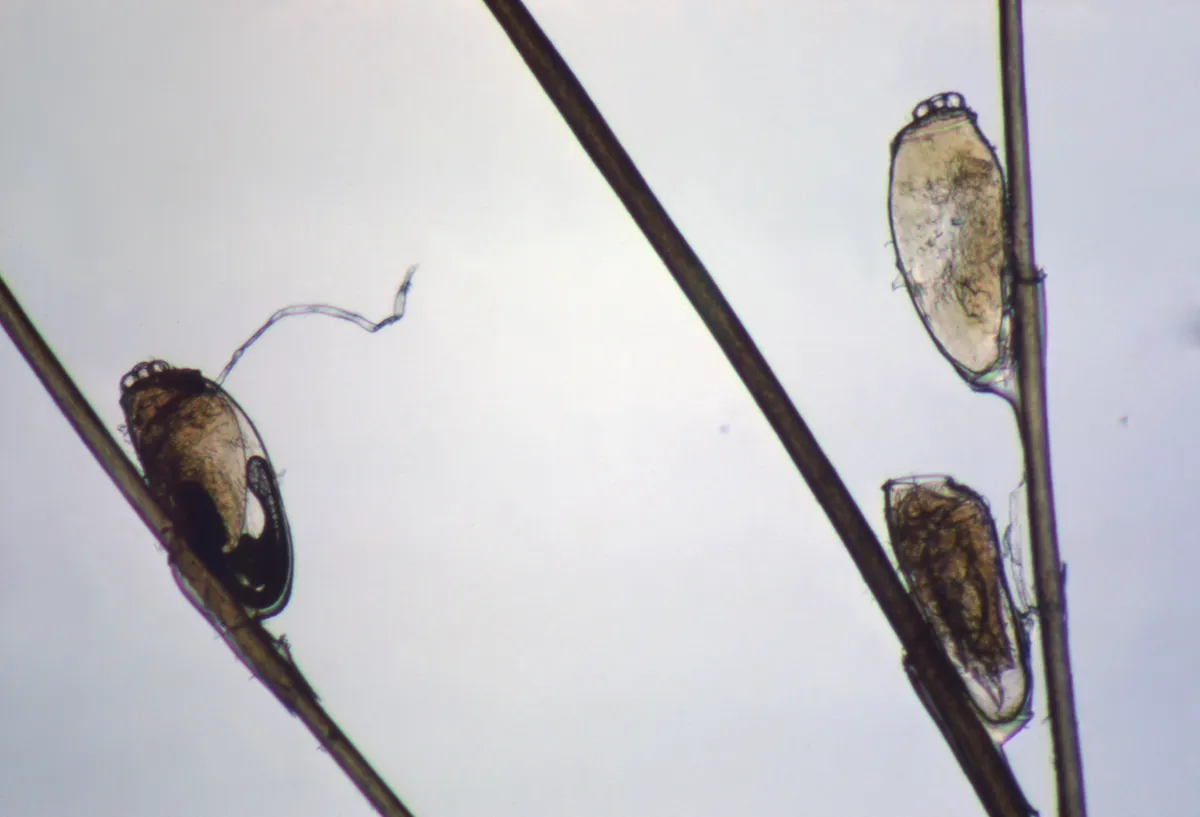 Nit (louse egg)An oval egg about 1/32 inch long, glued to one hair near the scalp; it does not crawl
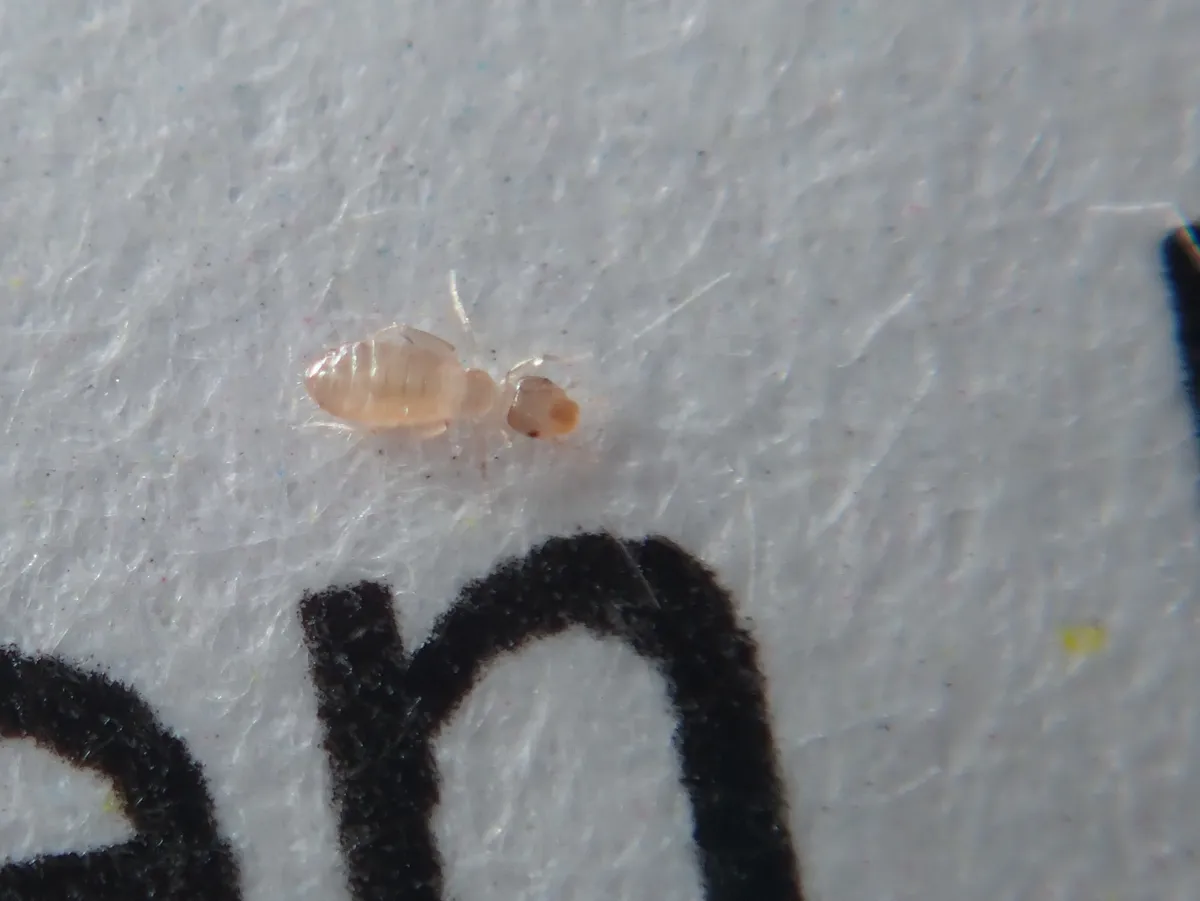 BooklousePale and wingless, up to about 1/13 inch; lives where mold grows on damp paper and does not bite
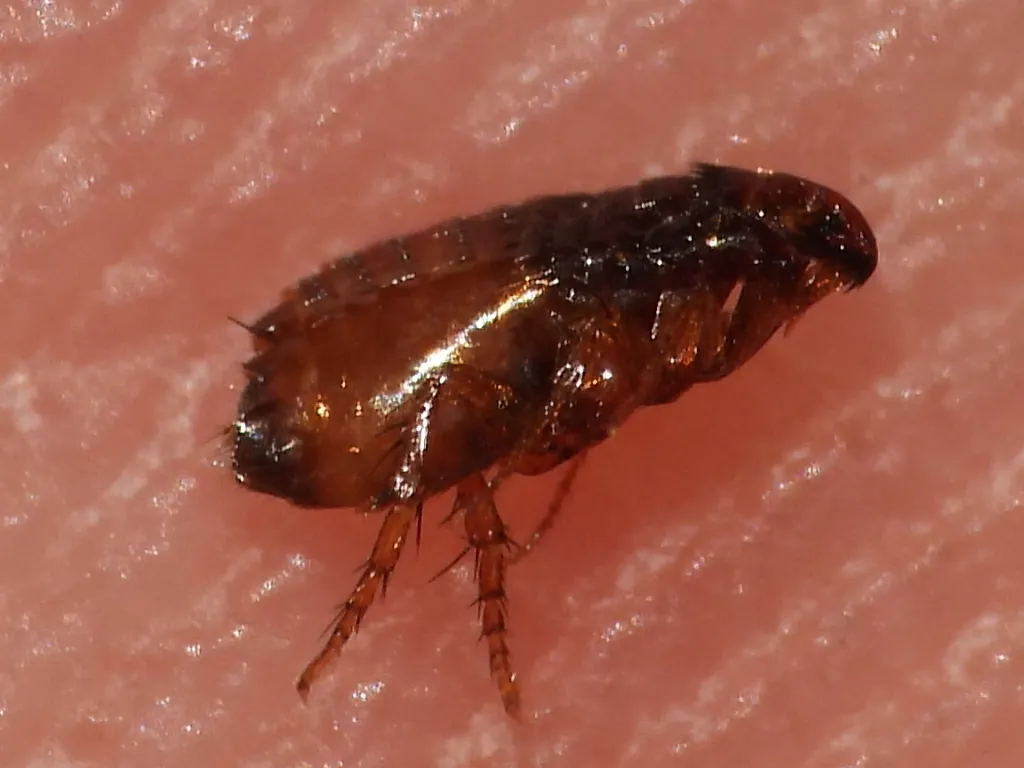 Cat fleaReddish brown and flattened side to side; it jumps, while head lice only crawl
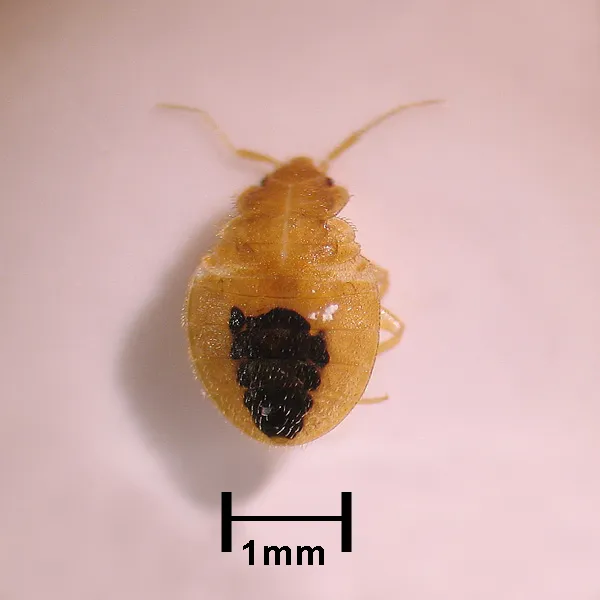 Bed bug nymphOval and pale before feeding; hides in mattress seams and leaves the body right after feeding
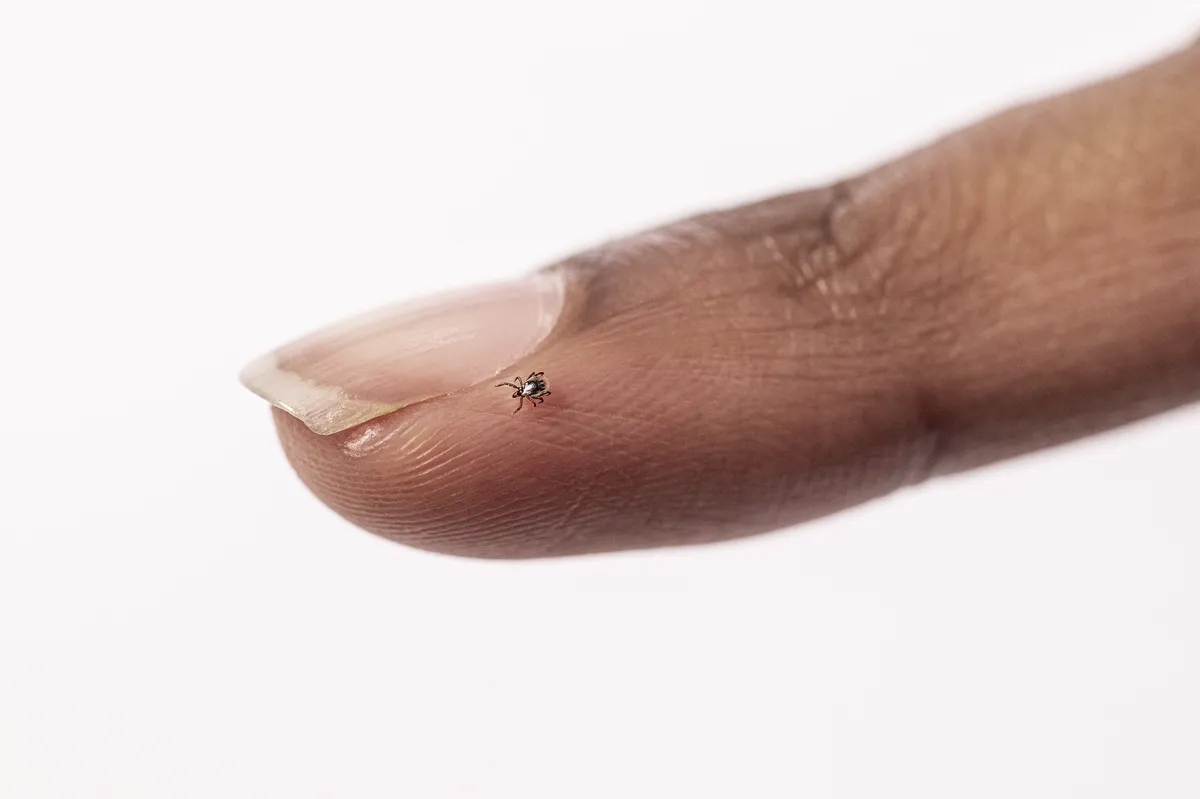 Tick nymphEight legs, not six; attaches to the skin, even in the hair, and swells after feeding
Photos: Nit (louse egg): CDC/ Dr. Dennis Juranek (CDC Public Health Image Library, phil.cdc.gov), public domain. Booklouse: (c) Alexis Tinker-Tsavalas, some rights reserved (CC BY), via iNaturalist, CC BY 4.0. Cat flea: (c) Sam Kieschnick, some rights reserved (CC BY), via iNaturalist, CC BY 4.0. Bed bug nymph: CDC/ CDC-DPDx; Blaine Mathison (CDC Public Health Image Library, phil.cdc.gov), public domain. Tick nymph: CDC/ Division of Vector-Borne Diseases Rickettsial Zoonoses Branch; photo: Lauren Bishop (CDC Public Health Image Library, phil.cdc.gov), public domain.
Do lice spread disease?
Head lice do not. CDC says they do not transmit any disease and are not considered a health hazard, and UC IPM agrees that they do not transmit disease-causing pathogens. Body lice are the exception among the three: CDC says they can spread epidemic typhus, trench fever and epidemic relapsing fever. Pubic lice do not transmit disease, CDC says.
What head lice do cause is itching. CDC calls itching, an allergic reaction to the bites, the most common symptom, and says it can take four to six weeks to start the first time; some people, especially with a first or light case, have no symptoms at all. Other signs CDC lists are a tickling feeling of something moving in the hair, irritability and trouble sleeping, and sores from scratching that can sometimes become infected with bacteria normally found on the skin.
If you find itchy bumps but no lice, bites with no sign of bed bugs sorts the other things that bite at night, and the bug bite identifier suggests likely biters from six questions.
What should you do if you find lice?
Treat an active case, and treat it by the label. CDC's treatment steps are to treat everyone with an active infestation, and anyone they share a bed with, at the same time, using an over-the-counter or prescription lice medicine exactly as its label directs; to consult a healthcare provider before treating young children; and to remove nits and lice with a nit comb every 2 to 3 days for 2 to 3 weeks after each treatment. The lice eggs guide walks through those steps and the combing in detail.
What not to do, according to CDC and the AAP:
- No gasoline, kerosene or animal medicines. The AAP says never to use dangerous products like these.
- No sprays or fogs. CDC says fumigant sprays and fogs can be toxic if inhaled or absorbed through the skin.
- No extra doses. CDC's clinical guidance warns that lice medicines are insecticides that can be dangerous if misused or overused: no extra amounts unless a doctor and pharmacist say so, and no more than 2 or 3 rounds of the same medicine if it is not working.
- No kitchen cures. CDC has no scientific evidence that smothering lice with mayonnaise or similar substances works.
This guide is general educational information, not medical advice. If you have symptoms or concerns after a bite or exposure, contact a healthcare provider.
Frequently Asked Questions
How do you know if you have lice?+
The surest sign is a live louse. CDC says finding a live nymph or adult louse on the scalp or in the hair is the best way to diagnose head lice, and that misdiagnosis is common. Itching is the most common symptom, though it can take four to six weeks to start the first time, and some people have no symptoms at all. Other signs CDC lists are a tickling feeling of something moving in the hair and sores from scratching. To check, comb wet hair section by section under a bright light with a fine-toothed comb.
Can you see lice with the naked eye?+
Yes, but they are easy to miss. An adult is about the size of a sesame seed and a nymph about the size of a pinhead, CDC says, and because both are very small, move quickly and avoid light, they can be difficult to find. A bright light, a fine-toothed louse comb and a magnifying lens can all help, according to CDC and MedlinePlus. Nits, the eggs, are smaller still, about 1/32 inch long, and are glued to single hairs close to the scalp.
What color are lice?+
Tan, gray or light brown, depending on the source. CDC's DPDx reference describes adult head lice as tan to grayish-white, UC IPM as beige to gray, the American Academy of Dermatology as light brown, and the American Academy of Pediatrics as usually pale and gray, though the color can vary. DPDx adds that lice look darker on people with dark hair. Their eggs, called nits, are usually yellow to white, and they are glued to single hairs rather than crawling.
What do lice look like in dark hair?+
Darker than on light hair. CDC's DPDx reference says adult lice are tan to grayish-white but look darker on people with dark hair. Their eggs, called nits, are usually yellow to white, and UC IPM notes that on light-colored hair nits are camouflaged by the hair's own pigment. In any hair color, the American Academy of Dermatology suggests wetting the hair and combing it section by section from the scalp outward under a bright light with a fine-toothed comb, which also keeps lice from scurrying away.
What could be mistaken for head lice?+
Specks and other small bugs. The American Academy of Dermatology says sand, dirt, lint and dandruff can turn up in hair but comb out easily, while nits are cemented to the hair. Booklice live in damp places where mold grows and do not bite, according to Penn State Extension; fleas jump, while head lice only crawl; young bed bugs hide in mattress seams and leave the body after feeding; and ticks attach to the skin and have eight legs as nymphs and adults. A head louse has six clawed legs and lives on the scalp.
Can lice jump or fly?+
No. CDC says head lice move by crawling and cannot hop or fly, and UC IPM adds that although they crawl relatively quickly, they cannot jump. Each of their six legs ends in a claw that grasps the hair shaft. Lice spread mainly through direct head-to-head contact with the hair of someone who has them, CDC says, and less often through shared hats, combs, brushes, towels or bedding. A bug that jumps out of the hair or off a pet is more likely a flea.
Do lice live on pillows?+
Not for long. CDC says an adult louse that falls off a person dies within two days if it cannot feed, and nits usually die within a week if they are not kept at the temperature near the scalp. Lying on a pillow, bed or couch recently used by someone with lice is a less common way to get them than head-to-head contact, CDC says. The American Academy of Dermatology suggests washing and hot-drying bedding, towels and clothing that touched the person's head in the past two days, and vacuuming furniture and floors.
What is the main cause of head lice?+
Head-to-head contact. CDC says head lice spread mainly through direct contact with the hair of a person who has them, and less often through shared clothing, combs, brushes or towels, or by lying on bedding and furniture recently used by someone with lice. Getting head lice is not related to cleanliness, CDC adds, and animals do not get or spread them. Because lice cannot hop or fly, they move from one head to another by crawling.
What kills lice in hair immediately?+
The health agencies cited here do not describe an instant method. CDC's treatment steps use over-the-counter or prescription lice medicines applied exactly as the label directs, and expect that a few lice may still be moving slowly 8 to 12 hours later. If no lice have died, or they seem as active as before, CDC advises talking to a healthcare provider before treating again. CDC has no scientific evidence that mayonnaise or similar substances work, and the American Academy of Pediatrics says never to use gasoline, kerosene or medicines made for animals.
Do head lice and body lice look different?+
Barely. CDC's DPDx reference calls head lice and body lice morphologically similar, and CDC compares both to a sesame seed in size. The difference is where they live. Head lice live on the scalp and hair, while body lice live and lay their eggs on clothing and bedding, especially in the seams, and move to the skin to feed. The two also differ in risk: CDC says body lice can spread diseases such as epidemic typhus, while head lice do not transmit any disease.
Sources
- About Head Lice (June 4, 2024) — Centers for Disease Control and Prevention
- DPDx: Pediculosis — Centers for Disease Control and Prevention, Division of Parasitic Diseases and Malaria
- About Body Lice (June 24, 2024) — Centers for Disease Control and Prevention
- About Pubic Lice (June 4, 2024) — Centers for Disease Control and Prevention
- Treatment of Head Lice (November 12, 2024) — Centers for Disease Control and Prevention
- Treatment of Pubic Lice (November 12, 2024) — Centers for Disease Control and Prevention
- Clinical Care of Head Lice (January 31, 2025) — Centers for Disease Control and Prevention
- Head lice (MedlinePlus Medical Encyclopedia, reviewed January 1, 2026) — MedlinePlus, US National Library of Medicine
- Head lice: Diagnosis and treatment (updated September 3, 2025) — American Academy of Dermatology
- Head Lice: What Parents Need to Know (Dawn Nolt, MD, MPH, FAAP, updated September 26, 2022) — American Academy of Pediatrics, HealthyChildren.org
- Pest Notes: Head Lice (UC ANR Publication 7446, updated July 2020) — University of California Statewide IPM Program
- Booklice (updated July 23, 2024) — Penn State Extension
- Pest Notes: Fleas (UC ANR Publication 7419) — University of California Statewide IPM Program
- Bed Bugs Appearance and Life Cycle (updated January 6, 2026) — US Environmental Protection Agency
- Bed Bugs (ENTFACT-636; M. F. Potter, revised March 2026) — University of Kentucky Department of Entomology
- Tick Biology — New York State Integrated Pest Management, Cornell University College of Agriculture and Life Sciences
- Preventing Tick Bites (August 28, 2024) — Centers for Disease Control and Prevention
- What to Do After a Tick Bite (June 9, 2026) — Centers for Disease Control and Prevention
How this guide was made: it was researched and drafted with AI assistance from the sources listed above. A second, independent AI pass then checked each factual claim against those sources. Found an error? Email support@buzzskito.ca.