
Published by BuzzSkito Mosquito & Tick Control
Published October 23, 2026 · Fact-checked against the sources listed below
What do carpet beetle larvae look like?
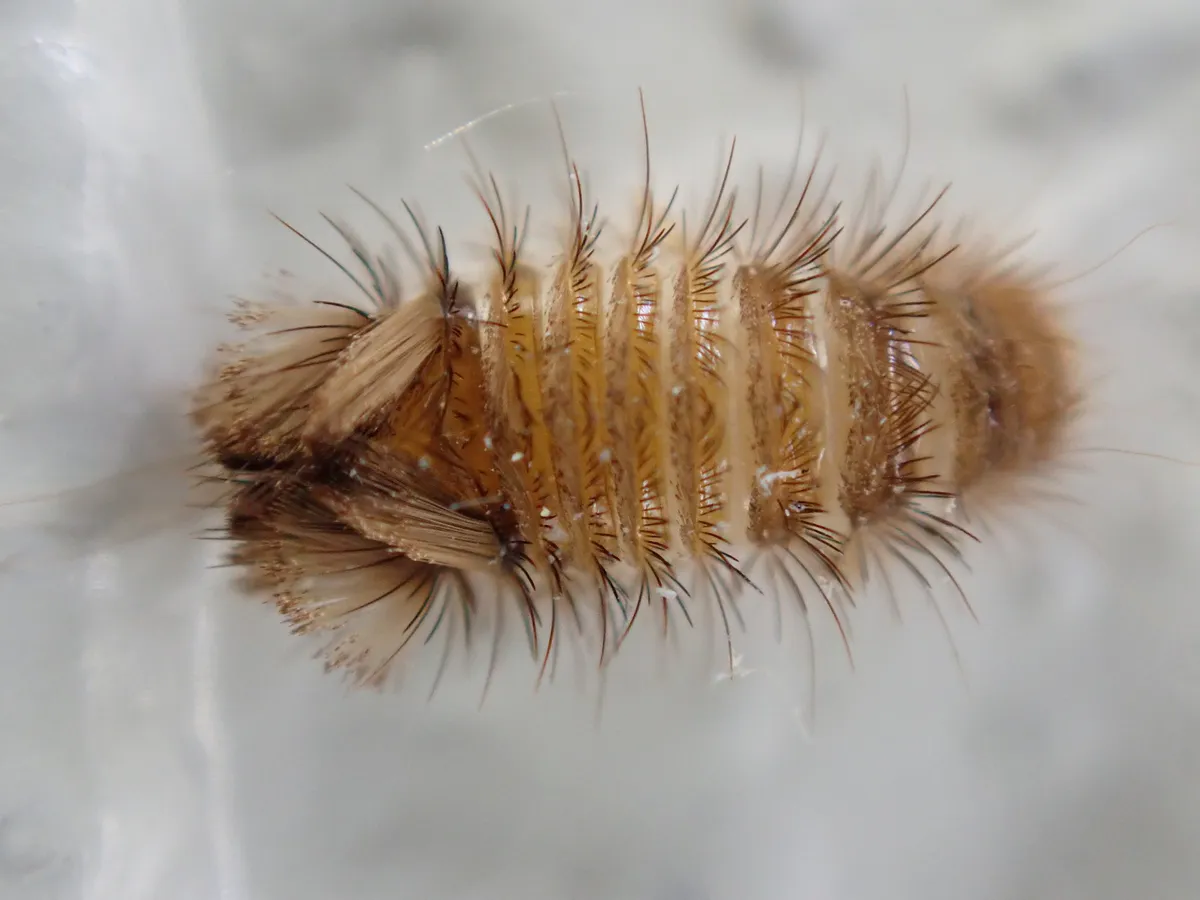
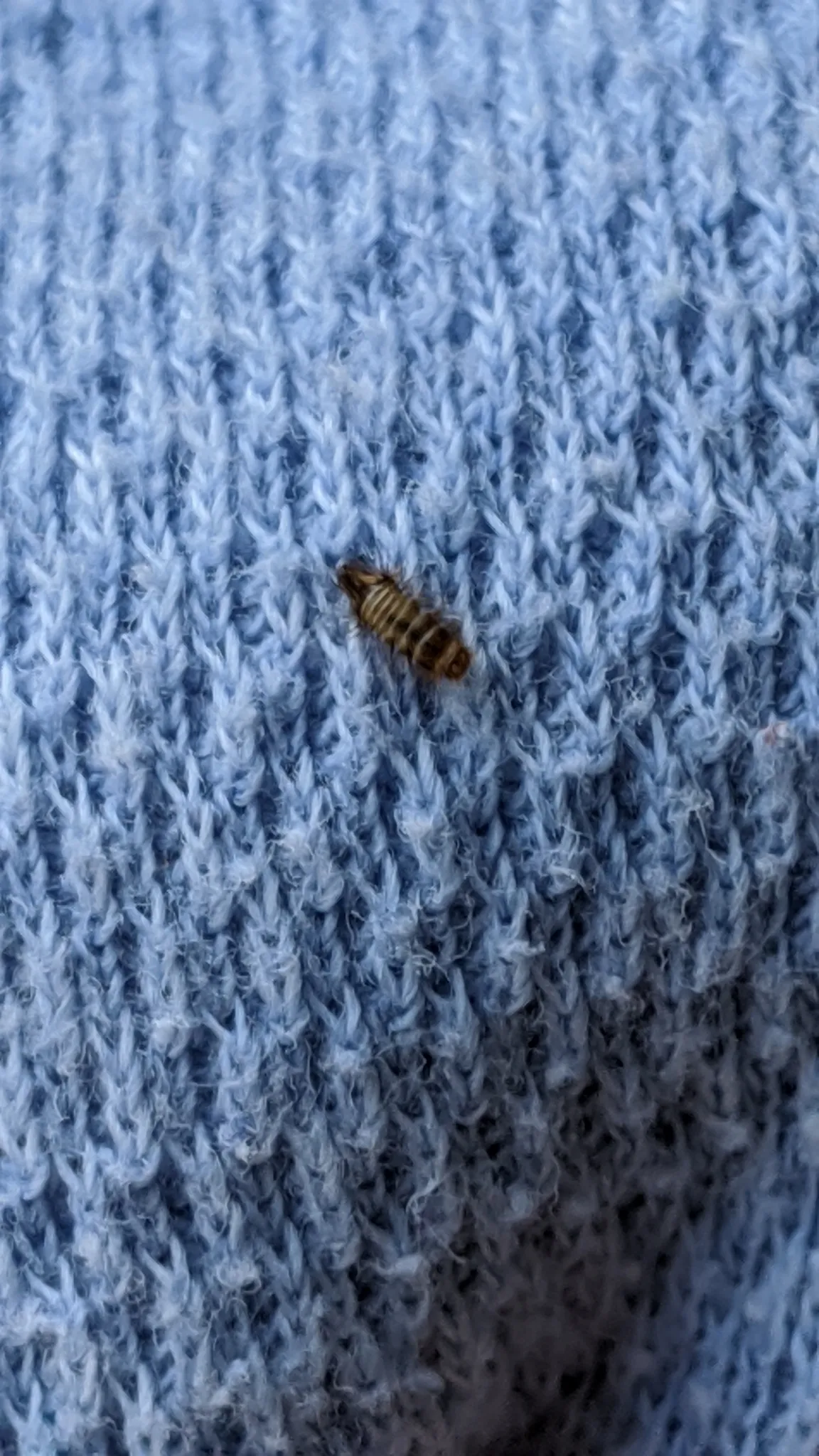
Carpet beetle larvae look like fuzzy or hairy maggots, slightly longer than the adult beetles, as UC IPM's Pest Notes on carpet beetles puts it. The University of Kentucky's carpet beetle fact sheet describes them as 1/8 to 1/4 inch long, tan to brownish and densely covered with hairs or bristles, and Virginia Tech's Insect Identification Lab says most are about the size of the adult, 1/4 inch (6 mm) or less.
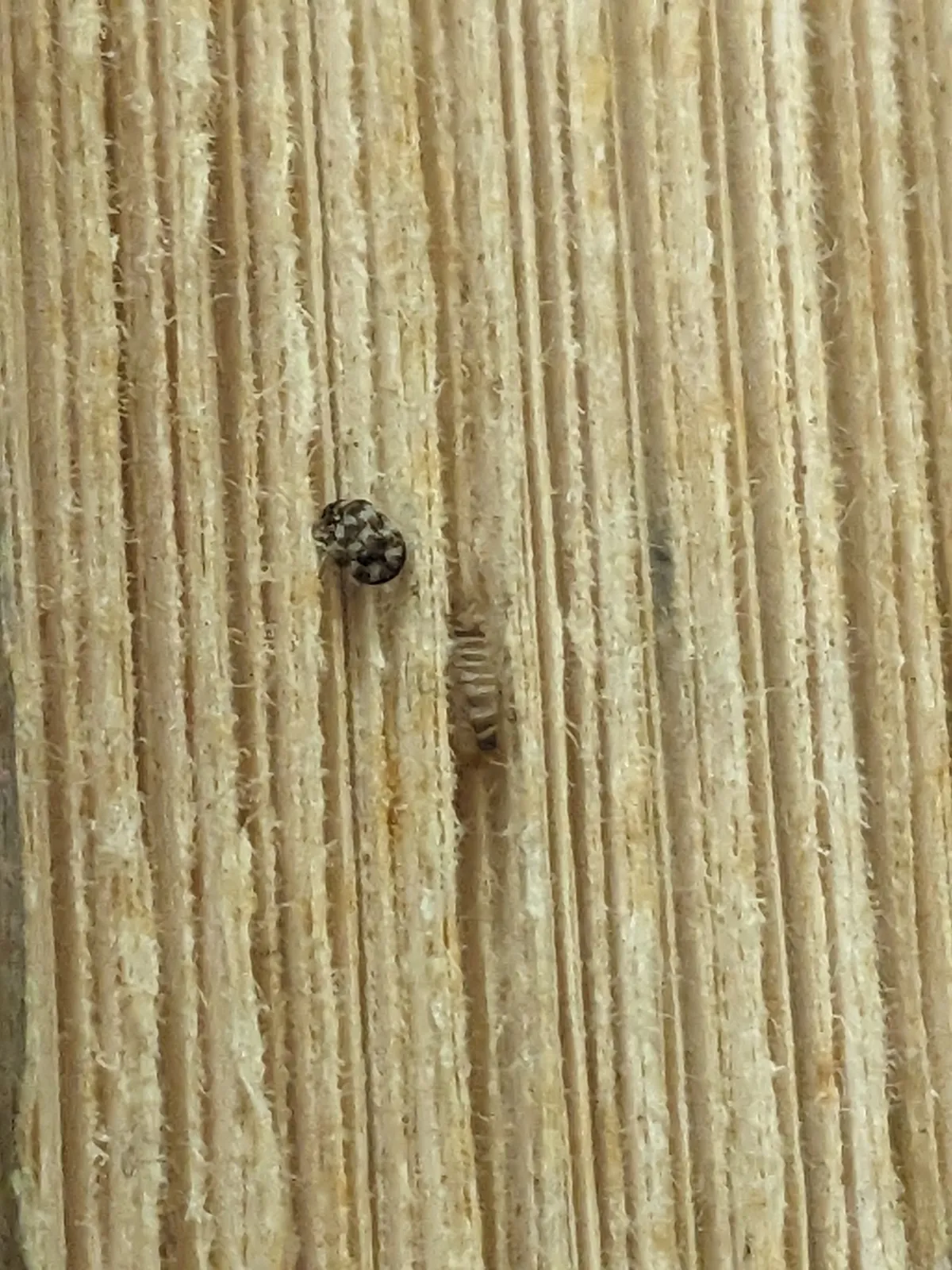
Look for a segmented body ringed with bristles and no obvious head: the Connecticut Agricultural Experiment Station's bed bug look-alike poster says the larva's hairy, segmented body lacks a distinctive head. A disturbed varied carpet beetle larva raises its tufts of hair into a round plume, UC IPM says, and Ohio State University Extension says the larvae avoid light as they feed.
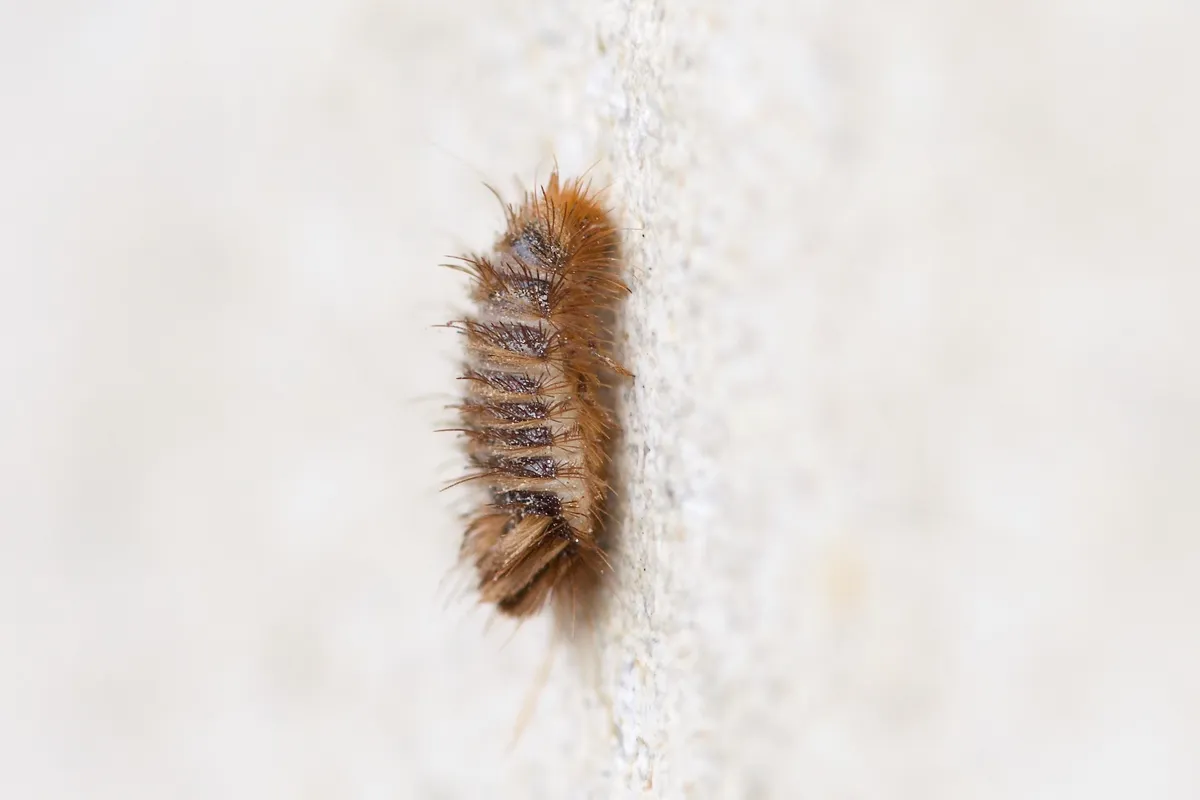
Is it a carpet beetle larva? Five checks
- Hair. Densely bristly all over; a shiny white body with a dark head is a clothes moth larva.
- Size. About 1/8 to 1/4 inch; a sleeker, carrot-shaped larva up to about 1/2 inch with a long tail tuft is a black carpet beetle larva.
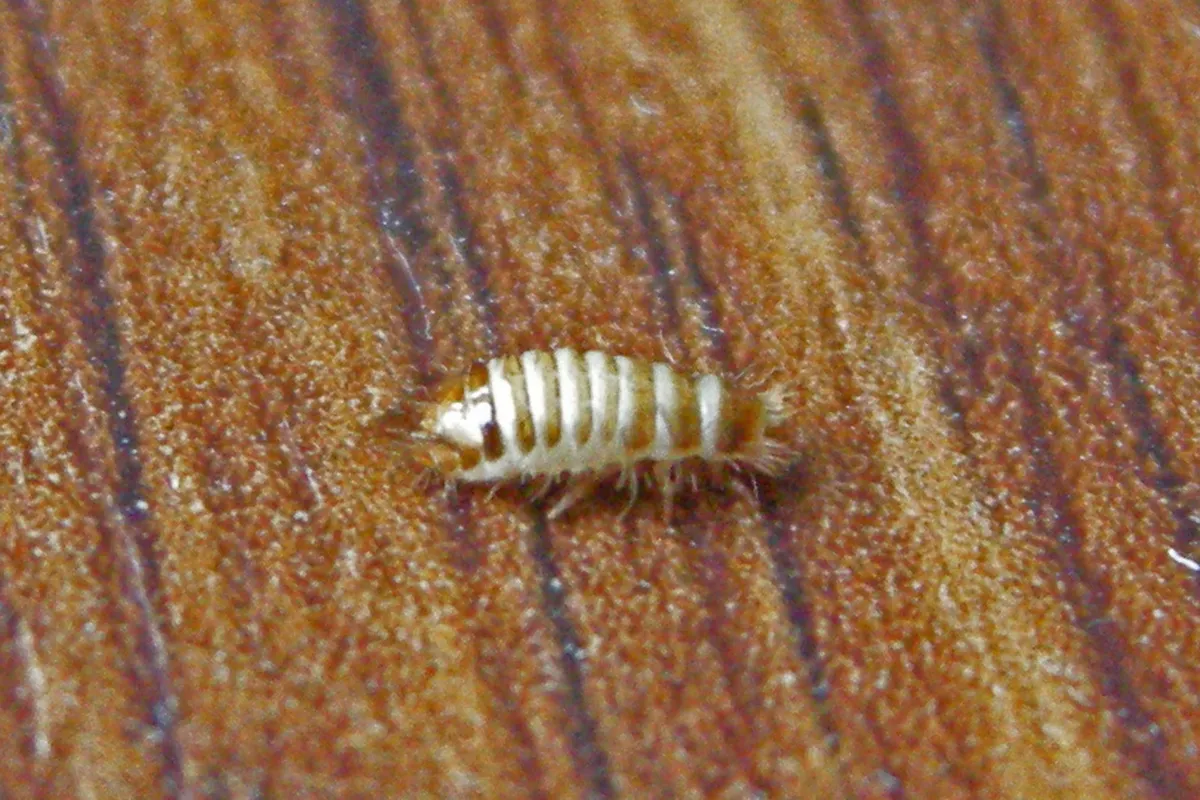
- Color. Tan to brown, often banded; furniture carpet beetle larvae start out white, UC IPM says.
- Legs. Three pairs, on very close inspection. Colorado State University Extension says hairy duff millipedes have more; a legless worm is more likely a flea larva.
- What lies nearby. Brown, bristly shed skins and droppings like grains of salt point to carpet beetles; silk webbing or a carried case, to clothes moths.
What does each kind of carpet beetle larva look like?
Four kinds are common. Virginia Tech names the varied, black, common and furniture carpet beetles as the most important and most common species in North America, and Ohio State describes each larva, noting that a good hand lens or microscope helps:
- Varied carpet beetle (Anthrenus verbasci): about 1/4 inch, light to dark brown and broader at the rear (Ohio State), with alternating light and dark stripes (UC IPM). Penn State Extension calls it cream colored with golden hairs, about 4 mm (roughly 1/6 inch) long.
- Furniture carpet beetle (Anthrenus flavipes): about 1/4 inch and thickly covered with brownish hair (Ohio State); UC IPM says it starts out white, darkens to dark red or chestnut brown and is broader in front.
- Common carpet beetle (Anthrenus scrophulariae): about 1/4 inch, oval and reddish-brown, with many brownish-black hairs. Ohio State says it and the furniture carpet beetle larva often move rapidly, though Kentucky calls carpet beetle larvae slow moving.
- Black carpet beetle (Attagenus unicolor): the odd one out, described next.
Black carpet beetle larvae
A black carpet beetle larva is sleek and carrot-shaped, with a long brush of bristles at the tail. Ohio State describes it as golden to dark brown and about 1/2 inch long, and UC IPM calls it shiny, smooth and hard, with short, stiff hairs. UC IPM gives a top length of 5/16 inch, while Ohio State, Penn State (12.7 mm) and the Connecticut Agricultural Experiment Station's carpet beetle fact sheet give about 1/2 inch.
UC IPM adds that in California and other arid areas, this species is more a pest of grains, flours and cereals than of fabrics.
Where do carpet beetle larvae hide?
Carpet beetle larvae hide in dark, undisturbed places where wool, hair, lint or dead insects collect; the Connecticut station's fact sheet calls them photophobic. They travel, too: Ohio State says the larvae crawl from room to room, and Virginia Tech says an infestation can spread from one original site to many places in a house.
- Closets, drawers and storage boxes. Kentucky says larvae often feed in the hems, collars and cuffs of items stored for long periods; Ohio State adds dresser drawers.
- Rug edges and under heavy furniture. Kentucky says rug edges and undersides are more likely to be infested than open areas, and Ohio State points to carpet under heavy furniture or pianos.
- Baseboards, vents and ducts. Lint, hair and debris collect there, Kentucky says; Ohio State adds the space behind baseboards and molding.
- Upholstered furniture. Kentucky and Ohio State both list it, and the Connecticut station adds antique chairs with non-synthetic padding.
- Attics, walls and chimneys. Ohio State names bird, rodent and wasp nests; Kentucky names dead insects such as cluster flies, lady beetles and stink bugs, bugs that move indoors for winter.
- Window frames and light fixtures. Virginia Tech says carpet beetles feed on the dead, dried insects that collect there.
- Kitchen, pantry and garage. Kentucky says some kinds infest cereal, pet food and bird seed, and Virginia Tech mentions birdseed and dry pet food kept in the garage; the pantry pests guide sorts other insects in stored food.
Finding a few is common: NC State entomologist Matt Bertone writes in an NC State Extension clinic note that his team's study found carpet beetle larvae in 100% of the homes surveyed, and Virginia Tech says carpet beetles occur in both clean and cluttered homes.
What do carpet beetle larvae eat?
Carpet beetle larvae eat keratin, the animal protein in wool, felt, fur, silk, feathers and leather, which Kentucky says they can digest. UC IPM adds natural-bristle hair brushes, pet hair, dead animals and, occasionally, certain spices and grains, and Ohio State's list runs from horns, bone and book bindings to dead insects, dog and cat food, cereals and flour.
Cotton and synthetics are rarely eaten. UC IPM says the larvae do not feed on synthetic fibers, and Kentucky says cotton, polyester and rayon are rarely attacked unless blended with wool or heavily soiled with food stains or body oils. A 2021 report in CDC's Emerging Infectious Diseases journal adds dust, dead skin cells and hairs to their diet.
Only the larvae eat these things: UC IPM says adult carpet beetles feed on pollen and nectar outdoors.
Can carpet beetle larvae live in your bed?
Yes, if the bed holds what they eat. The CDC journal report says the larvae are commonly found in wardrobes, on stuffed animals, on mattresses and under carpets, and UC IPM notes that some mattresses and pillows are stuffed with hair or feathers. Kentucky lists blankets, down pillows and comforters among the items carpet beetles commonly attack.
A bed in nightly use is a poor home for them: Kentucky says clothing and blankets in regular use are seldom attacked, and Virginia Tech says larvae often wander, so one on the sheets may have come from a rug, closet or vent nearby. Check down bedding, wool blankets and the dust under the bed.
Carpet beetle larva or bed bug nymph?
A bed bug nymph is a small, flat copy of the adult; a carpet beetle larva is hairy and, though its segmented body may resemble a bed bug's abdomen, lacks a distinctive head, as the Connecticut station's poster puts it. The EPA's page on bed bug appearance describes nymphs as smaller than the 3/16 to 1/4 inch adults and translucent or whitish-yellow. Bed bugs feed on blood and leave dark spots along mattress seams, the poster adds.
To compare, see what baby bed bugs look like, the bugs most often mistaken for bed bugs and photos of bed bug shed skins. Itchy bumps with no bugs in sight are sorted in bed bug bites with no bed bugs.
Are carpet beetle larvae harmful to people?
They do not bite, but their hairs can irritate skin. Texas A&M AgriLife Extension's guide to mysterious bug bites says carpet beetles do not bite, that hairs on the larvae irritate some people, and that bite-like lesions may form where skin is pressed against them. The CDC report says the larvae never infest living animals.
Penn State Extension describes what appears to be an acquired allergy to the larvae's hairs and body fluid: intense itching, a rash and, in some patients, irritated airways and eyes, apparently only after years of exposure. In the CDC report, 11 people in seven families in southern France had itchy red bumps, mostly under clothing, from Anthrenus larval hairs lodged in the skin; the authors say such hairs spread through a home on air currents.
Texas A&M suggests asking a doctor about allergies or other conditions that could explain the symptoms. What a carpet beetle rash looks like has its own guide; for the bed bug and flea bites the CDC authors say to rule out, see what flea bites look like on people and the bug bite identifier.
What do carpet beetle larvae leave behind?
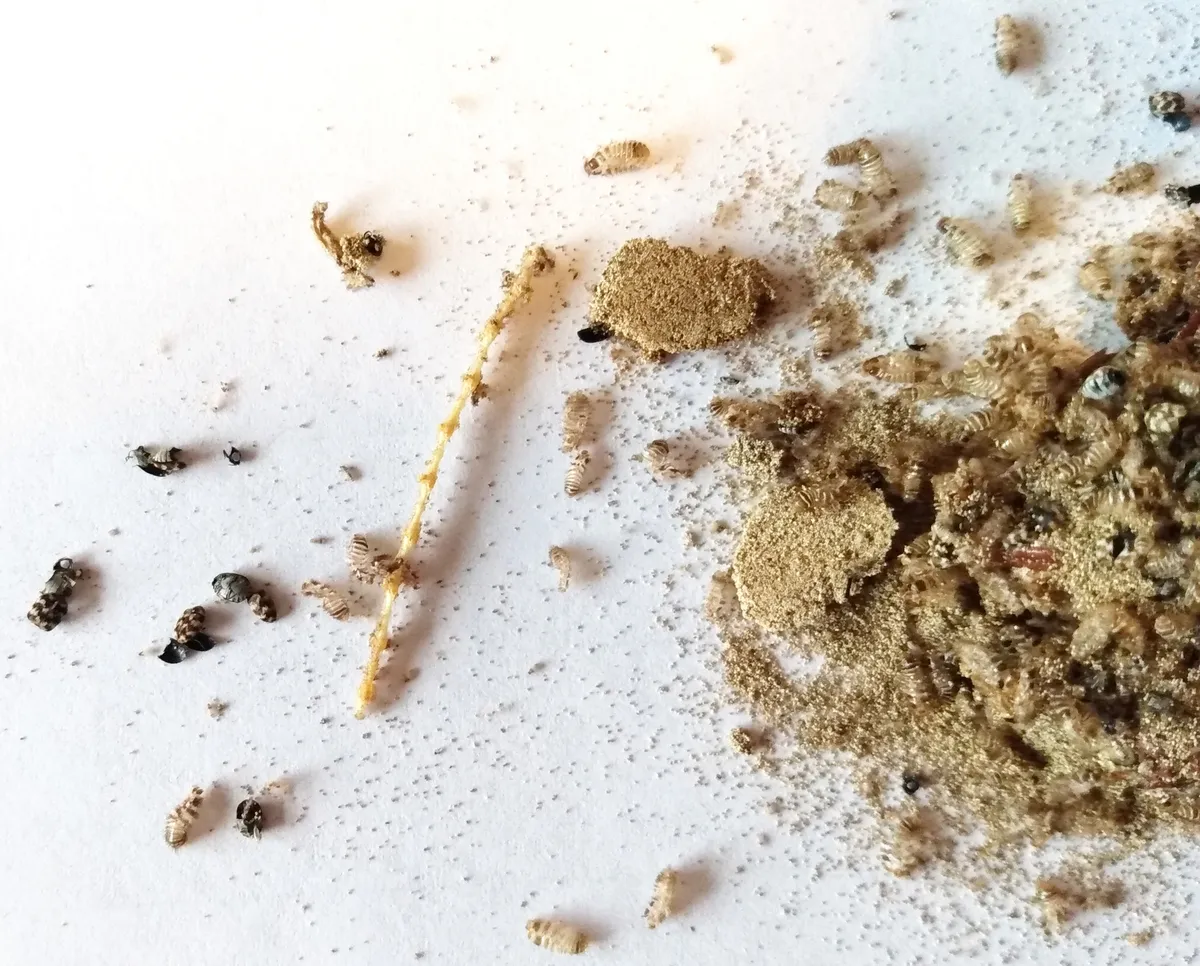
They leave shed skins, droppings and grazed wool. Colorado State says the larvae molt often a dozen times or more and the empty skins keep the general shape of a larva; Virginia Tech gives 5 to 12 molts. UC IPM describes brown, shell-like, bristly skins and fecal pellets about the size of a grain of salt.
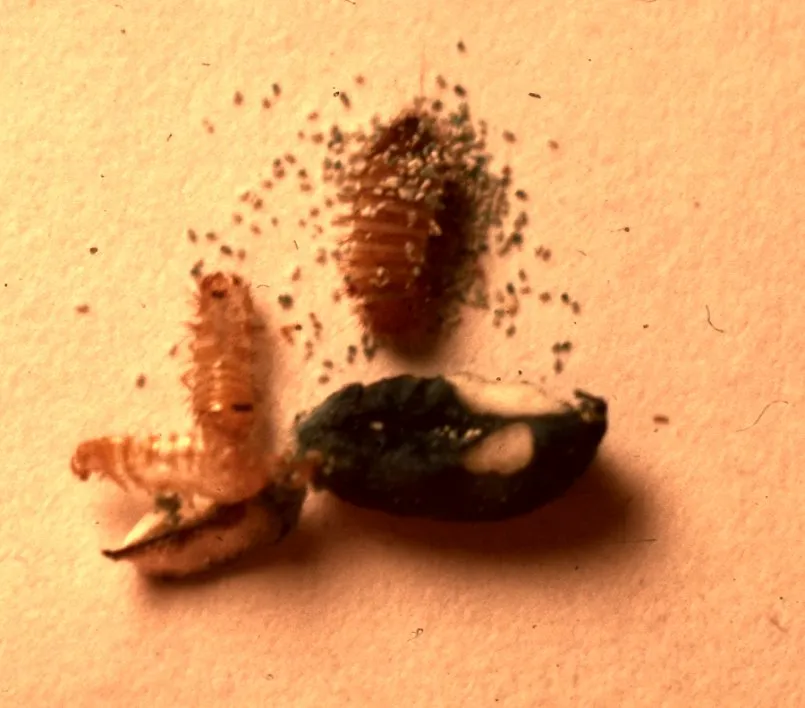
Do not count skins as larvae: Virginia Tech says old cast skins are often mistaken for live larvae, making an infestation look much larger than it is. On wool, Kentucky says, grazing larvae leave threadbare spots and irregular holes. The guide to signs of carpet beetles shows each sign beside bed bug and clothes moth signs.
How do carpet beetle larvae turn into beetles?
They pass through egg, larva, pupa and adult stages, Ohio State says. Virginia Tech says females lay 30 to 100 eggs, depending on the species, in lint, under baseboards, in floor cracks and other dark places, and the eggs hatch in 1 to 3 weeks; UC IPM says about 2 weeks at 77 to 78°F (25 to 26°C).
| Species | Eggs laid | Larval stage | Pupal stage | Adult life |
|---|---|---|---|---|
| Varied carpet beetle | 40 | 220 to 630 days | 10 to 13 days | 2 to 6 weeks (males 2 to 4) |
| Furniture carpet beetle | 60 | 70 to 94 days | 14 to 17 days | 4 to 8 weeks |
| Black carpet beetle | 90 | 166 to 330 days | 8 to 14 days | 4 to 8 weeks |
From the life-cycle table in UC IPM's Pest Notes on carpet beetles.
Food and warmth set the pace: Ohio State gives 60 days to a year or more as larvae, shorter in warm rooms, Colorado State 3 to 4 months to nearly two years, and Virginia Tech 3 to 36 months. Without food, Colorado State says, larvae can survive for several weeks.
Full-grown larvae may burrow into their food or wander off to pupate, sometimes inside their last larval skin, UC IPM says. The Connecticut station says they pupate in spring and the adults head for bright windowsills; Bertone says those adults grew up as larvae indoors and are trying to get outdoors to flowers.
What else looks like a carpet beetle larva?
Several hairy or wormlike crawlers turn up in the same places, and the quick-ID table at the top sets them side by side. For tiny brown bugs that are not hairy, see the tiny brown bugs guide.
- Clothes moth larvae. UC IPM's Pest Notes on clothes moths describe shiny white larvae with dark heads that spin webbing or, in the casemaking species, carry a silken case, and the University of Kentucky's clothes moth fact sheet says they grow up to 1/2 inch. Small moths in the house covers them.
- Larder beetle larvae. Penn State describes dark brown, hairy larvae 11 to 13 mm (about 7/16 to 1/2 inch) long with two horn-like projections at the tail, and Colorado State ties larder beetles to meat-based material, including dried pet food. Beetles in the house covers the adults.
- Duff millipedes. Colorado State says the smaller carpet beetle larvae somewhat resemble these very hairy millipedes, about 1/25 inch (1 mm) long, with fans of hairs at the rear and more legs than a beetle larva's three pairs. They come in from wooded areas, sometimes in large numbers, and are harmless, it says; the millipede guide covers larger kinds.
- Flea larvae. UC IPM's Pest Notes on fleas describe hairy, wormlike larvae no larger than 3/16 inch, with a brownish head but no legs, living at the base of carpet fibers; flea numbers are highest where dogs or cats regularly sleep. See what flea eggs and larvae look like.
- Woolly bears. The fuzzy caterpillar crossing the road in fall, black at both ends and rusty in the middle (Missouri Department of Conservation) and about 1 1/2 inches long (University of Arkansas Arthropod Museum), is an outdoor caterpillar, not a carpet beetle larva.
Searched for carpet weevils? None of the extension guides cited here describes an insect by that name; the bristly larvae on rugs are carpet beetle larvae. Rice and granary weevils develop inside whole grain kernels as small, white, grub-like larvae, says Iowa State University Extension, and the weevil guide covers them.
Commonly confused with
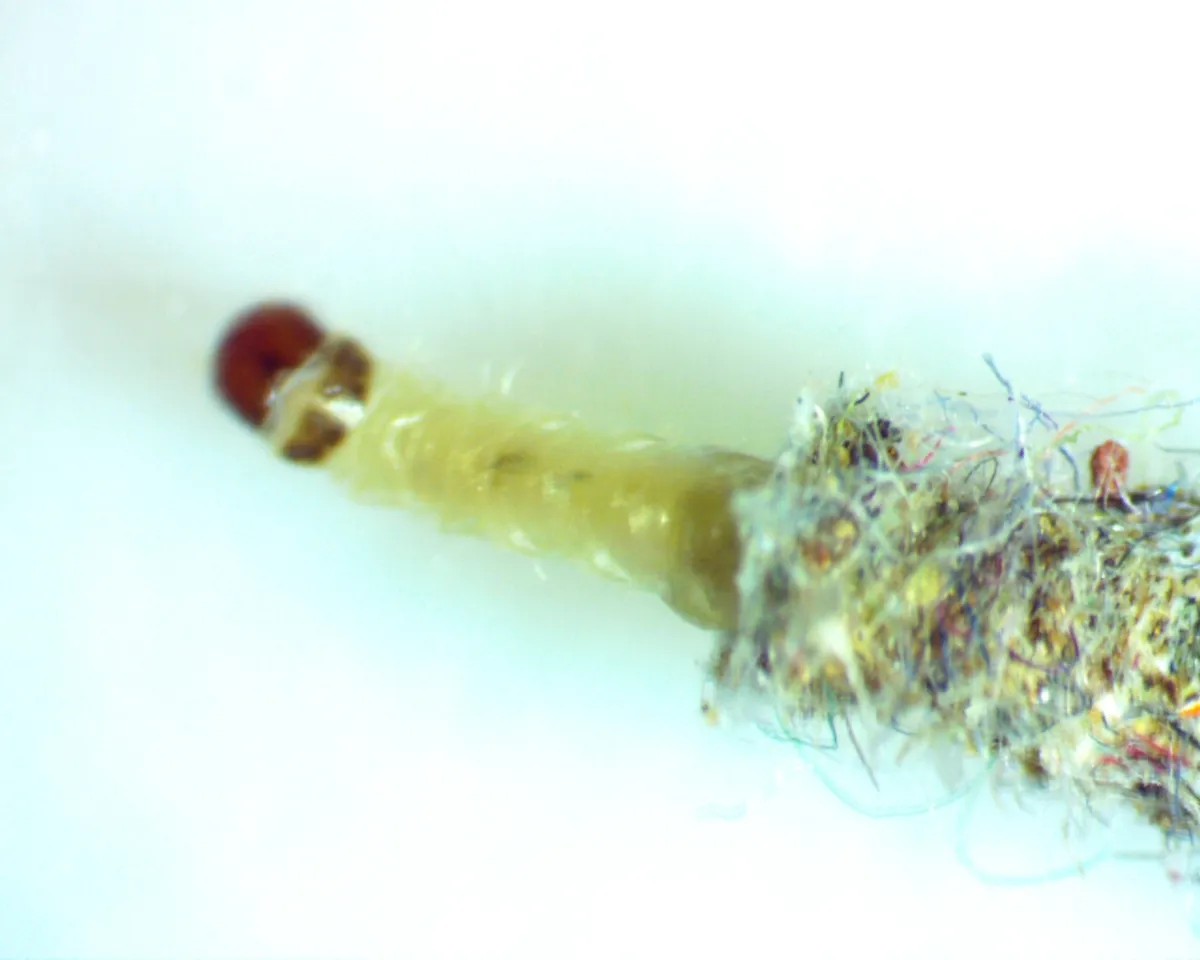 Clothes moth larvaShiny white with a dark head; spins silk webbing or carries a silken case
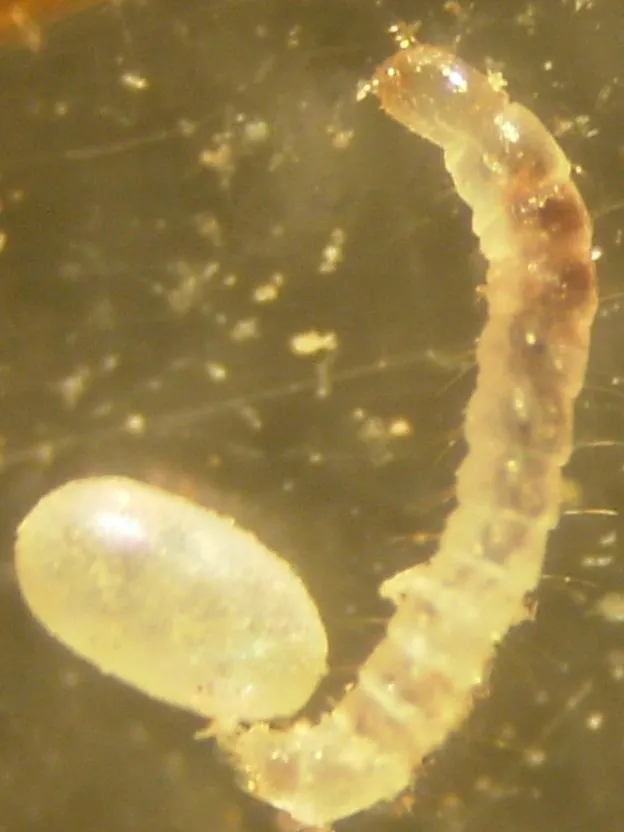 Flea larvaLegless and wormlike with a brownish head, up to 3/16 inch; lives where pets sleep
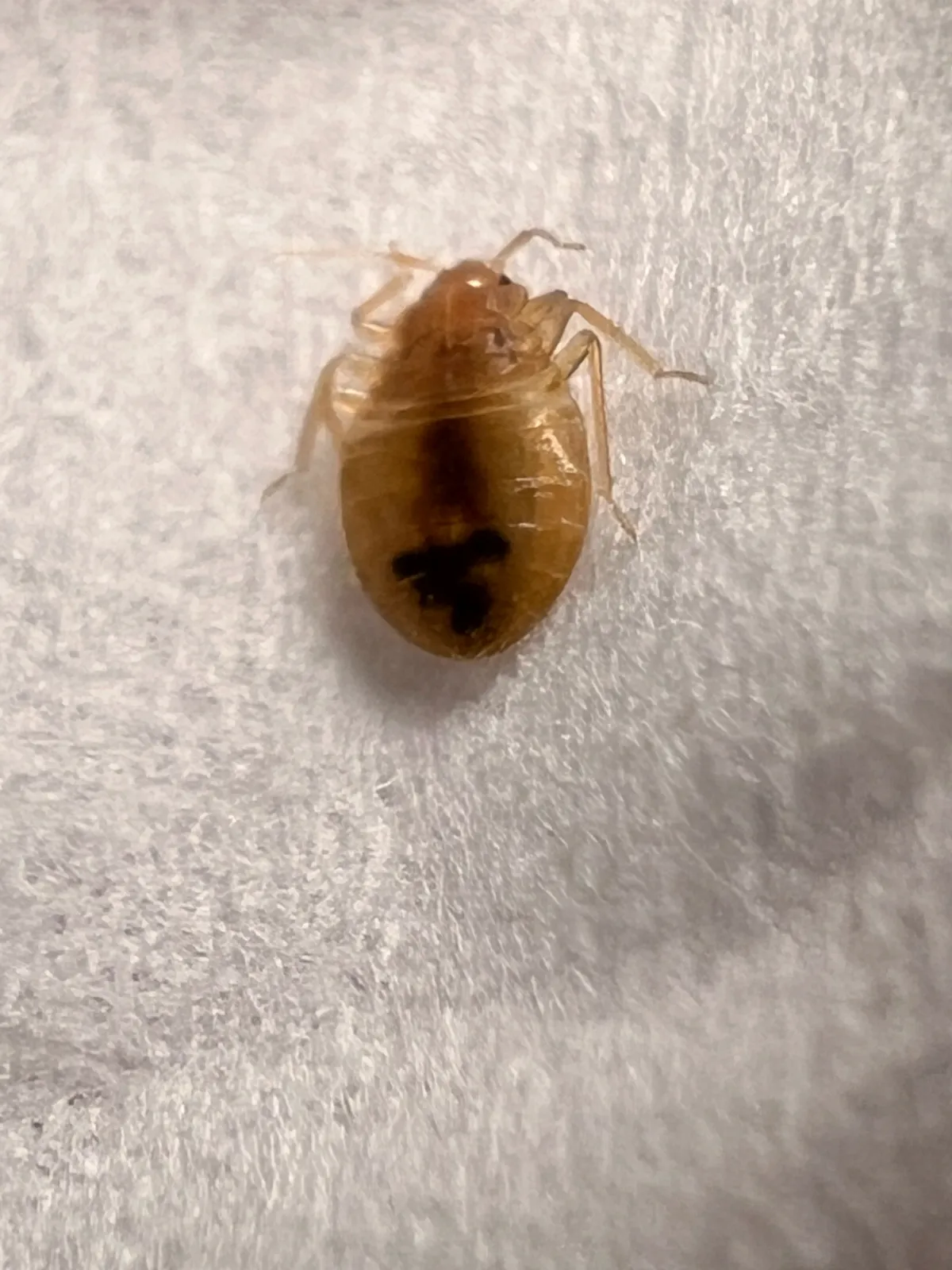 Bed bug nymphA small, flat, oval copy of the adult bed bug, translucent or whitish-yellow; feeds on blood
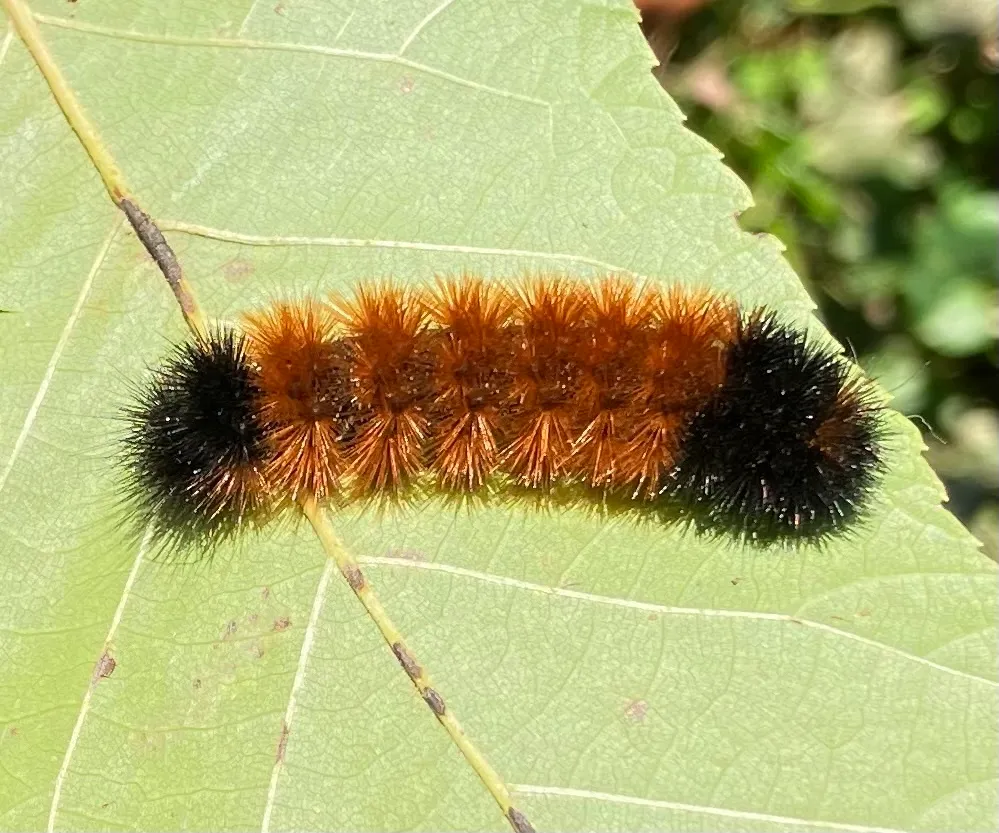 Woolly bear caterpillarAbout 1 1/2 inches, black at both ends and rusty in the middle; an outdoor caterpillar
Photos: Clothes moth larva: no rights reserved, via iNaturalist, CC0 1.0. Flea larva: Auguste Le Roux, Public domain, via Wikimedia Commons, public domain. Bed bug nymph: no rights reserved, via iNaturalist, CC0 1.0. Woolly bear caterpillar: no rights reserved, via iNaturalist, CC0 1.0.
What should you do when you find carpet beetle larvae?
Find what they are eating, then clean it, treat it or throw it out. UC IPM says management is needed only when larvae are developing in fabrics or elsewhere in the home; Kentucky says the source may be a seldom-used wool hat in a closet, an antique rug in the basement or an old bird or squirrel nest in the attic.
Kentucky says to launder, dry-clean or discard infested items, since hot laundering, dry cleaning and clothes-dryer heat kill eggs and larvae, and to vacuum floors, carpets and heating vents. The guide to getting rid of carpet beetles covers freezing, heating, storage and when an insecticide makes sense.
This guide is general educational information, not medical advice. If you have symptoms or concerns after a bite or exposure, contact a healthcare provider.
Frequently Asked Questions
Should I be worried if I find carpet beetle larvae?+
Worth acting on, not panicking about. UC IPM says a few adult carpet beetles indoors are no cause for alarm and that management is needed only when you find larvae developing in fabrics or elsewhere in the home, so larvae are the cue to look for their food source. They are common: an NC State Extension entomologist reports a study that found them in every home surveyed. They do not bite, Texas A&M AgriLife Extension says, but they can ruin wool, fur and feathers left undisturbed, and their hairs irritate some people's skin.
What do baby carpet beetles look like?+
Baby carpet beetles are the larvae, not small round beetles. Carpet beetles go through egg, larva, pupa and adult stages, Ohio State University Extension explains, and UC IPM likens the larvae to fuzzy or hairy maggots. They grow by shedding their skins, often a dozen times or more, Colorado State University Extension says. UC IPM notes that furniture carpet beetle larvae are white at first and darken to chestnut brown, while varied carpet beetle larvae are striped light and dark brown; Ohio State puts both at about 1/4 inch.
Why do I keep finding carpet beetle larvae in my bed?+
Usually because something in or near the bed feeds them. A CDC journal report says the larvae eat wool, dust, dead skin cells, feathers and hairs and are commonly found on mattresses, in wardrobes, on stuffed animals and under carpets. UC IPM notes that some mattresses and pillows are stuffed with hair or feathers, and the University of Kentucky lists down pillows, comforters and blankets among the items they attack. Larvae also wander: Virginia Tech says an infestation can spread from one site to many places in a house, so check nearby rugs, closets and vents too.
Do carpet beetle larvae crawl on people?+
They do not live on people or feed on them. The CDC journal report on carpet beetle dermatitis says the larvae never infest living animals, and Texas A&M AgriLife Extension says carpet beetles do not bite. Contact is what bothers some people: Texas A&M says the larvae's hairs irritate some people and that bite-like lesions can form where skin is pressed against a larva. In the CDC report, itchy bumps appeared mostly under clothing, from hairs lodged in the skin. Texas A&M suggests asking a doctor about allergies or other conditions that could explain itching.
Where do carpet beetle larvae come from?+
From eggs that adult carpet beetles lay on or near their food. UC IPM says the adults feed on pollen and nectar outdoors, fly in through open windows and doors or ride in on cut flowers, and lay eggs on furs, woolen fabric and carpets. The University of Kentucky says each female lays about 50 to 100 eggs, which hatch into larvae within a few weeks. Outdoors, UC IPM says, females use spider webs and bee, wasp and bird nests, and Kentucky says infestations can also start from bird nests or dead insects in attics.
How long do carpet beetle larvae live?+
Months to more than a year, depending on species, food and warmth. UC IPM's life-cycle table gives 70 to 94 days as larvae for the furniture carpet beetle, 166 to 330 days for the black carpet beetle and 220 to 630 days for the varied carpet beetle. Ohio State University Extension says 60 days to a year or more, and Virginia Tech gives 3 to 36 months. Warm rooms shorten the cycle, Ohio State notes, and the University of Kentucky warns that infestations can develop undetected.
How long can carpet beetle larvae live without food?+
Several weeks, according to Colorado State University Extension, which says the larvae can survive that long if their food source disappears during their development. They do not simply wait, though: Colorado State says most of these larvae are quite mobile and may wander a considerable distance in search of new food, and Ohio State University Extension says carpet beetle larvae crawl from room to room. That is why the University of Kentucky stresses finding every infested item and vacuuming up the hair and lint that could feed them.
What do carpet beetle larvae turn into?+
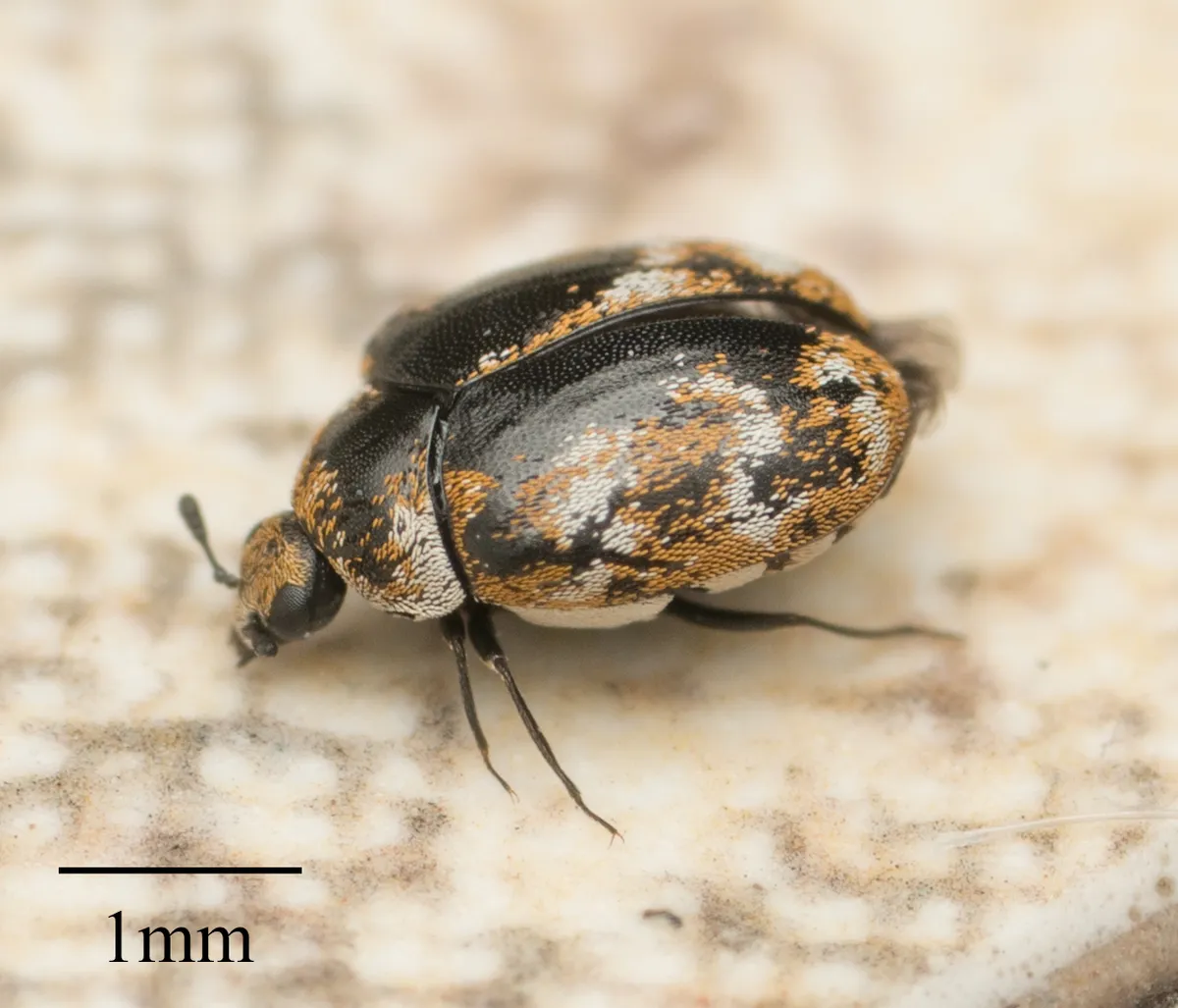
Small, round adult beetles. Full-grown larvae pupate, sometimes inside their last larval skin, UC IPM says, and its life-cycle table gives 8 to 17 days as pupae, depending on the species. The University of Kentucky describes the adults as 1/16 to 1/8 inch long and black or mottled with white, brown, yellow and orange; UC IPM gives the black carpet beetle as 1/8 to 3/16 inch. The Connecticut Agricultural Experiment Station says mature larvae pupate in spring, and the new adults head for windowsills and other bright spots.
Are carpet beetle larvae as bad as bed bugs?+
They cause a different kind of trouble. Bed bugs feed on blood, the Connecticut Agricultural Experiment Station says, while Texas A&M AgriLife Extension says carpet beetles do not bite at all. Carpet beetle larvae instead damage wool, fur, feathers, silk and leather, and their hairs can irritate some people's skin. UC IPM calls carpet beetles among the most difficult indoor pests to control because they find food in obscure places and disperse through a building, but the Connecticut station says that in most cases a regular cleaning routine removes an infestation.
Am I dirty if I have carpet beetle larvae?+
No. Virginia Tech's Insect Identification Lab says carpet beetles occur in both clean and cluttered homes, and an NC State Extension entomologist reports a study that found carpet beetle larvae in 100% of the homes surveyed. What they need is food left undisturbed: the University of Kentucky says clothing and blankets in regular use, and rugs that are routinely vacuumed, are seldom attacked, while wool stored for long periods, pet hair and lint in vents, and dead insects in attics can keep larvae going.
Sources
- Pest Notes: Carpet Beetles (UC ANR Publication 7436; D. H. Choe, updated April 2020) — University of California Statewide IPM Program
- Carpet Beetles (ENTFACT-601; Michael F. Potter, revised March 2026) — University of Kentucky Department of Entomology
- Carpet Beetles (HYG-2103; David J. Shetlar, October 19, 2011) — Ohio State University Extension
- Dermestid Beetles (Carpet Beetles) (W. S. Cranshaw, reviewed August 2025) — Colorado State University Extension
- Carpet Beetles (ENTO-486NP; Theresa A. Dellinger and Eric Day, revised December 8, 2021) — Virginia Cooperative Extension, Virginia Tech
- Carpet Beetles (Family Dermestidae) (fact sheet, Katherine Dugas) — The Connecticut Agricultural Experiment Station
- Bed Bugs and Lookalikes: Bed Bug Identification for the Recycling and Refurbishing Industries (poster, design by Katherine Dugas) — The Connecticut Agricultural Experiment Station
- Carpet Beetle Dermatitis (Steve Jacobs, revised February 2015) — Penn State Extension
- Anthrenus sp. and an Uncommon Cluster of Dermatitis (Simon L. and others, 2021, volume 27, number 7) — Emerging Infectious Diseases (Centers for Disease Control and Prevention)
- Diagnosing Mysterious Bug Bites (Michael Merchant) — Texas A&M AgriLife Extension
- NC Spring Signals Indoor Carpet Beetle Activity (Matt Bertone, February 10, 2023) — NC State Extension, Plant Disease and Insect Clinic
- Pest Notes: Clothes Moths (UC ANR Publication 7435; D. H. Choe, updated March 2013) — University of California Statewide IPM Program
- Clothes Moths (ENTFACT-609; Michael F. Potter, revised March 2026) — University of Kentucky Department of Entomology
- Pest Notes: Fleas (UC ANR Publication 7419; M. K. Rust, updated September 2010) — University of California Statewide IPM Program
- Bed Bugs Appearance and Life Cycle — U.S. Environmental Protection Agency
- Isabella Tiger Moth (Woolly Bear; Woolly Worm) (field guide) — Missouri Department of Conservation
- Woolly bear caterpillar — University of Arkansas Arthropod Museum
- Rice Weevil and Granary Weevil (September 13, 2016) — Iowa State University Extension and Outreach, Yard and Garden
How this guide was made: it was researched and drafted with AI assistance from the sources listed above. A second, independent AI pass then checked each factual claim against those sources. Found an error? Email support@buzzskito.ca.