
Published by BuzzSkito Mosquito & Tick Control
Published October 16, 2026 · Drafted with AI assistance and fact-checked against the sources listed below
What do fleas look like?
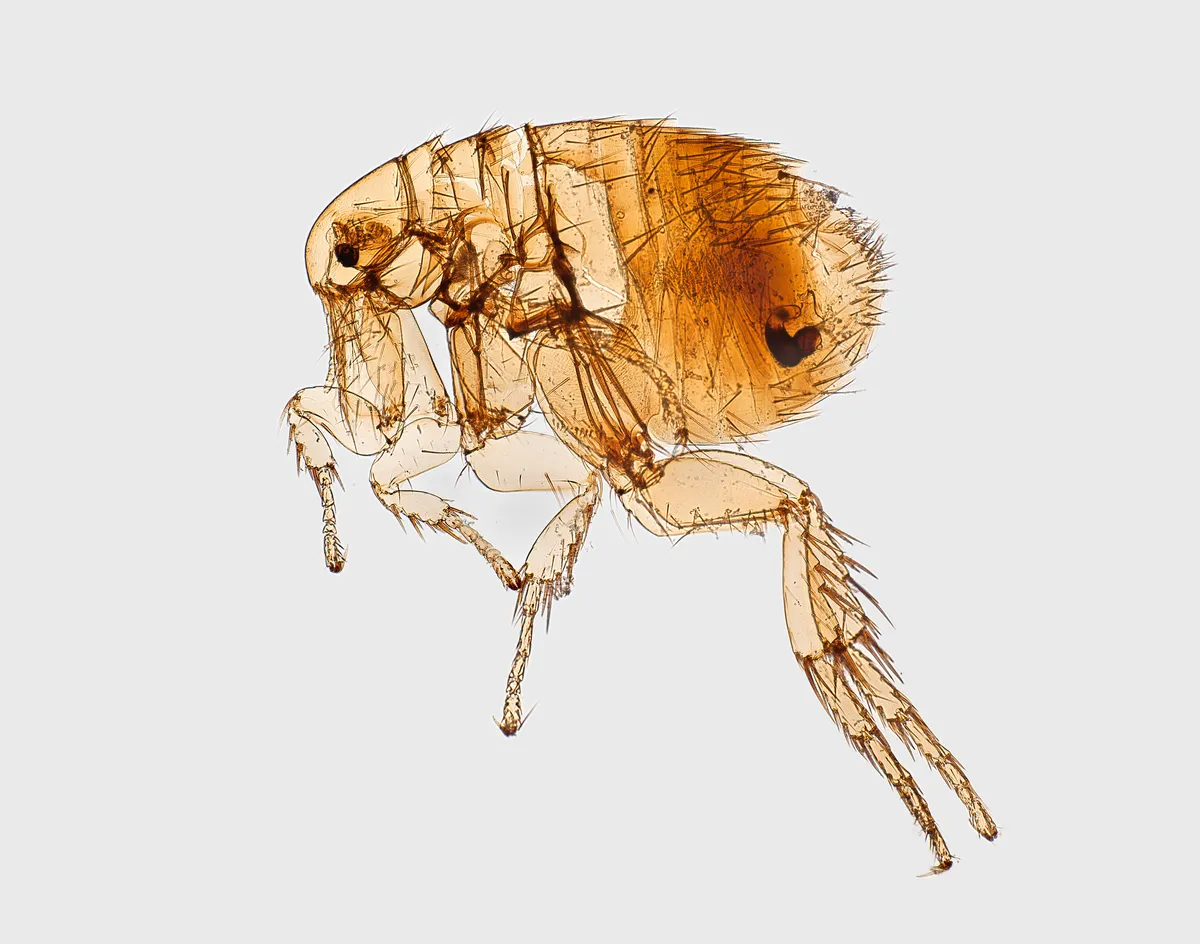
Adult fleas look like tiny, dark reddish-brown insects with no wings, a body flattened from side to side and long hind legs built for jumping. Texas A&M AgriLife Extension's guide to managing fleas puts adult cat fleas at about 1/8 inch (1 to 3 mm) and says backward-pointing bristles help them slip through fur and resist grooming. UC IPM's flea guide says the flattening makes fleas look as if they are walking on edge.
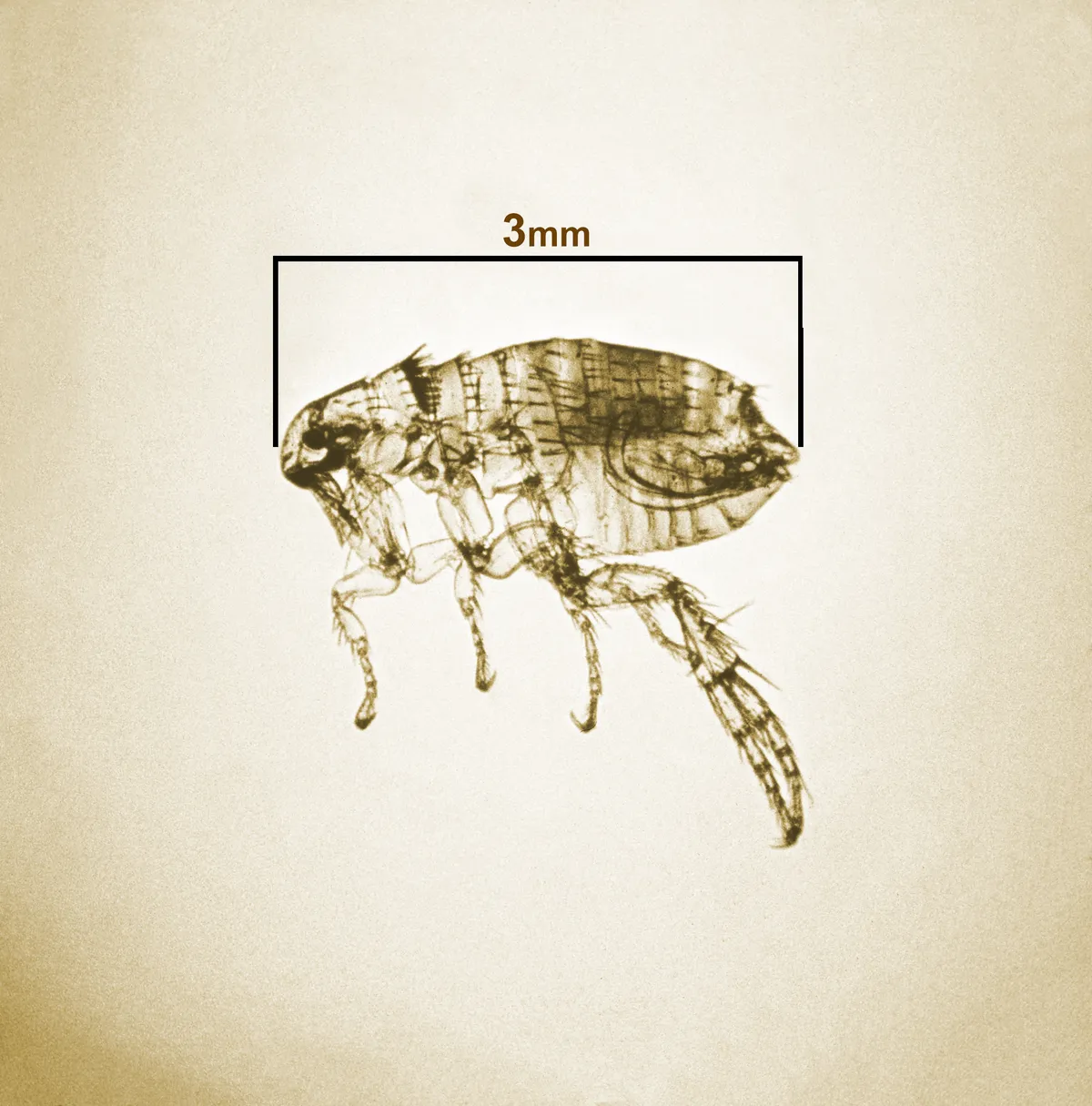
The flea most people find is the cat flea, Ctenocephalides felis. The University of Florida's cat flea profile says it is common on both cats and dogs in North America and, unlike many other fleas, stays on its host, which is why fleas turn up mostly on pets and where they rest. This page is about the adult insect; flea eggs, larvae and flea dirt have their own photo guide.
What does a flea look like to the naked eye?
To the naked eye, an adult flea is a small dark speck about 1/8 inch long, roughly half the size of a grain of rice, according to the University of Kentucky's springtail fact sheet, which compares the two because both turn up indoors as small jumping insects. The University of Florida gives 1 to 3 mm, about 1/25 to 1/8 inch, for the adult cat flea.
That speck can jump out of sight. Ohio State University Extension's flea fact sheet says fleas can leap up to 7 inches straight up and 13 inches forward, and the University of Kentucky's flea control fact sheet gives a vertical jump of up to about 6 inches. Ohio State also warns that fleas can be hard to find in fur. The features that set a flea apart show best under a magnifying glass.
What does a flea look like under a magnifying glass?
Magnified, a flea is a hard-bodied oval, flattened side to side and lined with backward-pointing bristles, with six long legs and a much bigger hind pair. The University of Florida says those powerful hind legs let fleas run and jump through hair, fur and feathers, and UC IPM adds the piercing-sucking mouthparts fleas use to take blood.
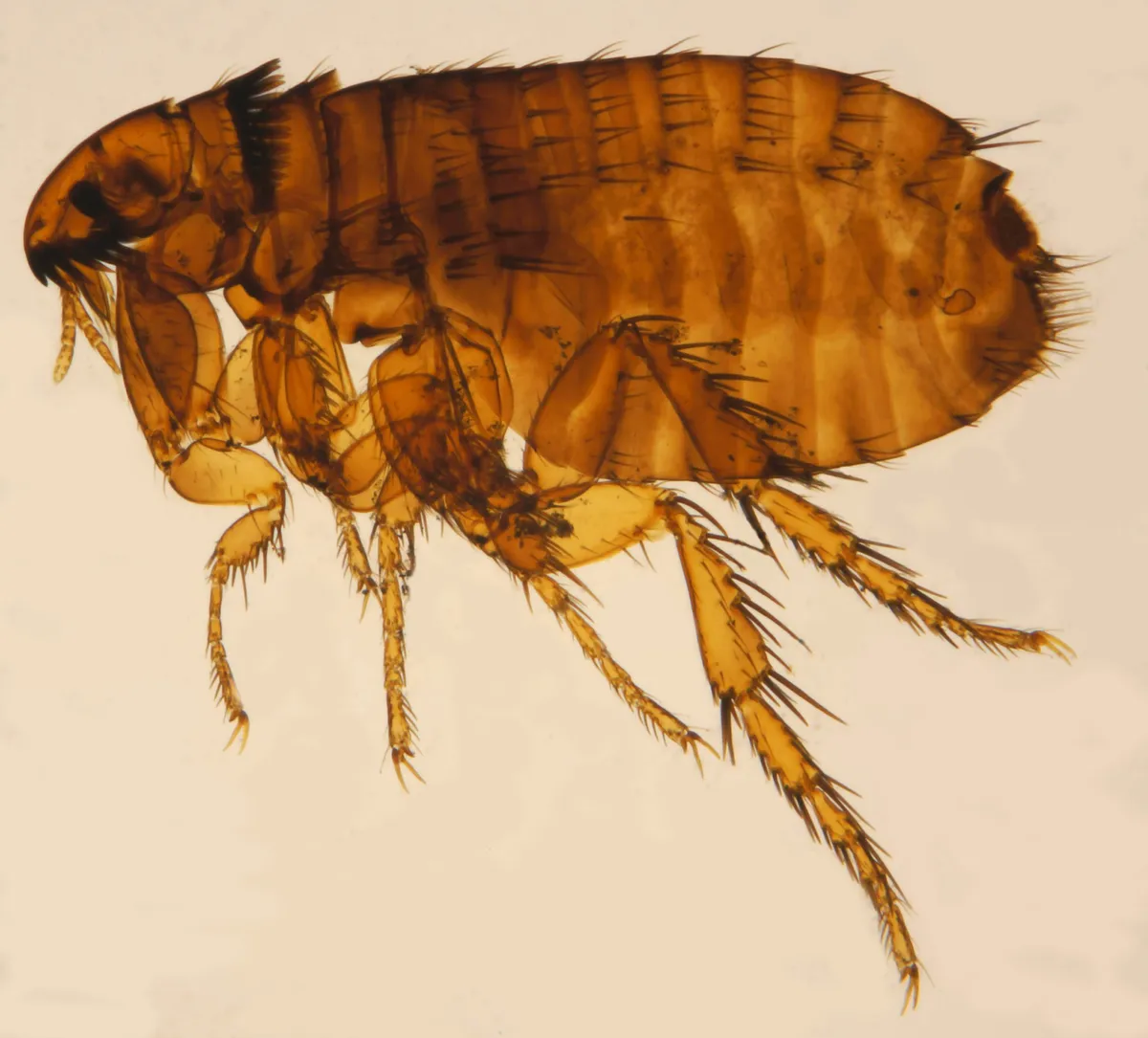
Those two combs mark the cat flea and its close relative, the dog flea. UC IPM says cat fleas have both a genal comb and a pronotal comb, and the University of Florida's oriental rat flea profile describes the combs as distinct rows of bristles below the eyes and behind the head. The cat flea's head is long, too: about twice as long as it is wide, according to the University of Florida's dog flea profile.
Check the bug in a jar
- Does it jump? Fleas jump and have no wings; a tiny insect that flies off is something else.
- How long is it? Against a ruler marked in inches, an adult cat flea is about 1/8 inch or a little less.
- Which way is it flat? Side to side, so a flea looks thin from above and oval from the side.
- Legs and spines? Six long legs, the hind pair much bigger; magnified, cat and dog fleas show two combs of spines.
- Hard or soft? Fleas are hard and dark reddish brown; Kentucky says springtails, which also jump, are softer and look gray at first glance.
- Where was it? On a pet, in its bedding or near where it sleeps; UC IPM says flea numbers are highest where dogs or cats regularly sleep.
What do fleas look like on a dog or cat?
On a dog or cat, fleas look like small dark specks moving quickly through the fur. The Merck Veterinary Manual's guide to fleas on dogs says slowly parting a dog's hair often reveals rapidly moving fleas or their droppings. Ohio State says fleas concentrate their bites on the neck, the shoulder blades and the base of the tail, and that in heavy infestations they can be seen running across the thinly haired belly.
Look for flea dirt as well. Kentucky's flea control fact sheet describes it as dark, pepper-like specks of digested blood in the pet's fur, and Merck says it is reddish black, pellet- or comma-shaped, and dissolves into a reddish-brown color in water or on a damp paper towel. The guide to flea eggs and flea dirt covers that test and what else the specks could be.
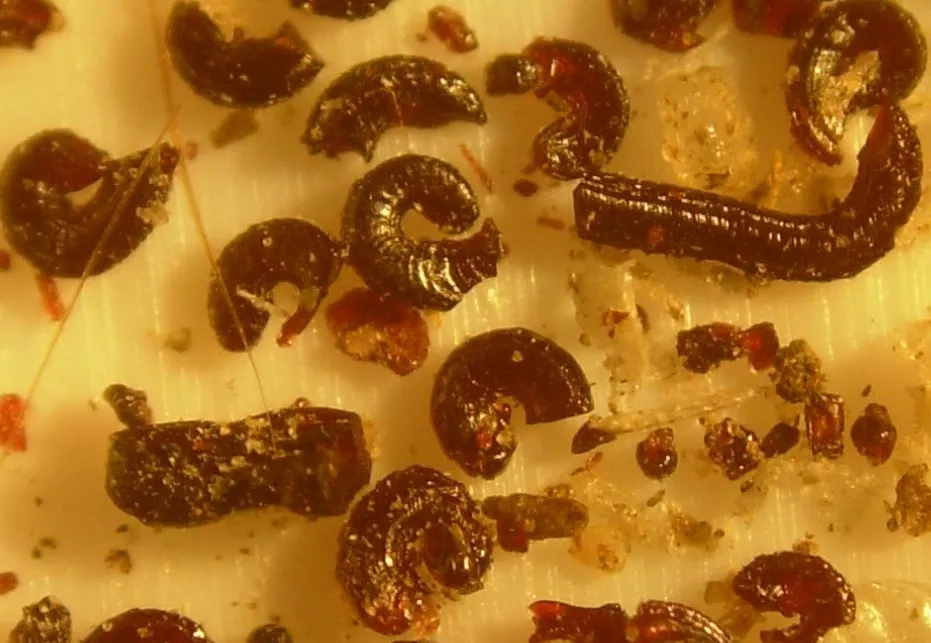
Seeing no fleas does not rule them out. Merck says dogs that are very allergic to flea saliva may be almost free of fleas because they groom so much, and it lists crusted, itchy skin over the hips, the base of the tail and the thighs as the classic signs of that allergy. Ohio State names frequent scratching and biting at the legs, belly and back as common signs of fleas.
A dark speck that stays put is worth a second look. UC IPM says female sticktight fleas, common on ground squirrels and poultry, attach themselves firmly along the ears and eyes of their host, and an attached bug may also be a tick: compare it with how a tick on a dog differs from a flea.
What do fleas look like on people?
On a person, a flea usually shows up as a dark speck on a sock, an ankle or a lower leg. UC IPM suggests walking through pet resting areas in white socks pulled up to the knee, because fleas jump onto them and are easy to see, and Ohio State says flea bites on people are usually on the ankles and legs.
Cat fleas do not normally live on people: Texas A&M says they can bite people who handle or sleep with infested animals, and the CDC's flea page says fleas prefer animal hosts but will bite people when animals are unavailable. There is a human flea, Pulex irritans, but Texas A&M says it is less common on pets and in homes than the cat flea.
The bites have their own guides: what flea bites look like on people covers their pattern and how they differ from bed bug bites, and the bug bite identification chart sets them beside other common bites.
What do fleas look like in carpet or on a bed?
In carpet, look for the same small, dark jumping speck. Kentucky says adult fleas spend most of their time on the dog or cat, not in the carpet, but that their eggs soon fall off into carpeting and beneath furniture cushions, and UC IPM says flea numbers are highest where dogs or cats regularly sleep. The white-sock walk described above works on carpet too.
Fleas can also appear in a home that seemed free of them. Texas A&M says a fully formed adult can wait inside its cocoon in a semi-dormant state until a host comes by, which is how long-empty homes and apartments can fill with fleas when new tenants move in.
On a bed, look for the jumping specks and for what fleas leave behind: UC IPM says flea eggs readily fall from a pet onto bedding and carpeting, and Texas A&M says flea dirt shows up in pet fur and bedding.
If no pet sleeps on the bed and the bugs crawl instead of jumping, consider bed bugs. The University of Kentucky's bed bug fact sheet says bed bugs do not jump like fleas but crawl rapidly, that beds are the most common place to find them, and that adults are about 3/16 inch long with oval, flattened bodies while the young are smaller and lighter in color. What baby bed bugs look like at each stage shows the young ones.
Can you tell a cat flea from a dog flea or a rat flea?
Not with the naked eye. The University of Florida says the dog flea looks similar to the cat flea and that the two differ by a slight feature detectable only under high magnification. On a pet in North America the odds favor the cat flea: Ohio State calls the dog flea relatively rare in North America, and Merck says most fleas found on dogs and cats are cat fleas.
Rare is not absent. The University of Florida's dog flea profile cites a 2005 study by Durden and colleagues in which over 21% of the fleas collected from dogs in Georgia were dog fleas, and says dog fleas also turn up fairly often on wild canids such as foxes and coyotes.
Under a microscope, the head and the cheek comb tell them apart. The dog flea profile says the dog flea's head is rounder, about one and a half times as long as it is wide against about twice for the cat flea, and the first spine of its genal (cheek) comb is much shorter than the second; in the cat flea the first spine is as long as the second or barely shorter.
Several other fleas have no combs at all. The oriental rat flea profile says that species, which prefers rats and measures 2 to 4 mm (about 1/12 to 1/6 inch), lacks both combs and has a compact, helmet-like head, and NC State College of Veterinary Medicine's flea key puts the human flea and the sticktight flea in the comb-less group too. The CDC counts more than 300 flea species in the United States.
| Flea | Usually found on | Combs (magnified) | Other clue |
|---|---|---|---|
| Cat flea (Ctenocephalides felis) | Cats and dogs; the usual flea on pets | Two | Long head; first two cheek spines about equal |
| Dog flea (Ctenocephalides canis) | Dogs and wild canids; uncommon on pets in North America | Two | Rounder head; short first cheek spine |
| Oriental rat flea (Xenopsylla cheopis) | Prefers rats | None | Compact, helmet-like head |
| Human flea (Pulex irritans) | Less common on pets and in homes | None | Rounded head |
| Sticktight flea (Echidnophaga gallinacea) | Ground squirrels and poultry | None | Blunt, flat-fronted head; females attach around the ears and eyes |
Sources: the University of Florida's flea profiles, UC IPM, Ohio State, Texas A&M, the Merck Veterinary Manual and NC State's flea key, each linked in the text.
What else looks like a flea?
Springtails can be mistaken for fleas: Kentucky's springtail fact sheet says both turn up indoors as small jumping insects, but springtails look gray at first glance, have softer bodies, feed on decaying organic matter and do not bite people. Young bed bugs are another, but as Kentucky's bed bug fact sheet says, bed bugs crawl and do not jump like fleas.
The guide to bugs that look like fleas sorts these two and five more, including booklice, carpet beetle larvae, bird mites and flea beetles, and the tiny black bug sorter works by the room where you found the bug.
What does finding a flea mean?
A flea in the house points to an animal host nearby and to fleas developing where that animal rests. Kentucky says adults spend most of their time on the dog or cat and lay their eggs in the fur, from which the eggs soon fall into carpets and furniture. UC IPM says fleas can be found on pets throughout the year, so a flea in fall or winter is not unusual.
With no pets in the house, look to wildlife or to earlier occupants. Kentucky says raccoons, opossums, skunks or squirrels are often the culprit when fleas infest a home with no pets, and Texas A&M adds a previous owner's or tenant's pets and animals such as bats, rats and feral cats living under or around the building.
For pets, fleas can mean more than itching. Merck says many dogs and cats are allergic to flea saliva and that heavy infestations, or fleas on young puppies, can cause anemia. Texas A&M says pets can get dog tapeworm by eating infested fleas; dried tapeworm segments look like grains of rice and turn up around a pet's rear end, in its feces or in its bedding. A veterinarian can check for both.
Mostly, fleas are a nuisance, the University of Florida says, but they can also spread disease to people. The CDC says most US plague cases occur in the rural West, spread most commonly by ground squirrel fleas, and that murine typhus spreads to people through infected cat fleas, infected oriental rat fleas or their feces, with most US cases reported from California, Texas and Hawaii. Texas A&M says fleas that have fed on rodents may transmit both. The sources differ on cat fleas and plague: Texas A&M says cat fleas do not carry plague, while the University of Florida says they are capable of transmitting it, though such reports are rare. The murine typhus guide has more.
What should you do once you know it is a flea?
Treat every pet and the home together, with a veterinarian's advice for the animals. The CDC's guide to getting rid of fleas says every pet in the home must be treated, suggests asking a veterinarian to choose the flea control product and says to begin home treatment at the same time. It notes that some flea life stages resist insecticides and that moderate to severe infestations take months to control.
The step-by-step plan for getting rid of fleas covers the pets, the house and the yard. Where wildlife is the source, Texas A&M says the animals need to be trapped and removed before a proper flea treatment can be done.
This guide is general educational information, not medical advice. If you have symptoms or concerns after a bite or exposure, contact a healthcare provider.
Frequently Asked Questions
Can fleas fly?+
No. The University of Florida, UC IPM, Ohio State and Texas A&M all describe adult fleas as wingless. Fleas get around by running through fur and jumping with their enlarged hind legs: Ohio State says they can leap up to 7 inches straight up and 13 inches forward, and the University of Kentucky gives a vertical jump of up to about 6 inches, enough to reach a passing pet or a person's shoes and pant legs. A tiny insect that flies away is not a flea.
What color are fleas?+
Adult fleas are reddish brown to black, according to the University of Florida, and Ohio State and the University of Kentucky both call them dark reddish brown. At about 1/8 inch long, that makes a flea look like a small dark speck to the naked eye. Other signs of fleas look different: the University of Florida describes flea eggs as white, Texas A&M calls the larvae dirty white, and the Merck Veterinary Manual says flea dirt is reddish black and turns reddish brown when dampened.
How long do fleas live?+
An adult cat flea generally lives about 30 to 40 days on its host, according to UC IPM, while the University of Florida gives 4 to 25 days. Away from a host, adults do not last long: Texas A&M says only a few days to a few weeks, and Ohio State says newly emerged adults live about a week without a blood meal. The University of Kentucky says adult fleas spend most of their time on the dog or cat rather than in the carpet, which is why the pet is the first place to look.
What attracts fleas to people and pets?+
Warmth, movement and breath. The CDC says adult fleas find hosts by detecting body heat, movement, the vibrations movement causes, and breathing. Texas A&M says fleas prefer to wait and jump onto a passing animal rather than travel far without a host, and the University of Kentucky says their jump lets them hitch a ride on a passing dog or cat or on a person's shoes and pant legs. That is why UC IPM's white-sock test works: fleas jump onto the socks of someone walking through pet resting areas.
How can you tell if you have fleas in the house?+
Check the pets and the places they rest. Ohio State suggests combing the pet's back and sides over a white sink or bathtub and wetting any black specks that fall: if they turn red, they are flea droppings. UC IPM suggests walking through pet resting areas in white socks pulled up to the knee, since fleas jump onto them. Texas A&M says sticky flea traps placed near pet beds can help show where flea numbers are high, and Ohio State notes that flea bites on people are usually on the ankles and legs.
Sources
- Fleas (HYG-2081) — Ohio State University Extension
- Managing Fleas (ENTO-PU-046) — Texas A&M AgriLife Extension
- Fleas (Pest Notes, Publication 7419) — University of California Statewide IPM Program
- Cat Flea, Ctenocephalides felis (Bouché) (EENY-011) — University of Florida IFAS Extension
- Dog Flea, Ctenocephalides canis (Curtis) (EENY-589) — University of Florida IFAS Extension
- Oriental Rat Flea, Xenopsylla cheopis (Rothschild) (EENY-775) — University of Florida IFAS Extension
- Springtails (ENTFACT-420) — University of Kentucky Department of Entomology
- Flea Control and Prevention (ENTFACT-602) — University of Kentucky Department of Entomology
- Bed Bugs (ENTFACT-636) — University of Kentucky Department of Entomology
- Fleas of Dogs — Merck Veterinary Manual
- Parasite Diagnostic Key: Fleas — NC State College of Veterinary Medicine
- About Fleas — Centers for Disease Control and Prevention
- Getting Rid of Fleas — Centers for Disease Control and Prevention
How this guide was made: it was researched and drafted with AI assistance from the sources listed above. A second, independent AI pass then checked each factual claim against those sources. Found an error? Email support@buzzskito.ca.