
Published by BuzzSkito Mosquito & Tick Control
Published October 23, 2026 · Fact-checked against the sources listed below
What is a Jerusalem cricket?
A Jerusalem cricket is one of the largest insects of the western United States, a wingless burrower that spends most of its life underground. The UC Davis Bohart Museum of Entomology calls them among the largest insects found in western North America, from 1 to 2 1/2 inches long, and names Ammopelmatus fuscus as the most widespread species in California. UC IPM lists it as Stenopelmatus fuscus, and Montana's field guide gives both names.
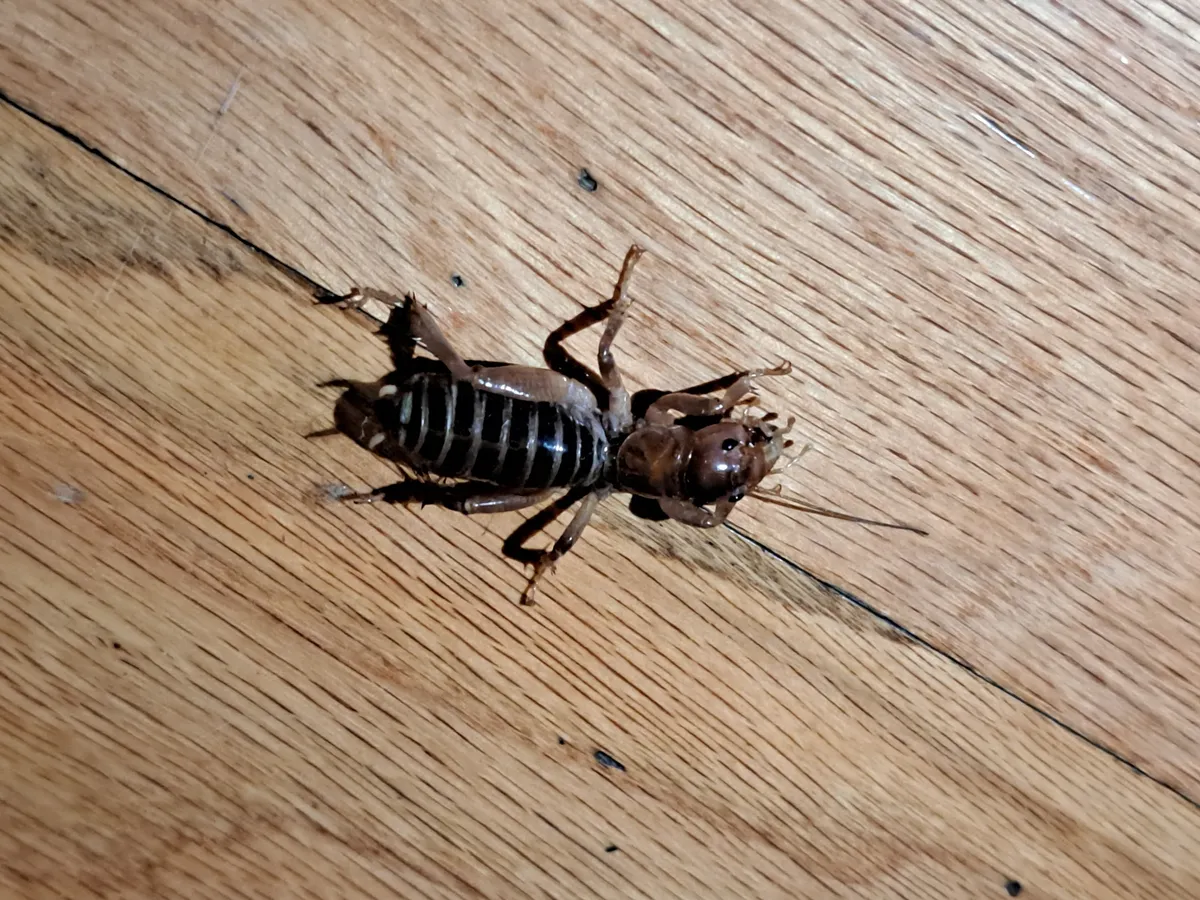
Despite the name, it is not a true cricket. Montana's field guide to the dark Jerusalem cricket explains that true crickets belong to the family Gryllidae, while Jerusalem crickets have their own family, Stenopelmatidae. It is not named after Jerusalem and does not live there: the guide says the name comes from what was once a profane exclamation, blurted out when startled. Jerusalem crickets are still insects of the grasshopper and cricket order, Orthoptera; for how insects differ from spiders and ticks, see whether ticks are arachnids or insects.
Why are Jerusalem crickets called potato bugs?
Because they sometimes eat potatoes. UC IPM's Jerusalem cricket page says they are called potato bugs because they are occasional pests of potatoes, and Montana's field guide says that underground they feed on tubers such as carrots and potatoes. UC IPM warns that potato bug is a confusing name: it is also given to the Colorado potato beetle and to pill bugs and sow bugs, none of them true bugs. Pill bugs are the roly polies of damp gardens: soil-dwelling crustaceans 1/3 to 3/4 inch long that, UC IPM's pillbug page says, commonly curl into a ball when disturbed.
The other names are just as colorful. The Orange County Mosquito and Vector Control District lists niño de la tierra (child of the earth) and cara de niño (child's face); Montana adds stone cricket, sand cricket and skull cricket; the Bohart Museum records Woh-tzi-Neh (old bald-headed man) and Niña de la Tierra (little girl of the earth). Montana says the names have cultural, ethnic, religious, folklore or food-habit origins.
What does a Jerusalem cricket look like?
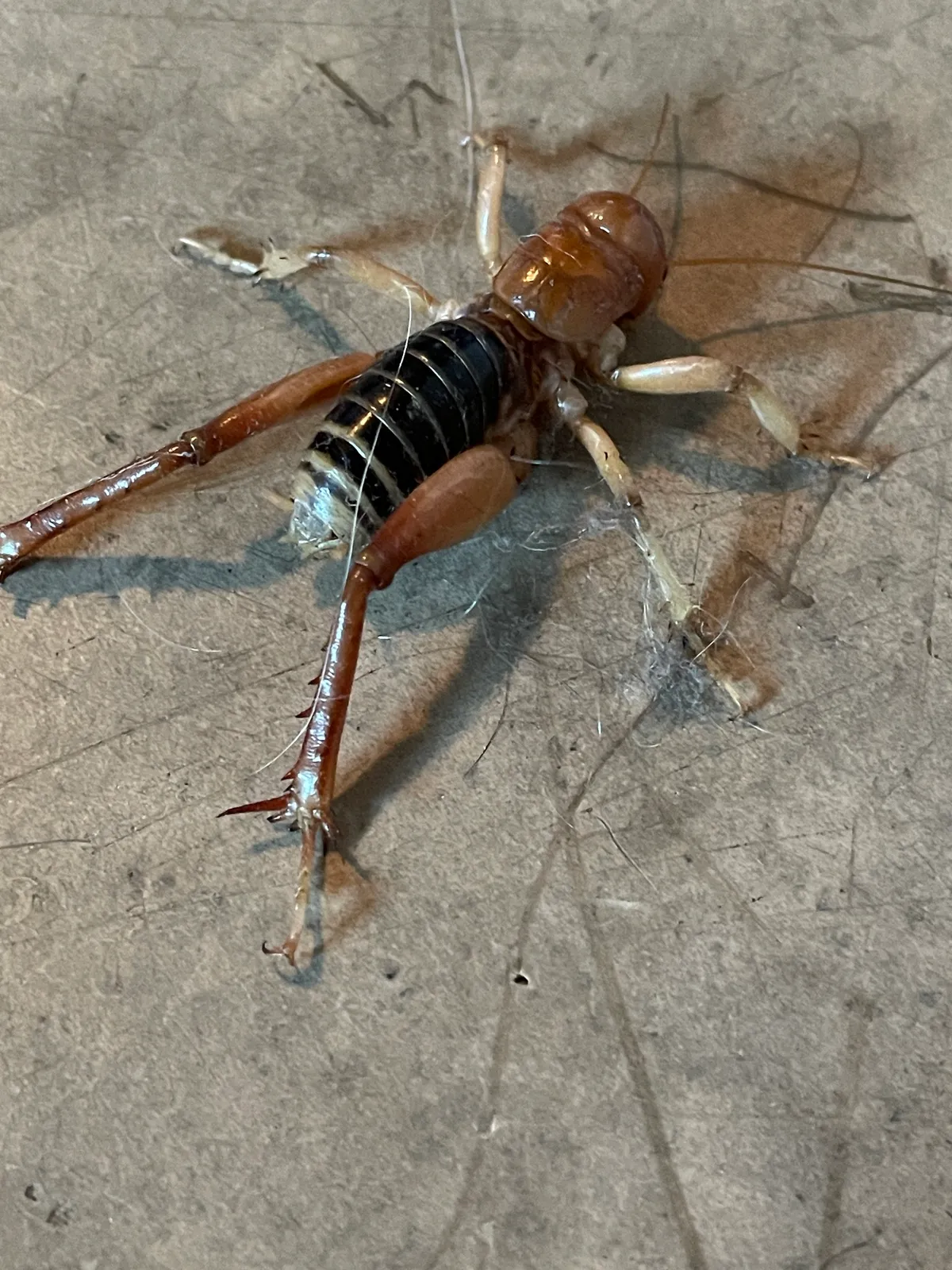
Look for a large, bald, round head and a striped, plump abdomen on a wingless body. UC IPM describes a bald, round, humanoid head, a fat orangish abdomen with black rings, long brownish antennae and spiny hind legs, and says the nymphs look like small adults. Montana adds eyes and antennae set wide apart on an orangish-yellow head and stout legs with heavy spines for digging.
- Size. UC IPM says they grow up to about 2 inches; Montana gives an adult body length of 35 to 50 mm (about 1 3/8 to 2 inches), and the Orange County district says two species approach 3 inches.
- No wings. North American species have none, the Orange County district says, and the Bohart Museum notes that young and adults alike crawl slowly.
- Does not hop. A USDA Agricultural Research Service identification brochure sums up the Jerusalem cricket as black-and-white striping on the abdomen, enlarged, chunky legs and no hopping.
- Big jaws. The Orange County district describes strong mandibles used to cut into roots and tubers, and Montana warns that the sharp jaws easily cut through fabric and thin plastic.
Do Jerusalem crickets bite?
They can bite hard if handled, but they are not venomous and they do not sting. The Orange County district says a Jerusalem cricket that is roughly handled or annoyed will give a strong bite, and that contrary to urban legends it is not venomous and does not sting. Montana's field guide says they can bite when handled and are not poisonous, but the bite causes moderate, short-lived pain. The Bohart Museum says that apart from the bite, which calls for some care in handling, they are harmless despite their fearsome look.
None of the Jerusalem cricket sources cited here gives first aid for the bite. Mayo Clinic's general first aid for insect bites and stings, which does not name Jerusalem crickets, says that for a mild reaction you should move to a safe area to avoid more bites, gently wash the area with soap and water, and apply a cloth dampened with cold water or filled with ice for 10 to 20 minutes, raising the arm or leg if that is where the bite is. It says to see a healthcare professional if the swelling gets worse, the site shows signs of infection or you don't feel well, and to call 911 for signs of a serious reaction such as trouble breathing or swelling of the lips, face, eyelids or throat.
If you were bitten by something you did not see, compare what spider bites look like or try the bug bite identifier.
Where do Jerusalem crickets live?
In the western United States, in soil. Montana's field guide describes the dark Jerusalem cricket's US range as west of the Central Plains to the Pacific coast, from Washington, Idaho and Montana south to the Mexican border, in a wide variety of habitats, including homes, with a preference for sandy soils. The Bohart Museum says that in North America they live only west of the Rocky Mountains, while the Orange County district gives the western US from California to Oklahoma and south into Mexico.
Day to day, they stay hidden. UC IPM says they feed and tunnel underground by day and come aboveground mostly at night, or at twilight in mild weather, and that people most often see them when gardeners turn the soil or after heavy irrigation or rain. The Bohart Museum says they can be found under rocks, logs or boards during the day, particularly in summer.
Why is there a Jerusalem cricket in my house, garage or pool?
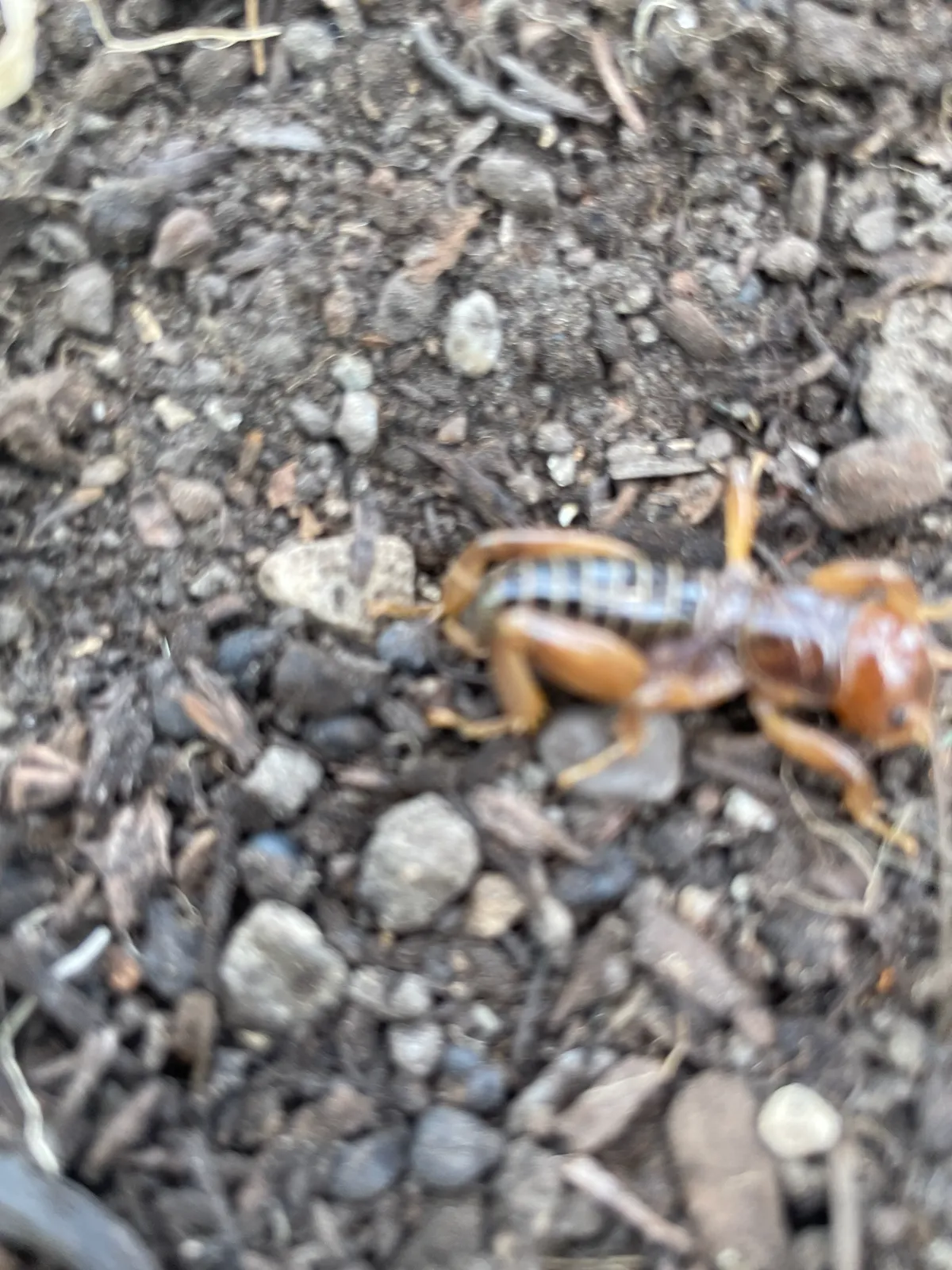
It wandered in. The Orange County district says that in fall and winter they are often found roaming in late afternoon and evening, and that they stray through open doors and under bad door seals into garages and homes. Montana's field guide says they have been found active in houses year-round, even in winter, and that the likeliest time to see one in daylight is spring, when they come to the surface to mate.
Pools are a dead end for them: the Orange County district says their wanderings sometimes take them into ponds and swimming pools, where they drown because they cannot swim. Montana's field guide says that at night, especially after rain, they come to the surface to feed on live insects, animal material and plant debris.
What do Jerusalem crickets eat, and do they harm gardens?
Mostly roots and tubers, plus other insects. UC IPM lists insects, nonwoody roots and tubers; the Orange County district calls roots and tubers their primary food and says they also eat other insects, even their own kind. The Bohart Museum adds that they sometimes feed on dead animal matter.
Sources differ on the damage. UC IPM says they only occasionally damage turf and vegetables and are harmless to woody plants, and Montana says that underground they can become garden and crop pests on tubers such as carrots and potatoes. The Bohart Museum says they are not considered agricultural pests because they do not cause noticeable damage to garden or crop plants. They feed others in turn: the museum names barn and burrowing owls and small hawks such as kestrels among the birds that eat them, especially in winter.
How do Jerusalem crickets make noise?
By drumming. Montana's field guide says that during courtship both males and females strike their abdomens on the ground, and that in some species the drumming can be heard by people up to about 60 feet away as the sound travels through the soil; lacking eardrums, they sense the vibrations through organs on their legs. The Orange County district says the drumming vibrations do not travel far, so the insects must already be close to find each other. The Bohart Museum adds that they can also make sound by rubbing a back leg against the side of the abdomen.
Mating can end badly for the male: Montana says the female often kills and eats him afterward, and the Bohart Museum says she sometimes kills him. The female lays eggs in loose soil, the Orange County district says, and the nymphs may take up to 2 years to reach full size; UC IPM says they molt up to about 10 times and live up to about 2 years, while Montana gives 2 to 5 years to maturity, depending on latitude, and 2 to 6 months as adults.
What else looks like a Jerusalem cricket?
Other big crickets and their relatives can be mixed up with it. The quick-ID table above compares them; these are the tells.
- Camel crickets. Humped, wingless as adults and silent: NC State Extension's camel cricket page says they do not chirp and turn up in basements, crawl spaces, garages and laundry rooms, and the University of Kentucky's cricket page puts them at about 1 1/2 inches. USDA ARS notes their hump-shaped body. See camel crickets.
- Mole crickets. Diggers too, but with shovel-like front legs: UF/IFAS's mole cricket guide describes adults 22 to 33 mm (about 7/8 to 1 5/16 inch) long, light yellow to dark brown, with enlarged, clawed front legs for digging, that tunnel in the top 10 inches of soil, and says most of the pest kinds fly at dusk.
- Field and house crickets. Smaller, winged and musical: the Missouri Department of Conservation's cricket guide gives them as usually 1/2 to 1 inch long, with hind legs built for jumping and males that chirp; field crickets are usually shiny black, and house crickets light brown with three dark bands across the head.
- Mormon crickets. Western rangeland insects that USDA ARS says are not crickets at all but flightless, shield-backed katydids, 1 1/2 to 2 inches long, with antennae longer than the body and no stripes on the abdomen.
Commonly confused with
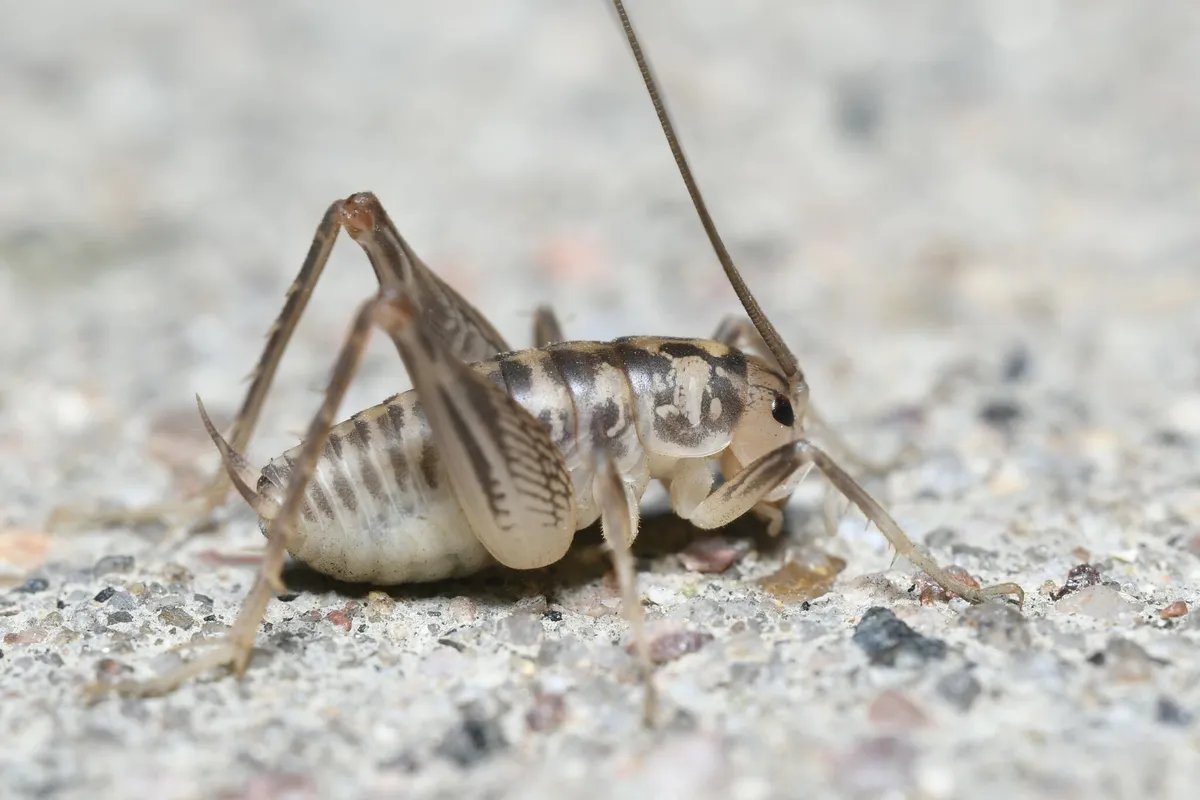 Camel cricketHumped back and no wings; never chirps; turns up in basements and crawl spaces
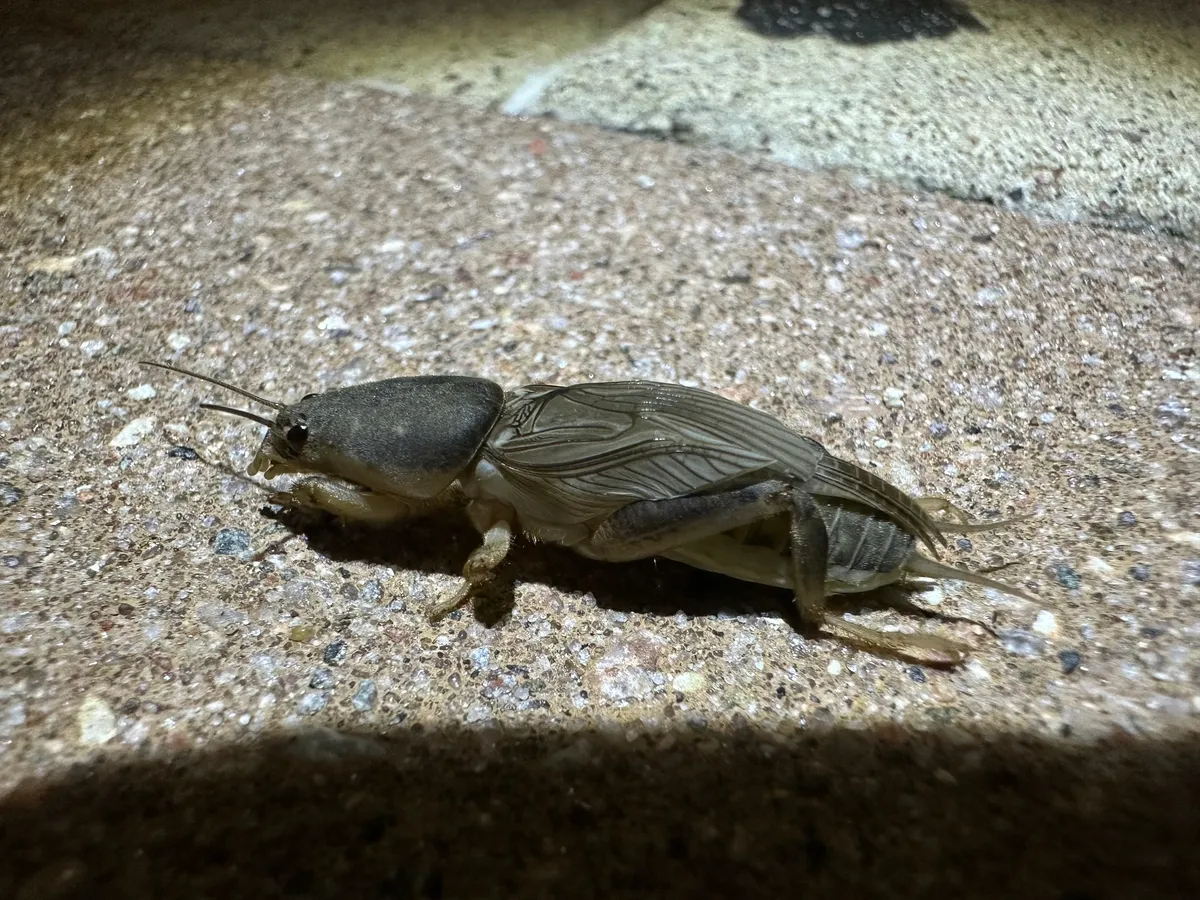 Mole cricketBig, clawed digging front legs and wings; tunnels just under lawns
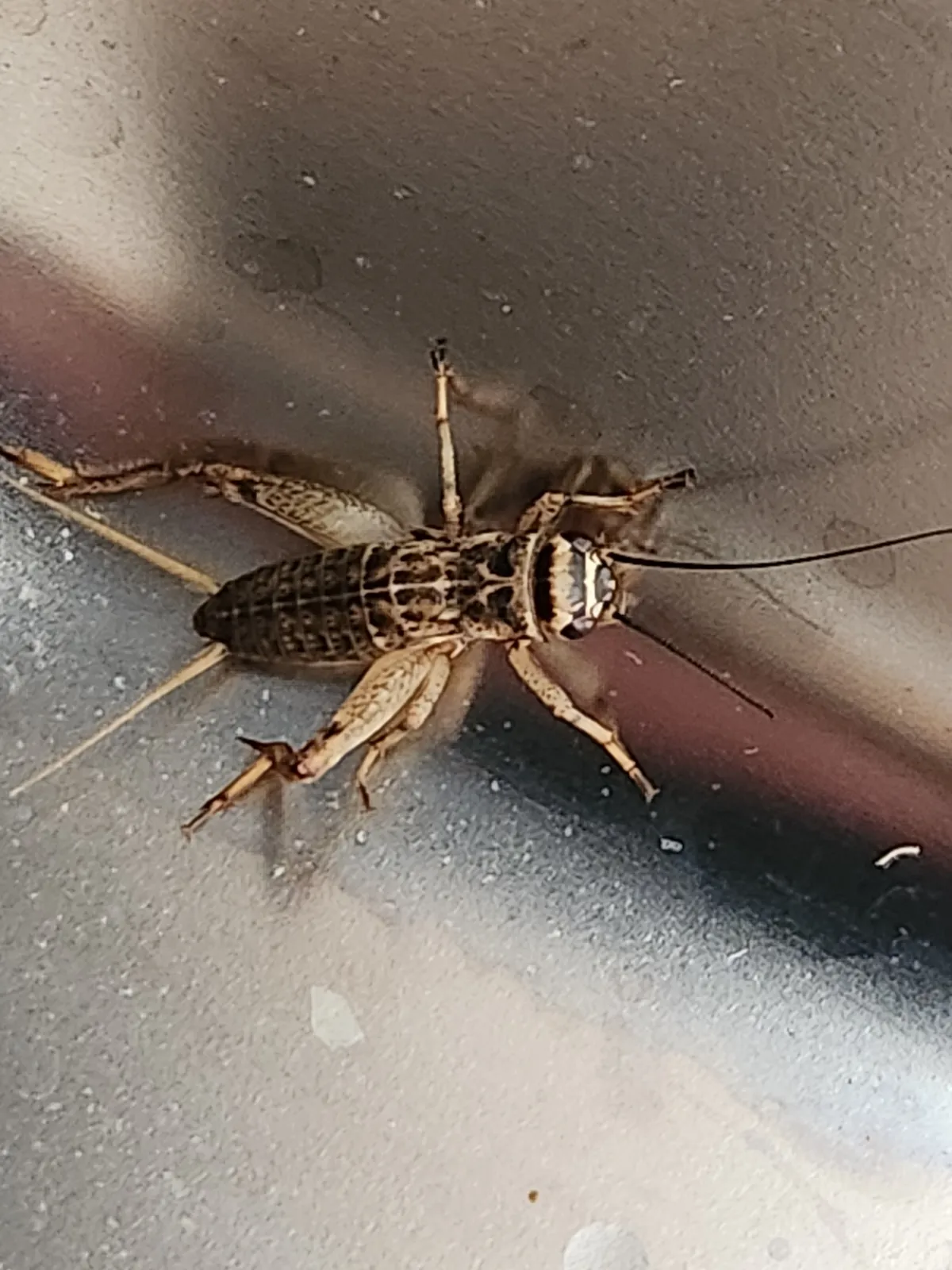 House cricketUsually 1/2 to 1 inch, light brown with three dark bands on the head; males chirp
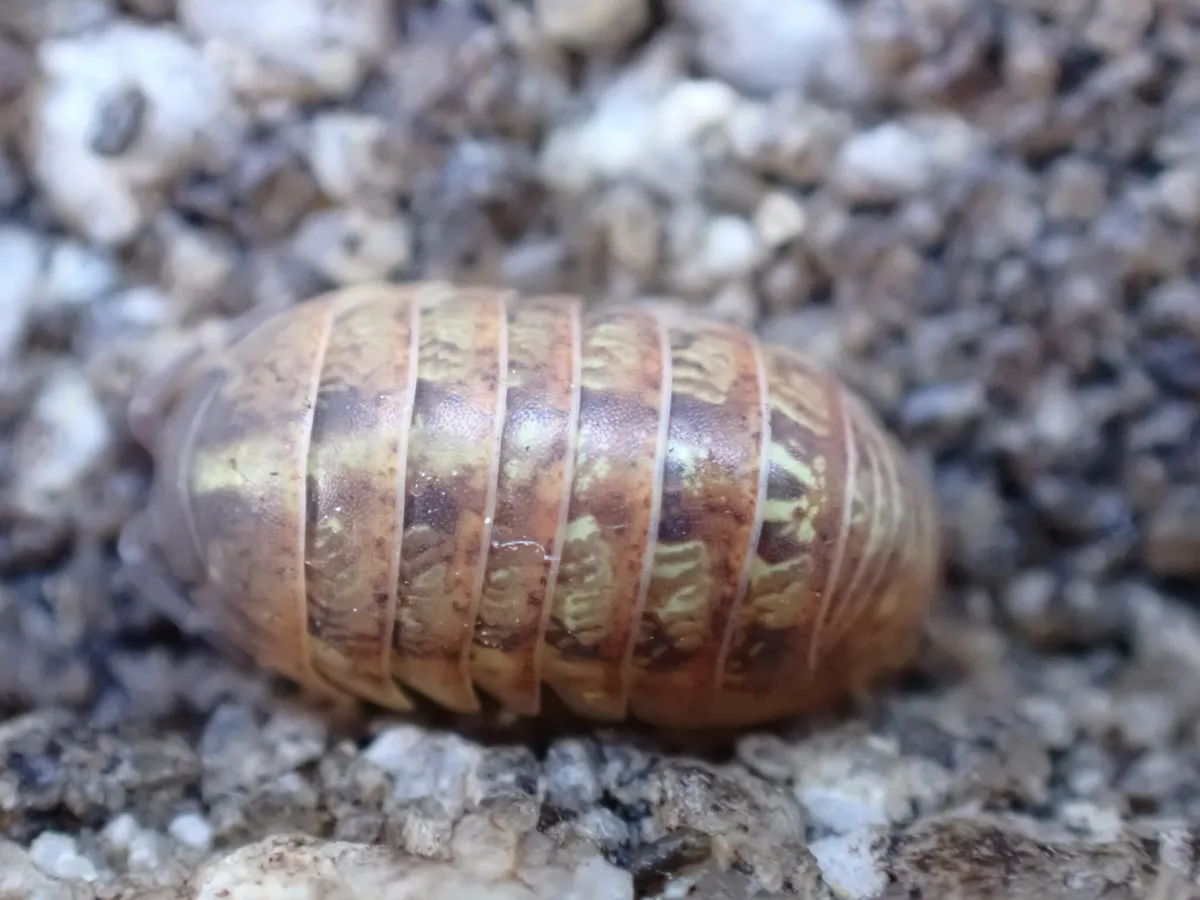 Roly polyShares the potato bug name, but it is a crustacean under an inch that curls into a ball
Photos: Camel cricket: no rights reserved, via iNaturalist, CC0 1.0. Mole cricket: no rights reserved, via iNaturalist, CC0 1.0. House cricket: no rights reserved, via iNaturalist, CC0 1.0. Roly poly: no rights reserved, via iNaturalist, CC0 1.0.
What should you do with a Jerusalem cricket?
Leave it alone outdoors, and move it out if it gets inside. UC IPM says no control is necessary, that they may be important food for some vertebrate predators, and that one found where it is not wanted can be scooped into a box and thrown away. For one indoors, the Orange County district suggests capturing it and releasing it into a garden or a natural area.
- Use a hard container. Montana's field guide warns not to leave a Jerusalem cricket in a mesh insect net or a plastic bag, because its sharp jaws easily cut through fabric and thin plastic.
- Do not grab it. The Orange County district says a roughly handled one gives a strong bite, and the Bohart Museum advises some care in handling.
- Check door seals. The Orange County district says they come in through open doors and under bad door seals.
None of the sources cited here recommends an insecticide for Jerusalem crickets.
This guide is general educational information, not medical advice. If you have symptoms or concerns after a bite or exposure, contact a healthcare provider.
Frequently Asked Questions
Do Jerusalem cricket bites hurt?+
Yes, they can. Montana's field guide says Jerusalem crickets can bite when handled and that the bite causes moderate, short-lived pain, and the Orange County Mosquito and Vector Control District says one that is roughly handled or annoyed will give a strong bite. For a mild reaction to any insect bite, Mayo Clinic's general first aid, which is not specific to Jerusalem crickets, is to wash the area with soap and water and apply a cold, damp cloth, and to see a healthcare professional if swelling gets worse, the site looks infected or you don't feel well.
Are Jerusalem crickets poisonous or venomous?+
No. The Orange County Mosquito and Vector Control District says that, contrary to many urban legends, Jerusalem crickets are not venomous and do not sting, and Montana's field guide says they are not poisonous. What they can do is bite: their strong jaws can give a painful bite if they are handled. The Bohart Museum at UC Davis says much of their dangerous reputation comes from their large size, bald, humanlike head and massive jaws.
Do Jerusalem crickets sting?+
No. The Orange County Mosquito and Vector Control District says Jerusalem crickets do not sting and are not venomous. Their defense is their jaws: the district describes strong mandibles built to cut into roots and tubers, and says a roughly handled or annoyed Jerusalem cricket will give a strong bite. Montana's field guide says the bite causes moderate, short-lived pain.
In what states are Jerusalem crickets found?+
Western states. Montana's field guide describes the dark Jerusalem cricket's US range as west of the Central Plains to the Pacific coast, from Washington, Idaho and Montana south to the Mexican border. The Bohart Museum at UC Davis says that in North America they live only west of the Rocky Mountains, while the Orange County Mosquito and Vector Control District gives the western US from California to Oklahoma and south into Mexico. The district counts about 100 species, many recently discovered.
Is a Mormon cricket the same as a Jerusalem cricket?+
No. A USDA Agricultural Research Service identification brochure says Mormon crickets are not crickets at all but flightless, shield-backed katydids, 1 1/2 to 2 inches long, with antennae longer than the body and no stripes on the abdomen. It describes Jerusalem crickets as having black-and-white striping on the abdomen and chunky legs, and says they do not hop. Mormon crickets live on western rangeland, where their migrating bands can damage crops.
Are Jerusalem crickets good or bad?+
Mostly harmless, and food for wildlife. UC IPM says they are harmless to people and woody plants, only occasionally damage turf and vegetables, and need no control. The Bohart Museum at UC Davis says they are an important source of food for birds of prey such as barn and burrowing owls and kestrels, especially in winter. Montana's field guide notes they can become garden pests on tubers such as carrots and potatoes, and that a handled one can bite.
What does it mean if you see a Jerusalem cricket?+
Usually that the soil was disturbed or wet, or that one wandered in. UC IPM says people most often see them when gardeners turn the soil or after heavy irrigation or rain, and mostly at night. The Orange County Mosquito and Vector Control District says they roam in late afternoons and evenings in fall and winter and can get into garages and homes under bad door seals. Montana's field guide says daytime sightings are likeliest in spring, when they surface to mate.
Why are they called Jerusalem crickets?+
Not because of Jerusalem. Montana's field guide says the insect is not named after Jerusalem and does not live there, and that the name comes from what was historically a profane word blurted out when someone was startled. It is not a true cricket either: Montana says true crickets belong to the family Gryllidae, while Jerusalem crickets belong to Stenopelmatidae. The Bohart Museum notes that Jerusalem cricket is nonetheless the officially recognized common name.
How big do Jerusalem crickets get?+
Big for an insect. UC IPM says they grow up to about 2 inches long, and the Orange County Mosquito and Vector Control District says most species reach about 2 inches as adults while two approach 3 inches. Montana's field guide gives an adult body length of 35 to 50 mm, about 1 3/8 to 2 inches, and the Bohart Museum at UC Davis gives 1 to 2 1/2 inches, calling them among the largest insects in western North America.
How do you get rid of a Jerusalem cricket in the house?+
Catch it and put it outside. The Orange County Mosquito and Vector Control District suggests capturing one found indoors and releasing it into a garden or a natural area, and UC IPM says no control is necessary and that an unwanted one can be scooped into a box. Montana's field guide warns not to hold one in a mesh net or a plastic bag, since its sharp jaws cut through fabric and thin plastic. They get in through open doors and under bad door seals.
Sources
- Jerusalem Cricket (Home and Landscape) — University of California Statewide IPM Program
- Dark Jerusalem Cricket, Ammopelmatus fuscus (Montana Field Guide) — Montana Natural Heritage Program, Montana State Library
- Jerusalem Crickets (Information No. 008) — Bohart Museum of Entomology, University of California, Davis
- Jerusalem Crickets (fact sheet) — Orange County Mosquito and Vector Control District (California)
- Mormon Cricket Identification: Helpful Tips for Surveying Anabrus simplex (July 2020) — USDA Agricultural Research Service, Northern Plains Agricultural Research Laboratory
- Insect bites and stings: First aid (April 10, 2024) — Mayo Clinic
- Camel Crickets (M. Waldvogel, P. Alder and C. Hayes, revised June 14, 2023) — NC State Extension
- Crickets of Kentucky (Kentucky Critter Files) — University of Kentucky Department of Entomology
- Field Crickets (Field Guide) — Missouri Department of Conservation
- Mole Cricket IPM Guide for Florida (IPM-206/IN1021; C. R. Kerr, N. C. Leppla, E. A. Buss and J. H. Frank, 2021) — University of Florida, UF/IFAS Extension
- Pillbugs and Sowbugs (Home and Landscape) — University of California Statewide IPM Program
How this guide was made: it was researched and drafted with AI assistance from the sources listed above. A second, independent AI pass then checked each factual claim against those sources. Found an error? Email support@buzzskito.ca.