
Published by BuzzSkito Mosquito & Tick Control
Published October 21, 2026 · Drafted with AI assistance and fact-checked against the sources listed below
What is a white cockroach?
A white cockroach is an ordinary cockroach that has just molted, or shed its skin. The University of California's Pest Notes on cockroaches (UC IPM) say cockroaches are white immediately after molting and darken as the outer covering hardens, usually within hours. Walter Ebeling's Urban Entomology, a 1975 textbook hosted by UC Riverside's entomology department, notes that completely white nymphs or adults may be seen in a cockroach colony, newly molted and not yet their species' normal color.
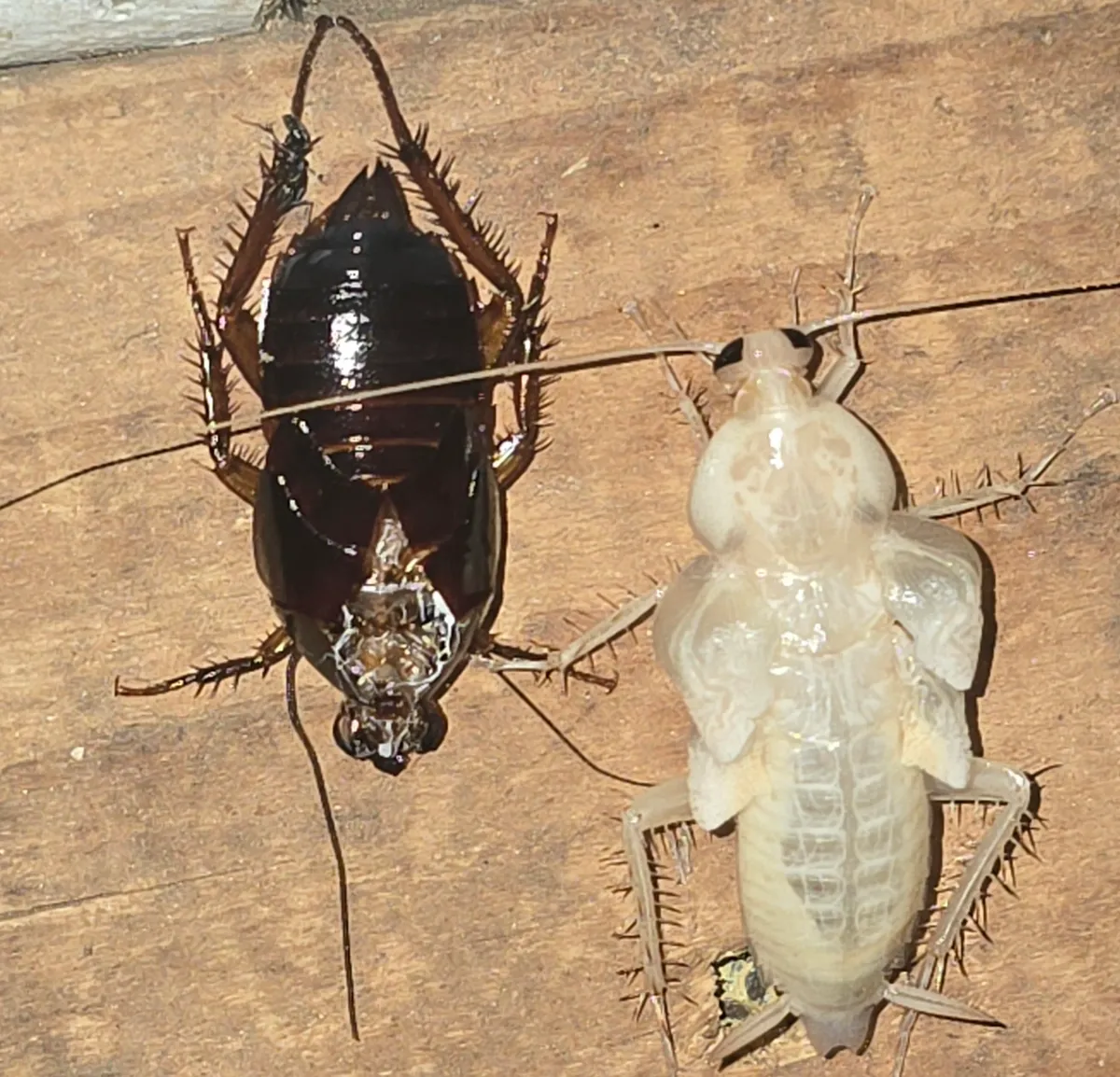
So it is not a separate kind of cockroach: a white German cockroach is a German cockroach, at the usual size for its stage. Nebraska Extension's cockroach management manual says homeowners occasionally come across a white cockroach and that it is not an albino. Its species shows once it darkens, and the complete guide to cockroaches in US homes profiles each one.
Check the shape first. Texas A&M AgriLife Extension lists what every cockroach has: a flattened body, a head hidden from above under a plate-like shield called the pronotum, long, thin antennae and long, spiny legs. A white insect without them is probably one of the look-alikes further down.
Are albino cockroaches real?
Yes, as rare laboratory mutants. In a question-and-answer article for pest professionals, excerpted from the Mallis Handbook of Pest Control and posted by his NC State lab, entomologist Coby Schal writes that all newly molted cockroaches are white and that the wings and body tan to the species' color and pattern over the next several hours. Albino and white-eyed mutants, he adds, are occasionally found in lab colonies but are extremely unlikely to be found outside the lab. The white roach in a kitchen or basement is almost certainly a freshly molted one.
Why does a cockroach turn white when it molts?
Because its new outer skin starts out nearly colorless. To grow, an insect builds a larger skeleton inside the old one and then sheds the old one. NC State University's general entomology course explains that muscle contractions and air the insect takes in split the old skeleton along lines of weakness. The insect climbs out soft and largely unpigmented, white or ivory, and over the next few hours a process called sclerotization, or tanning, hardens and darkens the new skin.
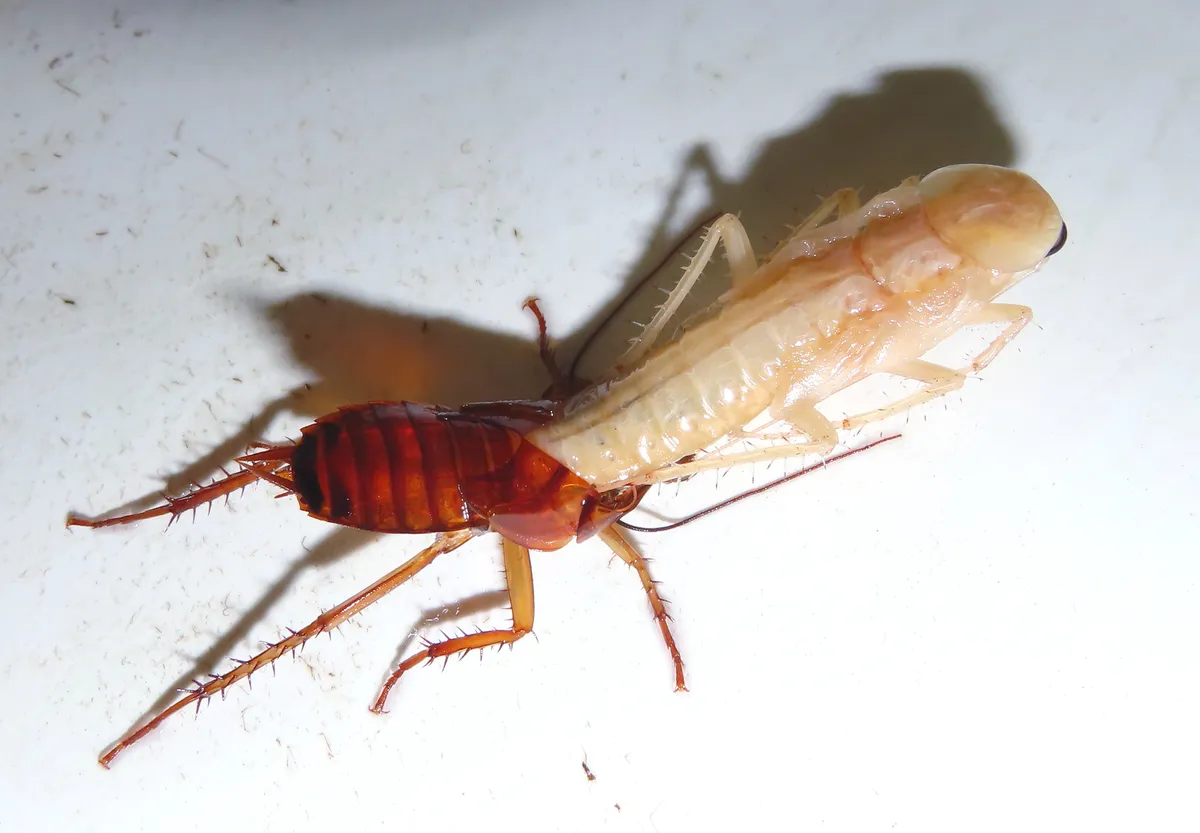
Nymphs molt at the end of each growth stage, and molting stops once an insect is an adult, the course adds. Rutgers University's German cockroach fact sheet says German nymphs molt 5 to 6 times; other common species go through more stages:
| Species | Nymph stages (each ends in a molt) | Adult length |
|---|---|---|
| German | 5 to 7 | 1/2 to 5/8 inch |
| Brown-banded | 6 to 8 | About 1/2 inch |
| Oriental | 7 to 10 | About 1 1/4 inches |
| American | 10 to 13 | 1 1/2 to 2 inches |
Nymph stages: Nebraska Extension, adapted from Brenner and Kramer (2019). Other sources differ: 5 to 6 molts for German nymphs (Rutgers), 6 to 14 for American (University of Florida). Lengths: Texas A&M and UC IPM.
How long does a cockroach stay white?
A few hours. UC IPM says usually within hours; the University of Florida's German cockroach profile says a newly molted adult's cuticle will harden and darken within a few hours; Nebraska's manual says a couple of hours; and Kansas State University's cockroach fact sheet says nymphs appear white for several hours.
The closest measurement in these sources is a 1940 laboratory study of American cockroaches by Gould and Deay, reported by Ebeling: molting took only a few minutes, and a new adult's wings needed 25 to 30 minutes to expand and its full color 4 or 5 hours. A white roach with small, crumpled wings, like the one in the first photo, has molted very recently.
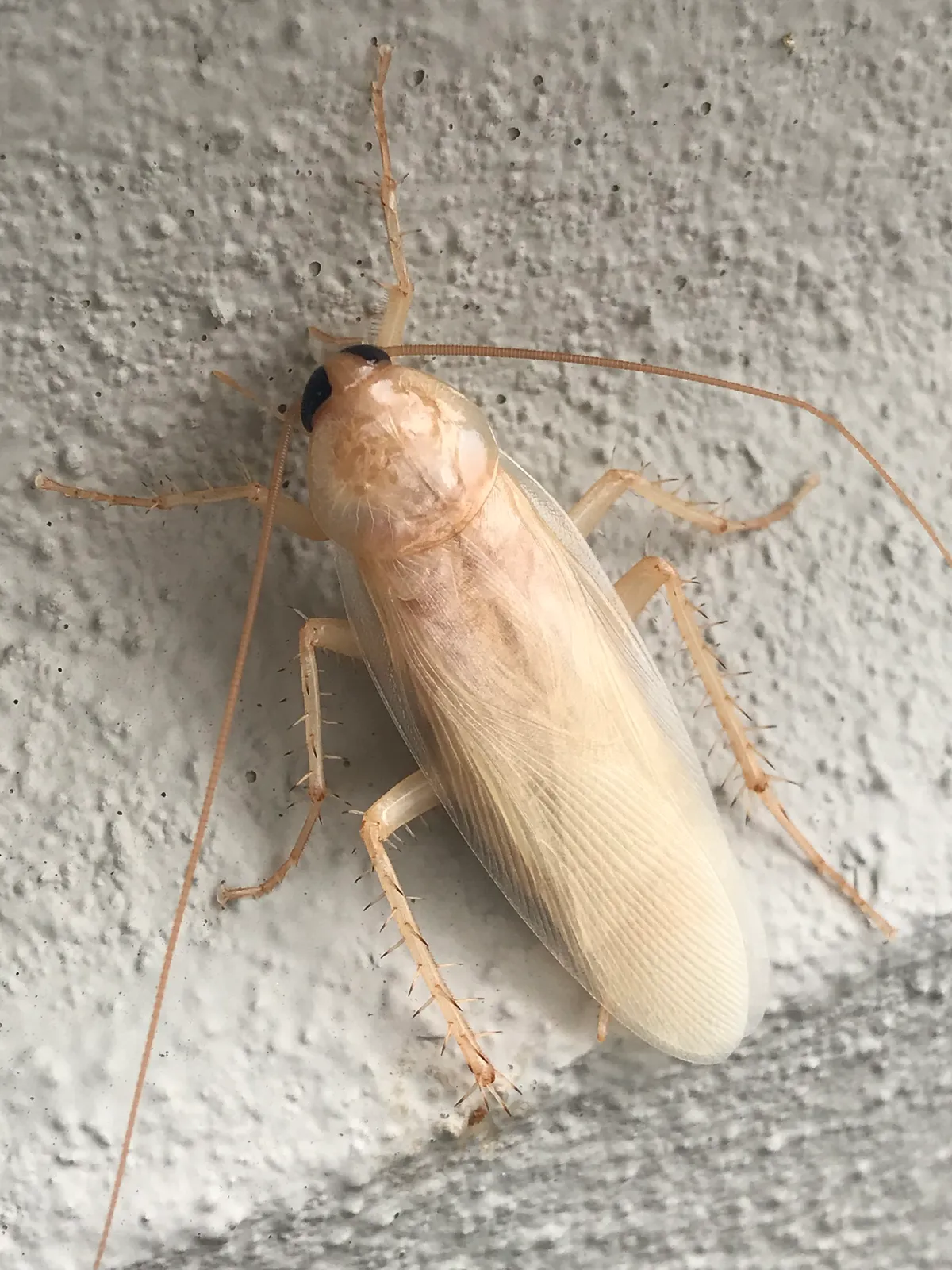
That gives you a simple check: trap the insect in a closed jar and look again a few hours later. A freshly molted cockroach should have darkened toward its species' colors, which also makes it easier to identify.
Why do you rarely see a white cockroach?
Because the white stage is short and cockroaches spend most of their lives out of sight. UC IPM says roaches hide by day in warm, dark, moist places and feed at night, and Texas A&M says the German cockroach spends about 75 percent of its life in cracks 1/32 to 3/16 inch wide.
Seeing one by day says more about numbers. Texas A&M says cockroaches seen during the day usually mean there are a lot of them, and NC State Extension's German cockroach guide says German cockroaches occasionally appear by day when the population is too crowded. Ebeling adds that when roaches are abundant, a few may be seen in daylight, particularly when things in pantries, cabinets and closets are moved.
What does a white cockroach in your house mean?
It means a cockroach molted within the last few hours, and only a growing roach does that: nymphs molt, adults never molt again. A white nymph is a young roach between stages; a white adult has just made its final molt.
With German cockroaches, that points to a colony in the building. Nebraska's manual says they breed indoors year-round and that more are hiding than are ever seen, NC State says small nymphs tend to stay at their aggregation sites, and Rutgers says about 80 percent of an actively growing German population are nymphs. A small white German nymph most likely hides close to where it turned up.
A white American or Oriental cockroach is a different case. The University of Florida's American cockroach profile says that species lives mainly in basements, sewers and drainage systems and is rarely found in houses, though infestations can occur after heavy rain; Texas A&M puts Oriental cockroaches in basements, crawl spaces and wet areas. The palmetto bug guide covers the American cockroach, and the Oriental cockroach guide the dark, short-winged Oriental.
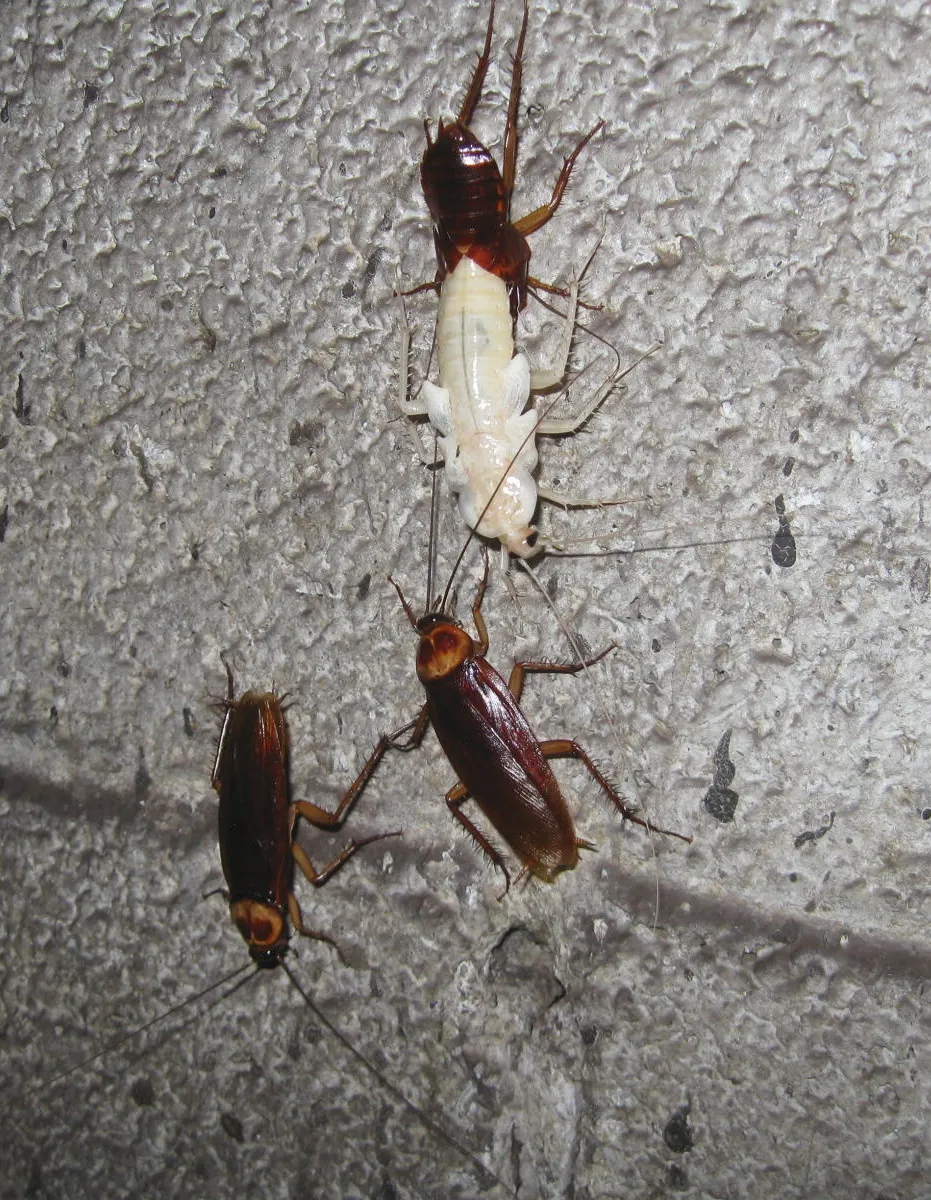
Then look for the other signs: Ebeling lists dead cockroaches, cast skins, empty egg cases and droppings. The guide to signs of cockroaches goes through each, and what roach poop looks like covers the droppings. UC IPM calls sticky traps the best way to detect and monitor cockroaches: put them where floors meet walls near the spot and check them daily for several days.
Is a white baby cockroach newly hatched or newly molted?
It can be either: nymphs are often pale when they hatch and white again after every molt. The University of Florida says a first-stage American cockroach nymph is white right after hatching, then grayish brown, and that later nymphs are white after each molt before turning reddish brown. Kansas State says hatchlings are usually lighter in color than adults.
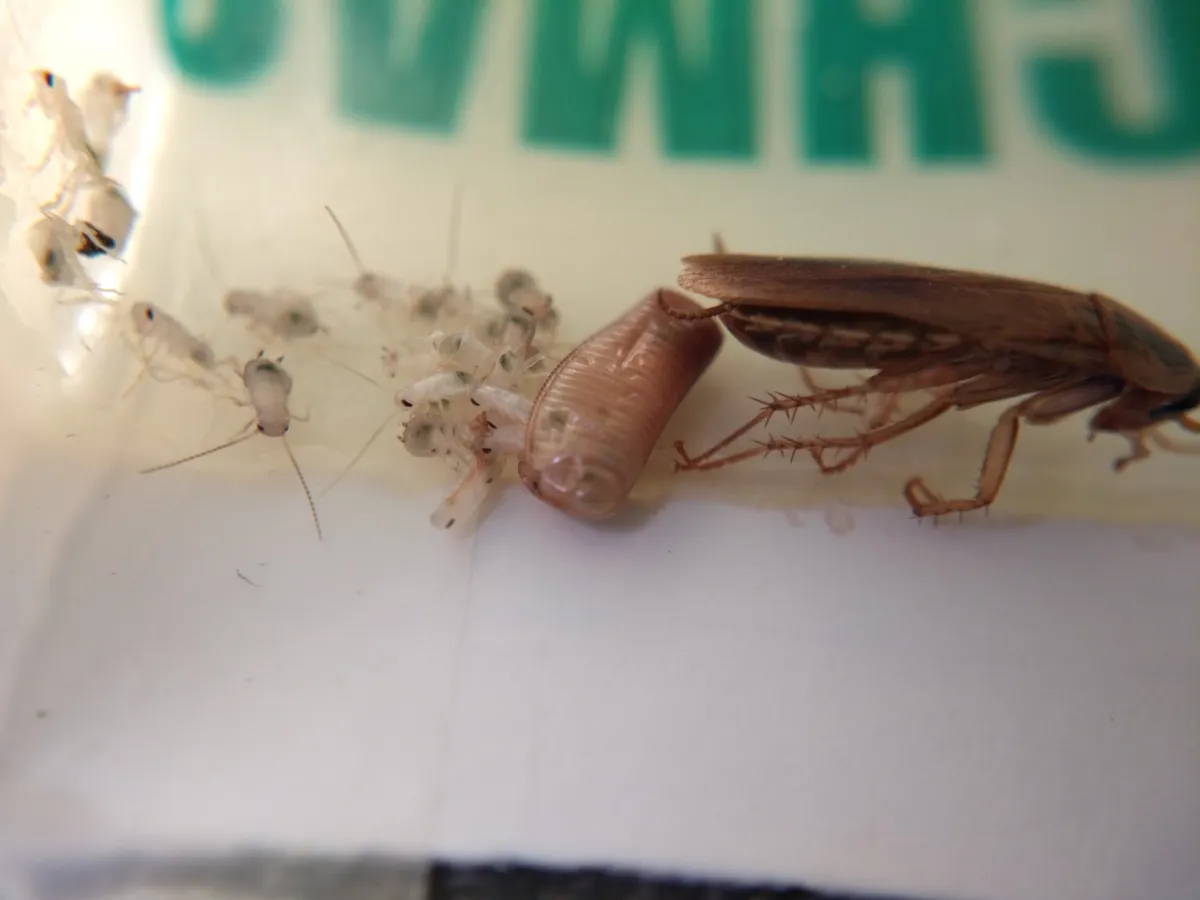
Tiny pale nymphs bunched beside an egg case are a fresh hatch; one white nymph among darker ones has just molted. Newly hatched German nymphs are about 1/8 inch (3 mm) long, NC State says, and the University of Florida describes German nymphs as dark brown to black with dark bands. Each species' young are shown side by side in what baby cockroaches look like, and the guide to cockroach eggs covers the cases they hatch from.
What happens to the skin a cockroach sheds?
Often a cockroach eats it. Ebeling reports German cockroach skins quickly eaten by the nymphs that shed them or by others nearby, and, in Gould and Deay's study, American cockroaches usually eating the cast skin after every molt but the last. A skin that is left looks like a hollow copy of the roach, split open where it climbed out.
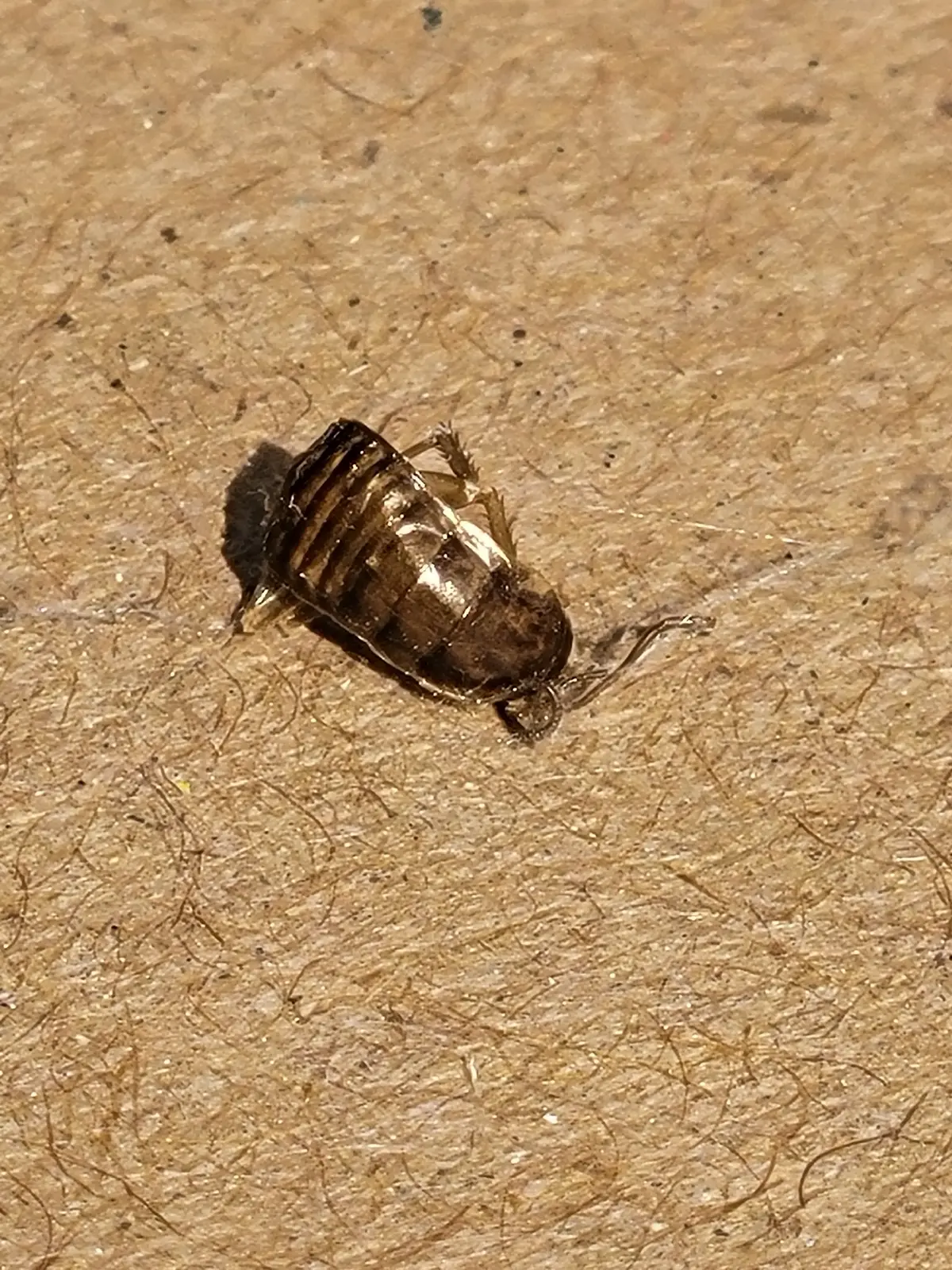
Skins that remain are evidence: UC IPM lists cast skins among the signs that show where to place monitoring traps. Rutgers says German cockroach feces, shed skins and dead bodies contain allergens that are asthma triggers, and recommends a vacuum with a HEPA filter to remove them.
A pale, empty skin in a mattress seam is more likely a bed bug's. The EPA's guide to finding bed bugs lists the pale yellow skins that nymphs shed as they grow among the signs, and bed bug shells and shed skins shows what they look like.
What else looks like a white cockroach?
Three pale insects can pass for a white roach at a glance. Run the shape check first; for brown and black look-alikes, see bugs that look like cockroaches.
Termite workers
Texas A&M's urban entomology program describes native subterranean termite workers as wingless, white to creamy white and 1/4 to 3/8 inch long. The EPA says termites rarely emerge from the soil, mud tubes or the wood and other food they tunnel through. A worker stays pale, where a white cockroach darkens within hours. Pale insects in damaged wood or a mud tube point to termites; what termite damage looks like shows the tubes.
Booklice
Booklice are smaller than even a newly hatched cockroach. The University of Florida's guide to booklice and silverfish describes soft-bodied insects, translucent white to gray or light brown, usually under 1/16 inch long and mostly wingless indoors, often found among books or papers in warm, humid places.
Bed bug nymphs
Young bed bugs are translucent or whitish-yellow and, unfed, can be nearly invisible, says the EPA's bed bug life cycle page, which gives the five nymph stages as 1.5 to 4.5 mm (about 1/16 to 3/16 inch). EPA says bed bugs hide near the seams and tags of mattresses and in cracks of the bed frame and headboard; what bed bugs look like covers every stage.
Commonly confused with
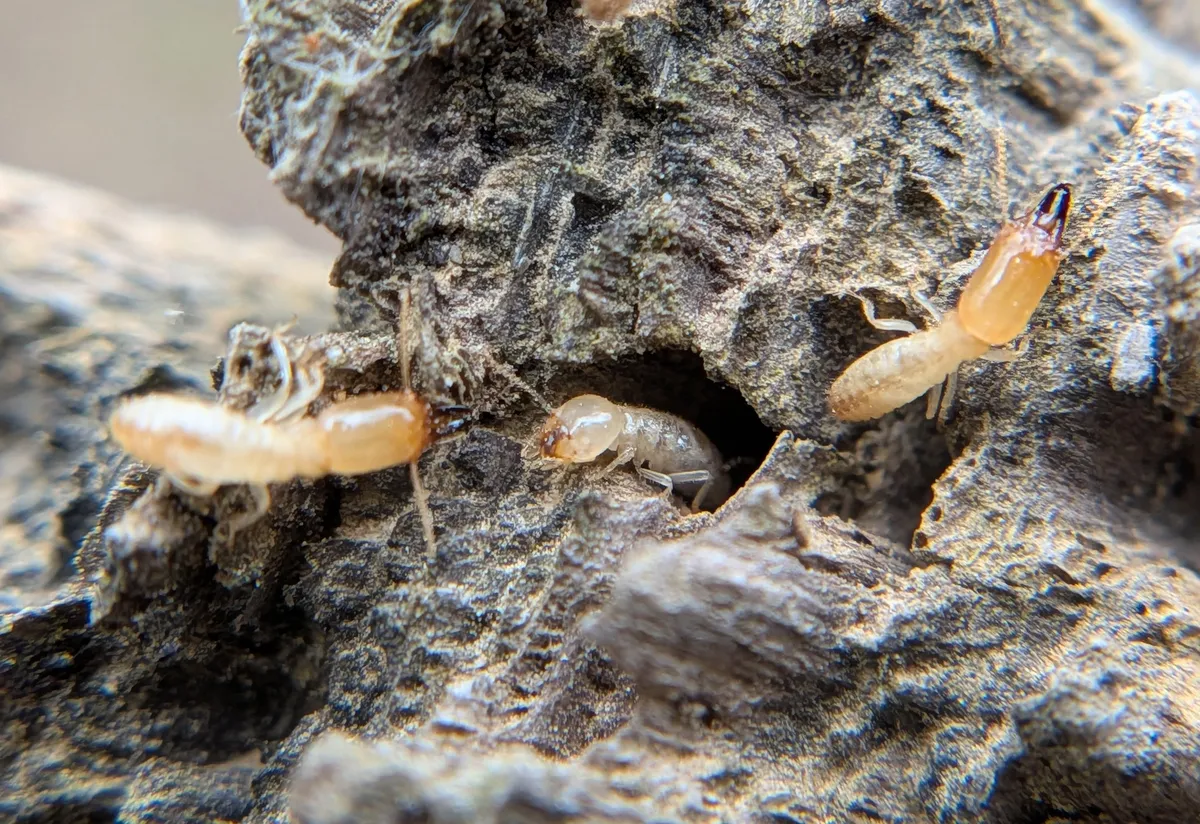 Termite workerStays white to creamy white; rarely leaves wood, soil or mud tubes
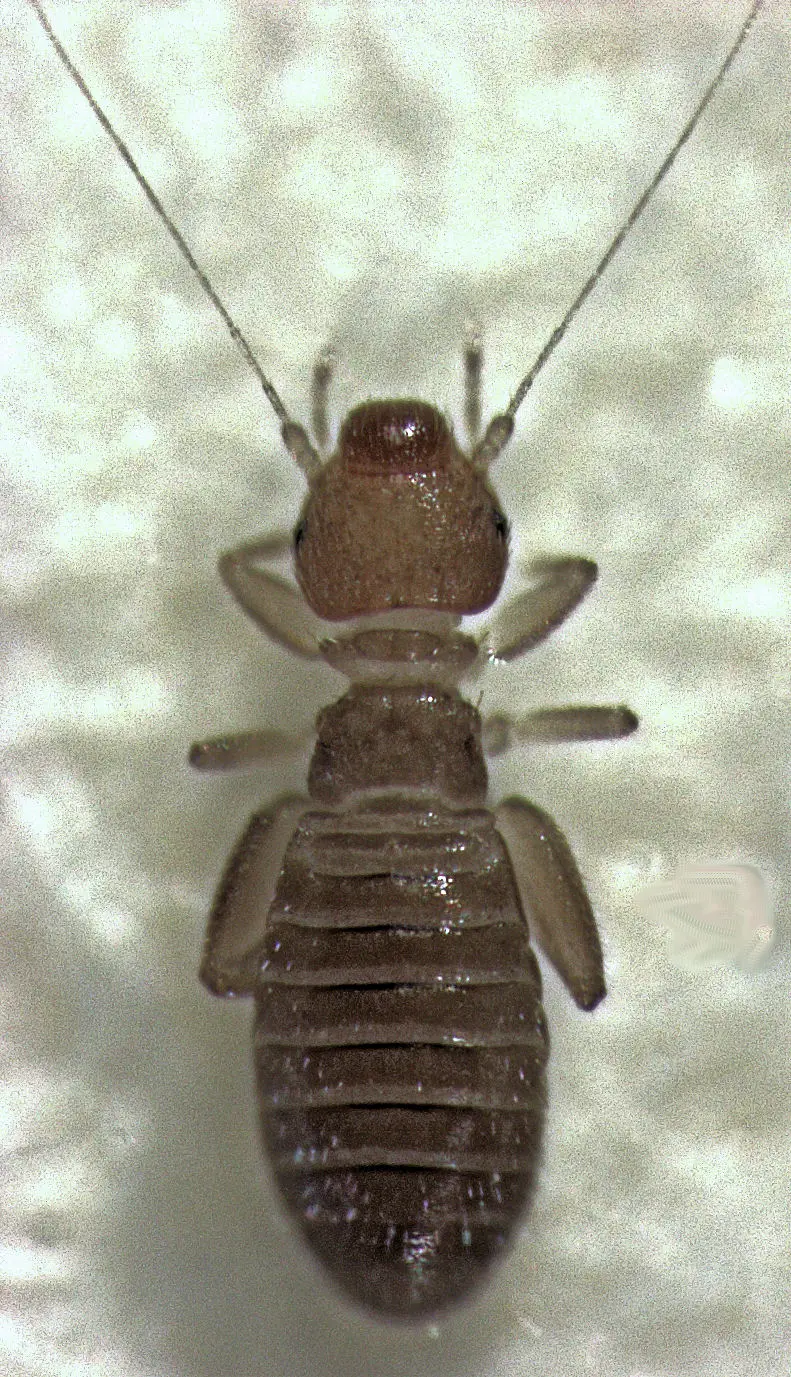 BooklouseUsually under 1/16 inch, soft and pale; found among books and papers in humid rooms
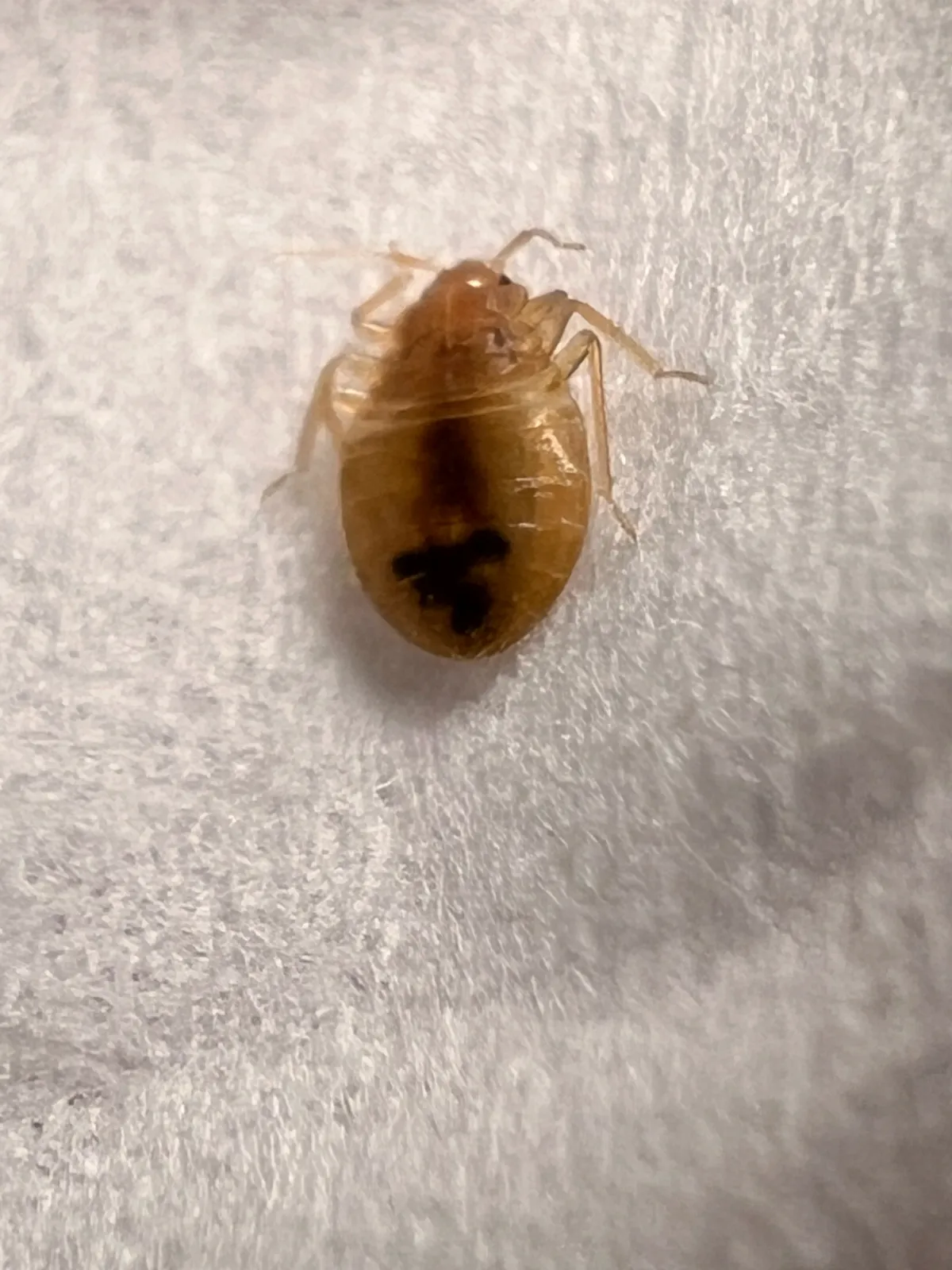 Bed bug nymphTranslucent to whitish-yellow; hides in mattress seams and bed frames
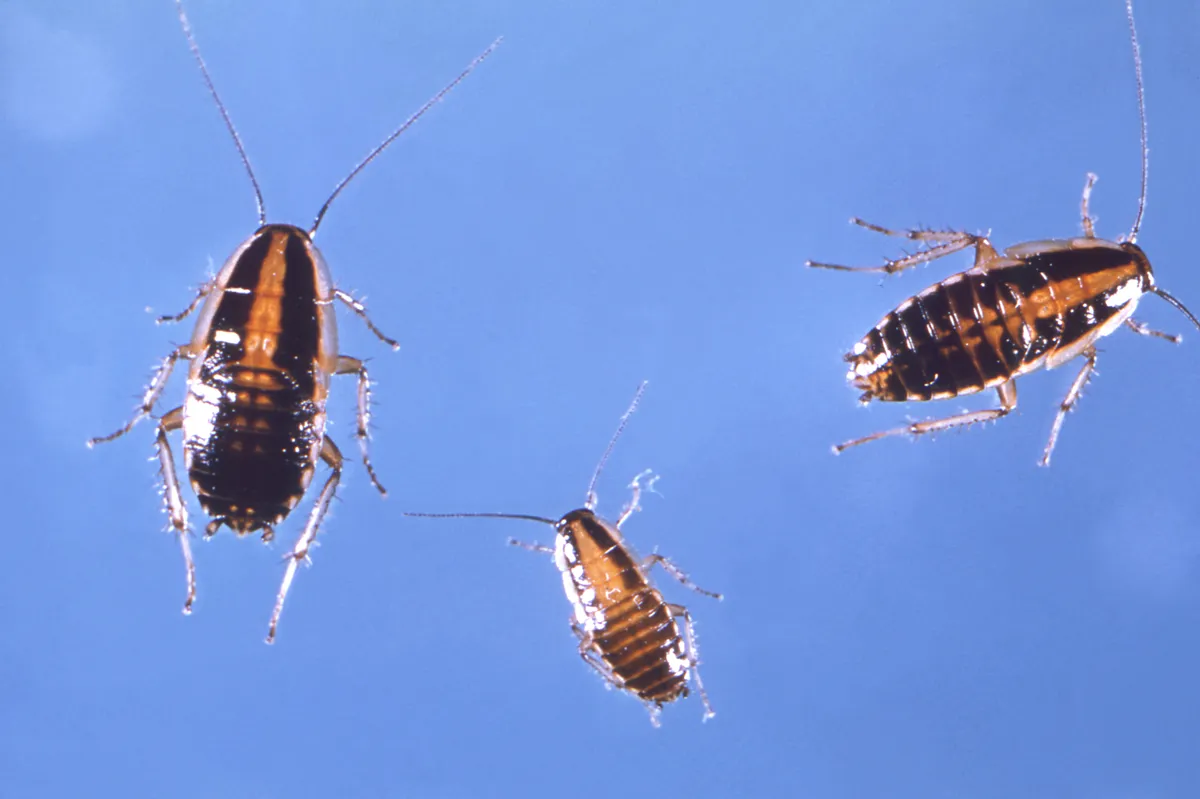 German cockroach nymphDark brown to black with dark bands; white for hours after each molt
Photos: Termite worker: no rights reserved, via iNaturalist, CC0 1.0. Booklouse: S.E. Thorpe, Public domain, via Wikimedia Commons, public domain. Bed bug nymph: no rights reserved, via iNaturalist, CC0 1.0. German cockroach nymph: CDC (CDC Public Health Image Library, phil.cdc.gov), public domain.
What should you do about a white cockroach?
Treat it as a sign of cockroaches growing nearby, and work through these steps:
- Let it darken. Keep it in a closed jar for a few hours, or photograph it now and later, then compare it with the species in the complete cockroach guide.
- Set sticky traps where floors meet walls near the spot and check them daily for several days, as UC IPM advises.
- Check for other signs in nearby cracks, cabinets and appliances: droppings, egg cases and shed skins.
- Treat the species you have. The step-by-step plan for getting rid of cockroaches puts baits, traps and sealing in order, with a Canadian edition for readers in Canada; the German cockroach guide goes further for that species.
Frequently Asked Questions
Is it normal to see a white cockroach?+
It is a normal stage but an unusual sight. Every cockroach is white for a few hours after each molt, and Rutgers University says German cockroach nymphs molt 5 to 6 times before adulthood. Most of that happens out of view, because cockroaches hide by day in cracks and dark places and come out at night to feed, UC IPM says. Seeing a white one tells you a roach molted recently, so young cockroaches are developing in or near your home.
How rare is an albino roach?+
A true albino cockroach is a laboratory rarity. Entomologist Coby Schal of NC State University writes that albino and white-eyed mutants are occasionally found in lab colonies but are extremely unlikely to be found outside the lab. The white roaches people find at home are freshly molted cockroaches: Schal notes that all newly molted cockroaches are white and tan to their normal color and pattern over the next several hours. Nebraska Extension's cockroach manual makes the same point.
What does it mean if I find a white cockroach in my house?+
It means a cockroach shed its skin within the last few hours, and only growing roaches do that, since adult insects stop molting. Nebraska Extension says German cockroaches breed indoors year-round, and Rutgers says about 80 percent of an actively growing German population are nymphs, so a white German cockroach points to a colony in the building. Set sticky traps where floors meet walls near the spot and check them daily for several days to see how many there are and where.
How long does a cockroach stay white?+
Usually a few hours. UC IPM says the outer covering darkens as it hardens, usually within hours, and the University of Florida says the same of a newly molted adult German cockroach. In a laboratory study of American cockroaches reported in Walter Ebeling's Urban Entomology, molting took only a few minutes, and a new adult's wings took 25 to 30 minutes to expand and its full color 4 or 5 hours. A white cockroach kept in a closed jar should have darkened within a few hours.
Is a white cockroach harmful?+
It is no different from any other cockroach of its species, just freshly molted. The concern is the infestation behind it. Rutgers says German cockroach feces, shed skins and dead bodies contain allergens that are asthma triggers, and NC State lists saliva, feces, eggs and shed exoskeletons as sources of cockroach allergens. Texas A&M adds that cockroaches may transfer disease-causing organisms. A white roach indoors is a reason to find and treat the colony it came from.
Can baby cockroaches be white?+
Yes, at two points in their lives. Nymphs are often pale when they first hatch: the University of Florida says a first-stage American cockroach nymph is white right after hatching and then turns grayish brown. They are white again after every molt until they become adults, darkening within hours each time. A cluster of tiny pale nymphs beside an egg case is a fresh hatch; newly hatched German cockroaches are about 1/8 inch long, according to NC State Extension.
What are the small white roaches in my house?+
Most likely young cockroaches that have just hatched or just molted, which darken within hours. Check the shape: Texas A&M says cockroaches have a flattened body, a head hidden under a shield, long thin antennae and spiny legs. Something under 1/16 inch among books or papers in a humid room is more likely a booklouse, a pale insect inside wood or a mud tube a termite worker, and a pale bug in a mattress seam a young bed bug.
Do cockroaches eat their shed skin?+
Often, yes. Walter Ebeling's Urban Entomology reports that German cockroach skins were quickly eaten by the nymphs that shed them or by other cockroaches nearby. In the laboratory study of American cockroaches he cites, the cast skin was usually eaten after every molt except the last, when the new adult left it behind. That is one reason shed skins are not always found, although UC IPM still lists cast skins among the signs of cockroach activity.
What should I do if I see a white roach?+
Identify it, then find out how many there are. Keep it in a closed jar or photograph it, and look again after a few hours, when it should have darkened enough to compare with photos of each species. Set sticky traps where floors meet walls nearby and check them daily for several days, as UC IPM advises. Look for droppings, egg cases and shed skins in nearby cracks and cabinets, then follow a control plan for the species you have.
Could a white cockroach be a termite?+
It could be a termite worker if the insect was inside wood, soil or a mud tube. Texas A&M describes native subterranean termite workers as wingless, white to creamy white and 1/4 to 3/8 inch long, and the EPA says termites rarely emerge from the soil, mud tubes or the wood and other food they tunnel through. A white cockroach has a shield over its head, long thin antennae and spiny legs, and it darkens within hours, while a worker stays pale.
Sources
- Pest Notes: Cockroaches (UC ANR Publication 7467) — University of California Statewide IPM Program
- Urban Entomology, Chapter 6: Pests On or Near Food (Walter Ebeling, 1975) — University of California, Riverside, Department of Entomology
- Cockroach Management Manual (First Edition, November 2021) — Nebraska Extension, University of Nebraska-Lincoln (K. Koch, J. Green and K. Chapman)
- ENTO-037: Cockroach Biology and Management — Texas A&M AgriLife Extension Service
- Cockroaches: Fact or Fiction? (Coby Schal, Pest Control Technology, July and August 2011, excerpted from the Mallis Handbook of Pest Control) — Schal Lab, Department of Entomology and Plant Pathology, NC State University
- Morphogenesis (ENT 425: General Entomology) — NC State University, Department of Entomology and Plant Pathology
- FS1322: German Cockroach — Rutgers New Jersey Agricultural Experiment Station
- German Cockroach, Blattella germanica (Linnaeus) (EENY-002/IN128) — University of Florida IFAS Extension
- Cockroaches: Structural Pests (MF2765) — Kansas State University Research and Extension (R. J. Whitworth, A. Ahmad and A. Norton)
- Biology and Behavior of the German Cockroach — NC State Extension (A. Wada-Katsumata and C. Hayes, 2025)
- American Cockroach, Periplaneta americana (Linnaeus) (EENY141/IN298) — University of Florida IFAS Extension
- Native Subterranean Termites — Urban and Structural Entomology Program, Texas A&M University
- Termites: How to Identify and Control Them — US Environmental Protection Agency
- Booklice and Silverfish (ENY-225/IG094) — University of Florida IFAS Extension
- Bed Bugs Appearance and Life Cycle — US Environmental Protection Agency
- How to Find Bed Bugs — US Environmental Protection Agency
How this guide was made: it was researched and drafted with AI assistance from the sources listed above. A second, independent AI pass then checked each factual claim against those sources. Found an error? Email support@buzzskito.ca.