
Published by BuzzSkito Mosquito & Tick Control
Published October 21, 2026 · Drafted with AI assistance and fact-checked against the sources listed below
What are the signs of cockroaches?
The signs of cockroaches are what they leave behind and the roaches themselves: droppings, dark smears, egg cases, shed skins, dead roaches, a musty odor and roaches out in the open. The University of California's Pest Notes on cockroaches (UC IPM) uses fecal spots and smears, cast skins, egg cases and live or dead roaches to decide where to set monitoring traps, and Virginia Tech's fact sheet on cockroaches in living spaces notes that people may find droppings, egg cases, cast skins or dead roaches before they see a live one, because cockroaches are mostly nocturnal.
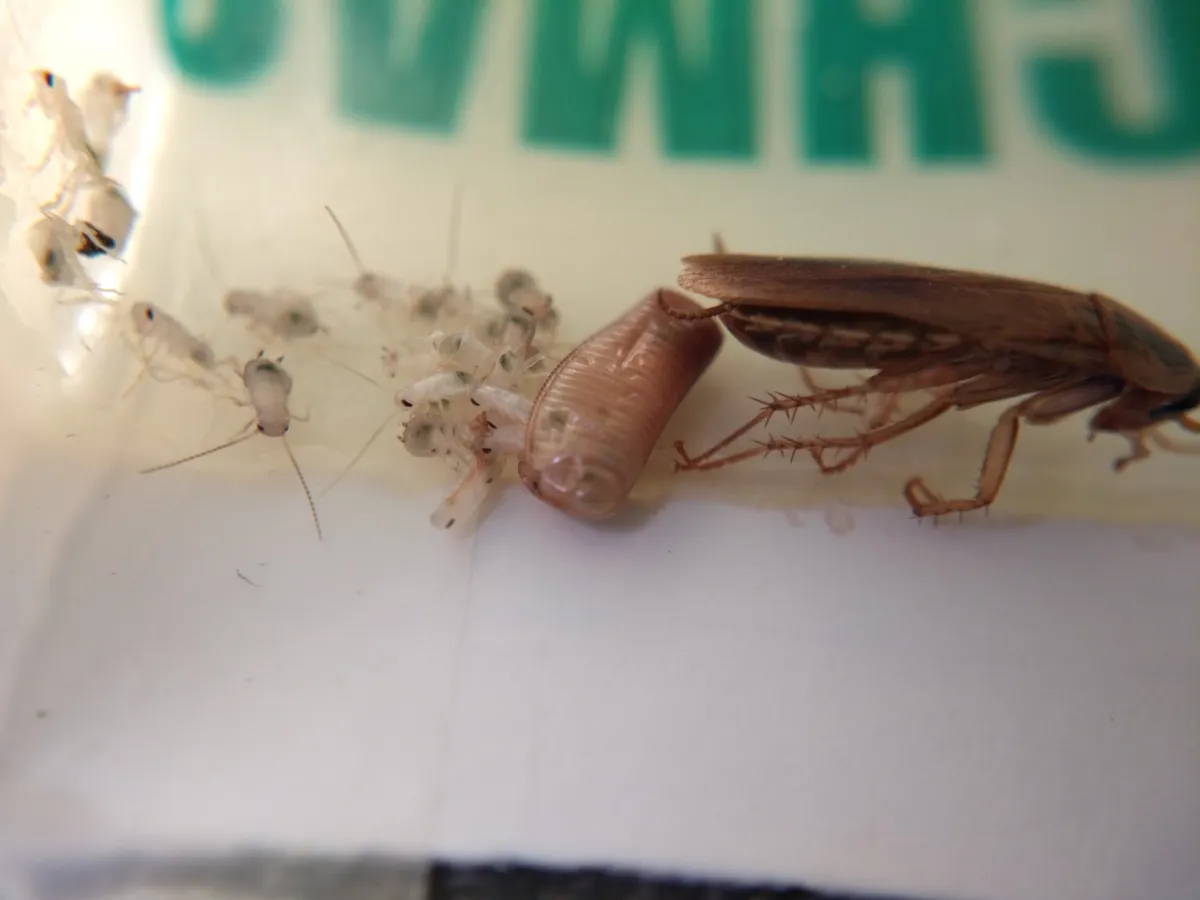
Most of what people find indoors comes from the German cockroach, which the University of Kentucky's cockroach fact sheet calls by far the most common cockroach infesting homes and buildings. The complete guide to cockroaches in US homes profiles the common species.
What does a cockroach infestation look like?
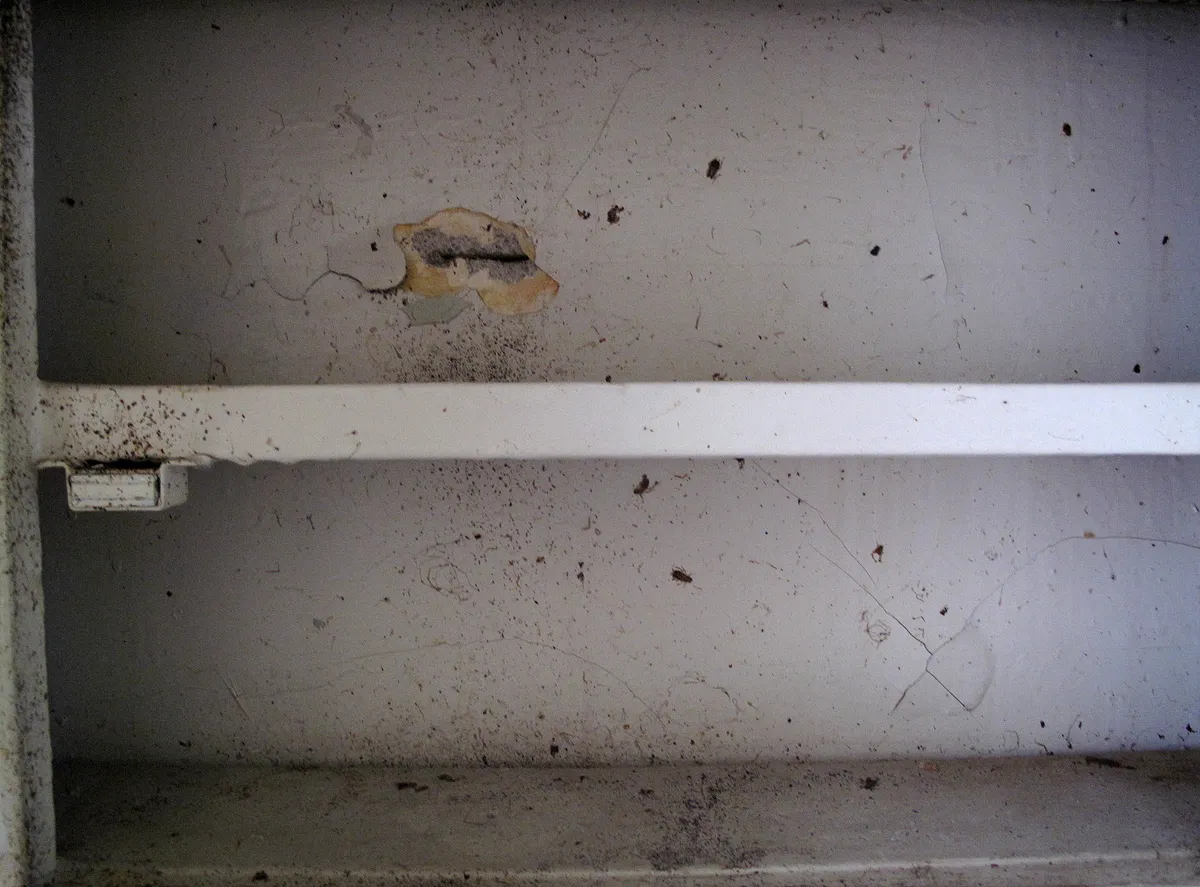
A heavy infestation looks like many signs piled up in one place. NC State Extension's guide to the German cockroach shows a water heater covered in fecal spots, which its caption calls suggestive of a very high level of infestation, and dead roaches, feces and exoskeletons across the countertop and stove of a heavily infested apartment. Walter Ebeling's Urban Entomology, a 1975 textbook that UC Riverside's entomology department hosts online, adds fecal stains on shelf corners and cabinet hinges.
What do cockroach droppings and smear marks look like?
Cockroach droppings look like ground pepper or tiny dark pellets, and where roaches gather they build up into spots and smears. Texas A&M AgriLife Extension's guide to cockroach biology and management says German cockroach droppings look like crushed pepper and stick to surfaces where the roaches congregate. CDC's 1964 pictorial key to droppings gives average dry adult droppings of about 1/32 inch for the brown-banded cockroach, 1/16 inch for the German, Oriental and smokybrown and 1/8 inch for the American, all ridged, and says to judge a group of droppings rather than one.
Smears are droppings and secretions spread out: Virginia Tech describes dark spots and smears that stain and ruin furnishings. Kentucky calls pepper-like specks a sign of current or former activity, so traps tell you whether the roaches are still there. What roach poop looks like has photos, sizes for each species and the checks that separate it from mouse droppings.
What do cockroaches smell like?
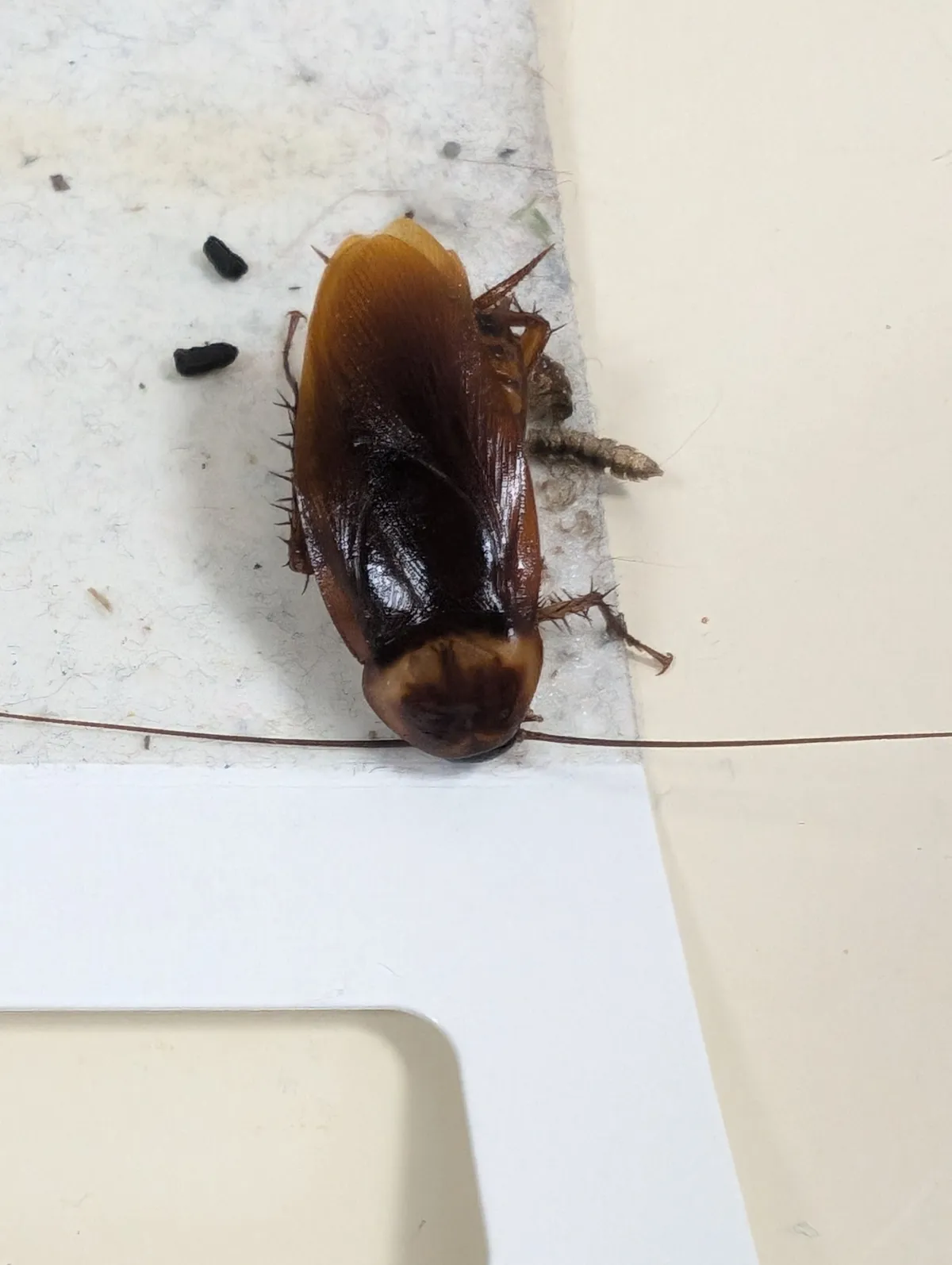
Cockroaches smell musty and unpleasant, and the odor is most noticeable when there are many of them. Ebeling says a musty odor left on objects cockroaches touch may be evident in heavy infestations, and he singles out the Oriental cockroach as a strong source of the typical roachy smell. Virginia Tech says some cockroaches produce a strong, unpleasant odor that can carry over to belongings and buildings, and UC IPM says German cockroaches leave unpleasant odors on surfaces they contact.
Their droppings are a large part of it. The University of Florida's assessment-based guide to German cockroaches says inspectors who cannot see the roaches may be able to smell their distinctive odor, which it attributes to their feces and pheromones. NC State entomologists found 40 chemical compounds in German cockroach feces, with fatty acids made by gut bacteria helping to produce the fecal pheromones, a welcoming scent that draws other roaches.
One outdoor roach smells on purpose: Ebeling describes adult Florida woods cockroaches spraying a greasy, foul-smelling liquid from a gland under the abdomen when alarmed. The palmetto bug guide covers that species.
Is a musty smell always cockroaches?
No, so look for droppings, smears or skins near the smell first. The EPA's page on mold odors links a musty smell with mold growth and says a moldy odor suggests mold that should be investigated, and the National Park Service's guide to mouse and rat damage says areas with rodent traffic can smell musky.
What do cockroach egg cases look like?
A cockroach egg case, or ootheca, is a capsule about 1/4 to 3/8 inch long that protects the eggs; Texas A&M describes it as bean-shaped, and finding one usually means cockroaches are breeding nearby. UC IPM gives about 1/4 inch for German and brown-banded cases and about 3/8 inch for the American, Oriental and smokybrown, and says a German female carries her light beige case, which holds about 30 young, until a day or two before it hatches.
UC IPM advises looking for cases glued to the undersides of furniture, in refrigerator and other appliance motors and in boxes. What cockroach eggs look like shows each species' case and how to tell one that has hatched.
What do shed skins and white cockroaches mean?
Shed skins and white roaches both mean young roaches are growing up nearby, because a cockroach sheds its skin each time it grows. Rutgers' German cockroach fact sheet says German nymphs molt five to six times before adulthood, and Ebeling reports a study concluding that the American cockroach probably has 13 nymphal stages.
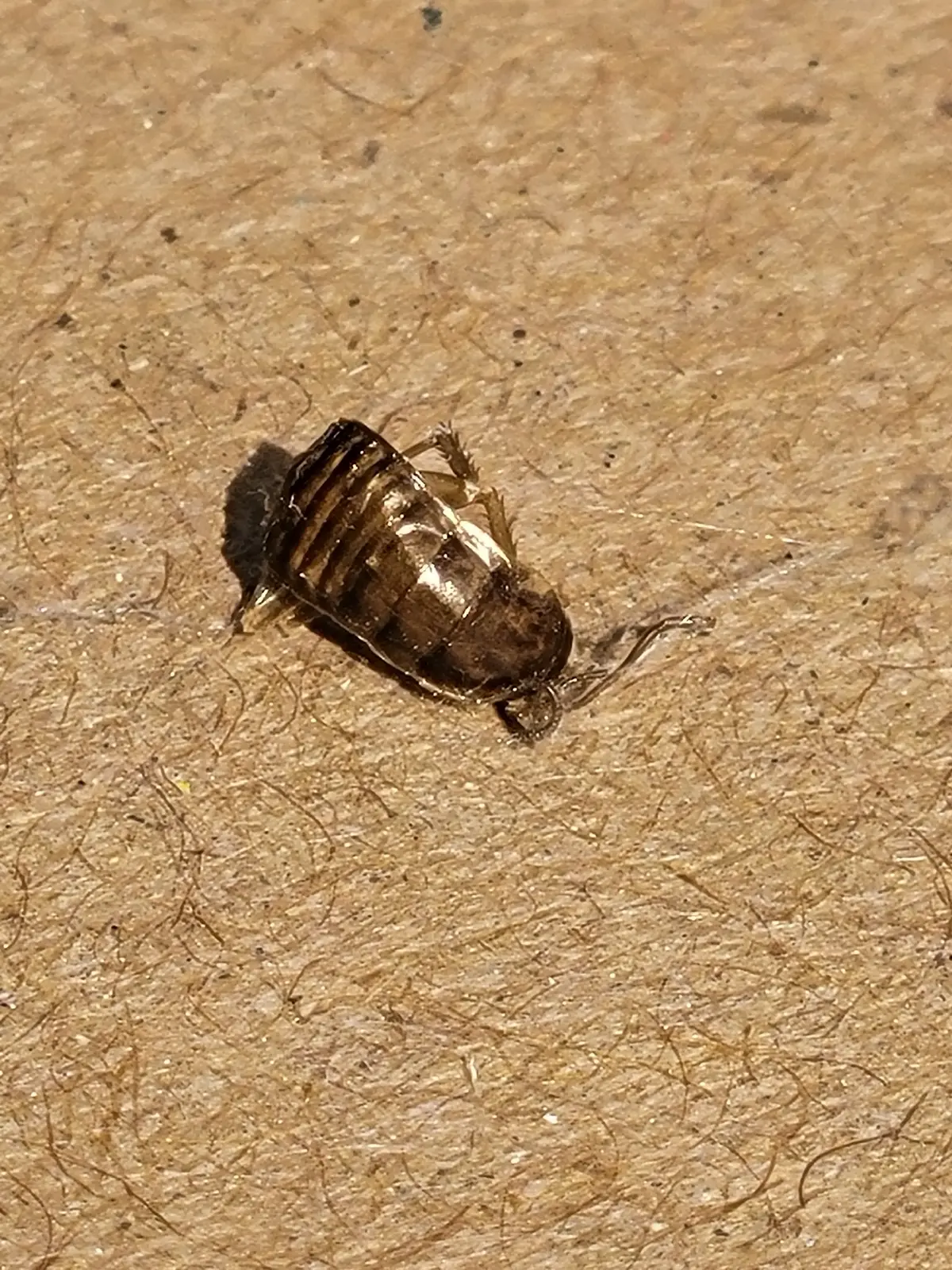
Skins do not always last: Ebeling reports German nymphs quickly eating the skins they had just shed.
A white cockroach has just molted. UC IPM says cockroaches are white right after molting and darken as the new outer covering hardens, usually within hours, so a white roach is an ordinary one, not a separate kind. The guide to white cockroaches covers albino roach sightings, and what baby cockroaches look like shows each species' young.
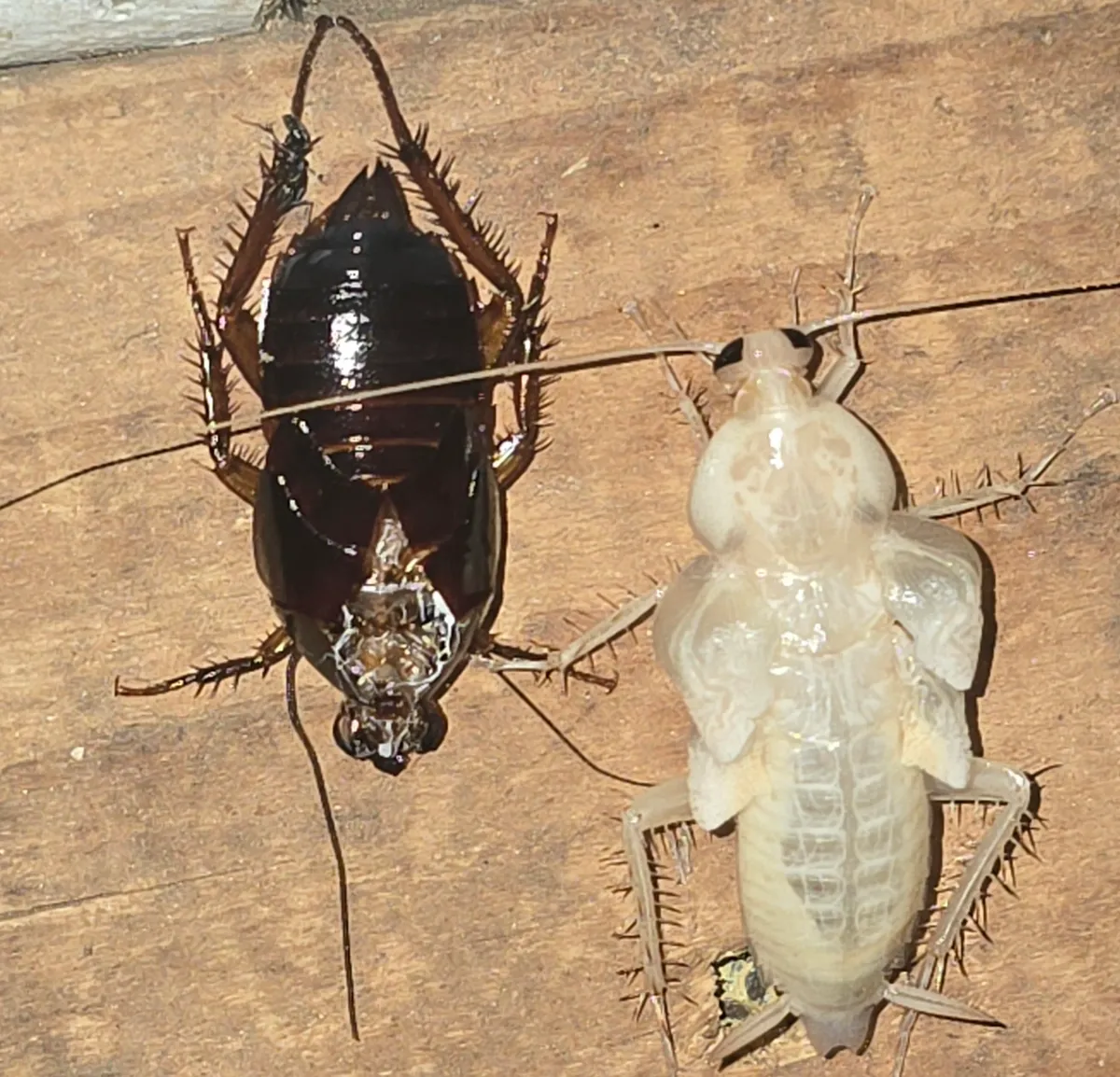
Nymphs are the most common stage in a growing population: Rutgers puts actively growing German cockroach populations at about 80 percent nymphs, which it measures at 1/8 to 9/16 inch.
Does seeing cockroaches in the daytime mean an infestation?
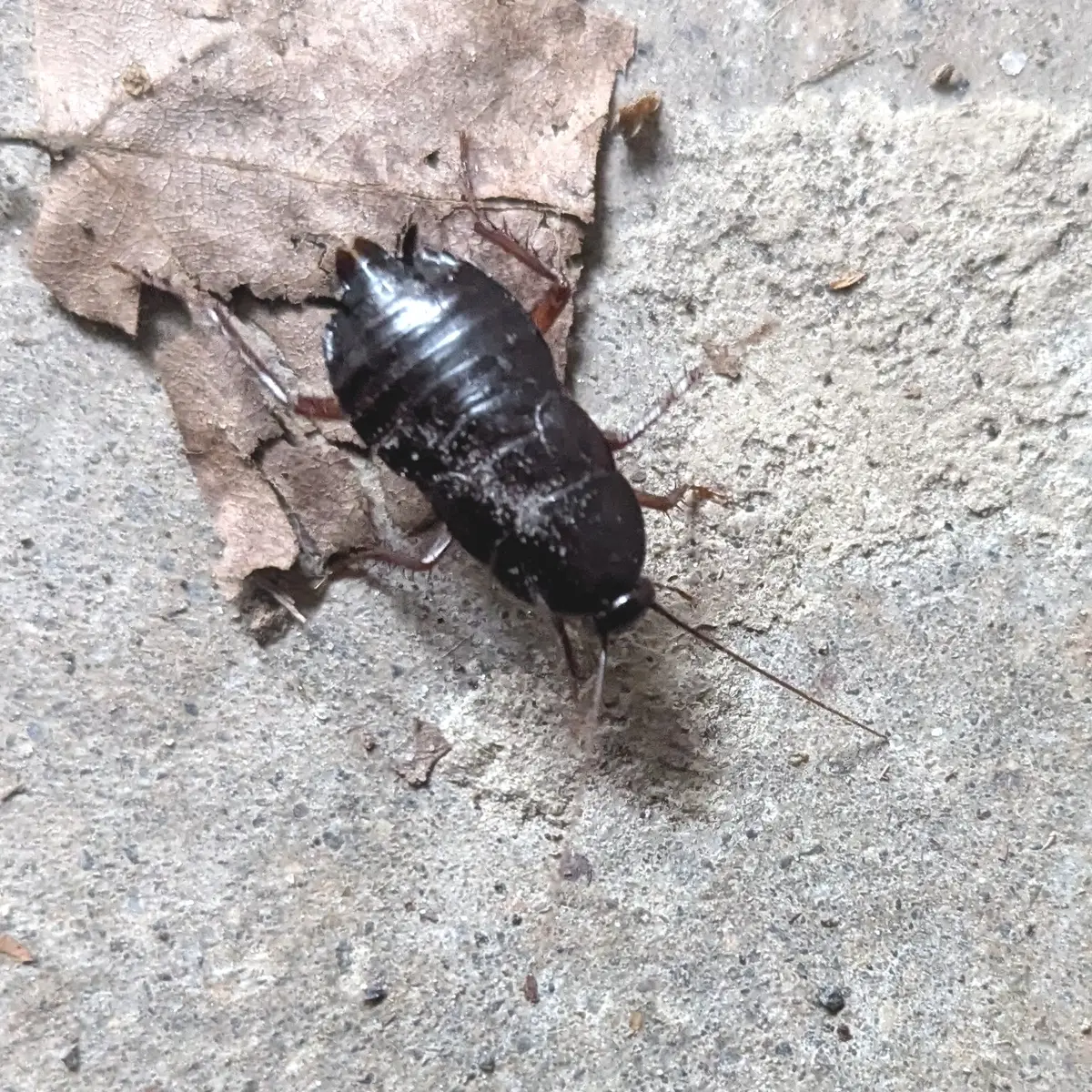
Usually, yes. Cockroaches hide by day, so Texas A&M says that seeing them during the day usually means there are a lot of them around, and NC State says German cockroaches, though nocturnal, occasionally appear by day when the population is too crowded. Ebeling treats German cockroaches seen roaming open spaces in daylight as a sign of a severe infestation.
There are exceptions. Rutgers notes that pyrethroid sprays repel cockroaches, so some may show up on walls or floors soon after an application, and a large roach that wandered in from outdoors is a different case from German cockroaches in a kitchen.
Does one cockroach mean you have an infestation?
Not necessarily; the species and a few days of trapping tell you. Texas A&M says German cockroaches spend their lives indoors, while American, Oriental and smokybrown cockroaches live mostly outdoors and may move inside for food or water, and the University of Florida reads one to a few adults on traps as most likely a new introduction. Where cockroaches come from covers telling a stray from a resident population.
Where do you find signs of cockroaches?
Look in tight, dark, warm spots near food and water, which in most homes means the kitchen and bathroom. Rutgers names door moldings, kitchen cabinet hinges, corners inside cabinets, drawers and the back of the refrigerator as ideal hiding places, with the most roaches usually around the stove and refrigerator. Texas A&M says a German cockroach spends about 75 percent of its life in cracks 1/32 to 3/16 inch wide and calls a good flashlight essential.
Cockroaches do not build nests. The University of Kentucky says they do not live in centralized nests or colonies like ants, bees and termites but gather where odors in their feces draw them, and Virginia Tech describes their busiest runways: pipes through walls, the space beside or behind appliances and the bases of cabinets. Where to look also depends on the species:
- German: kitchens and bathrooms. UC IPM says they prefer food preparation areas, kitchens and bathrooms, and Kentucky finds them under sinks and toilets and inside cabinets and pantries.
- Brown-banded: other rooms, up high. Kentucky finds them in rooms other than kitchens and bathrooms, high on walls, ceilings, cabinets and closets, and UC IPM adds crevices in or near electrical appliances.
- Oriental and American: basements, garages and drains. UC IPM places the Oriental cockroach in cool, dark, damp places such as garages, basements, water meter boxes and drains, and Texas A&M says both species use floor drains to get into buildings. See the Oriental cockroach guide and water bugs vs cockroaches.
- Smokybrown: upper floors and attics. UC IPM says they prefer the upper parts of buildings, and Texas A&M lists soffits and attic eaves among their haunts in the humid South.
- Any species: books, boxes and paper. Ebeling lists glue, wallpaper, fabric and the starch in bookbindings among cockroach foods, and Virginia Tech says cardboard boxes and stacks of paper make ideal shelter.

How do you confirm a cockroach infestation, and how bad is it?
Set sticky traps: they catch roaches you never see and show where most of them are. UC IPM says to place them where floors meet walls near suspected activity, in cupboards and under appliances, and to check them daily for several days; roaches are often caught within the first 24 hours. Rutgers adds the cabinets under the sink and next to the stove, near the refrigerator, beside garbage cans and behind the toilet, out of reach of pets and young children.
Then read the catch. The University of Florida's guide reads it this way for German cockroaches:
- Every life stage, from tiny nymphs to adults. An established infestation.
- One to a few adults. Most likely a new introduction.
- A few very young nymphs. Search for their hiding place within 5 to 10 feet of the trap.
- The traps with the most roaches. The most heavily infested spots, by UC IPM's reading; UF adds that traps can sometimes show which direction the roaches are coming from.
Traps find roaches but rarely end an infestation: Virginia Tech says sticky traps alone are unlikely to control a population. Keep a few out during treatment, since UC IPM says traps help show whether control is working; a separate guide explains how sticky traps differ from bait stations.
What looks like cockroach signs but isn't?
Mouse droppings, bed bug spots and drywood termite pellets are the usual mix-ups, and each has a tell.
Mouse droppings are larger and smooth. The National Park Service's guide describes smooth pellets 1/8 to 1/4 inch long, like small grains of rice, with at least one pointed end, and says American cockroach droppings are blunt-ended, ridged and smaller. What mouse poop looks like has photos and safe cleanup steps.
Bed bug spots can look like German cockroach droppings, but the University of Tennessee's bed bug program says bed bug feces run red when moistened and cockroach feces do not, and Kentucky says cockroaches seldom gather on beds. See what bed bug poop looks like and bed bug stains and the marks mistaken for them.
Drywood termite pellets have six sides. UC IPM's Pest Notes on drywood termites says six-sided pellets are diagnostic for drywood termites, which push them out of the wood through small kick-out holes; the guide to termite droppings shows them.
Caught an insect instead? The Missouri Department of Conservation notes that ground beetles have shell-like wing covers that meet in a straight line over the abdomen; bugs that look like cockroaches covers the other look-alikes.
Commonly confused with
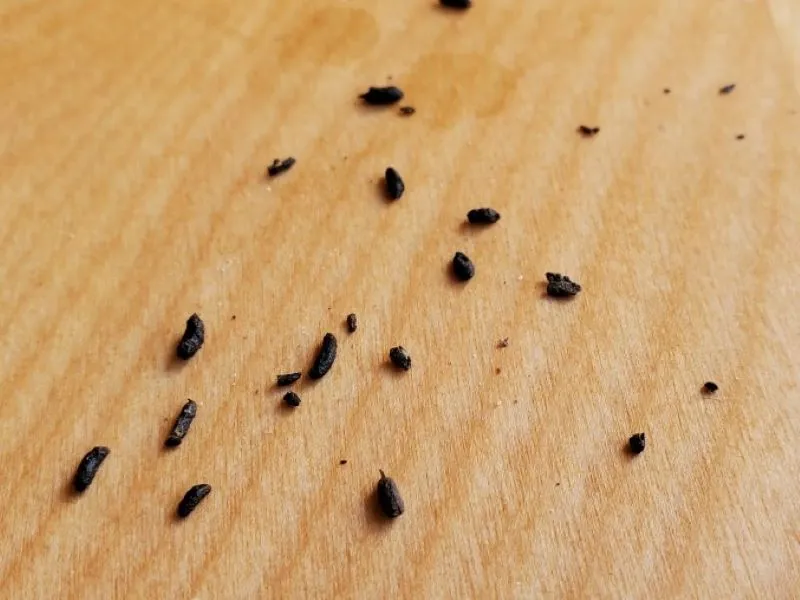 Mouse droppingsSmooth pellets 1/8 to 1/4 inch with a pointed end and no ridges
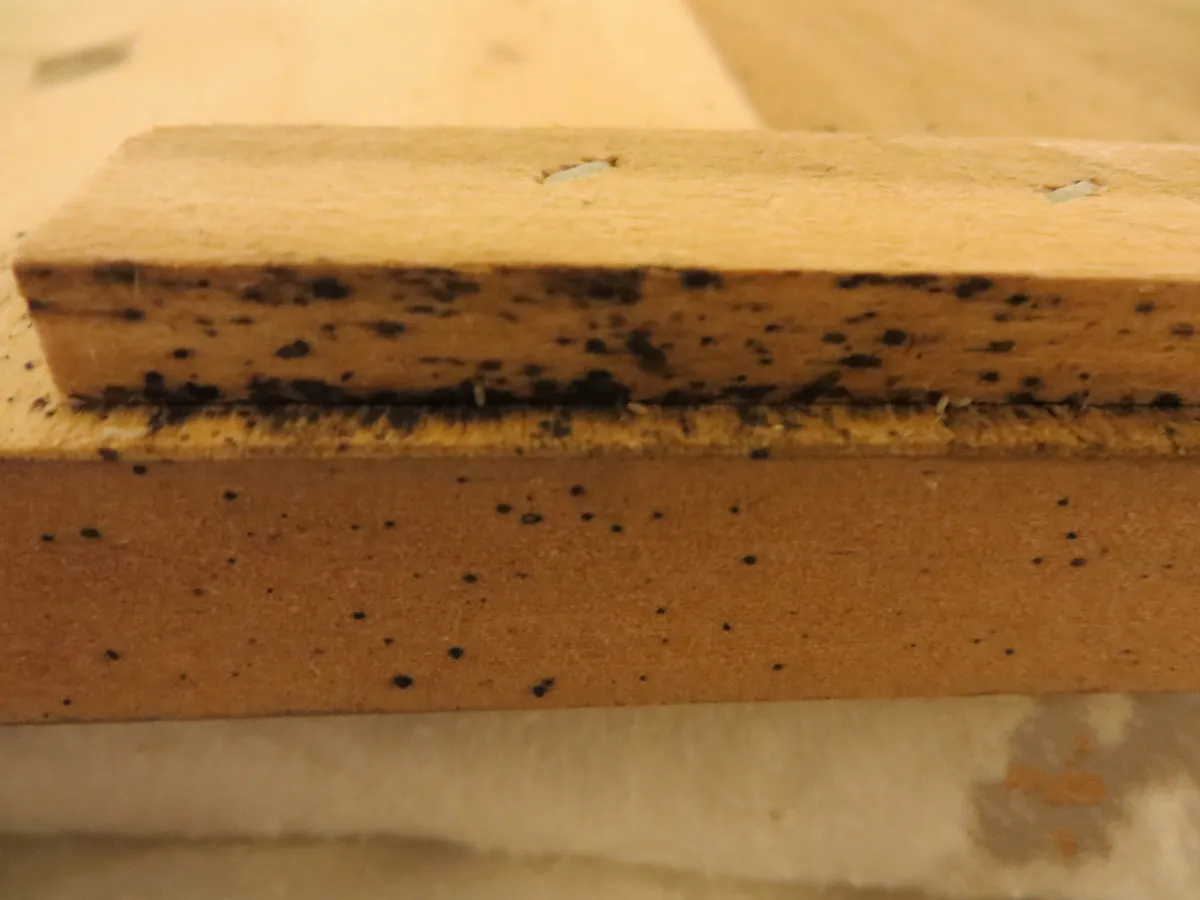 Bed bug spotsRun red when moistened; found on beds, where roaches seldom gather
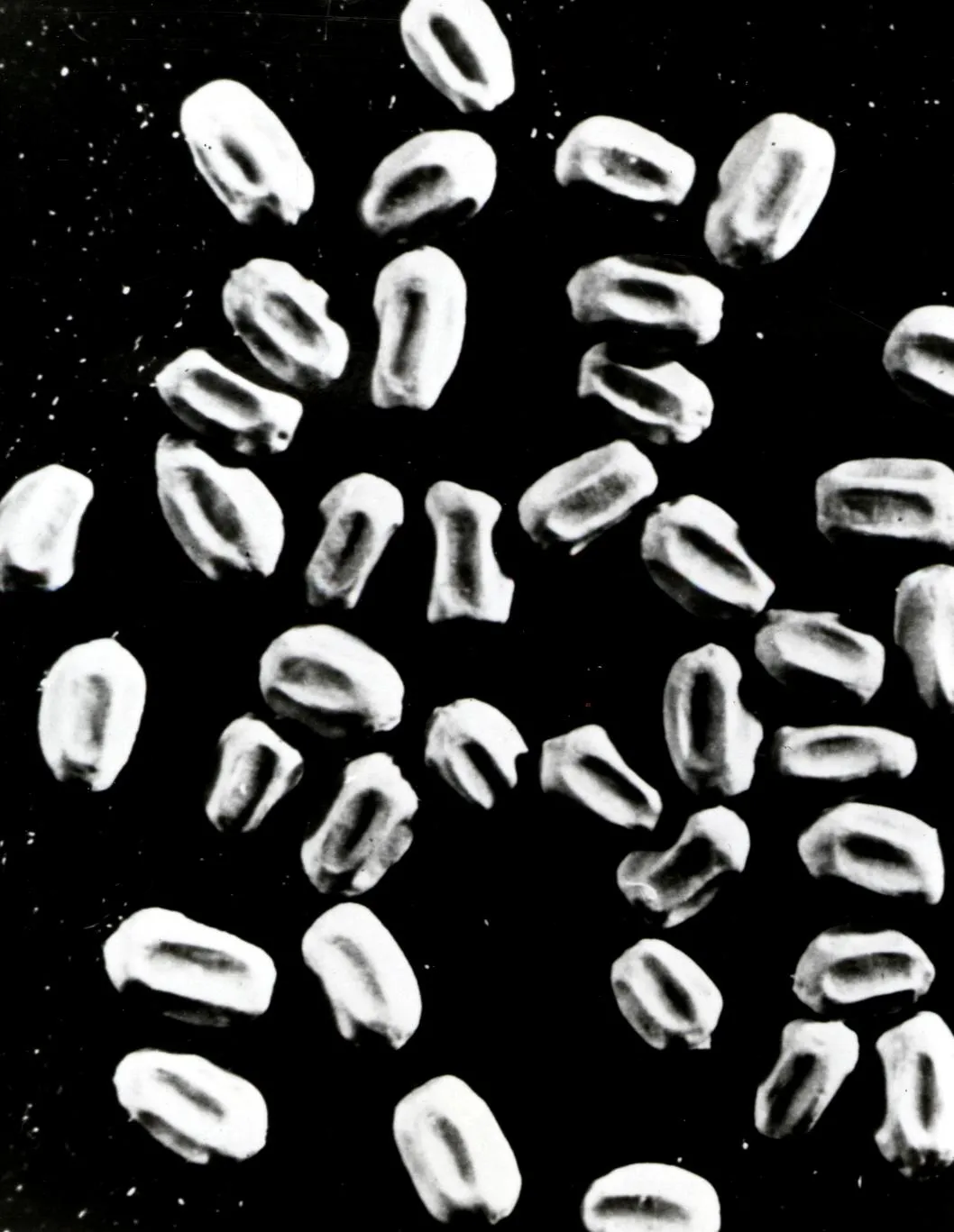 Drywood termite pelletsSix-sided pellets pushed out of small holes in wood
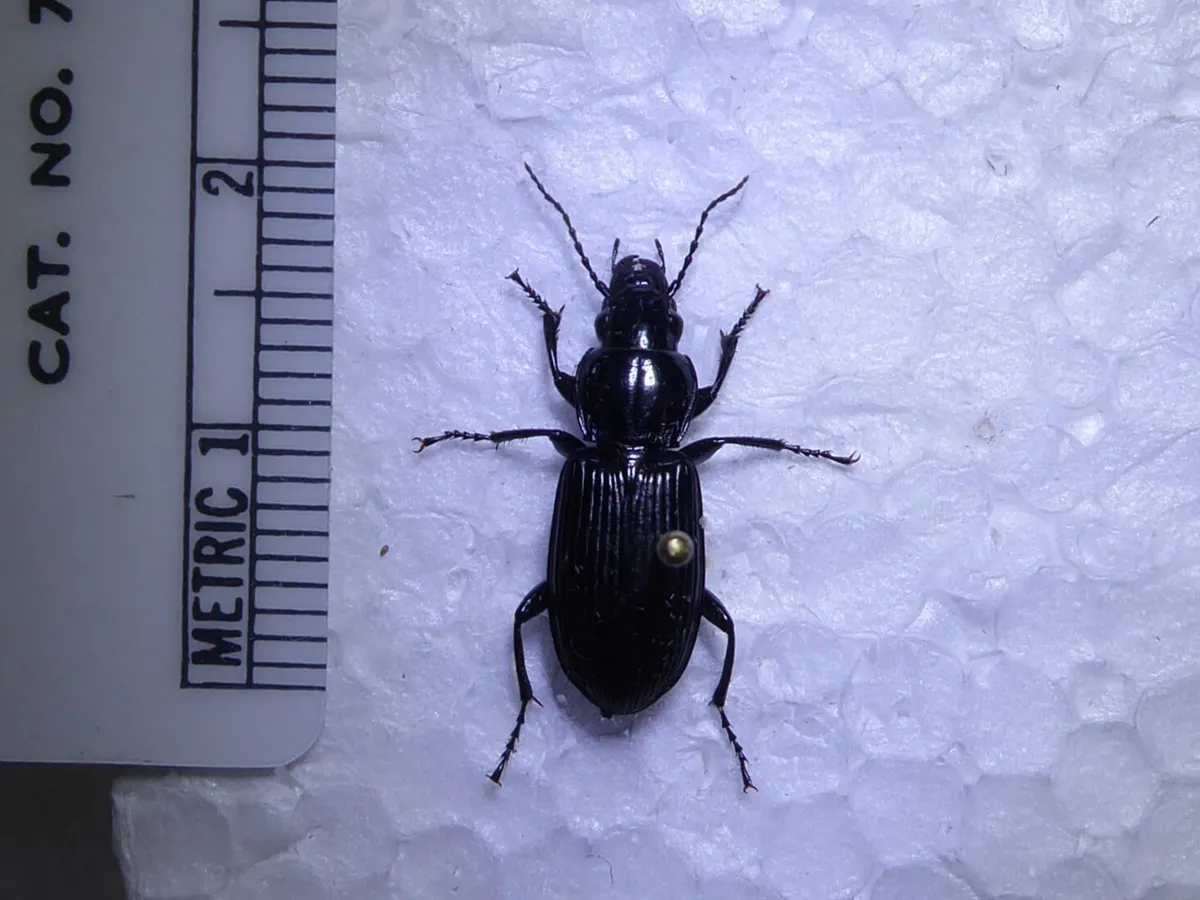 Ground beetleShell-like wing covers that meet in a straight line down the back
Photos: Mouse droppings: NPS Photo (U.S. National Park Service, nps.gov), public domain. Bed bug spots: NY State IPM Program at Cornell University, CC BY 2.0, via Wikimedia Commons, CC BY 2.0. Drywood termite pellets: R6, State & Private Forestry, Forest Health Protection, Public domain, via Wikimedia Commons, public domain. Ground beetle: no rights reserved, via iNaturalist, CC0 1.0.
Are cockroach droppings and shed skins a health risk?
They can be: they carry allergens that can trigger allergies and asthma in some people. The EPA's guide to asthma triggers says cockroach droppings or body parts can trigger asthma and that proteins in their feces and saliva can cause allergic reactions or asthma symptoms in some people. Rutgers says feces, shed skins and dead bodies contain these allergens, and NC State finds them in saliva and eggs too.
Kentucky describes the allergy symptoms as congestion, sneezing and watery eyes, and asthma as recurrent cough, wheezing and difficulty breathing. UC IPM says indoor infestations have been identified as risk factors for developing asthma in children, especially in multi-unit housing, and that allergen levels track cockroach numbers.
The signs and the allergen go together. In a 1998-1999 national survey of 831 US homes by the National Institute of Environmental Health Sciences and the Department of Housing and Urban Development, Cohn and colleagues found detectable cockroach allergen in an estimated 63 percent of homes; high levels were most likely where roach problems were reported or observed, and the odds rose with the number of roaches seen.
Cockroaches can carry germs to food as well. UC IPM says German cockroaches are believed capable of transmitting numerous disease-causing organisms and that American cockroaches can transmit bacteria that cause food poisoning. Bites are another matter, covered in what is known about cockroach bites.
Clean up what you find. Rutgers recommends a HEPA-filter vacuum for live and dead roaches, droppings and shed skins, and Virginia Tech advises hot, soapy water for droppings and continued cleaning after the roaches are gone, because the allergens persist. CDC's asthma guidance says to avoid sprays and foggers, which can cause asthma attacks. If it could be mouse droppings, follow the mouse droppings guide instead.
What should you do once you know it is cockroaches?
Identify the cockroach, then follow the plan for that species. A step-by-step plan for getting rid of cockroaches puts traps, cleanup, bait and sealing in order, with a Canadian edition for readers in Canada, and the German cockroach guide covers the commonest house roach.
Roaches do not prove a house is dirty. The National Pesticide Information Center says finding them is not a sign of a dirty house: they crawl in through small holes and cracks, hitch rides in bags, backpacks and suitcases, and move between apartments through pipes and holes in shared walls.
This guide is general educational information, not medical advice. If you have symptoms or concerns after a bite or exposure, contact a healthcare provider.
Frequently Asked Questions
Can you smell if a house has roaches?+
You may, once there are enough of them. The University of Florida tells inspectors that when they cannot see German cockroaches they may be able to smell their distinctive odor, which it attributes to their feces and pheromones. Virginia Tech says some cockroaches produce a strong, unpleasant odor that can carry over to belongings and the inside of a building, and Walter Ebeling's Urban Entomology says a musty odor on objects cockroaches touch may be evident in heavy infestations. Mold can smell musty and places mice use can smell musky, so look for droppings, smears and shed skins nearby.
Is cockroach smell harmful?+
The health sources put the risk in what makes the smell rather than in the odor itself. The EPA says proteins in cockroach feces and saliva can cause allergic reactions or asthma symptoms in some people, and Rutgers says feces, shed skins and dead cockroaches contain allergens that are asthma triggers. A strong smell can mean many roaches, and UC IPM reports that allergen levels track cockroach numbers. Ebeling adds that cockroaches can leave an unpleasant odor and taste on food they contaminate.
How do you get rid of the cockroach smell?+
Remove the roaches and what they leave behind. The University of Florida links the odor to cockroach feces and pheromones, so the droppings come first: Virginia Tech advises hot, soapy water to remove droppings along with their aggregation pheromones, and Rutgers recommends a vacuum with a HEPA filter for live and dead roaches, droppings and shed skins. Once cockroaches are detected, Virginia Tech advises a deep cleaning and considering insecticides for control, and it says to keep cleaning after they are gone, because their allergens persist.
Should I be worried if I see one cockroach?+
Not always; the species and a few days of trapping tell you. Texas A&M says German cockroaches spend their lives indoors, so one in a kitchen or bathroom deserves a closer look, while American, Oriental and smokybrown cockroaches live mostly outdoors and may wander in looking for food or water. Set sticky traps where floors meet walls: the University of Florida reads one to a few adults as most likely a new introduction, and every life stage, from tiny nymphs to adults, as an established infestation.
How many cockroaches is an infestation?+
The extension guides cited here judge an infestation by the life stages and signs present, not by a fixed number. The University of Florida says all life stages of German cockroaches on sticky traps indicate an established infestation, while one to a few adults most likely mean a new introduction. Texas A&M says that seeing cockroaches during the day usually means there are a lot of them, and Rutgers notes that a growing German cockroach population is about 80 percent nymphs, so young roaches on traps are a telling sign.
Why are there suddenly so many cockroaches?+
A hidden population may have grown or been disturbed. Texas A&M says German cockroaches can produce a generation in about 100 days, and UC IPM says each German egg case holds about 30 young. NC State says these nocturnal roaches occasionally appear by day when the population is too crowded, and Rutgers notes that pyrethroid sprays repel roaches, so some may show up on walls or floors soon after an application. Large outdoor species may also move indoors in search of food or water, according to Texas A&M.
Can you have cockroaches without seeing them?+
Yes. The University of Kentucky says cockroaches are more active at night and spend the day hidden in cracks and other dark, secluded areas, and Texas A&M says a German cockroach spends about 75 percent of its life in cracks 1/32 to 3/16 inch wide. Virginia Tech notes that people may find dead cockroaches, egg cases, shed skins or droppings before they see a live one. Sticky traps set where floors meet walls catch roaches you never see, often within the first 24 hours, according to UC IPM.
What are the signs of cockroaches in a bedroom?+
The same signs as anywhere else: droppings, smears, egg cases, shed skins and live or dead roaches, though German cockroaches prefer kitchens and bathrooms, according to UC IPM. The University of Kentucky says cockroaches seldom gather on beds the way bed bugs do, so dark spots on a mattress or bed frame are more often bed bug spots, which the University of Tennessee says run red when moistened. The brown-banded cockroach is the one to suspect elsewhere: Kentucky says it often lives in rooms other than kitchens and bathrooms.
Can you live with a cockroach infestation?+
The health sources give good reasons not to. The EPA says cockroach droppings and body parts can trigger asthma, and UC IPM reports that indoor infestations have been identified as risk factors for developing asthma in children, especially in multi-unit housing. In a national survey of US homes, high cockroach allergen levels were most likely where roach problems were reported or observed. Virginia Tech advises seeing a healthcare provider for allergic and breathing symptoms linked to cockroaches, and NC State says eliminating an infestation greatly reduces the allergens in a home.
What can be mistaken for a cockroach?+
Several beetles and other insects. The Missouri Department of Conservation notes that ground beetles have shell-like wing covers that meet in a straight line over the abdomen, while Texas A&M describes cockroaches as flattened insects whose heads are hidden from above by a plate called the pronotum, with long, thin antennae and spiny legs. The signs get mixed up too: mouse droppings are smooth and 1/8 to 1/4 inch long, bed bug spots run red when moistened, and drywood termite pellets have six sides.
Sources
- Cockroaches (Pest Notes, UC ANR Publication 7467) — University of California Statewide IPM Program (A. M. Sutherland, D. H. Choe and M. K. Rust)
- ENTO-037: Cockroach Biology and Management — Texas A&M AgriLife Extension Service (W. Brown, M. Merchant and K. Siders, 2017)
- ENTFACT-614: Cockroach Elimination in Homes and Apartments — University of Kentucky Department of Entomology (M. F. Potter)
- FS1322: German Cockroach — Rutgers New Jersey Agricultural Experiment Station (C. Wang, 2020)
- ENY989/IN1190: Assessment-Based Pest Management of German Cockroaches — University of Florida IFAS Extension (F. M. Oi, E. Weeks, J. Jonovich and D. Miller)
- Urban Entomology, Chapter 6: Pests On or Near Food (Walter Ebeling, 1975) — University of California, Riverside, Department of Entomology
- Biology and Behavior of the German Cockroach — NC State Extension (A. Wada-Katsumata and C. Hayes, 2025)
- Gut Bacteria Important Factor in Cockroach Gathering (on Wada-Katsumata et al., Proceedings of the National Academy of Sciences, 2015) — North Carolina State University News
- Cockroaches Found in Living Spaces (ENTO-528NP, 2022) — Virginia Cooperative Extension, Virginia Tech (T. A. Dellinger and E. Day)
- Why do I have cockroaches in my home? — National Pesticide Information Center
- Asthma Triggers: Gain Control — US Environmental Protection Agency
- Controlling Asthma — Centers for Disease Control and Prevention
- National Prevalence and Exposure Risk for Cockroach Allergen in U.S. Households (R. D. Cohn et al., Environmental Health Perspectives 114(4), 2006) — National Library of Medicine, PubMed Central
- Domestic Rodents and Cockroaches: Pictorial Key to Droppings (H. G. Scott and M. R. Borom, 1964), page 183 of Pictorial Keys: Arthropods, Reptiles, Birds and Mammals of Public Health Significance — Centers for Disease Control and Prevention (then the Communicable Disease Center), via CDC Stacks
- Conserve O Gram 3/12: Identifying Mouse and Rat Damage in Museum Collections (F. Ritchie) — National Park Service
- Bed Bug Biology and Identification — University of Tennessee Institute of Agriculture
- Drywood Termites (Pest Notes, UC ANR Publication 7440) — University of California Statewide IPM Program
- What does mold smell like? — US Environmental Protection Agency
- Ground Beetles (Carabids) — Missouri Department of Conservation
How this guide was made: it was researched and drafted with AI assistance from the sources listed above. A second, independent AI pass then checked each factual claim against those sources. Found an error? Email support@buzzskito.ca.