
Tick Identifier: What Kind of Tick Is This?
6 quick questions about where you picked it up, where you found it, its size, the marks on its back, its legs and the season. You get the two or three most likely ticks, a real photo of each, how to confirm it, what it can spread and what to do now. It also tells you when your bug is probably not a tick.
Published by BuzzSkito Mosquito & Tick Control · October 23, 2026 · Drafted with AI assistance and checked against the sources listed below
Question 1 of 6
Where did you or your pet pick it up?
Your best guess is fine. If you traveled recently, pick where you were.
How this works: each answer adds points to the ticks it fits, using what CDC, the Public Health Agency of Canada, Public Health Ontario and university extension services say about each one, and the result shows the reasons. It cannot see your tick, so treat the result as a place to start, and it is not medical advice. Your answers are not saved with your name; the site counts which answers are picked, through Google Analytics, to improve the tool.
Have a bite but no tick? Try the bug bite identifier. Found a spider instead? Try the spider identifier.
What to do about a tick right now
Removing an attached tick as soon as possible lowers the chance of infection (PHAC). These steps apply to every kind of tick:
What to do about a tick
If it is attached, remove it now
- Grasp the tick as close to the skin as you can with clean, fine-tipped tweezers
- Pull it away from the skin with steady, even pressure. Do not twist or jerk it
- Do not use petroleum jelly, heat, nail polish or other products to make it let go
- Clean the bite and your hands with soap and water, rubbing alcohol or hand sanitizer
- Never crush a tick with your fingers
Then
- Keep the tick in a sealed bag or pill bottle, with the date and the place you were bitten, in case you see a doctor
- Get it identified free from a photo: TickSpotters in the US, eTick.ca in Canada
- Testing the tick for germs is generally not recommended: a result cannot tell you whether you are infected
- Watch the bite and how you feel for the next several weeks
See a doctor promptly for
- A rash or a fever within several weeks of the bite. Tell the doctor when and where you were bitten
- A red rash that keeps growing for days at the bite, with or without a bull’s-eye
- Fever, chills, headache, tiredness, or muscle and joint aches after a bite, even without a rash
- A swollen blacklegged (deer) tick, or one that might have been, from an area where Lyme disease is common: call within 72 hours of removing it
- A tick you cannot remove, or one buried deep in the skin
- Weakness or numbness that creeps up from the legs: search the body for an attached tick, because removing it is the treatment for tick paralysis
Call 911 for
- Trouble breathing, swelling of the face or throat, or dizziness: signs of a severe allergic reaction, which in alpha-gal syndrome usually starts 2 to 6 hours after eating red meat or dairy
From CDC, the Public Health Agency of Canada and BCCDC (see sources). TickSpotters is run by the University of Rhode Island; eTick.ca is a Canadian project with university and public health partners. 911 is the emergency number in Canada too. This tool gives general information, not medical advice.
Common ticks compared
Size and markings are for an unfed adult unless the row says otherwise. Each tick links to its guide.
| Tick | How to recognize it | Where it lives | What it can spread |
|---|---|---|---|
| Blacklegged (deer) tick | Female: red-orange body, dark shield, black legs. Male: all dark. A sesame seed as an adult, a poppy seed as a nymph | Eastern US; southern Manitoba, Ontario, southern Quebec, New Brunswick, Nova Scotia | Lyme disease, anaplasmosis, babesiosis, Powassan virus |
| Western blacklegged tick | Like the blacklegged tick: reddish-orange body, dark shield and legs; female about 1/8 inch | Pacific Coast, especially northern California; coastal and southern interior BC | Lyme disease, anaplasmosis |
| Lone star tick | Reddish-brown, about 1/8 to 3/16 inch. Female: one white dot. Male: faint white marks at the rear edge | Northeast, South and Midwest US; found, but not known to be established, in Canada | Ehrlichiosis, tularemia, Heartland and Bourbon viruses; linked to alpha-gal syndrome. Not Lyme |
| American dog tick | Larger, 3/16 to 1/4 inch, brown with silvery-white markings on the shield | East of the Rocky Mountains; parts of south-central and southeastern Canada | Rocky Mountain spotted fever, tularemia; tick paralysis. Not Lyme |
| Rocky Mountain wood tick | Female reddish-brown with a pale shield, about 1/8 inch; male gray and mottled | Rocky Mountain states at 4,000 to 10,500 feet; Alberta, BC, western Saskatchewan | Colorado tick fever, Rocky Mountain spotted fever, tularemia; tick paralysis |
| Gulf Coast tick | Reddish-brown with whitish lines, 1/8 to 1/4 inch; easily mistaken for the American dog tick | Mainly the southeastern US | Rickettsia parkeri rickettsiosis, a spotted fever |
| Brown dog tick | Plain reddish-brown, narrow, no markings; about 1/8 inch | Worldwide, wherever there are dogs; in Canada only indoors with dogs | Rocky Mountain spotted fever in the southwestern US and along the Mexican border. Not Lyme |
| Asian longhorned tick | Small, brown and plain, the size of a sesame seed; often many at once | 24 eastern US states by April 2026; not reported in Ontario | Not yet known whether it makes people ill in the US |
| Groundhog tick | Beige, with a brown shield | Eastern North America; south-central and southeastern Canada | Powassan virus |
| Winter (moose) tick | Large, reddish-brown to gray-brown, with a patterned shield; female 5 to 7 mm | Across North America on moose, deer, elk and horses | Not known to spread disease to people |
| Soft ticks | Leathery, wrinkled and grayish, with the head hidden underneath; bites last under half an hour | Rodent-infested cabins in western mountains; caves in parts of Texas; bat roosts | Soft tick relapsing fever (rodent soft ticks) |
| Look-alikes (not ticks) | 6 legs and antennae (spider beetles, weevils, bed bugs), or tiny and reddish with 8 legs (clover mites) | Mostly indoors: walls, windowsills, floors, furniture | Clover mites feed on plants and do not attack people |
From CDC, PHAC, Public Health Ontario, BCCDC, the B.C. government, USDA, the Alabama Department of Agriculture and Industries, the Illinois Department of Public Health, the Connecticut Agricultural Experiment Station, Ohio State, UF/IFAS, UC IPM, Utah State, Penn State, the University of Saskatchewan, the University of Rhode Island and Utah’s Department of Health (see sources). Scroll sideways on a phone to see every column.
How to tell ticks apart
Five clues do most of the work. The questions above ask about each one.
Is it a tick at all?
Count the legs. Adult and nymph ticks have 8 legs and never have antennae or wings; only tiny larvae have 6 (University of Rhode Island; Utah State Extension). About 1 in 20 photos sent to the TickSpotters service as ticks show a look-alike, such as a spider beetle or a weevil (University of Rhode Island).
The shield on its back
Look just behind the head. A solid dark shield and black legs point to a blacklegged tick (Ohio State; Illinois Department of Public Health); one white dot to a female lone star tick (CDC); silvery-white mottling to an American dog, Rocky Mountain wood or Gulf Coast tick (Connecticut Agricultural Experiment Station; B.C. government; Ohio State); no markings at all to a brown dog or Asian longhorned tick (UF/IFAS; Ohio State).
Size and life stage
Nymphs are about the size of a poppy seed and adult blacklegged ticks about a sesame seed (CDC), while unfed American dog ticks reach 3/16 to 1/4 inch (Ohio State; Connecticut Agricultural Experiment Station). Ticks under 1/8 inch are usually young and hard to identify (Illinois Department of Public Health).
A swollen tick
A tick that has fed swells and often turns gray, which hides its colors (Ohio State). Look at the shield behind the head: an American dog tick’s shield does not grow as she feeds, and its white marks stay visible (Connecticut Agricultural Experiment Station).
Where and when
Region narrows it fast: blacklegged ticks in the East, western blacklegged ticks on the Pacific Coast, Rocky Mountain wood ticks in the mountain West, lone star and Gulf Coast ticks mainly in the South and East (CDC). Season helps too: adult blacklegged ticks are out in fall and on winter days above freezing (CDC), American dog ticks in spring and early summer (Ohio State).
Tick photos to compare
Real photos from CDC’s Public Health Image Library. Each one opens a guide to that tick.
Six common sights, side by side
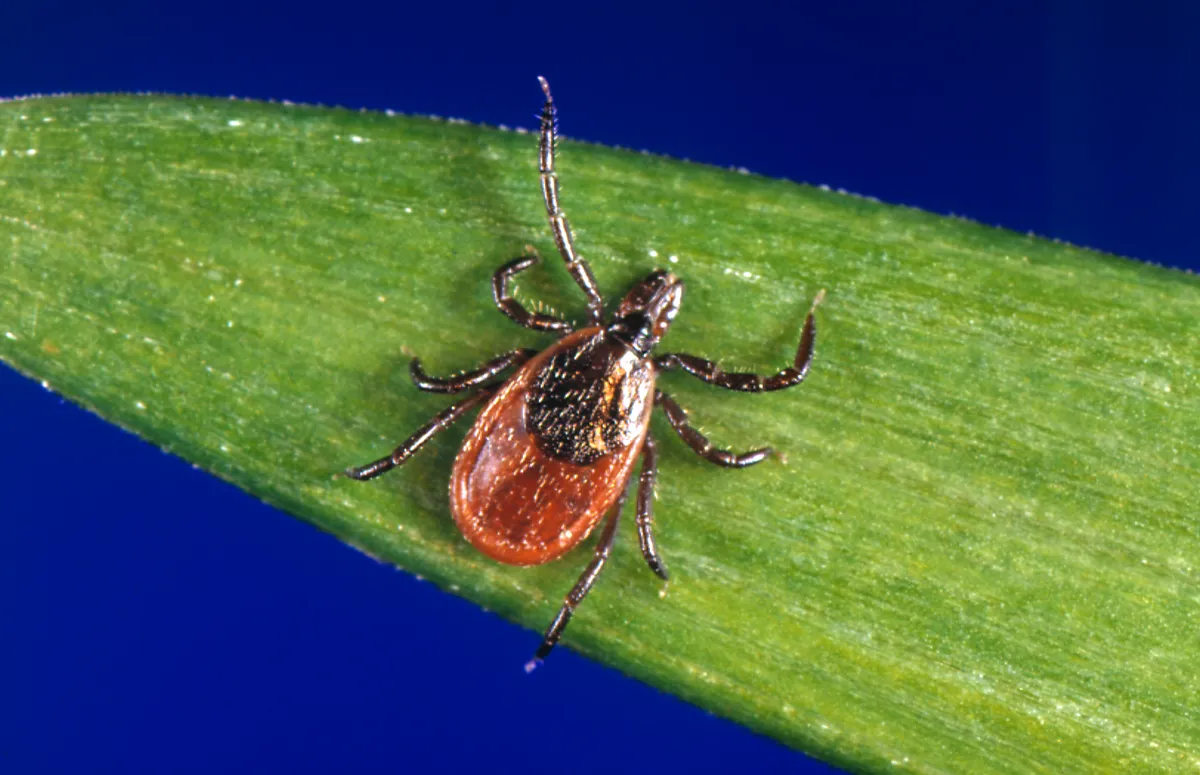 Blacklegged (deer) tickRed-orange body, dark shield and black legs; about the size of a sesame seed
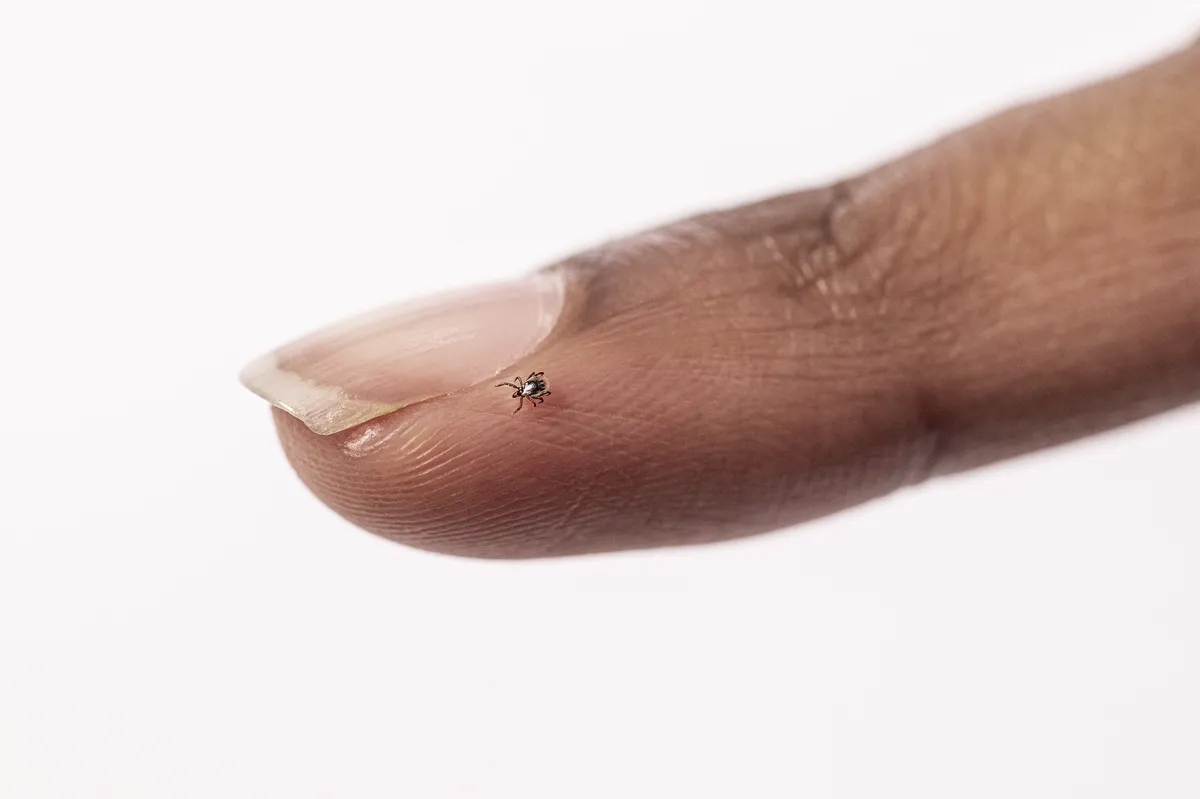 Deer tick nymphAbout the size of a poppy seed; CDC calls nymphs a particularly high Lyme risk
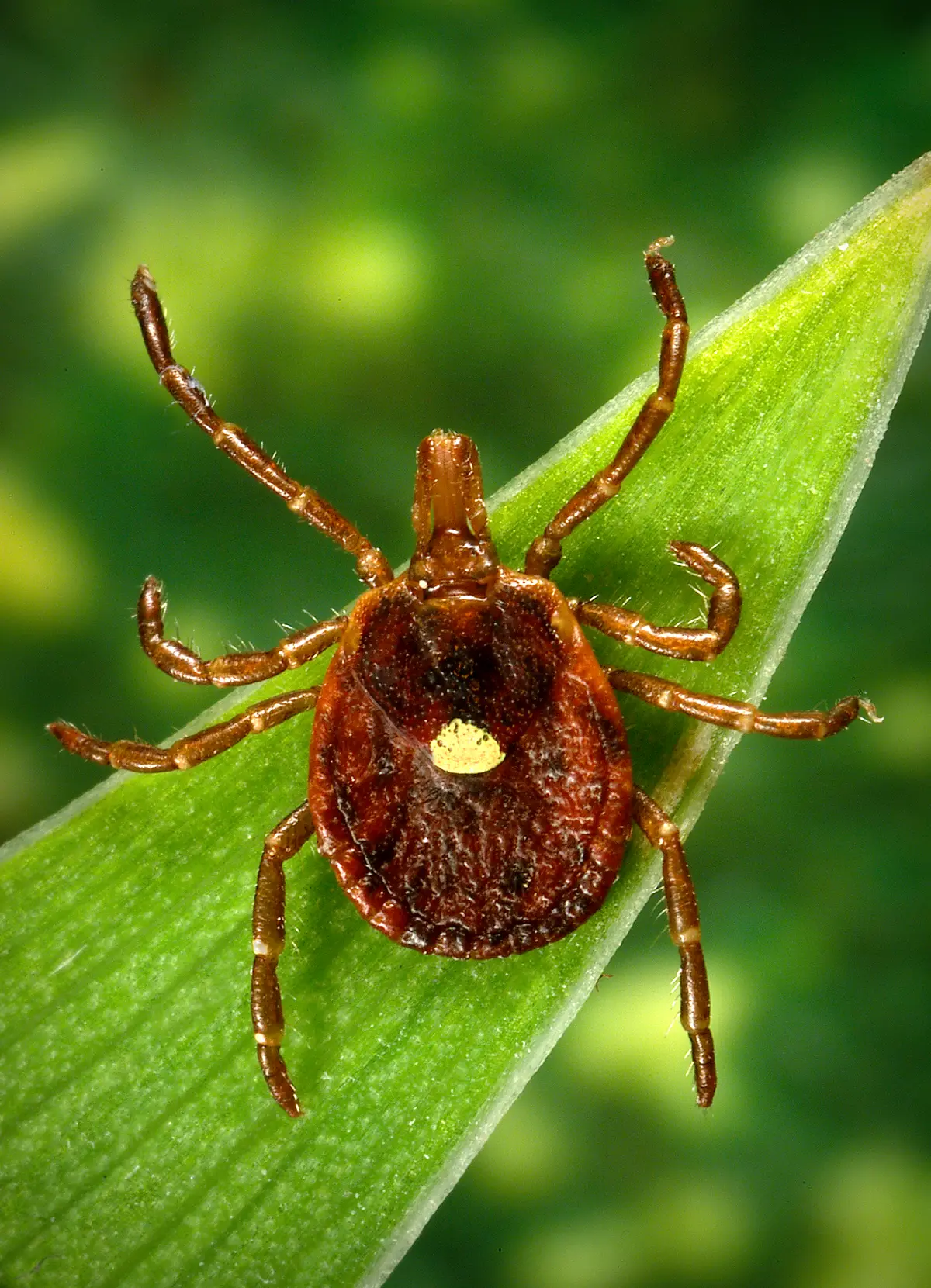 Lone star tickOne white dot on the female’s back; a very aggressive biter
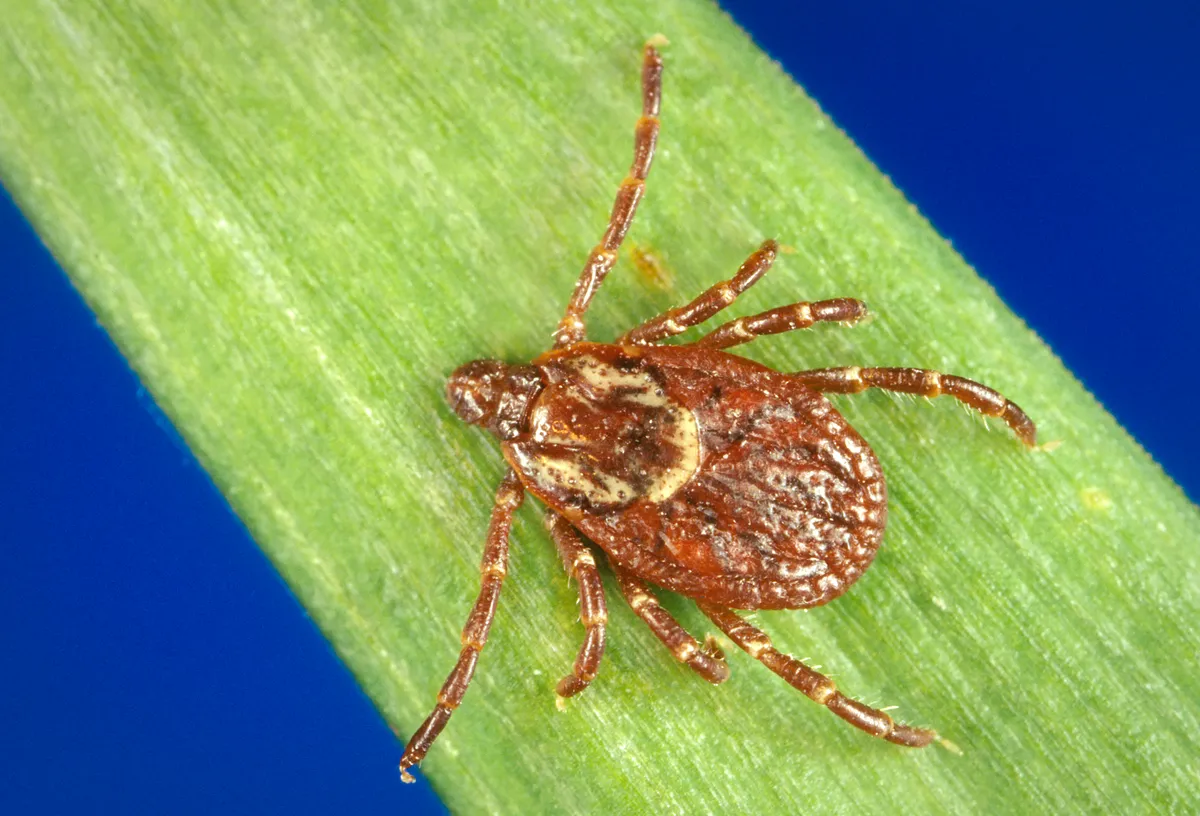 American dog tickLarger, with silvery-white markings on the shield
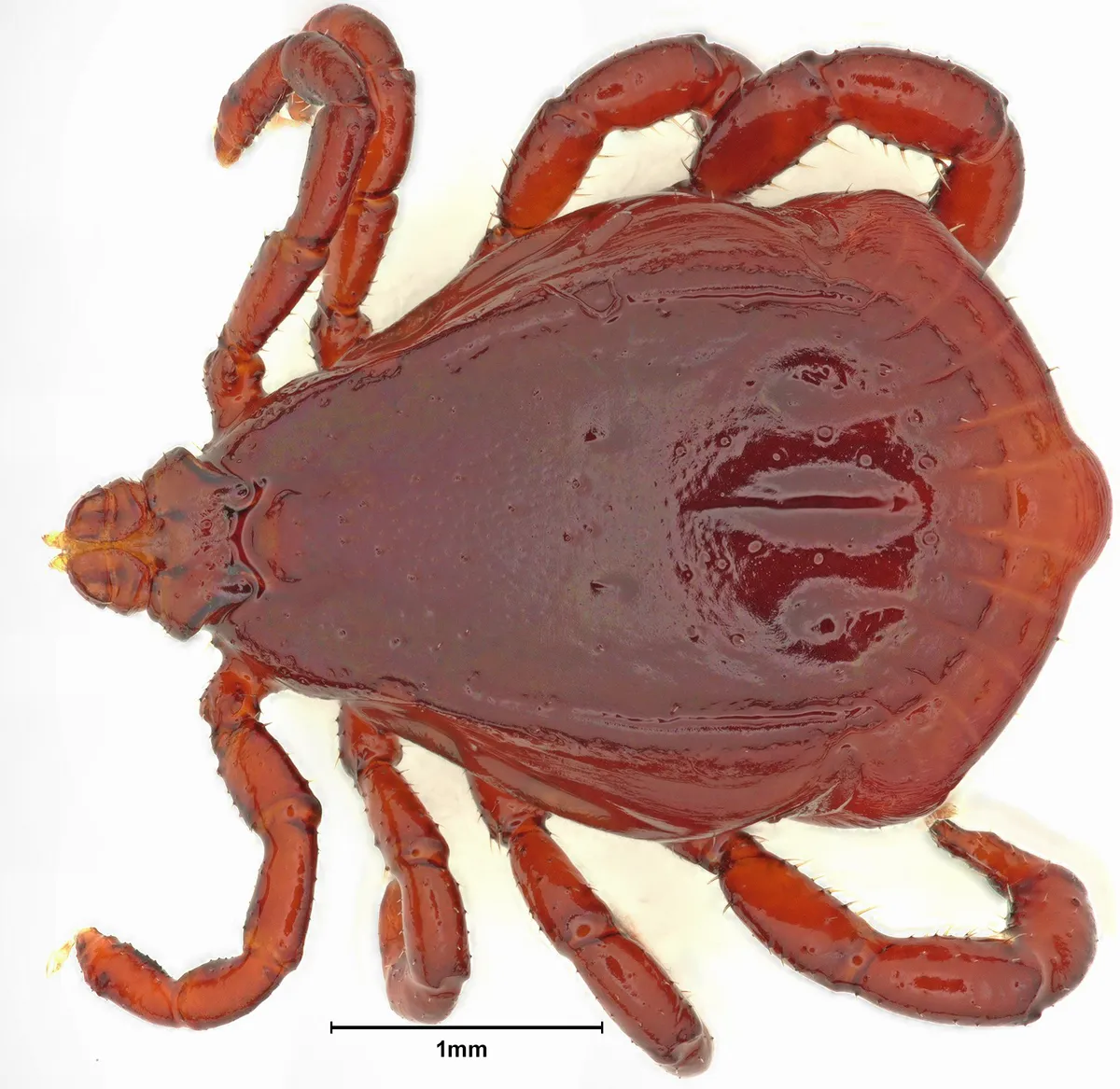 Brown dog tickPlain reddish-brown with no markings; can live indoors where dogs are
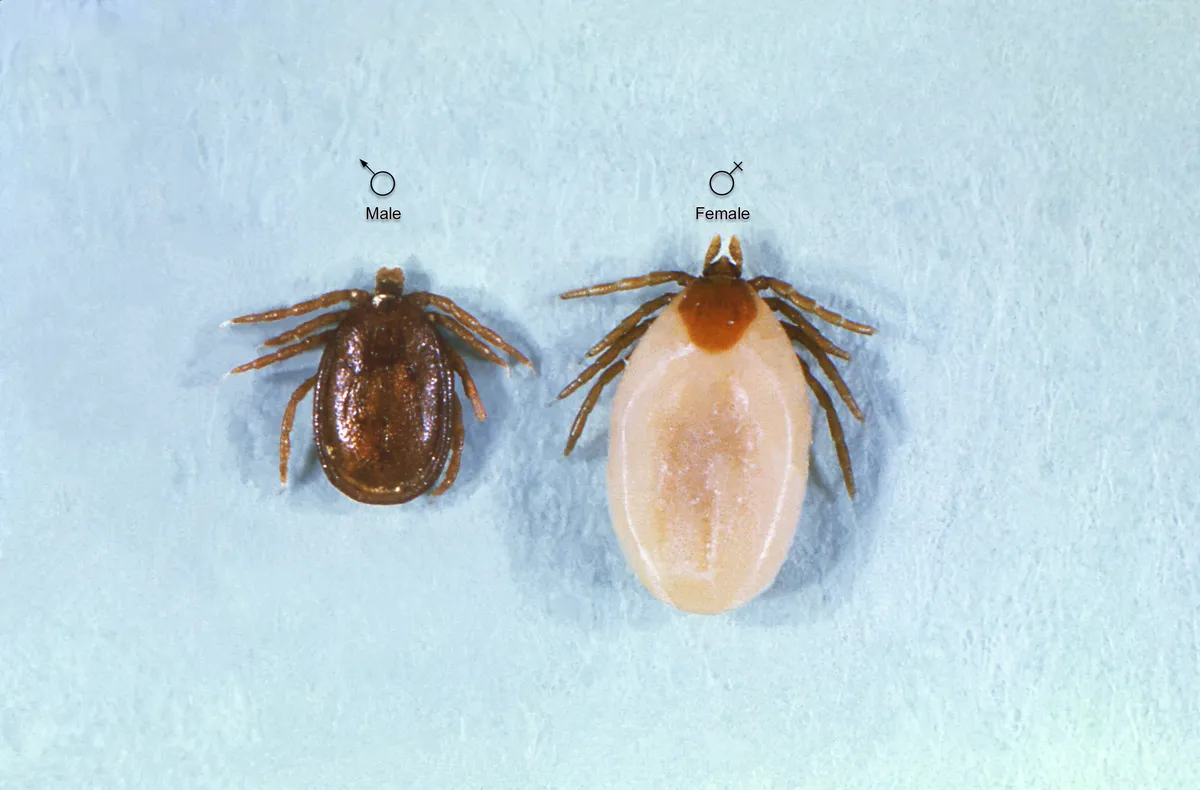 Swollen (fed) tickA fed female swells up and changes color, often to gray
Photos: Blacklegged (deer) tick: CDC/ Michael L. Levin, PhD; photo: Jim Gathany (CDC Public Health Image Library, phil.cdc.gov), public domain. Deer tick nymph: CDC/ Division of Vector-Borne Diseases Rickettsial Zoonoses Branch; photo: Lauren Bishop (CDC Public Health Image Library, phil.cdc.gov), public domain. Lone star tick: CDC/ Dr. Amanda Loftis, Dr. William Nicholson, Dr. Will Reeves, Dr. Chris Paddock; photo: James Gathany (CDC Public Health Image Library, phil.cdc.gov), public domain. American dog tick: CDC/DVBID/ Gary O. Maupin; photo: James Gathany (CDC Public Health Image Library, phil.cdc.gov), public domain. Brown dog tick: CDC/ Dr. Gary Alpert; PhD; photo: Anna Kang; Dr. Gary Alpert; PhD (CDC Public Health Image Library, phil.cdc.gov), public domain. Swollen (fed) tick: CDC/ Margaret A. Parsons; photo: Dr. George Anastos; Dept. of Zoology; Univ. of Maryland (CDC Public Health Image Library, phil.cdc.gov), public domain.
Already know which tick it is?
Go straight to the guides for that tick.
Blacklegged (deer) tick
Small, with black legs and a solid dark shield. The adult female has a red-orange body; the nymph is the size of a poppy seed.
American dog tick (wood tick)
A larger brown tick with silvery-white markings on its shield.
Lone star tick
Reddish-brown. The adult female has one white dot in the middle of her back.
Brown dog tick
A plain reddish-brown tick with no markings, the one that can live indoors where dogs are.
Western blacklegged tick
The West Coast twin of the deer tick: a reddish-orange body, a dark shield and dark legs.
Rocky Mountain wood tick
A brown tick with a pale shield, found in the mountain West and western Canada, mostly in spring.
Gulf Coast tick
A southern tick with whitish markings, easily mistaken for an American dog tick.
Groundhog (woodchuck) tick
A plain tan tick from the dens of groundhogs, raccoons and skunks that often turns up on pets.
Asian longhorned tick
A small, plain brown tick first found in the US in 2017, often by the hundreds on livestock or dogs.
Winter (moose) tick
A large reddish-brown tick of moose, deer, elk and horses, picked up in fall and winter.
Soft tick (relapsing fever tick or bat tick)
A leathery, wrinkled gray tick with its head hidden underneath, from rodent nests or bat roosts.
Probably not a tick
Antennae, wings or 6 legs on a bigger bug, or a tiny, quick red speck, point to a tick look-alike.
Tick identification questions
How do I identify what kind of tick I have?
Start with what you can see: the legs (8 on adults and nymphs, 6 on tiny larvae, never antennae), the shield behind the head (solid dark, one white dot, silvery mottling or plain), and the size against a seed. Then add where you were and the season, because each tick lives in its own range (CDC). The six questions above score those clues. To be sure, send a sharp photo to a free service such as TickSpotters or, in Canada, eTick.ca.
More: Tick Identification Chart: Deer Tick vs Dog Tick vs Lone Star Tick
Can I identify my tick online for free?
Yes. TickSpotters, run by the University of Rhode Island’s TickEncounter program, identifies a tick from your photo and a few questions, free, usually within 24 hours. In Canada, eTick.ca, which PHAC points readers to, does the same for free and aims to answer within one to two business days. Photograph the back and the underside in bright light, with a ruler or coin beside the tick, and keep the tick for at least 5 days in case more photos are needed (eTick).
What color tick carries Lyme disease?
In North America, Lyme disease is spread by blacklegged (deer) ticks in the East and western blacklegged ticks on the Pacific Coast (CDC; PHAC). An adult female has a red-orange body behind a dark brown shield and black legs, and is about the size of a sesame seed; the male is all dark, and the nymph, the size of a poppy seed, is see-through to slightly gray or brown (Ohio State; Illinois Department of Public Health; CDC). CDC says lone star, American dog, Rocky Mountain wood and brown dog ticks cannot transmit Lyme disease bacteria.
More: Ticks That Carry Lyme Disease: A Picture Guide to Both US Species
What bugs are mistaken for ticks?
Spider beetles, weevils, bed bugs, stink bug nymphs, deer keds and clover mites are common ones (University of Rhode Island; Utah Department of Health). The quick test is the legs: insects have 6 legs and antennae, while adult ticks have 8 legs and no antennae. Clover mites have 8 legs too, but they are reddish, much smaller than a tick and feed on plants, not people (Utah Department of Health; Penn State Extension). About 1 in 20 photos sent to TickSpotters as ticks turn out to be look-alikes.
More: 5 Bugs That Look Like Ticks (And How to Tell Them Apart)
How can you tell what kind of tick it is when it is swollen?
A fed tick swells and often turns gray, which hides its colors (Ohio State). Look at the shield behind the head: an American dog tick’s shield does not grow as she feeds, and its white marks stay visible (Connecticut Agricultural Experiment Station). If you still cannot tell, keep the tick and send a photo for identification. CDC says a swollen tick carries a higher Lyme risk than a flat one, so if it could be a blacklegged tick and you were bitten where Lyme disease is common, call a doctor within 72 hours of removing it.
More: What Do Ticks Look Like? Size, Color and Markings of the Common US Ticks
What does a white dot on a tick’s back mean?
A single white or silvery dot in the middle of the back marks an adult female lone star tick (CDC); males have faint white marks along the rear edge instead (Ohio State; Connecticut Agricultural Experiment Station). Lone star ticks bite people readily, can spread ehrlichiosis and tularemia, and their bites are linked to alpha-gal syndrome, an allergy to red meat (CDC). They turn up in Canada but are not known to be established there (PHAC; Public Health Ontario).
More: Alpha-Gal Syndrome: The Tick Bite That Causes a Red Meat Allergy (2026)
What are the tiny ticks the size of a poppy seed?
Usually nymphs, the stage between larva and adult. Blacklegged nymphs are about the size of a poppy seed, and CDC calls them a particularly high Lyme risk because they are numerous and hard to see. Even tinier ticks with 6 legs, often dozens at once in late summer, are larvae, called seed ticks, such as blacklegged or lone star larvae (University of Rhode Island). Lift loose ones off with tape and remove attached ones with tweezers.
More: Seed Ticks: What Baby Ticks Look Like and How to Remove Dozens at Once
Should I get my tick tested for Lyme disease?
CDC does not generally recommend it: a positive result does not necessarily mean you are infected, a negative one can give false reassurance, and you should not wait for a result if you feel ill. PHAC adds that tick testing is not meant to guide diagnosis or treatment, and that a health care provider can consider preventive treatment without it. Getting the tick identified is more useful, and it is free through TickSpotters or eTick.ca.
More: How to Remove a Tick Safely (And When to See a Doctor in Ontario)
Do ticks fall off if you shower?
Ticks that have not attached yet may wash off: CDC says showering within two hours of coming indoors lowers the risk of Lyme disease and is a good time for a tick check. An attached tick will not wash off and has to be pulled out with fine-tipped tweezers. CDC also advises tumble-drying clothes on high heat for 10 minutes to kill ticks on dry clothing.
Can ticks live in your house?
One can: the brown dog tick can spend its whole life indoors where dogs live, and ticks crawling up walls or curtains are often the first sign (UF/IFAS). In Canada it has been found only indoors, in kennels and homes with dogs (PHAC). Other ticks ride in on clothes and pets but do not settle: American dog ticks will not become established indoors (Connecticut Agricultural Experiment Station), and homes are too dry for lone star ticks to survive long (University of Kentucky).
More: How Long Do Ticks Live — and Can They Live in Your House? (Ontario)
Sources
- Where Ticks Live — Centers for Disease Control and Prevention
- About Ticks and Tickborne Disease — Centers for Disease Control and Prevention
- Preventing Tick Bites — Centers for Disease Control and Prevention
- What to Do After a Tick Bite — Centers for Disease Control and Prevention
- How Lyme Disease Spreads — Centers for Disease Control and Prevention
- Signs and Symptoms of Untreated Lyme Disease — Centers for Disease Control and Prevention
- Lyme Disease Prophylaxis After Tick Bite (flowchart for clinicians) — Centers for Disease Control and Prevention
- About Alpha-gal Syndrome — Centers for Disease Control and Prevention
- Symptoms of Alpha-gal Syndrome — Centers for Disease Control and Prevention
- About Soft Tick Relapsing Fever — Centers for Disease Control and Prevention
- About Powassan Virus — Centers for Disease Control and Prevention
- Bat tick, Carios kelleyi (image 5394) — CDC Public Health Image Library
- Asian Longhorned Ticks — USDA Animal and Plant Health Inspection Service
- Asian Longhorned Tick Detected in Alabama (April 23, 2026) — Alabama Department of Agriculture and Industries
- Ticks in Canada — Public Health Agency of Canada
- How to Remove a Tick — Public Health Agency of Canada
- Lyme Disease: Symptoms and Treatment — Public Health Agency of Canada
- The Ticks of Ontario, 2nd edition (2026) — Public Health Ontario
- Focus On: Alpha-gal Syndrome (2024) — Public Health Ontario
- Amblyomma americanum, or the Lone Star Tick — Institut national de santé publique du Québec (INSPQ)
- Ticks in British Columbia — Government of British Columbia
- Tick Paralysis — BC Centre for Disease Control
- Tick-borne Relapsing Fever — BC Centre for Disease Control
- eTick: image-based tick identification — eTick.ca
- eTick FAQ — eTick.ca
- Instructions for Taking Photos to Submit to eTick.ca — eTick.ca
- Found a Tick? TickSpotters — TickEncounter Resource Center, University of Rhode Island
- Tick Look-alikes — TickEncounter Resource Center, University of Rhode Island
- Gulf Coast Tick — TickEncounter Resource Center, University of Rhode Island
- De-Tick With Duct Tape — TickEncounter Resource Center, University of Rhode Island
- Tick Management Handbook (Bulletin 1010, revised edition) — Connecticut Agricultural Experiment Station
- Blacklegged (Deer) Tick, Ixodes scapularis (ENT-0096) — Ohio State University
- Ticks and Tick-Borne Diseases (HYG-2073) — Ohio State University Extension
- Gulf Coast Tick, Amblyomma maculatum (ENT-0105) — Ohio State University
- Asian Longhorned Ticks in Ohio (VME-1035) — Ohio State University Extension
- Tick Identification — Illinois Department of Public Health
- Asian Longhorned Tick, Haemaphysalis longicornis — Penn State Extension
- Clover Mites — Penn State Extension
- Brown Dog Tick (EENY-221) — University of Florida IFAS Extension
- Lyme Disease in California (Pest Notes 7485) — University of California Statewide IPM Program
- Colorado Ticks and Tick-Borne Diseases — Colorado State University Extension
- Ticks and Tickborne Diseases of Utah — Utah State University Extension
- Winter Tick (Dermacentor albipictus) — University of New Hampshire Cooperative Extension
- Dermacentor albipictus (winter tick) — Western College of Veterinary Medicine, University of Saskatchewan
- The Lone Star Tick in Kentucky (ENTFACT-648) — University of Kentucky Entomology
- Tick Look-alikes — Utah Department of Health and Human Services
- Bed Bugs: Appearance and Life Cycle — US Environmental Protection Agency
How this page was made: the questions, results and text were researched and drafted with AI assistance from the sources listed above, and a second, independent AI pass checked each factual claim against those sources. The photos come from CDC’s Public Health Image Library and other sources that allow reuse, with each credit shown under the photo. This page gives general information, not medical advice. Found an error? Email support@buzzskito.ca.
BuzzSkito treats yards for ticks and mosquitoes in the Greater Toronto Area. Local? Ask for a free yard assessment.