Quick Answer
Alpha-gal syndrome (AGS) is a food allergy to a sugar molecule (alpha-gal) found in mammalian meat, usually triggered by a tick bite. Its signature is a delayed reaction 2–6 hours after eating red meat — unlike most food allergies, which react within minutes.
- The reaction is delayed 2 to 6 hours after eating beef, pork, lamb, or other mammalian meat — the tell-tale sign, per the CDC.
- In North America the lone star tick (Amblyomma americanum) is the primary cause; research continues into other tick species.
- Triggers are mammal-derived: red meat plus, for some people, dairy, gelatin, and organ meats. Poultry, fish, and eggs are generally safe.
- Diagnosis uses an alpha-gal specific IgE blood test plus your history — typically ordered by an allergist.
- There is no cure; management is avoidance, prescribed emergency medication, and preventing further tick bites. Sensitivity may fade over years.
- Severe reactions (anaphylaxis) are an emergency — call 911 and use a prescribed epinephrine auto-injector.
— BuzzSkito · licensed mosquito & tick control professionals
Most food allergies announce themselves within minutes. Alpha-gal syndrome does the opposite: a person eats a burger at dinner and wakes in the middle of the night covered in hives, or with cramping and nausea, with no obvious link to the meal hours earlier. That delayed 2–6 hour reaction to red meat is the hallmark of AGS, and it is also why the condition is so often missed. This page explains what alpha-gal syndrome is, what triggers it, how it is diagnosed and managed, and — because it is caused by a tick bite — how prevention ties directly to keeping ticks off you and out of your yard.
This is general information, not medical advice, and it is not a diagnosis. If you think you may have alpha-gal syndrome or any food allergy, see a healthcare provider — an allergist can confirm it with testing. If you have a severe reaction (trouble breathing, throat tightening, widespread hives, faintness), treat it as an emergency: use a prescribed epinephrine auto-injector and call 911 or your local emergency number.
What is alpha-gal syndrome?
Alpha-gal syndrome — also called the alpha-gal allergy, red meat allergy, or mammalian meat allergy — is an allergic reaction to galactose-alpha-1,3-galactose, a sugar (carbohydrate) molecule usually shortened to “alpha-gal.” Alpha-gal is present in most mammals — cows, pigs, sheep, deer, rabbits — but not in humans, other primates, birds, or fish. According to the U.S. Centers for Disease Control and Prevention (CDC), a bite from certain ticks can transfer alpha-gal into a person’s body, prompting the immune system to start producing antibodies against it. After that, eating mammalian meat or products can set off an allergic reaction.
Two features make AGS unusual among food allergies. First, it is an allergy to a sugar molecule rather than a protein, which is rare. Second, the reaction is delayed — typically 2 to 6 hours after eating — instead of appearing within minutes. Both quirks make it easy to overlook, which is part of why the CDC describes AGS as an emerging and likely underdiagnosed condition.
What are the symptoms of alpha-gal syndrome?
Symptoms usually begin 2 to 6 hours after eating mammalian meat or another trigger, which is why many people never connect the reaction to the meal. The CDC notes that severity varies widely from person to person, and even from one reaction to the next in the same person. Reported symptoms include:
- Hives, itching, or an itchy rash
- Swelling of the lips, face, tongue, or throat
- Stomach pain, nausea, vomiting, or diarrhea
- Shortness of breath, cough, or wheezing
- A drop in blood pressure, dizziness, or fainting
- Anaphylaxis — a severe, whole-body reaction that can be life-threatening
Because the reaction is delayed and often happens at night, some people experience it as unexplained middle-of-the-night hives or gastrointestinal distress. If a reaction is severe — especially trouble breathing, throat tightness, or feeling faint — it is a medical emergency. Call 911 (or your local emergency number) and use a prescribed epinephrine auto-injector if you have one. Do not wait to see whether it passes.
Which tick causes alpha-gal syndrome?
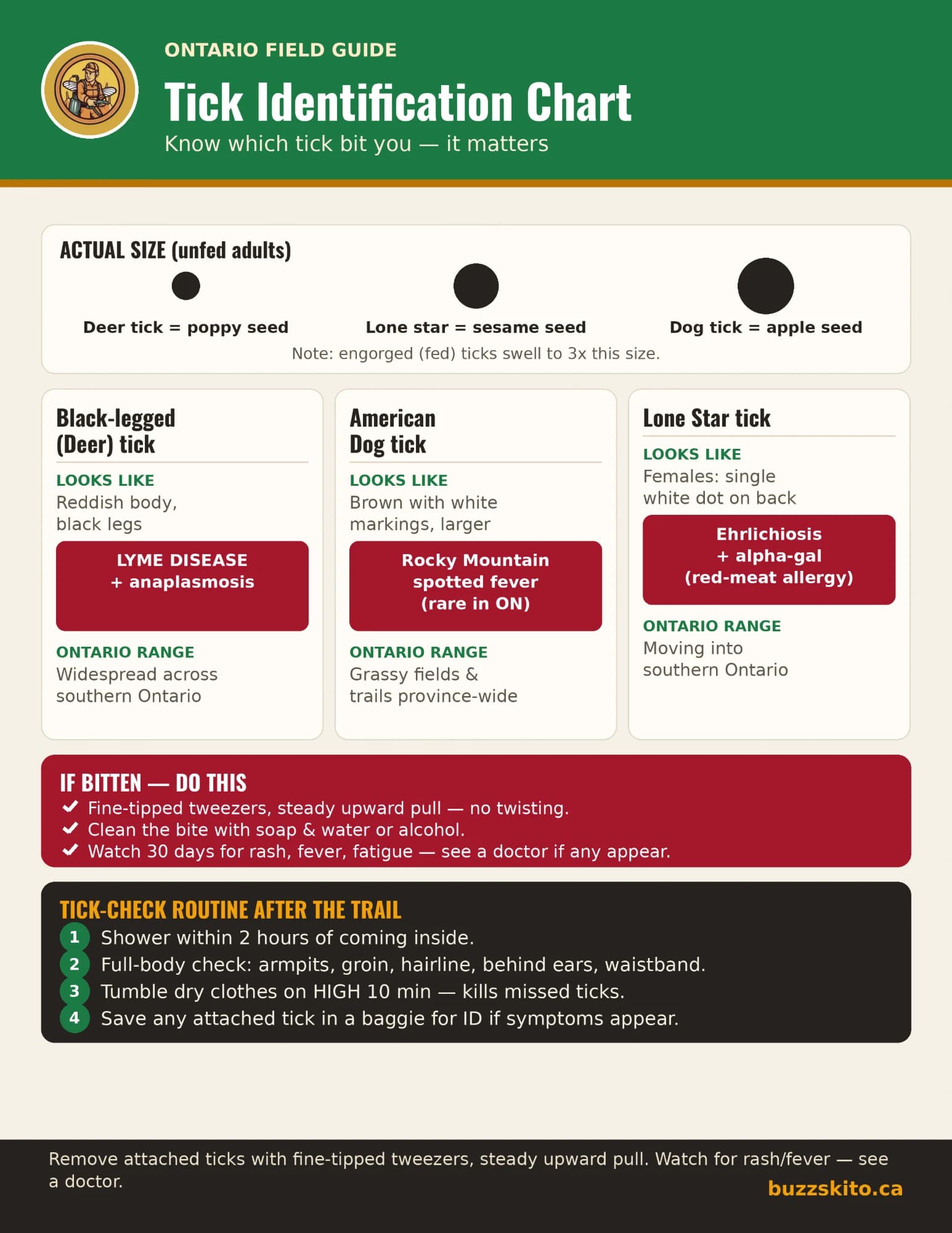
In North America, the tick most strongly linked to alpha-gal syndrome is the lone star tick (Amblyomma americanum), according to the CDC. It is named for the single white dot on the back of the adult female. Its established range is centred in the southeastern and eastern United States, and it has been expanding northward over time. Researchers are actively studying whether other tick species can transmit alpha-gal — cases elsewhere in the world have been associated with different ticks — but in North America the lone star tick remains the primary suspect.
A common and important question is whether this tick, and therefore this risk, reaches farther north. Because that is a location-specific question, we cover it separately: see the lone star tick and alpha-gal syndrome in Canada for where the tick has been found and what the current risk picture looks like. Not every tick bite leads to AGS, and most tick bites do not — but each additional bite from a relevant tick can start or worsen the allergy, which is why prevention matters.
What foods trigger alpha-gal syndrome?
Because alpha-gal is found in mammals, the triggers are mammal-derived foods and products. Sensitivity varies a great deal: some people react only to fatty cuts of red meat, while others react to dairy, gelatin, or trace mammalian ingredients. The table below is a general guide — your personal safe and unsafe lists should be confirmed with an allergist.
| Category | Often triggers AGS | Generally safe |
|---|---|---|
| Meat | Beef, pork, lamb, goat, venison, bison, rabbit | Chicken, turkey, other poultry |
| Seafood | — | Fish and shellfish (no alpha-gal) |
| Dairy | Milk, cheese, butter, cream, ice cream (some people) | Tolerated by many, but not all |
| Gelatin & additives | Gelatin (gummies, marshmallows, some capsules), lard, broths, tallow | Plant-based and non-mammal alternatives |
| Other | Organ meats; certain medications/products with mammalian ingredients | Eggs (usually safe) |
Reactions can be dose-dependent and inconsistent — a small amount might cause nothing while a fatty meal causes a strong reaction — which adds to the diagnostic confusion. Some people with AGS also react to certain medications, gelatin-coated pills, or even specific gelatin-containing products used in medical settings; if you are diagnosed, tell all of your healthcare providers so they can flag mammalian-derived ingredients.
How is alpha-gal syndrome diagnosed?
Diagnosis is made by a healthcare provider — commonly an allergist or immunologist — and rests on two pillars. The first is your clinical history: a pattern of delayed reactions in the hours after eating mammalian products, ideally documented with a food-and-symptom diary. The second is a blood test that measures alpha-gal specific IgE antibodies. According to the CDC, a positive alpha-gal IgE result combined with a consistent history supports the diagnosis.
Additional tools may include skin testing and, in select cases, a supervised oral food challenge conducted in a medical setting. Because the delayed timing hides the trigger, AGS is frequently mistaken for idiopathic (unexplained) hives, chronic gastrointestinal issues, or a reaction to something else at the meal. If you have had unexplained reactions hours after eating — especially if you spend time outdoors or have had tick bites — mention alpha-gal syndrome specifically to your provider so the right test can be ordered. This is a conversation for a clinician; do not attempt to self-diagnose or self-test.
How is alpha-gal syndrome different from other food allergies?
Putting the differences side by side makes the picture clear:
| Feature | Alpha-gal syndrome | Typical food allergy |
|---|---|---|
| Timing | Delayed 2–6 hours after eating | Usually within minutes |
| Allergen type | A sugar (carbohydrate) molecule | Usually a protein |
| Trigger foods | Mammalian meat, sometimes dairy/gelatin | Peanut, egg, milk, shellfish, etc. |
| How it starts | Acquired after a tick bite | Often present from childhood |
| Can it fade? | May fade over years if no more tick bites | Varies; some are lifelong |
The delayed timing and the sugar-versus-protein distinction are the two features clinicians rely on most when they suspect AGS. They are also why a careful history of tick exposure, as the CDC emphasizes, is such a valuable clue.
Is there a cure for alpha-gal syndrome?
There is no cure for alpha-gal syndrome at this time. Management rests on three things:
- Avoidance of the foods and products that trigger your reactions, based on your personal sensitivity as worked out with an allergist.
- Emergency preparedness — carrying and knowing how to use a prescribed epinephrine auto-injector if your allergist recommends one, and having an action plan for reactions.
- Preventing further tick bites, because additional bites can re-trigger or intensify the allergy.
Encouragingly, the CDC notes that some people find their sensitivity fades over months to years if they avoid additional tick bites, and a subset may eventually tolerate some mammalian products again. This is not guaranteed, the timeline is unpredictable, and it can be undone by new tick bites. Any decision to reintroduce a food should be made with an allergist, ideally under supervision — never on your own at home.
Living with alpha-gal syndrome
Day to day, living with AGS is mostly about label-reading and planning. Mammalian ingredients hide in places people do not expect — gelatin in candy and capsules, tallow or lard in baked goods, broth or stock in soups, and dairy in sauces. Practical habits that help include:
- Reading ingredient labels for mammalian-derived items (gelatin, lard, tallow, whey, casein, broth) if you are sensitive to them.
- Telling restaurants about the allergy and asking how dishes are prepared, since cross-contact and shared cooking fats can matter.
- Keeping your prescribed emergency medication with you and making sure family or coworkers know your action plan.
- Flagging the allergy to all your healthcare providers, including dentists and pharmacists, because some medications and products contain mammalian ingredients.
- Continuing tick-bite prevention year after year, since new bites can worsen the condition.
Many people with AGS build a comfortable routine around poultry, fish, and plant-based foods. An allergist or a registered dietitian can help you keep meals balanced while avoiding your triggers.
When should you see a doctor?
See a healthcare provider if you notice any of the following patterns, and treat severe reactions as an emergency:
| Make an appointment (allergist) | Emergency — call 911 |
|---|---|
| Hives, stomach upset, or swelling hours after eating red meat | Trouble breathing, wheezing, or throat tightening |
| Repeated unexplained middle-of-the-night reactions | Widespread hives with dizziness or fainting |
| A history of tick bites plus new food reactions | Any suspected anaphylaxis — use epinephrine if prescribed |
| You want the alpha-gal IgE blood test to confirm or rule it out | Rapid swelling of the lips, tongue, or face |
Early-stage awareness genuinely helps here: once AGS is on the table, a simple blood test and a good history can often sort it out. If you have already had a reaction that felt severe, ask your provider whether you should carry an epinephrine auto-injector. And again — this page is background information, not a diagnosis or a treatment plan.
How do you prevent alpha-gal syndrome?
Since AGS is triggered by tick bites, preventing tick bites is the only way to lower the risk of developing it — or of worsening it if you already have it. Both the CDC and the Public Health Agency of Canada (PHAC) recommend the same core measures:
- Use an approved repellent on skin, and consider treating clothing and gear with permethrin where appropriate.
- Cover up with long sleeves and pants; tuck pant legs into socks on trails. Light-coloured clothing makes ticks easier to spot.
- Avoid tick habitat — stay on the centre of trails and away from tall grass, brush, and leaf litter.
- Do a full-body tick check after being outdoors, including children and pets, and shower soon after coming inside.
- Remove attached ticks promptly and correctly — see how to remove a tick safely.
It also helps to recognize a bite and know what a tick looks like when it is attached — our guide to what a tick bite looks like walks through the appearance stage by stage. Reducing ticks in the yard where your family spends time adds another layer: ticks concentrate in shaded, humid edges — the lawn-to-woods transition, tall grass, and garden borders — and a targeted tick control treatment is designed to knock them down in exactly those zones.
Alpha-gal syndrome and Lyme disease: same tick problem, different outcome
Alpha-gal syndrome is one of several health issues tied to tick bites, and it sits alongside more familiar tick-borne illnesses. The prevention playbook is identical — the goal in every case is simply to avoid being bitten. If you want the broader picture of what tick bites can lead to, our Lyme disease symptoms guide covers the most common tick-borne infection in North America and its early warning signs. AGS and Lyme are different conditions caused by different mechanisms, but both start the same way: with a tick attaching to skin. That shared starting point is why bite prevention does double duty.
Related reading
- The Lone Star Tick & Alpha-Gal in Canada
- What Does a Tick Bite Look Like?
- How to Remove a Tick Safely
- Lyme Disease Symptoms Guide
Frequently Asked Questions
What is alpha-gal syndrome?+
Alpha-gal syndrome (AGS), also called alpha-gal allergy or the red meat allergy, is a food allergy to a sugar molecule called galactose-alpha-1,3-galactose (alpha-gal) found in most mammalian meat and products. It is usually triggered after a bite from certain ticks, which transfer alpha-gal into the body and prompt the immune system to react. According to the U.S. Centers for Disease Control and Prevention (CDC), AGS can cause reactions ranging from mild hives to life-threatening anaphylaxis, and the reaction is typically delayed 2 to 6 hours after eating mammalian meat — a pattern unlike most food allergies.
What are the symptoms of alpha-gal syndrome?+
Symptoms usually appear 2 to 6 hours after eating red meat (beef, pork, lamb, venison) or, in some people, dairy or gelatin. They can include hives or an itchy rash, swelling of the lips, face, tongue, or throat, stomach pain, nausea, vomiting, diarrhea, shortness of breath, a drop in blood pressure, dizziness, or fainting. The CDC notes that reactions vary from person to person and even meal to meal in the same person. A severe whole-body reaction (anaphylaxis) is a medical emergency — call 911 (or your local emergency number) and use an epinephrine auto-injector if one has been prescribed.
Which tick causes alpha-gal syndrome?+
In North America, the lone star tick (Amblyomma americanum) is the tick most strongly associated with alpha-gal syndrome, according to the CDC. Its range is centred in the southeastern and eastern United States and has been expanding northward. Researchers are also investigating whether other tick species may transmit alpha-gal in other parts of the world, and cases have been linked to different ticks internationally, but the lone star tick remains the primary suspect in North America. If you want to know whether the lone star tick is established in Canada, see our dedicated guide on the lone star tick and alpha-gal in Canada.
What foods do you have to avoid with alpha-gal syndrome?+
People with AGS typically need to avoid mammalian (red) meat such as beef, pork, lamb, goat, venison, bison, and rabbit. Some people also react to products made from mammals, including certain dairy foods, gelatin (in gummy candies, marshmallows, and some capsules), broths, lard, and organ meats. According to the CDC, sensitivity varies widely — some people tolerate dairy while others do not, and reactions can be dose-dependent. Poultry (chicken, turkey), fish, and shellfish do not contain alpha-gal and are generally safe. An allergist can help you determine your personal triggers and safe foods.
How is alpha-gal syndrome diagnosed?+
Alpha-gal syndrome is diagnosed by a healthcare provider — usually an allergist or immunologist — based on your history of delayed reactions after eating mammalian products, combined with a blood test that measures alpha-gal specific IgE antibodies. According to the CDC, a positive alpha-gal IgE blood test together with a consistent clinical history supports the diagnosis; skin testing and, in some cases, supervised food challenges may also be used. Because the reaction is delayed and the trigger is not obvious, AGS is often missed, so tell your provider if you have had unexplained reactions hours after meals, especially if you have had tick bites.
Is there a cure for alpha-gal syndrome?+
There is currently no cure for alpha-gal syndrome. Management centres on avoiding the foods that trigger reactions, carrying prescribed emergency medication such as an epinephrine auto-injector if your allergist recommends it, and preventing further tick bites, which can worsen or prolong the allergy. The CDC notes that some people find their sensitivity fades over months to years if they avoid additional tick bites, though this is not guaranteed and the timeline varies. Any decisions about reintroducing foods should be made with an allergist, not on your own.
How long does alpha-gal syndrome last?+
The duration varies from person to person. Some people find their alpha-gal sensitivity gradually decreases over a period of months to years, and a subset may eventually tolerate mammalian products again — but only under medical guidance. Additional tick bites can re-trigger or intensify the allergy and reset any progress, which is why ongoing tick-bite prevention is a core part of management. There is no reliable way to predict who will improve, so people with AGS should continue to avoid triggers and follow their allergist’s advice until told otherwise.
Can you eat chicken, fish, or eggs with alpha-gal syndrome?+
Generally yes. Alpha-gal is found in mammals, not in birds, fish, or shellfish, so poultry (chicken, turkey), fish, and seafood do not contain the molecule and are usually safe for people with AGS. Eggs are typically tolerated as well. However, individual sensitivity varies, and some people react to dairy or to gelatin derived from mammals, so it is important to confirm your personal safe list with an allergist rather than assuming. Always read ingredient labels, since mammalian-derived additives can appear in unexpected products.
Is alpha-gal syndrome the same as a normal food allergy?+
No — it differs in two important ways. First, most food allergies cause a reaction within minutes, while alpha-gal reactions are delayed 2 to 6 hours after eating, which makes the trigger harder to identify. Second, most food allergies are to proteins, whereas alpha-gal is an allergy to a carbohydrate (sugar) molecule. It is also unusual in being acquired after a tick bite rather than being present from early childhood. These differences are why AGS is frequently misdiagnosed or overlooked, and why the CDC emphasizes taking a careful history of tick exposure.
How do you prevent alpha-gal syndrome?+
Because AGS is triggered by tick bites, prevention means preventing tick bites. Public health authorities including the CDC and the Public Health Agency of Canada (PHAC) recommend using an approved insect repellent, wearing long sleeves and pants (light-coloured, so ticks are easier to spot), treating clothing or gear with permethrin where appropriate, staying on trails and away from tall grass and leaf litter, and doing a full-body tick check after being outdoors. Reducing ticks in the yard where you spend time is another layer of protection, since preventing bites is the only way to lower the risk of developing or worsening AGS.
What should I do if I think I have alpha-gal syndrome?+
If you notice hives, stomach upset, swelling, or trouble breathing in the hours after eating red meat, keep a simple food-and-symptom diary noting what you ate and how long before symptoms started, then see a healthcare provider and ask about alpha-gal syndrome and the alpha-gal IgE blood test. A referral to an allergist is common. In the meantime, it is reasonable to be cautious with mammalian meat. If you ever have a severe reaction — throat tightening, widespread hives, difficulty breathing, or faintness — treat it as an emergency: use a prescribed epinephrine auto-injector and call 911 or your local emergency number.
Is alpha-gal syndrome becoming more common?+
Reported cases have risen sharply in recent years. The CDC has stated that alpha-gal syndrome is an emerging condition and that the number of suspected cases in the United States has increased substantially, though it is likely still underdiagnosed because many providers and patients are unaware of it. The rise is thought to reflect both growing awareness and the expanding range of the lone star tick. This is general information and not a diagnosis — if the pattern sounds familiar, the right next step is a conversation with a healthcare provider.