
Published by BuzzSkito Mosquito & Tick Control
Published October 16, 2026 · Drafted with AI assistance and fact-checked against the sources listed below
Which ticks live in South Carolina?
Five species top the list of ticks reported on people in South Carolina. The state health department's Ticks in South Carolina sheet, dated August 2024, names them in this order: the lone star tick, the Gulf Coast tick, the American dog tick, the blacklegged (deer) tick and the brown dog tick. The department's tick page adds a sixth species that people often encounter, the invasive Asian longhorned tick.
The lone star tick is the one people meet most. Clemson University Livestock Poultry Health calls it the most collected species in the state, and CDC's guide to where ticks live describes it as a very aggressive tick that bites humans, most often as a nymph or adult female. Clemson says the blacklegged tick, the species that spreads Lyme disease, is found across South Carolina but in low numbers.
| Tick | Where in South Carolina | Stages that bite people most | What it can spread |
|---|---|---|---|
| Lone star tick, Amblyomma americanum | Reported on people most often; established in 25 counties, reported in 12 | Nymphs and adult females | Ehrlichiosis, tularemia, Heartland and Bourbon viruses; linked to STARI and alpha-gal syndrome |
| Gulf Coast tick, Amblyomma maculatum | Second most reported on people | Adults, which have been linked to infections in people | Rickettsia parkeri rickettsiosis, a form of spotted fever |
| American dog tick, Dermacentor variabilis | Third most reported; established in 14 counties, reported in 16 | Adult females, with the highest risk in spring and summer | Rocky Mountain spotted fever, tularemia |
| Blacklegged (deer) tick, Ixodes scapularis | Found statewide in low numbers; established in 23 counties, reported in 16 | Nymphs and adult females | Lyme disease, anaplasmosis, babesiosis, Powassan virus disease and others |
| Brown dog tick, Rhipicephalus sanguineus | Fifth most reported on people | Feeds mainly on dogs at every stage but may bite people | Rocky Mountain spotted fever; CDC ties it to the Southwest and Mexican border |
| Asian longhorned tick, Haemaphysalis longicornis | Invasive; first found in 2020 | Appears less attracted to people than native ticks | Not yet known whether, or how often, it makes people ill in the US |
Ranking: the state health department's August 2024 sheet. County counts: CDC ArboNET Tick Module, through 2025. Biting stages and illnesses: CDC's guide to where ticks live. First Asian longhorned tick record: Clemson University Livestock Poultry Health.

The Gulf Coast tick comes second on the state's list. Clemson calls it an important tick in South Carolina that can cause Rickettsia parkeri rickettsiosis, which it describes as a recently identified and emerging disease, and CDC says adult Gulf Coast ticks have been associated with passing R. parkeri, a form of spotted fever, to people. The Gulf Coast tick guide has more on the species, and how to tell common US ticks apart shows each species and life stage side by side.
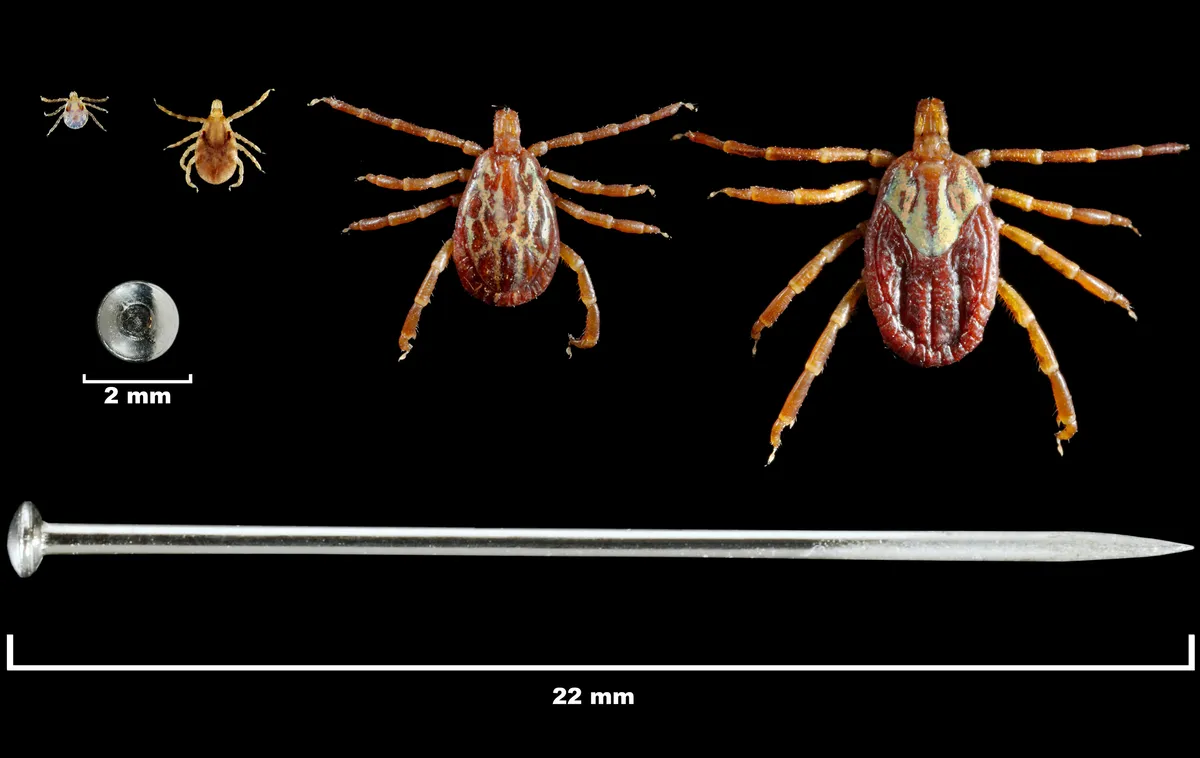
Where are lone star ticks found in South Carolina?
In most of the state. CDC's lone star tick surveillance, with county records through 2025, lists the species as established in 25 of South Carolina's 46 counties and reported in 12 more. Established means six or more lone star ticks of one life stage, or more than one life stage, were collected in a county within 12 months.
Lone star tick status by county, South Carolina, through 2025
- Established
- Reported
- No record
Show the list
Established (25): Aiken, Allendale, Beaufort, Berkeley, Charleston, Cherokee, Chester, Chesterfield, Colleton, Dorchester, Edgefield, Georgetown, Greenwood, Hampton, Horry, Jasper, Kershaw, Lee, Marion, Orangeburg, Pickens, Richland, Spartanburg, Sumter, Williamsburg
Reported (12): Abbeville, Barnwell, Clarendon, Fairfield, Florence, Greenville, Laurens, Lexington, McCormick, Newberry, Union, York
No record (9): Anderson, Bamberg, Calhoun, Darlington, Dillon, Lancaster, Marlboro, Oconee, Saluda
The nine counties without a record are Anderson, Bamberg, Calhoun, Darlington, Dillon, Lancaster, Marlboro, Oconee and Saluda. CDC says a county that is not labeled established does not mean the ticks are absent there, and that changes in a county's status do not necessarily mean the ticks have moved or grown more common. To compare South Carolina with other states, see tick maps and Lyme data for every state.
CDC says the lone star tick has repopulated its historical range in the eastern US as white-tailed deer populations grew. It spreads ehrlichiosis and tularemia, and its bite is linked to more than infection: a circular rash of unknown cause, called STARI, sometimes follows it, and growing evidence suggests the bite may trigger alpha-gal syndrome, a red meat allergy. See alpha-gal syndrome and the tick bites linked to it for how the allergy shows up.
Where are blacklegged (deer) ticks found in South Carolina?
Across most of the state, but in low numbers. CDC's county table, which runs through December 31, 2025, lists blacklegged ticks as established in 23 counties and reported in 16, leaving 7 without a record. Reported means fewer than six ticks of a single life stage were collected in a county within 12 months.
Blacklegged (deer) tick status by county, South Carolina, through 2025
- Established
- Reported
- No record
Show the list
Established (23): Aiken, Bamberg, Barnwell, Beaufort, Berkeley, Charleston, Chester, Colleton, Dillon, Dorchester, Edgefield, Florence, Georgetown, Greenwood, Hampton, Jasper, McCormick, Newberry, Orangeburg, Richland, Sumter, Union, Williamsburg
Reported (16): Abbeville, Allendale, Anderson, Calhoun, Chesterfield, Darlington, Fairfield, Greenville, Horry, Kershaw, Laurens, Lee, Lexington, Pickens, Saluda, Spartanburg
No record (7): Cherokee, Clarendon, Lancaster, Marion, Marlboro, Oconee, York
The seven counties without a record are Cherokee, Clarendon, Lancaster, Marion, Marlboro, Oconee and York. CDC says once a county is listed as established, it keeps that status in later years.
Do South Carolina's blacklegged ticks carry the Lyme germ?
Some do, but the records are sparse. CDC's companion table of germs found in host-seeking blacklegged ticks, meaning ticks out hunting for a host rather than feeding on one, lists the Lyme bacterium, Borrelia burgdorferi, in three counties through December 2025: Charleston and Georgetown on the coast, from older records, and Richland, from a 2023 submission. It has no South Carolina record for the germs behind anaplasmosis, babesiosis, hard tick relapsing fever or Powassan virus disease, and a county without a record may simply have had no ticks tested.

Southern blacklegged ticks also behave differently. A 2021 study in PLOS Biology that sampled the Savannah River Site in South Carolina from 2010 to 2012, alongside sites from Wisconsin to Florida, found the vast majority of young blacklegged ticks there on skinks rather than mice; lizards are poor carriers of the Lyme germ, so infection in ticks stayed low. The authors also note, citing earlier work, that southern nymphs rarely climb above the leaf litter to wait for a host, which may mean fewer bites on people.
How much Lyme disease does South Carolina have?
Little by national standards, though more than it once did. CDC's Lyme disease surveillance data count 55 cases among South Carolina residents in 2023, a rate of 1.1 per 100,000, up from 29 in 2008. CDC's report on 2022 Lyme disease surveillance classes South Carolina as a low-incidence state.
Reported Lyme disease cases in South Carolina, 2008 to 2023
Cases per year, by state of residence
Show the numbers
| Confirmed and probable cases | |
|---|---|
| 2008 | 29 |
| 2009 | 42 |
| 2010 | 29 |
| 2011 | 37 |
| 2012 | 44 |
| 2013 | 42 |
| 2014 | 37 |
| 2015 | 42 |
| 2016 | 51 |
| 2017 | 21 |
| 2018 | 39 |
| 2019 | 47 |
| 2020 | 48 |
| 2021 | 76 |
| 2022 | 44 |
| 2023 | 55 |
The high point came in 2021, with 76 cases in CDC's data. The state's 2021 morbidity report says South Carolina had record high temperatures in summer and winter that year, which likely prolonged tick activity and increased contact with people.
The state's own Lyme figures use a different measure. The health department's Lyme disease infographic, from January 2026, gives an age-adjusted rate of 4.1 per 100,000 for confirmed cases from its 2020 to 2024 data, up 115.8% from 1.9 in 2015. That is not CDC's yearly rate of confirmed and probable cases, so the two cannot be compared; this page uses CDC's figures. The infographic says white residents, adults 65 and older, and males have the highest confirmed rates.

How does South Carolina compare with nearby states?
| State | Lyme cases, 2023 | Lyme cases per 100,000, 2023 | Spotted fever cases per 100,000, 2023 |
|---|---|---|---|
| South Carolina | 55 | 1.1 | 0.2 |
| Georgia | 18 | 0.2 | 0.3 |
| North Carolina | 228 | 2.2 | 2.1 |
| Alabama | 36 | 0.7 | 1.6 |
| Florida | 271 | 1.2 | 0.1 |
| Tennessee | 50 | 0.7 | 1.2 |
Lyme: confirmed and probable cases by state of residence, from CDC's Lyme surveillance data. Spotted fever: CDC's 2023 state incidence table, which gives rates per million residents, converted here to per 100,000 (per million: South Carolina 2.2, Georgia 3.0, North Carolina 21.1, Alabama 15.7, Florida 1.2, Tennessee 12.1). 2023 was the latest year in both CDC series as of October 2026.
South Carolina sits in the middle of this group for Lyme disease and near the bottom for spotted fever. By our ranking of CDC's 2023 figures, its spotted fever rate placed 21st among the 48 states and the District of Columbia where the disease was reportable that year, while North Carolina's was the highest.
Which South Carolina counties report the most tick-borne disease?
Lyme disease and spotted fever cases come from somewhat different places. CDC's county file for 2019 to 2022 counts 215 Lyme cases across 36 counties, led by Horry (32), Beaufort (22) and Greenville (18), and 131 spotted fever cases across 34 counties, led by York (20), Beaufort (16) and Lexington (14).
| County | Lyme cases, 2019 to 2022 | Spotted fever cases, 2019 to 2022 | Blacklegged tick status | American dog tick status |
|---|---|---|---|---|
| Horry | 32 | 5 | Reported | Established |
| Beaufort | 22 | 16 | Established | Established |
| Greenville | 18 | 8 | Reported | Established |
| Charleston | 15 | 7 | Established | Established |
| York | 15 | 20 | No record | Reported |
| Richland | 10 | 2 | Established | Reported |
| Lexington | 9 | 14 | Reported | Reported |
The seven counties with 10 or more cases of either disease, counted by county of residence, 2019 to 2022 combined, from CDC's county file; cases with no county on record are left out. The spotted fever total spans the 2020 change in that disease's case definition. Tick status: CDC ArboNET Tick Module, through 2025.
York County had 15 Lyme cases in those four years but no blacklegged tick record. CDC counts cases by county of residence, not necessarily where people were bitten, and a county without a tick record may simply not have been sampled.
Which other tick-borne diseases occur in South Carolina?
Spotted fever rickettsiosis is the main one. The category takes in Rocky Mountain spotted fever and other spotted fevers, such as Rickettsia parkeri rickettsiosis from the Gulf Coast tick. Since 2020 it has ranked second to Lyme disease, but before then it was often the more common of the two: in eight of the nine years from 2011 to 2019, South Carolina recorded more spotted fever cases than Lyme cases (our comparison of the two charts' counts).
Reported spotted fever rickettsiosis cases in South Carolina, 2008 to 2023
Confirmed and probable cases per year among South Carolina residents
- State count, 2021 morbidity report
- CDC count
Show the numbers
| State count, 2021 morbidity report | CDC count | Total | |
|---|---|---|---|
| 2008 | 56 | – | 56 |
| 2009 | 23 | – | 23 |
| 2010 | 20 | – | 20 |
| 2011 | 39 | – | 39 |
| 2012 | 65 | – | 65 |
| 2013 | 59 | – | 59 |
| 2014 | 33 | – | 33 |
| 2015 | 48 | – | 48 |
| 2016 | 53 | – | 53 |
| 2017 | 100 | – | 100 |
| 2018 | 54 | – | 54 |
| 2019 | – | 77 | 77 |
| 2020 | – | 10 | 10 |
| 2021 | – | 23 | 23 |
| 2022 | – | 21 | 21 |
| 2023 | – | 12 | 12 |
Two of the state's common ticks can carry Rocky Mountain spotted fever, Clemson's page says: the American dog tick and the brown dog tick. CDC lists the American dog tick as a carrier of Rocky Mountain spotted fever and tularemia, and ties the brown dog tick to Rocky Mountain spotted fever in the southwestern US and along the Mexican border. CDC's American dog tick surveillance lists the species as established in 14 South Carolina counties, including Charleston, Greenville, Horry and Spartanburg, and reported in 16 more, through 2025.

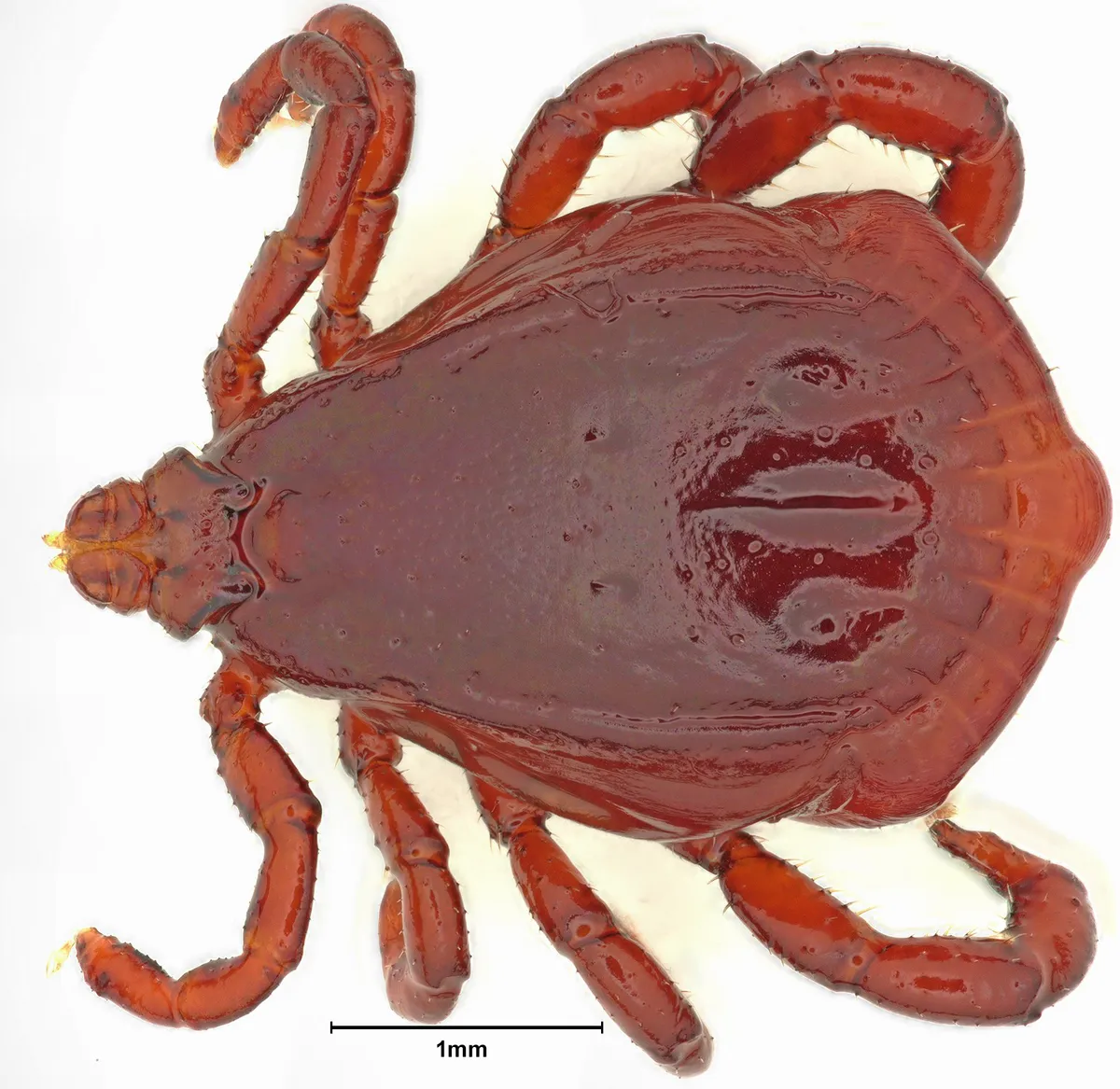
Almost all South Carolina spotted fever cases are classed as probable: in 2023, all 12 were, according to CDC's annual notifiable disease tables. Under the 2020 national case definition, a probable case is an illness with fever and other compatible signs plus one elevated antibody result. The definition notes that these antibodies can stay elevated for months to years after an infection, and that only about 3% of cases nationally were being reported as confirmed.
Most cases come in early summer: the state's 2021 report says spotted fever can occur in any month but is reported most in June and July, when ticks are most active, and that the most 2021 cases came from central South Carolina. See the Rocky Mountain spotted fever guide for more on the illness.
Does South Carolina have ehrlichiosis?
Yes, but it is rarely reported and shows up oddly in national data. CDC says the lone star tick spreads ehrlichiosis, yet South Carolina files its few cases with CDC as undetermined ehrlichiosis or anaplasmosis rather than under a named species: CDC's national tables list 5 such cases in 2022 and 7 in 2023, and no Ehrlichia chaffeensis infections, one of the forms lone star ticks spread. The state's 2021 report counted 12 ehrlichiosis or anaplasmosis cases in 2019, 6 in 2020 and 3 in 2021. A zero for South Carolina in national counts of E. chaffeensis ehrlichiosis therefore reflects how cases are filed, not proof the illness is absent.
How common is each tick-borne illness in South Carolina?
| Illness | Tick linked to it | South Carolina cases, 2019 to 2022 |
|---|---|---|
| Lyme disease | Blacklegged tick | 215 |
| Spotted fever rickettsiosis, including Rocky Mountain spotted fever | American dog tick; Gulf Coast tick (R. parkeri) | 131 |
| Ehrlichiosis or anaplasmosis, species undetermined | Lone star tick (ehrlichiosis); blacklegged tick (anaplasmosis) | 26 |
| Tularemia | Lone star tick; American dog tick | 0 |
| Babesiosis | Blacklegged tick | 6 |
| Alpha-gal syndrome | Lone star tick bites are linked to it | Not counted in this file |
Cases among residents, summed from CDC's county file, which leaves out cases with no county on record; babesiosis is from CDC's annual tables. Ticks: CDC's guide to where ticks live.
When is tick season in South Carolina?
All year, with illness peaking in summer. The state health department's tick sheet says ticks are always in season in South Carolina because the life cycles of different species overlap, and its tick page says tick bites and tick-borne disease can occur year-round.
| What | When it peaks | Notes |
|---|---|---|
| Lyme disease cases | June to August | Infection is possible year-round (state Lyme infographic, January 2026) |
| Spotted fever cases | June and July | Cases can occur in any month (state morbidity report, 2021) |
| Blacklegged (deer) tick bites | Spring, summer and fall | Adults may look for a host any time winter temperatures are above freezing (CDC) |
| American dog tick bites | Spring and summer | Adult females bite people most (CDC) |
Sources: the state's Lyme disease infographic and 2021 morbidity report, and CDC's guide to where ticks live. A mild winter day can bring adult blacklegged ticks out, so check for ticks after time outdoors in any month.
Has the Asian longhorned tick reached South Carolina?
Yes. Clemson University Livestock Poultry Health says it was first found in South Carolina in 2020, on dogs at an animal shelter, in Pickens and Lancaster counties, and that in June 2022 it was found on pastured cattle in York County. CDC lists South Carolina among the 20 states where it had been found as of April 12, 2024.

Its threat so far is mainly to animals. Clemson says females can multiply without males and infest an area quickly, and that high numbers on an animal can cause anemia. CDC says the species appears less attracted to people than native ticks, that the germ behind Rocky Mountain spotted fever has not yet been found in these ticks in nature, and that it is not yet known whether, or how often, they pass germs to people and make them ill. More on the species is in the Asian longhorned tick guide.
How do you report an Asian longhorned tick in South Carolina?
Send it to the state's tick surveillance program, described below; Clemson asks people to help track the species by sending ticks found on pets and livestock. Clemson says permethrin and other products approved for other ticks work against it, and that keeping pasture grass low, controlling weeds and brush, and leaving 9 feet between pasture or lawn and wooded edges can lower the risk of tick contact. It asks animal owners to work with a veterinarian and their county Extension agent; use any product as its label directs.
How do you get a tick identified in South Carolina?
Send it to the state's tick surveillance program. As of October 2026, the health department's tick page says its Vector-Borne Diseases Division is collecting ticks with the University of South Carolina and Clemson University Livestock and Poultry Health to learn which species occur where and when, and what disease risks they pose. Its instructions:
- Put the tick in any sealable vial or zippered storage bag.
- Fill in the state's passive tick submission form with your contact information, the address where the tick was collected (or directions from nearby road intersections), the date, and the animal or person it was found on.
- Mail the tick and form to one of the two addresses on the department's tick page: the Laboratory of Vector-borne and Zoonotic Diseases or the department's medical entomology staff.
The page does not say whether results are sent back, so do not wait on it if you feel ill. Testing a tick would not settle much anyway: CDC's advice after a tick bite says tick test results should not be used to make treatment decisions, that a positive result does not necessarily mean you were infected, and that a negative one can falsely reassure if a different tick was infected. For a first look at home, compare yours with a chart of the common US ticks.
What should you do after a tick bite in South Carolina?
Remove the tick right away, then watch for fever or a rash for several weeks. CDC says not to wait for a health care provider to remove it, because delay could raise the risk of infection, and describes removal this way:
- Grasp the tick as close to the skin as you can with clean, fine-tipped tweezers.
- Pull straight away from the skin with steady, even pressure; do not twist or jerk it. If the mouthparts break off and will not come out easily, leave them; the skin usually pushes them out as it heals.
- Put a live tick in a sealed bag or container or in alcohol, wrap it tightly in tape, or flush it; never crush it with your fingers.
- Clean the bite and your hands with soap and water, rubbing alcohol or hand sanitizer, and check your body for other ticks.
- Skip petroleum jelly, nail polish, heat and other substances: CDC says they may agitate the tick and force infected fluid into the skin.
For a fuller walk-through, see how to remove a tick safely. If a rash or fever develops within several weeks of removing a tick, CDC says to see a doctor and mention the bite, when it happened and where you probably picked up the tick.
Prompt removal matters most for Lyme disease. CDC says that in most cases a tick must be attached for more than 24 hours before it can pass on the Lyme bacterium, and that lone star, American dog and brown dog ticks cannot transmit it at all (how Lyme disease spreads). The stages of Lyme disease symptoms describes the rash and what can follow.
CDC's guidance for clinicians says a single dose of the antibiotic doxycycline can lower the risk of Lyme disease when an adult or nymphal blacklegged tick was attached for at least 36 hours, the dose can start within 72 hours of removal, and the bite happened in a state with high Lyme incidence or an area where more than 20% of ticks carry the germ. South Carolina is not one of the high-incidence states, so ask a provider whether it applies to your bite, particularly one picked up while traveling.
Spotted fever calls for speed. CDC's Rocky Mountain spotted fever page says the illness can be deadly if not treated early, that its rash usually develops 2 to 4 days after the fever begins, and that doxycycline, the recommended antibiotic, is approved for adults and children of all ages. The clinician guidance adds that treatment for a suspected tick-borne illness should start without waiting for lab results, which can miss early illness, and that antibiotics after a bite are not recommended to prevent Rocky Mountain spotted fever or ehrlichiosis.
How do you prevent tick bites in South Carolina?
Use repellent, treat clothing, check for ticks every day and keep grass and weeds cut. The health department's tick page recommends these steps:
- An EPA-registered repellent. Choose one containing DEET, picaridin, IR3535, oil of lemon eucalyptus, para-menthane-diol or 2-undecanone, and follow the label. The state's tick sheet advises a product with 20% or more of an EPA-approved tick repellent ingredient, such as DEET, year-round.
- Permethrin on clothing and gear. Treat boots, pants, socks and tents with products containing 0.5% permethrin.
- Covered skin. Wear protective clothing tucked in at the ankles and waist.
- A shower soon after coming in. Use soap and shampoo to reduce the chance of a tick attaching.
- Daily tick checks. Look under the arms, in and around the ears, inside the belly button, behind the knees, between the legs, around the waist, and along the hairline and scalp.
- Trimmed yards and centered paths. Keep weeds and tall grass cut, avoid grassy and marshy woodland when you can, and stay in the center of trails.
- Protected pets. Check pets daily and treat dogs and cats for ticks as a veterinarian recommends.
Dogs need the same attention as people: CDC says dogs are the brown dog tick's main host at every life stage. See how to check a dog for ticks and remove one.
This guide is general educational information, not medical advice. If you have symptoms or concerns after a bite or exposure, contact a healthcare provider.
Use any pesticide exactly as its label directs. The label is the law, and what is registered and sold varies by state.
Frequently Asked Questions
What is the most common tick in South Carolina?+
The lone star tick. The state health department lists it first among the ticks most often reported on people in South Carolina, ahead of the Gulf Coast tick, the American dog tick, the blacklegged tick and the brown dog tick, and Clemson University calls it the most collected species in the state. CDC says the adult female has a white dot on her back. Lone star ticks spread ehrlichiosis, and growing evidence suggests their bites may trigger alpha-gal syndrome, a red meat allergy.
Is Lyme disease common in South Carolina?+
Not by national standards. CDC counted 55 cases among South Carolina residents in 2023, a rate of 1.1 per 100,000, compared with 2.2 in North Carolina and 0.2 in Georgia, and classes South Carolina as a low-incidence state. Blacklegged ticks, which spread Lyme disease, are established in 23 of the state's 46 counties, but CDC's tick records show the Lyme germ in only three: Charleston, Georgetown and Richland. A 2021 study found that southern blacklegged ticks feed largely on lizards, which are poor carriers of the germ.
Are ticks active in the winter in South Carolina?+
Yes. The state health department says ticks are always in season in South Carolina because the life cycles of different species overlap, and that tick bites and tick-borne disease can occur year-round. CDC says adult blacklegged ticks may look for a host any time winter temperatures are above freezing. Illness still peaks in summer: the state says most Lyme cases occur from June to August and most spotted fever cases are reported in June and July. Check for ticks after time outdoors in any month.
Can I get a tick tested in South Carolina?+
The state's tick program is run for surveillance. As of October 2026, the health department collects ticks with the University of South Carolina and Clemson University to learn which species occur where and what disease risks they pose, and its tick page does not say whether results go back to the sender. CDC advises against using tick test results to make treatment decisions, because a negative result can give false reassurance if a different tick was infected. If you feel ill after a bite, see a health care provider.
Is Rocky Mountain spotted fever found in South Carolina?+
Yes. It is counted under spotted fever rickettsiosis, a category that also includes related infections such as Rickettsia parkeri rickettsiosis from the Gulf Coast tick. CDC counted 12 cases among South Carolina residents in 2023 and 131 from 2019 to 2022, and the state's own count reached 100 in 2017, under an earlier case definition. CDC says the illness can be deadly if not treated early and that doxycycline, the recommended antibiotic, is approved for adults and children of all ages, so see a provider promptly about fever, headache or rash after a bite.
What should I do if I find an Asian longhorned tick in South Carolina?+
Send it to the state's tick surveillance program, run by the health department with the University of South Carolina and Clemson University. Seal the tick in a vial or zippered bag and mail it with the passive tick submission form, giving your contact details, where and when it was collected, and the animal or person it was found on; the addresses are on the department's tick page. Livestock owners should also talk with their veterinarian and county Extension agent. The tick was first found in South Carolina in 2020.
Sources
- Lyme Disease Surveillance Data — Centers for Disease Control and Prevention
- Surveillance for Lyme Disease After Implementation of a Revised Case Definition - United States, 2022 — CDC Morbidity and Mortality Weekly Report
- Tick Surveillance Data Sets (blacklegged tick status and pathogens in host-seeking ticks by county, through Dec. 31, 2025) — Centers for Disease Control and Prevention (ArboNET Tick Module)
- Lone Star Tick Surveillance — Centers for Disease Control and Prevention (ArboNET Tick Module)
- American Dog Tick Surveillance — Centers for Disease Control and Prevention (ArboNET Tick Module)
- Geographic Distribution of Tickborne Disease Cases (Reported Tickborne Disease Cases by County of Residence, 2019-2022) — Centers for Disease Control and Prevention
- Data and Statistics on Spotted Fever Rickettsiosis (annual incidence by state, 2023) — Centers for Disease Control and Prevention
- National Notifiable Diseases: Infectious Annual Tables (South Carolina rows: spotted fever rickettsiosis, Table 2p for 2019-2022 and Table 2q for 2023; ehrlichiosis and anaplasmosis, Table 2f for 2022 and Table 2g for 2023; babesiosis, Table 2c for 2019-2022) — Centers for Disease Control and Prevention, National Notifiable Diseases Surveillance System (CDC Stacks)
- Spotted Fever Rickettsiosis (including Rocky Mountain Spotted Fever) 2020 Case Definition — Centers for Disease Control and Prevention, National Notifiable Diseases Surveillance System
- Where Ticks Live — Centers for Disease Control and Prevention
- What to Do After a Tick Bite — Centers for Disease Control and Prevention
- How Lyme Disease Spreads — Centers for Disease Control and Prevention
- Guidance for Clinicians: Caring for Patients after a Tick Bite (December 14, 2021) — Centers for Disease Control and Prevention
- About Rocky Mountain Spotted Fever — Centers for Disease Control and Prevention
- Ticks Can Spread Diseases (Ticks in South Carolina) — South Carolina Department of Public Health
- Ticks in South Carolina (fact sheet 00075-ENG-CR, August 2024) — South Carolina Department of Public Health
- Lyme Disease in South Carolina (infographic, January 2026) — South Carolina Department of Public Health, SC Tracking
- The South Carolina Annual Morbidity Report on Reportable Conditions, 2021 — South Carolina Department of Health and Environmental Control (now the Department of Public Health)
- South Carolina Ticks and Animal Health — Clemson University Livestock Poultry Health
- Why Lyme disease is common in the northern US, but rare in the south: The roles of host choice, host-seeking behavior, and tick density — PLOS Biology (Ginsberg et al., January 2021)
How this guide was made: it was researched and drafted with AI assistance from the sources listed above. A second, independent AI pass then checked each factual claim against those sources. Found an error? Email support@buzzskito.ca.
