
Reviewed by Alex Francisco
Published November 19, 2026 · Fact-checked against the sources listed below
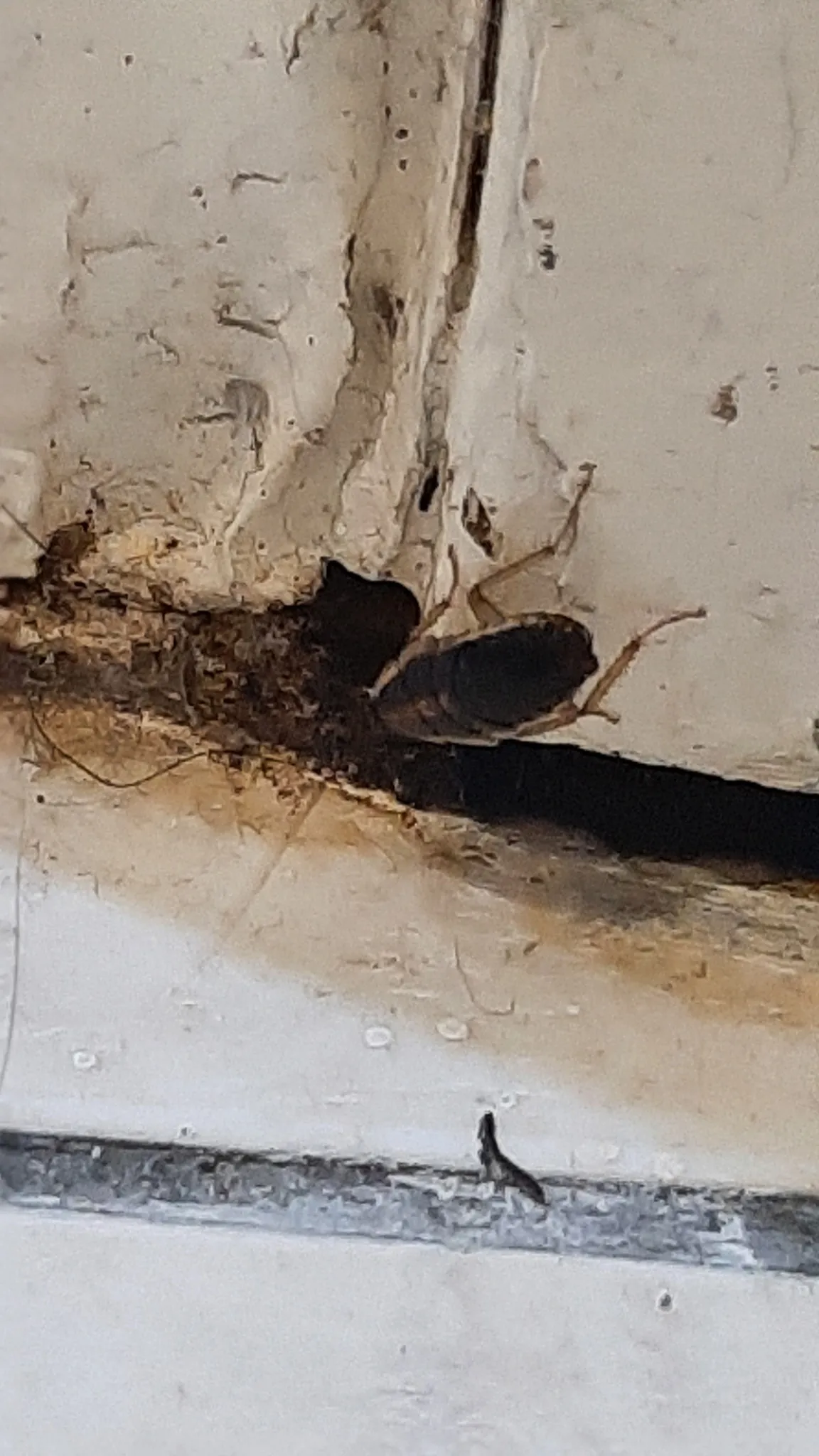
What does a roach nest look like?
A roach nest looks like a crowd in a crack: cockroaches of every size packed into one dark gap, with pepper-like specks, brown smears, shed skins and egg cases collecting around the opening. There is no structure, because cockroaches build none; entomologists call such a spot a harborage. Cornell's New York State IPM Program explains that German cockroaches gather in response to pheromones in their feces and choose warm, often tight spaces, preferring wood, paper or cardboard, or the inside of electrical equipment.
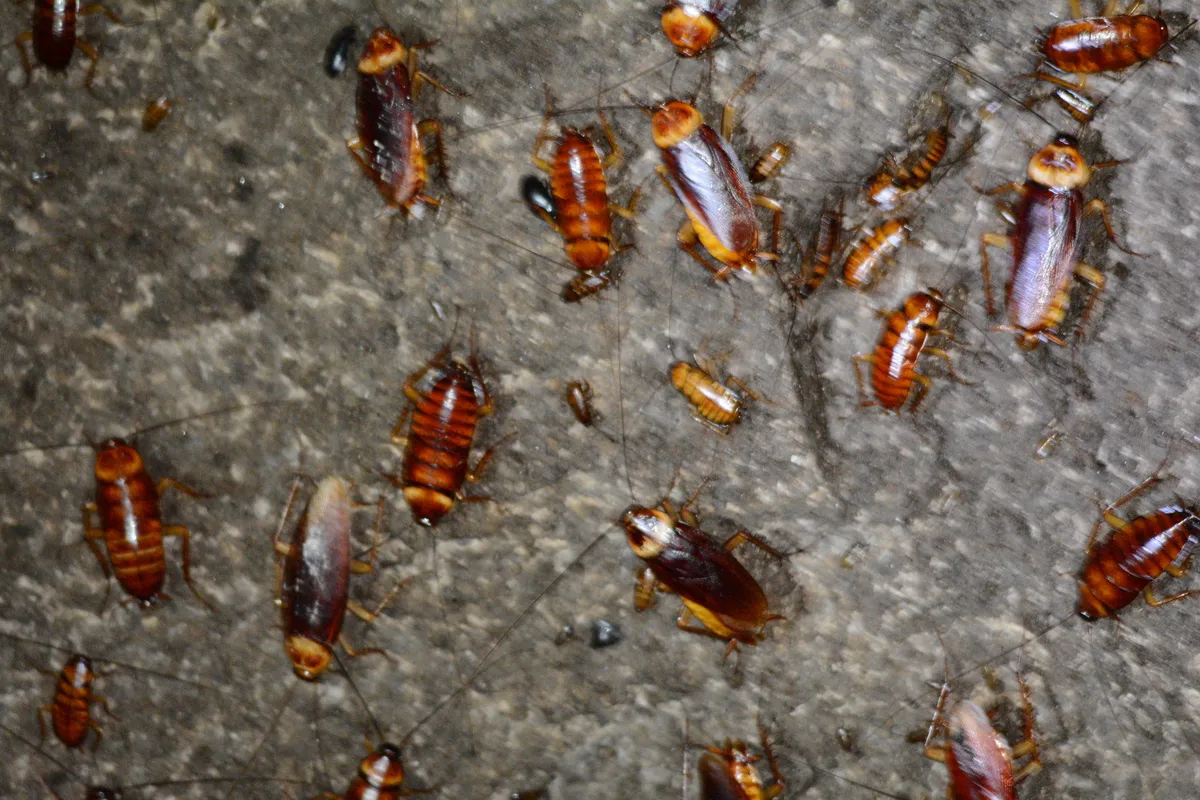
Up close, a nest shows the same things wherever it is:
- Roaches of every size. Texas A&M AgriLife Extension's guide to cockroach biology says that after hatching, nymphs tend to stay in dark, protected cracks that they often share with adults, so tiny wingless nymphs beside larger roaches are typical of a nest. What baby cockroaches look like shows the nymphs of each species.
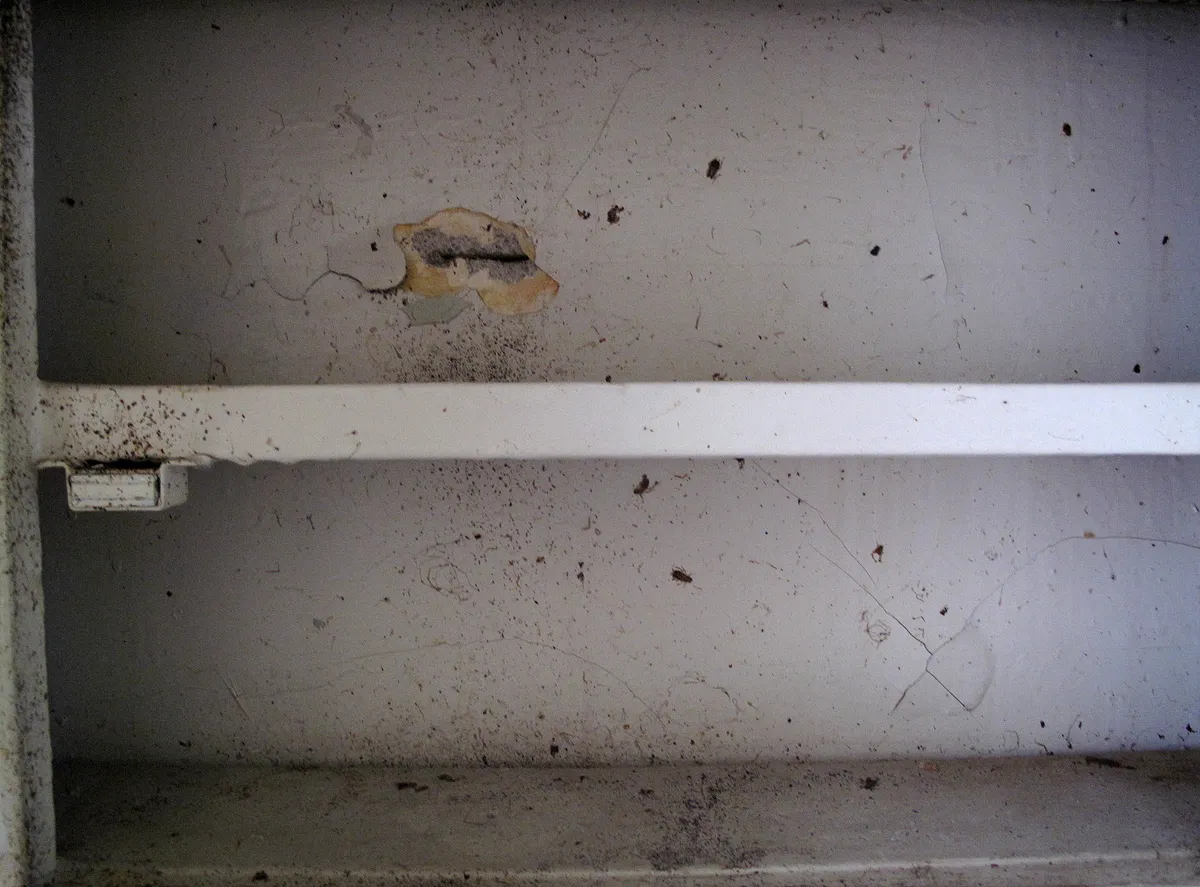
- Pepper-like specks and smears. Because roaches are out at night, Cornell says their fecal stains are how to spot a hiding place by day, and the stains look like pepper. The Illinois Department of Public Health tells inspectors to look for dark speckling where German cockroaches gather.
- Shed skins and egg cases. Illinois lists both among the signs of roach activity; what cockroach eggs look like shows each species' egg case and how to tell one that has hatched.
- Roaches that run. Cockroaches tend to scatter when disturbed, notes UC IPM's Pest Notes on cockroaches, so look quickly the moment you move whatever covers a gap.
Each of those signs has its own page: the guide to signs of cockroaches covers droppings, smell, skins and what a sticky-trap catch says, and what roach poop looks like sizes the droppings by species. This page is about the place itself: where the nest is and how to find it.
Do cockroaches build nests?
No. Cockroaches do not build a nest or keep a queen; they collect in a sheltered spot, and what holds the group there is smell. The University of Kentucky's guide to cockroach elimination sets them apart from ants, bees and termites, which do live in central colonies.
The smell comes from their droppings. In a 2015 study of German cockroach aggregation in PNAS, researchers found 40 volatile acids in the feces, many produced with the help of the insects' gut bacteria. Nymphs strongly preferred the odor of ordinary droppings over droppings from roaches raised without gut microbes, and the authors note that these odors help keep roaches faithful to the same gathering sites. That helps explain why a nest stays put: as droppings build up, the spot keeps drawing roaches back.
German cockroaches also cannot live on their own outdoors. The University of Florida's German cockroach profile says the species is unable to survive away from humans or human activity, and Texas A&M says German cockroaches spend their lives indoors, so look for their nests inside, close to people's food and water.
Where do cockroaches nest in a house?
In most homes the nest is in the kitchen or bathroom, in a warm crack close to food and water. UC IPM puts the German cockroach's preferred range at 70 to 75°F, in humid places near food, water and darkness, and Texas A&M notes that cockroaches congregate near heat and moisture, which speed up their growth and reproduction. These are the places to check, starting with the busiest.
Behind the fridge, stove and dishwasher
The space behind and under big kitchen appliances is the classic roach nest. The Illinois Department of Public Health reports large numbers of German cockroaches clustering under stoves, refrigerators and dishwashers, and Rutgers' German cockroach fact sheet says the areas around the stove and refrigerator usually hold the most. Purdue counts behind the refrigerator among the places especially important to check with a flashlight.
Clutter around the refrigerator adds shelter: Cornell counts stored paper bags, cardboard boxes and items on top of the refrigerator among the hiding places to clear away.
Inside cabinets, drawers and hinges
Kitchen cabinets hide nests in their back corners and hinges. In apartments, Rutgers' list of ideal spots runs from cabinet hinges and the inside corners of cabinets to drawers and the moldings around doors, and Purdue Extension's guide to cockroach control in apartments says roaches tend to gather in corners such as the back of cabinets or drawers and travel along edges like baseboards. UC IPM suggests looking for fecal specks under kitchen counters, behind kitchen drawers and in the back of cabinets.
Behind outlet plates and inside electronics
Warm electrical gear is a favorite. Cornell lists the space behind electrical plates among German cockroach hiding places, and the University of Kentucky finds them in clocks, toaster ovens and other heat-producing electronic equipment.
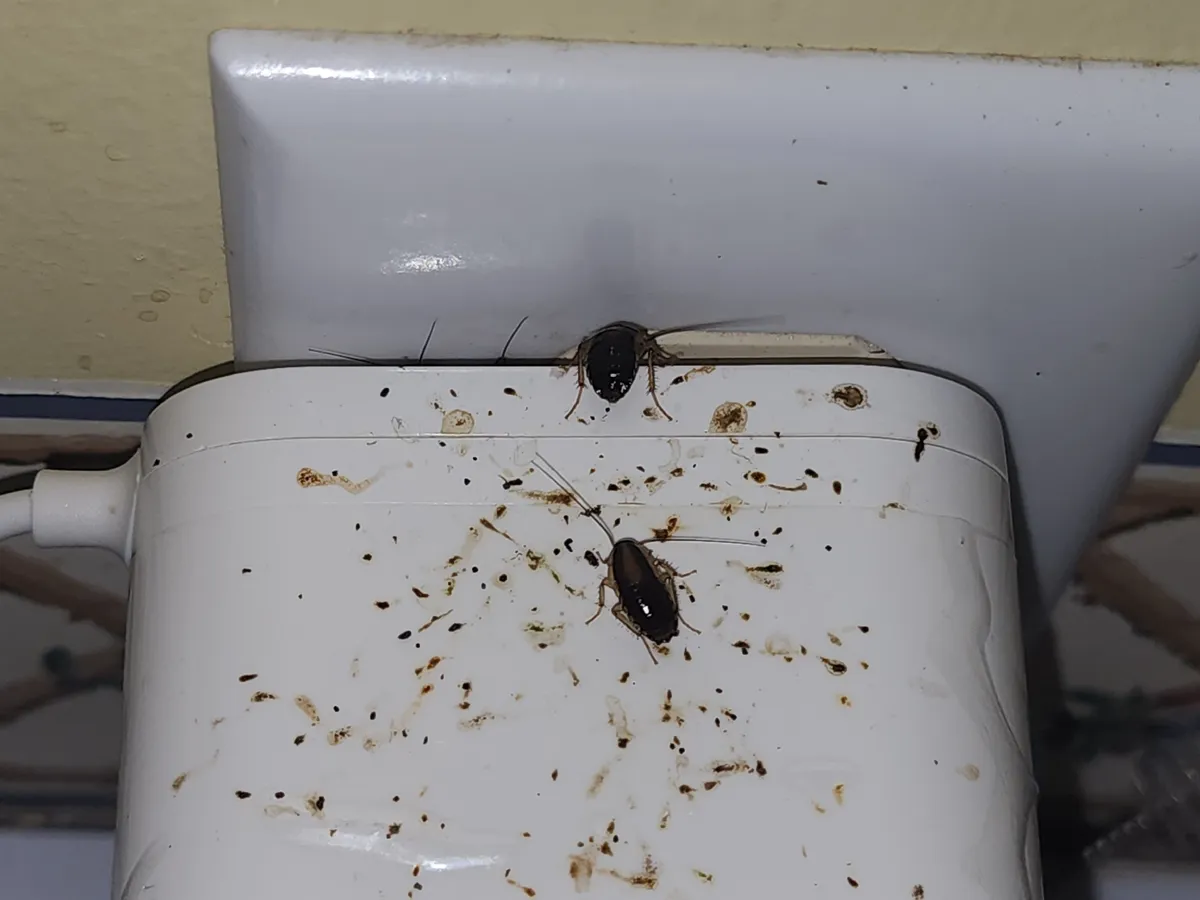
Roaches living in electronics outside the kitchen may be brown-banded cockroaches instead: Illinois says that species loves the warmth of electronics and motor housings and typically hides away from food.
Can roaches nest inside walls?
Yes, and a nest in a wall stays out of sight. Illinois finds German cockroaches clustered in wall and cabinet voids, and Cornell adds the spaces behind walls, inside wallpaper tears and tile cracks, and in plumbing and pipe chases. Gaps where pipes pass through a wall connect the void to the room: Texas A&M advises caulking around sinks and plumbing and in walls, and Purdue notes that in apartments roaches travel between units through holes and cracks.
In the bathroom
Bathrooms offer water. Kentucky finds German cockroaches in cracks and crevices under sinks and toilets, and Purdue singles out bathroom cabinets and closet door corners as especially important to check.
Where do other kinds of cockroaches nest?
Each species picks its own kind of spot, so where the nest is says a lot about which roach you have. The complete guide to cockroaches in US homes profiles every species; this table sums up where each one gathers.
| Cockroach | Adult size | Where it gathers | What it needs |
|---|---|---|---|
| German | 1/2 to 5/8 inch | Indoors: kitchen and bathroom cracks, appliances, wall voids | Warmth (70 to 75°F), moisture and food nearby |
| Brown-banded | About the size of a German cockroach | Upper walls, ceilings, closets, furniture, electronics | Warm, dry spots, often away from food |
| American | 1 1/2 to 2 inches | Sewers, storm drains, steam tunnels, basements, floor drains | Dark, moist spaces |
| Oriental | About 1 1/4 inches | Basements, crawl spaces, drains, water meter boxes, mulch | Cool, damp places at ground level |
| Smokybrown | 1 1/4 to 1 1/2 inches | Mulch, tree holes, soffits, attic eaves, under siding | Protected, moist, warm sites out of moving air |
| Turkestan | Males 1/2 to 7/8 inch | Water meter boxes, sidewalk expansion joints, compost, leaf litter | Outdoor shelter, even in warm, dry regions |
Sizes from Texas A&M AgriLife and Cornell; places and needs from UC IPM, the University of Kentucky, the Illinois Department of Public Health, Texas A&M and Cornell.
Brown-banded cockroaches: high, warm and dry
A brown-banded nest is often nowhere near the kitchen. Kentucky finds this roach high up, on the upper parts of walls, ceilings, cabinets and closets, behind wall hangings and in furniture; UC IPM's list takes in the backs of pictures and wall decorations, the crevices of electrical appliances and piles of clutter; and Cornell says it prefers dry areas anywhere in a home. Its egg cases give it away: UC IPM says they may be glued together in large deposits, and Kentucky points to the undersides of dressers and tables. The brown-banded cockroach guide maps every hiding place and shows the banded nymphs.
American and Oriental cockroaches: drains, basements and sewers
The big roaches nest where it is dark and wet, usually below the living space. Kentucky finds American cockroaches in basements and crawl spaces, congregating in floor drains, sump pumps, pipe chases and laundry areas, and Oriental cockroaches in cool, damp sewers, crawl spaces, cellars and basements, usually at ground level.
Outside, their nests are in the sewer system and in utility boxes. UC IPM lists sewers, water meter boxes, storm drains and steam tunnels for the American cockroach, and Texas A&M calls it one of the most common cockroaches in sewer systems. Oriental cockroach populations can build up in masonry enclosures such as water meter boxes, according to UC IPM.
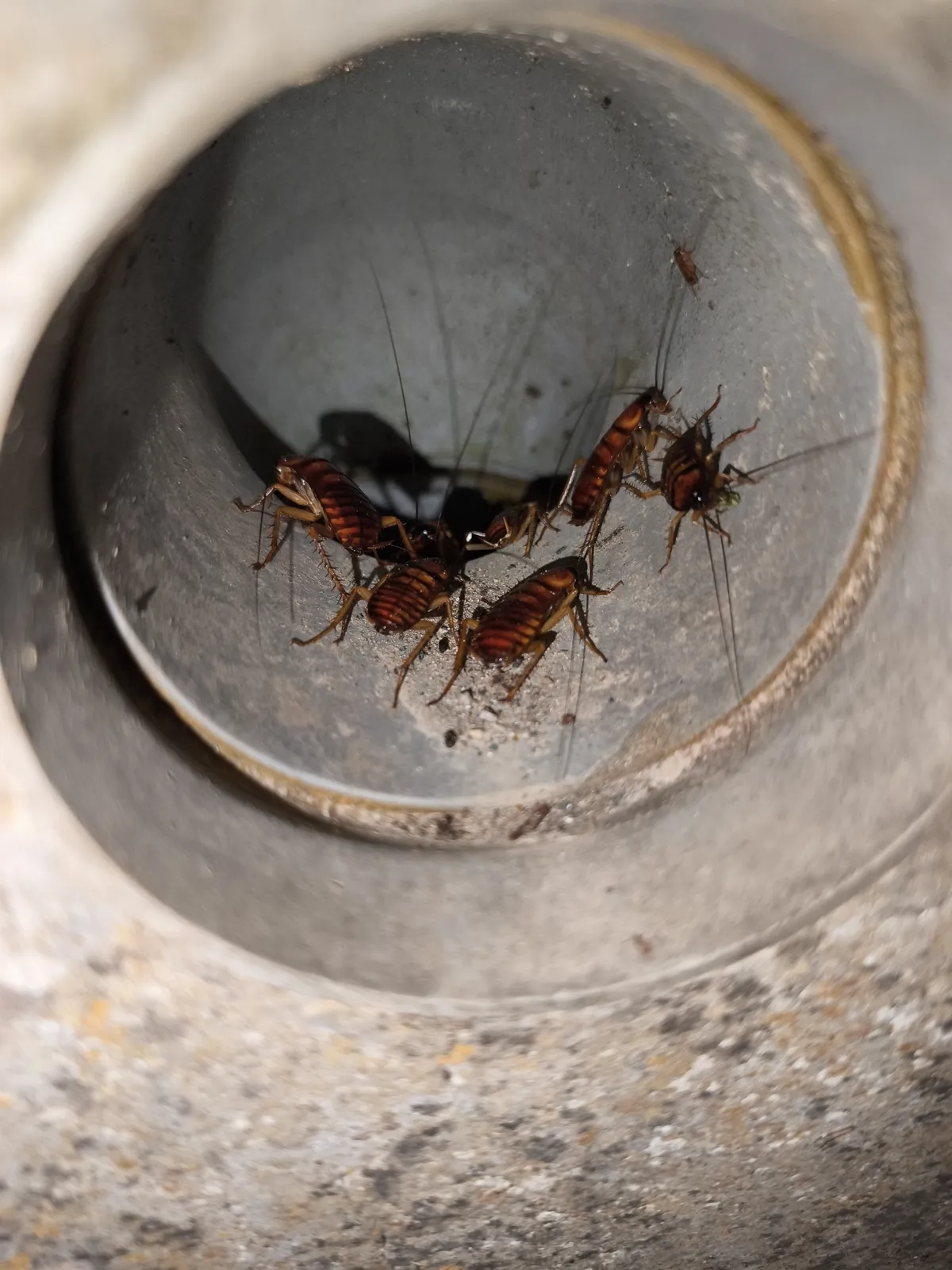
A nest in the sewer or crawl space sends roaches into the house through drains and gaps: where cockroaches come from explains those routes and how to close them, and the palmetto bug guide and the Oriental cockroach guide identify each species.
Smokybrown and Turkestan cockroaches: outdoors
Some roaches nest outdoors and only wander in. Texas A&M says smokybrown cockroaches prefer protected, moist, warm sites away from moving air, such as ground cover, mulch, palm fronds, soffits, the eaves of attics and tree holes, and UC IPM adds that they may live under shingles or siding and take refuge in attics.
The Turkestan cockroach, introduced to California and spreading into Texas, gathers outdoors in water meter boxes, cracks between blocks of poured concrete, sidewalk expansion joints, compost and leaf litter, according to UC IPM and Texas A&M.
How do you find a roach nest?
Look at night with a flashlight, follow the droppings to the crack they come from, and let sticky traps point you to the busiest spot. Purdue calls a flashlight check of hiding places the simplest way to monitor cockroaches.
- Check after dark. UC IPM says almost all cockroaches are nocturnal and come out at night to feed, so switch on the light in a dark kitchen and watch where they go.
- Use a bright flashlight and a mirror. UC IPM suggests a flashlight for cracks, the undersides of counters and the area around water heaters, plus a small mirror on a long handle for hard-to-see spots; Illinois calls for a good flashlight and a mechanic's mirror.
- Follow the specks. Fecal stains mark hiding places during the day, says Cornell, so trace pepper-like spots and smears to the crack or seam where they are thickest.
- Start in corners and along edges. UC IPM says cockroaches tend to congregate in corners while foraging and travel along the edges of walls.
- Flush a suspect crack with warm air. Texas A&M suggests a household hair dryer: cockroaches dislike heat and moving air and flee when hot air is directed into their hiding place.
- Set sticky traps where floors meet walls. UC IPM recommends numbered traps at floor-wall junctions near suspected activity, checked daily for several days. Cornell says comparing trap counts between areas can identify the source, and the way trapped roaches face can suggest which way they were moving. A guide to sticky roach traps and bait stations compares the types.
Is it a roach nest? Check for these
- Several sizes together? Nymphs often share cracks with adults, so mixed sizes in one gap point to a nest.
- Pepper-like specks or brown smears at a crack? That staining marks where roaches rest by day.
- Shed skins or egg cases nearby? Both turn up where roaches molt and breed.
- Warm and close to food or water? German cockroach hiding places are usually within 10 feet of food.
- Big roaches in a drain, basement or crawl space? That points to American or Oriental cockroaches.
- Egg cases glued high up or under furniture? Think brown-banded cockroach.
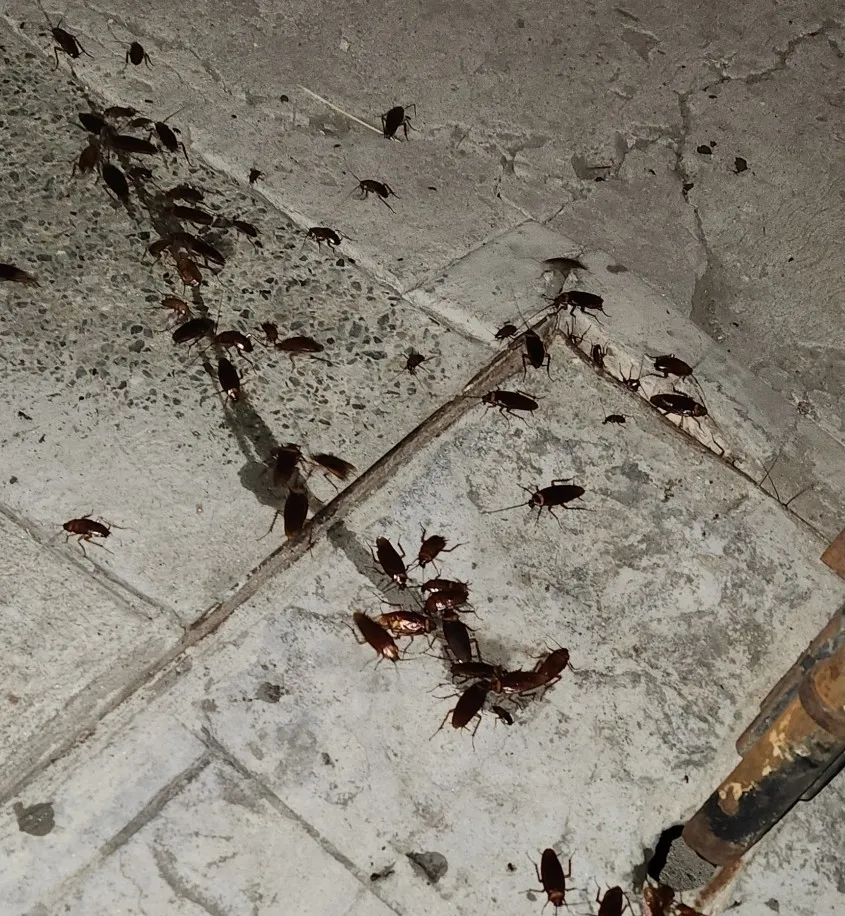
What does a roach nest tell you about the size of the problem?
A nest full of nymphs of many sizes points to a growing population: Rutgers says actively growing German cockroach populations are about 80 percent nymphs and 20 percent adults.
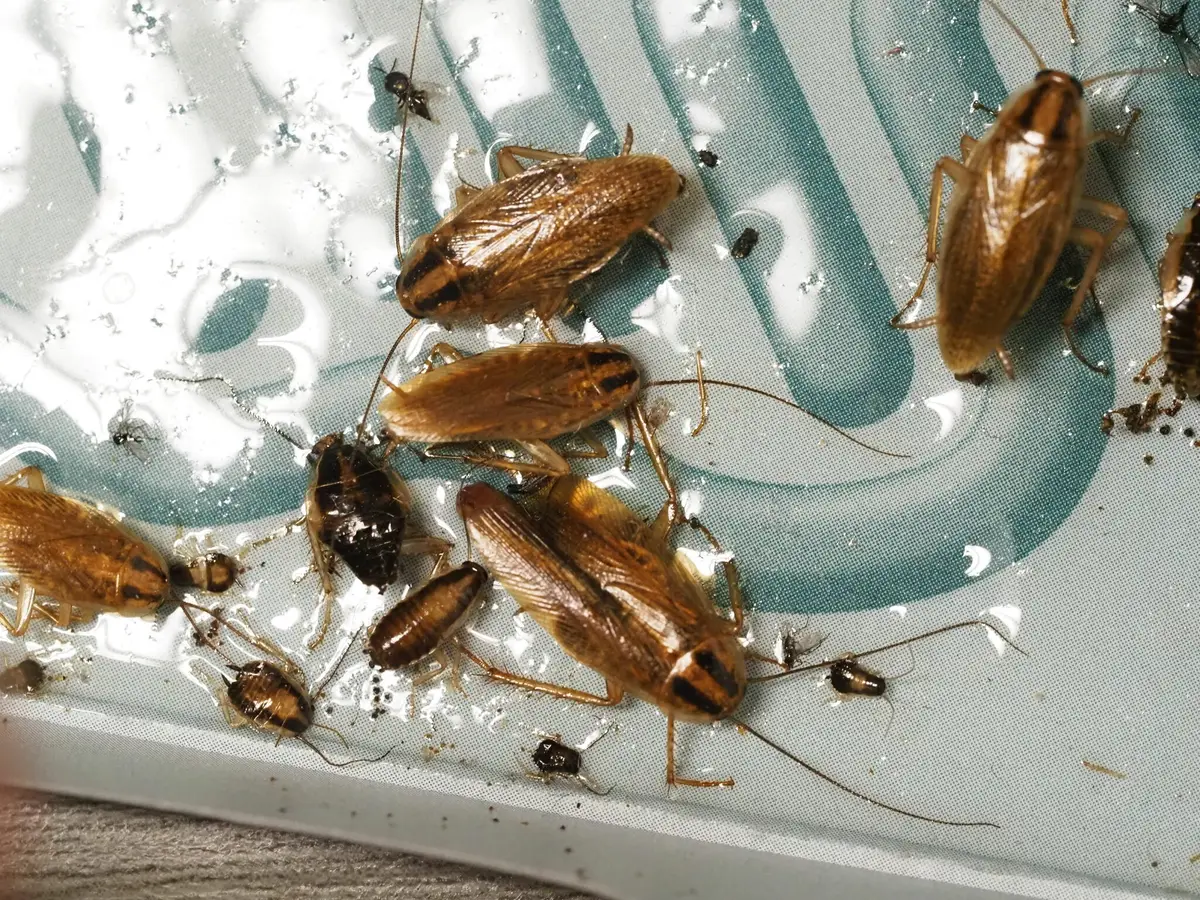
How fast a nest grows depends on the species. The University of Florida says the German cockroach completes its life cycle in about 100 days and that the female carries her case of 30 to 40 eggs until just before they hatch; UC IPM estimates that one female and her offspring can produce over 30,000 roaches in a year. American cockroaches take an average of 600 days to reach adulthood, says Texas A&M, and Kentucky notes that they multiply more slowly than German cockroaches.
Roaches out in daylight are another clue, though not proof. Cornell says single cockroaches seen during the day could mean a heavy infestation, but also a recent introduction from outside or a pesticide application elsewhere in the building. What a sticky-trap catch tells you is covered with the other signs.
Is a roach nest dangerous?
It can be for some people, especially those with allergies or asthma. Texas A&M warns that cockroach hiding places often contain allergens that can cause asthma or make breathing difficult for some people, and UC IPM says airborne bits of shed skins and droppings may cause allergies when inhaled. The Illinois Department of Public Health counts triggering asthma as possibly the roach's greatest impact on human health.
That makes cleanup part of the job. Texas A&M recommends a vacuum with a HEPA filter, which catches the finest dust, for clearing out a hiding place, and the EPA's page on asthma triggers, which lists cockroach droppings and body parts among them, advises sealing cracks and openings around and inside cabinets.
What else looks like a roach nest?
Mouse nests, bed bug hiding spots, ant nests and carpet beetle debris can all turn up in the same dark corners, and each has a tell.
A mouse nest is a real nest, which a roach nest is not. UC IPM's Pest Notes on the house mouse says house mice build nests of finely shredded paper or other fibrous material in sheltered spots and suggests searching drawers for them. The droppings differ too: roach droppings vs. mouse droppings compares them, and what a mouse nest looks like shows the nest itself.
A bed bug hiding spot can look like roach spotting, but it is usually near where people rest. The EPA's guide to finding bed bugs describes dark spots of excrement that may bleed on fabric like a marker, in the seams of mattresses and box springs, in cracks in the bed frame and headboard, and even in electrical receptacles. Where bed bugs hide maps those spots.
An ant nest has a queen and brood. UC IPM's Pest Notes on ants says ant queens are larger than the workers, which care for white, legless larvae, and that indoor nests can be in wall voids or potted plants. A roach group has no queen and no larvae, only wingless nymphs and adults; the ant guide helps identify which ant you have.
Carpet beetle debris collects in the same undisturbed places. UC IPM's Pest Notes on carpet beetles describes brown, shell-like, bristly cast skins and fecal pellets about the size of a grain of salt, and says to inspect beneath heavy furniture and along carpet edges; signs of carpet beetles has photos.
Commonly confused with
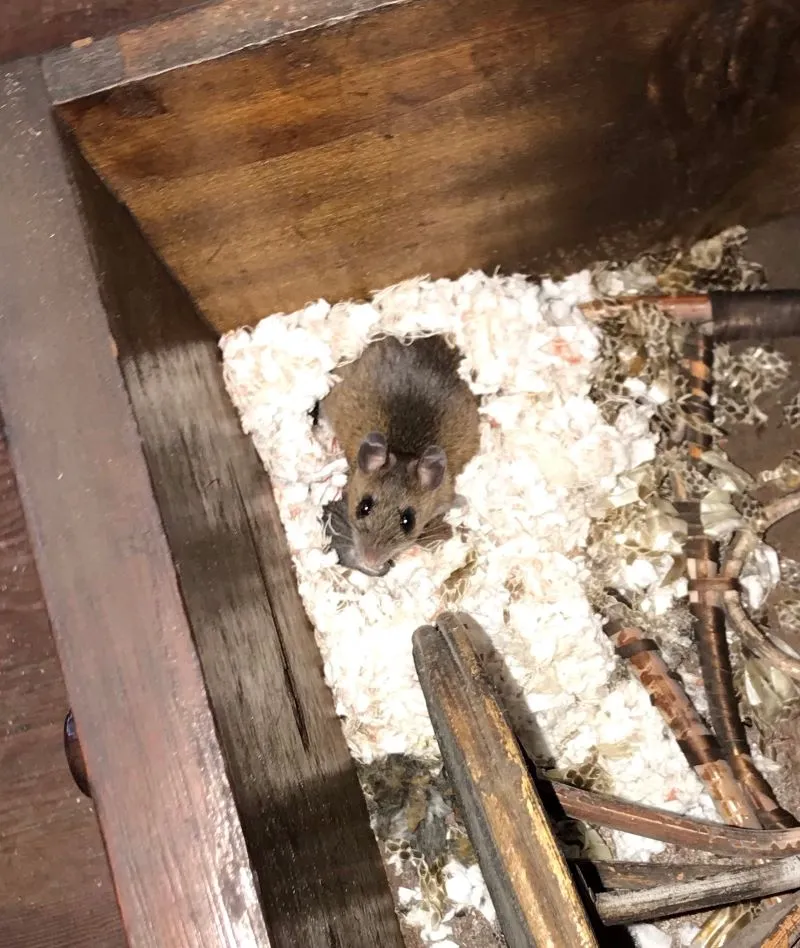 Mouse nestA wad of finely shredded paper or fiber in a sheltered spot such as a drawer
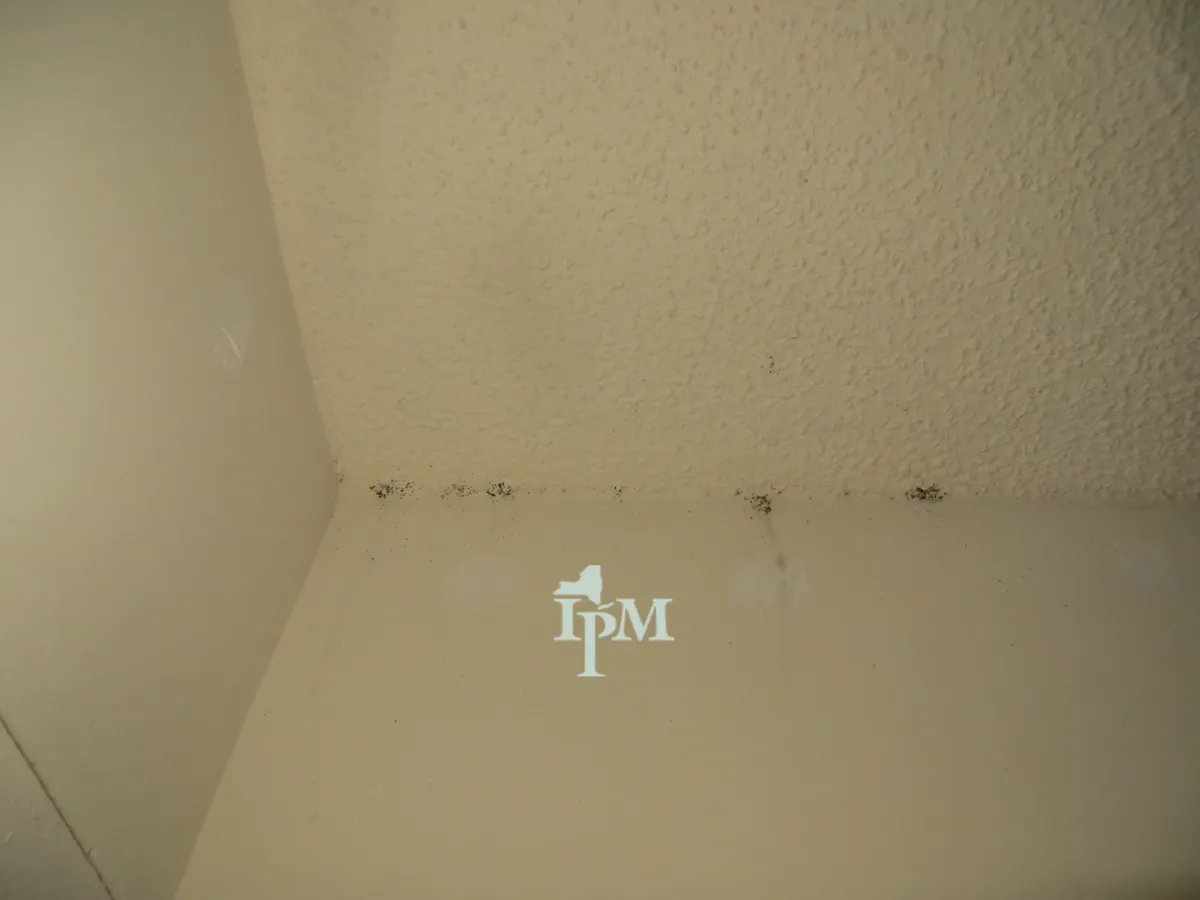 Bed bug hiding spotDark spots that bleed into fabric like a marker, in mattress seams and bed frames
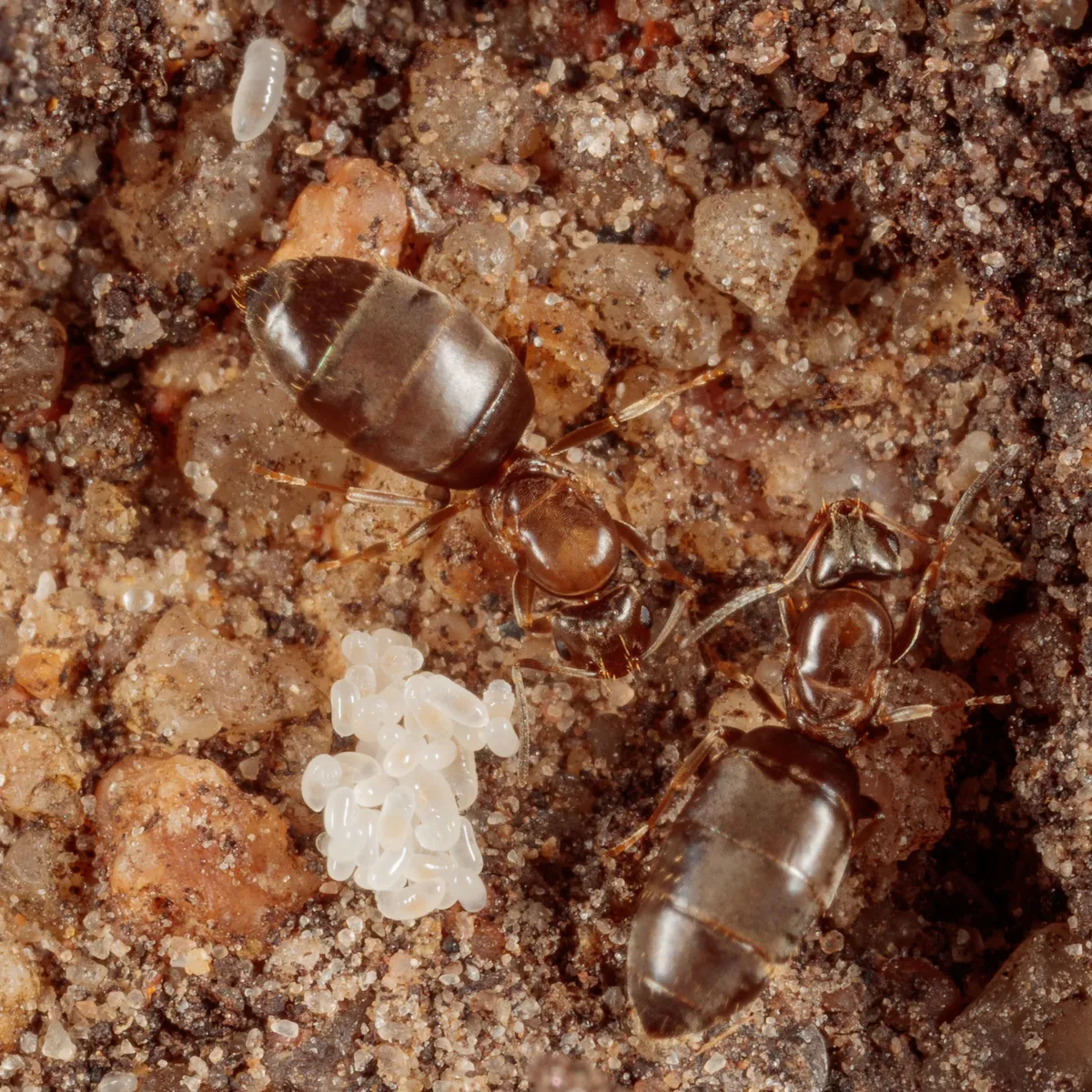 Ant nestA larger queen and white, legless larvae among the workers; roaches have neither
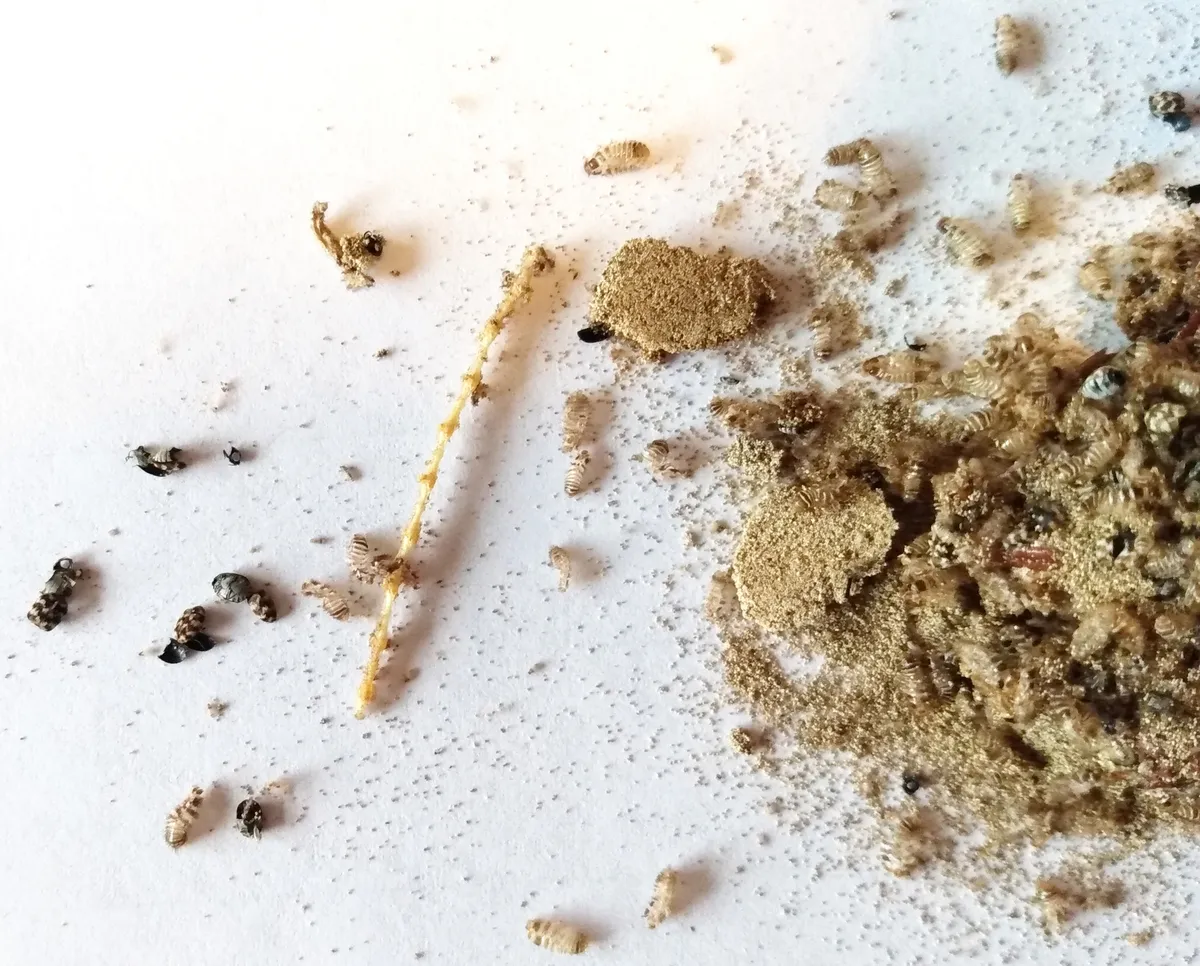 Carpet beetle skinsBristly brown cast skins and salt-grain droppings under furniture and along rugs
Photos: Mouse nest: NPS Photo (U.S. National Park Service, nps.gov), public domain. Bed bug hiding spot: NY State IPM Program at Cornell University from New York, USA, CC BY 2.0, via Wikimedia Commons, CC BY 2.0. Ant nest: (c) Victor Engel, some rights reserved (CC BY), via iNaturalist, CC BY 4.0. Carpet beetle skins: (c) John Powers, some rights reserved (CC BY), via iNaturalist, CC BY 4.0.
What should you do once you find a roach nest?
Work on the nest itself: bait right at it, clean out the droppings, take away the shelter, and choose bait over sprays. The step-by-step plan for getting rid of cockroaches puts these in order, with a Canadian edition as well.
- Bait at the hiding place. Texas A&M advises at least one bait station within 1 to 2 feet of every suspected hiding place and many pea-size dabs of gel rather than a few large ones; Kentucky says to bait behind or beneath infested appliances and wherever you see fecal spotting. Follow the label directions.
- Choose bait over sprays, and skip foggers. UC IPM warns that sprays may repel and scatter cockroaches to other parts of the building, from which they may return later; Texas A&M says bug bombs do not reach the cracks where most roaches hide and that sprays are not nearly as effective as baits; and Cornell notes that spraying near bait can make roaches avoid the bait.
- Vacuum out the droppings and skins. UC IPM says vacuuming removes cockroaches, shed skins and egg cases, and Texas A&M recommends a HEPA filter because hiding places often hold allergens. Kentucky says roaches congregate in response to odors in their feces, so clearing the droppings may also make the spot less inviting.
- Take away the shelter. Clear stored paper bags, cardboard and items piled on the refrigerator, as Cornell advises, and once you know where the nest is, treat or seal it so roaches cannot use it again, says Texas A&M. The University of Florida notes that sealing cracks and crevices reduces hiding space and can cut population size.
- Match the plan to the species. German cockroaches need indoor baiting and cleanup, covered in the German cockroach guide; for American and Oriental cockroaches, Texas A&M starts with drains, door thresholds and screened soffits to keep them out.
This guide is general educational information, not medical advice. If you have symptoms or concerns after a bite or exposure, contact a healthcare provider.
Use any pesticide exactly as its label directs. The label is the law, and what is registered and sold varies by state.
Frequently Asked Questions
Is there a queen in a roach nest?+
No. Cockroaches have no queen and no workers. Unlike ants, bees and termites, they do not live in central colonies, according to the University of Kentucky; a roach nest is simply a hiding place where many individuals gather, drawn by the odor of their droppings. Each mature female produces egg cases of her own, which is one reason a German cockroach group can grow so quickly once it is established.
How many cockroaches live in one nest?+
There is no set number, because a nest is just a gathering place. A new arrival may be one roach or a few, while an established German cockroach population grows fast: UC IPM estimates that one female and her offspring can produce over 30,000 roaches in a year, and Rutgers says growing populations are about 80 percent nymphs. Sticky traps checked over several days give a better count than a glance into one crack.
How far do roaches travel from their nest?+
Not far when food and water are close. The Illinois Department of Public Health says German cockroach hiding places are usually within 10 feet of their food source and that adults usually roam less than 10 feet from their hiding place. Texas A&M notes that when food or water is scarce, cockroaches must search farther each night, and that good cleanup makes baits more effective.
Can roaches nest in a bedroom?+
They can, though kitchens and bathrooms are more common. The University of Kentucky says that when populations are large or food is scarce, German cockroaches can be found in bedrooms, closets and other parts of the home, and brown-banded cockroaches commonly live away from the kitchen, high on walls, in closets and in furniture. Small, flat bugs and dark spots in mattress seams point to bed bugs instead, which the EPA says hide in mattress seams and bed frames.
Do roaches nest in electronics and small appliances?+
Yes, warm devices are a favorite. The University of Kentucky finds German cockroaches in clocks, toaster ovens and other heat-producing electronic equipment, Cornell lists the inside of electrical equipment among their preferred hiding places, and the Illinois Department of Public Health says the brown-banded cockroach loves the warmth of electronics and motor housings. Look for pepper-like droppings around vents and seams, and keep crumbs cleaned out of toasters and from under appliances.
Can a roach nest be in the attic or outside the house?+
Yes, for species other than the German cockroach. Texas A&M says smokybrown cockroaches live in mulch, palm fronds, tree holes, soffits and the eaves of attics, and UC IPM adds that they may live under shingles or siding and take refuge in attics. Oriental and Turkestan cockroaches gather in water meter boxes, and American cockroaches in sewers and storm drains. German cockroaches, by contrast, live indoors with people.
What time do roaches come out of their nest?+
After dark. UC IPM says almost all cockroaches are nocturnal and come out at night to feed, and Texas A&M says adult German cockroaches leave their hiding places at night to search for food and water. Roaches seen in daylight can mean a heavy infestation, according to Cornell, though a single daytime roach may also mean a recent introduction or a recent pesticide application elsewhere in the building.
Should you spray a roach nest?+
Usually not. UC IPM warns that sprays may repel cockroaches and scatter them to other parts of the building, from which they may return later, and Texas A&M says total-release foggers do not penetrate the cracks where most cockroaches hide and that sprays are not nearly as effective as baits against German cockroaches. Sprays near baits can also make roaches avoid the bait, according to Cornell. Bait placed close to the hiding place, used as the label directs, works better.
Will roaches come back to the same spot after you clean it?+
They can, if the crack, food and water are still there. Roaches gather where the odor of their droppings marks a spot, and the authors of a 2015 study link that odor to roaches staying faithful to the same sites. Vacuuming up droppings, shed skins and egg cases may weaken that pull, and Texas A&M advises treating or sealing a hiding place once you find it so roaches cannot use it again.
Sources
- The German Cockroach: America's #1 Cockroach Pest (Community IPM fact sheet by G. Alpert, updated by M. Frye, 2015) — New York State Integrated Pest Management Program, Cornell University
- Cockroaches (Pest Notes, UC ANR Publication 7467) — University of California Statewide IPM Program (A. M. Sutherland, D. H. Choe and M. K. Rust)
- ENTO-037: Cockroach Biology and Management — Texas A&M AgriLife Extension Service (W. Brown, M. Merchant and K. Siders, 2017)
- Cockroaches — Illinois Department of Public Health, Structural Pest Control
- ENTFACT-614: Cockroach Elimination in Homes and Apartments — University of Kentucky Department of Entomology (M. F. Potter)
- FS1322: German Cockroach — Rutgers Cooperative Extension (C. Wang, 2020)
- E-241: A Practical Guide to Cockroach Control in Multi-Family Housing Units — Purdue Extension (G. W. Bennett and C. Wang, 2017)
- German Cockroach, Blattella germanica (Linnaeus) (EENY-002/IN128) — University of Florida IFAS Extension (S. Valles)
- Gut bacteria mediate aggregation in the German cockroach (A. Wada-Katsumata, L. Zurek, G. Nalyanya, W. L. Roelofs, A. Zhang and C. Schal, PNAS 112(51): 15678-15683, 2015) — Proceedings of the National Academy of Sciences, via PubMed Central
- Asthma Triggers: Gain Control — US Environmental Protection Agency
- House Mouse (Pest Notes, UC ANR Publication 7483) — University of California Statewide IPM Program (N. M. Quinn and M. Frye)
- How to Find Bed Bugs — US Environmental Protection Agency
- Ants (Pest Notes, UC ANR Publication 7411) — University of California Statewide IPM Program (M. K. Rust and D. H. Choe)
- Carpet Beetles (Pest Notes, UC ANR Publication 7436) — University of California Statewide IPM Program (D. H. Choe)
Read and approved by Alex Francisco. Found an error? Email support@buzzskito.ca.