
Published by BuzzSkito Mosquito & Tick Control
Published October 16, 2026 · Drafted with AI assistance and fact-checked against the sources listed below
What is a palmetto bug?
A palmetto bug is a cockroach: the name is a nickname for several large species, not a separate insect. Texas A&M AgriLife Extension's guide to cockroach biology and management lists palmetto bug, along with waterbug, as another name for the American cockroach (Periplaneta americana). The University of Florida's guide to cockroaches and their management casts a wider net: it says the larger American, Australian, brown and smokybrown cockroaches, 1 1/4 to 2 inches long, are often called palmetto bugs.
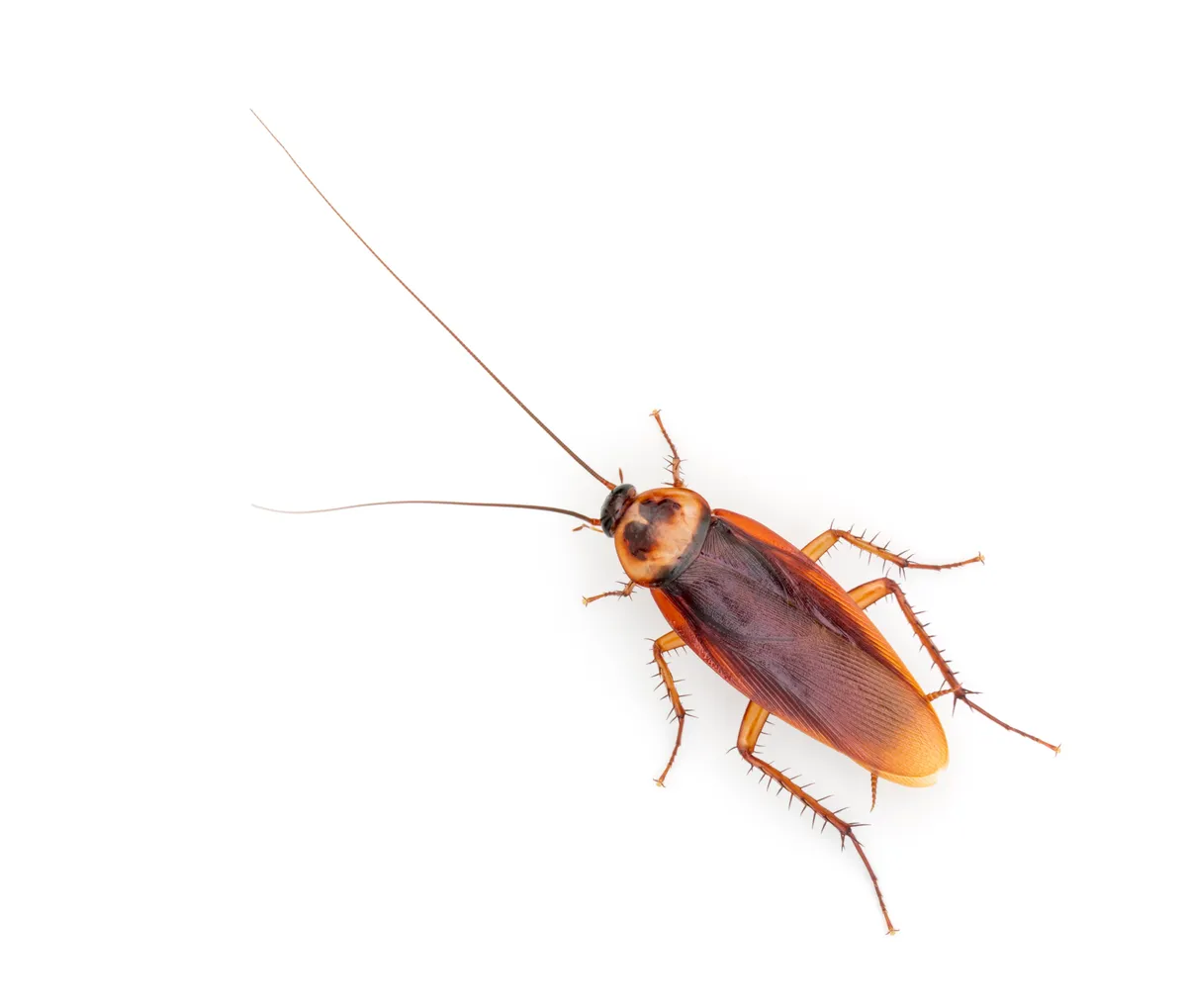
The University of Georgia calls the name a catch-all often applied to smokybrown cockroaches and their cousins, the American and Oriental cockroaches, and the University of Florida's Florida woods cockroach profile lists palmetto bug among that native species' common names, adding that it may describe any large cockroach often met around homes. Every source here that uses the nickname includes the American cockroach.
In Florida, UF lists the Florida woods, American, smokybrown, brown and Australian cockroaches, with the small German and Asian species, as the roaches most often found in and around homes. The nickname settles nothing, so identify the roach itself; the complete guide to cockroaches in US homes covers the species not described here.
How do you tell which palmetto bug you have?
Check the plate behind the head first, then the wings, then the size. That plate, which Texas A&M calls the pronotum, hides a cockroach's head from above. LSU AgCenter's guide to cockroaches that live around homes describes the American cockroach's as light brown along the edges and dark brown in the center and the smokybrown's as unmarked, and separates the Australian from the American by its darker color, yellow-bordered thorax, yellow-streaked front wings and smaller size.
| Species | Adult length | Markings | Wings and flight | Where it lives |
|---|---|---|---|---|
| American | 1 1/2 to 2 inches | Reddish brown; pale band around the edge of the plate behind the head | Full wings; seldom flies, can glide | Sewers, drains, basements; trees, woodpiles, mulch |
| Smokybrown | 1 1/4 to 1 1/2 inches | Dark brown to black; plate behind the head solid dark | Wings longer than the body; may fly on warm evenings | Tree holes, mulch, palm fronds, gutters; attics |
| Australian | 1 1/4 to 1 1/2 inches | Yellow-bordered thorax; yellow streaks on the front wings | Full wings; glides | Florida and the coastal Southeast: bark, woodpiles, greenhouses |
| Florida woods | 1.2 to 1.6 inches | Reddish brown to nearly black | Short wing pads; cannot fly | Florida and coastal Georgia, Alabama and Mississippi: leaf litter, woodpiles |
| German (not a palmetto bug) | 1/2 to 5/8 inch | Light brown; two dark stripes on the plate behind the head | Full wings; does not fly | Indoors, mainly kitchens and bathrooms |
From Texas A&M, the University of Florida, LSU AgCenter and Clemson University. Sizes vary by source: LSU AgCenter gives the American cockroach 1 3/8 to 2 1/8 inches and the smokybrown 1 to 1 1/2 inches.
Check the roach in a jar
- Size against a ruler. About 5/8 inch or less with two dark stripes behind the head is a German cockroach or a look-alike, not a palmetto bug; 1 inch or more points to the table above.
- The plate behind the head. A pale band around the edge points to the American cockroach, a yellow border with yellow-streaked front wings to the Australian, solid dark to the smokybrown.
- The wings. Short wings or pads that leave much of the abdomen bare point to a Florida woods or Oriental cockroach, or to a young roach.
- The smell. A strong, foul odor when it is disturbed points to the Florida woods cockroach.
- Where you found it. A floor drain or basement suggests an American cockroach; an attic or fireplace, a smokybrown; firewood just brought in, a Florida woods cockroach.
If the insect does not have a cockroach's shape at all, compare it with the insects most often mistaken for cockroaches, from ground beetles to crickets.
What does an American cockroach look like?
It is a large, reddish brown roach, 1 1/2 to 2 inches long by Texas A&M AgriLife's measure, with a pale band around the plate behind its head. The University of Florida's American cockroach profile describes that band as pale brown or yellow and says males are longer than females because their wings reach about 1/8 to 1/3 inch past the tip of the abdomen.
Full wings do not mean frequent flights. Texas A&M AgriLife says both sexes can fly, but Texas A&M's urban entomology program says adults seldom fly and are capable of gliding, and LSU AgCenter says they can fly at higher temperatures and glide at lower ones, without naming a cutoff.
It lives below ground as much as in the yard. Texas A&M AgriLife calls it one of the most common cockroaches in sewer systems, and UF says it is found mainly in basements, sewers, steam tunnels and drainage systems, sometimes more than 5,000 in one sewer manhole. In Florida it also lives in trees and woodpiles around homes; in the northern United States, UF says, it is found mainly in steam heat tunnels and large institutional buildings.
How do you recognize a smokybrown cockroach?
It is dark all over, with no pale band behind the head. Texas A&M's smokybrown cockroach page describes adults 1 1/4 to 1 1/2 inches long, dark brown to black, with a pronotum of solid dark color and wings longer than the body in both sexes, and LSU AgCenter also says its pronotum has no distinct markings.
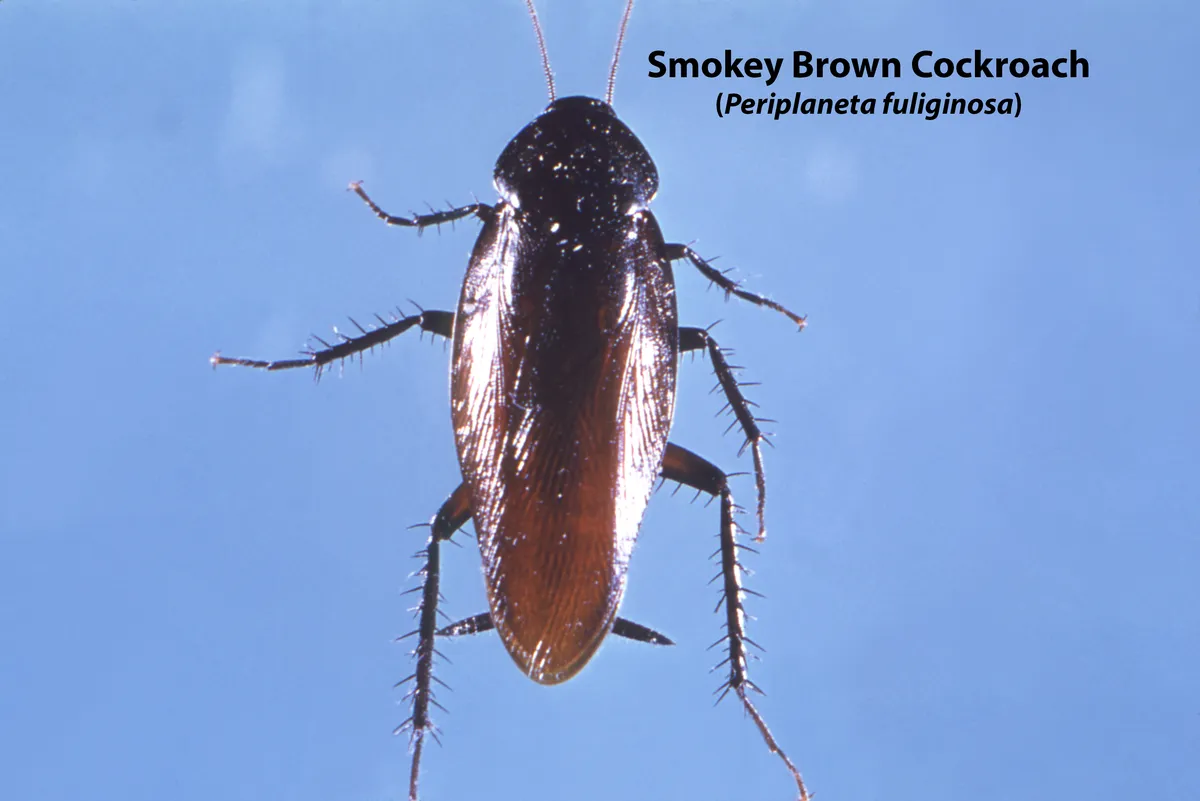
It needs warmth and moisture. The University of Georgia says smokybrowns prefer temperatures above 68°F, need constant moisture and may enter homes looking for water. Texas A&M AgriLife describes them as common outdoors in the more humid parts of Texas and other southern states, in mulch, palm fronds, soffits, attic eaves and tree holes, and Clemson University's cockroach fact sheet says that along the coast they may live in trees, especially palmettos.
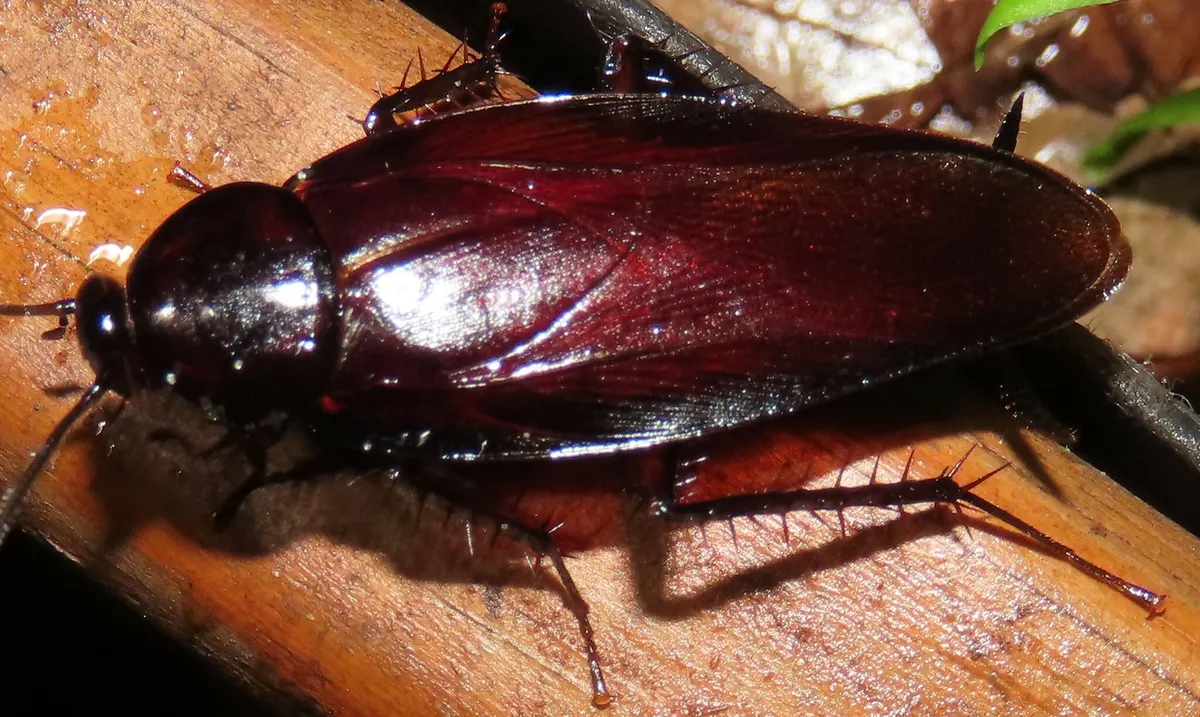
Inside, check the attic. Texas A&M's urban entomology program says smokybrowns indoors are commonly found in attics or near fireplaces and that a leaky roof can attract them, and University of Georgia urban entomologist Dan Suiter says a leaking attic, such as one where water collects around a poorly sealed roof pipe, can work like a tree hole.
How do you recognize an Australian cockroach?
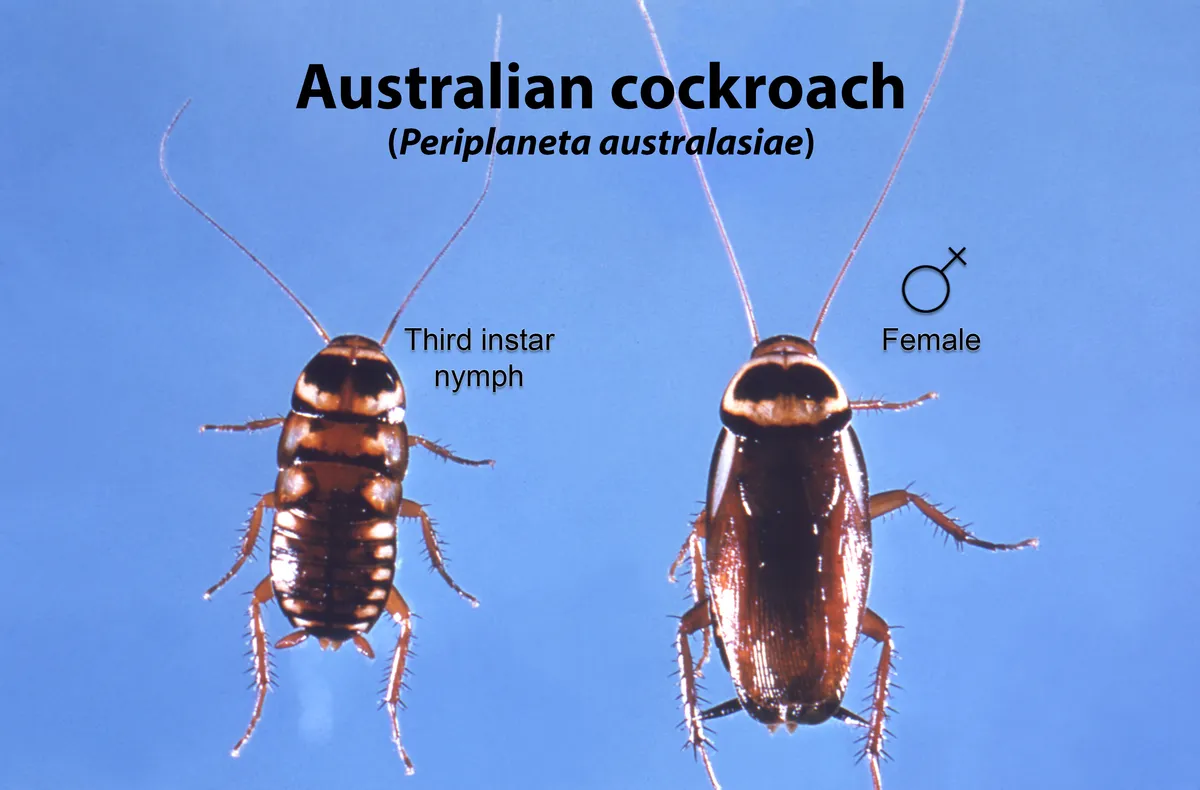
Look for yellow. The University of Florida's Australian cockroach profile says this species (Periplaneta australasiae) resembles the American cockroach but has light yellow bands on the outer edge of both front wings near where they attach, and LSU AgCenter adds a yellow-bordered thorax, a darker body and a smaller size, 1 1/4 to 1 1/2 inches. UF says adults are reddish brown to dark brown, with fully developed wings capable of gliding flight.
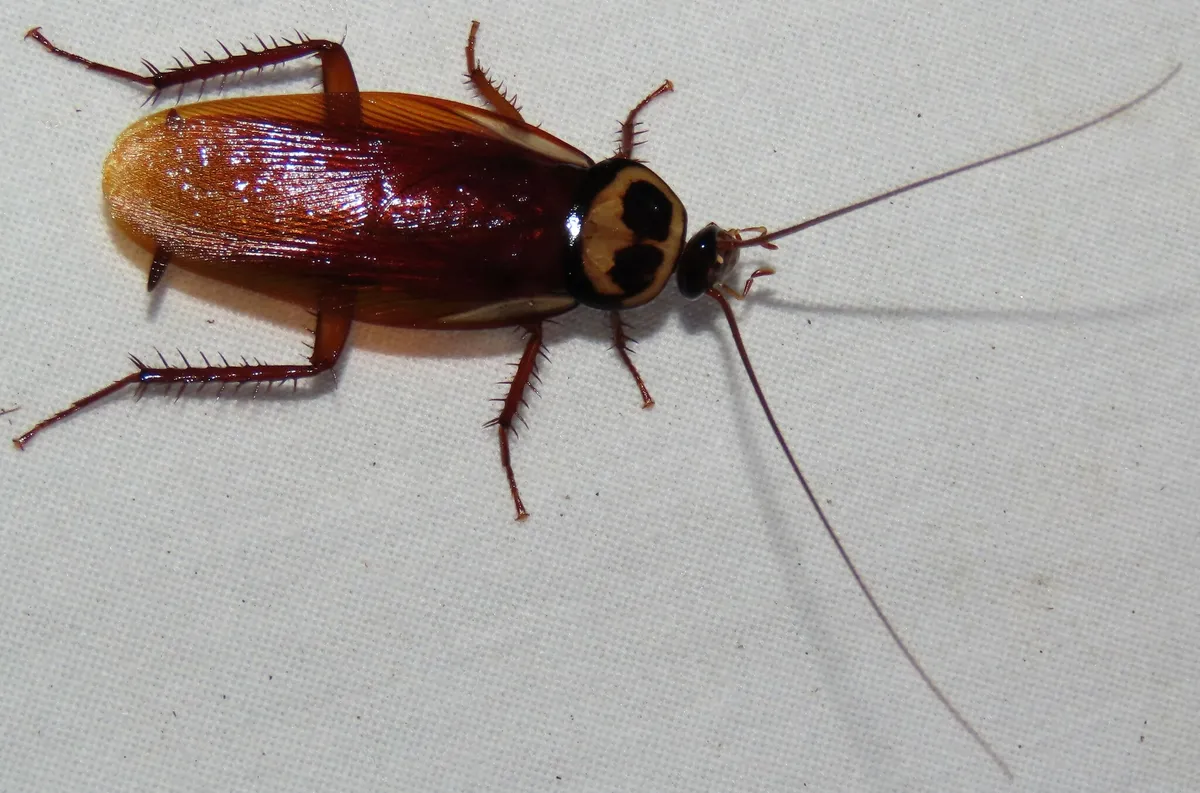
It is a roach of the warm Southeast. UF says it is most prevalent in Florida and the coastal southeastern states and is the most common cockroach found outdoors in southern Florida, living under bark, in firewood piles and other moist places, and in greenhouses, where it damages plants. LSU AgCenter says low temperatures limit its ability to establish outside tropical and subtropical regions unless it is brought indoors.
What is a Florida woods cockroach, and why does it smell?
It is a native Southeastern roach that cannot fly and defends itself with a smelly spray. The University of Florida's profile lists its other names as Florida stinkroach, skunk cockroach and palmetto bug and describes adults 1.2 to 1.6 inches long and up to about 1 inch wide, reddish brown to nearly black. Its front wings are short, leathery pads that cover none of the abdomen, and it has no hind wings.
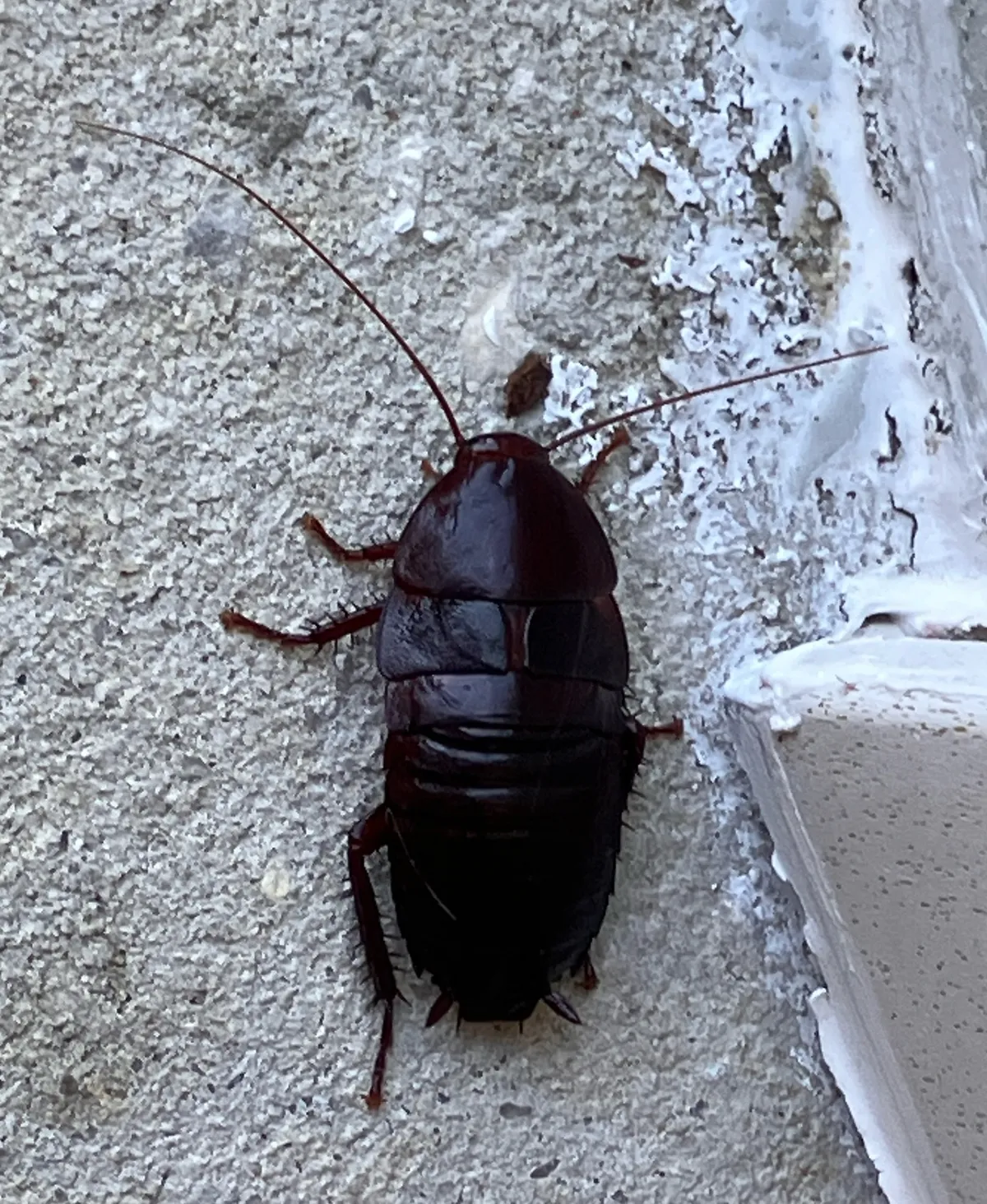
Its defense is chemical. UF says the oily, foul-smelling secretion is harmful to skin and sensitive tissue such as the eyes and can reach from about an inch to roughly 3 feet, so this page suggests moving one with a jar and a piece of card, not bare hands. None of the extension sources here mentions palmetto bugs biting; what is actually documented about cockroach bites is reviewed separately.
It is mostly an outdoor insect, recorded in coastal Georgia, Alabama and Mississippi and most of Florida, in tree and stump cavities, under bark, in leaf litter, in woodpiles and around the bases of palms near homes. UF says it is slow-moving, usually gets indoors by being carried in on something such as firewood, and has not been shown to commonly colonize buildings, with limited cases of breeding in attics.
What about the brown and Oriental cockroaches?
The brown cockroach (Periplaneta brunnea) is on UF's palmetto bug list; LSU AgCenter says it is often mistaken for the American cockroach but has a slightly darker plate behind the head and broader end segments on its cerci, the two small appendages at the tail. The Oriental cockroach, another cousin in the Georgia article, is dark brown to black, about 1 1/4 inches long and short-winged even as an adult, and Texas A&M says it does not fly. The water bug nickname has its own mix-ups, sorted out in the comparison of water bugs and cockroaches.
Is a palmetto bug a German cockroach?
No. None of the sources here calls the German cockroach a palmetto bug. Texas A&M AgriLife describes a small, light brown roach 1/2 to 5/8 inch long, with two dark stripes on the plate behind the head and wings that reach the end of the abdomen, says it does not fly, and says German cockroaches spend their lives indoors.
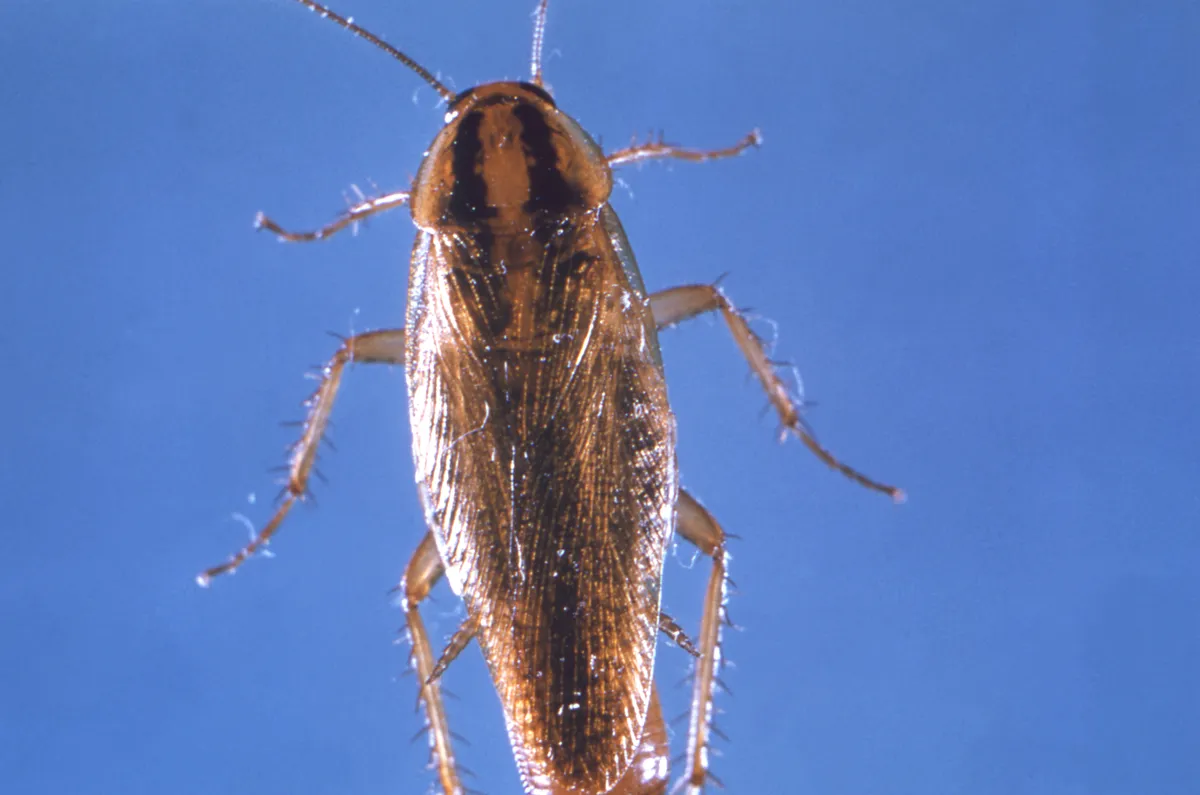
The difference matters: Texas A&M calls the German cockroach the most prolific indoor cockroach, producing a generation in about 100 days, while American and smokybrown cockroaches take an average of 600 days just to reach adulthood. The German cockroach guide covers identification and control. LSU AgCenter warns that the Asian cockroach looks much like it but lives outdoors, flies strongly and is drawn to lights on buildings.
Do palmetto bugs fly?
Some do. The smokybrown flies, and Clemson says adult American and smokybrown cockroaches may fly on warm evenings; the American seldom flies but can glide, the Australian glides, and the Florida woods cockroach cannot fly at all.
The smokybrown can fly at people: Georgia's Suiter says it has been known to, that it is not harmful, and that one about to take off stands high on its legs with its antennae out. LSU AgCenter says smokybrowns are attracted to light and enter buildings through cracks at night. Which cockroaches fly and which only glide is laid out species by species in a separate guide.
Why do palmetto bugs come inside?
Mostly for food or water, or by accident. Texas A&M AgriLife says American, Oriental and smokybrown cockroaches live mostly outdoors but may move indoors in search of food or water, and that the larger species often enter through poorly sealed doors, roof soffits or floor drains.
- Rain and weather. UF says American cockroaches are rarely found in houses but that infestations can follow heavy rain, and LSU AgCenter says older homes with worn seals are especially open to invasion after extreme weather.
- Light. LSU AgCenter says light from gaps around doors and windows attracts cockroaches and gives them a way in.
- Drains. Texas A&M's urban entomology program says American cockroaches travel through sewer pipes and enter kitchens and bathrooms through drain pipes.
- Trees. UF says American cockroaches also move in from trees and shrubs beside buildings or with branches overhanging the roof.
- Firewood. UF says a Florida woods cockroach indoors has usually been carried in, for example on firewood.
The gap does not need to be big: LSU AgCenter says an adult American cockroach can fit through one the height of two pennies, about 1/8 inch (3 mm). Each route cockroaches use to get indoors, and how to close it, has its own guide.
Does one palmetto bug in the house mean an infestation?
Usually not. The University of Florida says outdoor cockroaches do not survive well indoors, that people often overreact to them, and that removing these roaches from the house is often all the control needed.
Some signs point to more than a stray. Texas A&M AgriLife says seeing cockroaches in the daytime usually means there are a lot of them, and the outdoor species can settle in: Texas A&M places American cockroaches indoors near furnaces and heating ducts, and smokybrowns in attics. Young roaches matter too, because UF describes American cockroach nymphs as having only wing pads and Australian nymphs as wingless, so a nymph indoors walked in or hatched nearby. Photos of cockroach nymphs by species and what cockroach egg cases look like help you check.
What should you do once you know which one it is?
Keep the outdoor species out, and treat a German cockroach as an indoor problem. For the large roaches, the extension advice starts with the building and the yard.
- Seal the way in. UF recommends caulking cracks around door and window frames and around plumbing and electrical lines, weather-stripping doors and repairing window and soffit screens.
- Thin the mulch. UF says outdoor cockroaches breed prolifically in pine straw and advises only a thin layer of mulch within about a foot of the foundation; LSU AgCenter says to keep landscape mulch under 2 inches thick.
- Move wood and trim plants. UF advises stacking firewood off the ground and away from the house, and Clemson advises pruning limbs and shrubs so they do not touch it.
- Fix leaks and fill drain traps. Repair roof leaks, which Texas A&M says attract smokybrowns, and keep drain P-traps full of water, which Texas A&M AgriLife says forms a barrier against the sewer.
Roaches living indoors are worth dealing with: UF says cockroaches can spread diseases such as Salmonella and that their droppings, shed skins and body parts are allergens. A bait-first plan for clearing cockroaches walks through the indoor steps, and what glue traps and bait stations each do explains how a sticky trap shows where roaches travel. Any product used against them is a pesticide: follow its label.
Frequently Asked Questions
Do palmetto bugs bite?+
Biting is not among the problems the university sources used for this page describe: none of the University of Florida, Texas A&M, LSU AgCenter, Clemson or University of Georgia pages cited here mentions palmetto bugs biting people. Georgia entomologist Dan Suiter says the smokybrown cockroach is not harmful even when it flies at people. The Florida woods cockroach is the one to handle with care, because the University of Florida says its oily spray is harmful to skin and eyes. A separate guide on this site reviews the few documented reports of cockroaches biting.
Does a palmetto bug in the house mean it is dirty?+
Not necessarily. University of Georgia entomologist Dan Suiter links sanitation problems to the small German cockroach, while the smokybrown cockroaches he describes live in tree holes and attics. Texas A&M AgriLife says American, Oriental and smokybrown cockroaches live mostly outdoors but may move indoors in search of food or water, and the University of Florida says American cockroach infestations in houses can follow heavy rain. A large roach that wandered in from outside is not, on these sources' account, a sign of poor housekeeping. Small, striped German cockroaches indoors are a different matter.
Why are they called palmetto bugs?+
No source settles it. University of Georgia urban entomologist Dan Suiter says the name may have started with the Florida woods roach, a species that can grow to about 1.5 inches and is commonly found in palm trees. Large roaches do use palms: the University of Florida lists palm trees among the places outdoor cockroaches live, Texas A&M AgriLife names palm fronds among the smokybrown cockroach's outdoor sites, and Clemson University says that along the coast smokybrowns may live in trees, especially palmettos. Today the nickname covers several large species, not one.
What does a baby palmetto bug look like?+
Like a smaller adult without full wings, with markings that depend on the species. Texas A&M AgriLife says young smokybrown nymphs are black with two white bands and white-tipped antennae, turning uniformly reddish brown as they get older. The University of Florida says American cockroach nymphs are grayish brown after hatching and reddish brown in later stages, that Australian cockroach nymphs have light yellow spots on the top of the abdomen, and that late-stage Florida woods cockroach nymphs commonly have yellow margins on the thorax. Several nymphs indoors are worth a closer look, since they did not fly in.
How big is a palmetto bug?+
Most are 1 1/4 to 2 inches long. The University of Florida gives that range for the American, Australian, brown and smokybrown cockroaches it says are often called palmetto bugs. The American cockroach is the longest of them at 1 1/2 to 2 inches, according to Texas A&M AgriLife, and LSU AgCenter records lengths up to 2 1/8 inches. Smokybrown cockroaches run 1 to 1 1/2 inches, depending on the source, Australian cockroaches 1 1/4 to 1 1/2, and the University of Florida puts the Florida woods cockroach at 1.2 to 1.6 inches long and up to about 1 inch wide. A roach under 5/8 inch is a young roach or a smaller species, such as the German cockroach.
When are palmetto bugs most active?+
At night, in warm and humid weather. Texas A&M AgriLife says most cockroach species are nocturnal, hiding by day and coming out at night to look for food. The University of Georgia says smokybrown cockroaches prefer temperatures above 68°F and are most active at night, when humidity is higher. LSU AgCenter says American cockroaches stay active around 70°F and cannot tolerate freezing, and Clemson University says adult American and smokybrown cockroaches may fly on warm evenings. The University of Florida adds that American cockroach infestations in houses can follow heavy rain.
Sources
- Cockroach Biology and Management — Texas A&M AgriLife Extension
- American Cockroach, Periplaneta americana — Urban and Structural Entomology Program at Texas A&M University
- Smoky Brown Cockroach, Periplaneta fuliginosa — Urban and Structural Entomology Program at Texas A&M University
- ENY-214/IG082: Cockroaches and Their Management — University of Florida IFAS Extension
- EENY141/IN298: American Cockroach, Periplaneta americana (Linnaeus) (Insecta: Blattodea: Blattidae) — University of Florida IFAS Extension
- EENY-514/IN915: Florida Woods Cockroach (AKA Palmetto Bug) Eurycotis floridana (Walker) — University of Florida IFAS Extension
- EENY623/IN1088: Australian Cockroach Periplaneta australasiae Fabricius (Insecta: Blattodea: Blattidae) — University of Florida IFAS Extension
- Is that a roach or a palmetto bug? — University of Georgia College of Agricultural and Environmental Sciences
- Peridomestic Cockroaches Part 1 (Blattodea), PUB 3877-A — LSU AgCenter (Louisiana State University Agricultural Center)
- Cockroach (Roach) Control — Clemson Cooperative Extension Home & Garden Information Center
How this guide was made: it was researched and drafted with AI assistance from the sources listed above. A second, independent AI pass then checked each factual claim against those sources. Found an error? Email support@buzzskito.ca.