
Published by BuzzSkito Mosquito & Tick Control
Published October 29, 2026 · Fact-checked against the sources listed below
What is a wood roach?
A wood roach, or wood cockroach, is a true cockroach that lives outdoors. Penn State Extension's fact sheet on wood cockroaches describes native Parcoblatta species that live in damp places rich in decaying plant matter, which they eat: forest leaf litter, fallen logs, loose bark, woodpiles and under stones. Twelve species occur in North America.
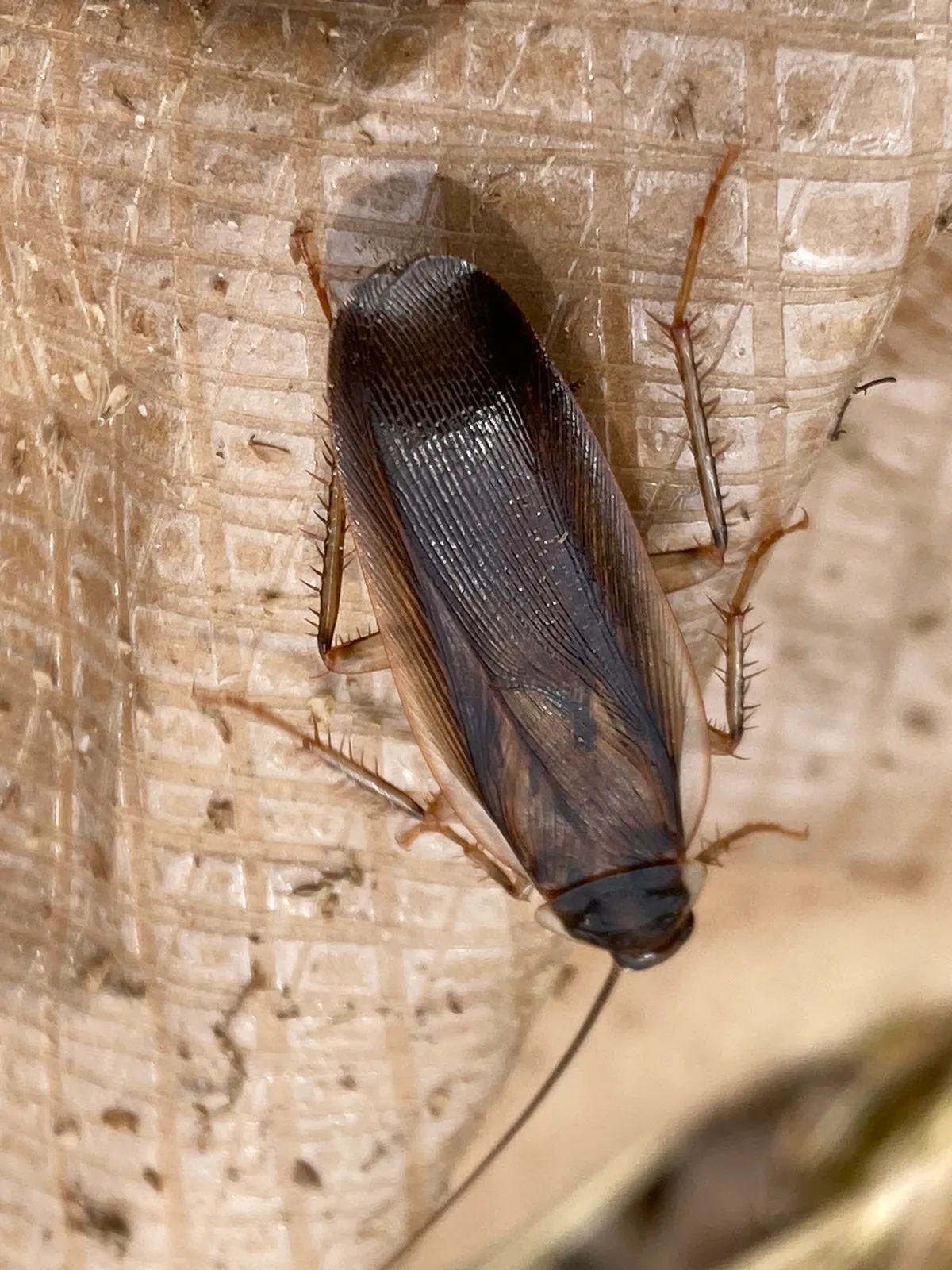
Only adult males can be reliably identified to species, but Penn State says all of them live much the same way, so the species does not matter for control. Outdoors they are useful decomposers, not pests.
The University of Kentucky's cockroach fact sheet says wood roaches often appear in homes, especially in wooded settings, but cannot survive indoors. The University of Maine Cooperative Extension calls them very common in the Northeast and also files two outdoor Ectobius roaches, the dusky and spotted Mediterranean cockroaches, under wood roaches.
The Florida woods cockroach is a different, bigger insect: the University of Florida describes a roach 1.2 to 1.6 inches long with wing pads that cover none of the abdomen and an oily, smelly spray. The complete guide to cockroaches in US homes profiles the species that live in houses.
What does a wood roach look like?
It has the classic cockroach build, Penn State says: a flat body, spiny running legs, long antennae and a head hidden from above under what Virginia Tech calls the shield. Both sexes run from light brown to nearly black, and Virginia Tech notes that males and females look very different.
Males: long wings and a slim body
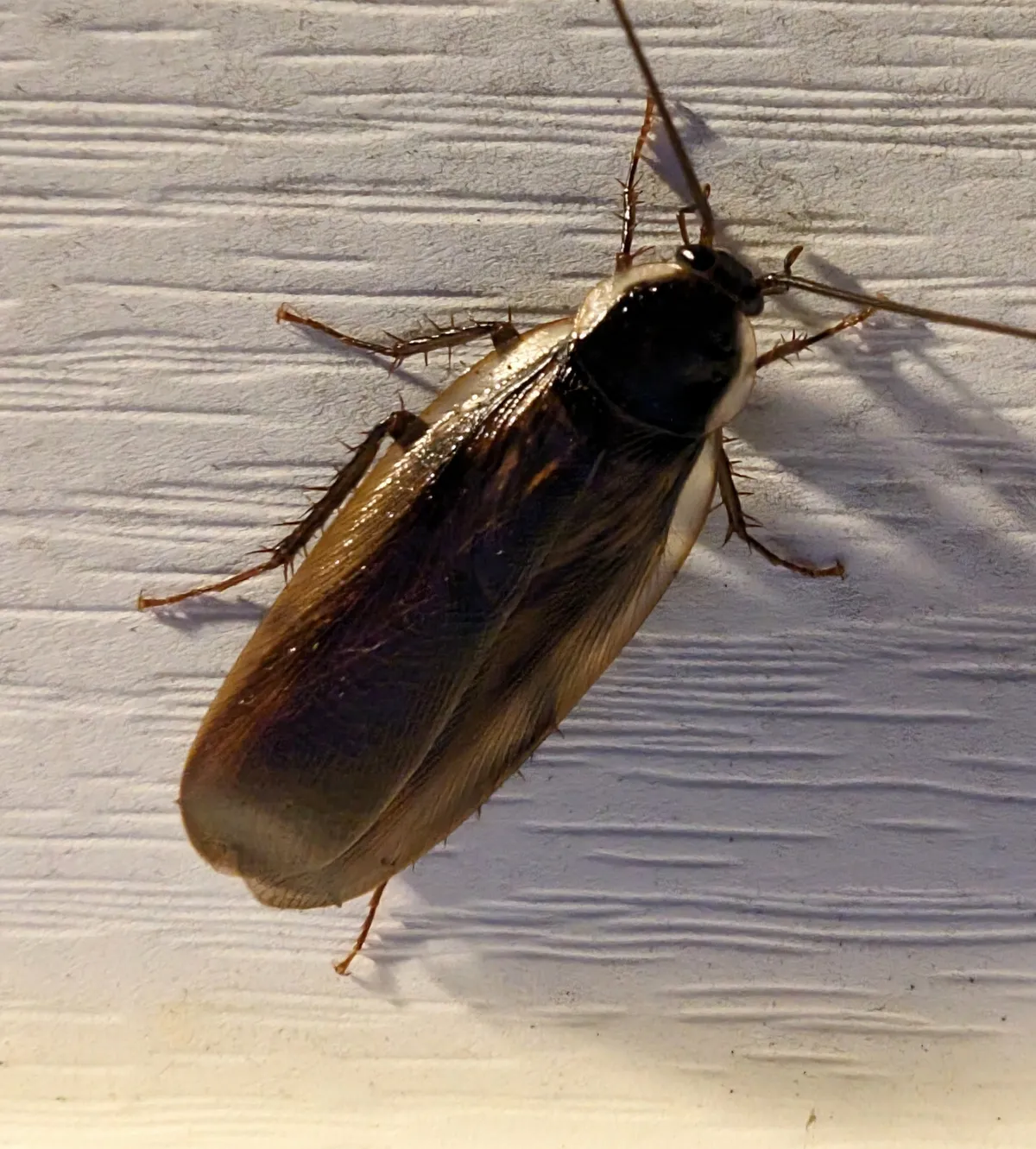
Adult males grow up to 1 inch (25 mm) long, with a longer, thinner abdomen covered by long wings, and can fly (Penn State). Iowa State University Extension says adults, especially males, look tan because of their wings. The University of Maine says the males are attracted to lights at night, so people meet them far more often than females; which cockroaches can fly compares the other species.
Females: short wings and a broad body
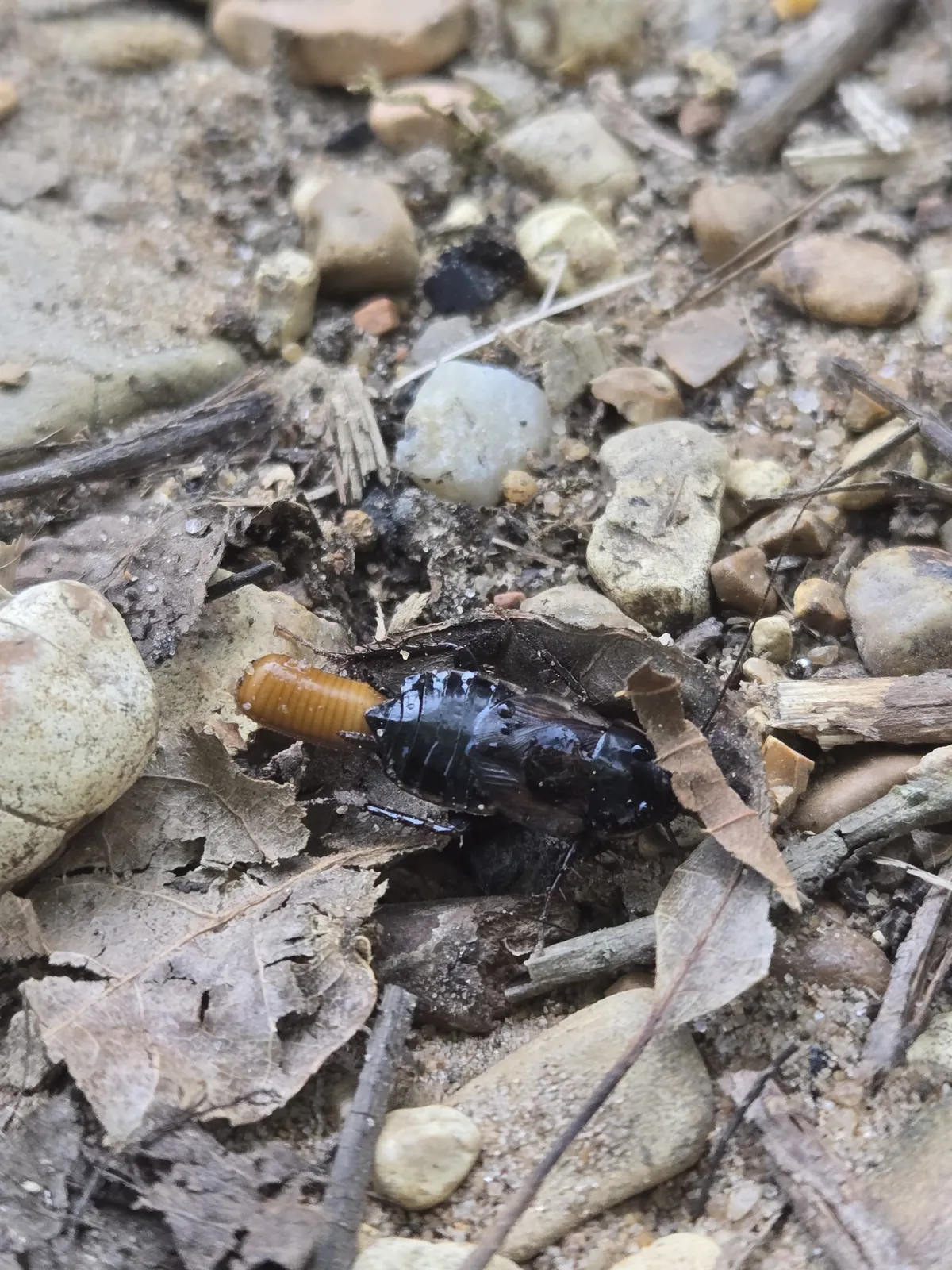
Females grow up to 3/4 inch (19 mm), with a wider abdomen and short wings that do not work and often leave the end of the abdomen bare (Penn State). Virginia Tech's wood cockroach fact sheet adds that females cannot fly and may carry their egg capsule on the abdomen for some time before leaving it.
The pale edge behind the head
A pale rim on the shield is a good clue. Iowa State says adults and large nymphs show a pale, creamy white or see-through stripe along the outer edge of the thorax, running onto the first third of the front wings in adults; Virginia Tech says the pale edge continues onto the wings of adult males. Not every wood roach has it: Penn State says only some species do, and the much larger American cockroach has a pale band too.
The Pennsylvania wood cockroach
University of Minnesota Extension's cockroach guide describes the Pennsylvania wood cockroach, Parcoblatta pennsylvanica: the male about 1 inch long and dark brown, with light-colored bands on the edge of the body near the head and long wings, the female similar but with very short wings. Minnesota's identification page puts females at 1/2 to 3/4 inch. For wood roaches in general, Virginia Tech gives 3/4 to 1 inch (19 to 26 mm) and Iowa State 3/4 to 1 1/4 inches.
Wood roach nymphs
Young wood roaches are smaller, wingless and reddish brown to dark brown, two-toned in some species (Penn State), and look like small adult females (Virginia Tech). Iowa State says small nymphs usually need a microscope to identify for certain. The young of the species that infest homes are compared in what baby cockroaches look like.
How do you tell a wood roach from the roaches that infest homes?
Measure it, check its wings and shield, and watch how it behaves: a wood roach is up to about 1 inch long, may have pale edges on the shield and wanders in the open, while pest species hide.
Wood roach vs German cockroach
The German cockroach is the one to worry about. Kentucky describes a light brown adult about 1/2 inch long with two dark stripes on the shield behind the head: by far the most common cockroach in homes, absent outdoors, hiding in cracks near sinks, stoves and refrigerators and in cabinets, and so prolific that one mated female can produce thousands in less than a year. Small, striped roaches in a kitchen point to German cockroaches.
Wood roach vs American cockroach
Virginia Tech says wood roaches are sometimes mistaken for the American cockroach. It even has a pale band around its shield. Penn State points to size: American adults reach 2 inches, much larger than wood cockroaches; Kentucky describes them as reddish brown to brown, living in basements, crawl spaces, floor drains and sewers. The palmetto bug guide shows it beside the other large roaches with that nickname.
Wood roach vs Oriental cockroach
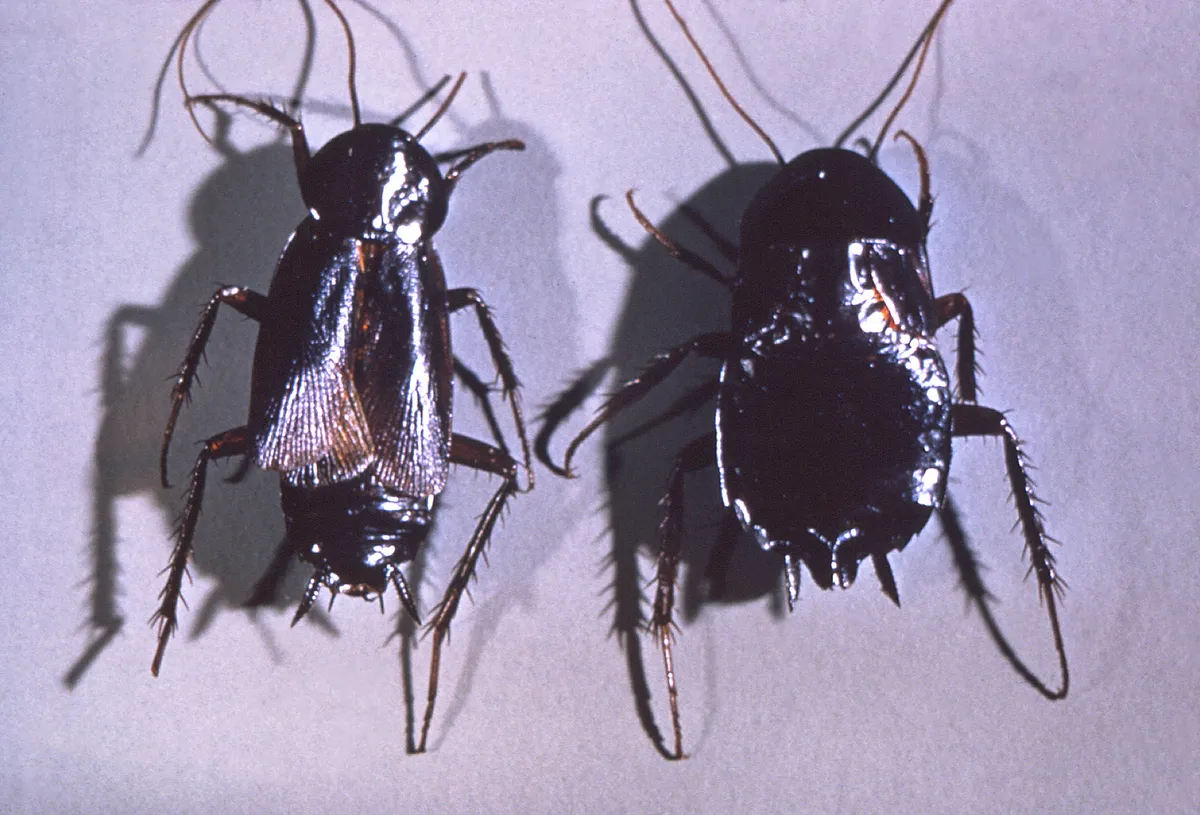
Minnesota says female and young Pennsylvania wood cockroaches can be confused with the Oriental cockroach, and Penn State notes that Oriental males have short wings like a female wood roach's. Check the shield: Minnesota says the Oriental cockroach lacks the light-colored bands near the head that the Pennsylvania wood cockroach has. Kentucky describes it as shiny black or dark brown and about 1 inch long, living in cool, damp sewers, crawl spaces, cellars and basements; the Oriental cockroach guide has more.
Behavior: out in the open
Iowa State says a wood roach indoors is not secretive: it is active by day and at night, is less likely to run when approached and roams without gathering in one place. Virginia Tech says they may be seen blundering around by day, when most cockroaches hide, and Kentucky says pest cockroaches generally stay hidden in cracks by day and come out at night.
Which roach did you find?
- How long is it? Up to about 1 inch fits a wood roach or an Oriental cockroach; 1 1/2 to 2 inches, an American cockroach; about 1/2 inch with two dark stripes, a German cockroach.
- Long wings or short? Long wings over the abdomen: a male wood roach, an American or a German cockroach. Short or none: a female wood roach, an Oriental cockroach or a young roach.
- A pale rim on the shield? On a roach up to about 1 inch, it points to a wood roach; shiny black with no rim, an Oriental cockroach.
- Where and when? By a door or a porch light in spring or summer, or beside firewood just brought in: likely a wood roach. Under the sink or by a floor drain: more likely a pest species.
- How did it act? Wandering in daylight and slow to hide fits a wood roach.
- Alone? Roaches of several sizes, droppings like specks of pepper or egg cases point to a species breeding indoors.
No shield over the head, or no long, thin antennae? It may not be a roach at all: bugs that look like cockroaches sorts the usual look-alikes, and the pest identifier quiz can help.
Commonly confused with
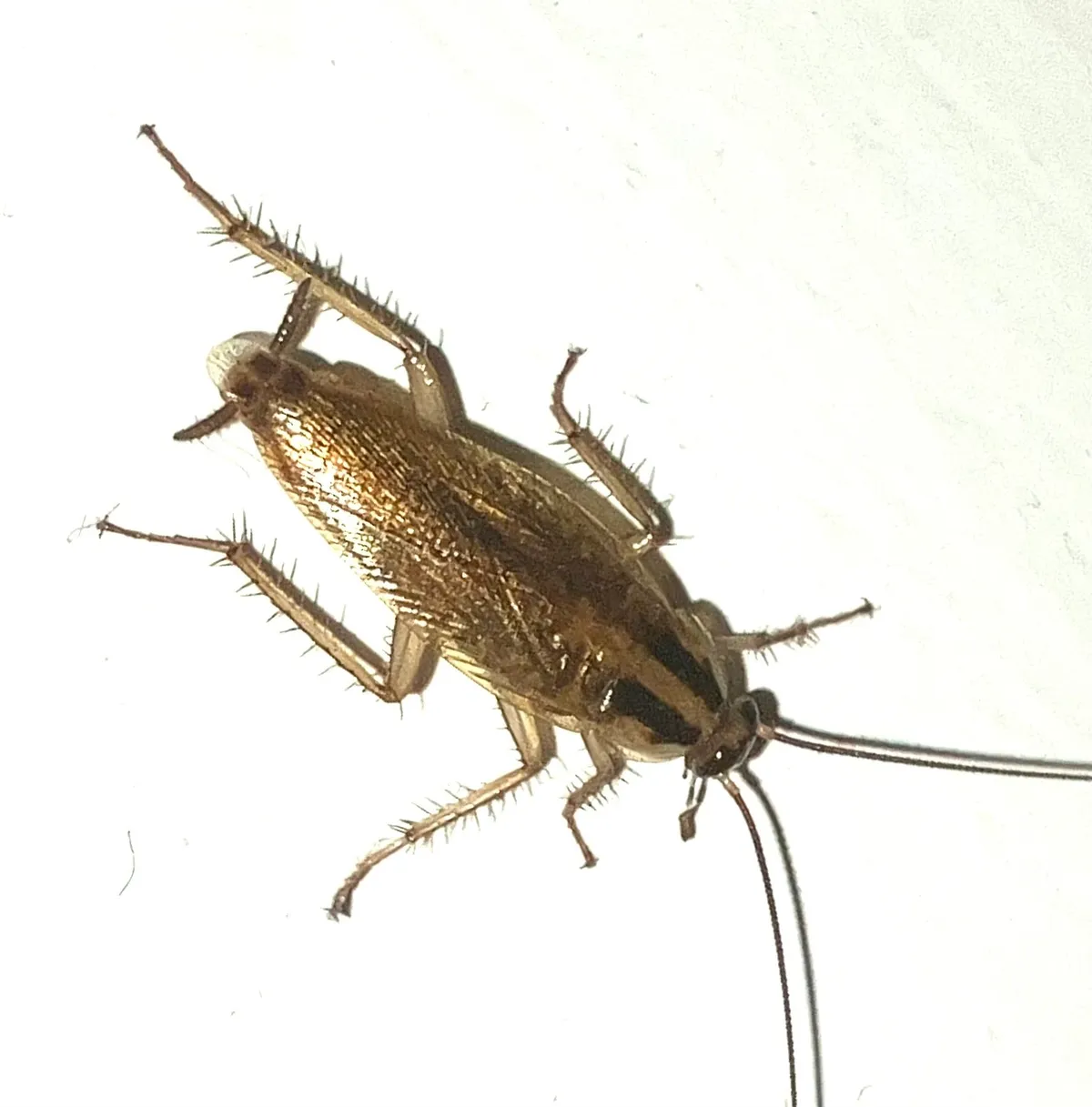 German cockroachAbout 1/2 inch, light brown, two dark stripes behind the head; breeds indoors and does not live outdoors
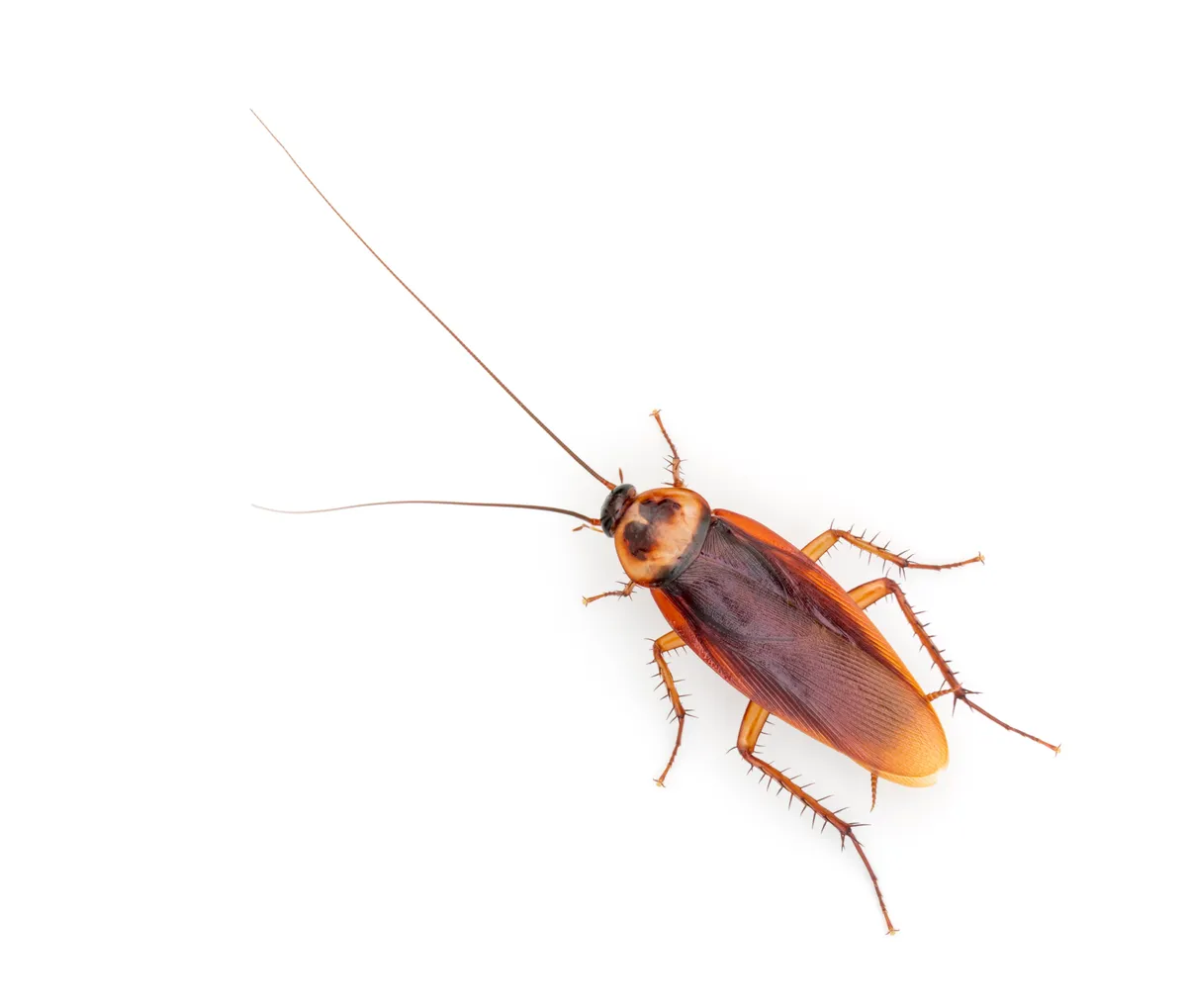 American cockroach1 1/2 to 2 inches, reddish brown, with a pale yellow band around the shield behind the head
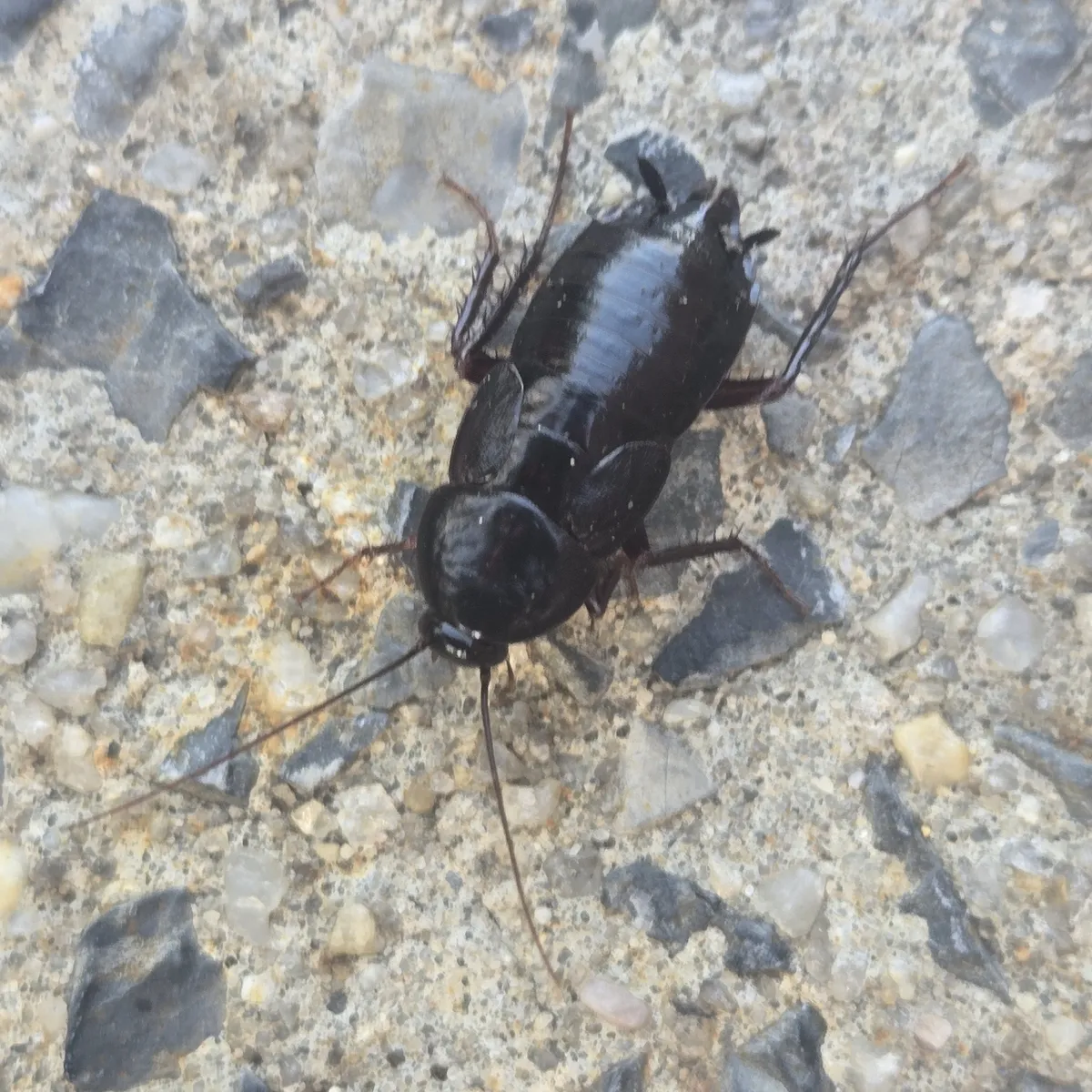 Oriental cockroachAbout 1 inch, shiny black or dark brown, with no pale edge near the head; females have very short wings
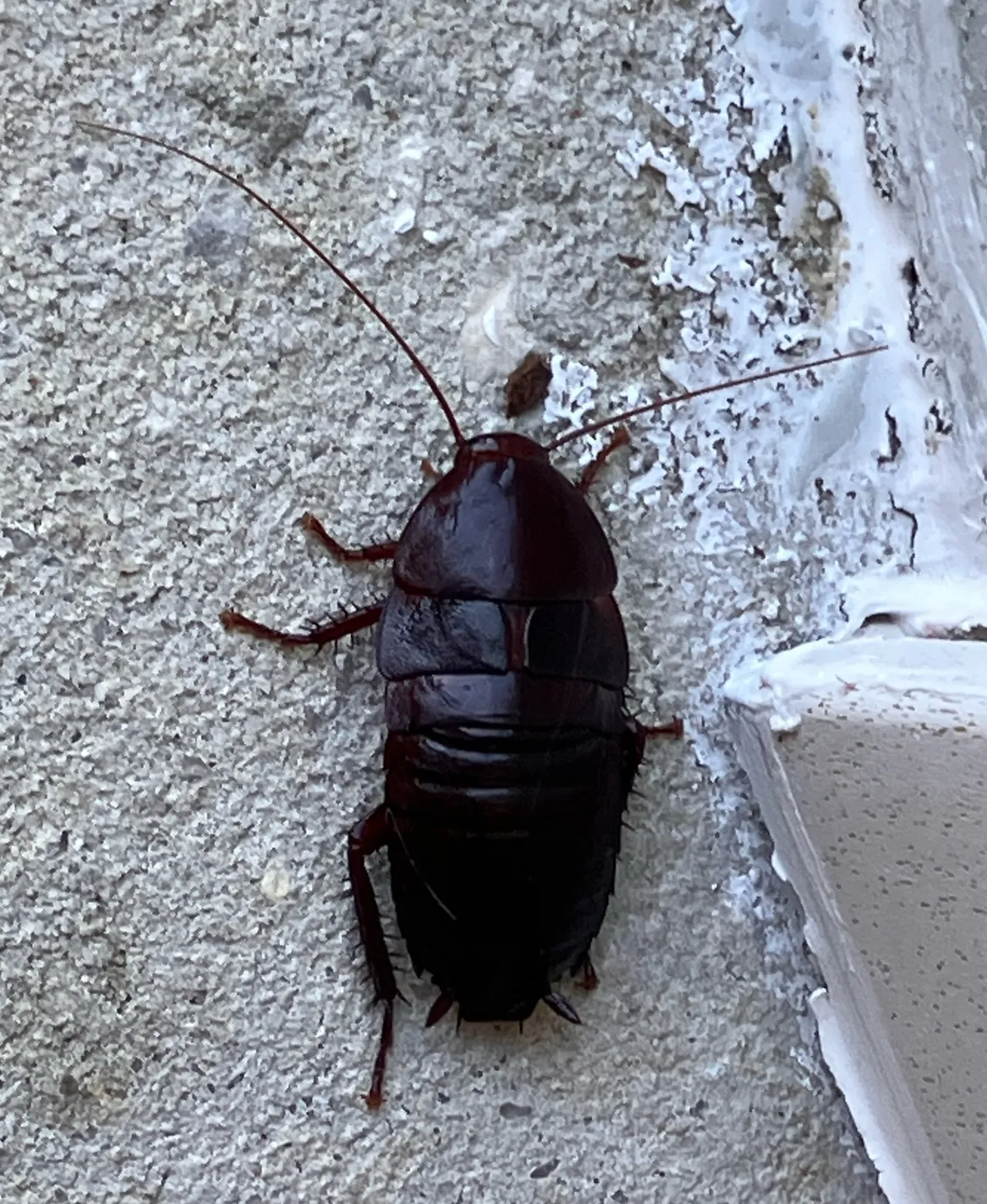 Florida woods cockroach1.2 to 1.6 inches; wing pads leave the abdomen bare; Florida and coastal Georgia, Alabama, Mississippi
Photos: German cockroach: no rights reserved, via iNaturalist, CC0 1.0. American cockroach: Insects Unlocked, CC0, via Wikimedia Commons, CC0 1.0. Oriental cockroach: no rights reserved, via iNaturalist, CC0 1.0. Florida woods cockroach: no rights reserved, via iNaturalist, CC0 1.0.
How do wood roaches get into a house?
By accident: Penn State lists foundation cracks, gaps around windows and doors, firewood and porch lights, and Minnesota says strong-flying males may come in through open doors and windows from nearby trees.
- Lights. The University of Kentucky calls male wood cockroaches excellent fliers and says both sexes are attracted to lights.
- Gaps. Kentucky names gaps around windows, doors, vents and utility openings.
- Firewood. They live beneath loose bark in woodpiles, and Kentucky says they are carried into homes in firewood in winter.
- A wooded lot. Virginia Tech says houses in heavily wooded areas may have more of them, and Minnesota names homes, cabins and cottages in or near woods.
- Shelter on the house. Penn State says cedar shake shingles in wooded areas sometimes shelter wood roaches and that they have sometimes collected in clogged rain gutters; Kentucky says large numbers sometimes nest in gutters and crawl spaces.
- Damp spots. Virginia Tech says they may be in wet mulch or under loose siding, and sometimes in damp garages, basements and woodsheds.
When do wood roaches come inside?
Mostly in spring and summer, plus winter on firewood. Minnesota says the Pennsylvania wood cockroach is seen mainly in spring and summer, Kentucky says large numbers can wander in then and arrive on firewood in winter, and the University of Maine says they often end up indoors in New England's summer months. Iowa State says males fly in Iowa from late May through June.
That follows their life cycle. Penn State says egg capsules laid in summer hatch in about a month; the nymphs overwinter and become adults the next spring, though some stay nymphs for up to two years, and adults live many months, sometimes up to two years. Virginia Tech says nymphs spend the winter in sheltered spots such as under loose bark and that the life cycle generally takes about a year, sometimes longer.
Do wood roaches infest homes?
No. Penn State says one that gets in dies within a few days from dehydration and does not feed or reproduce indoors. Iowa State says they need the steady moisture of woodpiles, loose bark and decaying logs, so they do not thrive or reproduce in homes; Virginia Tech blames the lower humidity indoors, and Minnesota says the species does not persist or reproduce there.
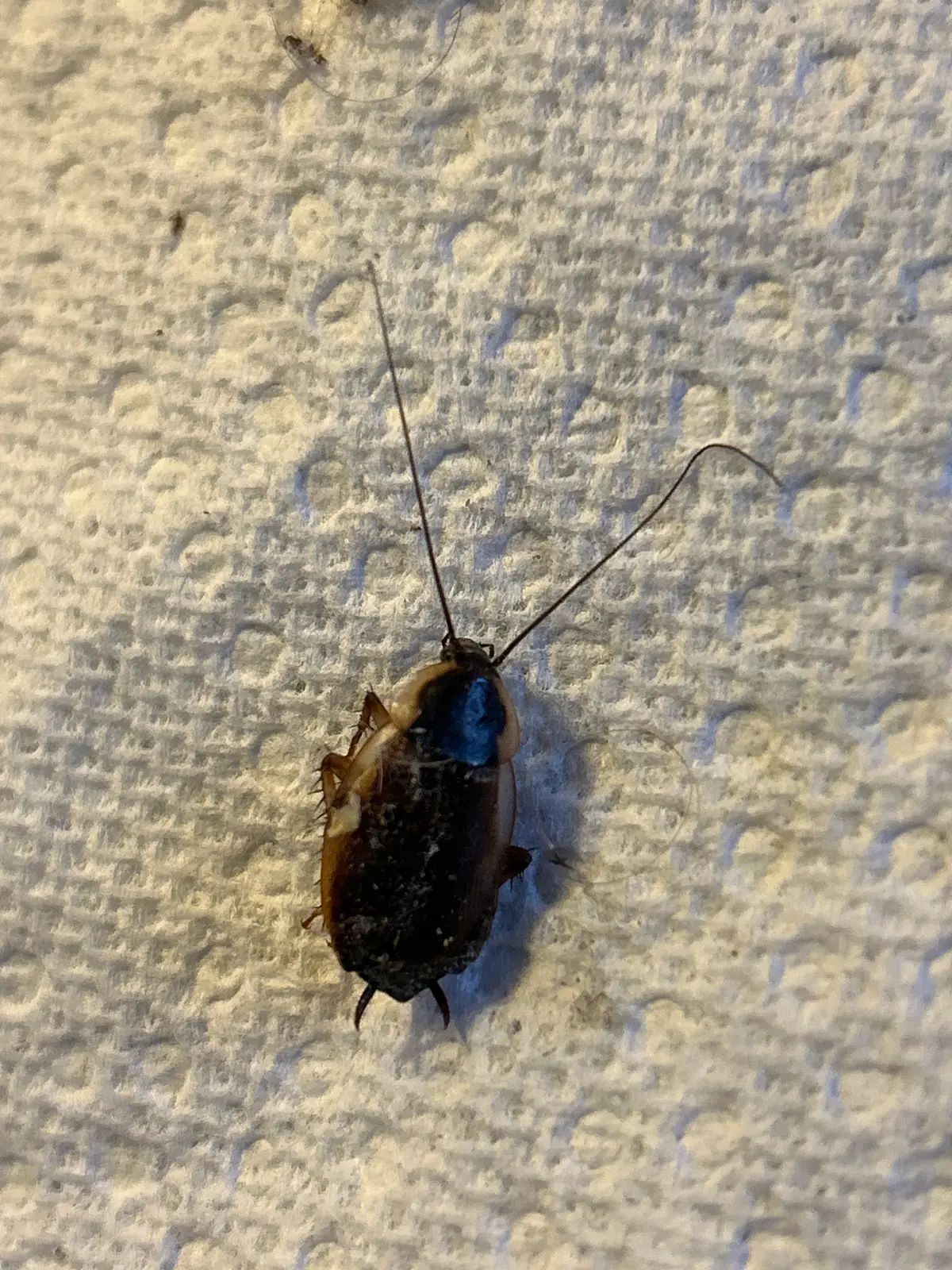
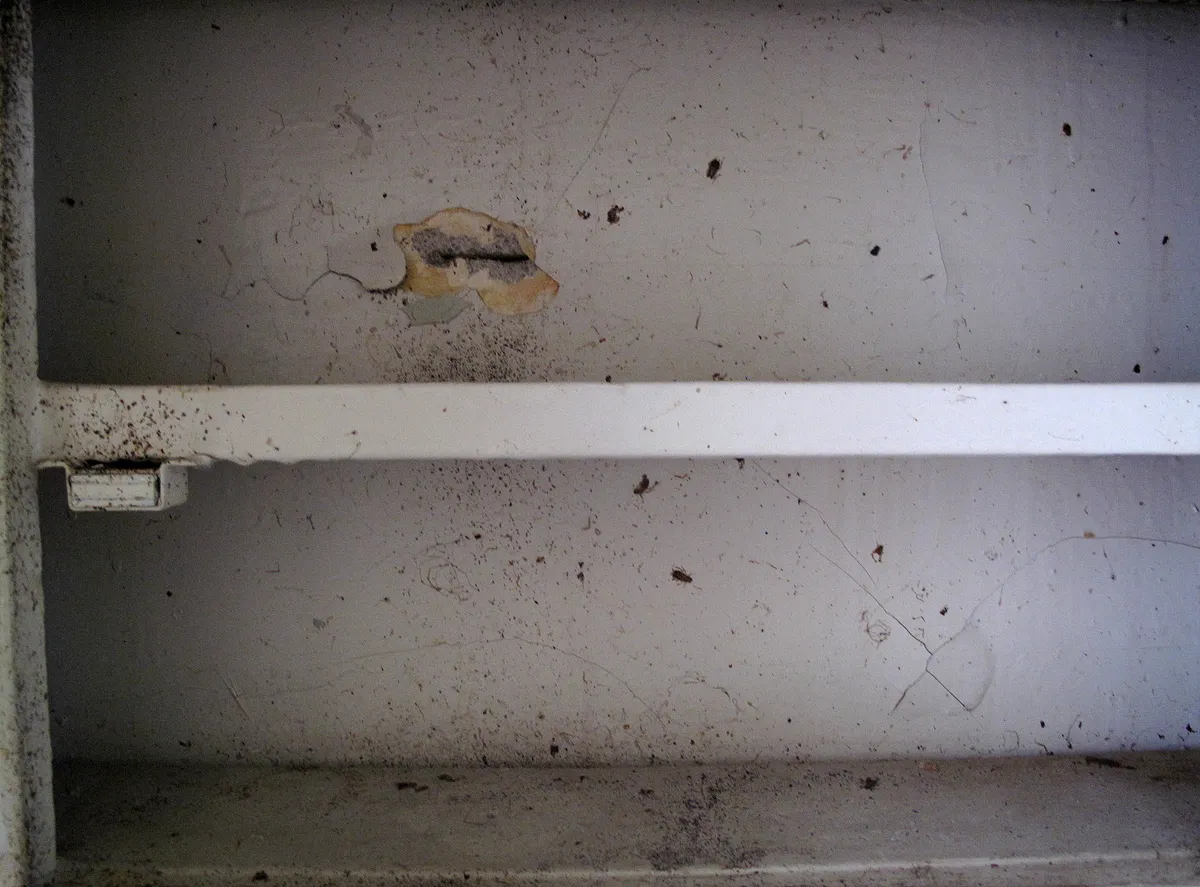
So one wood roach, or a few over a summer, is not an infestation; repeat visitors most likely point to a source outside, such as a woodpile, gutters, shingles or a crawl space. A roach that hides, roaches of several sizes, droppings or egg cases point to another species: where cockroaches come from explains how to tell a stray from an infestation, and the signs of cockroaches shows what a breeding population leaves.
Are wood roaches harmful?
No. Minnesota says a wood cockroach is just a nuisance that does not infest food, clothes or other property and is not a known vector of disease. Iowa State says they do not harm the house structure, furnishings or occupants, and Virginia Tech calls them harmless. Their food is decay: Virginia Tech says leaf litter and rotting wood supply the decaying organic matter they eat.
None of the sources used here describes a wood roach biting anyone; the few documented reports of cockroaches biting people are reviewed in do cockroaches bite. Cockroach health risks come with the pest species: Kentucky says cockroaches can carry germs from filth to food and that many people are allergic to their droppings and shed skins, which may trigger asthma. A wood roach that wandered in does not start a colony.
How do you get rid of wood roaches?
Remove the one inside and close the ways in; there is nothing indoors to treat. Iowa State says wood roaches inside need only be picked up and discarded, Minnesota says to physically remove the occasional one, and Virginia Tech says a fly swatter or vacuum does it. Then keep the next ones out:
- Handle firewood with care. Bring in only what you can burn in a few hours (Penn State), shake or knock each piece first, and do not store the pile beside the house or on a front porch (Virginia Tech); a woodpile against the walls shelters mice too, as keeping mice out of the house in winter explains.
- Change the lights. Turn outdoor lights off when not needed or switch to yellow bulbs, which Virginia Tech says attract fewer night-flying insects than white ones; Iowa State suggests limiting porch lights in late May through June, when males fly in Iowa.
- Seal the gaps. Kentucky advises tight window screens, door sweeps, caulk around doors and windows and sealing where pipes and wires pass through walls; Penn State adds caulking foundation cracks and a brush along the bottom of doors. The same fixes appear in keeping spiders out of the house.
- Tidy the edges of the house. Virginia Tech advises clearing leaf litter from gutters and roofs, removing dead stumps and rotten wood, keeping mulch and leaves away from basement doors, windows and the foundation, and running a dehumidifier in a damp basement; Minnesota suggests removing fallen logs near the building.
- Check a cedar shake roof. Where wood roaches live under the shingles in wooded areas, Penn State says the only long-term fixes may be new roofing or trimming or removing trees so the roof stays warm and dry.
Should you spray for wood roaches?
Usually not. Penn State says pesticides are not necessary or recommended because wood roaches die quickly indoors, and Iowa State says the sprays and dusts used on household cockroaches are of very limited benefit against them. Outdoors the sources differ: Virginia Tech calls perimeter treatments generally unnecessary, Iowa State calls an outdoor barrier a last resort that may cut the numbers getting in, and Minnesota suggests treating around doors and windows if larger numbers are entering. Iowa State says spraying firewood does no good.
Use any pesticide exactly as its label directs. The label is the law, and what is registered and sold varies by state.
Frequently Asked Questions
Is a wood roach the same thing as a cockroach?+
It is a real cockroach, but not one of the pests. Wood roaches are native Parcoblatta species in the cockroach order, with the flat body, long antennae and hidden head of any roach, Penn State Extension says. They live outdoors in leaf litter, logs and woodpiles and feed on decaying plant matter, and one that comes indoors dies within a few days without feeding or reproducing. The German cockroach, by contrast, does not occur outdoors at all, according to the University of Kentucky.
Why am I seeing wood roaches in my house?+
Most likely because you live near their habitat and it is their season. The University of Kentucky says large numbers can wander in from outside in spring and summer, that males are excellent fliers and both sexes are attracted to lights, and that they are carried in on firewood in winter. Penn State adds cracks in the foundation and gaps around doors and windows, and Virginia Tech says houses in heavily wooded areas may get more of them.
Should I be worried if I see a wood roach?+
Not about an infestation, once you are sure it is a wood roach. Penn State Extension says one indoors dies within a few days from dehydration and does not feed or reproduce, and the University of Minnesota says it does not infest food, clothes or other property and is not a known vector of disease. Check the clues first: about 1 inch long or less, out in the open rather than hiding, near a door, a light or the firewood. Small striped roaches hiding in a kitchen are a different matter.
What kills wood cockroaches?+
Indoors, dry air does most of the work. Penn State Extension says a wood roach that gets inside dies within a few days from dehydration, and Virginia Tech blames the lower humidity in houses. To remove one sooner, Iowa State says to pick it up and discard it, and Virginia Tech lists a fly swatter, a vacuum or an aerosol insecticide. Spraying the house is usually not needed: Penn State says pesticides are not necessary or recommended, and Iowa State says spraying firewood does no good.
Are wood cockroaches hard to get rid of?+
The ones inside are easy, because they cannot survive indoors; the work is stopping new ones while they are active outside. Penn State, Kentucky, Iowa State and Virginia Tech all recommend keeping them out: sealing gaps around doors, windows and the foundation and fitting door sweeps or tight screens. Penn State, Iowa State and Virginia Tech add handling firewood carefully and cutting back outdoor lighting. A cedar shake roof in the woods is the hard case: Penn State says new roofing or more sun on the roof may be the only long-term fix.
Can wood roaches fly?+
The males can; the females cannot. Penn State Extension says adult males have long wings that cover the abdomen, can fly and are sometimes drawn to lights at night, while females have short wings that do not work. The University of Kentucky calls the males excellent fliers, unlike the other household cockroaches it describes, and the University of Maine says males are met far more often than females because they are attracted to lights at night.
Do wood roaches bite?+
None of the university extension sources used for this page describes wood roaches biting people. Iowa State says the ones that wander indoors do not harm the house, its furnishings or the people in it, Virginia Tech calls them harmless, and the University of Minnesota says they are not a known vector of disease. Outdoors they feed on decaying plant matter, Penn State says, and one that gets inside does not feed at all.
How long do wood roaches live?+
Months to a couple of years outdoors, and only days indoors. Penn State Extension says egg capsules laid in summer hatch in about a month, the nymphs spend the winter as nymphs and become adults the next spring, and some stay nymphs for up to two years; adults live for many months and sometimes up to two years. Virginia Tech says the life cycle generally takes about a year, sometimes longer. Indoors, Penn State says, a wood roach dies within a few days.
What smells do wood roaches hate?+
None of the extension sources used for this page recommends a scent or repellent against wood roaches; Penn State, Kentucky, Iowa State and Virginia Tech all advise keeping them out instead. That means sealing cracks and gaps, fitting door sweeps and tight screens, keeping firewood outdoors and bringing in only what you will burn soon, and turning outdoor lights off or switching to yellow bulbs. A wood roach that does get in dies within days, so there is nothing indoors to repel.
Do wood roaches come in on firewood?+
Yes, especially in winter. The University of Kentucky says wood cockroaches live beneath loose bark in woodpiles and are brought into homes during winter in firewood, and the University of Minnesota says the Pennsylvania wood cockroach can be carried in that way. Penn State advises bringing in only as much firewood as you can burn in a few hours and keeping piles away from the building, Virginia Tech says to shake or knock each piece first, and Iowa State says spraying firewood does no good.
Sources
- Wood Cockroaches (Michael J. Skvarla; updated January 19, 2026) — Penn State Extension
- ENTFACT-614: Cockroach Elimination in Homes and Apartments (Michael F. Potter) — University of Kentucky Entomology
- Wood Cockroach (Yard and Garden encyclopedia; originally published September 13, 2016) — Iowa State University Extension and Outreach
- Pennsylvania wood cockroach adult (What insect is this?) — University of Minnesota Extension
- Cockroaches (Jeffrey Hahn and Mark Ascerno; reviewed 2024) — University of Minnesota Extension
- ENTO-426: Wood Cockroaches (Patricia L.S. Wooden, Theresa A. Dellinger and Eric Day; September 29, 2026) — Virginia Cooperative Extension, Virginia Tech
- Cockroaches (including Wood Roaches) (Home and Garden IPM) — University of Maine Cooperative Extension
- EENY-514/IN915: Florida Woods Cockroach (AKA Palmetto Bug) Eurycotis floridana (Walker) (Christopher S. Bibbs and Rebecca W. Baldwin) — University of Florida IFAS Extension
How this guide was made: it was researched and drafted with AI assistance from the sources listed above. A second, independent AI pass then checked each factual claim against those sources. Found an error? Email support@buzzskito.ca.