
Reviewed by Alex Francisco
Published November 5, 2026 · Fact-checked against the sources listed below
Reading from Canada? Product rules and what is sold there differ. See the Canadian edition.
Our picks at a glance
BuzzSkito did not test these products. Every gel here is EPA-registered with a label that covers German and American cockroaches in homes, the three professional gels carry different active ingredients so you can rotate them as NC State Extension's German cockroach guide advises, and the traps show you where to bait and whether it is working.
Cockroach gel bait picks
As an Amazon Associate I earn from qualifying purchases.
- Check price on Amazon →
Best overall
0.6% indoxacarb (EPA Reg. No. 100-1484). The label covers German and American cockroaches indoors and out, and the same registration covers Advion Evolution, the indoxacarb gel in the Kentucky rotation.
- Check price on Amazon →
Best to rotate with Advion
Maxforce FC Magnum Roach Killer Bait Gel
0.05% fipronil (EPA Reg. No. 101563-122, formerly 432-1460), a different chemical family from indoxacarb. Its label says numerous small placements give faster control than a few large spots, especially for German cockroaches.
- Check price on Amazon →
Best with a growth regulator
Vendetta Nitro Cockroach Gel Bait
0.5% clothianidin plus 0.5% pyriproxyfen, a growth regulator (EPA Reg. No. 1021-2796). It opened the Kentucky rotation, and its label lists German, American and brownbanded cockroaches.
- Check price on Amazon →
Easiest store-shelf gel
0.01% fipronil (EPA Reg. No. 64240-45). In the Kentucky apartments it did lower trap counts, but not until month two, so give it time and check it with traps.
- Check price on Amazon →
To find hot spots and check results
UC IPM calls traps the best way to detect and monitor roaches. Set them where floors meet walls, bait where they catch the most, and keep counting to see whether the gel is working.
How does cockroach gel bait work?
Gel bait hides a slow-acting insecticide in food that roaches want to eat. The University of Kentucky's cockroach fact sheet says roaches find the bait, eat it and crawl away to die, typically within 1 to 3 days, and that the delay lets them get back to their hiding places first. Roaches that never touched the gel can die too: NC State Extension says the poison passes to roaches that eat the droppings or bodies of the first ones, which helps reach the tiny first-stage nymphs that stay hidden.
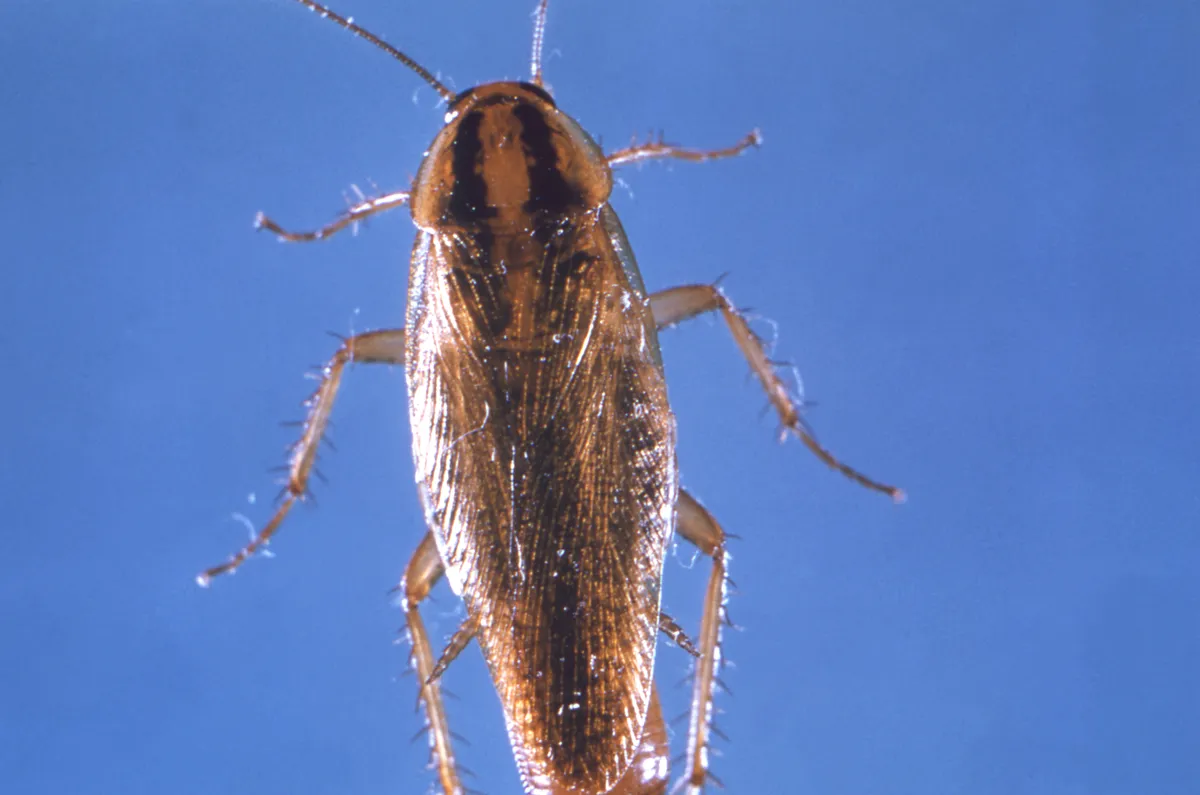
That is why gel became the standard tool against German cockroaches. In a 2004 study of gel bait resistance, Purdue entomologists wrote that gel baits had become the main method of German cockroach control in the United States, and noted that roaches readily eat a lethal dose in a single meal and that the insecticide goes only where it is placed. The tradeoff is speed: UC IPM's cockroach pest note says an effective bait program may take 7 days or longer to show results, and Kentucky expects a substantial reduction within a few weeks.
Which cockroach gel bait should you buy?
Buy a gel whose label fits your roach and your home, and choose its replacement before you start. The label is the law: the EPA's introduction to pesticide labels notes that every label says using the product in a way inconsistent with its labeling violates federal law, and it describes registration as a license to market a product, granted after EPA reviews data on its potential health and environmental effects. Here is how the gels on this page compare on their labels:
| Gel | Active ingredient | EPA Reg. No. | What the label covers | Kentucky home study, 2025 |
|---|---|---|---|---|
| Advion Cockroach Gel Bait | Indoxacarb 0.6% (Group 22A) | 100-1484 | Crack-and-crevice use in homes, indoors and out; pest cockroaches, including German and American | Advion Evolution, sold under the same registration, was in the rotation that cut counts within a month |
| Maxforce FC Magnum Roach Killer Bait Gel | Fipronil 0.05% | 101563-122 (432-1460 on older labels) | Spot and crack-and-crevice use in homes, indoors and out; German and American cockroaches | In the same rotation |
| Vendetta Nitro Cockroach Gel Bait | Clothianidin 0.5% plus pyriproxyfen 0.5% | 1021-2796 | Spot and crack-and-crevice use where children and pets can't reach; German, American and brownbanded | Opened the same rotation |
| Combat Max Roach Killing Gel | Fipronil 0.01% | 64240-45 | Spots and beads in cracks and crevices in homes, with a higher rate for large roaches such as American | Lowered counts by month two, not month one |
Labels: Advion, Maxforce, Vendetta Nitro and Combat. Maxforce's current number is from EPA's label system. Study results: University of Kentucky, 2025.
How to choose a roach gel
- Look for an EPA Reg. No. and cockroaches on the label. Each gel in the table prints its registration number on the label, and the label lists the pests and places the product may legally be used.
- Match your species. German cockroaches are the small indoor breeders gel baits were built around; for the big American roaches, choose a gel whose label names them and use its rate for large roaches.
- Start with a professional-grade gel. In the Kentucky lab tests every bait caused more than 80 percent mortality within 14 days, but in apartments the store-bought products were inconsistent, while the staggered rotation of professional gels brought counts down within a month.
- Buy the second gel now. The Advion label tells you to rotate it with insecticides from other groups, so pair it with a gel whose active ingredient differs, such as fipronil.
- Plan for children and pets. Every label on this page limits gel to places children and pets cannot easily reach; where that is hard, UC IPM notes that bait stations keep the insecticide inside a tamper-resistant container.
Is Advion the best roach gel?
It is our first pick, but none of the research cited here shows it beating every other professional gel in homes. Advion Cockroach Gel Bait contains 0.6% indoxacarb under EPA Reg. No. 100-1484, its label allows crack-and-crevice use indoors and outdoors in homes, and Syngenta's product page lists German, American, Australian, brown, smokybrown, Oriental, brown-banded and Asian cockroaches. Syngenta also describes the gel as non-repellent and activated only once a roach eats it, and says it controls gel bait-averse cockroaches; those are the maker's claims, not independent findings.
Advion Evolution, the version the Kentucky researchers used, is sold under the same registration with the same 0.6% indoxacarb, as its label shows. In their lab tests all six baits, Advion Evolution included, caused more than 80 percent mortality within 14 days, including in German cockroaches collected from homes. In apartments they used it only as one gel in a three-gel rotation, so the study does not show how it performs alone in a home, which is why our picks pair Advion with gels that carry different active ingredients.
German or American cockroach: does it change the bait?
Yes, mainly in where and how much you bait. UC IPM describes the German cockroach as about 1/2 inch long, living and breeding indoors near food, with the fastest reproductive cycle of the common pest roaches: one female and her offspring can produce more than 30,000 roaches in a year. Kentucky calls it by far the most common cockroach in homes and buildings, favoring kitchens and bathrooms. Gel bait in those rooms is the core of the plan, and the German cockroach guide shows how to recognize them.
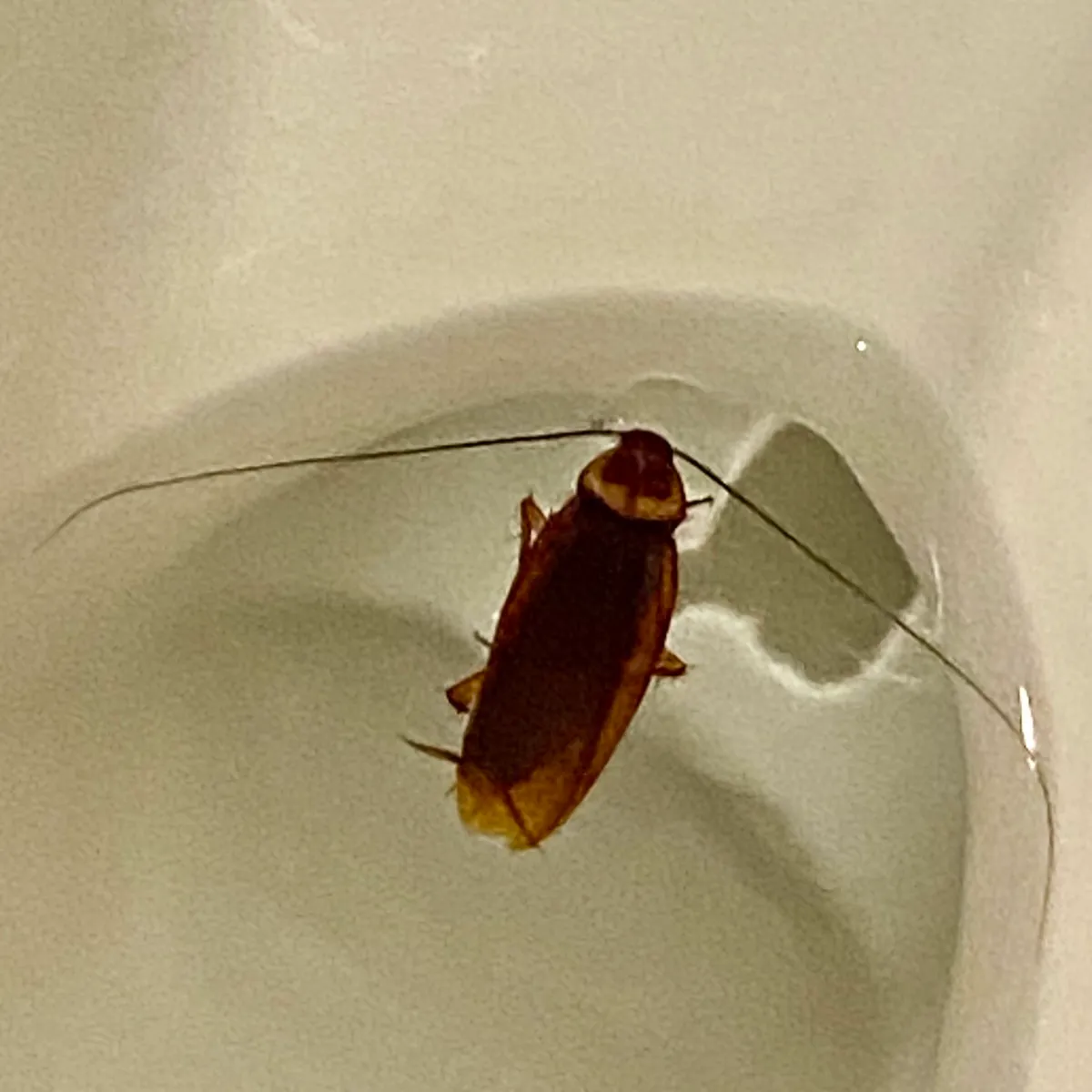
The American cockroach is about 2 inches long and reddish brown. UC IPM says it can live outdoors and sometimes forages indoors, especially through damaged pipes and faulty drain traps, and Kentucky says it multiplies more slowly and prefers dark, moist places such as basements and crawl spaces. Choose a gel whose label names American cockroaches and use its rate for large roaches; the Combat label, for one, sets its higher rate for large roaches such as American, smokybrown and Oriental cockroaches. Outdoors, UC IPM suggests baits in valve and water meter boxes, woodpiles and around planters, and the Advion label allows bait at entry points such as windows, doors and sewer areas. The complete guide to US cockroaches covers the other species you may meet.
Where should you put roach gel bait?
In cracks, crevices and openings right next to where roaches hide, as many small dots, and never on open surfaces. Baits do not attract cockroaches over long distances, UC IPM notes, so every hiding place needs bait close by. The Advion label lists the gaps between parts of the building, openings into wall and floor voids, spots around plumbing pipes, doors and windows, and the areas behind and under appliances, cabinets and sinks. Kentucky lists the areas under and around sinks and toilets, behind refrigerators, dishwashers and stoves, near trash containers and inside cabinets, and notes that the corners and edges of cabinets and countertops are paths roaches commonly travel.
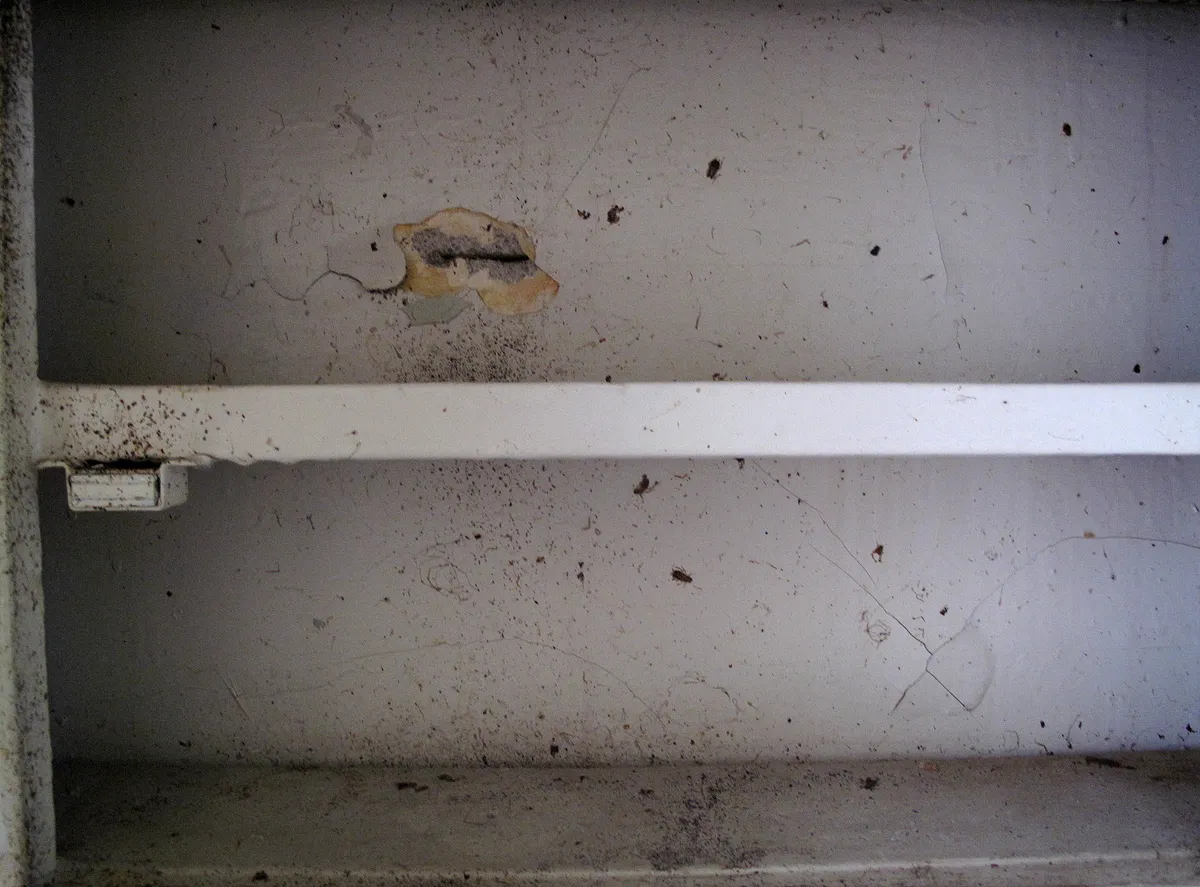
- Find the hot spots first. UC IPM calls sticky traps the best way to detect and monitor cockroaches: set them where floors meet walls, in corners, behind large appliances and in cabinets, and check them daily for several days. How glue traps find the roaches you never see covers how many to set and where.
- Clear out the competition. NC State says sanitation makes baits more effective, because roaches with less other food are more likely to eat the bait.
- Apply small dots at the label rate. The Advion label calls for spots about 1/4 inch across (0.5 gram), 1 to 3 per 10 linear feet for light to moderate infestations and 3 to 5 for heavy ones, and says several small applications work better than one or two large ones. NC State and Kentucky describe pea-size dabs, and the Maxforce label puts a pea-size spot at about 0.1 gram.
- Skip hot, washed and food-contact spots. The Advion label warns that gel can liquefy on surfaces above 120 to 130°F, naming parts of stoves and ovens, dishwashers and hot water pipes, and says not to bait areas that are routinely washed or surfaces food touches.
- Check and refresh. Vendetta Nitro's label recommends checking placements 2 to 4 weeks after the first treatment, and Combat's says to check after a month, reapply where the gel is gone and refresh after 3 months. NC State suggests a follow-up about a week later where infestations are heavy.
- Keep counting. Trap catches are how the Kentucky researchers judged every bait in the apartments, and a falling count is your sign that the gel is working.
For a heavy infestation, the full sequence of trapping, cleanup, baiting and follow-up is laid out in the step-by-step plan for getting rid of roaches.
Why does spraying near the bait stop it working?
Because sprays can repel roaches or taint the gel, and gel bait works mainly through being eaten. The labels are specific. Advion's says not to put gel on surfaces recently treated with residual sprays, or residual sprays on surfaces with gel. The Maxforce label and the Combat label warn that spraying insecticide over gel may make the bait repellent. Vendetta Nitro's label says not to use residual or insecticide sprays on or near the gel, and not to bait where repellent insecticides have been or will be used without thoroughly washing the surface.
The extension guides agree. Kentucky warns that spraying cleaning agents or other insecticides around bait placements could discourage roaches from taking the bait, NC State says sprays can repel roaches and prevent them from eating it, and UC IPM notes that sprays may scatter roaches to other parts of a building and will not eliminate them on their own.
How often should you rotate roach baits?
Every 3 to 4 months, and sooner if roaches stop eating the gel. NC State recommends rotating among modes of action at least every 3 to 4 months as a general practice, and the Advion label says to rotate it with insecticides from groups other than its Group 22. German cockroaches adapt quickly: a 2019 Purdue study in apartment buildings found that a single active ingredient could eliminate roaches when their starting resistance was low and that rotating insecticides with little or no resistance reduced the pressure that selects for resistance, and the authors called the evolution of cross-resistance among active ingredients a significant, previously unrealized challenge.
There are two different reasons a gel stops working, and each has its own fix. Physiological resistance means the insecticide no longer kills well, so switch to a different active ingredient. Bait aversion means roaches refuse the food in the gel: in the 2004 study, Purdue researchers traced one Cincinnati strain's avoidance of two gels to the baits' food ingredients rather than the insecticides (the strain shunned common sugars), reported that rotating active ingredients apparently would not get around it, and found that changing the bait's inert ingredients improved its effect. NC State likewise warns about roaches that avoid glucose-sweetened baits and suggests a protein-based bait. When you switch, change the active ingredient and, ideally, the bait base too.
- Months 1 to 3: Advion (indoxacarb, Group 22A on its label).
- Months 4 to 6: Maxforce FC Magnum (fipronil, which NPIC places in the phenylpyrazole chemical family).
- Months 7 to 9: Vendetta Nitro (clothianidin, one of the insecticides on EPA's list of neonicotinoid pesticides, plus the growth regulator pyriproxyfen).
The Kentucky team packed the same three gels into two months for infested apartments: Vendetta Nitro first, Advion Evolution at two weeks where needed, Maxforce FC Magnum at one month and Vendetta Nitro again at two months. The growth regulator adds a second line of attack. NPIC explains that insect growth regulators mimic hormones in young insects and disrupt molting, egg hatching and reproduction, but rarely kill adults and do not act right away, which is why Vendetta Nitro's label describes it as combining a growth regulator with an adulticide.
What do the labels say about pets and children?
Keep gel where children and pets cannot reach it; every label on this page says so. Advion's label says not to treat areas that children and pets can easily reach, the Maxforce and Vendetta Nitro labels limit use to areas not easily accessible to children, pets and other non-target organisms, and Combat's says to use it only in areas inaccessible to children and pets. All four tell you to keep the product out of reach of children, and the Advion, Maxforce and Combat labels carry the signal word CAUTION, which NPIC's signal word fact sheet describes as the lowest of three levels: slightly toxic if eaten, absorbed through the skin or inhaled, or causing slight eye or skin irritation.
Kentucky's fact sheet describes baits as of minimal hazard to children or pets, but the labels' placement rules still apply. Store tubes as the Advion label directs, in a cool, dry place children and pets cannot reach; keep gel off surfaces food touches; and keep it off fabric and carpet, which Vendetta Nitro's label says it may stain. If a child or pet eats bait, have the label with you when you call for help: the Advion label lists a 24-hour emergency line for people and animals, 1-800-888-8372.
What won't cockroach gel bait do?
- Work overnight. Expect a week or more before you notice a difference, as UC IPM says, and a few weeks before a substantial drop, as Kentucky says.
- Outcompete a kitchen full of other food. NC State ties bait success to sanitation, and UC IPM advises sealed food containers and trash cans with tight lids, so crumbs, grease and open trash compete with every dot.
- Keep working under sprays. Sprays on or near the gel can make it repellent, as the labels above warn.
- Reach eggs inside the egg case right away. UC IPM says a German cockroach female carries her egg case for most of its roughly 30-day incubation and feeds very little meanwhile, so nymphs keep hatching for weeks; keep fresh bait out for them.
Bug bombs are no shortcut. In a North Carolina State University study of total release foggers, foggers set off in 20 infested homes did not reduce cockroach numbers, while gel baits in 10 comparison homes caused significant declines, and the foggers left pesticide residues on kitchen surfaces that averaged about 600 times the levels before treatment. CDC identified 3,222 illnesses and injuries linked to foggers in 10 states from 2007 to 2015, most often because people did not leave during the release or went back in too soon. If you were planning on a plug-in ultrasonic device instead, read what the evidence says about ultrasonic pest repellers first.
When should you call a professional?
Call a licensed pest control company for a serious infestation, or if a month of careful baiting has not brought your trap counts down, the time the professional gels needed in the Kentucky apartments. UC IPM recommends a licensed professional for serious infestations and says serious indoor infestations often need professional service. The Kentucky study adds a caution about going it alone: its authors found store-bought baits inconsistent in apartments and suggested that advice presenting them as a viable option for residents without professional help may need rethinking, though they still called consumer baits the most effective do-it-yourself option for German cockroaches.
Kentucky's extension fact sheet offers two reassurances as well. Householders can often eliminate cockroaches by following its steps, and if you do hire a company, it should not take a full year to get rid of them, even if a service contract runs that long. Whoever does the work, the same rules apply: bait where roaches hide, keep sprays away from the gel, and switch active ingredients before the roaches adapt.
Use any pesticide exactly as its label directs. The label is the law, and what is registered and sold varies by state.
Frequently Asked Questions
How long does it take for roach gel bait to work?+
Expect days for the first dead roaches and weeks for a real drop. The University of Kentucky's fact sheet says a roach that eats bait typically dies within 1 to 3 days, UC IPM says an effective bait program may take 7 days or longer to show results, and Kentucky expects a substantial reduction within a few weeks. In a 2025 University of Kentucky apartment study, a rotation of professional gels cut trap catches within a month, while a store-shelf gel took two months. Keep sticky traps out to measure the change.
How much roach gel should you use?+
Use the amount on the label, spread across many small dots. The Advion label calls for 1 to 3 dots per 10 linear feet for light to moderate infestations and 3 to 5 for heavy ones, each about a quarter inch across, and says several small applications work better than one or two large ones. The Maxforce label puts a pea-size spot at about 0.1 gram and caps heavy cleanouts at 3 grams per square yard. Every label states that using a product in a way inconsistent with its labeling violates federal law.
Can you use roach spray and gel bait together?+
Not in the same places. The Advion label says not to put gel on surfaces recently treated with residual sprays or to spray surfaces that have gel, and the Maxforce and Combat labels warn that spraying insecticide over gel may make the bait repellent. Vendetta Nitro's label says not to use residual or insecticide sprays on or near the gel. NC State Extension explains why: sprays can repel roaches and keep them from eating the bait, and gel works mainly through being eaten.
Why are roaches not eating the gel bait?+
The usual reasons are contaminated or badly placed bait, competing food, or bait aversion. Sprays and cleaning agents near the dots can discourage feeding, the University of Kentucky says; the Advion label warns that gel can liquefy on surfaces above 120 to 130 degrees Fahrenheit; and NC State says roaches with plenty of other food eat less bait. Some German cockroach populations also avoid the sugars in certain bait bases, as Purdue researchers showed in a Cincinnati population in 2004. If the dots sit untouched while traps keep catching roaches, switch to a gel with a different active ingredient and bait base.
Is roach gel bait dangerous for dogs and cats?+
Pets should not be able to reach it, whatever the hazard level. The Advion, Maxforce and Combat labels carry the signal word CAUTION, which the National Pesticide Information Center describes as slightly toxic if eaten, and all of the labels on this page restrict gel to areas children and pets cannot easily reach. The University of Kentucky calls baits of minimal hazard to children or pets, but the labels' placement rules still apply. If a pet eats gel, call your veterinarian with the label in hand; the Advion label lists a 24-hour emergency line for people and animals.
Does roach gel bait work on American cockroaches?+
Yes, when the label names them. The Advion and Vendetta Nitro labels list American cockroaches, the Maxforce label claims to kill them, and the Combat label sets a higher rate for large roaches such as American, smokybrown and Oriental cockroaches. American cockroaches can live outdoors and sometimes come in through faulty drains and damaged pipes, UC IPM says, so outdoor bait in valve and water meter boxes, woodpiles and around planters, along with repairing the way in, matters more for them than for German cockroaches.
Are bait stations or gel better for roaches?+
Gel is usually the more effective choice and stations the more contained one. The University of Kentucky's fact sheet says gels applied with a syringe are often more versatile and efficient than ready-to-use stations, and that stations set away from edges and corners are far less effective. UC IPM notes that stations keep the insecticide inside a tamper-resistant container and stay effective for months. In a 2025 Kentucky apartment study, one brand of store-bought liquid bait stations cut trap catches within a month, but another brand's stations never produced a significant decline.
How often should you reapply roach gel?+
Whenever the dots are gone, on the schedule your label sets. The Advion label says to inspect placements periodically and reapply as needed, Vendetta Nitro's recommends a check 2 to 4 weeks after the first treatment, and Combat's says to check after a month and refresh with a new application after 3 months. NC State Extension suggests a follow-up about a week later where infestations are heavy, and recommends switching to a different mode of action at least every 3 to 4 months.
Does gel bait kill cockroach eggs?+
Not inside the egg case. Gel works mainly on roaches that eat it or eat what poisoned roaches leave behind, and UC IPM notes that a German cockroach female carries her egg case for most of a roughly 30-day incubation while feeding very little. The nymphs that hatch can still be killed: NC State Extension says the poison spreads through droppings and bodies and especially reaches first-stage nymphs. Growth regulators such as the pyriproxyfen in Vendetta Nitro interfere with egg hatching and molting, according to the National Pesticide Information Center.
Can you use roach gel bait outside?+
Some labels allow it next to the building. The Advion label permits spots or thin beads at outdoor entry points such as windows, doors, sewer areas and garbage areas, placed to limit human contact, and the Maxforce and Combat labels allow outdoor use adjacent to homes and structures. UC IPM suggests outdoor baits in valve and water meter boxes, woodpiles and around planters for roaches that live outside. The Advion label also says to avoid applying it when rain is forecast within 24 hours, to reduce runoff into water.
Sources
- Advion Cockroach Gel Bait label (SCP 1484A-L1D 0724) — Syngenta Crop Protection
- Advion Cockroach Gel Bait Insecticide (product page) — Syngenta Professional Pest Management
- Advion Evolution Cockroach Gel Bait label (SCP 1484B-L1B 0724) — Syngenta Crop Protection
- Maxforce FC Roach Killer Bait Gel F.05 label, EPA Reg. No. 432-1460 (May 21, 2020; alternate brand names include Maxforce FC Magnum Roach Killer Bait Gel) — US Environmental Protection Agency, Pesticide Product and Label System
- Labels for Maxforce FC Roach Killer Bait Gel F.05 (101563-122), with its December 2022 transfer from Bayer Environmental Science — US Environmental Protection Agency, Pesticide Product and Label System
- MGK Formula 3113 (Vendetta Nitro Cockroach Gel Bait) label, EPA Reg. No. 1021-2796 (May 8, 2021) — US Environmental Protection Agency, Pesticide Product and Label System
- Combat Quick Kill Roach Killing Gel label (alternate brand name Combat Max Roach Killing Gel), EPA Reg. No. 64240-45 (January 11, 2024) — US Environmental Protection Agency, Pesticide Product and Label System
- Pest Notes: Cockroaches (UC ANR Publication 7467, updated December 2019) — University of California Statewide IPM Program (A. M. Sutherland, D. H. Choe and M. K. Rust)
- ENTFACT-614: Cockroach Elimination in Homes and Apartments — University of Kentucky Department of Entomology (M. F. Potter)
- German Cockroach Surveillance and Management (January 2025) — NC State Extension (P. Alder and C. Hayes)
- Laboratory and in-home evaluations of consumer- and professional-grade cockroach baits (Journal of Economic Entomology, 2025) — University of Kentucky Department of Entomology (J. M. Gordon, A. J. Sierras, D. V. Jackson, S. Principato and Z. C. DeVries)
- Behavioral and Physiological Resistance of the German Cockroach to Gel Baits (Journal of Economic Entomology 97(6), 2004) — Purdue University (C. Wang, M. E. Scharf and G. W. Bennett), copy hosted by Rutgers University
- Rapid evolutionary responses to insecticide resistance management interventions by the German cockroach (Scientific Reports, 2019) — Purdue University (M. Fardisi, A. D. Gondhalekar, A. R. Ashbrook and M. E. Scharf), via PubMed Central
- Exposure risks and ineffectiveness of total release foggers (TRFs) used for cockroach control in residential settings (BMC Public Health, 2019) — North Carolina State University (Z. C. DeVries and others), via PubMed Central
- Acute Illnesses and Injuries Related to Total Release Foggers, 10 States, 2007-2015 (MMWR, February 2018) — Centers for Disease Control and Prevention
- Introduction to Pesticide Labels — US Environmental Protection Agency
- Signal Words Fact Sheet — National Pesticide Information Center
- Fipronil Fact Sheet — National Pesticide Information Center
- Insect Growth Regulators (IGRs) — National Pesticide Information Center
- Schedule for Review of Neonicotinoid Pesticides — US Environmental Protection Agency
Read and approved by Alex Francisco on November 5, 2026. Found an error? Email support@buzzskito.ca.