
Reviewed by Alex Francisco
Published November 6, 2026 · Fact-checked against the sources listed below
How do you tell roach droppings from mouse droppings?
Check the surface and the ends. A key that CDC, then the Communicable Disease Center, published in 1964, Domestic Rodents and Cockroaches: Pictorial Key to Droppings, separates them on exactly those points: house mouse droppings are elongate and pointed with no ridges, about 1/4 inch long, while every cockroach in the key leaves ridged droppings 1/8 inch long or shorter. The key's figures are for average, dry, adult droppings, and it tells you to study a group of droppings rather than a single one.
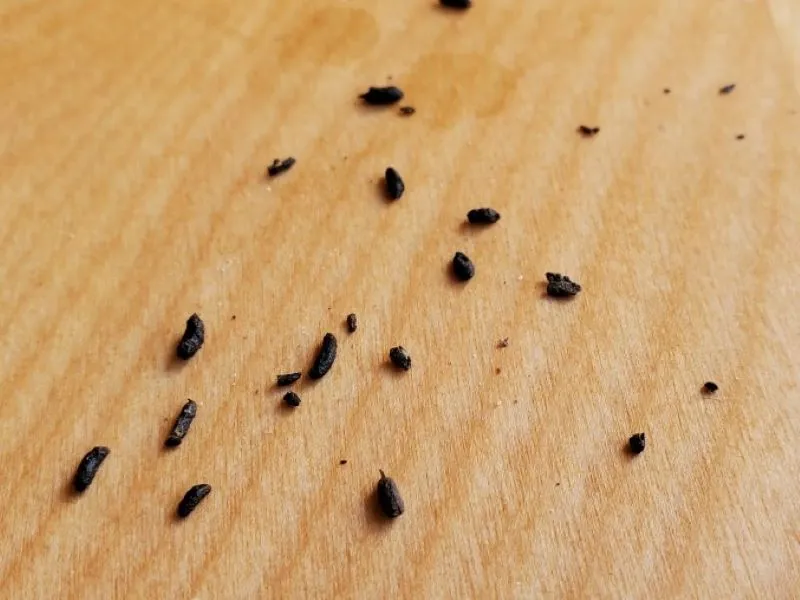
The National Park Service's guide to mouse and rat damage gives the everyday version: mouse droppings are smooth and ovoid, similar in size and look to small dark grains of rice, with at least one pointed end, while American cockroach droppings are blunt at the ends, ridged and smaller. Small cockroaches leave something different again. Texas A&M AgriLife Extension's cockroach guide says German cockroach droppings look like crushed pepper and stick to surfaces where the cockroaches congregate.
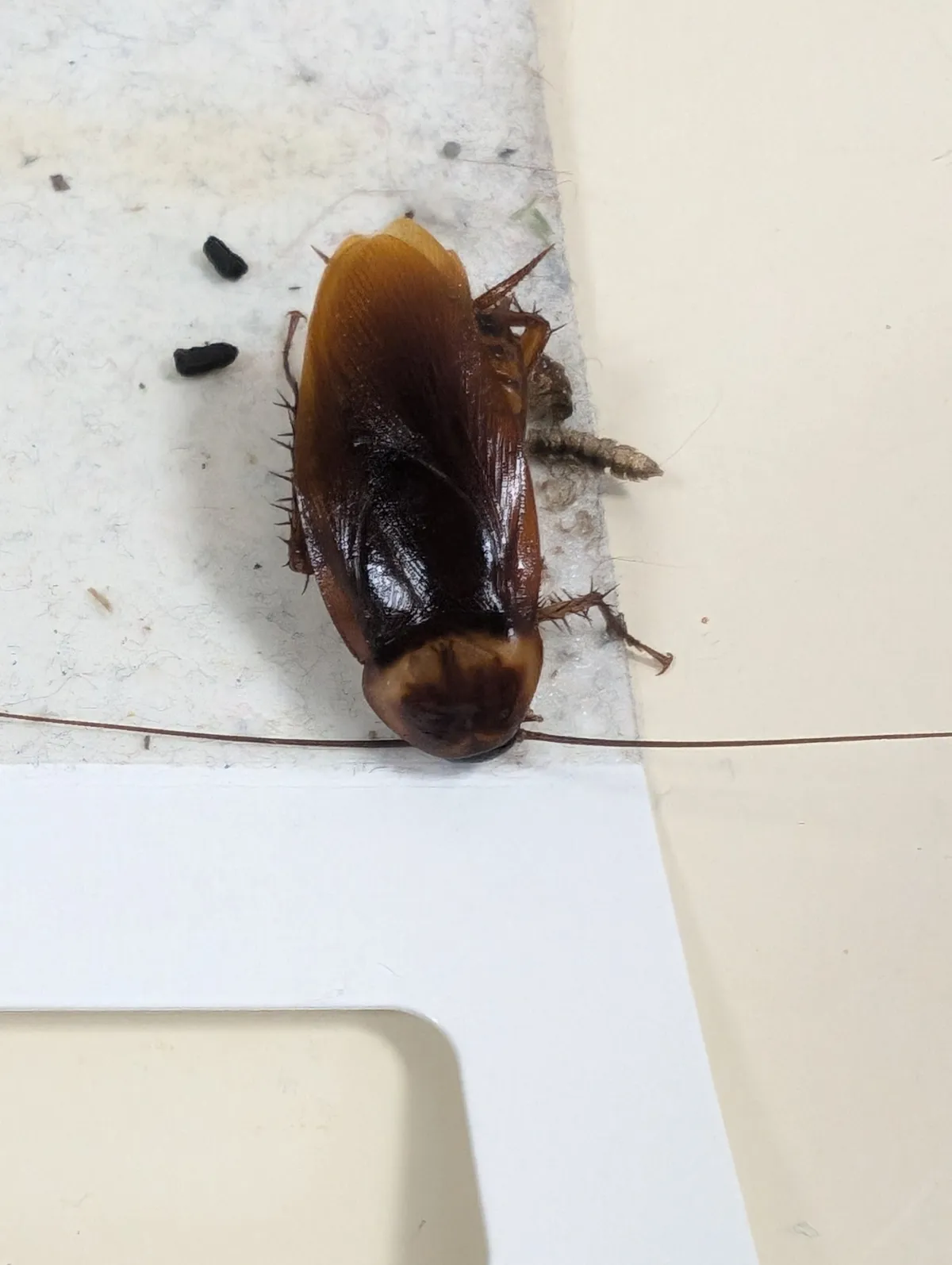
Five checks for droppings you found
- Ridges. Lines running along a dropping mean a cockroach. Cornell IPM's guide to mouse and rat biology says rodent droppings have no lines, unlike the vertical lines on American cockroach droppings.
- Ends. A smooth dropping with one or both ends tapering to a point fits a mouse. Squared-off, blunt ends with ridges fit an American, oriental or smokybrown cockroach.
- Size. With a ruler marked in inches beside them, specks of 1/16 inch or less point to a cockroach, 1/8 to 1/4 inch is the mouse range, and 1/2 inch or longer points to a rat.
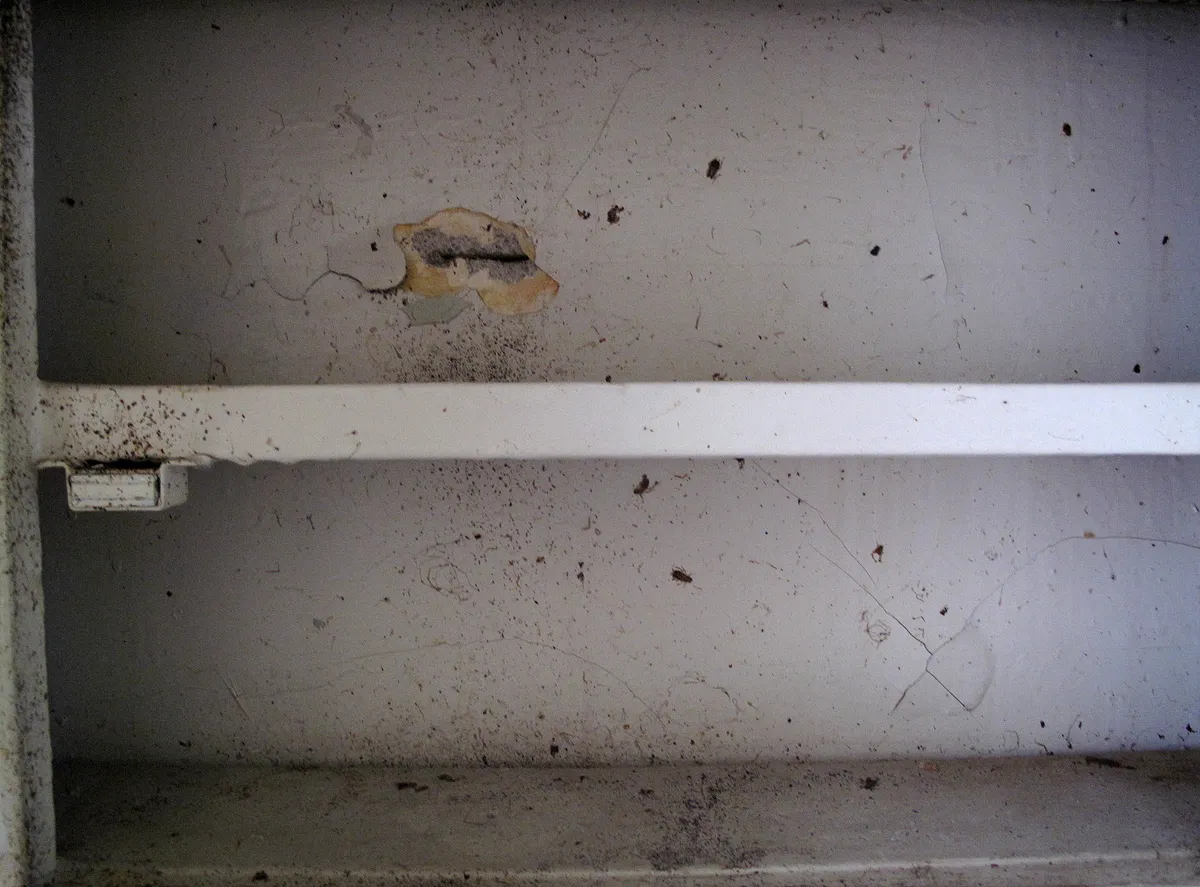
- Smears. Dark spots and smears stuck to cabinet walls, shelves and hinges point to cockroaches; loose, smooth pellets scattered along a wall point to a mouse.
- Company. Shed skins and egg cases go with cockroaches; gnaw marks and shredded nesting material go with mice.
Each kind has a guide of its own: cockroach poop, species by species, and what mouse poop looks like, fresh and old. This page puts the two side by side, and the complete guide to cockroaches in US homes covers the insects themselves.
How big are roach droppings compared with mouse droppings?
Mouse droppings are bigger, though not always by much. Nebraska Extension's guide to controlling house mice and Cornell IPM both put them at 1/8 to 1/4 inch long. Cockroach droppings in CDC's key run from about 1/32 inch to 1/8 inch, depending on the species.
| Droppings | Average length | Shape in CDC's key |
|---|---|---|
| Brown-banded cockroach | About 1/32 inch | Ovoid and pointed, with ridges |
| German cockroach | About 1/16 inch | Elongate and pointed, with ridges |
| Oriental or smokybrown cockroach | About 1/16 inch | Rectangular and blunt, with ridges |
| American cockroach | About 1/8 inch | Rectangular and blunt, with ridges |
| House mouse | About 1/4 inch in the key; 1/8 to 1/4 inch in Nebraska's and Cornell's guides | Elongate and pointed, without ridges |
From CDC's 1964 pictorial key to droppings, which gives figures for average, dry, adult droppings judged as a group.
The overlap sits at the small end. An American cockroach dropping, about 1/8 inch, is as long as a small mouse dropping, so a ruler alone cannot always settle it, but the ridges and the blunt ends can. Droppings 1/2 inch or longer point to a rat instead: Cornell gives about 1/2 inch for roof rat droppings and 3/4 to 1 inch for Norway rat droppings, and the guide to rat droppings covers them.
Where do roach droppings and mouse droppings turn up?
Each pest leaves droppings where it hides and travels, and the two favor different spots.
Cockroach droppings: cracks, hinges and cabinet corners
Cockroach droppings collect around hiding places. Texas A&M says the German cockroach spends about 75 percent of its life in cracks and crevices 1/32 to 3/16 inch wide, and advises a good flashlight and a search for tiny droppings around those spots. Rutgers' German cockroach fact sheet names door moldings, kitchen cabinet hinges, corners inside cabinets, drawers and the back of the refrigerator as ideal hiding places in apartments, and UC IPM's Pest Notes on cockroaches says to look under kitchen counters, behind kitchen drawers and in the back of cabinets. The University of Kentucky's cockroach fact sheet adds cracks under sinks and toilets.
Mouse droppings: along walls, in drawers and near nests
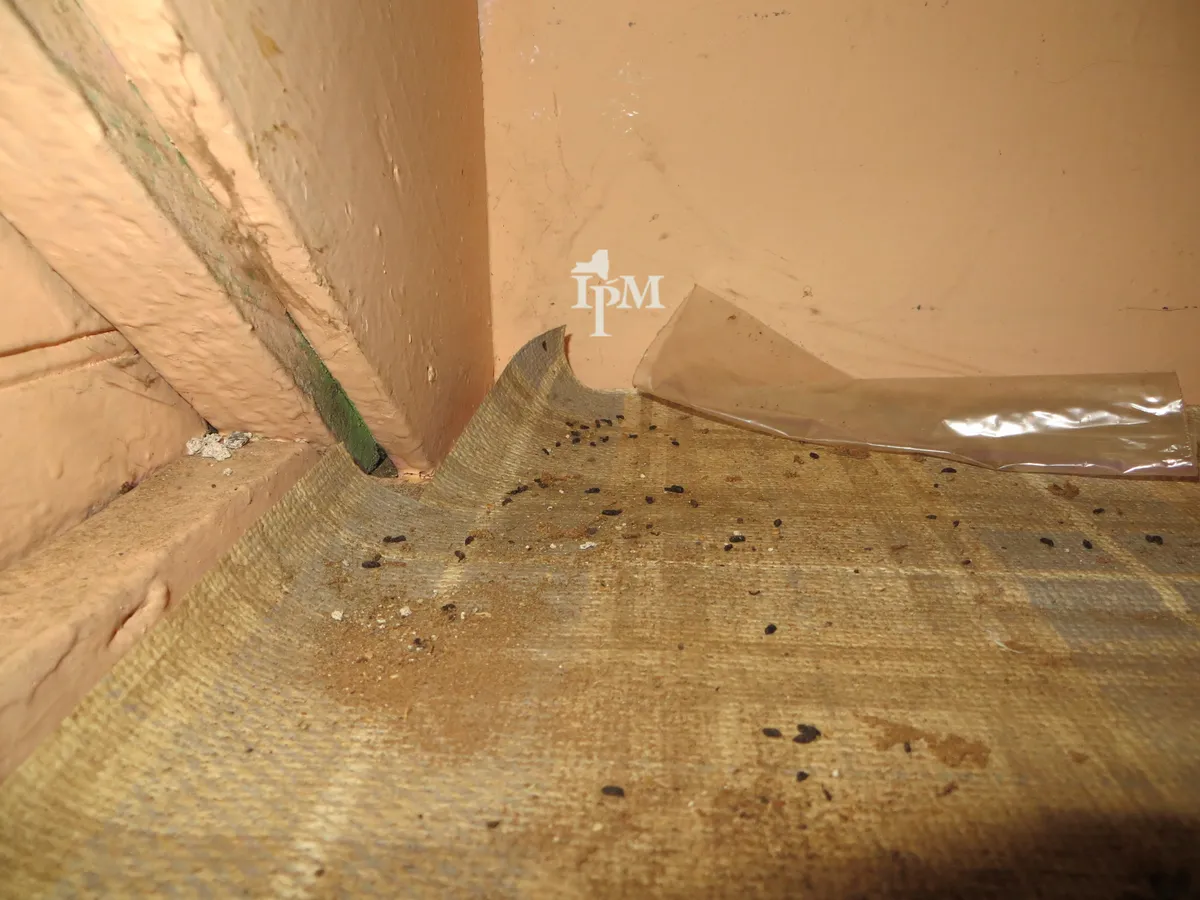
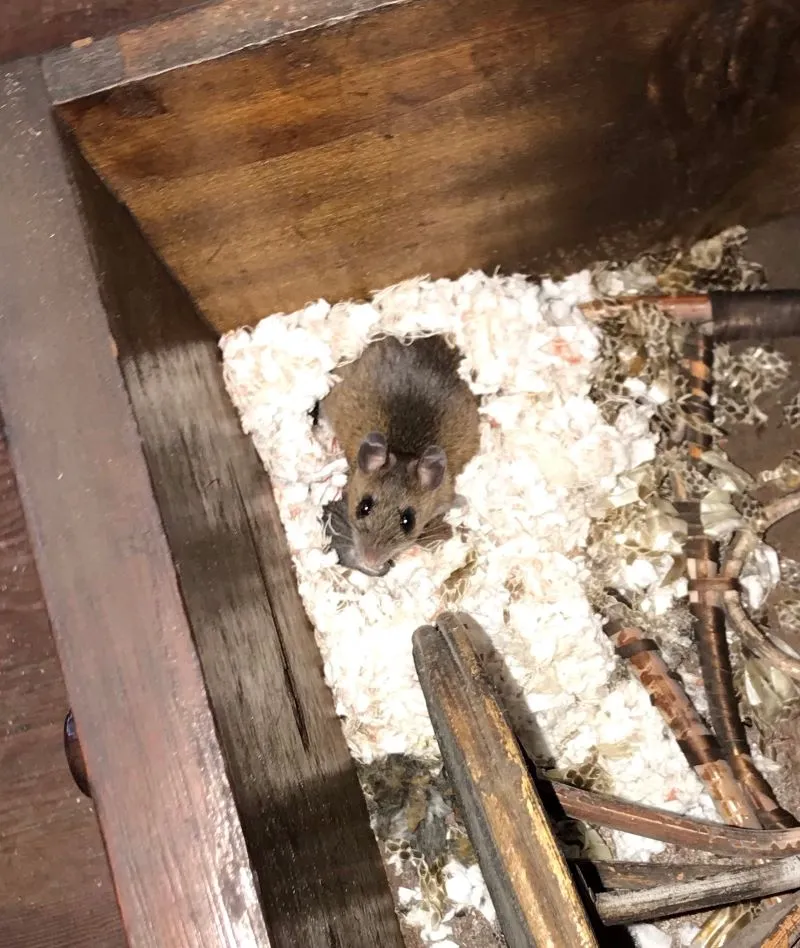
Mice drop pellets as they go, so the droppings mark their routes. Nebraska says house mice keep in contact with walls with their whiskers and guard hairs as they travel at night, and that their nests, made from finely shredded paper or other fibrous material, sit in sheltered places close to heat sources. Drawers count too: the Park Service guide shows a mouse nest made of paper ripped from architectural drawings in the back of one, and a mouse nesting in a desk drawer.
How many droppings, and does the smell help?
Mice scatter their droppings; cockroaches concentrate theirs. Nebraska says a house mouse leaves about 50 to 75 pellets a day as it explores and that mouse droppings usually do not collect in piles. Kentucky says cockroaches congregate in distinct areas in response to aggregating odors in their feces, and UC IPM says the droppings contain a natural attractant, or aggregation pheromone. Droppings concentrated in one cabinet corner are the cockroach pattern; a scatter of pellets along a baseboard is the mouse pattern.
Smell can back up what you see, but it is a clue rather than a test. Kentucky says cockroaches leave an unpleasant odor, and UC IPM says German cockroaches leave stains and unpleasant odors on surfaces they touch. For mice, Nebraska describes a musky odor in areas with a long-term presence, and the Park Service says areas mice use can smell musky from the concentration of their body fluids. Because Nebraska ties the mouse smell to long-term activity, a few new droppings may come with no smell at all.
What else should you look for?
The other signs each pest leaves often settle the question faster than the droppings do.
Cockroaches: shed skins, egg cases and roaches by day
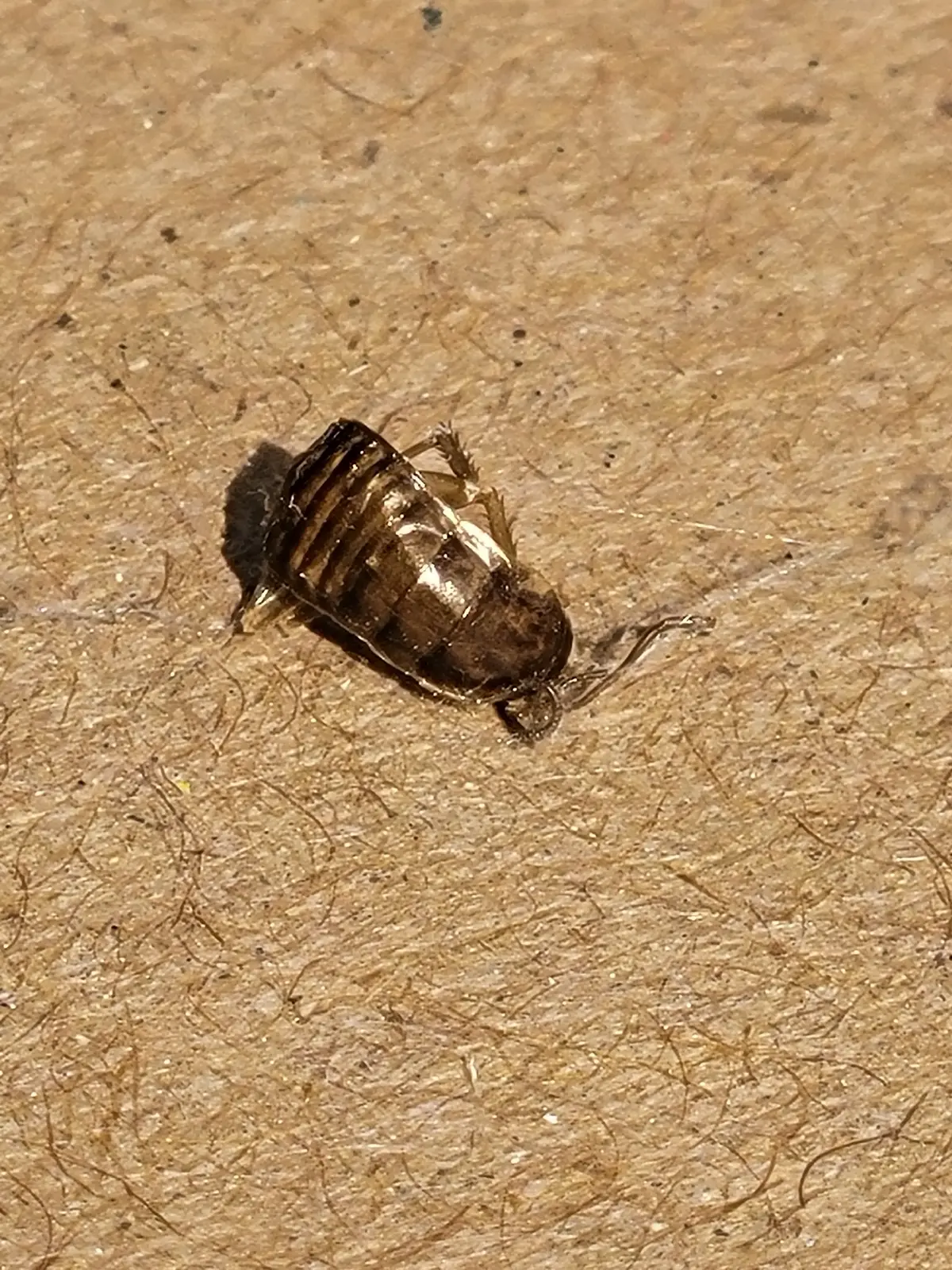
UC IPM lists dark spots or smears of fecal matter, cast skins, egg cases and live or dead cockroaches as the signs of where cockroaches live. An egg case is a single capsule, far bigger than a dropping: UC IPM gives about 1/4 inch for German and brown-banded cockroach cases and about 3/8 inch for American, oriental and smokybrown cases, and what cockroach eggs look like shows them species by species. Daytime sightings count too, since Texas A&M says seeing cockroaches during the day usually means there are a lot of them. The full list of cockroach signs has photos of each.
Mice: gnaw marks, nests, urine and noises
Nebraska lists fresh gnaw marks about 1/32 inch wide, clean-cut holes about 1 1/2 inches across gnawed into cardboard, nests of finely shredded paper, and scratching and squeaking in ceilings and walls. The Park Service guide adds that rodents mark their routes with oils and urine, leaving smear marks on walls and around holes, and that urine glows under a UV flashlight. What mouse urine looks and smells like and the signs of mice in walls cover those two clues.
Bigger droppings come from bigger animals, sorted in the animal poop identification chart. The cards below lead to the full guide for each look-alike.
More droppings to compare
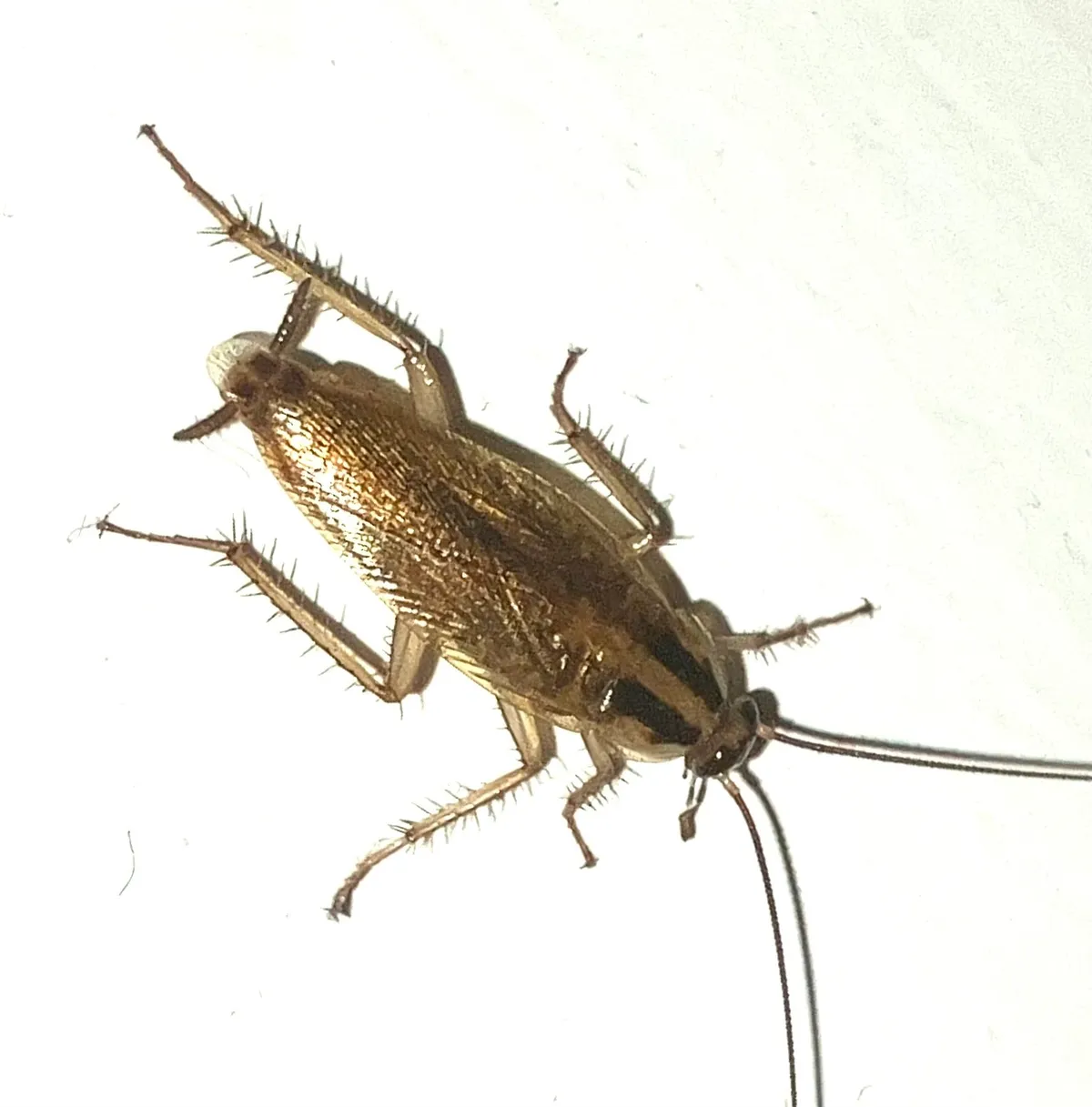 German cockroachPepper-like specks about 1/16 inch, ridged, with dark smears
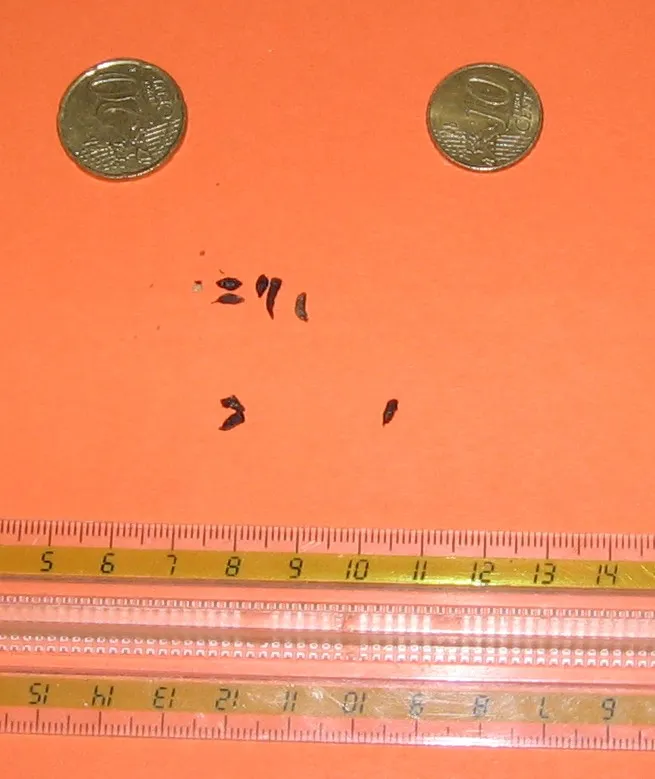 House mouse droppingsSmooth pellets 1/8 to 1/4 inch long with one or both ends pointed
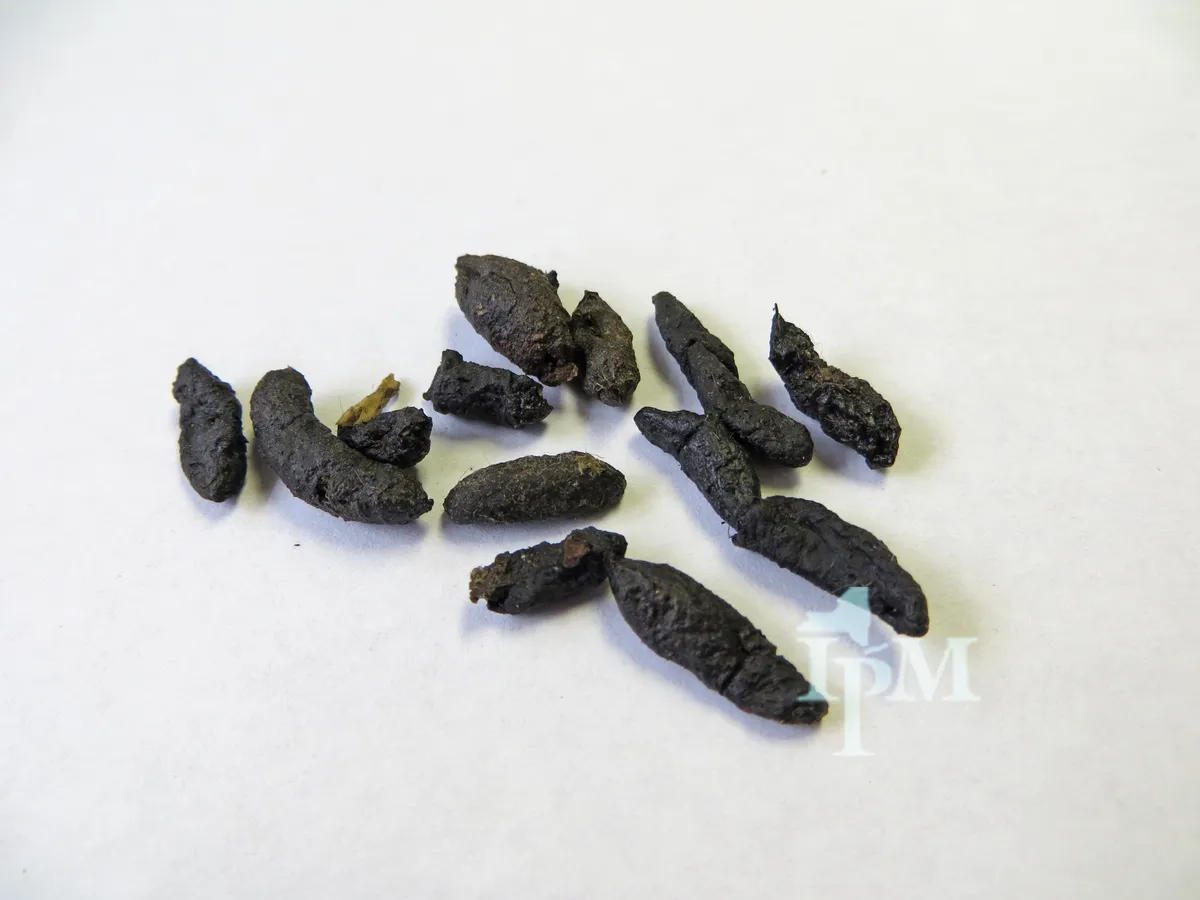 Norway rat droppings3/4 to 1 inch long, far bigger than mouse or roach droppings
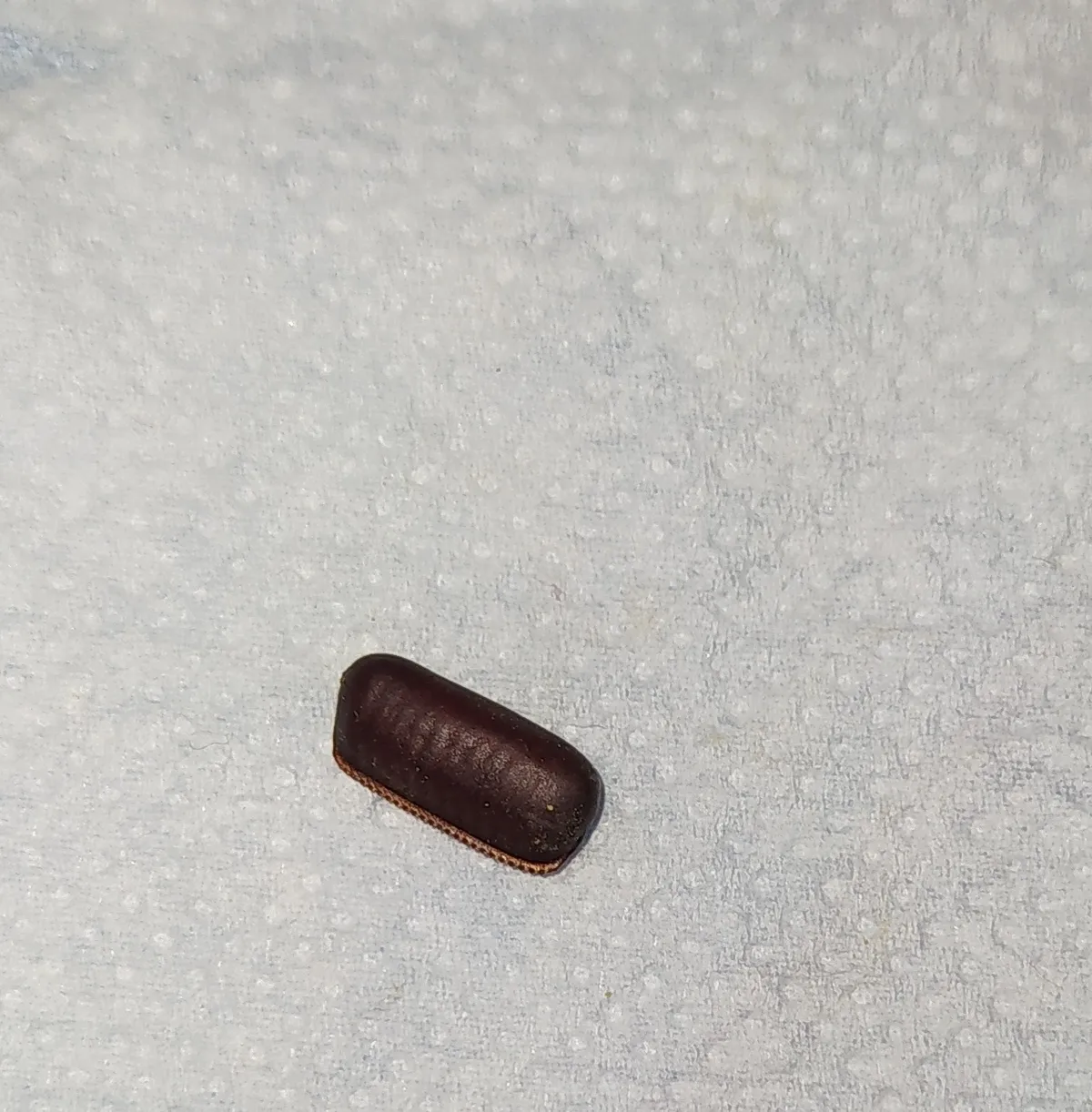 Cockroach egg caseOne capsule 1/4 to 3/8 inch long, not a dropping
Photos: German cockroach: no rights reserved, via iNaturalist, CC0 1.0. House mouse droppings: Hansmuller, CC BY-SA 4.0, via Wikimedia Commons, CC BY-SA 4.0. Norway rat droppings: NY State IPM Program at Cornell University from New York, USA, CC BY 2.0, via Wikimedia Commons, CC BY 2.0. Cockroach egg case: no rights reserved, via iNaturalist, CC0 1.0.
Why does it matter which one it is?
Because the health risks differ, and so does the safe way to clean up.
- Cockroach droppings: allergens. The EPA's guide to asthma triggers says droppings or body parts of cockroaches and other pests can trigger asthma, and that certain proteins are found in cockroach feces and saliva. Rutgers says German cockroach feces, shed skins and dead bodies contain allergens that are asthma triggers, Kentucky lists congestion, sneezing and watery eyes, and UC IPM calls cockroaches important sources of allergens and a risk factor for asthma developing in children. UC IPM adds that American cockroaches can carry bacteria that cause food poisoning.
- Mouse droppings: viruses and bacteria. CDC's overview of hantavirus says people get it from contact with rodents, especially their urine, droppings and saliva, and that the most common hantavirus behind hantavirus pulmonary syndrome in the United States is spread by the deer mouse. The common house mouse spreads lymphocytic choriomeningitis (LCM) through fresh urine, droppings, saliva or nesting materials, says CDC's LCM page, and Nebraska names salmonellosis among the diseases house mice transmit.
Nebraska notes that house mice are not known to carry hantavirus, but it still urges caution, because people can rarely identify the rodents in their homes. The deer mouse guide shows how to recognize the mouse CDC links to the main US hantavirus.
How do you clean up each one safely?
If there is any chance the droppings are a mouse's, clean them the rodent way: wet, never dry. CDC's steps for cleaning up after rodents say not to sweep or vacuum urine, droppings or nesting materials, because that can put tiny droplets containing viruses into the air, and CDC notes that rodent diseases spread to people mainly when they breathe contaminated air. CDC's method:
- Open doors and windows for 30 minutes before you start, and leave the area while it airs out.
- Put on rubber or plastic gloves.
- Spray the droppings and any urine with an EPA-registered disinfectant, or a fresh mix of about 1.5 cups of household bleach per gallon of water, until very wet, and let it soak for 5 minutes or as the disinfectant label directs.
- Wipe everything up with paper towels and throw them in a covered garbage can that is emptied regularly.
- Mop or sponge the area with disinfectant.
- Wash your gloved hands with soap and water or disinfectant, take the gloves off, then wash your hands with soap and warm water.
Because CDC's wet method is the safe one for rodent droppings, it is the sensible default for any droppings you cannot identify. Once you are sure the droppings are a cockroach's, a vacuum is the faster tool: UC IPM recommends one with a HEPA (high efficiency particulate) filter or triple filters, which also picks up cockroaches, shed skins and egg cases, and Rutgers recommends a HEPA-filter vacuum to remove live and dead cockroaches, fecal material and shed skins. The EPA adds keeping counters, sinks, tables and floors clean and free of clutter, cleaning up crumbs and spills right away, storing food in airtight containers and sealing cracks around and inside cabinets.
What should you do once you know which pest it is?
For cockroaches, find out where they are and how many there are. UC IPM recommends sticky traps at the junctions of floors and walls, close to suspected hiding places, checked daily for several days until it is clear where most cockroaches are being caught. How sticky traps and bait stations do different jobs explains the trap side, the German cockroach guide covers the small species behind pepper-like specks, and a step-by-step plan for getting rid of cockroaches puts baits, traps and sealing in order. Kentucky advises baiting wherever you see fecal spotting, and UC IPM suggests placing bait right next to the droppings.
For mice, the work is sealing and trapping. The complete guide to mice covers both, which mouse traps to use compares the trap types, and sealing a house before cold weather covers the gaps mice use.
Found both kinds? Then there are two jobs in the same space: clean all of it with CDC's wet method, then follow each pest's plan.
This guide is general educational information, not medical advice. If you have symptoms or concerns after a bite or exposure, contact a healthcare provider.
Use any pesticide exactly as its label directs. The label is the law, and what is registered and sold varies by state.
Frequently Asked Questions
What do roach droppings look like?+
It depends on the cockroach. Small species such as the German cockroach leave pepper-like specks, often with dark spots and smears, that stick to surfaces where the insects gather, according to Texas A&M and UC IPM. Larger American, oriental and smokybrown cockroaches leave short pellets with blunt ends and ridges, according to CDC's pictorial key to droppings, which gives average lengths from about 1/32 inch for the brown-banded cockroach to about 1/8 inch for the American cockroach. Mouse droppings are bigger, 1/8 to 1/4 inch, and smooth.
Do cockroach droppings look like mouse droppings?+
The large ones can. CDC's pictorial key gives American cockroach droppings as about 1/8 inch long, the same length as a small mouse dropping. Look closer before you decide: the National Park Service notes that American cockroach droppings have blunt ends and ridges, while mouse droppings are smooth with at least one pointed end, and Cornell IPM says rodent droppings have no lines on them. Small cockroaches such as the German cockroach leave pepper-like specks that look nothing like a mouse pellet.
What can be mistaken for mouse droppings?+
The usual mix-ups are droppings from the larger cockroaches, which CDC's droppings key describes as rectangular, blunt pellets with ridges, and rat droppings, which are bigger. Cornell IPM gives mouse droppings as 1/8 to 1/4 inch long, roof rat droppings as about 1/2 inch and Norway rat droppings as 3/4 to 1 inch. A smooth surface and pointed ends mark a mouse, and other signs nearby, such as gnaw marks and shredded nesting material, back it up.
Is roach poop as dangerous as mouse poop?+
The risks are different. The EPA says droppings or body parts of cockroaches can trigger asthma, and Rutgers says German cockroach feces contain allergens that are asthma triggers. Rodent droppings can carry viruses: CDC says people get hantavirus from contact with rodents' urine, droppings and saliva, and that the house mouse spreads LCM. That is why CDC says to soak rodent droppings with disinfectant and never sweep or vacuum them, a precaution worth taking whenever you are not sure which pest left them.
Can you vacuum roach droppings?+
Yes, once you are sure they are a cockroach's. UC IPM recommends a vacuum with a HEPA filter or triple filters, and Rutgers recommends a HEPA-filter vacuum to remove cockroaches, fecal material and shed skins. Never vacuum or sweep rodent droppings: CDC says that can put tiny droplets containing viruses into the air. If you cannot tell which animal left them, spray them with a disinfectant or a bleach mix, let them soak for 5 minutes and wipe them up with paper towels.
Do mice or roaches leave their droppings in piles?+
They spread their droppings differently. Nebraska Extension says a house mouse leaves about 50 to 75 droppings a day as it explores and that mouse droppings usually do not collect in piles, so you find them scattered along walls and routes. Cockroach droppings concentrate where the insects hide: the University of Kentucky says cockroaches gather in distinct areas in response to odors in their feces, so specks and smears build up around a few cracks, hinges and corners.
Does roach poop smell different from mouse poop?+
Each pest can leave a smell, but neither is a reliable test. The University of Kentucky says cockroaches leave an unpleasant odor, and UC IPM says German cockroaches leave stains and unpleasant odors on surfaces they touch. Nebraska Extension describes a musky odor where house mice have lived for a long time, and the National Park Service says areas mice use can smell musky. A few fresh droppings may not smell at all, so judge the shape, ridges and ends of the droppings first.
Why do I find droppings but never see roaches or mice?+
Both pests stay out of sight by day. The University of Kentucky says cockroaches are more active at night, and Texas A&M says German cockroaches spend about 75 percent of their lives in narrow cracks and that seeing cockroaches during the day usually means there are a lot of them. Nebraska Extension describes mice traveling along walls at night. Sticky traps set where floors meet walls and checked daily for several days, as UC IPM advises, show whether cockroaches are still active, and new droppings after a careful cleanup show that something is.
What if I find both roach and mouse droppings?+
Treat it as two problems in the same space. Clean all of the droppings with CDC's wet method, since some of them are a rodent's: air the room out for 30 minutes, wear rubber or plastic gloves, soak the droppings with a disinfectant or bleach mix for 5 minutes and wipe them up with paper towels. Then follow each pest's plan. For the kitchen, the EPA's advice on cockroaches and other pests is to keep counters and floors clean, store food in airtight containers and seal cracks or openings around or inside cabinets.
What color are roach droppings and mouse droppings?+
Both are dark, so color will not separate them. Nebraska Extension says mouse droppings are usually black but vary with what the mouse has eaten, and Cornell IPM says green or red droppings may mean a rodent fed on rodenticide bait. Texas A&M likens German cockroach droppings to crushed pepper, and UC IPM describes cockroach fecal matter as dark spots or smears. Compare the size, the ridges and the shape of the ends instead.
Sources
- Domestic Rodents and Cockroaches: Pictorial Key to Droppings (H. G. Scott and M. R. Borom, 1964), in Pictorial Keys: Arthropods, Reptiles, Birds and Mammals of Public Health Significance — Centers for Disease Control and Prevention (then the Communicable Disease Center), via CDC Stacks
- Conserve O Gram 3/12: Identifying Mouse and Rat Damage in Museum Collections (Fran Ritchie) — National Park Service
- G1105: Controlling House Mice — Nebraska Extension, University of Nebraska-Lincoln
- Mouse and Rat Biology and Behavior — Cornell Integrated Pest Management (Cornell IPM), Cornell University
- ENTO-037: Cockroach Biology and Management — Texas A&M AgriLife Extension Service
- FS1322: German Cockroach — Rutgers New Jersey Agricultural Experiment Station
- Pest Notes: Cockroaches (UC ANR Publication 7467) — University of California Statewide IPM Program
- ENTFACT-614: Cockroach Elimination in Homes and Apartments — University of Kentucky Department of Entomology
- Asthma Triggers: Gain Control — US Environmental Protection Agency
- About Hantavirus — Centers for Disease Control and Prevention
- About Lymphocytic Choriomeningitis — Centers for Disease Control and Prevention
- How to Clean Up After Rodents — Centers for Disease Control and Prevention
Read and approved by Alex Francisco. Found an error? Email support@buzzskito.ca.