
Published by BuzzSkito Mosquito & Tick Control
Published October 20, 2026 · Drafted with AI assistance and fact-checked against the sources listed below
What does cockroach poop look like?
Cockroach poop looks like ground pepper or tiny dark pellets. Texas A&M AgriLife Extension's cockroach guide says German cockroach droppings look like crushed pepper and stick to surfaces where the roaches congregate, and the University of California's Pest Notes on cockroaches (UC IPM) describe them as dark spots or smears. In Urban Entomology, hosted by UC Riverside's entomology department, Walter Ebeling writes that cockroach droppings range from flyspeck size up to the size of mouse droppings.
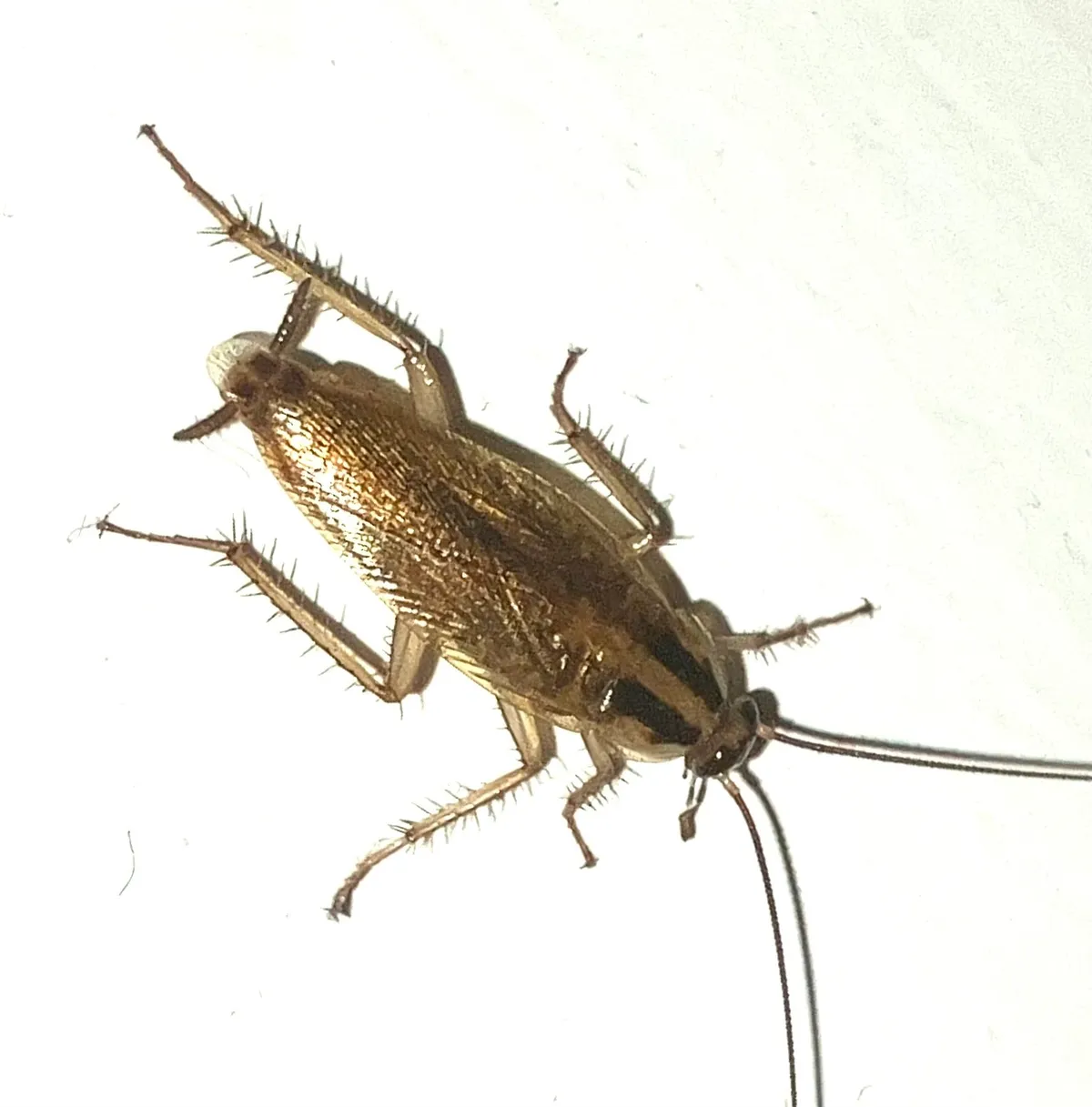
Up close, the droppings have ridges. Cornell's integrated pest management program explains that rectal pads shape insect droppings and that a cockroach's appear to have ridges. A 1964 key from CDC, then the Communicable Disease Center, Domestic Rodents and Cockroaches: Pictorial Key to Droppings, sorts droppings by length, ends and ridges: every cockroach in it has ridged droppings, the house mouse smooth ones. Its figures are for average dry droppings of adults, judged as a group.
Small cockroaches: pepper specks and smears
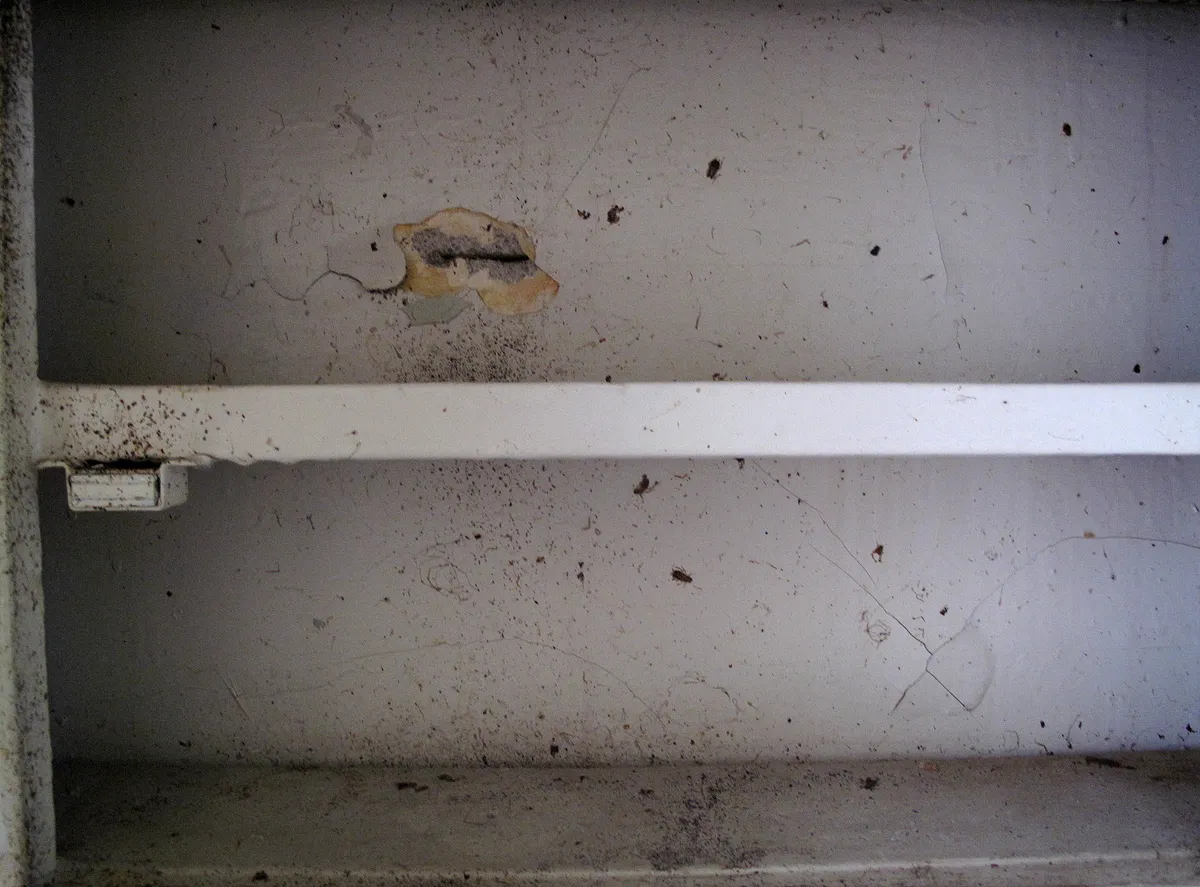
German and brown-banded cockroaches, the small indoor species, leave tiny droppings: about 1/16 inch for the German and 1/32 inch, the smallest in CDC's key, for the brown-banded, both pointed and ridged. The University of Kentucky's cockroach fact sheet calls them pepper-like specks in areas of current or former activity, and Nebraska Extension's cockroach management manual says each species leaves its own pattern of specks and smears, a clue to both the species and how heavy the infestation is.
Large cockroaches: ridged pellets
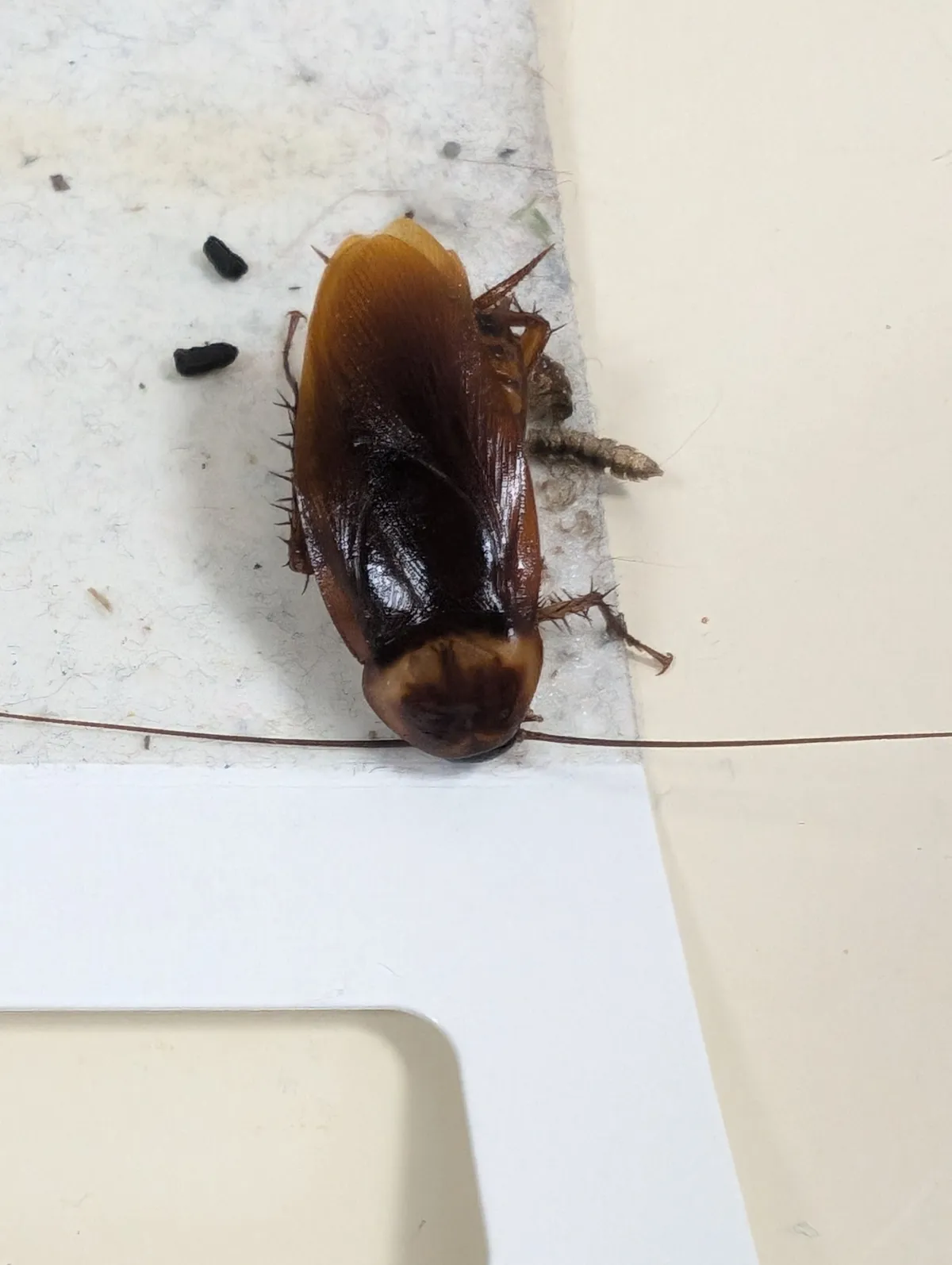
American, Oriental and smokybrown cockroaches leave short pellets with blunt ends and ridges: about 1/8 inch for the American and 1/16 inch for the other two in CDC's key. Cornell's guide to mouse and rat biology points to the vertical lines on American cockroach droppings, which rodent droppings lack. Texas A&M notes the American cockroach's other names, waterbug and palmetto bug, which the palmetto bug guide and water bugs vs cockroaches sort out.
How do you tell roach poop from mouse poop?
Look for ridges and check the ends. Mouse droppings are smooth, 1/8 to 1/4 inch long, with one or both ends narrowing to a point, according to Nebraska Extension's guide to controlling house mice. Size alone can mislead, since an American cockroach dropping, about 1/8 inch, overlaps the short end of that range. Cornell adds that rodent droppings may contain hairs swallowed during grooming.
Checks to run on droppings you found
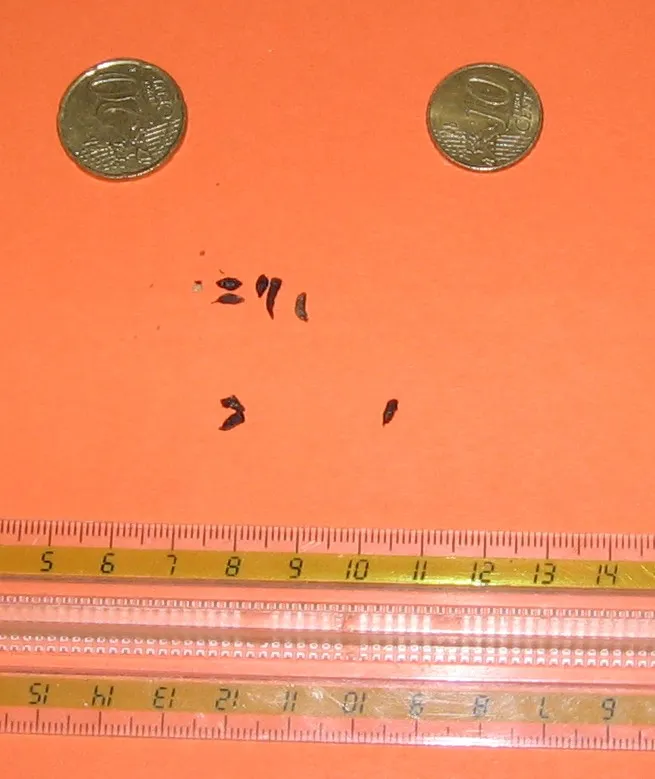
- Size. With a ruler marked in inches beside them, 1/16 inch or less fits a cockroach, about 1/8 inch an American cockroach or a small mouse dropping, 1/8 to 1/4 inch a mouse and over 1/3 inch a rat.
- Ridges. Ridges or lines along a dropping mean a cockroach; a smooth surface means a rodent.
- Ends. Smooth with pointed ends fits a mouse; blunt ends with ridges fit an American, Oriental or smokybrown cockroach.
- Smears. Dark smears around cracks and hinges point to cockroaches.
- Place. Pellets near gnawed packaging or shredded nesting material point to mice.
Identify them before you clean: CDC says never to sweep or vacuum rodent droppings, while extension services advise a HEPA-filter vacuum for cockroach droppings. Mice have a guide to mouse poop of their own, and droppings over 1/3 inch long belong in the guide to rat droppings.
Is it roach poop or roach eggs?
An egg case is a single hardened capsule, as Ebeling describes it, far bigger than most cockroach droppings: UC IPM gives about 1/4 inch for German and brown-banded cockroach cases and about 3/8 inch for the American, Oriental and smokybrown. A German female carries her case until a day or two before it hatches, UC IPM says, while brown-banded females glue theirs to ceilings, furniture or closets and the large species leave theirs in sheltered spots.
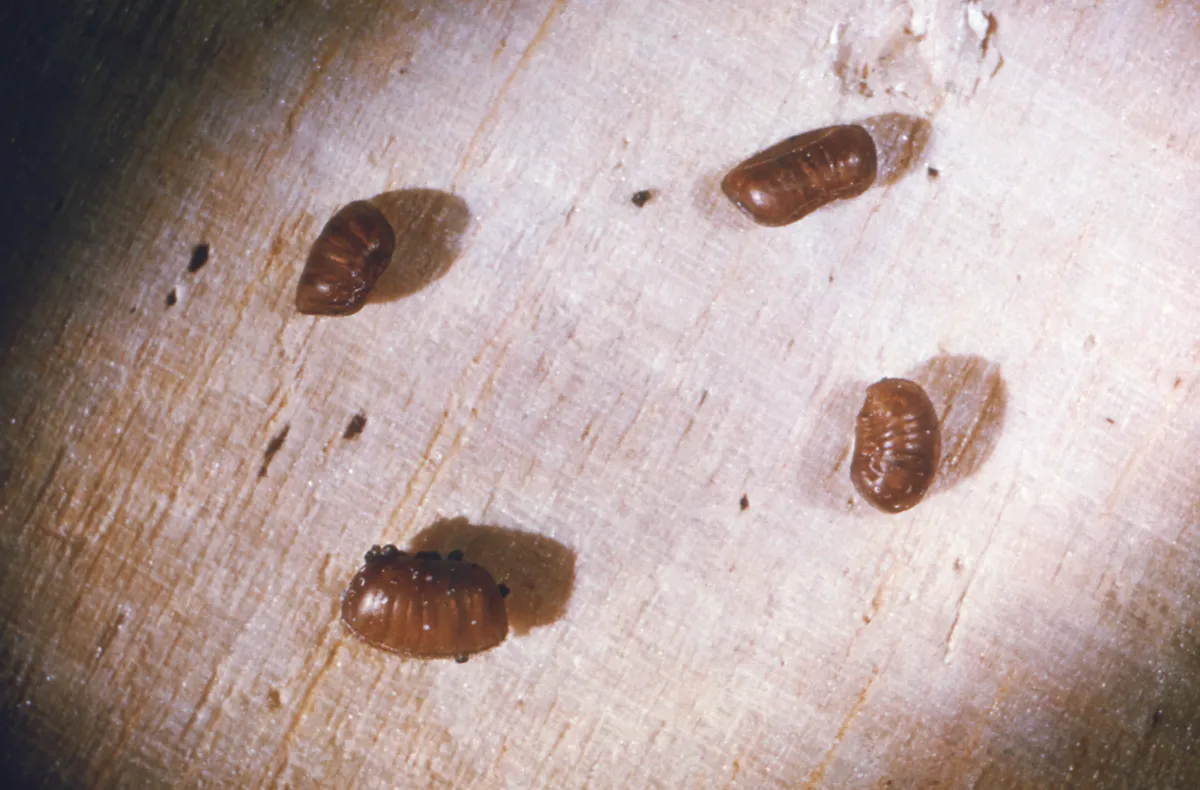
Egg cases are another sign to look for: UC IPM uses them, with droppings and shed skins, to choose spots for monitoring traps. What cockroach eggs look like covers the cases species by species.
What else looks like roach poop?
Bed bug spots and drywood termite pellets are the usual mix-ups. Bigger droppings come from bigger animals, sorted in the animal poop identification chart.
Bed bug spots
Moisten a spot: bed bug feces run red when moistened and cockroach feces do not, says the University of Tennessee's bed bug program. The EPA's guide to finding bed bugs describes bed bug spots as dark dots that may bleed into fabric like a marker, and Virginia Tech's bed bug guide says they feel smooth, being dried liquid, while German cockroach droppings feel granular. Kentucky adds that cockroaches seldom gather on beds. Bed bugs have guides of their own: what bed bug poop looks like, the bed bug signs checklist and bed bug stains and their look-alikes.
Drywood termite pellets
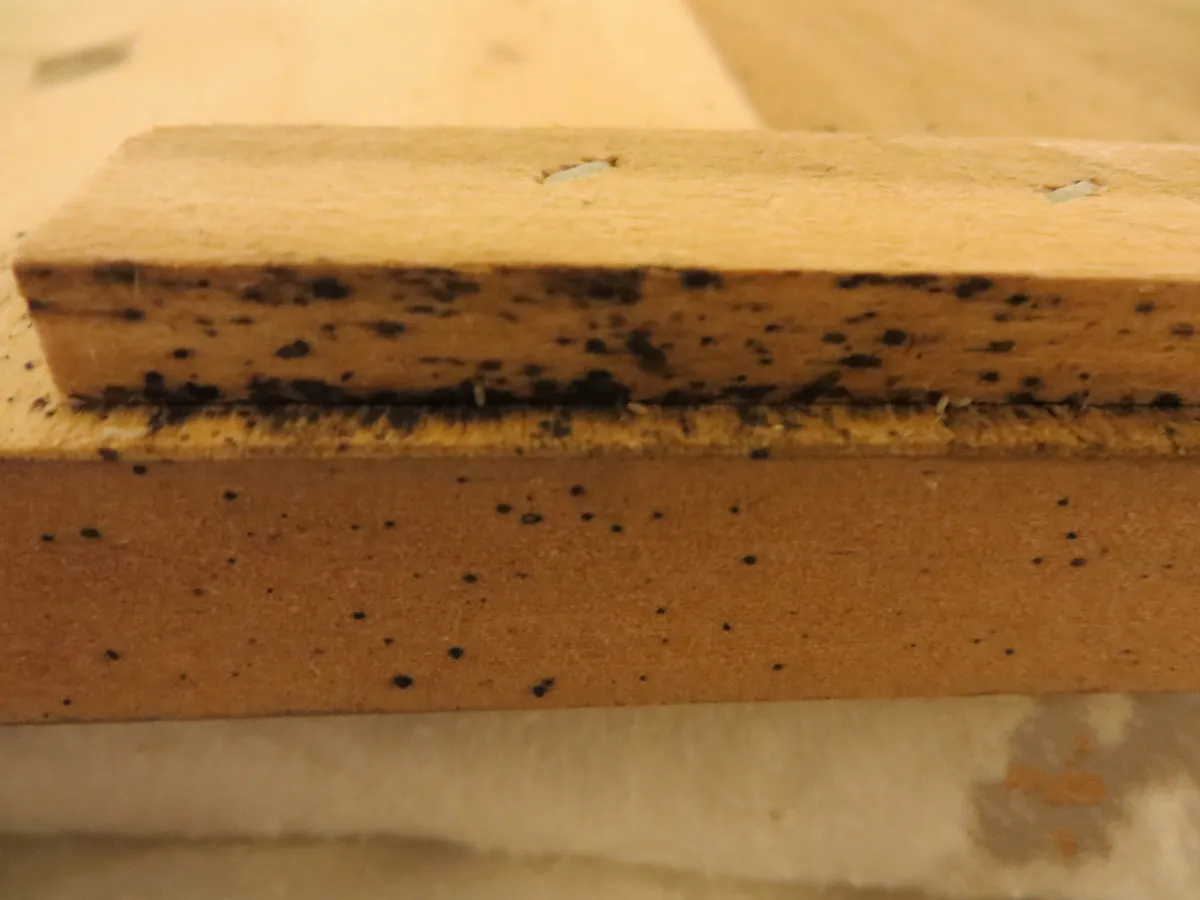
Pellets piled below tiny holes in wood point to drywood termites. UC IPM's Pest Notes on drywood termites say the pellets have six sides, a feature diagnostic for drywood termites, and Texas A&M's urban entomology program gives them as about 1/32 inch long and generally the color of the wood. The guide to termite droppings shows them up close.
Commonly confused with
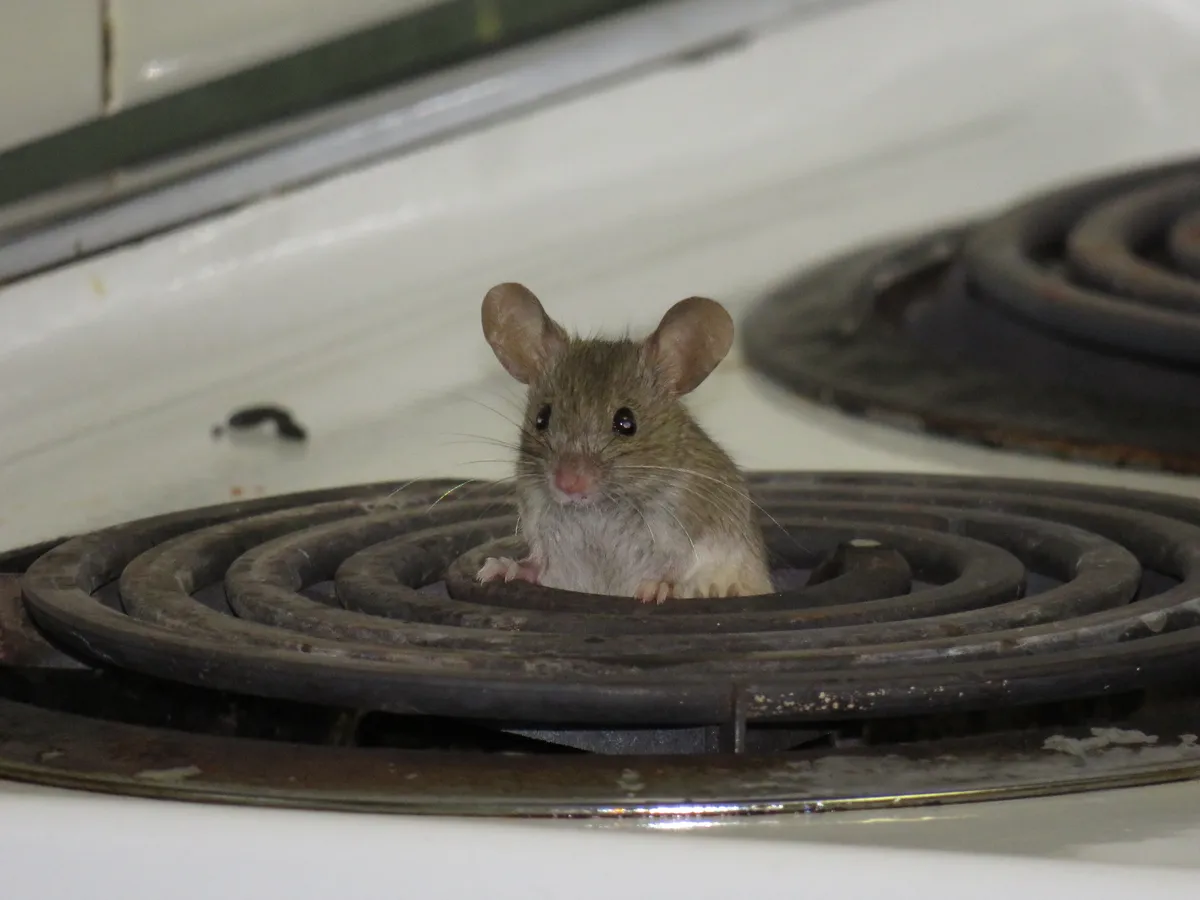 House mouseSmooth droppings 1/8 to 1/4 inch long with pointed ends and no ridges
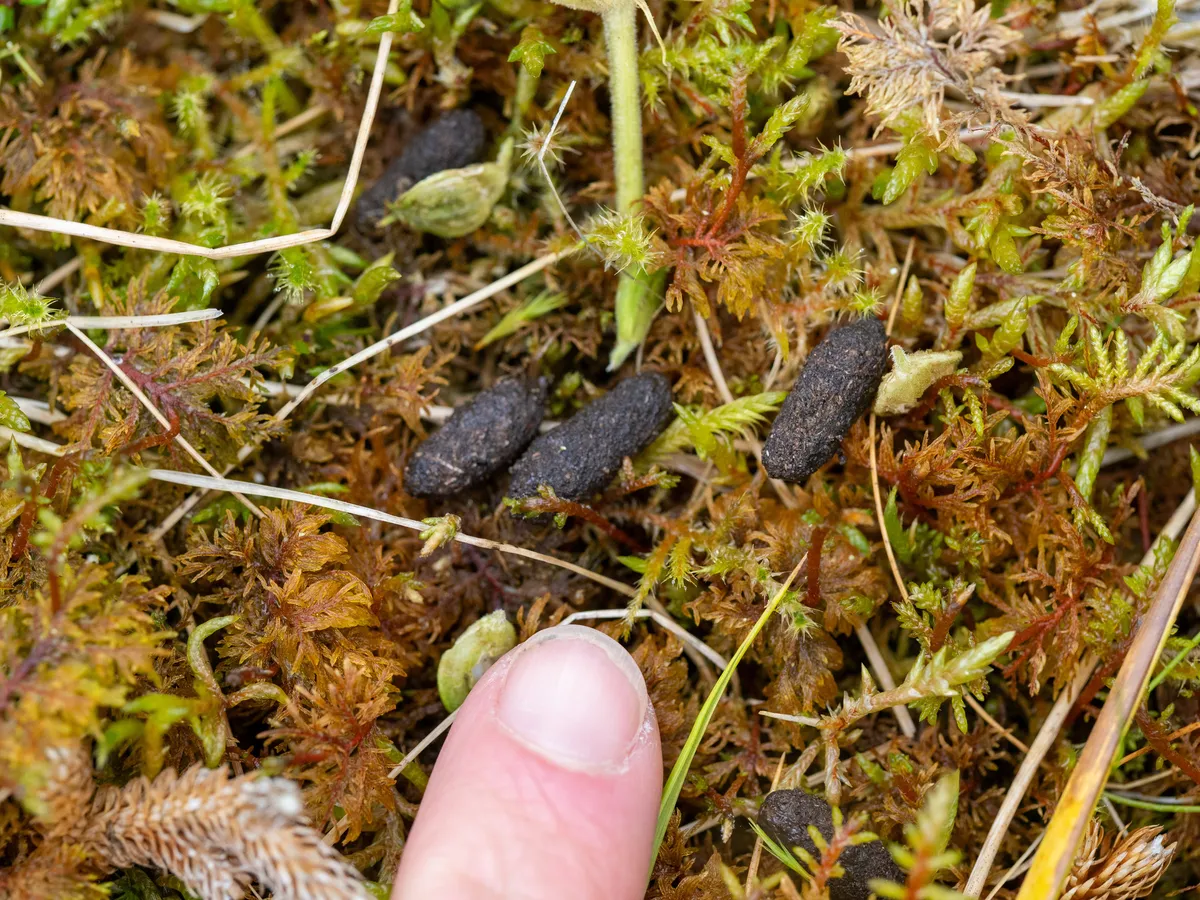 Rat droppingsOver 1/3 inch long, far bigger than any cockroach dropping
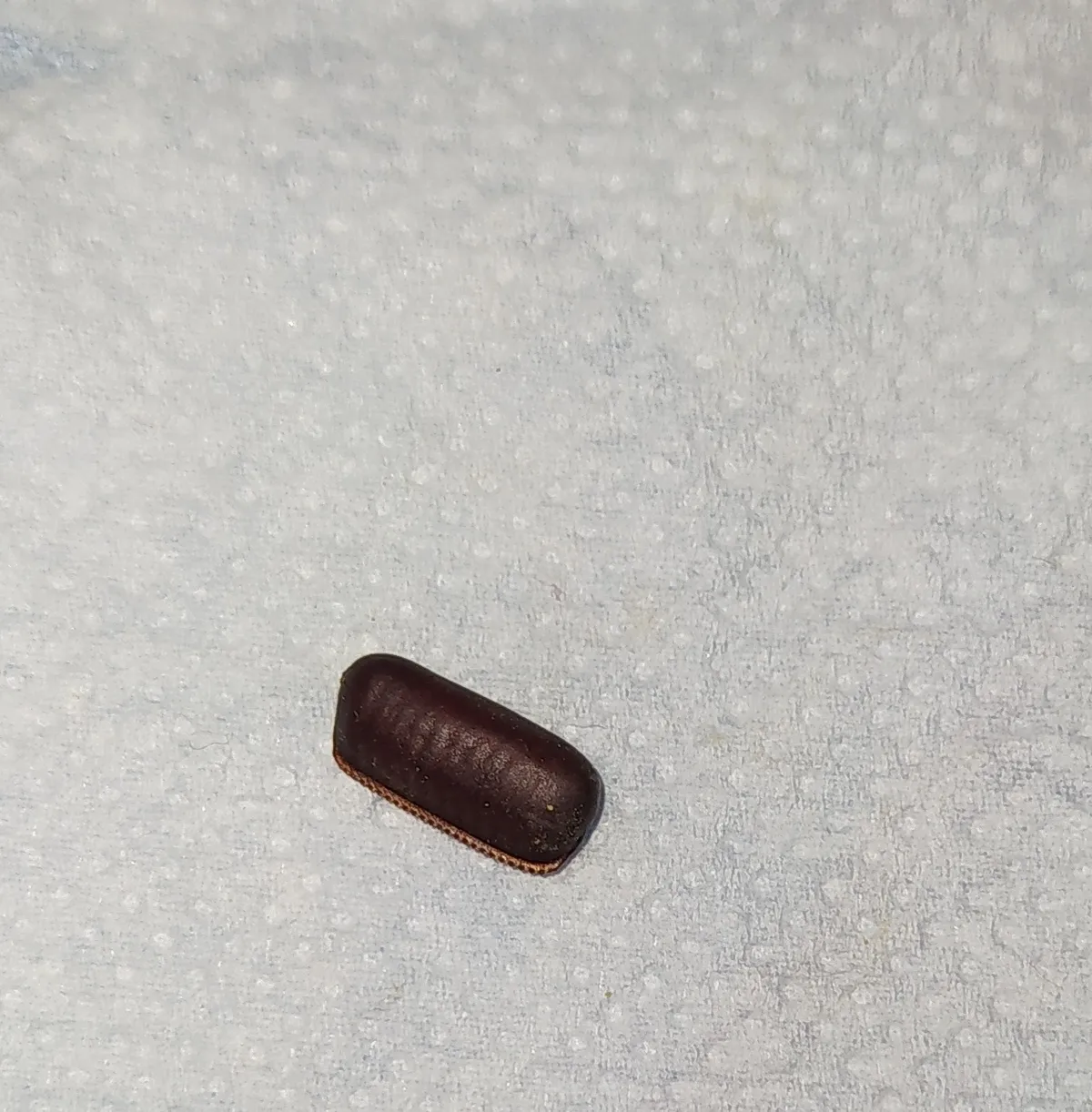 Cockroach egg caseOne capsule 1/4 to 3/8 inch long, not a dropping
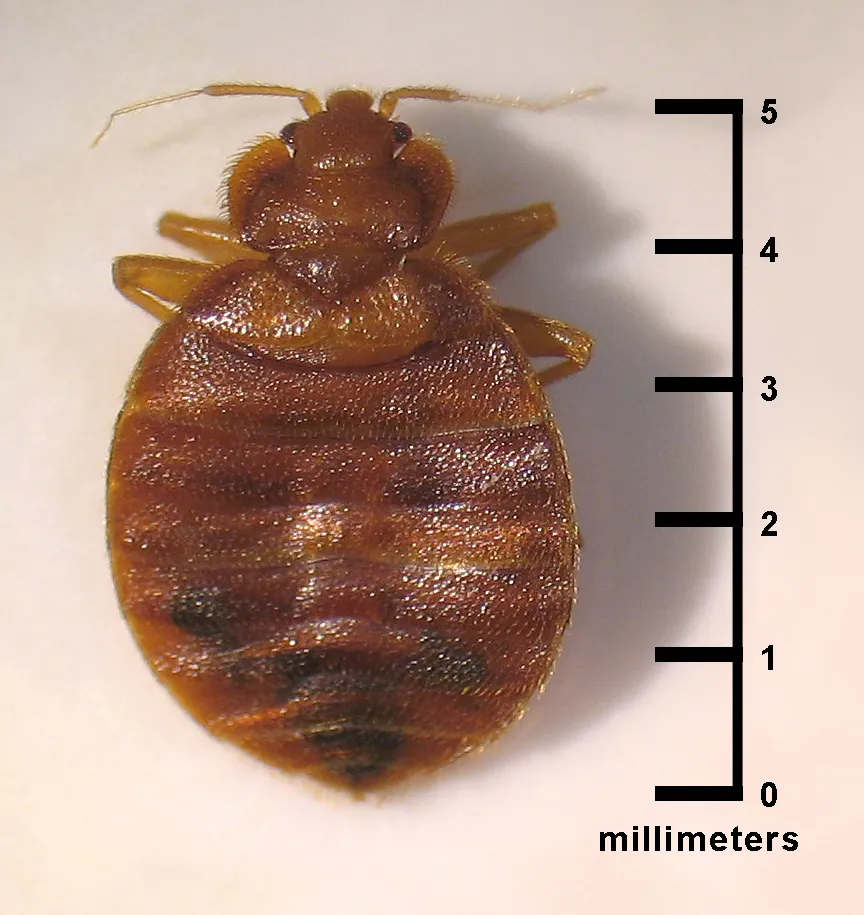 Bed bugIts spots bleed into fabric and run red when moistened
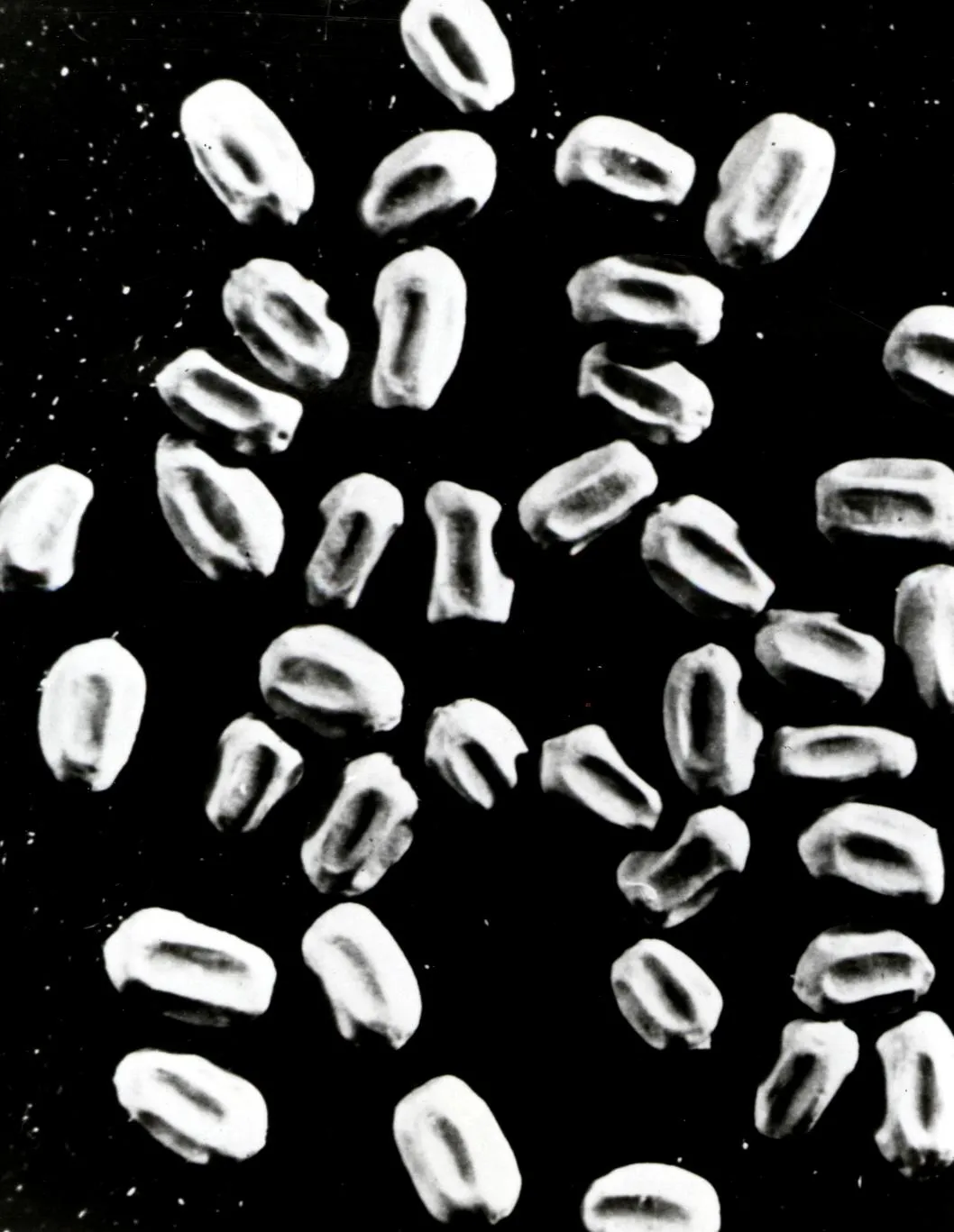 Drywood termite pelletsSix-sided pellets piled below tiny holes in wood
Photos: House mouse: (c) jonsense, some rights reserved (CC BY), via iNaturalist, CC BY 4.0. Rat droppings: no rights reserved, via iNaturalist, CC0 1.0. Cockroach egg case: no rights reserved, via iNaturalist, CC0 1.0. Bed bug: CDC/ CDC-DPDx; Blaine Mathison (CDC Public Health Image Library, phil.cdc.gov), public domain. Drywood termite pellets: R6, State & Private Forestry, Forest Health Protection, Public domain, via Wikimedia Commons, public domain.
Where do you find roach droppings?
Where cockroaches hide and travel. UC IPM says to look under kitchen counters, behind kitchen drawers and in the back of cabinets, and Rutgers' German cockroach fact sheet names door moldings, cabinet hinges, corners inside cabinets, drawers and the back of the refrigerator as ideal hiding places in apartments.
- Kitchens and bathrooms. German cockroaches prefer kitchens and bathrooms, UC IPM says, and Rutgers says the most usually gather around the stove and refrigerator.
- Walls. Virginia Tech's cockroach guide describes runways along pipes through walls, beside appliances and along cabinet bases, and dark spots and smears that stain furnishings. Ebeling notes stained shelf corners and cabinet hinges in heavy infestations.
- Up high. Brown-banded cockroaches favor warm spots higher off the floor and away from water, Nebraska's manual says: closet shelves, behind pictures, electronics.
- Basements and drains. The same manual places American cockroaches in basements, wet floor drains and around pipes and water heaters, and Oriental cockroaches in basements, floor drains and crawl spaces.
- Attics. UC IPM says smokybrown cockroaches prefer the upper parts of buildings and sometimes take refuge in the attic.
How much roach poop means a big infestation?
Any roach poop means cockroaches live, or lived, nearby; Kentucky calls the specks a sign of current or former activity. Heavy staining means many: NC State Extension's German cockroach guide shows a water heater covered in fecal spots, which its caption calls suggestive of a very high level of infestation, and Ebeling links stained shelf corners and hinges to heavy infestations.
Photos of the other signs, from egg cases and shed skins to roaches out by day, and an explanation of how sticky traps show how big an infestation is, are in the guide to signs of cockroaches.
Why do I see roach poop but no roaches?
Because cockroaches hide by day. Kentucky says they are more active at night and spend the day in cracks and dark, secluded places; Virginia Tech notes that people may find droppings before they ever see a live cockroach; and Texas A&M says that seeing them in daytime usually means there are a lot. Old droppings can also outlast the cockroaches that left them.
Sticky traps tell you which it is. UC IPM calls them the best way to detect and monitor cockroaches: set them where floors meet walls and near the droppings, and check them daily for several days. A separate guide explains how sticky traps and bait stations do different jobs.
Clean up what you find: UC IPM and Kentucky say the droppings carry an attractant that draws cockroaches together, and NC State reports that young nymphs eat them.
Is cockroach poop harmful?
It can be, mainly as an allergen. The EPA's guide to asthma triggers says proteins in cockroach feces and saliva can cause allergic reactions or asthma symptoms in some people, and Ebeling explains how they reach people: dried fecal particles become part of house dust. UC IPM says indoor infestations are risk factors for developing asthma in children, especially in multi-unit housing, and Kentucky lists congestion, sneezing and watery eyes, with asthma bringing cough, wheezing and trouble breathing.
Cockroaches also carry germs to food: UC IPM says American cockroaches, which can contact sewage and pet droppings, can transmit bacteria that cause food poisoning.
How do you clean up roach droppings?
Vacuum with a HEPA filter, then wash with hot, soapy water. Rutgers recommends a HEPA-filter vacuum to remove cockroaches, fecal material and shed skins; UC IPM and Texas A&M give the same advice because the droppings and hiding places hold allergens; and Virginia Tech advises hot, soapy water, which also removes the droppings' aggregation pheromones.
Keep cleaning after the cockroaches are gone; Virginia Tech says the allergens persist. The EPA advises keeping counters, sinks, tables and floors clean and free of clutter, cleaning up crumbs and spills right away, storing food in airtight containers and sealing cracks around cabinets.
What should you do once you know it is cockroaches?
Confirm the species, then treat the hiding places the droppings point to. The complete guide to cockroaches in US homes profiles each species, and the German cockroach guide covers the one Kentucky calls by far the most common in homes. Kentucky advises baiting wherever you see fecal spotting, and UC IPM suggests placing bait right next to the droppings.
A step-by-step plan for getting rid of cockroaches puts baits, traps and sealing in order, with a Canadian edition for readers in Canada. If your suspect may not be a cockroach at all, see bugs that look like cockroaches and what baby cockroaches look like.
This guide is general educational information, not medical advice. If you have symptoms or concerns after a bite or exposure, contact a healthcare provider.
Frequently Asked Questions
Does roach poop mean an infestation?+
It means cockroaches are living, or have lived, close by. The University of Kentucky calls the pepper-like specks a sign of current or former activity, and Virginia Tech notes that people may find droppings before they ever see a live cockroach, because the insects hide by day. Heavy staining on cabinet hinges, shelf corners or a water heater points to a large infestation. Set sticky traps near the droppings and check them daily for several days to see whether cockroaches are still active.
Is roach poop toxic?+
The main risk the health sources describe is allergy and asthma. The EPA says proteins in cockroach feces and saliva can cause allergic reactions or asthma symptoms in some people, and UC IPM reports that indoor infestations are risk factors for developing asthma in children, especially in multi-unit housing. Cockroaches can also carry germs onto food: UC IPM says American cockroaches can transmit bacteria that cause food poisoning. Virginia Tech advises seeing a healthcare provider about allergic or breathing symptoms linked to cockroaches.
What should you do when you see cockroach poop?+
Identify it, then check whether the cockroaches are still around. Lay a ruler marked in inches beside the droppings: pepper-like specks or ridged pellets up to about 1/8 inch point to cockroaches, while smooth pellets 1/8 to 1/4 inch long with pointed ends point to mice. Set sticky traps where floors meet walls near the droppings. If they are a cockroach's, remove them with a HEPA-filter vacuum and hot, soapy water, and treat the hiding places they point to.
What does roach poop look like on walls?+
On walls, roach poop shows up as dark specks and smears along the routes cockroaches travel and near where they hide. Virginia Tech describes runways such as a water pipe passing through a wall, the space beside or behind an appliance and the bases of cabinets, and says the spots and smears stain furnishings. Specks high on walls, behind pictures or near electronics fit brown-banded cockroaches, which Nebraska Extension says gather higher off the floor.
How big is cockroach poop?+
Very small. CDC's pictorial key to droppings gives average dry droppings of about 1/32 inch for the brown-banded cockroach, about 1/16 inch for German, Oriental and smokybrown cockroaches and about 1/8 inch for the American cockroach. Walter Ebeling's Urban Entomology describes the range as flyspeck size up to the size of mouse droppings. Mouse droppings run 1/8 to 1/4 inch, so a smooth dropping longer than about 1/8 inch is more likely a rodent's.
What color is roach poop?+
Dark. UC IPM and Virginia Tech describe cockroach droppings as dark spots and smears, Texas A&M likens German cockroach droppings to crushed pepper, and the University of Kentucky calls cockroach droppings pepper-like specks. Mouse droppings are dark too, usually black according to Nebraska Extension, so color will not separate them; look at size, ridges and the shape of the ends instead. Bed bug spots are also dark, but the University of Tennessee says they run red when moistened.
Do roach droppings attract more roaches?+
Yes. UC IPM says cockroach droppings contain a natural attractant or aggregation pheromone, the University of Kentucky says cockroaches gather in response to aggregating odors in their feces, and NC State reports that compounds in German cockroach feces attract cockroaches of every life stage and keep them in place. Virginia Tech advises cleaning with hot, soapy water to remove the droppings along with their aggregation pheromones, and UC IPM suggests placing bait next to droppings.
Can you vacuum cockroach droppings?+
Yes, with a HEPA filter. Rutgers recommends a HEPA-filter vacuum to remove cockroaches, fecal material and shed skins, and UC IPM explains that aerosolized bits of droppings and shed skins may cause allergies when inhaled. Rodent droppings are different: CDC says never to vacuum or sweep mouse or rat droppings, because rodent diseases spread mainly through contaminated air. If you are not sure which animal left them, use CDC's wet cleanup method instead.
What if the droppings are on my bed?+
Dark spots on a mattress or bed frame are more likely bed bugs than cockroaches. The University of Kentucky notes that cockroaches seldom gather on beds the way bed bugs do. Moisten a spot to check: the University of Tennessee says bed bug feces run red when moistened and cockroach feces do not. The EPA describes bed bug spots as dots about the size of a printed bullet point that may bleed into fabric like a marker.
Does cockroach poop smell?+
A heavy infestation can. Walter Ebeling's Urban Entomology says a musty odor left on objects cockroaches touch may be evident in heavy infestations, UC IPM says German cockroaches impart stains and unpleasant odors to surfaces they contact, and the University of Kentucky says cockroaches leave an unpleasant odor. A noticeable smell points to a large population rather than a few droppings, so set sticky traps and look for specks and smears near the places cockroaches hide.
Sources
- Domestic Rodents and Cockroaches: Pictorial Key to Droppings (H. G. Scott and M. R. Borom, 1964), page 183 of Pictorial Keys: Arthropods, Reptiles, Birds and Mammals of Public Health Significance — Centers for Disease Control and Prevention (then the Communicable Disease Center), via CDC Stacks
- ENTO-037: Cockroach Biology and Management — Texas A&M AgriLife Extension Service
- Identifying Your Pest – with Poop? — Cornell University Integrated Pest Management (Think IPM blog, Matt Frye, 2014)
- Mouse and Rat Biology and Behavior — Cornell Integrated Pest Management (Cornell IPM), Cornell University
- Urban Entomology, Chapter 6: Pests On or Near Food (Walter Ebeling, 1975) — University of California, Riverside, Department of Entomology
- Cockroaches (Home and Landscape) — University of California Statewide IPM Program
- Cockroach Management Manual (First Edition, November 2021) — Nebraska Extension, University of Nebraska-Lincoln (K. Koch, J. Green and K. Chapman)
- FS1322: German Cockroach — Rutgers New Jersey Agricultural Experiment Station
- ENTFACT-614: Cockroach Elimination in Homes and Apartments — University of Kentucky Department of Entomology
- Biology and Behavior of the German Cockroach — NC State Extension (A. Wada-Katsumata and C. Hayes, 2025)
- Cockroaches Found in Living Spaces (ENTO-528NP, 2022) — Virginia Cooperative Extension, Virginia Tech (T. A. Dellinger and E. Day)
- Asthma Triggers: Gain Control — US Environmental Protection Agency
- How to Find Bed Bugs — US Environmental Protection Agency
- Bed Bug Biology and Identification — University of Tennessee Institute of Agriculture
- How to Identify a Bed Bug Infestation (Dini M. Miller, Virginia Tech) — Virginia Department of Agriculture and Consumer Services
- Drywood Termites (Home and Landscape) — University of California Statewide IPM Program
- Drywood Termites — Urban and Structural Entomology Program, Texas A&M University
- G1105: Controlling House Mice — Nebraska Extension, University of Nebraska-Lincoln
- How to Clean Up After Rodents — Centers for Disease Control and Prevention
How this guide was made: it was researched and drafted with AI assistance from the sources listed above. A second, independent AI pass then checked each factual claim against those sources. Found an error? Email support@buzzskito.ca.