
Published by BuzzSkito Mosquito & Tick Control
Published October 22, 2026 · Drafted with AI assistance and fact-checked against the sources listed below
What does a brown-banded cockroach look like?
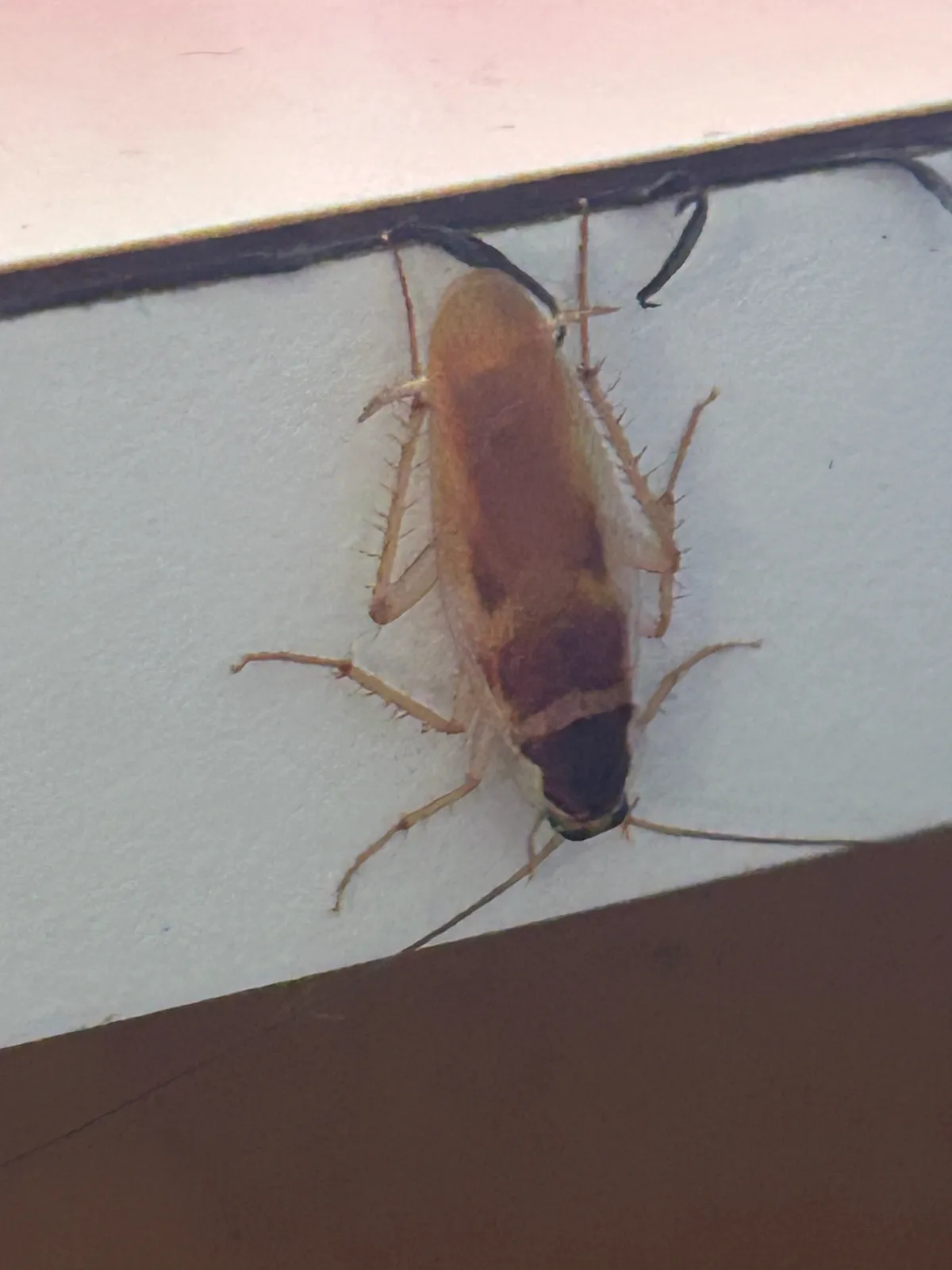
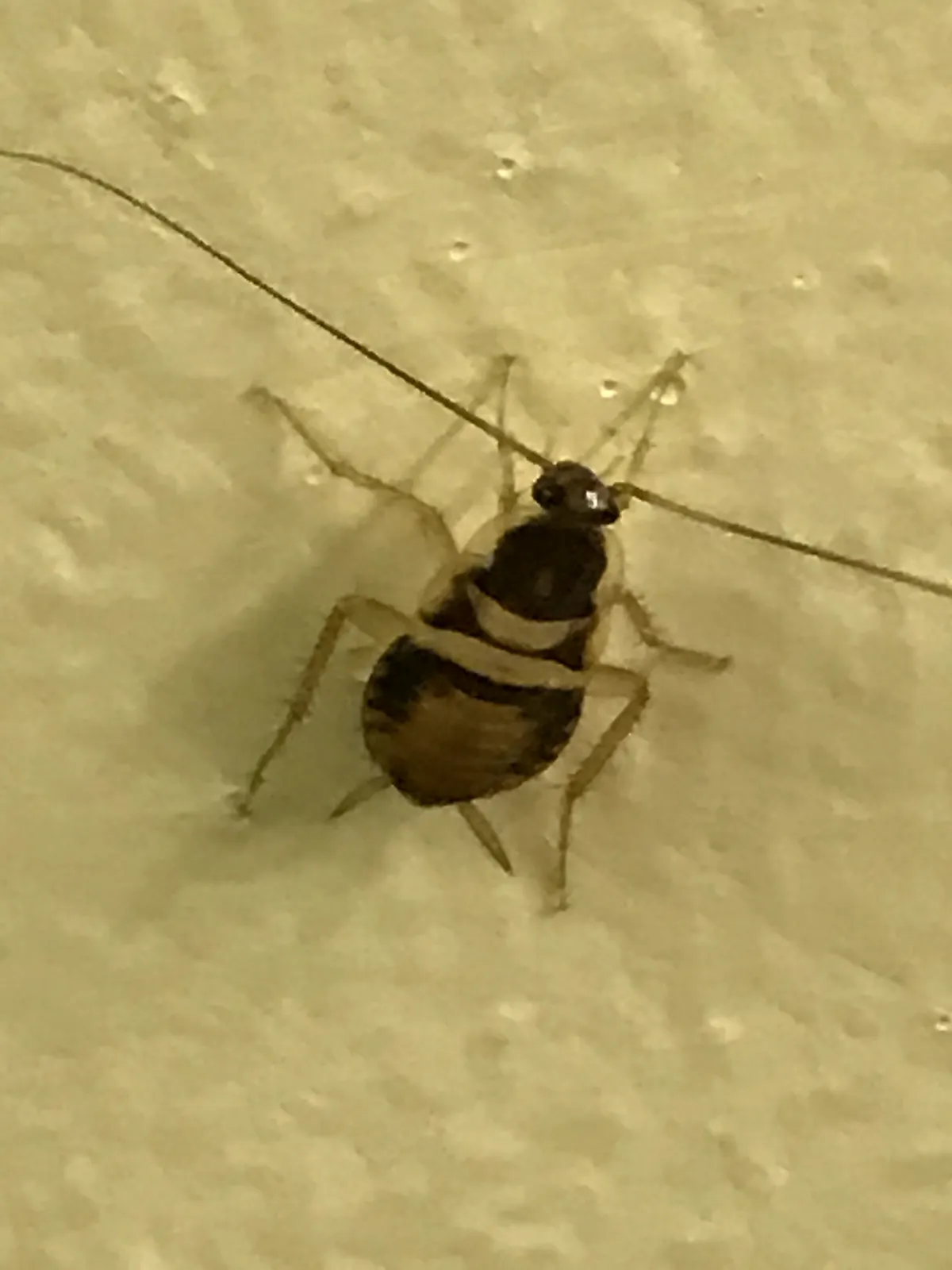
A brown-banded cockroach (Supella longipalpa) is a small roach marked by two pale bands across its wings and body. The University of California's Pest Notes on cockroaches (UC IPM) give adults as about 1/2 inch, with light-colored bands on the abdomen, the wings and the sides of the shield behind the head; Texas A&M's Urban and Structural Entomology Program gives 1/2 to 5/8 inch and calls the bands yellow.
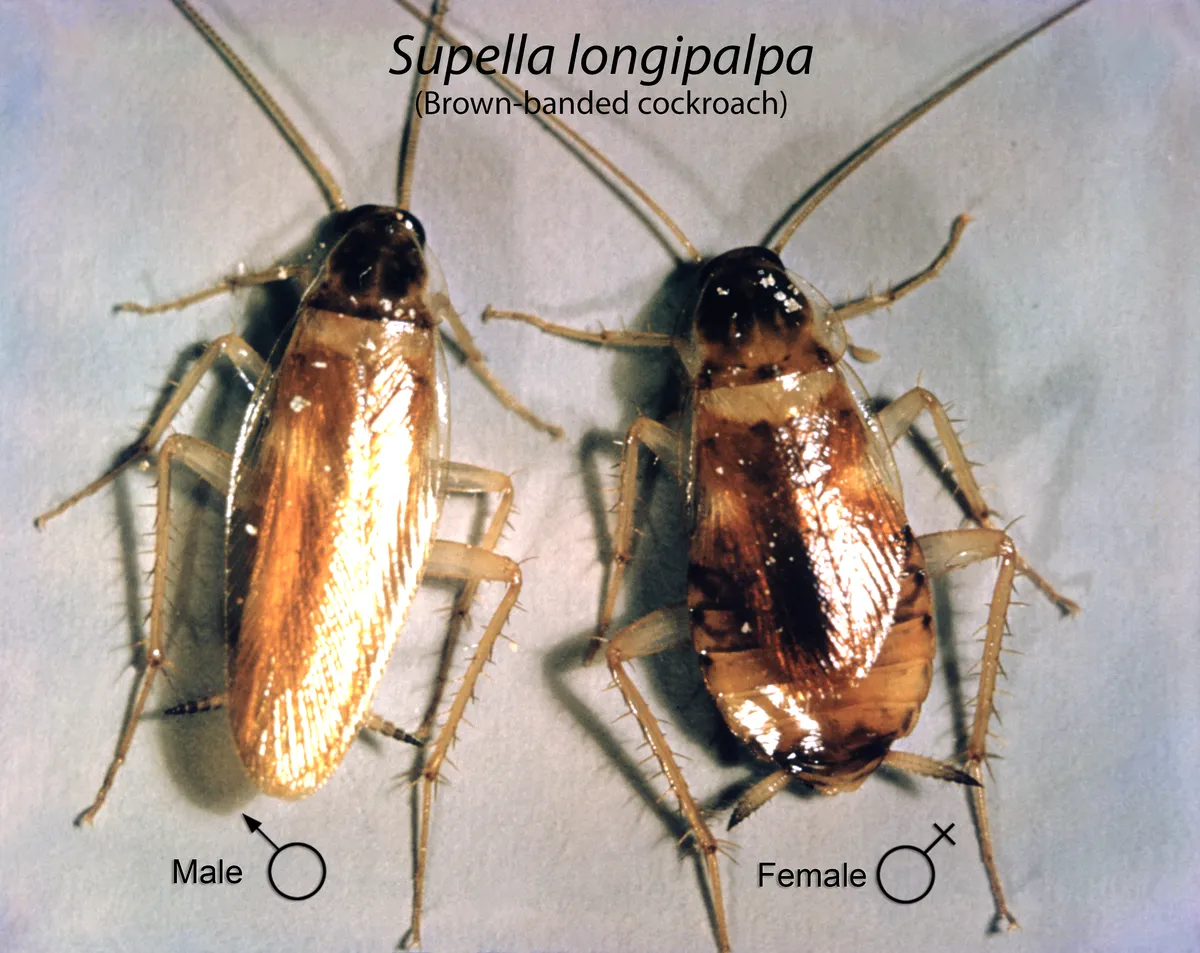
The shield behind the head is the quickest check. The University of Kentucky's cockroach fact sheet says the brown-banded cockroach has a black bell-shaped mark there instead of the German cockroach's dark lengthwise stripes. Despite the name, the bands are paler than the body: the University of Florida's cockroach photo guide calls them pale brown.
How can you tell a male from a female?
By shape, color and wings. UC IPM describes males as golden tan and females as darker brown, and Penn State Extension's fact sheet says females are shorter and stouter, with wings that do not cover the whole abdomen. Walter Ebeling's Urban Entomology (1975), hosted by UC Riverside's entomology department, gives males as 13 to 14.5 mm long (about 1/2 to 9/16 inch) and females as 11 to 12 mm (about 7/16 to 1/2 inch).
On a male the bands can be hard to see, because his light brown wings completely cover his narrow body, Clemson University's cockroach fact sheet explains; Ebeling places them at the base of the wings and about a third of the way down. Only males fly: UC IPM says they sometimes fly when disturbed, especially above 85°F, and that females cannot. The guide to flying cockroaches compares the other species.
How do you recognize brown-banded nymphs?
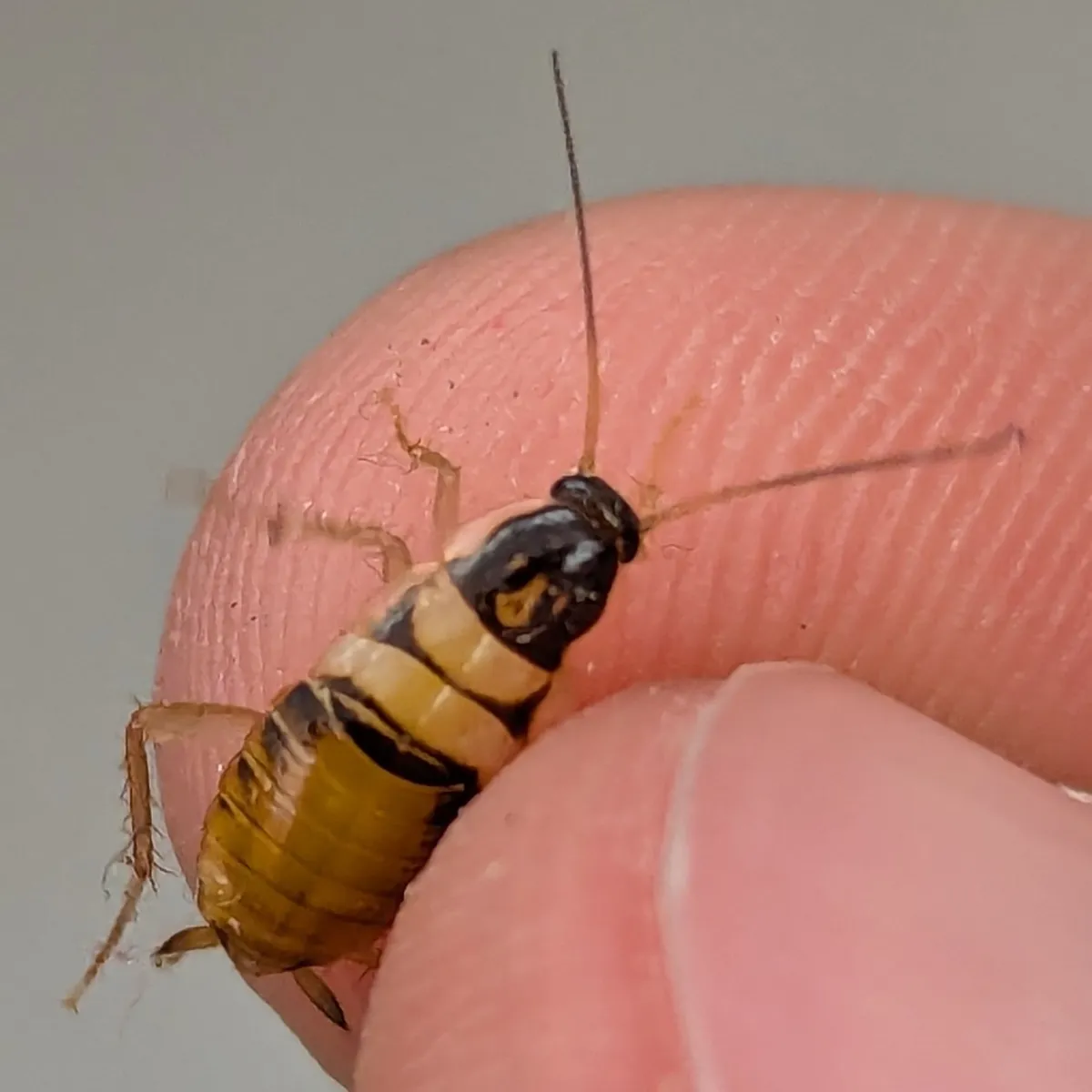
They are wingless, with the same two bands, even bolder. Texas A&M says the yellow bands across the back are more pronounced on nymphs than on adults, Penn State places them at the base of the abdomen and at mid-abdomen, and Clemson says all stages carry them. What baby cockroaches look like compares the young of every common species.
Brown-banded cockroach vs German cockroach: how do you tell them apart?
Look behind the head and across the back. A German cockroach has two dark stripes running lengthwise behind its head and no bands; a brown-banded has bands and no stripes. They are the same size, which is why the University of Florida says the brown-banded is often mistaken for a German cockroach. Texas A&M AgriLife Extension's guide to cockroach biology and management describes German adults as light brown and 1/2 to 5/8 inch long, with wings that reach the end of the abdomen, though they do not fly.
| Feature | Brown-banded cockroach | German cockroach |
|---|---|---|
| Size | About 1/2 to 5/8 inch | 1/2 to 5/8 inch |
| Behind the head | Black bell-shaped mark | Two dark lengthwise stripes |
| Across the back | Two pale, yellowish bands | No bands |
| Color | Males golden tan; females darker brown | Light brown or tan |
| Flight | Males sometimes fly when disturbed; females cannot | Does not fly |
| Usual place | Warm, dry spots in any room, often high | Kitchens and bathrooms |
| Egg case | Glued to ceilings, furniture and closets | Carried until a day or two before hatching |
| Nymphs | Two pale bands across the body | Dark, with a tan stripe down the middle of the back |
From Kentucky, UC IPM, Penn State, Texas A&M and Clemson, each linked on this page.
Where you found it is a clue, not a test. Kentucky says brown-banded cockroaches are often found in rooms other than kitchens and bathrooms, and UC IPM says they prefer about 80°F, 5 to 10°F warmer than German cockroaches. But Ebeling reported in 1975 that both species had become most abundant in kitchens and that the two are sometimes found together. The markings settle it.
Telling them apart matters for control. Kentucky says the brown-banded cockroach has markedly different hiding places and habits, Penn State says control strategies for other cockroaches will not be effective against it, and UC IPM calls it especially difficult to control with baits. See the German cockroach guide for the kitchen species and the complete guide to cockroaches in US homes for the rest.
Is a light-colored cockroach a brown-banded cockroach?
Sometimes. A small, light brown or tan roach indoors is usually a German cockroach, which Kentucky calls far more common, or a male brown-banded cockroach; the stripes or bands tell you which. Texas A&M notes that cockroaches can be brown, black, tan, reddish orange or pale green, so color alone settles little. The table at the top of this page lists the light-colored roaches most likely in or around a US home.
A white or cream roach: it has just molted
UC IPM says cockroaches are white immediately after molting and darken as the new outer covering hardens, usually within hours, so a pale roach that darkens in a closed jar is an ordinary one of its species. The guide to white cockroaches explains what a white roach means.
A German look-alike at the porch light: the Asian cockroach
The University of Florida's guide to cockroaches and their management says the Asian cockroach looks very much like a German cockroach, except that it flies. It lives outdoors, flies to porch lights and finds its way inside, but survives poorly there; UF lists it among the cockroaches most common in and around Florida homes, and Texas A&M says it may be found outdoors in parts of Texas. Which cockroaches can fly sorts the fliers.
Tan roaches from outdoors: Turkestan and wood cockroaches
In California and Texas, a yellowish roach outdoors may be a male Turkestan cockroach: brownish yellow and 1/2 to 7/8 inch long, with pale edges on the shield behind the head and the upper corners of the front wings, says Texas A&M, which calls it one of the most common outdoor roaches in El Paso. UC IPM finds it in water meter boxes, compost, leaf litter and potted plants. The dark, short-winged female resembles an Oriental cockroach.
Near woods, a light brown roach that flew to a light at night may be a male wood cockroach. Penn State Extension's wood cockroach fact sheet describes males up to 1 inch long, light brown to nearly black, some with cream-edged wings, that are sometimes drawn to lights in rural areas, come in by accident and die indoors within a few days. Bugs that look like cockroaches covers them.
A big reddish-brown roach: the American cockroach
A roach longer than about an inch is not a brown-banded cockroach. Texas A&M describes the American cockroach as reddish brown and 1 1/2 to 2 inches long, with tan to light-yellow bands outlining the shield behind the head; both sexes can fly. It goes by another name in the palmetto bug guide.
Commonly confused with
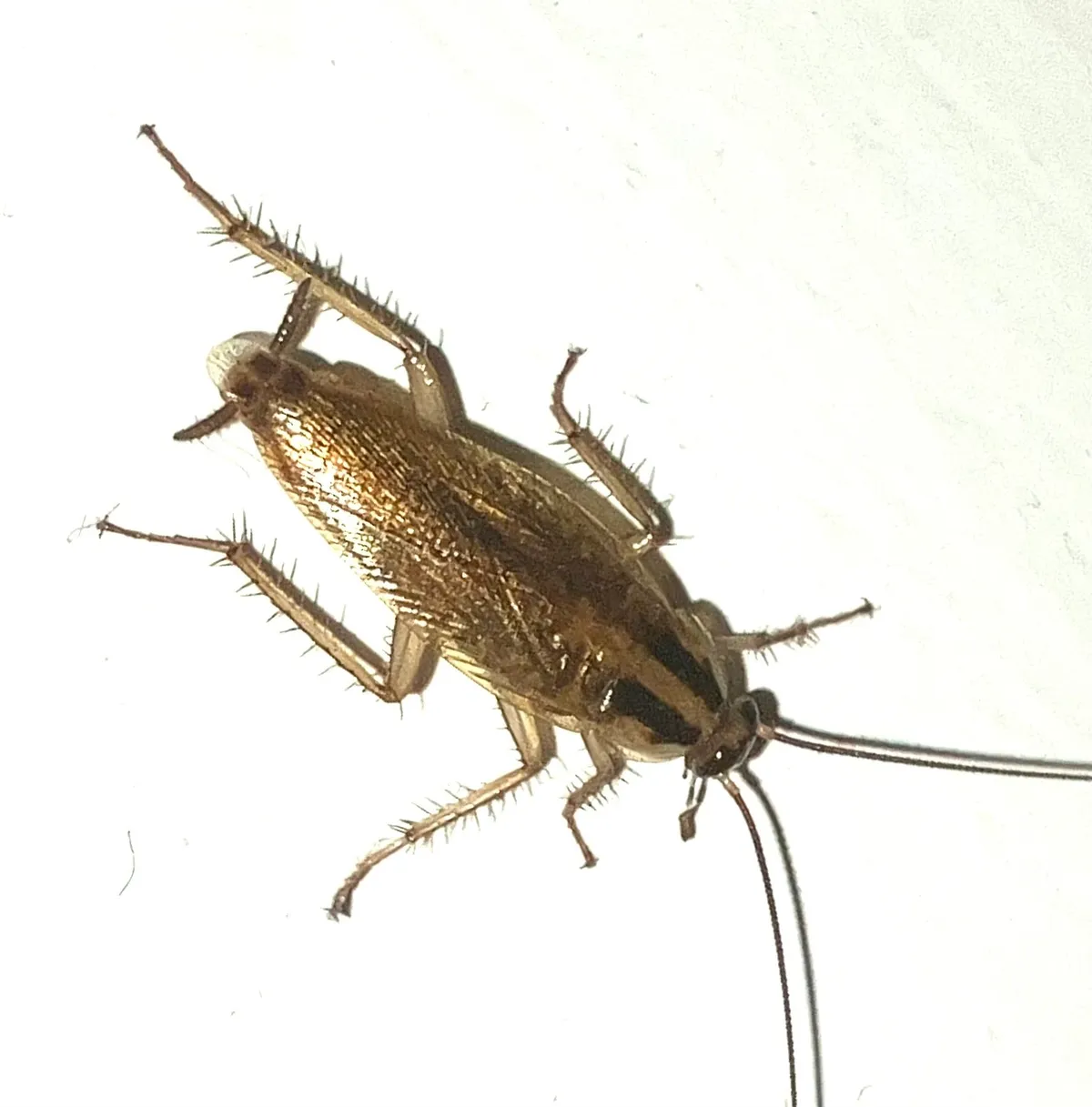 German cockroachTwo dark stripes run lengthwise behind the head, and no bands cross the body
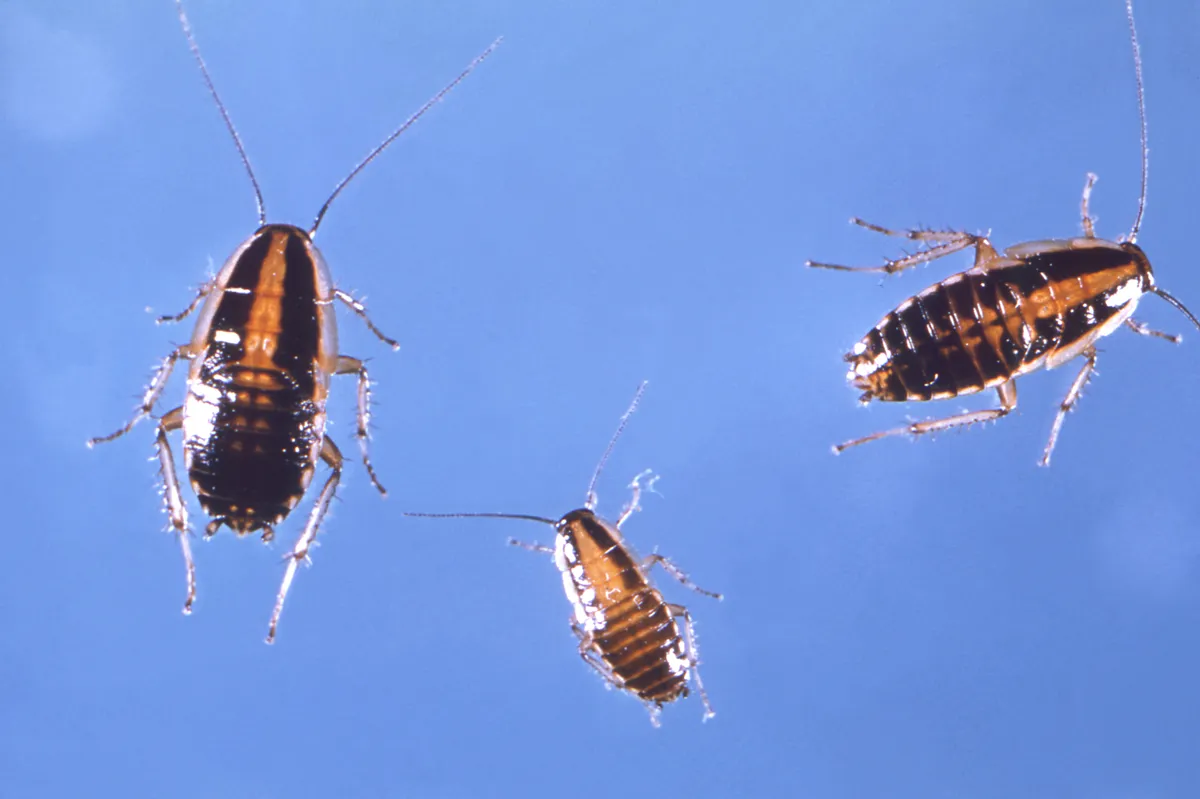 German cockroach nymphDarker than the adult, with a tan stripe down the middle of the back, not bands across it
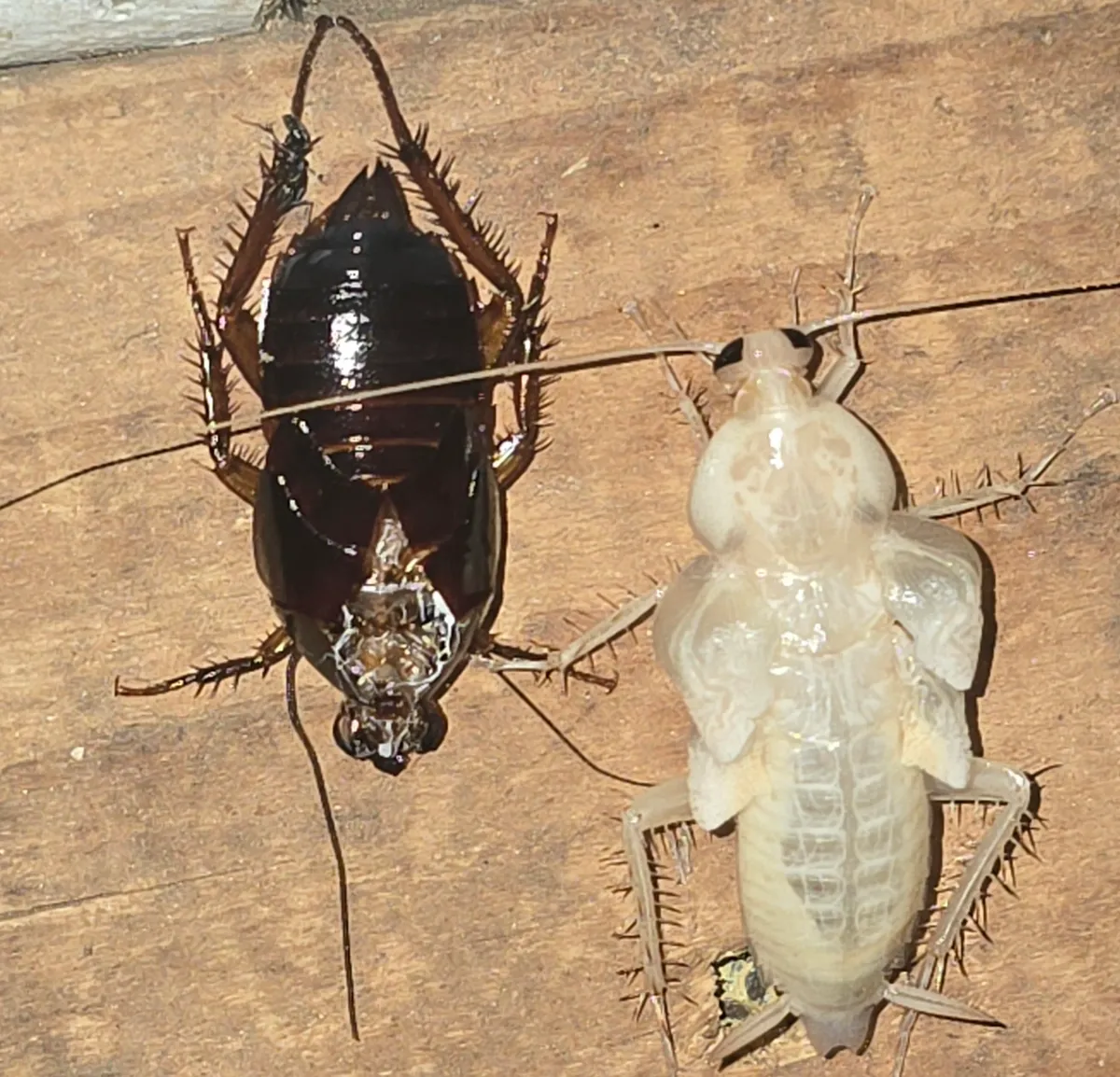 Freshly molted roachWhite or cream all over just after a molt, then darkens to its species' color within hours
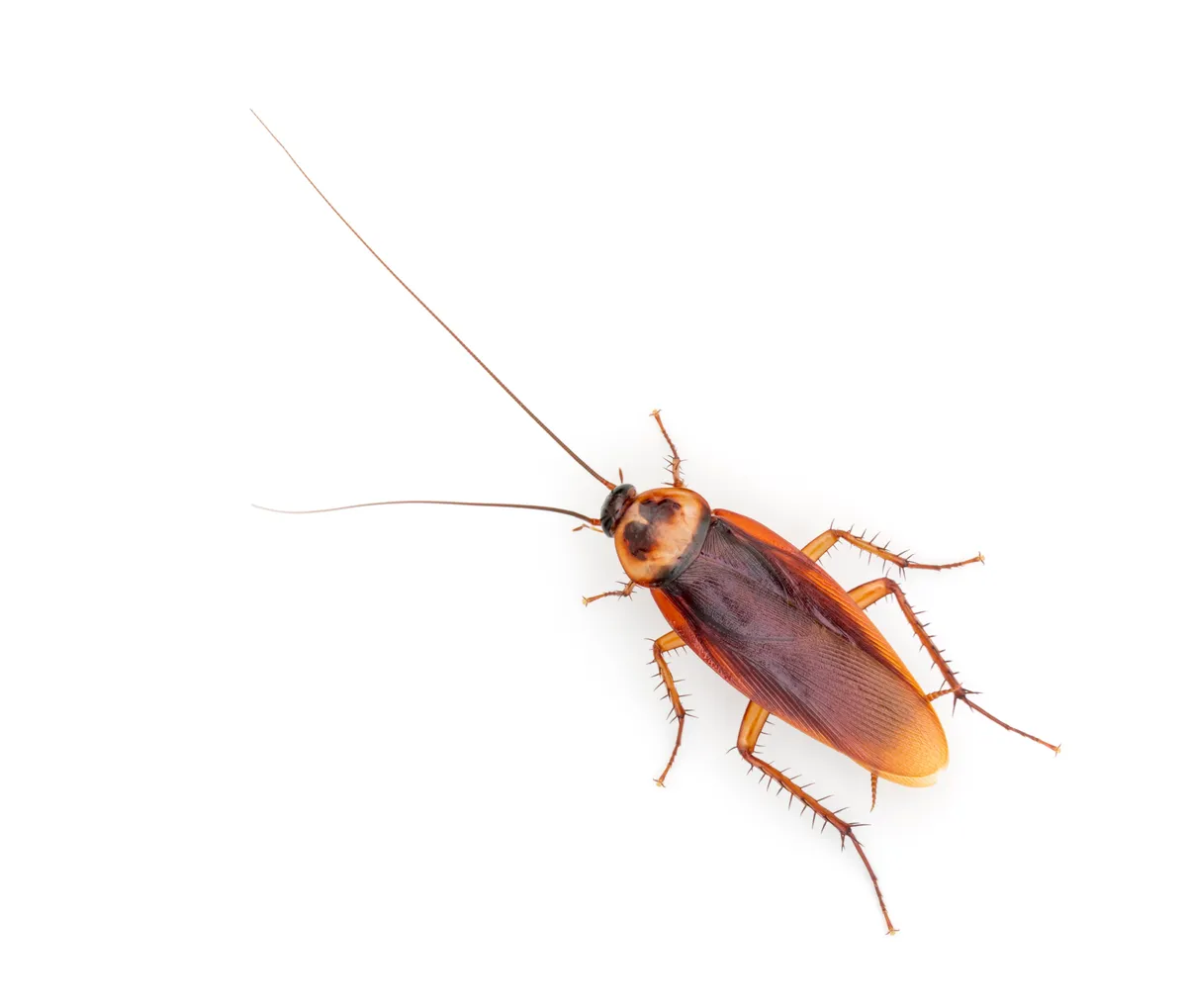 American cockroachReddish brown and 1 1/2 to 2 inches, with pale bands outlining the shield behind the head
Photos: German cockroach: no rights reserved, via iNaturalist, CC0 1.0. German cockroach nymph: CDC (CDC Public Health Image Library, phil.cdc.gov), public domain. Freshly molted roach: no rights reserved, via iNaturalist, CC0 1.0. American cockroach: Insects Unlocked, CC0, via Wikimedia Commons, CC0 1.0.
Where do brown-banded cockroaches hide?
In warm, dry, dim places, often high and away from water, in any room. Penn State finds them nearer the ceiling than the floor, Texas A&M says they appear to need less water than other cockroaches, and Kentucky says they are often in rooms other than kitchens and bathrooms. Check:
- Walls and ceilings. Ceilings of dark or dimly lit rooms, behind picture frames and in light switches (Texas A&M), doorframes (Penn State) and wall decorations (UC IPM).
- Cabinets and closets. The upper walls of cabinets and closets (Texas A&M), pantries (Penn State) and corners near the ceiling (Clemson).
- Furniture. Beneath or inside furniture (Kentucky), inside upholstered pieces (Texas A&M), dressers, tables and chairs (Penn State) and hollow furniture legs (UC IPM).
- Electronics and appliances. Crevices in or near electrical appliances (UC IPM), refrigerator motor housings, clocks and radios (Penn State), and, in Ebeling's 1975 account, television sets.
- Clutter. UC IPM lists accumulations of clutter among their favored hiding places.
Kentucky calls the species far less common than the German cockroach, and UC IPM, writing for California, puts it at only about 1% of indoor infestations there. Texas A&M finds it more often in homes, apartments, hotels, nursing homes and hospitals than in restaurants and grocery stores. Originally African, it occurs throughout the US, says the University of Florida; Ebeling dates the first US record to Key West and Miami in 1903.
Where do brown-banded cockroaches glue their egg cases?
On hidden surfaces, often above the floor and sometimes many together. UC IPM says females glue the light brown cases, about 1/4 inch long, to ceilings, beneath furniture or in dark places such as closets; Kentucky calls them pea-sized and finds them under dressers and tables; Clemson adds drawers and the inside of furniture and appliances, including TVs, microwaves, computers and radios.
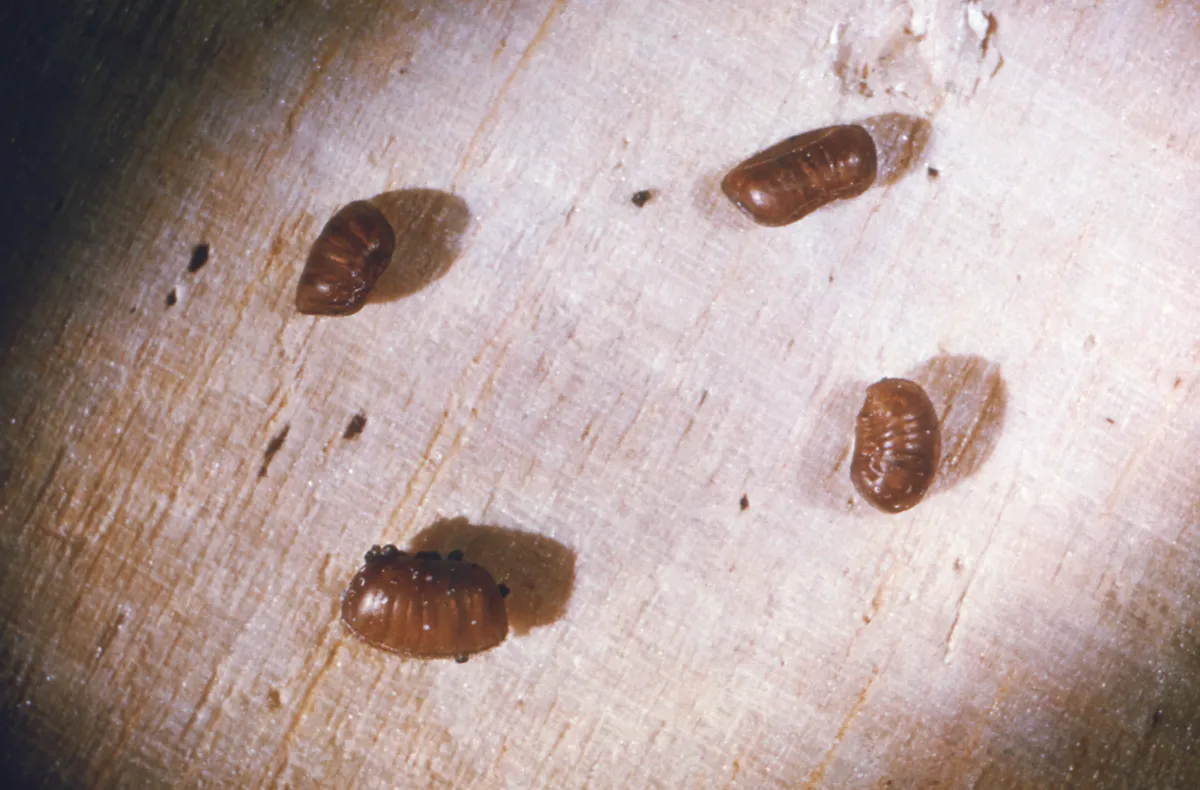
Penn State says a female carries each capsule for about 30 hours before fastening it in a hidden spot (Ebeling gives 24 to 36 hours) and makes about 14 in her adult life, each holding an average of 13 eggs. What cockroach eggs look like compares the cases of every common species.
What are the signs of brown-banded cockroaches?
Tiny droppings, glued egg cases, and roaches or feeding damage away from the kitchen. CDC's 1964 pictorial key to droppings gives average dry brown-banded droppings as about 1/32 inch, oval, pointed and ridged, half the length of German cockroach droppings and the smallest in the key; it advises judging groups, not single droppings. What roach poop looks like shows each species' droppings.
Their food leaves marks too. UC IPM says they prefer starchy foods such as the glue on stamps and envelopes, and Penn State lists feeding signs on stamps, envelopes, older book bindings, draperies and occasionally wallpaper. The guide to signs of cockroaches covers shed skins, smears and the musty smell.
Sticky traps show where they are. Penn State advises traps against a wall or in a corner of a floor, shelf or drawer, at ten or more sites for a week; with this species, include upper cabinets. A separate guide explains how sticky traps and bait stations do different jobs.
How do brown-banded cockroaches spread to new homes?
By being carried, often as egg cases glued to furniture and appliances, a habit Ebeling says spreads the species over great distances. UC IPM advises checking appliances, furniture, boxes and things recently in storage for egg cases as they come into a building, and removing any you find. Penn State notes that cockroaches also arrive in boxes, grocery bags and suitcases, and Texas A&M says that once established, they can move from one apartment to the next.
Warmth helps decide whether they stay: Ebeling wrote in 1975 that brown-banded infestations generally occur only in homes kept warmer than most people find comfortable. Where cockroaches come from covers every route in and how to close it.
Are brown-banded cockroaches dangerous?
They can carry germs onto food and trigger allergies and asthma, like other indoor cockroaches. The EPA's guide to asthma triggers says cockroach droppings or body parts can trigger asthma and that proteins in their feces and saliva can cause allergic reactions or asthma symptoms in some people. Kentucky adds that many people are allergic to cockroach excrement and shed skins.
UC IPM reports that indoor cockroaches have been identified as risk factors for asthma developing in children, with allergen levels tracking cockroach numbers. Penn State says bacteria and protozoa that cause diseases such as gastroenteritis and diarrhea can be carried on cockroaches' legs and bodies and deposited on food and utensils.
How do you get rid of brown-banded cockroaches?
Identify them first and treat where they actually live, because the usual kitchen approach falls short: UC IPM says brown-banded cockroaches are especially difficult to control with baits, and Penn State says residual sprays and aerosol foggers are of little value against them and may disperse them. In order:
- Confirm the species. Check for bands or stripes, and trap at ten or more spots for a week, shelves and drawers included.
- Search high and inside things. Upper cabinets and closets, behind pictures, under and inside furniture, and around electronics and appliance motors.
- Remove egg cases glued under furniture, in appliance motors or in boxes, as UC IPM advises, and check what you bring in.
- Follow a full plan. The step-by-step plan for getting rid of cockroaches covers bait placement for this species, cleanup and sealing, with a Canadian edition for readers in Canada.
This guide is general educational information, not medical advice. If you have symptoms or concerns after a bite or exposure, contact a healthcare provider.
Frequently Asked Questions
Why do I have brown-banded roaches in my house?+
Often because they or their egg cases came in on something. Walter Ebeling's Urban Entomology says females glue their egg cases to furniture and other household objects, which spreads the species over great distances, and UC IPM advises checking appliances, furniture, boxes and stored items for egg cases as they come into a building. Warmth helps them settle in: UC IPM says the species prefers about 80°F, and Ebeling found infestations generally only in homes kept warmer than most people find comfortable.
Are brown-banded roaches as bad as German roaches?+
They are less common and slower to multiply, but they hide all over the home and can be hard to bait. The University of Kentucky calls them far less common than German cockroaches, and UC IPM puts a brown-banded female and her offspring at over 600 cockroaches a year, against over 30,000 for a German female. UC IPM also says brown-banded cockroaches are especially difficult to control with baits, and Penn State says strategies that work on other cockroaches will not be effective against them. The EPA's warnings about cockroach allergens and asthma apply to both.
How hard is it to get rid of brown-banded cockroaches?+
UC IPM and Penn State both warn that it can be hard to control. UC IPM says brown-banded cockroaches are especially difficult to control with baits, and Penn State says residual sprays and aerosol foggers are of little value and may disperse them, making control difficult and lengthy, though it calls baiting effective where they hide. Kentucky and Penn State stress identifying the species first, because its hiding places differ from the German cockroach's: upper cabinets, closets, furniture and electronics rather than kitchen cracks alone.
Can brown-banded cockroaches fly?+
Only the males. UC IPM says adult males sometimes fly when disturbed, especially at temperatures above 85°F, and that females cannot fly. Penn State says adult males fly readily when disturbed, and Clemson says males can fly in a warm environment. The female's wings stop short of the tip of her abdomen. A small tan roach that flies to a porch light from outdoors may be an Asian cockroach, which the University of Florida says looks very much like a German cockroach but flies.
How long do brown-banded cockroaches live?+
Adults live for months. In a 1940 laboratory study reported in Walter Ebeling's Urban Entomology, adults lived 131 to 315 days, 206 on average, and Penn State gives the adult female's life span as 13 to 45 weeks. Reaching adulthood takes a while too: Penn State puts the egg stage at 37 to 103 days, depending on temperature, and the nymph stage at 8 to 31 weeks, and the University of Florida gives about 160 days on average from egg to adult.
What are brown-banded roaches attracted to?+
Warmth and dry, out-of-the-way places. UC IPM says the species prefers about 80°F, 5 to 10°F warmer than the German cockroach, and Texas A&M says it appears to need less water than other cockroaches and occupies drier locations in a building. Penn State finds it nearer the ceiling than the floor and away from water, in spots such as upper cabinet walls, closets, dressers and the space behind picture frames. For food, UC IPM says it prefers starchy foods.
Does one brown-banded cockroach mean an infestation?+
One is a reason to check rather than proof. It may have arrived on furniture, a box or an appliance, but UC IPM says this species lives and breeds entirely indoors, so look for more. Set sticky traps against walls and in corners of floors, shelves and drawers at ten or more spots for a week, as Penn State advises, and look for egg cases glued under furniture and drawers and for tiny droppings in upper cabinets and closets.
What kind of roach is tan in color?+
Several small roaches are tan. Clemson describes the German cockroach as pale brown or tan with two parallel black streaks behind the head, and UC IPM describes male brown-banded cockroaches as golden tan, with light-colored bands on the wings and body. Outdoors, the Asian cockroach looks very much like a German cockroach but flies to lights, according to the University of Florida, and Texas A&M describes male Turkestan cockroaches as brownish yellow. Any cockroach is white for a few hours after it molts.
What do brown-banded cockroaches eat?+
They prefer starchy foods. UC IPM names the glue on stamps and envelopes, and Penn State says they feed on a wide variety of materials, including glue or paste, starch and certain dyes, leaving signs of feeding on stamps, envelopes, older book bindings, draperies and occasionally wallpaper. Penn State adds that they have been known to chew nylon stockings, presumably for body oils and skin flakes. Texas A&M says they appear to need less water than other cockroaches.
Do brown-banded cockroaches live in electronics?+
They often hide in and around them. UC IPM lists crevices in or near electrical appliances among their favored hiding places, Penn State names refrigerator motor housings, clocks and radios, and Clemson says their egg cases are often glued in furniture and appliances, including TVs, microwaves, computers and radios. UC IPM also says the species prefers warm places, about 80°F, and advises checking appliances brought into a building for egg cases, including inside their motors.
Sources
- Pest Notes: Cockroaches (UC ANR Publication 7467, updated 12/2019) — University of California Statewide IPM Program (A. M. Sutherland, D. H. Choe and M. K. Rust)
- Brown-banded Cockroaches — Penn State Extension (S. Jacobs)
- Brown Banded Cockroach, Supella longipalpa — Urban and Structural Entomology Program, Texas A&M University
- ENTFACT-614: Cockroach Elimination in Homes and Apartments — University of Kentucky Department of Entomology (M. F. Potter)
- Cockroach (Roach) Control (HGIC 2449) — Clemson Cooperative Extension Home & Garden Information Center (E. P. Benson and P. A. Zungoli)
- Brownbanded cockroach, Supella longipalpa (UF/IFAS Cockroach Photographs CD-ROM, 2005) — University of Florida, Entomology and Nematology Department
- Urban Entomology, Chapter 6: Pests On or Near Food (Walter Ebeling, 1975) — University of California, Riverside, Department of Entomology
- ENTO-037: Cockroach Biology and Management — Texas A&M AgriLife Extension Service (W. Brown, M. Merchant and K. Siders, 2017)
- ENY-214/IG082: Cockroaches and Their Management — University of Florida IFAS Extension (D. Branscome, P. G. Koehler and B. E. Bayer)
- Wood Cockroaches — Penn State Extension (M. J. Skvarla)
- Domestic Rodents and Cockroaches: Pictorial Key to Droppings (H. G. Scott and M. R. Borom, 1964), page 183 of Pictorial Keys: Arthropods, Reptiles, Birds and Mammals of Public Health Significance — Centers for Disease Control and Prevention (then the Communicable Disease Center), via CDC Stacks
- Asthma Triggers: Gain Control — US Environmental Protection Agency
How this guide was made: it was researched and drafted with AI assistance from the sources listed above. A second, independent AI pass then checked each factual claim against those sources. Found an error? Email support@buzzskito.ca.