
Published by BuzzSkito Mosquito & Tick Control
Published October 16, 2026 · Drafted with AI assistance and fact-checked against the sources listed below
What do cockroach eggs look like?
Cockroach eggs look like a small, hard, brown capsule, because the capsule is all you can see of them. The female packs her eggs into an egg case called an ootheca (oh-oh-THEE-kah), which Texas A&M AgriLife Extension describes as bean-shaped. In Urban Entomology, a 1975 textbook that UC Riverside's entomology department hosts online, Walter Ebeling explains that cockroaches lay their eggs in a hardened, purse-shaped case rather than singly, with the eggs in two parallel rows in all the common species.
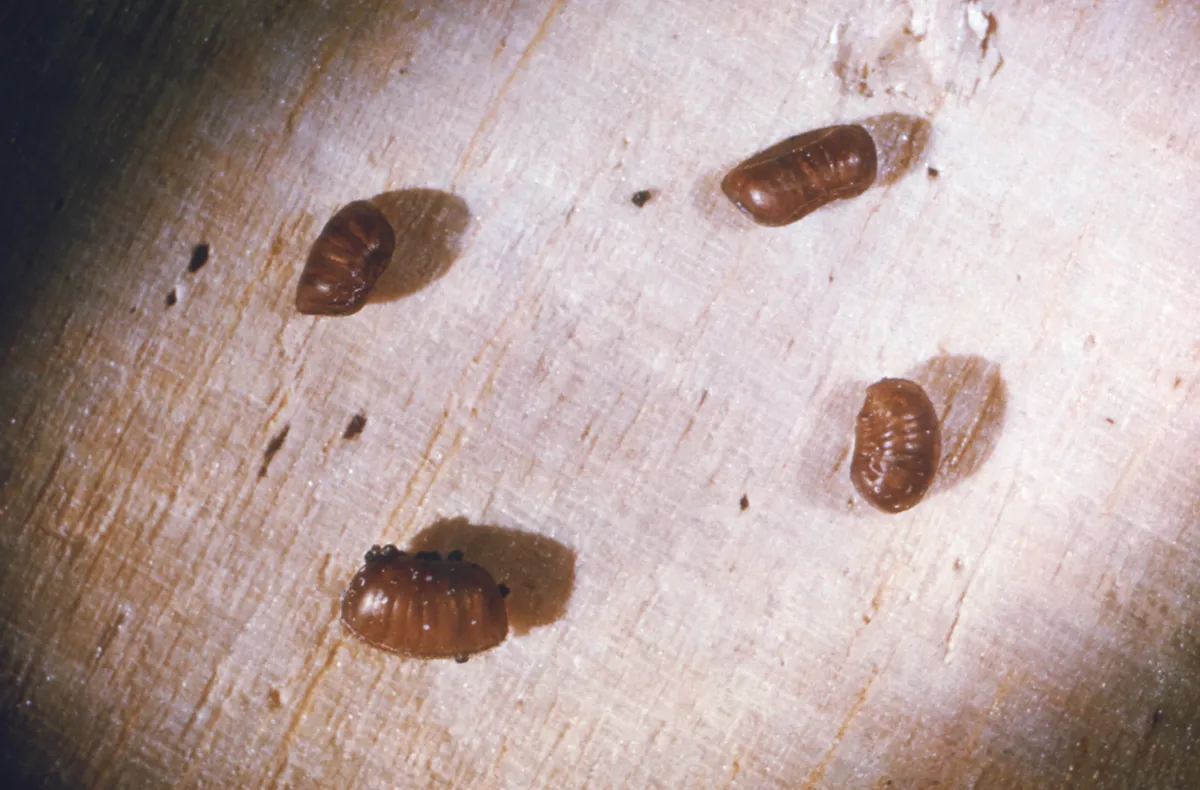
At life size a case is about 1/4 inch long for German and brown-banded cockroaches and about 3/8 inch for American, Oriental and smokybrown cockroaches, according to the University of California's Pest Notes on cockroaches (UC IPM). The University of Kentucky's cockroach fact sheet calls brown-banded capsules pea-sized. The photos on this page are close-ups, so a real case looks far smaller.
Up close, look for lines or shallow indentations along the sides, which mark where the eggs lie. Ebeling describes divisions on the German cockroach's case that match the eggs inside, and only faint ones on the American cockroach's, whose upper ridge carries a row of small teeth, one for each egg.
Color changes with age. Ebeling describes a new German cockroach case going from white to pink within hours, then light brown and finally chestnut within a day or two, and UC IPM says an American cockroach's turns from brown to black in 1 to 2 days. UC IPM describes only the large species' cases as dark brown to black, so a dark case most likely belongs to one of them, all profiled in the complete guide to cockroaches in US homes.
How do the egg cases differ from one cockroach species to the next?
They differ in size, color, egg count and above all in what the female does with the case: UC IPM says the German cockroach carries hers for most of the roughly 30-day incubation, while the other household species soon leave theirs in a protected spot.
| Species | Case at life size | Eggs per case | What the female does with it | Time to hatch |
|---|---|---|---|---|
| German | 1/4 to 5/16 inch; light brown | Usually 30 to 40, up to 48 | Carries it until a day or two before hatching | About a month |
| Brown-banded | 1/4 inch or less; light to reddish brown | Up to 18; about 13 hatch on average | Carries it a day or two, then glues it, often in a cluster | About 7 weeks at 82°F; about 14 weeks at 72.5°F |
| American | 1/3 to 3/8 inch; brown, then black | About 12 to 16 | Carries it hours to 6 days, then glues or drops it near food | About 6 weeks to 2 months or longer |
| Oriental | About 3/8 inch; reddish brown, then dark brown to black | About 16 | Carries it 12 hours to 5 days, then leaves it in a sheltered spot | 42 to 81 days |
| Smokybrown | About 3/8 inch; dark brown to black | Sources disagree (see below) | Carries it about a day, then drops it | 24 to 70 days |
From the sources linked on this page, which differ on some sizes, counts and times; the brown-banded counts and times come from a 1940 study that Ebeling reports. Times shorten as temperatures rise.
German cockroach egg cases
Rutgers University's German cockroach fact sheet measures the case at about 5/16 inch long, 1/8 inch high and 5/64 inch wide, with about 40 eggs, and says a female makes 5 to 8 of them. NC State Extension says she holds each one at the tip of her abdomen until just before the eggs hatch, or sometimes while they hatch, and Ebeling calls an abundance of females with cases attached characteristic of a German cockroach infestation.
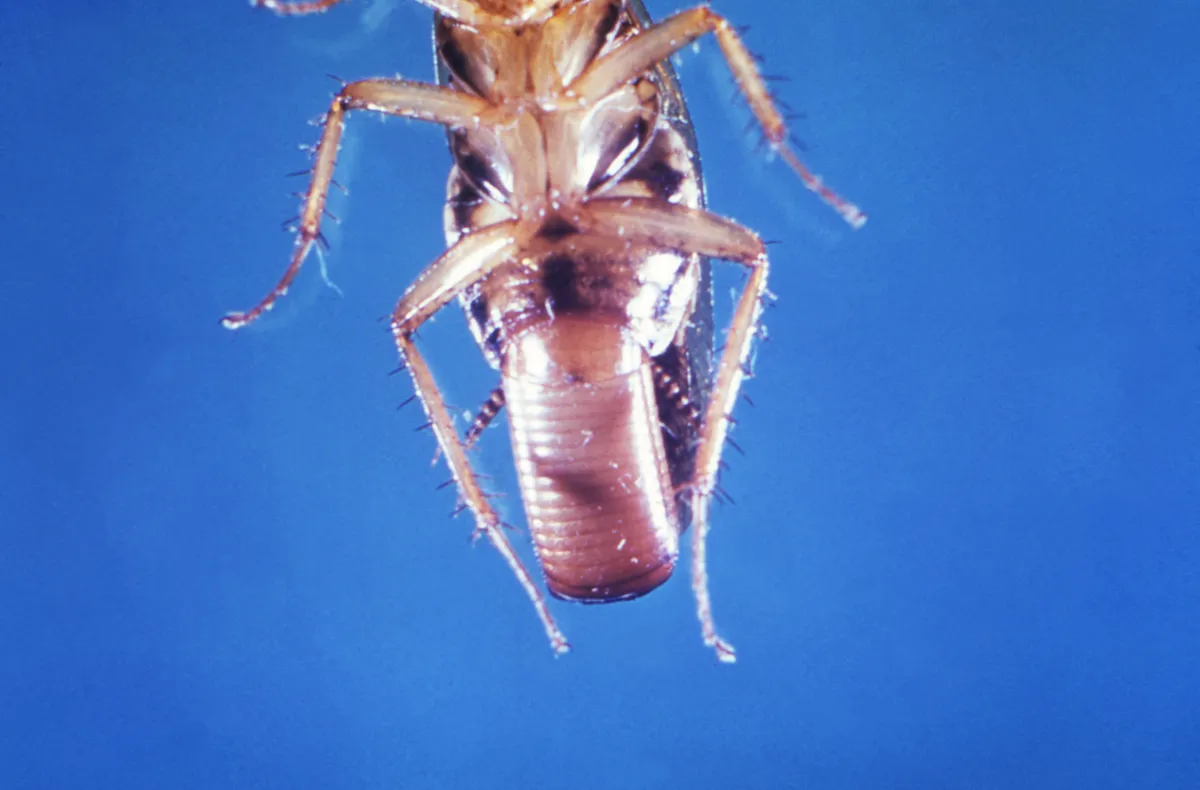
The field cockroach, an outdoor look-alike that UC IPM says is often mistaken for the German cockroach, also carries its case until the eggs are ready to hatch. The German cockroach guide covers the adults and how to control them.
Brown-banded cockroach egg cases
These are the cases in the photo at the top of this page, the smallest of the common species at about 5/32 by 1/10 inch (4 by 2.5 mm) by Ebeling's figures. He says the female carries each one for 24 to 36 hours, then glues it, usually in a cluster, to furniture, walls, bedding or the backs of pictures; Kentucky names the undersides of dressers and tables. A few days later, Ebeling writes, the eggs show greenish through the wall, and shortly before hatching the eyes of the young are visible.
American cockroach egg cases
The University of Florida's American cockroach profile gives a case about 1/3 inch long and 3/16 inch high with about 16 eggs, and says the female leaves it near food, sometimes gluing it down with a secretion from her mouth. UC IPM gives about 3/8 inch and about 12 young per case.
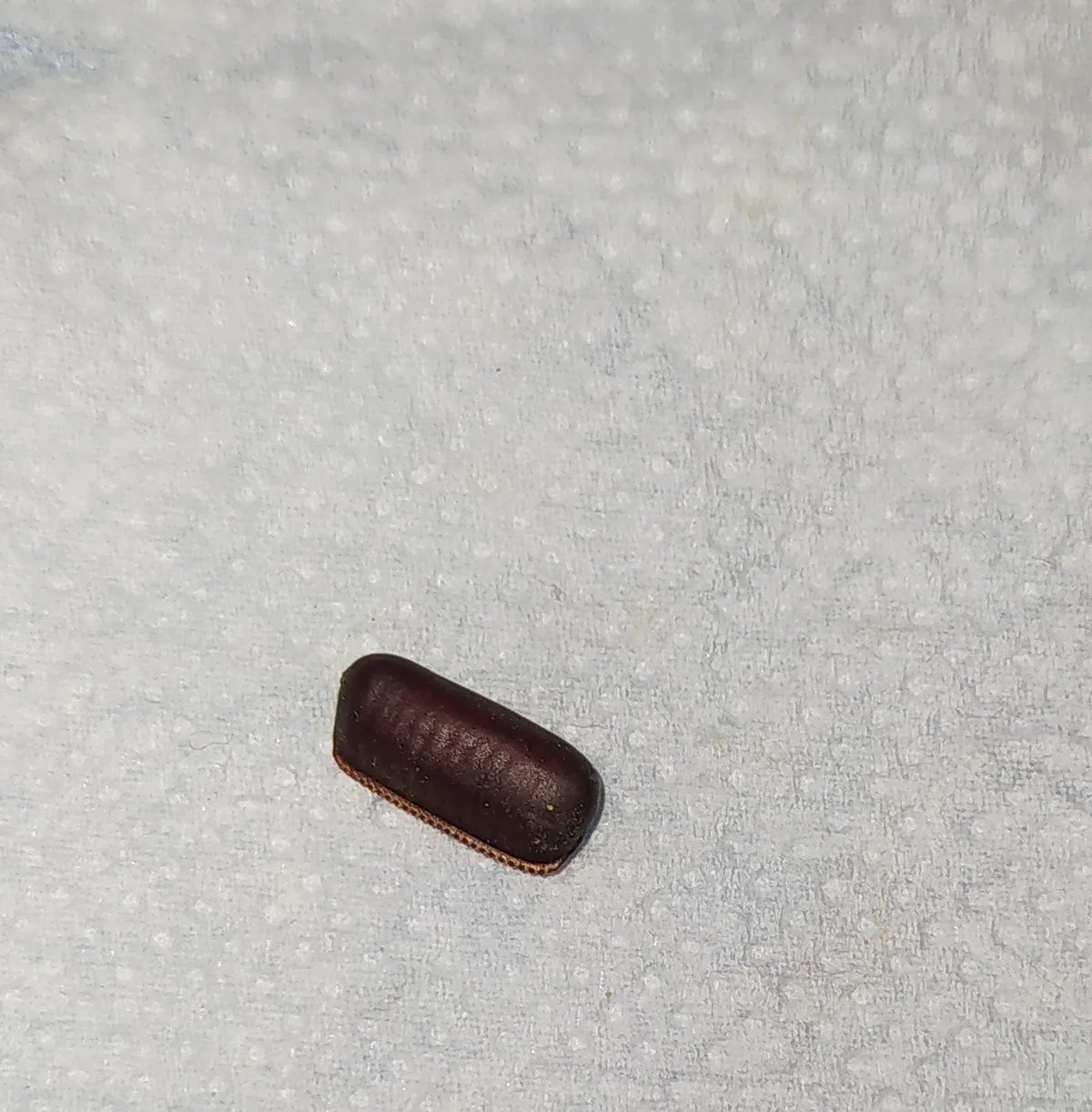
Ebeling says a female given the chance hides her case in a crevice or buries it in soft wood or debris. Texas A&M notes that the American cockroach is also called the waterbug or palmetto bug, a nickname the palmetto bug guide sorts out.
Oriental cockroach egg cases
UC IPM describes a dark red-brown case about 3/8 inch long, left in debris or food in a sheltered place. Ebeling, who gives it as about 3/8 by 3/16 inch (10 by 5 mm), says it starts reddish brown and soft and turns black, hard and brittle. The University of Florida's Oriental cockroach profile counts about 16 eggs lined up two by two.
Smokybrown cockroach egg cases
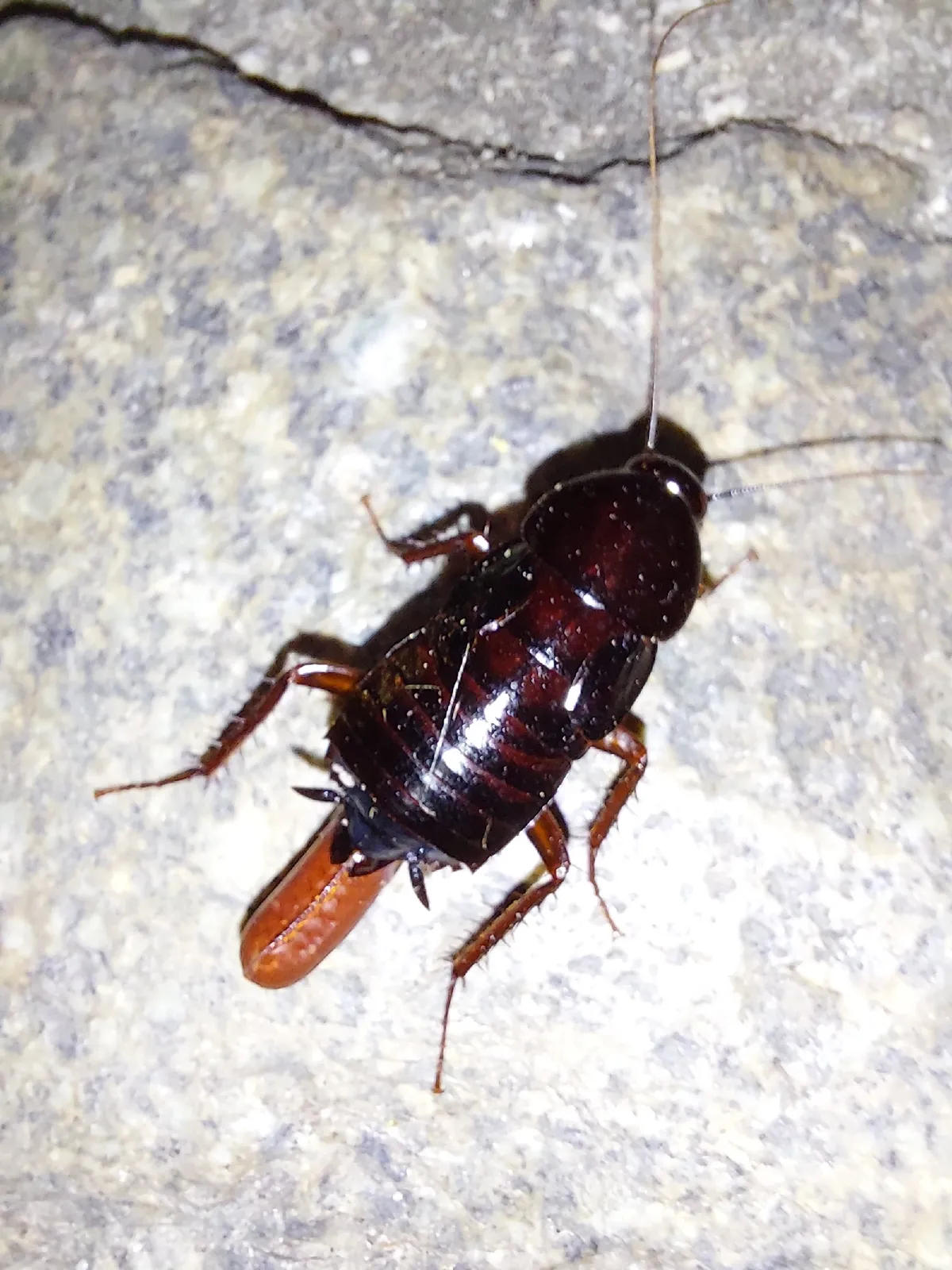
The smokybrown figures in the table are UC IPM's, but other sources differ: UC IPM says about 40 to 45 nymphs hatch from a case, while Mississippi State University Extension gives 12 to 24 eggs per case, and normally at least 6 weeks to hatch, for the smokybrown, brown and American cockroaches as a group. It adds that telling these large species apart matters less than telling them from the German cockroach, since their habits and control are similar.
What else looks like cockroach eggs?
Droppings, seed-like clusters and praying mantid egg cases are the things to rule out. A cockroach case is a hard capsule with lines or teeth marking the eggs inside.
| What you found | Size | What it looks like |
|---|---|---|
| Cockroach egg case | About 5/32 to 3/8 inch | Hard brown capsule; lines or small teeth mark the eggs |
| German cockroach droppings | Tiny specks | Like crushed pepper, stuck to surfaces, or dark smears |
| Cockroach droppings | Flyspeck size up to mouse-dropping size | Pellets that appear to have ridges |
| Mouse droppings | Typically under 1/4 inch | Relatively smooth, often pointed at one end |
| Praying mantid egg case | 1/2 to 1 1/4 inches | Foam-like, tan to light brown, usually outdoors |
Sources are linked in the paragraphs below.
Start with droppings. Texas A&M likens German cockroach droppings to crushed pepper, and Ebeling says cockroach droppings run from flyspeck size up to the size of mouse droppings. Cornell University's integrated pest management program notes that cockroach droppings appear to have ridges, while rodent droppings are relatively smooth, often pointed at one end and, for mice, typically under 1/4 inch. If yours look like a rodent's, see what mouse droppings look like.
A cluster of brown-banded cases can pass for seeds: Ebeling recounts a homeowner describing them as clusters of seeds. Their spot gives them away, glued to furniture, walls or ceilings, and each one is ridged where the eggs lie.
Outdoors, consider a praying mantid. Kansas State University's praying mantid fact sheet says the female covers 200 to 300 eggs with froth that hardens into a foam-like case, also called an ootheca, 1/2 to 3/4 inch long for the Carolina mantid and 1 to 1 1/4 inches for the Chinese mantid. The cases sit on branches, walls, fences, posts, the sides of houses and eaves from November through April. Bring one into a house at 70°F or warmer and, K-State says, 50 to 200 young mantids can emerge in four to six weeks.
How do you check an egg case you found?
Seal it in a jar and run these checks in order. If you caught an insect rather than a case, the guide to bugs that look like cockroaches covers the beetles, crickets and outdoor roaches mistaken for pest cockroaches.
Checks for a suspected cockroach egg case
- Size. Lay a ruler marked in inches, or a coin, beside the jar. About 1/4 inch or less fits a brown-banded case, 1/4 to 5/16 inch a German case, about 1/3 to 3/8 inch a large species, and 1/2 inch or more with a foam-like surface a praying mantid's.
- Color. Light brown points to a German or brown-banded cockroach; dark brown to black, to one of the large species.
- Surface. Lines across the sides or small teeth along the top mark eggs inside. A smooth pellet pointed at one end is more likely a mouse dropping.
- Where it was. On a female, glued in a cluster under furniture, or near a drain or in a damp basement: each points to a different species above.
- Holes and splits. A small, round, jagged hole near one end means a wasp came out. A German cockroach case split open along the top has hatched.
Where do cockroach egg cases turn up?
In dark, protected places near food, water or warmth: UC IPM says egg cases are, in most cases, deposited in dark, moist crevices and other protected areas. Exactly where depends on the species.
- German cockroach. On the female until the case is about to hatch. The University of Nebraska-Lincoln's cockroach management manual says she then leaves it in a sheltered spot, often away from other cockroaches that might eat the young.
- Brown-banded cockroach. Glued to hidden surfaces: ceilings, walls, closets, the backs of pictures and the undersides of furniture.
- American cockroach. Near food in damp, hidden spots; indoors, the UNL manual lists basements, boiler rooms, wet floor drains and the areas under water heaters and around pipes.
- Oriental cockroach. In debris or food in sheltered spots, often at ground level in basements, crawl spaces and around floor drains, where the UNL manual says it is common indoors.
- Smokybrown cockroach. Mostly outdoors, in the ground cover, mulch, palm fronds, soffits, attic eaves and tree holes that Texas A&M lists as its habitats in the humid South.
Cases also ride in on belongings. UC IPM advises checking appliances, furniture, boxes and items from storage for egg cases and removing any you find, and Ebeling says the brown-banded cockroach's habit of gluing its cases to furniture spreads the species over great distances. Where cockroaches come from covers the other routes in.
What does finding a cockroach egg case mean?
Finding roach eggs usually means cockroaches have been breeding nearby, and the kind of case, and whether it has hatched, tells you more. Ebeling lists empty egg cases among the signs of an infestation, and UC IPM uses egg cases to choose spots for monitoring traps.
- A female carrying a light brown case, or a loose one in a kitchen or bathroom. German cockroaches, with young about to hatch or already out, since the female drops her case only a day or two before hatching. NC State notes that one female carrying a case can start an infestation.
- A loose German case that never hatches. Rutgers says a case that comes off the female early, by hand or after she is exposed to insecticide, typically does not hatch unless it was within one to two days of hatching.
- Clusters under furniture or high on walls. Most likely brown-banded cockroaches, either living in the room or carried in on the furniture.
- A dark case about 3/8 inch long. One of the large species, which Mississippi State says breed outdoors and indoors in dark, protected spaces such as wall voids, attics, crawl spaces and basements.
- A small, round, jagged hole near one end. A parasitic wasp came out instead of cockroaches. The University of Florida's ensign wasp profile says the larva of Evania appendigaster devours all the eggs in an Oriental, American or Australian cockroach's case, and the UNL manual notes that finding these wasps may point to a larger cockroach problem.
Egg cases also help explain why roaches come back after a treatment. The UNL manual calls them impenetrable to insecticides, and UF notes that Oriental cockroaches often leave theirs in cracks that can be very difficult to treat, or that the treatment has broken down by the time the young hatch. UC IPM adds that females carrying cases feed very little and avoid open spaces, so a bait is less likely to affect them right away.
What hatches from a cockroach egg case?
Nymphs hatch: tiny, wingless cockroaches. Ebeling describes the German cockroach's case splitting open at the top once the developing young press hard enough, and the nymphs wriggling out, which UC IPM says sometimes happens while the female still carries it. NC State puts a newly hatched German nymph at about 1/8 inch (3 mm), already shaped like a small, wingless adult, and Texas A&M says the nymphs carry two dark stripes down the thorax and abdomen.
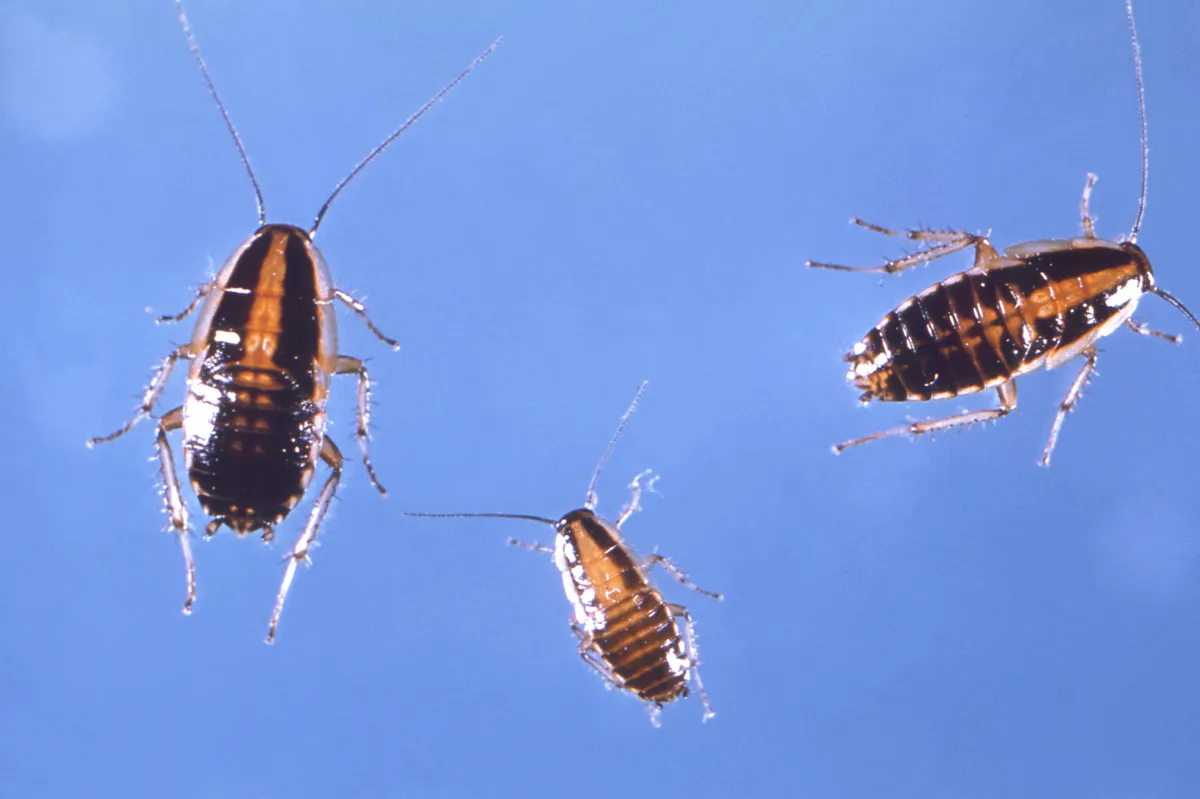
Each species' young look different, and what baby cockroaches look like shows them species by species, along with the bed bugs and beetles they get confused with.
What should you do with cockroach egg cases you find?
Remove them, identify the cockroach and treat the infestation behind them; the UNL manual points out that vacuuming does not kill cockroaches, so it has to be combined with other measures. In order:
- Keep one. Seal a case in a jar and compare it with the tables above.
- Remove the rest. UC IPM says to remove any egg cases you find. The UNL manual recommends a vacuum with a HEPA filter, with the contents sealed in a bag right away and put in a freezer or an outdoor trash container.
- Set sticky traps. UC IPM calls them the best way to detect and monitor cockroaches: place them where floors meet walls and near where the cases were, and check them daily for several days. A separate guide explains how sticky traps and bait stations do different jobs.
- Treat the species you have. For German cockroaches, follow the German cockroach control program; for the large species, the cockroach reference's section on outdoor cockroaches covers sealing and yard work. A bait-first plan for clearing cockroaches walks through the steps.
- Keep the traps out. Cases hidden during a treatment can hatch later, as UF notes for the Oriental cockroach. For German cockroaches, Rutgers advises follow-up inspections and treatments every 2 to 4 weeks until no cockroaches have been seen or caught in sticky traps for at least a month.
Frequently Asked Questions
Can you see cockroach eggs with the naked eye?+
You can see the egg case but not the eggs inside it. The case is about 1/4 to 3/8 inch long, depending on the species, according to UC IPM, so it is easy to spot on a light surface and easy to miss in a dark crack. The eggs sit in two rows inside its hard wall. Ebeling notes one partial exception: a few days after a brown-banded cockroach case forms, the eggs show greenish through the wall, and shortly before hatching the eyes of the young are visible.
How many eggs are in a cockroach egg case?+
It depends on the species. Rutgers says a typical German cockroach case holds about 40 eggs, and Ebeling gives 30 to 40 with up to 48. The University of Florida counts about 16 in an American cockroach case, where UC IPM gives about 12 young, and about 16 in an Oriental cockroach case. Brown-banded cases hold up to 18, with about 13 hatching on average in the 1940 trials Ebeling reports. For the smokybrown cockroach the sources disagree, from 12 to 24 eggs for the large roaches as a group to 40 to 45 young per case.
How long do cockroach eggs take to hatch?+
From about three weeks to more than three months, depending on the species and the temperature. UC IPM gives about 30 days for the German cockroach, whose female carries the case for most of that time, about 2 months or longer for the American cockroach and 24 to 70 days for the smokybrown cockroach. The University of Florida gives 42 to 81 days for the Oriental cockroach, and Ebeling reports a 1940 study's averages of about 49 days at 82°F and about 96 days at 72.5°F for brown-banded cockroach eggs.
Will a German cockroach egg case hatch if it falls off the female?+
Usually not, unless it was nearly ready. Rutgers says that a case detached from the female, either by hand or after she is exposed to insecticide, typically will not hatch unless it is within one to two days of hatching. Ebeling explains why: German cockroach eggs depend on moisture supplied by the mother and dry out if the case is removed before its normal time. He adds that the cases of the other common species are remarkably resistant to drying out.
Do bug sprays kill cockroach eggs?+
Not reliably. The University of Nebraska-Lincoln's cockroach management manual describes cockroach egg cases as impenetrable to insecticides, and the University of Florida notes that Oriental cockroaches often leave their cases in cracks that can be very difficult to treat, or that the treatment has broken down by the time the young hatch. The extension guides cited here pair treatment with removing the cases and monitoring with sticky traps afterward.
Can cockroach eggs come into a home on furniture or boxes?+
Yes. UC IPM advises checking appliances, furniture, boxes and items that were recently in storage when they come into a building, and looking for egg cases glued to the undersides of furniture, in refrigerator and other appliance motors and in boxes. Ebeling notes that the brown-banded cockroach's habit of gluing its cases to furniture and other household objects spreads the species over great distances. Remove any cases you find before the item comes inside.
Sources
- Cockroaches (Home and Landscape) — University of California Statewide IPM Program
- Urban Entomology, Chapter 6: Pests On or Near Food (Walter Ebeling, 1975) — University of California, Riverside, Department of Entomology
- ENTO-037: Cockroach Biology and Management — Texas A&M AgriLife Extension Service
- ENTFACT-614: Cockroach Elimination in Homes and Apartments — University of Kentucky Department of Entomology
- FS1322: German Cockroach — Rutgers New Jersey Agricultural Experiment Station
- Biology and Behavior of the German Cockroach — NC State Extension (A. Wada-Katsumata and C. Hayes, 2025)
- American Cockroach, Periplaneta americana (Linnaeus) (EENY141/IN298) — University of Florida IFAS Extension
- Oriental Cockroach, Blatta orientalis Linnaeus (EENY159/IN316) — University of Florida IFAS Extension
- Control Cockroaches in and Around Your Home (Publication 3346) — Mississippi State University Extension Service
- Cockroach Management Manual (First Edition, November 2021) — Nebraska Extension, University of Nebraska-Lincoln (K. Koch, J. Green and K. Chapman)
- A Cockroach Egg Parasitoid, Evania appendigaster (Linnaeus) (EENY-162/IN319) — University of Florida IFAS Extension
- Identifying Your Pest – with Poop? — Cornell University Integrated Pest Management (Think IPM blog, Matt Frye, 2014)
- Praying Mantids (MF3593) — Kansas State University Research and Extension (Raymond A. Cloyd, 2021)
How this guide was made: it was researched and drafted with AI assistance from the sources listed above. A second, independent AI pass then checked each factual claim against those sources. Found an error? Email support@buzzskito.ca.