
BuzzSkito Mosquito & Tick Control Specialists · Published July 19, 2026 · Updated October 20, 2026
Quick Answer
Bed bug bites usually appear as small, red, itchy welts arranged in a rough line or zigzag cluster of three to five — the classic “breakfast, lunch, dinner” pattern — on skin left exposed during sleep, such as the face, neck, arms, and hands. Unlike mosquito bites, they can take anywhere from hours up to 14 days to show, and the bite alone can never confirm the culprit — only finding the bugs or their traces can.
- Bites typically appear in lines or clusters of 3–5 welts, each about 0.2–2 cm (1/16–3/4 in) across — not scattered singles.
- Per the CDC, bite marks can take up to 14 days to develop in some people; most reactors see them within 1–3 days.
- Most bites heal within 1–2 weeks; Health Canada warns that scratching can cause secondary skin infection.
- Roughly 30% of people never react to bed bug bites at all, so unmarked skin does not rule out an infestation.
- Adult bed bugs are 4.5–5.5 mm (about 3/16 in) — apple-seed size — and feed for 3–10 minutes once every 3–7 days.
- Neither the CDC nor Health Canada lists bed bugs as known transmitters of human disease.
— BuzzSkito · licensed mosquito & tick control professionals
A note on who we are: BuzzSkito is a GTA mosquito & tick control service — we don’t treat bed bugs. This guide is independent product research from our publishing team for Canadian homeowners, focused on what’s actually available and PMRA-legal in Canada.
Waking up with a row of itchy welts triggers the same three questions for everyone: what bit me, is it bed bugs, and how do I make sure? The frustrating truth — acknowledged by dermatologists and by public health agencies on both sides of the border — is that no bite mark is distinctive enough to diagnose on its own. What you can do is read the pattern, the timing, and the context, then confirm or rule out bed bugs with physical evidence. This guide walks through exactly that.
This is general information, not medical advice. If you are concerned about bites, an allergic reaction, or a skin infection, see a healthcare provider. In an emergency, call your local emergency number.
As an Amazon Associate I earn from qualifying purchases. BuzzSkito only points to products we would genuinely use or recommend, at no extra cost to you.
If you want the answer before you finish reading: no cream and no photo can confirm what bit you, but a set of interceptor cups under each bed leg for two weeks can.
Bed bug bites or something else? Quick ID
| Bite | What you see | Where on the body | Timing and context |
|---|---|---|---|
| Bed bug | Raised, itchy welts in a rough line or zigzag cluster of 3–5, each 0.2–2 cm (about 1/16–3/4 in) | Skin left uncovered in bed: face, neck, shoulders, arms, hands | From about an hour to 14 days after the bite, most often 1–3 days; after sleeping, in any season |
| Mosquito | Scattered single welts | Whatever was uncovered outdoors | Within minutes, after time outdoors in warm weather |
| Flea | Tiny red spots with a lighter halo, in loose groups | Ankles, lower legs and waistline | Itchy within minutes; usually pets in the home, now or before you moved in |
| Chigger | Intensely itchy welts | Along sock lines and waistbands | After time in grass or brush, not after a night’s sleep |
| Tick | The tick itself, still attached to the skin | Wherever it attached | A different situation: ticks carry real disease risk |
From the comparisons further down this page, with the up-to-14-day delay from the CDC. The EPA adds that rashes such as eczema or a fungal infection, and hives, can also look like bites. Reactions vary from person to person, so no bite pattern confirms bed bugs on its own.
What do bed bug bites look like?
Bed bug bites look like small, raised, itchy welts arranged in a rough line, curve, or tight zigzag cluster — most often three to five marks, a pattern so common it earned the nickname “breakfast, lunch, dinner.” Each welt is typically 0.2–2 cm (about 1/16–3/4 in) across, red on lighter skin and often purple, plum, or dark brown on deeper skin tones, sometimes with a tiny darker point at the centre where the bug fed.
The line pattern has a simple mechanical explanation: a single bug often probes several spots in one feeding session — it gets disturbed when the sleeper shifts, detaches, and reattaches a centimetre or two away. Bugs also feed along the edge where bedding or clothing meets exposed skin, so the row of welts frequently traces a collar line, a waistband, or the edge of a sheet.
Location is the other half of the picture. Bed bugs cannot bite through fabric, so welts concentrate on skin that was uncovered during sleep: the face, neck, shoulders, arms, hands, and lower legs. Bites across areas that were snugly covered all night count as evidence against bed bugs. Reactions vary enormously person to person — from nothing at all to large hives or small blisters — which is why two people sharing a bed can wake up looking like they slept in different houses.
What else could have bitten you?
If the other suspect is a mosquito, the separators are pattern, timing, and context: bed bug bites arrive in lines or clusters after indoor sleep and can lag the actual bite by days, while mosquito bites are scattered singles that welt up within minutes of time outdoors. That comparison has its own decision guide — the five tells that separate bed bug bites from mosquito bites — which runs the full side-by-side, including season, and the different plan each answer leads to.
Two other lookalikes are worth ruling out. A tick is a different situation entirely — it stays attached to the skin and carries real disease risk — and our tick vs bed bug guide covers that comparison in full. Very small bed bug nymphs bite too, and their bites are easy to attribute to something else; the guide to baby bed bugs shows what to look for at 1–4.5 mm.
For the wider field, our picture guide to what bit you sets bed bug bites beside mosquito, flea, chigger, no-see-um and tick bites and bee, wasp and fire ant stings, sorted by pattern, place on the body and timing.
And if the bites keep coming but a careful search turns up no bed bugs at all, our guide to bites with no bed bugs in sight works through the other night-time biters, from fleas and mites to bat bugs, and the rashes that only look like bites.
Bed bug bites vs flea bites
The giveaway is altitude: flea bites cluster around the ankles and lower legs — the height a flea can jump to from the floor — while bed bug bites favour the upper body and face, wherever skin was exposed in bed. Flea bites are also smaller, with a distinctive look: a tiny red spot with a lighter halo around it, and a sharp itch that starts fast.
| Feature | Bed bug bites | Flea bites |
|---|---|---|
| Typical location | Face, neck, arms, hands — upper body | Ankles, lower legs, waistline |
| Appearance | Raised welts, 0.2–2 cm, in lines of 3–5 | Small red dots with a pale halo, in loose groups |
| Itch timing | Delayed — hours to days | Fast and sharp, often within minutes |
| Usual context | After sleeping; travel, used furniture, multi-unit housing | Pets in the home, or a recently vacated home with pets before you |
| Can you see the insect? | Hides in seams and cracks; visible with targeted inspection | Jumping specks on socks and pet fur |
One more lookalike worth ruling out if the bites showed up after time in grass or brush rather than after a night’s sleep: chiggers, which leave intensely itchy welts along sock lines and waistbands. Our chigger bites guide covers that pattern.
Often mistaken for bed bug bites
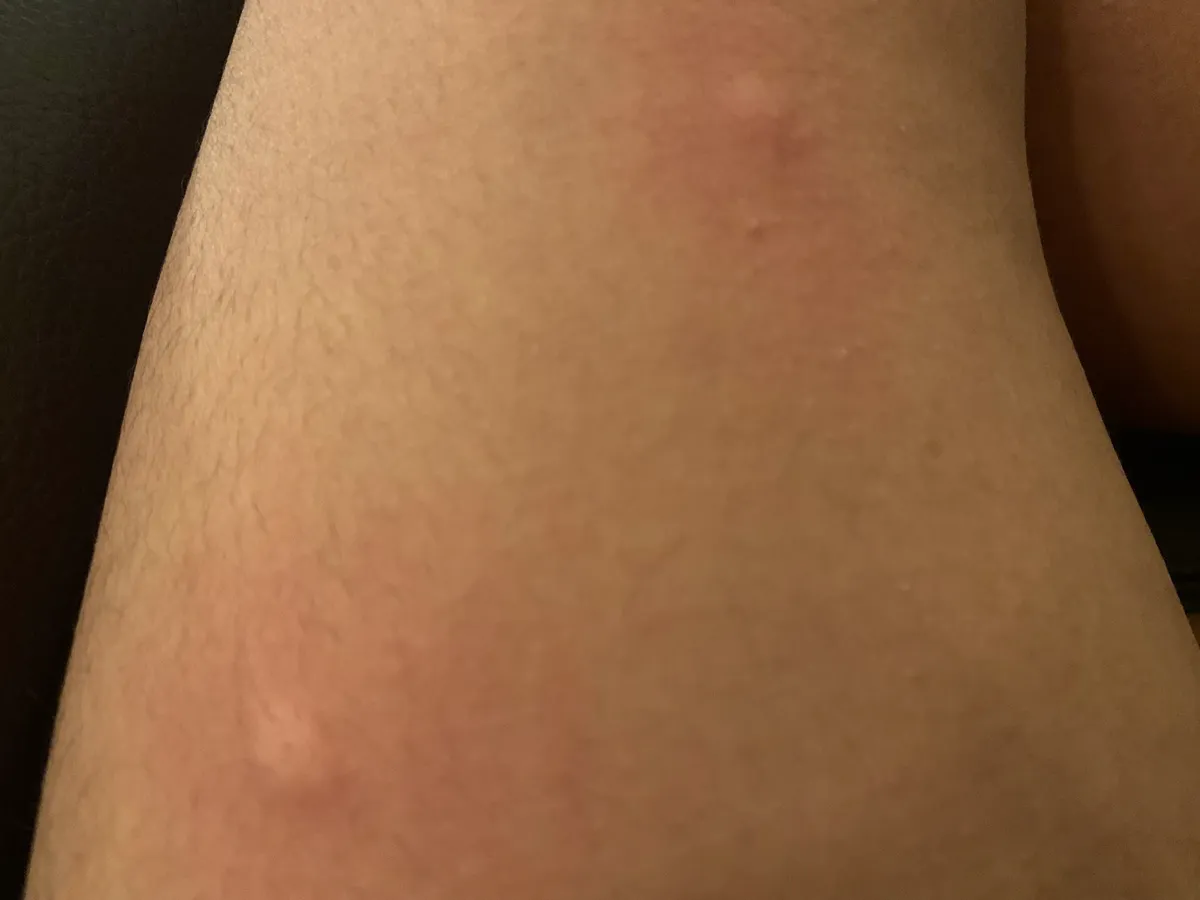 Mosquito bitesScattered single welts that rise within minutes of time outdoors in warm weather
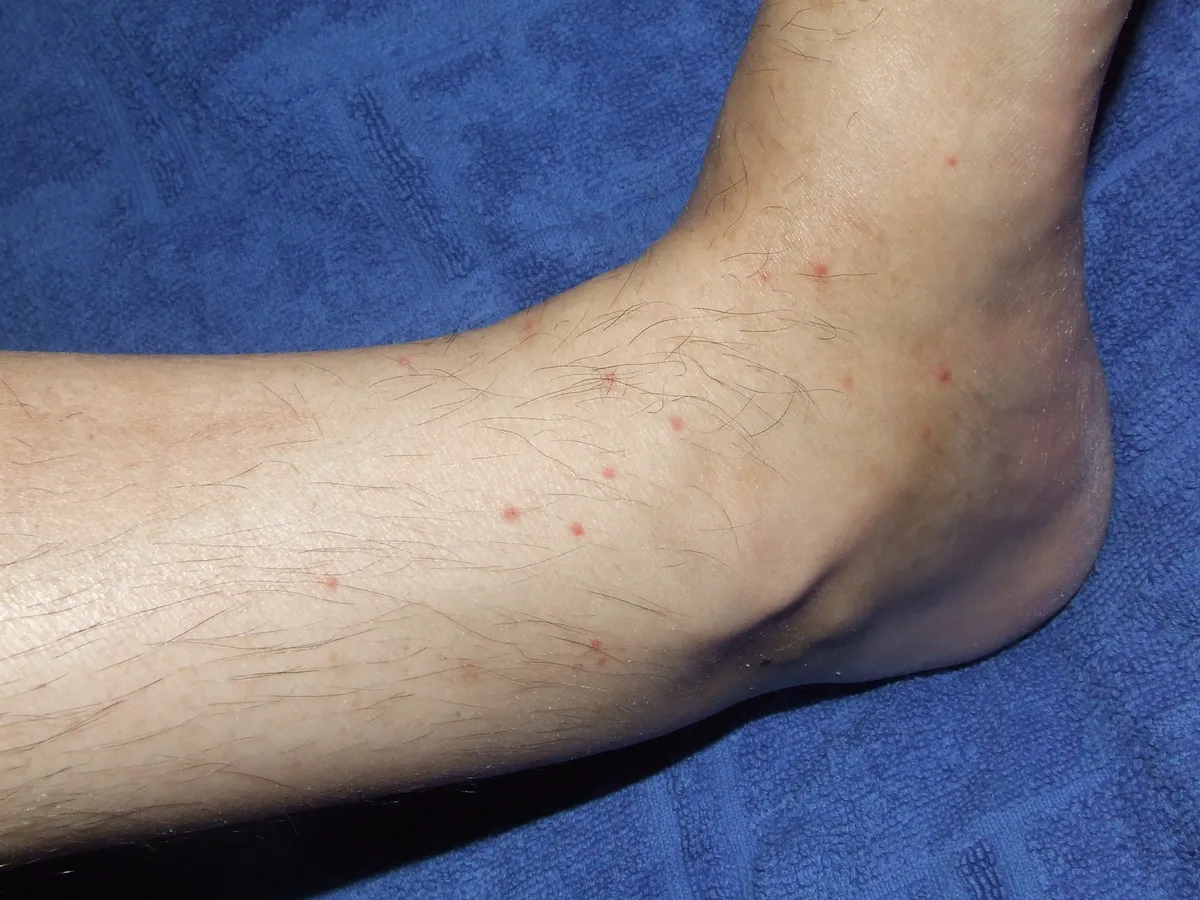 Flea bitesTiny red spots with a lighter halo, low on the ankles and lower legs, itchy within minutes
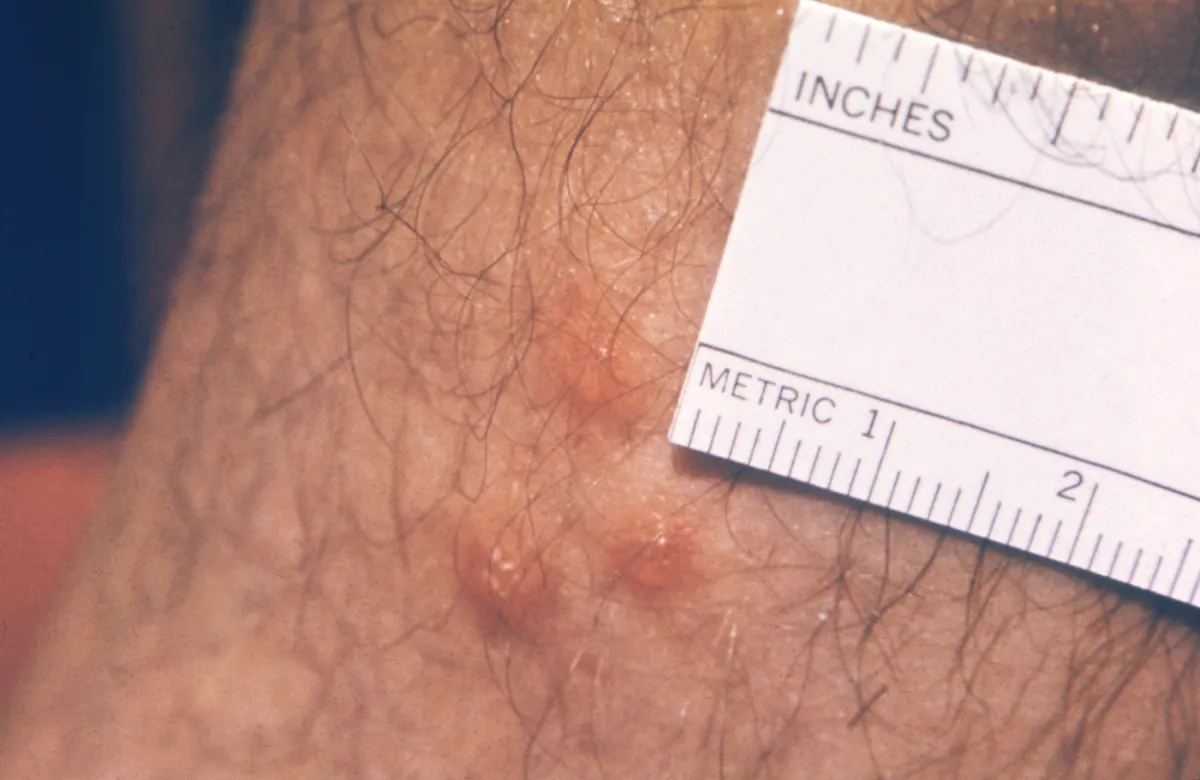 Chigger bitesIntensely itchy welts along sock lines and waistbands after time in grass or brush
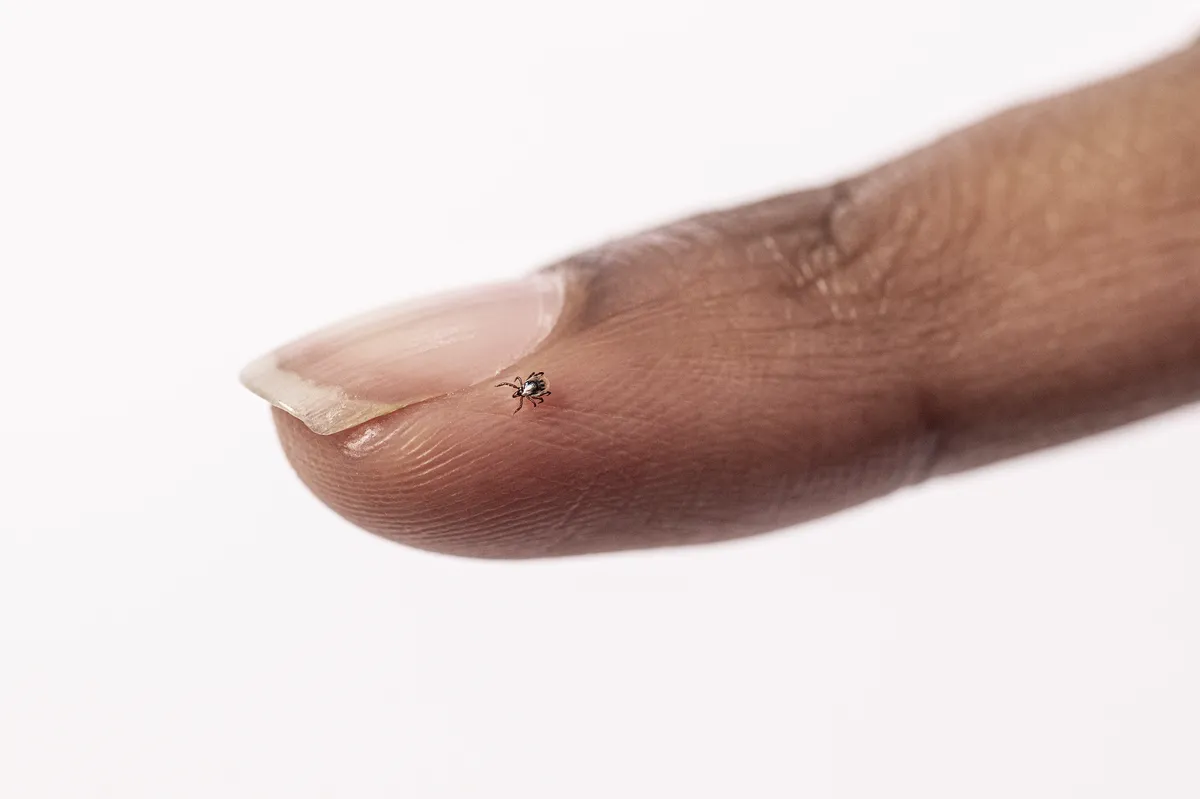 TickThe tick stays attached to the skin, while a bed bug feeds for minutes and leaves
Photos: Mosquito bites: Ant1234567, CC BY-SA 4.0, via Wikimedia Commons, CC BY-SA 4.0. Flea bites: Maslesha, CC BY-SA 4.0, via Wikimedia Commons, CC BY-SA 4.0. Chigger bites: CDC/ M.A. Parsons (CDC Public Health Image Library, phil.cdc.gov), public domain. Tick: CDC/ Division of Vector-Borne Diseases Rickettsial Zoonoses Branch; photo: Lauren Bishop (CDC Public Health Image Library, phil.cdc.gov), public domain.
How long do bed bug bites take to appear?
Anywhere from about an hour to 14 days after the actual bite — the CDC notes that bite marks can take up to two weeks to develop in some people. Most people who react will see marks within one to three days. The reason for the lag is that the welt is not a wound; it is an allergic reaction to proteins in bed bug saliva, and immune reactions take time to build.
Two practical consequences follow. First, the delay usually shrinks with repeated exposure: someone bitten for weeks becomes sensitized and starts reacting within hours, which can make an infestation feel like it suddenly “got worse” when the population never changed. Second, the lag scrambles travel detective work — welts appearing today can be from a bed you slept in up to two weeks ago, so the hotel you are in now is not automatically the guilty one.
How long do bed bug bites last?
Most bed bug bites heal on their own within 1–2 weeks. Stronger reactions — large hives, hard lumps, or small blisters — can take longer to settle, and scratching extends healing time and opens the door to secondary skin infection, a risk Health Canada specifically highlights. On medium and deep skin tones, healed bites frequently leave flat darker marks (post-inflammatory hyperpigmentation) that can persist for weeks or months after the itch has gone; those marks are cosmetic and fade gradually.
A bite that keeps getting worse after the first several days — expanding redness, growing pain, warmth, or pus — is outside the normal pattern and belongs in the “see a doctor” column below.
Do bed bug bites itch?
Usually yes — often intensely, and typically more than a mosquito bite and for longer. The itch tends to peak in the morning and evening and can be maddening enough to disrupt sleep on its own. But there is a critical exception: an estimated 30% of people show no reaction at all, and the share is higher among older adults. In those people the bugs feed unnoticed indefinitely. For a side-by-side on the two most commonly swapped culprits, see the five tells that separate bed bug bites from mosquito bites.
The bite itself is painless while it happens. Bed bug saliva contains an anaesthetic and an anticoagulant, so the insect feeds for 3–10 minutes and leaves without waking the sleeper. Nobody feels the bite in the moment — the itch is always after the fact, which is exactly why the “wait for bites” strategy is such a poor detection method.
How do you treat bed bug bites?
For typical bites, care is simple and aimed at the itch: wash the area with soap and water, apply a cool compress, and resist scratching. A low-strength over-the-counter hydrocortisone cream or an oral antihistamine can help relieve itching for many people — follow the product label, and ask a pharmacist or healthcare provider what is appropriate for you, especially for children, during pregnancy, or on facial skin. Keeping fingernails short reduces the damage if you scratch in your sleep.
As an Amazon Associate I earn from qualifying purchases. Price shown on Amazon.ca, at no extra cost to you.
🏆 Best for Itch Relief
8.4/10· BuzzSkito rating1% Hydrocortisone Anti-Itch Cream
A low-strength over-the-counter hydrocortisone cream is the standard first line for the itch and inflammation of bed bug bites. Widely available, inexpensive, and gentle enough for most adults — follow the label, and ask a pharmacist about use on children, during pregnancy, or on facial skin.
Pros
- Calms itch and inflammation fast
- Inexpensive and easy to find
- Reduces the urge to scratch, lowering infection risk
Cons
- Treats the symptom, not the infestation
- Not for long-term or facial use without guidance
What treatment cannot do is end the problem. As long as the bugs remain, new bites replace healing ones every few days — so identification and elimination, not creams, are the actual fix. And a caution on the flip side: do not fog or spray your bedroom based on bites alone. Bite marks cannot confirm the species, and consumer bed bug sprays have real limits even when bed bugs are confirmed. Confirm first, then act.
Does one bed bug bite mean an infestation?
Not necessarily — but it always means inspect now. A single welt can be a lone hitchhiker that came home in a bag or on a coat, an introduced bug that has not established, or not a bed bug at all. Remember that no one, dermatologists included, can identify a bed bug bite from the mark alone.
The reason to take even one suspicious bite seriously is arithmetic. A mated female lays eggs daily and several hundred over her lifetime, and each bug feeds every 3–7 days — so a “small” problem compounds quietly in the weeks you spend waiting to be sure. The correct response to one bite is not panic and not a spray can: it is a focused inspection of the bed, done that week.
How do you confirm it’s actually bed bugs?
Only physical evidence confirms bed bugs. You are looking for any of five things, all concentrated within about 2 m (6 ft) of where people sleep:
- Live bugs — flat, oval, rusty-brown, 4.5–5.5 mm (about 3/16 in) as adults; nymphs from 1.3 mm (1/20 in) and translucent to tan.
- Black fecal spots — pen-dot-sized digested-blood marks that smear grey-brown when dabbed with a damp cloth.
- Rusty blood smears on sheets or the mattress seam, left when a fed bug is crushed.
- Shed skins — pale, translucent moulted shells in seams and joints.
- Eggs — white, about 1 mm (1/25 in), glued into cracks and fabric seams.
Run the check methodically: strip the bedding, then work the mattress seams and piping, the box spring underside, the frame joints, and the headboard with a flashlight and an old card. Our step-by-step guide on how to check for bed bugs covers the full room-by-room technique.
If the visual inspection comes up empty but bites keep appearing, escalate to interceptor cups — passive pitfall traps that sit under each bed leg and catch bugs travelling to or from the bed. They are pesticide-free, cost less than a can of spray, and in university field trials have confirmed infestations that trained visual inspections missed. Run them for 14 consecutive nights — bed bugs feed only every 3–7 days, so shorter tests miss light infestations. Our interceptor trap guide explains the full protocol and how to read what you catch.
When should you see a doctor about bed bug bites?
Most bites need no medical care. See a healthcare provider promptly if any of the following apply:
- Signs of skin infection — redness that keeps expanding, increasing pain, warmth, swelling, pus, or fever after scratching.
- A strong allergic reaction — widespread hives, significant swelling, or blistering across many bite sites.
- Any trouble breathing, throat tightness, or dizziness after bites — treat as an emergency and seek immediate care.
- Bites that are not improving after two weeks, or marks that keep worsening rather than fading.
- Serious sleep loss or anxiety — both are recognized, legitimate health impacts of an infestation, not something to tough out.
The reassuring baseline, worth repeating: neither the CDC nor Health Canada considers bed bugs known transmitters of human disease. The bites are miserable, but the medical risk profile is fundamentally different from mosquitoes and ticks.
What do the CDC and US dermatologists say bed bug bites look like?
The CDC describes a bed bug bite as a slightly swollen, red area that may itch, similar to a mosquito or flea bite, and says the marks may be random or may appear in a straight line. The American Academy of Dermatology describes several intensely itchy welts that often form a zigzag line. Taken together, a tidy row fits bed bugs, but a scattered set of marks doesn’t rule them out.
Both sources describe how much reactions vary. The CDC says bites affect each person differently and lists three outcomes: no physical signs, small bite marks, or, rarely, a serious allergic reaction. The academy adds that people tend to become more sensitive with repeated bites, to the point of raising itchy welts within seconds. The EPA calls bites a poor indicator of an infestation: they can look like mosquito or chigger bites, rashes such as eczema or a fungal infection, or hives, and some people do not react to them at all.
When to see a provider: the American Academy of Dermatology’s treatment page says to see a dermatologist for many bites, blisters, a skin infection (bites that feel tender or ooze discharge such as pus), or an allergic skin reaction (red, swollen skin or hives). The academy’s signs and symptoms page lists difficulty breathing, an irregular or forceful heartbeat, a swollen tongue, blisters (especially large ones), and fever among the serious reactions that need immediate medical care. The CDC says to speak with your healthcare provider if you think you are having an allergic reaction to the bites. The EPA’s bed bug public health page names impetigo, ecthyma, and lymphangitis as secondary skin infections that can follow the bite reaction.
Since skin can’t settle the question, the next step is finding the insect. Compare a specimen against what bed bugs look like at every life stage, and rule out carpet beetles, bat bugs, and fleas with the guide to bugs commonly mistaken for bed bugs. To search in a sensible order, start with the places bed bugs hide, ranked by distance from the bed, then see what bed bug signs look like on a mattress and what to do about them.
One note for US readers: the product rules elsewhere on this page are Canadian. In the United States the regulator is the EPA, which has registered more than 300 products for use against bed bugs, according to the EPA’s bed bug pesticide page; use any of them only as the label directs. The US plan for getting rid of bed bugs follows the EPA’s do-it-yourself steps in order, and the complete bed bug reference pulls identification, health effects, and treatment options together.
Frequently asked questions
What do bed bug bites look like?
Bed bug bites typically look like small, red, raised welts arranged in a rough line or zigzag cluster of three to five — the pattern often called “breakfast, lunch, dinner.” They appear on skin left exposed during sleep, most often the face, neck, shoulders, arms, and hands. On deeper skin tones the welts often look purple, plum, or dark brown rather than red. Individual welts usually measure 0.2–2 cm (about 1/16–3/4 in), sometimes with a tiny darker point at the centre where the bug fed.
How do you tell bed bug bites from mosquito bites?
The three most useful tells are pattern, timing, and context. Bed bug bites tend to appear in lines or tight clusters of 3–5 and can take from hours up to 14 days to show, per the CDC; mosquito bites are scattered singles that welt up and itch within minutes. Bed bug bites show up after sleeping indoors, in any season; mosquito bites follow time outdoors in warm weather. No bite is distinctive enough on its own — finding bugs, shed skins, or fecal spots is the only real confirmation.
How long after being bitten do bed bug bites appear?
Anywhere from about an hour to as long as 14 days. The CDC notes bite marks can take up to two weeks to develop in some people, because the welt is an allergic reaction to proteins in bed bug saliva rather than an immediate injury. Most people who react see marks within 1–3 days, and the delay usually shortens with repeated exposure as the immune system becomes sensitized. This lag is why travellers often blame the wrong hotel — the bites blooming today may be from a bed slept in a week ago.
How long do bed bug bites last?
Most bed bug bites fade on their own within 1–2 weeks. Stronger reactions — large hives or small blisters — can take longer, and scratching prolongs healing and risks secondary skin infection, a complication Health Canada specifically flags. On medium and deep skin tones, a bite can leave a flat darker mark (post-inflammatory hyperpigmentation) that lingers for weeks to months after the itch is gone. Bites that are still worsening after two weeks are worth showing to a healthcare provider.
Why do bed bug bites appear in a line?
A single bed bug often probes and feeds at more than one spot in a sitting — it may be disturbed by the sleeper moving, or it may reattach where the skin meets a seam, sheet edge, or waistband. Each probe becomes a welt, so one bug can leave a neat row of two to five marks in one night. The row also traces the line where fabric met exposed skin, since bed bugs feed along accessible edges. That is why lines and zigzag clusters point toward bed bugs, while random scattered welts point toward mosquitoes.
Can you have bed bugs without getting bites?
Yes. Studies summarized by health agencies suggest roughly 30% of people — and a higher share of older adults — show no skin reaction to bed bug bites at all. In those people the bugs are still feeding; the immune system simply is not producing visible welts. This is why an absence of bites never rules out an infestation, and why two people sharing a bed can have completely different experiences. Physical evidence — live bugs, shed skins, fecal spots, or interceptor-trap catches — is the reliable test, not skin.
Why am I getting bitten but my partner isn’t?
Almost always because you react and they don’t, not because the bugs prefer you. Since around 30% of people show no reaction to bed bug bites, it is common for bugs to feed on both people while only one wakes up with welts. Sleeping position matters too — the person closer to the harbourage (usually the wall side or headboard side) may genuinely be bitten more. Either way, one reacting sleeper is enough reason to inspect the whole bed rather than assume the problem is one-sided.
Do bed bugs bite every night?
No. An individual bed bug typically feeds once every 3–7 days at room temperature, then retreats to its harbourage to digest. In a small, recent infestation that can mean bites appear in waves — a cluster one morning, then nothing for several days — which lulls people into thinking the problem resolved. In a heavier infestation, enough bugs are cycling through feeds that new bites do show up nightly. Gaps between bite mornings are a clue about population size, not proof the bugs are gone.
Do bed bug bites spread disease?
Bed bugs are not known to transmit disease to humans — both the CDC and Health Canada state this. That makes them very different from mosquitoes and ticks, which do spread pathogens. The real medical risks from bed bug bites are secondary: skin infection from scratching, uncomfortable allergic reactions in sensitized people, and significant sleep loss and anxiety. Serious systemic allergic reactions are rare but treated as medical emergencies, like any severe allergy.
Do bed bug bites blister?
They can, in people with stronger reactions. While the typical bite is a small itchy welt, sensitized individuals sometimes develop large hives, hard raised lumps, or small fluid-filled blisters at bite sites. Blistering alone does not mean the bite is infected or that the bug was anything unusual — it reflects your immune response, not the insect. Avoid popping blisters, keep the area clean, and see a healthcare provider if blisters are widespread, painful, or show signs of infection such as spreading redness or pus.
Can bed bugs bite through clothing?
No — bed bug mouthparts cannot pierce fabric. Instead, bugs walk to skin that is exposed or slip under loose clothing, which is why bites concentrate on the face, neck, arms, hands, and lower legs, and along edges where fabric meets skin, such as collars and waistbands. Snug sleepwear genuinely reduces accessible skin. Finding welts in areas that were tightly covered all night is a modest point against bed bugs and worth weighing alongside the other evidence.
What do bed bug bites look like on darker skin?
On medium and deep skin tones, bed bug bites often appear purple, plum, dark brown, or grey rather than the bright red seen on lighter skin, and the surrounding flush can be subtle or invisible. The raised, firm welt and the line-or-cluster arrangement are the more reliable signs than colour. Darker skin is also more prone to post-inflammatory hyperpigmentation, so healed bites can leave flat dark marks for weeks or months. The identification logic is unchanged: pattern, timing, and physical evidence of the bugs.
Do bed bug bites always appear in a line?
No. The CDC says bed bug bite marks may be random or may appear in a straight line, and the American Academy of Dermatology describes several welts that often form a zigzag line. A row of marks fits bed bugs, but a scattered set does not rule them out. The EPA calls bites a poor indicator of an infestation because they can look like mosquito or chigger bites, rashes such as eczema or a fungal infection, or hives. Checking the bed for the bugs and their traces is the dependable test.
Should I see a dermatologist for bed bug bites?
The American Academy of Dermatology says to see a dermatologist if you have many bites, blisters, a skin infection (bites that feel tender or ooze discharge such as pus), or an allergic skin reaction such as red, swollen skin or hives. It lists difficulty breathing, an irregular or forceful heartbeat, a swollen tongue, and fever among the serious reactions that need immediate medical care. The CDC says to speak with your healthcare provider if you think you are having an allergic reaction. Without signs of an infection or a serious reaction, the academy says bites can often be treated at home.
What are the stages of a bed bug bite?
There is no fixed timetable, because the welt is an allergic reaction and reactions vary, but bites tend to follow the same sequence. The bite itself is painless: the bug feeds for 3–10 minutes and leaves. A mark can take from about an hour to 14 days to appear (the CDC notes up to two weeks in some people), and most people who react see it within 1–3 days as a small, raised, itchy welt, often in a line or cluster. Most bites fade within 1–2 weeks. Stronger reactions take longer, and on medium and deep skin tones a flat darker mark can linger for weeks or months. A bite that keeps getting worse is worth showing to a healthcare provider.
Confirmed it is bed bugs? Here is what actually works
Identification is only step one — the bites stop when the infestation ends, and that takes a protocol rather than a single product. Our complete step-by-step plan for getting rid of bed bugs in Canada walks through the whole sequence in order, and the full DIY protocol covers doing it yourself without hiring anyone. If you rent, treatment is usually the building’s responsibility — the apartment containment plan covers what you can do in the meantime.
On method: sustained heat is the only approach that reliably kills every life stage including eggs, which is why eggs survive most sprays and infestations rebound a week or two after a spray-only treatment. Our heat vs chemical comparison explains when each makes sense, and the bed bug product hub collects every tested tool — steamers, heater chambers, encasements, monitors and PMRA-registered sprays — in one place.
Because the bites happen where you sleep, the fastest way to stop them tonight is to take the bed out of play. A six-sided zippered encasement seals whatever is already inside the mattress and denies new bugs the harbourage — we looked closely at the SureGuard and its hidden zipper flap, the end-of-zipper gap being where cheap covers leak. Do the box spring at the same time: a hollow, stapled wooden frame is a better hiding place than a smooth mattress, which is the argument in the piece of bedding people skip most often.
If you do want something wet on the bed, be careful what you reach for — only a product whose label explicitly names mattresses belongs on a sleeping surface, and the short list that passes that test in Canada is shorter than the shelf suggests. And if the bites started after a trip, treat the luggage rather than the room: a carry-on-legal spray for hotel stays is the preventive version of this whole page.
Related reading
- How to Get Rid of Bed Bugs in Canada — Complete Plan
- Bed Bug Products in Canada — What Actually Works
- How to Check for Bed Bugs — Room-by-Room Inspection
- Bed Bug Interceptor Traps — Detect Before You Spray
- Do Bed Bug Sprays Actually Work?
- Tick vs Bed Bug: How to Tell Them Apart
- Chigger Bites: Identification & Relief
Confirmed bed bugs and weighing your next step? Start with our independent bed bug control product guide, and if the evidence points to an established infestation, our professional pest control cost guide breaks down what licensed treatment actually costs. For all of our independent research, browse the full pest product guides library →
Keep reading
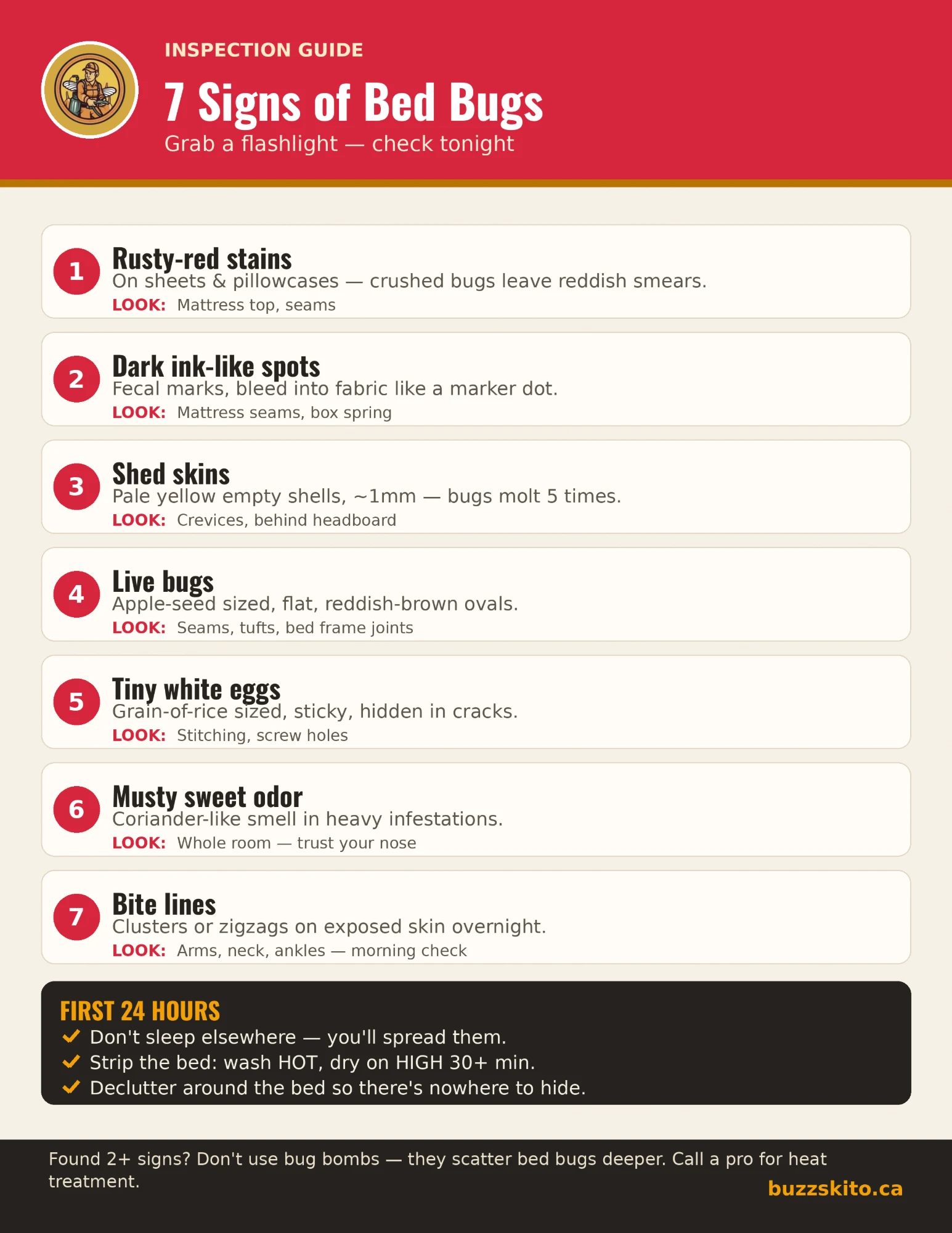 Signs of Bed Bugs: A 7-Point Checklist to Run TonightThe seven signs of bed bugs, from live bugs and ink-like spots to bites, with where to look tonight, what each is…
- Best Bed Bug Steamer Canada 2026 — Vapamore MR-100 vs McCulloch MC1275 vs PurSteamVapamore MR-100 vs McCulloch MC1275 vs PurSteam: the 100°C kill science, the 2-3 cm/s slow-pass technique, and what…
- How to Get Rid of Bed Bugs in an Apartment (Canada 2026) — A Renter’s Containment-First…A renter’s step-by-step plan for getting rid of bed bugs in a Canadian apartment: what your landlord must pay for, the…