
BuzzSkito Mosquito & Tick Control Specialists · Published July 21, 2026
Why the Box Spring Is the Piece You Cannot Skip
If you take one thing from this guide, take this: in a bed-bug fight the box spring is more important to seal than the mattress, and it is the piece people forget. A mattress is a large, mostly smooth, exposed surface. A box spring is the opposite — a hollow wooden frame, stapled together, wrapped in fabric, and very often lined with corrugated cardboard on the inside. That construction is a purpose-built bed-bug hotel: dark, protected, full of tight cracks and voids along the wood joints and staple lines, and almost impossible to inspect without dismantling it. Bed bugs are thigmotactic, meaning they seek out tight spaces where their bodies touch a surface on multiple sides, and a box-spring frame offers hundreds of those spots. Given a choice, they will colonise the box spring before the mattress.
So when someone encases the mattress, congratulates themselves, and leaves the box spring bare, the result is predictable: the population simply shifts down into the foundation and keeps feeding on whoever sleeps above. You have sealed the smaller, easier problem and left the larger, harder one wide open. The correct move — the one every professional protocol specifies — is to encase the mattress and the box spring at the same time, turning the whole sleep surface into a single sealed unit.
Check current Canadian availability of the four picks:
Trap and Exclude: How an Encasement Actually Works
An encasement is not a treatment in the sense of poisoning anything — it is a physical barrier that does two jobs at once. The first is to trap. Any bugs, nymphs, and eggs already living inside the box spring when you seal it are locked in with no exit and no way to reach a host. Sealed in, they eventually starve. This is why the encasement has to stay on for a long time: bed bugs are astonishing at surviving without food, and adults can hang on for the better part of a year under the right conditions. Remove the cover too soon and you release the survivors you were trying to starve.
The second job is to exclude. A smooth, sealed fabric surface gives new bugs nowhere to hide and nothing to grip, and a proper encasement is bite-proof, so anything sealed inside cannot feed through the fabric and anything outside cannot bite through it. The exclusion benefit is permanent and forward-looking: even after the current infestation is gone, an encased box spring can never again become internal harbourage, and it makes future inspection trivial — you are checking a plain sealed surface instead of prying into a stapled wooden frame. That is why many people simply leave the encasements on for the life of the bed.
Box-Spring vs Mattress Encasement: Buy the Right Shape
A box-spring encasement and a mattress encasement share the same six-sided zippered concept but are cut for different objects, and mixing them up is a real mistake. A box spring is thin, rigid, and boxy; a mattress is thick, soft, and flexible. A box-spring encasement is therefore shallower and more sharply cornered to fit a foundation snugly, while a mattress encasement is deeper and more forgiving to stretch over a plush mattress.
Put a mattress encasement on a box spring and you get loose, baggy fabric that bunches, snags on the wooden frame and staples, and eventually tears — a tear is a hole, and a hole defeats the entire purpose. Put a box-spring encasement on a mattress and it will not zip closed at all. Measure the object you are covering, buy the matching type, and if you have a low-profile foundation or a tall one, match the depth specifically. Comfort and breathability matter far less on the box spring since you never lie directly on it, so you can favour a tougher, more tear-resistant fabric there and save the softest, quietest fabric for the mattress you actually sleep on.
What Separates a Real Encasement From a Cheap Cover
The market is full of “box-spring covers” and “protectors” that are not bed-bug encasements at all, and the difference is entirely in the details. Five features separate a barrier that works from one that gives you false confidence:
- A truly six-sided design. The encasement must fully enclose the foundation on all six faces and zip shut. Beware fitted-sheet-style covers that are open on the bottom — they do nothing to contain bugs and are the most common fake in the budget tier.
- A fine-tooth zipper. The zipper is the number-one failure point. The teeth must be small enough that even a first-instar nymph — barely the size of a poppy seed — cannot squeeze between them. Coarse zippers leak.
- A zipper-end seal. The tiny gap at the very end of the zipper, where the pull parks, is a classic escape hatch. Quality encasements add a Velcro tab or a fold-over flap that closes it. Confirm the listing shows one.
- Bug-proof, bite-proof fabric. The weave must be tight enough to stop a nymph and reinforced enough that bugs cannot bite through. Thin, plastic-y “waterproof protector” fabric usually fails both tests and tears on the frame.
- The correct depth. Foundations range from slim low-profile to full height, and a split king uses two half-foundations. A cover that is too small will not close; one that is too large bags and snags.
Because you do not sleep directly on the box spring, you can weight your decision toward durability over softness here — the tougher the fabric, the less likely it is to tear against the staples and wood over a year or more of sealed service.
How to Choose and Size a Box-Spring Encasement
Getting the size right is most of the battle, so measure before you order. Note three numbers for each foundation: length, width, and — the one people miss — depth (the height of the box spring, from a slim low-profile foundation to a full-height one). Encasements are sold by mattress-style size (twin, full, queen, king) with a depth range, so match all three. If your bed has a split box spring, which is common on kings and some queens, treat each half as its own object: you will need one encasement per half.
Then map the pick to your situation. For a single active infestation where you want the safe default, the SureGuard box-spring encasement is the sensible overall choice — it gets the seal, zipper, and fabric right without asking you to overthink it. If you want documented, certified lab testing and the heaviest fabric, step up to SafeRest. If you are treating a whole house, a rental turnover, or several beds at once, the Utopia Bedding encasement keeps the per-unit cost sensible while still delivering a genuine six-sided seal — just handle its lighter zipper with a bit more care. Reserve the budget tier for a single, low-pressure bed, and even then read the listing closely to confirm it is fully six-sided rather than an open-bottom cover in disguise.
One quantity note that trips people up: a standard bed needs at least two encasements — one for the mattress, one for the box spring — and a split-foundation bed needs three. When you tally a whole home, count every sleeping surface, including guest and children’s beds, because one untreated bed in another room quietly re-seeds the ones you sealed.
Installing It Correctly (and the Zipper-Flap Detail)
Installation is straightforward but there are two places people go wrong. Start by stripping the bed and lifting the box spring clear of the frame. If you can, inspect and vacuum the seams, staple lines, and cardboard corners first — sealing in a lighter population means it starves out faster — but do not agonise over it, because a sealed encasement works even with bugs trapped inside; it just takes longer.
Slide the encasement fully over the foundation and work it into all four corners so it sits flat with no loose bagging, then run the zipper all the way closed around the perimeter. Now the detail that actually matters: seal the zipper end. Fold the flap over the parked pull or fasten the Velcro tab so the little gap at the end of the zipper track is closed — that gap is the most common way bugs get in or out of an otherwise perfect encasement. Run your eye along the entire zipper line and every seam looking for openings or snags, then set the encased box spring back on the frame and add the encased mattress on top. From here the encasement is doing its job silently; your only maintenance is to avoid tearing it and to leave it zipped for at least a year.
Where Encasements Fit in the Whole Plan
Encasements are a powerful layer, but they are a layer, not a cure. Sealing the mattress and box spring neutralises the two biggest and hardest-to-treat harbourages at the bed itself — which is exactly why they are worth doing first — but bed bugs also live in the frame, the headboard, baseboards, outlet plates, and nearby furniture, none of which an encasement touches. A realistic DIY plan wraps the encased bed in three more layers: interceptor traps under every bed leg to intercept and monitor climbers, a steamer or targeted treatment for the surrounding harbourage, and disciplined vacuuming of the room. A residual dust like CimeXa into the wall voids and frame cracks rounds it out.
For the full sequence — inspection, encasement, interceptors, heat, and residuals, in the order that actually works — see our complete Canadian guide to getting rid of bed bugs and the broader bed-bug control hub. And if you are still confirming what you are dealing with, start with how to check for bed bugs before you buy anything.
Frequently Asked Questions
What is the best bed bug box spring encasement in Canada?+
For most Canadian homes the best box-spring encasement is the SureGuard zippered box-spring cover: a fully sealed six-sided fabric encasement with a fine-tooth zipper and a zipper-stop flap that traps any bugs already living in the box spring and blocks new ones from getting in. The SafeRest zippered box-spring encasement is the best premium pick if you want a certified, lab-tested seal and a slightly heavier fabric, and the Utopia Bedding zippered box-spring encasement is the best value if you are encasing several beds at once or fitting out a rental. Whatever you buy, the box spring must be encased at the same time as the mattress — a bare box spring is actually a better bed-bug harbourage than the mattress above it, so covering only the mattress leaves the worst hiding spot wide open.
Do I really need to encase the box spring, or just the mattress?+
Both, always, and at the same time. This is the single most common and most costly mistake in DIY bed-bug work. A box spring is a hollow wooden frame wrapped in fabric, stapled together, and often lined with corrugated cardboard — dozens of dark, protected cracks and voids that bed bugs prefer to the smooth, exposed surface of a mattress. If you encase the mattress but leave the box spring bare, you have sealed the tidy apartment and left the penthouse wide open; the population simply relocates down and keeps feeding. Encasing both turns the entire sleep surface into a sealed unit where any bug inside starves and any bug outside cannot get in.
What is the difference between a box spring encasement and a mattress encasement?+
They are the same idea — a fully zippered, six-sided fabric envelope — sized and shaped differently. A box-spring encasement is cut shallower and boxier to match the rigid, thin profile of a foundation, whereas a mattress encasement is deeper and softer to fit a thick, flexible mattress. Using a mattress encasement on a box spring leaves loose, baggy fabric that snags, bunches, and tears on the wooden frame and staples; using a box-spring encasement on a mattress will not zip closed. Buy the size and type that matches the piece you are covering, and if you have a split or double-height foundation, measure each section.
How does a box spring encasement kill or stop bed bugs?+
It does two jobs. First, it traps: any bed bugs, nymphs, or eggs already living inside the box spring are sealed in with no route out and no way to reach you, so they eventually starve — bed bugs can survive many months without a meal, which is why the encasement must stay zipped and intact for at least a full year, ideally longer. Second, it excludes: a smooth, sealed fabric surface gives new bugs nowhere to hide and nothing to grip, and a good encasement is bite-proof so bugs sealed inside cannot feed through the fabric. The encasement does not poison anything — it is a physical barrier, which is exactly why it is a safe, chemical-free part of the plan.
What should I look for in a quality box spring encasement?+
Five things. A genuinely bug-proof and bite-proof fabric (tight enough weave that a first-instar nymph cannot squeeze through and bugs cannot bite through it); a fine-tooth zipper with teeth small enough that even a newly hatched nymph cannot pass — the zipper is the number-one failure point; a zipper-end flap or Velcro tab that seals the tiny gap at the zipper pull; a full six-sided design that encloses the entire foundation, not a fitted-sheet-style cover open on the bottom; and the correct depth for your foundation. Comfort and noise matter less on a box spring than on a mattress since you do not lie directly on it, so you can prioritise a tougher, more tear-resistant fabric.
How long do I have to leave the encasement on?+
A minimum of one year, and there is no harm in leaving it on permanently. Bed bugs are extraordinarily patient — sealed-in adults can survive close to a year without feeding under the right conditions, so removing the encasement too early can release survivors. The standard professional guidance is to keep the encasement zipped and undamaged for at least twelve months from the last sign of activity. Because a quality encasement also protects against any future introduction and makes ongoing inspection trivial, most people simply leave it on for the life of the box spring.
Can bed bugs bite through a box spring encasement?+
Not through a proper bite-proof encasement, which is one reason quality matters. The better fabrics are woven tightly and reinforced so that bugs sealed inside cannot extend their mouthparts through to feed, and bugs outside cannot bite through to reach anyone — though on a box spring you are not in direct contact anyway. The cheap, thin, plastic-y covers sold as generic "mattress protectors" are a different product: they are often not bite-proof, tear on the box-spring frame, and split at the zipper. For bed-bug work specifically, buy something sold and tested as a bed-bug encasement, not a general waterproof protector.
Do I still need sprays, steam, or traps if I encase the box spring?+
The encasement is one layer of a plan, not the whole plan. It traps and excludes at the bed itself, but it does nothing about bugs harbouring in the frame, headboard, baseboards, or nearby furniture. The standard approach pairs encasements with interceptor traps under each bed leg to catch and monitor climbers, a steamer or targeted treatment for the surrounding harbourage, and thorough vacuuming. Think of the encasements as sealing the two biggest, hardest-to-treat hiding spots — the mattress and box spring — so the rest of your effort can focus on the room around them.
How do I install a box spring encasement correctly?+
Strip the bed and lift the box spring off the frame. Inspect and, if you can, vacuum the seams, staples, and the cardboard corners first so you are not sealing in a heavy population unnecessarily (though sealing them in still works — it just takes longer to starve them out). Slide the encasement fully over the foundation, working it into all four corners so it sits flat, then zip it closed all the way around. Fold the zipper-end flap over the pull or fasten the Velcro tab so no gap remains. Check the whole zipper line and every seam for openings, set the encased box spring back on the frame, and add the encased mattress on top.
Are the cheap US-import box spring covers on Amazon a problem in Canada?+
Only in the sense that quality varies wildly and the listing photos rarely tell you what you are getting. Encasements are physical barriers, not pesticides, so — unlike a bed-bug spray — they need no PMRA or Health Canada registration and there is no legality question buying one; the risk is purely product quality. Some grey-market imports use coarse zippers, thin fabric that tears on the frame staples, or a fitted-sheet cut that is open on the bottom and does not seal at all. Stick to the encasements below, which are consistently reviewed as truly six-sided, fine-zippered, and bite-proof, and check the size chart against your foundation before ordering.
Will a box spring encasement make noise or feel crinkly?+
Some do, but it matters far less than on a mattress. Because the box spring sits under the mattress and you never lie directly on it, a slightly stiffer or crinklier encasement fabric on the foundation is barely noticeable in use — which is why you can prioritise a tougher, more tear-resistant fabric on the box spring even if it is not the softest. The mattress encasement is where you want the quietest, most breathable fabric for sleep comfort. Our companion guide to mattress encasements covers the fabric and comfort trade-offs for the piece you actually sleep on.
How many encasements do I need for one bed?+
At least two for a standard bed: one for the mattress and one for the box spring. If your bed uses a split box spring (common on king beds, where two half-foundations sit side by side), you need one encasement per half, so three total for that bed. Measure the depth and dimensions of each piece before ordering, since foundations vary from low-profile to full-height. When you are treating a whole home, count every sleeping surface — guest beds, kids’ beds, and any bed a visitor used — because an untreated bed in another room re-seeds the ones you sealed.
Related Reading
- Best Bed-Bug Mattress Encasement Canada — Seal the Surface You Sleep On
- SureGuard Mattress Encasement Review Canada
- Bed-Bug Interceptor Traps Canada — Monitor and Protect the Bed
- Best Bed-Bug Steamer Canada — Heat That Kills the Eggs
- Best Sealed-HEPA Vacuum for Bed Bugs & Fleas Canada
- CimeXa Bed-Bug Dust Review Canada
- How to Get Rid of Bed Bugs in Canada — Full Protocol
- Best Pest-Control Equipment Canada — The Full Device Hub
Keep reading
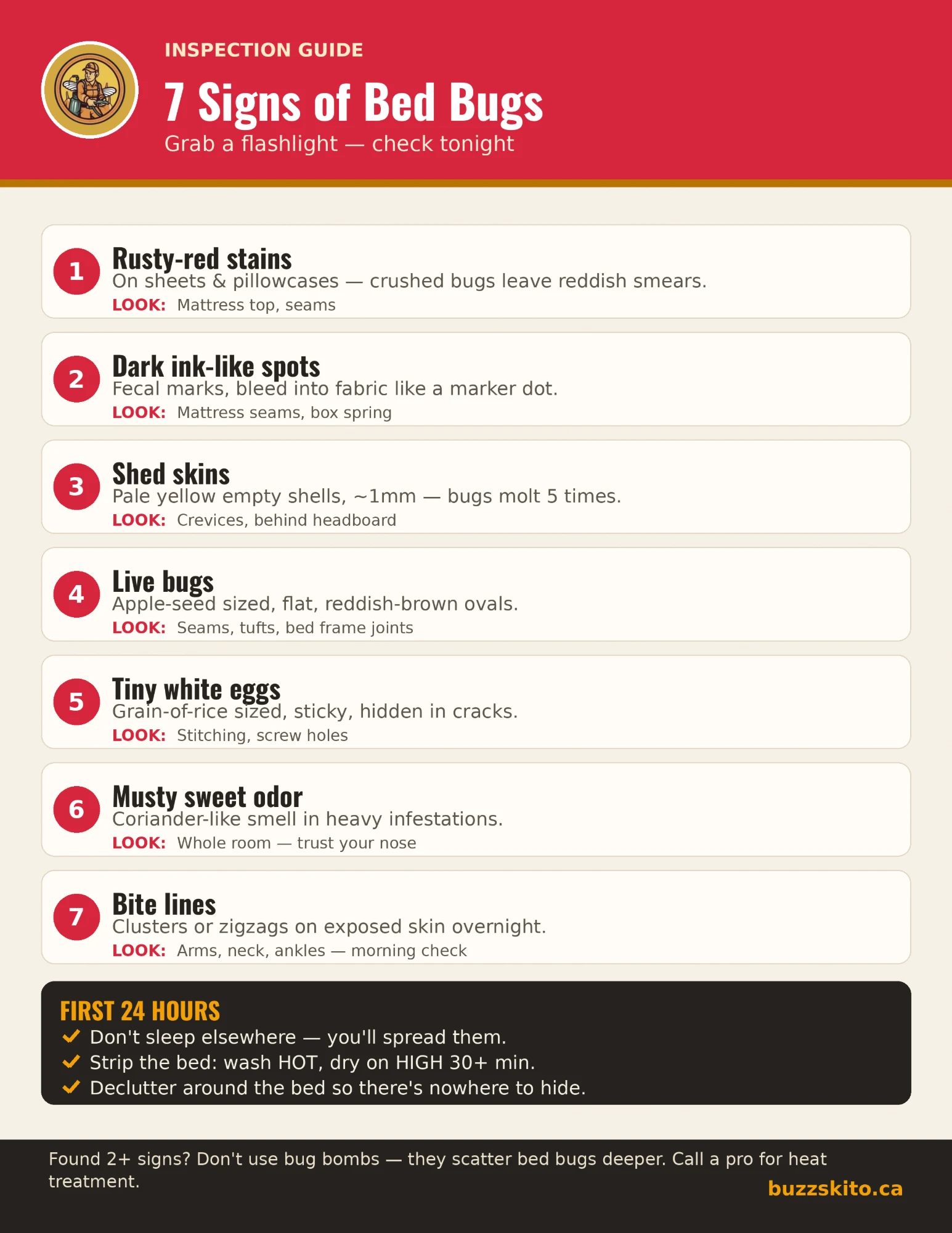 Signs of Bed Bugs: A 7-Point Checklist to Run TonightThe seven signs of bed bugs, from live bugs and ink-like spots to bites, with where to look tonight, what each is…
- Best Bed Bug Spray for a Mattress in Canada 2026 — Mattress-Safe, PMRA-Registered PicksThe best mattress-safe bed bug sprays in Canada for 2026: why the PMRA registration number and a mattress-approved…
- How to Get Rid of Bed Bugs, and How Fast It Can Really Be DoneA step-by-step bed bug elimination plan built on EPA and university extension guidance: the temperatures, timelines and…