
BuzzSkito Mosquito & Tick Control Specialists · Published July 21, 2026
What Is the Best Bed Bug Spray for Travel in Canada?
The best travel bed-bug spray is the one you can legally pack and confidently use on the surfaces that matter — and for Canadian travellers that means a small product with a Canadian PCP registration number, built for luggage seams and hotel harbourage rather than a full-size home aerosol you cannot even carry onto the plane. A travel spray is a narrow tool with a specific job: it protects your suitcase and lets you spot-treat something you find on arrival. It is not, and cannot be, a way to clear an active infestation, and any product that promises otherwise on a trip-size can is overselling.
That job splits into two jobs, which is why our picks above are differentiated by intent. If you want one reliable, Canada-legal can that does knockdown and leaves a residual film, the Doktor Doom Travel Pro is the standout — a Canadian aerosol with a PCP number on the label, in a compact format. If your priority is pre-treating a suitcase so it stays protected across a week, a lower-odour Proof travel-size residual is the longer-lasting choice. The fabric and natural picks cover narrower needs. The reasoning below explains how to match the tool to the trip — and, just as importantly, what the spray does not replace.
Check current Canadian availability of the four picks:
The Carry-On Rule That Decides What You Can Pack
Before you compare formulas, sort out logistics, because the single most common travel-spray mistake is buying a can you cannot bring. Both the Canadian Air Transport Security Authority (CATSA) and the U.S. TSA enforce the same carry-on liquids rule: every liquid, gel, and aerosol container must be 100 mL (3.4 oz) or smaller, and they all have to fit inside one clear, resealable one-litre bag. A standard 400 mL bed-bug aerosol fails that test instantly and will be pulled at the checkpoint — you will lose the can and the money. Daily transit is the other travel case and it behaves nothing like a hotel stay — bed bugs on the TTC covers what a Toronto commuter should actually do at the door instead of carrying a can.
So for cabin baggage, you need a genuinely travel-size container: a small aerosol under 100 mL or, more reliably, a non-aerosol pump bottle you can fill to 60–100 mL. Aerosols carry extra baggage: those with flammable propellant face additional airline restrictions, and while larger cans are usually allowed in checked luggage (typically up to 500 mL per container and 2 kg total per passenger, per airline policy), the carry-on line is strict. The clean solution for most travellers is a compact pump under 100 mL in the carry-on, leaving any full-size home can at home where it belongs. When you shop, read the container size, not just the brand.
Why PMRA Registration Matters More Than the Brand Name
Here is the compliance point that trips up cross-border shoppers: a bed-bug spray that is a bestseller in the United States is not automatically legal to import or use in Canada. Every pest-control product sold or used here must be registered under the federal Pest Control Products Act, administered by Health Canada’s Pest Management Regulatory Agency (PMRA), and must display a PCP registration number on the label. That number tells you the product is registered for use in Canada and that its label directions were written for Canadian use.
Popular American travel sprays routinely appear on cross-border marketplaces without that registration. Buying and importing them for personal use sits in a grey area, and you end up with a product whose label was never written for Canada. The clean path is to choose a product with a Canadian PCP number — and conveniently, several of the most travel-friendly options, like the Doktor Doom line, are made by Canadian companies specifically for this market. Our rule of thumb: if a listing cannot show a PCP number, treat it as not confirmed for Canada and move on. This is the same standard we apply across our Canadian bed-bug spray guide, where the registered-vs-grey-market distinction matters just as much for home products.
Contact vs Residual: Which One You Actually Want
Bed-bug sprays fall into two functional camps, and understanding the split tells you exactly what to pack. A contact spray kills the bugs it directly wets and then dissipates — it is a spot-treatment tool for something you can see right now, like a bug on a suitcase seam or in a headboard crack. A residual spray dries into a film that keeps working for days or weeks, which is precisely what you want for pre-treating a suitcase that needs to stay protected through a trip.
For travel, both jobs come up: you want a lasting film on the bag (residual) and the ability to knock down something you spot on arrival (contact). Many travel-oriented products blend the two — a knockdown ingredient plus a residual — which is a big part of why a compact aerosol like the Doktor Doom Travel Pro is such a practical single choice. If you are only going to carry one thing and you value prevention, prioritise residual; if you are worried about seeing a live bug and reacting, contact speed matters more. Neither, to be clear, substitutes for heat or a professional treatment once an infestation is established at home — that is a different problem covered in our full removal guide.
How to Actually Use Spray on Your Luggage
Think of your suitcase as the checkpoint that keeps hitchhikers out of your house. The technique is simple and worth doing the same way every trip:
- Pre-treat before you leave. Lightly spray a residual product into the seams, piping, zippers, and interior corners of the empty case and let it dry. This leaves a barrier that discourages any bug that tries to move in.
- Elevate on arrival. Keep the case on the luggage rack or in the bathtub — never on the bed or the carpeted floor, which are the two riskiest surfaces in the room.
- Inspect before you unpack. Check the mattress seams, headboard, and box spring first. Our two-minute hotel inspection guide shows exactly where to look.
- Spot-treat what you find. If you see evidence, re-spray your own case seams and treat only your immediate belongings — then report it to the front desk and ask to move rooms.
- Re-spray on the way out. Spray the empty case seams again before you pack for the trip home, so the barrier is fresh for the return leg.
Notice what is not on that list: spraying your clothes, or dousing the hotel mattress. Most contact aerosols are labelled for cracks, crevices, and hard surfaces — not for fabric you will wear against your skin. Spray the shell of the bag and pack clean clothes inside it. The exception is a purpose-built fabric treatment (our third pick), which is a different category, labelled specifically to bond to gear and travel sacks — and even then, only where the label authorises it.
The Homecoming Routine That Actually Stops Infestations
If you take one thing from this guide, make it this: the doorway when you get home is where most hitchhiker infestations are actually stopped — far more than any single spray application during the trip. The spray is a useful layer, but the heat step is the decisive one.
Do not carry the suitcase to the bedroom and unpack onto the bed. Unpack in the garage, entryway, or bathroom instead. Run every piece of washable clothing — worn or not — through a hot dryer for at least 30 minutes, because sustained heat kills bed bugs at every life stage, eggs included, with no chemical at all. Then spray the empty case seams and zippers with a residual product, wipe it down, and store it away from bedrooms — sealed in a large bag or a hard bin. For frequent travellers, the definitive version of this step is a portable luggage heater, which raises the entire contents of a bag to a lethal temperature and reaches the eggs a surface spray never can. Spray protects the outside of the bag; heat clears the inside.
How to Choose: Matching the Spray to the Trip
Travel sprays are inexpensive, so the goal is not to save a few dollars — it is to pack the right small can and skip the ones that will fail you at the checkpoint or under-deliver in the room. Prioritise in this order:
- Carry-on legality first (non-negotiable). If it is over 100 mL and going in your cabin bag, it does not matter how good the formula is — it is getting confiscated. Confirm the container size before anything else.
- PMRA registration (buy this). A PCP number on the label is how you confirm the product is registered for use in Canada. Registered Canadian products like Doktor Doom make this easy.
- Residual for prevention, contact for reaction. If you want the bag protected all week, prioritise a residual. If your worry is reacting to a live bug, value knockdown speed. A blended aerosol covers both.
- Odour and comfort if you sleep in the room. A low-odour or natural spray is far more pleasant to use in a hotel room you have to sleep in — worth trading a little residual power for.
- Fabric-labelled only for gear. If you specifically want to treat a travel sack or liner, use a product labelled for fabric — and never repurpose a surface spray for clothing that touches skin.
Read that as a packing decision, not a shopping spree: one carry-on-legal can or pump with a PCP number does everything a traveller needs. The frequent-flyer upgrade is not a bigger spray — it is adding a luggage heater to your homecoming routine.
Is a Travel Spray Enough, or Do You Need More?
For occasional trips, disciplined behaviour plus a residual travel spray covers most of the real risk: inspect the hotel bed, keep luggage off the floor and bed, pre-treat and re-spray the case, and run your clothes through a hot dryer at home. That routine stops the large majority of hitchhiker scares before they become a problem, and the spray earns its small place in it.
For frequent travellers — or anyone who has already had a scare — the honest upgrade is to add heat, not more chemical. A portable luggage heater is the definitive homecoming tool, and a mattress encasement back home turns your own bed into a monitored, sealable surface so a stray hitchhiker has nowhere to hide. If a spray ever feels like it is doing the whole job on the road, that is the sign to step back and remember it is one layer: prevention on the outside of the bag, with inspection and heat carrying the real weight. For the full picture of how these tools fit together — sprays, heaters, steamers, encasements, and detectors — our bed-bug control hub lays out the complete Canadian toolkit, and our pest-control equipment guide covers the gear side in one place.
Frequently Asked Questions
What is the best bed bug spray for travel in Canada?+
For most Canadian travellers, the best travel bed-bug spray is a small aerosol or pump with a Canadian PCP registration number that you can spray directly onto luggage seams, zippers, and hotel headboard cracks — the Doktor Doom Travel Pro is the standout because it is a Canadian product with a PCP registration number on the label, sold in a compact can, so it is legal here and easy to pack. A Proof travel-size bed-bug and dust-mite spray is the best lower-odour, residual pick for treating a suitcase before and after a trip. Whatever you choose, keep any liquid under 100 mL if it is going in a carry-on, and remember that a spray is a prevention-and-spot-treatment tool for the road, not a way to clear an active infestation at home.
Are travel bed bug sprays TSA and CATSA carry-on legal?+
Only the small ones. Both the U.S. TSA and the Canadian CATSA carry-on liquid rule cap containers at 100 mL (3.4 oz), and all your liquids, gels, and aerosols must fit in a single one-litre resealable bag. A full-size 400 mL bed-bug aerosol will be confiscated at the carry-on line, so for cabin baggage you need a travel-size can or a small pump bottle under 100 mL. Larger cans are fine in checked luggage, subject to the airline's aerosol limits (typically 500 mL per container and 2 kg total). Aerosols with flammable propellant have extra restrictions, so if you are unsure, pack a non-aerosol pump under 100 mL in the carry-on and leave the big can at home.
How do I use bed bug spray on my luggage while travelling?+
Treat the suitcase as the checkpoint that keeps bugs out of your home. Before the trip, lightly spray a residual product into the seams, piping, zippers, and interior corners of a hard or soft case and let it dry — this leaves a barrier that discourages hitchhikers. On arrival, keep the case on the luggage rack or in the bathtub, never on the bed or carpeted floor, and inspect the mattress seams and headboard before unpacking. If you see signs, spray the case seams again and treat only the immediate hotel harbourage with a contact product where permitted. On the way home, spray the empty case again, then heat-treat clothing in a hot dryer. The spray protects the bag; it does not treat the hotel room for you.
Can I spray bed bug spray directly on my clothes or inside my suitcase?+
Read the label — it decides. Most contact bed-bug aerosols are labelled for cracks, crevices, and hard surfaces, not for direct application to fabric you will wear, so you spray the suitcase shell, seams, and zippers and let it dry, then pack clean clothes inside. A few products (permethrin-based gear and clothing treatments) are specifically formulated to bond to fabric and are meant for pre-treating luggage liners, travel sacks, and gear — but these are a different category and must say so on the label. Never freelance: applying a surface pesticide to bedsheets or clothing that touches skin is both a health risk and an off-label use. When in doubt, heat is the better option for fabric — a hot dryer cycle kills bed bugs on clothes with no chemical at all.
Do travel bed bug sprays actually prevent bed bugs?+
They reduce risk; they do not guarantee immunity. A residual spray on your suitcase seams makes the bag a less hospitable place for a hitchhiking bug and can kill ones that make contact, which meaningfully lowers the odds you carry an infestation home. But no spray creates a force field — the biggest wins in travel prevention are behavioural: inspecting the hotel bed before you settle in, keeping luggage off the floor and bed, and heat-treating everything when you get home. Think of the spray as one layer in a routine, not a substitute for the inspection and heat steps. Our guide on how to check for bed bugs walks through the two-minute hotel inspection that catches most problems.
What is the difference between a contact spray and a residual spray for travel?+
A contact spray kills bugs it directly wets and then dissipates, so it is a spot-treatment tool for something you see right now — a bug on a suitcase seam or in a headboard crack. A residual spray leaves a dried film that keeps working for days or weeks, which is what you want for pre-treating a suitcase so it stays protected through the trip. Many travel-oriented products blend both: a knockdown ingredient for immediate kill plus a residual for lasting protection. For prevention, prioritise residual; for a bug you can see, contact matters more. Neither replaces heat or a professional treatment for an established infestation back home.
Why should I avoid U.S.-only bed bug sprays sold online?+
Because a pesticide that is legal in the United States is not automatically legal to import or use in Canada. Every pest-control product used in Canada must be registered under the federal Pest Control Products Act, administered by the PMRA (Health Canada's Pest Management Regulatory Agency), and carry a PCP registration number on the label. Popular American bed-bug sprays that show up on cross-border marketplaces often lack that Canadian registration, which makes personal importation a grey area and means the formula has not been assessed under Canadian rules. Buying a product with a Canadian PCP number — many of which are made by Canadian companies like Doktor Doom — keeps you compliant and gives you a label written for Canadian use. When you shop, look for the PCP number; if a listing cannot show one, treat it as not confirmed for Canada.
Is a natural or non-toxic travel bed bug spray any good?+
For light, precautionary use, yes — with realistic expectations. Plant-oil and essential-oil sprays (and some silica or enzyme blends) are lower-odour, which makes them appealing for spraying a suitcase in a hotel room where you have to sleep. Their limitation is that most are contact-only with little to no residual, so they kill what they wet and then stop working. That is fine for a quick spot treatment and reassurance, but for pre-treating a bag that needs to stay protected across a week of travel, a registered residual product does more. Our natural bed-bug spray guide compares what the botanical options genuinely accomplish versus where they fall short.
Should I spray the hotel room itself?+
Only your immediate belongings and only lightly — treating someone else's room is not your job and can violate the property's rules. If you find evidence of bed bugs, the right move is to report it to the front desk, request a different room (ideally not adjacent to the affected one), and keep your luggage sealed. You can spray your own suitcase seams and travel items, but dousing the mattress or furniture of a hotel room is both ineffective against an established population and inappropriate. The spray is for protecting your gear so you do not bring anything home; clearing the room is the property's responsibility, and a real infestation there needs a professional, not a traveller with a can.
What do I do with my luggage and clothes when I get home?+
Treat the doorway as the last line of defence. Do not bring the suitcase inside and unpack onto the bed — unpack in the garage, entryway, or bathroom instead. Run all washable clothing (worn or not) through a hot dryer for at least 30 minutes, since sustained heat kills bed bugs at every life stage. Spray the empty suitcase seams and zippers with a residual product, wipe it down, and store it away from bedrooms — ideally sealed in a large bag or a hard bin, or heat-treated in a luggage heater. This homecoming routine is where most hitchhiker infestations are actually stopped, far more than any single spray application during the trip.
Is a travel spray enough, or do I need a luggage heater too?+
For frequent travellers, a heater is the stronger long-term tool, and the two work together. A spray protects the outside of the bag and spot-treats surfaces; a portable luggage heater raises the entire contents of a suitcase to a lethal temperature and kills anything hiding inside — eggs included, which sprays struggle to reach. If you travel a lot or have had a scare, a heated bag or luggage heater is the definitive homecoming step, with the spray as the lightweight in-transit layer. For occasional trips, disciplined inspection plus a residual spray and a hot-dryer cycle on clothes covers most of the risk. Our luggage-heater guide covers the portable options and how hot they actually need to get.
How much bed bug spray should I pack for a trip?+
Less than you think. A single travel-size can or a 60–100 mL pump bottle is plenty for pre-treating a suitcase, touching up on arrival, and re-spraying on the way home — you are treating seams and zippers, not fogging a room. Packing one carry-on-legal container under 100 mL keeps you compliant with the liquids rule and avoids the confiscation that a full-size can invites. If you are checking a bag, you can bring a larger can within airline aerosol limits, but for most trips the compact option does everything you need and weighs almost nothing. Buy the small size on purpose; the big can is a home tool, not a travel one.
Related Reading
- Best Bed-Bug Luggage Heater Canada — Heat the Whole Bag
- Best Bed-Bug Spray Canada — Registered Home Products Compared
- Best Bed-Bug Spray for a Mattress Canada
- Best Natural Bed-Bug Spray Canada — What Botanicals Actually Do
- EcoRaider Bed-Bug Spray Review Canada
- How to Check for Bed Bugs — The Hotel Inspection
- Bed-Bug Mattress Encasement Canada
- Bed-Bug Control Canada — The Complete Toolkit Hub
- Best Pest-Control Equipment Canada — Device Buyer’s Guide
Keep reading
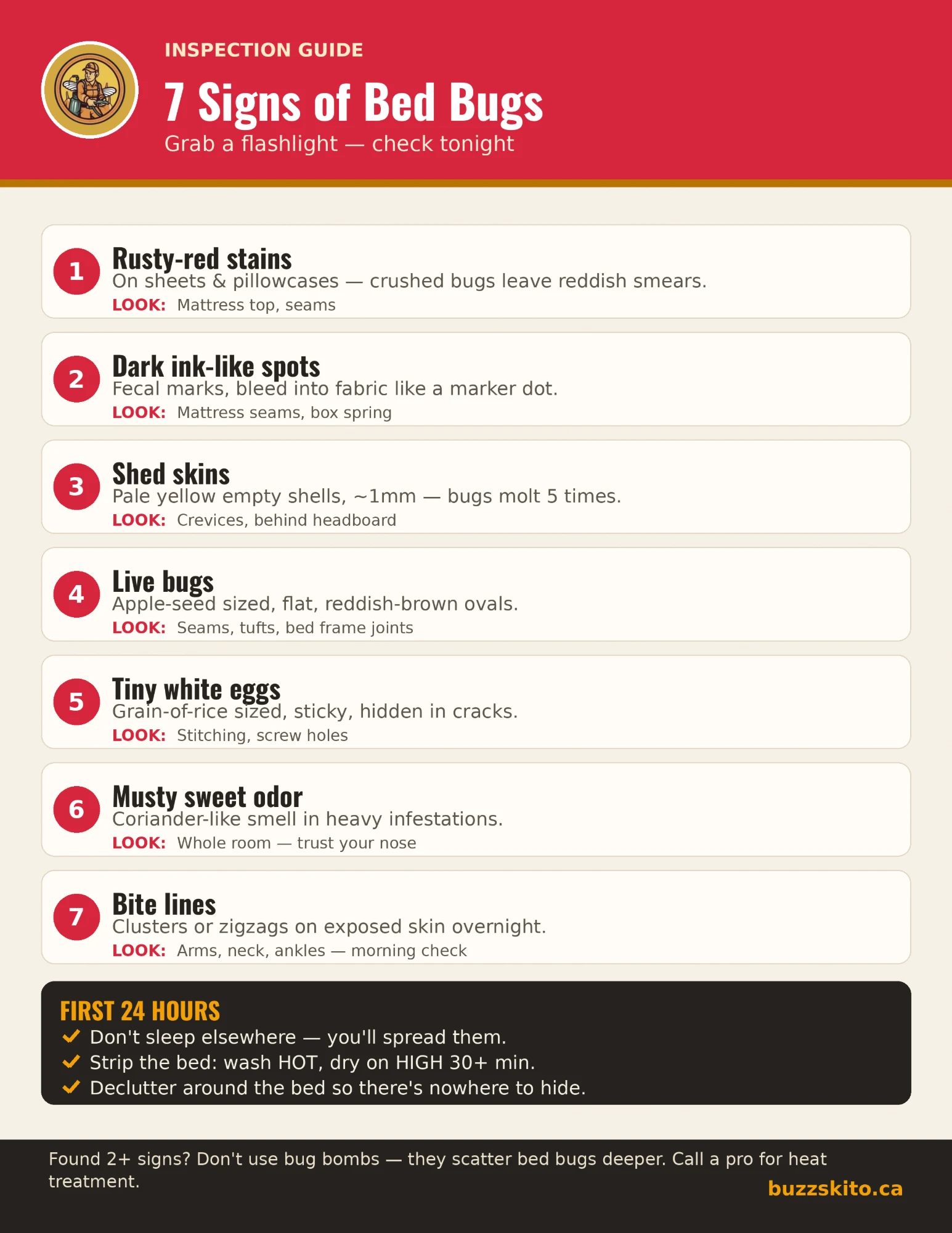 Signs of Bed Bugs: A 7-Point Checklist to Run TonightThe seven signs of bed bugs, from live bugs and ink-like spots to bites, with where to look tonight, what each is…
- Bed Bug Treatment Cost in Canada — What Decides the Number, and When DIY Is Genuinely…Bed bug treatment cost in Canada: published heat vs chemical ranges with sources, what makes quotes vary, who pays in…
- Does Lysol Kill Bed Bugs? What the Label, the Research and the EPA SayLysol is a germ-killing disinfectant, and its label names no insects. What a direct spray may do, what it misses, and…