
BuzzSkito Mosquito & Tick Control Specialists · Published July 21, 2026
SureGuard Mattress Encasement — the Short Verdict
The SureGuard zippered mattress encasement earns a place among the small handful of encasements we would trust for an active bed-bug problem, and it earns it on the strength of one detail: the Invisi-Zip closure. Encasements are a category where the fabric is almost never the problem — the closure is — and SureGuard has clearly designed around that reality. If you are choosing between it and the long-time category leader, SafeRest, you are choosing between two genuinely good products, and this review is about where SureGuard’s specific strengths and compromises land.
This is a single-product review. If you want the broader head-to-head across the whole category, our bed-bug mattress encasement guide covers SafeRest, Utopia, and the general buying rules; here we go deep on the SureGuard itself.
Check current Canadian availability for the SureGuard and its closest alternative:
The Invisi-Zip: Why the Closure Is the Whole Review
When a mattress encasement fails to contain bed bugs, it almost never fails in the middle of the fabric — it fails at the zipper. Specifically, it fails at the end of the zipper track, where the pull can creep back two, three, or four teeth during a night of tossing and turning. That opening is invisible from across the room and roughly two to three millimetres wide, which is triple the width a one-millimetre first-instar nymph needs to walk out. Every serious encasement is really a solution to that one problem.
SureGuard’s answer is the Invisi-Zip: the zipper itself is a fine-tooth design so the teeth close tightly enough that a nymph can’t squeeze between them, and then the whole closure is concealed and pinned shut under a Velcro-sealed fabric flap that folds over the top of it. The redundancy is the point. Even if the pull drifts, the flap keeps the opening covered; even if the flap loosens, the fine-tooth zipper is still doing its job. This is the same class of engineering as SafeRest’s secured micro-zipper end-stop — two brands solving the identical failure mode two slightly different ways. For an active infestation, this is the feature you are actually paying for, and SureGuard delivers it.
The practical takeaway when the encasement arrives: run the zipper all the way home, seat it firmly at the end of the track, then fold the flap over and press the Velcro closed along its whole length. Give the pull a gentle tug to confirm it’s seated. That thirty-second ritual is the difference between a sealed bed and a leaking one.
Is It Truly Six-Sided and Bite-Proof?
Yes on both counts, and both matter. “Six-sided” means the encasement zips fully around the mattress — top, bottom, and all four sides — sealing every seam, tuft, handle, and vent inside. This is the line that separates a real encasement from a mattress “protector” or “cover,” which is a fitted-sheet-style top layer that leaves the sides and bottom wide open and does nothing against bed bugs. Bed bugs don’t live inside your mattress foam the way dust mites do; they live on it, in the piping seams and tufts, and a six-sided seal takes every one of those hiding spots off the board at once.
“Bite-proof” means the fabric weave is tight enough that bed-bug mouthparts cannot penetrate it, so a bug sealed inside can never reach your skin to feed. Combined with the escape-proof weave — too fine for a 1 mm nymph to pass — that’s the containment guarantee: what’s inside stays inside and starves, and what’s outside can’t get in to colonize the mattress. SureGuard is explicitly marketed and constructed to both standards. The honest caveat that applies to every encasement, SureGuard included: a bug can still walk across the outside of the fabric and bite you in the night, which is why the encasement is a containment tool and not a standalone cure.
The Waterproof, Noiseless Membrane — Real Benefit or Marketing?
SureGuard leans hard on being 100% waterproof, and unlike some encasement claims this one is structurally real: the bed-bug barrier fabric is laminated to a thin membrane that blocks liquid, which means the same cover that contains bugs also protects the mattress from spills, sweat, and accidents. For a child’s bed, a guest room, or anyone managing incontinence, that’s a genuine two-jobs-in-one benefit that a non-waterproof encasement can’t match.
The reasonable worry is that “waterproof” means “crinkly, sweaty plastic sheet.” SureGuard markets the membrane as noiseless and breathable, and the reason it can is that what you actually lie on is a soft knit or terry top surface bonded over the membrane, not bare plastic — so it neither rustles like a tarp nor feels clammy the way a cheap vinyl cover does. It will always breathe somewhat less than an unlined cotton cover; that is the unavoidable trade every waterproof encasement makes. If you sleep hot, the fix is a breathable mattress pad on top, not skipping the encasement. During an active infestation, airflow is never a good enough reason to leave the mattress unsealed.
How to Choose the Right SureGuard: Size and Depth
This is the step most Canadian buyers get wrong, and getting it wrong is how a good encasement ends up leaking. Width and length follow the standard sizes — Twin, Twin XL, Double/Full, Queen, King, California King — but the spec that actually decides whether the seal holds is depth. Before you order anything, measure your mattress from the top surface straight down to the bottom edge:
- Standard mattresses run about 20–30 cm (8–12 in). A standard-depth SureGuard fits these.
- Pillow-top and thick hybrid mattresses run 33–43 cm (13–17 in) and need a deep-pocket version. SureGuard groups its fitted-depth ranges to cover both — check the listing’s stated inch range against your measurement.
- Too deep and the encasement leaves loose folds of fabric that bunch, migrate, and put uneven stress on the zipper flap.
- Too shallow and the seams and zipper strain under constant tension until something splits.
Order to your measured depth, not to the size you assume you have — a “queen” can be anywhere from 25 to 40 cm deep depending on whether it’s a basic innerspring or a plush hybrid, and only one of those fits a standard-depth cover cleanly.
What You’re Actually Paying For (and Where to Not Overspend)
Encasements span a real price range, and it’s worth being clear about which features earn their cost for bed-bug work specifically. Rank your money this way:
- The secured closure (pay for this). The Invisi-Zip flap is the single feature that separates a containment-grade encasement from a fitted protector with delusions. It is the one thing you cannot fix after the fact. Buy the closure.
- A true six-sided, bite-proof weave (pay for this). Non-negotiable for containment. If a listing won’t clearly state six-sided and bite-proof, it isn’t an encasement.
- Correct depth for your mattress (free — just measure). Costs nothing and determines whether everything above actually works.
- Waterproofing (pay if you need it). Genuinely useful for kids, guests, and spill protection, and SureGuard includes it — but it’s a bonus for bed-bug containment, not the core function. Don’t pay a large premium for it if you only care about bugs.
- Brand-name reassurance (worth a modest premium, not a large one). SafeRest’s longer track record is worth something; SureGuard offers a very similar closure for often a bit less. Both are defensible; the gap is small.
The way to overspend is to buy a big brand-name premium on top of features you don’t need; the way to under-spend disastrously is to buy a cheap “encasement” with an unsecured zipper and no flap, then discover a year later that it leaked the whole time. SureGuard sits in the sensible middle: containment-grade closure at a price that doesn’t punish you for buying two of them.
Don’t Encase the Mattress and Forget the Box Spring
This is the most common and most expensive mistake in the whole category. Field studies of infested homes repeatedly identify the box spring — not the mattress — as the single most common bed-bug harbourage, because its wooden frame, staples, and gauzy dust cover offer far more cracks and voids than a smooth mattress surface. Encasing the mattress while leaving the box spring bare seals the smaller reservoir and leaves the larger one wide open. SureGuard sells a matching box-spring encasement in the same sizes; buy the pair and install both on the same day. Our dedicated box-spring encasement guide covers the depth and rail-staple details specific to box springs.
Where the SureGuard Fits in a Real Bed-Bug Plan
An encasement is the cheapest decisive move in bed-bug control — it permanently removes the largest harbourage in the room for less than the cost of a hotel night — but it is one tool in a sequence, not the sequence itself. Here is where the SureGuard sits:
- Confirm the infestation first. Know what you’re dealing with — our guide on how to check for bed bugs walks through the signs.
- Vacuum, then encase. Run a sealed-HEPA vacuum over the mattress and box-spring seams first to reduce the population you’re about to seal in, then install the SureGuard on both.
- Isolate the bed. Put the legs into interceptor cups, pull the bed away from the wall, and make sure no bedding touches the floor — the encased bed becomes an island bugs can only reach by climbing through the traps.
- Treat the room. Hit the frame, headboard, and baseboards with a steamer, and launder all bedding hot.
- Monitor and date it. Write the install date on the encasement corner; it stays zipped for 12–18 months. Watch the interceptors week over week to confirm the numbers are dropping.
On the chemical side, be careful what US guides tell you to add. Products such as certain professional-only Crossfire, Temprid, and Advion concentrates are routinely recommended south of the border but are not PMRA domestic-class registered and are illegal for Canadian consumers to import or use, even when a marketplace seller will ship them. We cover what’s actually legal to spray in our bed-bug spray Canada guide, and the full legal DIY sequence in how to get rid of bed bugs in Canada. The encasement, interceptors, steam, and hot laundry carry more of the load in a legal Canadian plan than any spray does.
The Verdict: Who Should Buy the SureGuard
Buy it if you have an active or suspected infestation and want a containment-grade encasement that gets the closure right without paying the top-of-category premium — the Invisi-Zip flap is the real deal, the six-sided bite-proof seal is legitimate, and the waterproof membrane is a genuine bonus for kids’ and guest beds. Consider SafeRest instead if you want the longest public track record and published lab-test claims and the price difference doesn’t move you. Skip both and buy budget if your need is purely prevention across many beds in a rental or student house, where the stakes of a marginal closure are lower — but never put a budget encasement on a bed with confirmed bugs. Whichever you choose, the encasement only works if you seal the box spring too and keep everything zipped, undisturbed, for a full year or more.
Frequently Asked Questions
Is the SureGuard mattress encasement actually bed-bug proof?+
Yes, when it is installed and stays sealed. The SureGuard zippered encasement covers all six sides of the mattress in a bite-proof, escape-proof membrane, and its defining feature is the Invisi-Zip closure — a fine-tooth zipper that is concealed and pinned shut behind a Velcro-sealed fabric flap. That flap is what matters: the single most common way any encasement leaks is the zipper pull drifting a few teeth open during normal tossing and turning, and the secured flap is designed to stop exactly that. The fabric itself is tightly woven enough that bed-bug mouthparts cannot bite through it and 1 mm first-instar nymphs cannot squeeze through the weave. What makes it bed-bug proof in practice is not the box claim but your discipline: zip it, seal the flap, and do not open it for 12 to 18 months.
What is the Invisi-Zip on the SureGuard encasement?+
Invisi-Zip is SureGuard’s name for its zipper-and-flap closure system. Instead of leaving the zipper pull exposed at the end of the track — where it can creep open and leave a gap wide enough for a hatched nymph — the zipper is fine-toothed and then hidden and held shut under a Velcro-sealed fabric flap that folds over the whole closure. The point is redundancy: even if the zipper pull drifts, the flap keeps the opening covered and the seal intact. For bed-bug containment this end-of-zipper detail is the whole ballgame, because that end-stop is where cheap encasements fail. It is the same category of engineering as SafeRest’s secured end-stop, just SureGuard’s implementation of it.
How does SureGuard compare to SafeRest?+
They are the two most cross-shopped containment-grade encasements on amazon.ca, and they are genuinely close. Both are six-sided, zippered, waterproof, and both engineer the zipper end-stop that decides whether containment holds — SafeRest with a secured micro-zipper end-stop, SureGuard with the Invisi-Zip flap. SafeRest is the longer-running category leader with the deeper track record and published lab-test claims; SureGuard leans on a fully waterproof, noiseless membrane and a long warranty and often sits at a slightly friendlier price. For an active, confirmed infestation either one is a defensible buy. Pick on price, depth availability for your mattress, and whether you want the waterproof/noiseless membrane SureGuard emphasizes.
Is the SureGuard encasement waterproof and does it feel like plastic?+
It is fully waterproof — that is one of SureGuard’s headline features — because the bed-bug barrier fabric is laminated to a thin membrane that blocks liquid. The common worry is that waterproof means crinkly and hot like a plastic sheet. SureGuard markets the membrane as noiseless and breathable, and in practice a soft knit or terry top surface over the membrane is what you actually feel and hear, not bare plastic. It will always breathe less than an unlined cotton cover, which is the trade every waterproof encasement makes. If you run hot, put a breathable mattress pad on top; do not skip the encasement to chase airflow during an active infestation.
What size and depth SureGuard encasement do I need?+
Measure your mattress depth — top surface to bottom edge — before you order, because depth is the spec that decides whether the seal sits flat or strains. Standard mattresses run about 20 to 30 cm (8 to 12 in); pillow-top and thick hybrid mattresses run 33 to 43 cm (13 to 17 in) and need a deep-pocket version. SureGuard sells fitted-depth ranges (commonly grouped like 6–18 in and deeper options) across the standard Canadian sizes — Twin, Twin XL, Double/Full, Queen, King, California King. Too deep and you get loose folds that bunch and stress the flap; too shallow and the seams strain until they split. Match the depth range to your measured mattress, not to what you assume your size is.
Does an encasement kill the bed bugs already in my mattress?+
Not directly — it starves them. An encasement is a containment barrier, not a pesticide. Any bugs and eggs already on the mattress are sealed inside where they cannot reach you to feed, and over months they die of starvation. That is slow: adult bed bugs can survive roughly a year without a blood meal, and lab studies have recorded 400-plus days at the cooler temperatures common in Canadian basements and spare rooms. That is exactly why the encasement has to stay zipped for 12 to 18 months. It simultaneously denies new bugs the mattress seams they would otherwise hide in, which is the other half of the job.
Do I need a box spring encasement too, or just the mattress?+
Both, on the same day. Field research on infested homes repeatedly finds the box spring is the single most common bed-bug harbourage, because its wooden frame, staples, and gauzy dust cover offer far more cracks than a smooth mattress. Encasing the mattress but leaving the box spring bare seals the smaller reservoir and ignores the bigger one. SureGuard and most brands sell a matching box-spring encasement in the same sizes. We cover the box-spring side of the decision in our companion box-spring encasement guide — buy the pair and install them together.
How long does the SureGuard encasement have to stay on?+
A minimum of 12 months, and 18 months is the safer number most pest professionals in Canada use. The containment only succeeds once every bug sealed inside has starved, and because adults survive so long without feeding — 400-plus days in cool conditions — the window has to be long and unbroken. The critical rule: opening the zipper even once resets the clock, because any survivor inside walks straight out. Launder a normal washable protector or fitted sheet over top instead, and do not unzip the encasement itself until at least a full year has passed with no bites, no fecal spotting, and nothing new in your interceptor traps.
Can bed bugs bite through the SureGuard encasement?+
Not through the fabric of a properly made one. The bite-proof weave used in containment-grade encasements is too tight for bed-bug mouthparts to penetrate, so a bug sealed inside cannot reach you and a bug on the outside cannot bite through to a bug inside. The real risks are mechanical, not bite-through: a torn seam, a zipper or flap left partly open, or a rip caused by a sharp bed-frame edge or a metal staple sawing the fabric over months. First-instar nymphs are about 1 mm wide, so a gap you can barely see is a door. Inspect the corners and the Invisi-Zip flap at every sheet change.
Will the SureGuard encasement alone get rid of my bed bugs?+
No — and no honest review says otherwise. An encasement does exactly one job extremely well: it seals the mattress and box spring so bugs inside starve and the bed becomes trivial to inspect. Bed bugs also live in the bed frame, headboard, baseboards, night stands, outlet plates, and sofa seams. A realistic Canadian self-treatment plan pairs the encasement with interceptor cups under the bed legs, steam on the frame and baseboards, hot laundering of all bedding, and a sealed-HEPA vacuum of the room. For infestations spread across multiple rooms, licensed professional treatment is usually the cost-effective path.
Is the SureGuard encasement legal to buy in Canada?+
Completely. Encasements are physical barriers, not pesticides, so they carry no PMRA registration requirement and there is no grey-market or cross-border compliance trap — unlike many US-recommended bed-bug chemicals (professional-only concentrates such as certain Crossfire, Temprid, or Advion products) that are not PMRA domestic-class registered and are illegal for Canadian consumers to import or use. SureGuard is sold directly on amazon.ca in Canadian sizing, so you are buying a fully legal product with no customs or compliance risk. The mechanical tools — encasements, interceptors, steam, hot laundry — carry more of the load in a legal Canadian DIY plan than any spray does.
Can I wash the SureGuard encasement?+
Generally yes — most quality encasements including SureGuard are machine washable — but not during an active infestation. Removing the encasement to wash it opens the seal and releases the bugs you have trapped, which defeats the entire purpose. Keep a regular washable protector or fitted sheet over the encasement and launder that as often as you like. Wash the encasement itself only after the 12-to-18-month containment window has fully passed, using warm water and a hot dryer cycle (60°C or hotter kills all bed-bug life stages). Check the care label for the exact temperature the membrane tolerates.
Related Reading
- Best Bed-Bug Mattress Encasement Canada — SafeRest vs Utopia (Category Guide)
- Best Bed-Bug Box-Spring Encasement Canada
- Bed-Bug Interceptor Traps Canada — Monitor and Protect the Bed
- Best Bed-Bug Steamer Canada — Heat That Kills the Eggs
- Best Sealed-HEPA Vacuum for Bed Bugs & Fleas Canada
- How to Check for Bed Bugs in Canada
- How to Get Rid of Bed Bugs in Canada — the Full Plan
- Best Pest-Control Equipment in Canada — the Full Device Hub
This review is part of our independent Canadian pest product research series. More independent Canadian pest product research →
Keep reading
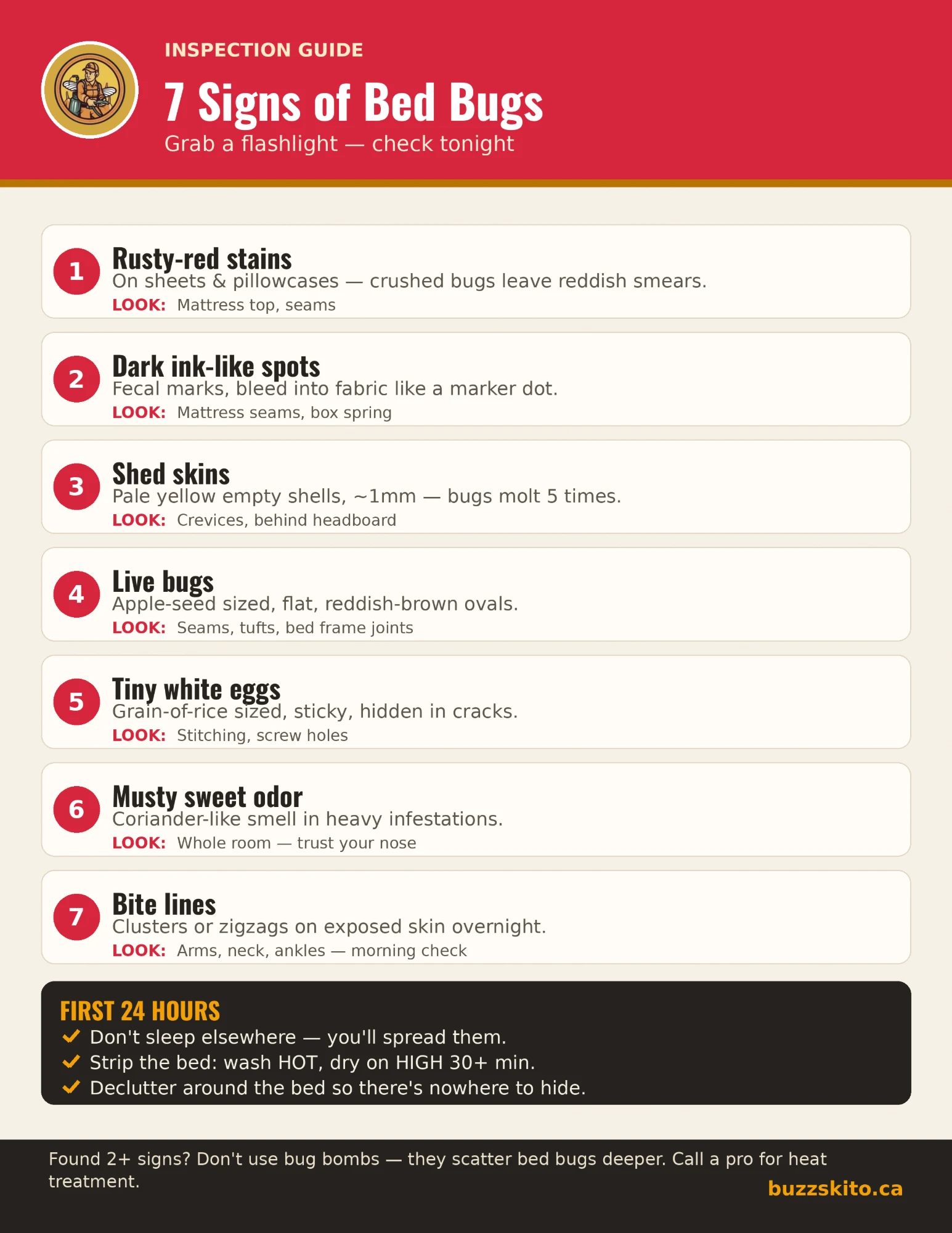 Signs of Bed Bugs: A 7-Point Checklist to Run TonightThe seven signs of bed bugs, from live bugs and ink-like spots to bites, with where to look tonight, what each is…
- Bed Bugs on the TTC — What a Toronto Commuter Should Actually Worry About, and the…Bed bugs on the TTC: why transit is a far poorer route than your own bedroom, what to do if you see one on a seat, and…
- Dupray Neat vs Hill Injection (Canada 2026) — Home Steamer or Commercial Machine?Dupray Neat vs Hill Injection in Canada: what the commercial machine actually buys you (uptime, not killing power), why…