
Published by BuzzSkito Mosquito & Tick Control
Published October 23, 2026 · Fact-checked against the sources listed below
What is a camel spider?
A camel spider is an arachnid but not a true spider: it belongs to an order of its own, Solifugae, and also goes by sun spider, wind scorpion, solpugid and solifugid. The Defense Centers for Public Health–Aberdeen (DCPH-A), part of the US Department of Defense, says solifugids are not spiders, scorpions or insects, and counts over 1,000 species, most of them in hot deserts.
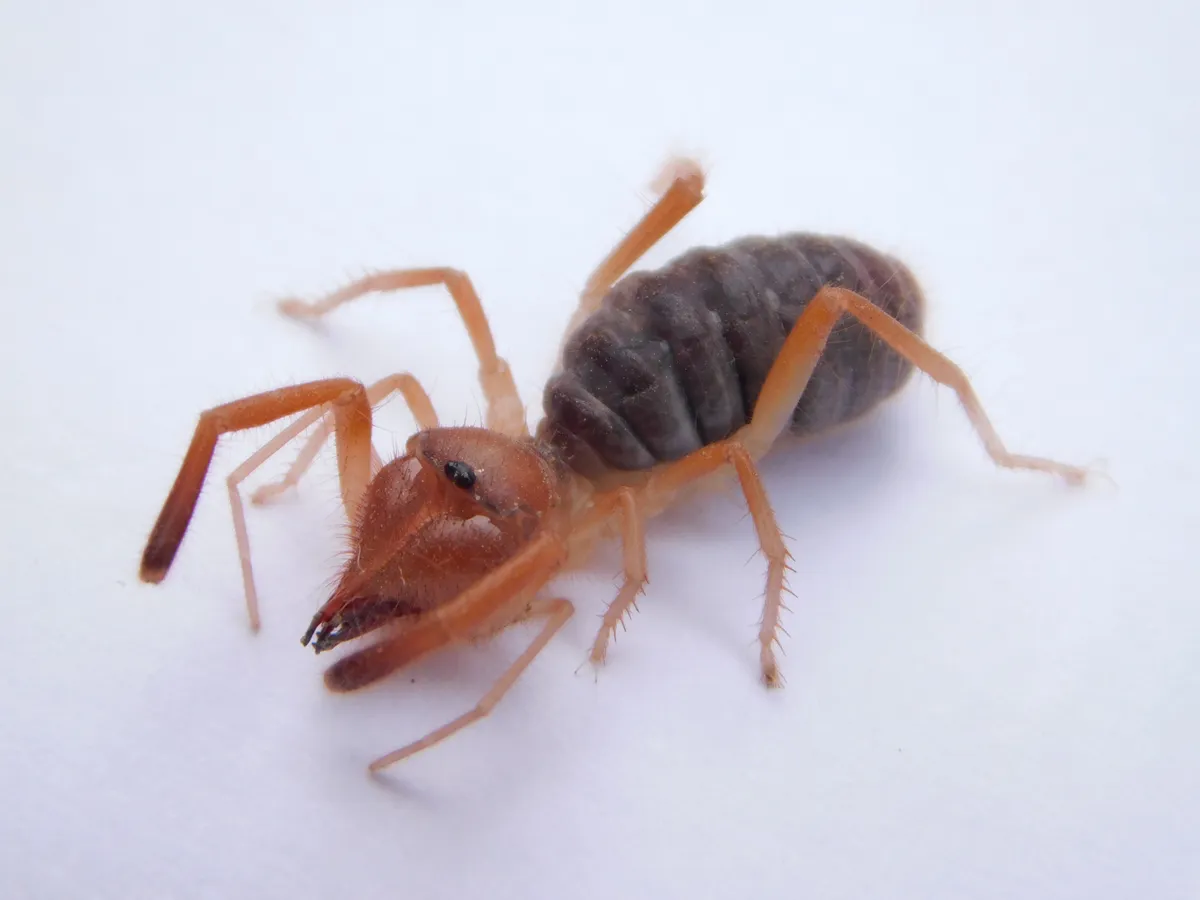
UC IPM's Pest Notes on the windscorpion says it has no venom glands or web-spinning organs, so it never builds a web, and, unlike a scorpion, no stinger or pincers. Silk-spinning organs and a distinct abdomen are what set spiders apart from the other arachnids, Texas A&M AgriLife Extension's spider guide explains, and the guide to arachnids and insects shows where ticks and scorpions fit.
In the US they are mainly animals of the dry West and Southwest. University of Arizona Cooperative Extension calls solpugids beneficial predators related to spiders, with more than 120 species described in North America and over 50 in the southwestern US.
How do you identify a camel spider?
Look at the front end. A camel spider has huge jaws sticking straight out from its head and, in front of its legs, a pair of long, leg-like palps (pedipalps), so it seems to have ten legs. Colorado State University Extension's sunspider fact sheet says the pedipalps look like a fifth pair of legs.
Is it a camel spider? Five checks
- Jaws. Large, pincer-like jaws (chelicerae) that point forward and work up and down like pliers (UC IPM; University of Arizona).
- Ten legs, or so it seems. Eight legs plus two leg-like palps; UC IPM says it walks on the last three pairs and uses the first pair as feelers.
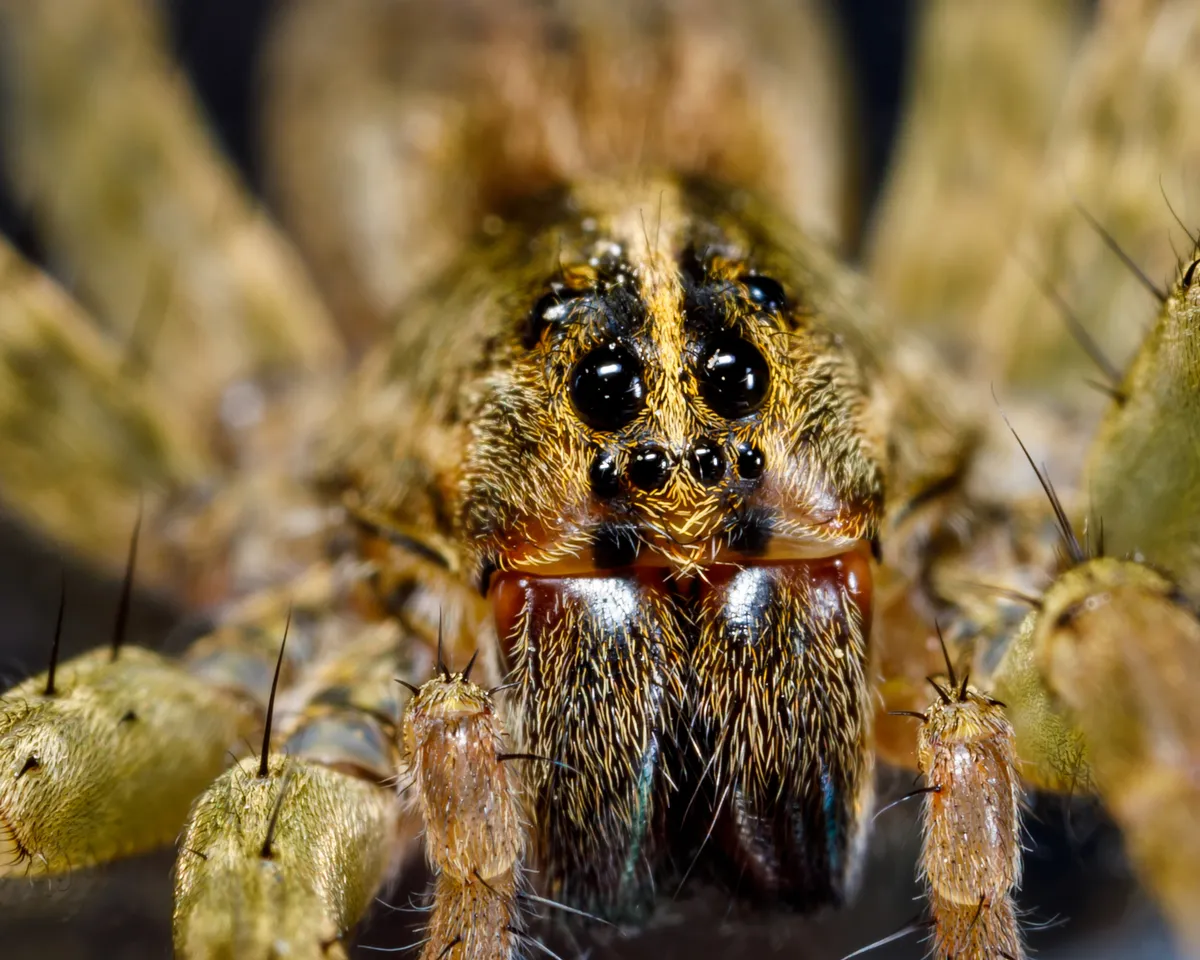
- Two eyes. The University of Arizona describes two distinct eyes; Texas A&M says most spiders have eight.
- Body. A head section and a plump, 10-segmented abdomen, light tan to brown, often with a darker abdomen (University of Arizona; DCPH-A).
- No web, no stinger. It spins no silk and has no stinger (UC IPM); a tail with a stinger means a scorpion.
Behavior helps too. UC IPM says windscorpions run swiftly and are active mostly at night, and the University of Arizona says they run carrying the palps above the body. DCPH-A says the sticky palp tips help them catch prey and climb smooth surfaces such as glass.
How big and how fast are camel spiders really?
Most US camel spiders are under 2 inches long. The University of Arizona gives 5/8 to 1 3/4 inches (15 to 45 mm) for the western US, UC IPM gives 3/4 to 1 1/2 inches for California, and Colorado State gives about 1 1/2 inches with legs extended for Colorado. A big one: a male Eremocosta striata from Pima County, Arizona, documented by Texas A&M AgriLife Extension's El Paso County office, measured about 1 3/4 inches (43 mm) with its jaws and about 3 2/3 inches (93 mm) across the legs.
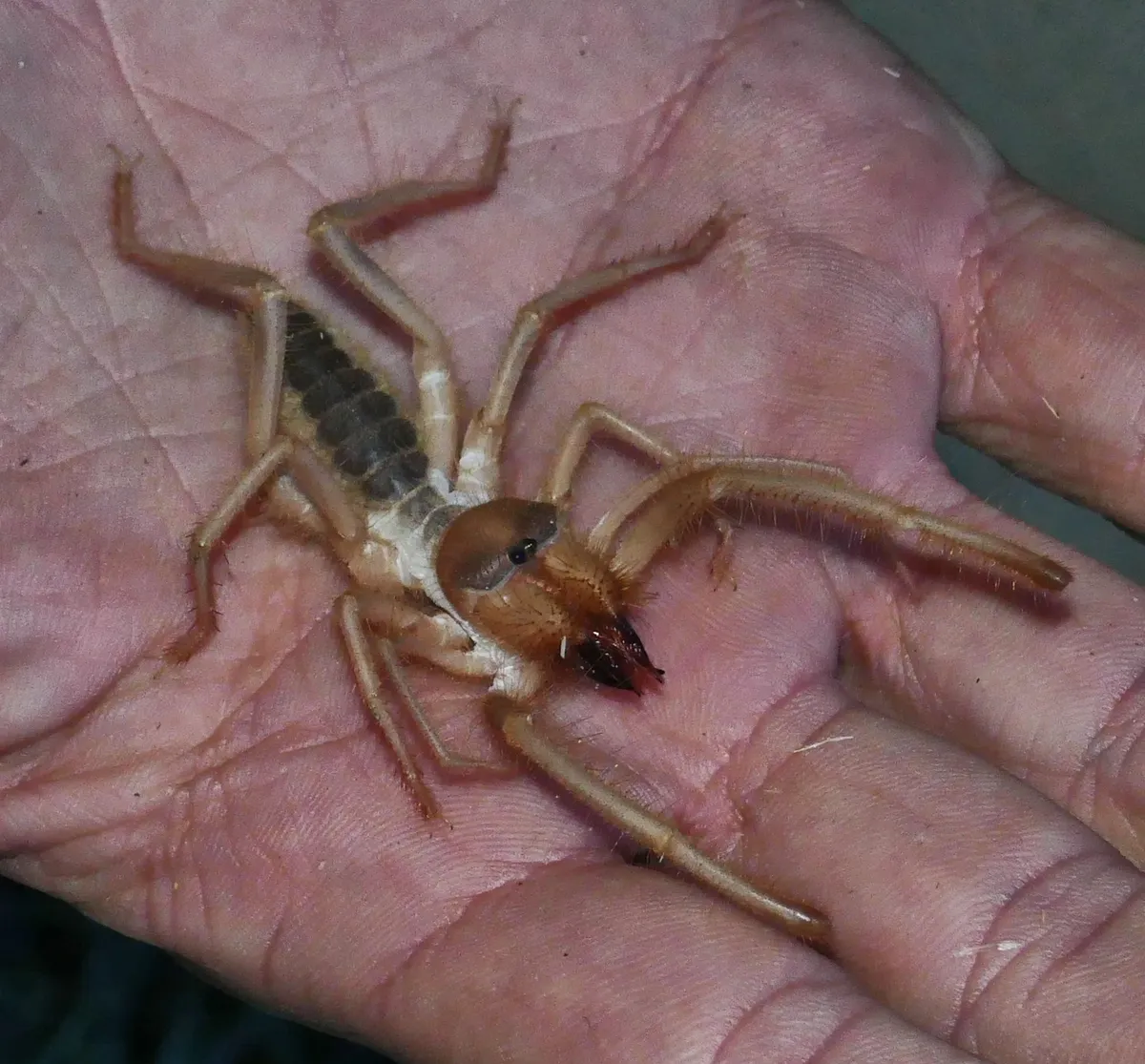
The biggest species anywhere are not giants either: DCPH-A says the largest is no more than 6 inches (15 cm) long with legs outstretched, and the Burke Museum's camel spider myth page, by Rod Crawford, puts the maximum body length of Near Eastern solpugids at about 2 inches (5 cm).
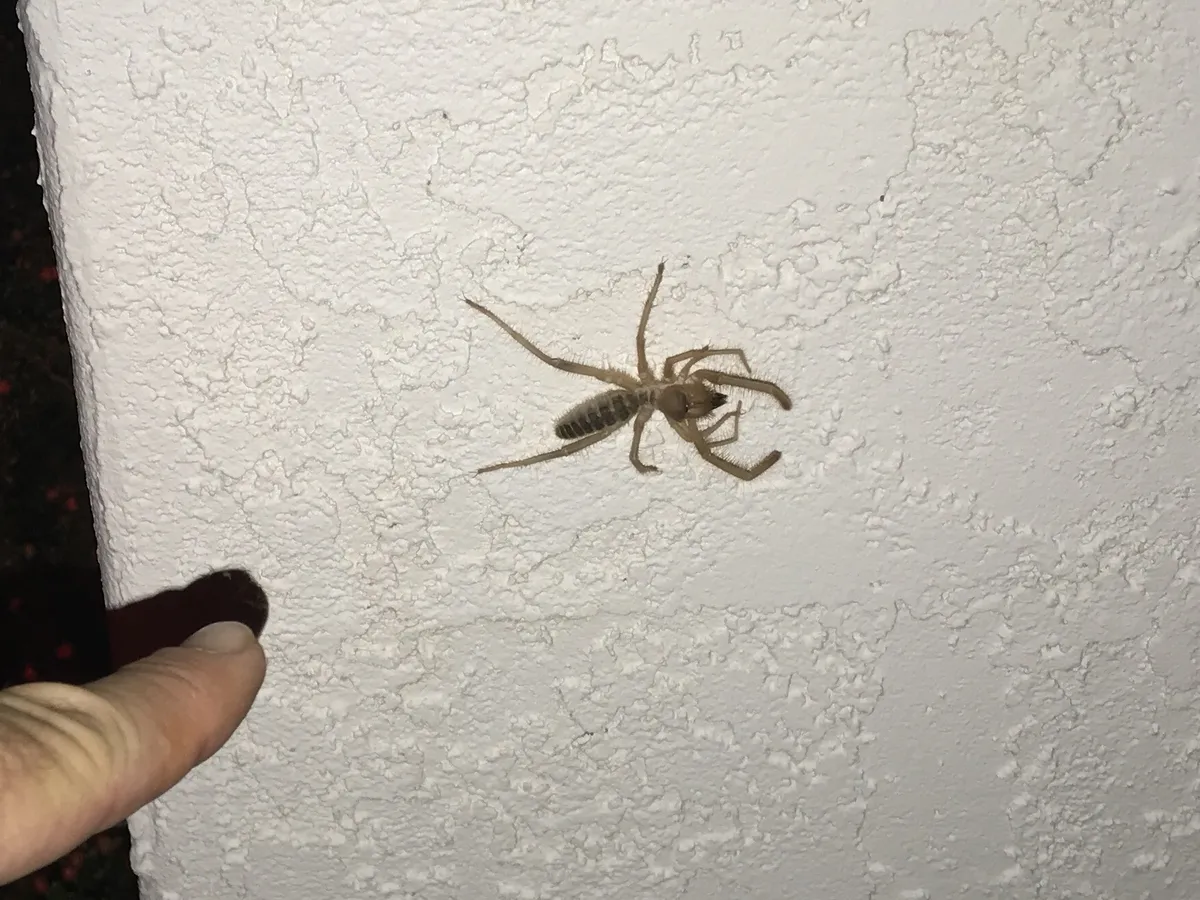
The famous giants were a camera trick. A photo of two camel spiders mass-emailed in April 2004, said to come from someone stationed in Baghdad, showed animals around 1 1/2 inches (4 cm) long, according to a correspondent the Burke Museum cites, made to look 8 to 10 times life size by false perspective.
Speed is the other exaggeration. The Burke Museum says the highest speed cited in scientific sources is 10 mph and that the only accurately measured speeds Crawford found were under 1 mph; DCPH-A says about a mile an hour, not the 25 mph of the email stories. Still, Colorado State says they can run down most prey, and the University of Arizona says their speed makes them hard to trap.
Which camel spider myths are false?
Nearly all of the frightening ones. Many spread by email during the Iraq war, and the Burke Museum traces the numbing-venom story to an earlier Gulf War myth. Here is each claim against what the Burke Museum and DCPH-A say.
| The claim | What the sources say |
|---|---|
| As big as dinner plates | False. The largest species is no more than 6 inches long with legs outstretched (DCPH-A). |
| They run 25 mph | False. 10 mph is the top figure in scientific sources, and the only accurately measured speeds found were under 1 mph (Burke Museum). |
| They jump 6 feet high | False. Their jumping is poor (DCPH-A) and nothing special (Burke Museum). |
| They scream as they run | False. They cannot scream (DCPH-A); some species make a barely audible buzz or hiss (Burke Museum). |
| They chase people | No. They head for shade, including a moving human shadow (DCPH-A; Burke Museum). |
| They eat camels' stomachs | False. They do not feed on large animals such as camels or people, and they lay their eggs in soil (Burke Museum). |
| Their venom numbs you and rots flesh | False. They have no venom glands (DCPH-A; UC IPM); a bite that breaks the skin can become infected (Burke Museum). |
Each answer comes from the sources named in its row, linked in the text of this page.
The chasing story has a simple explanation: DCPH-A says solifugids follow a moving human shadow, so they seem to give chase, and the Burke Museum says one running toward a person in the hot desert sun is looking for shade.
Do camel spiders bite, and can the bite break the skin?
They can bite, but they have no venom. UC IPM says a windscorpion bites only in self-defense, when handled or restrained, and can't seriously harm people. DCPH-A says solifugids have no venom glands but can give a painful bite if cornered or handled.
Whether a bite breaks the skin is where the sources differ, and size may explain it. Colorado State, describing Colorado's windscorpions, which reach about 1 1/2 inches with legs extended, says a bite is rare and no more than a mild pinch that cannot break the skin. DCPH-A says the larger species can easily puncture and tear skin and that secondary infections may follow, and the Burke Museum says a bite that does break the skin is likely to become infected, which disinfectant can prevent.
So treat a bite that breaks the skin as a wound. For insect and spider bites, Poison Control advises washing with soap and water, putting cold water or a cloth filled with ice on it for 10 to 20 minutes, and watching for pus, swollen glands, and swelling, redness or pain that gets worse.
For the spiders whose bites do matter in the US, see the guide to venomous spiders; for photos of spider bites, see what a spider bite looks like.
Where do camel spiders live in the US?
Mainly in the dry West and Southwest. UC IPM says windscorpions are common in California's San Joaquin Valley and the arid parts of the Southwest, the University of Arizona counts over 50 species in the southwestern US, and Colorado State says 15 species live in the drier areas of Colorado below 7,500 feet.
By day they hide under rocks, boards, logs, cow chips and plant stalks or in rodent burrows, Colorado State says. UC IPM says they are active mostly at night but may be seen by day, and DCPH-A says some species are active only by day. The guides to spiders in Arizona and spiders in California cover the true spiders there.
What do camel spiders eat?
Small insects and other arthropods, which Colorado State says they find by touch or vibration. The University of Arizona adds spiders and the occasional scorpion or centipede, noting that they have been known to eat each other, and DCPH-A says the diet sometimes includes small lizards. They crush prey with the jaws and, the University of Arizona says, suck out its body fluids.
Because they eat insects, UC IPM and the University of Arizona regard them as beneficial. Colorado State assumes a one-year life cycle for Colorado's windscorpions: a female lays one mass of 50 to 200 eggs in a burrow, typically in late summer, and is thought to die soon after; the young hatch in 1 to 2 weeks and stay in the burrow a couple of weeks before leaving to hunt.
Why is there a camel spider on my porch or in my garage?
Often lights, and the insects drawn to them. Colorado State says outdoor lighting near a foundation may often contribute to windscorpions turning up indoors, as they hunt insects the lights attract, though their getting in is infrequent, mostly in mid to late summer. DCPH-A says they run toward any light at night, and Texas A&M's El Paso County office notes that its Arizona specimen was attracted to mercury vapor and ultraviolet lights.
Indoors, the University of Arizona says, one is either hunting insects such as crickets or looking for a way back out, and some ride in on firewood or other things stored outside. UC IPM says they can turn up on roads and paths and sometimes enter buildings.
What looks like a camel spider?
Four other ground hunters get mistaken for camel spiders, and a basement insect shares the name. The quick-ID table at the top compares them.
Wolf spider
A true spider with eight eyes: Texas A&M describes a front row of four tiny eyes, a larger pair behind them, often two dark stripes on the head section, and a length of 1/2 to 3 inches. Wolf spiders hunt after dark and commonly slip indoors under doors. See the wolf spider guide.
Tarantula
Bigger and hairy all over. UC IPM's Pest Notes on spiders gives tarantulas a body 1 to 2 inches long and says they wait at a burrow entrance at night, while males wander looking for females. Texas A&M says the Texas brown tarantula's legs can span more than 3 inches and that the bite is not dangerous, though hairs from the abdomen can irritate skin and eyes. See the tarantula guide.
Scorpion
Pincers and a stinger. UC IPM's scorpion Pest Note describes a crablike animal with a pair of pincers, four pairs of legs and a long, segmented tail ending in a stinger; scorpions hunt at night and glow under a black light. The bark scorpion grows to about 3 inches, and UC IPM says anyone stung by one should seek medical attention. See what to do about a scorpion sting.
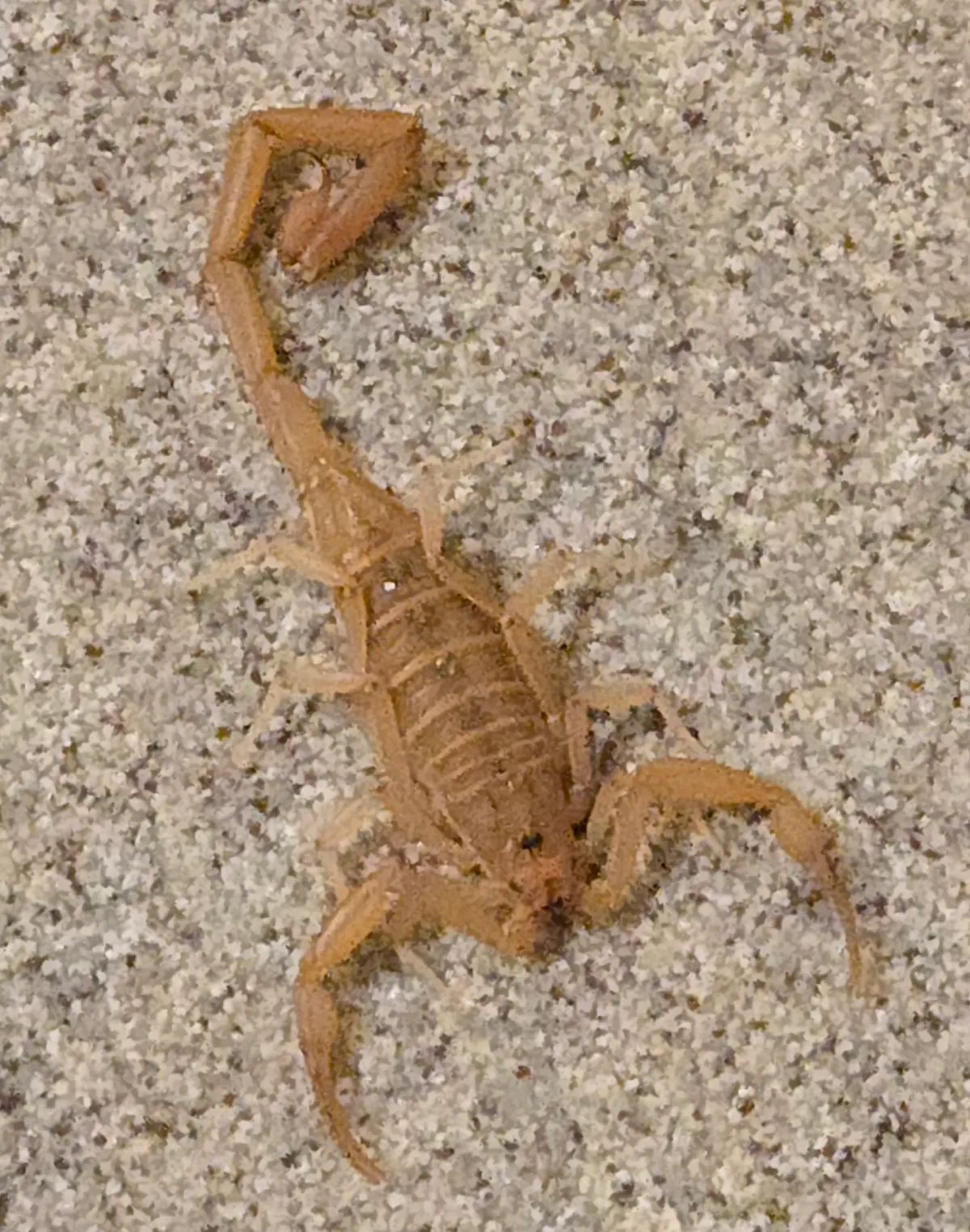
Whip scorpion (vinegaroon)
No stinger, and a whip for a tail. UF/IFAS Extension's giant whip scorpion profile describes an arachnid of Arizona, New Mexico, Texas, Oklahoma and Florida up to 2 inches long, not counting the tail, with large pincer-like palps. It has no venom, sprays concentrated acetic acid from the base of its tail and can give a noticeable pinch if mishandled.
Camel cricket
It shares only the name. Clemson Extension describes camel crickets as wingless, humpbacked insects 1/2 to 1 1/2 inches long, with antennae much longer than the body and big jumping hind legs, found indoors in damp basements, crawl spaces and garages. See the camel cricket guide.
Still unsure? The spider identifier asks seven questions, and the camel spider is among its results.
Commonly confused with
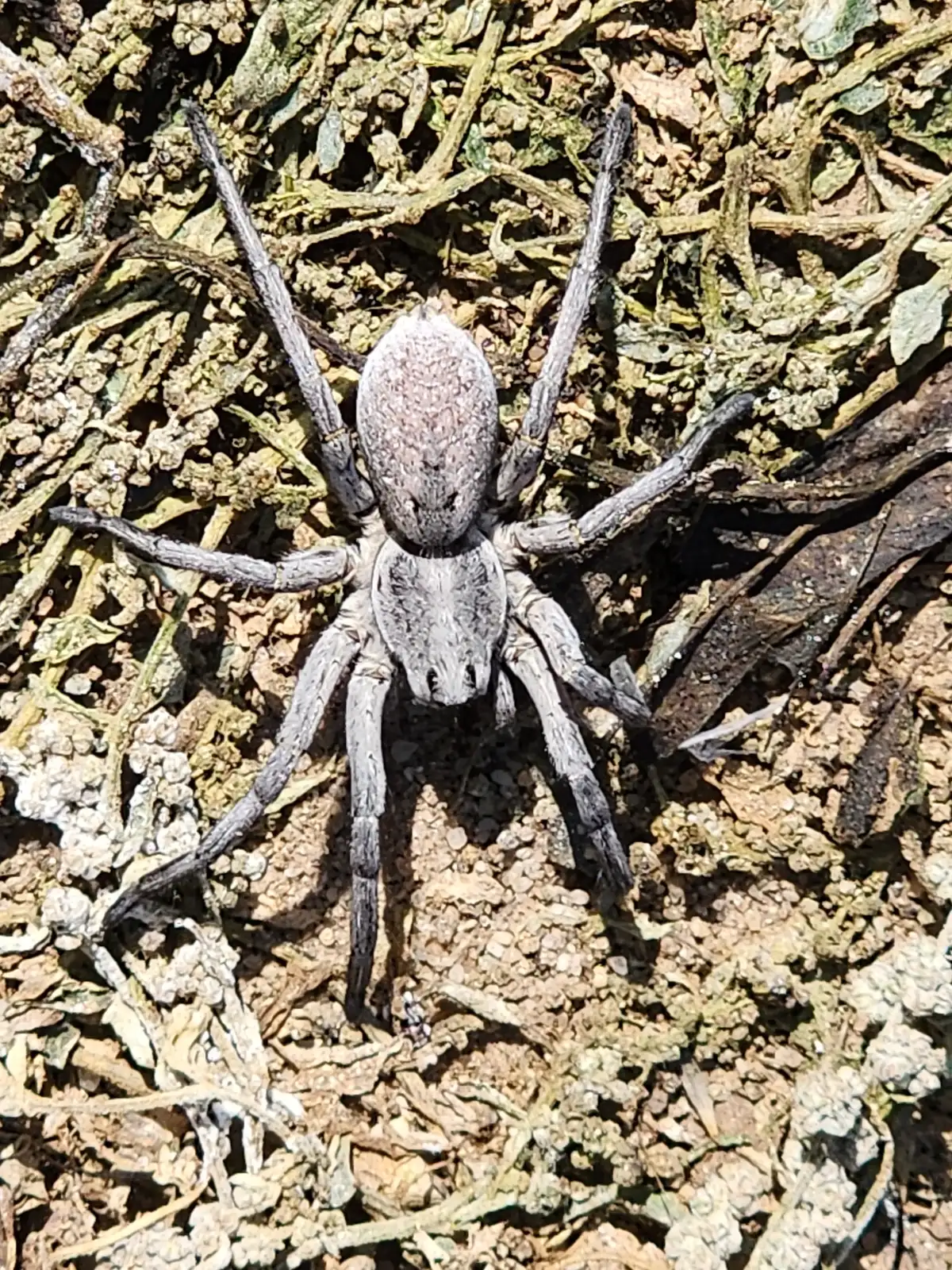 Wolf spiderA true spider with eight eyes, including a large pair on top of the head
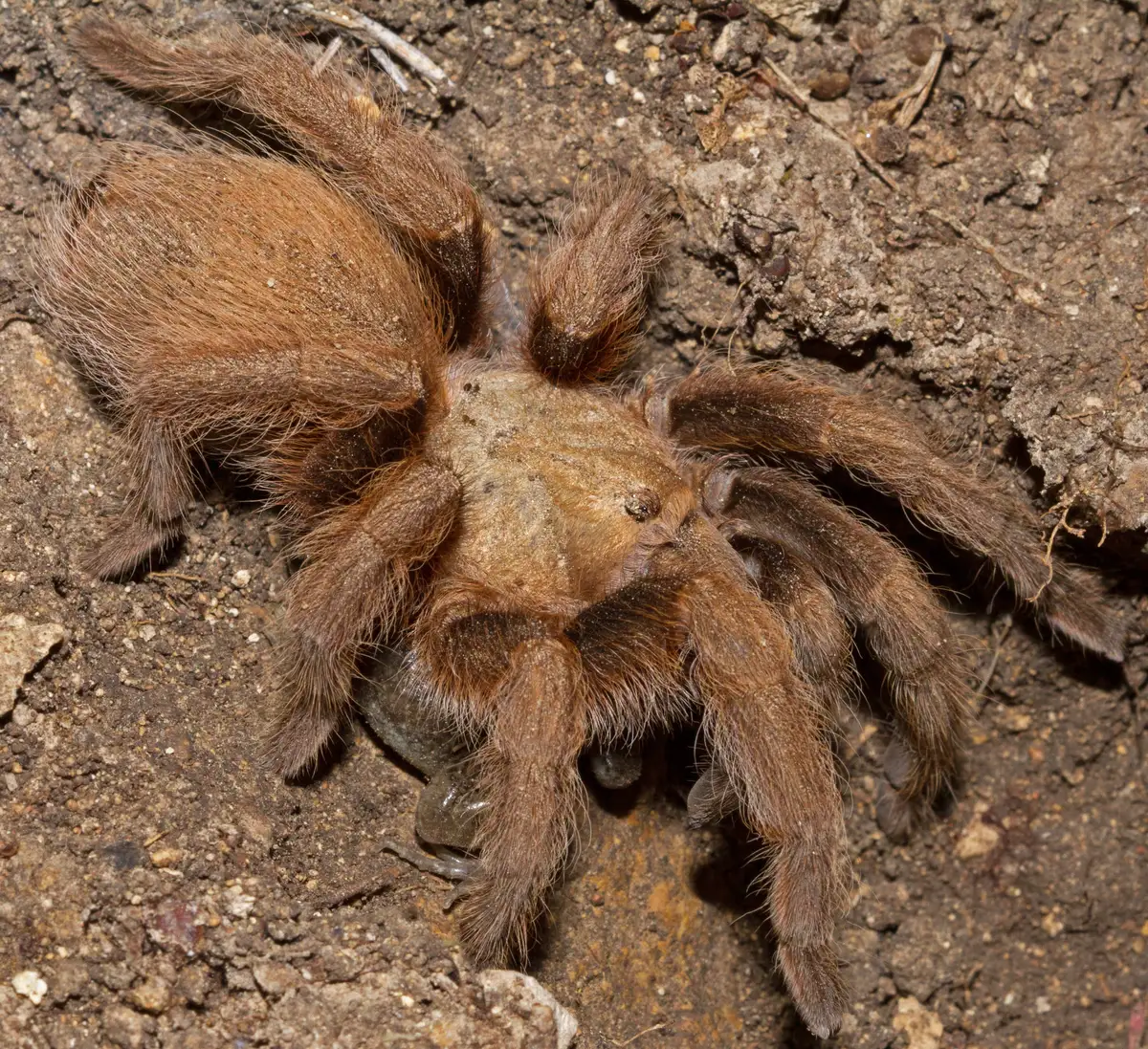 TarantulaBig and hairy all over, with a body 1 to 2 inches long; it waits at the mouth of a burrow
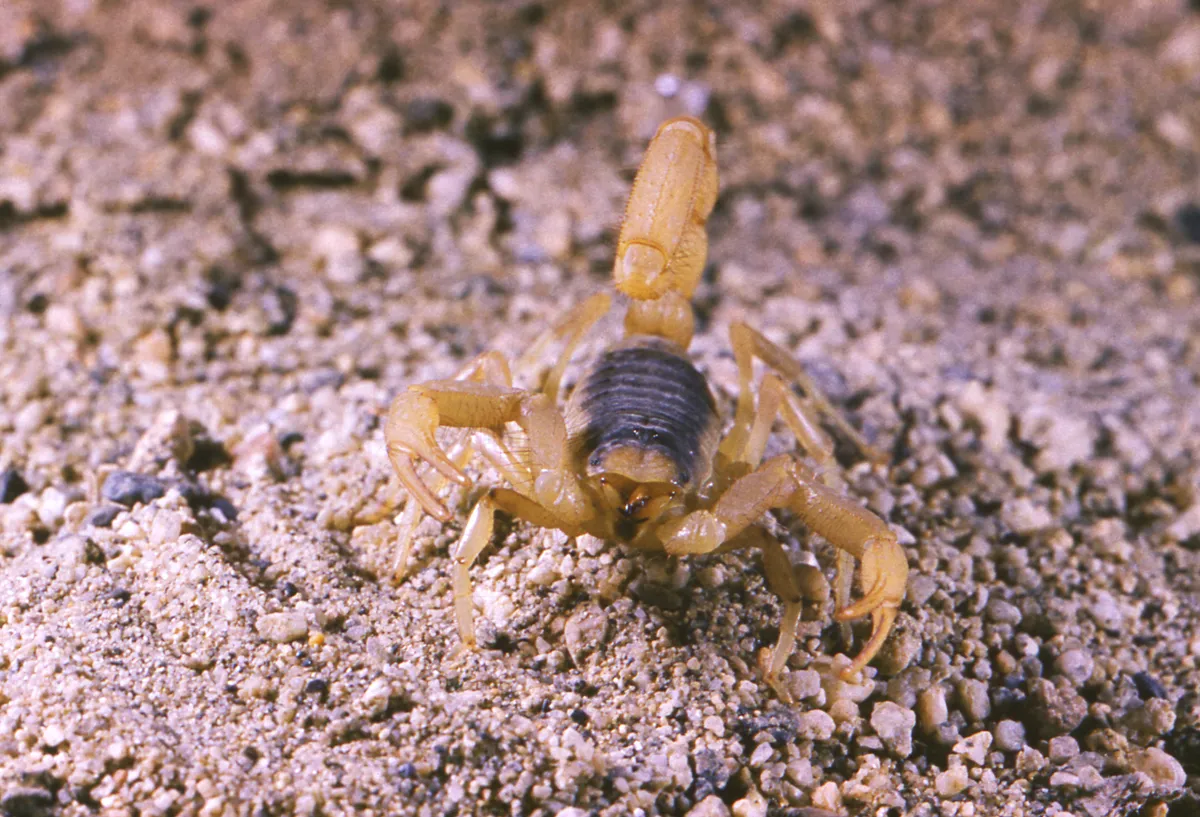 ScorpionPincers in front and a long, segmented tail that ends in a stinger
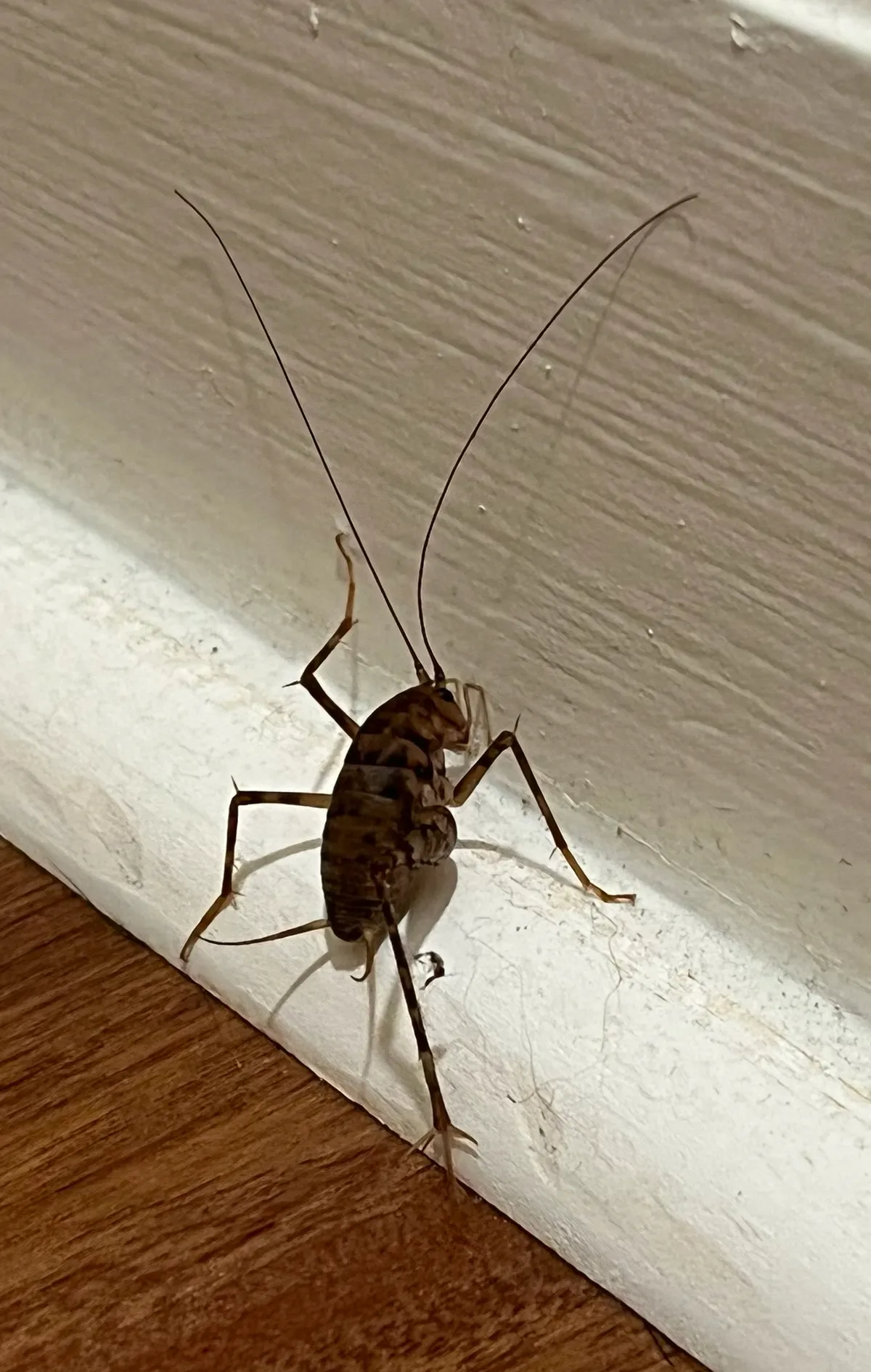 Camel cricketA wingless, humpbacked insect with antennae longer than its body; it jumps
Photos: Wolf spider: no rights reserved, via iNaturalist, CC0 1.0. Tarantula: no rights reserved, via iNaturalist, CC0 1.0. Scorpion: CDC/ Mr. Graham Heid (CDC Public Health Image Library, phil.cdc.gov), public domain. Camel cricket: no rights reserved, via iNaturalist, CC0 1.0.
What should you do with a camel spider in the house?
Catch it and put it outside; there is no need to spray. UC IPM says to place a jar over it, slip a piece of paper under the jar and release it outdoors, and recommends no chemical control; the University of Arizona also says pesticides are not recommended. Do not try to pick one up, DCPH-A says, and brush one off rather than swatting it.
- Seal the way in. Seal cracks around the foundation and under doors (UC IPM), and check weather stripping and the gaps where utility lines enter (University of Arizona).
- Dim outdoor lights. Colorado State says less outdoor lighting plus sealed entry points near ground level should keep most out.
- Find their food. If they keep turning up inside, look for the indoor insects feeding them and check firewood you bring in, the University of Arizona says.
- In camp, shake things out. DCPH-A advises shaking out shoes, sleeping bags and clothing before use, and never walking barefoot outdoors.
Keeping spiders out of the house covers sealing gaps in more detail.
This guide is general educational information, not medical advice. If you have symptoms or concerns after a bite or exposure, contact a healthcare provider.
Frequently Asked Questions
Are camel spiders harmful to humans?+
Not seriously. UC IPM says windscorpions can't seriously harm people, and DCPH-A says that apart from the painful pinch they can give a careless person, solifugids pose no threat to humans at all. They have no venom glands and bite only when handled, cornered or restrained. The one real risk is infection: DCPH-A says larger species can puncture and tear skin and that secondary infections may follow, so clean any bite that breaks the skin and watch it.
Are camel spiders aggressive?+
They can look it, but they do not go after people. Colorado State says windscorpions do not attack and bite only if accidentally restrained, and UC IPM says they bite only in self-defense when handled. DCPH-A calls solifugids very aggressive and able to give a painful bite if cornered or handled, yet also says they are generally harmless to people. One that runs toward a person standing in the desert sun is looking for shade, the Burke Museum says.
Are camel spiders poisonous?+
No, and they are not venomous either. UC IPM and DCPH-A say they have no venom glands, Colorado State says they have no poison glands, and the University of Arizona says none are known to have venom. The Burke Museum calls the story of a numbing venom that makes flesh rot a myth, built on an earlier one from the Gulf War. What they do have is powerful jaws, which crush their prey.
What happens if a camel spider bites you?+
Usually a painful pinch and nothing more, since they have no venom. Colorado State says a bite from one of Colorado's windscorpions cannot break the skin, but DCPH-A says larger species can puncture and tear skin and that secondary infections may follow. For bites, Poison Control advises washing with soap and water, applying cold for 10 to 20 minutes, watching for pus, swollen glands or worsening redness, swelling and pain, and seeking help if symptoms worsen significantly.
Are camel spiders really as big as the pictures?+
No. The giant camel spiders in a photo mass-emailed in April 2004 were around 1 1/2 inches (4 cm) long, according to a correspondent the Burke Museum cites, and only looked 8 to 10 times life size because of false perspective. DCPH-A says the largest species anywhere is no more than 6 inches long with legs outstretched, and the University of Arizona gives 5/8 to 1 3/4 inches for those in the western US.
How fast is a camel spider?+
Fast enough to run down most prey, Colorado State says, but far slower than the stories. Rod Crawford of the Burke Museum says the highest speed cited in scientific sources is 10 mph and that the only accurately measured speeds he could find were under 1 mph, and DCPH-A puts their running speed at about a mile an hour. The 25 mph figure that circulates online is a myth.
Why do camel spiders chase people?+
They are not chasing anyone. DCPH-A says solifugids follow a moving human shadow, which makes it seem as if they are giving chase, and the Burke Museum says one that runs toward a person standing in the hot desert sun is looking for shade to hide in. At night, DCPH-A adds, they run toward any light source, including flashlights and campfires.
Do camel spiders scream?+
No. DCPH-A lists stalking people while screaming among the myths and says solifugids cannot scream; the loudest noise they make is their jaws crunching prey. The Burke Museum says some species can make a barely audible stridulation that sounds like a buzz or hiss, nothing like the screaming described in follow-ups to the 2004 email that spread many of these stories.
Is a camel spider a spider or a scorpion?+
Neither. DCPH-A says solifugids are neither spiders nor scorpions, and not insects either: they are arachnids in an order of their own, Solifugae. UC IPM says that, unlike spiders, a windscorpion has no venom glands or web-spinning organs, and that unlike scorpions it has no pincers or stinger. The University of Arizona describes them as somewhat resembling scorpions without claws or stingers.
Why are they called camel spiders?+
None of the sources here settles where the name came from, but they agree on what it does not mean. The Burke Museum lists the claim that they are named for eating camels' stomachs among the myths and says they do not feed on large animals such as camels, and DCPH-A calls the story that they lay eggs in and eat the bellies of camels fiction. The other common name, windscorpion, comes from their speed, UC IPM says.
Sources
- Pest Notes: Windscorpion (UC ANR Publication 7495; E. J. Perry, updated May 2010) — University of California Statewide IPM Program
- Windscorpions (Sunspiders) of Colorado (Fact Sheet 5.589; W. S. Cranshaw, P. Cushing and J. Brookhart, March 2017, reviewed August 2025) — Colorado State University Extension
- Solpugids or Sun Spiders (Backyard Gardener #8, June 2, 2022, adapted from Jeff Schalau) — University of Arizona Cooperative Extension, Yavapai County
- Camel Spider (Solifugids) (last updated August 12, 2024) — Defense Centers for Public Health–Aberdeen, US Department of Defense
- Myth: Too many camel spider tall tales (Spider Myths, Rod Crawford) — Burke Museum of Natural History and Culture (Washington State Museum, University of Washington)
- Eremocosta striata windscorpion, male: specimen record (Salvador Vitanza, January 26, 2019) — Texas A&M AgriLife Extension, Urban Programs, El Paso County
- Spiders (E-408, June 2012; Wizzie Brown and Mike Merchant) — Texas A&M AgriLife Extension Service
- Pest Notes: Spiders (UC ANR Publication 7442; R. S. Vetter, updated October 2020) — University of California Statewide IPM Program
- Pest Notes: Scorpions (UC ANR Publication 74110; E. T. Natwick, updated December 2011) — University of California Statewide IPM Program
- Giant Whip Scorpion, Mastigoproctus giganteus giganteus (EENY493/IN890; William H. Kern Jr. and Ralph E. Mitchell) — University of Florida, UF/IFAS Extension
- Camel Crickets (HGIC 2405; Patricia A. Zungoli and Eric P. Benson) — Clemson Cooperative Extension Home & Garden Information Center
- Insect and spider bites: When to worry (Wendy Klein-Schwartz) — Poison Control (National Capital Poison Center)
How this guide was made: it was researched and drafted with AI assistance from the sources listed above. A second, independent AI pass then checked each factual claim against those sources. Found an error? Email support@buzzskito.ca.