
Published by BuzzSkito Mosquito & Tick Control
Published October 16, 2026 · Drafted with AI assistance and fact-checked against the sources listed below
How do you tell a brown recluse from a look-alike?
Check five traits and rule the spider out as soon as one fails: six eyes in pairs, an abdomen of one color with fine hairs, legs of one color, no spines on the legs and a body no more than 3/8 inch long, though some mature recluses reach about 1/2 inch. Rick Vetter's Pest Note on recluse spiders for the University of California IPM program says a recluse must have all five.
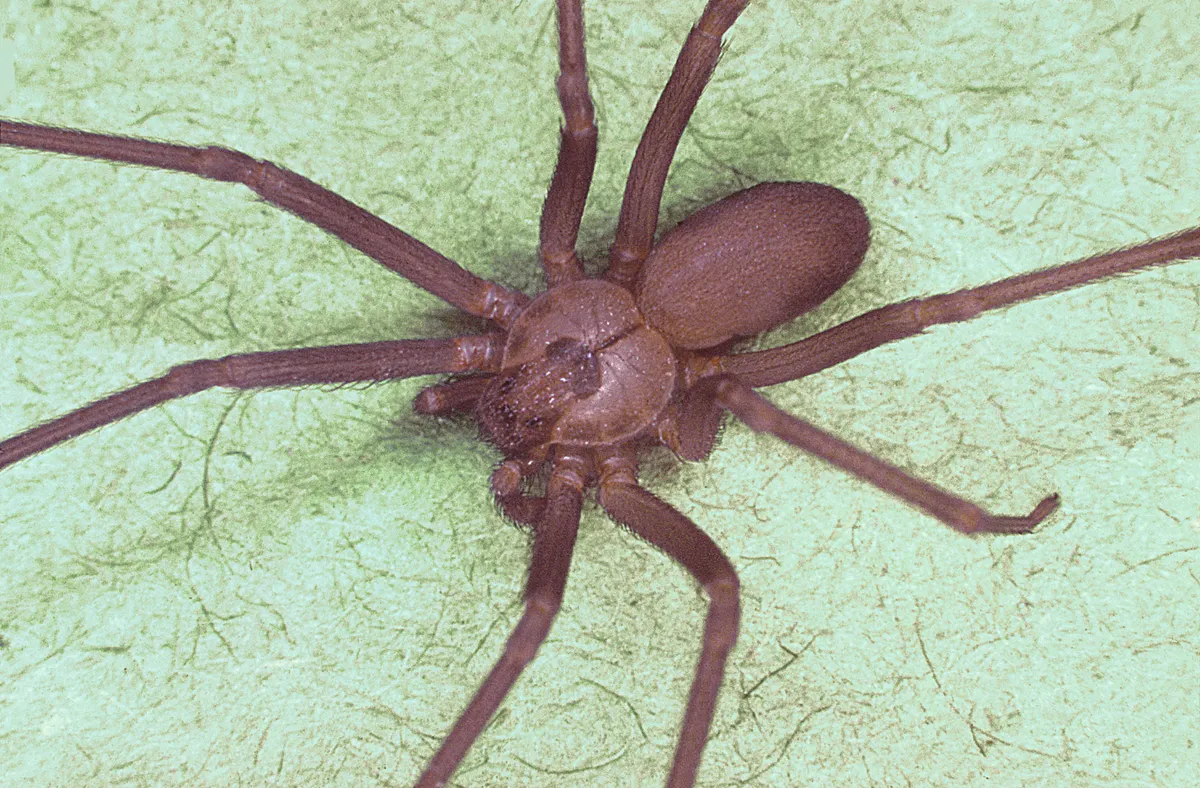
Start with the eyes. CDC's page on venomous spiders at work describes the brown recluse as brown with a dark violin-shaped mark and six equal-sized eyes, where most spiders have eight. Vetter's guide to identifying and misidentifying the brown recluse at UC Riverside puts them in three pairs, one in front and one on each side, and says minor magnification shows the pattern. Each pair sits so tight that the six can look like three, the Missouri Department of Conservation's guide to Missouri's common spiders notes.
The Missouri guide describes long, unbanded legs with fine dark hairs and no spines, and Vetter says conspicuous thick spines on the legs rule out a recluse. The abdomen is one color, cream to dark brown depending on what the spider has eaten, though a small discoloration can be the heart showing through the thin skin. Vetter puts the body at about 3/8 inch and rules out any spider whose body is longer than 1/2 inch, and University of Missouri Extension says a standing recluse, legs included, covers about the area of a quarter.
Why isn't the violin mark enough to identify a brown recluse?
Because people see violins in the markings of many harmless spiders, and some recluses barely show one. Vetter calls the violin unreliable for anyone who is not an arachnologist. On a mature brown recluse it is fairly consistent, a dark violin on the front body section with its neck pointing back toward the abdomen, but UC IPM says its intensity varies and that it is very faint or missing on several southwestern recluses, such as the desert recluse.
In Vetter's 2005 study of spiders sent in as suspected brown recluses, the stripes near the edges of the front body section in wolf spiders and funnel weavers, the family that includes grass spiders, and the head markings of cellar spiders were all taken for violins. A mark on the abdomen does not count: recluses carry theirs on the front body section, UC IPM notes.
Is it a wolf spider or a brown recluse?
Count the eyes and look for stripes: a wolf spider has eight eyes, two of them noticeably large, and usually a striped body, while a recluse has six small eyes in pairs and no stripes. The Missouri Department of Conservation's wolf spider page describes a row of four small eyes below four larger ones, with the two center eyes of the top row enlarged, and puts wolf spiders at 1/4 inch to 1 inch long, usually gray, brown, black or tan with dark markings, especially stripes.
Plenty of wolf spiders pass Vetter's 1/2-inch limit: the Missouri guide classes the Tigrosa wolf spiders, which occasionally wander into houses, as large, roughly over 1/2 inch, with banded legs and a narrow pale stripe running from front to back on the front body section. Smaller wolf spiders overlap a recluse in size, so check the legs. UC IPM says many spiders that are not recluses have stout spines and stripes, rings or spots on their legs, and the Missouri guide describes black leg spines on the rabid wolf spider.
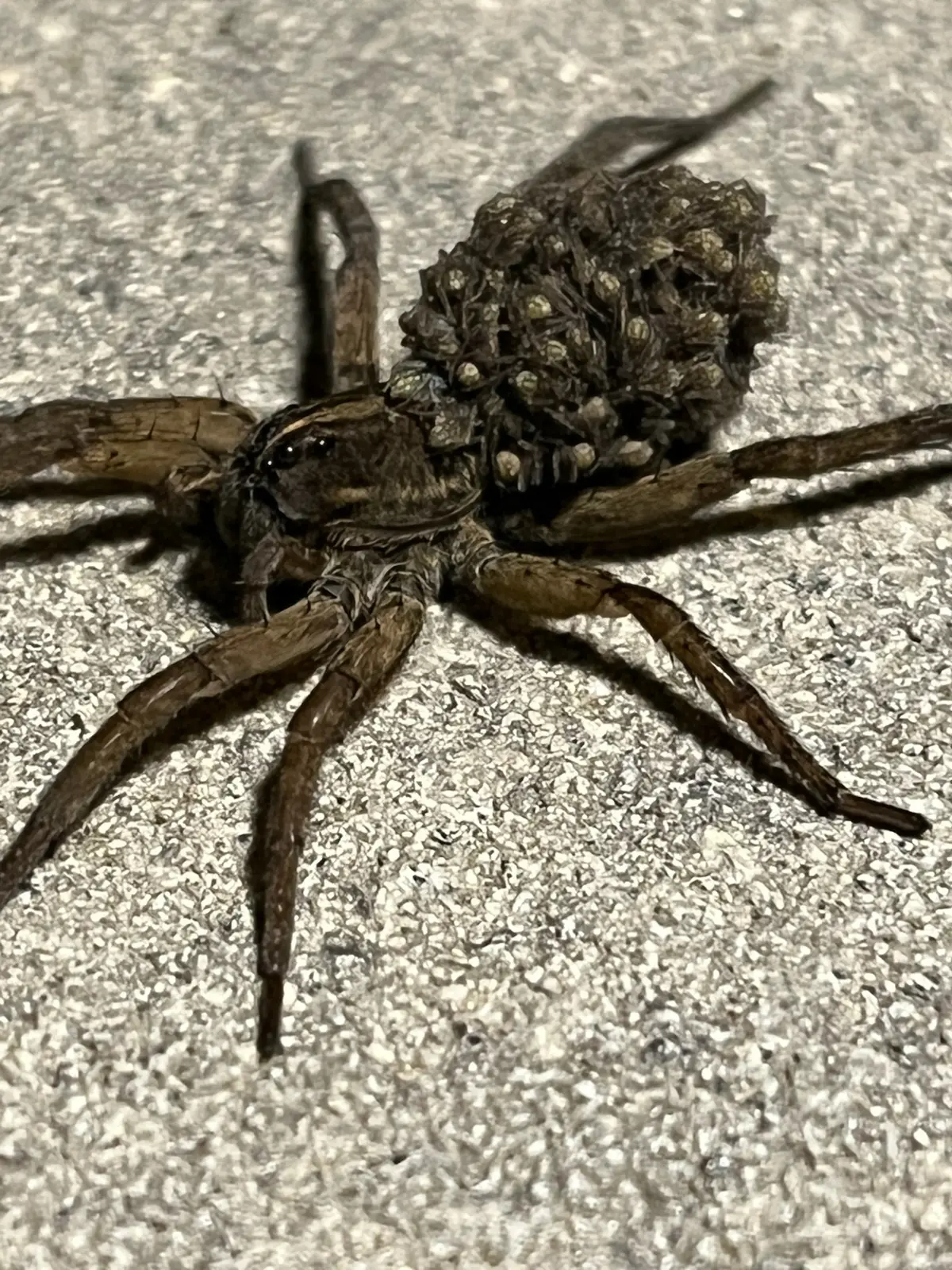
Behavior gives a wolf spider away too. A female attaches her egg sac to the spinnerets at the rear of her abdomen and later carries her spiderlings on her back for up to two weeks or more, the department says. Wolf spiders run down prey instead of catching it in webs, often at night, and live in leaf litter, low plants and lawns; the rabid wolf spider sometimes gets into houses. At night, a flashlight makes their eyes shine back like a cat's.
A recluse also hunts at night without a web for catching prey, the Missouri guide notes, but it spends the day in a small silk retreat behind an object, never out in the open, according to Vetter. The department says the bites of North American wolf spiders are harmless, and the wolf spider guide shows the common species.
Which other spiders look like brown recluses?
House, grass, woodlouse, cellar, yellow sac and hobo spiders are the other usual suspects. When Vetter offered to identify any spider people across the US suspected was a recluse, he received 1,773 arachnids from 49 states. The southern house spider was the most common species that was not a recluse, and from 25 of the 29 states completely or almost completely outside the recluse range, not one recluse arrived.
| Spider | Body length | Eyes | What to look for | Where it turns up |
|---|---|---|---|---|
| Brown recluse | About 3/8 inch | Six, in three pairs | Violin; legs and abdomen each one color; no leg spines | Boxes, closets, shoes and clutter, central and southern US |
| Wolf spider | 1/4 to 1 inch | Eight; two large | Stripes; may carry an egg sac or spiderlings | Leaf litter and lawns; sometimes indoors |
| Southern house spider (male) | About 3/8 inch | Eight, bunched on a bump | Khaki to amber; black leg spines | Windowsills and shutters, southern US |
| Common house spider | 3/16 to 1/4 inch (female) | Eight | Round, mottled abdomen; banded legs | Tangled webs at windows |
| Grass spider | About 3/8 to 3/4 inch | Eight | Dark bands behind the eyes; long spinnerets | Sheet webs with a funnel; indoors in autumn |
| Woodlouse spider | About 3/8 to 5/8 inch | Six, in an oval | Red-orange front half and legs; pale abdomen | Under rocks, logs and leaf litter |
| Cellar spider | About 1/4 to 5/16 inch | Eight, two of them tiny | Very long, thin legs | Loose webs in basements and garages |
| Yellow sac spider | About 3/16 to 3/8 inch | Eight | Pale yellow to greenish; darker mouthparts and feet | Silk sacs in wall and ceiling corners |
| Hobo spider | About 1/2 to 5/8 inch | Eight, in two rows | Pale markings; only a specialist can confirm it | Pacific Northwest; webs under objects |
Adult body length, without legs. Sources: Rick Vetter (UC IPM, UC Riverside), Penn State Extension, Missouri Department of Conservation, University of Missouri Extension, University of Florida and CDC.
Is it a house spider or a brown recluse?
In the South, the house spider most often mistaken for a recluse is the male southern house spider, and its eight bunched eyes and spiny legs separate the two. The University of Florida's profile of the southern house spider describes males as khaki to amber, about 3/8 inch (9 to 10 mm) long, with long, slender legs and eight eyes grouped on a raised bump, and says their color and shape get them mistaken for brown recluses. Vetter adds black spines on the legs and a slight darkening near the eyes that people take for a violin. Females are charcoal gray and 1/2 to 3/4 inch long. The species is common throughout Florida and much of the southern US, in windowsills, shutters and other recesses of buildings.
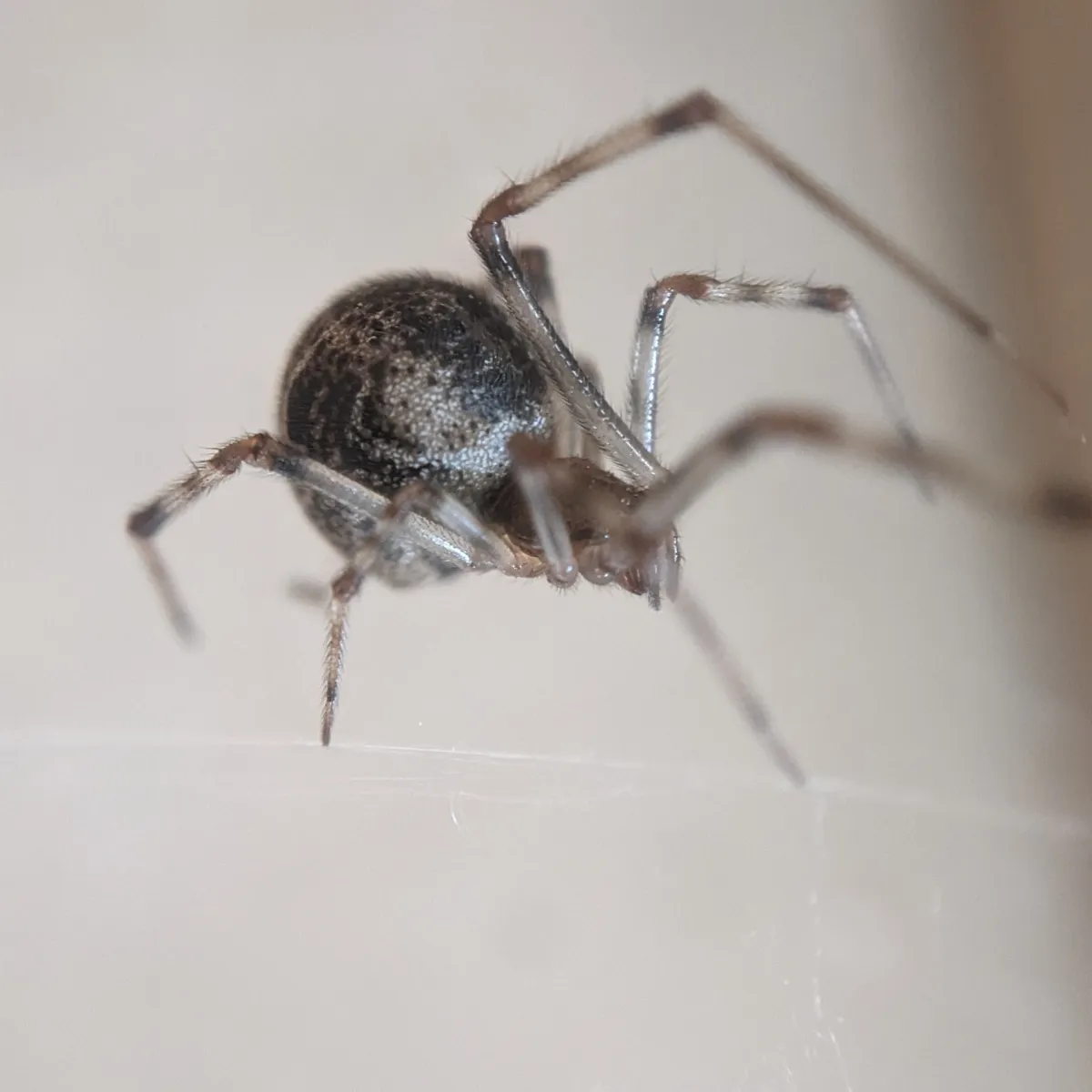
Elsewhere, house spider usually means the common house spider. Penn State Extension's common house spider page gives females as about 3/16 to 1/4 inch long (5 to 6 mm), with a dirty-white to brown abdomen marked with gray chevrons and yellow legs ringed darker at the end of each segment, and the Missouri guide describes its tangled webs at windows. The giant house spider and the barn funnel weaver, relatives of the hobo spider, are compared in the house spider guide.
How do you tell a grass spider from a brown recluse?
Look at the head and the tail end: a grass spider has two dark bands running back from its eyes and a pair of long spinnerets sticking out behind, and a recluse has neither. Penn State Extension's grass spider page describes a yellow-brown to brown front body section with two darker lengthwise bands, an abdomen with a lighter central band and legs that are often ringed. Females are about 3/8 to 3/4 inch long (10 to 20 mm); males are slightly smaller.
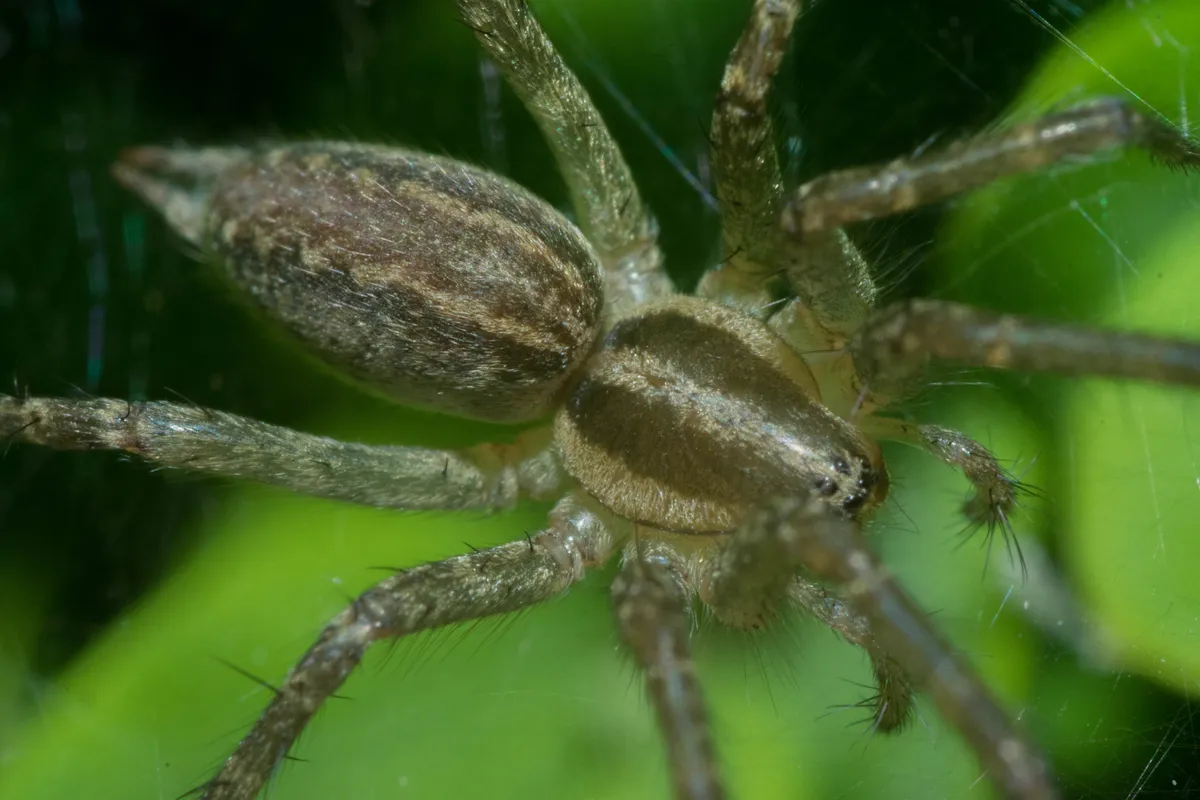
Grass spiders sit in sheet webs that narrow into a funnel, in lawns, low plants and landscaping, and rarely leave them, the Missouri guide says. Penn State notes that they often come indoors in autumn. The grass spider guide has more.
Is a woodlouse spider a brown recluse?
No, although it is one of the few look-alikes with six eyes: a woodlouse spider's eyes sit together in an oval, not in three separated pairs, and its colors give it away. Penn State Extension's woodlouse hunter page describes a reddish-orange front body section and legs, a dirty-white abdomen and large, thick jaws that slant far forward. Females are about 7/16 to 5/8 inch long (11 to 15 mm), males about 3/8 inch (9 to 10 mm).
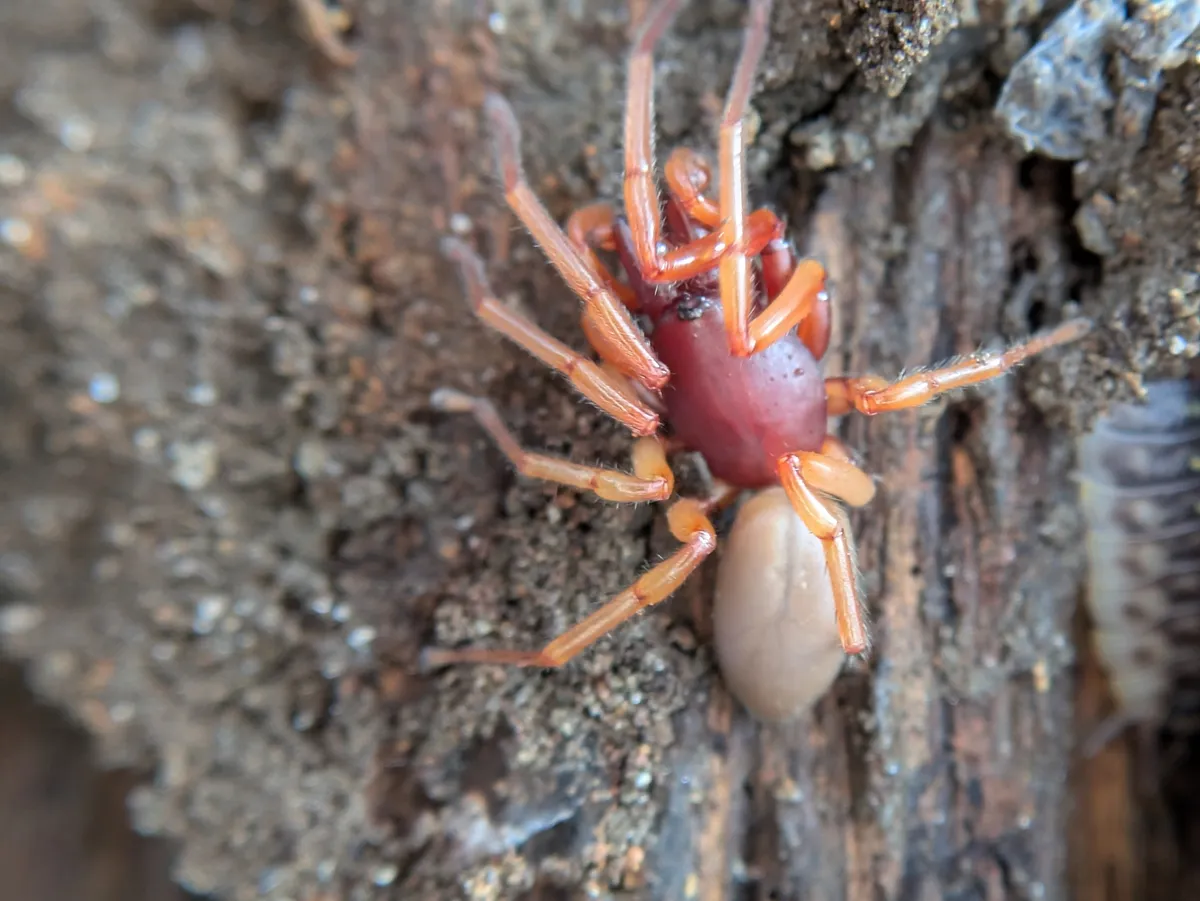
In Vetter's national study it was the second most common non-recluse species sent in, and several people said its large fangs made it seem dangerous. The Missouri guide says its venom is not dangerous to people, with effects compared to a mild bee sting, and that it lives in damp places under rocks, logs, leaf litter and compost, hunting pill bugs and sow bugs. Penn State records it from New England to Georgia and west to California. The woodlouse spider guide has more.
Can a cellar spider look like a brown recluse?
Only at first glance: a cellar spider's legs are far longer and thinner than a recluse's, and it hangs in a loose web instead of hiding. Penn State Extension's longbodied cellar spider page gives a body of about 1/4 to 5/16 inch (6 to 8 mm) but female front legs of about 2 inches (50 mm), a pale tan or yellow body with a gray mark in the middle of the front section, and an abdomen about three times as long as it is wide.
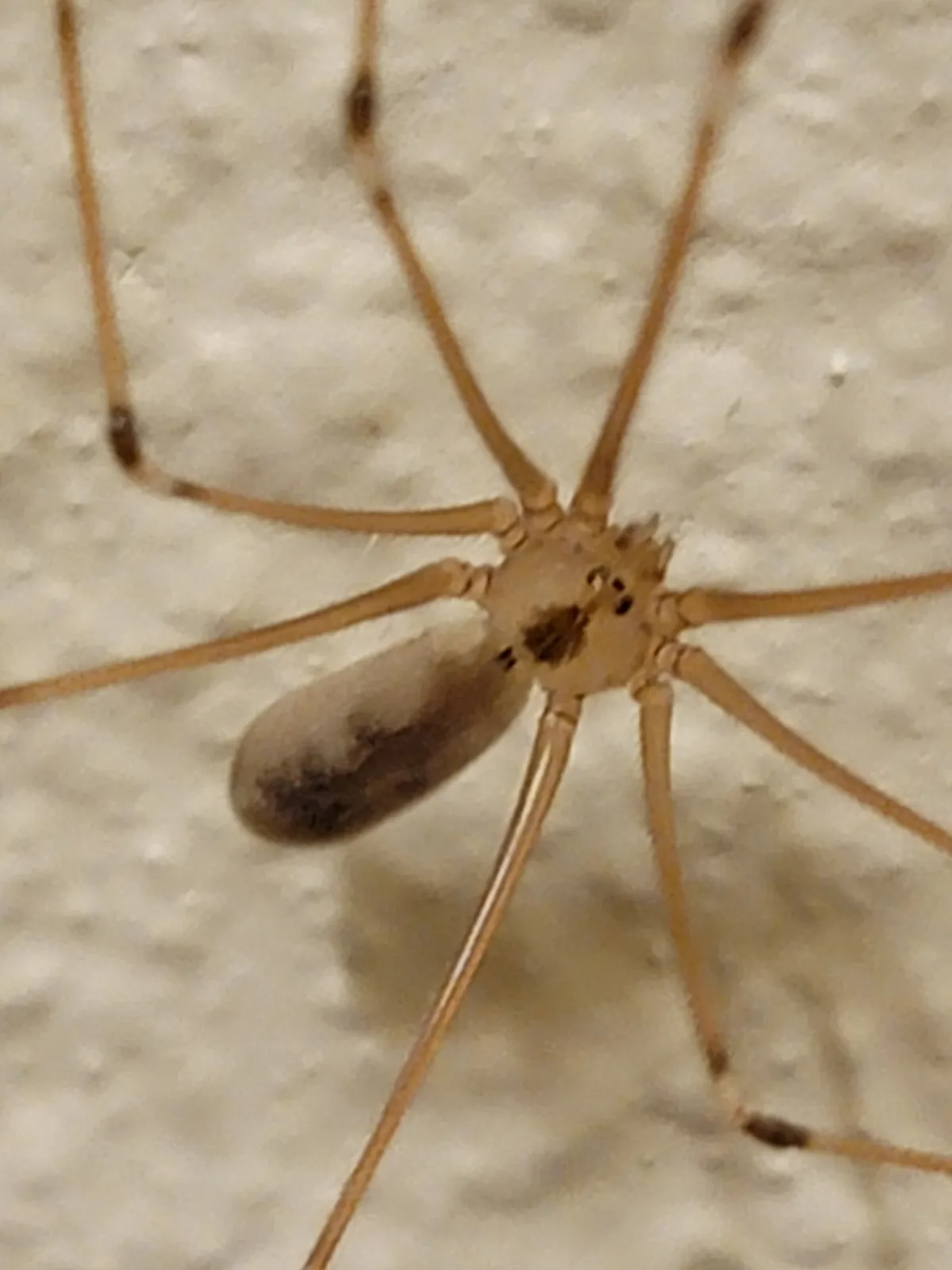
Do not rely on the eyes here: Penn State describes two groups of three larger eyes plus two small dark ones, and Vetter notes that all eight can take a microscope to see. Cellar spiders hang upside down in irregular webs in basements and garages and shake rapidly when threatened, and Penn State says they are not known to bite people. Some people call them daddy longlegs, a name the daddy longlegs guide untangles.
How do you tell a yellow sac spider from a brown recluse?
By color: a yellow sac spider is pale yellow, cream or greenish with darker mouthparts and feet, while a recluse is light tan to brown with legs of one color. Penn State Extension's sac spider page describes the agrarian sac spider as light yellow to cream with dark-brown mouthparts, foot tips and palps, and the longlegged sac spider, Cheiracanthium mildei, as pale yellow with a greenish tinge to the abdomen. Females are about 3/16 to 3/8 inch long (5 to 10 mm), with a slightly darker stripe down the abdomen.
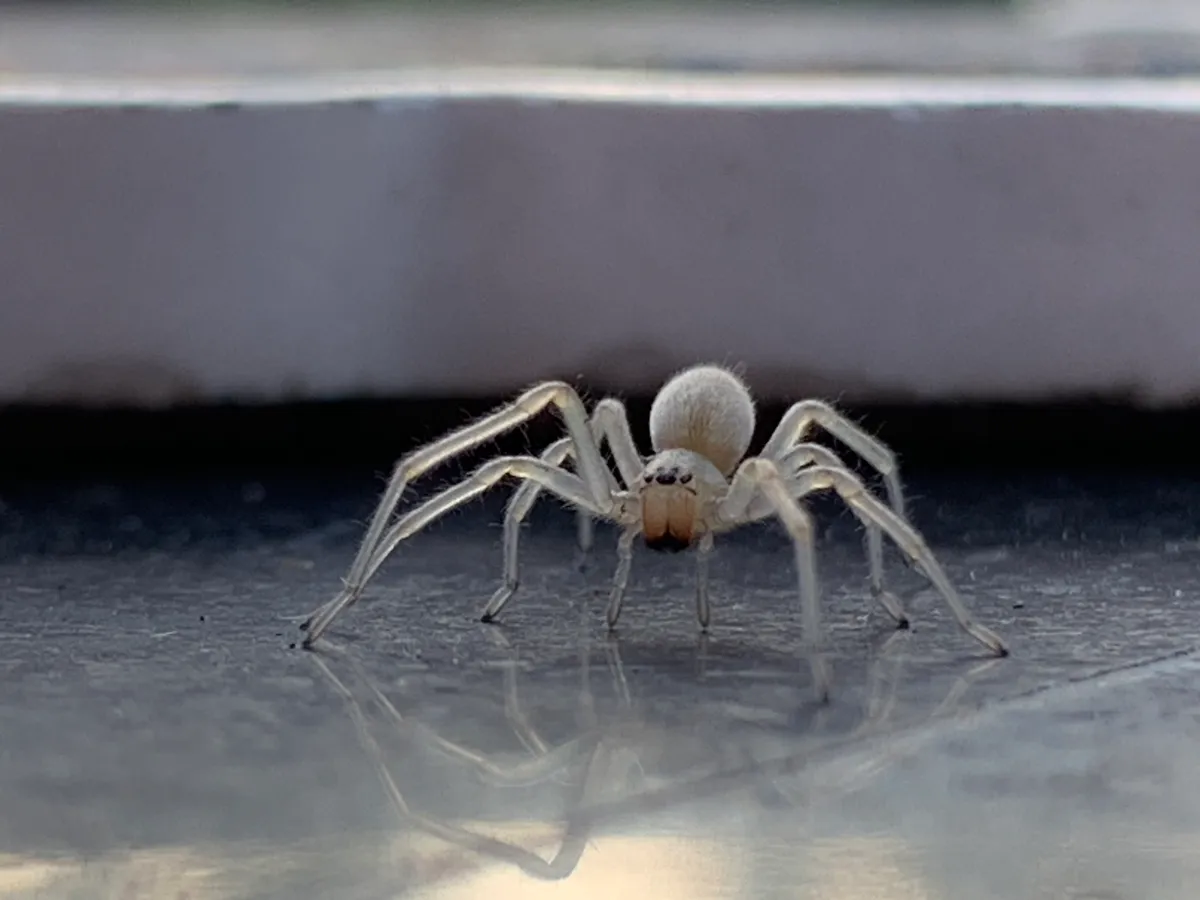
By day they hide in silk tubes or sacs, indoors in the corners of walls and ceilings. The yellow sac spider guide covers them in detail.
Is it a hobo spider or a brown recluse?
A hobo spider has eight eyes in two rows of four and a light brown body with pale markings, and it lives in the Pacific Northwest, where brown recluses are not established. Vetter's UC IPM Pest Note on the hobo spider puts its body at about 1/2 to 5/8 inch and its US range from the Northwest east to Montana, Wyoming and Colorado and south through Oregon and northern Utah; none of those states is among the 16 where Penn State lists established brown recluse populations. Its web is almost always hidden under objects.
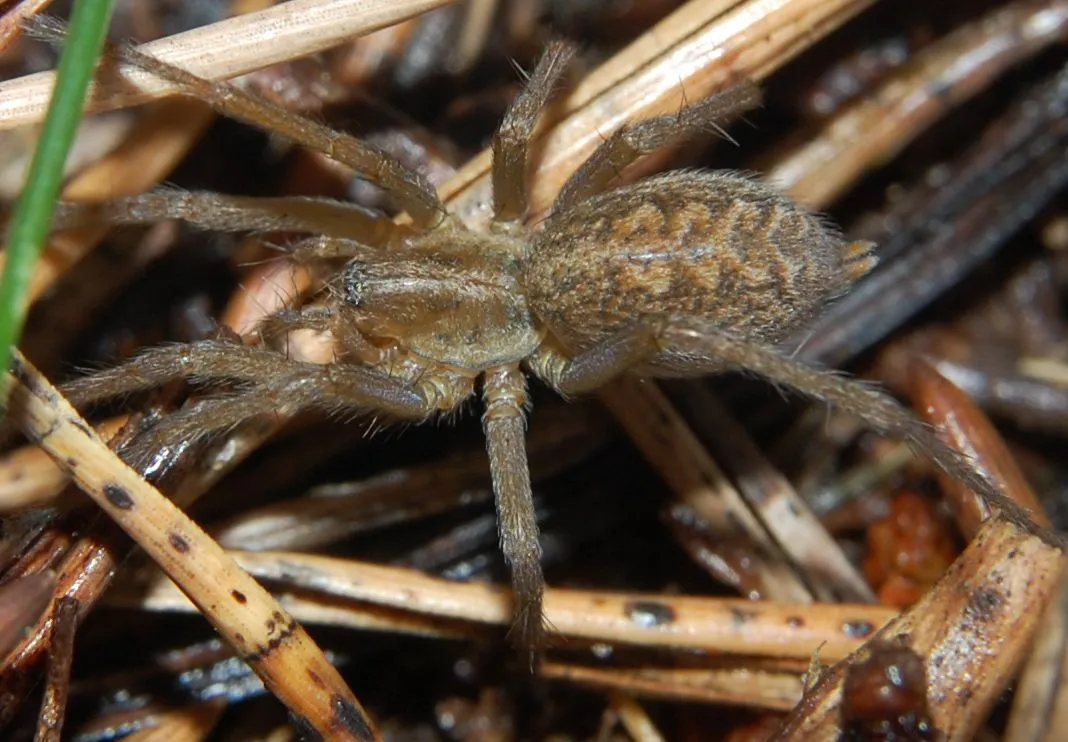
Telling a hobo from its relatives is harder: Vetter writes that funnel weavers can be separated only by examining their reproductive structures, a job for an arachnologist. The barn funnel weaver, a relative about 1/4 to 1/2 inch long, lives worldwide, often inside homes, and is not considered toxic to humans. The hobo spider guide covers identification, and the guide to venomous spiders in the US covers the bite evidence.
Could it be a brown recluse where you live?
Rarely, unless you live in or near its range: the brown recluse is established in 16 states from Nebraska and Ohio south to Texas and Georgia, according to Penn State Extension's brown recluse page, and CDC places it in the midwestern and southern states. Vetter says that outside the areas where recluses are mapped, one is highly unlikely. The Southwest has native recluses of its own, such as the desert recluse of the Sonoran and Mojave deserts, UC IPM notes, and the same eye test applies to them. The venomous spiders guide has a state-by-state map of where brown recluses live.
Outside the range, finds are rare and nearly always indoors: Penn State says recluses there are restricted to buildings and can travel in boxes. UC IPM reports that in one study only one of nearly 600 spiders sent in from California was a brown recluse, from a family that had moved from Missouri, and in Myth of the Brown Recluse Vetter writes that about 20,000 spiders turned in by Californians over several decades included none.
Inside the range, the odds turn around. Vetter calls the brown recluse a very common house spider there, and about 75 percent of the 500-plus spiders sent to him from states such as Kansas, Missouri and Oklahoma were recluses. University of Missouri Extension cites a study that found the spider in about 70 percent of the Missouri homes sampled.
How do you check a spider you have caught?
Trap it under a jar and slide a sheet of paper underneath, as UC IPM suggests, then run these checks. Failing any of the first six rules out a recluse.
Checks for a spider in a jar
- Eyes. Count them with a magnifying glass. Eight rule out a recluse; six in three separated pairs fit one; six in a tight oval point to a woodlouse spider.
- Legs. Spines, rings, bands or stripes rule out a recluse.
- Abdomen. Stripes, chevrons, spots or two colors rule out a recluse.
- Size. Set the jar beside a ruler marked in inches. A body over 1/2 inch is not a recluse, and a recluse with its legs covers about the area of a quarter.
- Web. A spider sitting in a web in the open, such as a sheet web on a lawn or a cobweb in a window, is not a recluse.
- Young. A spider carrying an egg sac at its rear or spiderlings on its back is a wolf spider.
- Place. Outside the 16 states where brown recluses are established, a brown recluse is very unlikely unless one arrived in boxes or similar items. The desert Southwest has native recluses of its own, so check the eyes there.
What should you do once you know what it is?
Carry a look-alike outside in the jar or vacuum it up; UC IPM suggests regular vacuuming, especially under furniture. Keeping spiders out of the house covers sealing the gaps they use, and a step-by-step plan for clearing spiders from a house covers vacuuming and monitoring.
If the spider passes every check, treat it as a possible recluse and look for more: where conditions suit them, Vetter writes, you find dozens, not one. The Missouri guide suggests sticky traps along walls and under furniture, less clutter, and shaking out stored clothing and towels. The brown recluse guide covers infestations and the guide to getting rid of spiders covers control. If someone was bitten, see what spider bites look like and the brown recluse bite guide.
Frequently Asked Questions
How big is a brown recluse compared to a quarter?+
About the same size, legs included. University of Missouri Extension says a brown recluse standing with its legs in a normal position covers an area about the size of a quarter. The body alone is about 3/8 inch long, according to Rick Vetter of UC Riverside, who says a spider with a body longer than 1/2 inch is not a recluse. Large brown spiders well past that size, such as many wolf spiders, can be ruled out on size alone.
Do brown recluses build webs?+
Not webs for catching prey. The Missouri Department of Conservation describes brown recluses as active hunters that do not rely on webs to capture prey, though they spin silk retreats and round coverings for their eggs. Rick Vetter of UC Riverside says their small retreat webs are built behind objects, never out in the open, so a spider sitting in a web in a window, a shrub or between two trees is not a recluse.
If you find one brown recluse, are there more?+
Inside its native range, probably. Rick Vetter of UC Riverside writes that where brown recluses find a suitable environment, people find dozens rather than one. The Missouri Department of Conservation suggests sticky traps along walls and under furniture to monitor spiders. Outside the range the picture is different: Penn State Extension says recluses there are restricted to buildings and can arrive in boxes from places where they live, so a single spider may be a stowaway.
What spiders look like brown recluses in Florida?+
The southern house spider and the huntsman spider are two common candidates. The University of Florida says the southern house spider is common throughout Florida and that its khaki to amber males are often mistaken for brown recluses. In Rick Vetter's national study, 25 of the 26 huntsman spiders sent in as suspected recluses came from Florida. Penn State Extension lists Florida among the places with only isolated brown recluse finds, not established populations.
Who can confirm whether a spider is a brown recluse?+
Someone trained to check the eyes under magnification, such as an entomologist at your state's cooperative extension office. Rick Vetter of UC Riverside has reported harmless eight-eyed spiders misidentified as brown recluses by physicians, an entomologist and a pest control operator, so ask whoever identifies it whether they saw six eyes in three pairs. Keep the spider whole, because a crushed specimen may be hard to identify.
Sources
- Brown Recluse and Other Recluse Spiders (Pest Notes Publication 7468) — University of California Statewide IPM Program (R. S. Vetter, UC Riverside)
- How to Identify and Misidentify a Brown Recluse Spider — UC Riverside Department of Entomology (Rick Vetter)
- Myth of the Brown Recluse: Fact, Fear, and Loathing — UC Riverside Department of Entomology (Rick Vetter)
- Arachnids Submitted as Suspected Brown Recluse Spiders (Araneae: Sicariidae): Loxosceles Spiders Are Virtually Restricted to Their Known Distributions but Are Perceived to Exist Throughout the United States — Journal of Medical Entomology (Vetter, 2005)
- Hobo Spider (Pest Notes Publication 7488) — University of California Statewide IPM Program (R. S. Vetter, UC Riverside)
- Venomous Spiders at Work — CDC, National Institute for Occupational Safety and Health
- Brown Recluse Spiders — Penn State Extension
- Common House Spider — Penn State Extension
- Grass Spiders — Penn State Extension
- Woodlouse Hunter Spider — Penn State Extension
- Longbodied Cellar Spider — Penn State Extension
- Agrarian Sac Spider and Longlegged Sac Spider — Penn State Extension
- Wolf Spiders — Missouri Department of Conservation
- A Guide to Missouri's Common Spiders (David J. Bruns, 2026) — Missouri Department of Conservation
- Spiders (G7386), brown recluse section — University of Missouri Extension
- Southern House Spider, Kukulcania hibernalis (EENY144) — University of Florida IFAS Extension
How this guide was made: it was researched and drafted with AI assistance from the sources listed above. A second, independent AI pass then checked each factual claim against those sources. Found an error? Email support@buzzskito.ca.