
Published by BuzzSkito Mosquito & Tick Control
Published October 28, 2026 · Fact-checked against the sources listed below
What is a hobo spider?
A hobo spider is a European funnel weaver (family Agelenidae), Eratigena agrestis, formerly Tegenaria agrestis, now living in the Pacific Northwest and the interior West. The University of California's Pest Note on the hobo spider (UC IPM) says it was labeled potentially toxic in the United States in the 1980s, and that later research questioned the label.
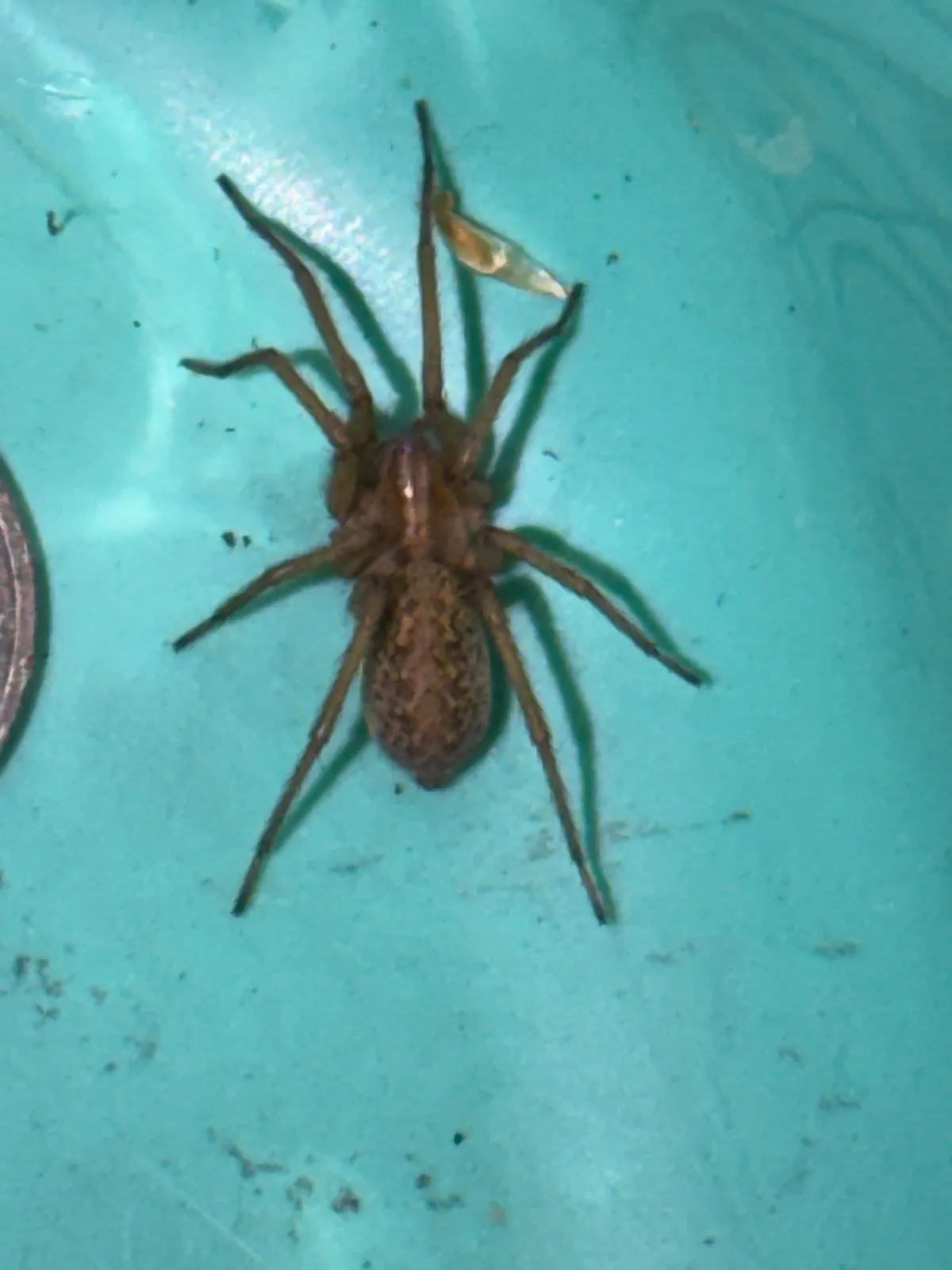
UC IPM links the name hobo to the spider's presumed spread to distant cities by railway. Its other name, aggressive house spider, comes from a mistranslation of agrestis, which means rural or in the fields, says Montana State University Extension; hobo spiders are not known to be naturally aggressive.
What does a hobo spider look like?
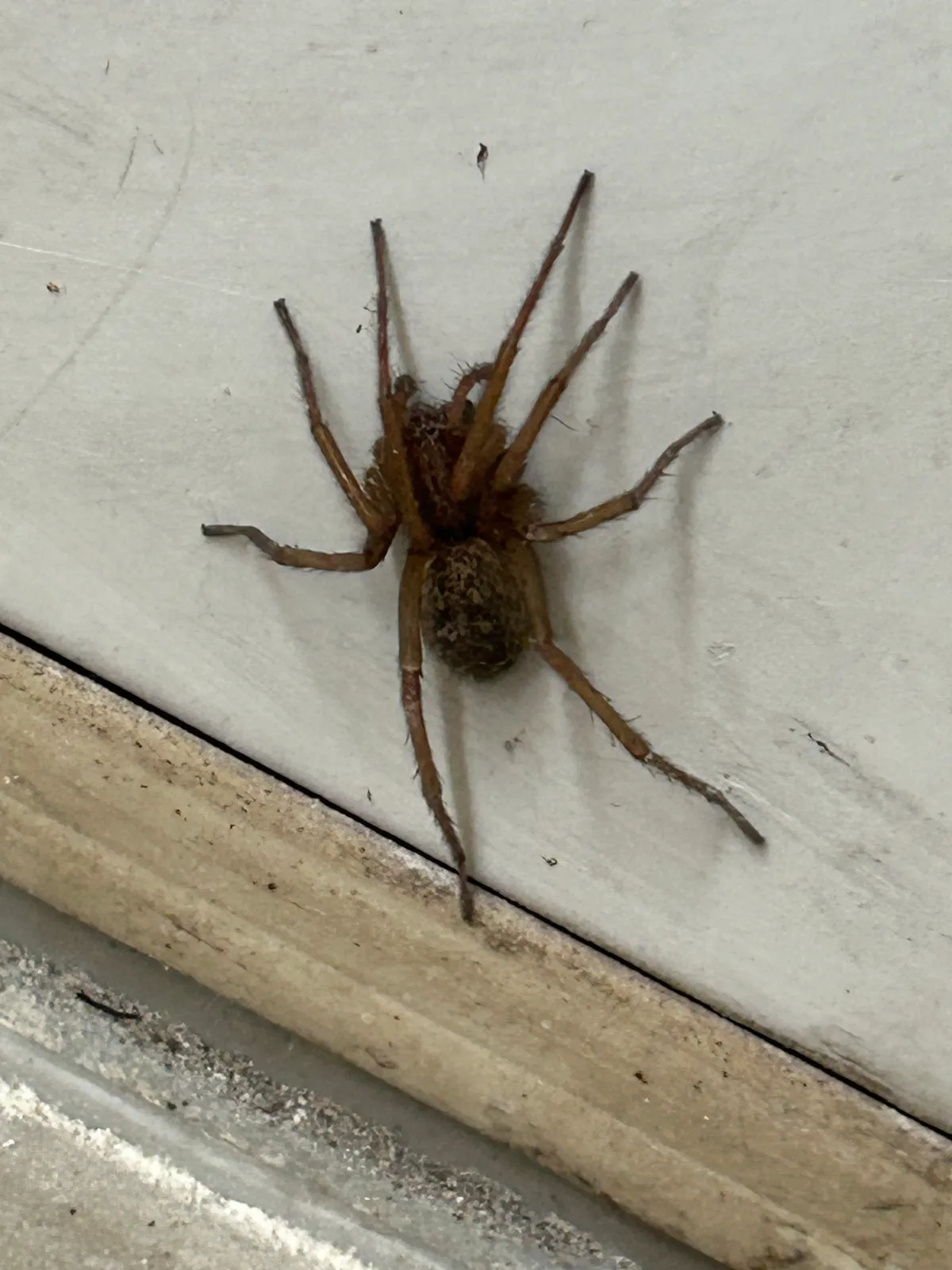
A brown, long-legged spider with chevrons on its abdomen and legs of one even color. Utah State University Extension (USU) describes a brown front body section with darker markings, brown legs and an abdomen with yellow chevron markings on a gray background, a pattern that can be hard to see without a hand lens. Unlike many look-alikes, USU says, hobo spiders have no dark bands on their legs, and color alone cannot identify them.
The University of Idaho's hobo spider fact sheet describes tan-gray spiders with five or six pale, triangular loops down the abdomen and uniformly tan legs.
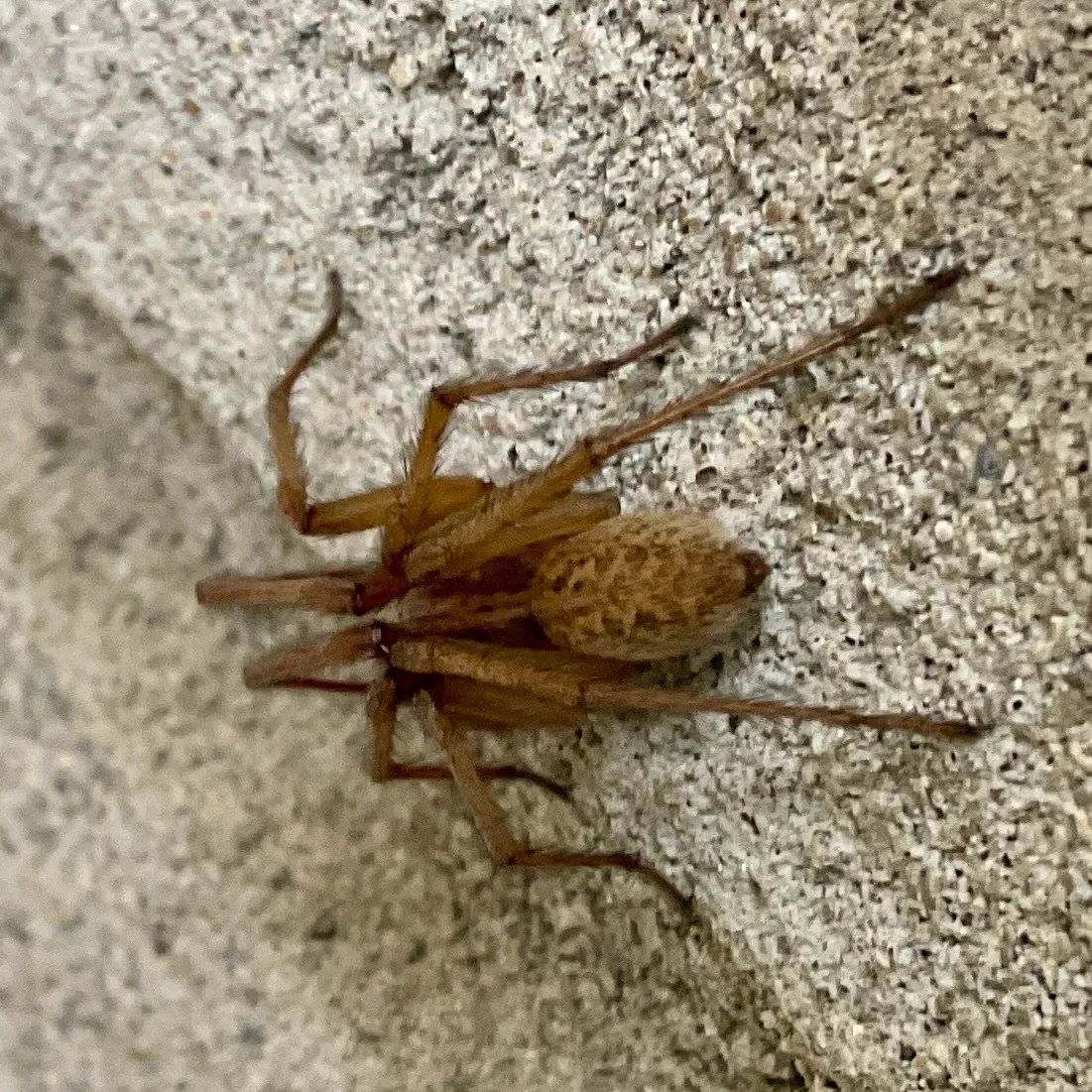
USU gives mature females a body of 3/8 to 5/8 inch (9.5 to 16.5 mm) and males 9/32 to 9/16 inch (7 to 13.5 mm). Adult males also carry swollen pedipalps beside the mouth that look like boxing gloves, but the University of Idaho says many male spiders do, so that look does not identify a hobo spider.
How can you tell for sure that it is a hobo spider?
Only with a microscope, in expert hands. UC IPM says a reliable identification requires an arachnologist to examine the spider's reproductive structures, and that a hobo spider is unlikely to be identified correctly with the naked eye. WSU's guide to identifying, and misidentifying, the hobo spider, by Rick Vetter and Art Antonelli, calls color and size among the least reliable clues.
A hand lens can still rule a hobo spider out, using checks from that guide and the University of Idaho:
It is not a hobo spider if you see
- Pale spots on the underside. Three or four pairs of light spots along the sides of the sternum, the plate between the legs, point to a giant house spider or a barn funnel weaver; a hobo spider has one light stripe down the middle. The spots can be faint.
- Two sharp dark stripes on top of the front body section. A hobo spider's markings there are indistinct; distinct stripes point to grass spiders and their relatives, or possibly a wolf spider.
- Dark rings on the legs. Hobo spider legs are one color; ringed legs most often mean a barn funnel weaver or another funnel weaver.
- Eyes of two sizes. A hobo spider has eight dark eyes of equal size in two rows (University of Idaho).
- A spider high on a wall or ceiling. It is probably not a hobo spider: they are poor climbers, though they can climb carpet and other textured surfaces (University of Idaho).
Passing every check makes a hobo spider possible, not certain: USU says it can be very difficult to separate from its relatives, even for experts. The spider identifier can narrow down a spider you found, and your state's extension office can help confirm one.
Hobo spider vs giant house spider: how do you tell them apart?
By the underside, with size as a hint, and for certain only under a microscope. WSU's giant house spider page says giant house spiders are frequently mistaken for hobo spiders, the smaller males especially. The WSU guide says giant house spiders are usually much larger and carry the pale sternum spots that hobo spiders lack.
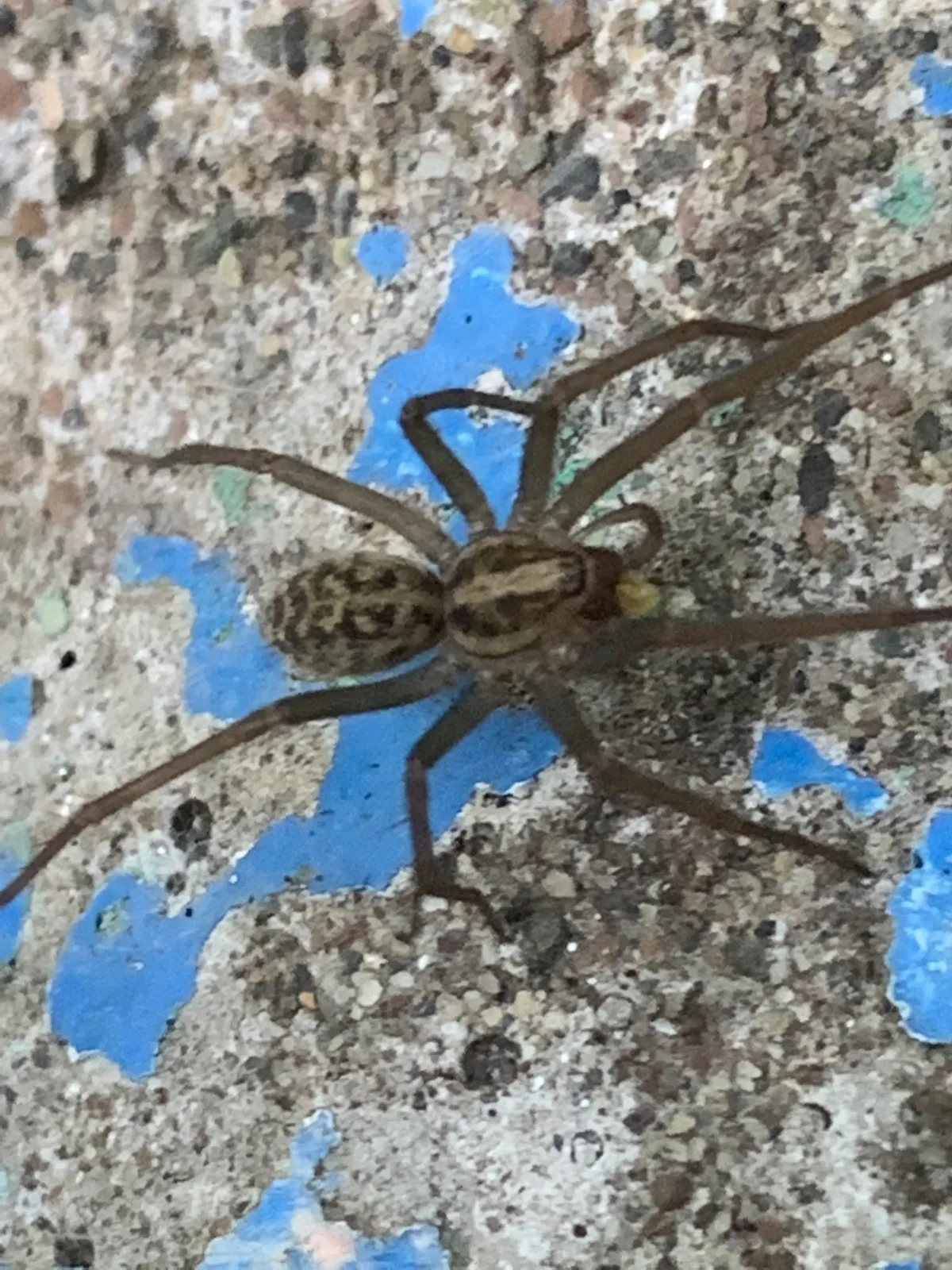
WSU gives the giant house spider a body of 1/2 to 1 inch and a leg span of up to 4 inches on large adults, and says its color and markings vary too much to identify it by. It is common in and around homes west of the Cascades in Washington and absent east of them, and its range also includes parts of Oregon and coastal Canada. In western Washington cities, the WSU guide said in 2002, it outnumbered the hobo spider about 3 to 1.
Its bite is not known to pose any threat to humans, WSU says. Under a microscope, USU says, the male hobo spider's palp has two prongs, where the giant house spider's and the barn funnel weaver's have one. The guide to common house spiders covers the giant house spider and other big spiders that run across floors.
Hobo spider vs wolf spider: what is the difference?
The eyes and the web. Colorado State University's wolf spider fact sheet says wolf spiders are probably most often confused with funnel weavers, and that an enlarged pair of eyes at the front of the head and the lack of a web separate them. A hobo spider has eight eyes of equal size and catches prey in a web.
USU says their intimidating size causes the mix-up: wolf spiders are often larger, up to 1 inch, and build no webs. Colorado State adds that a female wolf spider carries her egg sac at the tip of her abdomen, then her young on her back, and that wolf spiders rarely enter buildings. The wolf spider guide shows the common US species.
What other spiders look like a hobo spider?
Mainly the barn funnel weaver and grass spiders, two more funnel weavers, and some people also suspect a brown recluse.
Barn funnel weaver
This is the smaller relative found in houses across North America. UC IPM gives its body as about 1/4 to 1/2 inch and says it is not considered toxic to humans. Colorado State University's barn funnel weaver sheet notes banding on the legs, webs in dark corners near the floor and wanderers, especially adult males, trapped in sinks and tubs, and says hobo and giant house spiders grow about twice as large.
Grass spiders
Penn State Extension describes grass spiders, Agelenopsis species, with a pair of darker bands running back from the eyes and very long rear spinnerets; females measure about 3/8 to 3/4 inch (10 to 20 mm). Their sheet webs, with a funnel off to one side, sit on grass, weeds and ground covers, and people often see them indoors in fall. The grass spider guide covers them.
Brown recluse
A brown recluse has a violin-shaped mark on the front body section, six eyes in three pairs and a body about 3/8 inch long, says Penn State Extension's brown recluse page, which lists 16 central and southern states with established populations, none of them in the hobo spider's range. Telling a brown recluse from its look-alikes covers that comparison.
Commonly confused with
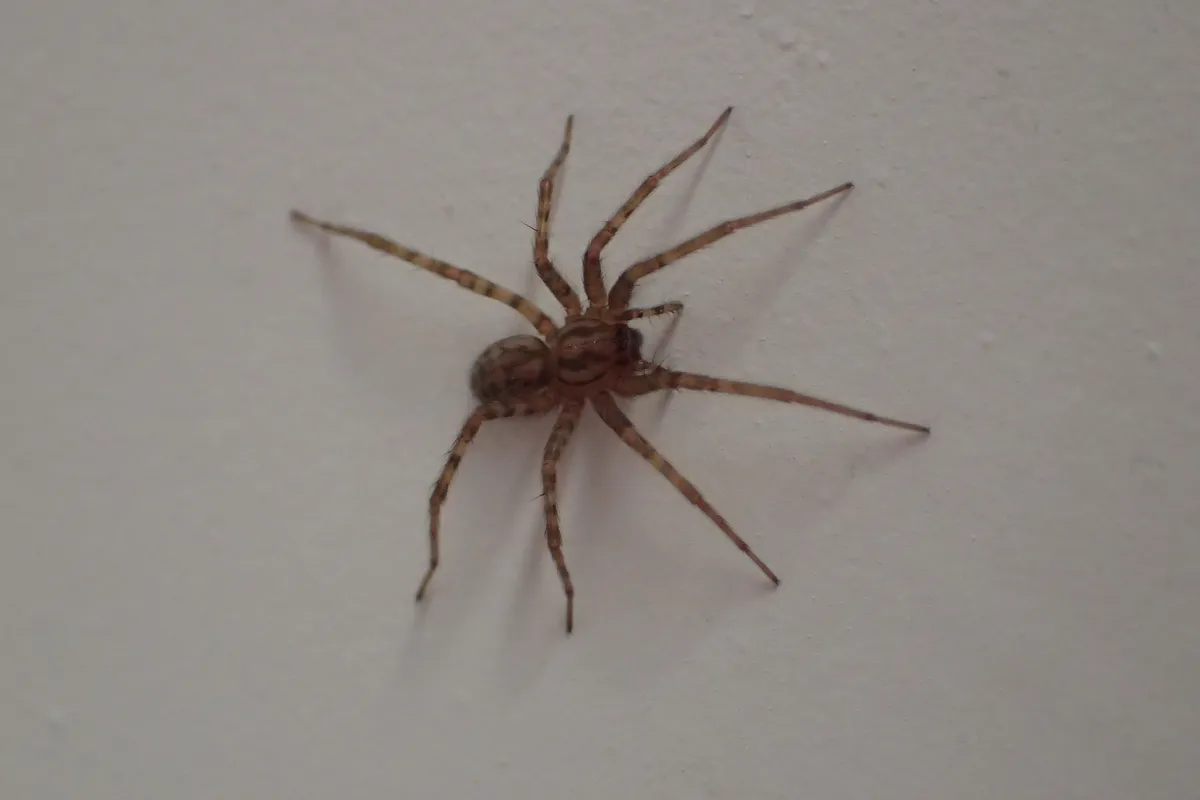 Barn funnel weaverSmaller, 1/4 to 1/2 inch, with banded legs; very common indoors
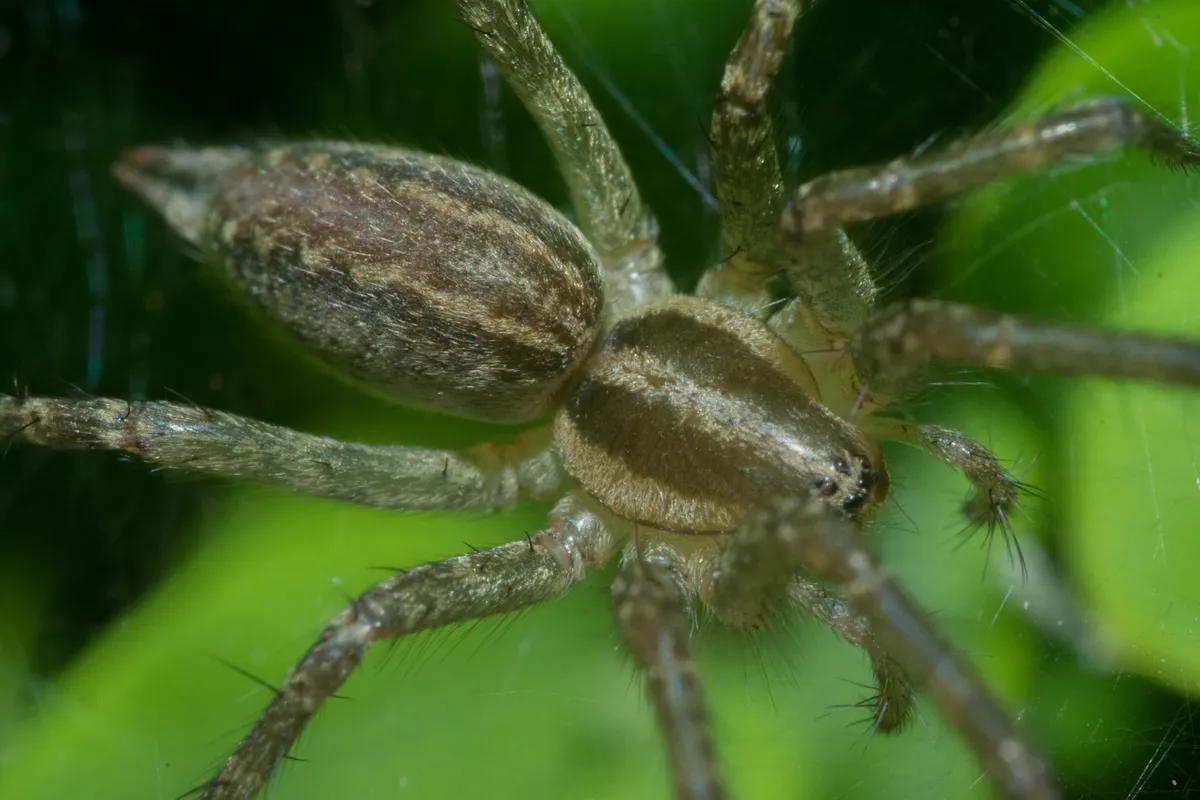 Grass spiderDark bands running back from the eyes and long spinnerets; webs in grass
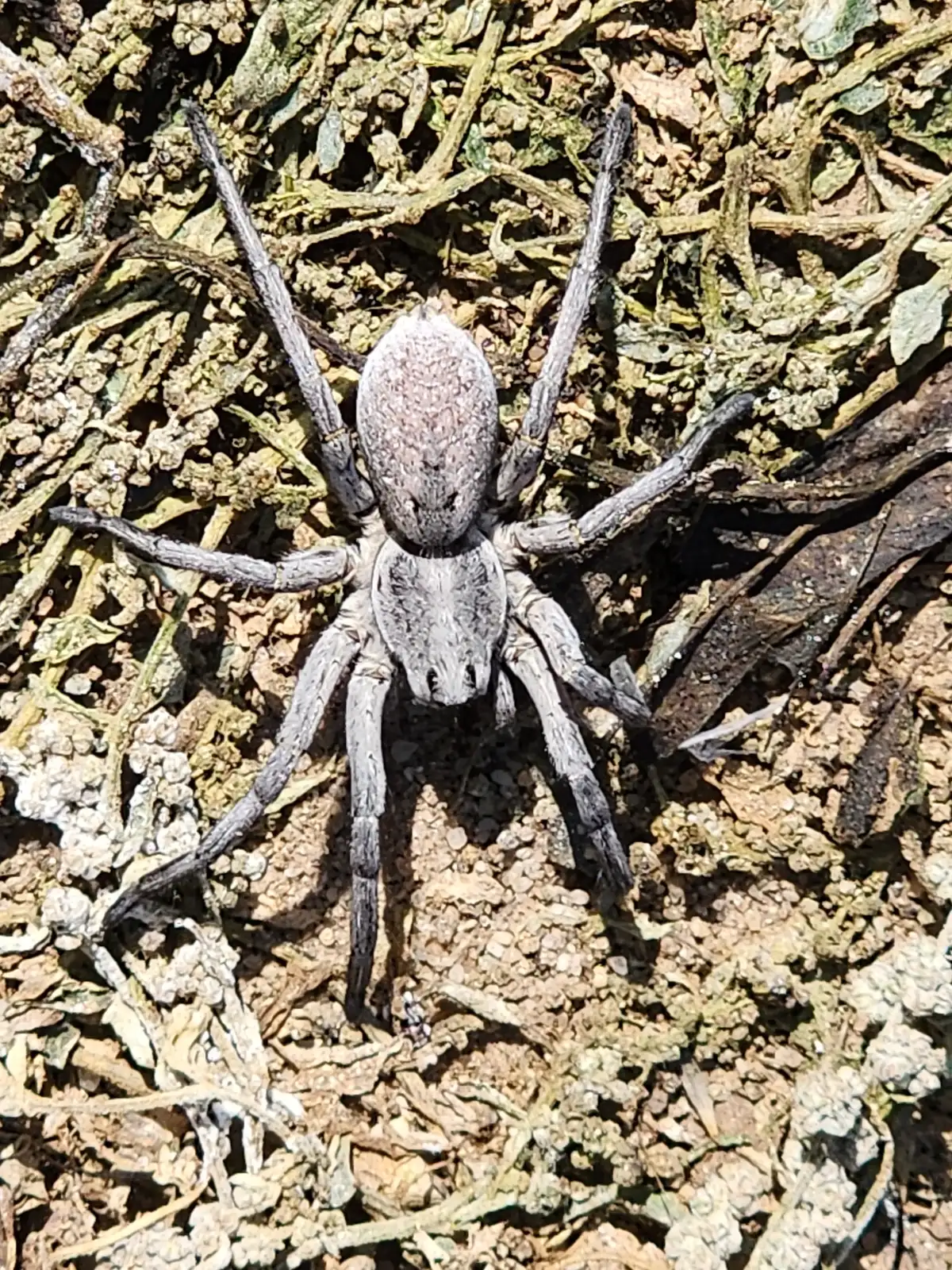 Wolf spiderAn enlarged pair of front eyes and no web; often larger, up to 1 inch
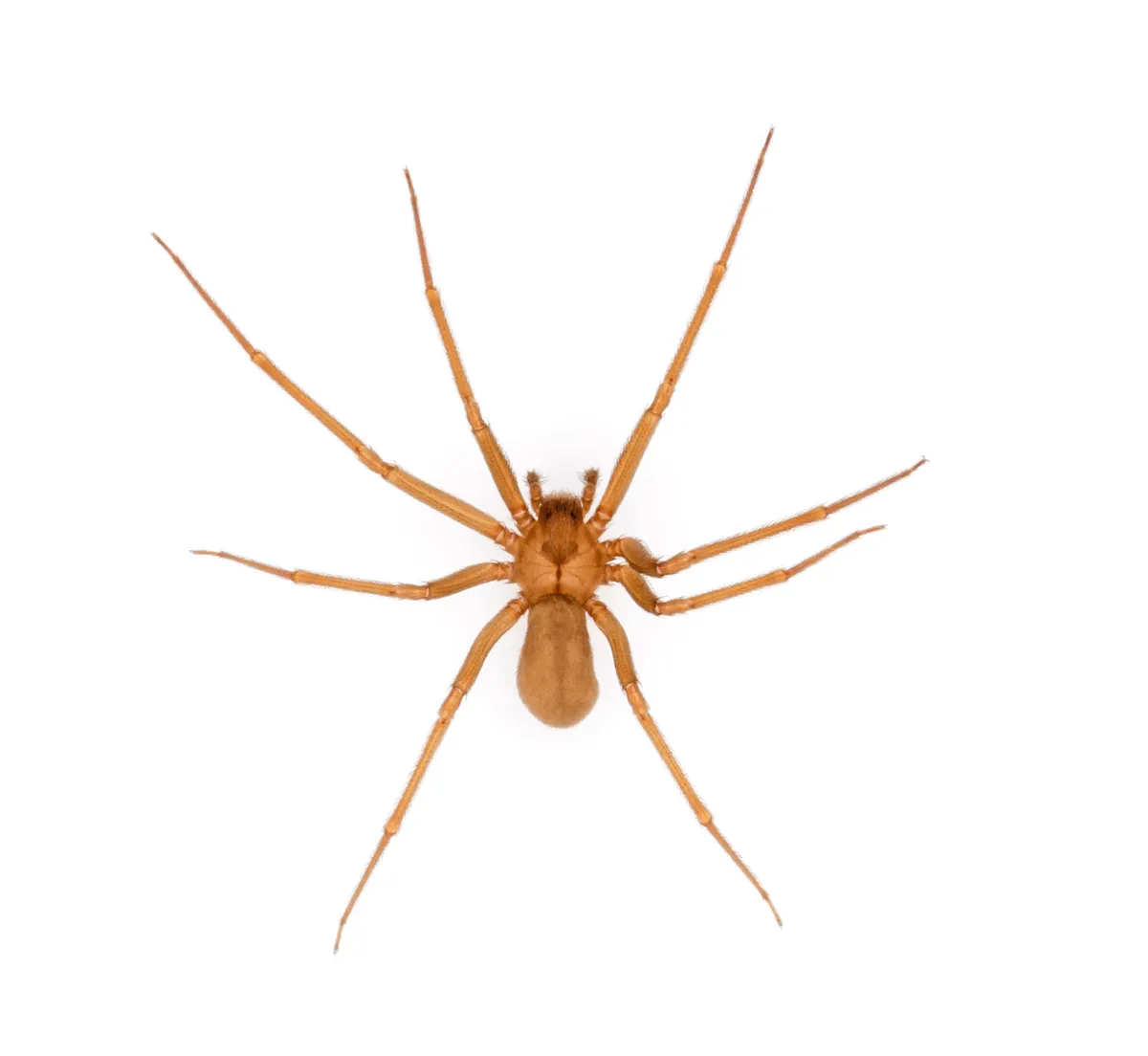 Brown recluseViolin mark and six eyes in pairs; not established in the hobo spider's range
Photos: Barn funnel weaver: no rights reserved, via iNaturalist, CC0 1.0. Grass spider: no rights reserved, via iNaturalist, CC0 1.0. Wolf spider: no rights reserved, via iNaturalist, CC0 1.0. Brown recluse: Insects Unlocked, CC0, via Wikimedia Commons, CC0 1.0.
Where do hobo spiders live?
In the Pacific Northwest and the interior West. UC IPM gives the North American range as British Columbia east to Montana, Wyoming and Colorado and south through Oregon and northern Utah. Extension services confirm it state by state: throughout Washington (the WSU guide), statewide in Idaho (University of Idaho), long prevalent in Montana (Montana State), in many areas of Colorado (Colorado State) and throughout northern Utah (USU).
Where hobo spiders live in the US
- In the hobo spider's range
- No record
Show the list
In the hobo spider's range (7): Colorado, Wyoming, Montana, Oregon, Utah, Washington, Idaho
No record (44): Alabama, Alaska, Arizona, Florida, Georgia, Indiana, Kansas, Maine, Massachusetts, Minnesota, New Jersey, North Carolina, North Dakota, Oklahoma, Pennsylvania, South Dakota, Texas, Connecticut, Missouri, West Virginia, Illinois, New Mexico, Arkansas, California, Delaware, District of Columbia, Hawaii, Iowa, Kentucky, Maryland, Michigan, Mississippi, New Hampshire, New York, Ohio, Tennessee, Virginia, Wisconsin, Nebraska, South Carolina, Nevada, Vermont, Louisiana, Rhode Island
UC IPM says it does not live in California, where no arachnologist has verified one; the guide to spiders in California covers the spiders found there. Native to Europe, it was detected in the Pacific Northwest in 1936, USU says. It was once common in Seattle, but UC IPM says the giant house spider has displaced it, and it is now less dominant.
Where and when do people find hobo spiders?
Mostly at floor level from midsummer through fall, when adult males wander in search of mates. USU says males seek females from August through October, when hobo spiders are most often found in homes, usually at ground level in the basement and often in a bathtub or sink. The University of Idaho says lone adult males run across basement and ground-level floors from mid-July until the first killing frost.
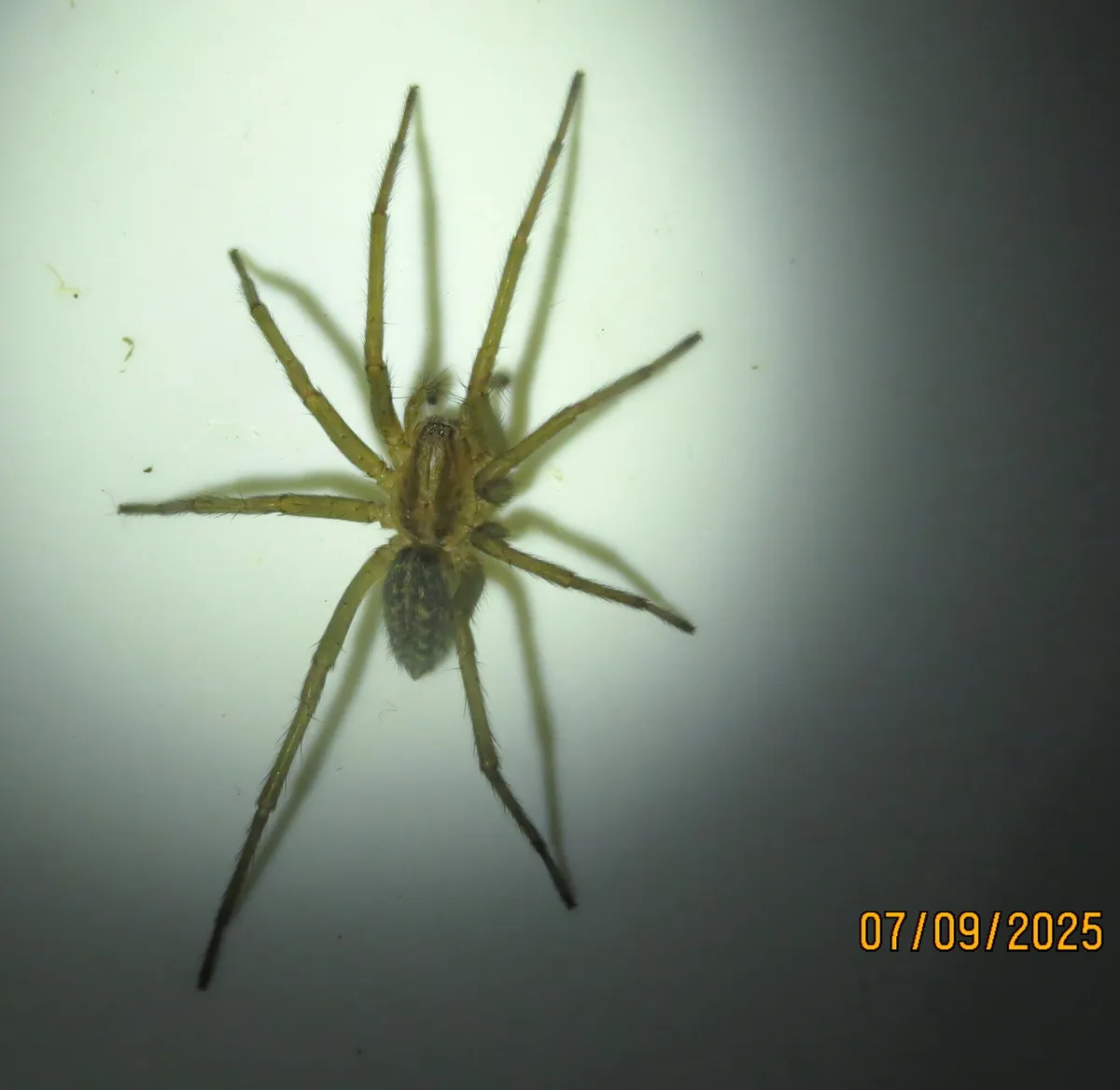
Outdoors, USU lists wood and rock piles, retaining walls, tall grass and foundation cracks. Indoors, wanderers can get trapped in clothing, bedding and shoes left on the floor, USU adds, so take care picking up clothes in those months; CDC advises shaking out clothing, shoes and towels before use.
USU says males die after mating, mated females lay one to four egg sacs starting in September, the eggs hatch in late spring, and hobo spiders are thought to take about 2 years to become adults. The guide to spider egg sacs compares the sacs of common spiders.
What does a hobo spider web look like?
A flat sheet that narrows into a tube, usually hidden near the ground. UC IPM says hobo spiders, unlike typical funnel weavers, build webs that are almost always hidden under objects and are not noticeably funnel-like. The University of Idaho describes trampoline-like sheets of nonsticky silk with a tubular retreat, usually built outdoors around low landscape features with cracks or crevices, and WSU says the spider waits at the mouth of the funnel for struggling prey.
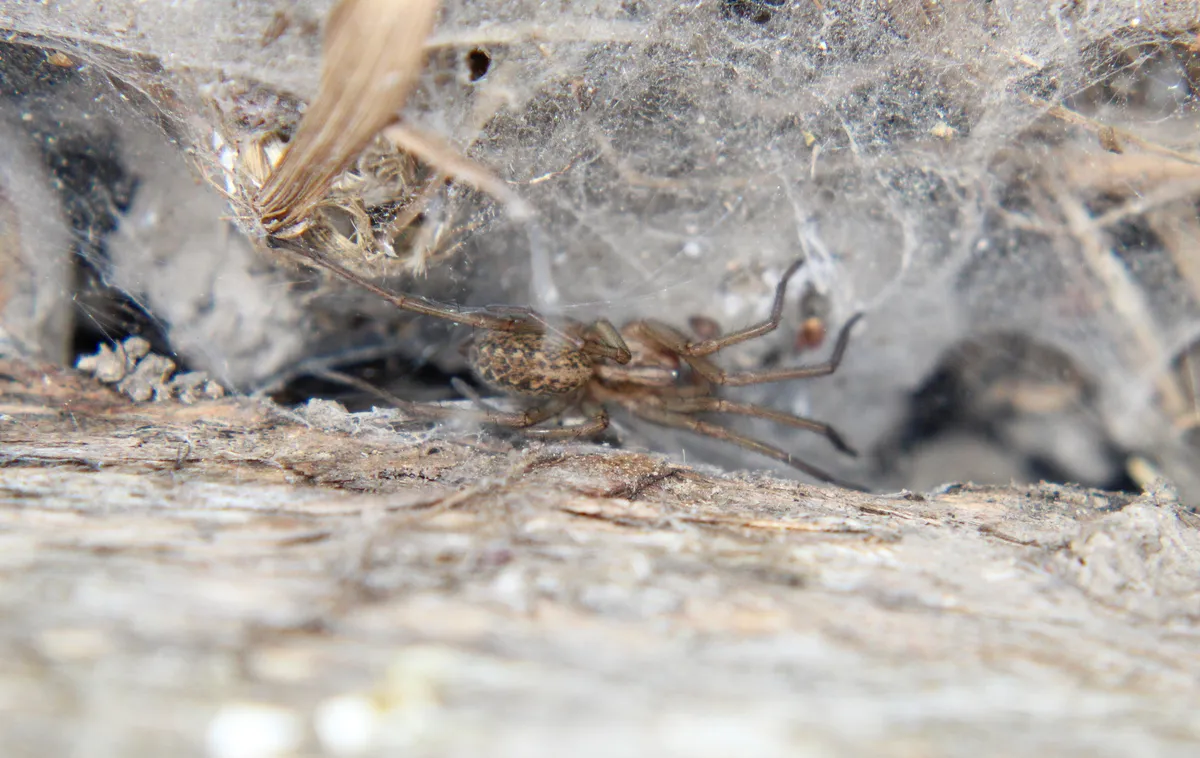
A web alone does not identify one, since other funnel-web weavers build the same kind, the University of Idaho says. WSU places hobo spider webs in dark, moist areas, often basements.
Are hobo spiders dangerous?
Not by current evidence. UC IPM says the bite of the hobo spider is not considered of medical importance, WSU says recent research has not shown it to be harmful to humans, and CDC's page on venomous spiders names only the black widow and the brown recluse. UC IPM still suggests treating it as of minor medical importance until definitive proof is in.
Its reputation rested on weak evidence. Reviewing it in the Annals of Emergency Medicine in 2004, Richard Vetter and Geoffrey Isbister traced the alarm to 1987 studies, one of which forced live hobo spiders to bite rabbits. They found only one verified hobo spider bite followed by a skin ulcer, in a woman with a history of phlebitis, and noted that pre-existing vein disease is itself a common cause of ulcers.
Other work agreed. A 2001 study found no necrotic wounds when venom from Pacific Northwest and European hobo spiders was injected into rabbits, UC IPM reports, and in Europe the venom is not considered toxic to humans. A 2014 study of 33 verified spider bites in Oregon found none with significant medical symptoms or dying skin; the one hobo spider bite caused pain, redness and calf-muscle twitching that resolved in 12 hours.
USU says hobo spiders bite in defense, causing mild pain and redness, and Colorado State calls the species harmless to humans. The guide to venomous spiders in the US covers the black widow and brown recluse too.
What should you do if a hobo spider bites you?
Clean it, cool it and watch it. MedlinePlus, the National Library of Medicine's health site, says most spider bites are harmless and may look like a bee sting, with redness, pain and swelling, though occasionally a bite causes an allergic reaction. Its first aid:
- Wash the area well with soap and water.
- Apply an ice pack or a wet compress.
- Take an over-the-counter pain reliever if needed, and consider an antihistamine for severe swelling.
CDC's first aid for a spider bite at work adds: stay calm, identify the spider only if that can be done safely, raise the bitten area if possible, do not try to remove venom, and notify a supervisor immediately and seek professional medical attention. WSU suggests taking the spider to an expert for identification and says you may want to seek medical attention.
Do not assume a spreading or slow-healing wound is a spider bite: Vetter and Isbister warn that misdiagnosing infections or skin cancer as spider bites delays or prevents the right treatment. If you never saw what bit you, the bug bite identifier asks six questions about a bite, and the bug bite chart compares common bites.
How do you keep hobo spiders out of the house?
Seal the gaps, clear the clutter and catch the wanderers on sticky traps. The University of Idaho's steps:
- Seal up. Weather-strip and caulk around doors, windows and utility lines, and fill cracks in the siding and around the foundation.
- Clear the foundation. Remove dense vines, shrubs, rocks and coarse bark mulch next to it, stack firewood away from buildings, and check firewood for spiders before bringing it in.
- Trap the wanderers. Set sticky spider traps by doors, along walls, behind furniture and near window wells from midsummer to the first freezing days of fall, out of reach of pets and young children (UC IPM).
- Vacuum and declutter. Vacuum corners and behind furniture, discard clutter, and from midsummer to October move beds and bedding away from walls and the floor.
USU also suggests pulling the bed about 8 inches from the wall during the August to October influx. WSU says commercial spider traps work well on wandering spiders such as hobo spiders, and that spraying spiders like these outdoors is not usually advised, since pesticides are a temporary fix unless their entry is blocked.
Keeping spiders out of the house goes further on sealing and traps, and the guide to getting rid of spiders covers a bigger problem. For other spiders and pests, browse more pest identification guides.
This guide is general educational information, not medical advice. If you have symptoms or concerns after a bite or exposure, contact a healthcare provider.
Frequently Asked Questions
How venomous is the hobo spider?+
Not enough to be considered medically important, by current evidence. UC IPM says the hobo spider's bite is not considered of medical importance, though it suggests treating the spider as of minor medical importance until there is definitive proof. A 2001 study found no necrotic wounds when venom from Pacific Northwest and European hobo spiders was injected into rabbits, and in Europe its venom is not considered toxic to humans. CDC's page on venomous spiders names only the black widow and the brown recluse.
What happens if a hobo spider bites you?+
Usually mild pain and redness. Utah State University Extension says hobo spiders bite in defense, causing mild pain and redness. In a 2014 study of 33 verified spider bites in Oregon, the one hobo spider bite caused pain, redness and twitching in the calf muscle that resolved within 12 hours. Wash the bite with soap and water and apply an ice pack or a wet compress, as MedlinePlus advises, and seek medical treatment for a small child or for severe symptoms.
What does a hobo spider bite look like?+
Much like other minor spider bites. MedlinePlus says a spider bite may look like a bee sting, with redness, pain and swelling at the site. Hobo spider bites were once blamed for slow-healing, ulcerating wounds, but the University of Idaho says that early evidence has since been refuted, and UC IPM calls those reports erroneous. In the Annals of Emergency Medicine, Vetter and Isbister write that skin wounds of unknown cause should not be blamed on spider bites right away, since infections and skin cancer are misdiagnosed that way.
Does the CDC list the hobo spider as venomous?+
No. CDC's page on venomous spiders, written for outdoor workers and reviewed in September 2026, names only two: the black widow and the brown recluse. Utah State University Extension likewise notes that the CDC does not list hobo spiders among venomous spider species that are toxic to humans. UC IPM says the hobo spider was labeled potentially toxic in the United States in the 1980s, that later research questioned the label, and that its bite is not considered of medical importance.
Are hobo spiders aggressive?+
No. Montana State University Extension says hobo spiders are not known to be naturally aggressive in their native Europe or in the United States, and that the nickname aggressive house spider came from mistranslating agrestis, Latin for rural or in the fields. In the Annals of Emergency Medicine, Vetter and Isbister describe hobo spiders as reticent to bite and quick to retreat when disturbed. Utah State says they bite in defense, as when a spider hiding in clothes on the floor is grabbed by mistake.
Why is it called a hobo spider?+
Because of how it is thought to have traveled. UC IPM links the name to the spider's presumed spread to distant cities by railway. The species, Eratigena agrestis, is native to Europe. Utah State University Extension says it was detected in the Pacific Northwest in 1936, and the University of Idaho says it was first detected in Idaho during the 1960s and is now common statewide there.
What attracts hobo spiders?+
Mates, shelter and prey. In late summer and fall, adult males wander in search of females, which is when hobo spiders are most often found in homes, Utah State University Extension says. Outdoors they shelter in wood and rock piles, retaining walls, tall grass and foundation cracks, and indoors clutter gives them hiding places. The University of Idaho advises removing dense vines, rocks and coarse bark mulch near foundations and sealing gaps, which also helps keep out the insects spiders feed on.
Do sticky traps catch hobo spiders?+
Yes, especially the wandering males. Washington State University says commercial spider traps are effective at trapping wandering spiders such as hobo spiders. The University of Idaho suggests placing sticky traps next to doors, along walls, behind furniture and near window wells from midsummer through the first freezing days of fall. UC IPM says traps along floorboards also give an idea of how many spiders are in the house, and that they should sit out of reach of pets and young children.
Is the hobo spider related to the Australian funnel-web spider?+
Not closely. UC IPM says the Sydney funnel web spider of Australia is highly toxic to humans and that, because the names are similar, American funnel weaving spiders have been wrongly assumed to share that toxicity. The Australian spiders are more closely related to tarantulas than to the American funnel weavers, the family Agelenidae that includes the hobo spider, which UC IPM calls virtually harmless.
How big is a hobo spider?+
About 1/2 to 5/8 inch long in the body, according to UC IPM, and 1 to 1 3/4 inches including the legs, according to Washington State University. Utah State University Extension gives mature females a body of 3/8 to 5/8 inch and males 9/32 to 9/16 inch. Size alone cannot identify one: the giant house spider, a common look-alike, has a body of 1/2 to 1 inch and a leg span of up to 4 inches on large adults, WSU says.
Sources
- Pest Notes: Hobo Spider (UC ANR Publication 7488; R. S. Vetter, updated November 2015) — University of California Statewide IPM Program
- Hobo spider (Pestsense fact sheet, reviewed December 2025) — Washington State University Extension
- Giant house spider (Pestsense fact sheet, reviewed April 2025) — Washington State University Extension
- How to identify (or misidentify) the hobo spider (Pest Leaflet Series PLS 116; Rick Vetter and Art Antonelli, 2002) — Washington State University Extension
- Hobo Spider (Kate Richardson and Ryan Davis, April 2023) — Utah State University Extension
- Hobo Spiders in Idaho (CIS 1221; D. Gunn, E. Bechinski and S. Parkinson, published July 2016) — University of Idaho Extension
- Hobo Spiders (fact sheet, August 2021) — Montana State University Extension IPM Program
- Barn Funnel Weaver (Colorado Arthropod of Interest) — Colorado State University, Department of Agricultural Biology
- Wolf Spiders (W. Cranshaw and F. Peairs, November 2009) — Colorado State University, Department of Bioagricultural Sciences and Pest Management
- Grass Spiders (Steve Jacobs, September 2025) — Penn State Extension
- Brown Recluse Spiders — Penn State Extension
- Venomous Spiders at Work (reviewed September 28, 2026) — CDC, National Institute for Occupational Safety and Health
- Do Hobo Spider Bites Cause Dermonecrotic Injuries? (Vetter and Isbister, Annals of Emergency Medicine 44:605-607, 2004) — Annals of Emergency Medicine, copy hosted by Utah State University Extension
- Verified spider bites in Oregon (USA) with the intent to assess hobo spider venom toxicity (McKeown, Vetter and Hendrickson, Toxicon, 2014) — US National Library of Medicine, PubMed
- Spider Bites (last updated March 9, 2023) — MedlinePlus, US National Library of Medicine
- Insect bites and stings (Medical Encyclopedia, reviewed October 14, 2025) — MedlinePlus, US National Library of Medicine
How this guide was made: it was researched and drafted with AI assistance from the sources listed above. A second, independent AI pass then checked each factual claim against those sources. Found an error? Email support@buzzskito.ca.