
Published by BuzzSkito Mosquito & Tick Control
Published October 23, 2026 · Drafted with AI assistance and fact-checked against the sources listed below
What does a yellow sac spider look like?
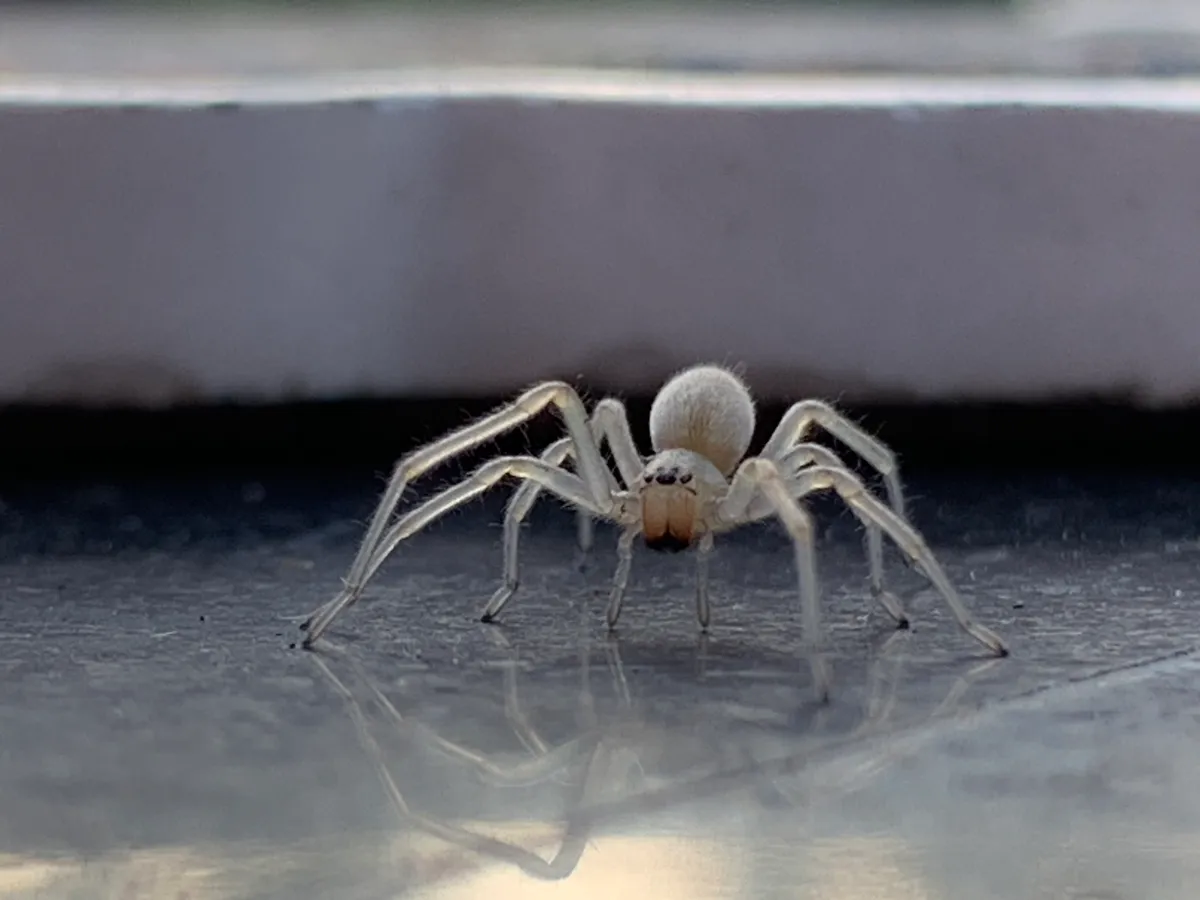
It is a small, pale spider, light yellow to cream and sometimes greenish, with darker jaws and foot tips. Penn State Extension's sac spider page gives females a body 3/16 to 3/8 inch (5 to 10 mm) long and males 5/32 to 5/16 inch (4 to 8 mm), with dark-brown jaws, palps and foot tips and a slightly darker stripe down the abdomen. UC Davis adds that the legs and front body section are darker than the abdomen.
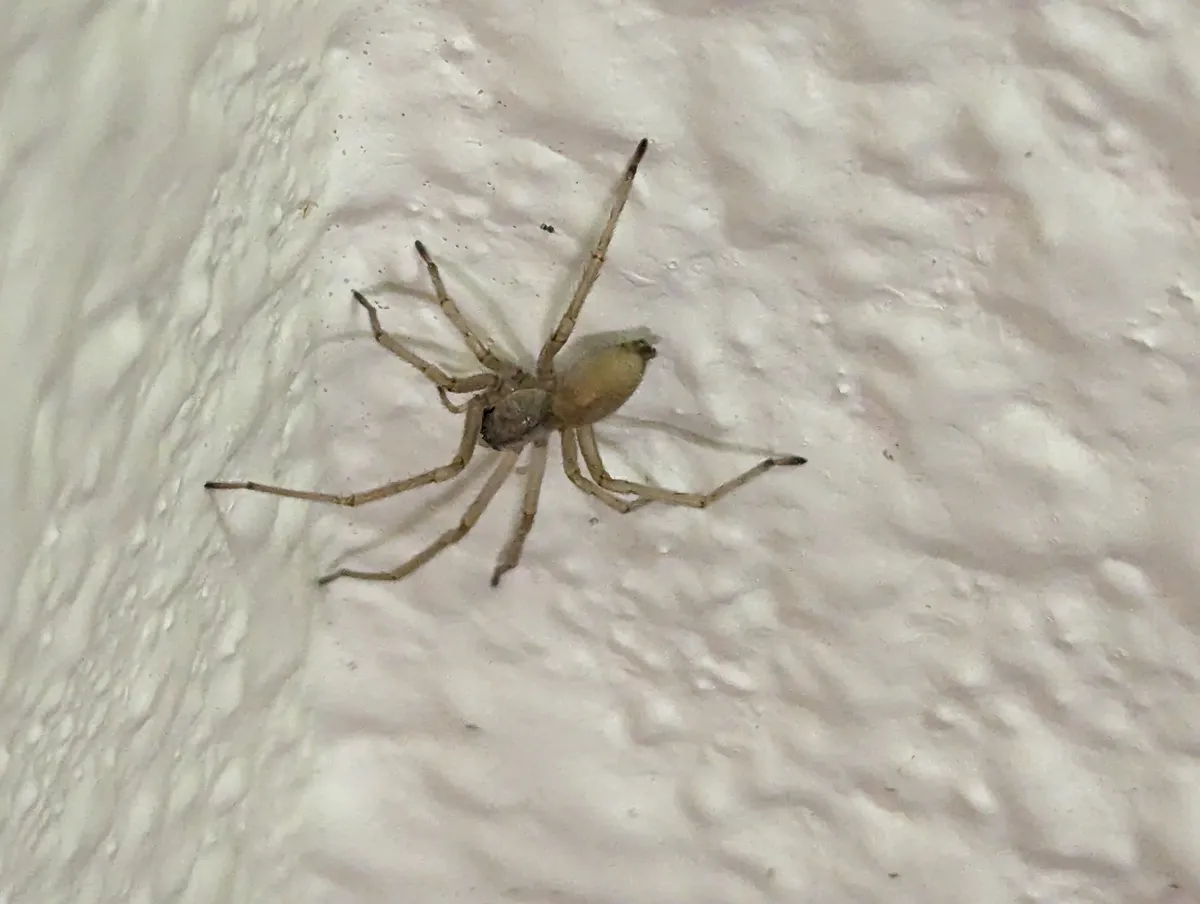
Its legs are long and thin, the front pair somewhat longer than the rest. Colorado State University's fact sheet puts a full-grown body at about 3/8 inch, or about 3/4 inch with the legs extended, and calls the color yellowish, sometimes pale grayish-tan, with no conspicuous markings. Kentucky describes it as a low, flat spider.
Up close, check the eyes and the feet. UC IPM says the 8 eyes are about equal in size and sit in 2 horizontal rows, and Utah State University Extension describes the dark leg tips as tufts of brown-to-black hairs that look like socks.
Which of the two yellow sac spiders is it?
Two common species share the name and look nearly alike. Penn State calls Cheiracanthium inclusum the agrarian sac spider, native to much of the United States except the northernmost states and met more often outdoors. C. mildei, the longlegged sac spider, was introduced from Europe; Penn State places it across the northern United States, gives it a slightly greenish abdomen and says it is found mostly in buildings.
In California, UC IPM calls C. mildei the common house-dwelling yellow sac spider, also common outdoors in shrubbery, and UC Davis calls C. inclusum one of the spiders most often met in gardens. The guide to spiders in California covers that state's other species.
Where do yellow sac spiders hide in a house?
In a small silk sac or tube where a wall meets the ceiling, or behind shelves and pictures, where they spend the day. University of Minnesota Extension's spider guide says sac spiders hunt at night, build no webs, hide by day in a silken tube or sac and make their retreats indoors in many places, including high on walls near ceilings.
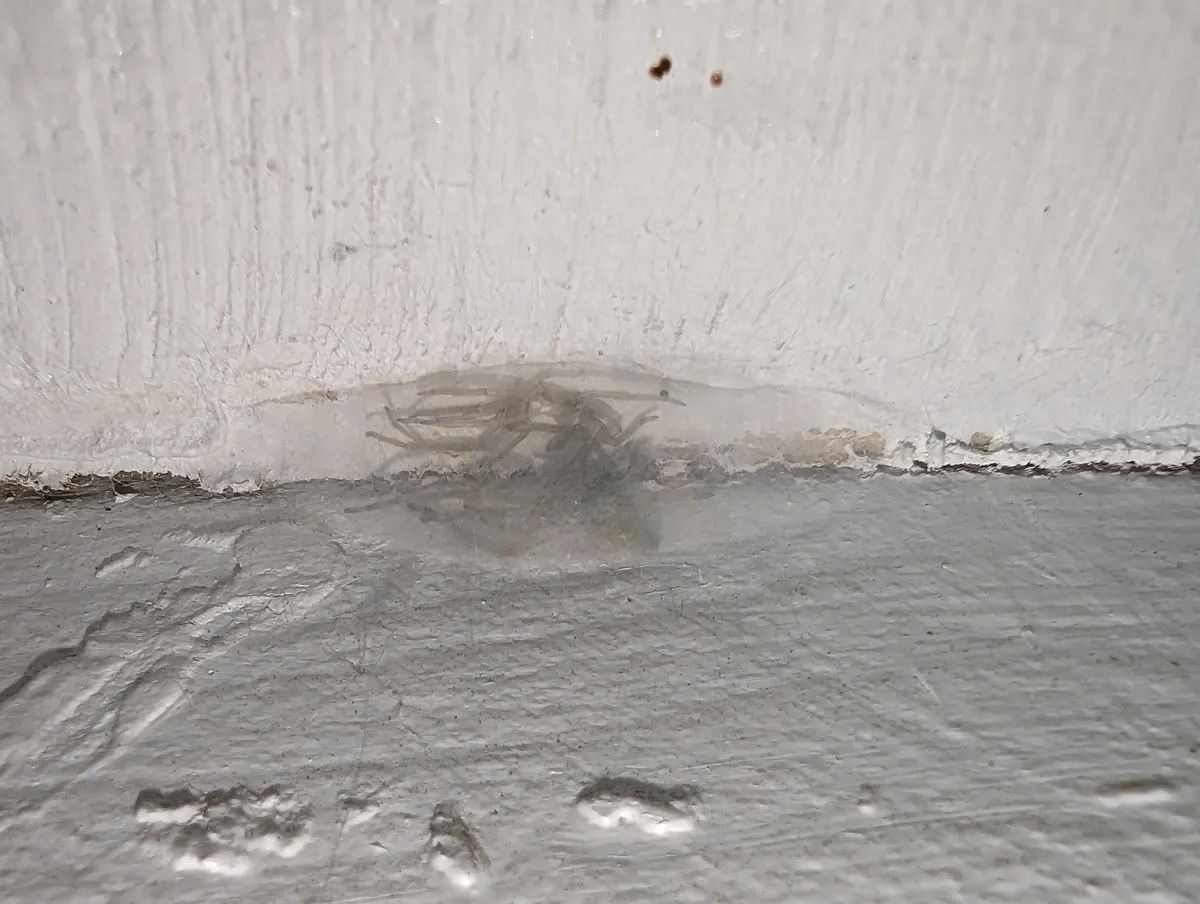
The sacs are easy to miss. Penn State notes that on light, neutral-colored walls and ceilings the small retreats blend into the background, and Utah State lists clutter and storage among the places these spiders hide.
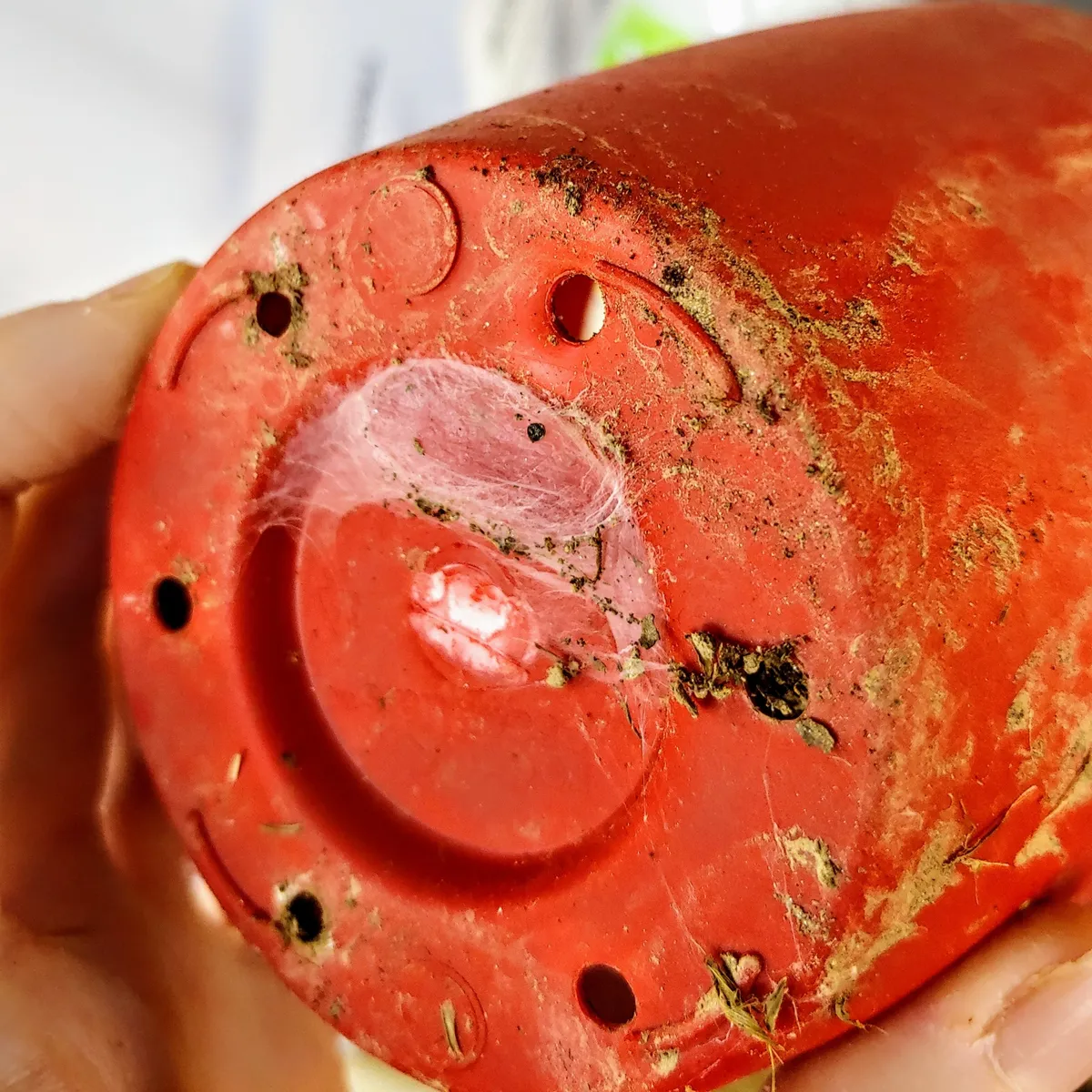
At night they come out to hunt. UC IPM says they can be seen running on walls and ceilings after dark and quickly drop to the floor if disturbed; UC Davis says they may drop on a silk thread and often wander where flies are common.
Is a white spider in the house a yellow sac spider?
It may well be, if it is small, pale and webless and out on a wall or ceiling at night. None of the guides cited here names a species the white house spider; UC Davis describes yellow sac spiders as yellow, white or even greenish. Several other spiders look pale indoors, and the table at the top of this page sorts them.
- Cellar spider. Very long, thin legs and a loose web near the ceiling. Penn State says these pale tan or yellow spiders, about 1/4 to 5/16 inch (6 to 8 mm) long, are not known to bite people; the cellar spider guide has photos.
- Common house spider. Kentucky describes a round abdomen in a messy cobweb, and Penn State a dirty-white to brown abdomen with gray chevrons; the house spider guide covers it.
- Woodlouse spider. A dirty-white abdomen behind a red-orange front half and legs, with large jaws slanting forward (Penn State); Kentucky says it sometimes wanders in from under rocks and logs near buildings.
- Crab spider. Front legs held out to the sides like a crab's. Kentucky says most common kinds are bright white, neon green or yellow, live on flowers and sometimes wander indoors, and Minnesota says crab spiders are rarely found indoors.
Checks for a pale spider in a jar
- Silk. A small sac in a corner and no web: a sac spider. A loose web near the ceiling: a cellar spider. A tangled cobweb: a common house spider.
- Legs. Many times longer than the body: a cellar spider. Front legs held out sideways: a crab spider.
- Eyes. Eight in two rows: not a recluse. Six in three pairs: leave it in the jar and compare it with a brown recluse; Mayo Clinic says recluse spiders are most common in the southern half of the US.
If two candidates remain, the spider identifier quiz asks quick questions about where you found the spider, its web, size, color, eyes and legs, and shows the likeliest matches with real photos.
How do you tell a yellow sac spider from a brown recluse?
By the eyes and the feet: a recluse has six equal-sized eyes in three pairs and legs all one color, says UC IPM's Pest Note on recluse spiders, while UC IPM gives the yellow sac spider eight eyes in two rows and Penn State gives it dark-brown foot tips. The University of Kentucky says the two are often confused because their shapes are similar, and the guide to spiders that look like brown recluses compares them side by side, with photos.
Commonly confused with
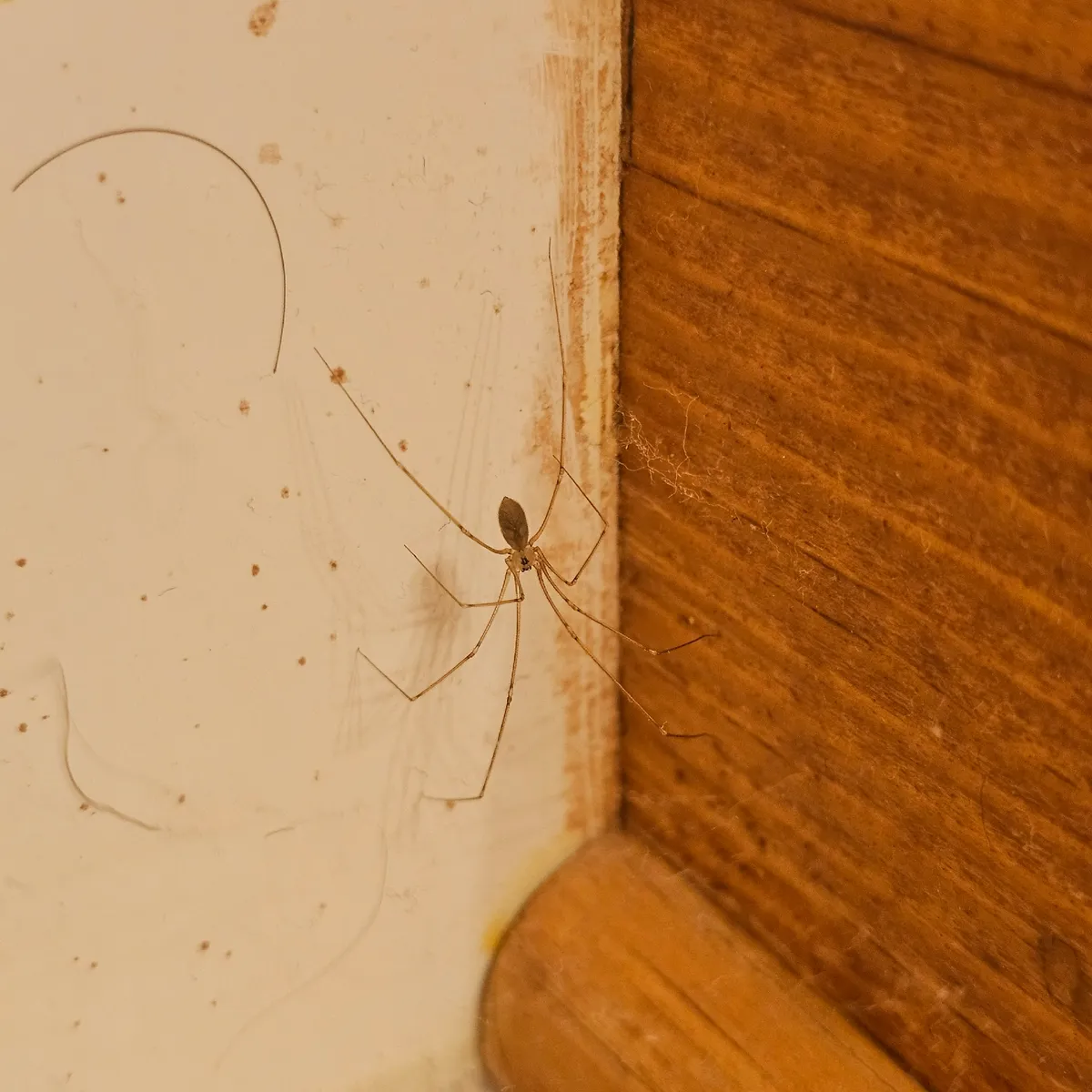 Cellar spiderLegs many times longer than its small body; hangs in a loose web near the ceiling
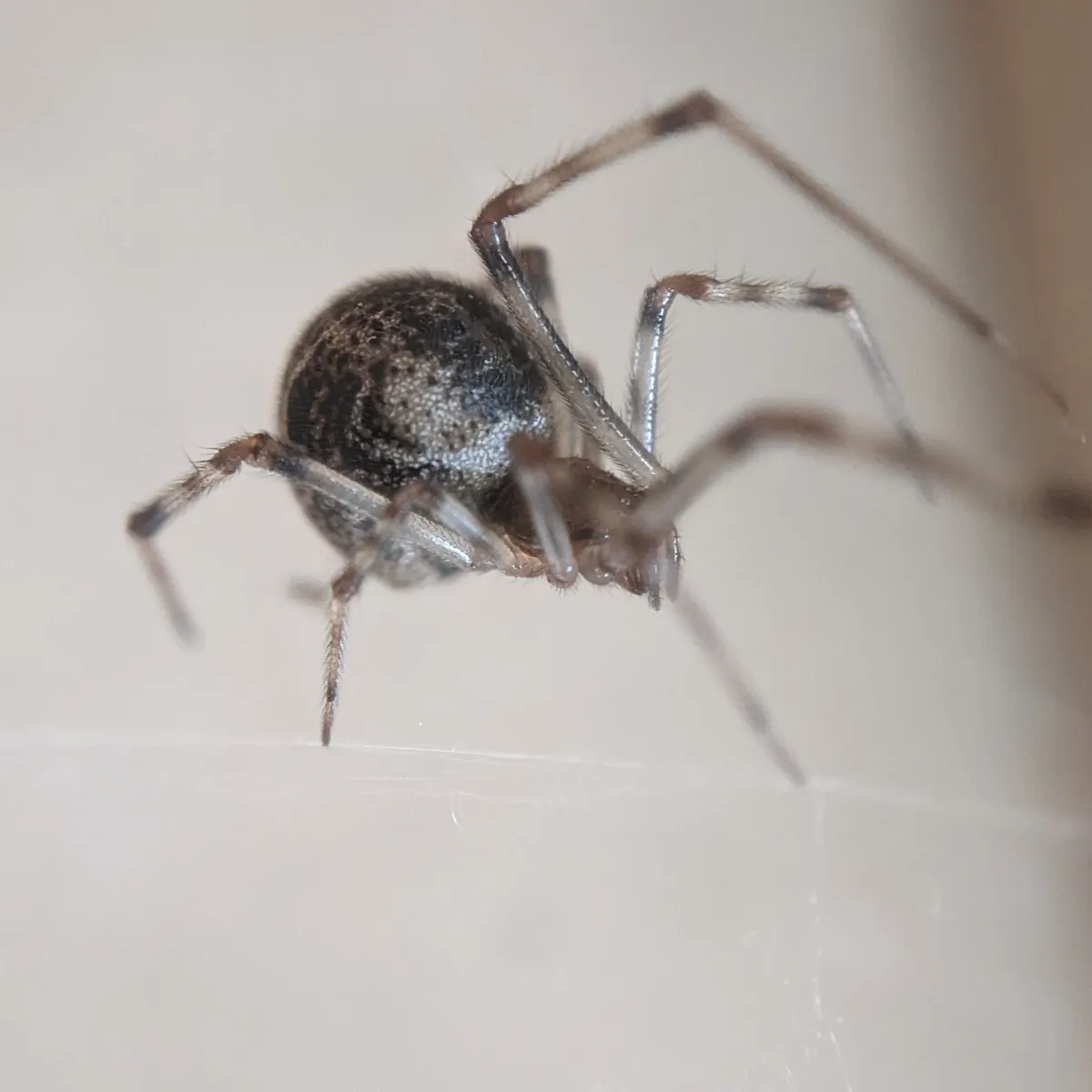 Common house spiderRound, mottled abdomen in a tangled cobweb; a sac spider is low, flat and webless
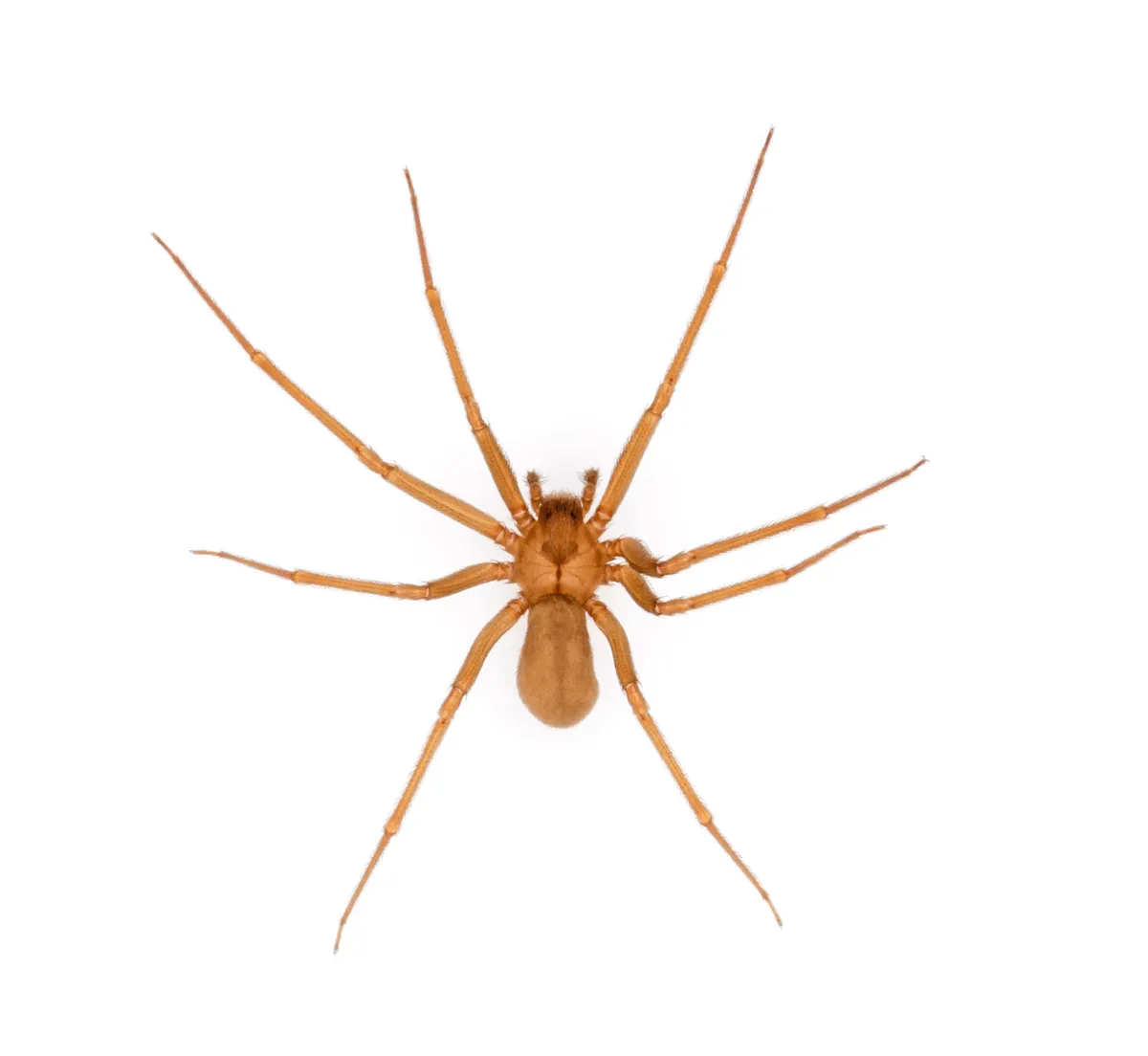 Brown recluseSix eyes in three pairs and legs all one color; a sac spider has eight eyes and dark feet
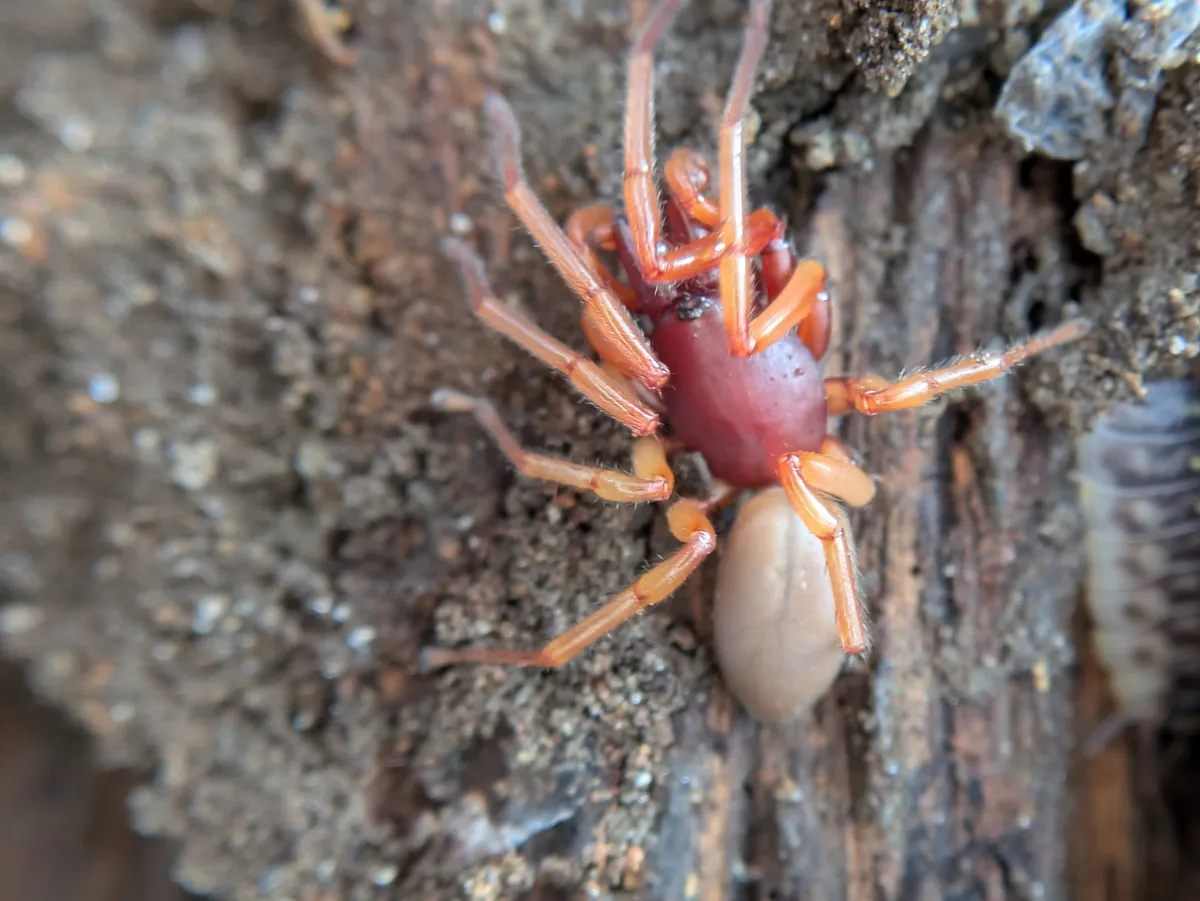 Woodlouse spiderPale abdomen, but a red-orange front half and legs and large jaws that point forward
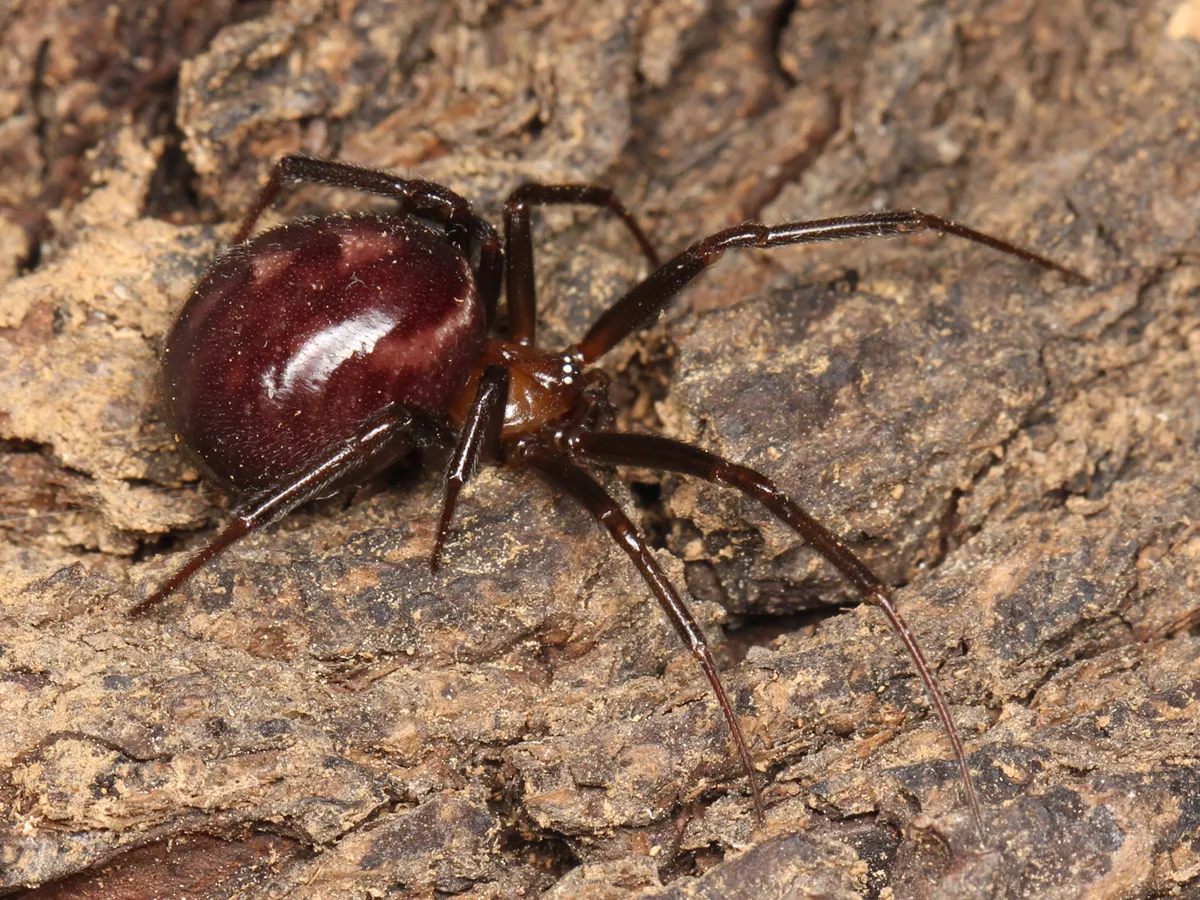 False black widowRound, chocolate-brown abdomen in a tangled web; a sac spider is pale and webless
Photos: Cellar spider: no rights reserved, via iNaturalist, CC0 1.0. Common house spider: no rights reserved, via iNaturalist, CC0 1.0. Brown recluse: Insects Unlocked, CC0, via Wikimedia Commons, CC0 1.0. Woodlouse spider: no rights reserved, via iNaturalist, CC0 1.0. False black widow: Ryan Kaldari, CC0, via Wikimedia Commons, CC0 1.0.
Why are yellow sac spiders in my house?
Because one species lives in buildings and both may move in for the winter. Penn State says the longlegged sac spider is met more often in buildings than outdoors and lays its eggs almost exclusively indoors, and Colorado State calls it one of the most common spiders breeding in buildings in Colorado. UC Davis says both species may move into buildings or cars in late summer and early fall and spin cocoon-like silk shelters for the winter, as immature spiders that molt once more before adulthood in spring.
They also hitch rides and follow food: UC Davis says sac spiders travel easily in farm produce, and UC IPM says spiders come in through cracks and on plants, firewood and boxes, and that buildings with more insects are more likely to have spiders.
What do yellow sac spider eggs look like?
You seldom see them: Penn State says the eggs lie loosely inside the female's silk retreat while she guards them nearby, and Colorado State describes a loose mass of about 40 eggs under thin silk, laid mainly in early summer and defended by the female until the spiderlings come out.
Penn State says the agrarian sac spider lays in June or July, mostly on the undersides of leaves outdoors, while the longlegged sac spider lays almost exclusively indoors. The Bohart Museum at UC Davis adds that sac spider egg sacs are often found beneath vehicles. The guide to spider egg sacs shows other spiders' egg sacs.
Do yellow sac spiders bite?
Yes, sometimes, usually when one is pressed against skin. Penn State says the two species account for a significant number of human bites, mostly when a spider out hunting at night is trapped against skin by sheets, clothing or shoes; agrarian sac spider bites usually happen outdoors during summer gardening.
Sources differ on how readily they bite: Penn State says the longlegged sac spider bites readily and has been seen biting without provocation, and Utah State says sac spiders can bite aggressively when trapped against the skin, but UC Davis's Bohart Museum of Entomology calls them not aggressive biters, with small, relatively weak jaws that cannot pierce everyone's skin.
A bite usually hurts at once but is seldom serious. Penn State describes very painful burning with redness, swelling and intense itching, a rash and blistering within about 10 hours and, in some people, fever, a general sick feeling, muscle cramps or nausea, yet says the bites normally cause no serious medical problems. UC IPM lists pain like a bee sting, redness and sometimes swelling, and UC Davis says a blister may break and leave a sore that heals over several weeks.
A sac spider is not the only indoor suspect: UC IPM's Pest Note on widow spiders and their relatives says the false black widow, a round, chocolate-brown cobweb spider common in Pacific Coast homes, is involved in more bites than black widows, and its bite may feel like a yellowjacket sting. The guide to venomous spiders in the US covers the few dangerous ones.
Are yellow sac spider bites necrotic?
Almost never in verified cases. In a 2006 study of 20 verified yellow sac spider bites from the United States and Australia, none caused necrosis, the death of skin tissue, and the authors' review of 39 verified bites worldwide found one case of mild necrosis, from a European species, Cheiracanthium punctorium.
The authors traced the idea mostly to venom tests on rabbits and guinea pigs, circumstantial cases and repeated citation of inconclusive reports. Penn State agrees that studies of many verified bites failed to confirm necrotic lesions, and the Bohart Museum says sac spiders do not cause necrotic sores that keep growing, attributing that kind of sore to bacterial infection.
A sore you did not see a spider make may be something else. Mayo Clinic says it is hard to be sure a wound came from a spider unless you saw it bite, CDC says some MRSA skin infections are mistaken for spider bites, and Minnesota Extension says people, even doctors, over-diagnose spider bites from wounds usually caused by disease or bacterial skin infection.
UC IPM's recluse Pest Note adds that a spider typically bites once, in self-defense, so many sores at once, or sores on several people in one home, point away from spiders. Mayo lists a wound that grows into an open sore with dying skin around it among the signs of a recluse bite, which the brown recluse bite guide covers; what spider bites look like, spider bites vs mosquito bites and the bug bite identifier help sort the rest.
When should you see a doctor for a yellow sac spider bite?
When the symptoms get much worse or spread beyond the bite, or if you have a history of allergic reactions; at once for the warning signs below. First, Poison Control advises washing the bite with soap and water and cooling it with cold water or a cloth filled with ice for 10 to 20 minutes. Colorado State advises disinfecting it to prevent a secondary infection that can enlarge the wound, and Poison Control says you may need a tetanus shot after a spider bite.
Catch the spider if you can do it without touching it: UC IPM advises saving a spider caught in the act for identification and warns that a crushed one may be hard to identify.
What should you do about yellow sac spiders in the house?
Remove the ones you see, take down their silk sacs and close the gaps; UC IPM says pesticides are not generally needed against spiders. Utah State advises vacuuming the spiders and their silk retreats indoors, catching strays in a glass jar for release outside, sealing outside cracks, fitting tight door sweeps and window screens, and switching outdoor lights to sodium vapor bulbs.
- Shake things out. Mayo Clinic advises inspecting and shaking out gardening gloves, boots and clothing before use.
- Keep the bed off the wall. Mayo suggests keeping beds away from the wall, with only the legs touching the floor and no bedding dragging on it.
- Wear gloves. UC IPM advises gloves when clearing clutter in garages, sheds and basements, and Penn State says agrarian sac spider bites usually happen while gardening.
- Flick, do not crush. Mayo says to flick a spider off your skin rather than crushing it against you.
- Check with sticky traps. Minnesota says sticky traps along walls and under furniture show whether spiders are present; UC IPM says to keep them where pets and children cannot get at them.
- Seal and screen. Keeping spiders out of the house covers gaps, screens and outdoor lights step by step.
Spiders also eat insects: Minnesota Extension calls them beneficial and suggests tolerating them when possible, and Utah State lists yellow sac spiders as beneficial as well as a possible nuisance indoors. For a bigger problem, the guide to getting rid of spiders covers control.
This guide is general educational information, not medical advice. If you have symptoms or concerns after a bite or exposure, contact a healthcare provider.
Frequently Asked Questions
Is a yellow sac spider poisonous?+
It has venom, as Minnesota Extension says all spiders do, and it can bite. Penn State Extension says the two common yellow sac spiders account for a significant number of human bites, which are painful and burning at first but normally cause no serious medical problems. The University of Kentucky calls the bite not medically significant except to allergic people, and a study of 20 verified bites in the United States and Australia found none that killed skin tissue.
What does a yellow sac spider bite look like?+
Penn State Extension describes a bite that is very painful and burning at first, with redness, swelling and intense itching, followed within about 10 hours by a rash and blistering; some people also have fever, muscle cramps or nausea. UC Davis says a blister may form and break, leaving a sore that heals over several weeks. Many sores blamed on spiders are infections, though, and Mayo Clinic says that unless you saw a spider bite you, it is hard to be sure a spider caused a wound.
What should you do if a yellow sac spider bites you?+
Wash the bite with soap and water and cool it with cold water or a cloth filled with ice for 10 to 20 minutes, as Poison Control advises, and disinfect it, which Colorado State says helps prevent infection. Save the spider if you can. Poison Control says to seek help if symptoms get much worse, spread beyond the bite or you have a history of allergic reactions (1-800-222-1222 in the US), and Mayo Clinic says to get care immediately for trouble breathing or swallowing, spreading redness or a growing wound.
Should I get rid of yellow sac spiders?+
That is your choice. Utah State University Extension calls yellow sac spiders beneficial predators of insects and other spiders but a possible nuisance indoors, and Minnesota Extension suggests tolerating spiders when possible. Indoors, Utah State's advice is to vacuum the spiders and their silk retreats, catch strays in a glass jar and release them outside, seal outside cracks and keep door sweeps and window screens tight. UC IPM says pesticides are not generally needed for spiders, and Mayo Clinic advises shaking out gloves, boots and clothing before use.
What attracts yellow sac spiders?+
Shelter for the winter and insects to eat. UC Davis says both common species may move into buildings and cars in late summer and early fall to spend the winter, and that they hunt at night, often where flies are common. UC IPM says the more insects a building has, the more likely it is to have spiders, and that spiders come in through cracks and on plants, firewood and boxes. One species, Penn State says, is found mostly in buildings and lays its eggs almost exclusively indoors.
Where do yellow sac spiders live in the US?+
Widely: UC Davis says both common species are widely distributed in the United States. Penn State says the agrarian sac spider is native to much of the country except the northernmost states, and that the longlegged sac spider, introduced from Europe, is now found across the northern United States. UC IPM calls the longlegged species the common house-dwelling yellow sac spider in California, and Colorado State says it is common indoors and outdoors throughout Colorado.
How big is a yellow sac spider?+
Small. Penn State Extension gives females a body 3/16 to 3/8 inch (5 to 10 mm) long and males 5/32 to 5/16 inch (4 to 8 mm), and Colorado State puts a full-grown spider at about 3/8 inch in body and about 3/4 inch with its legs extended. The University of Kentucky compares one, legs outstretched, to a US nickel. Its legs are long and thin, the front pair somewhat longer than the others, Colorado State says.
Do yellow sac spiders make webs?+
Not to catch prey. Penn State Extension calls them active hunters that search for prey at night instead of trapping it in a web, and Minnesota Extension says they hide by day in a silken tube or sac. That sac is the silk you find: UC IPM says the house-dwelling species spins it in the corners of ceilings and walls and behind shelves and pictures. Penn State notes the small sacs blend into light, neutral-colored walls and ceilings, so they are easy to miss.
What do yellow sac spider eggs look like?+
You will seldom see them, because they are laid loosely inside the female's silk retreat and she stays nearby to guard them, Penn State Extension says. Colorado State describes a loose mass of about 40 eggs covered with thin silk, laid mainly in early summer, which the female actively defends until the spiderlings come out. One species lays mostly on the undersides of leaves outdoors and the other almost exclusively indoors, Penn State says, and the young often return to the retreat at daybreak.
Are white house spiders poisonous?+
It depends on the spider: none of the guides cited here uses white house spider as the name of a species. A small, pale spider out on a wall or ceiling at night fits a yellow sac spider, whose bite Penn State says is painful but normally not serious. Cellar spiders are pale too, and Penn State says they are not known to bite people. In the southern half of the US, where Mayo Clinic says recluses are most common, check any plain tan spider for six eyes in three pairs.
Sources
- Agrarian Sac Spider and Longlegged Sac Spider (Steve Jacobs, updated January 19, 2026) — Penn State Extension
- Spiders (Pest Notes Publication 7442; R. S. Vetter, UC Riverside, updated October 2020) — University of California Statewide IPM Program
- Spiders (Jeffrey Hahn and others, reviewed 2019) — University of Minnesota Extension
- Urban Spider Chart (ENTFACT supplement; Blake Newton and Lee Townsend) — University of Kentucky Department of Entomology
- Yellow Sac Spider (Human Skin Parasites & Delusional Parasitosis) — University of California, Davis
- Sac Spiders (Information No. 013) — Bohart Museum of Entomology, University of California, Davis
- Verified bites by yellow sac spiders (genus Cheiracanthium) in the United States and Australia: where is the necrosis? — American Journal of Tropical Medicine and Hygiene (Vetter, Isbister, Bush and Boutin, 2006), record at Duke Scholars
- Yellow-legged Sac Spiders (Colorado Insect of Interest) — Colorado State University, Department of Agricultural Biology
- Yellow Sac Spiders (Cheiracanthium spp.), Utah Pests — Utah State University Extension
- Common House Spider (Steve Jacobs, updated January 19, 2026) — Penn State Extension
- Longbodied Cellar Spider (Steve Jacobs, updated January 19, 2026) — Penn State Extension
- Woodlouse Hunter Spider (Steve Jacobs, updated September 8, 2025) — Penn State Extension
- Brown Recluse and Other Recluse Spiders (Pest Notes Publication 7468; R. S. Vetter, updated November 2018) — University of California Statewide IPM Program
- Widow Spiders and Their Relatives (Pest Notes Publication 74149; R. S. Vetter, updated March 2017) — University of California Statewide IPM Program
- Insect and spider bites: When to worry — Poison Control (National Capital Poison Center)
- Spider bites: Symptoms and causes (July 30, 2021) — Mayo Clinic
- Methicillin-resistant Staphylococcus aureus (MRSA) Basics (June 26, 2025) — Centers for Disease Control and Prevention
How this guide was made: it was researched and drafted with AI assistance from the sources listed above. A second, independent AI pass then checked each factual claim against those sources. Found an error? Email support@buzzskito.ca.