Reviewed by Alex Francisco
Published November 23, 2026 · Fact-checked against the sources listed below
What do tick eggs look like?
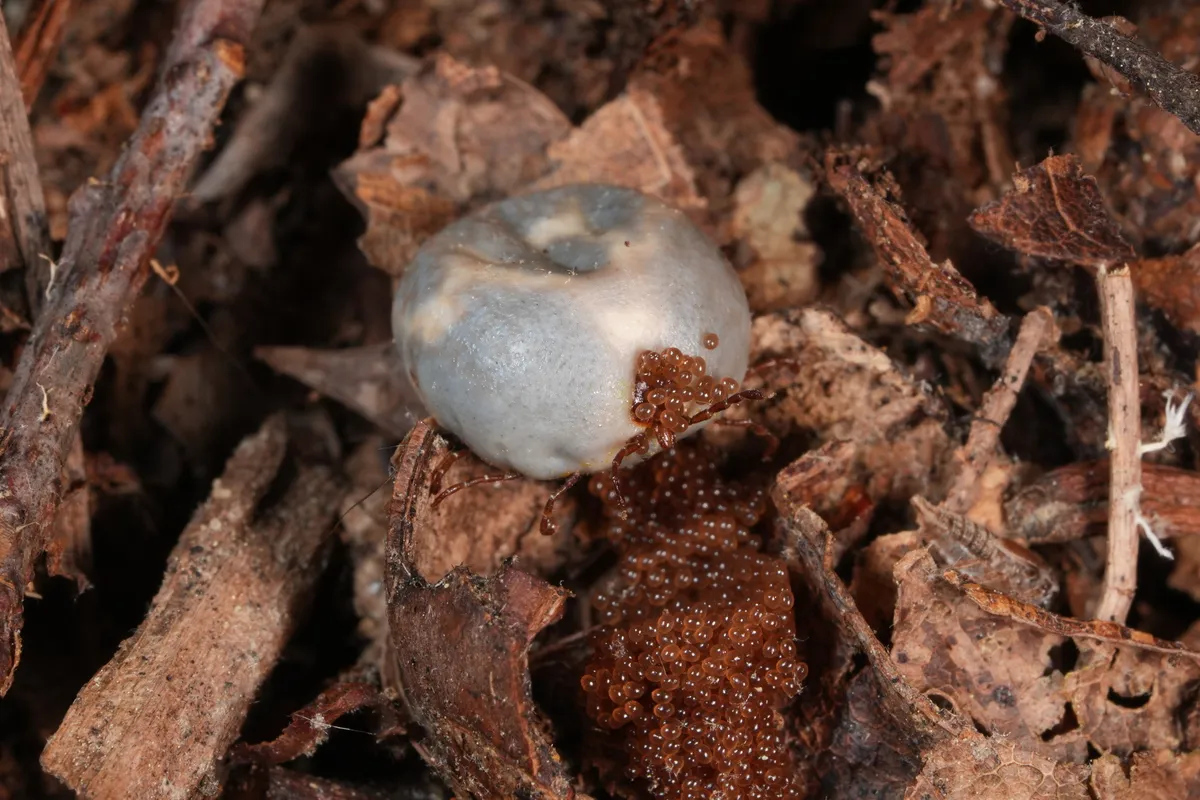
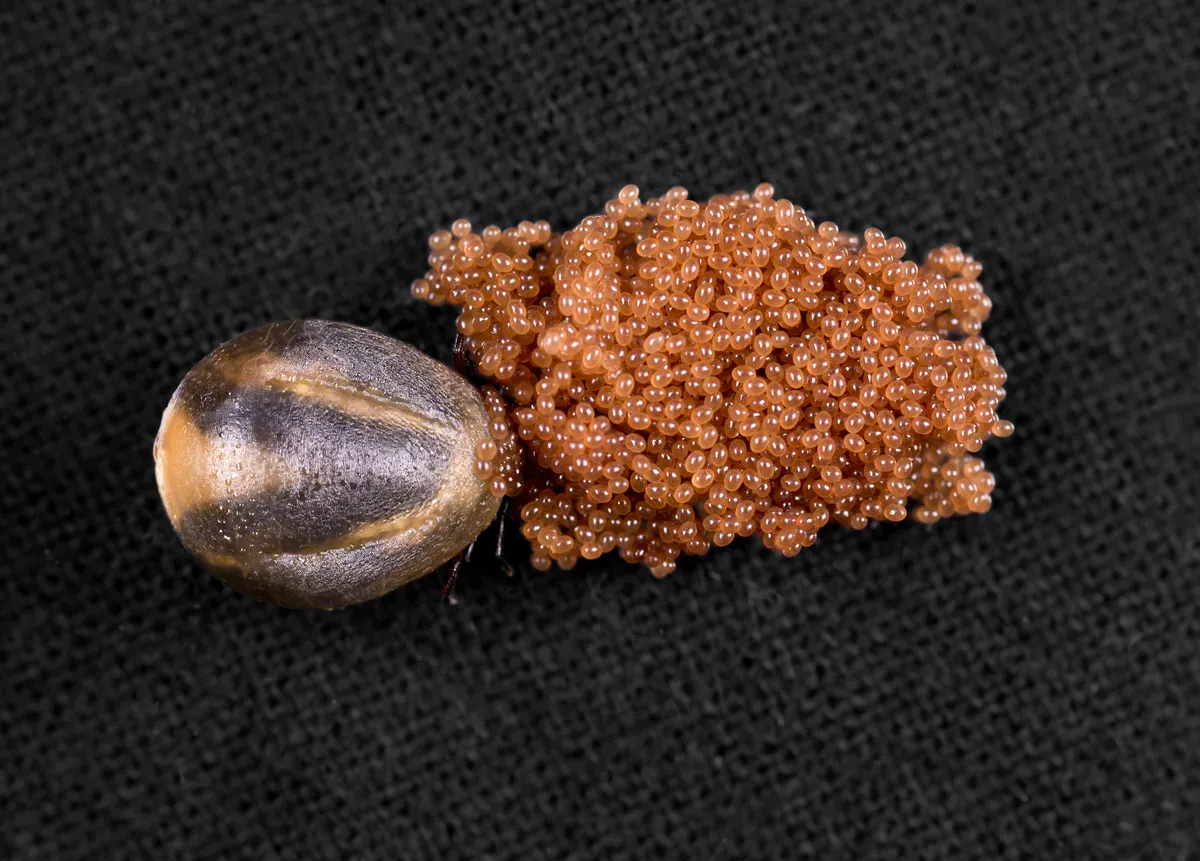
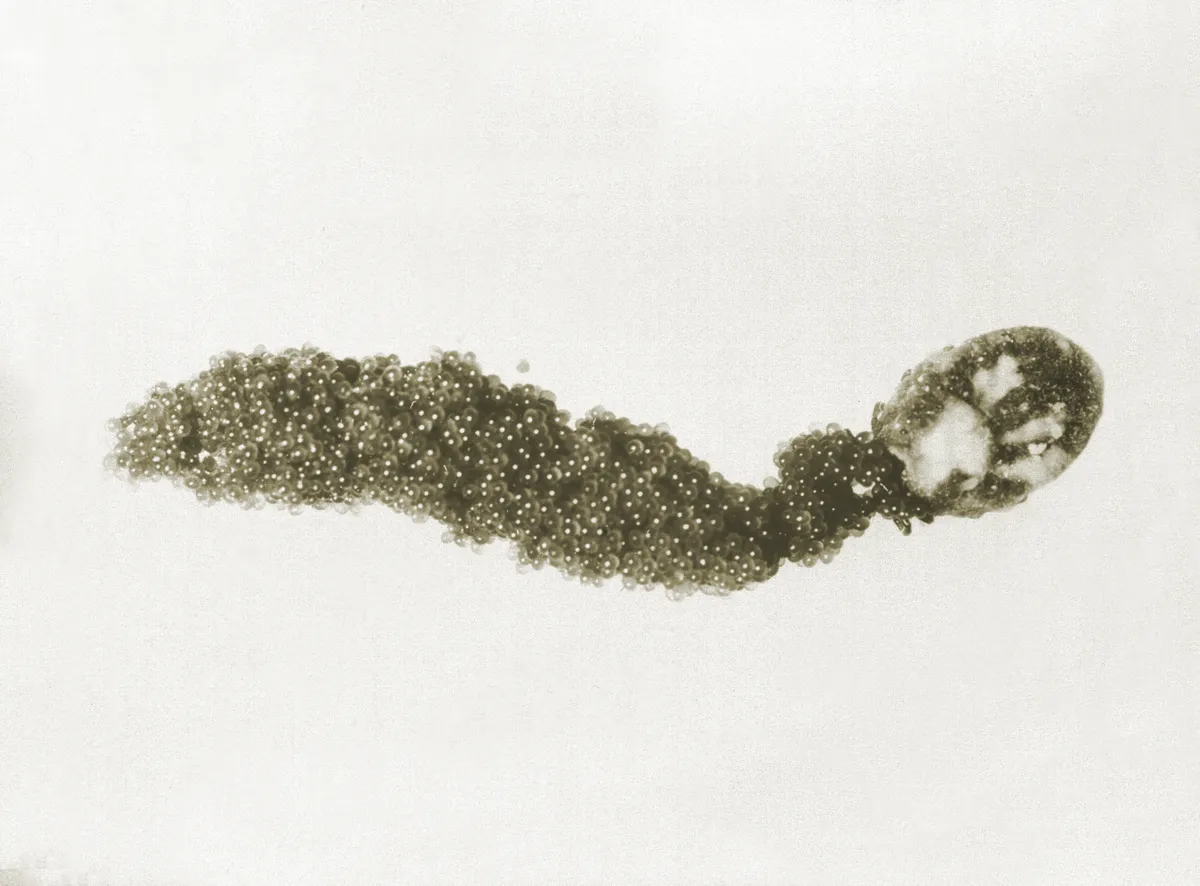
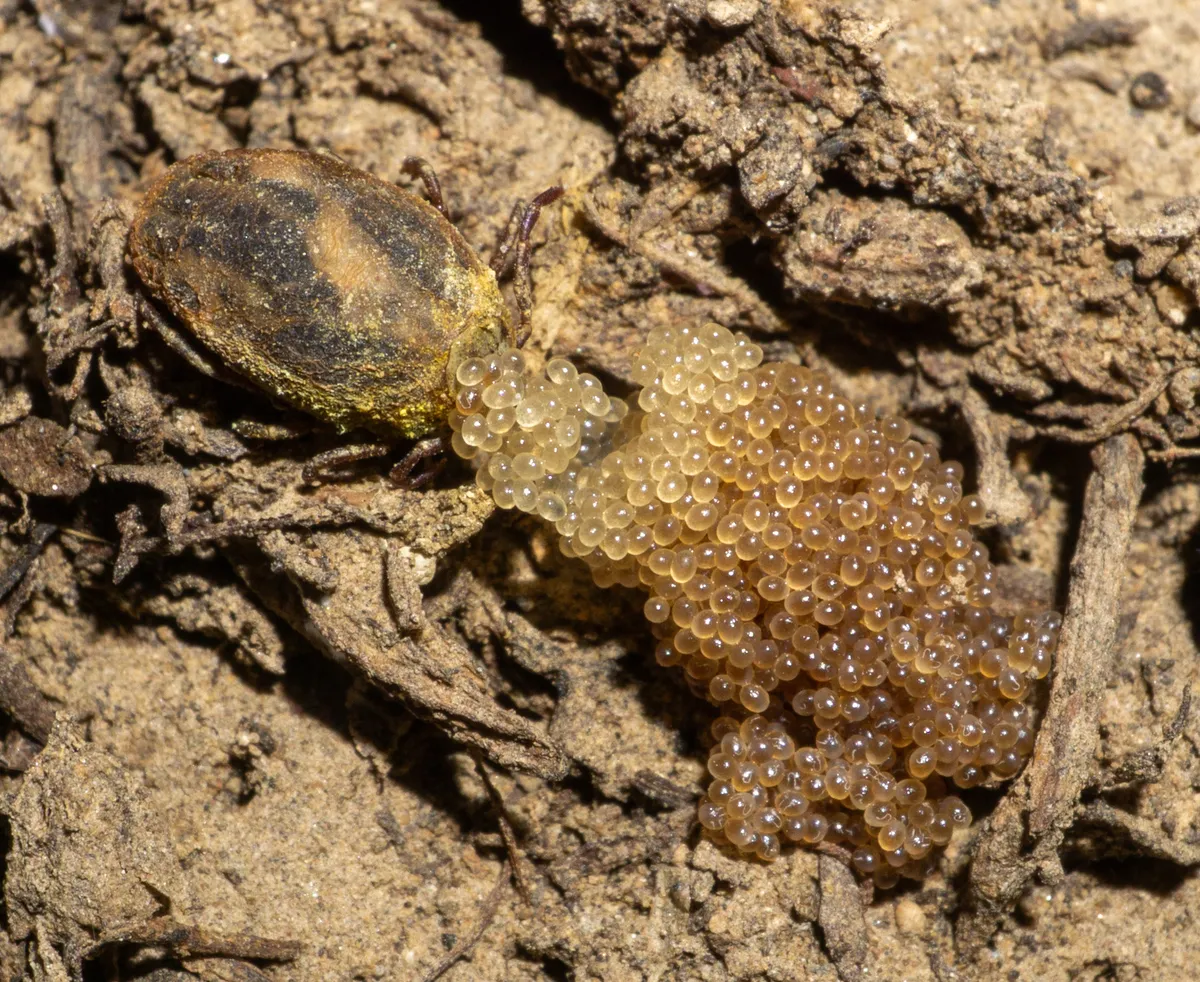
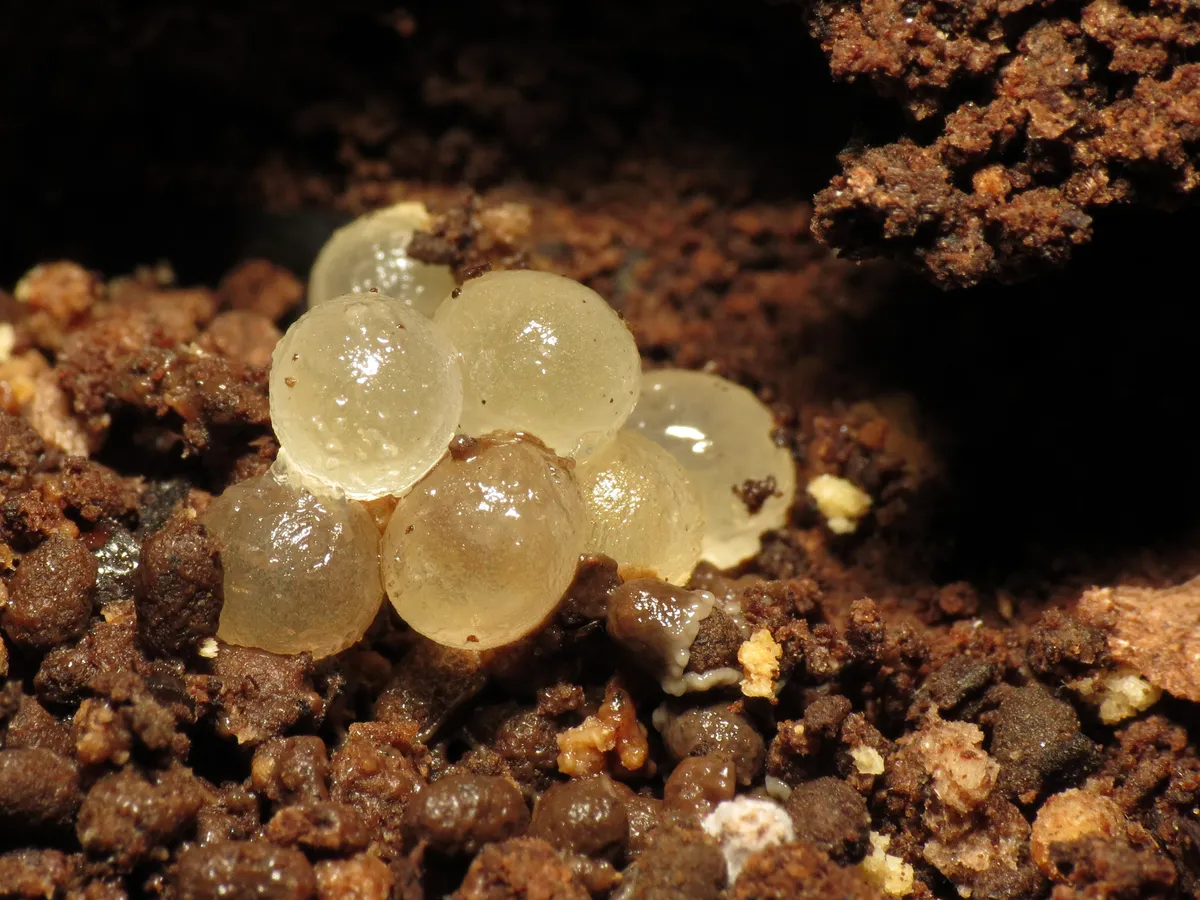
Tick eggs look like a small heap of shiny, round beads, amber to dark brown, packed together in one mass rather than spread out. Each egg is tiny. The larva that hatches from a brown dog tick egg is only about 0.02 inch (0.54 mm) long, according to the University of Florida's brown dog tick fact sheet, which describes that species' eggs as spherical and dark brown without giving their size. A CDC image record of a lone star tick describes her freshly laid eggs as round and amber-colored.
The clearest clue is the mother. A female tick lays all her eggs in one place after a single large blood meal, then dies, so an egg mass found where it was laid may still have a swollen or wrinkled female lying in or beside it, as in the photos on this page. The University of Maine's tick biology page describes a mated, fully engorged female depositing a single batch of several thousand eggs into the leaf litter and dying. If you see beads in neat rows, sealed inside a sac, inside a little cup or mixed into potting soil, you are probably looking at one of the look-alikes further down this page.
Is there such a thing as a tick nest?
No, not in the sense of something a tick builds. What people call a tick nest is one female's egg mass, or the swarm of larvae that hatches from it. The University of Rhode Island's TickEncounter program says some people call it a tick nest, but that it is really just all of the eggs from one female hatching in the same place, from a mass that can hold 3,000 or more eggs. None of the sources reviewed describes a tick building anything around her eggs, and the female dies after laying them.
How many eggs does a tick lay?
A female hard tick lays one batch of a few thousand eggs, and the number depends on the species; for the brown dog tick, the University of Florida says it also depends on the female's size and how much blood she took in. Sources disagree, so the table gives each figure with the species and the source it belongs to rather than an average.
| Tick | Eggs per female | Where she lays them | When they hatch |
|---|---|---|---|
| Blacklegged (deer) tick | About 2,000 to 4,000 (CDC image record); up to 1,500 to 2,000 (University of Rhode Island) | Off the host, in leaf litter | Laid in spring (CDC), mid to late May (URI); larvae emerge later in the summer |
| Lone star tick | 2,500 to 3,000 (URI); 3,000 to 8,000 (Pennsylvania DEP) | Not stated by URI or Pennsylvania DEP; the mass in the first photo was in leaf litter | Not stated in the sources reviewed; URI says swarms of larvae are most likely to be met in late summer |
| American dog tick | 4,000 to 6,500 (University of Florida) | On the ground, after dropping from the host | About 26 to 40 days after laying, depending on temperature (University of Florida) |
| Brown dog tick | About 4,000 on average, with over 7,000 possible (University of Florida); up to 4,000 (URI) | Cracks and crevices in houses, garages, kennels and dog runs | 2 to 5 weeks (URI); 6 to 23 days after the female finishes laying (University of Florida) |
| Asian longhorned tick | Up to 2,500 (University of Maryland Extension) | Not stated in the source | Laid late spring to early summer; hatch late summer to early fall |
Sources: CDC, URI TickEncounter, the Pennsylvania Department of Environmental Protection, UF/IFAS Extension and University of Maryland Extension, all linked on this page.
The numbers come from CDC's image record of a blacklegged tick laying eggs, URI's species pages for the blacklegged tick, the lone star tick and the brown dog tick, the Pennsylvania Department of Environmental Protection's lone star tick page, the University of Florida's American dog tick fact sheet and its brown dog tick fact sheet linked above, and University of Maryland Extension's Asian longhorned tick page. The Asian longhorned tick is unusual: University of Maryland Extension says its females can lay eggs without mating. The lone star tick's own guide covers the lone star tick at every stage.
Where do ticks lay eggs?
Where the sources say, female ticks lay off the host: in leaf litter for the blacklegged tick, on the ground for the American dog tick, and in cracks and crevices for the brown dog tick. The order is the same in each of those accounts: a female feeds, drops off, spends days turning the blood meal into eggs, and only then lays. The Pennsylvania DEP says a lone star female lays 7 to 16 days after her last blood meal. The University of Florida says a female American dog tick drops from the host, develops her clutch over the next four to 10 days, then lays on the ground and dies. CDC says blacklegged and western blacklegged ticks typically lay eggs in the spring.
- Leaf litter. URI says engorged blacklegged females drop off the host into the leaf litter, and the University of Maine describes female ticks depositing their eggs there. CDC's tick prevention advice for a yard with fewer blacklegged ticks starts with removing leaf litter and clearing tall grass and brush around homes and at the edge of lawns.
- Sheltered spots on the ground. The University of Florida says American dog tick females lay on the ground, and notes that brown dog ticks are hard to spot while they digest a meal, molt or lay eggs because they keep out of sight.
- Cracks and crevices around homes and kennels. This is the brown dog tick's habit. The University of Florida names cracks and crevices in houses, garages and dog runs as ideal places for a female to lay, and URI adds the tops of kennels and ledges.
Can tick eggs be in your house?
Yes, and the tick to suspect is the brown dog tick. The University of Florida says many tick species can be carried indoors on animals but most cannot complete their entire life cycle there, and that the brown dog tick is unusual because it can complete its life cycle both indoors and outdoors. URI says this tick is most at home in your home, especially with a dog that is not protected against ticks. URI adds that the species is found throughout the United States, more often in the southern states.
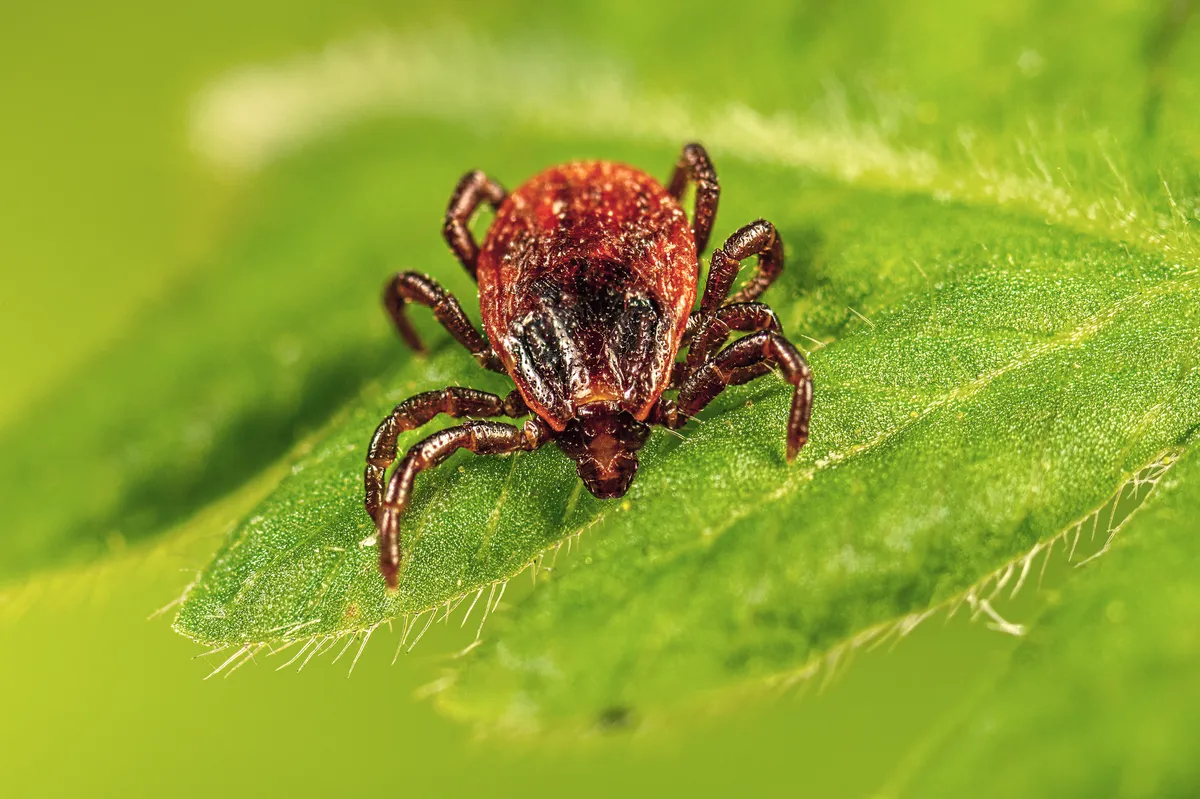
Indoors, the eggs themselves are rarely what people notice first. According to the University of Florida, a fed female brown dog tick drops off the dog, finds a secluded spot such as a crack or crevice, can begin laying as soon as four days later and can keep laying for 15 to 18 days. The first sign owners usually see, the same fact sheet says, is ticks crawling up walls or curtains, and people often mistake the mix of large adults and tiny larvae for several kinds of tick. It also describes ticks coming out onto furniture, baseboards, carpeting and dog bedding as they look for the dog.
A blacklegged or American dog tick that comes in on a coat or a pet is a different case. An unfed tick has no eggs to lay, because a female needs a blood meal to produce them, and the University of Florida says most tick species cannot complete their life cycle indoors. Find out which tick you have with the tick identification chart, and read how long ticks live indoors and outdoors for survival times.
Can ticks lay eggs on a dog or on your skin?
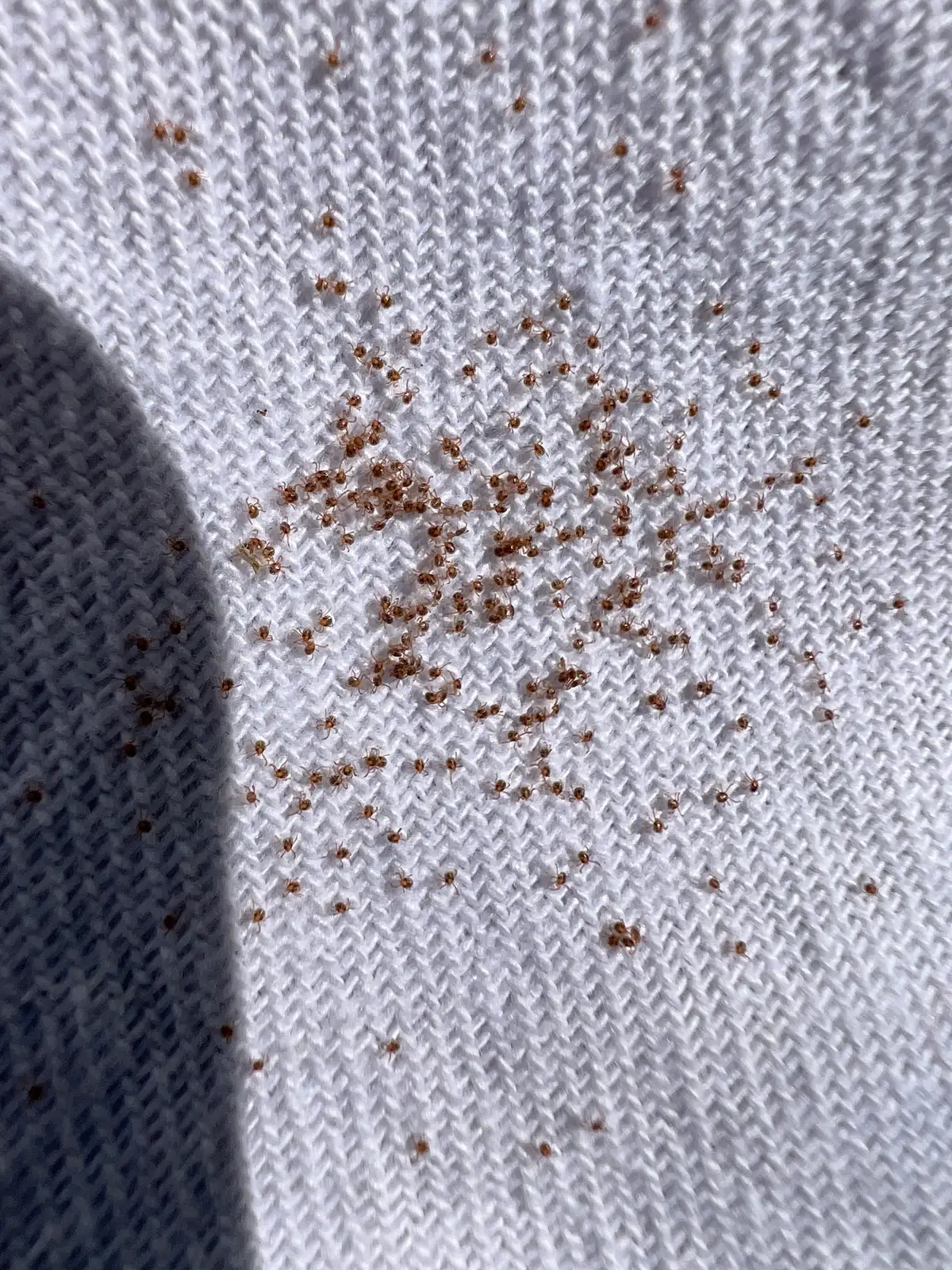
Not according to the sources reviewed, which describe females leaving the host before they lay. The University of Florida's brown dog tick fact sheet says each active stage feeds once and then leaves the host to digest the meal and molt or lay eggs, and that an adult female feeds for about a week before dropping off. Its American dog tick fact sheet says the same: she drops from the host to lay her eggs. URI says engorged blacklegged females drop off the host into the leaf litter. Tiny specks moving on a dog or on skin may instead be seed ticks, the larvae that hatch from an egg mass, and the Canadian guide to baby ticks, nymphs and seed ticks covers the same stages.
A large, swollen tick on a dog is usually a feeding female, the stage right before egg laying, and the guide to engorged ticks shows what she looks like. Remove it promptly, following how to check a dog for ticks, and ask a veterinarian about tick prevention: the University of Florida stresses that pet owners should consult their veterinarians about the most appropriate treatment for their dogs. On a person, CDC says to remove an attached tick with fine-tipped tweezers, and to see a healthcare provider if a rash or fever develops within several weeks.
How long do tick eggs take to hatch?
Most of the published figures run from about a week to a couple of months, depending on the species and the temperature. The University of Florida gives about 26 to 40 days for American dog tick eggs, depending on temperature. For brown dog tick eggs, URI gives 2 to 5 weeks, and the University of Florida says larvae hatch 6 to 23 days after the female finishes laying.
Blacklegged ticks lay in spring and their larvae emerge later in the summer, according to URI and CDC. University of Maryland Extension says Asian longhorned tick eggs laid in late spring to early summer hatch in late summer to early fall. The outlier is the western blacklegged tick: CDC's life cycle chart for it has eggs laid in spring hatching into larvae the following spring.
What hatches is a six-legged larva, and because a whole mass hatches together the larvae appear as a swarm. That swarm is the stage people meet on their legs, and URI hears about it most in August and September. URI's duct tape advice is to lift loose larvae off with tape before they attach. The tick life cycle from egg to adult follows the larva through its next two stages.
Do tick eggs carry disease?
Tick eggs do not carry the Lyme disease bacteria, but a few other germs can pass from a female tick into her eggs. CDC says female ticks infected with Lyme disease bacteria do not pass the infection to their offspring; larvae and nymphs pick the bacteria up by feeding on an infected host, usually a rodent. URI says deer tick and lone star tick larvae mostly hatch germ-free, with at least one known exception, Borrelia miyamotoi, a relapsing fever germ that can make people sick. The University of Florida notes that American dog tick larvae can acquire the Rocky Mountain spotted fever germ from their mother through the egg.
Eggs cannot bite, so any risk comes later, from the larvae and the stages after them. For the American dog tick, the University of Florida adds that larvae and nymphs rarely bite people, so the adult is the stage of main concern. The CDC pages cited here do not put a number on the chance of illness from a larval bite. The advice is the same at every stage: remove attached ticks promptly and see a healthcare provider if a rash or fever appears within several weeks. Which ticks carry Lyme disease sets out the species and stages CDC names.
What gets mistaken for tick eggs?
Several other things turn up as clusters of beads in the yard or the house. A real tick egg mass is one heap on the ground or in a crack, sometimes with the female still beside it; these look-alikes differ in place, shape or texture. The insect egg identification guide covers egg clusters in the house and garden more broadly.
- Slug and snail eggs. UC IPM describes slug eggs as translucent, oval to round and laid in batches of 3 to 40 beneath leaves, in soil cracks and in other protected spots, and brown garden snail eggs as pearly white spheres, about 80 at a time, laid in a hole in the soil. They are translucent or pearly white, not amber to dark brown.
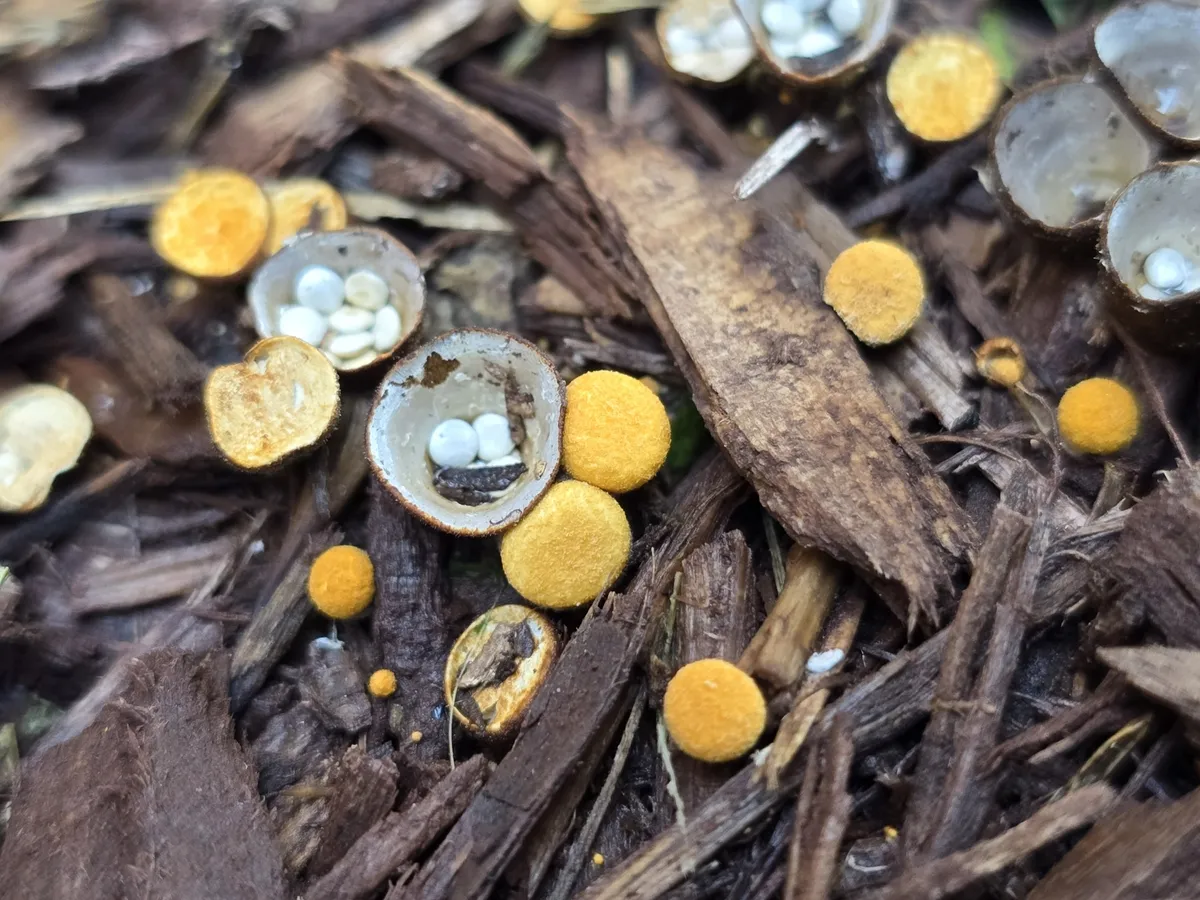
- Bird's nest fungi. The University of Kentucky's mulch fungi fact sheet says they look like tiny nests about 1/4 inch across holding several metallic-looking eggs that are really filled with spores. They grow in mulch, and the fact sheet says mulch fungi do not infect plants.
- Slime molds. Washington State University says slime molds on turf form rounded, yellow to purple-brown masses that are often mistaken for insect eggs, feed only on decaying organic matter and usually disappear in about 1 to 2 weeks if left alone.
- Slow-release fertilizer beads. Purdue's plant diagnostic lab says it occasionally gets calls about eggs in houseplant soil that turn out to be coated fertilizer pellets, often a transparent pale yellow and about 1/8 inch across.
- Spider egg sacs. The tick egg masses in the photos on this page are bare heaps of beads with no sac or pouch around them. Eggs sealed inside a sac point to something else, and the spider egg sac guide sorts the common sacs by species.
- Insect egg masses on leaves. UC IPM describes brown marmorated stink bug eggs as barrel shaped, white to pale green and laid in clusters on leaves. Eggs standing in tidy rows on a leaf point to an insect, as the stink bug egg guide shows.
How do you tell tick eggs from look-alikes?
Checks to run before you call it tick eggs
- One heap, not rows? Tick eggs are laid as a single mass. Barrels standing side by side on a leaf point to an insect.
- Glossy amber to dark brown? Translucent or pearly white beads point to slugs or snails, egg-like disks in tiny cups to bird's nest fungus, and pale yellow see-through beads in a pot to fertilizer.
- Is a tick lying beside it? A swollen or shrunken female next to the mass is a strong sign it is tick eggs.
- On the ground, under cover or in a crack? That is where the ticks in the sources above lay. Eggs sealed inside a sac or pouch point to something else, such as a spider egg sac.
- Is it moving? A patch of moving specks is not eggs at all; it may be seed ticks, the larvae that already hatched.
- Indoors, near where a dog sleeps? Suspect the brown dog tick and look for ticks on walls, baseboards, curtains and the dog.
If you can find a tick near the eggs, the tick identifier asks a few questions about its size, markings and where you found it and suggests the most likely species. When a single small bug is the question, the guide to bugs that look like ticks and the photo guide to what ticks look like at each size can help.
Commonly confused with
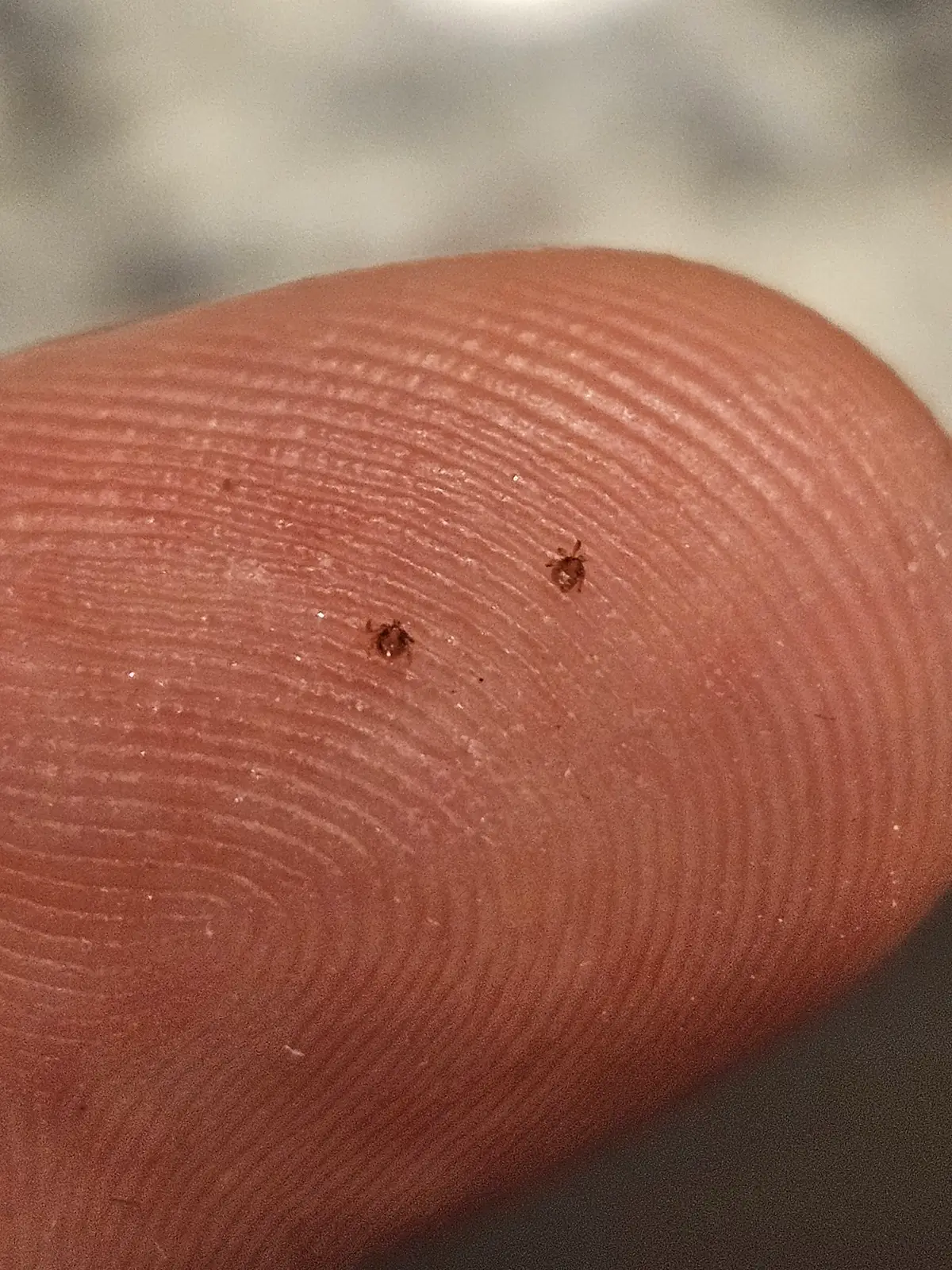 Seed ticksMoving six-legged specks in a patch: larvae that already hatched from an egg mass
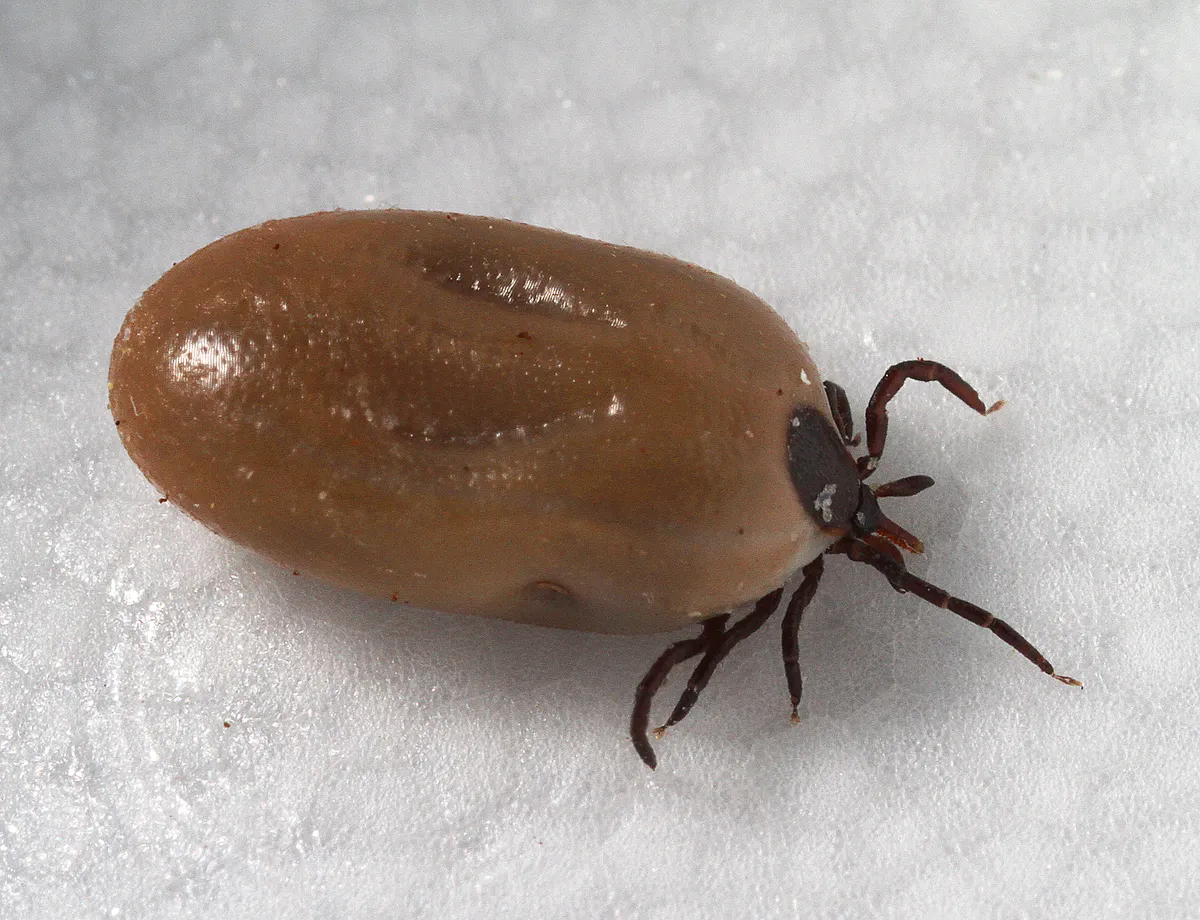 Engorged female tickOne swollen tick, the fed female before she drops off and lays her eggs
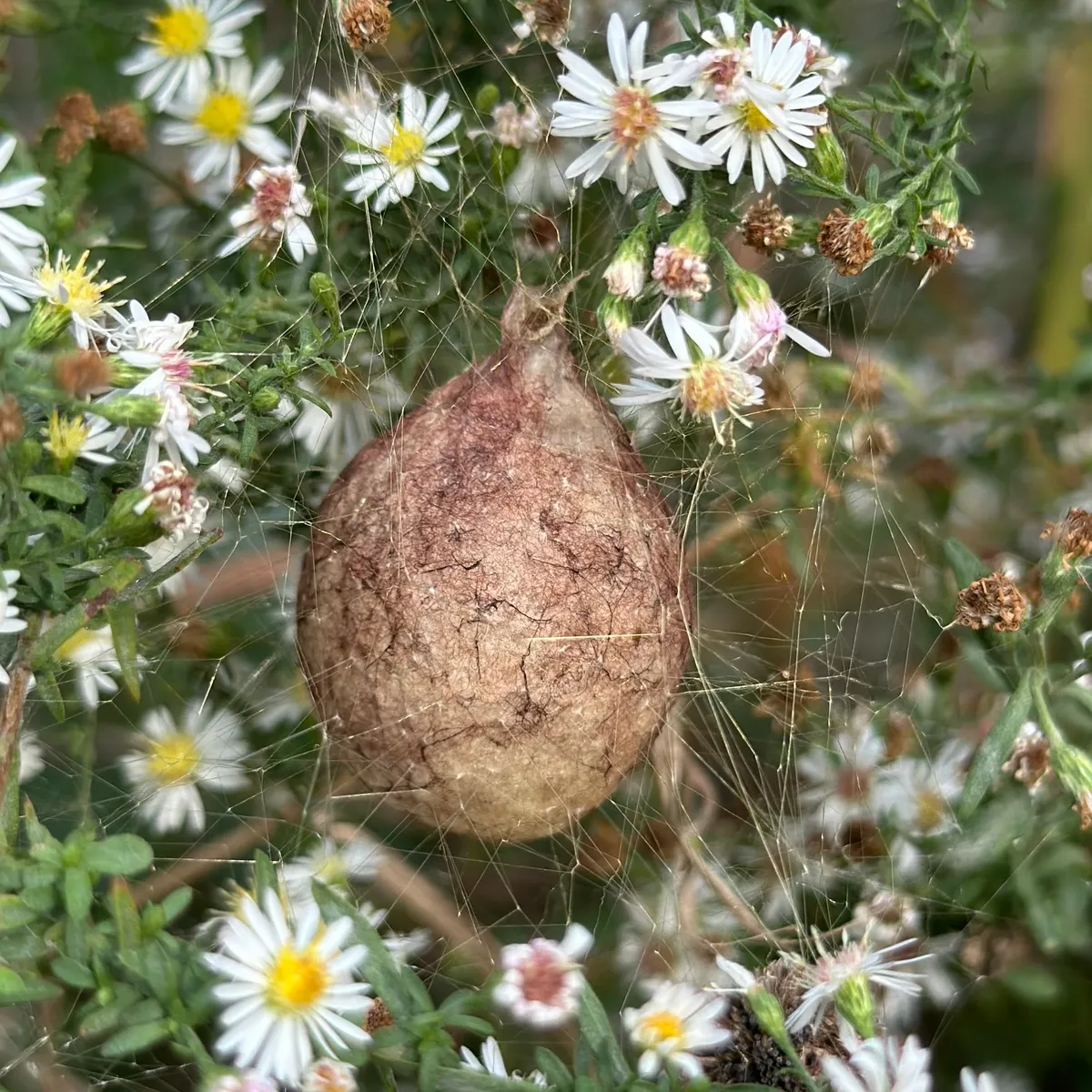 Spider egg sacA closed, papery sac hanging among plants; a tick egg mass is a bare heap of beads
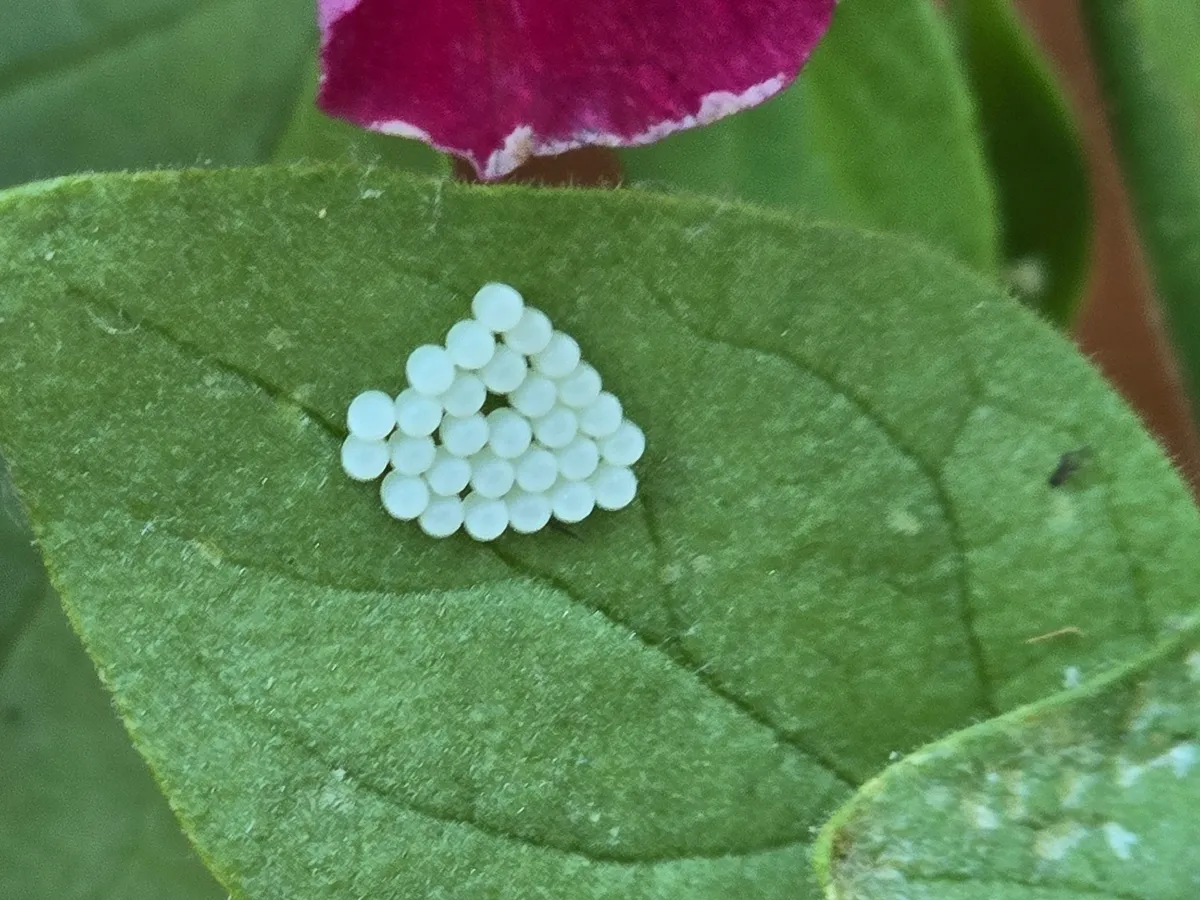 Stink bug eggsWhite to pale green barrels in a tidy cluster on a leaf
 Slime moldYellow to purple-brown beads on grass blades that usually vanish in 1 to 2 weeks
Photos: Seed ticks: (c) Alex Abair, some rights reserved (CC BY), via iNaturalist, CC BY 4.0. Engorged female tick: CDC/ Dr. Gary Alpert - Urban Pests - Integrated Pest Management (IPM) (CDC Public Health Image Library, phil.cdc.gov), public domain. Spider egg sac: no rights reserved, via iNaturalist, CC0 1.0. Stink bug eggs: no rights reserved, via iNaturalist, CC0 1.0. Slime mold: no rights reserved, via iNaturalist, CC0 1.0.
What should you do once you know they are tick eggs?
None of the CDC or extension sources reviewed for this page gives a method for destroying an egg mass outdoors, so treat it as a sign of tick habitat rather than a single thing to clean up. Their advice is about the tick, the yard and the people and pets nearby.
- If the female is still alive, dispose of her the way CDC advises for a live tick: in a sealed container, wrapped tightly in tape, flushed down the toilet or in alcohol. CDC says not to crush a tick with your fingers.
- Expect larvae in that spot later: URI says the eggs of one female all hatch at about the same time, in the same place. Its tip for August and September is to keep sticky tape ready for a swarm of larvae.
- Make the yard less welcoming. CDC's steps for reducing blacklegged ticks in the yard are to remove leaf litter, clear tall grasses and brush around homes and at the edge of lawns, mow often, stack wood neatly in a dry area and put a 3-foot-wide barrier of wood chips or gravel between lawns and wooded areas.
- Indoors, suspect the brown dog tick. The University of Florida says prevention starts with inspecting dogs, that owners should consult a veterinarian about treating the dog, that cracks and crevices should be sealed, and that an established infestation needs thorough treatment by professional pest control operators, possibly repeated.
- If anyone was bitten, watch for a rash or fever over the following several weeks, and see a healthcare provider if either appears.
For the yard as a whole, what kills ticks on clothing, gear and in the yard explains the options by place. Use any pesticide only as its label directs.
This guide is general educational information, not medical advice. If you have symptoms or concerns after a bite or exposure, contact a healthcare provider.
Frequently Asked Questions
What do tick eggs look like?+
Tick eggs look like a small heap of tiny, glossy, round beads, amber to dark brown, packed together in one mass. The University of Florida describes brown dog tick eggs as spherical and dark brown, and a CDC image record describes freshly laid lone star tick eggs as round and amber. The best clue is a swollen or shrunken female tick lying beside them, because a female lays all her eggs in one place and then dies.
How many eggs does a tick lay?+
A female hard tick lays one batch of a few thousand eggs, and the number varies by species. A CDC image record gives about 2,000 to 4,000 for the blacklegged tick. The University of Florida gives 4,000 to 6,500 for the American dog tick and about 4,000 on average for the brown dog tick, with over 7,000 possible. Lone star tick figures range from 2,500 to 3,000 at the University of Rhode Island to 3,000 to 8,000 at the Pennsylvania DEP.
How long do tick eggs take to hatch?+
Most of the published figures run from about a week to a couple of months. The University of Florida says American dog tick eggs hatch about 26 to 40 days after they are laid, depending on temperature. For brown dog tick eggs, the University of Rhode Island gives 2 to 5 weeks and the University of Florida 6 to 23 days after the female finishes laying. Blacklegged ticks lay in spring and their larvae emerge later in the summer, and University of Maryland Extension says Asian longhorned tick eggs laid in late spring or early summer hatch in late summer to early fall.
Can tick eggs survive indoors?+
Brown dog tick eggs can. The University of Florida says most tick species carried indoors on animals cannot complete their life cycle there, but the brown dog tick can complete its entire life cycle indoors and outdoors, laying eggs in cracks and crevices in houses, garages and dog runs. A single blacklegged or American dog tick brought inside is a different case. If you find ticks on walls, curtains or baseboards near where a dog sleeps, suspect the brown dog tick.
Is a tick nest real?+
Not in the sense of something a tick builds. What people call a tick nest is one female's egg mass, or the swarm of larvae that hatches from it. The University of Rhode Island's TickEncounter program says some people call it a tick nest, but that it is really just all of the eggs from one female hatching in the same place, from a mass that can hold 3,000 or more eggs. The female dies after laying them.
Can ticks lay eggs on dogs?+
The sources describe the opposite: a female tick feeds on the dog, then drops off to lay. The University of Florida says a female brown dog tick feeds for about a week, drops off and finds a secluded place such as a crack or crevice to lay, and that a female American dog tick drops from the host to lay her eggs. Tiny moving specks on a dog may be larvae instead. Ask a veterinarian about tick prevention for your dog.
Can ticks lay eggs in human skin or hair?+
The sources reviewed describe female blacklegged, American dog and brown dog ticks leaving the host before they lay, and none describes eggs laid on a person's skin or in hair. A cluster of tiny specks on the skin may be seed ticks, the six-legged larvae that hatch together from one egg mass. Lift loose ones off with tape, remove any attached tick with fine-tipped tweezers, and see a healthcare provider if a rash or fever appears within several weeks.
Do tick eggs carry Lyme disease?+
No. CDC says female ticks infected with Lyme disease bacteria do not pass the infection to their offspring; larvae and nymphs become infected by feeding on an infected host, usually a rodent. A few other germs can pass through the egg: the University of Rhode Island names Borrelia miyamotoi, a relapsing fever germ, and the University of Florida says American dog tick larvae can acquire the Rocky Mountain spotted fever germ from their mother. Eggs cannot bite, so any risk starts with the larvae.
Where do ticks lay their eggs?+
Where the sources say, ticks lay after dropping off the animal they fed on. The University of Maine describes female ticks depositing their eggs in the leaf litter, and the University of Florida says American dog tick females lay on the ground. The brown dog tick is the exception: the University of Florida names cracks and crevices in houses, garages and dog runs as ideal places for it to lay, and the University of Rhode Island adds the tops of kennels and ledges.
What looks like tick eggs but isn't?+
Slug and snail eggs, which are translucent or pearly white; bird's nest fungi, tiny cups of egg-like disks in mulch; slime molds, yellow to purple-brown beads on grass that usually vanish in a week or two; slow-release fertilizer beads in potting soil; spider egg sacs, where the eggs are sealed inside a sac; and insect eggs laid in tidy clusters on leaves. A real tick egg mass is one glossy amber to brown heap on the ground or in a crack, sometimes with the female still beside it.
Sources
- Tick Lifecycles — Centers for Disease Control and Prevention
- How Lyme Disease Spreads — Centers for Disease Control and Prevention
- What to Do After a Tick Bite — Centers for Disease Control and Prevention
- Preventing Tick Bites — Centers for Disease Control and Prevention
- Female Ixodes scapularis tick laying her clutch of eggs (PHIL 22182) — CDC Public Health Image Library
- Blacklegged (Deer) Tick — University of Rhode Island TickEncounter
- Engorged female lone star tick with newly laid eggs (PHIL 8681) — CDC Public Health Image Library
- Lone Star Tick — University of Rhode Island TickEncounter
- Brown Dog Tick — University of Rhode Island TickEncounter
- De-Tick with Duct Tape — University of Rhode Island TickEncounter
- American Dog Tick, Dermacentor variabilis (EENY-443) — UF/IFAS Extension
- Brown Dog Tick, Rhipicephalus sanguineus (EENY-221) — UF/IFAS Extension
- Lone Star Tick (Amblyomma americanum) — Pennsylvania Department of Environmental Protection
- Asian Longhorned Tick — University of Maryland Extension
- Tick Biology and Ecology — University of Maine Cooperative Extension
- Snails and Slugs — University of California Statewide IPM Program
- Mulch Mushrooms, Slime Molds and Other Saprophytes (PPFS-GEN-06) — University of Kentucky Cooperative Extension
- Slime Molds (HortSense) — Washington State University Extension
- Fertilizer Eggs?! — Purdue University Plant and Pest Diagnostic Laboratory
- Brown Marmorated Stink Bug — University of California Statewide IPM Program
Read and approved by Alex Francisco. Found an error? Email support@buzzskito.ca.