Reviewed by Alex Francisco
Published November 23, 2026 · Fact-checked against the sources listed below
What does an engorged tick look like?
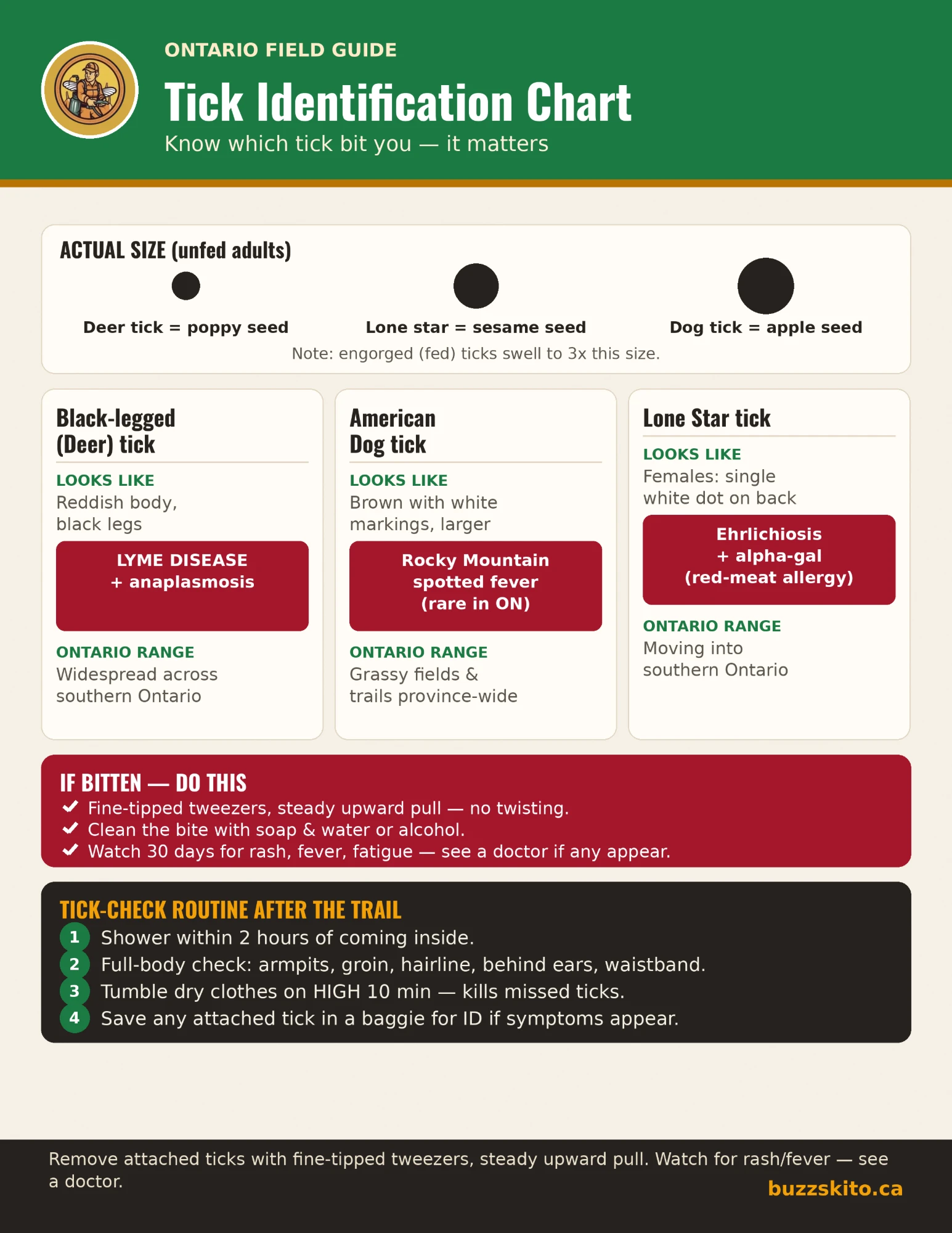
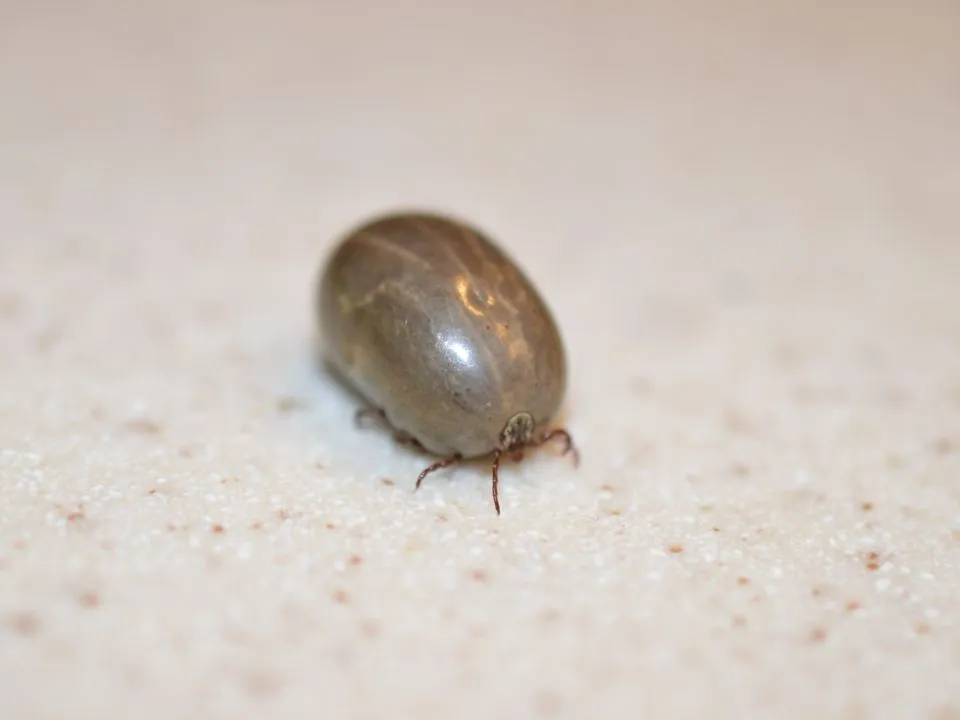
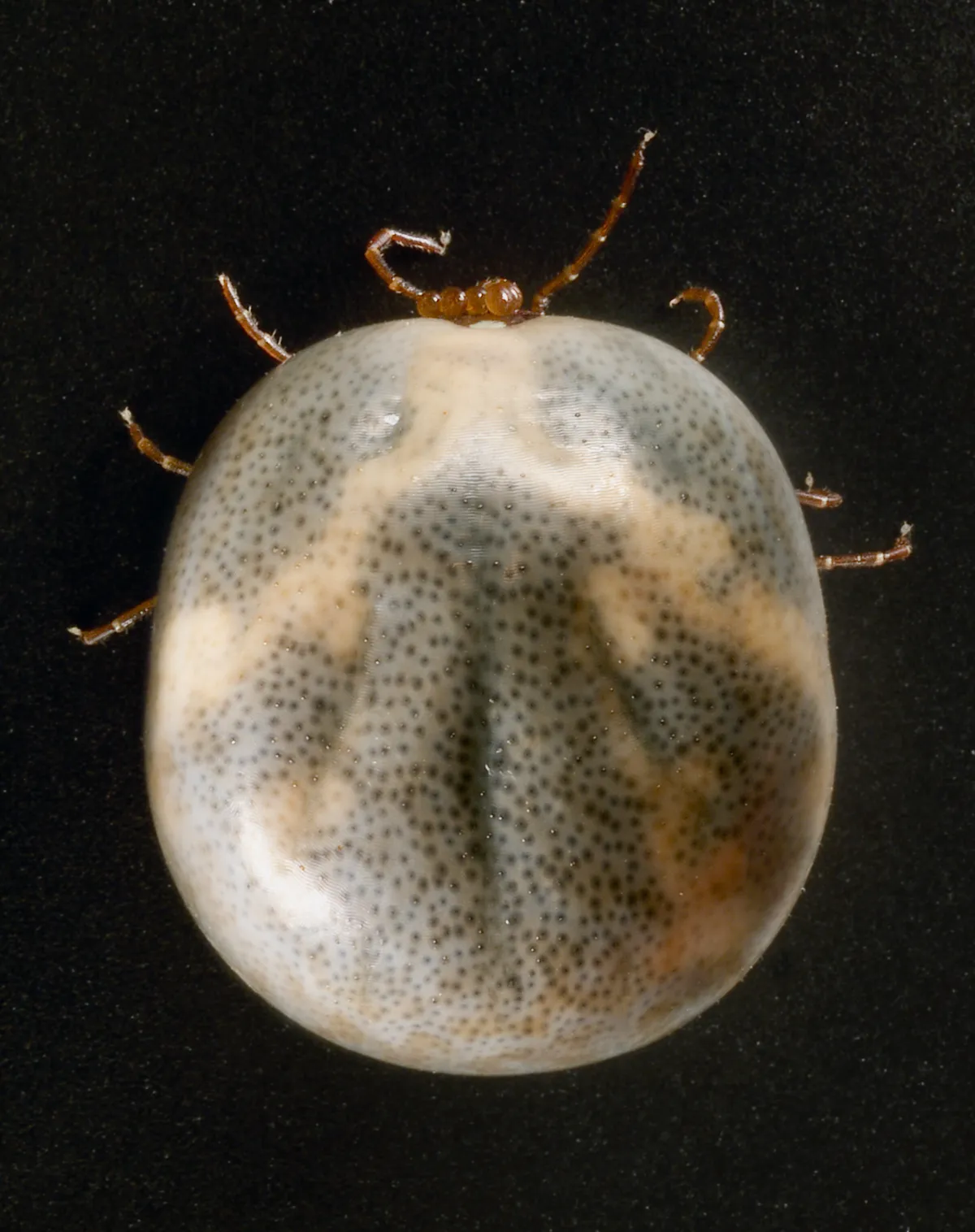
An engorged tick looks like a smooth, swollen bean or seed, often gray, gray-brown or olive, with short legs and a small hard plate crowded up at the front end. That plate is the scutum, or shield. The Connecticut Agricultural Experiment Station's Tick Management Handbook explains that the shield covers the front third to half of the back of an unfed larva, nymph or female. As the tick feeds, the body behind the shield swells while the shield itself stays the same size.
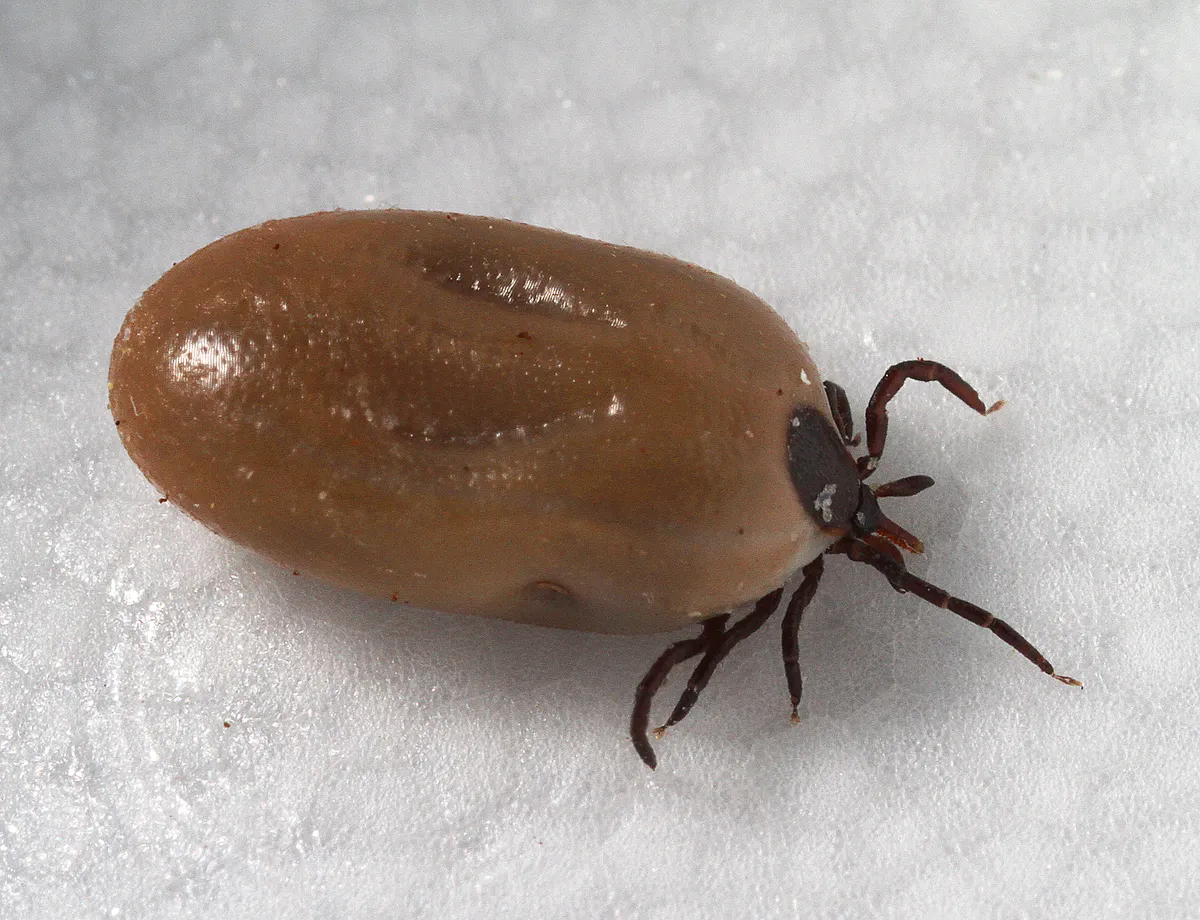
The change is enormous. The handbook says a feeding female's body weight can increase 80 to 120 times, and that most of the blood is taken in during the last 12 to 24 hours of feeding. In a University of Rhode Island laboratory study of blacklegged ticks, Yeh and colleagues (1995) weighed adult females at an average of 1.5 mg unfed and through their first 24 hours attached, and 261 mg once fully engorged (more than 170 times as much), and found that the shield's width did not change during the 72 hours they measured.
Color shifts as the body stretches. The same study recorded the female deer tick's body as red when unfed and for the first day, yellowish red at 36 to 48 hours, light brown at 60 to 72 hours, and greenish gray to dark greenish gray once fully engorged and off the host. That last stage is the gray bean most people find, and it is why a fed tick so often gets called a gray or white tick: it is the same tick, swollen.
Unfed, partly fed or fully engorged: which is it?
| Stage | What you see | What it suggests |
|---|---|---|
| Unfed (flat) | Flat, oval and hard-looking; the shield takes up a large share of the back | Recently attached or still searching; lab studies found no detectable change in size in the first 24 hours |
| Partly fed | Body plumper and rounder than flat; a female deer tick's body shifts from red to yellowish red, then light brown | More than a day: in lab studies the change becomes measurable from about 36 to 48 hours |
| Fully engorged | Tight, shiny, bean-shaped; legs and shield look tiny against the body | Days of feeding: about 3 to 4 for a deer tick nymph, at least 5 for a deer tick female, 10 to 12 for a dog tick female |
From Yeh et al. 1995 and Falco et al. 1996 (blacklegged ticks), CDC's notes on feeding nymphs, and the Connecticut handbook (dog ticks). An estimate only: individual ticks vary, and the lab ticks fed on hamsters and rabbits, not people.
How do you identify an engorged tick?
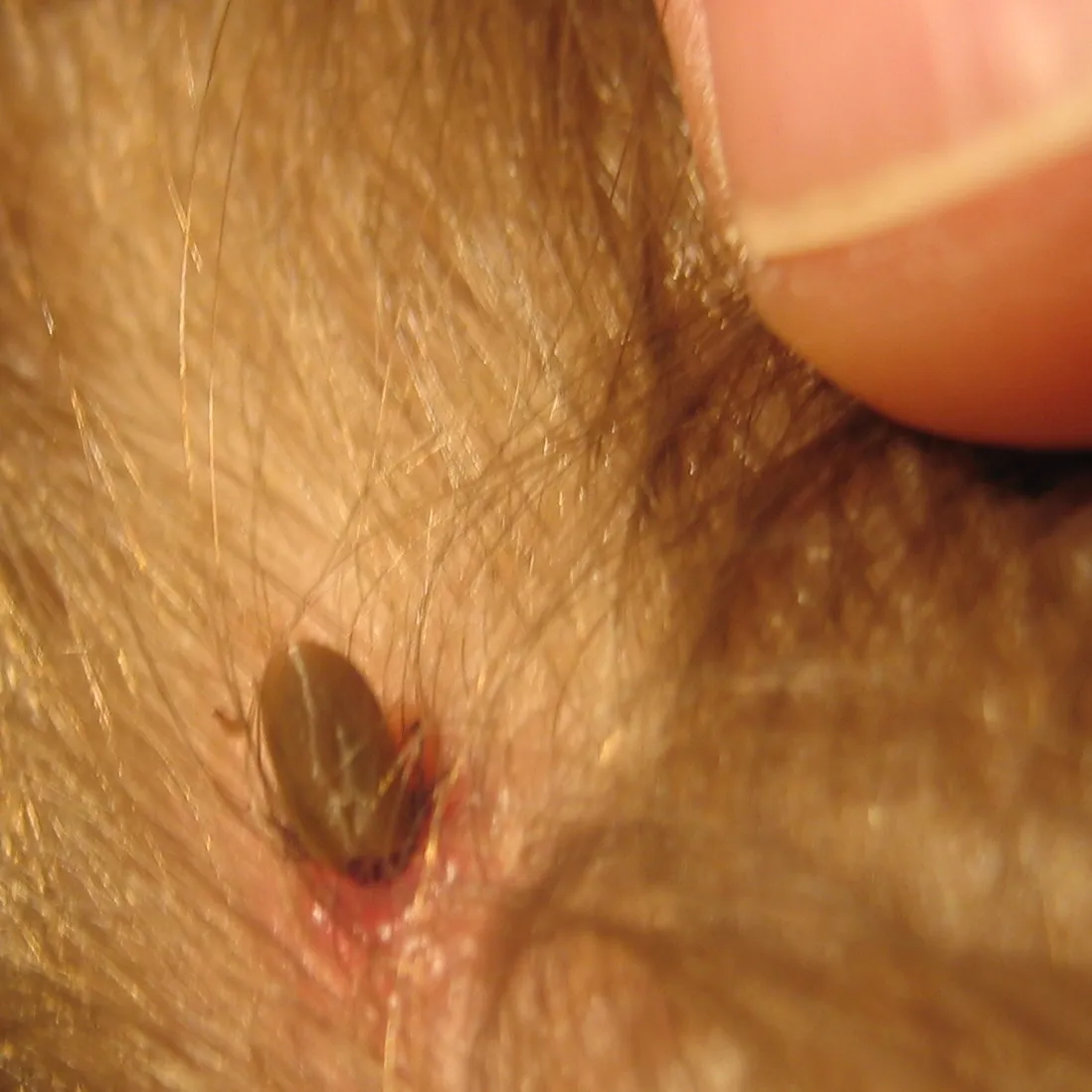
Ignore the swollen body and look at the front end and the underside, because the parts that identify a tick do not stretch. Color and outline tell you little once a tick has fed: the Connecticut handbook notes that engorged female blacklegged ticks are sometimes confused with engorged female American dog ticks. A magnifying glass, or a phone photo zoomed in, helps with these checks. They narrow the choice rather than settle it: the handbook says adults of some common ticks can be identified with a little training, but most ticks, and the immature stages, take a trained entomologist.
Checks to run on a fed tick
- The shield. Plain and dark brown points to a blacklegged (deer) tick; whitish or silvery markings point to an American dog tick; a single spot at its rear tip points to a female lone star tick. The handbook says the dog tick's white markings stay readily visible on a blood-fed tick.
- The mouthparts. Adult blacklegged and lone star ticks have long mouthparts, the handbook says, while the American dog tick's palps are short.
- The underside. Ixodes ticks, the genus of the deer tick, have a semicircular groove curving around the front of the anal opening; in other ticks that groove is behind the anus or missing.
- The rear edge. Many ticks, though not Ixodes, have small rectangles called festoons along the back edge, but the handbook notes they may not be visible on a fully engorged female.
- The legs. Count them: the handbook gives eight for nymphs and adults and six for larvae, so a fed tick with six legs is a larva.
- Its size next to the shield. On a blacklegged tick, a body about four times as long as the shield is wide points to roughly three days of feeding or more, not hours (see the table further down).
For the unfed look of each species, and the full side-by-side at every life stage, use the tick identification chart with actual-size comparisons. If you are still unsure, the tick identifier asks a few questions about size, legs and markings and suggests the likely species. If it turns out not to be a tick at all, see bugs that look like ticks.
What does an engorged deer tick look like?
A fed female deer tick is a brown to gray oval with a small, plain, dark brown shield right behind long mouthparts, and no white marks anywhere. Ohio State University Extension says an engorged female can be as wide as the eraser on a No. 2 pencil, about 1/4 inch (6 mm), and may look gray. The side-by-side of an engorged deer tick and dog tick compares the two in detail.
What does an engorged dog tick look like?
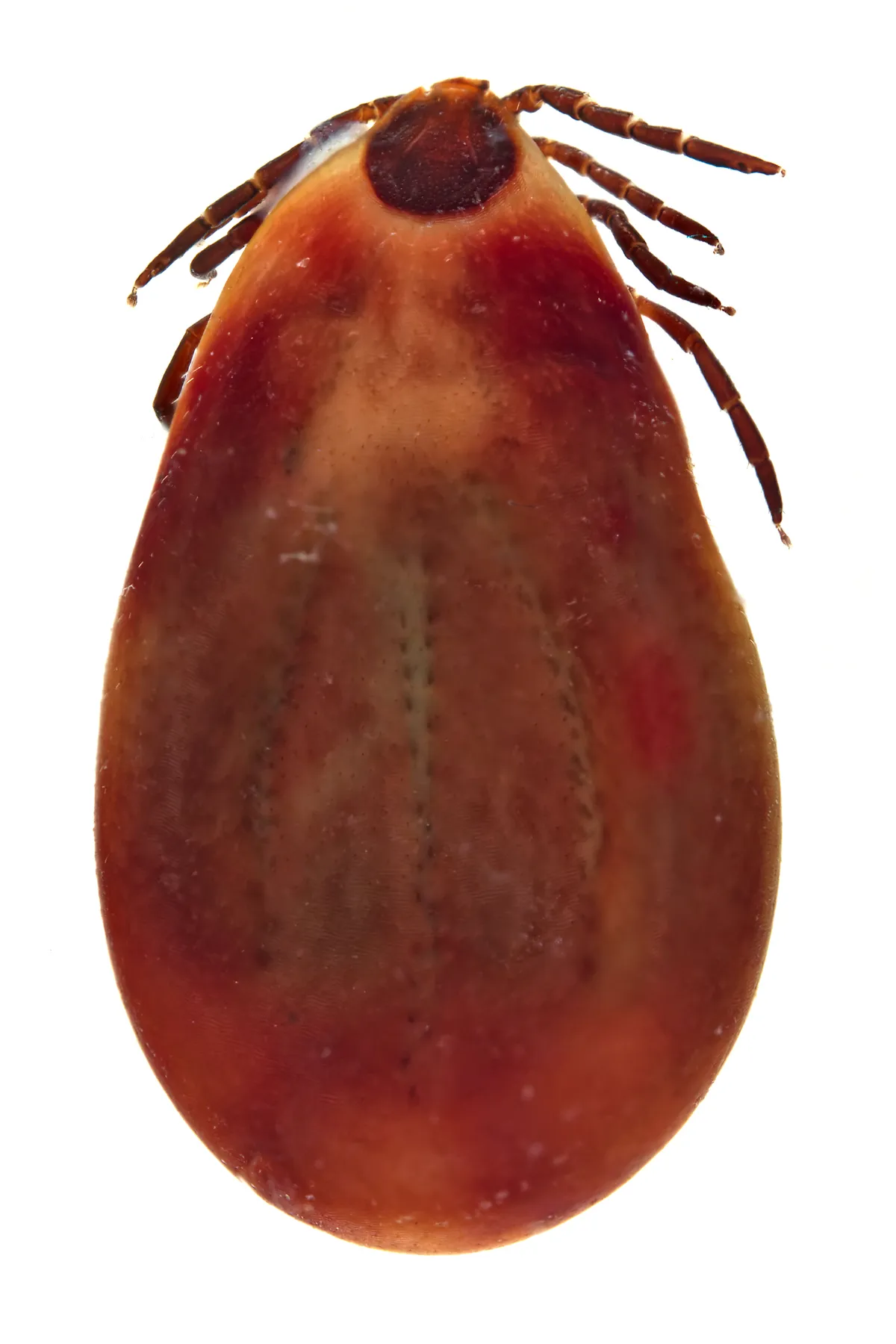
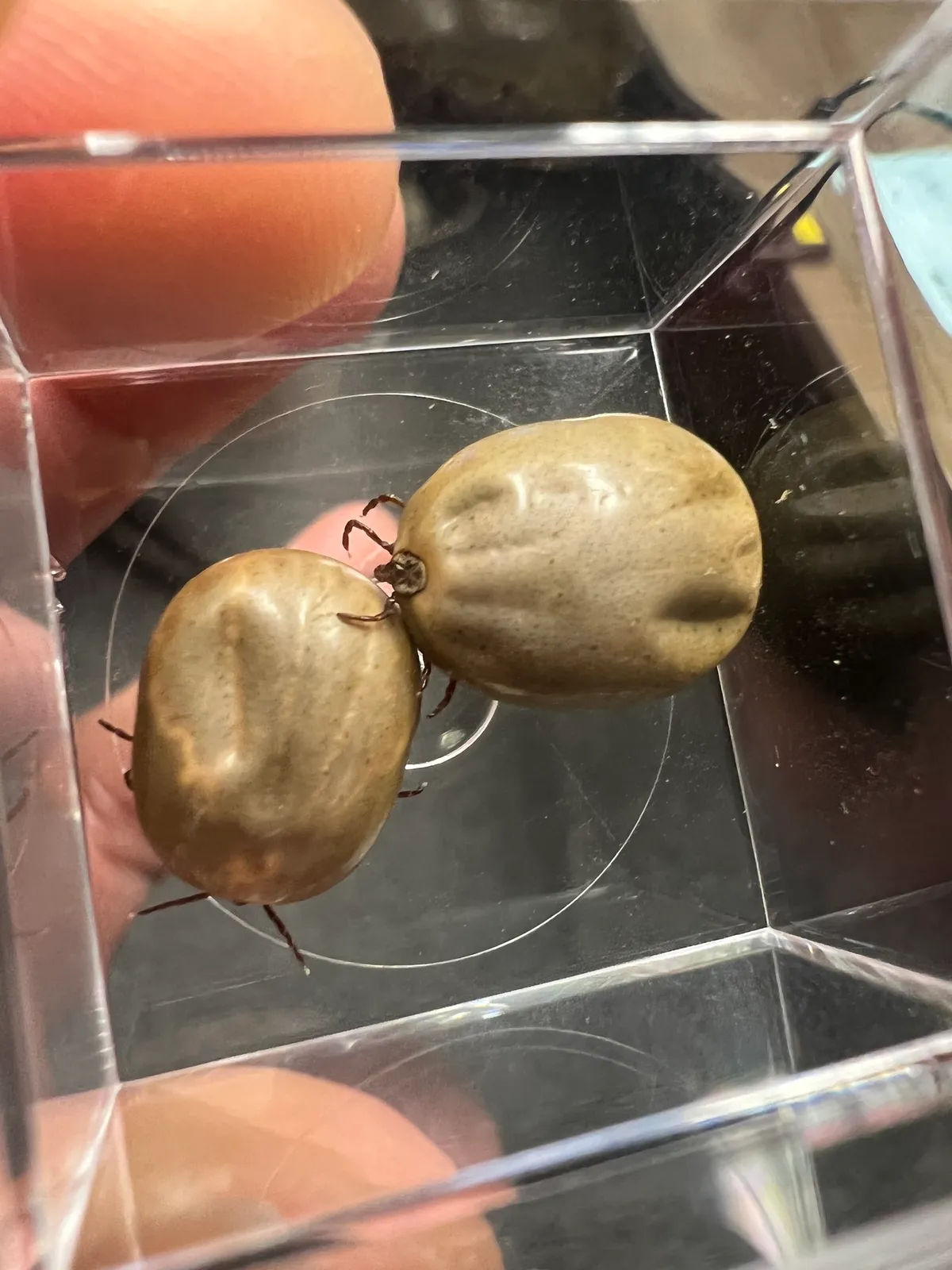
A fed female American dog tick is one of the biggest gray beans you are likely to find: up to about 1/2 inch long and 3/8 inch wide (13 by 10 mm), which the Connecticut handbook likens to a dark pinto bean. Look for the pale, mottled markings on the small shield behind short mouthparts. The handbook says a female feeds for 10 to 12 days and then drops off, while males do not change notably in size as they feed.
What does an engorged lone star tick look like?
A fed female lone star tick swells into a rounded body, pale gray in the CDC photo further down, that The Tick App from Texas A&M AgriLife says can reach 16 mm (about 5/8 inch) or more. The single spot sits on the rear tip of her shield, which ends up as a small patch at the front, and the handbook notes the long mouthparts of Amblyomma ticks. Our lone star tick guide covers the unfed adult and its range.
What does an engorged tick nymph look like?
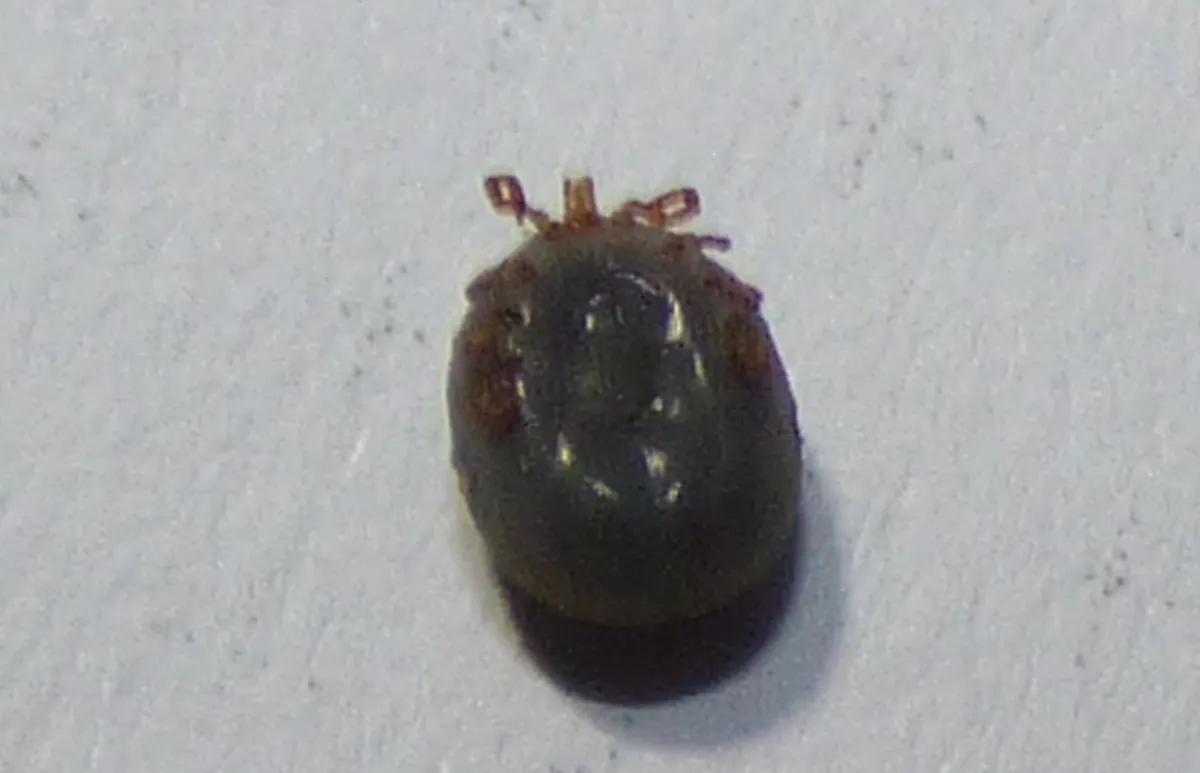
A fed nymph looks like a tiny dark or gray bead with eight legs. CDC's notes on its footage of feeding blacklegged nymphs describe them going from unfed to fully engorged in about 96 hours; in Yeh's lab study most had filled and dropped off by 72 hours. In the lab measurements described further down, a blacklegged nymph's body more than doubled in length against its shield by 96 hours, which puts a full one close to the size of an unfed adult. The handbook describes lone star nymphs as more circular than deer tick nymphs and reddish in tint. CDC says nymphal ticks pose a particularly high risk for Lyme disease because they are abundant and small.
How long was the tick attached? What its size tells you
Size gives a rough estimate. The measure is how long the body is compared with the width of the shield, which does not grow. Researchers fed blacklegged ticks on lab animals for set times and divided body length by shield width, a ratio called the scutal index. Falco, Fish and Piesman (1996) found no significant difference between 0 and 24 hours, then a significant rise at every 24-hour step after that.
| Hours attached | Nymph: body length ÷ shield width | Adult female: body length ÷ shield width | Adult female's color |
|---|---|---|---|
| 0 (unfed) | 2.09 | 2.40 | Red |
| 24 | 2.12 | 2.37 | Red, as unfed |
| 48 | 2.81 | 2.76 | Yellowish red |
| 72 | 4.07 | 3.91 | Light brown |
| 96 | 4.58 | 4.80 | Not recorded at 96 hours |
| Fully engorged (female: at least 5 days) | Not measured | Not measured: Yeh's team found fully engorged ticks hard to measure | Greenish gray to dark greenish gray |
Mean ratios for blacklegged ticks fed on hamsters (nymphs) and rabbits (females), Falco, Fish and Piesman 1996; colors and the 5-day figure from Yeh et al. 1995. Individual ticks vary widely: treat a reading as an estimate for your doctor, never as a clock.
To try it, photograph the tick beside a ruler, zoom in, and compare the body's length (from where the mouthparts join the body to the rear tip) with the shield's widest width. In Falco's table a ratio of about 2 to 2.5 matches a day or less, a little under 3 matches about two days, and about 4 or more matches three days or longer. These are averages for blacklegged ticks only, and a squashed or damaged tick cannot be measured. A low ratio is not an all-clear: in Yeh's study the same ratio could not separate adult females attached for 36 hours from those attached for 24 hours or less.
Doctors use the same idea. CDC's guidance for clinicians on caring for patients after a tick bite lists an estimated attachment time of 36 hours or more, judged from the degree of engorgement or the likely time of exposure, as one of the conditions for considering a single preventive antibiotic dose after a blacklegged tick bite, and it says to save the tick for species identification and degree of engorgement. CDC's chart for clinicians on Lyme disease prophylaxis after a tick bite asks, among its five questions, simply whether the tick was flat or engorged with blood: engorged means a higher risk of Lyme disease, it says, while a flat, unfed tick is unlikely to have transmitted the bacterium.
Why do tick nymphs stay attached longer?
Most likely because they are smaller and harder to find. Falco's team measured 444 nymphs and 300 adult females that had been taken off people in Westchester County, New York, and sent in. By its estimate the nymphs had been attached for an average of 34.7 hours and the females for 28.7 hours. The authors thought the likely reason was the females' larger size, which lets people find and remove them sooner. In Rhode Island and Pennsylvania, Yeh's team estimated that 10% of nymphs had been removed within 24 hours and 41% by 36 hours, against 64% of adult ticks by 36 hours.
Does an engorged tick mean you will get Lyme disease?
No. Engorgement shows that a tick fed for a while, not that it passed anything on: not every tick is infected, and the Connecticut handbook notes that a tick bite does not necessarily mean a person will get infected. Attachment time does change the odds. CDC's page on how Lyme disease spreads says that in most cases a tick must be attached for more than 24 hours before the Lyme disease bacterium can be transmitted, and that removing a tick within 24 hours can greatly reduce your chances of getting Lyme disease. Species matters too: the same page names the blacklegged tick in the northeastern, mid-Atlantic and north-central United States, and the western blacklegged tick along the Pacific Coast, as the ticks that spread it.
"In most cases" is not a promise, and Lyme disease is not the only concern. The Wisconsin Department of Health Services says it isn't known exactly how long an infected deer tick must be attached to spread Powassan virus, that it is likely less than 12 hours, and that it could be as little as 15 minutes. The Minnesota Department of Health notes that less common tickborne diseases, such as anaplasmosis, may take less time than Lyme disease.
CDC's 2016 recommendations on tickborne rickettsial diseases call the data for anaplasmosis limited, with animal studies indicating that 24 to 48 hours might pass before transmission, and report a range of 2 to 20 hours of attachment for the bacterium that causes Rocky Mountain spotted fever, which American dog ticks and brown dog ticks can carry. For the main ehrlichiosis bacterium, they say, no comparable data exist. A flat tick is not proof that nothing was passed on: CDC's advice there is to remove a tick as soon as possible, because longer attachment considerably raises the chance of transmission.
When should you see a healthcare provider?
See a healthcare provider if you develop a rash or fever within several weeks of removing a tick, and tell them about the bite, when it happened and where you most likely picked up the tick. That is CDC's advice after a tick bite. For Lyme disease, CDC's symptoms page says the erythema migrans rash begins at the bite 3 to 30 days later (about 7 on average) and occurs in about 70 to 80% of infected people, and that fever, chills, headache, fatigue, muscle and joint aches and swollen lymph nodes can appear without a rash.
Whether to take a preventive antibiotic after a deer tick bite is a decision for your healthcare provider, not something an engorgement estimate settles on its own. CDC's clinician guidance adds that antibiotics after a bite are not recommended to prevent the other tickborne diseases, such as anaplasmosis, babesiosis, ehrlichiosis or Rocky Mountain spotted fever. The guide to which ticks carry Lyme disease explains why the species of your tick matters.
How do you remove an engorged tick?
Remove it the same way as any tick, as soon as you find it, gripping it as close to the skin as you can rather than by the swollen body. These steps follow CDC's instructions for removing a tick.
- Grasp the tick as close to the skin's surface as possible with clean, fine-tipped tweezers. On a fed tick that means the head end at the skin, not the bloated body. If fine-tipped tweezers are not available, CDC says to use regular tweezers or your fingers.
- Pull the tick away from the skin with steady, even pressure. Do not twist or jerk it.
- If the mouthparts break off, remove them with the tweezers if you can do it easily; if not, leave them alone. CDC says the body pushes them out over time as the skin heals.
- Clean the bite area and your hands with rubbing alcohol or soap and water.
- Do not crush a tick with your fingers. To get rid of a live tick, CDC says to put it in alcohol, place it in a sealed container, wrap it tightly in tape or flush it down the toilet. To keep it for identification, seal it in a small container or bag and note the date.
Should you send an engorged tick off for testing? CDC says that in general this is not recommended: results should not be used for treatment decisions, a positive result does not necessarily mean you were infected, and a negative one can give false reassurance. Keeping the tick so a provider can see its species and how fed it is serves a different purpose, and CDC's guidance for clinicians asks for exactly that.
What should you do about an engorged tick on a dog or cat?
Remove it right away, then ask your veterinarian about the bite and about tickborne diseases where you live. CDC's guidance on ticks and pets says to check pets daily, especially after time outdoors, and to watch for changes in behavior or appetite, noting that signs of tickborne disease may not appear for 7 to 21 days or longer after a bite.
Use the same grip as on a person. Tufts University's Cummings School of Veterinary Medicine advises grasping the tick as close to the animal's skin as possible and pulling outward in a straight, steady motion, then cleaning the bite with an antiseptic and watching it for irritation or infection; if either develops, contact your veterinarian. CDC adds that you should not put any tick prevention product on a cat without first asking your veterinarian.
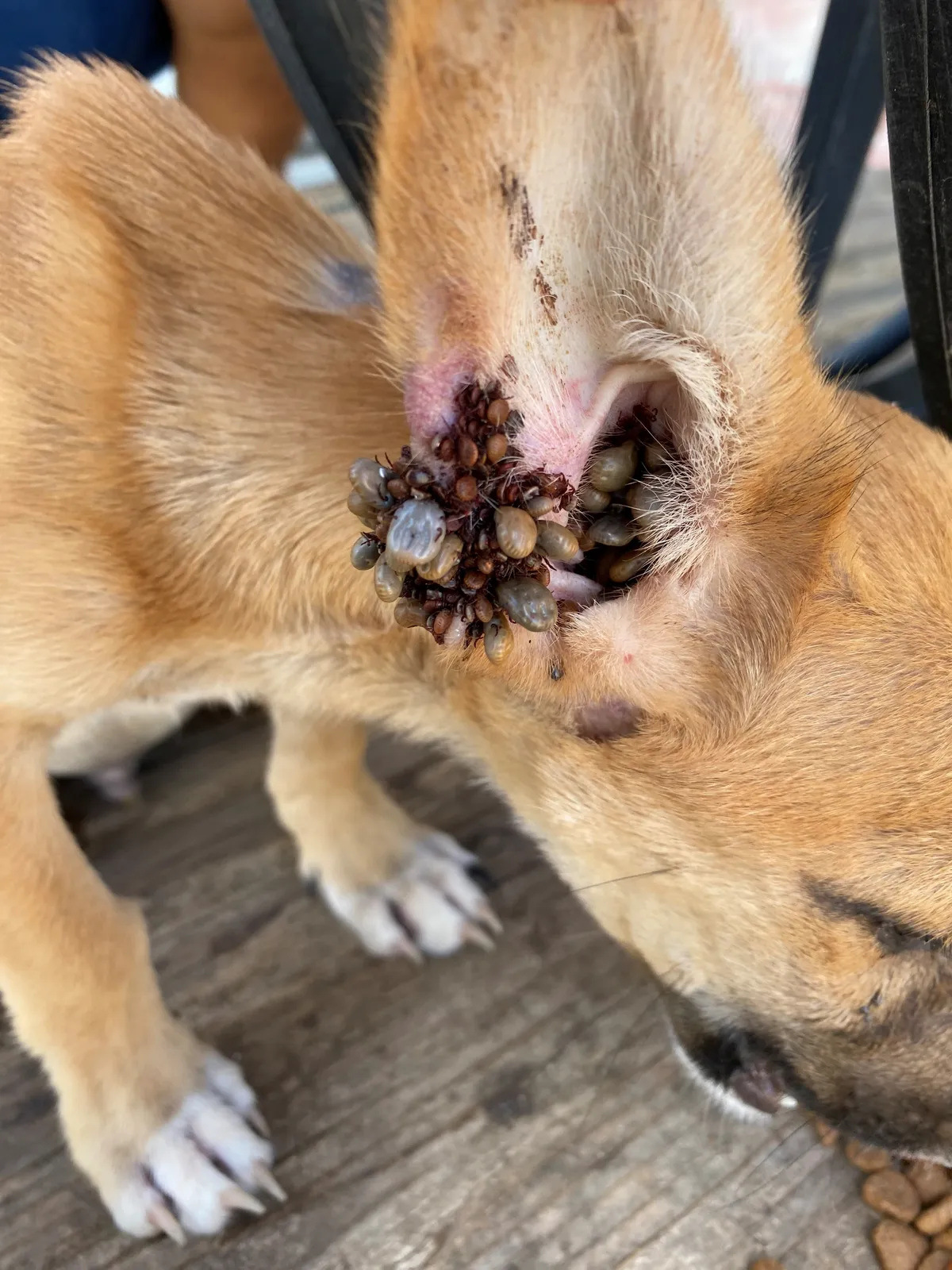
Check inside the ears, on the head and neck, and between the toes. The Connecticut handbook says adult brown dog ticks feed mainly in those places, and a heavy load looks like the photo below. More on the species dogs pick up is in ticks on dogs, and on cats in ticks on cats.
Will an engorged tick lay eggs in your house?
Usually not, unless it is a brown dog tick. A fully fed female drops off her host, lays a single large batch of eggs and then dies, the Connecticut handbook explains, but of the ticks covered here it describes only the brown dog tick as doing that indoors. It says engorged blacklegged ticks dropping off a pet will not survive or lay eggs in the house because the air is generally too dry, and that American dog ticks carried in can survive for many days but will not become established indoors.
The brown dog tick is the exception. The handbook says that in the North it is found almost exclusively indoors, crawling around baseboards and up walls in search of cracks, crevices and spaces between walls or wallpaper where it can molt or lay eggs, and CDC's pet guidance calls it unique in being able to infest indoor spaces like homes and kennels. Under favorable conditions, the handbook adds, its life cycle can be completed in about two months.
| Tick | Eggs from one fed female | Settles indoors? |
|---|---|---|
| Blacklegged (deer) tick | About 2,000 to 3,000 | No: the handbook says fed ones dropping off pets will not survive or lay eggs in the house |
| American dog tick | About 3,000 to 7,000 (average around 5,000) | No: the handbook says it can survive for many days in a home but will not become established |
| Lone star tick | 1,000 to 8,000 (average around 3,000) | Not described as an indoor tick in these sources |
| Brown dog tick | 360 to 3,000 (handbook); up to 4,000 (Texas A&M) | Yes: molts and lays eggs in cracks, crevices and wall spaces of infested homes and kennels |
From the Connecticut Tick Management Handbook, The Tick App's brown dog tick page (Texas A&M AgriLife) and CDC's pet guidance.
What the eggs look like, and how to tell a mass of them from other small round things, is on the tick eggs page, and each stage that follows is laid out in the tick life cycle.
Commonly confused with an engorged tick
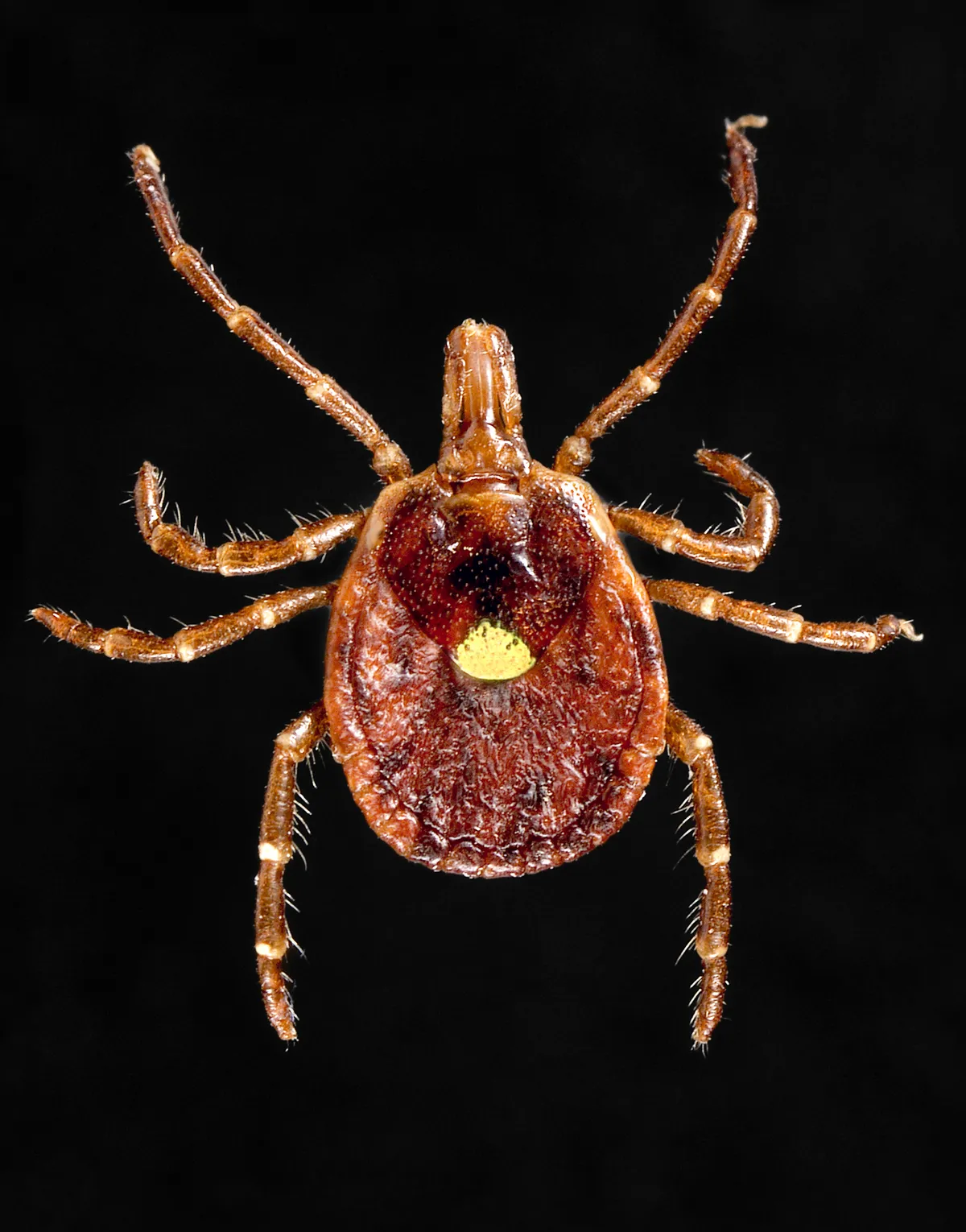 Lone star tickThe female's single spot sits at the tip of her shield and stays at the front when she feeds
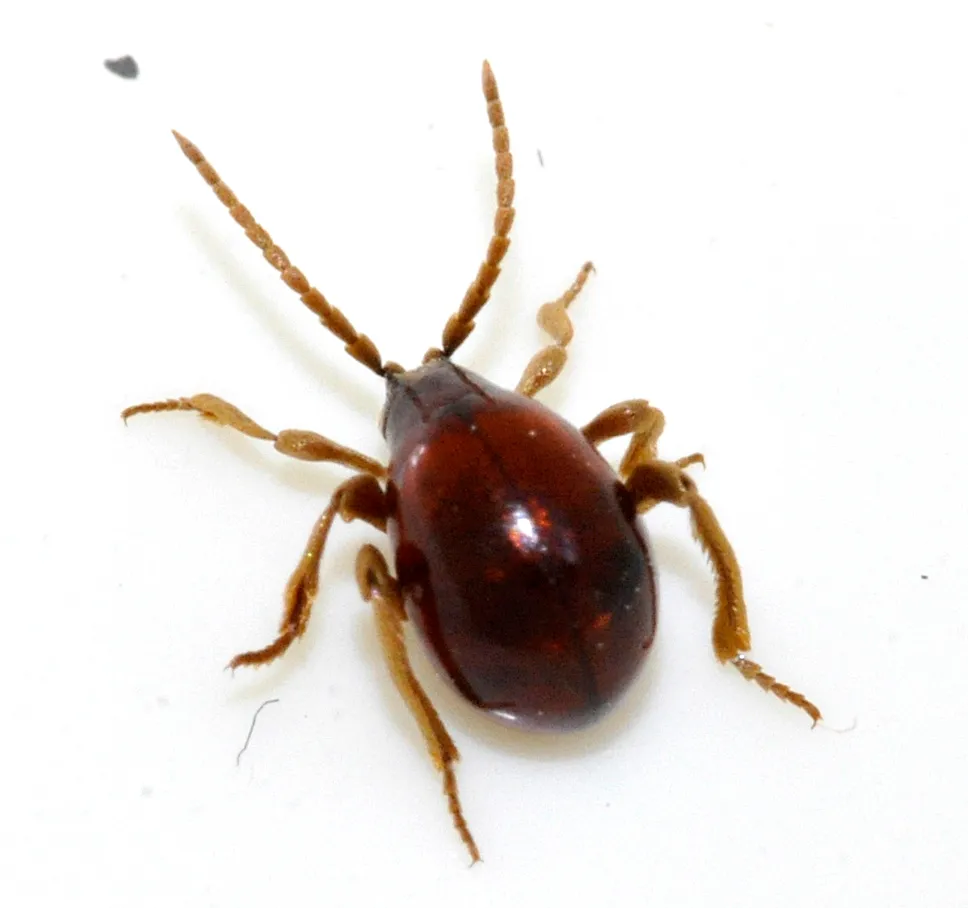 Spider beetleShiny, round beetle with six legs and two long antennae; a nymph or adult tick has eight legs
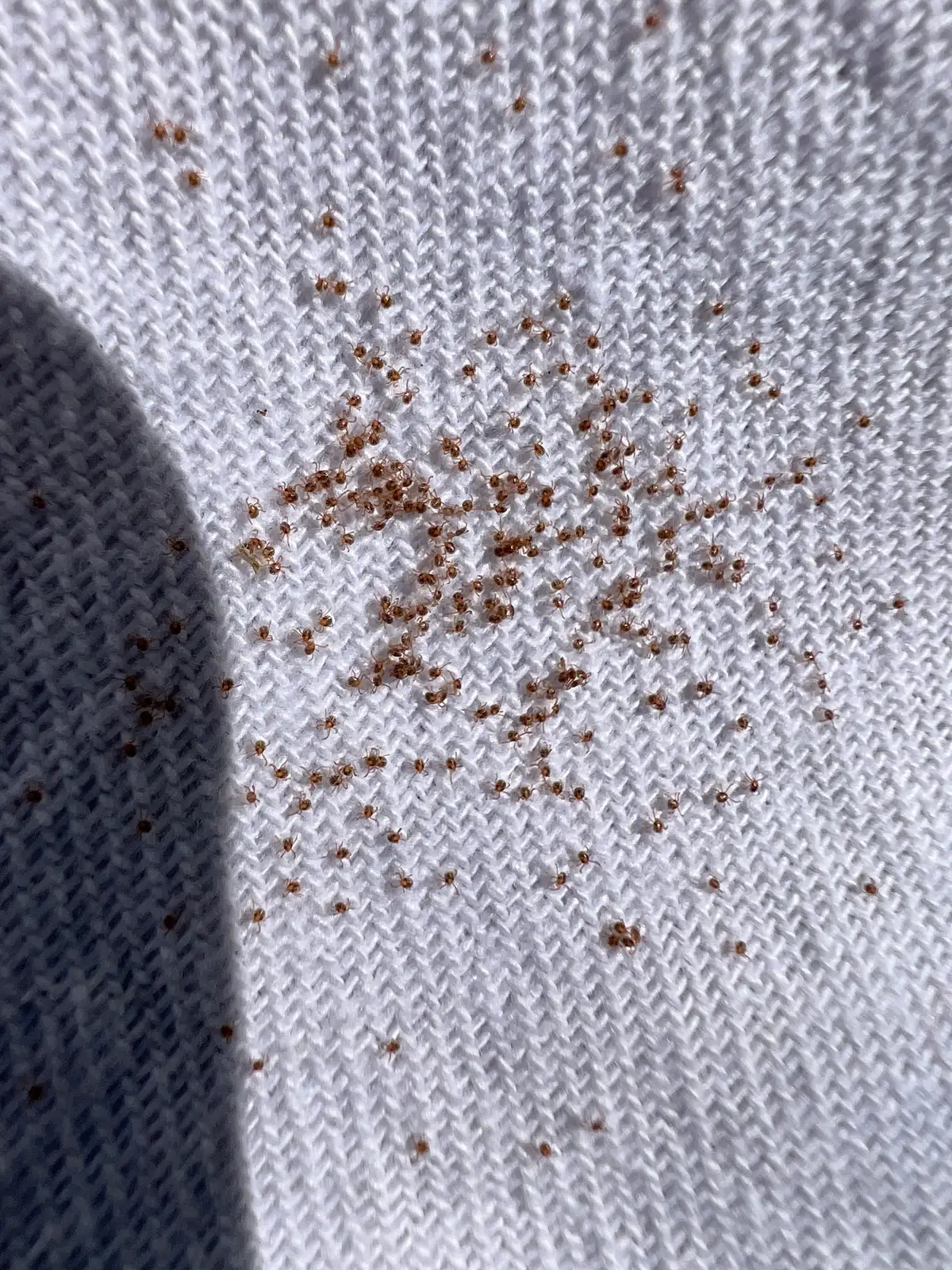 Seed ticksSix-legged tick larvae: tiny specks, not beans, massed here on white fabric
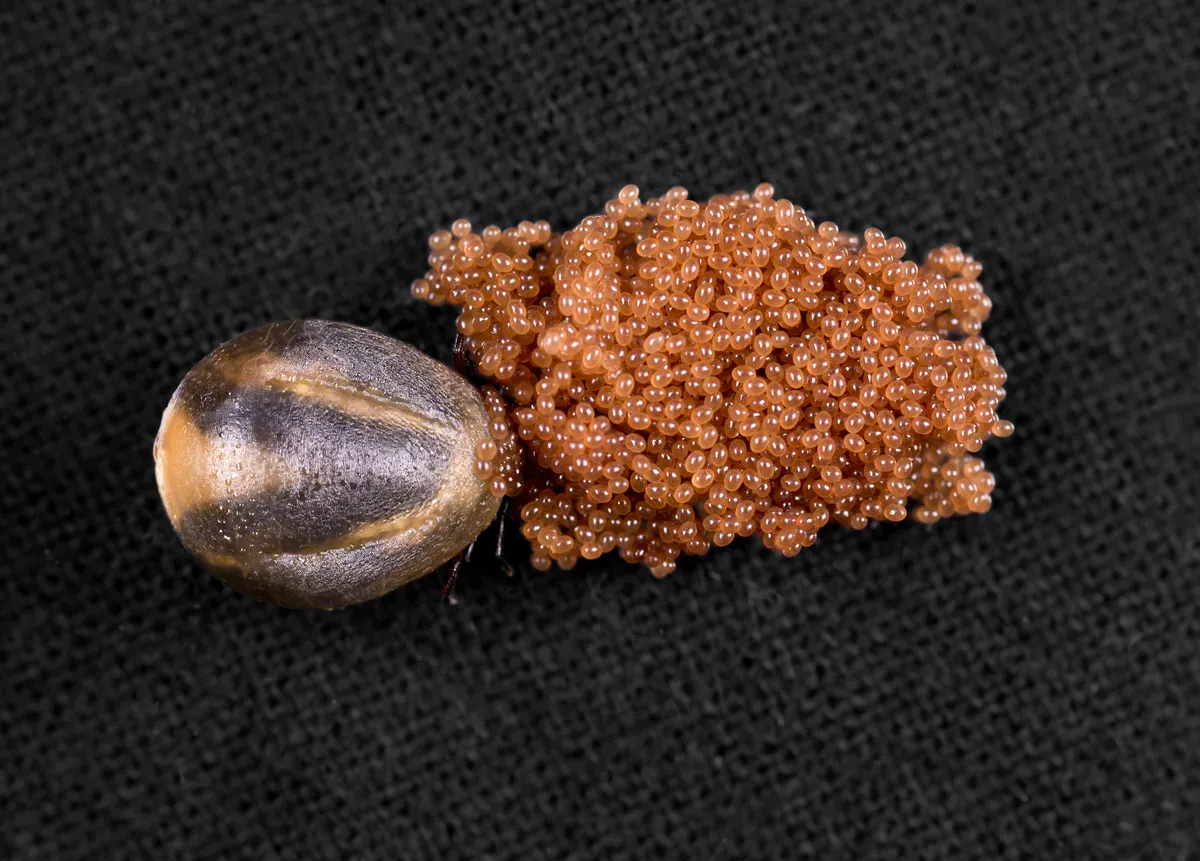 Tick eggsA glossy amber mass laid by a fed female after she drops off
Photos: Lone star tick: CDC/ Dr. Amanda Loftis, Dr. William Nicholson, Dr. Will Reeves, Dr. Chris Paddock; photo: James Gathany (CDC Public Health Image Library, phil.cdc.gov), public domain. Spider beetle: Francisco Welter-Schultes, CC0, via Wikimedia Commons, CC0 1.0. Seed ticks: (c) Anne Parker, some rights reserved (CC BY), via iNaturalist, CC BY 4.0. Tick eggs: CDC/ Division of Vector-Borne Diseases; photo: James Gathany (CDC Public Health Image Library, phil.cdc.gov), public domain.
What should you do once you know which tick it was?
- Write down the date, where you were and roughly how fed the tick was. A provider can use all three if a rash or fever follows.
- Keep the tick sealed in a small container or bag rather than crushing it, so its species and degree of engorgement can still be judged.
- Watch for a rash or fever over the following weeks and see a healthcare provider if either appears, as CDC advises.
- For a pet, call your veterinarian about the bite and about which tickborne diseases occur where you live.
- If a dog keeps bringing in brown dog ticks or you see ticks climbing walls, ask your veterinarian to confirm the species: CDC calls the brown dog tick unique in being able to infest indoor spaces like homes and kennels.
- Check the rest of the family. The handbook notes it is not unusual to have more than one tick attached at a time; our step-by-step tick check covers where they hide, and how long ticks live explains how long one can survive off a host.
This guide is general educational information, not medical advice. If you have symptoms or concerns after a bite or exposure, contact a healthcare provider.
Frequently Asked Questions
How long does it take a tick to become engorged?+
It depends on the species and life stage. CDC's notes on its footage of blacklegged tick nymphs describe them going from unfed to fully engorged in about 96 hours. In a University of Rhode Island lab study, most nymphs had filled and dropped off by 72 hours, and adult female blacklegged ticks took at least 5 days to fill completely. The Connecticut Tick Management Handbook says a female American dog tick feeds for 10 to 12 days. Most of the blood goes in during the last day or so.
Do engorged ticks fall off on their own?+
Yes. A tick that has finished feeding lets go and drops off its host, so a fully fed tick found loose in a bed, on the floor or on a pet's bedding may already have finished its meal. The Connecticut Tick Management Handbook says larvae and nymphs drop to the ground to molt, while a fed adult female drops off to lay her single batch of eggs and then dies. Do not wait for an attached tick to fall off: remove it as soon as you find it.
What color is an engorged deer tick?+
Brown to gray, shifting as the tick fills. In a lab study of blacklegged ticks, adult females went from red when unfed to yellowish red after 36 to 48 hours, light brown after 60 to 72 hours and greenish gray to dark greenish gray once fully engorged. Ohio State University Extension says engorged females may appear gray. The small dark shield behind the mouthparts stays the same size, and it has no white marks.
Is an engorged tick more dangerous than a flat one?+
An engorged tick has fed longer, and attachment time matters. CDC says that in most cases a tick must be attached for more than 24 hours before it can transmit the Lyme disease bacterium, and its chart for clinicians says the risk of Lyme disease is higher when the tick is engorged with blood, while a flat, unfed tick is unlikely to have transmitted it. A flat tick is not an all-clear, though: some germs, such as Powassan virus, may pass in much less time. Watch for a rash or fever either way.
Can you tell how long a tick was attached by its size?+
Roughly. Because the shield does not grow, researchers compare the body's length with the shield's width. In blacklegged ticks fed in the lab, that ratio stayed between about 2.1 and 2.4 for the first 24 hours, reached about 2.8 at 48 hours and about 4 at 72 hours. CDC's guidance for clinicians uses the degree of engorgement to estimate whether a tick was attached 36 hours or more. Ticks vary, so treat any reading as an estimate.
Should I pop or squeeze an engorged tick?+
No. CDC says not to crush a tick with your fingers. Remove it with fine-tipped tweezers gripped as close to the skin as possible, then put it in alcohol, place it in a sealed container, wrap it tightly in tape or flush it. Do not try to make it let go with petroleum jelly, heat or nail polish. If you want it identified later, seal it in a container instead of destroying it.
Should I get an engorged tick tested for Lyme disease?+
CDC says that, in general, tick testing is not recommended. A positive result does not necessarily mean you were infected, a negative one can give false reassurance, and results should not be used to make treatment decisions. If you become ill, CDC says not to wait for tick test results before beginning appropriate treatment, so see a healthcare provider. Keeping the tick so a provider can see its species and how fed it is serves a different purpose.
What does an engorged tick on a dog look like?+
It looks like a gray or tan bean stuck to the skin, often in the ears, on the head and neck or between the toes, with tiny legs at one end where it meets the skin. Brown dog ticks feed mainly in those places, the Connecticut Tick Management Handbook says. Remove it with fine-tipped tweezers gripped close to the skin, and ask your veterinarian about the bite and the tickborne diseases in your area.
Do ticks die after laying eggs?+
Yes. The Connecticut Tick Management Handbook says a fully fed female hard tick produces a single large batch of eggs and then dies. Depending on the species that batch ranges roughly from 1,000 to 18,000 eggs, and the handbook gives about 2,000 to 3,000 for the blacklegged tick and around 5,000 on average for the American dog tick. Males do not lay eggs and barely swell as they feed.
Why is the tick I found gray or white?+
Most likely because it has fed. As the body stretches with blood, it loses the reddish or brown color of the unfed tick: lab records describe fully fed female blacklegged ticks as greenish gray, Ohio State says engorged female deer ticks may look gray, and the Connecticut handbook compares a fed dog tick to a dark pinto bean. Check the shield at the front to help tell which species it is.
Sources
- How Lyme Disease Spreads — Centers for Disease Control and Prevention
- What to Do After a Tick Bite — Centers for Disease Control and Prevention
- Signs and Symptoms of Untreated Lyme Disease — Centers for Disease Control and Prevention
- Guidance for Clinicians: Caring for Patients after a Tick Bite (December 2021) — Centers for Disease Control and Prevention
- Lyme Disease Prophylaxis After Tick Bite (chart for clinicians) — Centers for Disease Control and Prevention
- Diagnosis and Management of Tickborne Rickettsial Diseases: Rocky Mountain Spotted Fever and Other Spotted Fever Group Rickettsioses, Ehrlichioses, and Anaplasmosis (MMWR Recommendations and Reports, May 13, 2016) — Centers for Disease Control and Prevention
- Preventing Ticks on Pets — Centers for Disease Control and Prevention
- Ticks b-roll: nymphal ticks at various stages of feeding — Centers for Disease Control and Prevention
- Tick Management Handbook (Bulletin No. 1010) — Connecticut Agricultural Experiment Station
- Duration of Tick Bites in a Lyme Disease-endemic Area (Falco, Fish and Piesman, American Journal of Epidemiology, 1996) — University of Rhode Island TickEncounter Resource Center
- Determining the Duration of Ixodes scapularis Attachment to Tick-Bite Victims (Yeh et al., Journal of Medical Entomology, 1995) — University of Rhode Island TickEncounter Resource Center
- Blacklegged (Deer) Tick, Ixodes scapularis — Ohio State University Extension
- Lone Star Tick — The Tick App, Texas A&M AgriLife
- Brown Dog Tick — The Tick App, Texas A&M AgriLife
- Ticks — Minnesota Department of Health
- Powassan Virus: About — Wisconsin Department of Health Services
- Tick Talk: Facts and Fiction — Cummings School of Veterinary Medicine at Tufts University
Read and approved by Alex Francisco. Found an error? Email support@buzzskito.ca.